



Abstract
As the impacts of climate change intensify, potential relocation is becoming more of a reality for coastal communities throughout the world. This is furthering the demand for the implementation of governance relocation frameworks. In order to stay true to the principles of environmental justice while at the same time ensuring an effective policy that meets the needs and wants of affected communities, an adaptive relocation framework requires collaboration between state and non-state actors. It is thus important to pay attention to how non-state actors are incorporated into public participatory climate change adaptation efforts. In order to affectively address previous limitations of public participation, stakeholders must pay attention to already existing power systems. Through a case study approach of a village relocation project in Fiji, I examine the role of power in a climate change adaptation plan that involved the community of Vunidogoloa, local government, and national government stakeholders. I employ Steven Lukes’s three-dimensional framework of power to the case of Vunidogoloa, a Fijian village that relocated inland due to coastal erosion and shoreline flooding, to illustrate how the political arrangement of participation reinforced existing hierarchies between the village and the government.
Introduction
The expected risk of increasing coastal erosion and shoreline flooding related to sea-level rise has sparked discussion on planned relocation efforts in small island developing states (SIDSs) (Albert et al., 2018; Mayer 2013; Oliver-Smith 2011) To date, SIDSs are taking the lead in relocation policies by exploring ways to provide adequate technical and financial assistance to coastal communities threatened with displacement. The Fijian government has created Planned Relocation Guidelines, a national policy instrument that acknowledges relocation as a viable climate adaptation, and bureaucratizes the relocation process from the initial decision to move a village inland through to the construction of a new village site. These proposed guidelines represent the forward planning needed to properly implement relocation.
The relocation planning policy places significant emphasis on community involvement. For example, the Ministry of Economy, Republic of Fiji (2018) offers guidance for government stakeholders when working with communities: Collaborate with the affected communities, ensuring the diverse needs of the community are integrated in preparing and elaborating the relocation plan, in accordance with conserving traditions, cultural practices, and human rights standards, by initiating a real dialogue with the affected population. (12)
The demand for public participation in environmental governance emerged during the 1960s and 1970s as a response to critiques against the traditional top-down model of governing (Turnbull, 2004; Wesselink et al., 2011). Since then, public participation has become informally and, in some cases, formally mandated in climate change adaptation due to its linkages to the tenets of environmental justice (Boli and Thomas, 1997; Endres, 2012; Wesselink et al., 2011). Public participation is touted as a way to give community members a say in policy decisions that directly affect their lives; however, as political scholars point out, participatory processes are problematically assumed to be devoid of power (see Bixler et al., 2015; Cornwall and Brock, 2005; Dietz and Stern, 2008; Vincent, 2004; Wesselink et al., 2011). Others argue that public participation is nothing more than “lip service,” coopted by powerful actors as a mechanism to conceal undemocratic or controversial political practices (see Cooke and Kothari, 2001).
To date, much of the literature on public participation in environmental scholarship focuses on improving participatory processes (Wesselink et al., 2011). By focusing solely on the observable formation of public participation in climate change adaptation efforts, we have limited our theorizing to the visible role of civil society and the state, thus perpetuating superficial approaches to participation efforts. This is largely a byproduct of an incomplete understanding of how power relations inform the public participatory agenda in adaptation efforts. To address this shortcoming, I present Steven Lukes’s theory of power to the Vunidogoloa relocation pilot project to situate public participation in a broader context of power. This approach will show the complex ways in which power can covertly and overtly manifest in multistakeholder climate change adaptation projects.
In 2014, Vunidogoloa village, with assistance from the Fiji government, became the first Fijian village to be permanently relocated because of the impacts of climate change. 1 In addition, the Vunidogoloa relocation is suggested to be an exemplary climate change adaptation project for its progressive approach to relocation (see Tronquet, 2015). National and international sources have described two distinct characteristics differentiating Vunidogoloa from most other documented relocations. First, village residents are said to have taken an active involvement in all stages of the relocation process—from the initial decision to move the village inland and through the construction of the houses at the new village site. Second, unlike past relocation efforts where communities have been forcibly displaced for development projects such as mining, dams, and agriculture (Bronen, 2015; Edwards, 2013), Vunidogoloa villagers initiated relocation efforts.
The atypical involvement of Vunidogoloa residents in the relocation project presents an opportunity to explore power relations between multiple stakeholders in a broad political context for several reasons. First, without any visible conflict, the project has been depicted as a harmonious partnership between the village and the Fiji government (see Tronquet, 2015). Second, in the context of sovereignty, indigenous Fijian villages have a distinctive relationship to the national government. In 1940, the British colonial administration, established the Native Land Trust Board (NLTB) to oversee all leasing, logging, and mining on Fijian land (Turnbull, 2004). The NLTB continues to be the governing body that oversees mataqali 2 land for indigenous Fijians and manages all leases for non-indigenous citizens. However, much like other South Pacific communities, villages have complete autonomy over local development and environmental protection (Turnbull, 2004). Lastly, Vunidogoloa is embedded in a dominant local hierarchy that resembles a pre-colonial governance system where community leaders are responsible for decisions regarding the community (Betzold, 2015; Nunn et al., 2014). In Fijian villages, community leaders are a hereditary Chief, Turaga Ni Koro (elected village headman), and male village elders. The social context of the local-level hierarchy complicates the democratic principles of community involvement outlined in the Ministry of Economy, Republic of Fiji (2018): “To ensure an inclusive and gender responsive consultative and participatory process to strengthen communities’ riposte to climate change impacts” (3). The arrangement of the above variables raises considerable questions and concerns about the community’s involvement in the relocation process.
The structure of this paper is as follows. I proceed by giving an overview of Steven Lukes’s (1974) three-dimensional framework of power. I then introduce the method and background information to this study. I provide a detailed overview of the Vunidogoloa relocation process, and I apply Lukes’s framework to specific parts of the Vunidogoloa relocation project. I then conclude with a discussion on how the political arrangement of participation reinforced existing hierarchies and ultimately transferred agency from the local to the national context.
Steven Lukes’s theory on power
Every decision that requires input from multiple stakeholders is significantly determined by the distribution of power (Albrechts, 2003). Although an intrinsic characteristic to decision-making processes, power often remains conceptually and theoretically ambiguous. This substantial shortcoming catalyzed a debate among political scholars about how best to study power. From these debates emerged Steven Lukes’s three dimensions of power. Lukes’s (1974) analysis is a useful tool for understanding power relations in participatory governance models because it provides insight into the realm of hegemonic political agendas (Hathaway, 2016). The added value of Lukes is that his theoretical framework allows us to distinguish between actors that execute power knowingly and those that do so without realizing it. The importance of this caveat is that it opens up a dialogue in which power is a systemic process and the agents are merely enacting their appropriate role. This provides a dual understanding of both agents in powerful positions alongside those that acquiesce to their dominance (Lukes, 1974).
In Power: A Radical View, Lukes maintains that we have a narrow understanding of power that focuses too much attention on observable characteristics such as conflict and grievances. He suggests our conceptualization of the term has been oversimplified to the power to execute one’s will, and the power over an individual or group. He thus argued for a more nuanced approach to power studies, which equated to more attention toward the covert applications of persuasive control, or what Terry Hathaway (2016) refers to as the “invisible” facet.
Lukes reaches this broader conceptualization by building upon the contributions of his predecessors. He starts with what he sees as the most remedial discussion of power—the first dimension of power, Robert Dahl’s (1957) pluralist view, which argues, “The locus of power is determined by seeing who prevails in cases of decision-making where there is an observable conflict” (Lukes, 1974: 11). In this context, power is only visible through an analysis of behaviors and outcomes in which the more powerful actor uses resources at their disposable to get their way. For Lukes, this explanation is insufficient in that it relies on the presence of visible conflict and grievance to see who occupies the authoritative position, consequentially, if there is no clear winner or loser, there is no power being executed.
The second dimension of power draws on criticisms offered by Peter Bahrach and Morton Baratz (1962) who emphasize that the pluralist perspective put forward by Dahl fails to acknowledge the more covert forms of power, specifically structural barriers embedded in political systems that exclude people from decision-making processes. Lukes (1974) succinctly identifies this element of power as “examining both decision-making and nondecision-making” (22). Unlike the first dimension in which power is exercised through whose interests prevail, the second dimension analyzes power relations by focusing on who is allowed to participate in which conversations and who ultimately shapes the agenda. Power is thus the ability to avoid conflict by suffocating competing interests from entering the arena of discussion. Although Lukes (1974) praises the latter for drawing attention to the ability of the dominant actors to formally execute power by framing larger social structures, he critiques the second dimension of power for overemphasizing individual behavior, observable conflict, and grievances.
Based on the limitations of the first two dimensions of power, Lukes (1974) proposes the third dimension of power. His seminal work illustrates that the most insidious exercise of power averts conflict altogether by giving the illusion of consensus (Gaventa, 1982; Hathaway, 2016). He concludes that true power manifests in unobservable form, which is embedded in legitimated and manipulated domination (Roscigno, 2011). Unlike the previous dimensions, the third dimension of power emphasizes the role of assumptions built into social arrangements rather than the behaviors of individual people: “A may exercise power over B by getting him to do what he does not want to do, but he also exercises power over him by influencing, shaping or determining his very wants” (Lukes, 1974: 23). Simply stated, power is the ability to keep the masses content with their powerlessness. In this view, people are given the impression that the decisions they make are in their best interest, without recognizing how they are influenced by structural processes. Thus, more powerful actors and institutions navigate social structures to shape beliefs, wants, and preferences in order to create the very ideologies that make the masses participate in processes that do not enhance their wellbeing or social position. Examples of this may take on the form of dominating the flow of information, socialization processes, or shaping the participatory format (Bell and Stockdale, 2016; Lukes, 1974). By controlling these avenues of society, those in authoritative positions are able to create complacent individuals that adhere to the status quo.
Lukes (1974: 51) articulates the construction of false beliefs as not always intentional. Rather, power can be exercised unconsciously in three distinct ways: (1) unawareness of one’s intentional motives, (2) unawareness of how a third party perceives one’s actions, and (3) unawareness of the consequences of one’s actions. This raises criticisms associated with accountability: can one be held responsible for the exercise of power if they are unaware of it? No, but an unconscious exercise of power amplifies the degree to how deeply ingrained certain values and roles can embed themselves in social relations. This particular dimension of power is found throughout the Vunidogoloa case study.
Methods and materials
This study draws upon ethnographic research carried out in the Fiji Islands from August 2015 to April 2016. As part of a larger research project, I interviewed over 20 individuals who worked with rural South Pacific communities on relocation efforts. Interviewees included affiliates of the Pacific Conference of Churches, community organizers, individuals who worked with the Secretariat of the Pacific, local Provincial Officers, and national government workers. In addition to interviews, I collected data through observation at three national conferences where civil society, local, and national government representatives discussed the potential to relocate Fijian villages. I also analyzed primary and secondary documents including drafts of the Planned Relocation Guidelines, local newspaper articles, community documents, and governmental speeches given by Fiji’s Prime Minister, Voreqe Bainimarama.
This specific case study also draws on data gathered in Vunidogoloa village. Between September 2015 and October 2015, I spent three weeks in Vunidogoloa conducting structured and semi-structured interviews with village residents, observing community meetings, and engaging in participant observation. While English is the lingua franca of education and government, Fijian is the primary language in most rural villages. Therefore, I conducted interviews primarily in Fijian and relied on assistance from a female research assistant, a native Fijian speaker, to translate during the interview itself.
Household gender dynamics posed a challenge to this project and limited the degree to which women would participate in interviews with their husbands present. In some instances, wives refused to be interviewed without their husbands. In others, female interviewees would stipulate in the beginning of the interview, “My husband will speak for me.” However, given my identity as a female, I had the privilege of occupying both male and female social spheres. Similar to most Pacific Island societies, adult women can interview women and men, whereas adult men may only interview other men (Nunn et al., 2014), so I was at an advantage in that I was able to gather insights about how women were involved in the relocation process from female occupied social settings such as Women’s Committee meetings, and gendered household labor activities such as washing clothes, cooking, mat weaving, and fishing.
A major limitation of my study comes from inconsistencies stemming from two-year government contracts in conjunction with minimal written records regarding the Vunidogoloa relocation. Because the relocation project spanned longer than any short-term government contract, external stakeholders had insight into specific points in time rather than the duration of the completed project. In addition, the relocation itself is best described as an “ad-hoc” pilot project, and consequently there are no contracts, written timelines, or memorandums of understanding outlining responsibilities. The latter limitation especially poses an obstacle in verifying diverging claims. Nevertheless, an array of interviewees gives insight into the opposing perspectives of the relocation process.
Area of study
Prior to relocation, Vunidogoloa was a remote 26 household village that sat on the shoreline of Natewa Bay on Vanua Levu, Fiji’s second largest island (see Figure 1). The community itself is relatively homogenous. All village residents are of indigenous Fijian descent, speak Fijian with English as a secondary language, and most villagers identify as devout Methodist; however, since the relocation some individuals have converted to Seventh Day Adventist. The relocated village is located approximately a mile inland from the original site, next to the main road that runs through Cakaudrove Province. After relocation, the village grew to 32 houses, with each nuclear family receiving their own house, and approximately 100–120 people living in the village at any given time. The reason for the shifting population is constant mobility with households moving between villages or the capital city of Suva on Viti Levu for urban amenities such as school, work, or access to health facilities. For example, during my fieldwork five houses were empty, one family was in Suva, two were staying with family in other villages, and it was unclear where the other households were. Yet some households also moved back to Vunidogoloa from their respective homes in other villages and towns to secure housing for the relocation.
As a geographically remote village, Vunidogoloa residents operate mostly out of the market economy relying heavily on subsistence fishing, farming, and gathering. For most, a modest income is earned from women selling sasa brooms (broom made out of coconut leaves), woven mats, and coconut oil, and men selling surplus crops and fish to neighboring villages or in the nearby town of Savusavu, which is approximately an hour drive from the new village site. For other households yaqona (kava) farming brings in a larger cash flow.

Map of Fiji indicating Vunidogoloa.
Environmental changes in Vunidogoloa
The coastal village’s physical landscape had been drastically altered due to the impacts of climate change. A dilapidated seawall constructed out of stones and crushed up coral once acted as a buffer between the village and the ocean (see Figure 2). The seawall became ineffective overtime, and during high tide Vunidogoloa would inundate with seawater causing soil salinization and gradual shoreline erosion. In addition, increased rainfall during the wet months (December–April) led to the two rivers that flowed through the village, Vusetakala and Nabua Rivers, to flood more frequently, creating severe riverbank erosion (see Figure 3). The impacts of climate change were leading to a complete loss of land, consequently leaving the village physically smaller, and restricting people’s ability to build new houses or rebuild houses post disasters.
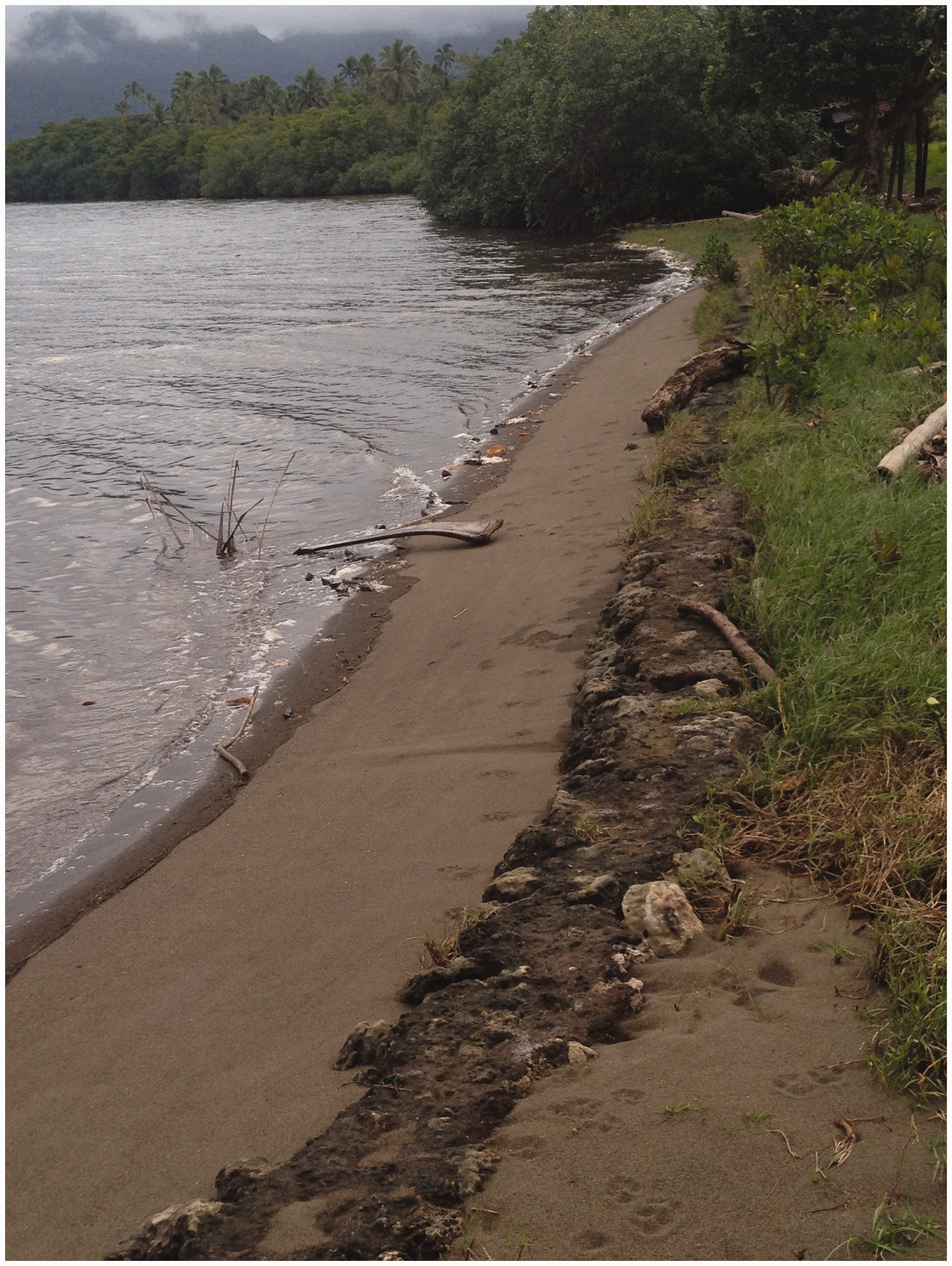
Dilapidated sea wall.
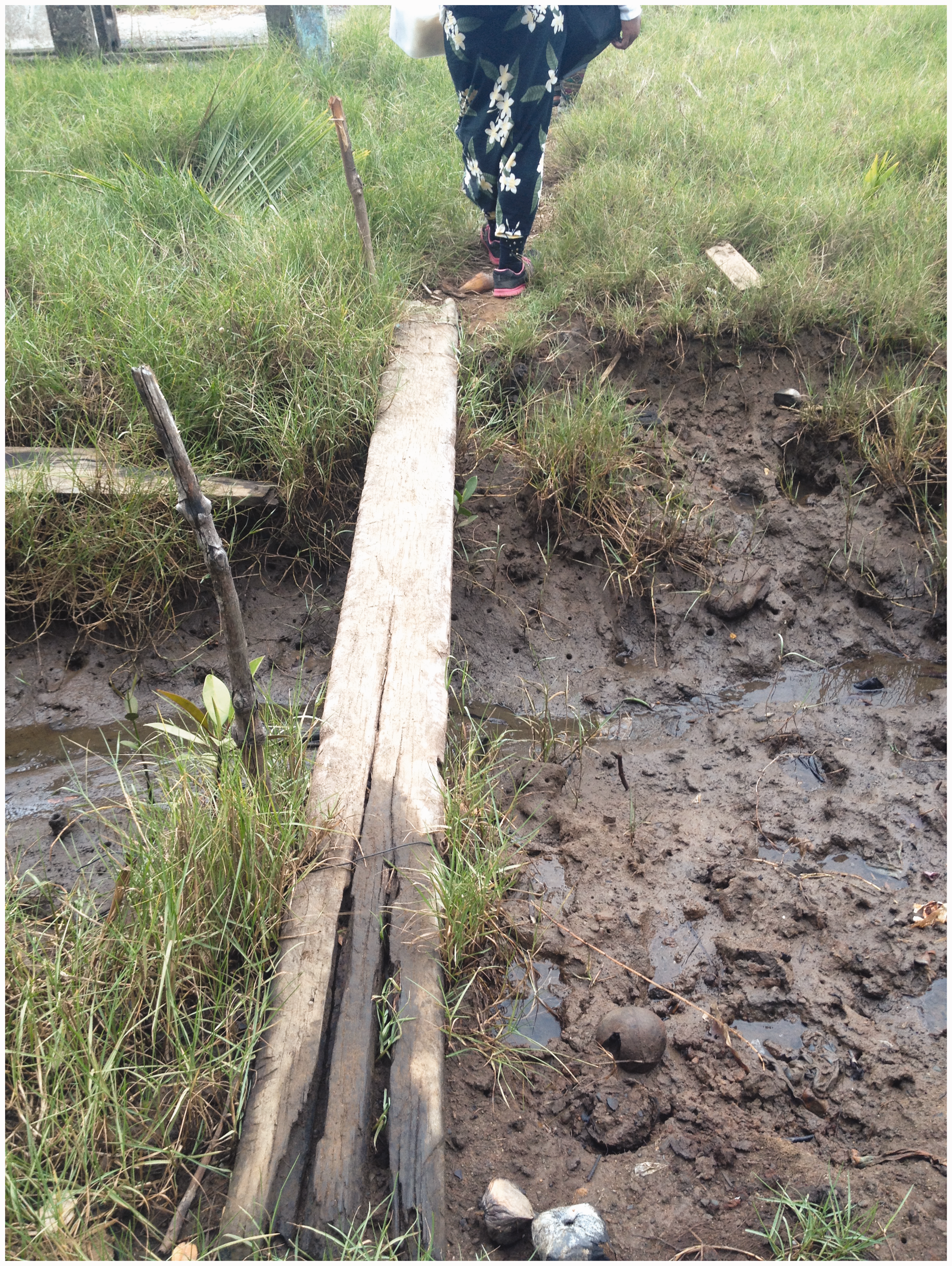
Riverbank erosion.
Moreover, more frequent and extreme storm surges put Vunidogoloa villagers in physical danger. For instance, in 2010, Cyclone Tomas left the village underwater within minutes, forcing the residents to evacuate two miles inland to Nabua Primary School where villagers stayed in the school dormitories for a week until it was safe to return to their homes. Cyclone Tomas served as a stark reminder that nature can pose a threat to human lives and it subsequently acted as the catalyst for the village to move forward with the relocation.
Relocation timeline
In 2009, the local Provincial Office, Fiji’s National Disaster Management Office, the Ministry of Local Government, Urban Development, Housing & Environment, and village leaders began collaboration for the relocation effort. After the initial decision to move was made by village leaders and government officials, stakeholders began discussions regarding the logistics of the project—where to move the new village and how to fund the relocation. Village residents often described 2009 as the year of “talk,” but it was not until Cyclone Tomas in 2010, that the relocation project gained momentum and talk transitioned into action. After the cyclone, village residents and the government collaborators became more proactive with selecting a new site, a mile inland along the main road that runs through Cakaudrove Province. From here, the Northern Commissioners Office, the political representation for Cakaudrove Province, located in the main town of Labasa arranged for a logging permit and negotiated a contract between a logging company in Labasa and the village. 3 The profit from the timber was then allocated toward the relocation.
In 2012, Prime Minister Bainimarama sent the Fiji military to Vunidogoloa to begin excavation at the relocation site, which was initially suggested by village leaders. However, the project prematurely stalled when an environmental assessment conducted after the logging and excavation found that the sediment was too loose to sustain any buildings (see Figure 4). Consequently, more land had to be cleared. Government agents then chose the site directly below the cleared hilltop. The following year the national government solicited laborers from the National Employment Center (NEC) to assist the village men with the construction of the houses for the relocated village. In 2014, Prime Minister Bainimarama reopened Vunidogoloa at the new site and village residents moved into their new homes. The Prime Minister commemorated the relocation project with a publicized ceremony in which he delivered a speech emphasizing the collaborative nature of the project: A high-level Government team came here to inspect the situation and – working with you – concluded that only the most drastic action – moving the entire community – could meet the challenge you were facing. The total cost of preparing the new site, building 30 new houses and putting on a new water supply is just under one-million dollars. 240-thousand dollars of this has come from your community through your existing arrangement with a Labasa company to log the forests that you own around you. That company will provide timber for your new houses based on the value of the logs extracted from Vunidogoloa. So the community has a real stake in this initiative, working in partnership with Government, and I want to pay tribute to you all for making that partnership succeed.
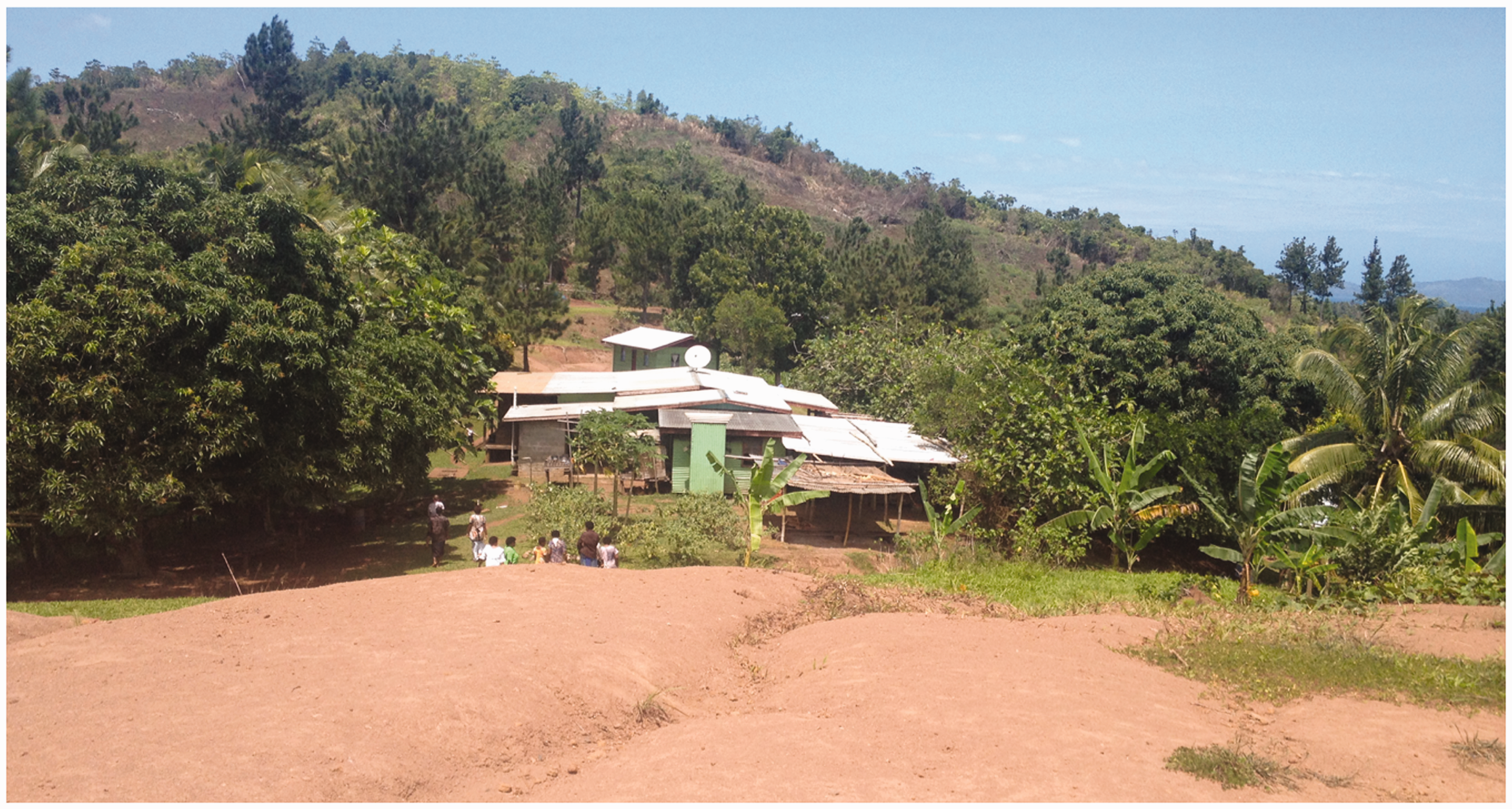
Picture of the relocated village site. Original relocation site. Source: Amanda Bertana, 2015.
Participation in Vunidogoloa
I begin my analysis with inconsistencies that emerged during my fieldwork. The primary areas of contention that problematize the degree to which the community was involved in the relocation are centered around (1) the unanimous decision to relocate, (2) the way in which community participation took form, and (3) the local hierarchical structure of the village.
The unanimous decision to relocate Vunidogoloa
The Fijian government advertised community involvement in Vunidogoloa to reinforce the notion that all future communities, and even individual households at risk of potential relocation, have full agency over their decision to shift inland. A scholar who was involved in the drafting of the guidelines stated, “One principle that is completely unquestioned is that it’s up to the village if they want to shift or not. Even if the family doesn’t want to, but the village does then the family doesn’t have to.” According to external stakeholders and government documents, the community has complete agency over the decision to relocate. Moreover, the initial proposal seeking government assistance for relocation should theoretically come from the village (Ministry of Economy, Republic of Fiji, 2018). These guiding principles were emphasized throughout interviews with government workers, as a local provincial officer stated: They [villagers] were given options as to whether they should go ahead with the seawall or relocate to another site. Then the government could intervene. Most of them didn’t want to move in the first place. They saw they that the sea level was changing, but they didn’t care. The NGOs did the forecast and told the people by the forecasting year the old site of Vunidogoloa will be vanished. When I came in 2009 we [Provincial Office] organized another visit to that village. Our Permanent Secretary from National Planning, we all went down to Vunidogoloa and discussed the issue [relocation] again with them. How best we could work together to try and plan out something for them. In one of the Hurricanes [Tomas] the village was flooded during the night, from the seawater and also from the river overflowing. Before that because of climate change the boundary of the village had moved a few times. The river was moving towards the village site, so they had to pull a few houses and move them inside. Even the river had moved towards them. We discussed [relocation] with them and they were the ones who felt what happened. They fully agreed with us that we relocate them to another site because of that danger. From there we started out planning.
It is ambiguous as to who suggested relocation as the adaptation solution, the government or the community. However, there is a clear delineation between government workers and village residents' responses regarding unanimity to relocate. As an example, a local government worker stated, “There was never any resistance from the community themselves. They were the ones suffering from the hurricanes they had. There was never an argument in the community. Everybody fully agreed to relocation.” Contrary to depictions of consensus, numerous village residents emphasized that there was resistance to move. As a village resident pointed out, “There were some people that didn’t want to move. I don’t know why. I don’t know what’s wrong with them why they don’t want to move.”
Community participation in the relocation
From the beginning, villagers were expected to be involved in the relocation to some capacity. However, the community’s involvement was confined to two distinct realms: (1) funding and (2) labor. A government worker noted the benefits associated with having the villagers actively involved in the relocation: We looked at the resources the community had, and what could the community contribute because that reduces the cost of the government, and we wanted them to be actively involved in this so they always feel that. Like when we move them using their resources they have something in their heart to keep them focused in what we were doing. If we had just taken money to relocate them, the ownership of the project itself, by using their resources it means the communities commitment towards the plan that we were making up for them. You guys came in and took us here. If something happens in the future you keep on pointing to the government, this is you. You came in, dismantled our houses, and told us to move there, but we don’t want that.
Village residents did in fact refer to the linkages between participation and empowerment. They recalled with pride the commitment they had to ensuring the success of the project. Some men and women alike referred to the relocation as a “blessing,” while acknowledging the long days they devoted to constructing the new site. Village men who were active in the construction of the new houses spoke about having to save their farming duties for the evening. It is, however, important to emphasize that the men were compensated for their time with what they described as a fair wage.
The village women were also actively involved in the relocation but contributed a bulk of their resources in the form of unpaid domestic labor. Women discussed their role in the domestic duties, making sure that their husbands and the NEC workers ate, and the housework was taken care of, as one woman pointed out, “The women everyday they bring lunch and breakfast from the old site to the new site. We couldn’t even come by road. With the rainy weather we crossed the road.” The young mother went on to discuss the hardship of having to make the mile-long trek from the coastal village site across the unpaved path to the new hillside village numerous times a day.
In addition to labor, villagers were the primary funders of the project. Women made sasa brooms, and sold fish, crab, and surplus crops in the town of Savusavu. The community regularly held solis (ceremonial money giving contribution toward a village project), but the bulk of the financing came from logging their forest. Vunidogoloa was in an advantageous position relative to other villages that were slated for relocation because they had an abundance of resources on their land. Following the governments’ suggestion, village leaders moved forward with logging part of their forest in order to financially assist with the relocation. Under the jurisdiction of the Northern Commissioners Office, the community obtained a logging permit, and raised approximately 250,000 Fiji dollars (equivalent to 125,000 USD) by harvesting the timber.
The local hierarchical structure
The local hierarchical structure posed a barrier to fully inclusive community participation. This aspect of the relocation called attention to the political consequences of neglecting the social context in which decisions about climate change adaptation are made. Furthermore, it elucidated the multiple scales of power, specifically the power between the government and the village and within the village. Vunidogoloa operates within a traditional local hierarchy found throughout the Oceania. Within this structure, the concentration of decision-making power reside in the hands of a select few—Chief, Turaga Ni Koro, and male elders.
Following the exclusion of women from local level decision-making processes, the women of Vunidogoloa were omitted from the decision to relocate the village. A brief exchange with a young woman in her 20s illustrates this point: I asked, “Did you go to the village meeting about the relocation?”. She replied, “I wasn’t invited.” I asked, “Were you told not to go?”. She responded, “You’re not told ‘not to attend,’ but if you are not asked to attend then you do not go.” Curiously, government workers expressed awareness that women were disregarded in the decision to relocate the village, but they continued to proclaim that there was complete consensus.
Articulations of power
On the surface, villagers’ role in the relocation process provides an illusion of equal partnership between the community and the local and national government. In addition to community involvement in the funding and construction of the new village site, disputes about the relocation process between the community and the government. We might simply conclude that the relocation exemplified an egalitarian adaptation project considering villagers took an active role in the funding and construction of the relocation. Yet the community’s role in the relocation might also be analyzed by structural factors, shaped by how the community was not involved and the wider social, political, and even environmental context in which the relocation was situated. Intersections of Lukes’s second and third dimensions of power elucidate structural and non-decision making factors.
Second dimension of power
The Vunidogoloa relocation has numerous characteristics that align with the second dimension of power. In a non-decisional sense, power is manifested as exclusion of certain issues from the policy agenda (Lukes, 1974). This dimension of power answers to the grievances that emerged after the relocation was complete. My examples here come from two contentious characteristics of the project outcome, the housing structure and the village layout. By excluding villagers from having an opinion on the housing structure and village layout, the Fiji government was able to successfully suppress potential disputes.
My first example discusses the inadequacies of the housing structures. Interviewee’s unanimously referenced the limitations of the house as a primary challenge to the relocation effort. A local level government worker stated: They are smaller than they were before at the old site. If you see the houses at the old site, they decide the size of the houses. At the new site, the government decides for them. The government provided the technical expertise. They said if you shift this is the size of the house we will provide.
My second example of the Fiji government’s execution of the second dimension of power is evident in Figure 5, which depicts the village layout. Many villagers commented that they would have preferred the relocated site to resemble a more traditional Fijian village with the church at the epicenter and the Chief’s house located at the top of the village. The coastal village site experienced severe shoreline and riverbank erosion, creating spatial limitations that forced villagers to build where they could find viable land. Consequently, they were never able to physically organize Vunidogoloa in accordance with the traditional village layout. Here we see how adaptation projects can present opportunities that would otherwise not exist. In this case, the relocation ended up as a missed opportunity for Vunidogoloa to be organized in a culturally appropriate way that aligned with the values of the villagers.

House and kitchen at the relocated village.
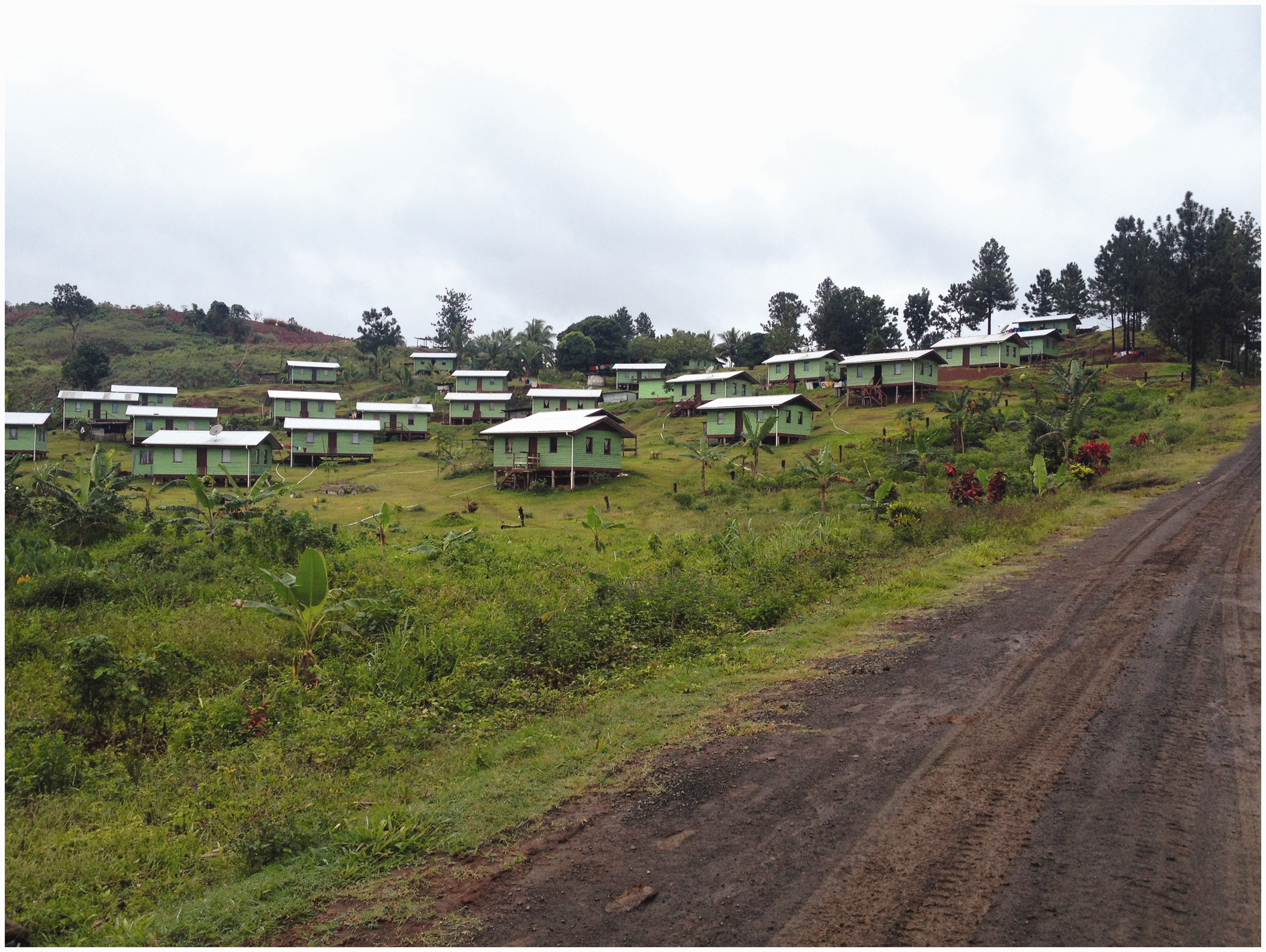
Relocated village along the main road of Cakaudrove.
The government’s authority over the “technical” components of the relocation affected the project outcome and advanced their political interest. The uniformity of the new Vunidogoloa site not only deviates from a traditional Fijian village layout, but it also resembles a United States housing subdivision (see Figure 6). This model was intentional. Numerous government workers maintained they (national government) wanted to spark the interest of people driving along the main road of Cakaudrove Province where Vunidogoloa is located and ask, “What’s this, a housing subdivision?”. The physical organization of the relocated site is a symbolic depiction of values associated with “Westernization” and “modernity” that are being embedded into the general relocation agenda.
Third dimension of power
The most ubiquitous form of power found throughout the relocation project hints at Lukes’s (1974: 23) third dimension of power, the shaping of perceptions and preferences. While the first and second dimensions of power have empirical advantages, they fail to answer the question: why do the masses acquiesce to their domination, especially when it goes against their best interest?
The transfer of power from the village to the government began with the external climatic event that created a shock to the community, Cyclone Tomas. After the storm, villagers were overwhelmed with the idea that another cyclone may occur during the night leading to potential casualties. From this threat, the rationalization for government intervention emerged under the scope of public safety, and top-down processes were then enacted on to the community. As the relocation process moved forward, there became a more pronounced uneven balance of power between the village and the government. Not necessarily visible as power, the Fiji government exerted power by controlling access to information, exploiting the climate change discourse on sea-level rise, and relying on an international script of governments as the dominant decision-making entity.
It is common practice for Fiji’s rural communities to be ill informed about government policies, particularly because of spatial distance and infrequent access to resources (Betzold, 2015). However, in this context, government workers engaged with the community but withheld information on project outcomes. This allowed them to lead with the attractiveness of the new houses and amenities that most people in the village would not have been able to afford otherwise. By controlling the flow of information, the government was also able to bypass accountability for the less desirable outcomes of the project and unfulfilled expectations. Whether or not this was intentional, the consequences were very real for the villagers.
Vunidogoloa villagers accepted government assistance, but in doing so they lost agency over certain aspects of their village. As I pointed out in the previous section, in the relocation process villagers have no control over their houses including the color or any modifications. In addition, villagers were explicitly warned not to deviate from the uniformity of the village. For example, a few households spoke about how they were stopped by village leaders when they began building extensions to their house. It was rumored that the government has a blueprint that all household modifications must comply with in order to keep with the uniformity and “look” of the village. The blueprints are lost among the bureaucratic disorganization of the project. Consequently, villagers were unable to make any changes to the external structure of their houses.
The lack of autonomy to modify their homes speaks to an emergent hidden interplay of power—the reorganization of the village’s relationship to the Fiji government. Fijian villages have been autonomous and execute full agency over local development, governance, and infrastructure. With the relocation effort, the government strategically interjected their agenda and interest in local processes that were once controlled solely by the village. In doing so, they created a micro (village)–macro (government) dichotomy. Given an international script of governments as dominant decision-making entities, especially in Fiji, this newly formed relationship assumes that the people comprising the micro are powerless (Kothari, 2001). Consequently, villagers are now expected to comply with governmental requests and demands.
The most provocative example of power explores the question, why did Vunidogoloa villagers choose to relocate? According to village residents, it was clear that some people did not want to move. In addition, the size of the houses and unfulfilled promises did not align with what was presented to the community, therefore some people left larger homes that were better equipped to meet their family structure. Despite the contentious outcome, people still chose to relocate, and purportedly without grievance. Why?
There was a clear coercive financial mechanism at play that signaled the consequences for people who decline to relocate. As a scholar who worked on the relocation guidelines draft stated, “What does happen is that it’s told to people in that situation, if you don’t shift now, you have to pay everything yourself later on.” This response illustrates how the relocation guidelines, in general, have the potential to exploit community’s financial vulnerabilities. In the case of Vunidogoloa, financial restrictions swayed some households to relocate because the short-term benefit of a “free house” outweighed the long-term cost of autonomy.
The idea of an inevitable shift also sheds light on a prevalent theme found throughout the discourse on climate change, sea-level rise, and SIDSs, one that suggests that relocation is an inevitable future (Farbotko and Lazrus, 2012). The apocalyptic messaging of climate change relies on scientific and IPCC projections that predict displacement caused by sea level rise for coastal communities and in more extreme cases whole island nations, in as early as 30 years. The discourse alone has the potential to entrench geographically vulnerable communities in unequal power relations by limiting their agency and narrowing their option to relocation (Farbotko and Lazrus, 2012). Here we see the fatalistic messaging operating in conjunction with financial vulnerabilities to create an illusion of choice. In reality, the only choice presented to coastal communities is when they would like to relocate.
Other Vunidogoloa villagers who initially resisted relocation chose to eventually move because of their reliance on the social organization of the community. For instance, an elderly couple that voted against relocation ended up moving because they relied on assistance from their neighbors. As on elder man went on to say (translated from Fijian), “If we were younger we would have stayed.” Instead the couple’s age and dependency on the communal structure of the village was a limiting factor in their final decision to move. This evidence suggests that autonomy itself operates on a spectrum with marginalized populations having even more coercive mechanisms that influence their decision-making.
Discussion and concluding remarks
There is no shortage of literature that addresses the pros and cons of public participation in climate change adaptation projects. However, less attention is given to the specific role power plays within the participatory governance process. This raises important considerations about how public participation can be implemented in a way where it moves beyond the obligatory policy requirement and actually encompasses democratic principles. One way in achieving this goal is to explicitly address already existing power dynamics in adaptation projects that involve multiple stakeholders. I took this approach in this paper and I reintroduced power back into the discussion on public participation in climate change adaptation. I drew upon Lukes’s second and third dimension of power to unveil the uneven power dynamic between the Fiji government and Vunidogoloa villagers. Yet, I took it a step further to show how the participatory arrangement of the relocation process astutely transferred power from the local to the national level. By analyzing less visible dimensions of power through Lukes’s theoretical framework, we gain a greater understanding of how existing social arrangements materialize as unequal power relations.
The Vunidogoloa relocation exemplifies Lukes’s critique of traditional power studies that isolate conflict as the sole indicator of power. While empirical evidence that identifies a “winner” and a “loser” is a clear indication of uneven power relations, it is naïve to suggest that a process devoid of this dichotomy is egalitarian. Instead my findings indicate that power is still present even in the absence of conflict. As I have shown with Vunidogoloa, the Fiji government used the relocation process to gradually erode the villager’s autonomy until they were left with an adaptation project that compromised their wants and values for the interest of the government.
Power was exerted on to the community in visible and coercive ways. The Fiji government employed non-decisional making power by excluding the village from the technical components of the relocation—housing structure and the village layout. In doing so, they suppressed any potential for conflict. At the same time, they shaped Vunidogoloa villager’s preferences and wants. This characteristic aligns with a general trend in adaptation projects. Governments around the world are continuously prioritizing climate change as more violent and frequent storms create widespread public panic. As the case of Vunidogoloa demonstrates, climatic events are creating states of emergencies and are acting as the impetus for government intervention. This then creates the rationalization for top-down processes to occur, so it is critical to pay attention to how governments engage in these partnerships with the public, especially because the government assumes a powerful position in relation to marginalized populations.
This article comes against the backdrop of a shifting approach to climate change adaptation policies that tend to promote public participation as either a legally mandated function or a genuine transformational approach to the traditional top-down governance process. Independent of intention, these adaptation policies are employing consensus and community involvement as keywords (Elander and Gustavsson, 2019). Furthermore, as the impacts of climate change intensify, potential relocation is becoming more of a reality for coastal communities throughout the world. This is advancing the demand for government managed relocation frameworks. In order to stay true to the principles of environmental justice while also ensuring an effective policy that meets the needs and wants of affected communities, an adaptive relocation framework requires collaboration between state and non-state actors (Bronen, 2015). This requires a different way of governing, one that increases the adaptive capacity of institutional structures or what Robin Bronen (2015: 36) describes as “the ability of institutions to balance power among interest groups and engage in an iterative learning process that can generate knowledge and be flexible in solving problems.” As demonstrated in this case study, existing power systems have critical consequences for adaptive outcomes. Thus to be inclusive, adaptation frameworks must include reflexive analyses of power as a social system.
Footnotes
Author note
Amanda Bertana is now affiliated with Southern Connecticut State University in the Department of Sociology.
Declaration of conflicting interests
The author(s) declared no potential conflicts of interest with respect to the research, authorship, and/or publication of this article.
Funding
The author(s) disclosed receipt of the following financial support for the research, authorship, and/or publication of this article: This material is based upon work supported by the National Science Foundation Doctoral Dissertation Research Improvement Grant under Grant #1519218.