



Abstract
The article explores the related concepts of best practice agencies (BPAs) and fast-track institutionalization. We define BPAs as agencies that have been inspired by international trends in urban governance, often opened within local urban contexts to implement urban planning best practice policies and programs. Importantly, we argue that BPAs often go through processes of “fast-track institutionalization”, meaning that in an attempt by mayors to showcase their effectiveness to their constituents, the institutionalization of BPAs is deemphasized. Through exploring two BPAs in Mexico City, namely the Laboratorio para la Ciudad (LabCDMX) and the Autoridad del Espacio Público (AEP), we illustrate how each BPA bypassed the capacity-building and public action processes required to build consensus on their importance within city government. We then suggest that fast-track institutionalization is one aspect that can eventually contribute to the closure of BPAs. We conclude by exploring how BPAs have created a site of contention between best practice adoption and local processes of institutionalization, eroding their ability to implement their mandates over the short and long-term.
Introduction
Many of Mexico City’s urban planning policies and programs over the past several decades – from ciclovía to pocket parks, from neighborhood “revitalization” strategies to Bus Rapid Transit (BRT) development – have their origins in best practices that were conceived in other cities (Crossa, 2009; Delgadillo, 2014; Whitney et al., 2020). Here we define best practices as the policies, programs, interventions, and projects that trigger policy changes in different cities from which they originally emerged (Macmillen and Stead, 2014; Montero, 2017). While there is an increasing body of literature critically exploring the role of best practices in Latin American cities (Bertelli, 2021; Whitney, 2022a; Jajamovich, 2016; Lederman, 2020), less has been said about the institutional structures, or the local agencies, that have been responsible for their local adoption. Here we call these local agencies best practice agencies (BPAs) and explore how they have been inspired by similar agencies in other cities around the world. We then argue that BPAs tend to bypass important steps required for their long-term institutionalization within city government, thereby reducing their ability to implement their mandates.
The main contribution of this paper is a process that we label fast-track institutionalization. We use fast-track institutionalization to argue that, in an attempt by mayors to showcase their effectiveness to their constituents, the institutionalization of BPAs is deemphasized. Particularly, we show how BPAs tend to skip the local public action processes that are necessary to provide them with legitimacy among relevant political actors and institutional capacity at the legal, financial, and organizational levels (Lascoumes and Le Galès, 2014; Lorrain, 2014). As a result, BPAs are particularly sensitive to closure following the election of a new city government. While there has been focus on ‘fast policy’ in the literature (Peck and Theodore, 2015) – i.e., the adoption of market-friendly policies to quickly and efficiently showcase the effectiveness of city governments - less has been said about the ‘fast’ processes by which city government agencies are being opened to implement these best practice policies and programs. By putting the policy mobilities and institutionalization in planning literatures in conversation with one another, we provide a framework to explore the role of BPAs in urban planning and development, and the associated process of fast-track institutionalization.
To showcase the connections between BPAs and fast-track institutionalization, we take the case of two BPAs in Mexico City: the Laboratorio para la Ciudad [Laboratory for the City] (LabCDMX) and the Autoridad del Espacio Público [Public Space Authority] (AEP). The LabCDMX was opened in 2013 by the then mayor to experiment with innovation within the city government, inspired via similar agencies in Western Europe and the United States (Whitney, 2022b). The AEP, on the other hand, was opened in 2008 and operated during two mayoral administrations by overseeing the creation of high-quality public spaces that reflected emerging global best practices in public space design and revitalization. Using these BPAs, we illuminate how processes of fast-track institutionalization bypassed the broader public action processes commonly required for legitimizing new planning agencies. We conclude that BPAs are often weakly institutionalized and prone to conflicts and closure.
Contextualizing best practice agencies (BPAs) and policy mobility
We use the term best practice agencies (BPAs) to build on research that illustrates how planning is increasingly dominated by a series of best practice policies and programs that are travelling between places with increasing frequency. Here we are interested in the best practices that are constituted as ‘best’ by a network of international actors that impact policy, program, and project development in different cities from where they originally emerged. Rather than focus on travelling best practice policies and programs themselves, however, here we use the term BPAs to highlight that city government agencies are also traveling. We define BPAs as agencies and/or departments that are opened in one city yet are inspired by agencies and/or departments from another city. Therefore, like the best practice policies and programs that they work towards adopting, BPAs themselves are modelled off emerging governance trends. Broadly speaking, BPAs are designed to implement best practice policies and programs, specializing in bringing current trends in urban planning to the local context in which the BPA is opened.
The purpose of this paper is not to highlight one specific moment when BPAs started to gain prominence. Instead, we conceptualize BPAs by giving several examples of what they can look like. A key aspect of BPAs is that they tend to be inspired by agencies in other cities and then assembled within, and adapted to, local contexts. For example, two types of BPAs that have been gaining prominence over the last three decades in cities around the world include innovation laboratories and urban regeneration agencies. Both have been circulated as solutions to local urban issues by professional knowledge networks that include the World Bank and the United Nations (Acevedo, 2016; Joy et al., 2019). Innovation laboratories, first emerging from Western Europe and the United States, are agencies designed to inject new and innovative policies and programs into either government or other organizational structures (Chatterton et al., 2018; Ferreira and Botero, 2020; Simeone et al., 2017). They are often opened to help find solutions to pressing local social challenges, attempting to alter policymaking approaches (Ferreira and Botero, 2020). It has been suggested that hundreds of these labs exist in cities around the world today (Davis, 2016) with their prominence within Latin America rapidly increasing (Whitney, 2022b). Innovation laboratories can be referred to by a number of different names including urban labs, policy labs, incubators, innovation hubs, etc. (Caccamo, 2020; McGann et al., 2018). Importantly, innovation laboratories often rely on best practices to influence local decision making by building consensus around what has already proven to be successful in other cities. Another example of a BPA includes the wave of urban regeneration agencies sparked by the Bilbao and Barcelona ‘models’ of urbanism (González, 2011; Marshall, 2000; Serra, 2011; Silvestre and Jajamovich, 2021). These models of urbanism explore how to “regenerate” urban environments to foster more so-called vibrant and attractive urban environments for residents and visitors, thereby encouraging economic investment (González, 2011). These models of urbanism led to the creation of public agencies such as Bilbao Ría 2000 and Barcelona Regional (BR) that have inspired other cities such as Liverpool, Manchester, Glasgow, and Aalborg to open similar agencies (González 2011).
BPAs and policy mobilities
Over approximately the last 20 years, an increasing amount of literature has been exploring the uptake of urban planning ‘best practices’ in diverse cities around the globe (Bidordinova, 2021; Blake et al., 2021; Bok, 2020; Bulkeley, 2006; Moore, 2013), including within Latin America (Angotti and Irazábal, 2017; Blanc, 2022; Lederman, 2020; Whitney et al., 2020). Policy mobility has been one approach used to understand the increasing intensification of best practice uptake. Policy mobility scholars see policymaking as a socially constructed process that is influenced by translocal and transnational knowledge networks, intensifying under neoliberal economic agendas where planners, policy experts, and other decision makers are increasingly connected to one another across the global North and South (Peck and Theodore, 2015; Stone et al., 2020). Policymaking then is a power-laden process where some ideas are circulated and prioritized over others (Béland and Cox, 2016). Within local urban contexts, decisionmakers are influenced by these knowledge networks - which include international NGOs (Sosa López, 2021; Sosa López and Montero, 2018), the media (Whitney, 2022a), urbanism professionals (Stehlin, 2015), and international organizations (Jirón et al., 2021; Whitney, 2022b) - that work to circulate specific ideas over others. This process has been labelled as ‘fast policy’ referring to the intensified and instantaneous connectivity that now exists between various actors, institutions, and organizations that span various scales in the neoliberalization era (Peck and Theodore, 2015). In this sense, policymaking is a relational process that works across transnational and translocal scales (McCann and Ward, 2011), influenced by larger networks that are celebrating specific policies and programs (Pacheco-Vega, 2021).
Less, however, has been said about the local agencies that are responsible for implementing best practice policies and programs. Scholarship has noted that best practice policies and programs are not copies of other policies and programs, but are rather ‘assembled’ in different ways depending on the local context (McCann and Ward, 2012). Like the best practice policies and programs that BPAs cite, what travels is not a carbon copy of agency itself, but rather an assemblage of ideas that are crafted into a BPA by local actors. Therefore, like best practice policies and programs, BPAs are sets of principles assembled by local actors based on the contexts in which they work (Lederman, 2015; McCann and Ward, 2011; McFarlane, 2011). These BPAs also follow ‘fast’ processes, meaning that they tend to be opened as quickly as possible under government regimes eager to showcase their effectiveness during their electoral cycle. This is not to suggest that all best practices are implemented exclusively through BPAs; rather, that BPAs are one way that decision makers are experimenting with the uptake of best practices policies and programs locally, crafting specific agencies representative of their local context and political ambitions.
Fast-track institutionalization
Central to our argument is the claim that the creation of BPAs is prone to bypassing two streams of institutionalization necessary to provide them with legitimacy and institutional capacity. We call this process fast-track institutionalization because, like the uptake of ‘fast policy’ (Peck, 2002; Peck and Theodore, 2015), government administrations can skip key processes to open BPAs as quickly as possible. The first stream of insitutionalization refers to the process of providing the BPA with the institutional capacity necessary to achieve its goals. The second stream refers to engaging with the relevant stakeholders in a broader public action process to reach agreement on the need for the BPA as a legitimate policy solution to an emerging public problem (Lascoumes and Le Galès, 2014). We proceed to unpack these two streams of institutionalization below as related to BPAs.
Stream #1: providing BPAs with enough institutional capacity
Institutional capacity sets up a government agency to be able to implement its mandate; it is used by scholars to help explain why some agencies are more impactful than others (for example, Fukuda-Parr et al., 2003; Willems and Baumert, 2003). Specifically, institutional capacity can be defined as: ...a broader ‘enabling environment’ which forms the basis upon which individuals and organizations interact. (...) training individuals and strengthening organizations can only succeed in the long term if it is consistent with existing institutions, or if it helps transform these institutions, so that actions are based on rules, processes, and practices that can be sustained through time” (Willems and Baumert, 2003, 11).
Therefore, institutional capacity sets the stage to allow agencies to embed themselves within the larger governance structure that guides urban planning at the legal, financial, and organizational levels (Lorrain, 2014: p. 2). Legal capacity refers to the ability of the institution to legally perform its functions (i.e., that the institution can legally implement its chosen policies and programs); financial capacity refers to the availability of financial resources to achieve its mandate; and organizational capacity refers to the availability of resources such as personnel, offices, equipment, etc. Together these three pillars of institutional capacity ensure that the agency can perform its intended functions by setting and achieving its objectives over the long term.
Stream #2: Institutionalizing the BPA within a broader public action process
The concept of public action refers to a process of conflict and consensus building among key state actors and other non-governmental stakeholders (e.g., NGOs, community organizations, etc). Public action then refers to both the definition of public problems and the ways in which the problems will be addressed through public policy (Wuyts et al., 1992). When it comes to the creation of new government agencies, the goal is to build consensus on the importance of the agency while establishing its purpose within city government (Lascoumes and Le Galès 2014). The idea is that the nature of government agencies is politically negotiated with a larger set of governmental and non-governmental actors and, when agreed upon, stabilized through the mandate of the agency. In other words, the public action process is where the rules and procedures of public agencies are stabilized, and clear roles are established for the actors involved (Lascoumes and Le Galès, 2014: p. 102). If the problems that an agency is solving remain unclear, the role of specific actors are undefined, and the type of policies that the agency will adopt are poorly understood, then it will have a low level of institutionalization (Lascoumes and Le Galès, 2014). Conversely, an effective public action process will lead to a high level of institutionalization (i.e., an agency that has clear goals within the city government, a strong roadmap underlying the roles of the involved actors, and a concise and agreed upon agency mandate).
Figure 1 provides categories of analysis for the empirical investigation of local public action processes as proposed by Lascoumes and Le Galès (2014). We build on this framework and adapt it to study how BPAs in Mexico City were introduced and opened. The framework starts by analyzing what “actors” are involved in the creation of the agency as well as their interests in the agency, their strategies to interact with the agency, and the resources that the actors can bring to the table. Second, the production of an agreement about the agency’s institutional arrangement is analyzed (“Institutions” in Figure 1) alongside the issues that the agency is going to address and the values that it will embed within city government (“Representations” in Figure 1). Third, we analyze the “processes” by which actors mobilize to agree upon the agency’s legitimacy and mandate. Finally, we analyze the “results” of the public action process in terms of the agencies’ degree of institutionalization. We hypothesize that without a strong public action process, a BPA becomes weakly institutionalized within city government, meaning that its role is not clear and agreed upon by all the actors that must interact with the agency. The public action framework categories of analysis. Source: Lascoumes & Le Galès 2014.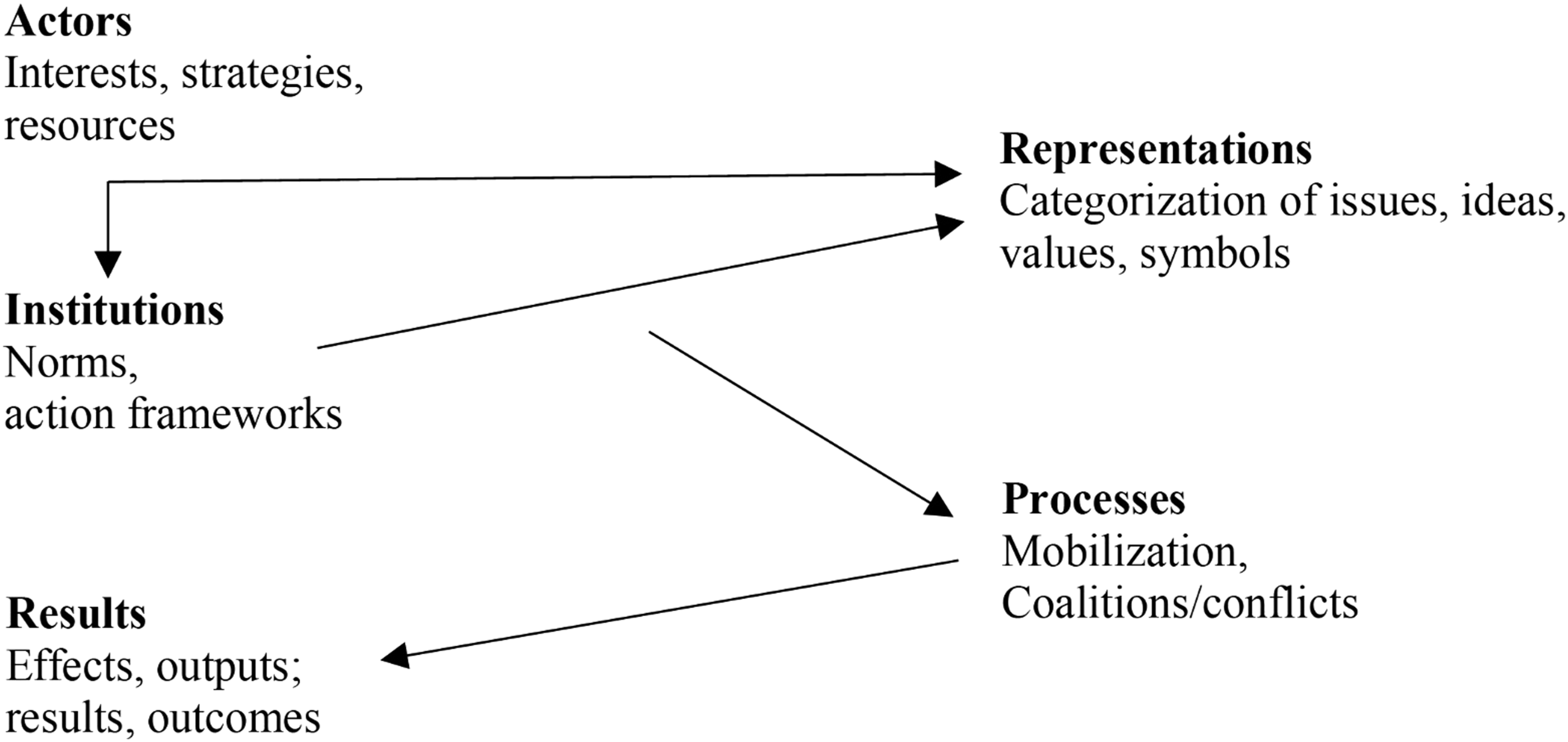
Methods
This paper follows an a posteriori approach that consists of comparing repeated instances from different research projects with an emphasis on mid-level abstractions (Montero and Baiocchi, 2022). The goal is to study urban processes, in our case the opening of BPAs, to put the findings of different research projects into conversation with one another after the research has been completed. Our objective is not to produce strict analytical categories to create comparisons; rather, the a posteriori approach strives to identify common themes that are emerging from the selected cases. Therefore, the first author of this paper put his results on a research project about the LabCDMX into conversation with the second author of this paper who had completed research on the AEP. The authors then generalized from the two different cases to theorize BPAs and fast-tract institutionalization, conceptualizing them as key processes within the larger uptake of best practices within urban planning.
Data was collected between 2016 and 2020. In 2017 and 2018, the first author of this paper completed semi-structured interviews and participant observations (e.g., participation in meetings, workshops, staff meetings, and events) from within the LabCDMX. The second author of this paper conducted preliminary research about the AEP during the Summer of 2016, and then semi-structured interviews during Summer 2020. In total, over 45 interviews were conducted with employees working in the LabCDMX and the AEP. Together the interviews focused on how the agencies were conceptualized from international examples, how they were positioned with the local city government structure, and how employees prioritized policy and projects for local uptake. Other interviewees were completed with representatives from the Secretaría de Movilidad [Ministry of Mobility], the Secretaría del Medio Ambiente [Department of the Environment], the Agencia de Gestión Urbana [Urban Management Agency], the Institute for Transportation and Development Policy (ITDP), CTS EMBARQ, the National Autonomous University of Mexico (UNAM), and other urban planning organizations due to their history of working on projects with the LabCDMX and the AEP. The analysis was completed by transcribing the interviews and conducting a deductive analysis through the theoretical frameworks of institutionalization and public action.
In the following section, we connect the opening of the LabCDMX and the AEP to transnational knowledge networks that were tooting such agencies as solutions to local urban issues. We then analyze them through the lens of institutional capacity and a public action framework to illustrate how they both went through the process of fast-track institutionalization.
Institutionalization processes in the BPAs
The LabCDMX
The LabCDMX was opened by Mayor Miguel Mancera following his election in 2013. The LabCDMX was an innovation laboratory with the goal of creating a “space for rethinking, reimagining, and reinventing the ways citizens and government work together towards a more open, more livable and more imaginative city” (Laboratory for the City, 2013), often being inspired by best practices from other cities around the world. The LabCDMX, however, was not set up to implement large scale projects on its own but rather to coordinate new projects and policies to put them on the city agenda. In other words, the purpose of the LabCDMX was to remove itself from the delivery of projects once there was uptake within other departments that had more resources. Furthermore, instead of being its own government agency, the LabCDMX was embedded within the Agencia de Gestión Urbana [Urban Management Agency] (AGU), that was designed to guide the overall management of public services (e.g., roads, garbage collection, etc.). Within the AGU, the LabCDMX was conceptualized as its experimental arm, focused on best practice urbanism. Broadly speaking, the LabCDMX focused on best practices related to urban mobility (e.g., open streets initiatives), public space development, digital innovation, and participatory planning. A list of all the projects completed within the LabCDMX can be found at https://labcd.mx/ (in Spanish).
While the LabCDMX was a project of the Mancera government, it was spearheaded by two key figures in Mexico City. One was working in filmmaking and art curation; the other was an architect who specialized in civic participation. Both were aware of Mancera’s interest in innovation and green urban politics and invited him to attend a local Technology, Entertainment, Design (TED) conference that they were organizing in 2012. After attending the event, Mancera was impressed: he invited them to pitch a project as part of his government that would be focused on urban innovation. They accepted the offer and took 6 months to write the proposal. During the proposal writing process, they researched existing innovation laboratories (e.g., New Urban Mechanics in Boston, Office of Civic Innovation in San Francisco, and other departments in the United Kingdom and Finland) to conceptualize the LabCDMX. They also researched Mexico City’s government’s structure. Together they submitted their proposal in late 2012 and was accepted by Mancera in January 2013.
Public action processes and institutional capacity
To open the LabCDMX quickly, showcasing the Mancera government’s focus on urban innovation and best practices, it bypassed key public action processes required for institutionalization within Mexico City’s government. For example, the LabCDMX did not go through the City Council (Asamblea Legislativa) prior to its opening. The City Council is responsible for defining the scope of a department’s work and its role within city government, thereby building consensus amongst actors. Going through City Council, however, can be a highly political process that requires actors to justify the need of a new agency and make compromises on its structure and purpose. Instead of following this process, the Mancera government bypassed it through a clause that allows the mayor to support specific agencies based on mayoral priorities (in this case, “urban innovation”). This was done because Mancera wanted the LabCDMX’s Director to have control over what types of policies and programs were being experimented with, wishing to avoid the long and political process of going through the City Council.
The LabCDMX’s institutional capacity was further complicated by its lack of resources. For example, it had a very limited budget that was only designed to pay for employees’ salaries and their needed supplies (e.g., printing, computers, etc.). In other words, the LabCDMX was not given enough institutional capacity to implement its own policies and programs. The result was that employees had to instead rely on consensus building with other agencies. Many others within the government, however, did not see the value of the policies and programs in the LabCDMX, instead seeing them as competing with the already strained resources that they themselves had. This was further complicated by the fact that the LabCDMX skipped the City Council legislative processes, leaving some actors confused as to what the purpose of the LabCDMX was to begin with. One employee working within the LabCDMX explained it this way: “...I think the Lab has been very misunderstood from some on the outside. I think we have had lacked communication to the outside about what we do. All of the information and anecdotes I am telling you, you’re going to know it, and some people are going to know it, but not everyone knows it”.
Here “not everyone knows it” is referring to best practices that were being used by the employees within the LabCDMX. Those who are more connected to international circles on trending urbanism ideas might have more context about the LabCDMX and its chosen policies and programs. Others, outside of these circuits of knowledge, sometimes saw the LabCDMX as being an inefficient use of taxpayer money. For example, when referring to the use of “participatory planning” methods (i.e., those that are deigned to gain insights from other government departments, civil society, and the public at large), one employee explained it this way: “…talking about new ways of governance, we know that the participatory process and all of the tools to organize them is a very valuable tool in order to write and implement policies with the citizens. The problem is that nobody in the government is specialized in participatory processes”.
A result was that the LabCDMX was always looking for money, support, and the capacity to do what it wanted to do. Employees in the LabCDMX, as well as the Director and Subdirector, had to be very skillful negotiators when discussing the importance of their projects with staff in other departments. In other words, they had to sell their ideas to other departments and convince them to provide the staff time and financial resources necessary to ensure their policies and projects would be implemented. According to many of our interviews, this process created a lot of conflict with other government actors within the city government (i.e., there was often push back from those in other areas of the government who did not want to be responsible for the adoption of new policies and projects).
The LabCDMX was targeted for closure following the election of Mayor Claudia Sheinbaum in late 2018. The decision to close the LabCDMX was made behind closed doors; what we have learned is that it caused a lot of controversy within the city government. During our interviews, for example, some government officials described it as an important experiment that created meaningful connections between government agencies to facilitate project collaboration. Others, however, thought it lacked the power to implement its own projects and was missing a clear goal and mandate. This controversy, combined with weak institutionalization of the LabCDMX via bypassing City Council, made it simple to close with the inauguration of the new city government.
The AEP
The AEP was opened in September 2008 by the mayoral predecessor to Mancera, Marcelo Ebrard. As the mayor’s office of public space, it was reformed in June 2010 to become a decentralized agency under the Secretaría de Desarrollo Urbano y Vivienda [Secretariat of Housing and Urban Development]. The objective of the AEP was to “attend to the comprehensive management of Mexico City’s public space, understanding public space as the areas for public recreation and public roads, such as: squares, streets, avenues, viaducts, walks, gardens, urban forests, public parks and others of a similar nature” [translation by authors] (Gobierno De la Ciudad De México, 2018). As opposed to the LabCDMX, which was responsible for inserting best practices into government based on a myriad of urban planning issues, the AEP was responsible for the implementation of projects related to public space. Furthermore, unlike the LabCDMX, the AEP had the legal, financial, and organizational capacity to plan, design, execute, and supervise infrastructure projects related to public space. Therefore, during its tenure across two mayoral administrations, the AEP was the lead agency on a series of high-profile projects that included the revitalization of the Alameda Park, one of Latin America’s oldest colonial public spaces, the creation of a series of pocket parks based on the case of New York City (Sadik-Khan and Solomonow, 2017; Whitney et al., 2020) (Figure 2), the “revitalization” of the Plaza de la Revolución (Revolution Public Square), and the pedestrianization of Calle Madero in the Historic Center. A pocket park in the historic center created by the Autoridad del Espacio Público.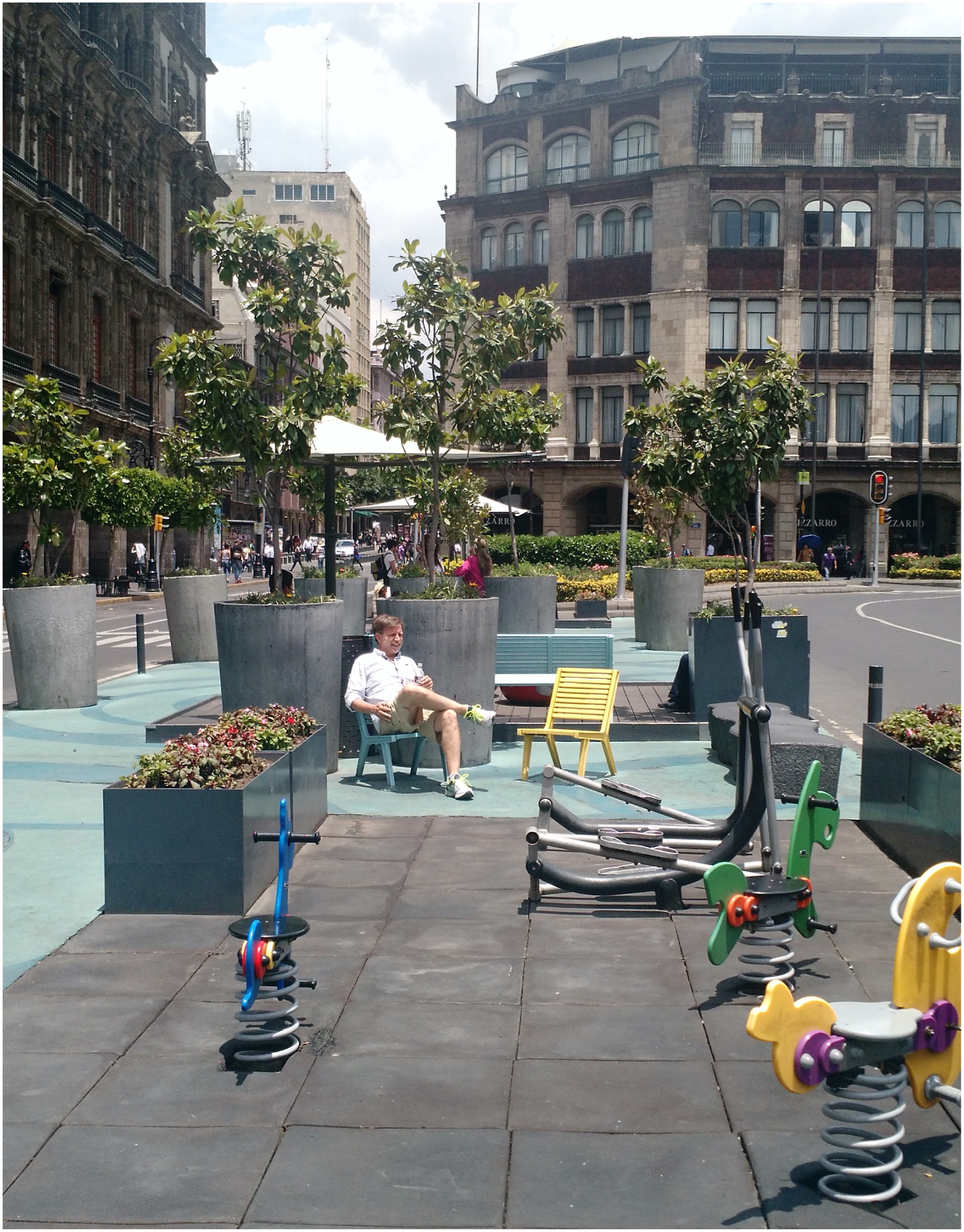
When asked about the source of inspiration behind the creation of the AEP, virtually all informants pointed to the same place: the National Autonomous University of Mexico’s (UNAM) Special Projects Office [Oficina de Proyectos Especiales] that was open from 2004 to 2008. The UNAM’s Special Projects Office had attained important achievements within the university’s main campus (Ciudad Universitaria) including the implementation of the campus’ internal bus system, Pumabus, the bike-sharing program, Bicipuma, and UNESCO’s declaration of the campus as a World Heritage Site. Importantly, these achievements positioned UNAM’s Special Projects Office as a team with a vision, having already proven their effectiveness through the implementation of projects. This reputation made Mayor Ebrard reach out to the team to invite them to escalate their approach to the city-level within his government. Inspired by both the UNAM’s Special Projects Office and agencies such as Bilbao Ría 2000 and Barcelona Regional in Catalunya, Ebrard saw the potential of a public space regeneration agency as positioning Mexico City at the forefront of what they undestood as best practice urbanism related to public space.
Institutional capacity and public action processes
The AEP was officially created by a mayoral decree as the support unit for the comprehensive management of the city’s public space, located under the control of the mayor’s office. Among the legal capacities granted by its creation was its capacity to plan, design, execute, and maintain public works relating to public space infrastructure. This legal capacity allowed the AEP to oversee important public space regeneration projects in some of Mexico City’s most emblematic spaces. When the head of the AEP was invited by Ebrard to become head of the Secretaría de Desarrollo Urbano y Vivienda (Secretary of Housing and Urban Development) (SEDUVI), however, the mayor published a second decree to remove the AEP from his office and constitute it as a decentralized agency under SEDUVI. Published on June 30 of 2010, this decree provided the agency with administrative and financial autonomy. This gave the AEP its own budget and the freedom to execute a budget on the public space renovations that the agency saw fit.
Providing the AEP with institutional capacity by mayoral decree proved to be an effective strategy to improve the agency’s implementation capacity. However, like with the case of the LabCDMX, this strategy also meant that the mayor and the AEP’s leadership bypassed engaging in a broader public action process to institutionalize the agency as a legitimate solution for improving public space. In fact, the intention of the decree was to expedite implementation of the AEP while keeping control over the public space agenda in hands of the Mayor. In general terms, creating an agency requires a reform that must be sanctioned by the City Council (Asamblea Legislativa). This decision allowed the mayor and the AEP’s leadership the autonomy to push their vision of public space forward. In the voice of one interviewee: “If the intention had been to make an AEP at the Secretary-level, then they would have had to modify a law, which implied submitting this proposal to the Asamblea Legislativa (City Council), which in turn would imply making political compromises. To avoid making all these political compromises the AEP was created by a mayoral decree which the mayor can publish and enact directly. The mayor had this great idea of creating a public space agency, but he wanted to avoid having to lobby with the Asamblea Legislativa and to find out whether they would like to support a public space agency or not”.
While creating the AEP through the mayoral decree was an effective strategy to expedite implementation, this strategy was also one of the reasons for its disappearance. While the AEP was formally closed in December 2018, the demise of the agency had been in the making for several years. By the middle of Mancera’s tenure in 2015, the AEP saw itself amidst a corruption scandal and legal irregularities, thereby initiating its decline. Programs, budget, and organizational resources were increasingly taken away from the AEP and put in the hands of other agencies. As a result, the role of the AEP as an important player in public space infrastructure development was severely diminished, including its institutional capacity.
On December 31 of 2018, Mayor Shainbaum published a decree by which she closed the AEP and distributed its functions among other governmental agencies. While the production and retrofitting of quality public space infrastructure continued to be a priority for the new administration, the AEP was no longer perceived by Mayor Sheinbaum as the right agency to implement such policy agenda. As reported by interviewees, because the new administration was working within a national political agenda of austerity coming directly from President Andrés Manuel López Obrador, Mayor Sheinbaum saw the AEP as an unnecessary and duplicate expense. Therefore, after 10 years of existence, the AEP was shut down. As explained by one interviewee, creating the AEP through Mayoral decree contributed to its demise: “It [bypassing City Council] was the only way to win and hold autonomy [of the AEP], and they [Ebrard’s government] actually did advance their own view of public space. That was the strength of its creation, but, in the end, 10 years later, when there is a new mayor and there a lot of changes happened, it is also the Achilles heel that [killed] the agency politically and no longer [allowed] for its survival. In the new administration it is no longer perceived as needed, but as a burden, almost as a vanity”.
As another interviewee explained: “The Sheinbaum administration saw the AEP as an unnecessary expense. They thought [Sheinbaum’s mayoral administration], why would we have a public space authority with a design area, with a public works area, with a management area, and with a social outreach area if, for example, we have the Secretary of Public Work that can build infrastructure, or the public outreach office of the mayor that can mediate with neighbors, and so forth”.
By avoiding engaging in political negotiations with the Asamblea Legislativa (City Council), Mayor Ebrard and the proponents of the AEP found a way to expedite implementation of the agency and hold control over their public space vision. However, this was precisely one of the factors that allowed Mayor Sheinbaum to erase the agency just in the same way in which it came to existence (i.e., by a mayoral decree).
Discussion: The perils of fast-track institutionalization
The LabCDMX and the AEP, in their formation through a mayoral decree, inadvertently set themselves up to instability. While it is common for city government to go through changes following the election of a new government (e.g., hire a new director, hire new staff, create new policies and programs, etc.), the entire closure of agencies is not as common. What is different in the case of these BPAs is that they were controversial symbols of previous governments, thereby making their removal by a newly elected government straightforward.
We argue that the LabCDMX and the AEP went through a process that we call fast-track institutionalization (Figure 3). Inspired by the concept of ‘fast policy’ (Peck and Theodore, 2015), we use the term to highlight how, in an effort to open both BPAs quickly and maintain control of their policy and program development, the broader public action process to institutionalize the agencies was bypassed. Therefore, like fast policy, which highlights the adoption of market-friendly policies to quickly showcase the effectiveness of city governments, fast-track institutionalization explores how entire agencies are also being subject to ‘fast’ processes. In both cases of the LabCDMX and AEP, however, the process of defining problems and solutions was limited, thereby reducing the overall institutional capacity of both BPAs over the short and long-term. Fast-track institutionalization in the LabCDMX and the autoridad del espacio público.
Specifically, both the LabCDMX and AEP were created with the hope that the rest of the stakeholders responsible for interacting with the BPAs would be convinced of their value and legitimacy. The BPAs aspired to constitute themselves as legitimate solutions to urban problems through the best practices that they were bringing forth into the city government. One argument was that the best practices being used are what have come to be expected by urbanism experts globally, thereby helping to justify their opening in Mexico City. However, without engaging in a larger public action process, they failed to have the purpose of their existence understood by the network of stokeholds who were interacting with them, thereby eroding the ‘publicness’ of public policymaking.
It is important to note that both BPAs had different legal, financial, and institutional capacities (Lorrain, 2014). For example, the LabCDMX had very limited legal capacity to implement its own projects without buy-in from other government agencies. Furthermore, it was given a very limited budget and lacked an established process for engaging with other government agencies. The AEP, on the other hand, had the legal capacity to implement its chosen policies and programs, had a much larger budget, and had jurisdiction over public space interventions (Figure 3). Therefore, the AEP was able to complete public space revitalizations in some of Mexico City’s most emblematic public spaces. The work of the LabCDMX, on the other hand, tended to work with small-scale pilot projects, urbanism events, and policymaking processes in conjunction with other government agencies. However, despite these significant differences with their institutional capacities, both BPAs closed in December 2018 at the start of Mayor Sheinbaum’s administration. One reason for their closure was that they did not spend the time upfront institutionalizing themselves as legitimate agencies within City Council and with other relevant governmental and non-governmental actors. Therefore, while processes of fast-track institutionalization were impactful at opening the BPAs quickly, they can be seen as contributing to their demise over the long term.
An argument can be made that BPAs might be designed to have short-term impact. In other words, mayoral administrations might wish to open a BPA to impact policy and program development during their term. Therefore, as opposed to thinking about the long-term impact of the BPA, mayoral administrations might be concerned with only the policies and projects that they can implement during their time in power. In the case of the LabCDMX, it was designed to be an experimental agency, one of the first of its kind in Latin America, with an uncertain future (i.e., it was unclear if the agency would be part of the city government over the long-term). In the case of the AEP, it was designed for more long-term impact given its access to financial resources and legal capacity to oversee its own projects. The point here then is not to suggest that all BPAs should strive for long-term institutionalization. Rather that, to maximize the impact of BPAs over changing government administrations, decision makers must carefully consider the potential of the BPA over both the short and long-term. Understanding the potential impacts of BPAs, as well as the conflicts that a weak public action process can create, can ensure that decisions makers craft the most appropriate public action process and reduce potential conflicts with the opening of their preferred BPAs.
While this article focuses on the case of BPAs within Mexico City, it has applicability across the Latin American region. For example, the popularity of BPAs, including public sector innovation laboratories, is growing in cities across the Latin American region (Ferreira and Botero, 2020). These BPAs face several challenges in their conceptualization and implementation. For example, research has noted that these challenges include, but are not limited to, preexisting structural and cultural dimensions that can impact their ability to respond to the needs of “real society” (Valdivia and Ramírez-Alujas, 2017: 43), budgetary constraints, regional coordination issues, policy alignment with preexisting institutions, public accountability (Ferreira and Botero, 2020), and integration into preexisting leadership and policy networks (Acevedo, 2016). As we argue, the level of institutionalization of these BPAs can also impact their long-term ability to implement their mandates. Therefore, decision makers must carefully consider how BPAs should be positioned within larger systems of governance to give them the ability to implement their mandates, ideally over both the short and long-term.
Conclusion
In this paper we bring forward the term best practice agencies (BPAs) and contextualize their institutionalization within Mexico City’s government. Specifically, we define BPAs as the agencies and departments within the city government that are designed to implement the latest best practice policies and programs in urban planning, inspired by larger global trends in governance. While these agencies have been positioned as being at the forefront of best practice urban planning (Cooke, 2018; UNESCO, 2017; Zepeda, 2017), we argue that they often bypass important processes needed to achieve long-term institutionalization, and therefore legitimization, within city government.
The two BPAs discussed in this article, the LabCDMX and the AEP, have been closed. Criticism of these BPAs was heavily based on the fact that they were opened outside of a broader public action process that would legitimize them as appropriate policy solutions for relevant urban problems, along with other issues that included confusion around their mandates and claims of legal irregularities. Specifically, both BPAs were not created through the legislative assembly which fostered skepticism among actors in other city government departments. Furthermore, their collective focus on new and emerging best practices, especially with the case of the LabCDMX, fostered controversy over why the existence of both BPAs was needed to begin with, becoming associated with specific mayoral administrations. A result was that both the LabCDXM and the AEP closed with the inauguration of the city government of Claudia Sheinbaum Pardo in December 2018, despite her coming from a left-leaning political background like her two predecessors, Marcelo Ebrard and Miguel Mancera.
Our results showcase how BPAs are prone to being instable through processes of fast-track institutionalization. While previous literature has explored how policies travel between places (McCann and Ward 2012; Peck and Theodore 2015; Roy, 2010) and how city government departments become ‘legitimized’ through public action processes (Lorrain 2014; Lascoumes and Le Galès 2014; Willems and Baumert 2003), less has been said about the emergence of specific agencies designed to implement best practices. We use fast-track institutionalization to argue that, in an attempt by mayors to expedite delivery and showcase their effectiveness to their constituents, the public action process needed for BPAs to achieve consensus within city government is often deemphasized (Lascoumes and Le Galès, 2014; Williamson, 2000). Furthermore, while there has been focus on ‘fast policy’ to describe how best practice policies are often adopted quickly by government administrations (Peck and Theodore, 2015), less has been said about the ‘fast’ processes by which city government agencies are being opened to implement these best practice policies and programs.
As city governments across Latin America become more interested in BPAs and best practices, special consideration must be given to local public action processes. If decision makers bypass key institutionalization processes, then they can set their new agencies up for skepticism and criticism, thereby reducing their ability to implement their mandates both over the short and long-term. Defining the nature of public problems and negotiating the legitimacy of BPAs as valid policy solutions to emerging public problems must be politically negotiated at the local level. Furthermore, BPAs must be stabilized through institutional arrangements that provide them with enough institutional capacity to fulfil their intended functions.
Footnotes
Acknowledgements
Thank you to the anonymous reviewers, the Policy Mobilities Working Group (PMWG), and Victor Rico for their comments on earlier versions of this text.
Declaration of conflicting interests
The author(s) declared no potential conflicts of interest with respect to the research, authorship, and/or publication of this article.
Funding
The author(s) disclosed receipt of the following financial support for the research, authorship, and/or publication of this article: This work was supported by the Ontario Graduate Scholarship (OGS) and the Gobierno de México, Secretaría de Relaciones Exteriores (WHIRYA841224–18).