



Abstract
Which urban form factor most affects household electricity consumption? This study investigated the relationships between urban density, community layout, and land use factors and household electricity consumption simultaneously, along with building characteristics and demographic indicators. The study site involved 231 communities located in the former provincial area of Tainan City, Taiwan. Due to the area’s subtropical climate, air conditioning accounts for approximately 40% of the total yearly household electricity consumption. Of the urban form factors examined, greater population density was most strongly associated with lower household electricity consumption, followed respectively by greater urban canyon narrowness, or higher height to width ratios, and greater percentages of vacant space and building land use. Notably, both urban canyons and building land use percentages were associated with decreased consumption only after increasing past threshold levels, specifically a 1.5 height to width ratio and 40.7%, respectively. In addition, building characteristics, namely smaller household living areas and greater building age, were most strongly connected with lower household electricity consumption. In contrast, larger household living areas were linked with decreased household electricity consumption/floor area, revealing the importance of lower energy intensities of sizable scales. Of the demographic indicators studied, higher percentages of older adults were associated with lower household electricity consumption. Concerning urban form, the findings suggest that to reduce residential energy usage in a subtropical climate, buildings should be clustered to maximize the inter-building shadows resulting from narrower urban canyons, while simultaneously increasing non-built land use percentages in the adjacent areas.
Introduction
How much does urban form influence residential electricity consumption? With urban and regional policies increasingly targeting the reduction of greenhouse gas emissions in recent years, researchers have begun examining urban planning policies that affect energy usage in buildings. The majority of these studies have focused on urban density (Ko, 2013; Mitchell, 2005), with researchers analyzing how housing size, dwelling type, and residential density are related to energy consumption (Andrews, 2008; Ewing and Rong, 2008; Kaza, 2010). Other studies have examined how community layout features, such as urban canyons and building orientation, and also different land uses affect residential energy use. Most of the community layout studies have concentrated on relatively small sections of cities, using either real data (Lin et al., 2004) or, more frequently, computer simulations involving hypothetical city blocks (e.g. Allegrini et al., 2012; Futcher et al., 2013; Pisello et al., 2012; Strømann-Andersen and Sattrup, 2011; Stupka and Kennedy, 2010; Wong et al., 2011) and replicated city blocks (e.g. Chen and Wong, 2006; Liao and Jhou, 2013; Ratti et al., 2005). Additionally, the land use studies have primarily documented the beneficial impacts of city parks and green spaces on building energy usage (Ca et al., 1998; Wong et al., 2011) and urban temperatures (Bowler et al., 2010; Huang et al., 2008; Steeneveld et al., 2011).
A large number of studies have also been conducted at the site scale, concentrating on how building features and occupant demographics influence residential energy consumption (Pacheco et al., 2012). These studies have been conducted using both survey data and computer simulations to uncover relationships between these factors and consumption (Ko, 2013; Pacheco et al., 2012; Zhao and Magoulès, 2012).
However, to the best of our knowledge, there has not been a study that has simultaneously examined how urban density, community layout, land use, building, and demographics features affect household electricity consumption. Especially lacking is a study that uses real-world data representing community layout factors in a large urban region.
Study site
The study site is located in Tainan City, which is located along the southwestern coast of the country of Taiwan. The average household electricity consumption of the 231 communities located within the former provincial Tainan City boundaries were investigated (see Figure 1). These communities constitute the smallest administrative areas for which government data could be obtained. The communities located farther from the center of the city, primarily to the north and east, were not included in this study. These latter communities are more rural and less developed, and their municipal land regulations differ from those more centrally located. Tainan City has a subtropical climate characterized by mild, dry winters and hot, humid summers, with a dry season running from October to March and a rainy season from April to September (Tainan City Guide, 2015; Tourism Bureau of Tainan City Government, 2016).
Average household electricity consumption of each of the 231 communities within the former provincial district boundaries of Tainan City, for the year 2010 (Environmental Protection Administration, 2010). The right figure depicts the location of the provincial portion of Tainan City.
In the country of Taiwan as a whole, 90% of the households have at least one air-conditioner and on average there are at least two air-conditioners in every household (Huang, 2016; Statistica, 2016). Almost all of these residential air-conditioners are single-room units regardless of income levels, with central air units primarily found only in commercial buildings. In addition, due to the relatively warm winters, most homes do not have central heating. In the year 2015, the national average monthly household electricity consumption peaked in August at about 400 kWh/month, while the lowest consumption of about 230 kWh/month was in December, a 42.5% reduction (see Figure 2; Taiwan Power Company, 2016). These air-conditioning percentages and numbers, and electricity consumption seasonal differences may be even greater in Tainan City, due to this city’s hotter, southern location. For example, a study conducted in Tainan City found that air-conditioner usage was responsible for the largest percentage of residential electricity consumption during the six month air-conditioning season (Lai and Wang, 2011). In cities with similar subtropical climates, such as Hong Kong, air-conditioning has been found to be the single largest electricity consuming item in households, accounting for 37% to 46% of the annual consumption (Lam, 1996; Tso and Yau, 2003).
National average monthly household electricity bill and the corresponding average monthly household electricity consumption, from February 2015 to January 2016 (Taiwan Power Company, 2016).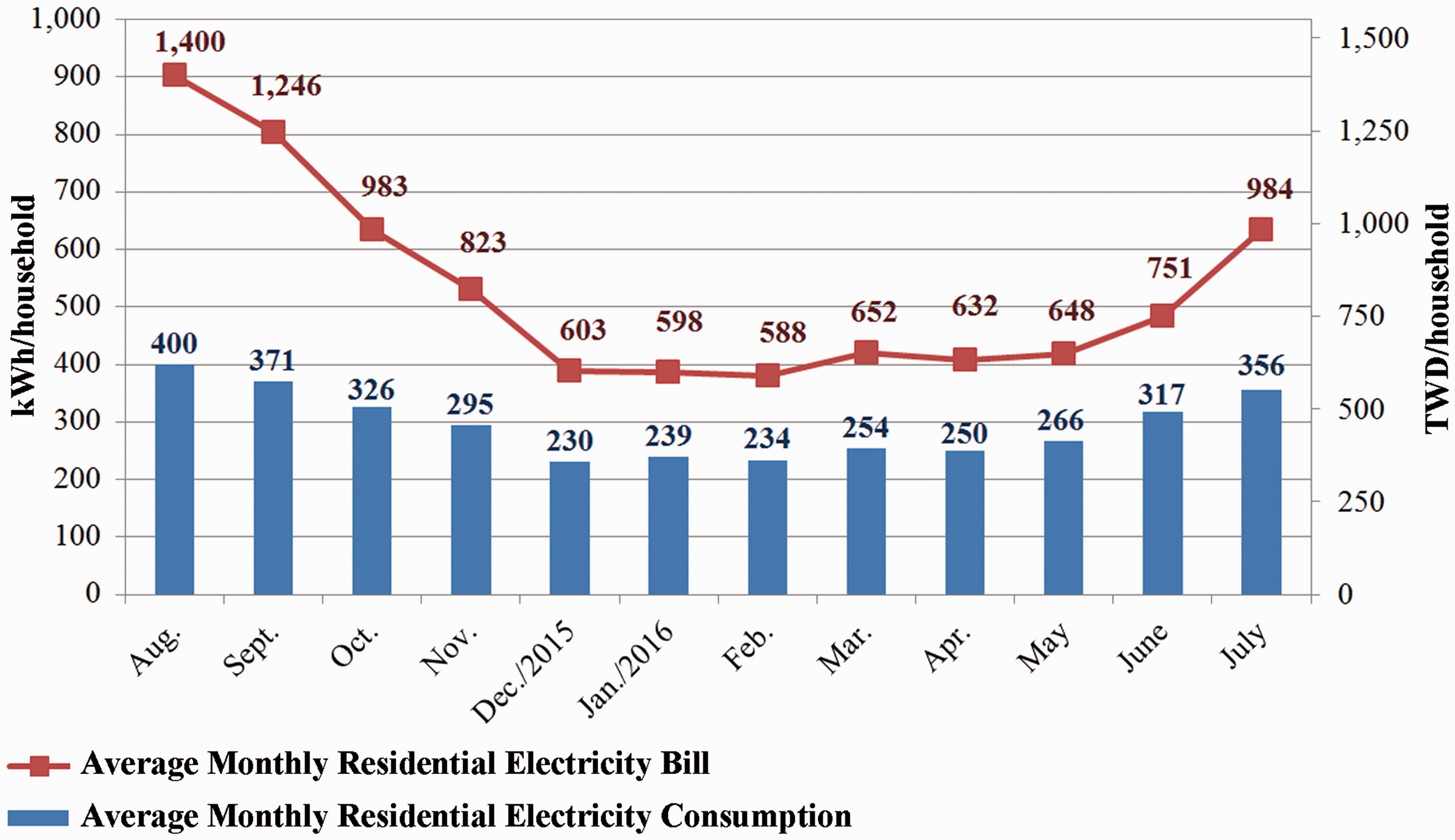
Urban form
A number of studies have been conducted on the relationships between urban density, community layout, and land use on energy consumption. Higher density cities and those with more multi-family housing have consistently been associated with lower residential energy consumption per household (Ewing and Rong, 2008; Kaza, 2010; Ko, 2013; Pitt, 2013). Concerning community layout, much of this research has involved investigating urban canyons and building orientation. Urban canyons are defined geometrically as the height to width (H/W) ratio of the space between adjacent buildings (Strømann-Andersen and Sattrup, 2011; see Figure 3). For any building orientation, cooling demands have been found to be lower in narrow urban canyon configurations than for buildings in wide urban canyons. In narrower canyons, the entrance of solar shortwave radiation is decreased during the day due to inter-building shadowing (Allegrini et al., 2012; Pisello et al., 2012; Strømann-Andersen and Sattrup, 2011). In fact, the shadowing effect of buildings has been found to be much greater than urban heat island (UHI) effects (Futcher et al., 2013; Yang et al., 2011). Related studies have been conducted in tropical climates that examined outdoor temperatures. Using field measurements or computer simulations, these studies have revealed that narrower urban canyons (Emmanuel et al., 2007; Krüger et al., 2011) and taller buildings (Kakon et al., 2010) were associated with lower outdoor temperatures and greater thermal comfort.
An urban canyon in Tainan City that is neither wide nor narrow, but where the average heights (H) of the buildings along the street are approximately the same as the street width (W).
In addition, higher albedo surfaces in street canyons have been found to have only a minimal effect on cooling demands, because these surfaces also lead to an increase of radiation entrapment (Allegrini et al., 2012; Pisello et al., 2012; Yang et al., 2012). However, such surfaces have been shown to affect the availability and distribution of daylight, and the associated energy use for artificial lighting in buildings (Strømann-Andersen and Sattrup, 2011).
Building orientation research has revealed that the best orientation for reducing energy consumption depends on the local climate. In the subtropical climate experienced in Tainan City, Taiwan, studies have found that west-facing housing used more electricity than those facing other directions, followed by housing facing east, south, and north, respectively (Lai and Wang, 2011; Lin et al., 2004).
The most important connection between land use and building energy consumption concerns the presence of green areas, such as city parks and gardens. Research has consistently revealed that nearby green areas can reduce building energy consumption (Ca et al., 1998; Wong et al., 2011) and that such areas can lower the surrounding urban air temperature from 0.5 km up to over 1 km away (Chen and Wong, 2006; Lin et al., 2015; Upmanis et al., 1998).
Building characteristics, demographic factors, and occupant behavior
Researchers have discovered that the energy performance of buildings with similar functions can display a 20-fold variation. The most important factors involve building design features (2.5× variation or about 30.6% of the total variation), followed by systems efficiency (2× variation or about 23.1%) and occupant behavior (2× variation). These researchers have also speculated that urban form (e.g. density, community layout, land use) may be largely responsible for the remaining 2× variation that has yet to be completely explained, and have documented through computer simulation that such features can affect energy use by almost 10% (Baker and Steemers, 2000; Ratti et al., 2005).
Important building characteristics linked with greater energy consumption include larger household living areas, older buildings, and detached dwellings (e.g. single-family homes) as compared with multi-family dwellings (e.g. townhouses, apartments, condominiums; Kaza, 2010; Min et al., 2010; Nelson et al., 2012; Stupka and Kennedy, 2010; Yun and Steemers, 2011). The average household energy utilized per floor area, though, has been found to decrease in residential homes as floor areas increase. The reason for this involves what might be termed the lower energy intensities of sizable (larger) scales (LEISS), with similar household appliances being used in homes that differ in size (Kaza, 2010; Lai and Wang, 2011; Nelson et al., 2012; Touchie et al., 2013). Concerning systems efficiency, ownership of air-conditioners and clothes dryers (Chen et al., 2010; Min et al., 2010; Tso and Yau, 2003, 2007), central as compared with individual room air conditioners (Nelson et al., 2012), and electric water heaters as compared with natural gas or solar (Chen et al., 2010; Hu et al., 2013) have been associated with greater electricity and overall energy usage.
Last, demographic factors and occupant behavior have been shown to influence levels of energy consumption. For example, higher income, larger family size, and larger numbers of non-adult family members have been consistently connected with greater energy consumption (Druckman and Jackson, 2008; Hu et al., 2013; Tso and Yau, 2003; Vassileva et al., 2012; Yun and Steemers, 2011). In addition, energy-saving attitudes and behaviors of building occupants have been found to affect energy consumption (Bartusch et al., 2012; Faruqui et al., 2010; Kang et al., 2012; Kim et al., 2013; Ouyang and Hokao, 2009; Teŕes-Zubiaga et al., 2013), with some researchers concluding that such attitudes and behaviors are the second most dominant factor in determining household energy use following climate (Yun and Steemers, 2011).
Lack of corresponding government data
With regard to urban form, building characteristics, demographic factors, and occupant behavior, government information concerning albedo surfaces, types of dwelling (e.g. single-family homes, townhouses, apartments, condominiums), ownership of different types of home appliances and heating and cooling systems, and the energy-saving behaviors of household occupants in each community was not available. Concerning the validity of the results of this study, it was hoped that the large number of households considered would randomly distribute all such potentially confounding variables across the 231 communities examined.
Objectives
The main objectives of this study, which can be considered a type of ecological study in which groups are studied rather than individuals, are to first identify associations between household electricity consumption and urban form factors, building characteristics, and demographic indicators. The following gaps in the current understanding of urban form were investigated:
Which urban form factor has the strongest relationship with energy usage? Studies have primarily examined urban density, community layout, or land use factors separately without considering all three simultaneously. Is household electricity consumption on a citywide scale more dependent upon urban form factors or building characteristics? Most studies have either surveyed or computer simulated only small sections of a city. At different urban densities, are different urban form factors and buildings characteristics more strongly related to household electricity consumption?
Second, the insights gained by investigating these associations will be used to formulate preliminary hypotheses that can be investigated in future studies.
Method
Dependent variables
Two dependent variables were examined separately in this study, namely average household electricity consumption and average household electricity consumption/floor area. The average household electricity consumptions for each of the 231 communities in the study site for the year 2010 were obtained by selecting residential cases only from the Environmental Protection Administration (2010) website. The overall average for these communities was 4661 kWh/year, with a minimum and maximum of 298 to 7260 kWh/year, respectively, and a standard deviation of 1208 kWh/year. The year 2010 was chosen because this was an official census year, which resulted in the most recent complete database in the past five years.
The second dependent variable, the average household electricity consumption/floor area for each of the 231 communities for the year 2010, was calculated by dividing the average household electricity consumption of each community by its corresponding average household living area (floor area). The data concerning the average household living area for each community were obtained from the Ministry of the Interior (2011). The overall average of these communities was 107.2 kWh/m2/year, with a minimum and maximum of 6.4 to 198.9 kWh/m2/year, respectively, and a standard deviation of 27.9 kWh/m2/year.
Explanatory variables
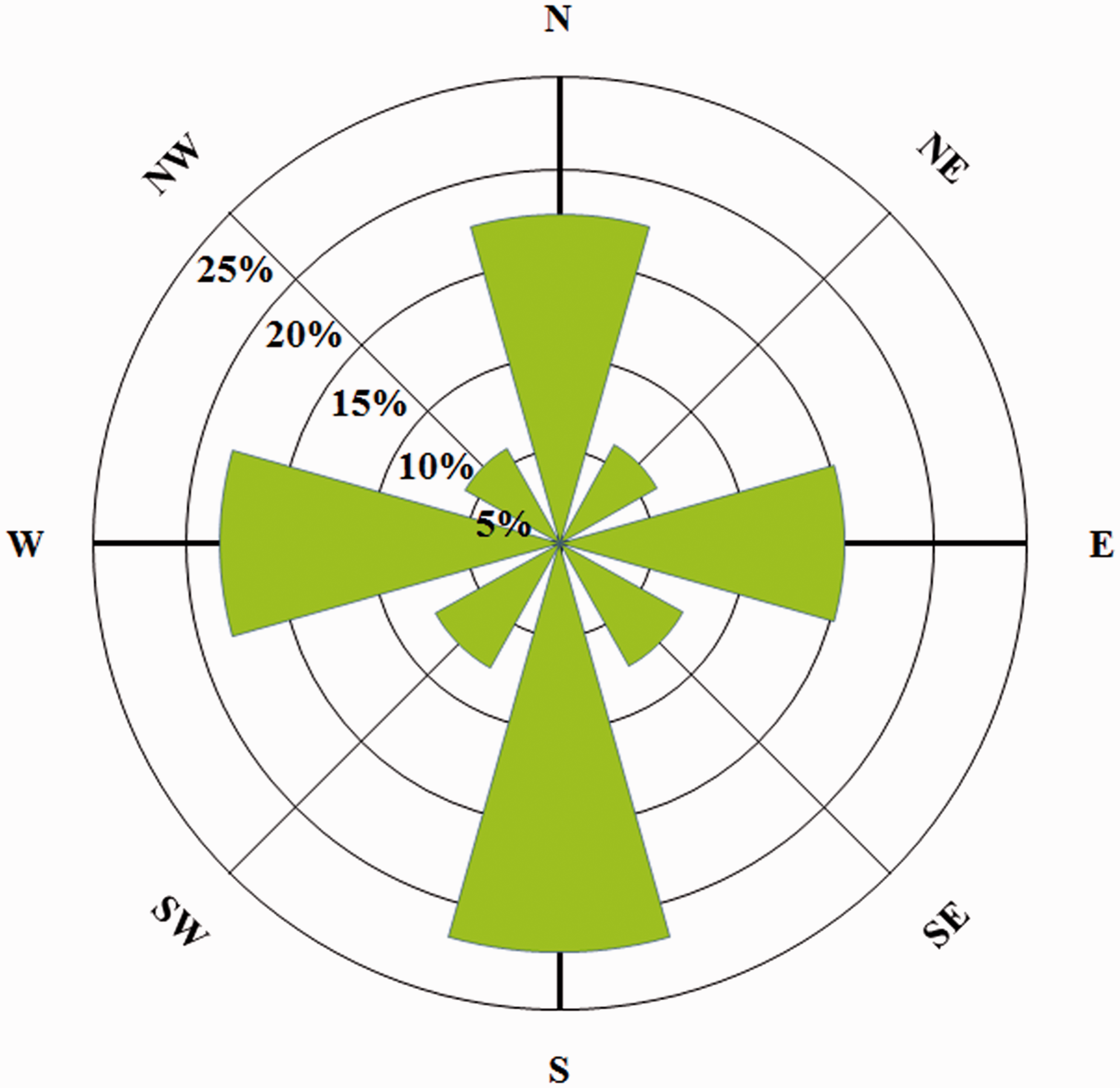
The explanatory variables were categorized as urban form factors, building characteristics, and demographic indicators. These data were obtained from the Taiwan national and Tainan City government databases, as referenced in Figure 4. Averages rather than the median values corresponding to each community in the study site were the only information available. The validity and uncertainties of this information and the derived variables are unknown. Box plots displaying the data distribution of these variables, other than building orientation, are shown in Figure 4. Building orientation is displayed in an orientation rose in Figure 5.
Box plots of the explanatory variables involving urban from factors, building characteristics, and demographic indicators corresponding to the 231 communities. Orientation rose displaying the average building orientations, for the four cardinal and four intermediate directions, of all of the residential buildings within the 231 communities.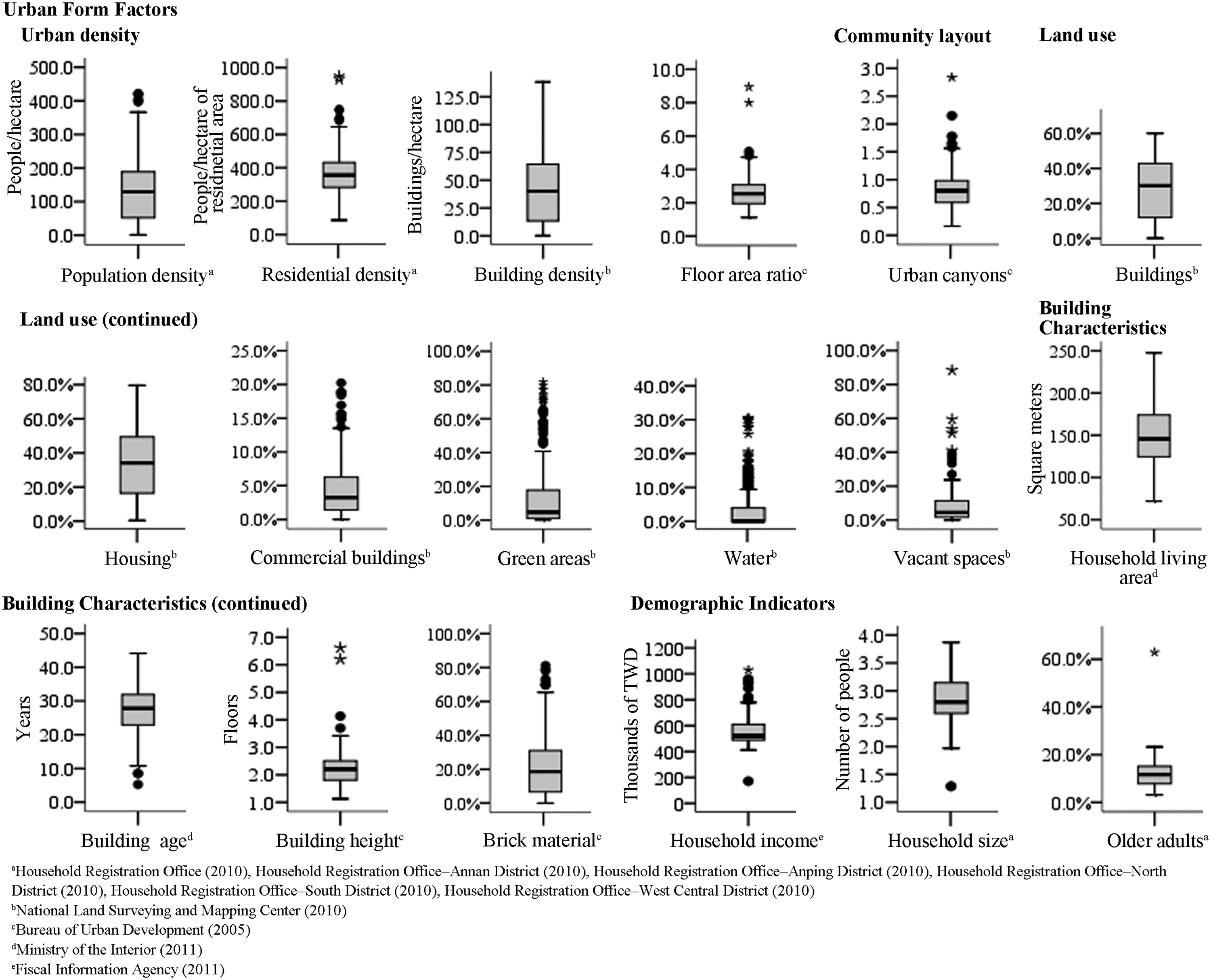
The urban form factors consisted of three subcategories, namely, urban density, community layout, and land use. Urban density was measured with population (people/hectare), residential (people/hectare of residential area), and building densities (buildings/hectare), and floor area ratio (FAR), which is the ratio of the total area on all floors of a given residential building to the size of the land on which this building is constructed. The community layout variables included urban canyons and building orientation. The land use variables were comprised of the percentages of the land in each community occupied by buildings of any type, housing, commercial buildings, green areas (e.g. agriculture, forests, parks, gardens), water, and vacant spaces (e.g. vacant land, abandoned military property with no buildings or trees, wasteland).
The residential building characteristics studied included household living area (floor area), building age, building height, and the percentage of buildings made out of brick in each community. Approximately 90% of the homes in Tainan City are built out of reinforced concrete, with the rest being built primarily out of brick. Most of the reinforced concrete homes consist of concrete frames and brick infill walls, with the newer homes consisting of both concrete frames and concrete infill walls (Hsieh and Forster, 2006; Yin, 2000). Last, the demographic indicators examined included average household income (after-tax household income), household size (number of people per household), and percentage of older adults (percentage of people over 65).
The values of some of the urban form factors, specifically urban canyons, building orientation, and the land use percentages, and one of the building characteristics, namely building height, were calculated with the ArcGIS 10.0 software. The average urban canyon values for each community were estimated as follows:
Step 1. For each building in the community, the corresponding street width (W) was estimated by subtracting the distance between the centroid of each building’s footprint to the nearest property line, from the distance between this centroid to the nearest street centerline. This value was then doubled. Step 2. Each building height (H) was divided by the corresponding street width (W). Building height was approximated by multiplying the total number of floors, provided on a GIS map, by 3 m, which is the average height of one floor in Taiwan’s residential buildings. Step 3. A weighted arithmetic mean of these H/W values was calculated for each community, weighted by the corresponding area of each building’s footprint.
This estimation of urban canyon values assumed that the distances from the front of each building to its front property line and building depths were equal, and that there was a building on the opposite side of the street. The estimate used in Step 1 resulted in negative distances and abnormally large distances for 22.3% of the 92,352 residential buildings located in the study site. These distances and corresponding buildings were removed from the database before proceeding to Step 2.
Building orientations were estimated as follows:
Step 1. For each building in the community, the direction of the line from the centroid of each building’s footprint to the nearest street centerline was determined. This direction was assumed to be perpendicular to the front façade of a building. Step 2. A weighted arithmetic mean of these directions was calculated for each community, weighted by the corresponding total floor area of each building. Step 3. The percentages of these directions falling into each of the eight cardinal and ordinal directions for a given community were calculated.
Statistical analyses
First, multiple linear regression was used to determine the urban form factors, building characteristics, and demographic indicators significantly associated with the average household electricity consumption and average household electricity consumption/floor area of each community. Multiple linear regression was utilized to gain insights into the relative strengths of the associations between multiple explanatory variables and these two dependent variables. Polynomial regression models, a special type of multiple linear regression, were used to better capture the relationships between these explanatory variables and these two consumptions.
Second, the elasticity and marginal effects of each significant explanatory variable with respect to both types of consumption were calculated, to provide additional information concerning the relative strengths of the connections between the explanatory and dependent variables. These elasticities and marginal effects were averaged across the 231 communities and also subgroups of these communities, based on whether the population densities were below or above the median population density. The elasticity formulas utilized in these calculations are listed in Appendix 1.
Results
Urban form factors
Household electricity consumption, Panel A, and household electricity consumption/floor area, Panel B, regressed onto the urban form factors, building characteristics, and demographic indicators explanatory variables.
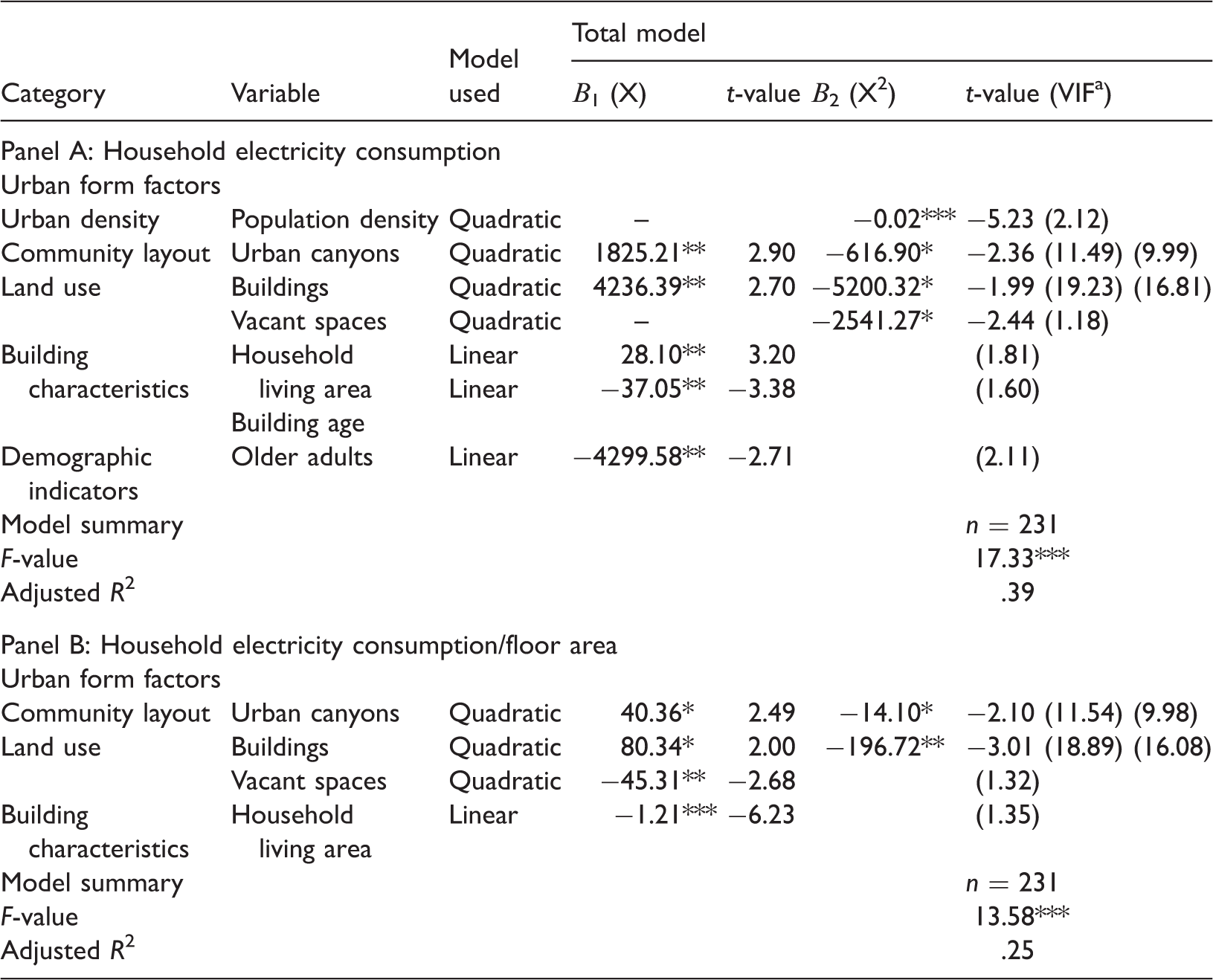
The high variance inflation values (VIF) for the quadratic models are caused by the inclusion of powers of the corresponding variables and does not adversely affect the results of the other explanatory variables.
p < .05; **p < .01; ***p < .001.
The urban canyon quadratic model revealed that both household electricity consumption and household electricity consumption/floor area increased with the narrowing of urban canyons up to the threshold ratios of 1.5 and 1.4, respectively, after which such consumptions decreased with increasing magnitude. To the best of our knowledge, this finding has not been reported in past studies. One explanation focuses on the shadow effects of buildings (Allegrini et al., 2012; Futcher et al., 2013; Pisello et al., 2012; Strømann-Andersen and Sattrup, 2011; Yang et al., 2011). Perhaps only in narrower urban canyons (larger H/W ratios) do these inter-building shadows become significant in lowering building cooling demands. Moreover, in agreement with the findings of other studies, urban canyon narrowness was found to be more important than building orientation or the presence of vegetation in reducing household energy usage (Allegrini et al., 2012; Pisello et al., 2012; Strømann-Andersen and Sattrup, 2011). Both building orientation and green areas were not associated with either dependent variable in our study.
Correlations among the explanatory variables, including population density, urban canyons, and the land use, building characteristics, and demographic indicators, used in this study.
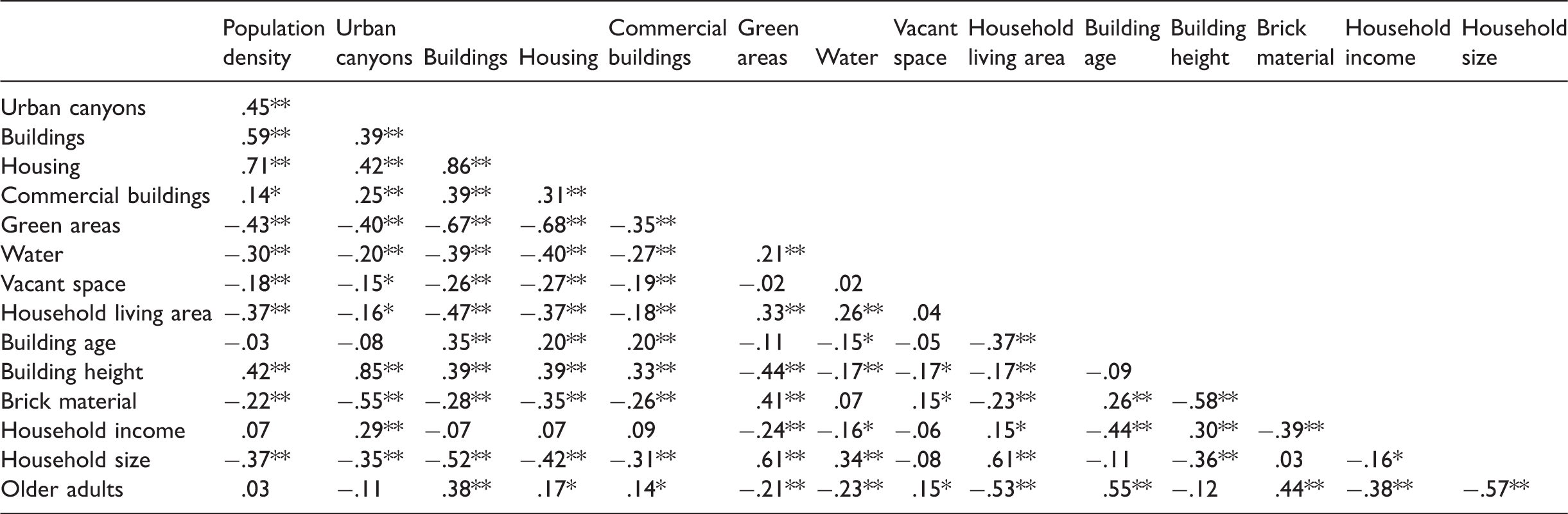
p < .05; **p < .01; ***p < .001.
Building characteristics
Elasticity and marginal analyses of the significant regression explanatory variables at different population densities corresponding to the dependent variables household electricity consumption, Panel A, and household electricity consumption/floor area, Panel B.

The communities were divided into two groups based on the median population density of the 231 communities used in this study, namely 129.5 people/ha.
The result of older homes being associated with lower household electricity consumption was, however, not expected. Many studies have concluded that newer buildings are more energy efficient than older buildings (Bartusch et al., 2012; Chen et al., 2010; Holden and Norland, 2005; U.S. Energy Information Administration, 2013). Nonetheless, there are two possible explanations for this contrary finding. The older homes in this study were found to have smaller household living areas as compared with those of the newer ones and to be occupied by residents with lower household income (see Table 2). Some researchers have concluded that regarding energy use, the size of the household living area was more important than the age of the housing (Holden and Norland, 2005). In addition, lower income residents have been found by many studies to be associated with lower household energy consumption (Chen and Ng, 2013; Druckman and Jackson, 2008; Min et al., 2010; Santamouris et al., 2007; Teŕes-Zubiaga et al., 2013; Vassileva et al., 2012; Yun and Steemers, 2011).
Concerning household electricity consumption/floor area, changes in household living area also had the strongest connection with this second dependent variable (see the overall column in Panel B of Table 3). However, increases in household living area were related to decreases in such consumption. This result is supported by the findings of other studies and demonstrates the importance of LEISS associated with larger homes (Kaza, 2010; Lai and Wang, 2011; Nelson et al., 2012; Touchie et al., 2013). In addition, no connections were found between household electricity consumption/floor area and any of the other building characteristics that this study examined.
Demographic indicators
A higher percentage of family members comprised of older adults in a given community was positively associated with lower household electricity consumption, but was not associated with household electricity consumption/floor area (see Table 1). Greater percentages of older adults were associated with smaller household living areas, older buildings, and lower household income (see Table 2). These relationships may explain why older adults were an explanatory predictor of household electricity consumption.
On the other hand, in addition to older adults, population density and building age were not found to be significant predictors of household electricity consumption/floor area. One can speculate that the influence of LEISS may be partly responsible, because household living area was negatively correlated with all three of these explanatory variables (see Table 2).
Lower and higher community population densities
At different urban population densities, different urban form factors and building characteristics were found to be more strongly related to household electricity consumption and household electricity consumption/floor area. At lower population densities, variables reflecting the beginning growth of built environments, specifically reductions in vacant spaces and increases in household floor area, were more closely associated with increases in household electricity consumption as compared with higher density communities (see Table 3). A similar relationship concerning reductions in vacant spaces was found for household electricity consumption/floor area. In contrast, increases in household living area were connected with greater decreases in household electricity consumption/floor area.
At higher population densities, variables representing even more densely built environments, specifically greater population density and building land use percentage, were connected with greater decreases in household electricity consumption, as compared with lower density communities. For household electricity consumption/floor area, a similar relationship was found for increases in building land use percentage (see Table 3).
Discussion
This ecological study examined real-world data corresponding to a citywide scale, and comprehensively examined the connections between a number of urban form factors, building characteristics, and demographic indicators with both household electricity consumption and household electricity consumption/floor area. The results provide valuable insights into both the three questions posed in the introduction and the hypothetical questions related to the findings that only further research can answer.
Summary of the results
First, of the urban form factors examined, greater population density was most strongly associated with the reduction of household electricity consumption. This was followed, respectively, by greater urban canyon narrowness after a threshold level was surpassed, and greater percentages of vacant spaces and building land use, after the latter surpassed a threshold level. Household electricity consumption/floor area was also associated with these latter three factors, and threshold levels involving urban canyons and building land use were also found.
Second, building characteristics, specifically smaller household living areas, had the strongest connection with lower electricity consumption, followed by greater building age. The importance of LEISS was also revealed, with increases in household living area being associated with decreases in household electricity consumption/floor area.
Third, with regard to urban population densities, the findings suggest that at the higher levels of population densities found in the communities studied, even greater densities could lead to an overall reduction in average household electricity consumption. On the other hand, at lower population densities, perhaps non-built areas should be safeguarded and larger household living areas should be restricted to reduce average household electricity consumption. Hence, different policies concerning these factors may be needed at different urban densities.
Hypothetical questions for further studies
Below these thresholds, the effects of LEISS are perhaps more important as household living areas become smaller with increasing population density, resulting in an initial increase in consumption until these threshold levels are reached. Additional studies must be conducted to better understand the impacts of LEISS, urban canyons, and built areas at both lower and higher population densities on residential energy usage in subtropical climates. These studies must also take into account the local effects that urban canyons have on wind, air and noise quality, and sunlight penetration.
Limitations
An important limitation of this study centers on the relatively small sample size involving 231 communities, which resulted in the use of simplified statistical analyses. The main disadvantages of ecological studies involve finding associations at the group level that may not exist at the individual level. Nonetheless, the merits of using these simplified models include the uncovering of potentially valuable insights and the development of additional questions concerning household energy usage. These questions may spur further studies that incorporate a larger real-world database, a survey of individual households, or more detailed and comprehensive computer simulations.
Conclusions
In this study, urban form factors, building characteristics, and demographic indicators were confirmed to have simultaneous, significant connections with household electricity consumption. Our investigation used real-world data involving a large area of a city with a subtropical climate, where air-conditioning usage can be responsible for the greatest percentage of yearly household electricity usage. The results revealed that the most important urban form factors involved population density and urban canyons, followed by greater percentages of vacant space and building land use. In addition, building characteristics, namely household living area and building age, were found to be more closely linked to electricity consumption than any of the urban form factors or demographic indicators investigated. The importance of LEISS was also revealed by the connection found between larger household living areas and reductions in household electricity consumption/floor area.
Furthermore, the findings suggest that at the higher levels of urban densities found in the communities studied, even greater densities could lead to an overall reduction in average household electricity consumption. In fact, only after surpassing respective threshold levels were both narrower urban canyons and greater building land use percentages associated with lower electricity usage. Apparently, only with narrower urban canyons and at greater building densities do the cooling benefits of inter-building shadows become effective in lowering a community’s average household electricity consumption.
The results also led to the posing of three hypotheses involving population density, economies of scale, inter-building shadows, and the clustering of buildings. Additional research will be required to more fully understand these hypotheses before urban policies can be established regarding the reduction of residential energy usage. Notwithstanding the deficiencies of this study, the findings of this study nonetheless suggest that an urban model that emphasizes the clustering of buildings in the built areas and that provides larger percentages of non-built land use in the adjoining areas should be considered. Both building characteristics and urban form factors must be incorporated into future urban planning policies that are created to produce more sustainable cities.
Footnotes
Declaration of conflicting interests
The author(s) declared no potential conflicts of interest with respect to the research, authorship, and/or publication of this article.
Funding
The author(s) disclosed receipt of the following financial support for the research, authorship, and/or publication of this article: This study was supported by funding from both the Research Center for Energy Technology and Strategy (RCETS) and the Department of Urban Planning at the National Cheng Kung University, Tainan, Taiwan.
 .
.