




Abstract
Nighttime data from the Defense Meteorological Satellite Program Operational Linescan System have been widely used to map urban/built-up areas (hereafter referred to as “built-up area”), but to date there has not been a geographically comprehensive evaluation of the effectiveness of using nighttime lights data to map urban areas. We created accurate, convenient, and scalable grid cells based on Defense Meteorological Satellite Program/Operational Linescan System nighttime light pixels. We then calculated the density of Landsat-derived built-up areas within each grid cell. We explored the relationship between Defense Meteorological Satellite Program/Operational Linescan System nighttime lights data and the density of built-up areas to assess the utility of nighttime lights for mapping urban areas in 50 cities across the globe. We found that the brightness of nighttime lights was only in moderate agreement with the density of built-up areas; moreover, correlations between nighttime lights and Landsat-derived built-up areas were weak. Even in relatively sparsely populated urban regions (where the density of the built-up area is less than 20%), the highest correlation coefficient (R2) was only 0.4. Furthermore, nighttime lights showed lighted areas that extended beyond the area of large cities, and nighttime lights reduced the area of small cities. The results suggest that it is difficult to use the regression model to calibrate the Defense Meteorological Satellite Program/Operational Linescan System nighttime lights to fit urban built up areas.
Introduction
Nighttime data from the Defense Meteorological Satellite Program (DMSP) Operational Linescan System (OLS) have been widely used to monitor and analyze human activities and natural phenomena, such as in assessments of urban areas (Elvidge et al., 1997; He et al., 2014; Imhoff et al., 1997; Stathakis et al., 2015; Tan, 2017; Zhou et al., 2014), estimates of energy use and carbon emissions (Fragkias et al., 2016; Oda and Maksyutov, 2011), and forecasts of gross domestic product (Liu et al., 2016; Zhao et al., 2017), and in combination with detailed census data and land use data to establish a correlation with population density at fine spatial scales (Bagan and Yamagata, 2015). Doll (2008) presents a comprehensive discussion of the collection, use, and pitfalls of the nighttime lights dataset. The Suomi National Polar-orbiting Partnership (Suomi NPP) satellite was launched in 2011, and the onboard Visible Infrared Imaging Radiometer Suite (VIIRS) sensor began collecting data in day/night bands (Elvidge et al., 2013; Miller et al., 2012; Stathakis, 2015). The VIIRS product provides several key improvements over DMSP/OLS data, and the procedures for generating VIIRS night-time lights involve a series of filtering steps to exclude low-quality data and extraneous features (Elvidge et al., 2017). However, VIIRS nighttime lights datasets do not meet the time-series requirements of certain studies (Levin and Phinn, 2016). Thus, DMSP/OLS nighttime lights data remain the dominant source of nighttime lights observations.
Since 1992, the nighttime lights annual composites dataset from the DMSP/OLS nighttime lights data has been processed and distributed annually with a spatial resolution of 30 arc-seconds by the National Centers for Environmental Information. Version 4 of the DMSP/OLS stable lights product provides annual composites of nighttime images with ephemeral light sources (such as fires and gas flares) and background noise removed (Baugh et al., 2010). Thus, monitoring global urbanization at a relatively high spatial resolution using DMSP/OLS data has become more convenient (Chen and Nordhaus, 2011).
Despite its unique features and advantages, the OLS sensor has shortcomings, such as 6-bit (0–63) quantization, lack of onboard calibration, a tendency of the light to become magnified over certain terrain types such as water due to overglow and the blooming effect (Henderson et al., 2003), and signal saturation in urban centers resulting from standard operation at a high-gain setting (Elvidge et al., 2007a). Of these, the light saturation problem and the blooming effect have been the two biggest obstacles in the application of the DMSP/OLS nighttime lights dataset.
Many methods have been developed to overcome these limitations. For example, threshold methods have been proposed wherein the pixels with nighttime lights digital number (DN) values larger than a threshold value are classified as urban and all others are classified as non-urban (Imhoff et al., 1997; Sutton, 2003; Xie and Weng, 2016). However, optimal threshold methods have not addressed the issue of DN variations within a city or among cities, preventing these methods from being used to consistently map urban areas and monitor urban dynamics (Tan, 2017). Furthermore, links between the extent of lighted area and urban area have been established by various researchers. Elvidge et al. (2007b) proposed a regression method to estimate the constructed impervious surface area, and Wu et al. (2013) and Zhang et al. (2016) proposed a regression model for the calibration of DMSP nighttime lights time-series data. Recently, researchers have proposed combining DMSP nighttime lights data and a vegetation index to reduce saturation in urban cores and increase the variation of the nighttime lights signal (Zhang et al., 2013; Zhuo et al., 2015).
Despite these efforts, the effectiveness of using DMSP/OLS data for mapping urban areas has not been fully assessed in previous studies. Therefore, it is essential to use quantitative techniques to evaluate the relationship between DMSP/OLS nighttime lights and urban parameters at a fine spatial scale for cities across the globe using a sufficient number of samples.
The goal of this study was to investigate the accuracy and reliability of urban areas estimated via DN values of DMSP/OLS nighttime lights imagery using data from urban/built-up areas in and around 50 cities across the globe. Specifically, we aimed to assess the robustness of the global scaling relationship between nighttime lights mapping of urban areas and Landsat-derived urban/built-up areas (hereafter referred to as “built-up areas”) for a set of diverse urban landscapes spanning five continents. Although some studies have addressed these questions (e.g. Stathakis et al., 2015), this type of quantitative evaluation has not yet been performed. These questions have direct relevance to several applications that use DMSP/OLS data, including the assessment of the extent of urban areas, fossil fuel carbon dioxide emissions, and electricity consumption.
Materials
Cities
The 50 study cities and dates of Landsat data used to extract built-up area.
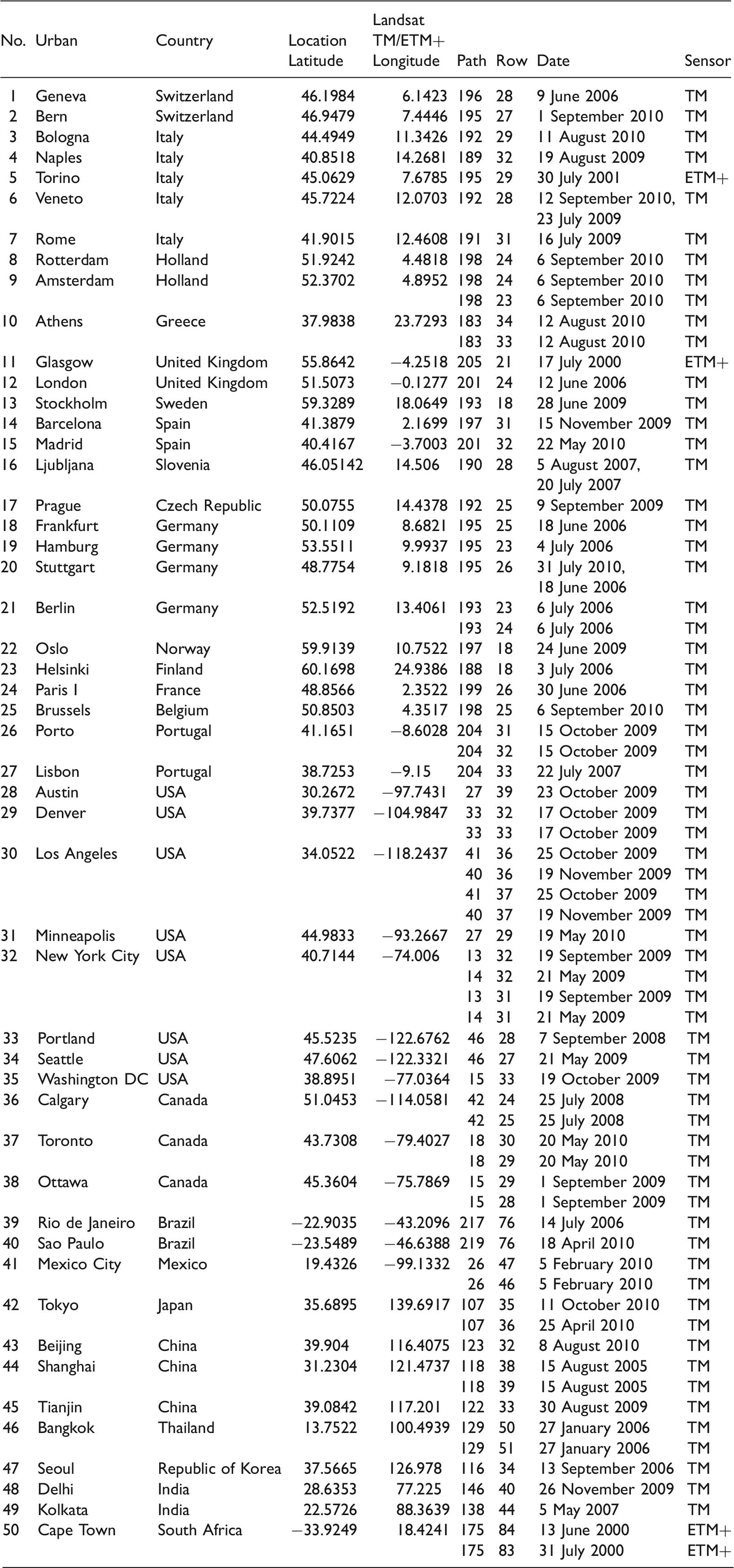
MODIS land cover type (MCD12Q1) products for 2005 with a spatial resolution of 500 m were obtained from the United States Geological Survey and used to delineate the urban boundaries of cities rather than using the administrative boundaries (Bagan and Yamagata, 2014). MCD12Q1 composites are publicly available at https://lpdaac.usgs.gov/products/modis (accessed 10 December 2016). The urban/built-up land cover class from the International Geosphere-Biosphere Programme land cover scheme of MCD12Q1 has been extracted (Bagan and Yamagata, 2014). The urban/built-up pixels were then buffered up to a distance of 10 km to define each urban boundary, except for Tokyo, for which we selected a nearly rectangular region to be consistent with previous studies (Letu et al., 2010).
Data
Landsat-derived land cover maps from around 2005 to 2010 (Table 1) and DMSP/OLS nighttime lights data were used in the study.
Although coarse spatial resolution (from 250 m to 2 km) monitoring provides global and national estimates of urban growth, coarse data might not be sufficiently reliable to accurately estimate the urban area of cities (Klotz et al., 2016; Lu et al., 2014; Potere and Schneider, 2007). Global availability of intercalibrated, accurately co-registered Landsat imagery with a 30 m resolution is ideal for extracting human settlements from different environments and cultures (Hansen and Loveland, 2012). Therefore, we selected Landsat-derived urban/built-up area data, which are independent from DMSP/OLS nighttime lights data, for the quantitative assessment of the mapping ability of DMSP/OLS nighttime lights for urban areas.
The land cover maps used in this study were derived from Landsat TM and ETM + images (Table 1; Bagan and Yamagata, 2014). The overall accuracy of the land cover maps for each city ranged from 77% to 95%. The land cover maps show six land cover classes, including built-up area. The built-up class includes all non-vegetative, human-constructed elements such as buildings, asphalt, concrete, and gravel. Other types of urban land use, such as golf courses, parks, and natural areas, are not included in the built-up class.
This study used version 4 of the DMSP/OLS stable lights product for 2005–2010 at a spatial resolution of 30 arc-seconds (1 km at the equator) (NGDC NOAA, 2013). The DMSP/OLS stable lights product archive was processed in annual increments by filtering the observations to remove the effects of moonlight, stray light, clouds, and ephemeral light sources such as fires and gas flares. Annual stable lights data are presented as DNs from 0 to 63, and DMSP/OLS nighttime lights composites are publicly available at www.ngdc.noaa.gov/eog/download.html (accessed 21 December 2016). For individual cities, we used DMSP/OLS stable lights data and Landsat TM/ETM + images from the same year to compare urban area results.
The population density of Tokyo in 2010 and the built-up area of Tokyo in 2009 were also used in additional quantitative analyses, which were considered useful because Japan provides accurate land use and population data gathered using a uniform and high-quality methodology. The population density was extracted from the Standard Grid Square population census data provided for every 5-year period from 1970 to 2015 by the Statistics Bureau, Japan (www.stat.go.jp/english/data/mesh/03.htm; accessed 10 December 2016). The Standard Grid Square (with a side of approximately 1 km) method divides all of Japan into meshes of approximately 1 km2 based on latitude and longitude. The built-up land use area was extracted from the 2009 land use map with a spatial resolution of 100 m (http://nlftp.mlit.go.jp/ksj/gml/datalist/KsjTmplt-L03-b-u.html; accessed 11 December 2016). Built-up areas include seven categories: high-rise building, factory, low-rise building, low rise density building, road, railway, and public facility.
Methods
Grid-cell-based analysis
The advantage of using grid cells is that they enabled us to aggregate the categories for each map and to perform a quantitative analysis (Bagan and Yamagata, 2014; Im et al., 2016). We developed a DMSP/OLS nighttime lights pixel-derived grid cell approach, which facilitated a link between DMSP/OLS data and Landsat-derived built-up areas. Previous research developed an analytical method based on 1 km2 grid cells to link DMSP/OLS nighttime lights data and land cover types (Bagan and Yamagata, 2015). This method involves overlaying the nighttime lights images onto a map with 1 km2 grid cells, computing the percentage of the DN values of nighttime lights imagery within each cell, and storing the results in a new attribute table. The drawback of this method is that most of the attributes in the grid cells are zero, which may affect the efficiency of the statistical analysis. To avoid this limitation, our approach directly uses the DMSP/OLS nighttime light pixels to create the grid cells. The main steps of the proposed approach are as follows.
(a) We converted the DMSP/OLS nighttime light pixels to grid square cells for each city and assigned a unique ID to each grid cell. Thus, the resolution and geolocation of the grid cell are the same as the corresponding resolution and geolocation of the nighttime light pixel. Note that the grid cells for each city were generated individually to avoid a possible position gap in the DMSP/OLS nighttime light pixel locations of different years. (b) We extracted the built-up area from the land cover maps of the 50 cities. We then overlaid the built-up area on the grid cells to compute the percentage of built-up area within each cell.
Because the proposed approach computes the percentage of built-up area within each nighttime light pixel, a spatially explicit evaluation of the relationship between the DMSP/OLS nighttime lights and urban area is feasible.
Quantitative analysis
To quantify the agreement between the built-up area estimated by the DMSP/OLS nighttime lights and the urban area derived from Landsat TM/ETM+, we (1) calculated the percentage of built-up area for each area corresponding to one pixel in the nighttime lights image and (2) tested the relationship between the percentage of built-up area and the DN value of the nighttime lights pixel for the 50 cities. The grid cells were sorted by percentage of built-up area in ascending order; calculation of the mean, median, and mode of the DMSP DN value was within intervals of 1% of built-up area (i.e. [0–1%], [1–2%], … [98–99%], [99–100%]). The correlation coefficients between the three statistical indicators (mean, median, and mode) of the DN value of the nighttime light pixel and the percentage of built-up area were then calculated.
The mean DN values were obtained by dividing the sum of the DN values of nighttime light pixels in the 1% interval (hereafter referred to as the “1% built-up interval”) by the number of nighttime light pixels within it. The median and mode were also estimated for each 1% built-up interval. The mean is given by

To calculate the median, we first arranged the sequence of DN values in ascending order. If the total number of nighttime light pixels was an odd number, the median is given by

If the total number of nighttime light pixels was an even number, then the median is given by

To calculate the mode, we first arranged the sequence of DN values in ascending order. If there were multiple values that occur equally frequently, we selected the smallest DN value as the mode.
Results
Analysis using Landsat-derived built-up area
Landsat-derived built-up area percentages of less than or equal to 20%, 30%, 50%, 70%, and 100% were exported separately, and the correlation coefficients between the percentage of built-up area in those regions and the corresponding DN value for nighttime light pixels were calculated (Figure 1).
Correlation coefficient between the nighttime lights DN value and percentage of built-up area. The cities are listed in Table 1. The black, green, blue, magenta, and red lines correspond to the percentages of built-up area as noted in the legend.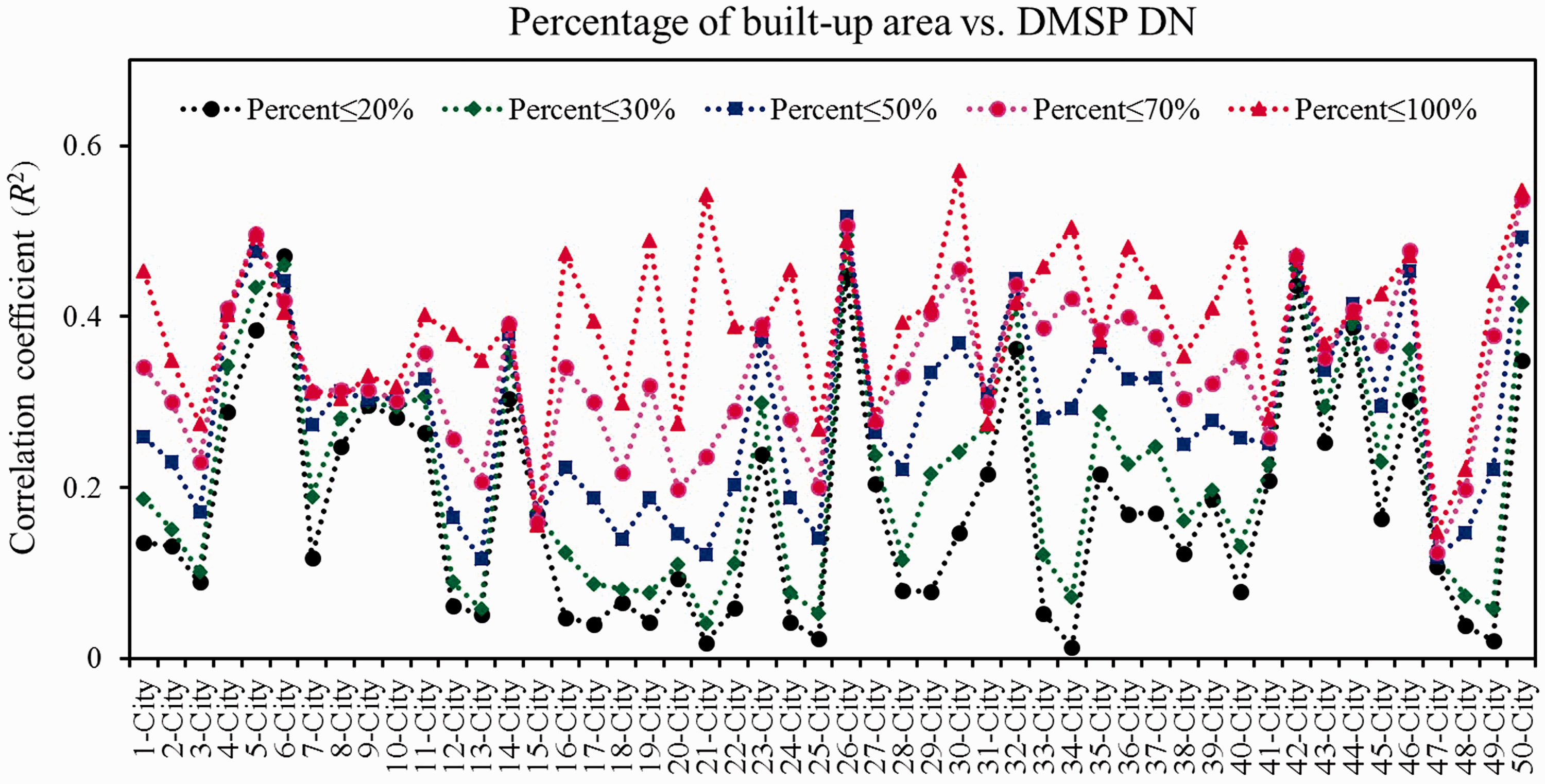
The correlation coefficients were generally higher as the percentage of built-up area increased, but the correlations were weak for most cities, even in low-density urban areas (built-up area ≤ 30%). Furthermore, there were almost no correlations in the low and moderate density urban areas (built-up area ≤ 70%) of Seoul, Delhi, Brussels, and Berlin (Table S1).
We also calculated the correlation coefficients between the percentage of built-up area for the various percentages and nighttime lights mean, median, and mode values (Figure 2). There is a relatively strong positive correlation between the nighttime lights mean and density of built-up area when the percentage of built-up area is ≤ 70%. However, the correlation between the percentage of built-up area and either the median or the mode of nighttime lights is weak for most of the cities.
Correlation coefficient between the percentage of built-up area and the (a) mean, (b) median and (c) mode of the nighttime lights DN values. The cities are listed in Table 1. The black, green, blue, magenta, and red lines correspond to the percentages of built-up area as noted in the legend.
Comparison of the correlation coefficients between the percentage of built-up area and nighttime lights values (Figure 2) showed that the correlation coefficient between the percentage of built-up area and DMSP mean was relatively higher than that of the percentage of built-up area and DMSP median, or percentage of built-up area and DMSP mode in relatively low-density urban areas (built-up area ≤ 50%). In contrast, the correlation coefficient between the percentage of built-up area and DMSP median, or percentage of built-up area and DMSP mode were weak in most of the cities (Table S2).
We also examined the relationship of the spatial distribution of the DN of nighttime lights imagery and the density of built-up areas. Figure 3 shows scatter plots of the relationship for all of the grid cells in Los Angeles, Bangkok, Shanghai, Barcelona, Beijing, Athens, Delhi, and Seoul. Due to space constraints, we display only these eight cities rather than all of the 50 cities.
Scatter plots illustrating the relationship between the percentage of built-up area from Landsat imagery vs. the nighttime lights DN values at the grid cell scale in Los Angeles, Bangkok, Shanghai, Barcelona, Beijing, Athens, Delhi, and Seoul.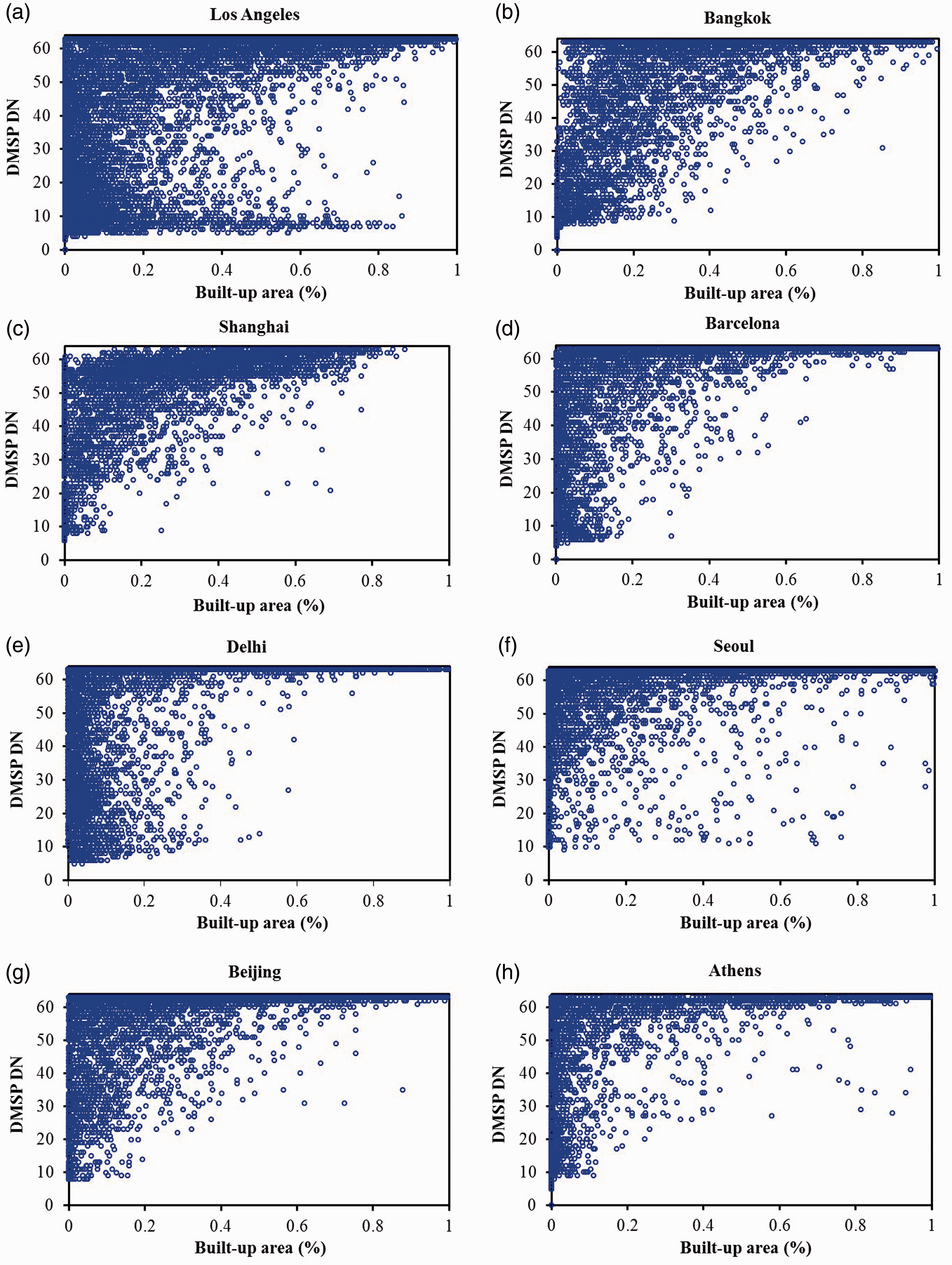
Although positive correlations are evident in low-density built-up areas, the correlations are low for each of these cities. Additionally, the relationships are extremely noisy. Therefore, the nighttime lights DN values do not seem to be sensitive to variations in built-up area density, and none of the correlations is statistically significant (p-value < 0.0001). Contrary to the assumption that most of the high nighttime lights DN value pixels will be distributed in the city cores, a large number of high nighttime lights DN value pixels were also distributed in low-density built-up areas (Figure 3). As a result, the correlation coefficients are low even in regions where the percentage of built-up area is ≤30%; in fact, the R2 values between the brightness of nighttime lights and a built-up area density of ≤30% were 0.24 (Los Angeles), 0.36 (Bangkok), 0.39 (Shanghai), 0.35 (Barcelona), 0.29 (Beijing), 0.29 (Athens), 0.07 (Delhi), and 0.12 (Seoul) (Figure 1).
To visualize the weak correlation more clearly, we selected the land cover maps of Beijing and Athens to highlight the relationship between brightness of nighttime lights and percentage of built-up area. As Figure 4 shows, the area indicated by high nighttime lights DN value pixels is larger than the built-up area in both cities (compare panels (a) to (d) in Figure 4). We also extracted the nighttime lights DN values that were >49 and cells with a built-up area density of ≤20% and then overlaid the extracted grid cells (rectangle polygons) onto the built-up area percentage maps (Figure 4(e) and (f)).
Land cover (a, b), DMSP/OLS nighttime lights DN value (c, d), and built-up area percentage maps with extracted grid cells (e, f) in Beijing and Athens.
The spatial distribution of built-up area density is considerably different from the shape of the nighttime lights DN value magnitude map. For example, it is clear that high nighttime lights DN values are distributed in low-density areas. Furthermore, the spatial distributions of higher DN value pixels in low-density areas are generally not related to land cover type.
Because the high nighttime lights DN value pixels are distributed throughout low-density built-up areas, it is difficult to use the built-up areas to detect the optical threshold for mapping urban areas from nighttime lights. It is also difficult to use low-density built-up areas to build a regression model to calibrate saturated nighttime light pixels.
Relationships between nighttime lights, land use map, and population census data in Tokyo
As an alternative to using built-up area derived from land cover mapping, we used the built-up area derived from a 2009 land use map to examine the relationship between built-up area and brightness of nighttime lights for Tokyo. We also examined the relationship between population density and brightness of nighttime lights for Tokyo.
The spatial distributions of the two types of built-up area maps differ considerably from the nighttime lights imagery (Figure 5(a) to (c)). The area of high DN value pixels is far larger than either of the two types of built-up area. In contrast, the spatial distribution of the population density (Figure 5(d)) is highly consistent with the two types of built-up area maps.
Visual representation of (a) the 2010 nighttime lights DN value, (b) 2010 land cover map (from Landsat TM), (c) 2009 built-up land use map, and (d) 2010 population density map for Tokyo.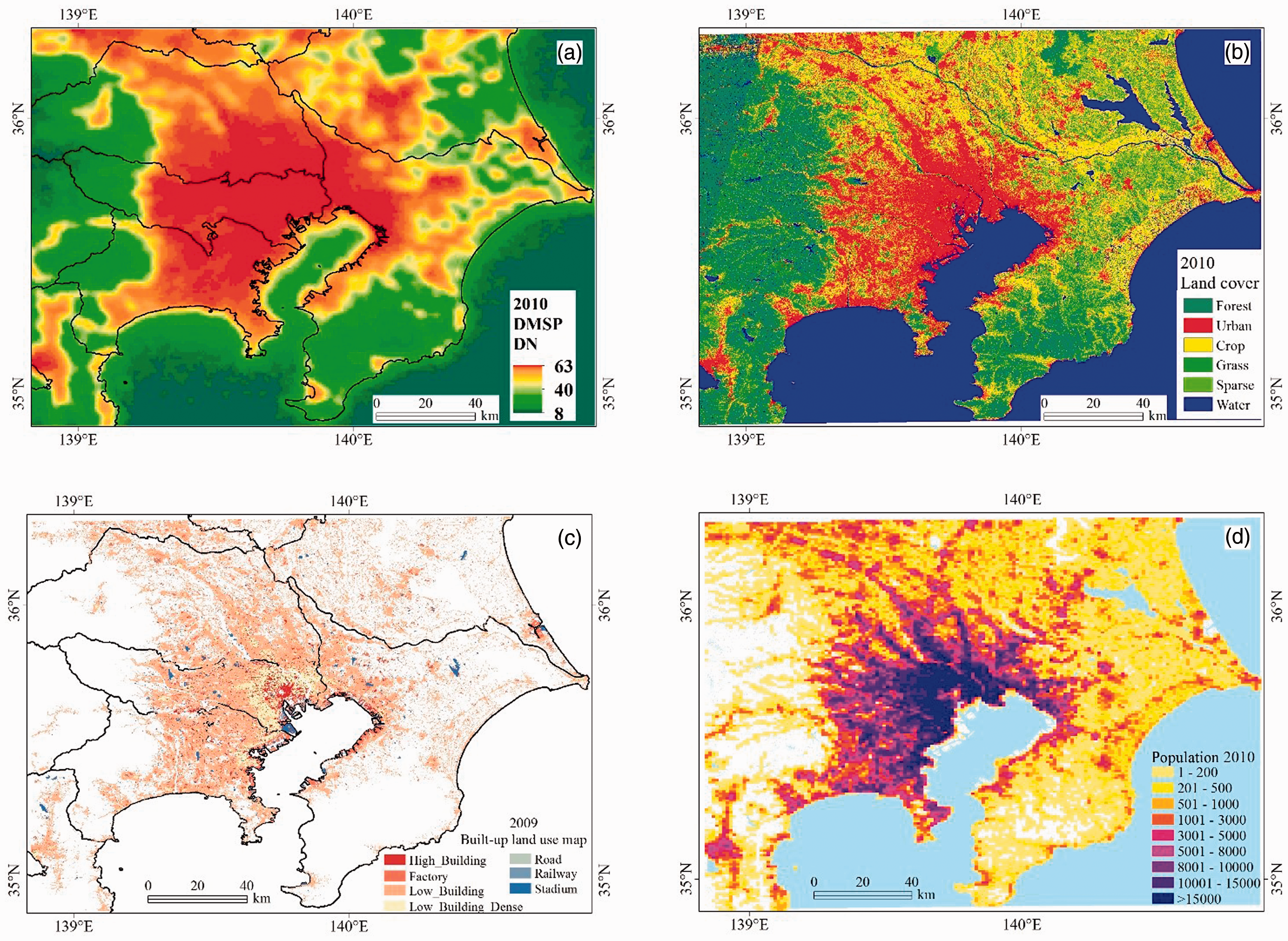
We aggregated the seven built-up categories in the built-up land use map of 2009 into one category to facilitate the comparison. We then overlaid the aggregated built-up land use map of 2009 onto the grid square cells derived from nighttime lights to compute the percentage of built-up land use area within each cell (Figure 6).
Scatter plots for Tokyo of (a) density of built-up area derived from land cover vs. density of built-up area derived from the land use map; (b) density of built-up area derived from land cover vs. nighttime lights; and (c) density of built-up area derived from the land use map vs. nighttime lights.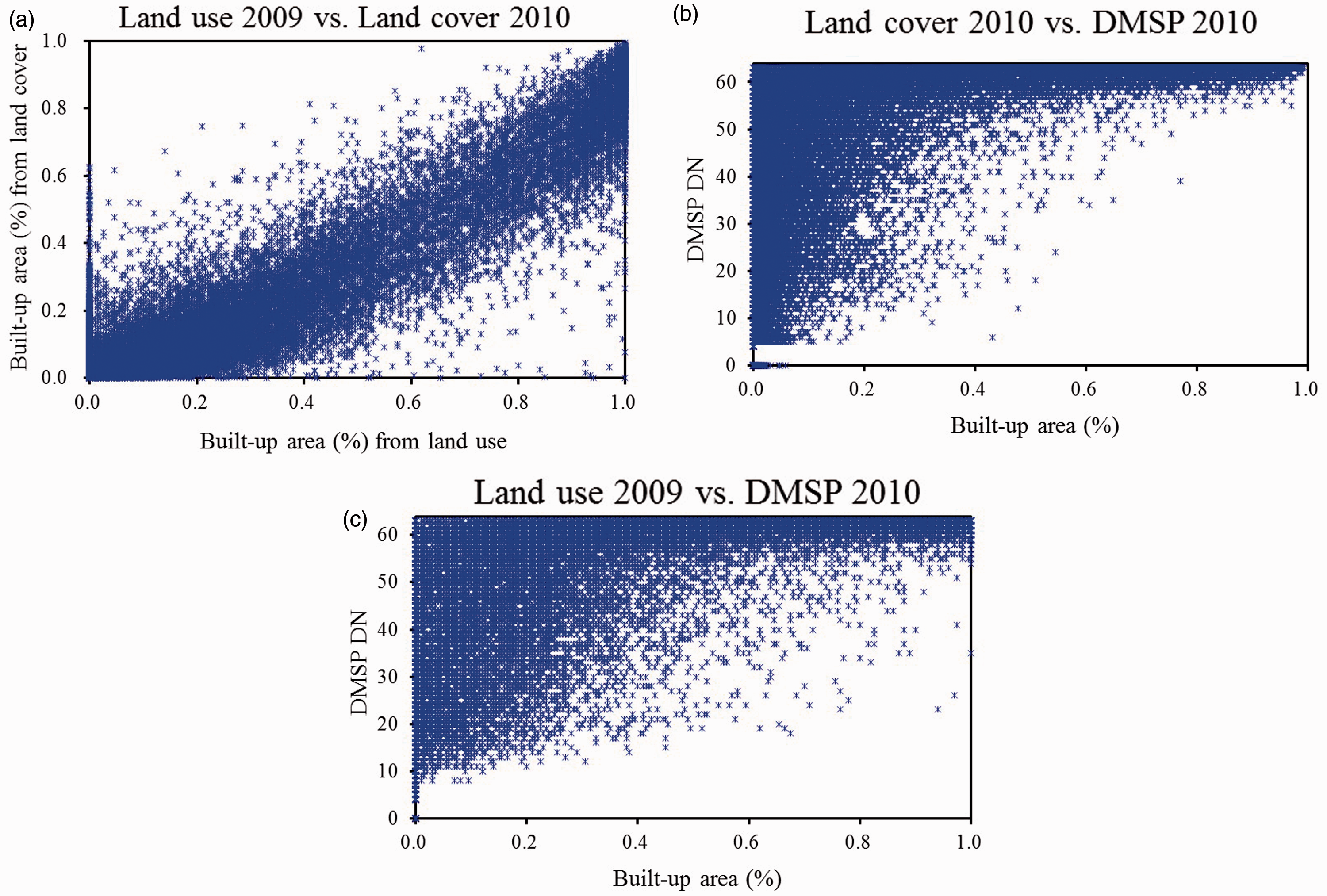
As Figures 5 and 6 illustrate, there was little difference between the built-up area density maps derived from land cover and land use. The spatial distributions of built-up area derived from land cover and land use are highly consistent with each other and have a high positive correlation coefficient (R2 = 0.90, p-value < 0.0001). In contrast, both built-up area density maps have weak correlations with nighttime lights (R2 = 0.47 and R2 = 0.53, respectively, p-value < 0.0001).
As before (Figure 4(e) and (f)), we extracted the grid cells (regions) that had high brightness values (nighttime lights DN > 49) and low built-up density (≤20%) from the land cover map for Tokyo, but we also used the land use map. We then overlaid the extracted grid cells onto the built-up area maps derived from land cover and land use (Figure 7).
Spatial distribution of high DN values of nighttime light pixels in low-density built-up areas in Tokyo: (a) nighttime lights vs. built-up area derived from land cover; (b) nighttime lights vs. built-up area derived from land use.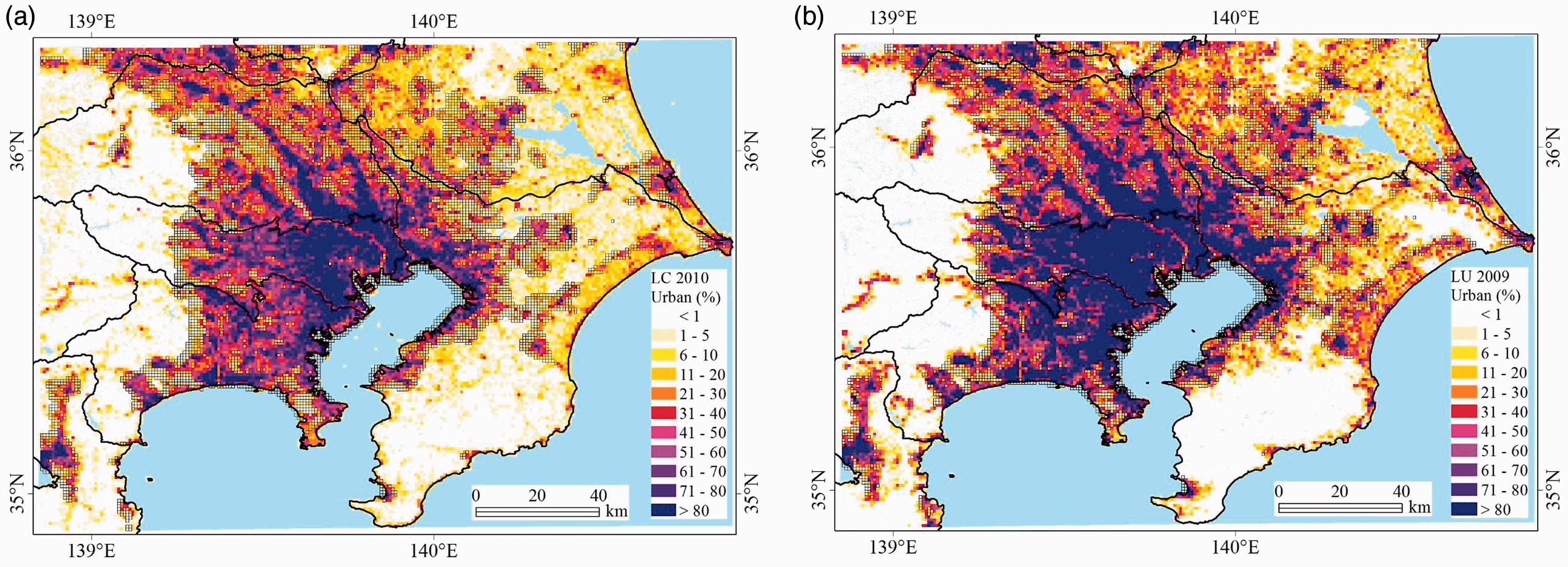
As Figure 7 shows, many of these bright nighttime light pixels were haphazardly distributed in low-density areas on the built-up area maps derived from both land cover and land use. Hence, the DMSP/OLS nighttime light brightness values do not appear to be sensitive to built-up density variations in Tokyo.
We also overlaid the nighttime light pixels that have a high DN value (>49) on the population density map of 2010 (Figure 8). As Figure 8 shows, in the center part of Tokyo, despite the population density being low, nighttime lights DN values generally exceed 49. However, in the other sparsely populated regions of Tokyo, there are almost no nighttime lights DN values that exceed 49, despite the population density being greater than 500 person/km2. As Figure 8 shows, the largest discrepancies occur mostly in suburban and rural areas. This indicates that the brightness of nighttime lights is strongly affected by the surrounding environment, regardless of population.
Spatial distribution of high DN values of nighttime light pixels on the population density map of 2010.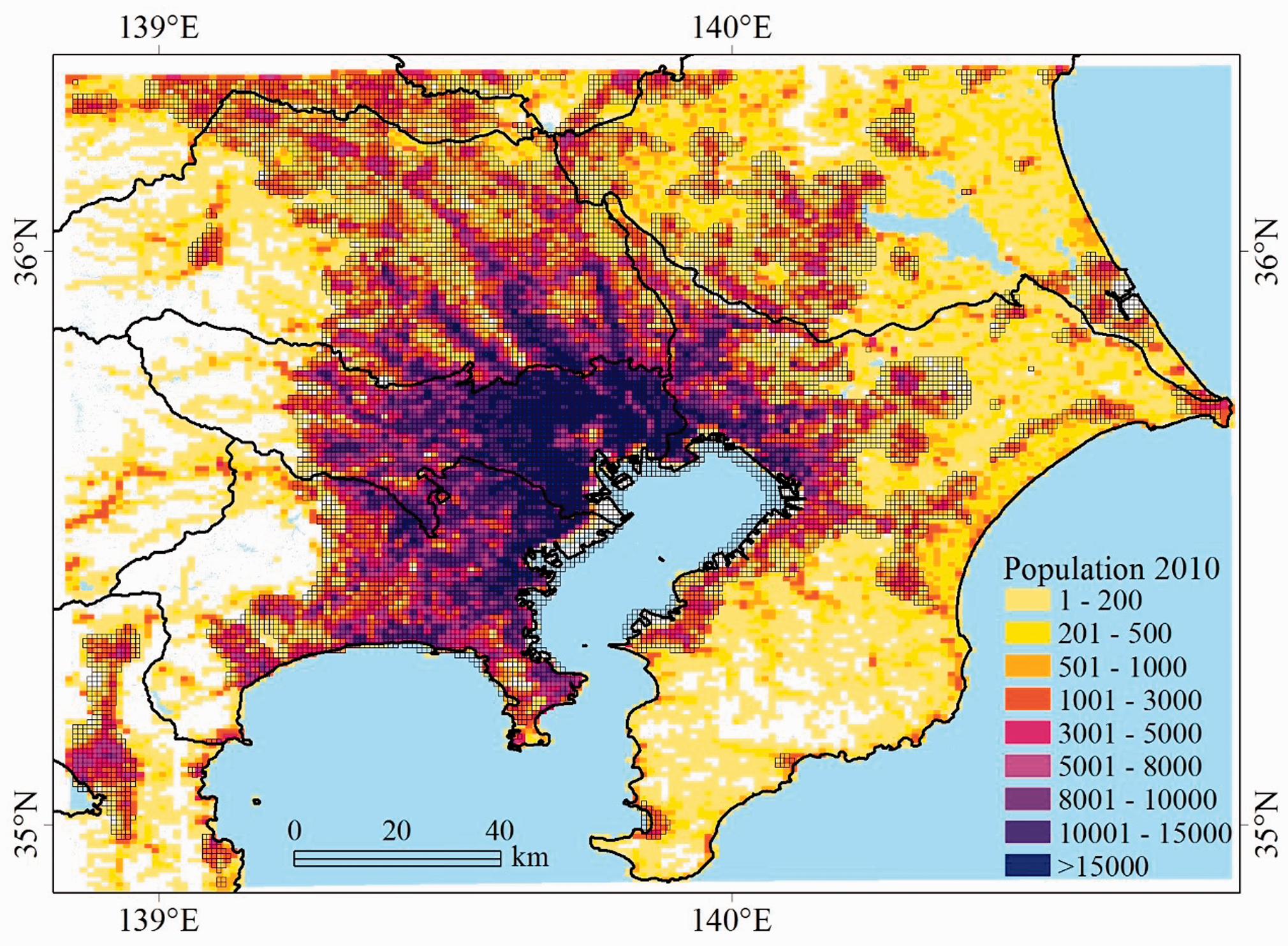
Discussion
Although previous studies have evaluated the utility of DMSP/OLS nighttime light data for mapping regionally and globally consistent urban areas, e.g., by using optimal thresholds methods (Henderson et al., 2003; Wei et al., 2014) or by using low-density urban built-up areas to calibrate saturated nighttime light pixels via regression models (Letu et al., 2010), our study reveals that nighttime lights imagery itself is not an effective tool to delimit urban extents. As shown in Figures 3 and 4, many bright nighttime light pixels (DN > 49) are haphazardly distributed in low-density built-up areas (built-up rate ≤ 20%). On the other hand, as Figures 7 and 8 show, the DN values of nighttime light pixels were mostly less than 50 in the western and southeastern parts of Tokyo, even though the built-up area density was greater than 30% and the population density was greater than 1000 person/km2. Therefore, nighttime light data tend to overestimate the built-up area in large cities but may tend to reduce the built-up area in less populated areas.
Landsat daytime imagery can discriminate between various types of land use/land cover because of the various spectral bands, whereas OLS nighttime imagery only provides single-channel observations and primarily measures light from outdoor infrastructure. Henderson et al. (2003) noted that non-urban land cover types in Landsat classification maps such as the lit pathways of parks and peri-urban areas contribute to a city's light emissions, which partly cause the brightness of nighttime lights to be weakly correlated with built-up rate.
Moreover, many bright nighttime light pixels (DN > 49) are haphazardly distributed in low-density built-up areas; thus, it is difficult to use them to determine the nighttime lights in optimal threshold methods for mapping urban areas. Furthermore, since small cities and towns are almost always excluded from high DN value nighttime light regions, it may be difficult to reduce the effect of nighttime light saturation effectively and to increase the variation of nighttime light signals by using a regression function or vegetation-index-based methods.
Therefore, irrespective of the desired function, limitations exist when using only DMSP/OLS stable light image products to map urban areas.
Conclusions
Our results provide an overview of the relationship between nighttime lights and density of built-up areas for 50 cities across the globe. Linking DMSP/OLS nighttime lights with built-up density via grid cells is an attractive approach for quantifying the capacity of DMSP/OLS nighttime light data to map regional and global urban areas. DMSP/OLS-derived grid cells have previously exhibited great potential for estimating spatially explicit urban variables over a range of geographic scales.
The results of this work indicate that there are no significant correlations between DMSP/OLS nighttime lights and density of built-up areas (p-value < 0.0001). This study also provides insights for future work to improve the accuracy of the DMSP/OLS-based urban area estimations. Regarding future activities, it is important to use the Landsat-based Global Human Settlement Layer (Pesaresi et al., 2016) or the new Global Urban Footprint (Esch et al., 2017) dataset derived from SAR imagery to assess the capacity of DMSP/OLS for urban area mapping.
Footnotes
Acknowledgements
This research was supported by the Environment Research and Technology Development Fund (S-10) of the Ministry of the Environment, Japan and supported by the NSFC (Grant No. 41771372).
Declaration of conflicting interests
The author(s) declared no potential conflicts of interest with respect to the research, authorship, and/or publication of this article.
Funding
The author(s) received no financial support for the research, authorship, and/or publication of this article.
Supplemental material
Supplemental material is available for this article online.
References
Supplementary Material
Please find the following supplemental material available below.
For Open Access articles published under a Creative Commons License, all supplemental material carries the same license as the article it is associated with.
For non-Open Access articles published, all supplemental material carries a non-exclusive license, and permission requests for re-use of supplemental material or any part of supplemental material shall be sent directly to the copyright owner as specified in the copyright notice associated with the article.
