



Abstract
With an increasing number of smart cities initiatives in developed as well as developing nations, smart cities are seen as a catalyst for improving the quality of life for city residents. However, current understanding of the risks that may hamper successful implementation of smart city projects remains limited due to inadequate data, especially in developing nations. The recent Smart Cities Mission launched in India provides a unique opportunity to examine the type of risks, their likelihood, and impacts on smart city project implementation by providing risk description data for area-based (small-scale) development and pan-city (large-scale) development projects in the submitted smart city proposals. We used topic modeling and semantic analysis for risk classification, followed by risk likelihood–impact analysis for priority evaluation, and the keyword co-occurrence network method for risk association analysis. The risk classification results identify eight risk categories for both the area-based and pan-city projects, including (a) Financial, (b) Partnership and Resources, (c) Social, (d) Technology, (e) Scheduling and Execution, (f) Institutional, (g) Environmental, and (h) Political. Further, results show risks identified for area-based and pan-city projects differ in terms of risk priority distribution and co-occurrence associations. As a result, different risk mitigation measures need to be adopted to manage smart city projects across scales. Finally, the paper discusses the similarities and differences in risks found in developed and developing nations, resulting in potential mitigation measures for smart city projects in developing nations.
Introduction
The concept of a smart city (SC) has gained attention across the globe in the past decade. Communities are leveraging the power of information and communication technologies (ICTs) to enhance resource management and improve different aspects of cities such as ranging from health, safety, education, and transportation (Bakıcı et al., 2013). In the last two decades, several developing countries have invested intensively in technologies to develop smart cities (Joss et al., 2013). India’s Smart Cities Mission (SCM) is a recent initiative launched by the Ministry of Urban Development to build 100 smart cities. SCM is the first significant step toward the comprehensive implementation of the SC concept in India and is described as “building cities that provide core infrastructure and give a decent quality of life to its citizens,” and promoting development of cities with “a clean and sustainable environment” using “smart” solutions (Ministry of Urban Development, 2015). SCM initiated two types of local development: (a) area-based (small-scale) development (ABD) projects that will either retrofit existing areas or carry out Green-field projects; and (b) pan-city (large-scale) development (PAN) projects that envisage the application of selected smart solutions to existing city-wide infrastructure (Ministry of Urban Development, 2015). As of March 2018, the ministry has released INR 10,459.2 Crores (i.e. 1.48 billion USD) to State/Union Territories for SC development (Ministry of Housing and Urban Affairs, 2018). Like India, several other developing countries have also provided a significant amount of financial support to launched SC initiatives. For instance, China invested around 15 billion USD in planning eco-cities (Joss and Molella, 2013), Rio de Janeiro invested 14 million USD in a Smarter Planet Initiative (Mora et al., 2017), and South Korea introduced a national strategy in 2007 to develop ubiquitous cities (Kim, 2016).
Previously, SC initiatives used to be constrained in developing nations due to a lack of public and financial support for these investments (Yigitcanlar and Lee, 2014). In the past decade, this situation has changed with more resources being allocated to SC development. The success of emerging SC initiatives in developing countries depends heavily on the implementation of the smart projects. Existing studies suggest national SC missions are challenged by several implementation risks. For instance, some policy experts argue that Jawaharlal Nehru National Urban Renewal Mission (JNNURM) failed because of implementation barriers, such as the limited public engagement, insufficient local management capacity, and a lack of interdepartment collaboration (An, 2015). Similar to JNNURM, the progress of project implementation under SCM has been very slow. The Ministry of Housing and Urban Affairs revealed that by February 2017 less than 3% of SC projects were completed and only 12% of central funds were released (Saldanha, 2018). Given these problems, understanding the landscape of risks in SC project implementation and how to prioritize risks according to the scale of projects is critical for successful SC project implementation. However, most prior SC studies have focused on the characterization of a SC and success factors for SC project implementation in developed nations (Hamza, 2016). Thus, there is a limited understanding of SC risks in developing nations due to a lack of data and research.
The recent launch of SCM in India provides a unique opportunity to examine the risks associated with ABD and PAN projects implementation, along with their likelihood of occurrence and impacts on project implementation. Through this research, we examined the risk landscape in implementing SC projects in a developing region by focusing on three research questions: (1) What are the various risks associated with SC project implementation in developing countries? (2) How do risk priorities vary for ABD and PAN projects? and (3) What are the possible co-occurrences of the various identified risks? The findings of this study may benefit city leaders, managers, and other SC implementers to pro-actively develop mitigation measures to enhance SC project management capacity in developing countries.
SC development and risk management
SC development and barriers to project implementation
SC literature suggests that SC projects are different from conventional projects, have a wide-ranging scope, and are therefore more complex to implement. SC projects typically involve a mixture of construction, infrastructure implementation, and ICT integration, in addition to meaningful public involvement and available human resources with sufficient technological capability. Further, the implementation of SC projects may not seem to be as malleable as assumed in the SC policy documents due to the existing infrastructure of the cities and the difference in the ideologies of the actors implementing the projects (Shelton et al., 2015). For instance, Valdez et al. (2018) observed that outcomes from the SC projects in Milton Keynes, UK, deviated from the initial policy documents. To avoid such deviation and to successfully implement SC projects, there is a need to bridge the gap between SC roadmaps and project deployment. But first, it is important to explore risks in SC development by focusing on the need for real-time city management by local authorities and other actors involved in SC implementation (Deakin, 2015).
Recent SC scholarship focuses on the study of SC initiatives implemented in developed countries from Europe and North America (Grimaldi and Fernandez, 2017; Mora et al., 2019), and Australia (Bulkeley et al., 2016). With the exception of Yigitcanlar and Lee (2014) who focused on SC initiatives in South Korea and Gaffney and Robertson (2018) who discuss SC initiatives in Brazil, only a few studies have examined SCs in a developing nation context. To date, several SC studies have briefly discussed the factors that are associated with successful project implementation. These factors include finance and human resources (Caprotti et al., 2017), technology (Harrison et al., 2010), policy and institutional reforms, local governance, and citizen participation (Chourabi et al., 2012). Some of the challenges with SC project implementation at the local level are also briefly addressed and include management and operations, politics, and coordination between local government agencies (Hartemink, 2016). Only a few studies discuss how these barriers/challenges impact SC project implementation. For instance, Joshi et al. (2016) discuss the factors that can result in successful projects in smart cities, emphasizing the relative importance of some factors such as technology over social and managerial (governance) factors. In contrast, the analysis of SC initiatives by Kogan and Lee (2014) explores the role of citizens and their engagement as the main factor in SC project success, with governance as a secondary factor. Similar findings were discussed by Martin et al. (2018) on empowering citizens to unlock more emancipatory and sustainable modes of smart urban development. Another report on Creating Municipal Infrastructure by Kartman et al. (2011) describes a roadmap to SC development and recognizes the complexity of SC systems that have data issues related with integration and convergence, and standardization and interoperability, along with differences in administrative maturity. In addition, they discuss financial challenges that relate to infrastructure and intelligent systems, and the business model delivery of smart services and finance innovation. Further, researchers such as Techatassanasoontorn and Suo (2010) identified a series of risks in municipal broadband projects in smart cities, including socio-political, financial, technological, partnership and stakeholder, and local-governance risks and discussed the relationship among these risks. Additionally, Lee et al. (2008) discuss barriers to implement SC projects in Korea and Japan such as high project cost, the long duration of projects, and considerable public educational and skill development requirements. However, the researchers also suggested that interested countries should learn through launching their own initiatives rather than observing and mimicking the projects already undertaken by others.
Given the above discussion, two major research gaps remain in the literature of SC project implementation: (1) the prior studies rely on case examples and, therefore, do not analyze barriers systematically (Angelidou, 2015) and (2) most studies focused on cases from developed countries, which fail to capture barriers typically found in developing countries, such as a lack of basic infrastructure, a scarcity of skilled labor, or poor rates of local technology adoption (Hamza, 2016). Thus, this study will address these research gaps by systematically reviewing Indian SCM project implementation barriers using existing frameworks adopted in the project management literature.
Project success and risk management
The risk management literature provides definitions of the terms used in this study such as project success, risk, and its various sources. It further emphasizes the need for implementing risk management for any kind of project. Risk can be defined as “an uncertain event or set of circumstances that, should it occur, will have an effect on the achievement of the project’s objectives” (Simon, 1997). Risk may come from multiple sources including political, societal, and technological risks, and if not managed properly they may lead to project delays, poor quality, and/or significant cost increases (Pheng, 2018). This complexity further indicates that success of any project mainly depends upon understanding the risks associated with the specific project and effective implementation of risk management systems (Walewski et al., 2002). Furthermore, the way risks are understood and described strongly influence the way the risks are analyzed which may result in serious implications for risk management (Aven, 2015). The risk management literature offers a structured way to understand risks and to respond to them. Previous researchers have used risk management in various projects such as construction (Zou et al., 2007), infrastructural (Ibrahim et al., 2006), and ICT-related projects (Kumar, 2002) to successfully implement projects. These studies emphasized risk identification, risk analysis, and the design of mitigating measures for the risks identified for the projects. However, risk co-occurrences have not been discussed in length.
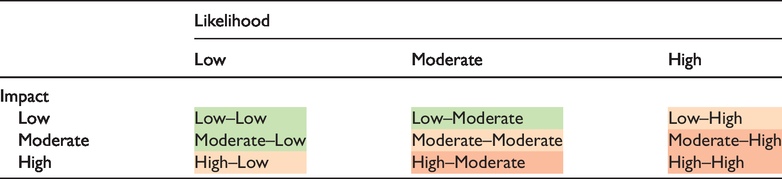
Fairley (1994) presents the risk management process in seven steps. This research focuses on the first two steps, which include risk identification and analysis. Risk identification is the process of characterizing the types of risks associated with project implementation, and risk analysis is the process of categorizing risks into high, medium, and low priority based on a risk matrix that considers the likelihood and impact of the risks (Pieplow, 2012).
Data and methods
The risk data used in this study were obtained from the SC proposals (SCPs) that are available on the SCM official website. To control data quality, only those SCPs that qualified for funding in the first (20 cities) or fast-track rounds (13 cities) of the SCM were included in this study. These 33 winning proposals were selected by a committee comprised of national and international experts, organizations, and institutions (Ministry of Housing and Urban Affairs GoI, 2016; Ministry of Urban Development, 2015). We then applied a three-step methodology to analyze the risk data obtained from the selected SCPs, which is briefly summarized below.
Risk priority matrix.
Results
Risk categorization results
Eight risk categories were identified by synthesizing results from the NMF model, semantic analysis, as well as prior studies. NMF clusters the risks based primarily on the word frequency, and as a result, the model tends to neglect categories/topics which occur less frequently. We identified five risk categories using the NMF model, while seven possible risk categories were extracted using the semantic analysis method. Semantic analysis complements the NMF model. However, it is time-consuming and has been recognized as subjective. Further, these identified risks were cross-compared with identified risks from previous studies and were narrowed down to eight by grouping related risks. Figure 1 shows occurrence frequency (in percentage) of identified risks by project types.
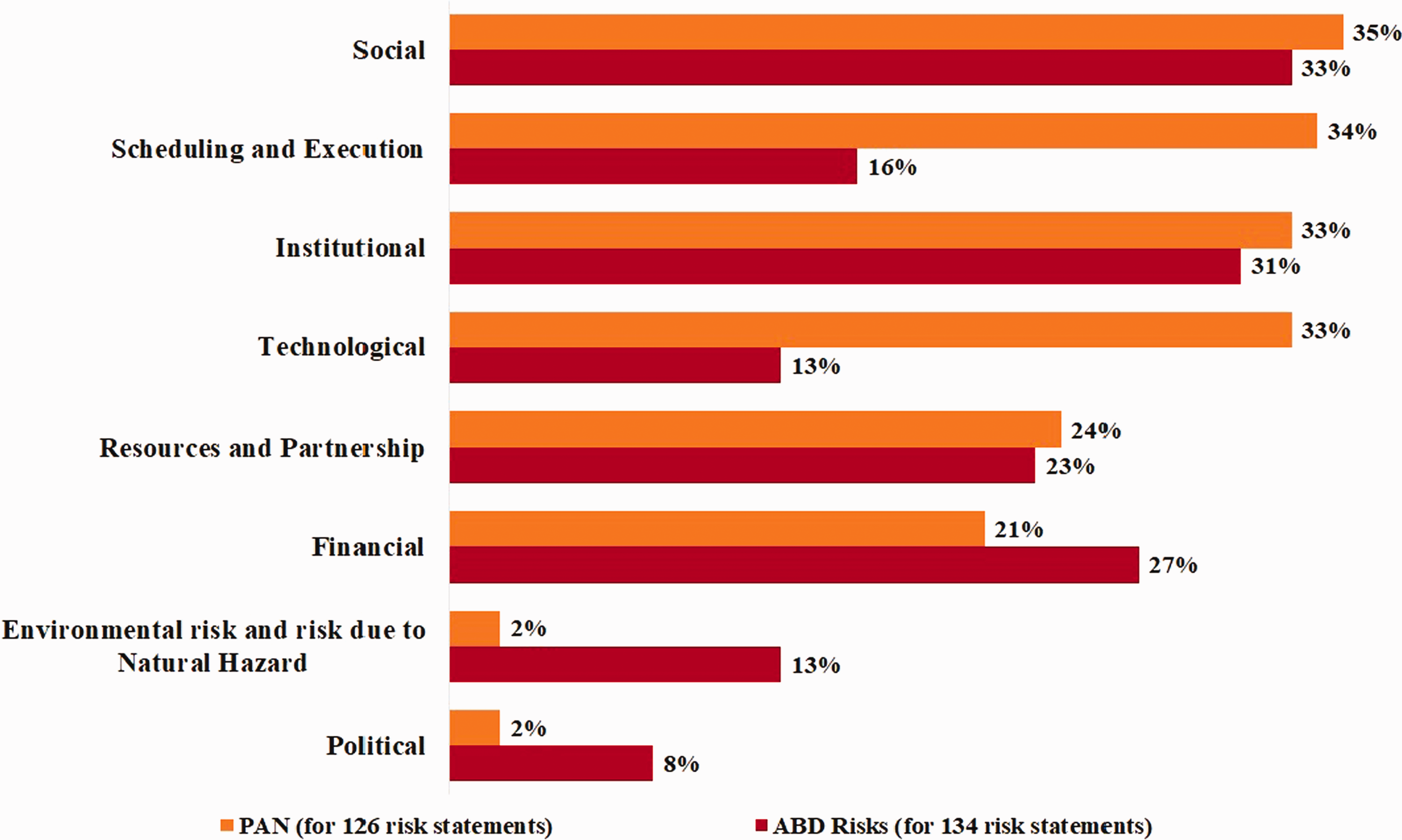
Risk percentage for all eight risks for ABD and PAN projects. ABD: area-based (small-scale) development (ABD); PAN: pan-city (large-scale) development.
Risk priority
Figure 2(a) and (b) shows the overall distributions of risk priority for ABD and PAN projects, respectively. The percentage of risks associated with both ABD and PAN projects, lying in the High-priority zone, is higher than the percentage of risks lying in Low- and Moderate-priority risk zones. PAN risks occur more frequently in High-priority risk zone when compared with ABD risks because PAN projects are larger, rely heavily on technology implementation, and are considered to be more challenging for cities to implement when compared with small-scale ABD projects. Most Political and Environmental risk statements are not accompanied with sufficient likelihood and impact information. Therefore, we excluded Environmental and Political risks from the priority analysis.
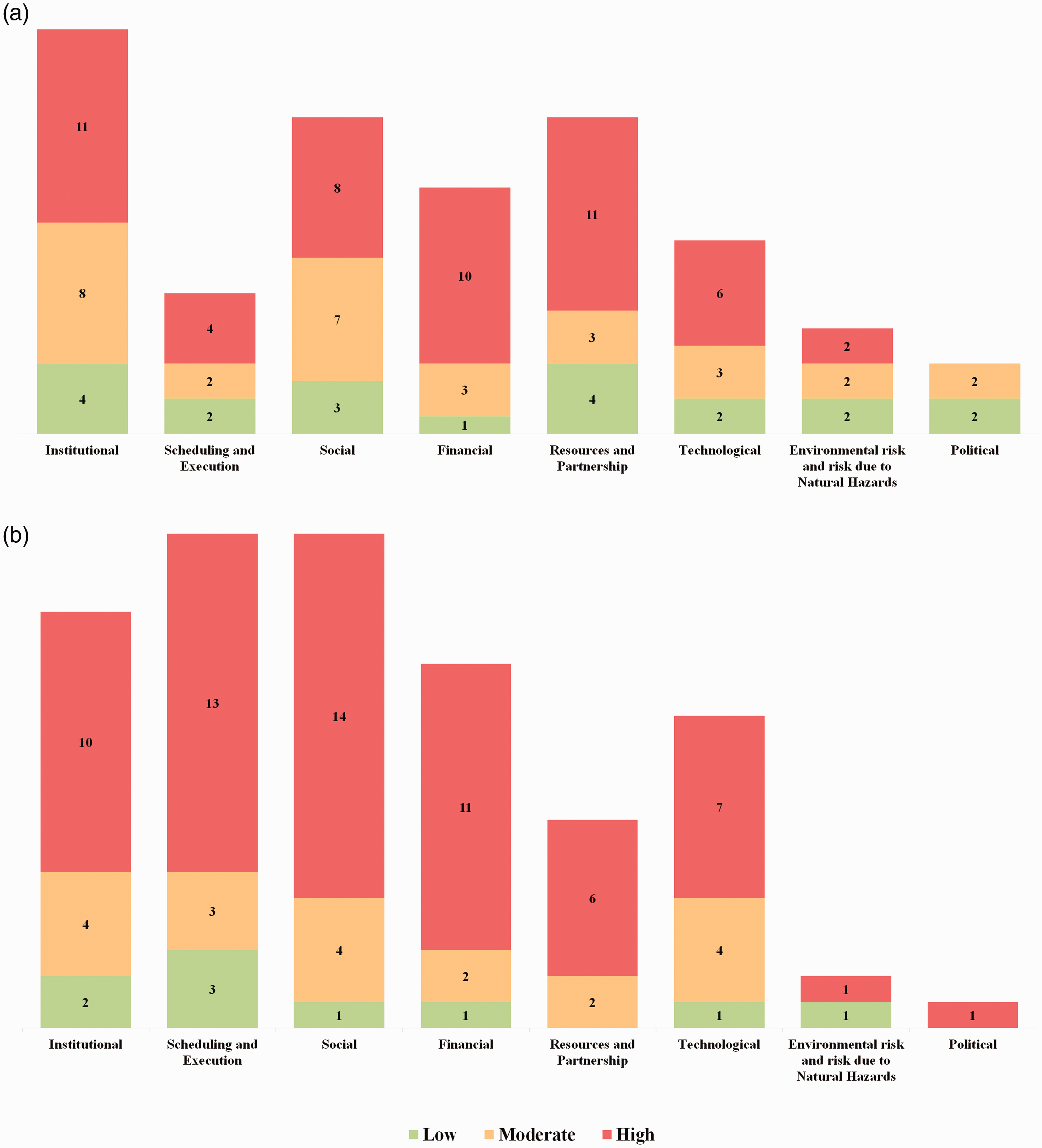
Risk priorities for (a) ABD projects (top image) and (b) PAN projects (bottom image) based on their likelihood and impact. Note: The colors used in the bar chart represent green: low priority, orange: moderate priority, red: high priority.
The priority analysis presented similar observations for both ABD and PAN risk statements, including, Institutional risks recognized as High-priority risks, not only for the cities belonging to Tier-II (population between 500,000 and 5,000,000) and Tier-III cities (population less than 500,000), but also by the state capitals, such as Bhubaneswar and Bhopal. Further, Social and Financial risks prevail in both ABD and PAN projects and are considered High-priority risks in more than half of the proposals. Comparably, Partnership and Resource Management risks are categorized as either Moderate- or High-priority risks by cities, and none of the cities identified it as a Low-priority risk for PAN projects. A lack of infrastructure and service providers, combined with the poor quality of raw materials, is seen as one of the most significant barriers to implementing small- or large-scale projects.
The risk priority results highlight several dissimilarities in ABD and PAN projects. Scheduling and Execution risks are perceived differently in ABD and PAN projects and are typically considered as more critical in PAN projects. For instance, PAN project proposals from large cities, such as New Delhi, consider most scheduling issues as High-priority risks. However, few ABD risk statements mention Scheduling and Execution risks as High-priority risks. This finding could be associated with the scale of projects since it is comparatively easier to manage small-scale projects. Like Scheduling and Execution risks, Technology risks are perceived differently for ABD and PAN projects. ABD projects use technology but not as intensively as PAN projects. As a result, Technology risks are considered to have a lower risk priority in ABD projects compared with PAN projects.
This risk priority analysis suggests that frequently mentioned risks may not be the ones that require urgent attention. For example, Institutional, Social, and Scheduling risks occur more frequently in ABD and PAN risks, but are distributed across low, medium, and high categories, whereas Financial and Partnership and Resource Management risks occur less frequently, but are mostly identified as high and moderate risks. Even the bigger cities (in terms of size and population) that seem to have better access to funds, resources, and technology have also identified these risks as a high priority. Funding and Partnerships are some of the initial components for successfully implementing SC projects and thus need more attention by project implementers and city officials.
Risks co-occurrences
The co-occurrences networks for ABD and PAN projects are illustrated in Figure 3(a) and (b), respectively, highlighting the most co-occurring risks in both the risk networks (with frequency of co-occurring risks on the edges). Similar risk co-occurrences are observed for ABD and PAN projects, but the most commonly co-occurring nodes vary. The most frequently co-occurring risks in ABD projects are Partnership and Resource Management risks with Financial risks (15 times), indicating the importance of funding to entice private partners and service providers, whereas Scheduling and Execution risks most frequently co-occur with Technology risks for PAN projects (19 times), which reflects the scale and tech-savvy nature of these projects.

Risk co-occurrences identified in (a) ABD projects and (b) PAN projects.
The risk co-occurrences in ABD and PAN networks are differently distributed. In the ABD risk network, Institutional risks most frequently co-occur with other risks, such as Social, Partnership and Resources, Scheduling and Execution, Technological, and Financial risks. A possible connection between Institutional and Scheduling and Execution risks may be a delay in decision making by various government agencies due to overlapping roles leading to the delay in approvals across departments. This may also impact the timely execution of projects and increase costs. In addition, too many regulations may constrain new partnerships for resources and technology related services which show a connection between Institutional risks and Partnership and Resources and Technological risks. In contrast to the ABD risk network, Scheduling and Execution risks tend to co-occur frequently with other risks in the PAN risk network. PAN projects are heavily dependent on the availability of technology resulting in greater number of co-occurrences between Scheduling and Execution risks and Technology risks. Furthermore, high co-occurrences of Scheduling and Execution risks with Institutional risks can be connected with delays in project completion caused by delays in decision making by local agencies. Additionally, a lack of funds and/or delay in sanctioning of funds for a project further delays project completion, which helps explain the connection between the co-occurrences of Scheduling and Execution risks and Financial risks.
Although risk co-occurrences vary by project types, Institutional risks tend to frequently co-occur with Scheduling and Execution, Social, Partnership and Resources, Technological, and Financial risks in ABD and PAN projects. This may correspond to the complex structure of city-level governance. Local government agencies in India have overlapping duties. As a result, interactions among different departments and sub-units are highly interconnected and interdependent causing delay in the approvals and decision making in project implementation. Lastly, the keyword co-occurrence analyses indicated similar risk co-occurrences found in developed nations. For example, frequent co-occurrences of Institutional risks with other risk categories in addition to co-occurrences of Partnership and Resources risks with Financial risks (Techatassanasoontorn and Suo, 2010).
Comparing risks in developed and developing nations
There are similarities as well as discrepancies between risks associated with SC project implementation in developing and developed countries. Both countries share risks, such as Social and Institutional risks, risks associated with the sustainability and scalability of the SC projects, and cross-sector collaboration risks. Social risks are not unique to the India SCM, as studies suggest that such risks also exists in developed nations due to absent or limited public engagement (Cowley et al., 2018) or the lack of interest among citizens in SC projects (Lovell, 2017). Additionally, Institutional risks are also observed in SC projects from 25 European cities (Pierce and Andersson, 2017). This suggests that SC project implementation in developing and developed nations may be impeded by uncoordinated efforts and a lack of appropriate enforcement of regulations and policies at the city level (Rana et al., 2019). Further, several identified risks from the SCM, such as Technological risks, are associated with the sustainability and scalability of SC projects (i.e. the ability to continue or scale up a project). To this end, the Government of India, for the first time, experimented with integrating funds across the national missions such as the SCM and the Swachh Bharat Abhiyan, which proved to be challenging to manage. A similar concern related to integrating funds across programs is also shared by funders, policy makers, and investors in Europe (Zanella et al., 2014). Finally, the risk in cross-sector collaboration, especially public–private partnerships, is also found in projects in both developing and developed nations (Hartemink, 2016). The public sector typically relies on the private sector to bring in expertise, finance, and technology capabilities to support SC projects, but there is a disconnect between expectations of private sector and offerings of the public sector.
Despite some implementation risks being shared by SC projects in the two contexts, the priority and severity of the risks may vary. For instance, Technology risks in India, especially in Tier-II and III cities, were related to lower technology penetration levels, the limited availability of the latest technologies, their capacity, and an absence in data-sharing standards. In contrast, Zanella et al. (2014) found that Amsterdam, Philadelphia, Chicago, and New York faced Technology risks such as non-interoperability challenges in implementing smart solutions. Additionally, some researchers also highlight Technology risks, such as data security and privacy issues in SC projects in developed countries (Botta et al., 2016). The priority of resource management also varies across different nations, as the risk is not considered as critical for developed nations as it is in Indian SC projects. For instance, the limited availability of land and lack of infrastructure and service providers, combined with the poor quality of raw materials, are considered to present one of the most significant barriers to implementing small- or large-scale projects in India.
Given the similarity in SC risks that exist between developed and developing nations, several successful risk mitigation measures used in developed nations could be adapted and applied in the Indian context. Table 1 (in the Supplemental appendix) summarizes the proposed mitigation measures described in the SCPs (left column) and the strategies implemented in some of the successful SC cases in developed countries (right column), which may be adapted to address risks for SC project implementation in developing nations. More research should be devoted to understanding and addressing challenges that are unique in developing nations.
Conclusion
This study presents a constructive and progressive outlook on the current Indian SCM by providing a framework for risk identification and analysis in implementing SC projects. This study contributes to the SC project implementation literature by providing a systematic risk analysis in a developing country to help SC managers in prioritizing the identified risk with respect to the project scale.
This study classified the SC implementation risks into eight categories, namely Social, Institutional, Partnership and Resource Management, Scheduling and Execution, Financial, Technology, Political, and Environmental. Projects across scales share similar categories of implementation risks. However, ABD (small-scale) and PAN (large-scale) projects face different management challenges regarding risks priorities and their co-occurrences. The findings indicate that the most frequently observed risk may not be the one that needs immediate attention by the city officials, and therefore risk identification and priority analysis together present a more holistic picture. Moreover, the risk co-occurrences highlighted in this study indicate possible connections between the risk categories. These risk co-occurrences may affect the implementation of SCM projects suggesting different mitigation measures may need to be developed to manage small- and large-scale projects, respectively. Risk categories found in the India SCM are similar to that found in the cities of developed nations. However, the frequent occurrences of Social, Institutional, and Partnership risks over Technology and Financial risks indicate that risk priorities may vary for developing and developed nations. With existing poverty levels, lack of physical infrastructure, and fewer technology vendors, resource and partnership risks can have severe impacts on project implementation in developing nations. Furthermore, this research highlights several risk mitigation strategies from the existing smart cities cases that can be implemented in a developing nation’s context.
This study can be advanced in several directions. First, the SC project implementation risks are identified using “stated” data from the SCM proposal reports, which were submitted before project implementation. Therefore, more knowledge can be gained by collecting and analyzing post-implementation data from SCM experts and practitioners in India. Second, this study only examined the co-occurrence of SC risks. Future research may be dedicated to unveiling the causal relationship among risks to support risk management policies. Finally, in-depth case studies in developing nations are needed to develop effective risk mitigation strategies for the developing nation context.
Supplemental Material
EPB907607 Supplemental Material - Supplemental material for Risk priorities and their co-occurrences in smart city project implementation: Evidence from India’s Smart Cities Mission (SCM)
Supplemental material, EPB907607 Supplemental Material for Risk priorities and their co-occurrences in smart city project implementation: Evidence from India’s Smart Cities Mission (SCM) by Khushboo Gupta, Wenwen Zhang and Ralph P Hall in EPB: Urban Analytics and City Science
Footnotes
Declaration of conflicting interests
The author(s) declared no potential conflicts of interest with respect to the research, authorship, and/or publication of this article.
Funding
The author(s) received no financial support for the research, authorship, and/or publication of this article.

Supplemental material
Supplemental material for this article is available online.
References
Supplementary Material
Please find the following supplemental material available below.
For Open Access articles published under a Creative Commons License, all supplemental material carries the same license as the article it is associated with.
For non-Open Access articles published, all supplemental material carries a non-exclusive license, and permission requests for re-use of supplemental material or any part of supplemental material shall be sent directly to the copyright owner as specified in the copyright notice associated with the article.
