




Abstract
To tackle climate challenges, communities need to harvest renewable energy and resources on site locally to close the loops for enhancing the resilience of communities facing unpredictable and uncertain future changes. A decentralization planning of urban renewable energy systems is proposed by treating urban waste streams and producing biomass through applying algal biotechnology. When applying algal technology as a renewable and decentralized energy source in urban systems, the overall performance can vary by levels of urban nutrients, solar and CO2 resources, and the transportation cost when considering its application to different urban densities, urban form, and the spatial scale of urban settings. This research explores three potential impacts on the algal system’s energy performance: (1) urban density, (2) urban form in different contexts, and (3) spatial scale. The research examines the impacts by testing urban settings given in actual contexts in Atlanta, Georgia, USA. Four neighborhoods representing the high-density urban, mid-density urban, mixed suburban, and typical suburban areas are investigated. The density-scale–performance relationships are explored through testing different urban forms of neighborhoods in both hypothetical and actual neighborhood settings. A GIS-based model is developed to estimate the overall energy performance of the decentralized renewable energy system in urban environments. Results show that the energy performance is positive mainly for high-density urban neighborhoods with small-to-medium scales, up to 0.36 MJ per ton of municipal solid wastes for actual settings and 0.37 MJ for hypothetical cases. Neighborhoods with higher density have higher energy performance while up scaling has negative effects on the energy performance with a low degree of significance. Optimal scales are found as a 1-km radius in real test beds and 1.3 km in hypothetical settings, in which the results show trade-offs between scaling effects in the system efficiency gain and the transportation cost increase.
Keywords
Introduction
The prices of addressing climate change are estimated to increase about sevenfold from 2025 to 2100 (Ackerman et al., 2008). In an effort to tackle climate challenges in cities, how communities reuse, recycle, and harvest renewable energy and local resources for closing the loops are keys to enhancing the resilience of communities when facing unpredictable climate-induced disasters and risks such as energy shortage. Algal biotechnology and its utilization as a decentralized urban renewable energy system have been discussed for its high biomass productivity and recycled use of urban waste streams. Applying the algal biotechnology into the built environment at a large scale requires more careful examination of its different performance in urban contexts from urban, suburban to rural areas, which is largely underexamined in the literature. Two critical properties induced in the integration of the algae energy system into urban contexts are studied, the system boundary and the resource density, which jointly determine the sizing and performance of the urban renewable energy systems. To understand how algal biotechnology is applied to urban environments, this paper applies geographic information system (GIS) tools and explores three key research questions concerning the integrated system: How do different urban densities influence energy performance? How does urban form in different contexts affect energy performance? And is there an optimal scale or size of the algae-powered neighborhood where the system reaches peak performance?
In order to answer those questions, this study examines the performance of algae-powered neighborhoods in different contextual settings in Atlanta, Georgia, USA. Four neighborhoods representing the high-density urban, mid-density urban, mixed suburban, and typical suburban areas are studied. The density-scale–performance relationships are explored through performance evaluation of different urban forms in those neighborhoods in hypothetical and real neighborhood settings. An algae-powered neighborhood performance model is developed based on empirical experiment datasets and theoretical equations from the literature to estimate the overall energy performance of the decentralized renewable energy system in urban environments, with important urban environment inputs calculated in GIS. A simplified scaling equation is further established, and the results are plotted and fitted following the equation to reveal the relationships between energy performance, density, and spatial scale.
Algal cultivation as a source of urban renewable energy
Biofuel applications have been investigated as an alternative to offset fossil fuel consumption and mitigate climate effects, including increasing greenhouse-gas emissions and global temperatures, rising sea levels, exacerbating hurricane impacts, and decreasing real-estate market values (Ackerman et al., 2008; Sheehan et al., 1998). Compared to typical plants such as soybean and corn, algal biomass has four times higher photosynthetic efficiency (Sheehan et al., 1998). Inputs to an algae cultivation system often include water, sunlight, CO2, and nutrients that are contained in the urban waste stream (Pittman et al., 2011). Algae can be easily cultivated with water, sunlight, nutrients, and carbon dioxide without the requirement of arable lands. They are wildly studied to serve as a feedstock for the production of biofuels such as biodiesel, bioethanol, bio-oil, biohydrogen, and biomethane through photosynthetic thermochemical and biochemical methods (Brennan and Owende, 2010; Slade and Bauen, 2013).
Microalgal biomass is typically cultivated in open raceway ponds (ORPs) or photobioreactors (PBRs), with each typology presenting strengths and weaknesses. Open raceway ponds are generally energy-efficient but exhibit low areal productivities and are prone to contamination, for example, zooplankton grazers and rotifers (Carney et al., 2016; El-Sayed et al., 2018; Van Ginkel et al., 2015, 2016). Photobioreactors offer more bioprocess control, complete containment to prevent contamination, and higher areal productivities at the expense of capital cost and energy intensity (Jorquera et al., 2010). As such, ORPs are currently the most suitable candidates for low-value production (e.g., biofuels), while PBRs are more appropriate for high-value production such as pigments and nutraceuticals.
While the algal cultivations are applied as a source of urban renewable energy, it can serve as a part of the wastewater treatment to remove nutrients and help alleviate the eutrophication in the aquatic environment, which can also decrease greenhouse-gas emissions because of the consumption of CO2 during the cultivation process. In addition, the algal cultivation system could be a component of the urban landscape to improve the living environment. One key factor that limits the use of algal cultivation systems in the urban environment is the amount of suitable land. Algal cultivation processes need sufficient access to water and nutrient availability in addition to residing in suitable climatic conditions. Therefore, the regional environment can provide significant impacts or constraints to the algal cultivation process in the form of energy performance (Slade and Bauen, 2013). There are two contrary opinions concerning algae for urban land uses: one is that the algal system can use marginal land (Slade and Bauen, 2013) and the other is that the algal system can interfere with potential land usage (Kotzebue et al., 2010; Sen and Ganguly, 2017). Land constraints differ depending on the urban context, urban densities, and scales. In particular, the urban form of neighborhoods in different urban contexts changes from centralized to decentralized, and the urban density varies from concentrated to dispersed (Derrible, 2017).
Previous studies on algal systems were focused on algae species and system specifications (Cai et al., 2011; Chisti, 2007; Ehimen et al., 2011; Rawat et al., 2011; Singh et al., 2014), but how algal biotechnology can be integrated into the built environment to support smart and resilient urban development has been discussed less. A few demonstration projects have shown the great potential of integrating this technology in the built environment, including the algae-powered building project in Germany (Wulff Immobilien GmbH, 2012) and the freeway algae project in Switzerland (Planet Editor, 2014). Among various types of algae cultivation systems, ORP systems are the most common method of algae cultivation because of their technical simplicity as well as relative affordability (Brennan and Owende, 2010; Ryan et al., 2009). Therefore, we chose an ORP as our algae cultivation system for study. This research aims to explore how different urban densities, urban forms, and scales affect the energy performance and feasibility of an urban-algal energy system for enhancing the resilience of communities.
Methodology
To accomplish the research objectives, this research proposes an integrated urban-algal energy system design, as shown in Figure 1, and applies the design to actual neighborhood contexts in Atlanta, Georgia, USA, with different density and scale properties to compare the performances. The urban-algal energy systems are designed based on constraints at various densities and scales. This analysis focuses on energy performance, including energy requirements to maintain system functionality, energy generation and consumption, and performance evaluation. Design flow for the integrated urban-algal system.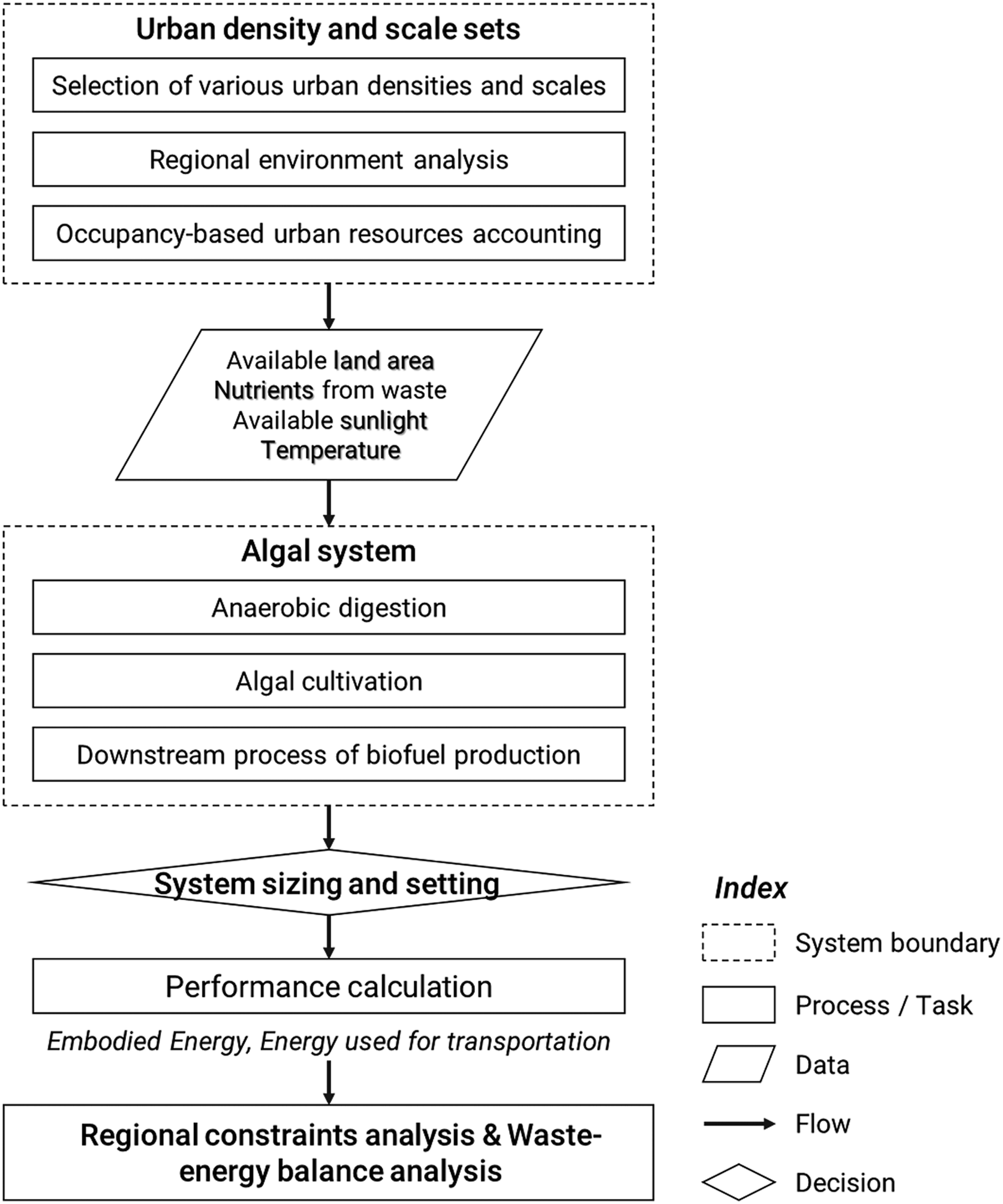
Neighborhood selection and data collection
Four different neighborhood types are selected in Atlanta. The city of Atlanta is known for its hot weather and abundant sunlight. Neighborhood type selection relies on urban density and land use variation to represent typical urban environments in high-density urban, mid-density urban, mixed suburban, and typical suburban areas. A circle of a 1-km radius is defined as the baseline spatial scale for the four neighborhoods. The selected neighborhoods and their basic parameters are shown in Figure 2 and Table S1 using GIS-based spatial queries and measurements. Algal system design is applied to the sites to develop the algae-powered neighborhood. Selection of four neighborhoods for developing algae-powered neighborhoods in Atlanta, Georgia, USA.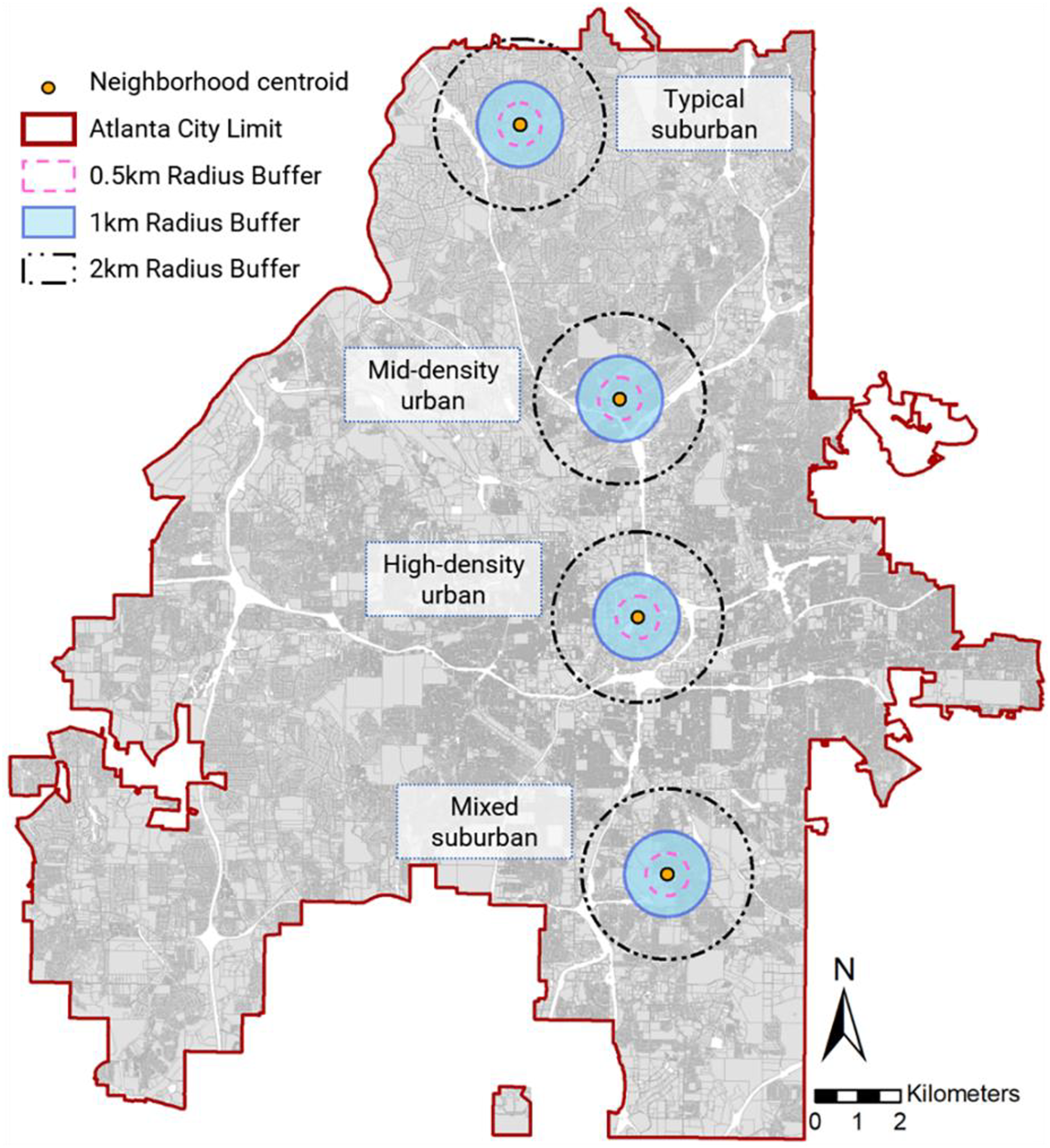
The spatial and societal information for those neighborhoods includes the building footprint data, the tax parcel data, street network data, and digital elevation model (DEM) data that are collected from the official data portal provided by the local government and the U.S. Geological Survey (USGS). Atlanta Tax Parcel data are used to categorize land use, zoning, land assessment value, and the property value/land improvement cost of the parcels. The building footprint data obtained from the city are largely modified for its current status and used to assess building use, occupancy, and use patterns (time of the day used) to estimate waste generation. Landsat DEM raster datasets from USGS are used to extract the parcel elevations and building base heights. The DEM raster dataset produced from LIDAR data for Fulton County, Atlanta, is used to extract the rooftop elevation of the building to assess gross floor area, floor area ratio (FAR), and building coverage ratio. The DEM dataset is also used to assess solar access to each parcel and locate suitable sites for algal cultivation systems. Landsat data classifying ground cover and vegetation cover are used in combination with building and terrain DEM datasets to analyze micro-climatic conditions and surface temperatures. Street network data for selected neighborhoods are used to estimate the energy cost to channel the waste from each neighborhood to central community processing units. The datasets are organized and cleaned greatly on the GIS platform.
System choice and data collection
An algal cultivation system is designed that turns urban waste into energy (Figure 3). It has three main parts: the pre-cultivation processing, the algae cultivation, and the post-cultivation processing. The pre-cultivation processing uses an anaerobic digester to convert the urban waste stream into a nutrient-rich effluent. The algae cultivation process adopts the ORP considering its implementation feasibility in urban areas. During post-cultivation processing, as opposed to other studies using oil extraction technologies (Alam et al., 2012; Gnansounou and Raman, 2016), this study leverages anaerobic digestion to generate biogas and combined heat and power combustion to further produce electricity and heat in order to reduce capital and operating costs. The specific design of the algal engineering system.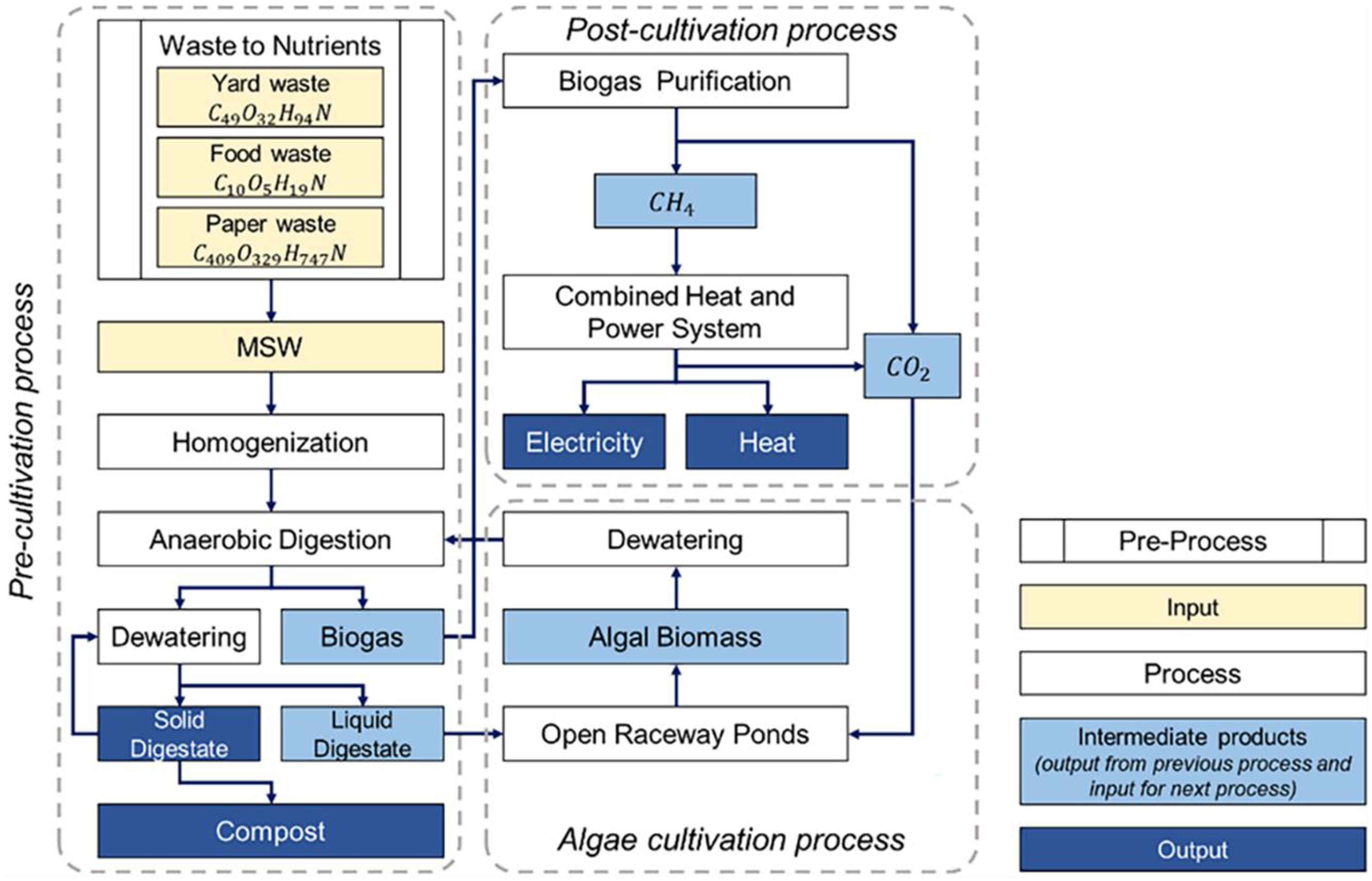
The details of the ORP system, including the cross-seasonal system performance, were obtained from testbed data collected continuously for two and a half years at the Georgia Institute of Technology in Atlanta, USA, as part of the Algae Testbed Public-Private-Partnership (ATP3) Network (National Renewable Energy Laboratory (NREL), 2021). The other systems, including the anaerobic digester, are designed with conventional wastewater systems design as a reference. The detailed system specifications, such as the system efficiency and the energy requirements, are referred to in relevant technical reports and literature (Chen et al., 2016; Ferrer et al., 2015; Kujawski et al., 2013; Prajapati et al., 2014; Yen and Brune, 2007).
Urban algae performance model—integrating spatial analysis, system simulation, and urban systems design
The Urban Algae Performance Model (UAPM) is developed to simulate the performance of the integrated urban-algal system. The UAPM is an algal systems simulation tool based on GIS and Microsoft Excel that integrates spatial inputs, algal system simulation, and urban systems design (Yang and Yamagata, 2019) to design algal systems and compile their comprehensive mass, flow, and energy balances to assess the overall performance.
Spatial and environmental analysis of neighborhoods: Getting inputs for system design
The inputs to the integrated urban-algal system include the nutrients in the urban waste stream and sunlight that vary in the urban context. In previous literature, few studies have considered the impacts of environmental variations in urban areas on algal system operation and productivity. In this study, we tested this aspect by simulating solar irradiance and microclimate conditions in different neighborhoods in Atlanta. For the four neighborhoods with different contexts, their urban forms, building floor areas, and tree cover vary greatly: the amount of urban waste stream is determined by neighborhood population and floor areas of buildings; sunlight availability is influenced by the shadings in urban forms, and the air temperature is affected by different levels of Urban Heat Island (UHI) effect in the neighborhood. This study adopts GIS-based modeling to estimate those factors.
For the urban waste nutrients, the study applies an accounting method based on occupancy to estimate the volume of municipal solid waste (MSW), which is presented in Figure 4. Specifically, the method uses building function and occupant density information to estimate the occupant capacity, which is then multiplied by occupancy schedules and MSW generation ratio according to national and city-wide surveys to get the MSW volume (Autodesk, 2014; Beigl et al., 2008; Georgia Department of Community Affairs, 2011). Building types were categorized as residential, commercial retail, and commercial office as spaces people occupy and generate waste. The occupant capacity of each building type was calculated based exclusively on area per capita, which was collected from previous research (Blake et al., 2007; International Code Council (ICC), 2015; U.S. Green Building Council, 2017). According to previous research, occupants require 88.16, 51.00, and 13.94 m2/capita in residential, commercial retail, and commercial office buildings, respectively. The hourly occupant schedule from previous research (Autodesk, 2014) was aggregated to the daily occupancy schedule for calculating the daily MSW generation. The daily occupancy is scheduled as 58%, 29%, and 30% in residential, commercial retail, and commercial office buildings, respectively. In preliminary studies, the daily MSW generated 2.58 kg/capita in the United States (Hoornweg and Bhada-Tata, 2012), 2.89 kg/capita in the state of Georgia (Beck, 2006), and 3.23 kg/capita in the city of Atlanta (Georgia Department of Community Affairs, 2005). To guarantee the minimum amount of MSW with a conservative estimation, this research adopted 2.58 kg/capita as the daily amount of MSW. Among the total MSW, some waste types, including food, yard, and paper waste, can be aggregated as a chemical-rich waste with the potential to contain nutrients such as phosphorous (P) and nitrogen (N) (Sullivan et al., 2002). According to the official report, on average, the MSW in the State of Georgia contains three nutrient-rich waste types of yard waste, food, and paper, with a percentage of 10.50%, 12.9%, and 38.7%, respectively (Georgia Department of Community Affairs, 2005; Georgia Department of Community Affairs, 2011). Based on those types of information and the nutrient composition in each type (Sullivan et al., 2002), the overall N and P contents are estimated as 2.6 g/kg and 11.7 g/kg, which are further applied to calculate the volume of MSW (Figure 5(a)) and nutrient quantities in the four neighborhoods. Occupancy-based waste accounting framework. Mapping in the typical suburban neighborhood with a 1-km radius: (a) Potential MSW, (b) parcel elevation, and (c) siting of the urban-algal systems.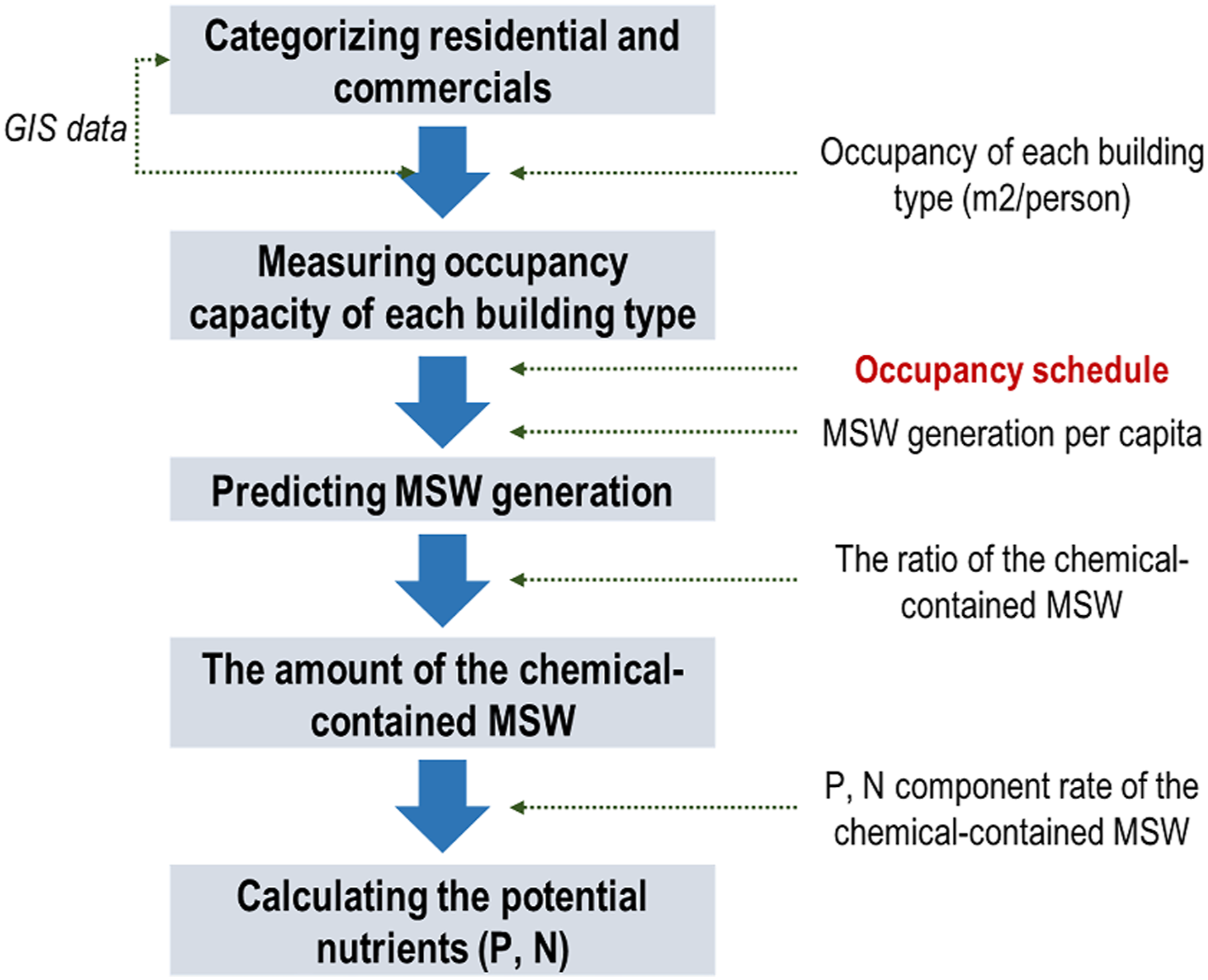

The approach in the Solar Analyst Tool in ArcGIS is adopted to simulate the daily average solar irradiance on vacant parcels in the neighborhoods, potential pond sites for algal cultivation, based on the building height and parcel elevation (Figure 5(b)). The average daily irradiance values for the vacant parcels in the four neighborhoods with the density from high to low are 195.833, 194.486, 196.536, and 78.734 W/m2, respectively. Estimation of microclimate conditions often requires complex simulation models with a heavy computational load (Perera et al., 2021). The Urban Weather Generator, microclimate simulation software that simulates microclimate conditions based on the inputs of urban canyon geometry, building and ground material, vegetation, and rural climate, is applied to simulate the UHI effect and daily average air temperatures in the four neighborhood contexts. The average daily air temperatures for the vacant parcels in the four neighborhoods with density from high to low are 17.109, 16.965, 16.889, and 16.898°C, respectively.
Urban systems design for algae: Sizing and siting
Transforming the existing neighborhoods into algae-powered systems requires an urban systems design to integrate system simulation, geographic information, and design scenarios, a method developed based on the Geodesign model (Yang et al., 2018). In particular, the urban-algal system includes the sizing of the system, finding sites for the system, and developing the infrastructure network.
The integrated urban-algal decentralized systems are sized based on the potential nutrient quantities and the available vacant parcels as input and spatial constraints. In the three parts of the system, the pre-cultivation processing and the post-cultivation processing can be placed together as a centralized system on one parcel, while the ponds for algal cultivation can be distributed on different parcels. To determine the sites of the systems, the network analysis is used to find the optimal siting scenario given the spatial relations of the vacant parcels and their solar irradiance levels that influence transport cost and productivity (Figure 5(c)). Through the analysis, the infrastructure network for the decentralized renewable energy system is proposed.
System simulation for urban-algal systems: Evaluating performance
In order to simultaneously recycle nutrients and produce renewable energy, a framework and simulation have been developed in Figure 3 by utilizing biological process modeling. Algal cultivation could use the nutrient-rich effluent produced by the anaerobic digestion of MSW and algal biomass. The generated biogas during the anaerobic digestion process is applied to produce energy. The unit processes are reintroduced to the system to fully exhaust available resources.
The typical resource requirements for algal cultivation systems are water, macronutrients (N, P), CO2, and solar radiation (Passell et al., 2013; Razon and Tan, 2011; Soratana and Landis, 2011). Other components, including micronutrients, have been neglected for simplicity. In evaluating the following test cases, it is important to connect the algal system with the available resources that it will consume. A temperature- and solar irradiance–dependent algal growth model (Bernard and Rémond, 2012) was applied using algal benchmarking pilot performance data obtained by the research team at Georgia Tech as part of the Department of Energy’s ATP3 Unified Field Studies. For the selected microalgae species, Nannochloropsis oceanica, growth will not occur below −0.2°C or above 33.3°C (Bernard and Rémond, 2012). Between these temperatures, productivity is a function of both illumination and temperature (Equations (1)–(3)), and optimum growth is obtained at 26.7°C (Bernard and Rémond, 2012).

where


Model-specific parameters calibrated for Nannochloropsis oceanica are as follows (Bernard and Rémond, 2012):
Tmin (ºC) = −0.2; Topt (ºC) = 26.7; Tmax (ºC) = 33.3;
The other resources, with the exception of water, are obtained from the organic fraction of source-separated MSW (Banks et al., 2011; Torretta et al., 2014). Due to the relatively low lipid content of algal biomass in nutrient-replete systems (< 40% dry weight), methane was chosen as the preferred energy carrier rather than extractable lipids or other co-products (Lin et al., 2011; Prajapati et al., 2014; Yen and Brune, 2007). Anaerobic digestion is necessary to produce methane-rich biogas, but also to hydrolyze complex organic polymers into their substituent monomers, solubilize nutrients, and increase the efficacy of algal cultivation (Brown and Li, 2013; Lin et al., 2011; Yen and Brune, 2007).
The efficient anaerobic digestion of algal biomass is typically inhibited by a low C/N ratio and difficulty in breaking down the cell wall (Prajapati et al., 2014). MSW is reported to contain a high proportion of carbon materials, which could be introduced into the anaerobic digestion process to increase the C/N ratio of feedstock. Therefore, algal biomass and MSW are designed for co-digestion in this experiment. At the beginning of the process stream, high-solids MSW is manipulated to contain 60% food waste, 36% yard waste, and 4% paper waste, which combines 1:1 with a low-solids algal mixture to create a carbon-to-nitrogen ratio (C:N) of 25. At this C:N ratio, the ammonia concentration can be maintained below the inhibitory threshold, and methane production is maximized (Banks et al., 2011; Brown and Li, 2013; Kujawski et al., 2013; Lin et al., 2011; Prajapati et al., 2014; Torretta et al., 2014; Yen and Brune, 2007).
The mixture is then mechanically homogenized to stabilize the organic loading rate over time. This algae/MSW mixture is sent to anaerobic digestion where biogas is produced. After the reaction of organics in anaerobic membrane bioreactors (Bouman and Heffernan, 2010; Ferrer et al., 2015; Pretel et al., 2016), the solid digestate (bacterial biomass, non-degradable substances) is collected to be composted, while the liquid digestate, which is rich in nutrients, is repurposed as the culture medium for algae cultivation in ORPs. Due to the small pore size of modern micro/ultrafiltration membranes, bacteria and other microorganisms are separated from the liquid phase, allowing only water and soluble nutrients to pass through the membrane surface. This ensures that the effluent is of sufficient quality (colloids, bacteria, and sediments are removed) to support the introduction to the algal culture (Prajapati et al., 2014). The solid digestate, wasted from the system as compost, may require further dewatering and treatment to warrant reuse as a biosolids soil amendment (Banks et al., 2011; Chen et al., 2016; Komilis et al., 2012; Kujawski et al., 2013).
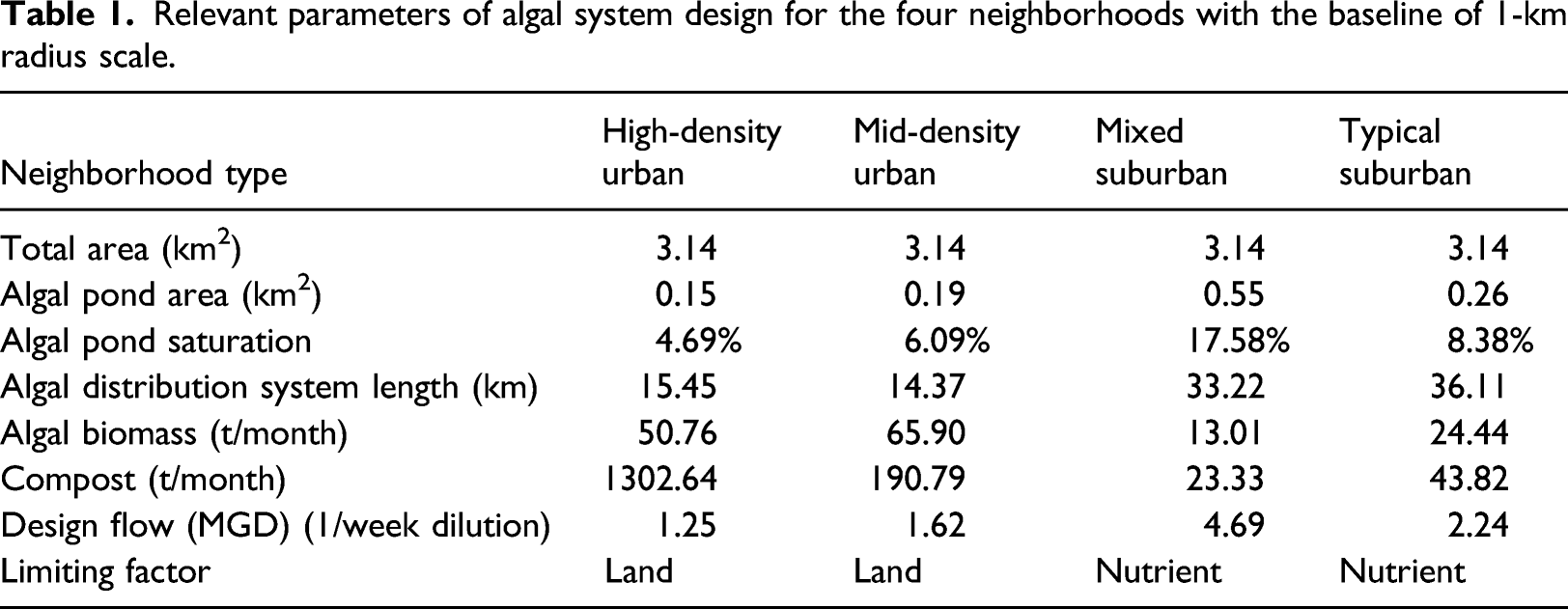
Relevant parameters of algal system design for the four neighborhoods with the baseline of 1-km radius scale.
An important property of a decentralized system is its scaling effect. For the urban algal system, the scale variability is integrated into the spatial neighborhood boundary initialization and is further integrated into the operating performance of wastewater distribution (Electric Power Research Institute, 2013) and solids removal (Chang et al., 2008) unit processes on an energy basis. Energy and heat generation by biogas-fed combined heat and power systems is embedded in the tool—however, storage, transmission, and grid buy-back of excess natural gas and electricity were not considered. The scaling factor of the post-cultivation system is assumed to be 1.05, following the approach for the estimation of algal system cost (Knoshaug et al., 2016).
The nutrients of algae cultivation were supplied by liquid digestate from MSW. The average solar irradiance and environment temperature were generalized from the empirical data in Atlanta, and the algal model developed from ATP3 field experiments was applied for the calculation of energy consumption and production. The algae biomass production could be obtained by two methods based on available nutrients and available lands, respectively, where the smaller value was chosen as the final biomass production. The energy production from the algae system includes electricity production and heat production. The quantity of electricity production per unit of biomass was calculated from the total mass of algae and MSW that will go to anaerobic digestion. The heat production was also calculated by a similar method. The consideration of energy consumption in the urban-algal systems includes the electricity and heat used in OPR, MSW homogenization and anaerobic digestion, the filtration process before and after anaerobic digestion, and water transportation in the connecting pipes. Then, the overall energy performance of the system is estimated for each case including both energy production and energy costs. The performance indicator is defined as net energy per MSW as the system efficiency. The time scope and resolution for performance indicator estimation are defined as an average month and daily, respectively, because the household MSW generation data are only available on a daily basis, and the cultivation and harvesting of algae are usually operated for the time period of several days to a month. The specific calculations can be found in equations (4)–(9)





Defining the baseline parameters
The four neighborhoods selected in this study represent four typical urban development patterns with different densities across an urban-to-rural transect (Figure 6(a)). The neighborhoods are defined with the baseline of the 1-km radius scale. Using the UAPM developed in this study, the performance of the four neighborhoods can be simulated as the baseline shown in Table 1. The relationship between density and urban algae performance, however, is to be further explored. Because the same density can be achieved by different urban forms that produce various energy performance, the four neighborhoods of the urban-to-rural transect can only represent typical problems of this kind but not all. A comprehensive understanding of density and performance relationship requires further analyses and more test cases. Urban forms, including buildings, streets, and parcel layouts, at different scales in the four neighborhoods of the urban-to-rural transect of Atlanta: (a) within a 1-km radius and (b) within the scales of 0.5-km, 1-km, and 2-km radius.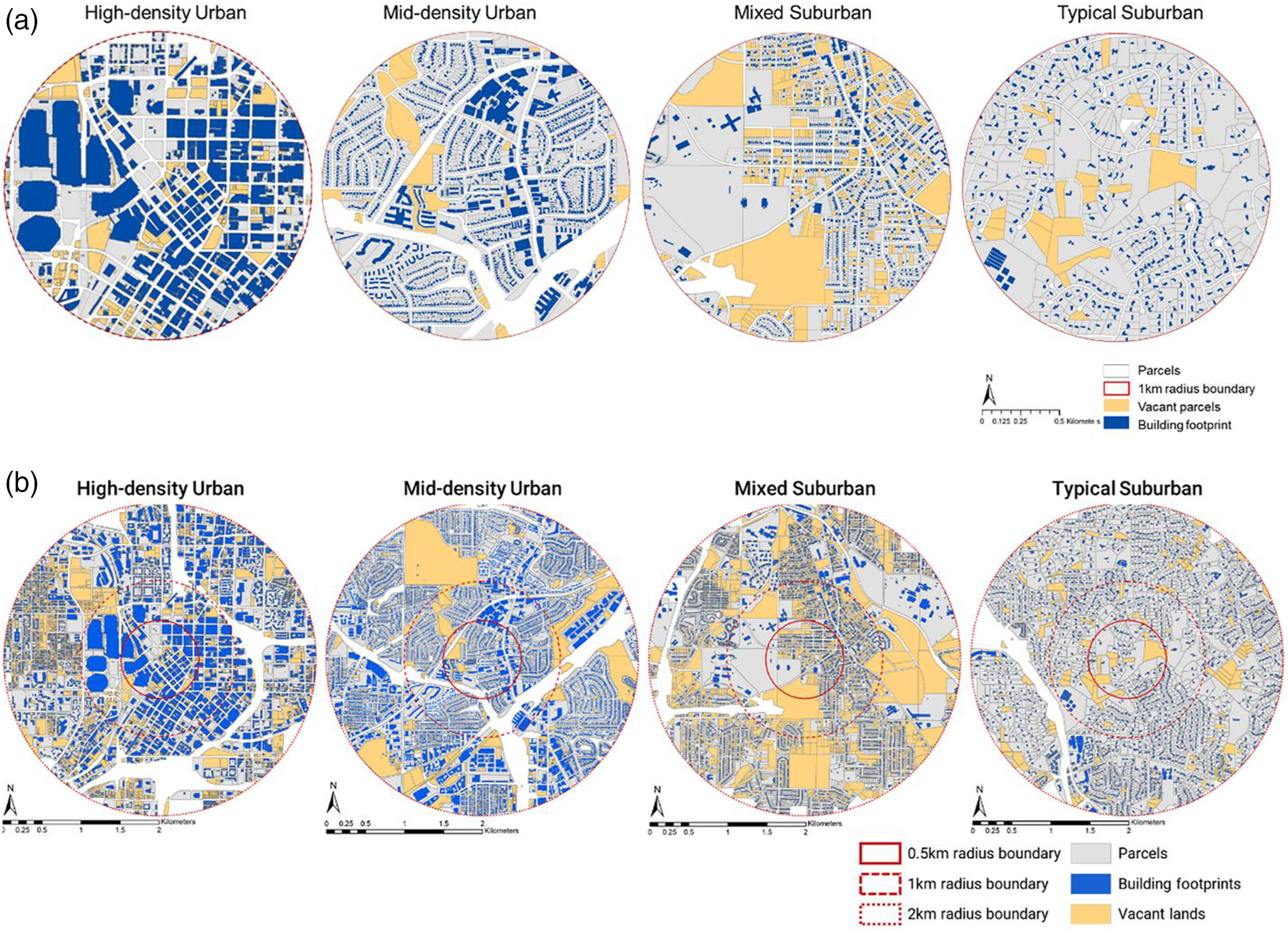
Testing scaling effects
The scale is an important factor in the urban algal system because it defines the system boundaries. At what spatial scale would the algae-powered neighborhood system achieve better energy performance? When the spatial scale becomes larger, will the algae cultivation system efficiency increase or decrease based on the ratio of output(s) per given input(s)? At the same time, transportation costs would increase accordingly. The trade-off between system efficiency and transportation cost could likely result in an optimal scale whereby the optimum of urban-algal system performance would be achieved.
We explore how the scale influences the urban-algal system performance. When the scale increases, the system properties such as density, urban form, and their corresponding energy performance change accordingly, and the problem becomes more complex. To better understand the scaling effect, this research develops two sets of testing: First, we test hypothetical models of the four neighborhood types at different scales. Second, we test the four neighborhood types in actual urban contexts with different scales. In the hypothetical models, the density is set as a constant during the scaling, while in the testing of actual neighborhoods, the density varies according to the actual urban environment. 1. Testing hypothetical models: The four neighborhood types are defined within 0.5- to 5.0-km radiuses, assuming the same baseline neighborhood patterns. The testing is to explore the scale–performance relationship with homogeneous neighborhood patterns based on the same FAR, urban form, land use patterns, and street networks. They are controlled hypothetical models. 2. Testing actual neighborhoods: The four neighborhoods along the urban-to-rural transect of Atlanta are set as sizes of 0.5-, 1-, and 2-km radiuses. This testing is to explore the density-scale–performance relationship in actual urban settings. The results are context dependent.
Testing hypothetical models
The scaling effect is first tested based on hypothetical models to assume the homogeneity of the urban environment when scaling up the neighborhood system boundaries. It reduces system complexity to better reveal the density–performance and scale–performance relationships.
The density and spatial distribution pattern of building, population, vacant parcel, green space, and street network are all assumed to be constant for the same neighborhood type, regardless of scale. For the scale with radius r, the following equations are used for calculating import parameters in the simulation model


The inputs of the algal system related to the neighborhood area include the nutrients and the transportation cost of water. The transportation cost of water is assumed to be linear to the average network length for simplicity in this study, although the design of water distribution systems is a highly complex problem (Alperovits and Shamir, 1977). They can be calculated as

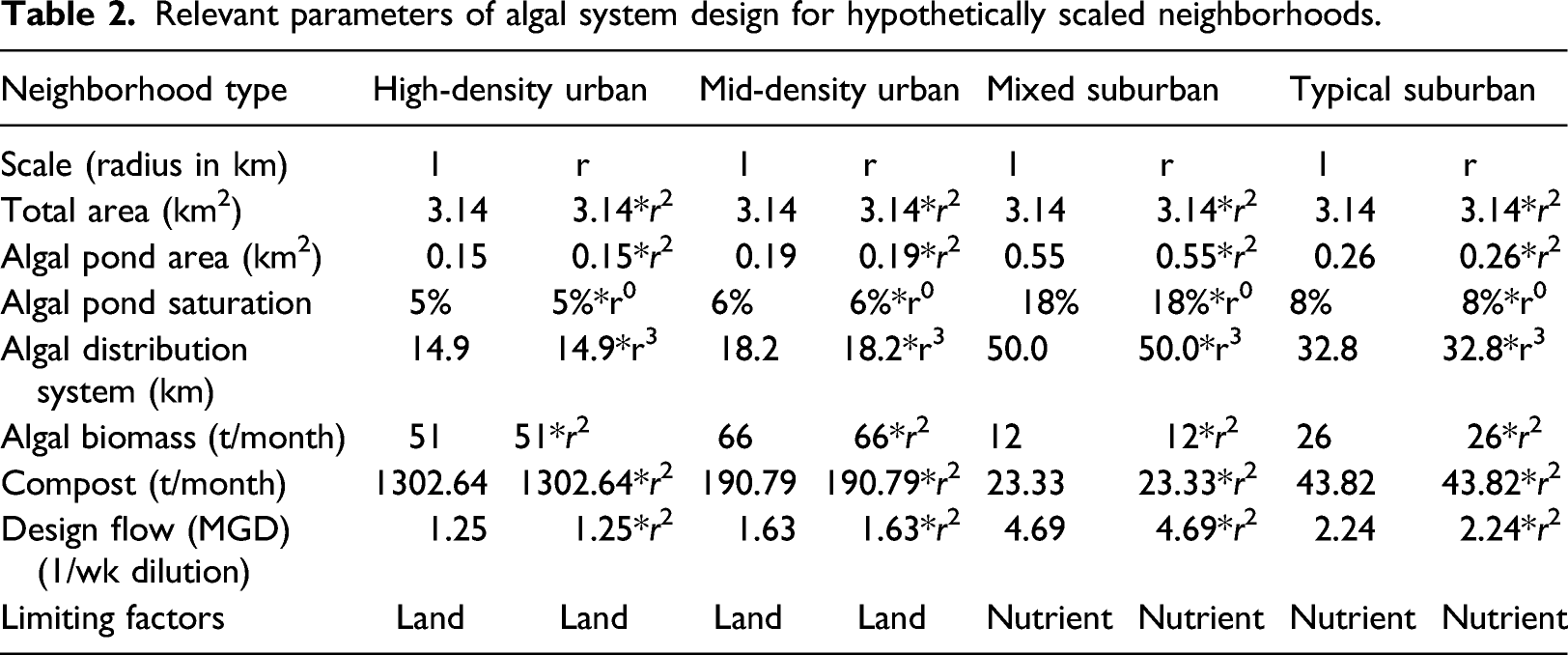
With the homogeneity assumption and equations (8–12), the relationships between inputs and scale (radius r) are as follows



Relevant parameters of algal system design for hypothetically scaled neighborhoods.
Testing actual neighborhoods
The scaling effect is also tested in actual neighborhood settings. For each neighborhood type, a smaller scale of a 0.5-km radius and a larger scale of a 2-km radius of the four neighborhoods are tested in addition to the 1-km radius to explore the scaling effects (Figure 6(b)). As shown in Supplementary Table S2, the density varies when the scale or the system boundary of the neighborhood changes, due to the heterogeneous urban environment.
Relevant parameters of algal system design for 12 real cases in the four neighborhoods.

Results
Density and performance of an algae-powered neighborhood: baseline cases
The baseline cases of the four neighborhoods show that energy performance is enhanced when the density increases, as shown in Figure 7. In the urban neighborhoods where the density is high, the energy performances of the algae-powered neighborhood designs are positive, indicating a net energy production. A high-density urban environment contains enormous opportunities to turn waste to energy locally through algae-based renewable systems. In the mixed suburban and typical suburban neighborhoods, the energy performance of the urban algal system is negative, suggesting that the overall system consumes more energy than what the system can produce. However, even in those low-density neighborhoods, the urban algal system may still outperform the traditional MSW management, which consumes huge amounts of energy. Relationships between energy performance density in (a) the baseline scenario with a 1-km radius and four neighborhoods of hypothetical scaling scenarios: (b) High-density urban neighborhood, (c) mid-density urban neighborhood, (d) mixed suburban neighborhood, and (e) typical suburban neighborhood.
From Figure 7(a), it can also be observed that the energy performance might contain a non-linear relationship with density, however, with a limited number of test cases. When density reaches above a certain range, the performance gain from density becomes less prominent. The relationship in the baseline cases suggests that the energy performance is not only determined by density, but also by urban forms and land use patterns.
Scale and urban-algal system performance: The testing of hypothetical models
With the assumption of homogeneous urban forms, the hypothetical models of four neighborhood types are defined with scales ranging from 0.5- to 5-km radiuses. The energy performance is simulated by the UAPM. The results are shown in Figure 7(a) and Supplementary Table S3. In the high-density urban and mid-density urban neighborhoods, given the same urban patterns and land uses as in the scale of the 1-km radius, the energy performance increases slightly when the system begins to scale up from a 0.5-km radius, reaches its maximum at the scale of the 1.3-km and 0.6-km radius, respectively, and then begins to decrease. But for the other two neighborhoods of mixed suburban and typical suburban neighborhoods, there are always negative relationships between scale and the performance within the scale range of 0.5- to 5-km radius.
The optimal scales for the maximum energy performances in the four neighborhoods are summarized in Supplementary Table S3, and the scale of a 1.3-km radius in a high-density neighborhood has the highest energy performance. At first glance, it seems quite different relationships exist among the four neighborhoods with differing density settings. However, a simplified function can be derived to calculate the overall performance by subtracting the transportation energy cost from algae energy production based on the amount of nutrient influenced by solar irradiance and microclimate. One additional factor is the system scaling effect from the post-cultivation processing, which can be introduced into the function as an exponent for the energy production term. The overall performance function can therefore be formulated and simplified shown in equations (13)–(16)
Our simplified function turns out to be a polynomial function whereby a maximum value is reached before ultimately decreasing, as evidenced in the high-density and mid-density urban neighborhoods. In the other neighborhoods, the energy performance should also follow equation (17), but their coefficients based on the neighborhood parameters determine the exact shapes of the function pattern, which only have the decreasing part of the function pattern at the radius range of 0.5–5 km.
The function pattern can be summarized in Figure 8(a). In general, the performance decreases when the system scales up, but under certain neighborhood conditions, it may increase and reach its maximum when scaled up within a given scale range. Comparing the density–performance relationships among three scales, the radiuses of 0.5, 1, and 2 km, respectively, result in the patterns as shown in Figure 8(b), which suggests that higher density leads to better performance in general, the same conclusion as in the baseline cases. Relationships between energy performance and (a) scale and (b) density in hypothetical scenarios; (c) scale and (d) density in the 12 real cases.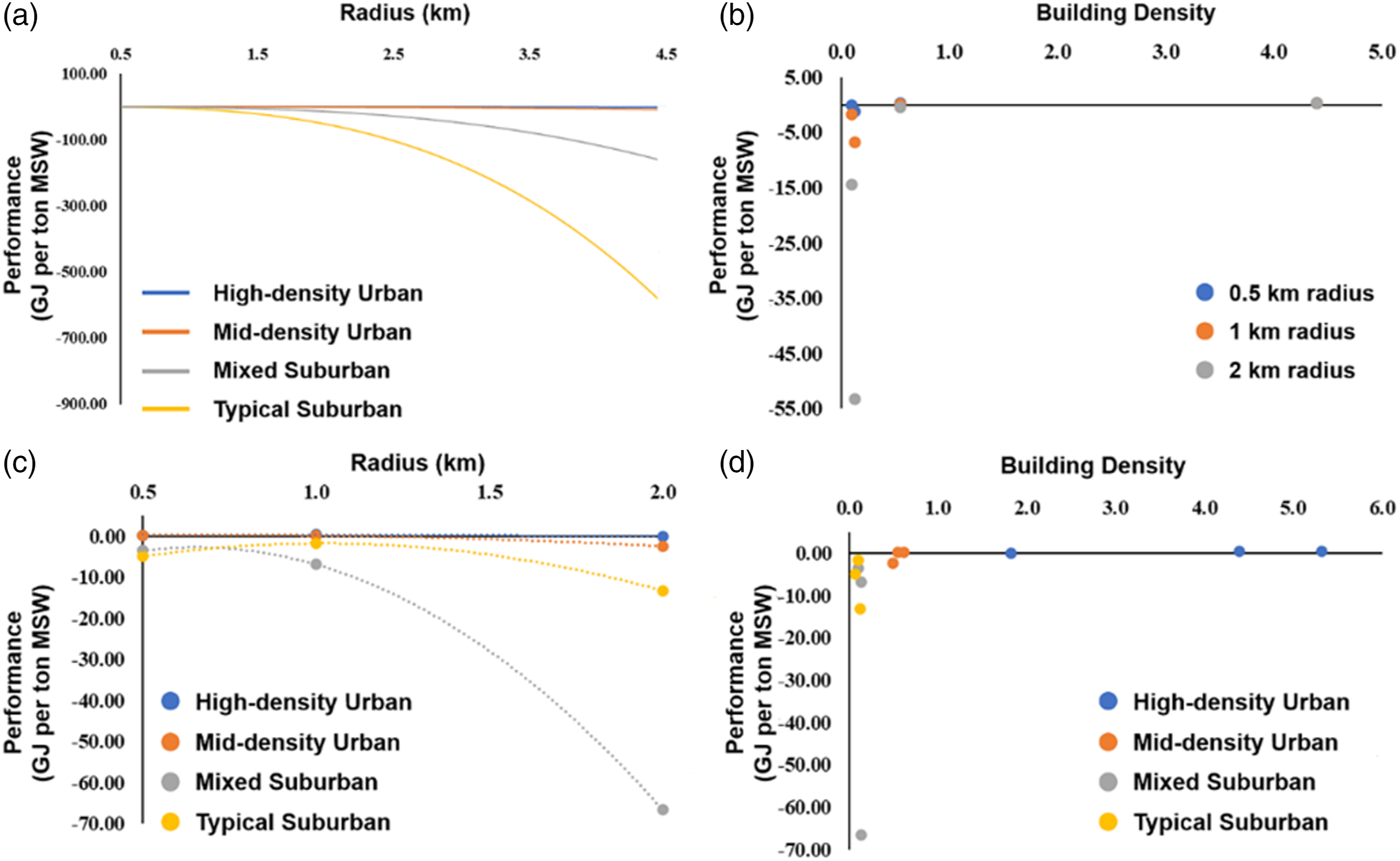
Density, scale, and urban-algal system performance: The testing of actual neighborhoods
The energy performance of the decentralized system in the 12 real cases.
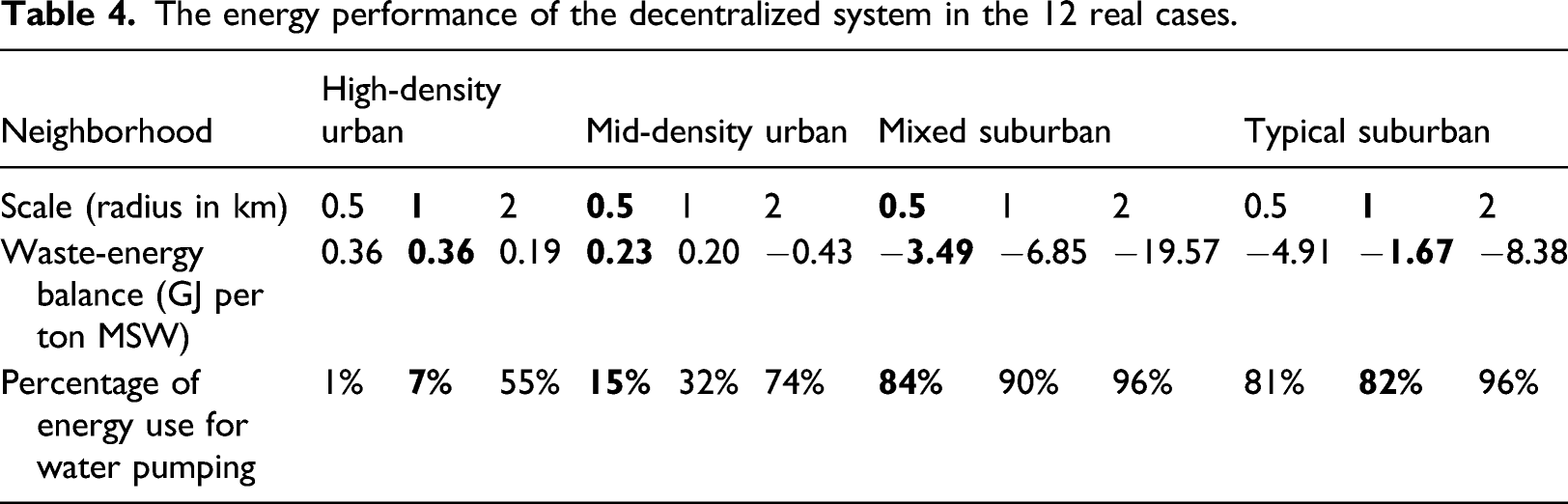
The optimal scale at which the maximum energy performance is achieved can be found for each neighborhood as in bold font in Table 4. For the scaling effects of actual neighborhood test cases, the typical suburban neighborhood has the maximum performance reached at the medium scale among the three scales, while the maximum values in the other three neighborhoods occur at the small scale.
The density–performance and scale–performance relationships are illustrated in Figures 8(c) and (d). It suggests that in general, the performance has a positive relationship with density and a negative one with scale. It can also be observed that the urban neighborhoods generally have more algal biomass production than suburban neighborhoods regardless of scale changes. Different from the general optimistic results in the literature (Cai et al., 2011; Chisti, 2007; Ehimen et al., 2011; Georgia Department of Community Affairs, 2005; Rawat et al., 2011; Sialve et al., 2009; Singh et al., 2014), with the total energy consumption for the system operation considered, the overall energy performance of the system is generally low, and even negative with low-density cases. However, since the urban algal system actually includes the function of MSW treatment, further comparison with the energy cost of the traditional centralized MSW treatment facilities will better reflect the feasibility of the urban-algal system implementation.
Conclusions
This study examines the overall performance of the urban-algal cultivation system, a decentralization of urban renewable energy systems to understand how density, urban form, and scale jointly influence the energy performance. The study tested the above systems design for four neighborhood types in Atlanta, Georgia, USA, which represent high-density urban, mid-density urban, mixed suburban, and typical suburban environments. The research defines the baseline cases, and conducts two sets of testing for the scaling effect based on hypothetical models and actual neighborhood settings, respectively. The results show that the urban-algal system has positive energy performance in high-density environments with certain ranges of scales, due to enormous opportunities to turn waste to renewable energy locally in high-density urban areas, in which urban wastes as renewable resources are normally “wasted away” in current practices of most cities to transport them to landfills or incinerators that are normally away from the central city areas. It suggests that the design and development of the urban algal system need to focus on high-density areas to achieve better feasibility with current algal cultivation technologies.
The results also suggest a positive density–performance relationship and a negative scale–performance relationship. In the testing of hypothetical models, the relationship between scale and performance is found to be polynomial. Such relationships have the potential optimal scale where the performance reaches its maximum in high-density neighborhoods. The results in the testing of actual neighborhoods also indicate the optimal scales. The result shows the trade-offs between the efficiency of the algae post-cultivation systems and the transportation cost increase during scaling. The findings on the relationships between density, scale, and performance suggest that the urban-algal system performs better in areas with higher population density in small-to-medium scale, where the optimal scale occurs as shown in the Atlanta case study.
The study is based on first-order simulation models and the basic assumptions in the UAPM. It aims to provide a research framework to integrate urban design and renewable energy systems for planning decentralized algae-powered neighborhoods. To compare with more established decentralized generation sources, for example, solar panels, which are more competitive from points of view of the first cost and readiness, urban-algal systems offer additional features and a more holistic approach to engaging the nexus of energy, water, and food systems. Urban-algal cultivation can treat wastewater by removing nutrients and helping to alleviate the eutrophication of aquatic environments, decrease greenhouse-gas emissions because of the consumption of CO2 during the cultivation process, and integrate them into the urban landscape. Furthermore, a fraction of algal biomass may also be used directly as food or animal feed. Examples of feed options include small food-producing animals, like chickens or ducks, or aquaculture opportunities, such as shrimp or fish farming, providing food resiliency to urban environments.
More complex dynamic models and more detailed reference data could be further added to the UAPM in future work. In particular, the uncertainty in the energy system needs to be further addressed. This study tested the influences of urban environmental conditions, and found that the sensitivity of the algal cultivation system is generally very low for air temperature and solar irradiance in the context of Atlanta. Therefore, the average month is adopted as the temporal scope in this study, but future studies on other cities and different algal systems may need a comparison between months. The other uncertainties are also worthy of exploration, such as those with behavior variations related to MSW generation and systems design. They will be future research topics due to the limited empirical data. At the same time, the evaluation of the urban-algal system should include not only energy performance, but also the economic feasibility, reuse of urban waste, and educational impacts. The urban systems design of renewable energy systems needs to consider broader impacts. Future work can be extended to lifecycle assessment to incorporate lifecycle cost, energy performance, and carbon emissions.
Supplemental Material
Supplemental Material - Planning decentralized urban renewable energy systems using algal cultivation for closed-loop and resilient communities
Supplemental Material for Planning decentralized urban renewable energy systems using algal cultivation for closed-loop and resilient communities by Steven Jige Quan, Soowon Chang, Thomas K Igou, Florina Dutt, Jiaqi Ding, Daniel Castro-Lacouture, Yongsheng Chen and Perry Pei-Ju Yang in Environment and Planning B: Urban Analytics and City Science
Footnotes
Declaration of conflicting interests
The author(s) declared no potential conflicts of interest with respect to the research, authorship, and/or publication of this article.
Funding
The author(s) disclosed receipt of the following financial support for the research, authorship, and/or publication of this article: This work was supported by the National Science Foundation Grant (Award Number 1230961), the U.S. Department of Energy (Award Number: DE-EE0005996), and the U.S. Department of Agriculture (Award No. 2018-68011-28371).

Supplemental Material
Supplemental Material for this article is available online.
Author biographies
References
Supplementary Material
Please find the following supplemental material available below.
For Open Access articles published under a Creative Commons License, all supplemental material carries the same license as the article it is associated with.
For non-Open Access articles published, all supplemental material carries a non-exclusive license, and permission requests for re-use of supplemental material or any part of supplemental material shall be sent directly to the copyright owner as specified in the copyright notice associated with the article.
