



Abstract
Autism spectrum disorder (ASD), a neurodevelopmental condition, affects approximately 1% of children globally and their social and cognitive abilities. This leads to difficulties in communication, repetitive behaviors, psychomotor skills, and eye contact maintenance. In recent years, there has been an increased utilization of Artificial Intelligence (AI) for the early detection of autism. Using knowledge gathered from 116 peer-reviewed publications, this study assessed algorithmic efficacy, model performance, multimodal data integration, classification metrics, generalization ability, and clinical usefulness. Machine Learning, Deep Learning (DL), Graph Neural Networks, Federated Learning, auto encoders, and Natural Language Processing, the Attention Mechanism seemed to be among the several AI techniques that were investigated in this study. To protect a child's developmental progress, this survey investigates how early detection of autism facilitates prompt therapeutic treatments, minimizes intellectual disabilities, improves mobility, and supports customized care. The research emphasizes the effectiveness of predicting ASD with minimal time using different data modalities, including EEG microstates, ABIDE I & II, to assess DL models such as GoogleNet, Xception, AlexNet, ResNet, VGG, and DenseNet. Three types of data were analyzed: biochemical (biomarkers and physiological metrics), behavioral (facial features, eye gazing, and audio-video cues), and structural and functional (MRI, EEG, and ECG) images. The research demonstrated strong diagnostic performance with models attaining accuracy rates ranging from 90% to 96% across diverse datasets. Classification measures, such as accuracy, sensitivity, specificity, precision, recall, and F1-score, were used in the performance evaluation. Error and statistical metrics, such as RMSE, MSE, R2, Kappa, and G-mean, were also employed. The dependability and efficiency of the models in detecting ASD were enhanced by validation methods, such as confusion matrix, receiver operating characteristics (ROC) curves, and AUC. Based on the evaluated studies, transfer learning with diverse datasets and modalities has great promise for early ASD diagnosis. Even with a minimal data size, these techniques increase robustness, accuracy, and generalization. For real-time clinical applications, a hybrid transfer learning-based framework is advised to assist clinicians and therapists in accurately diagnosing and assessing ASD severity.
Keywords
Introduction
Autism is a neurological disorder characterized by brain abnormalities that affect behavior, social interaction, and communication skills. The spectrum represents the diversity of symptoms and levels of illness. According to the Centers for Disease Control and Prevention (CDC) guidelines, autism spectrum disorder (ASD) is the third most common developmental disorder caused by brain deficiency. In 2023, approximately 18 million Indians were diagnosed with autism. Maternal stress is one of the causes of autism in pregnant women. Video game addiction can negatively impact children's mental health. Children with autism exhibit a range of symptoms, including anomalous facial expressions and vocal expressions. A complicated neurodevelopmental disease, ASD typically appears in early childhood and causes a range of behavioral and cognitive impairments. Individuals with ASD may have trouble communicating both verbally and nonverbally, which can affect their capacity to express themselves and comprehend others. Stereotyped movements and rigorous adherence to routines are examples of repetitive behaviors that are frequent and may limit adaptive functioning. People with increased or decreased reactions to stimuli such as light, sound, or texture are also known to have sensory sensitivity. Diagnosis of ASD with a wide range of symptoms and severity can be difficult. A biological test, such as a blood test or a brain scan, is not yet available to confirm ASD. Behavior and pattern development were observed to obtain a diagnosis. Even though early symptoms such as poor eye contact, delayed speech, and repetitive behaviors can appear as early as 18–24 months, many children are not diagnosed until they are four years old. Abnormalities in identification and intervention result from the frequent absence of these early signs or confusion with broader development. Diagnosing ASD is challenging in areas with limited resources. Examining speech, eye contact, facial expressions, and movement patterns assists in identifying early indicators. To improve the diagnosis accuracy, Artificial Intelligence (AI) may also integrate various data types, such as behavior films and brain scans. High success rates have been demonstrated by deep learning (DL) models, such as VGG and ResNet, and even with limited datasets, they perform well with transfer learning. Artificial Intelligence can be a helpful tool, particularly in areas with limited access to medical resources.
The motivation behind this research is as follows:
Global Impact of ASD – Worldwide autism impacts, Children's ability to communicate, engage socially and cognitively, necessitating early and precise diagnosis. Clinical Methods – Time-consuming, subjective and required significant resources. Advancements in AI – Artificial Intelligence and multimodal data analysis have the potential to significantly speed up the detection of ASD with high precision and reliability. Systematic Benchmarking – Artificial Intelligence models, data modalities and metrics are crucial for reliable clinical studies of ASD detection.
Early signs of ASD occur between 8 and 12 months of age and include lack of eye contact, caregiver inattention, and neglect to respond. Various studies have highlighted the early signs of ASD in anxiety and stress (Henry et al., 2023; Shin, Konnai et al., 2023), poor eye contact (Kanwal et al., 2023; Ahmed et al., 2022), motor delay (Dang et al., 2017), sluggish speech (Murray et al., 2022), and repetitive and restricted behaviors (Alcaniz Raya et al., 2020). Figure 1 shows the early symptoms of ASD. The observed indicators in Figure 1 include repetitive behaviors approximately (90%), motor delays (60–80%), speech delays (40%), hyperactivity (25–32%), and frequent co-occurrence. These findings are based on studies by the CDC and World Health Organization.
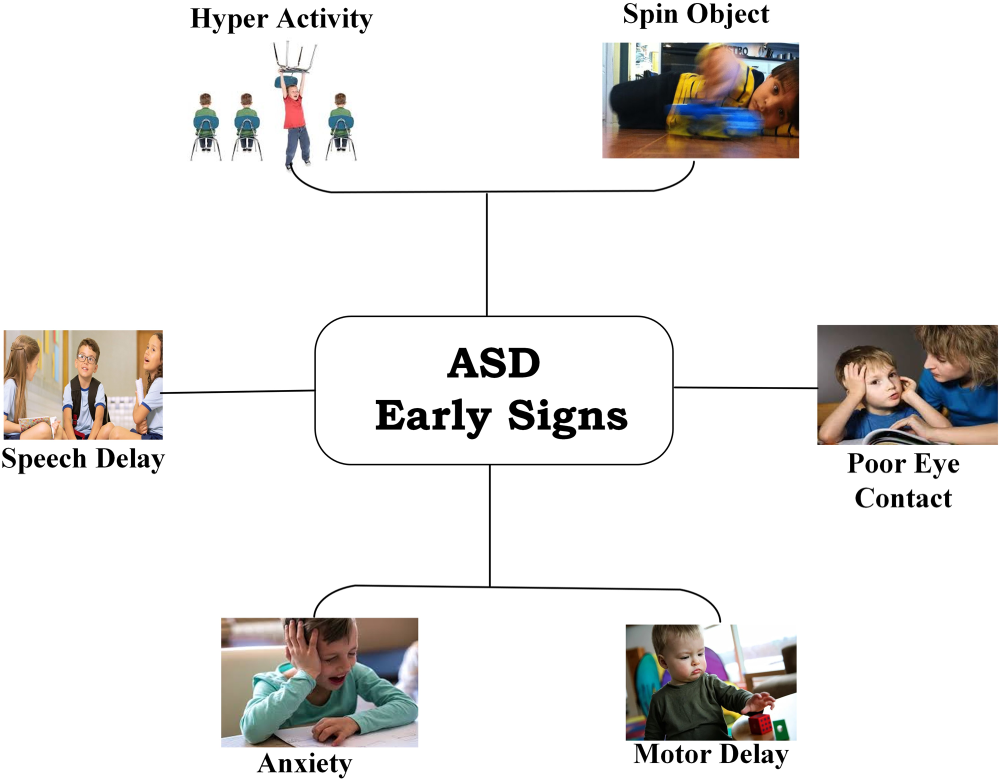
Early signs of autism spectrum disorder.
Modalities used to detect autism include MRI, EEG, MEG, thermal imaging modalities, eye features, facial expressions, speech, captured video, and genetic information. The face is a common feature used to identify whether a person is normal or abnormal. The advanced application of AI helps diagnose the early symptoms of ASD. We analyzed Machine Learning (ML), DL, and TL methods to identify autism at an early stage. The ML model can handle small datasets and is limited to medical images. The DL model is suitable for unstructured image datasets. TL uses a fine-tuned pretrained model for a large dataset to speed up the training process and enhance efficiency. Alsaade and Alzahrani suggested transfer learning models to diagnose ASD using facial expressions (Alsaade & Alzahrani, 2022). Ghazal et al. discussed how transfer learning uses unlabeled data to train models (Ghazal et al., 2023). Alam et al. applied VGG19, ResNet50, and MobileNetV2 transfer learning techniques to identify children with autism based on their facial features (Alam et al., 2022). El Mouatasim et al. stated that transfer learning requires minimal training time and data to improve performance (El Mouatasim & Ikermane, 2023).
Sha et al. investigated a modified BAT algorithm, along with different ML classifiers, to evaluate the behavioral traits of children with autism. The optimized BAT with an ANN achieved the highest accuracy of 93% (Sha et al., 2023). Rao et al. explored sophisticated protein structural modeling methods to assess the association between mutations in the TRIO GEF1 gene and the risk of ASD (Rao et al., 2024). Dhamale and Bhandari proposed the use of LeNet with Adam teaching learning optimization for the early diagnosis of ASD using MRI images (Dhamale & Bhandari, 2024). Shrivastava et al. analyzed various ML classifiers and K-nearest neighbors (KNN) imputers for diagnosing autism across different age groups from the UCI and Kaggle datasets and found that Random Forest provides superior ASD classification (Shrivastava et al., 2024). Sobieski et al. implemented changes in Polish primary healthcare settings based on parental input aimed at improving diagnostic and therapeutic procedures to benefit children with lives (Sobieski et al., 2024). Liu et al. developed a multimodal human behavior perception-based framework for identifying joint attention impacts associated with ASD (Liu et al., 2023). Hajjej et al. utilized random forest and XGBoost ensemble techniques to assess linguistic, physical, and behavioral measures of autistic children, achieving an accuracy of 94% (Hajjej et al., 2024). Ashraf et al. created a deep transfer neuro-network using Internet-of-Things technology to predict ASD utilizing fMRI samples from the ABIDE database (Ashraf et al., 2023). Artiran et al. discussed gaze filtering along with MLP regressors to monitor head movement, joint attention, and subtle eye movement in children with autism (Artiran et al., 2024). Tawhid et al. suggested a neural network approach that utilizes EEG signals to detect various brain disorders (Tawhid et al., 2024). Wang et al. proposed a gaze target detection model incorporating dual regression to investigate the location and movement of the eye in facial images (Wang et al., 2023). Banire et al. developed multiple attention models in gaze-based face-based hybrid approaches to study the attentional behavior of children dealing with autism and found the highest accuracy (Banire et al., 2024).
Wu et al. proposed fuzzy logic in Convolutional Neural Networks (CNNs) and automatically constructed effective neural networks in federated learning (FL) by utilizing particle swarm optimization for processing genomic data. This system improves the learning rate at minimal cost (Wu et al., 2024).
This study presents a novel hybrid transfer learning framework that outperforms current methods by emphasizing both severity classification and early symptom identification. Additionally, a hybrid ensemble technique that combines sequential and visual modeling was performed. Furthermore, FL improves model generalizability across institutions while protecting patient data privacy, which is a factor rarely highlighted in research on ASD identification. The survey analyzed the performance of 106 key investigations. The proposed hybrid model exhibits excellent diagnostic accuracy (90%–96%) when measured using a variety of metrics, including the Autism Diagnostic Observation Schedule (ADOS) score, ROC-AUC, accuracy, sensitivity, precision, F1 score, and kappa statistics. By bridging the gap between data-driven models and realistic, reliable clinical applications, our all-inclusive, multimodal, and interpretable AI framework offers a fresh contribution to the diagnosis of ASD. Mumenin et al. enhanced a scalable and interpretable ML framework for ASD diagnosis using questionnaire data, achieving up to 99.89% accuracy across age groups through a stacked ensemble model, and uses SHapley Additive exPlanations (SHAP) for interpretation, ensuring reliable and explainable predictions (Mumenin et al., 2025). Ehsan et al. combined Automated Machine Learning (AutoML) with the Tree-based Pipeline Optimization Tool to streamline early autism diagnosis, achieving high accuracy and efficiency. The author addresses ASD symptoms that typically appear before age three, often associated with abnormal learning, irregular intellectual, and sensory development (Ehsan et al., 2025). Karunakaran & Hamdan employ the Mullen Scales of Early Learning and Support Vector Machine (SVM) to analyze important developmental parameters for accurate early prediction of ASD. It also shows efficacy in high-dimensional data and sensitivity to behavioral patterns, which supports efficient intervention and avoids neurodevelopmental delays (Karunakaran & Hamdan, 2020). Nah et al. developed a brief autism detection tool in early childhood using behavioral indicators such as social smiling, responses to names, gaze switching, the use of gestures and verbal commands that successfully detects autism in early stage, attaining excellent performance (Nah et al., 2019). Mozolic-Staunton et al. combined the Social Attention and Communication Surveillance with ADOS scores to identify ASD better reliably and efficiently in children aged 12 to 36 months (Mozolic-Staunton et al., 2020).
This study's primary contribution is listed below.
A systematic review assessed 116 peer-reviewed studies utilizing AI techniques, specifically ML, DL, graph neural networks (GNN), FL, autoencoders, natural language processing (NLP), and attention-based models for the detection of ASD. Focused on the effectiveness of early detection of autism with developmental levels and behavioral disabilities through reliable methods and screening. Analyzed biochemical, behavioral, and neuroimaging data (EEG, MRI, ECG, ABIDE I & II datasets) to evaluate predictive performance across various data types. State-of-the-art (SOTA) DL architectures (GoogleNet, Xception, AlexNet, ResNet, VGG, DenseNet) were compared for automatic classification of ASD. A performance evaluation survey utilized a wide range of diagnostic and statistical metrics, including accuracy, sensitivity, specificity, F1-score, RMSE, MSE, R2, kappa, and G-mean. The survey's key findings show that the models performed strongly in terms of diagnostic accuracy (90–96%), demonstrating robustness and the ability to generalize, even with smaller datasets. Transfer learning and hybrid models were highlighted as a promising approach for developing reliable, real-time, and clinically deployable ASD diagnostic tools, particularly when using diverse datasets and frameworks. Artificial Intelligence-assisted hybrid transfer learning framework is proposed to help clinicians and therapists identify and assess the severity of ASD at an early stage.
The remainder of this article is structured as follows: Section 2 covers related works and Section 3 discusses the survey methodology in detail. In Section 4, SOTA approaches to Autism Detection are examined. A deep transfer learning survey is presented in Section 5. The performance metrics for ASD detection are presented in Section 6. The proposed architecture is discussed in Section 7, and a survey discussion is provided in Section 8. Section 9 concludes the study with future directions and research limitations.
This survey examined the applications of DL, transfer learning, and ML in autism diagnosis. An overview of the techniques for identifying ASD is presented in this section. The architectures of DL and ML for identifying ASD are shown in Figure 2.
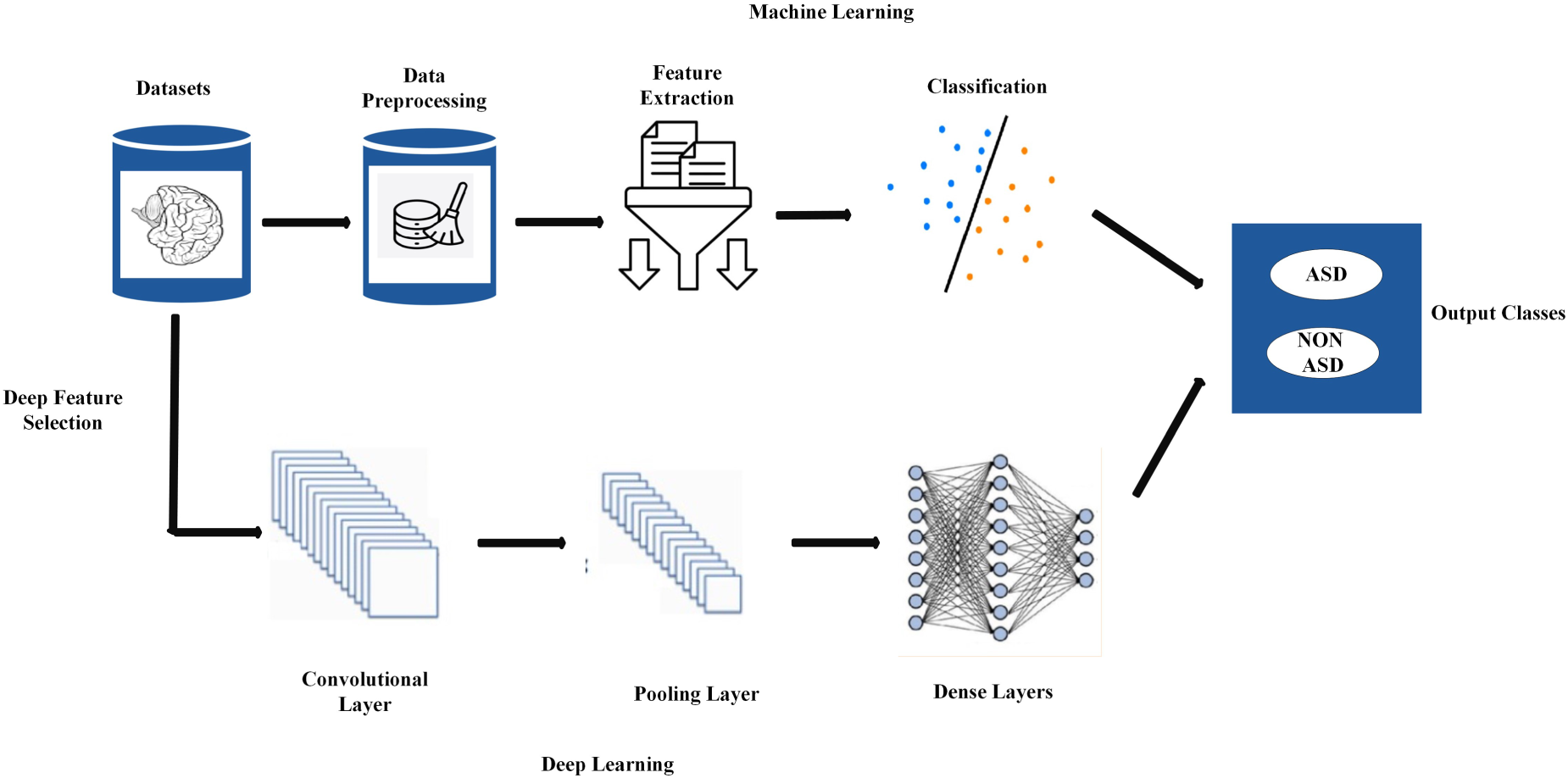
Machine and deep learning architecture for autism spectrum disorder.
Figure 2 compares two ASD classification methods: ML and DL, starting from the same brain dataset. Machine Learning involves manual feature extraction followed by classifiers such as SVM or random forests for ASD/NON-ASD prediction. By contrast, DL automatically learns features from raw image data through convolutional and dense layers. Deep Learning is more effective for complex, large-scale data, whereas ML performs best with structured inputs. Sicherman et al. analyzed 1743 parental surveys using regression trees and found that nonspecific clinical signs often lead to early ASD diagnosis, while intense behaviors like aggression and tantrums, especially in children without early communication deficits, may delay diagnosis and deserve closer attention (Sicherman et al., 2021). Based on a longitudinal analysis of 131 children's ADOS scores, Gabbay-Dizdar et al. suggested that social symptoms significantly improve when ASD is diagnosed before the age of 2.5 and stated that early screening is essential, as advised by the American Academy of Paediatrics (Gabbay-Dizdar et al., 2022). Rahman et al. proposed an approach for early prediction of ASD using tabular and image datasets, applying ML and DL techniques with hyperparameter tuning and Explainable AI (XAI), achieving the best accuracy, and emphasized the significance of early and accurate detection (Rahman et al., 2025). Agrawal & Agrawal investigates the importance of early ASD detection and employs XAI, specifically SHAP, to enhance model transparency and trust, enabling ethical and interpretable ASD diagnosis for healthcare professionals (Agrawal & Agrawal, 2025). Paolucci et al. proposed an AI-based prescreening tool using XGBoost and SHAP to identify early ASD signs from home video ratings, achieving high accuracy that highlights the effectiveness of sensorimotor features in early ASD classification by observers who are not experts (Paolucci et al., 2023).
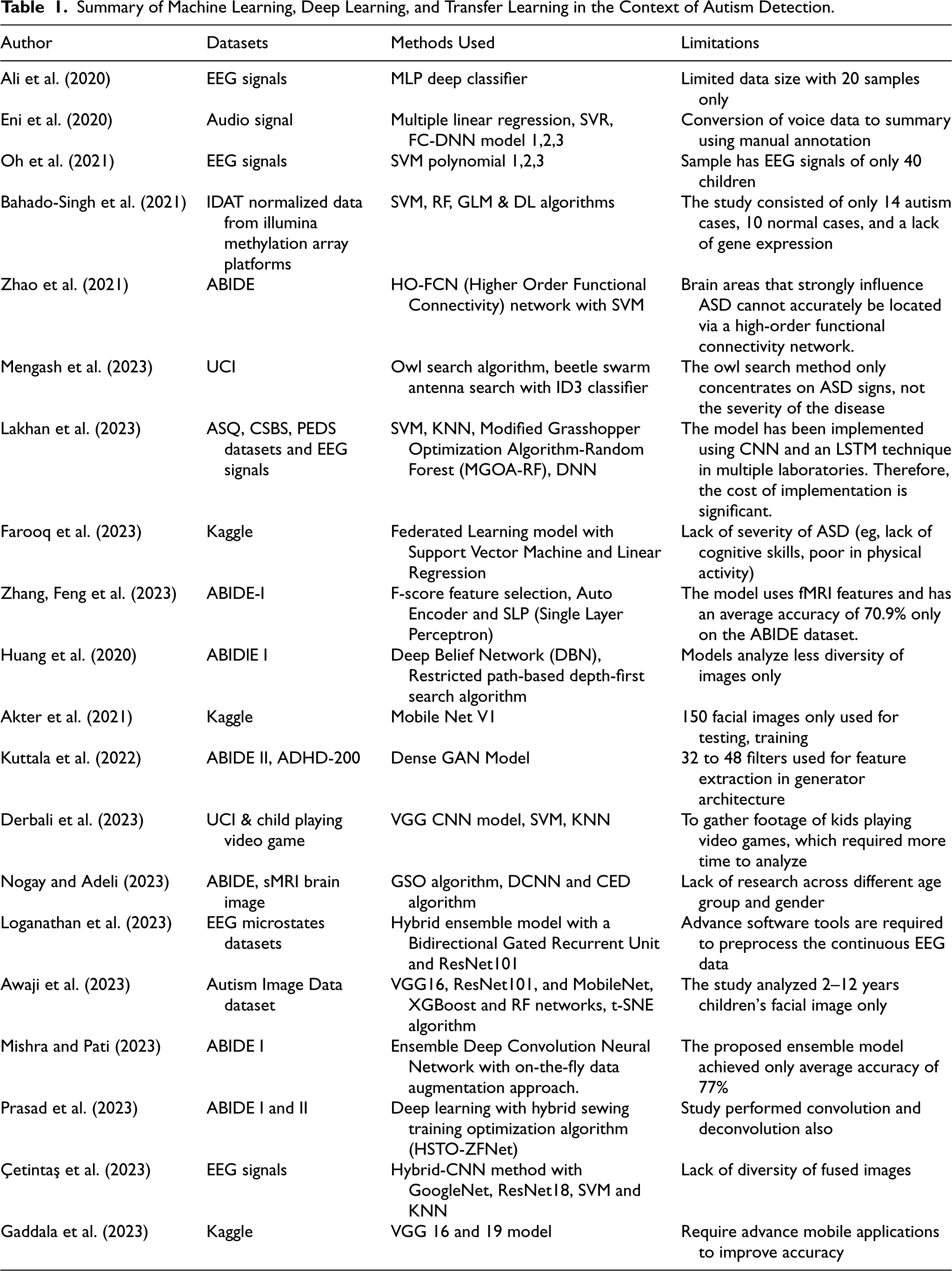
Table 1 represents ML, DL, and TL methods such as SVMs, random forests, and deep neural networks (DNN), VGG, MobileNetV1, ResNet101 and GoogleNet are utilized for autism identification. As shown in Table 1, many ASD detection studies use ML and DL on datasets such as EEG, audio, facial images and functional MRI (fMRI) from sources such as ABIDE, UCI and Kaggle. However, they often face limitations, such as small sample sizes, limited diversity, high costs and poor representation of ASD severity and demographics.
Summary of Machine Learning, Deep Learning, and Transfer Learning in the Context of Autism Detection.
To identify the fetal QRS complex from abdominal ECG signals without eliminating maternal components, Krupa et al. suggested an intelligent IoT-based DL technique. They used the Hilbert Huang Transform and Stockwell Transform to transform the data into time-frequency pictures rather than conventional signal processing. For improved classification, these images were subsequently fed into the DL models ResNet18 and Mobile Net. The study shows high accuracy for remote fetal monitoring in the IoT healthcare system (Krupa et al., 2022). Wu et al. introduced a unique micro-aggregation architecture, DBTP, that improves similarity among equivalence classes by fusing density-based clustering with conventional micro-aggregation, which works for sparse datasets. The results from experiments on actual biomedical datasets demonstrate that the suggested approaches provide more data than current methods (Wu et al., 2019).
Search Strategy
We searched various databases, including WOS, IEEE, Elsevier, Springer, MDPI, and Google Scholar. The following keywords and clinical topics were used: “ASD detection,” “autism disorder,” “neurological disorder,” “brain illness,” “lack of communication,” “anxiety detection,” “poor eye contact,” “early signs of ASD,” “stress and depression,” “behavioral issues,” “physical activity,” “psychological,” “mental,” “cognitive skills,” “biomarker,” “gene expression,” “caregiver attention.” Boolean operators AND, OR were used in the search. A Detailed Overview of the search string methodology across databases is provided below:
WOS: ((TI = (Early sign of ASD)) AND TI = (Transfer learning)) OR TI = (Deep transfer learning) IEEE: (“Document Title": Autism detection) AND (“Document Title": Machine learning) OR (“Document Title": Artificial intelligence) Elsevier: autism AND detection OR prediction AND machine AND learning AND deep AND learning AND transfer AND learning. Springer: ‘Autism AND “early sign” AND (detection)’ MDPI: ‘Autism spectrum detection, machine learning AND deep learning AND transfer learning’ Google Scholar: Autism detection OR ASD AND “machine learning” AND “transfer learning”
Inclusion Criteria
The inclusion criteria for this study were clearly defined to ensure quality and relevance. Only peer-reviewed research published between 2017 and 2024 was included to reflect the recent progress in ASD detection. This review focuses on English-language studies for consistency. The selected studies used DL, ML, or hybrid AI models, including CNNs, RNNs, ResNet, VGG, DenseNet, Xception, and fuzzy logic-based systems. Priority was given to research on early diagnosis in children, as early intervention is the key to improving developmental outcomes.
Exclusion Criteria
Studies were excluded if they did not use AI techniques such as ML or DL. Studies published before 2012, those with incomplete results, or those using unrelated ASD datasets were not considered. Studies with small sample sizes, poor study designs, and no autism-specific data were also excluded. Additionally, nonpeer-reviewed materials such as conference abstracts and papers without full-text access were not included in the review.
Data Extraction and Analysis
The following data were obtained from the studies: author details, year of publication, research design, demographic information, sample size, algorithm used, and study outcomes. The results of the study included the behavior of the child, communication skills, eye movement, facial expression, physical activity, stress level, cognitive abilities, brain functionality, connectivity of the brain, amount of oxygen and blood levels in the brain, and severity of ASD symptoms.
To find pertinent research on the use of AI in the detection of ASD, a systematic and open review procedure was carried out in accordance with the PRISMA (Preferred Reporting Items for Systematic Reviews and Meta-Analyses) framework. After removing duplicates, 208 abstracts were selected from 350 original records found in PubMed, Scopus, IEEE Xplore, and ScienceDirect. A total of 116 studies satisfied the inclusion criteria after 181 papers were evaluated using full-text evaluation. The peer-reviewed literature was used to ensure a high-quality, evidence-based study. The final review comprised 116 studies in total. Figure 3 presents the PRISMA framework for selecting research papers.
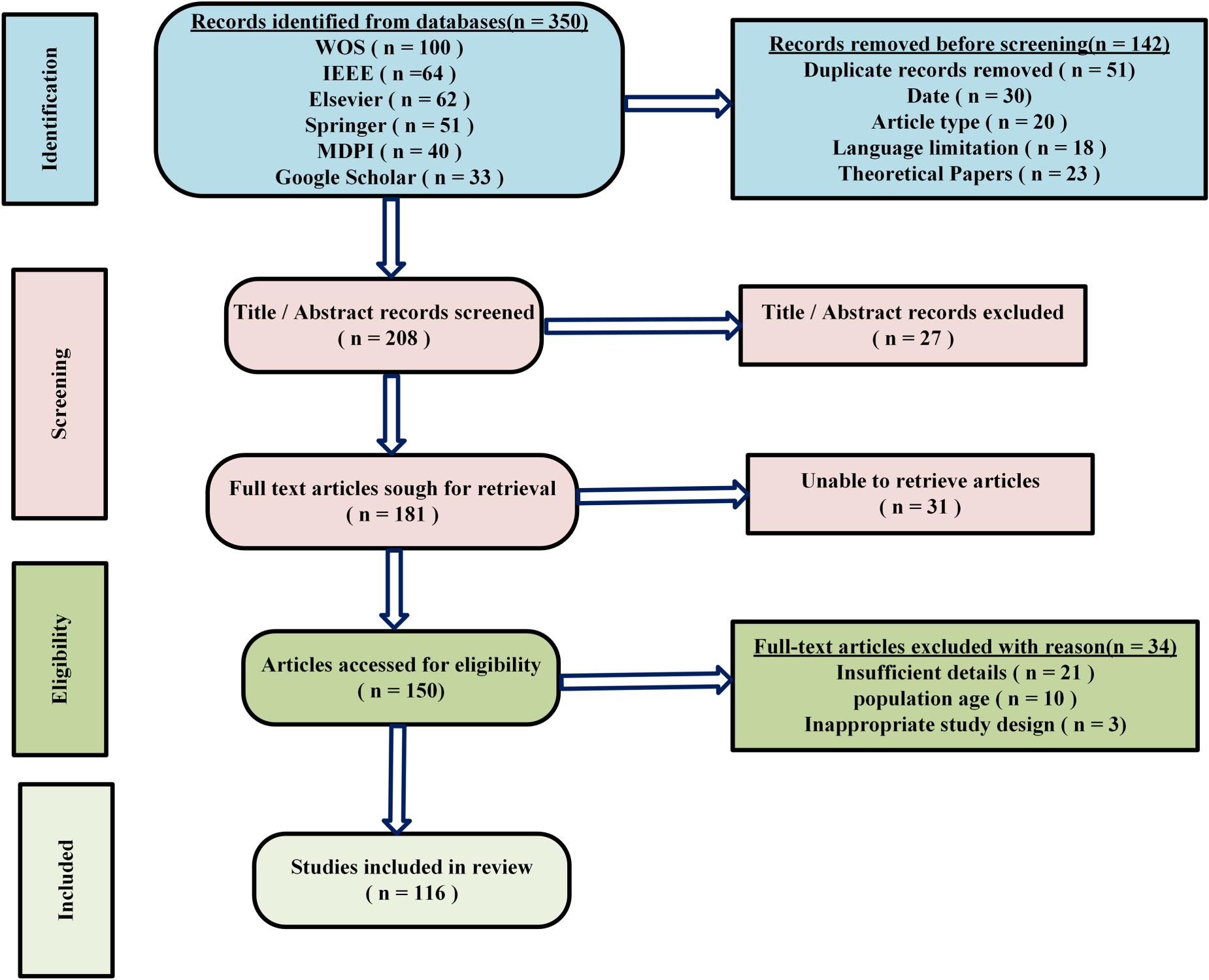
PRISMA framework for selecting research papers.
A systematic review of 116 studies on AI-based ASD detection showed various methodological approaches, with most focusing on ML, data mining, and other core AI methods as described in 25 papers, alongside 31 papers on DL, transfer learning, FL, and ensemble learning. The survey was expanded to include 17 variants of neural networks, which include papers on autoencoders, LSTMs, Bi-GRUs, RNNs, transformers, multilayer perceptrons, E2E networks, and LeNet. Research was conducted on 11 papers focusing on attention and graph models, including the attention mechanism, GNN, and graph learning, as well as GCN with dual transformer. The survey was also extended to 10 papers on hybrid CNN, deep belief networks and GANs. A survey was conducted on multimodal and specialized approaches that comprise 11 papers on the integration of ADOS scores, computer vision methods, multimodal filtering, sparse sampling, and IoMT-enabled DL. A comprehensive final survey resulted in 11 papers on domain-specific and emerging methods, including fuzzy neural networks, gene prediction models, structure-based approaches, the grasshopper optimization algorithm, and computational intelligence, XAI, and Auto ML. This range of AI strategies underscores the necessity for systematic benchmarking and integration to further develop reliable clinical applications.
Various modalities and approaches are used to detect signs of ASDs in young children, including standardized behavioral assessments, developmental screenings during well-child checkups, neuroimaging techniques such as fMRI or Diffusion Tensor Imaging, genetic testing for associated markers, electrophysiological techniques such as electroencephalography, eye-tracking technology to measure typical patterns of visual attention in individuals with autism, and auditory and visual processing assessments for unusual sensory responses. Early Intensive Behavioral Interventions, such as the Early Start Denver Model, have shown promising results in improving cognitive performance and adaptive behavior in some children with autism. Early detection and intervention are critical to achieving better outcomes. Some modalities have scientific backing, whereas others require additional research for validation.
Electrophysiological Techniques
Singh & Kakkar explored neurological brain disorders using EEG signals (Singh & Kakkar, 2024). Barik et al. determined the early neural indicators of ASD in young children with neuromagnetic brain responses during rest (Barik et al., 2023). Anandhi et al. analyzed the emotional states of children with ASD using ECG signals with a KNN classifier (Anandhi et al., 2022). Sarabadani et al. investigated EMG information to capture the skin contradiction of an autistic child with positive and negative emotional stimuli (Sarabadani et al., 2018). Ari et al. utilized EEG signals to capture brain electrical activity and employed a deep CNN to detect ASD (Ari et al., 2022).
4.2. Neuroimaging Techniques
Haweel et al. determined speech delay in ASD, which evaluates oxygen levels in the blood in all brain areas (Haweel et al., 2021). Goel et al. utilized the ABIDE 1 dataset's structural MRI (sMRI) data for ASD categorization and detection (Goel et al., 2024). Ma et al. proposed a multi-scale dynamic graph learning model that uses rs-fMRI with brain ROI data to automatically detect brain disorders (Ma et al., 2023). Rusli et al. suggested thermal imaging as a noninvasive approach to examine physiological data linked with emotional states in children with autism (Rusli et al., 2020). Rakic et al. considered ASD detection by integrating both fMRI for monitoring brain activity and sMRI for accurate neuron anatomy (Rakić et al., 2020).
4.3. Behavioral Assessments
Cheng et al. analyzed children's social interaction skills using audiovisual data (Cheng et al., 2023). Prakash et al. determined skill and emotion analysis in children with ASD using captured videos of bio-behaviors (Prakash et al., 2023). Lee et al. detected autism in children's speech using an end-to-end neural network model (Lee et al., 2022). Wedyan et al. explored upper-limb motor movements to differentiate between high-risk and low-risk (LR) autism in children using kinematic data (Wedyan & Al-Jumaily, 2016).
4.4. Genetic Markers
Lin et al. suggested an ASD-Risk gene prediction approach using a SVM to identify the risk genes associated with ASD (Lin et al., 2021). Rastegari et al. applied the FA gene algorithm to identify functionally connected genes and the DMN_miRNA algorithm to detect the minimum miRNAs associated with autism (Rastegari et al., 2023).
Figure 4 presents the diverse computational and biomedical techniques utilized in ASD research. The identification of neurological and genetic biomarkers is supported by methods, such as deep transfer learning, EEG analysis, neuroimaging, and genetic testing. Thermal imaging, eye tracking, and wearable sensors improve behavioral and emotional evaluations. Furthermore, a thorough, multimodal diagnostic framework is made possible by the analysis of linguistic and psychiatric characteristics made possible by computational psychiatry and NLP.
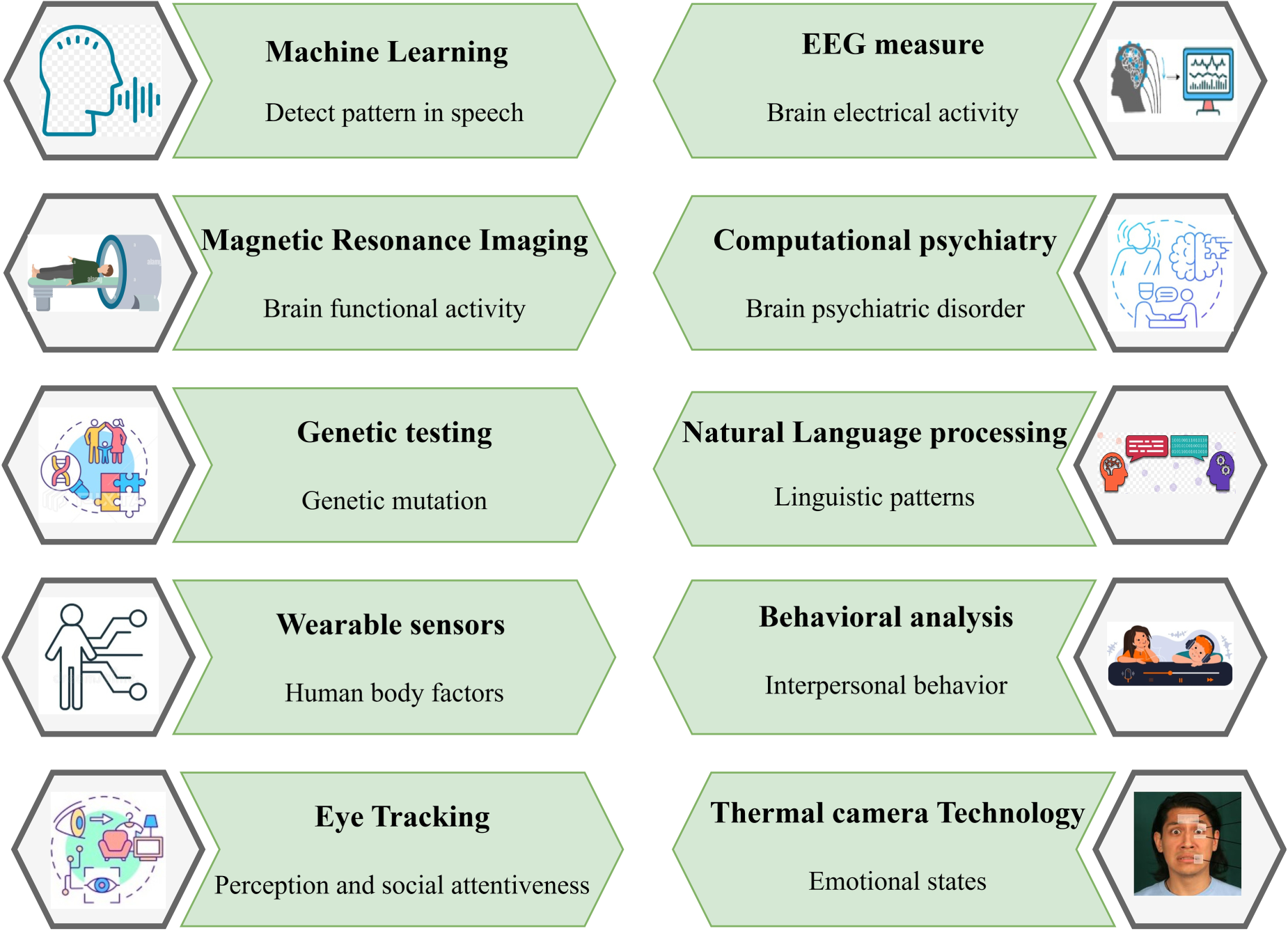
State-of-the-art approaches for autism detection.
Machine and deep transfer learning are innovative methodologies that have shown promise in ASD research. Hasan et al. used SVMs to categorize children with ASD and healthy children (Hasan et al., 2022). KNN operates under data points that can be located close to each other. Shin et al. predicted hyperactivity disorder based on autism data on its nearest k neighbor (Shin, Maniruzzaman et al., 2023). Random Forest uses various decision trees on different dataset subsets and averages them to increase the prediction accuracy of the dataset. Kampa et al. classified children with and without ASD using several classifiers that enhance the model's functionality using RFC (Kampa et al., 2022). Huang et al. analyzed fMRI data to diagnose various mental disorders by using FL. A FL model was developed without data exchange between several decentralized devices or servers that store local data samples. It can be used to classify ASDs while maintaining data ownership and privacy (Huang et al., 2022). Eslami et al. applied an MLP classifier with two hidden layers to detect ASD brain disorders by using fMRI data (Eslami & Saeed, 2019). Arunkumar and Surendran proposed ensemble ML with maximum voting for the early signs of autism, which is an efficient approach to improve the overall prediction accuracy (Arunkumar & Surendran, 2022). Tawhid et al. analyzed raw EEG data for binary categorization of autistic vs. normal children using AlexNet and ResNet50. ResNet50 outperformed AlexNet in terms of sensitivity across various epochs (Tawhid et al., 2023). Hendr et al. employed the googleNet pretrained model to diagnose autism at an early stage. GoogleNet applies its pretrained model for feature extraction from relevant data for ASD detection (Hendr et al., 2023). Reddy investigated facial features to accurately diagnose ASD using VGG-16 and VGG-19 pretrained models and reduced the need for a large database. VGG19 is deeper, with 19 layers (16 convolutions, 3 fully linked), and VGG16 has 16 layers (13 convolutions, 3 fully connected). VGG19's extra layers aim for finer features but have increased computational complexity (Reddy, 2024). Ahmad et al. utilized the MobileNetV2 model to predict complex neurological disorders with 85% accuracy and was also designed for mobile and edge devices, which emphasizes efficiency in model size and inference speed in image classification (Ahmad et al., 2024). Goel et al. proposed a Modified Grasshopper Optimization Algorithm with RF to identify ASD across all age groups with 98% accuracy and applied it to screening datasets for children, youth, and adults to predict ASD (Goel et al., 2020). Almars et al. analyzed the Gorilla Troops Optimizer with DenseNet201 pretrained model to obtain 87% accuracy (Almars et al., 2023). Saleh and Rabie used a hybrid ensemble technique (KNN, Naive Bayes, and CNN) with the Autism Spectrum Disorder Discovery (ASDD) method for feature selection and outlier rejection (Saleh & Rabie, 2023). Alsuliman and Al-Baity discussed the grey wolf optimization algorithm with a KNN classifier to attain the highest accuracy for gene data and MRI images (Alsuliman & Al-Baity, 2022). Hameed et al. applied the geometric binary particle swarm optimization-SVM technique to gene expression analysis in ASD using various filters (Hameed et al., 2017). The latest DL technologies for autism prediction involve sophisticated models and approaches that leverage the ability of neural networks to process complex data patterns notable advancements.”
5.1 Attention Mechanism
Chen et al. proposed a region-group adaptive attention model using the KDEF, JAFFE, and CK + face datasets for subtle expression identification, achieving accuracies of 93.47%, 95.20%, and 99.59%, respectively, to recognize the relationship between emotions and the facial skeleton. One of the limitations of this study is the high model complexity, which may impact computational efficiency (Chen et al., 2021). Jarraya et al. used recurrent neural network (RNN) with compound emotion recognition to identify compound emotions: sadly angry, terribly angry, and fearfully surprised during a meltdown crisis by utilizing deep spatiotemporal geometric characters. Using Kinect video recordings of children with autism during meltdowns, an RNN with three hidden layers and Information Gain feature selection achieved an accuracy of 85.8%. The study is limited by the lack of advanced DL and skeletal feature integration, as well as challenges in accurately analysing microexpressions in real-world meltdown scenarios (Jarraya et al., 2020). Banire et al. proposed an SVMs with geometric features and a CNN with time-domain spatial features to recognize facial attention in children with autism. Using transformed geometric features with Euclidean distance, the SVMs model achieved a higher accuracy of 91%, outperforming the CNN model by 76.31%. Although the CNN was slightly better at recognizing attentional behavior, the SVMs model was more effective at detecting inattentional behavior and showed better performance in participant-specific classification. Reduced generalizability across people with ASD and a lack of validation across demographics and actual classroom environments are this study's limitations (Banire et al., 2021).
5.2 Auto Encoder
Almuqhim and Saeed explored a Sparse Autoencoder (SAE) with DNN to accurately predict autism using more than 1035 fMRI samples. This study classified ASD from fMRI data using a DNN and extracted features using a SAE. The ASD-SAENet outperformed other techniques in 12 out of 17 imaging centers in the ABIDE dataset, achieving 70.8% accuracy and 79.1% specificity. The small sample size, difficulty in interpreting the model, and possible confounding effects from head motion in fMRI data are the limitations of this study (Almuqhim & Saeed, 2021). Lee et al. used an autoencoder and bidirectional long short-term memory (LSTM) with joint optimization to predict autism using speech features from the eGeMAPS dataset. The study was limited by a small, unbalanced dataset and less-refined acoustic features, which contributed to a relatively lower accuracy in early ASD detection (Lee et al., 2020).
5.3 Graph Neural Network
Zhao et al. implemented a GNN with a self-attention mechanism (SA-GCN) to extract high-level brain features to accurately diagnose autism using rs-fMRI data from the ABIDE dataset with 79.9% accuracy. As the results are still experimental and need to be confirmed, further studies are necessary to confirm the efficacy and generalizability of the suggested SA-GCN technique across larger datasets and modalities (Zhao et al., 2022). Wang et al. developed a GNN with Brain Modularity dynamic graph learning Representation (BMR) to perform an interpretable analysis of 534 rs-fMRI images. The BMR uses topology-aware dynamic graph learning and brain modularity priors to achieve robust fMRI-based classification, outperforming both traditional ML and sophisticated GNN models by an AUC of up to 16.6%. Its primary limitation is reliance on predefined neurocognitive modules, which may constrain model adaptability to individual functional variability (Wang, Jing et al., 2024).
5.4 LSTM
Zhou et al. proposed a scanpath-based approach with an LSTM classifier for detecting ASD with dynamic changes in gaze distribution to identify a distinctive visual pattern. The LSTM-based scanpath method outperformed traditional ML models in ASD detection, but its performance was limited by small datasets, calibration issues, and costly eye-tracking equipment (Zhou et al., 2024). Fan et al. suggested a CNN-LSTM model to correctly identify the risk RNA related to autism. To predict ASD risk RNAs, this study introduced DeepASDPred, a DL-based approach that combines CNN, LSTM, gene expression data, and K-mer encoding. The model performed better in ten-fold cross-validation when features were selected using logistic regression and chi-square tests. A small gene expression dataset and a lack of noncoding RNAs are two of the drawbacks of this model, which could affect the prediction of ASD risk (Fan et al., 2023).
5.5 Natural Language Processing
Mukherjee et al. utilized NLP with the BERT model to perform sentiment analysis from the parent's statements to explore genetic mutations and environmental toxins associated with ASD, achieving an accuracy of 83% on curated data. The proposed approach may miss nonverbal clues or behavioral patterns that are essential for thorough ASD screening because it only uses text-based analysis of parent conversations (Mukherjee et al., 2023). Zwilling et al. suggested NLP to provide the best eco-system for people with ASD based on an analysis of various scientific articles and identified important design elements for ASD-friendly workspaces by conducting a systematic examination of architectural literature. This study fills a research gap by identifying adaptive spatial techniques to improve social integration and autonomy for individuals with ASDs. The study's limitations include its use of a single academic database, reliance on secondary data, absence of real-world design imagery, and lack of participant input (Zwilling & Levy, 2022). Cho et al. developed an automatic detection system with a Gradient Boosting Model and Principal Component Analysis (PCA) was used for feature reduction to predict ASD by using 624 acoustic and lexical features. The model showed 75.71% accuracy and aimed to support early ASD prescreening in real-world settings such as clinics and schools. The small, matched sample size and the study's dependence on quick, unstructured discussions without clinical validation for diagnostic applications are its main limitations (Cho et al., 2019).
5.6 Federated Learning
Zhang et al. proposed a FedBrain model with homomorphic encryption to diagnose brain disorders using the ABIDE dataset, and reduced the communication burden of FL with 79% accuracy. Its limitations include high dimensionality, small sample size, domain heterogeneity, and increased computational overhead due to privacy mechanisms (Zhang, Meng et al., 2023). Sung et al. explored a FL model (weighted averaging and equivalent learning) to identify ASD symptoms using brain functional connectivity features, which achieved accuracies of 0.662 and 0.647, roughly matching the 0.68 accuracy of the centralized model. The two federated models’ slightly lower results when compared to centralized training, and the lack of obvious superiority between them, are major drawbacks (Sung & Park, 2024).
Performance Metrics
Performance metrics are important for early autism detection since they assess the precision and reliability of diagnostic models, ensuring quick and accurate identification of early autistic signs. Additionally, by providing standardized behavioral evaluations that support clinical diagnosis and ASD validation, the ADOS score is essential for early prediction. Zhang et al. stated that the ADOS score shown in Figure 5 is used to evaluate the social interaction, communication, and repetitive behaviors of children & the author correlated EEG metrics with ADOS scores to predict the severity of ASD signs. Some autism screening tools are as follows:
The tool for young children is an interactive screening instrument comprising activities that measure play, communication skills, and imitation. The Parents’ Assessment of Growth Status is a parent interview that aims to identify deficits in motor, speech, and interpersonal abilities (Zhang et al., 2022).
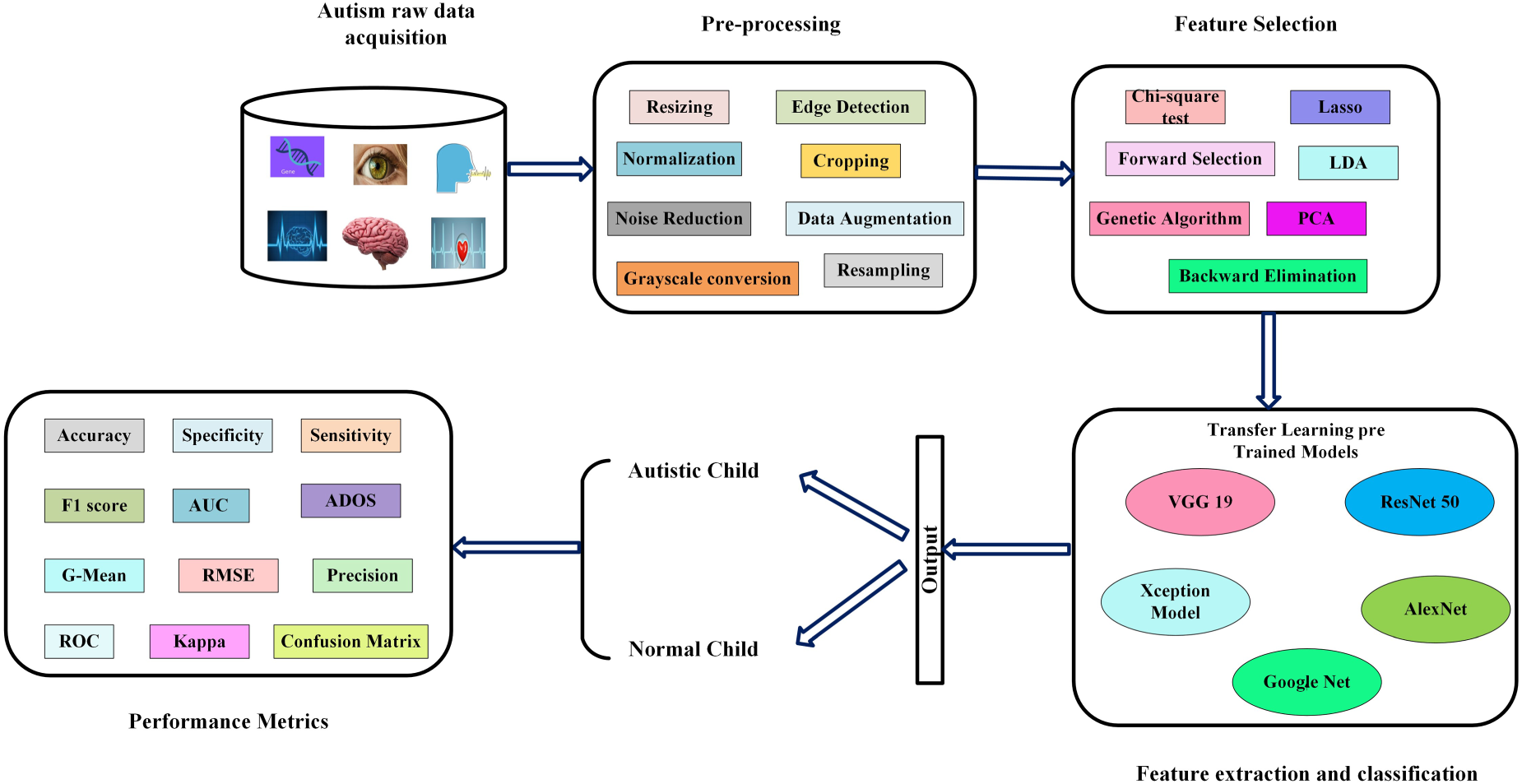
Proposed hybrid transfer learning autism detection architecture.
Figure 6 shows how doctors evaluate early indicators of ASD through parent interviews and cognitive skill observations of play and motor/speech activities to determine the ADOS score for diagnosis.
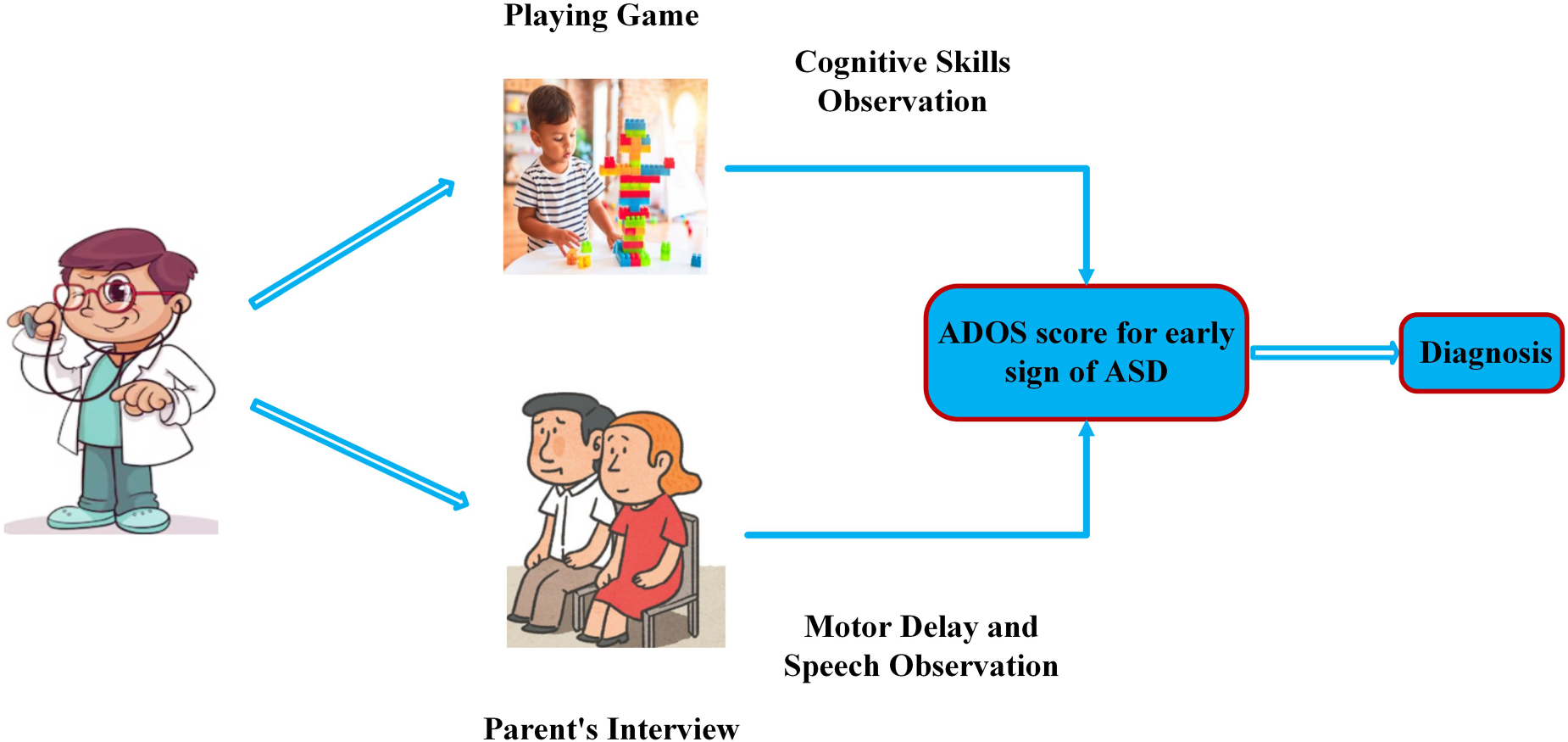
Autism Diagnostic Observation Schedule (ADOS) screening for autism spectrum disorder (ASD) detection.
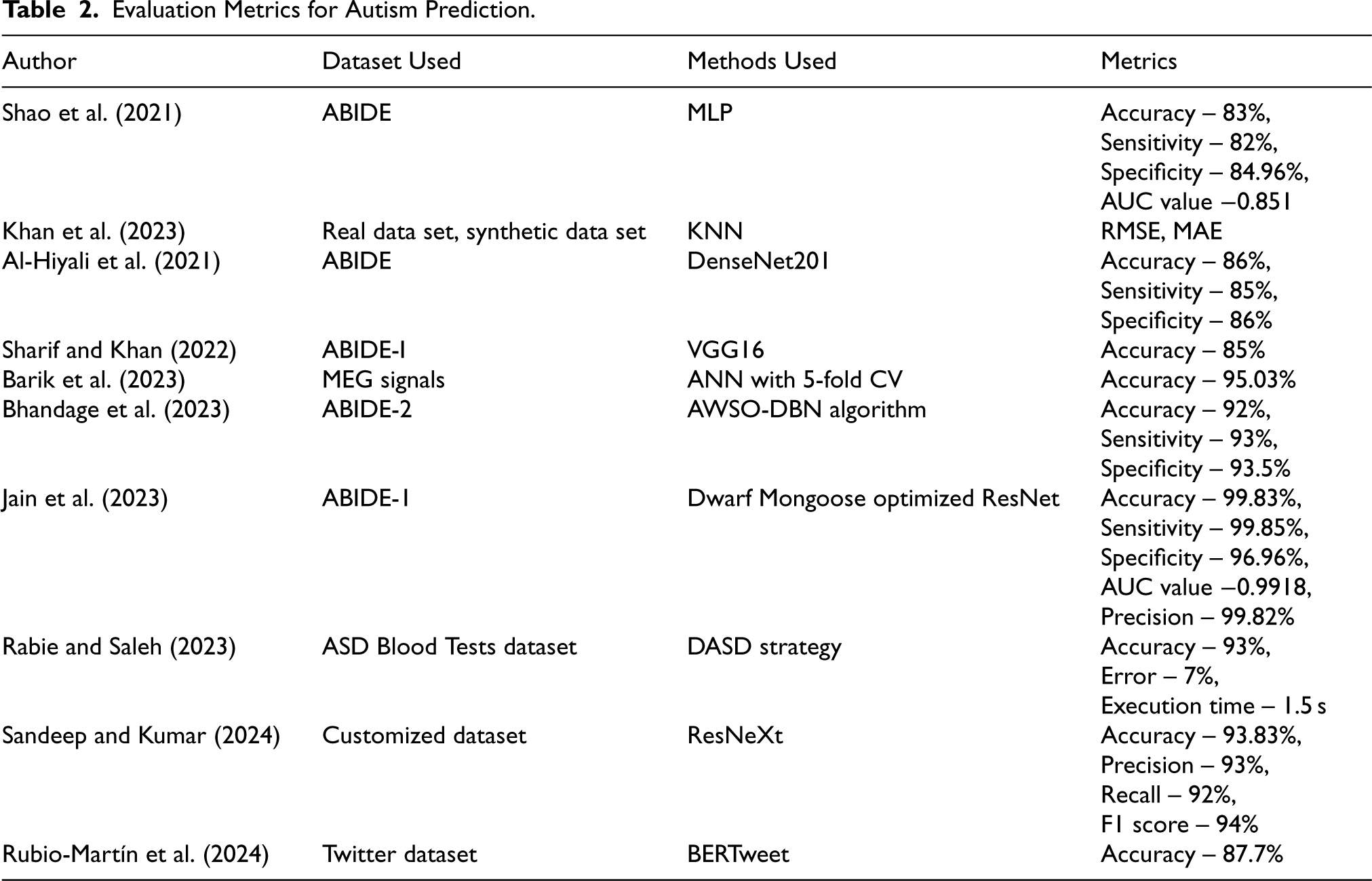
Table 2 summarizes recent ASD classification models applied to datasets such as ABIDE, MEG signals, and blood tests, utilizing architectures such as MLP, DenseNet201, VGG16, ResNeXt, and BERTweet. Metrics such as sensitivity, specificity, AUC, F1-score, and RMSE were used to assess the models’ excellent performance, which included accuracies ranging from 83% to 99.83%. Model robustness and diagnostic accuracy are improved by optimization strategies and various data modalities.
Evaluation Metrics for Autism Prediction.
The proposed model was trained using multimodal data that reflects both behavioral and neurological signs of autism. This includes brain imaging (MRI, fMRI, sMRI) for structural and functional analysis, eye gaze tracking for visual attention patterns, audio recordings for speech and linguistic variations, psychomotor data for movement and repetitive behaviors, as well as thermal images for stress-related heat distribution. Combining these diverse sources ensures a comprehensive and accurate foundation for autism detection. To remove data redundancy, these features were preprocessed. Preparing raw data for analysis by enhancing its quality and providing consistency is the main intention of the preprocessing phase. Data augmentation creates variations, such as rotation or flipping for generating diverse datasets. Resampling modifies the sampling rate of audio or time-series data related to ASD. Edge detection identifies boundaries within facial images, while cropping isolates key regions of interested pixels. Noise reduction removes unwanted ASD artifacts, enhancing data quality. Normalization scales pixel values or features to a consistent range and resizing ensures all images conform to the dimensions required by ML models. The features associated with autism were chosen and supplied as inputs to the TL model using Linear Discriminant Analysis (LDA) and PCA, genetic algorithms, backward elimination, and forward selection. The feature selection is aimed at optimizing model performance by reducing dimensionality and retaining only the most informative attributes from the preprocessed dataset. This process employs statistical and algorithmic techniques such as chi-square tests for determining the relationship between two ASD features. Lasso regularization is utilized for feature shrinkage and sparsity to avoid overfitting, and heuristic approaches like genetic algorithms are used for optimization-based selection. Sequential methods, including forward selection and backward elimination, iteratively add or remove features based on their contribution to predictive accuracy. Additionally, dimensionality reduction techniques such as LDA and PCA are utilized to preserve significant variance and class separability while minimizing redundancy. By filtering nonrelevant or redundant features, this phase mitigates overfitting, reduces computational complexity, and ensures that the ASD classification model operates on a robust and selective feature set. The TL pretrained model classifies autistic and normal children based on their autism characteristics. The TL model easily and accurately extracts features and classifies data linked to autism by utilizing DL architectures that have previously been trained on sizable datasets. This method optimizes preexisting models, including VGG19, ResNet50, Xception, AlexNet, and GoogleNet, for ASD identification, rather than creating a model from scratch, which requires a significant quantity of data and processing resources. These models assist in minimizing training time while increasing performance by using learned representations to identify patterns in domain-specific inputs such as gaze data, facial photographs, and brain scans. Figure 5 Illustrates the Proposed Autism Detection Transfer Learning Architecture.
Finally, the effectiveness of the model was assessed using the following performance measures.
Accuracy: The accuracy of the test was determined by the proportion of correct results, including true positives (TP) and true negatives (TN), out of all autism cases that were analyzed. This metric reflects the overall reliability of a test. The accuracy can be denoted as:
Sensitivity: Ability of the test to correctly identify individuals with autism. The sensitivity can be formulated as:
Recall: This term is often used interchangeably with sensitivity in ML contexts to denote the percentage of TP found in autism. Specificity: Test capacity to correctly identify individuals without autism. The specificity can be described as:
Precision: Fraction of correct positive identifications Precision can be represented as:
F1 Score: The harmonic means of precision and recall are particularly useful when the balance between precision and sensitivity is important. The F1 Score, G-Mean, and DOR are formulated as follows:

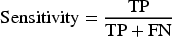
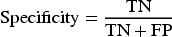
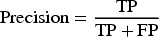



7.1 Confusion Matrix
A confusion matrix is a classification performance metric for ASD and non-ASD classes. A TN signifies that the child is normal, and the result is negative. True Positive signifies that the child has autistic features, and the test is positive. Test results that are positive even when a person is in good health are known as false positives (FP). A false negative (FN) is a test result that is negative; however, the person is unhealthy. The confusion matrix represents the counts of TP, FP, FN, and TN predictions made by the classifier. Figure 7 depicts the confusion matrix.

Confusion matrix.
The most used Metrics for ASD classification are F1-score (F1), recall (REC), precision (PRE), and accuracy (ACC). A survey of the performance metrics is shown in Table 2.
Area Under the Receiver Operating Characteristic Curve: This metric shows the performance of the model at all classification thresholds. The receiver operating characteristics (ROC) curve plot shows the true-positive rate versus the false-positive rate at various thresholds. Area Under the Precision-Recall Curve: Like ROC, this curve plot is precision against recall at various threshold settings, which is particularly useful when classes are imbalanced.
The ABIDE I, ABIDE II, EEG, and Kaggle datasets, with a range of modalities and demographics, were used in cross-dataset experiments to assess the suggested hybrid transfer learning model for ASD detection. With an accuracy of 89% to 93% and an AUC > 0.90, the model that combined ResNet101 and bidirectional gated recurrent unit (Bi-GRU) demonstrated strong domain adaptability. The robustness and diagnostic reliability of the proposed model across a variety of data sources were confirmed using numerous metrics to quantify performance.
Autism spectrum disorder is a complicated neuro-brain disorder that impacts interaction and habitual actions, and diagnosing autism early is tough due to small, heterogeneous, and nonlinear artifacts with diversity and noise. Detection methods are categorized into ML, DL, and TL based on data handling, model complexity, and adaptability. The ML model relies on handcrafted features and structured observation with rapid training but fails to capture multifaceted patterns. Deep Learning models spontaneously learn organized features from multivariate data, improving accuracy but requiring more samples, larger populations, and greater computational throughput. TL uses prelearned models to fine-tune results, reduce overfitting, and accelerate training, and it is effective with limited data. Considering performance factors such as training speed, data structure, complexity, and adaptability, ML is fast but less adjustable, DL is powerful but resource-intensive, and TL provides the optimal balance. Overall, these approaches demonstrate a progression toward more efficient, responsive systems for consistent early ASD prediction.
Table 3 illustrates the hierarchical relationship between ML, DL, and TL in autism prediction. The survey summarizes that for ASD detection, ML is limited but constrained, DL is powerful but resource-intensive, and TL enhances generalization with pretrained models. The integration of ML, DL, and TL provides a scalable and adaptive framework for autism prediction, addressing complexity, feature limitations, and generalization. The future direction depends on transformer models designed to enhance contextual and sequential learning for autism prediction.
Taxonomy of Learning Approaches.
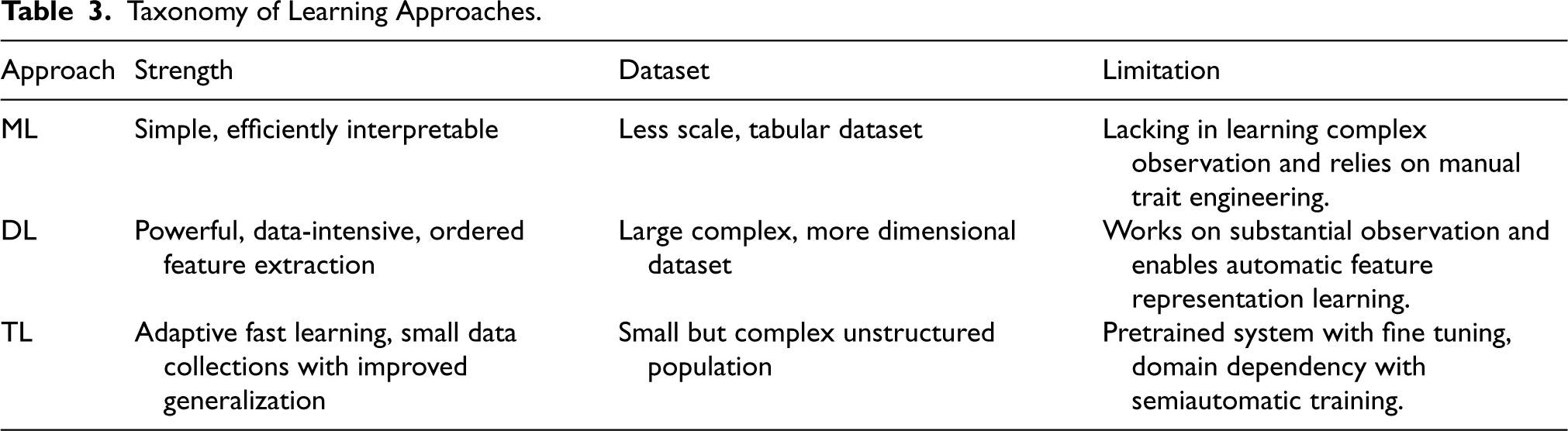
Taxonomy of Learning Approaches.
The objective of ASD detection is to identify the affected children early, facilitating timely intervention and support. The review shortlisted 116 studies that include ML, Deep Transfer Learning, GNN, FL, attention mechanism, autoencoders, and NLP. Among ML-based diagnostic approaches, KNN and RF performed best for ASD screening, followed by DT, SVMs, LR, and NB. This research examined various pretrained models to achieve the best classification accuracy for brain images. This study used homogeneous and heterogeneous ensemble models. This review examined multiple applications of the same classifier using SVM polynomials 1, 2, and 3 with different datasets. Additionally, different classifiers, ResNet101 and Bi-GRU, were combined to predict early indications of ASD. Some studies have analyzed the FL approach, which guarantees the early and accurate detection of ASD and allows for model improvement with data privacy. Several features were chosen for the review to predict ASD. Studies have used optimization algorithms and ML techniques to achieve high accuracy in identifying ASD across different age groups. The hybrid ensemble technique has also been used to examine different ASD features using several classifiers. The survey utilized the sigmoid, tanh, ReLU, and soft-max activation functions for ASD identification. The survey investigated several performance measures, including specificity, sensitivity, accuracy, recall, F1 score, ADOS score, precision, validation accuracy, and loss. This review suggested that the transfer learning model is suitable for the early identification of ASD in different populations.
8.1 Research Findings
This study demonstrates the usefulness of transfer learning and DL models in early ASD diagnosis with 90–96% accuracy across multimodal data. This demonstrates that, even with a small amount of labeled data, models such as ResNet, GoogleNet and VGG can efficiently extract features. By improving model interpretability using XAI tools (such as SHAP, LIME, and Grad-CAM), AI systems have become more reliable and appropriate for clinical applications.
8.2 Implications for Clinical Practice
Deep learning-based ASD detection enables early, accurate, and noninvasive diagnosis by extracting subtle features from EEG, MRI, facial expressions, and behavioral cues, offering scalable solutions for deployment in pediatric units, rural health centers, and school-based screenings. The integration of XAI methods enhances clinical interpretability by aligning model outputs with established diagnostic frameworks such as ADOS, thereby supporting clinician decision-making, improving transparency, and aiding in intervention planning through the visualization of salient biomarkers such as gaze aversion or atypical neural activity. Furthermore, training models on demographically diverse datasets promotes diagnostic equity by reducing delays and disparities across underrepresented populations and resource-limited settings.
This review highlights a diverse set of AI techniques, including ML, GNN, deep transfer learning, FL, attention mechanisms, autoencoders, and NLP, which capture the multidimensional nature of ASD detection.
The review lacks emphasis on XAI, which weakens its relevance to healthcare, where model transparency is essential for clinician trust and adoption.
8.3 Implications for Future Research
Future research should prioritize multimodal data fusion frameworks that integrate EEG, facial recognition, and behavioral cues to improve the robustness and generalizability of the model. The implementation of FL can enable collaborative model training across institutions while preserving data privacy and addressing the sensitivity of medical information. Additionally, incorporating edge AI with wearable sensors, such as gaze tracking and heart rate monitoring, can support real-time continuous ASD assessment in naturalistic settings.
According to a survey, Random Forest and KNN outperformed the traditional ML models for ASD screening, handling noisy data well. The survey shows that pretrained models such as ResNet, VGG, DenseNet, and Xception attain 90–96% accuracy on brain scans.
Table 4 highlights the recent progress in ASD detection from 2022 to 2025, showing that modern methods such as transformers, spatiotemporal GNNs, advanced temporal models, multimodal fusion, and privacy-preserving techniques are more effective than traditional methods in terms of accuracy, early detection, and data security.
Comparison of Reviewed Recent Models.
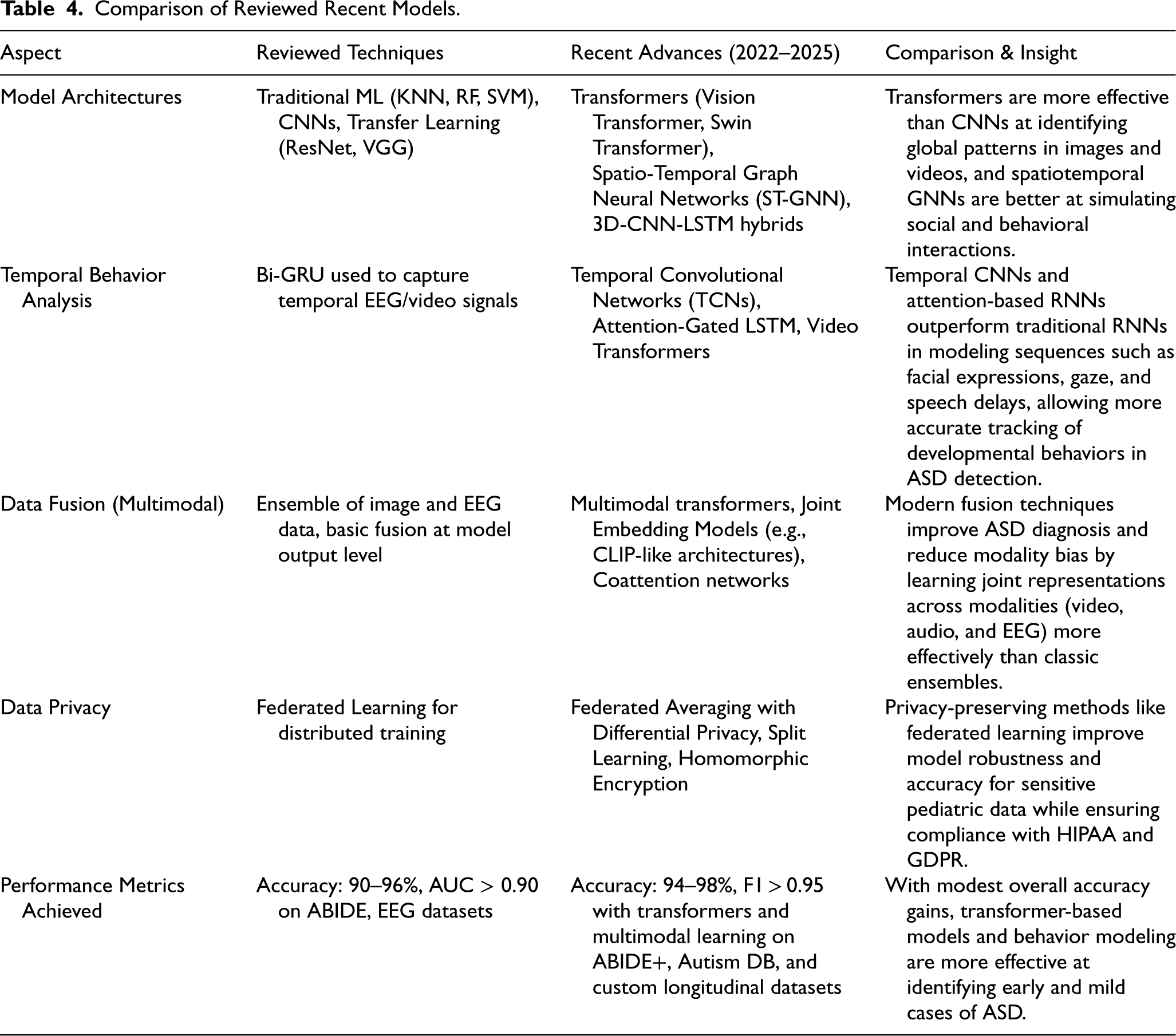
The investigation showed that accurate ASD identification can be achieved by integrating XAI, ensemble approaches, and transfer learning with a variety of features and metrics. Their clinical importance was supported by consistent outcomes. Future research should focus on validation, interpretability, and clinical applications while investigating the integration of Transformers with CNNs/RNNs to enhance pattern identification in multimodal data.
8.4 Comparative Analysis with SOTA Models
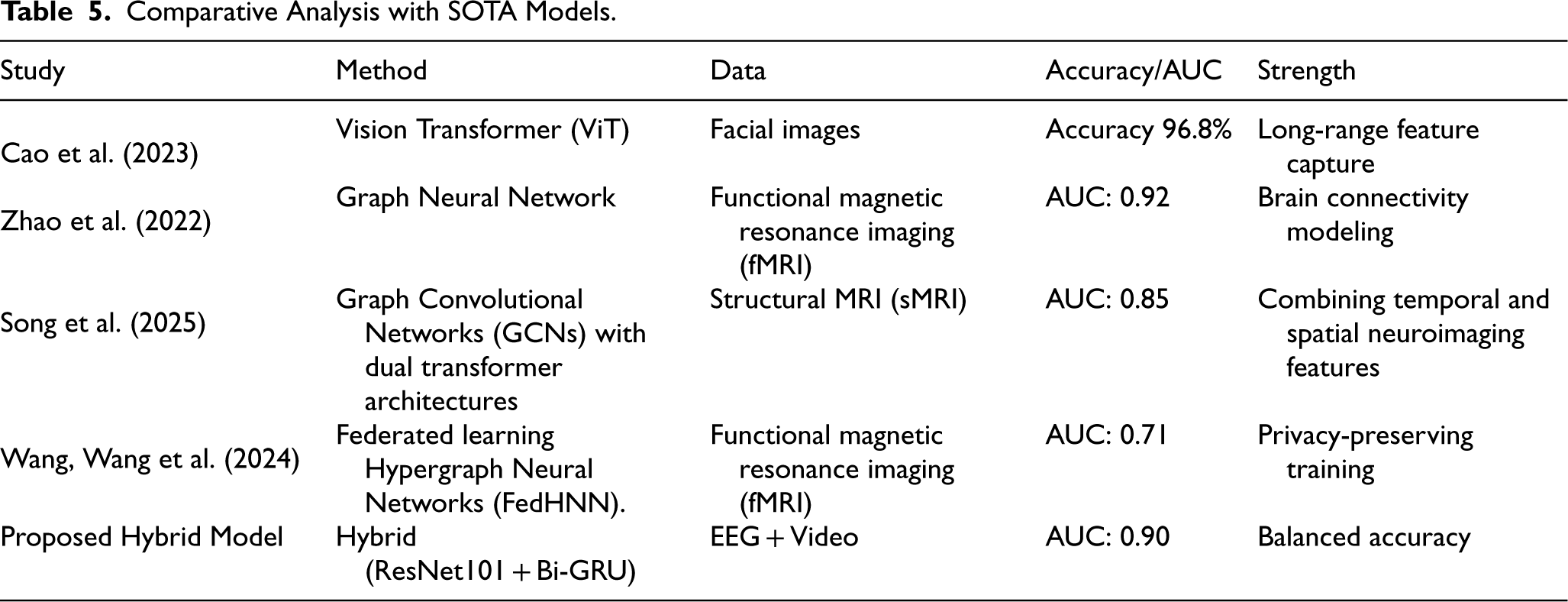
A comparative analysis with recent SOTA models in related domains such as neurodevelopmental disorder detection, multimodal medical diagnostics, and behavioral analysis using AI is conducted to contextualize the significance of this review and the proposed hybrid transfer learning framework. This comparison underscores the relevance of the framework by highlighting its ability to integrate heterogeneous data modalities and leverage advanced learning architectures to improve diagnostic accuracy. The evaluation situates the proposed approach within the broader research landscape, demonstrating its potential to advance automated detection systems for complex clinical conditions, such as ASD.
Table 5 summarizes new research on the identification of ASD utilizing sophisticated AI models that demonstrate high accuracy (up to 96.8%) and strengths in feature extraction, brain connection, and privacy-preserving learning across various data formats.
Comparative Analysis with SOTA Models.
This study highlights the expanding role of AI in early ASD detection by integrating multiple data modalities, including genetic markers, fMRI and sMRI, eye-tracking, facial analysis, speech, and behavioral video data. The literature review examined various AI approaches, such as ML, DL, GNN, FL, attention mechanisms, autoencoders, and NLP, all of which show strong potential for improving diagnostic accuracy and efficiency. Overall, early childhood autism diagnosis is crucial for starting therapies on time, enhancing developmental results, and possibly saving a child's life. Strong family support is essential for reinforcing therapy efforts and improving the child's emotional and social development and makes it possible to predict the stages and severity of ASD. A central finding is the effectiveness of transfer learning, particularly using pretrained models, such as GoogleNet, AlexNet, MobileNet, ResNet, and DenseNet. The proposed framework utilizes pretrained CNNs, such as ResNet101 for spatial feature extraction and Bidirectional GRU modules for capturing temporal patterns in EEG and behavioral video data. Despite its strengths, the model presents limitations, including increased computational complexity due to multimodal fusion, lack of real-time deployment, and absence of clinical trial validation. Future research should address these challenges to enhance scalability, accessibility, and clinical applicability for early ASD diagnosis.
Footnotes
Funding
The authors received no financial support for the research, authorship, and/or publication of this article.
Declaration of Conflicting Interests
The authors declared no potential conflicts of interest with respect to the research, authorship, and/or publication of this article.
