



Abstract
The Dalits of Nepal are living with a lack of opportunities, and the high-level poverty within Dalit communities shows that capabilities or livelihood of Dalits have not been adequately increased in quantity and quality. In the absence of capabilities, they have been adopting unsecured livelihood strategies. In this context, this study aims to find out the relationship between livelihood capitals and livelihood strategies adopted by the Dalit communities of Kusma municipality, Parbat, Nepal. The study was based on survey research design, and 390 respondents were selected by using stratified random sampling method. The relationship between the livelihood strategies and livelihood capitals are found positive, statistically significant and of moderate level strength with livelihood strategies. Access to capitals determine the livelihood strategies of the Dalit community. However, there is no rule and degree of relationship between the livelihood capitals and livelihood strategies. Likely, the agency and structure of the society dominate the capabilities of the Dalit households. Therefore, even though they have good knowledge, skills, income and physical capital, they are not well supported to choose livelihood strategies. Similarly, livelihood strategies do not contribute to livelihood outcomes as well.
Background
Dalit is one of the communities that is still living with a lack of opportunities for individuals or groups (Bhatta, 2012). They are living with less access to even basic societal resources and the right to live with the choice of freedom. However, they are seeking secure livelihood through changes in means of living and diversification of livelihood strategies (Subedi, 2014). Now, Dalits are shifting from their traditional livelihood strategies and adopting new ones. They have diversified their strategies into agriculture, foreign employment, business and service instead of traditional occupations such as labor work, iron work, wooden work, tailoring, playing musical instruments and making agriculture tools. In fact, Dalits are diversifying their livelihood according to their capabilities. This means that Dalits are adopting their livelihood strategies based on their livelihood capitals, their knowledge, skills, social network, positioning and structure of institution and policy of the state as well. This shows the relationship between livelihood components along with capabilities of people play a primary role in betterment livelihood of the people. In this context this article aims to highlight the relationship between livelihood capitals and livelihood strategies of Dalit community of Kusama urban municipality of Parbat district.
Conceptualized Dalit: Output of Caste System
The word ‘caste’ originated with the definition—small and named group of persons characterized by endogamy, genetic relationship and precise lifestyle, continuing with traditional occupation and hierarchical system—in the fifteenth century from the Portuguese (Beteille, 2012). Caste system was created by Hindu philosophers, and they believed caste is determined by the ‘nature’ and qualities of the persons and with a distinct function (Ram, 1999). However, Dubois (1857) argues caste system in different ways. He argues that the caste system originated from the Brahmins because they wanted to rule and govern the society, therefore imposed several social restrictions on ‘non-Brahmins’. They put themselves in the highest position of the society and divided the society by rank (as cited in Ram, 1999). According to Ghurye (1964), caste is related to sociocultural institutions; it has certain characteristics and a fundamental cultural premise for the organization of Hindu society, separated into different groups, with changing grades of propriety and circle of social contact. He explains that caste is basically based on the concept of segmental division of society, hierarchy, restriction on marriage, feeding and communal communication. He further added that because of the caste division, people have less choice of the occupation (as cited in Subedi, 2011).
This shows that caste system is the division of community by the ruler to rule upon people and communities. In this context, Dalit is one of the communities which was created by Hindu philosophers to govern. However, now the rulers are defending their ‘guilt’ in the name of ‘division of work’ because caste system becomes a social problem and means of oppression for communities like Dalit. For example, for the first time Mahatma Gandhi employed the word ‘Harijans’ as children of Hari or Vishnu. But he forgot to maintain accordingly (Sunder, 2015). He carefully dealt with Dalits with reference of Hindu theology even which was already biased towards Dalits.
Generally, societies are divided into two ways; status and class. Status is mainly related to the economic order and Race or Varna, caste and ethnic group. According to the Rig Veda, Varna is the category of the caste—Brahaman, Kshetriya, Vaisya and Shudra—on the bases of the Purush Sukta, colour, occupation, personal characteristic and heredity (Bhattachan et al., 2009). Sikand argues that ‘Dalit’ is the overall package of the oppressed. The term ‘Dalit’ constitutes of all the burdened and demoralized unit of civilization. The author further argues that Dalit is the synonym of downtrodden, disadvantaged, underprivileged, dispossessed, deprived, handicapped, abused, humble, prostrate and so on. Furthermore, Dalits are not oppressed only by the culture, they are also oppressed by economic opportunity, ways of life and value system and dignity. So, we cannot find their real situation by analysing just one aspect. However, ‘Dalit’ has become the neglected caste in the society and culture (Sikand, 2002).
The Dalits are characterized on the basis of patron–client relationships where they received bali 1 for their labor. According to Hindu caste system, Dalits have their traditional livelihood strategies or occupation. The major livelihood strategies of the Kamis are iron work, gold work, wooden work and making agriculture tools; and that of the Sharkis are leather work and physical (labor) work; and that of the Damais are tailoring and playing musical instruments. However, people are changing their livelihood strategies to cope with vulnerability and are adopting the diverse livelihood strategies for better livelihood.
According to the traditional caste based occupation, Damais stitch and repair the clothes, play the music Panchebaja during the festival and mainly at ceremonies. Kamis mainly make the agriculture instruments and Sarkis make and repair the leather items such as Halludo 2 and shoes. However, the traditional occupations of the Kamis include constructing house and making wooden instruments together with aran 3 work. All Kamis, Damais and Sharkis provide their service annually to all other castes and receive bali from their clients. For such annual services given to the clients, the tailor households receive a certain portion of grain (generally paddy) annually from every household of their clientele. The amount of the grain generally depends upon the members, oxen and land of the household. Besides this, Dalits work in agriculture as well. They would work as the landlord’s ploughman for the cultivation of the paddy. The ploughman receives wages in return for his services, and the quantity of grain was often fixed by custom. A man who worked for the landowner on this condition was called hali 4 (literally, ploughman; Pokhrel & Chhetri, 2006).
Sustainable Livelihood Approach: Way to Conceptualize Livelihood
The sustainable livelihood approach is one of the ways to improve knowledge on livelihood of persons and household (Samsudin & Kamaruddin, 2013). A livelihood incorporates three factors, assets/capitals, activities and capabilities (Chambers & Conway, 1992). A livelihood will be sustainable if it can cope with the stress, shocks and vulnerability. Furthermore, for sustainable livelihood, it has to recover from stress, shocks and vulnerability. Every livelihood maintains or enhances its capabilities and assets both now and in the future. However, capabilities and assets have to maintain and enhance without any harmful effect on the natural resource base. From the above discussion, it can be outlined that livelihood would be sustainable only when it could cope with and recover from stress, shocks, vulnerability and enhance the capabilities of the individual without causing depression on the natural resources base.
Again, Ellis (2003) defined livelihood as the combination of the three factors, assets, activities and outcomes (as cited in Ellis & Freeman, 2005). Furthermore, livelihood is also the combination of the different activities of an individual or group in which an activity helps to meet the objective of the living. Furthermore, livelihood would be sustainable if it is able to tolerate or face the different difficult situations of life. However, to tolerate the difficult situation, individuals need to have capabilities and assets such as education, longevity, income, access to natural resources and physical ability to use the assets.
Satge et al. (2002) defined livelihood as the combination of the possession, access and judgment constructing. They further argue that livelihood is the ability of the households to create and sustain their means of living, enlarge their well-being for themselves and the upcoming generation. Livelihood depends upon the accessibility and obtainability of the environmental, biological, financial and political resources. Nevertheless, these resources have to be distributed on the basis of impartiality, possession and fair judgment.
This shows that livelihood is the combination of three factors—livelihood capitals, livelihood strategies and livelihood outcomes. Where, they help to fulfil the means of living of a household or individual. Generally, livelihood depends upon the available capitals or access in resources of household, capacity to perform over resources, activities undertaken by household members and outcome of the household. However, it is also dominated by the local condition or context and policies of the state in which they live. Furthermore, contexts such as socio-economical, environmental and political depend upon the access to the individual in the capitals/assets as how they can use these to enhance their capacity to attain protected livelihood. This shows the interrelationship between the components of the livelihood combined with policy and context.
Problematized the Issue
Dalits of Nepal are denied from their good livelihood, educational opportunities, social inclusion and political presence. Furthermore, they are suffering from the discrimination from all aspects such as social, cultural, political, educational, health and religions (Sob, 2012). Such discrimination and disadvantage lead to the livelihood insecurity of the Dalits and harm their constitutional rights as, ‘All citizens shall be equal before law. No person shall be denied the equal protection of law’ (Government of Nepal [GoN], 2015). Above discussion depicts that the Dalit communities of Nepal are still deprived of livelihood capitals and they have not been provided appropriate livelihood strategies. Bad cultural practices, poor social capital, low human capital and financial capital are leading to livelihood insecurity.
The high-level poverty of Dalit communities shows that capabilities of livelihood of Dalits have not been adequately increased in quantity and quality. So, livelihood capitals are unable to contribute to livelihood strategies and outcomes. This is a challenge for the development agenda, because inadequate resources are responsible for low enhancement of the capabilities and slow improvement of Dalit livelihood. It is important to find out what Dalit communities exactly have and the relationship between the different components of their livelihood as well. This study aims to find out the relationship between livelihood capitals and livelihood strategies adopted by the Dalit communities of Kusma municipality.
To find out the following hypotheses were set.
H1: There is a significant relationship between human capital and livelihood strategies.
H2: There is a significant relationship between natural capital and livelihood strategies.
H3: There is a significant relationship between physical capital and livelihood strategies.
H4: There is a significant relationship between financial capital and livelihood strategies.
H5: There is a significant relationship between social capital and livelihood strategies.
Methodology of the Study
This study was guided by the post positivist assumption of the researcher believing that the reality is single in nature and free from biases (Corbetta, 2003; Cresswell, 2014). Likely, objective way of data collection was adopted and variables were drawn from the empirical remarks, and finding of the result was exposed on the basis of the scientific analysis of the livelihood relationship between livelihood strategies on livelihood capitals.
This research process was based on the deductive reasoning of the process, which was near the post positivist research paradigm. As discussed earlier, philosophical understanding of the researcher leads the research methodology and research design. Therefore, philosophical understanding of researcher led the quantitative research method to capture the relationship between livelihood strategies and livelihood capitals of the Dalit community. Kusma municipality of Parbat district was taken as a study area. Because there was higher population density of the Dalit community. For example; among the total population of Parbat, 24% was Dalit; and among the total population of Kusma municipality, 29% was Dalit. That is the highest percentage of Dalit community compared to other local levels. There are three sub castes under the Dalit community—Sharki, Kami and Damai—in the study area. For the representative sample from all three strata and all 14 wards, stratified random sampling method was used and sample was determined by using the following Yamane (1967) formula:
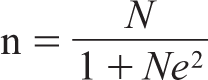
where n = sample size, N (targeted population) = 2,577
(Level of significance) = 0.05
n = 2577/(1 + 2577 × .052)
n = 346
Calculated sample size of this study was 346. In this study, 390 samples were collected. For the effective sampling, sample size was distributed in each ward according to the distribution proportion of the population. Regarding the distribution of the sample size in each ward, size has been transferred into the same stratum of the following ward if there were less than five respondents.
Likert scale, multiple choice and dichotomous questionnaire was administrated to find out the opinions, intentions, aspirations, perception and attitudes of the respondent on the relationship between livelihood capitals and livelihood strategies of Dalit communities (Bordens & Abbott, 2011). Generally, there are five categories of the respondents used in the Likert scale questionnaire from strongly disagree to strongly agree, not at all to a very great deal, useful to useless, never to very often, neither important to very important and so on.
The pilot test was used to ensure the reliability of the study. Cronbach’s alpha test was used to measure the reliability of the study (Huck, 2012). Alpha value was found 0.74 which shows the internal consistency of the study (Cohen et al., 2007). Construct, content and external validity were mentioned and data were collected through closed ended questionnaire. Five different variables—human capital, financial capital, natural capital, physical capital, social capital were taken under the livelihood capital; and six different variable—Agriculture, traditional occupation, labor work, business, foreign employment and service were taken under the livelihood strategies of the Dalit communities. Similarly, ethical issues were strongly considered during all stages of study.
Preparing data for analysis, exploring the data, analysing the data, representing the analysis, interpreting the analysis and validating the interpreted data were followed up during the data analysis and interpretation of the result (Creswell & Plano Clark, 2011). Before the data analysis, SPSS template was developed. The data was coded into the SPSS template. They were analysed and interpreted. During the interpretation, the data were validated by triangulation. Further, conclusion and implication has been presented.
Data analysis was carried out into two stages. First, descriptive statistics such as minimum, maximum, frequency, mean and standard deviation were used. After that, inferential statistics such as chi-square was used to find out the relationship between the livelihood capitals and livelihood strategies and contribution of the livelihood strategies to livelihood outcome of the Dalit community. Keller suggests using the chi-squared test of contingency tables to analyse the relationship between more than two variables and data in different scales—either ordinal and interval or ordinal and nominal (Keller, 2014). So, the relationship between the livelihood strategies and livelihood capitals has been measured through the crosstab and Chi-square test Both nominal and ordinal data were used during the data analysis. Data related with livelihood capitals were in ordinal scale and related with livelihood strategies were in nominal scale.
Being the non-parametric test, the assumptions of the chi-square test were maintained in this study. Mchuga listed the basic assumptions of the chi-square as adequate randomly selected sample size, nominal and ordinal data, independent study group and so on (McHugh, 2013). Regarding this study, 390 households were randomly selected and sample size was calculated by using scientific formula, measurement of all the variables were in ordinal and nominal scales. The study groups were independent and levels of the variables were mutually exclusive. So, this study has managed most of the requirements for the Chi-square analysis.
Finding and Discussion of the Study
Lower but Significant Relationship Between Livelihood Strategies and Livelihood Capitals
Livelihood strategies are the variables for identifying key influencing factors for the financial, physical, social, human and natural capitals. Agriculture, traditional occupation, foreign employment, service, labor work and business were taken as livelihood strategies. Capitals were categorized into the range of ≤ .20, .21–.40, .41–.60, .61–.80 and ≥ .81.
The Dalit households that have been adopting agriculture (5.7%) had low financial capital (< 20%) compared to foreign employment and labor work. Likely, Dalit community who had been adopting foreign employment (3.4%) had higher financial capital > 60% (.61–.80) followed by agriculture and labor work. The majority of the Dalit community (82.6%) had around moderate level (21%–80%) of financial capital. The relationship between financial capital and foreign employment, business, service and agriculture found better than the relationship between labor work and traditional occupation. Furthermore, the relationship between livelihood strategies and financial capital was found positive and weak strength of relationship was statistically significant [χ2 = 41.066, df 18, N = 350, p = .001 and ф coefficient = 0.343].
The relationship between livelihood strategies and natural capital was found at moderate level because 66.29% households had 41% to 60% natural capital. Similarly, only 1.7% Dalit households had more than 60% natural capital and 32% have 20% to 40% natural capital. It was notable that the Dalit household who had adopted natural resource-based livelihood strategies had low natural capital. For instance, 20% farmers had less than 40% natural capital. However, 21.1% Dalit household who had 40%–60% natural capital were adopted foreign employment as major livelihood strategy. Furthermore, the relationship between livelihood strategies and natural capital was found positive and weak associated with statistically significant relationships [χ2 = 29.222, df 10, N = 350, p = .001 and ф coefficient = 0.289].
Physical capital of the Dalit farmers was higher than others where 3.1% farmers had more than 81% physical capital followed by labor work 0.6% and foreign employment 0.3%. This study further explored that the relationship between the livelihood strategies and physical capital seemed good because 98% households had more than 40% physical capital and 61.4% had more than 60% physical capital. Similarly, Dalit households who have adopted traditional occupation as livelihood strategies have moderate level physical capital. For example, none of those households have less than 41% or more than 81% physical capital. Likely, service holders also have the same status. For instance, none of the service holder household had less than 40% physical capital. Besides this, the relationship between livelihood strategies and financial capital was found positive and weak strength of relationship was statistically significant [χ2 = 44.533, df 18, N = 350, p = .000 and ф coefficient = 0.357].
The social capital of the household was comparatively low because only 12.9% have more than 40% social capital and none of them has more than 60% social capital. The relationship between the social capital and foreign employment and relationship between the social capital and labor work was higher than others. For instance, 4.9% and 4.3% of the Dalit households who had adopted foreign employment and labor work as have more than 41% social capital. This shows that, relationship between foreign employment and social capital and relationship between labor work and social capital is higher than relationship between physical capital and service, business, traditional occupation and farming. However, the study shows that overall social capital of the Dalit households was found low because 84.9% of them had less than 40% social capital. The study found that the relationship between livelihood strategies and financial capital was positive and weak strength of relationship was statistically significant low [χ2 = 2.911, df 12, N = 350, p = .028 and ф coefficient = 0.256].
The Dalit households who had adopted agriculture (1.4%) had low human capital (< 20%). However, 20% farmers had more than 40% human capital and 11.4% had more than 60% human capital. Similarly, the Dalit community who had taken foreign employment (19.1%) had higher human capital (> 60%) followed by the farmer (11.4%) and labor work (10.6%) where majority of the Dalit community (91.5%) had around moderate level (> 41% of human capital). The study found that the relationship between livelihood strategies and financial capital was positive and weak strength but statistically significant relationship [χ2 = 40.547, df 24, N = 350, p = .019 and ф coefficient = 0.34].
Hypotheses Testing
Five hypotheses were formulated on the basis of the reviewed theory, finding of the previous research studies and stated research question. Six livelihood strategies—agriculture, traditional occupation, service, foreign employment, labor work and business were taken as both livelihood strategies and financial capital, physical capital, human capital, social capital and natural capital had been taken as livelihood capitals. Hypotheses were formulated between each capital with livelihood strategies. To test the formulated hypotheses Chi-square (contingency table) was used. The alternative hypotheses were converted into the null hypotheses and two-tailed chi square was applied with 95% of confidence level. Following the formulation of null hypotheses: there is a relationship between livelihood strategies with livelihood capitals (human, financial, physical, natural and social; H0: Phi coefficient = 1). Table 1 shows the significance level of the chi square test.
Significant Test Between the Livelihood Strategies and Livelihood Capitals.

The relationship between the livelihood strategies and human capital was statistically significant [χ2 = (df 15, N = 350) 40.547, p = .019 < 0.05]. This established that availability of the human capital in households would help to choose the livelihood strategies. Therefore, the study found that there was significant relationship between the human capital and livelihood strategies (H1) of the Dalit community. Likely, the relationship between the livelihood strategies and social capital was statistically significant [χ2 = (df 12, N = 350) 2.911, p = .028 < 0.05. The relationship between livelihood strategies and physical capital was statistically significant [χ2 = (df, 18 N = 350) 44.533, p = .000 < 0.05]. The study further shows that the relationship between the natural capital and livelihood strategies was also statistically significantly [χ2 = (df, 10 N = 350) 29.222, p = .001 < 0.05]. Again the study shows a statistically significant relationship between the financial capital and livelihood strategies [χ2 = (df, 18 N = 350) 41.066, p = .001 < 0.05].
Livelihood Capital and Livelihood Strategies: Positive with Moderate Relationship
This study explores that the relationship between all components of livelihood strategies and livelihood capital are positive. However, relationships between all components of livelihood strategies with five livelihood capitals were found to have less than moderate relationships. This shows that all capitals have a positive role to determine the livelihood strategies and the role of all capitals in livelihood strategies were predictable in population (p value is less than .05). However, it has contradicted findings of (Liu et al., 2018). They found that the relationship of livelihood strategies was negative with natural and human capital. Nevertheless, there was a positive relationship with financial and physical capitals and no relationship with social capital, where authors have also taken similar types of the livelihood strategies. It has already been discussed that maximum Dalit households were adopting agriculture as livelihood strategies but the role of natural capital to choose the livelihood strategies was found very low (relationship between livelihood strategies and natural capital was only 0.28). This shows that agriculture has been adopted as livelihood strategies whether they have limited natural resources. Therefore, this condition may lead to the livelihood insecurity among the Dalit households. Likely, this study found that the relationship of the livelihood strategies and livelihood assets was significant.
Su and Sang (2012) measured the relationship between livelihood capitals and livelihood strategies. The author found that there was a positive relationship between the physical capital and financial capital, conversely, there was a negative relationship between livelihood strategies and human, natural and social capital of the households. First, the result was similar to this study but the second result is contradicted with the finding of this study. Furthermore, the authors found that relationships between financial capital and livelihood strategies had significant relationships and other relationships were not significant. However, Fang et al. (2014) found that there was a significant relationship between the livelihood strategies and livelihood assets of the households. Kemkes (2011) conducted the survey in Georgia. It was found that there was a significant relationship between natural capital and livelihood strategies of the households which contradicted findings of (Su & Sang, 2012). So, it cannot be said anything about the relationship and degree of relationship between the livelihood assets and livelihood strategies of the households. It would be different by the geographical region, cultural and social networking of the households.
Lieneri and Burger (2015) argue that there was a significant relationship between the natural resources and livelihood outcome of the people. However, lack of livelihood strategies to use natural resources and knowledge of natural resources did not contribute to the livelihood outcome of the people. This study explored the similar result because the relationship between natural resources and livelihood was weak. They further argue that if the people have natural capital, it also contributes to the social capital. However, it was already discussed that the social capital of the Dalit community of Kusma municipality was very low which is contradicted with the finding of this study.
This study also disclosed that there were not any fixed ideas about the relationship between the livelihood capital and livelihood strategies. The relationship between livelihood strategies and livelihood capitals were found low. Yang et al. (2018) found the same result in their study. They have found that the households have been adopting two types of the livelihood strategies full time and part time. They further argue that the relationship between the livelihood strategies and livelihood assets would be different according to areas.
To grasp the desired outcome, people adopt different activities on the basis of set assets, which are available to them (Geiser et al., 2007). So, assets play a major role in the livelihood of people. Because they chose their livelihood activities on the set of resources that enable them to achieve their desired livelihood outcome. Regarding this study, all assets have a positive role to choose the livelihood strategies. Similarly, access to the resources are shaped by the institution and institutions are frequently confirmed and redesigned by what people do (De Haan & Zoomers, 2005). The result of this study is also found in similar way as Dalit households have left their traditional caste-based occupation and are adopting new livelihood strategies; farming/ agriculture, foreign employment and labor work as redesigned by social institution and structures. This study further disclosed that there was a significant relationship between the livelihood strategies and social and cultural assets. Further, Yuliati and Isaskar (2018) argue that livelihood strategies of the households depend upon the livelihood capitals of the households. Moreover, all components of the livelihood are interrelated and interdependent (Giri, 2020). If the households do not have sustainability of the other livelihood assets such as human, natural, physical, financial and social then they have used foreign employment as a livelihood strategy.
The finding of this study theoretically appeared different with the findings of other related studies. For example, some of the findings show that there was a negative relationship between the livelihood strategies and livelihood capitals. This means that only policy and sociocultural context of the country and community might positively contribute to the livelihood capitals of the households. Moreover, to enhance some livelihood capitals of the households, policy and sociocultural context should change. However, this study shows that effective livelihood strategies can contribute to the livelihood capital of the households. However, policy and sociocultural context might be supportive.
Capitals and Strategies: Capabilities and Functioning
Capability approach has two major concepts—functioning and capabilities; where functioning is related to the achievement of the individual or households (Robeyns, 2003). Furthermore, it is related to the living condition of the people or it is related with the outcome of the households. In this sense, capabilities are the abilities of the persons to achieve the objective of life as viewed by (Sen, 1999). Furthermore, the capability approach considers more about what persons are actually able to be and do.
Functioning of a person is related to what people have and how to use resources, whereas capability refers to the set of valuable functioning that a person has effective access to. Then, when the functioning is achieved, this provides the utility or subjective well-being to people (Robeyns, 2003). So, livelihood strategies are more related to how people use those resources or capital that they have. Capabilities refer to the effective freedom of an individual to choose between different functioning combinations. This mean that when people have access to the livelihood capital and they have multiple skills, knowledge and sound health conditions (human capital) to use those assets, then people conduct the activities (livelihood strategies) or functioning. When people achieve the functioning, it produces utility (outcome). Then livelihood strategies can be expressed as the functioning of an individual, whereas capability approach assumes strong relationship between the capabilities and functioning of an individual. Similarly, agency is related with acts of the people, which affect and change their situation on the way of their desire (Ellis, 2003). However, structure may dominate the capability of a person. So, this argument is relative with our finding as well, because beside the good human capital of the Dalit community, it does not have expected relationship with livelihood strategies of the Dalit community.
The finding of this study shows that the Dalit households had moderate level of livelihood capitals. Most of the capitals were around national average and more. Human capital of the Dalit community was more than the national average. Furthermore, all of the Dalit households were adopting multiple livelihood strategies according to their available resources/capital and skill or knowledge they had. Therefore, they had freedom to choose their livelihood strategies which were the combination of being and doing. This is the functioning of the Dalit community. With the reference to the above discussion, it can be concluded that capabilities and functioning of the Dalit community had moderate relationship.
Conclusion: Strategies Not Only Depend upon Capitals
The relationship between the livelihood strategies and livelihood capitals are positive. Nevertheless, the strength of the relationships between livelihood strategies and livelihood capitals are not higher than moderate levels. Furthermore, relationships between livelihood strategies and livelihood capitals are statistically significant. Dalit communities are diversifying their livelihood strategies with change in nature of working. Therefore, agriculture and foreign employment have been replacing traditional occupation; leather work, switching, ironwork, etc., and bali is replaced by wage. However, diversifying livelihood strategies are related to farm and off-farm activities. In addition, the Dalit communities are not adopting non-farm activities such as businesses. Because the context of the institution and structure of the society affect the social networking, norms and values of the institutions, they are dependent upon who has power to define. Presence in the social networking indicates the status of power to govern and define the norms and values. The Dalit communities are not in the power so institutional norms and values does not support them. Thus they are not involved in non-farm livelihood strategies like business.
Existing livelihood of the Dalit households is not sustainable because social and cultural relations are withstanding for living. Furthermore, livelihood will be sustainable with preservation of the natural capital because it can be handled with shock and vulnerability conditions of life. Nevertheless, social and natural capital of the Dalit households is low in the study area. Similarly, capitals have given the power to act, govern, control and for transformation of the resources. Therefore, low/moderate level of capitals may deprive Dalit community of governing, controlling and transforming the resources.
Low social and natural capital reduce the capabilities of the Dalit households and the Dalit community may not take their position in society with sound psychological wellbeing and sociocultural status. Because only sound capabilities can overcome poverty and ensure better livelihood of the Dalit community. Likely, Dalit households cannot capture the opportunities, because to capture the opportunities people need the institution and access to resource. However, the Dalit households have neither cemented institution nor good access to sustainable resource. Access to capitals determines the livelihood strategies of the Dalit community. However, there is no rule and degree of relationship between the livelihood capitals and livelihood strategies. However, skill, knowledge, education and health conditions determine the opportunities to choose the activities.
Agency and structure of the society dominates the capabilities of the Dalit households. Therefore, even though they have good knowledge, skill, income and physical capital, they are not well supported to choose livelihood strategies. Similarly, livelihood strategies do not contribute to livelihood outcomes as well. The conclusion of this research is presented in Table 2.
Conclusion of Study.

Footnotes
Declaration of Conflicting Interests
The author declared no potential conflicts of interest with respect to the research, authorship and/or publication of this article.
Funding
The author received no financial support for the research, authorship and/or publication of this article.