



Abstract
The Kerala model of development is well regarded in the literature, with numerous authors citing how it brought forth high social development and egalitarianism into the state. Kerala, unlike its neighbours, has traditionally resisted private expansion of higher education, arguing for the cause of social equity, fairness and justice for deprived sections. However, post the millennium, growth in technical institutions offering professional higher education courses have been prolific in the state. Against this backdrop, this study investigates how the most backward sections of the state comprising Scheduled Castes (SC) and Scheduled Tribes (ST) have fared in enrolments to such programmes. Using data retrieved from the available public records, the analysis finds that SC/ST sections are grossly under-represented across the entire spectrum of professional higher education courses in the state that offer technical programmes. The enrolments are far below the expected levels, underperforming all other South Indian states and the national average by a significant margin. The study suggests that this data is deliberately withheld by the government to the public. The research argues that Kerala is at a critical juncture, where in the absence of disruptive government intervention, the situation would worsen. These findings severely dent Kerala’s claims on being an inclusive society and its narrative on development orientation. A phenomenon of social exclusion encountered in the state is explained and illustrated. Thereafter, the article discusses the implications of the findings, while suggesting policy initiatives and regulatory actions that can help provide respite and relief for the deprived SC/ST communities.
Keywords
Introduction
Education holds a position of primacy in reducing social inequalities, due to its sustainable nature and effectiveness (Carnoy, 1993), resulting in development and significant benefits both to individuals and to society (McMahon, 1999). Education plays a principal role in fostering economic growth, reducing poverty levels and bridging the gaps in social inequalities (Psacharopoulos & Woodhall, 1985; Tilak, 1994). Authors note the important role it plays in social change and development from one generation to another (Xavier, 2018). Its ability to eradicate problems in society and bring diverse groups into the same level of human development has been observed, accentuating its criticality as a means to access justice (Chand & Khare, 2019). Tilak (2015) describes higher education as an ‘engine for equitable economic and social progress’. India’s standing in higher education is surely formidable in this context, with reports suggesting that the country stands first globally in terms of number of universities, second in terms of absolute number of enrolments and third in size of the higher education system (India Brand Equity Foundation [IBEF], 2021b).
India has travelled a long way in higher education from the time of its independence. From 20 universities in 1947 (Jayaram, 2007), there are 1,014 universities (439 state universities 126 deemed to be universities, 54 central universities and 395 private universities) spread across the country as of October 2021 (University Grants Commission, 2021). The education system is also lucrative, with estimates valuing the industry at $ 35.03 billion by 2025 (IBEF, 2021a). The growth of technical education has been especially prolific, with around 9,369 All India Council for Technical Education (AICTE)-approved institutes offering 3,610 undergraduate (UG), 4,768 postgraduate (PG) and 3,979 diploma courses in 2021 (IBEF, 2021c). The AICTE Act (AICTE, 1987) classified certain programmes as part of technical education. These programmes are differentiated from typical liberal arts and science programmes, and they are commonly called professional courses in India. Studies have shown that technical education offers higher returns to both genders in India (Kanjilal-Bhaduri & Pastore, 2018). Currently, India aims to be a net ‘exporter’ of professional trained manpower to other countries (Nanda, 2016, 2021; PTI, 2021), signifying the huge number of scientific and technical manpower at its disposal.
Kerala distinctly stands out among other Indian states, holding the rank of the most literate state in the country (Census of India, 2011). It is, by far, the most advanced state on human development indices (Global Data Lab, 2019). The state also stood first in the 2021 state-wise ranking by the apex government planning agency’s (NITI Aayog) evaluation of achievements under the UN’s Sustainable Development Goals (SDGs) (NITI Aayog, 2020). Kerala scored the highest in the country against SDG-4, which is related to measures on education (NITI Aayog, 2020–2021). Historically, Kerala’s achievements in education are highly recognized. Philip Altbach and Eldho Mathews (2010) call Kerala ‘the most advanced state in India in terms of education’. In 2007, Kerala ranked first in the evaluation of the Education Development Index (EDI) across various states (Kumar, 2008). The state’s record in elementary education and in equal opportunities provided irrespective of gender and social groups have received much acclaim, especially in the schooling system. In 2016, the state became the first again to achieve 100% primary education (Philip, 2016). The state is also unique in its historical tilt towards socialism and communist ideology. This has been reflected in its policies towards higher education, especially in matters of private sector participation (Mathew, 2019). Compared to states such as Maharashtra, Karnataka, Andhra Pradesh and Tamil Nadu that have adopted privatization in higher education since the 1980s, Kerala allowed large-scale private participation only after the millennia, when most other states had a head start (Agarwal, 2009). However, private sector growth since then has been pronounced in the technical education streams (State Planning Board, 2006). Mathew (2019) has defended the Kerala government’s exercise of control over private institutions as being necessary to preserve equity in both social terms and intra-regional terms. The state’s higher education policy has been coined as ‘balancing social control and private managements’ pressure’. The Kerala State Higher Education Council (KSHEC), which was set up to implement educational reforms, has also been lauded for its initiatives in ensuring equity, accessibility and excellence (Mathew, 2019).
Considering Kerala’s achievements cited earlier, it can be surmised that the state is highly educated, compounded with the rapid growth of private higher educational institutions offering technical education (State Planning Board, 2006). Kerala, therefore, provides a suitable context to investigate how its achievements in education have translated to social equity in professional higher education. Ergo, it becomes pertinent to ask the following questions: Did the rapid expansion of private higher educational institutes allow for higher enrolments of Scheduled Castes (SC)/Scheduled Tribes (ST) students in technical education? To what extent have SC/ST groups enjoyed access to professional higher education programmes such as engineering, MBA, MCA and pharmacy? How would the magnitude of variations for Kerala’s enrolment trends compare with the neighbouring states? To answer these questions, it becomes imperative to ascertain how the deprived sections of Kerala’s society, specifically the SC and ST have performed in terms of gross enrolments in technical higher education streams in the state.
Researchers have claimed that Kerala’s development story hides dark areas, with the historically deprived SC/ST communities being particularly under-researched and neglected (Xavier, 2018). The purpose of this study is, therefore, accentuated when one observes that the Kerala state government persistently has not reported enrolment numbers or percentages for these groups in professional education, as it does for liberal arts and science programmes every year in the annual economic review tabled in the Legislative Assembly (State Planning Board, 2018, 2019, 2020, 2021). The omission is particularly ominous when considering that a significant amount of data is available to estimate this from publicly available records. This study acts as a report card of equity for Kerala’s technical education programmes, tracing enrolment trends across an eight-year period from 2012–2013 to 2019–2020. The study proposes a phenomenon to explain the peculiarity in enrolment trends observed in the state. Thereafter, a remedial framework of public-private interface is suggested to help bridge the gap and address issues of equity in professional courses.
Literature Review
Inclusive Growth and the Indian Context
The hierarchical and hereditary nature of caste has designed Indian society into one of graded inequality (Chand & Khare, 2019). Whereas there is possibility of upward mobility in class systems, in the caste hierarchy, the individual is perpetually assigned to a given position in society (Jodhka, 2012). The issue of inclusion, therefore, gains primacy to tackle this problem. The challenge for India is to make higher education accessible and equitable for deprived social sections. Panigrahi (2014) argues that access to higher education is ethically connected to principles of justice and equity. However, inclusive growth itself is a complex concept; with Ranieri and Ramos (2013) suggesting that it could be outcome-based or process-based, but where participation and benefit sharing by the deprived groups are key. The Asian Development Bank (ADB) uses inclusive growth as a guiding strategic pillar (Maclean et al, 2018), defining its meaning in terms of non-discrimination and disadvantage reduction (Klasen, 2010). Other contemporary definitions exist simultaneously. The World Bank talks about distribution of economic gains alongside sharing security, vulnerability, empowerment and full participation (World Bank, 2006). The Commission on Growth and Development (2008) discusses equity and equality of opportunity. Lanchovichina and Lundstrom (2009) go so far as to advance a two-pronged definition of inclusive growth involving both absolute and relative growth components of poor, excluded and marginalized groups.
Importantly, the Indian government considers inclusive growth to be a guiding mantra for its development plans (The Times of India, 2006). Within the higher education sphere in India, inclusion has long been a watchword for policymakers, with almost every education commission in post-independent India devoting a chapter on SC and ST. National Policies on Education (NPEs) have consistently made efforts to address this: the NPE of 1968 talked about equality of educational opportunity (Government of India, 1968); the NPE of 1986 talked about equalizing SC with non-SC in all stages, which included retention and completion (Government of India, 1986); the revised NPE of 1992 talked about inclusion in matter of diversity (Government of India, 1992); and the National Education Policy (NEP) of 2020 talks about equitable and inclusive education at all levels from school right until technical education (Ministry of Human Resource Development, 2020). These are contemporaneously congruent with larger government policy. The National Knowledge Commission (2006–2009) had strongly advocated for inclusion in higher education that encompasses sections of society that are historically both socially and economically backward (Government of India, 2009). The penultimate (2007–2012) and last (2012–2017) five-year plans of India by the Planning Commission also clearly articulated inclusive growth in its agenda (Planning Commission, Government of India, 2008, 2013). What can therefore be gathered is that inclusion of SC/ST communities in higher education has long been a policy advocacy priority in India. Notably, the recent developments suggest a phase shift from the earlier regime where more attention and funding were devoted to equity and access in schooling rather than to university education (Kumar, 2021; Rao, 2018).
The Problem of Privatization in Indian Higher Education Institutions
India’s economy transitioned from a welfare state model to a neoliberal model following the liberalization-privatization-globalization reforms of 1991 (Bhattacharyya, 2016). This has slowly shifted the burden of responsibility for professional higher education from the state to private players (Srivastava, 2010). India’s transition to privatization in higher education was accelerated following the adoption of policies of WTO in 1994 and GATS in 1996 (Sarker, 2015; Sidhu & Jindal, 2006). Today, private educational institutions dominate the higher education sector in the country. Official figures suggest that private higher education institutions (HEIs) account for 78.6% of all institutions and cater to 66.3% of the total enrolment in the country (Department of Higher Education, 2020).
The advent of privatization has created its own problems for the deprived social classes. Bhoi (2013) has argued that private higher educational institutes offer very little social benefits. The institutions are themselves geared towards profit-making (Shankar, 2016). However, the legal framework in India prohibits private HEIs from profit-making and profiteering (Gupta, 2008), creating an ambivalent atmosphere where institute managements must take recourse in legal loopholes and other unethical practices such as capitation fees, selling seat quotas in the black market to high bidders, admitting in excess of approved intake and charging fees beyond the approved limits (Ravi et al., 2019). The Draft of National Education Policy 2016 had even cast aspersions on the truthfulness of financial reporting by private HEI’s, referred to the ‘parallel economy’ created by unreported incomes (Ministry of Human Resource Development, 2016).
Jayaram (2007) suggested that social supervision/monitoring is necessary due to the wide-varying economic capacities of Indians. Bhoi (2011) found that the affirmative action policies of the government towards SC/ST communities have been affected by privatization. Bhoi (2013) further argued that privatization has inflicted a social cost, depriving the SC/ST communities due to the triple problems caused by lack of access, unaffordable costs and exclusion. He concludes that privatization has alienated Indian society from the ideal of welfare and has undermined social equity and justice. This is aggravated because the tuition fees accounts for only a small portion of the expenses for professional higher education courses (Scaria, 2014). The student incurs other significant expenses in the form of coaching, books, stationery, tools, uniforms and transportation, as well as boarding and lodging costs for residential programmes (Scaria, 2014). Coaching classes to qualify for entrance exams are another major impediment from a cost perspective (Rajasenan et al., 2016). Thus, the increase in enrolments in private HEIs has been to the detriment of marginalized classes, as they are unable to withstand the cost economics (Rajasenan et al., 2016). To these groups, higher education is a luxury and a monopoly of the privileged and rich (Tilak, 2006).
Reservation Quota and SC/ST Enrolment in Indian HEIs
The quota policy as an affirmative action of positive discrimination has been an important piece of legislation for social justice, inclusion and equity. However, it has been criticized for not providing a sufficient support system for SC/ST students after admission (Pal, 2015). In spite of this, its significance cannot be understated. Studies by Weisskopf (2004) and Srivastava and Sinha (2009) have shown how the reservation policy has helped SC/ST communities in the higher education scenario. This has been supported by a study by Tilak (2015), which has shown significant gains made in enrolment ratios of these groups from the early 1980s until 2010. More recent reports from AISHE show a steady increase in gross enrolment ratios (GER) of SCs and STs across India’s higher education sphere (Department of Higher Education, 2015, 2017, 2020). Yet, Deshpande (2013) also concurs that the increase in enrolment is restricted to public institutions alone. This has been supported by another study where the imbalances in enrolments of SC/ST groups are made evident between government, aided and unaided colleges (Thorat & Khan, 2018). Notably, the differences between these groups and non-scheduled groups continue to remain significant (Chauhan, 2008) and present a persistent challenge for policymakers to address. Researchers have claimed that the expansion of higher education in India has benefitted the SC/ST groups the least (Khan, 2018). These inequalities in education may have an impact on social equality.
SC/ST in Kerala’s HEI Scenario
Kerala’s position on the upliftment of SC/ST communities is, at best, seen to be ambiguous from a survey of the literature. In its policies and trends, the state is a study of contradictions. The Kerala State Planning Board (2021b) takes credit for the impressive achievements of SC/ST communities in terms of enrolment to higher education for bachelors and masters courses of arts, science and commerce. Curiously, in the same report, there is no mention of the enrolment trends of SC/ST communities for engineering or other professional/technical courses in the state for which numbers are concurrently reported. A study by Rajan and Sunitha (2020) has shown that SC have made steady gains in literacy from the 1960s, peaking at above 90% by 2011. This is congruent with the state’s overall achievements in literacy and human development. However, the same study also reports that SC students perform worse than non-SC students academically in college, despite harbouring high career aspirations and dreams. George’s (2011) study shows that SC/ST students fare poorly in schooling and have higher rates of failure in comparison to non-scheduled groups. The report also remarks on the exclusion faced by these groups in higher education (specifically self-financing colleges), due to costs and high fees structures, coupled with the inability to avail financial incentives. This argument is contemporaneously buttressed by Nampoothiri (2013), who advances the notion that professional higher education in Kerala is biased against SC/ST communities due to the neo-liberal policies post the 1990s accelerating these trends, combined with the private expansion of self-financing HEIs. Thus, it may be deduced that SC/ST communities do well in higher education, excluding professional/technical courses in Kerala.
Against this backdrop, it is ponderous to note what Nair (2012) describes as ‘modes of exclusion’ that is prevalent in Kerala to keep certain sections from accessing education. He claims that the state’s withdrawal of public funding —simultaneously offset by an increase in private investment in HEIs—creates environments for college managements to foster social, economic and religious colonies within their institutions. Scaria (2014) observes that Kerala’s withdrawal of public funding in higher education, focusing on efficiency instead of equity, has narrowed options for deprived sections such as SC/ST. Tilak (2016) also sees private HEI growth in Kerala as inherently problematic, as they are expensive, with quality and equity remaining a big challenge. He also notes that the maximum expansion has happened for professional (read, technical programmes) courses, which are cost intensive. This particular point is reconciled by Menon (2011) who cites that 82% of seats in professional colleges in Kerala go to the top 5% households by wealth/income. Raju John (2017) goes so far as to conclude that development and egalitarianism, which is prevalent in Kerala, does not provide conditions for socio-economic upliftment of such communities in the state. Thus, SC/ST students face an atmosphere of exclusion in professional higher education in Kerala.
The inconsistencies continue to bare itself in the literature. Ovichegan (2015) reports that Dalits in Kerala are better placed than in several other parts of India to receive government aid. However, funding by Kerala’s government itself has been seen as inadequate and problematic, leading to stagnation of educational institutions (Panikkar et al., 2011). They report that quality is a major casualty due to absence of initiatives or new study areas. The self-financing system has been remarked as having no sympathy for social equity (Panikkar et al., 2011). The existence of intra-regional disparities in Kerala and pockets of poverty in Kerala is another major concern. Geeta Nair (2015) highlights that the poverty ratio in the district with highest incidence of poverty in Kerala is eight times that of the district with the lowest incidence. SC/ST communities comprise the bulk of the deprived households in the state (Figure 1).
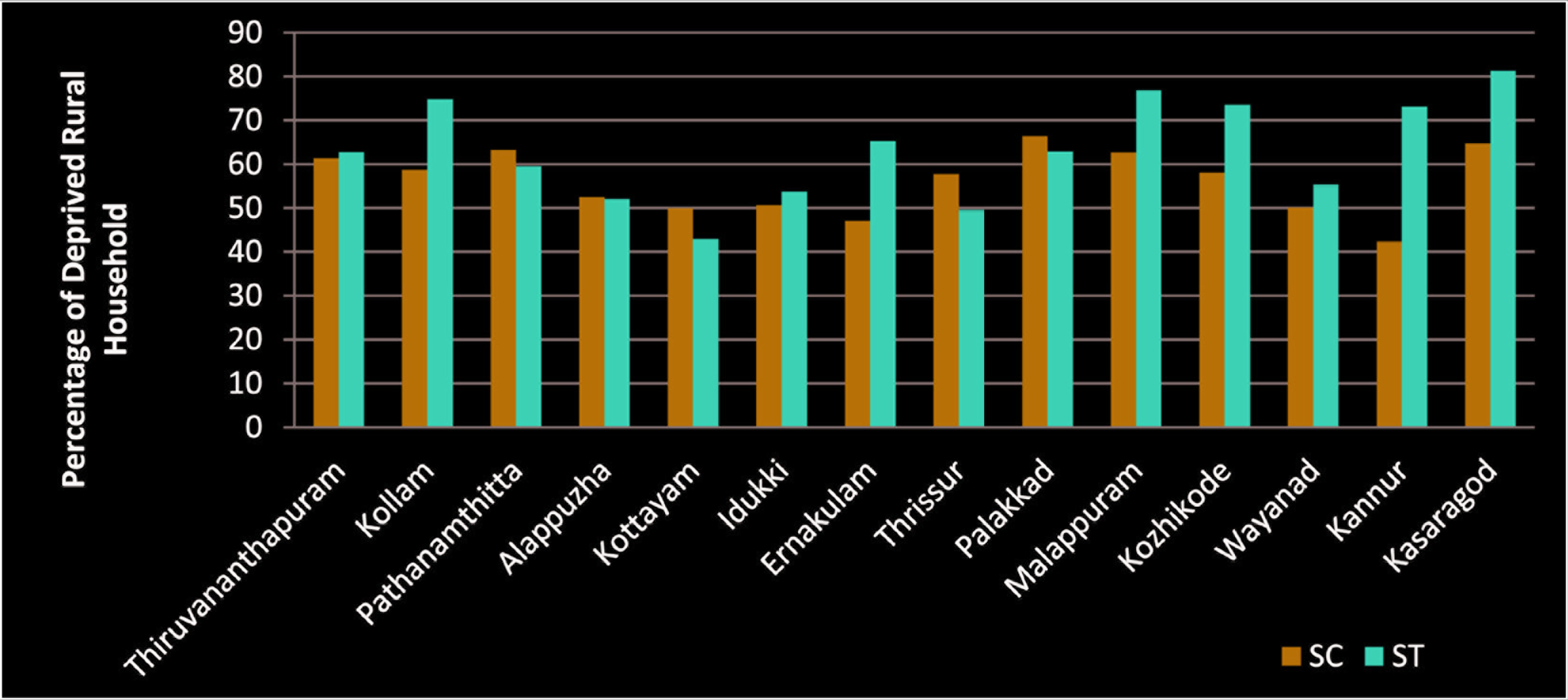
Kerala as a state also suffers from inequalities within its geography. Tripathi’s (2019) study finds intra-regional disparities in higher education, and notes that the northern Kerala region (comprising Kasaragod, Kannur, Kozhikode, Wayanad and Malappuram districts) have fewer HEIs, accessibility problems due to hilly topography, larger number of SC/ST’s, higher impoverishment and generally poorer enrolment in HEI’s. This argument was advanced earlier by Salim (2018) who notes that the Malabar region (northern Kerala) is behind Travancore-Cochin (Southern and Central Kerala) in enrolments, GER and number of HEIs. He also laments that the self-financing HEIs in professional and technical streams have fees structures and expenses that are unfavourable to the poorer classes, and especially so to SC/ST communities. Thus, the synthesis of the literature suggests that the SC/ST groups have lost out on Kerala’s development narrative in professional higher education despite the state’s acclaimed achievements.
Data Collection and Methodology
This is an empirical study based on secondary data gathered from government sources. Aggregated data is collected from the official statistics portal of the AICTE under the ‘graphs and charts’ tab. Category-wise enrolment pie charts that display enrolments of religious minorities, other backward castes (OBCs), and SCs and STs in absolute numbers and percentages are generated for the years 2012–2013 through 2019–2020. Data outside this range are not available for visualization. Data for enrolment is calculated for technical programmes of engineering and technology (diploma, UG and PG levels), management, that is, MBA (PG level), MCA (PG level) and pharmacy (diploma, UG and PG levels) for all institution types for the states of Kerala, Tamil Nadu, Karnataka, Andhra Pradesh and Telangana. While undivided Andhra Pradesh was bifurcated to form the two states of Andhra Pradesh and Telangana only in 2014, the portal displays the data based on this bifurcation from 2012 itself. The data of absolute enrolment and percentages are thereafter compiled in worksheets under each state, separated into columns that represent each social category. Percentages of enrolments are calculated for these courses and categories at the all-India level as well. Absolute numbers of institution count are also calculated for this period from the statistics dashboard to trace how the respective institution segments are growing/shrinking during this period. Efforts were made to corroborate the data with the AISHE, by accessing the annual reports as well as customizable data sets from the AISHE dashboard. However, it was discovered that a significant portion of data for individual institutions consisted of dummy or random numbers that were not useful for research. This was possibly due to non-response errors. AISHE annual reports for state-wise participation show low levels of participation in comparison to the total numbers.
The original research outline included plans for statistical analysis to uncover possible hidden trends. However, the observed disparities, gaps and divergences from the tabulated data demonstrated imparities of significant imbalances, inequalities and variations between Kerala and its neighbours. Data for Kerala also diverged sharply from the all-India figures. Therefore, the descriptive data is directly interpreted and is supported by a theoretical proposition that advances a possible mechanism of discrimination encountered in the state.
Analysis and Findings
Institution Count Trends from 2012–2019
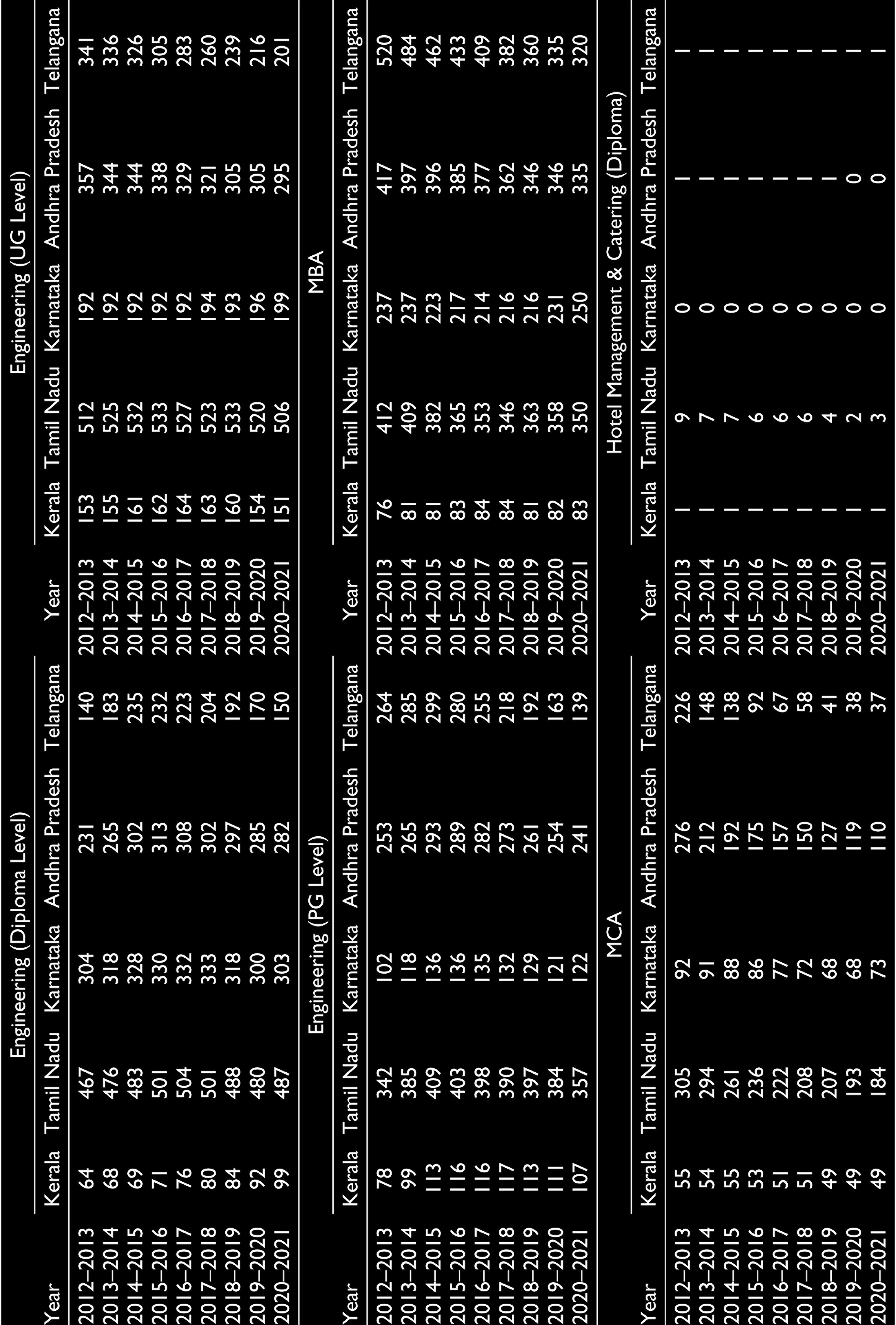
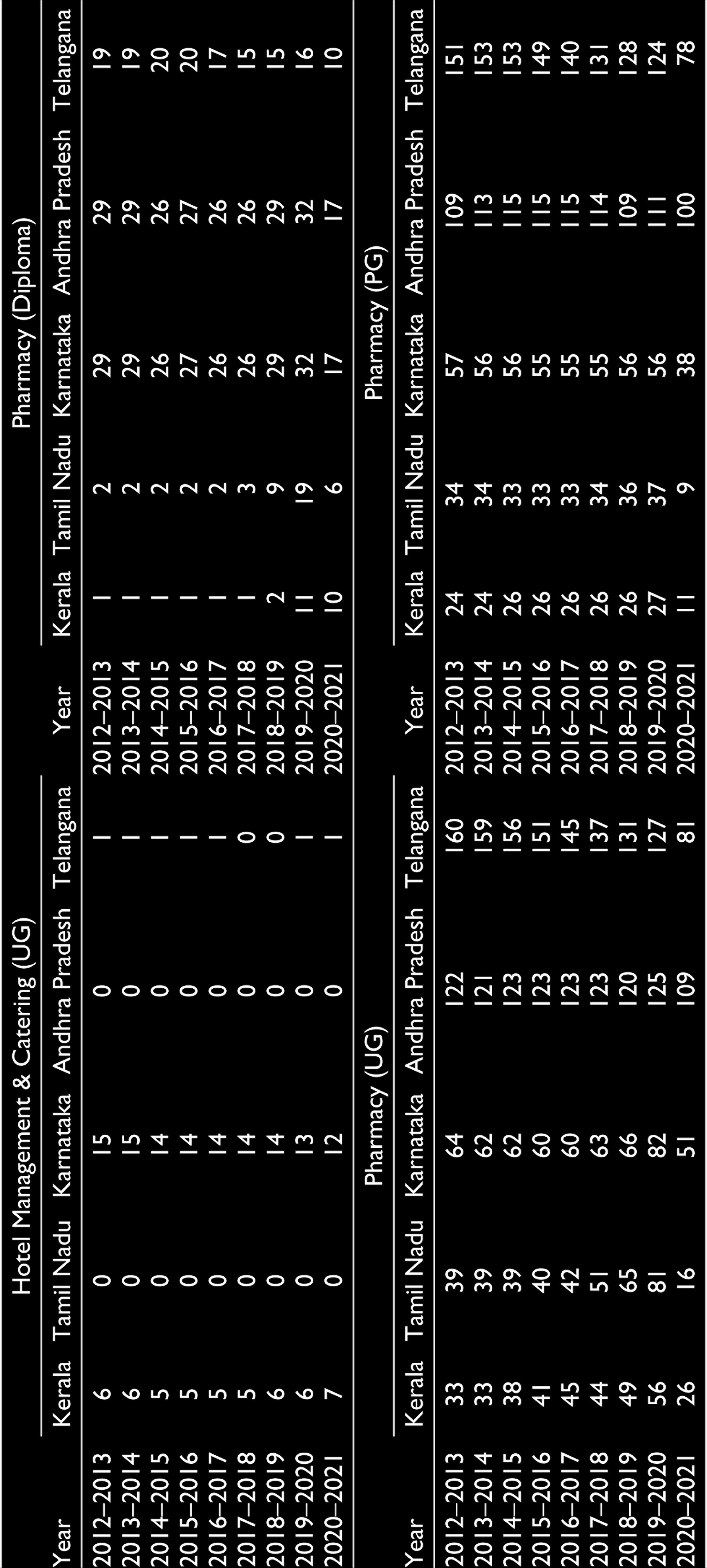
A side-by-side comparison shows Kerala dwarfed by all its neighbours (Table 1). The reason(s) could be the geographic size of the state, and also its late entry into privatization of HEI. By and large, the counts of institutions in technical streams indicate a declining picture. Diploma-level engineering institutions have shown growth, while bachelors engineering programmes have been declining in Andhra Pradesh and Telangana. Telangana also records a sharp fall in PG engineering courses. Kerala has done relatively well in engineering courses, recording significant increases in diploma and PG courses. For MBA courses, Andhra Pradesh, Tamil Nadu and Telangana have recorded sharp falls in institution count. While MCA courses have seen an overall decline in numbers across all states, it has been dramatic and sharp in Telangana. MCA courses show a dramatic fall in numbers across all states, possibly suggesting a lack of interest among aspirants. Niche courses such as hotel management and catering have limited institution count and are virtually non-present in some states. For pharmacy courses, there has been an increase in diploma courses in Kerala, while numbers have been decreasing for UG and PG courses. Diploma, UG and PG courses in pharmacy have been declining in almost all states except in Tamil Nadu and Kerala where diploma courses are making a slow emergence.
There are other courses that come under the definition of technical education by AICTE for which data is available. These include courses in hotel management and catering, applied arts and crafts, and architecture and town planning, as well as architecture and town planning separately. Due to the highly specialized nature of these courses, institution count is low, varied and not present in every state. So, they are ignored for the purpose of this study.
Enrolment Trends Across Course Categories for the Period 2012–2019
Higher education falls within the concurrent list of India’s constitution, allowing states to make laws and craft policy in matters of admissions, entrance exams, fee structure, and reservations, amongst others. However, the percentage of seats allocated for SC/ST categories are generally constant, with little scope for variation or discrimination due to strict constitutional safeguards. An examination of enrolment trends by percentage, from Tables 2 through 9 indicate significant and substantive variations in admissions of open (general category), minority and OBC categories. Reasons for this, amongst others, are the geographic distribution of various communities in India. In Kerala for example, minorities comprising of Muslims and Christians are almost 45% of the entire population of the state, thereby suggesting their relatively higher proportions in enrolment when compared to other south Indian states and the national average. However, since the focus of this article is solely on SC/ST communities, only these enrolments are studied. The data pertaining to the other categories are ignored.
Count of Number of Institutions Offering Technical Programmes Across States in Southern India.
Category-wise Distribution of Enrolments (%) in Diploma (Engineering) Across Five Southern States and All-India Average.
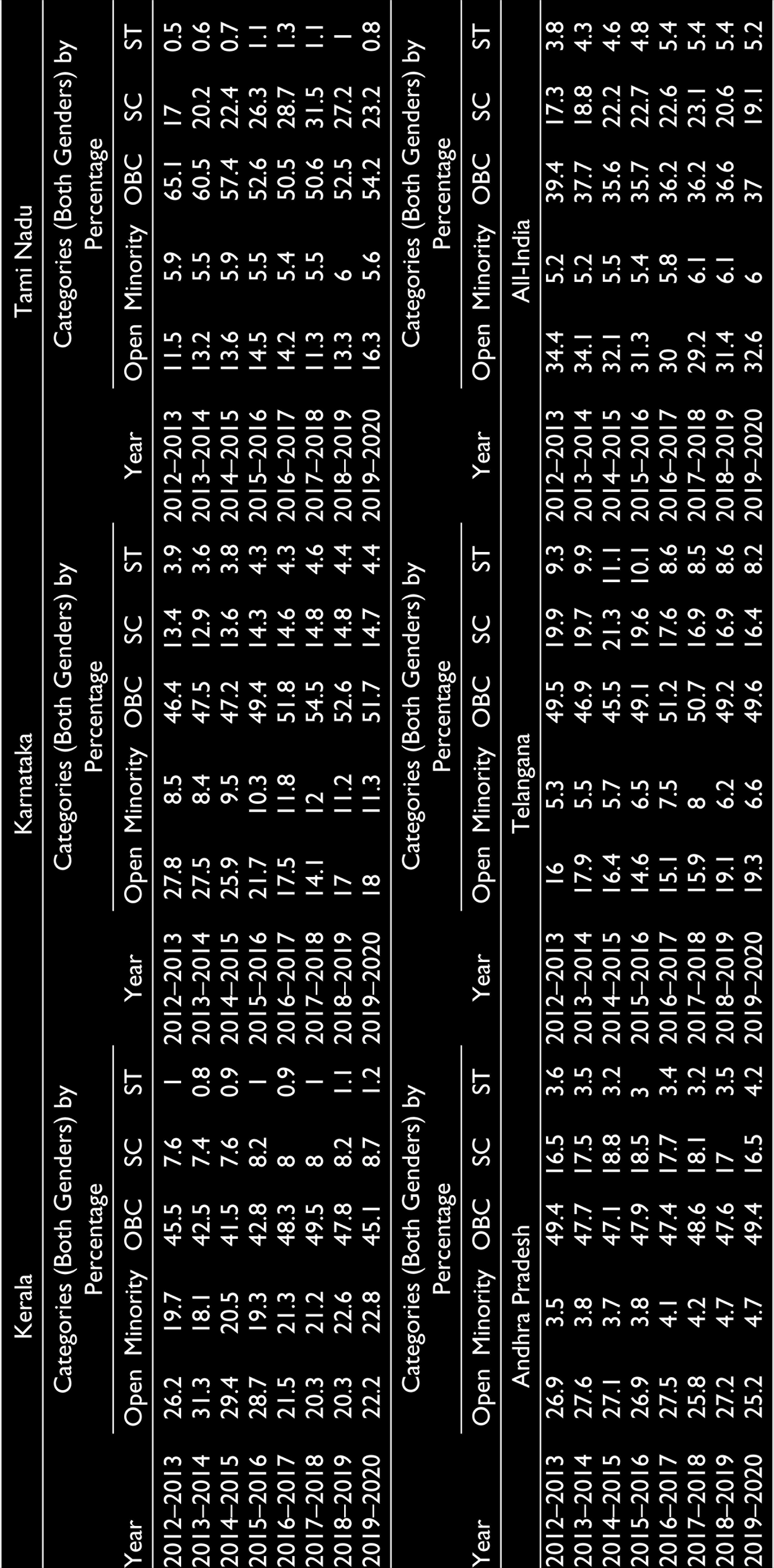
Category-wise Distribution of Enrolments (%) in BTech (Engineering) Across Five Southern States and All-India Average.
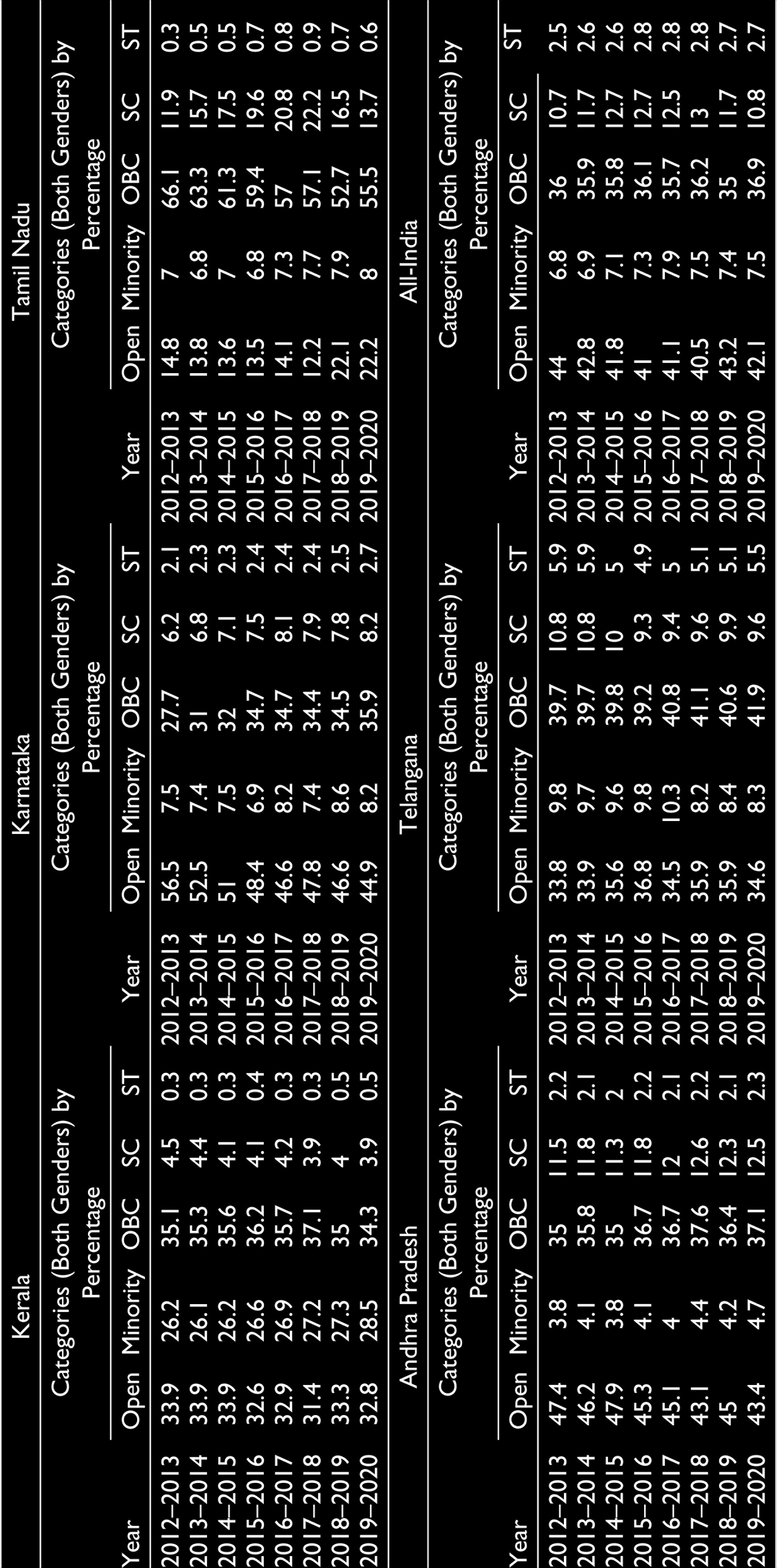
Category-wise Distribution of Enrolments (%) in MTech (Engineering) Across Five Southern States and All-India Average.
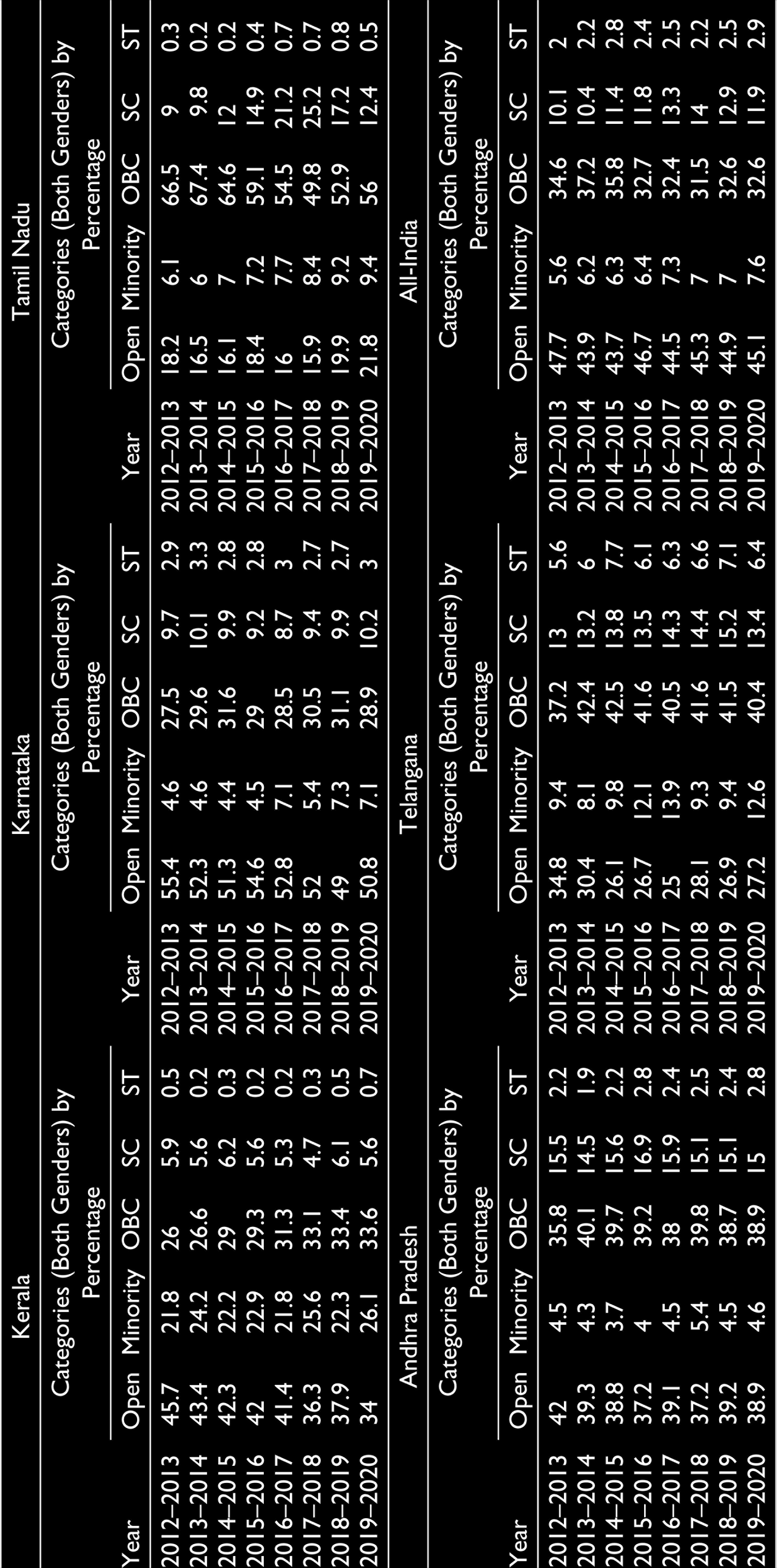
Category-wise Distribution of Enrolments (%) in MBA Programmes Across Five Southern States and All-India Average.
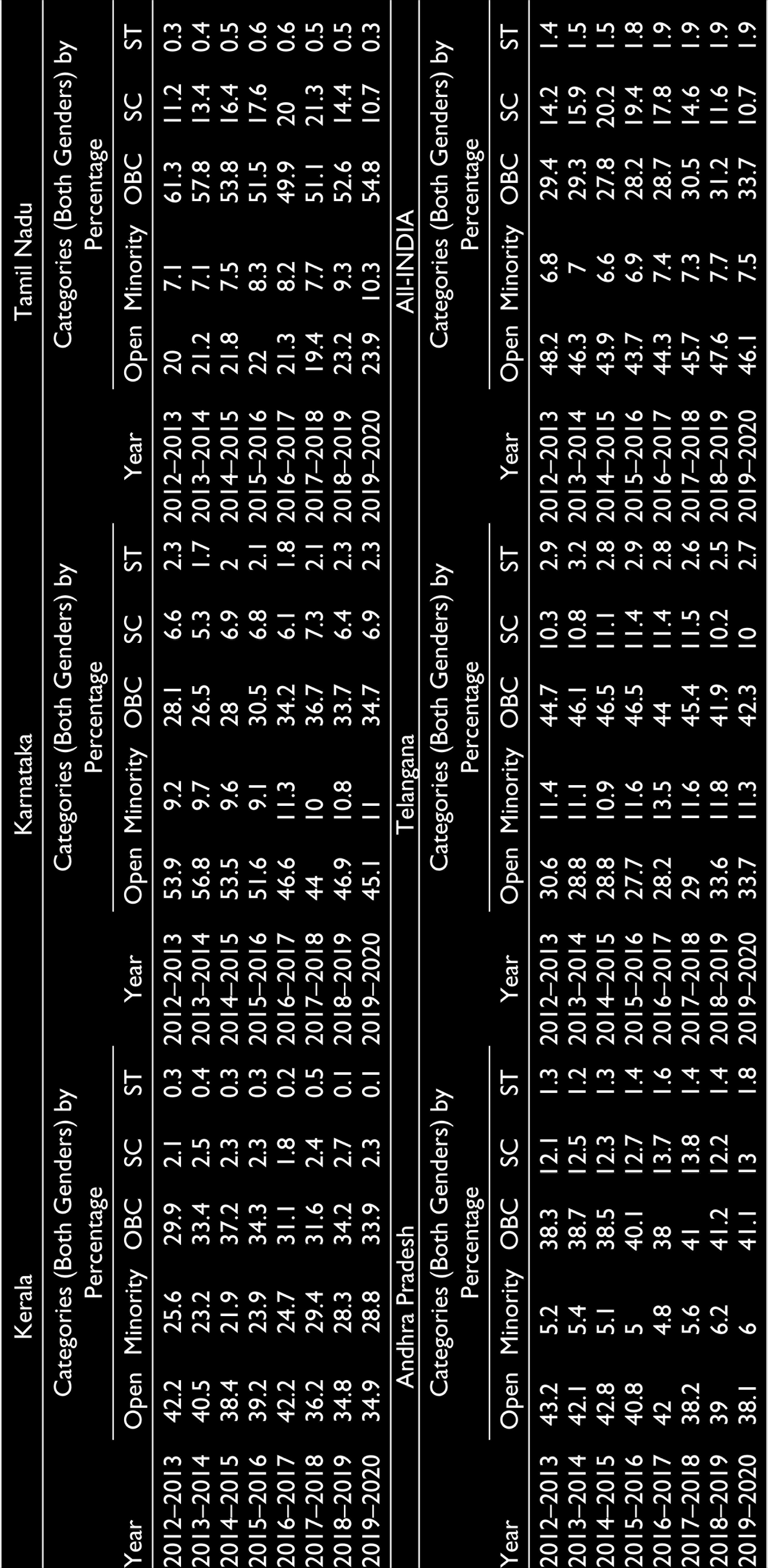
Category-wise Distribution of Enrolments (%) in MCA Programmes Across Five Southern States and All-India Average.
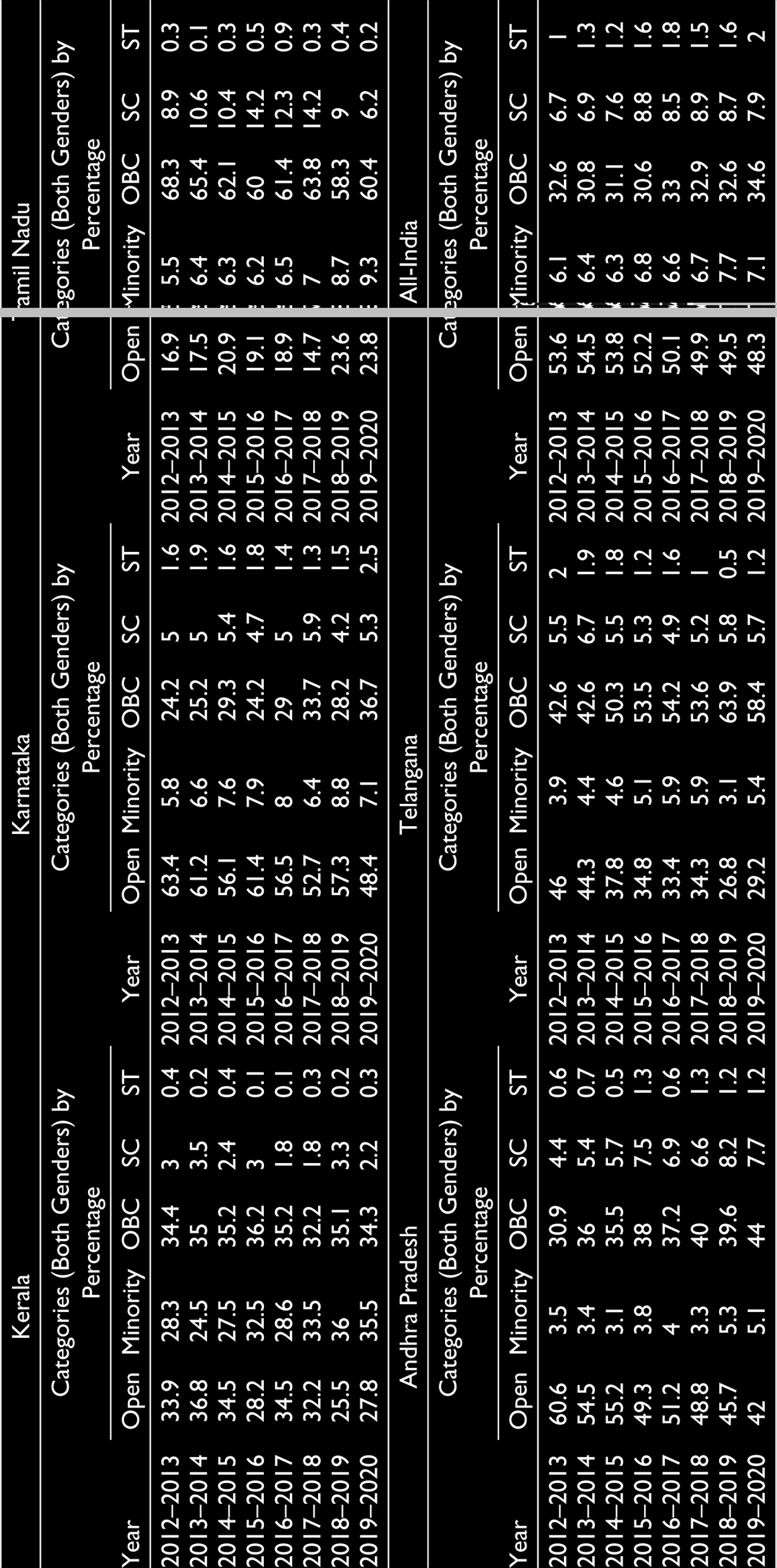
Category-wise Distribution of Enrolments (%) in Diploma (Pharmacy) Across Five Southern States and All-India Average.
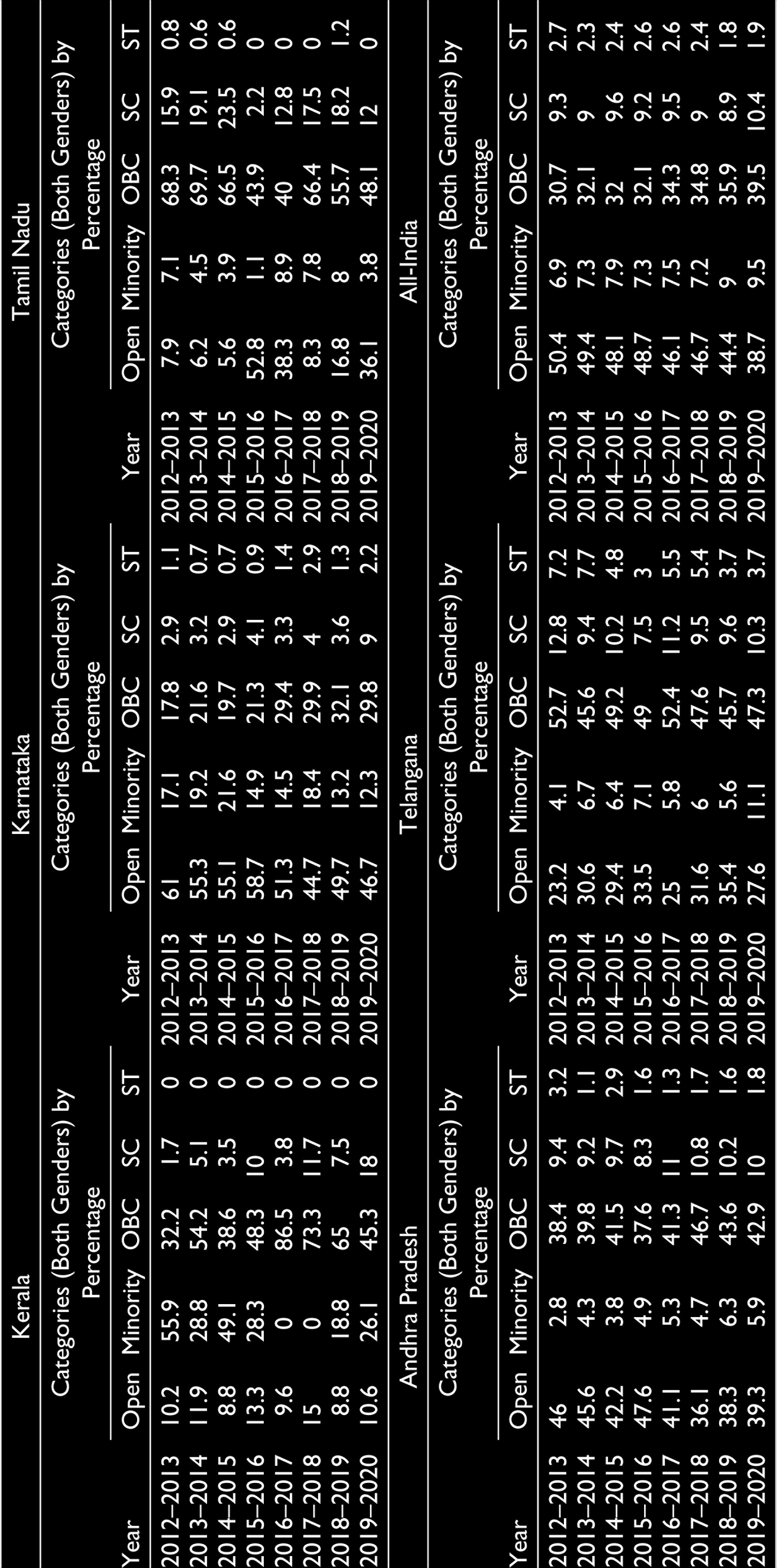
Category-wise Distribution of Enrolments (%) in BPharm (Pharmacy) Across Five Southern States and All-India Average.
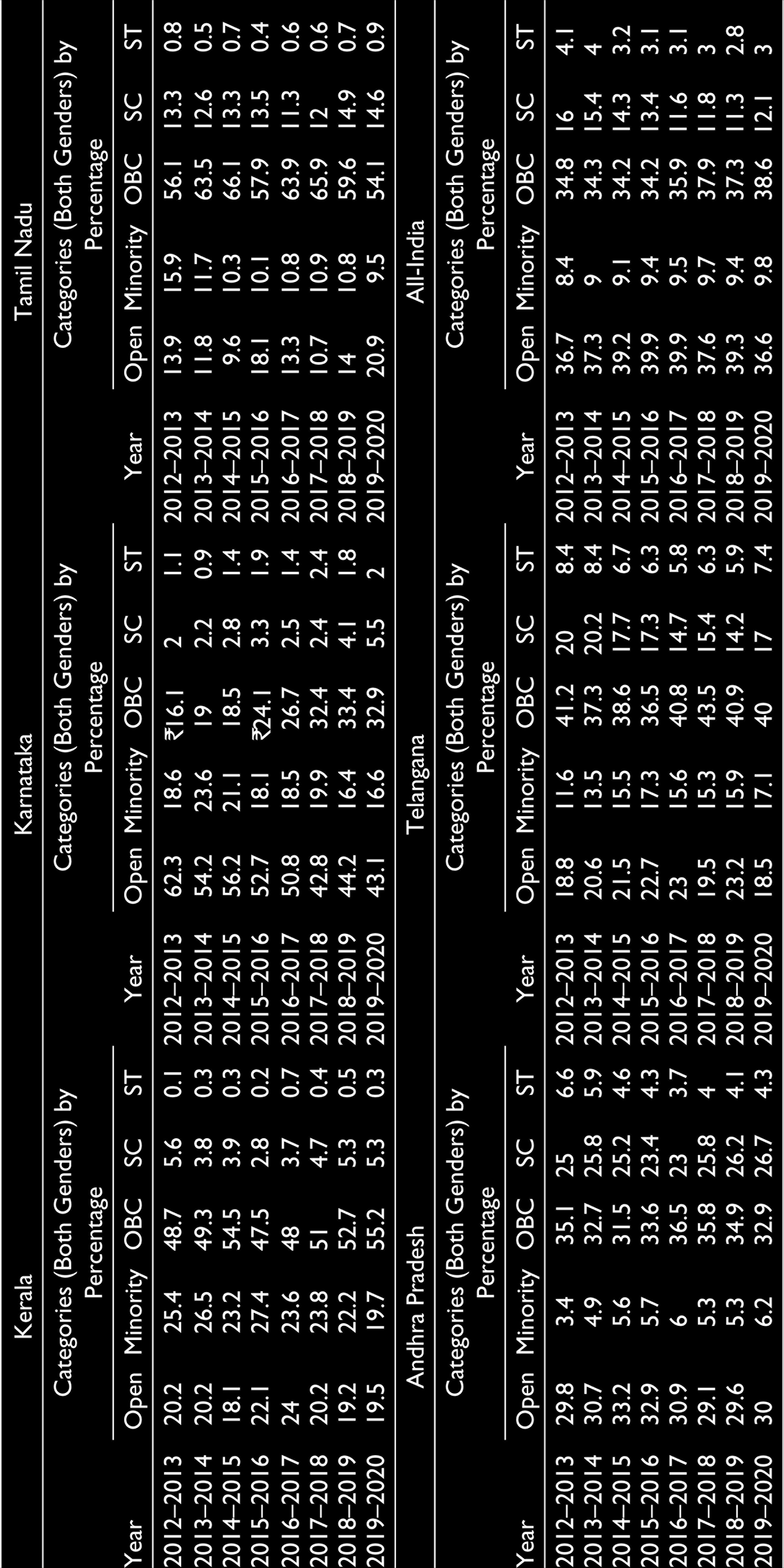
Category-wise Distribution of Enrolments (%) in MPharm (Pharmacy) Across Five Southern States and All-India Average.
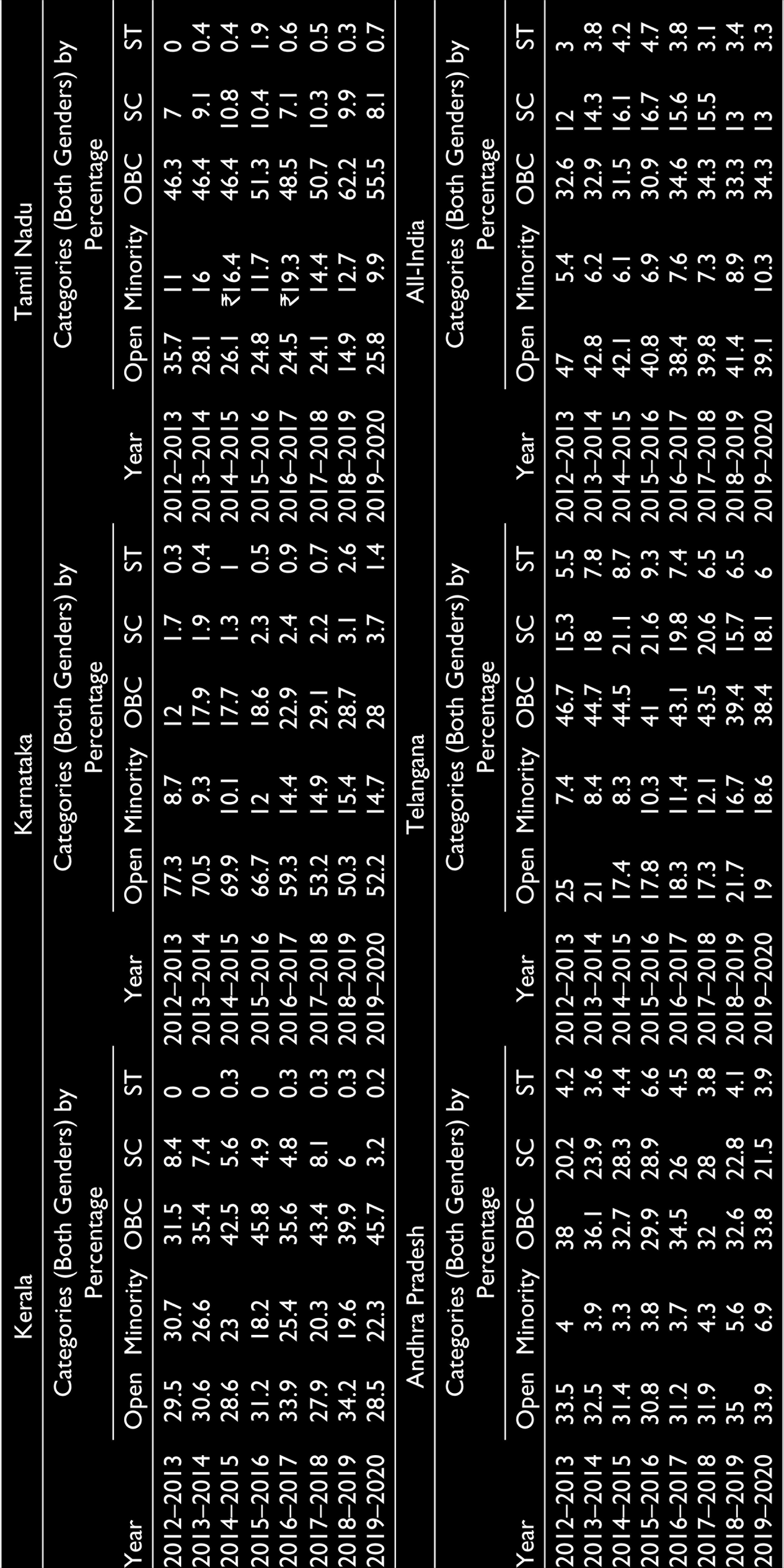
With very few anomalous exceptions, in almost every single field across the period 2012–2019, across every single professional higher education course, the numbers of admissions as well as the enrolment percentages for SC/ST are below all other South Indian states and the national average. The data is sharply contrasting in comparison to government published reports for liberal arts, science and commerce programmes (Table 10). If, rarely, enrolment percentages are found to be higher than other state(s), a scrutiny of absolute numbers of enrolments calls out the anomaly (Table 11). For example, examining enrolments of ST in diploma engineering courses and MTech courses, the absolute numbers are much smaller than the other states. It can be seen that the fall in enrolment numbers are precipitous and dramatic when comparing Tables 10 and 11. Other than the admissions for diploma (engineering) and BTech courses, the enrolments for almost every other course are in low triple digits, double digits or low single digits.
Gross Numbers and Distribution of SC/ST Enrolments (%) for Liberal Arts, Science and Commerce Courses in Kerala.

Enrolment Numbers of SC/ST Students for Various Professional Higher Education Courses in Kerala.
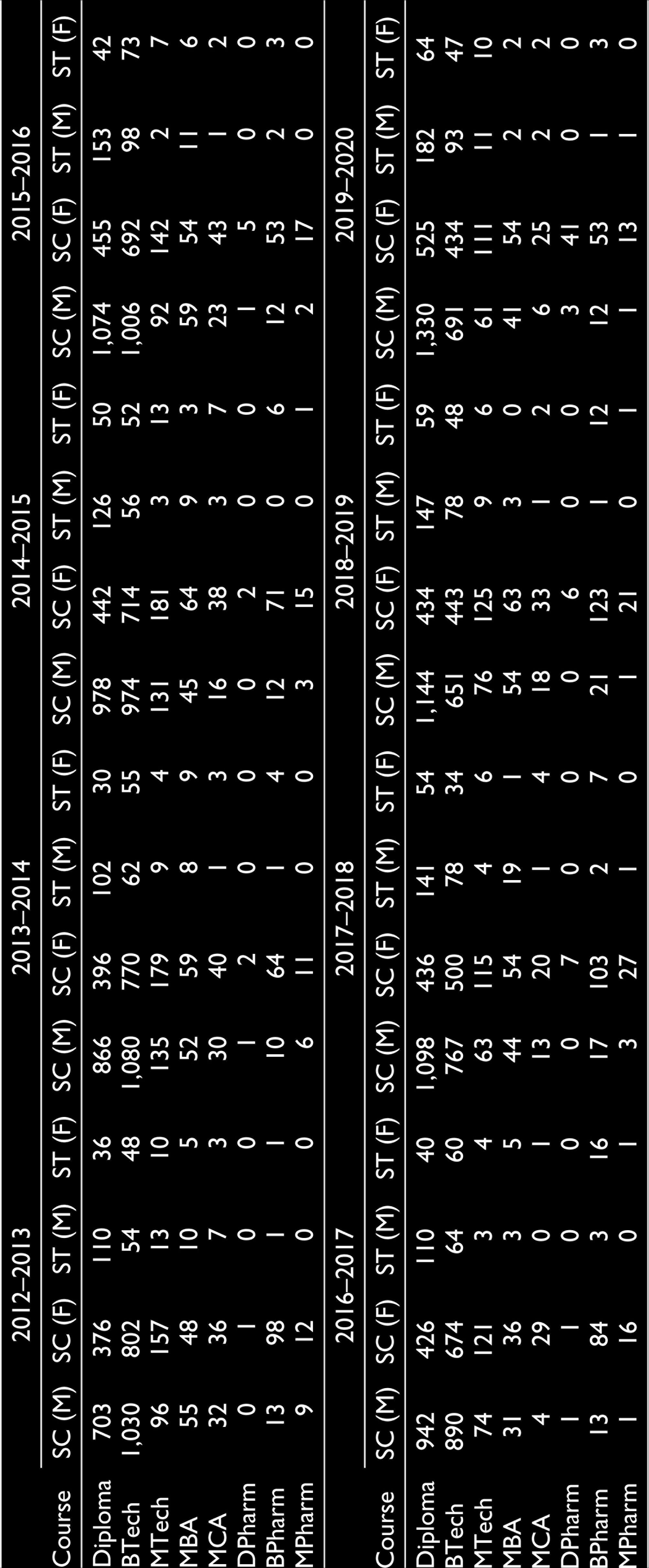
For diploma and BTech courses, classifying the enrolments on the basis of institution type in the AICTE portal sheds more light on the underlying patterns. For diploma (engineering) courses, the bulk of the admissions of SC/ST communities are attributed to government colleges. Only for BTech courses are some enrolments attributable to unaided-private institutions, although these too record a sharp fall from 2015–2016 onwards. Further probing is required to understand why admission numbers are falling in self-financing engineering colleges in BTech. Admissions numbers for BTech to government institutions for SC/ST communities are found to be stable, although they are low.
For both diploma (engineering) and BTech courses, the percentage of enrolments for these communities are found to be much lesser than the allotted 15% for SC and 5% for ST. This should be taken as an incident of concern, since these communities constitute roughly 11% of the state’s total population based on the census of 2011. Diploma courses in government colleges charge low fees, which may be the reason why SC communities have fared marginally better in enrolments. However, the overall picture of enrolments in the state depicts a gloomy scenario, with pronounced under-representation in almost all categories of professional higher education programmes.
Results
Tracing the Phenomenon of Progressive Exclusion
Drawing on the groundbreaking work of Salim (2004), this study illustrates a phenomenon that explains the social exclusion encountered by SC/ST communities in the professional HEI scenario of Kerala. The phenomenon of progressive exclusion is pivoted on the systemic creation of a progressive set of barriers for students that excludes them from participation in professional higher education in a manner that is inherently discriminatory, without explicitly saying so. Rather than manifestly excluding them at a single point of the student’s career (e.g., admission gatekeeping), this phenomenon works on a system-wide process of economic exclusion that has social implications, supported by the impact of government policy. The exclusionary trends begin with early schooling, creating divergent paths for the students of these communities based on economic hurdles, which increases the gap that these aspirants have to overcome if they want to pursue a professional higher education course. To better explain the concept, an illustration in Figure 2 attempts to display the various hurdles a student of SC/ST would have to encounter before reaching a stage where he/she may pursue a professional higher education programme. The impact of these time-spaced hurdles is cumulative in nature, acting like a series of sieves that filter out significant portions of these students. The end result is the systematic attrition of student numbers to such low levels that they are under-represented, evidenced by the large number of seats that go vacant for being unable to find eligible aspirants. There are three forces that influence this phenomenon: social, economic and governmental. Social factors are the historic discriminations that these communities have traditionally faced in the state. Economical forces make their aspirations unaffordable, essentially keeping them out of receiving these privileges. Governmental forces are those that act towards reduction of economic incentives and other aids to these communities, thereby disallowing them opportunities.
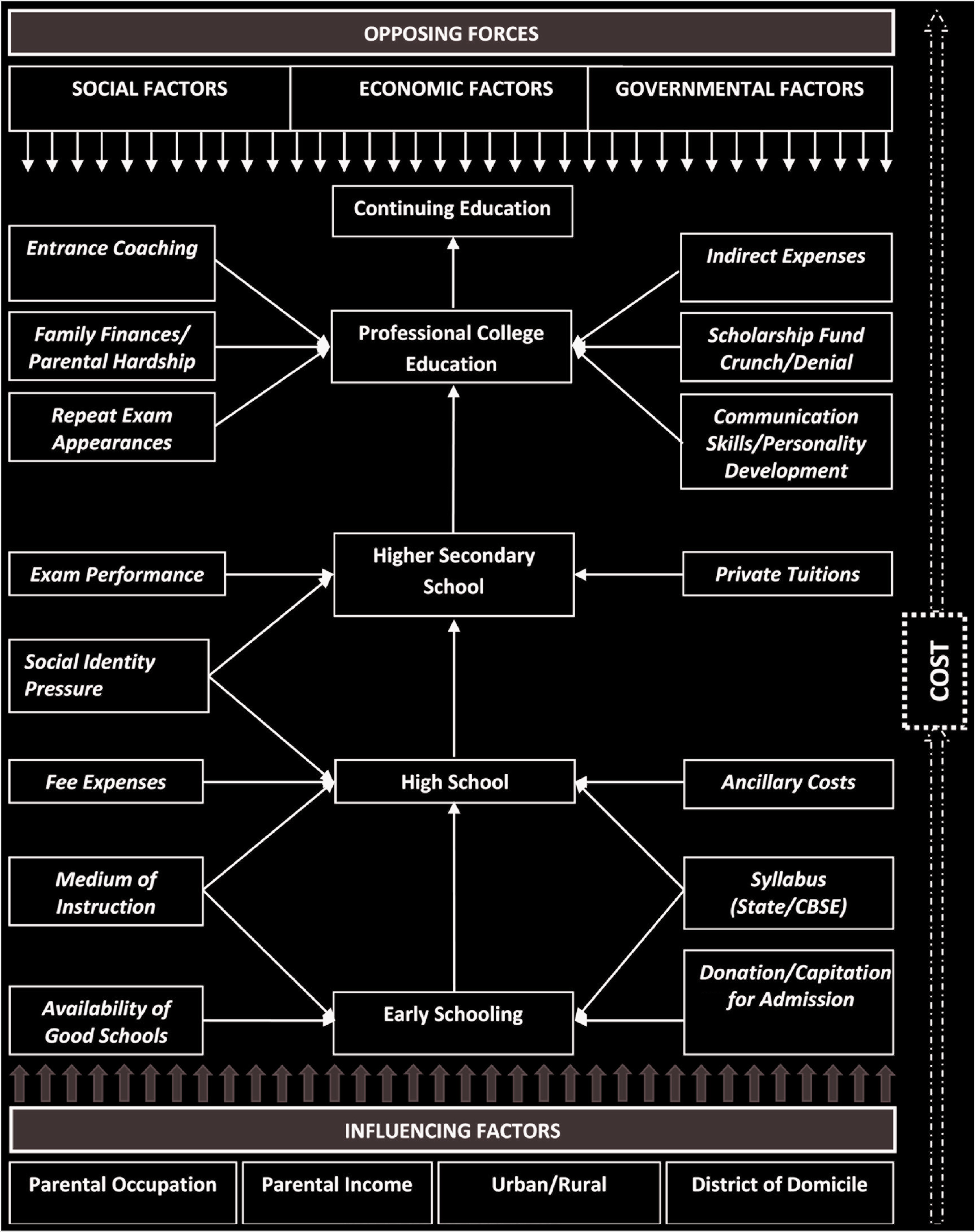
Publicly available reports suggest that a system of exclusion/discrimination is prevailing in the state, partly aided by bureaucratic apathy and also by gross violation of established rules and norms. Earlier reports of scholarship denial to SC/ST students by the Kerala government over minor technicalities (National Campaign on Dalit Human Rights [NCDHR], 2021) are supported by more recent reports that highlight red-tapism and official indifference in processing scholarship applications (Priya, 2021). The advent of the COVID-19 pandemic also highlighted the plight of many self-financing colleges that have asked the government to bear the expenses of student fees (Vidhyadharan, 2021). This is simultaneously encountered by reports that allege that autonomous colleges and other private institutions are flouting norms in admissions of SC/ST students and are converting reserved seats for SC/ST into general category seats through unethical/dubious means (Special Correspondent, 2021; The Times of India, 2021). The existing system is already operating at sub-par efficiency, with reports commissioned by NITI Aayog suggesting that Kerala is significantly over-spending on education to achieve literacy in comparison with other states (Nair & Sensarma, 2017). However, the state’s public debt scenario is found to be sustainable, allowing opportunities for the government to rationalize spending (Renjith and Shanmugam, 2018). This is important in the face of reports by the Pew Research Centre that has shown the devastating impact that COVID-19 has had on poverty levels in India (Kochhar, 2021). A more distressing report has projected that anywhere from 2.29–2.96 million people in rural Kerala and 3.74–3.91 million people from urban Kerala would become impoverished as a direct result of the COVID-19 pandemic (Ram & Yadav, 2021). It may be deduced that SC/ST households could be among the worst affected due to the already prevailing state of distress among these communities. This would only further constrain enrolments and admissions of these communities to technical education.
Discussion
Utilizing the Integrated MAVS-ADRI Framework for Institution Tracking
Building on the amalgamated derivative framework proposed by John and Kumar (2021), this study proposes that it is possible for designing a public-private interface for HEI self-reporting and monitoring that can allow the government to make more accurate decisions on funding, imposition of penalties and responsible governance in connection with enrolment of SC/ST students to professional courses in Kerala. The framework combines the Map-Analyse-Visualize-Share (MAVS) protocol suggested by Horton et al. (2016) with the Approach-Deployment-Results-Improvement (ADRI) quality cycle described by Razvi et al. (2012). The MAVS system is executed by the regulator, while the ADRI system is individual to each participating institute. While the original framework was suggested for B-school growth, the same principles could be extended to ensuring representation of deprived sections. The MAVS-ADRI system could be used in the following manner, supported by an IT framework:
Map: This involves highlighting and colour-tagging every privately funded, professional higher educational institution in the state. Institutions with low enrolment counts of SC/ST by percentage of seats filled or absolute numbers can be flagged or highlighted. Analyse: Study the history of admissions of SC/ST students, and identify the graduate attributes of deprived students who are admitted to these institutions Visualize: A visual chart of applications versus enrolment can be generated to identify admission trends to check if potential aspirants are seeking these institutions. Institutions in vulnerable regions of Kerala (northern Kerala) and districts with higher percentage of SC/ST students can be identified as potential venues for selective funding and focused support. Sharing: The visualization of this accumulated data using angular dashboard can help data analysts and interested parties to investigate underlying causes for low enrolment.
Approach (think and plan): Develop target profile of SC and ST aspirants to the institutions, along with education background information. Deployment (implement and do): Collecting information from faculty, staff and other institutional stakeholders about hardships/challenges faced by these groups in campus, hostels, common recreational areas, amenities and ragging. Results (monitor and evaluate): Monitoring internal and external exam assessment performances, student feedback on institute culture, inclusive attitude, behaviour of peers and teachers, and perception of college management. Documenting and archiving grievances of SC/ST students Improvement (learn and adapt): Orientation track programmes, refresher courses, additional training/ coaching classes, tie-ups with professional bodies that support such students, and admission targets for such students.
The MAVS-ADRI system can act as a prelude for the government to decentralize scholarship schemes to cut through the existing problem of red-tape. The government can selectively reimburse costs (both academic and ancillary) for SC/ST students directly to the institutions themselves, rather than having the students running behind the government ceaselessly for financial support. This would pass the burden of responsibility for scholarship expense reimbursement from the student to the institution. Students of SC/ST communities are already in deprived circumstances with limited family/parental support. It is not fair to expect them to bear the burden of paperwork and other formalities to receive aid from the government. A credit-based reward system can be implemented for institutes that achieve targeted quota admissions. Penalties can be imposed on institutions that do not admit these students. Ensuring a direct financial line between government and private unaided institutions for SC/ST student support would sufficiently motivate institution managements to seek out such students and admit them. It will also identify those institutions that have a discriminatory policy towards these social groups. These institutions can be targeted for further disciplinary action. The financial rewards and better performance in public reporting of the MAVS-ADRI system may create circumstances for higher enrolment over time.
Conclusion
The State of SC/ST in Kerala’s Professional HEI Scenario and the Way Forward
Kerala’s much-touted model of development has not been successful in ushering in sufficient number of students from SC/ST communities into professional higher education programmes in the state. The available data from public records suggest that the state has failed miserably in including and allowing for enrolments of these groups to various technical education programmes. Not only are they under-represented but are disturbingly so. The low representation of these groups extends across the entire gamut of professional HEIs in the state. Kerala’s surprisingly poor performance when compared to its neighbours that have embraced privatization should allow questions to be asked about whether communist ideology or a left-leaning policy has really benefitted the deprived SC/ST communities. It appears to have been the exact opposite. This leads one to question whether Mathew’s (2019) claims of balance and equity in Kerala are really achieved at all. There are evidences to contradict this. An article written by the former Minister of Education and Culture of the Government of Kerala states that education is a privilege of the elite with access being restricted to 10%–15% (Baby, 2011). What makes this statement particularly impactful is that the minister himself is a staunch communist. The government’s unwillingness to report or publish these discrepancies, instead celebrating its achievements in enrolling these groups to liberal arts, science and commerce programmes, suggest disclosures of a hypocritical and selective nature. The examined differences in data are stark, and the comparison yields obvious inferences.
It also becomes pertinent to question whether there has been a larger policy failure in Higher Education in Kerala. This appears to be the case. The role of KSHEC must surely be probed for achieving social equity and representation in the state. Criticism of KSHEC’s policy, vision and mission is rare. Yet, there are evidences to suggest that KSHEC’s efforts and policy are failing at a larger scale. Policy articulations by KSHEC, for instance, have been that of vacillations. In 2014, it called for the establishment of private universities in the state (Deccan Chronicle, 2014) only to recant its position five years later, advising the government not to allow private universities for the sake of preserving equity, access, social justice and inclusive development (Krishnakumar, 2019). KSHEC’s policy initiatives have also failed to gain traction. The KSHEC higher education survey, which saw its maiden launch in April 2019 (Staff Reporter, 2019a) with much fanfare, was rebuffed with poor responses by institutions in the state (Staff Reporter, 2019e). The proposal of the state-level accreditation system, called State Assessment and Accreditation Centre (SAAC), which was formalized in 2019 (Staff Reporter, 2019c), also came up for strong criticism from teachers’ unions putting KSHEC and its leadership on the defensive (Staff Reporter, 2019b, 2019d).
The rare work of Sudhanshu Bhushan (2011) in deconstructing KSHEC policy of higher education to understand the subtle implications of political intent becomes crucial here. Bhushan suggests that the KSHEC policy is a slave to competitive and global forces in the liberalized era, which will only amplify exclusionary trends. The KSHEC policy document itself is described as a study of contradictions, where the framework structure considers education as a public good, but where the functional strategies are executed viewing it as a private good. The broad idea of the KSHEC policy itself is seen as ambivalent, created by instituting reforms that are market oriented within what is considered as a public good. Bhushan notes that the KSHEC policy in higher education per se is difficult to implement. The approach described in the policy formation itself has been seen as top-down rather than bottom-up, with little public consultation or discussion, enforcing authoritative ideals that are difficult to put into practice.
The outcome of this study suggests that significant and disruptive interventions are needed to improve the poor enrolment of these deprived SC/ST communities in Kerala, without which the prevailing situation is only likely to worsen over the future period.
Limitations and Future Research Directions
The present study has only looked at descriptive data in a cumulative context for the various technical education courses in Kerala. It is possible to delve deeper into the data to understand exact variations and distributions of SC/ST enrolment within various institution types, such as unaided private, government aided, government and deemed university among others. This study was limited in its scope due to the large number of tables needed to be generated to investigate trends more closely. The data used for this study has been drawn in its entirety from the AICTE angular dashboard within its statistics portal. The data was aggregated manually for each pre-defined user setting, which was cumbersome and time-consuming. AICTE does not allow for downloading of the meta-data en masse. Therefore, archiving of this data is problematic. Future withdrawal or non-availability of this data over the future period could hamper further studies.
The use of various statistical techniques for the available panel data sets is highly recommended to study regression trends against macro-economic forces. Pair-wise comparison between Kerala and its neighbouring states is also recommended to identify areas of significant gaps. Future studies should also consider investigating the underlying problems/hardships that students of SC/ST communities face in private HEI’s in Kerala. The proposed phenomenon of progressive exclusion can be verified empirically by data collection methods, to validate it theoretically. Lastly, the MAVS-ADRI framework is only a theoretical proposition that needs to be pilot tested for its successful implementation in the field.
Footnotes
Declaration of Conflicting Interests
The authors declared no potential conflicts of interest with respect to the research, authorship and/or publication of this article.
Funding
The authors disclosed receipt of the following financial support for the research, authorship, and/or publication of this article: The first author is a fully funded research scholar of IIT-Madras and is supported financially under the HTRA (Half Time Research Assistantship) scheme of the institute.