



Abstract
The concept of ashram school has an ancient origin where the disciples take refuge with the teacher (Gurukul) to learn his/her life lessons. Modern-time ashram schools evolved with this very idea where the tribal children are offered a conducive environment at the residential schools for education and overall development. The basic needs like food, clothing, shelter and education are meant to be taken care of in the ashram schools. The study focussed on factors such as living conditions, food and working conditions (carrying educational activities in school) influencing the health of adolescent girls. It used a mixed method and multistage sampling to select 800 girls from 17 ashram schools of selected four tribal districts (administrative unit) in Maharashtra, India. Adolescent girls of ashram schools reported the poor living and working environment, inadequate services of food and nutrition, clothing and shelter determining their health outcomes. The adolescent girls were found with low Hb count, delayed menses and health morbidities.
Keywords
Introduction
The term ashram school means learning at the residence of a teacher (Gurukul) who has attained wisdom, excellence in skills and has renounced the world. Primarily with this philosophy, the ashram schools were evolved in India in the year 1922 creating avenues of education for the tribal children who were deprived of even a basic education for centuries together (Mishra, 2005). Ashram schools intend to unburden the tribe by promoting education for their children by catering to their fundamental needs of food, clothing and shelter. These schools were conceived as a direct intervention to address social inequality in education among the tribal communities. The aim of the ashram school was to impart formal education, encourage tribal traditions and develop the personality of its inmates. The key focus of the ashram schools is to safeguard young generation from falling prey to age-old poverty, illiteracy, superstition and addiction by providing a conducive environment for education, discipline and personal health to empower tribal community to engage actively in the developmental processes (Government of Maharashtra, 2005, p. 22).
The ashram schools are currently set up according to the Tribal Sub Plan under the aegis of the Ministry of Tribal Affairs. Currently, there are two types of ashram schools (a) government-run and (b) government-aided ashram schools (i.e., run by private or charitable trust). The government-run ashram schools are within the mandate of the government and supply all the aids required for the functioning of the school including food, educational materials for students, staff salary, uniform, books and so on. While the government-aided ashram schools are managed and maintained by a private or charitable trust, which receives a fixed grant in aid from the government depending upon the number of students that school caters to and salaries for teachers are paid by the government.
Today, ashram schools in Maharashtra are equipped to provide education from first standard to 12th standard in both Arts and Science disciplines across the four major tribal divisions, namely Nasik, Thane, Amaravati, and Nagpur region of the state. Thus, the Tribal Development Department currently runs a total of 499 government ashram schools catering to 1.83 lakh students and 536 government-aided schools with 2.33 lakh students (Government of Maharashtra, 2021). The government has earmarked about ₹1,443 crore budget for the year 2021–2022 for the government ashram schools for residential education, food, bedding materials, educational and other essential items of daily use for children. For the government-aided school, the Department has provisioned ₹1,450 crore for the year 2021–2022 on the overheads of salary, conservation aid, unforeseen expenditure and so on (Government of Maharashtra, 2021).
As per the guideline, the health of the children in the ashram schools are given utmost importance; as there are specific guidelines for hygiene and health (personal and social) of resident girls, their diets and provision of safe drinking water. Mandatory annual physical and medical check-ups of all inmates are to be carried out for which mobile health units of the respective health departments are responsible for conducting health check-ups at least once in a month in every ashram school. If diagnosed with health problems in their monthly check-ups, children are to be referred and treated by competent medical officers of the nearby public health facility. The ashram schools are required to maintain health cards of every inmate child in this regard (Government of Maharashtra, 2005, p. 22).
Literature Review
Although ashram schools evolved as a welfarist and humanitarian model for the upliftment and mainstreaming of tribal children, the programme has faced serious shortcomings in its course of evolution. Ashram schools have been seen delivering poor educational and residential services to its inmates. Overcrowding of children, inadequate residential facilities, food and dining facilities, inadequate teaching and support staff are typical phenomena of ashram schools (Jojo, 2013). Crowding of students in ashram schools has resulted in psychosomatic symptoms such as aches, depressions, restlessness, aggressiveness, frustration and so on leading to aggressive behaviour, more negative relationship and low cooperation among the children of ashram schools (Upadhyay et al., 2005). Most students of the ashram schools belong to poor socio-economic status adding on to the vulnerability of the students (Das et al., 2003). Addiction and bad habits were reported in another study from the selected schools of Nagpur district, which showed 2.8% students reported smoking habits, 41.7% consuming tobacco and 4% were consuming alcohol (Gunjal et al., 2012). A study conducted in 11 villages of Wardha district among rural adolescents of 15–19 years of age found 63.3% boys and 12.4% girls consumed tobacco (Dongre et al., 2008).
The migratory conditions common among the tribal parents for their livelihood precipitates social isolation of their children who are left on their own either to be taken care of in residential schools or by their relatives. This leads to vulnerability among these children due to the absence or poor parental support resulting in exploitation, rape and sexual abuse which further affects the psychological state of children in schools (Thadathil & Danane, 2017). Inadequate sanitary facilities in the residential schools aggravate the agony, especially of the girls who are forced to venture out to attend nature’s call due to lack of toilet facilities (Thadathil & Danane, 2017). All these factors lead to perpetuating adverse effects on the health of the residential students, especially girls.
Poorly maintained environmental surroundings at the schools also become breeding grounds for mosquitoes, insects, rodents and reptiles making children susceptible to malaria and insect and animal bites as a regular feature. The Salunkhe Committee appointed by the Government of Maharashtra records several deaths among the students of government and private ashram schools of Maharashtra. The noteworthy finding of the committee was that as many as 5% deaths were due to snake bites and 7% deaths were due to fever and malaria (Salunkhe, 2016). The Maharashtra Times—Newspaper reports deaths among the ashram school children based on the data provided by the Tribal Commission. It reports 680 deaths of children in schools of Thane, Nashik, Amaravati, and Nagpur regions in 2017–2022, the maximum of these deaths are caused by illness such as TB, anaemia, sickle cell anaemia, snake bits, drowning, suicide as well as illness related to respiratory, kidney, large intestine and so on (Kalgutkar, 2023).
Health of ashram school children is thus conceptualized as an outcome of the historical vulnerability faced due to the deprivation faced by a vulnerable community, which further gets aggravated due to the poor living conditions of ashram schools—an institution otherwise supposed to cater to the educational needs and overall wellbeing by offering a residential environment for tribal children. It is in this context, this article attempts to examine the health status of adolescent girls of ashram schools of Maharashtra within their living conditions of the ashram schools.
Methodology
The study has used a cross-sectional approach with an exploratory and descriptive design, which has used both quantitative and qualitative methods to understand the health and nutritional conditions of adolescent girls in ashram schools. Study used both primary and secondary sources of data. It looked at living conditions, hygiene behaviours, nutritional conditions, collected vital anthropometric information through medical check-ups and haemoglobin (Hb) counts and self-reported morbidity for understanding health of adolescents. Data were collected using survey methods with a semi-structured interview schedule, supported with FGDs of adolescents and key informant interviews of ashram school staff.
Sampling
A multi-stage sampling approach was used to identify respondents. A total of four districts with the highest tribal population were selected, one each from four Tribal Commissionerate. One block from each district was selected using a simple random sampling method. All ashram schools were listed from selected blocks using a list obtained from the Tribal Development Department. Four ashram schools, of which two government and two private aided were selected using random sampling methods from each selected block. The selected blocks for study were—Dahanu block of Palghar district, Kelapur block of Yavatmal district, Aheri block of Gadhachiroli district and Navapur block of Nandurbar district. A total of 17 ashram schools were finally selected, nine were government schools and eight were private schools. Selection of adolescent girls was done by listing of total girls aged 10–19 years of each school and picking every nth child to get the desired number of 50 from each school. Thus, a total of 800 adolescent girls were selected from 17 schools for the study.
Ethical Clearance
The clearance for the study was sought from the Institute Review Board (IRB/TISS, Mumbai). Ethical guidelines were followed in terms of sharing information sheets, written consent, ensuring voluntary participation and confidentiality of information and identity of the participants and their schools.
Findings of the Study
The selected schools have been functional for a minimum of 11 years to more than 101 years. Out of these schools, two private schools are functional for a duration of 11–19 years. Three government schools are functional for 28–29 years and six of them are functional for around 40–46 years. Five private schools are older and are functional for 24–36 years and the oldest private school studied has completed 101 years, established in the colonial period. Majority of the schools had primary and secondary sections, that is, from first to 10th standard and three schools had junior colleges, that is, up to 12th standard, with only one school which was an exclusive girl’s school. The study covered a sample of 797 girls belonging to the adolescent age.
Sociodemographic Profile of the Participants
The study was confined to adolescent girls with an age group between 9 and 19 years. The mean age group of respondents were 13.5 years (SD = 2.1). The largest (32%) proportion of the age group belonged to the age category 13–15 years, while 28% belonged to 11–13 years of age. Around 19.4% of the total sample was from the 9–11-year age group. As only three ashram schools selected in the study had junior colleges attached to the ashram schools, only 2.8% of the samples were those above 17 years of age.
Religion and Caste
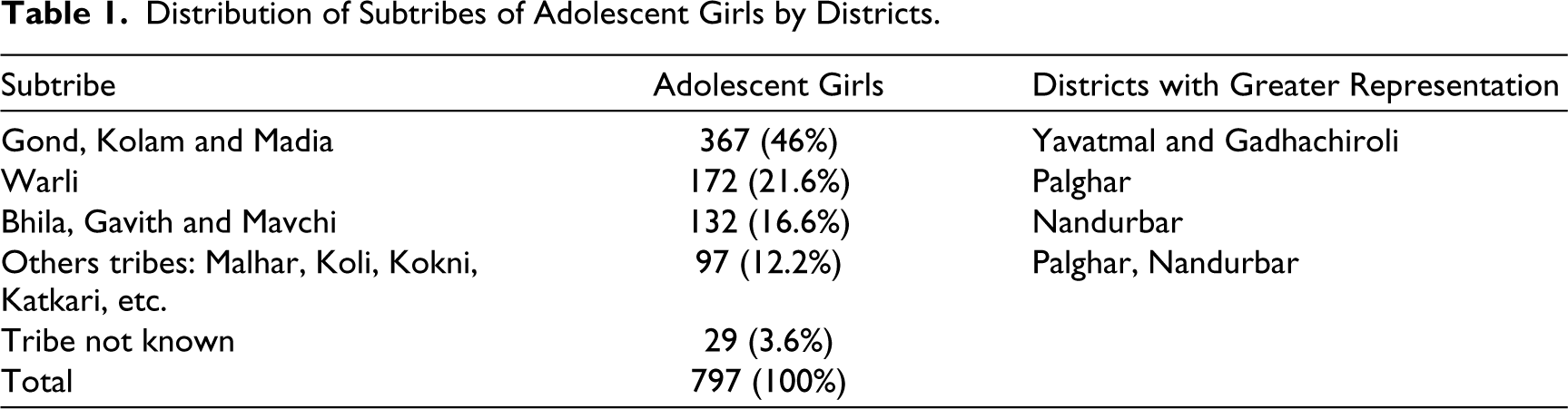
As the study was confined only to ashram schools, all the respondents belonged to tribal adolescent girls only. Some of the predominant tribal groups and its distribution across the study districts are as follows (Table 1): Gonds, Kolam and Madias (46%) together constitute the major tribal category in the study sample and were found dominant in Gadhachiroli and Yavatmal districts. Warli tribe (21.6%) was the second predominant category and is also the single largest category in the sample and is found more in Palghar district. In Nandurbar, Bhila, Gavith and Mavchi were the dominant category, which together constituted around 16% of the sample with Malhar, Koli, Kokni and Katkari together making around 12% of the study sample. A few of the adolescent girl respondents were unable to mention their sub-tribe category.
Distribution of Subtribes of Adolescent Girls by Districts.
Educational Status of Parents
The social, economic and educational status of their parents is used as a proxy indicator to interpret the generational vulnerabilities of these students. The study showed poor educational background of the parents. Almost half (47.4%) of the parents were either illiterate or one parent had studied to a maximum of fifth standard. Further, around 26% of them studied between seventh and 10th standard. The remaining girls were either unaware of their parent’s education or did not have their parents alive. It was found that mothers were less educated than their fathers. Lower educational status among tribal women was also a feature found in other studies as well (Lok Sabha Secretariat, 2013).
Occupational Status of the Girl’s Parents
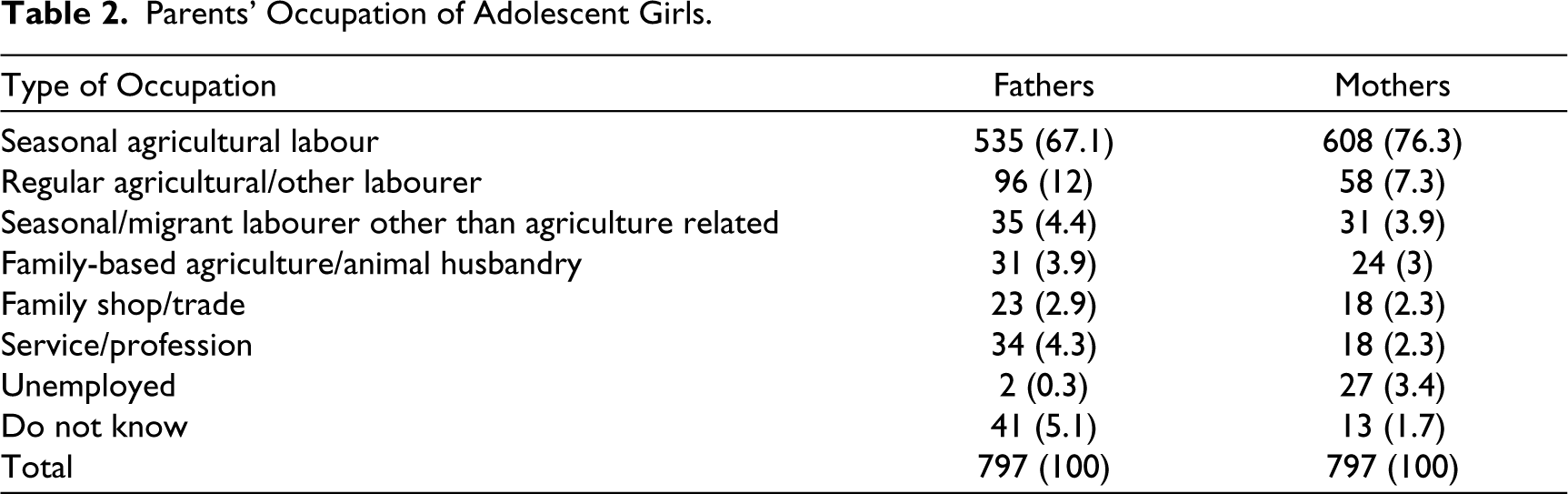
In tribal communities, both males and females equally contribute to the livelihood of family. The women bear equal or a bit more burden of the family both at home or outside work. The study considered occupational engagement of both parents of the adolescent girls to depict their socio-economic conditions (Table 2). Seasonal agricultural labourers had been the major occupational engagement among both parents, that is, 67% fathers and 76.3% of their mothers. They either have worked in their own farms or in other farms. It has been the case that they had worked in their own farms for some part of the year to cultivate seasonal crops and have also worked in other lands as labourers for the rest of the time. Some of them were working as Tendu leaves collectors or other forest produce in the vicinity, where few others have been involved in animal rearing as part-time labour. Parents engaged in regular agriculture work were 12% in case of fathers and 7% as mothers. Few of both fathers and mothers were found working as seasonal migrant labour, that is, brick kilns and construction work.
Siblings’ Education and Vulnerability
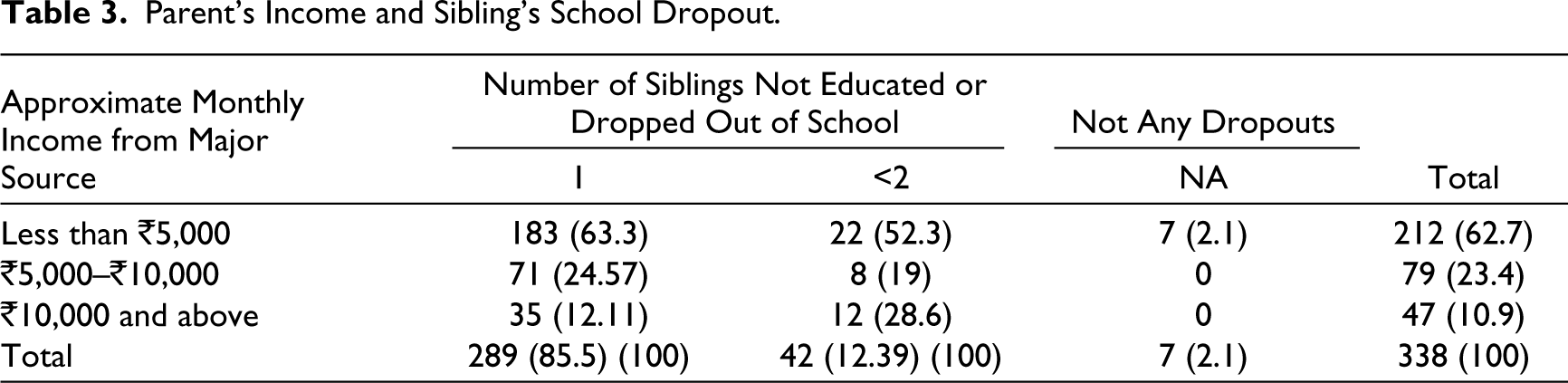
Educational deprivation has been a known reality in case of tribal communities. The extent of the vulnerability of the tribal girls on account of their living in poor conditions and socioeconomic hardship leading to discontinuation of schooling is a usual phenomenon even now. To understand the vulnerability in education, the study has collected information on the education status of their siblings. It was shocking to note that almost 85% of the respondents who had one of their siblings either dropped out or not educated and stayed at home to attend the homely responsibilities. For those girl students reported to have two or more siblings discontinued education was 12% (Table 3). Further, the income gradient in explaining the dropout pattern shows that family income and dropout of siblings are closely related, that is, lower the income of family greater the chances of their children dropout from education.
Parents’ Occupation of Adolescent Girls.
Parent’s Income and Sibling’s School Dropout.
Living Conditions of Girls in Ashram Schools
Poor Infrastructure of Schools
Most of the ashram schools had poor and dilapidated building structures, with a significant number of schools having no separate classrooms or residential space or even separate dining areas. The size of each classroom ranged about 180–600 sq. ft. with an average classroom size of 408 sq. ft. On an average, the residential area ranged from 200 to 800 sq. ft. Majority of schools have big halls as dormitories which accommodate about 80–85 students and are made to stay together at a time. Over 50 children were pinned at one place called the classroom both for educational purposes in day time and for sleeping at night. The children remained in the most cramped or congested state for over 16–17 h, that is, considering the school and sleeping time. Much of the classrooms did not have adequate ventilations adding further to the congestions. The same classrooms-cum-residential area is also used for drying washed clothes of students, especially during monsoon, which adds to the dampness or sogginess with permanent irritating odour in the class.
amhi amchya class madhech zopto. Vegali zopanyachi vavastha nahi. Eka veli 60 muli eka room madhe dativatine zopto. Machi oli kapade varandyat walat ghalto. (We use the same classroom as a place to sleep at night and as our class in daytime. Around 60 girls sleep at one time in the same classroom in the most cramped manner. Not even adequate Sunlight during the day for us to study. Our clothes are spread for drying in the warrandah (balcony area) of our class.). Narration of girls in their FGD
All the schools had approach roads; however, the conditions of these approach roads were not good, especially during monsoons. Except six schools, none of the schools had approach roads adequately maintained, rather they were in the worst conditions or of any use. They were so rough, too narrow, or too steep (up and down hill) or worn out due to non-repair for years. Only six schools had compound walls, the rest others had compound walls in the worst condition.
One of the most serious deficiencies observed in the schools was inadequate personnel, both in case of teachers and support staff. The inadequacy was almost in all the schools under study. The female warden was the most deficient personnel in most of the schools, these schools are residential in nature with girls as the major occupants. One of the reasons for inadequate staff is the appointment of temporary and contractual staff, whose contract will be on an hourly basis which will be only confined to day time.
Atta je reekth pada ahet, tya reekth padaath prakalpa adikariyani tathpurtya swaroopath tasika padavarthi shikshyak namelella aheth. Tar thyacha madhe madhyamik shikshyakana ₹140 and primary shikshyakanana ₹125 dile jathe.… Hya shikshakanna atta vadyathil 22.5 tasika jyasthit jyasth shyasanani manjurr keleli aheth. (Now, for those posts which are vacant, the project office has provisioned to appoint temporary teachers on an hourly basis, wherein the secondary teachers are paid ₹140 and primary teachers are paid ₹125 per hour. And for these teachers, weekly maximum 22.5 hours are fixed by the government.), says the school headmaster
This had severe consequences on the service provisions of the school and safety of the students.
Zamin khalli ladi asthe tari thi olli aste, tyani (mullani) jo bichana kella ahe te olla hoto. Rathri thyala zoptaana avgadlyasarka vatu shakthe. (Though there are tiles on the floor, it is still wet. Hence their (the students) beddings may get wet. This would disrupt their sleep at night), said the girls of Class 7.
This indicates inadequate beddings or getting wet on monsoon days, they have sleepless nights.
Inadequate Support Services of Ashram Schools
Except two schools, all others had not reported any water shortage for the entire year with either having a well or bore well as a major source. The electric power cuts for long hours even during the night have been a usual phenomenon in these schools, making pumps non-functional to pump the water out for use. Despite adequate water availability in the schools, none of them had piped water in the toilets or bathrooms. The reason is that most of the schools had not installed overhead tanks and pipe connections into the toilets/washrooms. Due to unavailability of water in the toilets and bathrooms students are compelled to go out to attend nature’s call. In those schools without a proper compound wall, there are safety concerns and some schools being in much dense forests of the tiger reserve, insect and animal bite is a persistent threat to their life. Though the students wash their clothes in washrooms or near to hand pumps, students prefer to wash clothes where there is proximity to rivers or other water bodies. ‘Bathroom va toilets kami ahet … bathroomla pani baherun anave lagte, nal lavala nahi mhanun vapar karat nahi. Bathroomla kapade dhuwayala baher nadi var jato’ (Bathroom and toilets are lesser. Water is needed to carry from outside. So we do not use bathrooms. We go to the river to attend our natural calls, bath and wash our clothes.), girls in their FGD. It was found that one washroom or toilet is commonly used by over 30 students in these schools, indicating the inadequacy of the toilet or washroom facilities across schools.
Importantly, there was no adequate provision of potable water for the students in these schools as shortages were reported during the summer season. Though every student in ashram schools is entitled for bed and bedding materials, its distribution was found grossly inadequate. The schools have not provided the cots for two reasons, one that the cot will occupy more space in the classroom cum residence arrangement currently followed in most of the schools and second is to save costs. The students therefore usually found sleeping on the ground on the cotton rug (Sataranji). They said the cotton rug gets wet on the ground during the rainy season due to water seepage and mostly they had to have several sleepless nights.
Other essential items such as toiletries, hair oil and sanitary pads were found either inadequately distributed (i.e., one piece of bathing and washing soap in a month or 2–4 packs of sanitary napkins per person) or with the recent policy of direct beneficiary transfer scheme, the amount for the same is transferred directly to the students’ account. ‘Amche bank khate nahi, bapache ahe … paise tyach khatyat jama hotat’ (we do not have bank account but father has. Money is transferred to his account), girls said. The students mentioned that bank accounts are usually in the names of their parents and therefore the money transferred for the beneficiary child, goes in the hands of parents. The parents found spending that money for their other children also or on family requirements, making these items either inadequate or not available to the children. Most of the schools report the warden provides two sanitary pads to a menstruating girl in a month. If requests come from girls, they provide additional one or two pads. Thus, the students were invariably forced to study and live in menial conditions, overcrowded with no privacy, poorly lit and non-ventilated rooms increasing their susceptibility to communicable diseases and reproductive health issues compromising their hygiene.
Insufficient Food Supply and Poor Hygiene
Considering the fact that tribal adolescent girls is generally deprived of nutritious food during their early years of life, ashram schools are mandated to provide well-balanced nutritious food for nutritional needs of their students (Government of Maharashtra, 2005, p. 22). What has been observed in ashram schools is that food provisioning is inadequate both in terms of quantity and quality. This is because food is provided only three times as against the stipulated four times. Non-vegetarian food is not provided in most of the cases though it is expected to be provided at least twice in a week. Milk and fruits are not given though recommended. Linkages between dietary patterns and their nutritional status are covered in another paper (Kakade et al., 2019). There were issues related to quality of food items served and challenges in maintaining hygiene or sanitation, while food was prepared, served and eaten by the students. Some food items were provided with more quantity such as dal and rice to the students and the quantity of roti and sabji (vegetables) is always restricted. ‘dalich pani aste kahi chav nasate … mit nasate fale kadhitari asatat. Bhaji roti maryadit aste pan dal bhat gheil titaka asto’ (watery dal is served, no teste, no salt … fruits rarely provided. Limited chapati and vegetables served and dal and rice as much one needed.), school girls said. Nutritious foods like eggs, chicken or meat were served only occasionally.
Health Status of Ashram School Girls
Health of tribal adolescent girls is of paramount importance as it has greater bearing on their health during adulthood. In this study, the health status of adolescent girls is conceptualized using three indicators: (a) anaemia status of the ashram school girls, (b) average age at menarche and (c) self-reported morbidity among the study respondents.
Haemoglobin Level
The study has measured the physiological parameter, namely the Hb level in their blood as part of the routine medical check-up carried out. Low Hb among adolescent girls is an indicator of anaemic status or poor health and is seen associated with menstruation-related problems, iron deficiency, genetic conditions like sickle cell anaemia and so on (Patle & Kubade, 2015). Sickle cell anaemia is quite a common disease among tribal communities of the selected districts. The study considered WHO Standard Hb level as a basis for comparison for the ashram school girls (Table 4).
Anaemia Status of Ashram School Adolescent Girls.
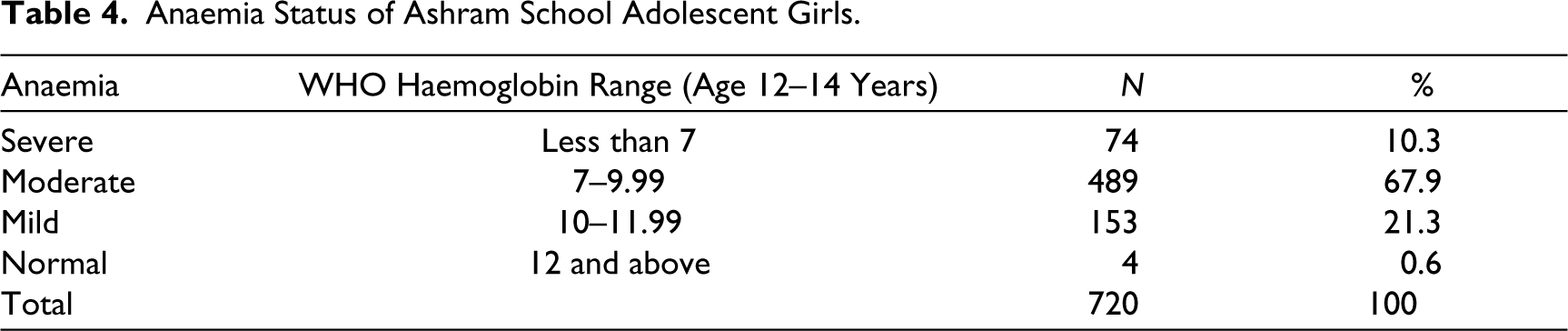
The mean average Hb for the ashram school adolescent girls was 8.9 g/dl. Most shocking to find that 10.3% of the total adolescent participants had severe anaemia with Hb level less than 7 g/dl, where majority, that is, 67.9% of them were having moderate anaemia. The matter of concern is as much as 78.2% of the total adolescent girls either fall in severe or moderate anaemia category. This severe or moderate Hb status among the adolescent girls indicates poor health status among the ashram school girls. Low Hb status of adolescent girls is a strong indicator of their poor nutritional status. A significant factor to note is that the tribal women and adolescents are usually found anaemic having their Hb status less than 9 g/dl. This habitual condition of low Hb (<9 g/dl) is commonly considered by the government health personnel as moderate anaemia and is attributed ‘normal’ for tribal women. This way of setting new ‘normal’ (Hb = 9 g/dl) for tribal populations is a matter of great concern. The anaemic status among Indian adolescent shows that the value hovers in the range of 10–12 g/dl (Yandamuri & Yandamuri, 2013), thus demonstrating the growth lag among ashram school girls.
Age at Menarche
Menarche is a significant aspect of female growth and broadly used as a marker of population health, timing of maturation, which in turn is dependent on the nutritional status of girls. The age at menarche essentially has been a function of interplay between genetic variability, overall health/hygiene conditions, nutritional status and environmental influences across human population in any given territory over time. Owing to enormous enhancement with respect to sanitation and hygiene, nutritional supply, public health interventions and socioeconomic advancement; the age at menarche has shown a declining trend across the populations with substantial variability. This variability shows gradients along the economic status, educational attainment, racial/ethnic differences, rural–urban system of living, supply of nutritional/health services, and family size/number of siblings and so on (Omidvar et al., 2018; Pathak et al., 2014).
The exact time for onset of menarche is difficult to predict; however, the median age for normal menstruation is around 12–13 years (Chumlea et al., 2003; Finer & Philbin, 2014). Late menarche is more common in people who are thin or have a low BMI. The age at menarche was considered an important marker for the study as an outcome of poor nutritional status (Table 5). The results revealed that of the total adolescent girls who attained menarche, only 28% attained menarche by the time they reached their 12th birthday. Majority (72%) of the girls had their delayed commencement of menses after their 12th birthday. While examining the age at menarche against their Hb status, it was found that almost half (48%) of those having their Hb value less than 7 g/dl had attained menarche after their 14th birthday. This proportion is consistently declining with increase in Hb level, only 39% in the Hb category of 7–9 g/dl and 36% in the 9–11 categories and so on. What the current data reiterates is the well-known understanding that poor nutritional status and more importantly iron deficiency anaemia can delay age at menarche among adolescents and hence ashram school girls are surely an undernourished population. This is a major indication that these adolescents invariably had low Hb level preordained by their poor nutritional level and further resulting in their delayed menarche. The girls had poor nutritional intake even at their residential ashram schools. They perpetually engage in strenuous hard work at their homes during school vacations. Poverty and sociocultural deprivation fuel their vulnerability further.
Age at Menarche and Hb Level.

Self-reported Morbidity Among Adolescent Girls
Self-reported morbidities were the third indicator used to demonstrate the health status among adolescent girls. Three categories of illness were used, namely (a) minor illness; (b) major diseases and (3) injuries, accidents and animal bites with a recall period of 15 days for minor illness, six months each for the latter two.
Major Infections
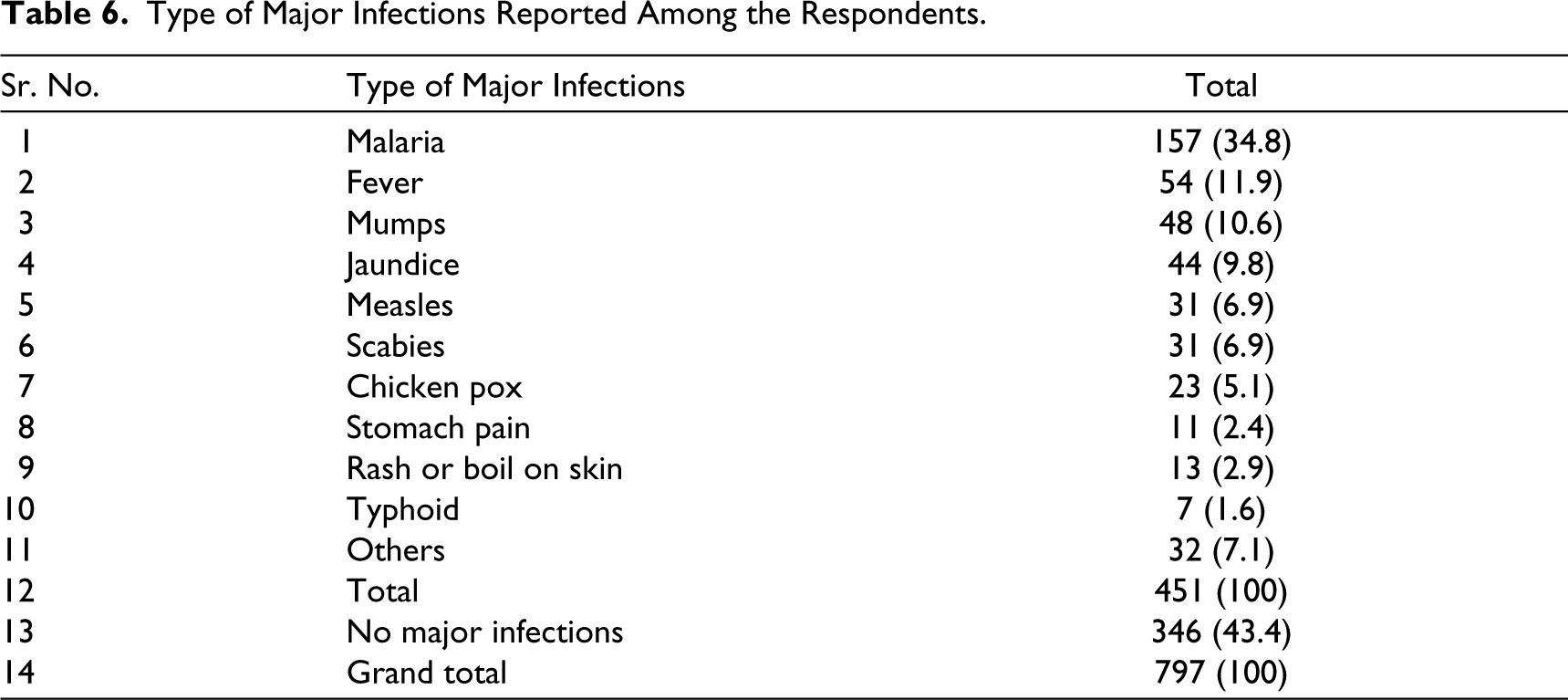
While looking at the major infections reported (Table 6) among the adolescent girls, 57% of the adolescent girls reported one or the other major diseases in the six months preceding the study. The commonest diseases reported were malaria (35%), fevers (12%), mumps (11%), jaundice (10%), measles and scabies (7%), chickenpox (5%) and so on. Additionally, there were cases of excessive bleeding during menstruation, giddiness, appendicitis, urinary tract infection, convulsions, diarrhoea, ulcer in the mouth and vomiting which were categorized as ‘others’ as they were few in number. The type of diseases reported indicates that the population is suffering from infectious diseases, whose prevalence is determined predominantly by the poor and unhygienic living conditions.
Studies on ashram school girls and their health problems also exhibit similar findings. A study on 10 ashram schools of the Wardha district highlights that head lice (18.2%), scabies (6.9%), multiple boils (11.2%), fungal infection (6.2%), dental caries (12.6%) and worm infestations (15.9%) were found among children residing in ashram school (Dongre et al., 2011). Another study in Zilla Parishad schools of villages in Palghar district revealed significant morbidities among the school children such as dental caries (61%), ear wax (38%), upper respiratory tract infection (19%), ear discharge (13.5%) and vitamin deficiencies (10%) (Gokhale et al., 2017). Gadchiroli being a densely forest covered tribal area has high malaria infestation causing malaria morbidities and mortality (Dhiman et al., 2005; Karlekar et al., 2012). Anaemia, undernutrition, worm infestation, menstrual abnormalities and so on, were found as major issues among 87.8% of tribal ashram school girls of 8–16 years in Ahmednagar district (Bhise et al., 2013). The unhealthy and poor living and working conditions of children in ashram schools thus show adverse effects on them.
Injuries, Accidents and Animal Bite
A total of 30% of the respondents have reported any type of injuries and accidents in six months preceding the survey (Table 7). Injuries and accidents were classified into fall at school, road traffic accidents, scorpion bite, snake bite and cut with sharp objects. The ‘others’ category included honey bee sting, fall at river, dog bite, cut on the finger, hit by stone, finger stuck in between the door hinges and insect bite (Gaikeeda—name of an insect in Marathi). The fall at the school is the most common cause (53%) of the injuries among adolescent girls, followed by scorpion bites (23%). The cut by sharp objects (14%) was another major reason for the injuries among adolescent girls. Most importantly, as many as 2% of injuries were caused by snake bites. The highest proportion of injuries and accidents possibly could be attributed to the geographical location of schools which are mostly interior with steep slopes resulting in fall and proximity to dense forest cover leading to greater chances of scorpion and snake bites. The greater proportion of snake and scorpion bites was also a concern raised by the Salunkhe Committee earlier.
Type of Major Infections Reported Among the Respondents.
Type of Injury/Accident Reported by the Respondents.

Minor Illness
While collecting data on self-reported morbidity, minor illness was the category used which includes all kinds of illnesses adolescent girls had in 15 days preceding the survey. This could include minor illnesses which could be at the level of symptoms. Similar information is also available in NSSO data on morbidity as proportion of ailing persons (PAP). In this study, the age-specific (10–19) prevalence of minor illness with a 15-day recall period was reported to be 598 per 1,000 girls. The age-specific prevalence of PAP reported in NSSO (2019), 75th round, for age groups 10–15 and 15–19 were 39 and 40 per 1,000 population. What it implies is that ashram school girls are reporting minor illnesses more than 10 times that reported in rural India for girls of the general population of the same age group. Of the total girls (477) reported minor illnesses, the common illnesses reported were cough/cold (54.5%), fevers (21.4%), diarrhoea (9.2%) and skin diseases (4.4%).
Conclusion
Ashram schools as an institution were established for the welfare of tribal children, their education and overall development. Conceptually, as a residential school with educational inputs, it has a potential to uplift the historically vulnerable community. Unfortunately, in the process of evolution, ashram schools as an institution also face discrimination from the mainstream policy makers in terms of their inadequate fund allocation, provisioning of food and health care and more importantly the overall infrastructure of ashram schools which are short of its requirements. The implications of all these are that the living conditions of ashram school children are constrained in terms of space crunch, poor diet, and failure of necessary support services to cater to their needs. The poor infrastructure and support services of the ashram schools include a shortage of staff, lack of separate buildings and space for residence and education, poorly maintained toilets and bathrooms and also the regular supply of consumables and finally inadequate food provisioning.
Ashram schools have an important role to play to address the historical vulnerabilities of tribal communities by imparting quality education for overall development. It is important to acknowledge the complex nature of vulnerability and ways to address it through an effective institutional mechanism. The complex nature of vulnerability is also reflected in the family context of the ashram school girls, their parents’ occupation and the greater chances of their siblings dropping out of education. It is this context of the ashram school girls that should become a basis to build ashram schools more responsive to all kinds of vulnerabilities of its students.
It is these conditions of living that manifest in poor health status of ashram school girls reflected in their health status. Health status is operationalized based on three specific indicators, namely their Hb status, age at menarche and prevalence of self-reported morbidity, all point to the state of severe vulnerability of the study population. Having more than 78% of the population with Hb levels of less than 10 g/dl is a crisis and needs immediate attention. More shocking is the ‘normalization’ of Hb values of 9 g/dl for ashram school girls by the health authorities that needs corrective action. Related to this is the fact that age at menarche, which is generally understood as a biological parameter, is influenced by the past life experiences of the study respondents. In other words, how social suffering of the past can also lead to biological distress of the present, when seen from a life-course perspective. This further gets validated with the data on illness patterns among this population which is much higher than the general population and more importantly the type of illness also falls in those categories of diseases that can be attributed to the poor hygiene and living conditions in which they are in.
Footnotes
Declaration of Conflicting Interests
The authors declared no potential conflicts of interest with respect to the research, authorship and/or publication of this article.
Funding
The authors sincerely acknowledge the Tribal Research and Training Institute (under the aegis of Tribal Development Department, GoM), Pune, Maharashtra, for funding this research study.