




Abstract
The effectiveness of global climate agendas, such as the Paris Agreement and the Sustainable Development Goals (SDGs), depends on how they are translated into action on the ground. Yet little is known about how these frameworks reach informal settlements in the global South, where climate risks are most acute, and state presence is uneven. Drawing on multi-sited fieldwork in informal settlements in Ghana, the Philippines and the Dominican Republic, this article shows that climate action in these contexts unfolds largely outside the influence of the Paris Agreement and the SDGs. Across all three sites, residents and community leaders had limited knowledge of these global agendas, and local responses to climate impacts emerge instead from everyday negotiations with risk, scarcity and institutional neglect. Although community organisations demonstrate significant adaptive capacity, their efforts remain constrained by insecure tenure, funding exclusion and territorial stigma. The article argues that the limited reach of global frameworks reflects a deeper structural misalignment between climate governance architectures and the sociopolitical realities of informality. Meaningful localisation therefore requires institutional recognition, accessible financing and the co-production of climate strategies with the non-state actors already shaping adaptation on the ground. By identifying the mechanisms that inhibit localisation and highlighting grassroots agency, this study advances debates on climate justice, urban informality and multilevel climate governance.
Introduction
Climate change is a global challenge with uneven impacts, yet its solutions fundamentally depend on local action. Landmark frameworks such as the Paris Agreement and the Sustainable Development Goals (SDGs) articulate ambitious goals for reducing greenhouse gas emissions that contribute to global warming, enhancing adaptation and resilience and securing a more equitable and sustainable future. While these instruments are global in scope, their effectiveness hinges on how they are translated into context-specific interventions (Krauss, 2016). In other words, these global agendas must be understood as both universal in their aspirations and localised in their application. Localisation—the process through which international frameworks are interpreted, adapted and enacted at national and subnational levels (Frennesson et al., 2022)—has therefore become a central concern in both policy and academic debates on climate action (Martinez, 2022; UCLG, 2019). This requires not only institutional alignment and resource redistribution but also meaningful participation from a wide range of actors, including those whose everyday lives are most affected by climate variability and change.
Within the process of localising global climate agendas, a persistent paradox emerges. The populations most vulnerable to climate impacts, particularly residents of informal settlements in the global South, are frequently excluded from climate action. These communities are characterised by insecure tenure, overcrowding, inadequate services and heightened exposure to environmental hazards (Howard et al., 2025; Satterthwaite et al., 2020). Although informal settlements differ widely in their histories and socio-spatial configurations (Davis, 2006; Roy, 2009), they share structural conditions of precarity that amplify risks such as flooding, extreme heat, landslides, and coastal erosion (Hussainzad & Gou, 2024; Tavares et al., 2024). Despite this heightened vulnerability, many such settlements remain absent from official maps, fall outside formal planning jurisdictions, and are rarely included in national adaptation strategies or municipal climate action plans (Nunez Collado & Wang, 2020). As a result, the ‘local’ spaces in which climate action is expected to materialise are often defined in ways that systematically overlook the everyday realities of the urban poor.
This disconnect reveals a broader structural problem: global climate frameworks assume institutional architectures and territorial legibilities that do not align with the lived experience of informal governance. The Paris Agreement and the SDGs emphasise participation, equity and climate justice, yet their implementation continues to privilege formal actors—national governments, municipal agencies and large NGOs—while failing to engage or even recognise the governance capacities of residents or organisations in informal settlements (UN-Habitat, 2018; Ziervogel, 2021). When climate action fails to reach some of the most vulnerable urban populations, it risks not only exacerbating existing inequalities but also undermining the collective success of global climate agendas.
This article examines if global climate frameworks reach informal settlements in the global South and what mechanisms facilitate, or obstruct, their localisation. Drawing on long-term fieldwork and semi-structured interviews in three settlements located in the Dominican Republic, Ghana and the Philippines, we analyse how ordinary residents, community organisations and local leaders perceive, interpret and act upon climate risks in contexts where global frameworks may have little formal presence. We argue that the limited penetration of global climate agendas into informal settlements reflects a deeper misalignment between the territorial and governance assumptions embedded in global frameworks and the everyday modes of organising and responding to risk in informal contexts.
By foregrounding the experiences and practices of communities at the frontline of climate vulnerability, this article aims to contribute to debates in urban studies, climate governance and development practice. We show that informal settlements, often portrayed as passive recipients of risk, are active sites of adaptation and collective organisation, yet remain structurally excluded from global climate governance architectures. Understanding these dynamics is important not only for the equitable localisation of climate frameworks but also for strengthening the effectiveness and legitimacy of global climate policies.
Informal Settlements, Climate Vulnerability and Localisation
Climate-related risks in informal settlements are complex and multifaceted, spanning socio-economic, environmental and infrastructure dimensions (Huchzermeyer, 2021; Satterthwaite et al., 2020; UN-Habitat, 2003). As mentioned above, despite their acute vulnerabilities, these communities are often not part of national and/or municipal climate action plans (Nagati et al., 2022). State-led climate responses typically prioritise infrastructure expansion and climate-resilient development in formal urban areas, while informal settlements—viewed as illegal or transient—are largely ignored (Pelling & Garschagen, 2019). Given the scale and continued growth of these areas, this systematic neglect poses a significant challenge to the ability of developing countries to contribute effectively to global climate goals.
A growing body of work identifies the institutional and political constraints that hinder the localisation of global climate agendas in low-income communities. These include limited state capacity, insufficient data, political marginalisation and chronic financing barriers (Mortimer et al., 2023; North & Longhurst, 2013). However, emerging scholarship argues that localisation can offer critical opportunities for equity-oriented urban development by leveraging the adaptive capacities that already exist within communities (Verdini et al., 2025). Informal settlements are not merely sites of vulnerability; they are settings where residents routinely engage in frugal, context-specific strategies for dealing with everyday risks. These strategies often align with the core aims of climate adaptation and resilience (Satterthwaite et al., 2020). When global climate agendas effectively engage these local practices, they can generate synergies that strengthen both community resilience and broader urban development goals.
Several international frameworks shape the global climate agendas. This article primarily focuses on the SDGs and the Paris Agreement while also recognising other key frameworks such as the Sendai Framework for Disaster Risk Reduction and the New Urban Agenda. SDG 13, ‘Climate Action’, directly targets climate-related challenges, with a focus on strengthening resilience, enhancing adaptive capacity to climate-related disasters and integrating climate measures into local policies and planning. Beyond this, several other goals are closely connected to climate action (Fonseca et al., 2020). For example, SDG 11, ‘Sustainable Cities and Communities’, highlights the relevance of climate action vis-à-vis informal settlements, with target 11.1 aiming to ‘ensure access for all to adequate, safe, and affordable housing and basic services and upgrade slums’ by 2030 (UN-Habitat, 2016). The SDGs are intended to guide national policy agendas, with the expectation that coordinated efforts across countries will contribute to achieving these universal goals. As such, their localisation is critical to their success.
With a specific climate focus, under the United Nations Framework Convention on Climate Change (UNFCCC), the Paris Agreement was also adopted in 2015. The agreement sets universal targets, including the goal of limiting global temperature rise to below 2°C, with an aspiration to limit it to 1.5°C above pre-industrial levels by 2100. It also aims to enhance adaptive capacity, strengthen resilience and reduce vulnerability to climate change globally. Meeting these targets depends on the implementation of locally grounded actions that reflect diverse socio-economic, environmental and political conditions. Each signatory country outlines its contributions through nationally determined contributions (NDCs), which specify national-level adaptation and mitigation strategies. The underlying principle is that the aggregate impact of national efforts will meet the agreement’s goals (King & Van Den Bergh, 2019). In this sense, the success of the Paris Agreement also hinges on effective localisation. Initially celebrated as a major diplomatic achievement (Dimitrov, 2016), the implementation of the Paris Agreement has since revealed significant limitations. Collectively, current NDCs project a global temperature rise of approximately 2.7°C by 2100, significantly exceeding both the 2°C target and the more ambitious 1.5°C threshold needed to avoid catastrophic climate impacts (UNEP, 2024). Moreover, despite its inclusive framing, in many countries in the global South, particularly those characterised by widespread informality, national climate policies inspired by the Paris Agreement have often failed to reach vulnerable urban poor communities (Pelling & Garschagen, 2019).
Although informal settlements contribute only marginally to global carbon emissions, they constitute critical sites for climate adaptation and hold untapped potential for mitigation (Satterthwaite et al., 2020). Evidence from Latin America demonstrates that well-designed slum-upgrading initiatives can simultaneously enhance resilience and reduce emissions by integrating low-carbon infrastructure, nature-based solutions and more efficient urban planning approaches (Nunez Collado & Wang, 2020). Within these processes, subnational actors such as municipal governments, community-based organisations and individual households play an indispensable role in shaping interventions that are equitable, contextually grounded and climate responsive (Broto, 2017). As they possess granular knowledge of local conditions and the social legitimacy needed to engage residents meaningfully, these actors are uniquely positioned to translate global climate agendas into context-specific interventions that advance the goals of these frameworks while responding to local priorities.
Despite growing recognition of the importance of locally driven climate action, major challenges persist, especially in informal and resource-constrained urban areas. These communities often lack strong local institutions, face fragmented governance arrangements, receive inconsistent public investment and are routinely excluded from planning and decision-making processes (Parnell, 2016; Yang et al., 2021). Many developing countries also contend with structural fiscal and administrative constraints that hinder the translation of national climate commitments into concrete action at the local level (Pelling et al., 2018). As a result, the local systems and institutions needed to translate global climate frameworks are often weak, unevenly distributed or missing altogether in the regions of the global South most at risk.
Another challenge stems from the way global climate agreements are designed. They tend to prioritise measurable targets, technical indicators and national reporting. While important, these approaches can overlook the local knowledge, lived experience and community-based practices that are essential for effective adaptation (Brown, 2015; Chu, 2016; Ziervogel et al., 2017). At the same time, much of the scholarship on localisation has focused on cities and governance models in the global North (van der Heijden, 2019), while research in the global South tends to centre on formal municipal institutions. This leaves informal settlements, where state presence is intermittent and basic services unreliable, largely absent from national and global climate planning.
The Paris Agreement and the SDGs have catalysed new localisation efforts in many parts of the world, encouraging cities to align urban climate plans with global indicators. Initiatives such as the Global Covenant of Mayors and the C40 Cities Climate Leadership Group have supported this shift by offering technical assistance, reporting platforms and governance frameworks that help cities translate global commitments into local strategies. These initiatives have been most effective in cities with stronger institutional capacities, where local governments can integrate global climate indicators into their planning systems. However, such forms of localisation remain uneven across the global South and are far less common in cities with a high prevalence of informal settlements, where governance constraints and resource deficits limit the ability to engage meaningfully with global climate agendas.
Methodology
This study employs a qualitative, multi-sited case study approach to explore the challenges and opportunities of localising global climate agendas in informal settlements. The research design integrates a combination of international literature review, long-term ethnographic engagement and primary data collection through semi-structured interviews. Grounded in interpretive qualitative research traditions (Schwartz-Shea & Yanow, 2013), this approach is particularly suited for investigating complex, context-specific processes such as climate adaptation and governance within informal urban settings.
The empirical foundation draws on fieldwork in informal settlements in Ghana, the Philippines and the Dominican Republic—three contexts with distinct governance systems and climate risk profiles. The analysis focuses on three sites: Old Fadama (Accra), Barangay Santa Lucia (Metro Manila) and Domingo Savio (Santo Domingo) (Figure 1). In the Dominican Republic, fieldwork began in 2023, with one author undertaking ethnographic research, participatory mapping and collaborations with community organisations. Engagement in the Philippines for this article was carried out in 2024 and builds on earlier connections established in 2016 through partnerships with UNICEF Philippines and the Centre for Disaster Preparedness, involving ethnographic work and collaborations with community leaders in Barangay Santa Lucia. Fieldwork in Ghana was conducted by one of the authors during extended stays in 2024–2025 as part of an ongoing doctoral project on heat stress. Collectively, these long-term engagements provided deep familiarity with local governance dynamics, facilitated trust with community actors and enabled a nuanced interpretation of interview data. The three sites are in regions with the highest concentrations of informal urbanisation—Asia, Africa and Latin America—and illustrate common challenges related to precarity, environmental risk and community organising.
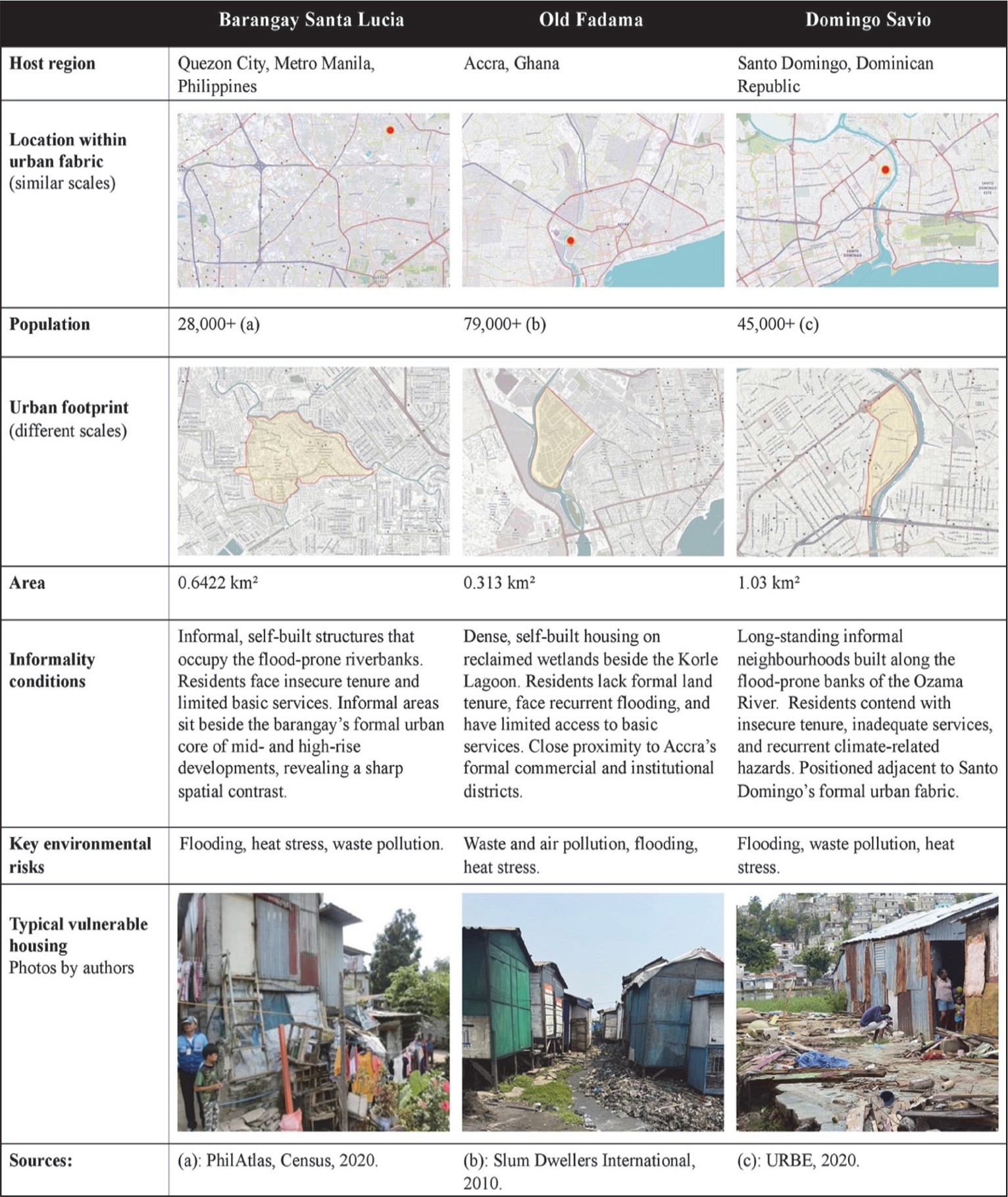
The three study sites offer a comparative lens through which to examine if/how global climate agendas are localised within contexts of informality, environmental risk and uneven urban governance. Domingo Savio is a dense riverside informal settlement of over 40,000 residents located along the Ozama River in Santo Domingo, Dominican Republic. Barangay Santa Lucia is a low-lying, flood-prone informal settlement in Metro Manila, Philippines, shaped by rapid urbanisation and recurrent climate-related risks. Old Fadama is one of Accra’s largest informal settlements, situated on marginal land near the Korle Lagoon and home to tens of thousands of residents facing acute environmental vulnerabilities. Primary data collection consisted of 16 semi-structured interviews: 5 each in Old Fadama and Domingo Savio and 6 in Barangay Santa Lucia. Interviewees included elected and de facto leaders, long-term residents and members of community organisations involved in climate-related activities. Questions explored lived experiences of climate impacts, perceptions of state and non-state responses, awareness of global frameworks such as the Paris Agreement and the SDGs, and the perceived influence of these frameworks on local climate action. The semi-structured format ensured comparability across cases while allowing respondents to elaborate on context-specific issues (Brinkmann, 2013). Interviews were complemented by visual documentation, site observations, attending community meetings and sustained analysis of scholarly, governmental, media and civil-society narratives concerning the three settlements.
We recognise certain inherent limitations of this article. The interview sample focused on community leaders and organised actors, which may underrepresent perspectives of other groups such as youth, renters or recent migrants. In addition, as with qualitative research more broadly, findings are not statistically generalisable. Nonetheless, the strong thematic convergence across the three cases—particularly regarding limited awareness of global climate agendas, fragmented state engagement and reliance on grassroots adaptation—suggests that the insights produced here have broader relevance for understanding climate governance in informal settlements across the global South.
Climate Governance in Informal Settlements
The findings from our three case studies illustrate that climate action in informal settlements unfolds largely independently of global climate agendas. Rather than reflecting a translation of frameworks such as the Paris Agreement or the SDGs, local responses to climate variability and change emerge under conditions of constraint, limited resources and absent institutional support. These actions arise out of immediate necessity rather than any connection to global commitments or reporting structures. Three themes structure our analysis: (a) limited awareness and circulation of global climate agendas; (b) socio-economic and spatial conditions that restrict the possibilities for local climate action; and (c) the central role of non-state actors in shaping locally driven adaptation efforts. These are explored in the sections that follow.
Local Knowledge of Global Climate Frameworks
A key finding was the limited awareness of global climate frameworks among key stakeholders working in informal settlements. Despite the prominence of the Paris Agreement and the SDGs within international and national policy circles, these frameworks remain largely absent from the everyday knowledge and governance practices in urban poor communities. In Barangay Santa Lucia, for example, both community leaders and residents were familiar with the term ‘climate change’, largely through media coverage, but had little understanding of the content, purpose or relevance of global climate frameworks. As one local NGO actor explained:
Community leaders, especially those in the household level associations, are not much familiar with international standards. We also don’t discuss these agreements in our meetings or projects. This can be attributed to prioritisation of interests. They may be hearing news about the subject but do not deeply engage themselves in learning what is it all about. They know that there is climate change since this is a frequently used terminology in all media platforms, but they are not interested in what the commitments of the duty bearers are to the global agreements. They tend to focus more their attention on responding to challenges, looking for income and making ends meet.
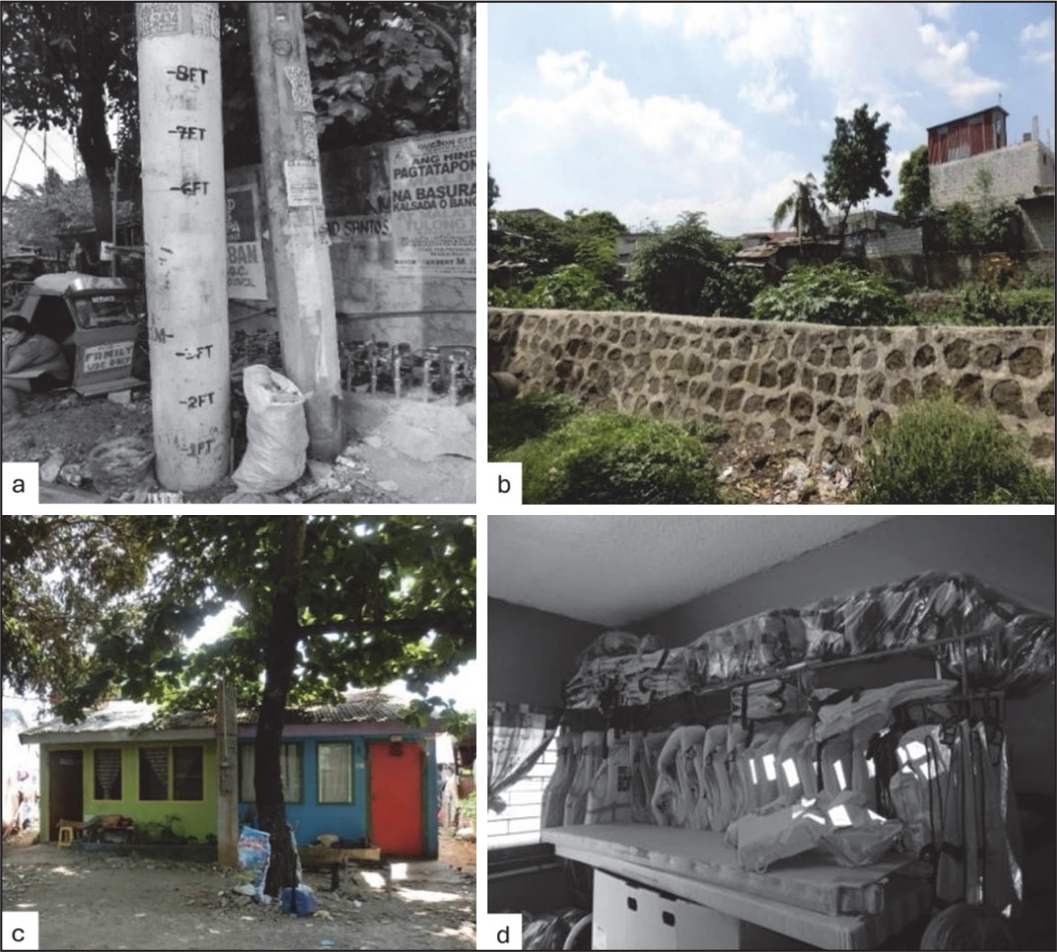
This sentiment, shared among many residents, reflects a broader critique of global climate governance, which is frequently characterised as technocratic and detached from the everyday realities of the urban poor (Bulkeley, 2014; Höhne et al., 2021). It also underscores the structural constraints faced by residents of informal settlements, where immediate survival imperatives often take precedence over engagement with international frameworks. This limited familiarity with global climate agendas may constrain community leaders’ ability to leverage these instruments for advocacy, accountability or resource mobilisation. However, this lack of formal awareness does not preclude meaningful climate action. This was evident in Barangay Santa Lucia, where household-level associations have developed their own risk-reduction measures (Figure 2). As one community leader explained:
We have built retaining walls and water channels, secured life vests and early warning systems and developed a flood response plan. We have even secured funds for small houses for those vulnerable. But we don’t engage with frameworks like the Paris Agreement. We are focused on dealing with what we face daily on the ground.
Examples of Adaptation Strategies by Community Groups and NGOs in Barangay Santa Lucia: (a) Marking Electricity Poles to Measure Flood Levels, (b) Retaining Walls, (c) New and Safer Housing for the Most Vulnerable and (d) Emergency Response and Rescue Equipment.
In both Santo Domingo and Accra, we found a similar pattern of limited awareness of global climate agendas. In Santo Domingo, none of the community leaders interviewed had knowledge of the Paris Agreement or the SDGs. In Accra, although community leaders in Old Fadama demonstrated an understanding of climate change’s impacts, such as flooding and extreme heat, they were unfamiliar with the Paris Agreement and had only limited awareness of the SDGs. As one leader noted:
I am not familiar with the Paris Agreement. I have heard about climate change on the news and recently attended a climate change conference, organized by IOM (International Organization for Migration). IOM will be implementing a project in our community, so they organised a program to build our capacities. Even after the IOM conference on climate change, I am still not conversant with the Paris Agreement and what it entails. For me, what I know is that when it rains, the community always get flooded, there are sanitation issues, and our rooms are always hot.
The limited awareness of global climate frameworks within informal settlements reveals a potentially critical gap in the circulation and accessibility of climate knowledge. Although frameworks like the Paris Agreement and the SDGs were initially heralded as instruments to foster multilevel cooperation, in practice they continue to privilege formal actors, while failing to meaningfully engage grassroots voices (Sovacool & Brisbois, 2019; Steig & Oels, 2025). As a result, urban poor communities, despite their frontline exposure to climate vulnerabilities, are excluded not only from the design and implementation of climate policies but also from the discursive arenas where climate governance legitimacy is constructed, perpetuating their marginalisation within the climate policy landscape.
Climate Policy Diffusion Challenges
Beyond limited awareness of global climate frameworks, our findings highlight the structural and political barriers that constrain localisation. Across all three sites, community leaders consistently pointed to institutional, financial and governance-related barriers that obstruct the translation of climate governance into locally meaningful action. A major constraint identified by respondents is the asymmetry in climate finance allocation. While national governments and large NGOs often access substantial funding streams, community-based organisations (CBOs) in informal settlements remain chronically under-resourced. In the Philippines, a representative of a community organisation working on climate initiatives articulated this tension:
There is a need for financial assistance from national government and foreign donors for urban poor communities. However, the nitty-gritty, the programming, the planning, and the activities should be determined by the people’s organisations. It is more appropriate that what is needed by the community should not be undermined. We should not be implementing projects which are only contributory to the deliverables of the funders or intermediaries.
This critique underscores a common pattern across the global South: climate finance often reproduces top-down decision-making, in which external actors define priorities, timelines and outputs. Even when resources are nominally available, CBOs face bureaucratic hurdles and lack the institutional recognition required to access them. Such dynamics reinforce long-standing inequalities in urban governance, where informal settlements are positioned as recipients rather than co-creators of climate action.
Moreover, beyond bureaucratic hurdles, stigmatisation by local authorities has been a significant barrier to climate action in these communities. Negative portrayals of informal settlements have led to the exclusion of these communities from both funding and implementation processes. In Old Fadama, a community leader echoing the sentiments of many, recounted:
The AMA (Accra Municipal Assembly) should change their perception about informal settlements, particularly Old Fadama. We are often stigmatised as ‘bad people, prostitutes’ and labelled with derogatory terms like ‘Sodom and Gomorrah’, which has affected how we are treated. There was a UN-funded pilot slum-upgrading project that was initially intended for our community. Due to the negative image portrayed by the AMA about our community, the project was relocated to Ashaiman. At that time, the AMA didn’t even want to engage with us, because we were coming from Old Fadama. Later, we agreed for the project to be implemented in Ashaiman because we did not want the money to be returned to the funders.
Similar sentiments were echoed in Domingo Savio, where residents described being treated as ‘invisible’ by the state, and excluded from climate adaptation planning and support. As one community leader put it:
The flooding in my own house reaches up to my knees. Recently, someone (from the government) came and told us they would intervene, but I have been in the same situation for 12 years, hearing the same thing. They don’t see us, [they] only [come here] for votes. We need action.
These dynamics mirror postcolonial urbanism theories examining how prejudices continue to shape the spatial and social politics of urban governance, often marginalising the poor (Robinson, 2016). The enduring power of these narratives can undermine claims to urban citizenship and restrict residents’ access to state-led climate initiatives. An example of this is tenure insecurity, another fundamental barrier to climate action. Without legal recognition or protection, residents face the constant threat of eviction, reducing incentives to invest in long-term climate adaptation strategies (Parnell & Pieterse, 2010). A community leader in Old Fadama noted:
Our biggest challenge has been land tenure security and the negative rhetoric about the community, particularly from the AMA…. They do not recognize us as legal occupants of the land and have also created a negative narrative that portrays our community as one that should be evicted from the city’s landscape.
These accounts highlight how localisation is not only a technical challenge but a political one, shaped by uneven governance capacities, territorial stigma and the limited institutional recognition afforded to informal settlements. Structural conditions such as tenure insecurity, precarious land rights and restricted access to climate finance inhibit climate action and the uptake and translation of global climate agendas. These constraints are not incidental; they are constitutive of the political economy of urban informality. Where informal settlements are viewed as illegal, undesirable or transient, opportunities for meaningful engagement in climate planning remain limited. Moreover, donor and state funding mechanisms that require formal organisational status or secure land tenure systematically disadvantage the very communities most exposed to climate risks, thereby reinforcing the inequalities global climate agendas aim to address.
Non-state Agents and Climate Action
In informal settlements across the global South, where formal governance structures are often weak, absent or actively exclusionary, non-state actors such as community organisations, NGOs and individual residents have emerged as crucial agents for climate action. As mentioned briefly earlier, across the three sites, local actors are stepping up, mobilising resources and strategies to address immediate climate risks and building resilience from the ground up. These actions, though primarily aimed at responding to local vulnerabilities, align with the adaptation goals outlined in global climate frameworks. Importantly, community leaders in all three settlements expressed a desire to engage more deeply with these international agendas, not only to improve their own strategies but also to contribute deliberately to national and international plans. As a leader from Domingo Savio remarked:
It would be great if the barrio contributes to national plans that deal with climate change. We are always supportive of these initiatives. We work with what we have, but if we have more knowledge and more support, our work will have an even larger impact. We are citizens of this country, so we also want to contribute to the wellbeing of the entire population. But we need to know how to contribute and what are we contributing to.
This sentiment highlights a critical opportunity to bridge local adaptation efforts with global climate frameworks, particularly if state and international actors more fully recognise and support the capacities of community organisations. Evidence from Old Fadama illustrates this clearly. Through the leadership of the Old Fadama Development Association (OFADA) and its long-standing partnership with the local NGO People’s Dialogue, the community has taken significant steps to reduce climate-related risks, including recurrent fires exacerbated by dense wooden structures and rising temperatures. OFADA and People’s Dialogue also coordinated a community-led initiative to create access roads through voluntary self-demolition, improving mobility and enabling faster emergency response. As one NGO representative noted, these collaborations have fostered active participation, strengthened local ownership and enhanced the sustainability of development initiatives:
A key lesson has been that involving community members directly in planning and implementing their development projects significantly increases participation and fosters genuine ownership. We are positioned to facilitate that kind of collaboration with slum dwellers to co-create solutions to their development needs.
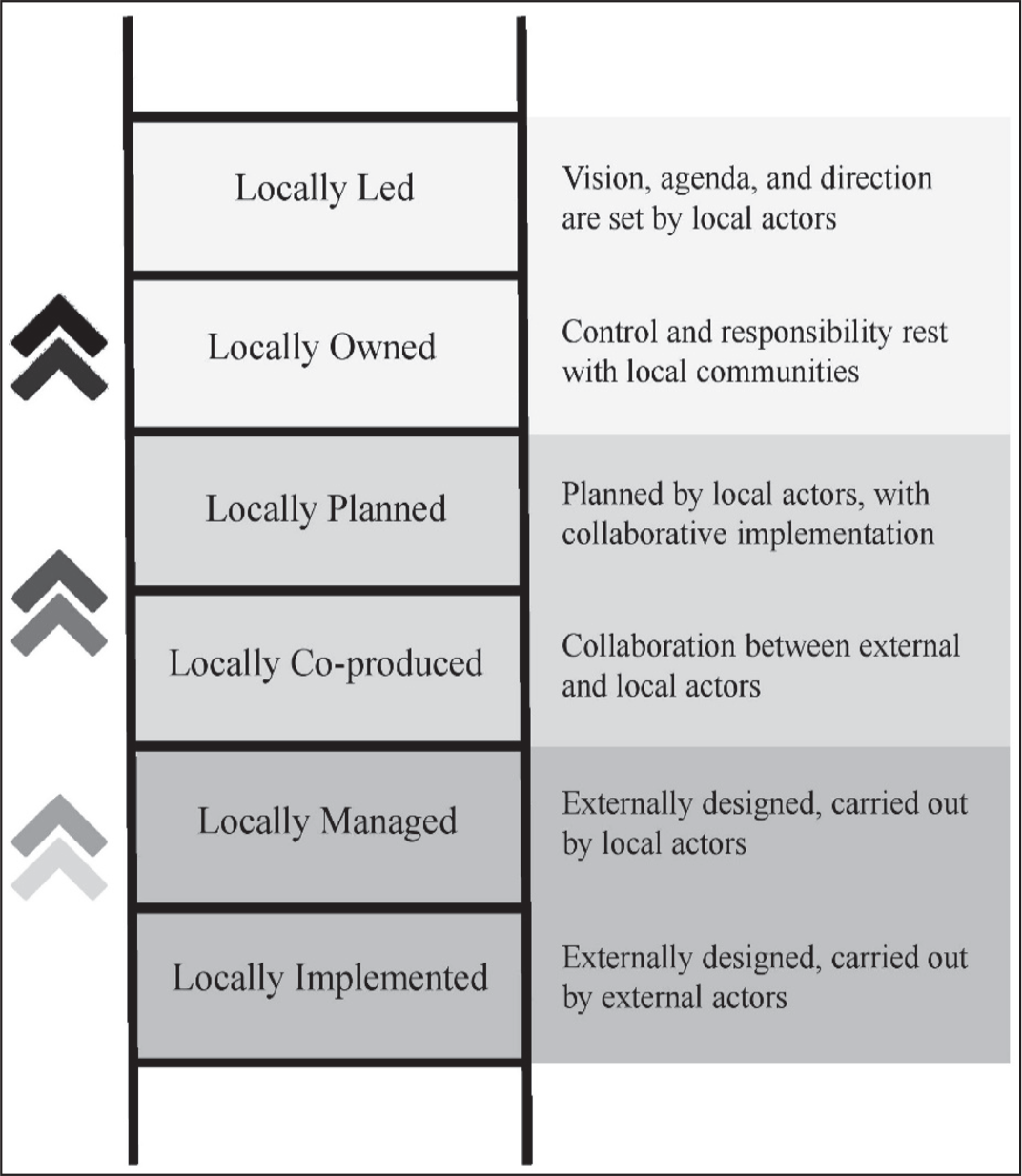
Non-state actors in informal settlements have demonstrated an impressive capacity for effective climate governance, often surpassing state efforts. As Bulkeley and Betsill (2005) note, such actors engage in ‘governance beyond the state’, co-producing climate action in fragmented urban landscapes where formal governance architectures do not extend. While it is important not to romanticise community initiatives or absolve the state of its responsibilities, the prominence of non-state actors underscores a critical insight: climate action in informal settlements already occurs through governance modes that global frameworks neither anticipate nor adequately engage. This misalignment underscores the necessity of shifting towards the co-creation of contextually grounded solutions, particularly in urban settings where state presence is intermittent or weak (Leck & Simon, 2013). Across our case studies, stakeholders consistently emphasised that localisation must move beyond administrative decentralisation to become a process that is owned, shaped and led by local actors (Figure 3).
Ladder of Localisation of Global Climate Agendas in Informal Settlements Envisioned by Community Leaders. Adapted from British Red Cross (2024) with Insights from Stakeholders Interviewed.
In informal settlements, where formal state structures often fail to deliver, community-based actors frequently become the de facto institutions driving climate responses. Their role is not limited to implementation; they also serve as interpreters, innovators and critics of dominant climate governance frameworks. Their efforts reveal the need for a paradigm shift in climate governance: one that recognises and institutionalises the agency of local actors not as peripheral contributors but as central partners.
Conclusion
This article examined whether and how global climate frameworks such as the Paris Agreement and the SDGs reach informal settlements in the global South. Drawing on multi-sited fieldwork in the Dominican Republic, Ghana and the Philippines, we have shown that the diffusion of global climate agendas into these communities is minimal. We argue that this absence is not accidental but reflects a deeper structural misalignment between global climate governance and the socio-spatial and political realities of informality. Localisation presumes institutional architectures, territorial legibility and governance channels that often do not exist in informal settlements. Where communities are unrecognised in planning documents, excluded from climate finance and subject to territorial stigma, the mechanisms through which global frameworks are expected to translate into local action cannot operate effectively. As a result, the ‘local’ invoked in global climate discourse rarely corresponds to the lived spaces where climate vulnerability is most acute.
Yet the absence of global frameworks does not imply a lack of climate action. Across the three sites studied, residents and community organisations are engaged in everyday forms of climate adaptation: constructing drainage channels, mobilising early warning systems, establishing emergency protocols, negotiating with NGOs and seeking incremental improvements to infrastructure and housing. These practices reveal informal settlements as active sites of climate governance, even as they remain structurally excluded from the formal architectures that define global climate action. They also demonstrate that locally driven adaptation emerges not in response to global mandates but through pragmatic, often improvised forms of problem solving that reflect long-standing histories of self-reliance. Such practices challenge dominant assumptions about where expertise resides and what counts as climate action within global policy frameworks.
The findings in this article carry some implications for climate governance. First, efforts to localise global frameworks must contend with the structural exclusions that characterise urban informality. Localisation will remain uneven and inequitable if it relies solely on formal state institutions or presumes stable administrative geographies. Second, CBOs should be approached not merely as beneficiaries but as essential climate actors whose embedded knowledge, organisational capacities and social legitimacy are central to effective adaptation. Third, new mechanisms are needed to bridge the gap between global agendas and informal urban contexts. This includes direct-access financing models, intermediary organisations that can translate climate commitments and institutional reforms that recognise informal settlements as legitimate governance partners. Without such transformations, global climate frameworks will continue to overlook the territories where vulnerability is most concentrated and where some of the most innovative forms of adaptation are already taking place.
Ultimately, addressing climate vulnerability in informal settlements requires more than extending the reach of existing global climate frameworks. It requires rethinking the assumptions about territory, knowledge and agency that underpin climate governance itself. Informal settlements are not peripheral to the climate crisis; they are at its frontline. Recognising their governance capacities, supporting their adaptive strategies and integrating their priorities into climate policy are essential steps towards more equitable and effective global climate agendas.
Footnotes
Declaration of Conflicting Interests
The authors declared no potential conflicts of interest with respect to the research, authorship and/or publication of this article.
Funding
The authors received no financial support for the research, authorship and/or publication of this article.