




Abstract
The Sea Lagoon of Mesolonghi is located in central-west Greece and is considered to be one of the most significant sea lagoons in Europe in terms of ecological and environmental interests. It is an area of exceptional natural beauty, with a wide variety of rare plants and animals. Characterized as a biotope, it is a habitat protected by the Natura treaty and the Ramsar Convention that occupies 150,000 acres. Traces of continuous human life, as suggested by prehistoric findings, Greek mythology, archaeological sites, Early Christian temples and Byzantine monuments, till the modern period, are present in the area. Most significant examples of traditional architecture are the ‘Ivaries and Pelades’ used by the local fishermen for lodging purposes.
The Mesolonghi Sea Lagoon offers an exemplary multidisciplinary laboratory of natural fishing techniques, local crafts and traditional architecture. As such, it is important to study this further for its potential for growth both as a rural landscape and as a form of traditional local tangible and intangible heritage. In this article, we discuss and present the relationships between the benefits of organized/natural sea cultivation processes, architectures’ contribution to the whole attempt of prosperity and economic growth of the community and the re-imagined rural landscape as well as the local development potential in a direction aligned with the environment, the local history and local traditions.
I proposed to you, if you remember, to come and live in Mesolonghi. You would, as you said, if you were not afraid of its morbidity once you have learned it is surrounded by swamps. Others have the same fears as you. They are excessive and unreal. Mesolonghi indeed has swamps. But you confuse them with the salt lake. The swamps are located outside the city, which is surrounded from the sea, the salty sea. The salt lake is capable of giving not eliminating life, to restore the health of those who have lost it. (C. Tzavelas Editions)

The Mediterranean and the Wetlands
It is not by chance that so much artistic expression has been inspired by the wetlands. From music to dance, from painting to cinema, from literature to architecture. Water has a quality that rarely goes unnoticed from the human senses. To some, it is a source of inspiration, creativity and even life, while others retreat to a safe distance and prefer to just observe.
The Mediterranean is a zone where water is abundant in comparison to other places of the world, though still endangered by climate change. It has played a central role in the formation of many different Mediterranean cultures that share much in common.
The way we usually treat our surroundings is a reflection of our culture. In the past, wetlands were often considered to be wastelands, a fact that was even reflected in the language used to describe them. For example, in Persian, they were called ‘Mourdab’; which means deadland while now they are called Talaab, indicating the existence of water.
In order to conserve and sustainably develop such areas, the Convention on Wetlands was established in 1971 (Ramsar, Iran), in which the full definition of the term is given as follows:
Wetlands include a wide variety of habitats such as marshes, peatlands, floodplains, rivers and lakes, and coastal areas such as saltmarshes, mangroves, and seagrass beds, but also coral reefs and other marine areas no deeper than six metres at low tide, as well as human-made wetlands such as waste-water treatment ponds and reservoirs. (Ramsar Convention Secretariat, 2013)
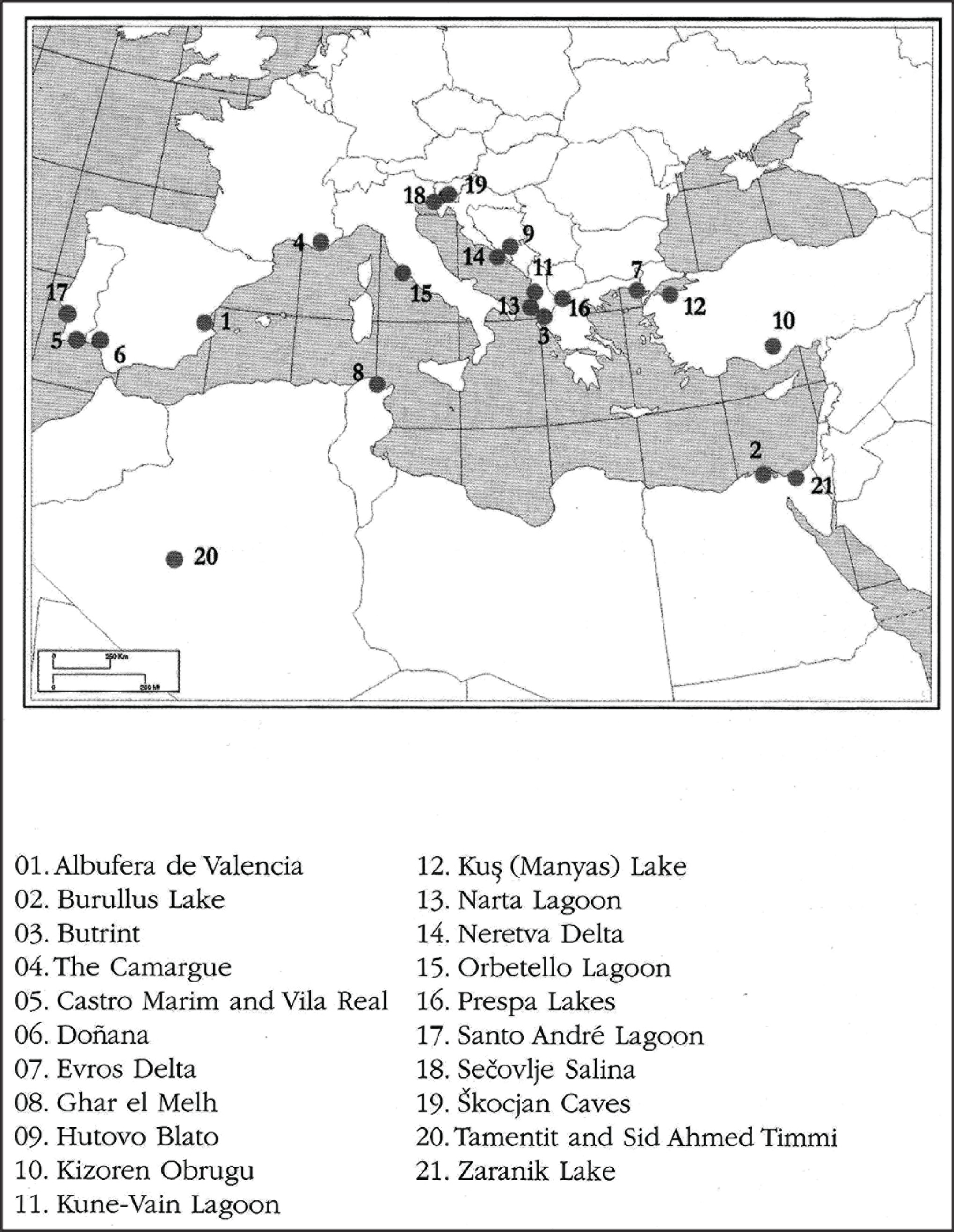
The contracting parties to the Ramsar Convention for wetlands for 2016 were Albania, Algeria, Bosnia & Herzegovina, Bulgaria, Croatia, Cyprus, Egypt, France, Greece, Israel, Italy, Jordan, Lebanon, Libya, Malta, Monaco, Montenegro, Morocco, Portugal, Serbia, Slovenia, Spain, Syrian Arab Republic, The former Yugoslav Republic of Macedonia, Tunisia and Turkey. 2
The Mesolonghi-Aitoliko Sea Lagoon in Greece is one of the many wetlands of the Mediterranean, sharing characteristics with others, but being unique enough to be studied independently as a natural and cultural landscape. Such a study would require the collaboration of professionals from several different fields such as biologists, ichthyologists, oceanographers, economists, heritage managers, architects, folklorists and anthropologists. Unfortunately, as the architect Thymio Papayannis notes: ‘Up to now, albeit with notable exceptions, there has been limited technical interaction between the social and physical sciences’ (Med-INA).
Mesolonghi-Aitoliko Sea Lagoon
The Mesolonghi-Aitoliko sea lagoon is located in central-west Greece, in the regional city of Aitolia-Acarnania. It was found there since antiquity, and it also used to cover the area where the City of Mesolonghi stands today. At that time, it was surrounded by four ancient cities: Oiniades, Plevrona, Kalidona and Alikirna. References for those cities can be found in the Iliad and many myths of the area. The City of Mesolonghi was first mentioned in 1571, by a Venetian called Paruta, but to most, it is known as the site of a dramatic siege during the Greek war of independence in 1826 and the last home of Lord Byron.
The name Mesolonghi derives from the two Italian words MEZZO and LAGHI which means ‘surrounded by lakes’ (Tegopoulos - Maniateas, 1996). But how were those lakes formed? The city extends between the two rivers, Acheloos and Evinos, whose waters end up in the Patraic Gulf. So the system of Mesolonghi-Aitoliko lagoons was created by the materials brought by those two rivers, combined with the strong waves, caused by the south winds, and the flow of the water of the Patraic Gulf.
In general, sea lagoons are coastal bodies of salty water that are separated from the neighbouring sea with islands or other geological forms, but at the same time, they communicate directly with it (University of Patras, Department of Biology, 2007).
They constitute dynamic ecosystems with a high production rate of organic matter. The decomposition of this organic matter releases quantities of nutritious components in the aquatic environment. As a result, lagoons constitute an ideal field for the fingerlings of numerous fish species to develop and grow. This is the reason why they are also called ‘nurseries’.
Lagoons, as ecosystems, are directly connected with human activity. Nowadays, it is generally accepted that the lagoons which are not exploited for fishery purposes tend to denigrate as ecosystems and, finally, deteriorate completely. Attention should be given to proper and cautious exploitation because, in the past, the excessive interference of the humans in the natural life of the lagoon had caused lack of oxygen in the water (Ministry of Agriculture/Panhellenic Bureau of Ichthyologists, 2000). Unfortunately, more than 25 per cent of Greek lagoons lack basic infrastructure to reassure the safe operation of the fisheries.
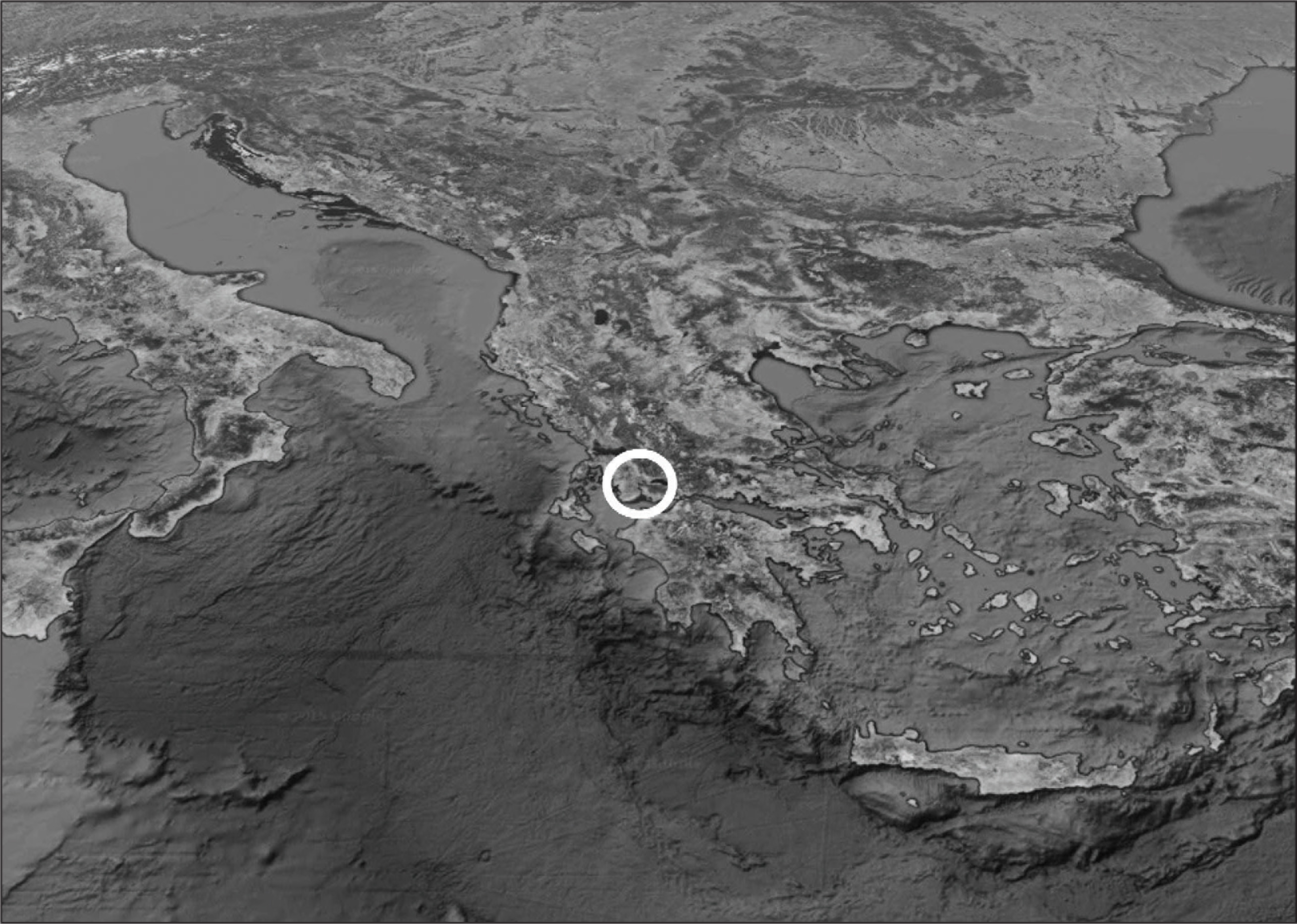

Protection and Conservation
The Sea Lagoon of Mesolonghi is considered to be one of the most significant sea lagoons in Europe in terms of its ecological and environmental interest. It is an area of exceptional natural beauty, with a wide variety of rare plants and animals, especially birds like Aquila chrysaetos (Golden Eagle), flamingoes and cormorants (Management Agency of the Messolonghi Lagoon, 2015). Characterized as a biotope, it is a habitat protected by the Natura 2000 network and the Ramsar Convention that occupies 150,000 m 2 . It is the largest sea lagoon in Greece and the second largest in the European Mediterranean. 4 The lake produces 1500 tonnes of fish and 10,000 tonnes of sea salt annually.
Almost one-third of the 30,000 citizens who live in Mesolonghi derive their income largely from fishing activities and trade in fish products. So, the lake is very important for the society in terms of its economy. Unfortunately, many young people tend to avoid the profession of fishing nowadays, especially after the economic crisis in Greece started 5 in 2008, as it is a difficult and demanding profession with low and uncertain income.
One of the most famous fish-products worldwide is the avgotaracho, a delicacy like the Japanese karasumi and Italian botargo. It is manufactured this way: the whole ovaries of flathead mullet are dissected from the fish, washed with water, salted with natural sea salt, dried under the sun and submerged in melted natural wax. This is a very famous product with great commercial value (about €140/kg). Also, this is one of the five products in the category of fresh fish, with protected designation of origin 6 and geographical indication by laws of the Greek Government and the European Union. 7 Mesolonghi also produces wine, olive oil, feta cheese and handmade fruit spoon-sweets. 8
One of the interesting activities that the fishermen in the vaster area of Mesolonghi and the villages around engage in is the feast of Saint Simeon. There are rituals that take place before, during or after the fishing season, during the construction of tools, boats or during the installation of ivaries and pelades.
Fishing practices in Mesolongi-Aitoliko sea lagoon are a traditional art and professional activity that has been practised for centuries in the wider area of the lagoon. It refers to fishing techniques and practices where knowledge from much older times is used by the fishermen from tradition and their experience from generation to generation. They present particular technical, typological and cultural characteristics with those encountered in the same area from medieval-Byzantine times (especially from the Venetian period to Etolia), but also with practices in the Venice lagoon (Laguna Veneta), thus witnessing cultural exchanges.
Ivari and Pelada
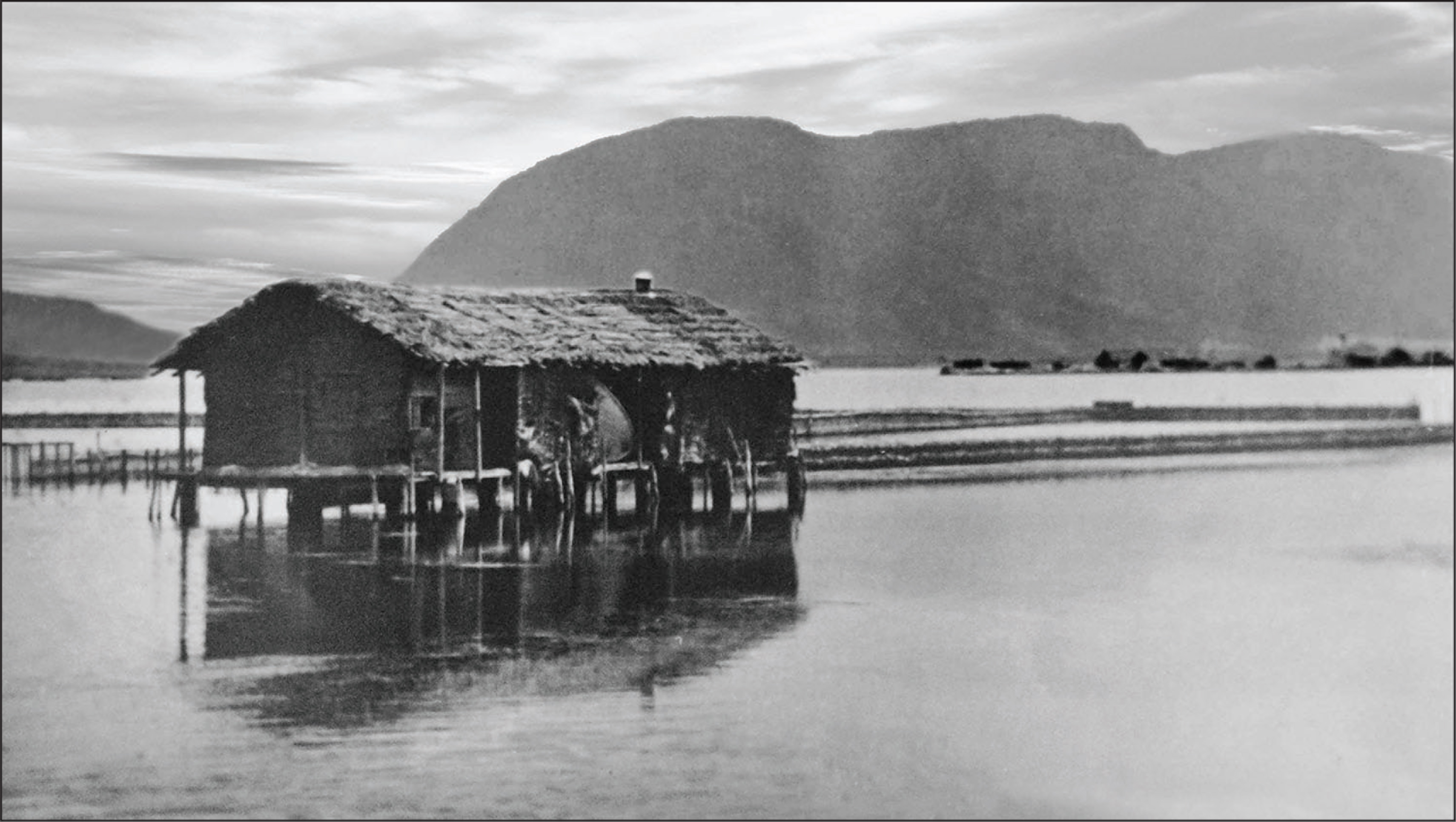
The Ivari is a long, closed fence inside the water within which a certain type of fish trap is situated. The Pelada is a wooden house located usually somewhere in the middle of the Ivari, serving the fishermen as a place for cleaning, preparing and storing their catch as well as for resting in between their shifts in the sea.
The piscatorial exploitation of the lagoon is supported by the movement of fish that, for reasons of food, search for more favourable environmental conditions to reproduce. Thus, during the spring months, when the temperature of the lagoon’s water increases, fishes from the open sea enter it. And conversely, during the winter when the temperature of the water lowers, the fish abandon the lagoon en masse. This cycle of fish movement takes place every year, ever since the creation of the lagoon (Πλέθρον, 2004).
Fishermen’s associations follow these fish movements in their fishing techniques, which are considered to be some of the most natural ones evolving over hundreds of years of practice.

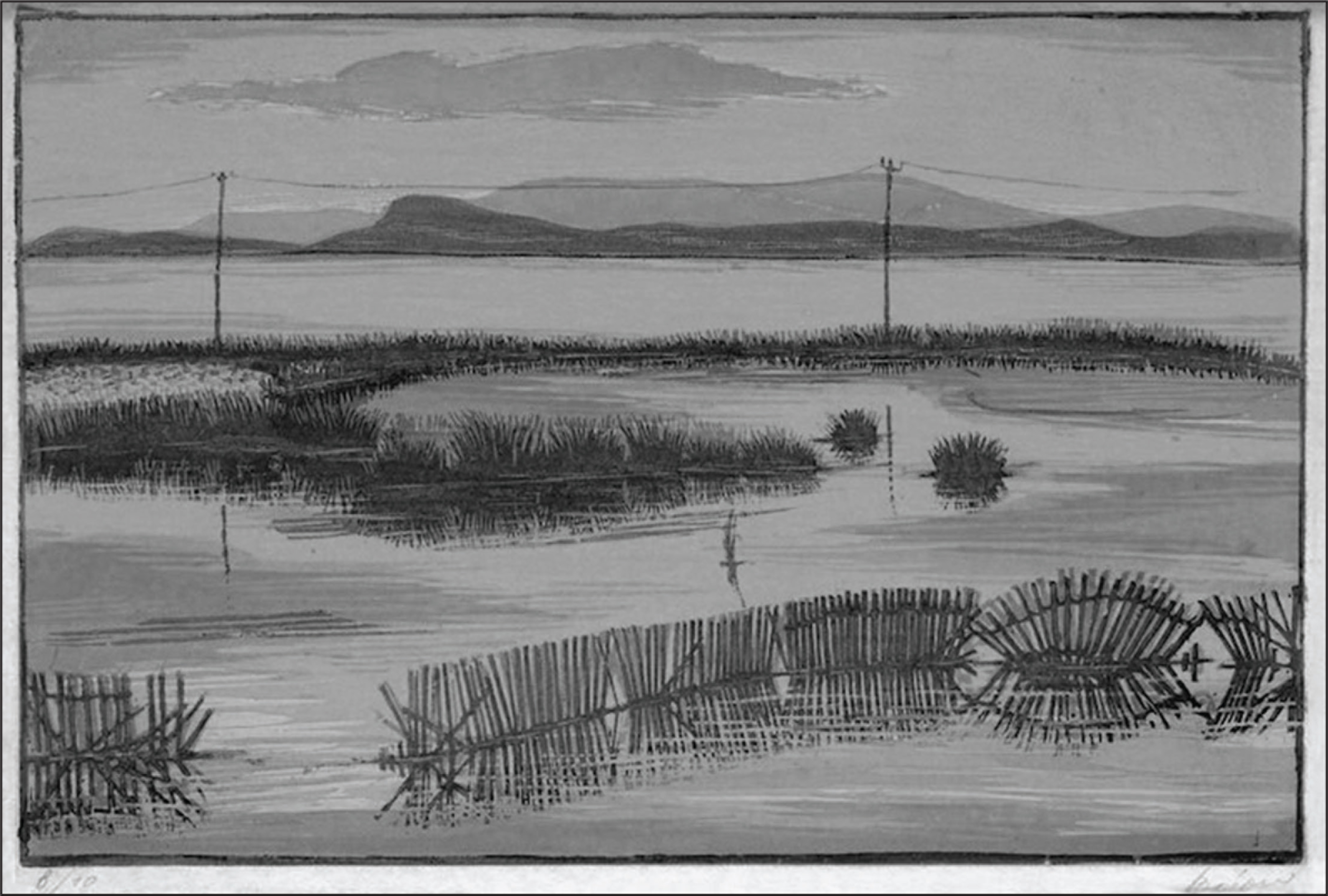
Ivaria are considered to be natural fish traps. They can be described as fences with doors placed in the water. It is trapezoid in shape, constructed with wooden piles and used either reed (in the past) or plastic grids (nowadays). When the fish come from the sea, the fishermen open the ‘doors’ for a period of time and then open them again when the season changes (University of Patras, Department of Biology, 2007). More analytically, Ivari is the basic technique and the basic equipment for the organization of the traditional fishing facility in the sea lagoon. The term divari/vivari/ivari comes from the Latin vivarium=farm, medieval Vivarium.
It is a fence, made in the shape of a trapezoid, placed in the sea lagoon. In the past, it was made with rattan and reeds, and piles were nailed to the bottom. Nowadays, the reeds have been replaced with a plastic grid with a 70 × 150-mm orthogonal hole, which is supported by piles on the bottom. The distance between the piles is about 1–1.50 cm. The mesh is positioned in such way as to exceed the maximum water level by at least 50 cm. The non-parallel sides of the Ivari are called ‘fylla’. The smallest of the lateral sides, which lies to the side of the open sea, is called ‘kapsos’ and is the actual fish trap. The larger side is located inside the water and is V-shaped with an angle greater than 120°. The sides of the corner do not meet, but leave an opening in the middle (the entrance of the Ivari) called ‘kremasi’ which means ‘hanging’. The side called ‘kapsos’ bears the ‘pires’, which are the main catchment area where fish are captured. The rest of the Ivari is constructed in a way to drive the fish into the traps with the aid of water movement. The gates skeleton is U-shaped and made of iron or stainless steel. The ‘pires’ are about 2 m wide and 1½ m high. The entrance is 3 cm at the bottom and 7 cm at the top. The shape of the ‘pires’ has emerged from the observation of the movement of the fish. The fish are getting in, but the construction is such that it makes the exit impossible.
The fishing boats were adapted to the shallow waters by removing the keel and creating a flat floor. There are two main types of boats: gaita which is small in size and priari which is bigger. Both of them are elongated boats, pointed in front and back, without keel, made of boards. Their size and shape ensured the flexibility and the transfer of significant loads. For sailing in the lake, fishermen use a paddle called staliki. It is a long round wood, usually of hard and flexible wood that they stick in the soft moist bottom of the sea and push the boat forward. This repeated movement allows a smooth, slow movement of the boat within the shallow water of the lagoon without disrupting the aquatic life.

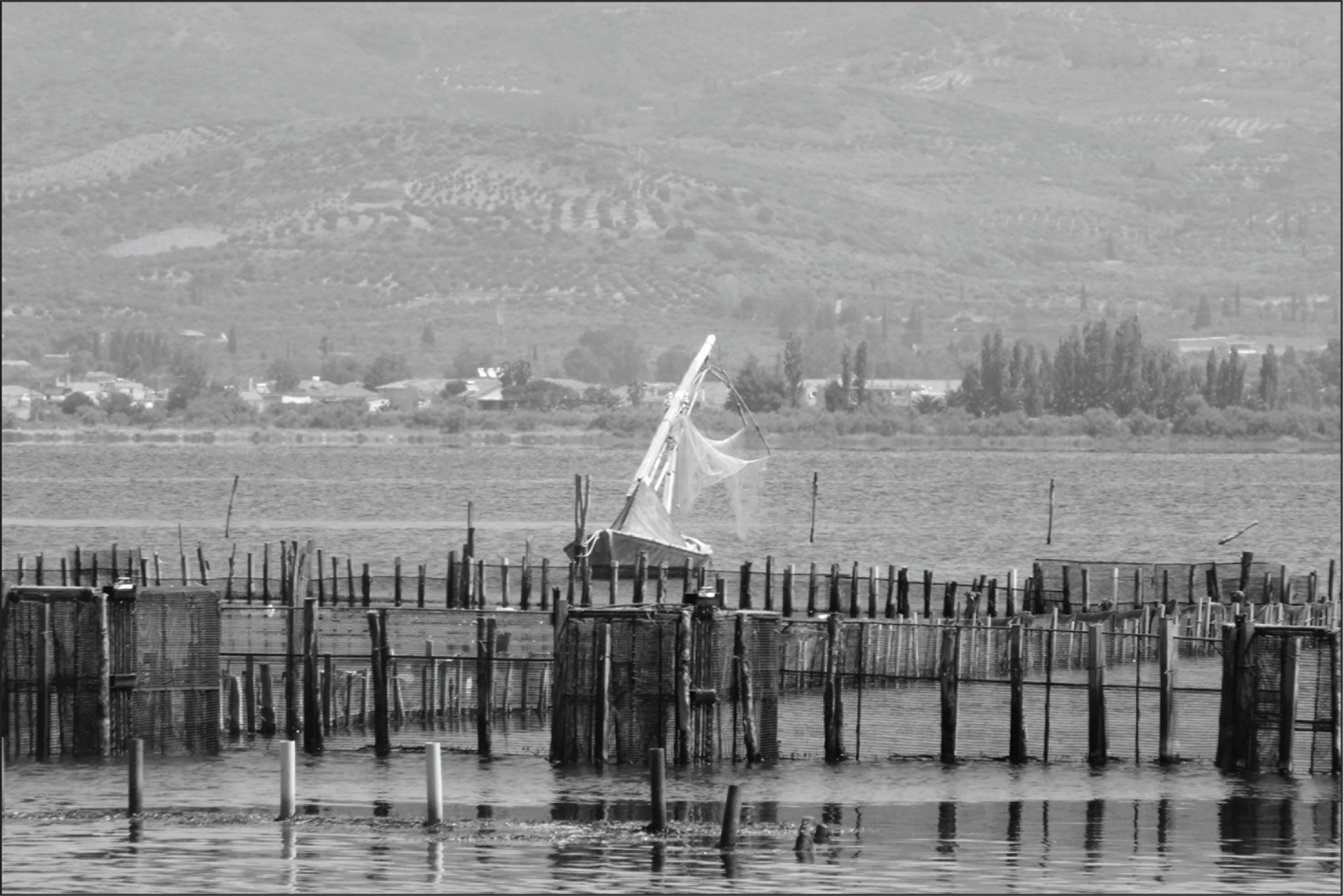
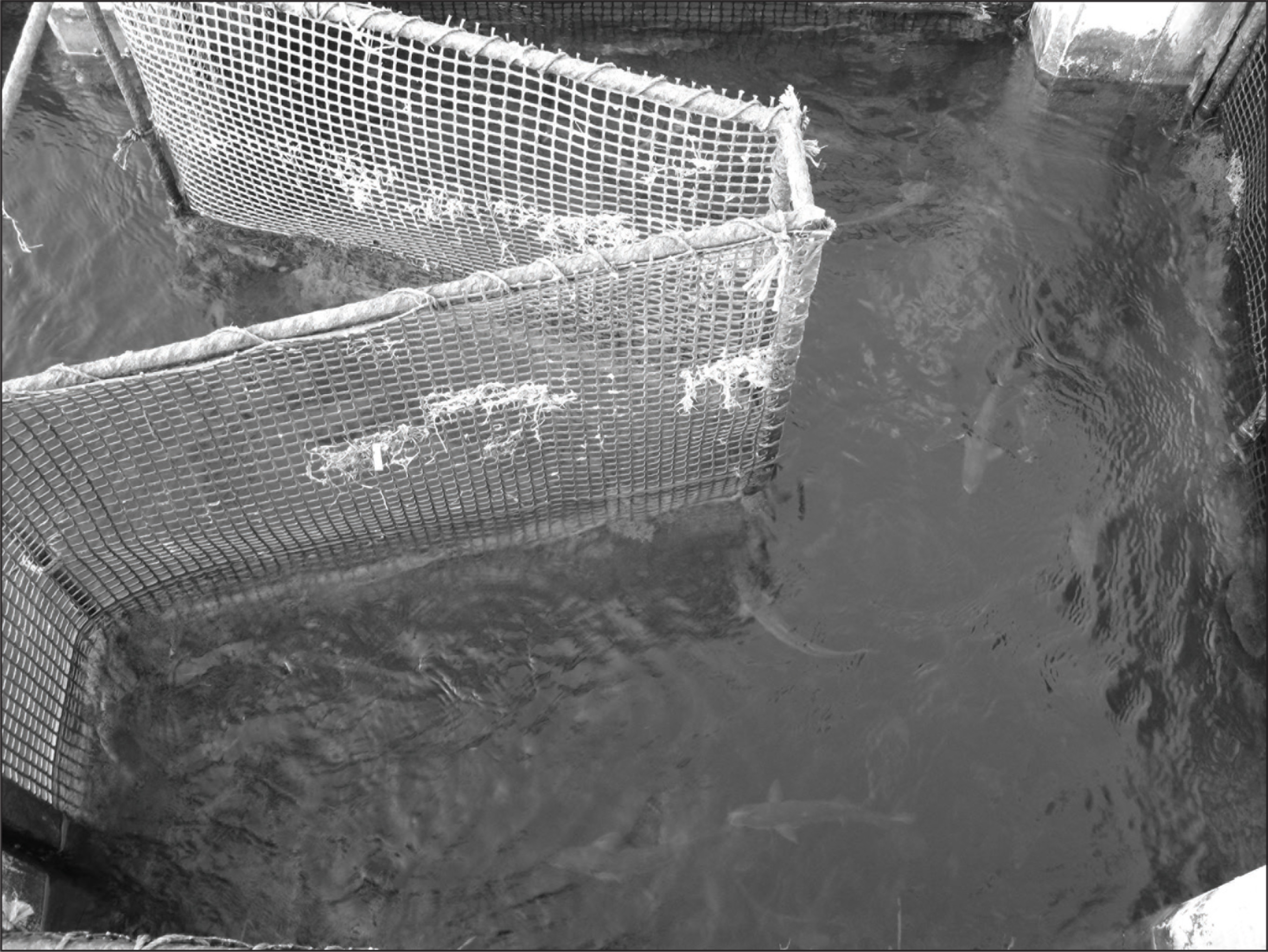


Fishermen, since the nineteenth century, rent Ivaries from the municipal council (Estia, 1887). The Ivaries that operate in the Mesolonghi-Aitoliko sea lagoon are found in the following locations: Klisova, Tourlida, Vasiladi, Koma, Schinias, Prokopanistos, Tholi, Paleopotamos and Diavlos. According to one of the fishermen, ‘These waters are my life, I will die like a fish if you make me leave this area’(Konstantinos Grekas, President of the Tholi association, personal conversation, 2019).
Their renting often becomes a conflict between the fishermen. There are numerous reasons. First of all, some Ivaries are in a privileged location in comparison to others. The sea lagoon’s micro ecosystem differs from place to place, rendering some spots more fertile for fish; therefore, all fishermen prefer to work in those places that are more productive. Another reason is that the Ivaries that are found far from Mesolonghi’s shore require more time and fuel expenses to reach. These factors are not taken under consideration from the municipality’s council, charging the fishermen with the extra costs. To resolve this problem, it has been suggested that the fishermen associations can only remain in an Ivari for some years and then move to another spot. This way, all associations should be able to spend almost equal time in each spot.
Another issue that often rises is the existence of freelance fishermen that do not belong to any association. A number of them have fishing as a hobby that will provide their families with a quality lunch. However, there are also a number of freelance fishermen who fish for a living. In that case, it is often difficult to monitor when and where they fish. An Ivari, as mentioned above, is a fish trap, a light constructed fence, easily accessible. Collecting fish from inside an Ivari is much more convenient than doing the same in open water. As a result, it is typical to have fishermen who do not belong in an association, to fish in an association’s territory without permission and without being members of the community, obeying the relevant rules or paying rent. The profit they get from trade is net profit.
In contrast, some members of the associations do not welcome the idea of competition, even when the fish come from outside their Ivari and often try to eliminate freelance fishing as much as possible.
Since I was a kid I remember them quarrelling. Why are you in my area? Why do you call this your area? The water is for all I say. But I think they enjoy the tension, it breaks the silence of the lagoon. At times that is all you desire. (a citizen of Mesolonghi, personal conversation, 2015)
The main production of Ivari is sea bass, eels and gilt-head bream of great quality, and they are sold in the market at a higher price than if they were caught elsewhere.
To sum up, the Ivaria are barriers inside the sea lagoon. Inside these barriers, usually in the middle, wooden structures or complexes are found, called Pelades and are used by the fishermen as shelters and storage spaces while working in the sea.
The organization and operation of the Ivari requires specific equipment to prepare, measure, transport and market the product. It also requires the permanent and continuous activity and lodging of the fishermen. Each cluster covers all phases of fishing activity, processing, transport and distribution of the product. This place is the pelada, a wooden pile-roofed structure. The transition from one place to another is made either by wooden corridors or by sea.
The traditional way of making Pelades is by using local materials such as wood and reeds.
The ‘Pelada’ is made as follows:
Wooden piles of cypress, about 10 × 10 cm, are nailed in the bottom of the sea lagoon. A wooden deck is placed above them. Then, the small hut is built on the deck, again out of wood and roofed with a mixture of reeds and mud that make it waterproof.
The layout of the rooms inside a Pelada and their number varies. There is usually a space where the fish are sorted and stored, while in direct contact with it; there is a roofed hole at the wooden base to tighten and unload the boat. This area is called ‘londja’. Usually, we come across a living room for fishermen to gather and relax before or after work. In these living rooms, many of the association assemblies are taking place. There is always a kitchen with fridge and cooking point that work with gas and solar power generators. There are also one or more bedrooms for the fishermen to sleep as they often need to work away from their homes, overnight. The bathroom is a subtly defined floorboard with a hole to the lagoon.
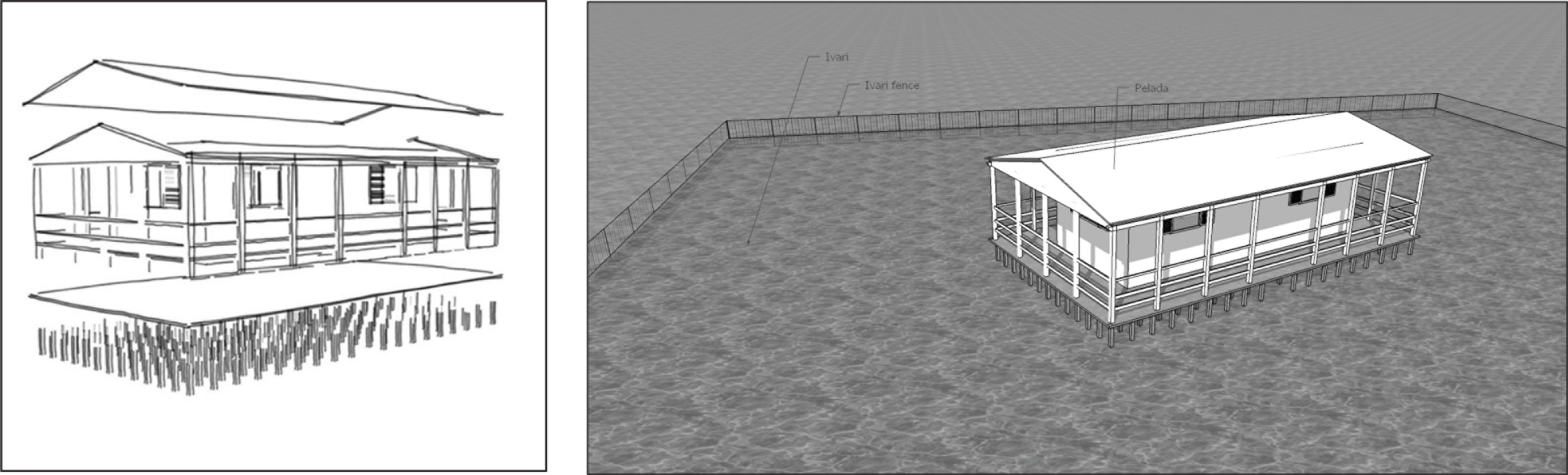
These structures have been part of the sea-lake’s landscape since centuries. The first mention of the organized Ivaries comes from the Venetian historian Paolo Paruta in 1571. Now, as always, however, people’s ignorance about the cultural wealth of their own habitats may lead to massive destruction of the traditional character and to environmental pollution. The structures that used to be made by the most natural eco-friendly materials were replaced by plastic materials to ease their conservation. This, of course, has an impact on the ecosystem, with official environmental studies urging for the cessation of use of such polluting materials.
For example, in Mesolonghi, around the 1960s and 1970s, several people started to build ‘pelades’ in the sea lagoon area that would supposedly serve for professional fishing. The number of buildings that popped up during that period was quite significant and could not possibly only be used for fishing purposes. Most of them served as holiday houses. The materials used are literally coming from each owners’ building leftovers and debris and most of them are aggravating the environment. The result is the contamination of the natural landscape that has an uncertain impact on the sea lagoon’s balance of life.
There have been many efforts in the past, from a former governor of the region of West Greece, for optimizing the area and fortifying the cultural value of the sea lagoon’s landscape. Of prime importance, was to distinguish what is culturally valuable and deserves to be maintained from the rest that should be demolished and removed from the area. The results of the survey undertaken found 150 cases of illegal building, 55 of which have been referred to the city planning commission for further examination. Already, 33 illegal pelades have been approved for demolishment, but there are still many questions with regards to when that will take place. 9
Towards the Recognition of the Cultural Aspect of the Sea Lagoon
The sea lagoon as well as the wider area surrounding it is a ‘Topos’, word derived from Ancient Greek, meaning a place of rich history and traditions connected with nature, climate, land and people.
In November 2018, a successful and very interesting working group meeting took place in Vaso Katraki Museum, in Aitoliko, for the preparation of the candidature of traditional fishing in the Messolonghi-Aitolikon lagoon in the National Registry for Intangible Cultural Heritage. The meeting was organized by the Management Agency of the Messolonghi Lagoon, the Department of Fisheries and Aquaculture of the University of Applied Sciences of Western Greece, the Ministry of Culture and the Mediterranean Institute for Nature and Anthropos. It focussed on gathering the required research material that will compose the justification for the listing. 10
Siampani Architects, of which the author is a founder-member, was excited to have been invited to the meeting and to participate as an associate consultant in this initiative by enriching the candidature with her study on the Traditional Architecture of the Pelades and Ivaries that for centuries have characterized this unique biotope’s landscape.
Professionals of different fields together with the local community’s testimonies will catalogue the fishing techniques, types of boats and tools used by the fishermen, local dialect, songs, tales and festivals.
Also, a short film named after the local word for fish-catch, ‘Alima’, 11 has been directed by Lukas Koubouris and Nikolas Papadimitriou. The film observes the daily routine of the fishermen in the Ivari of ‘Komma’, and it has so far been screened in several ethnographic film festivals around the world.
Funding and Prospects of the Area
We will now go through some facts concerning the area and the people that play a decisive role on the design programming of our proposals.
The active fishermen associations at the moment are ten: Anagenisi, Prokopanistos, to Divari, Profitis Ilias, ta Rebakia, to Skali, i Agia Irini, o Agios Artemios, o Agios Stefanos and i Anastasi. 12 Each association consists of about 10 people, most of which are members of a family. Women of the family are equal members of the associations. Although they do not directly relate with the fishing, they often get involved with the preparation of fish delicacies such as the avgotaracho and the salted fish. The number of women is always much smaller in comparison to men. In some cases, non-family members become part of an association after they apply and get approved from the general assembly. Every association has a chairman, a secretary and a treasurer. Most of the associations have an external advisor for legal and bureaucratic issues.
The sea lagoon is public property, granted to the Municipality of Messolonghi that rents the Ivaries found in the lagoon, to fishermen associations. An Ivari and Pelada need constant renovations and maintenance due to the rough climatic conditions of the sea, and this has a high cost that weighs heavily on the fishermen.
A thousand beaufort and I had to go up the roof and seal it in the middle of the night. Terrible storm! But I didn’t want them (showing a dog and two ducks) to catch a cold. (Fisherman, personal conversation, 2017)
The associations, being unable during the crisis to afford the costs, have turned to the European Union for funding programmes that could cover basic expenses.
The problem is that such programmes require legally built facilities, and in the case of Messolonghi Aitoliko sea lagoon, no legal framework exists to characterize the buildings as legal. The situation got further challenging because of the illegal structures mentioned earlier, rendering it difficult to introduce a general law that would automatically legalize public property. For this reason, fishermen associations have been excluded from funding, and some of them have even been forced to leave the profession as they could not afford the expense for maintaining infrastructure that was not even their own property. Therefore, some Ivaries were abandoned and their preservation depends only on the associations even if they only rent them for a few years.
With the collaboration of several professionals and the unification of fishermen and breeders associations from all around Greece, a new law has been passed by the parliament, in 2018, characterizing all relevant facilities legal, after control in situ from the relevant public services.
This has opened the doors for funding from European Union programmes promoting farming, livestock and fisheries. The European Union has strict regulations about the techniques that will be followed so as to guarantee high quality production through environment-friendly processes and materials. The infrastructure has to agree with ISO standards and of course be in legal binding.
Funding in the future will be encouraging not only for the locals but also for all the professionals and researchers that so far have been working as volunteers. The quality of research will also improve and more interdisciplinary and scientific institutions will be involved.
The registration of the area’s traditions in the UNESCO Intangible Heritage List will further open opportunities for funding fishing and also alternative types of activities and will help the community grow and develop in various directions.
Planning of Design
Siampani Architects is an architectural practice that has been involved in various scale projects and architectural competitions. It has been operating since 1978, designing residential, touristic, institutional, hospitality, cultural and other buildings.
In 2013, they were assigned by the fishermen’s associations to deliver a detailed architectural proposal for the renovation of the pelades of the Mesolonghi-Aitoliko sea lagoon. The associations applied for funding from the European Union, and part of the funding was on the optimization of the existing structures and innovative future proposals.
Their approach was to start with a thorough study of the area, its history, its qualities and spatial correlations. A budgeted proposal for renovating the interior and exterior spaces of the pelades followed. Finally, there is a future proposal for expanding the activities taking place in the pelades, opening a perspective for other kinds of professional positions to be created, apart from the piscatorial activity. This proposal is aimed at encouraging members of the families that run the associations, but also other citizens of Mesolonghi and Aitoliko, to get involved with the area in more ways, such as thematic tourism, ecological education and recording observations of the area.
However, although the European Union approved the application for funding, in order to disburse the first part of the funding, the applicants were requested to confirm the legality of the structures that hosted the existing and proposed activities. They could not provide any official document that would verify the legality of the pelades for the reasons explained earlier.
Five years of research and bureaucratic problem-solving later, a new law was voted by the parliament, (2018) legalizing all traditional buildings used for fishery or livestock farming in Greece. This is a big step for the fishermen’s associations, as they can now re-apply for the European Union’s funding programs as soon as they re-open.
Although the initial collaboration was between Siampani Architects and the fishermen’s associations, through time, more professionals and institutions sought collaboration to enhance the positive outcome of the project goals, which is to develop the sea lagoon as a healthy and prosperous environment for the people and nature.
Architecture for the ‘Topos’
The architectural proposals of their office have been based on the analysis of the following:
The realistic conditions (ecological and financial restrictions). The visual qualities of the landscape.
Their objective was to create a design strategy that fulfils the demands of a programme that would highlight the importance of environmental and cultural heritage while playing an educative role for both the visitors and the operators.
Their methodology was based on the observation of the lake. They spent a long time sailing and mapping the existing structures. Then, they categorized the structures of cultural importance and distinguished them from those that should be removed.
They searched for the visual qualities that characterize this landscape, such as the reflection of things in the water. They then observed the materials, sand, mud, wood, rocks sea greenery, and also the way that light defuses and the range of colours it creates in the horizon. They took pictures of the sunset for each day of a week and noticed how the landscape transforms each and every second creating a unique scenery at a time.
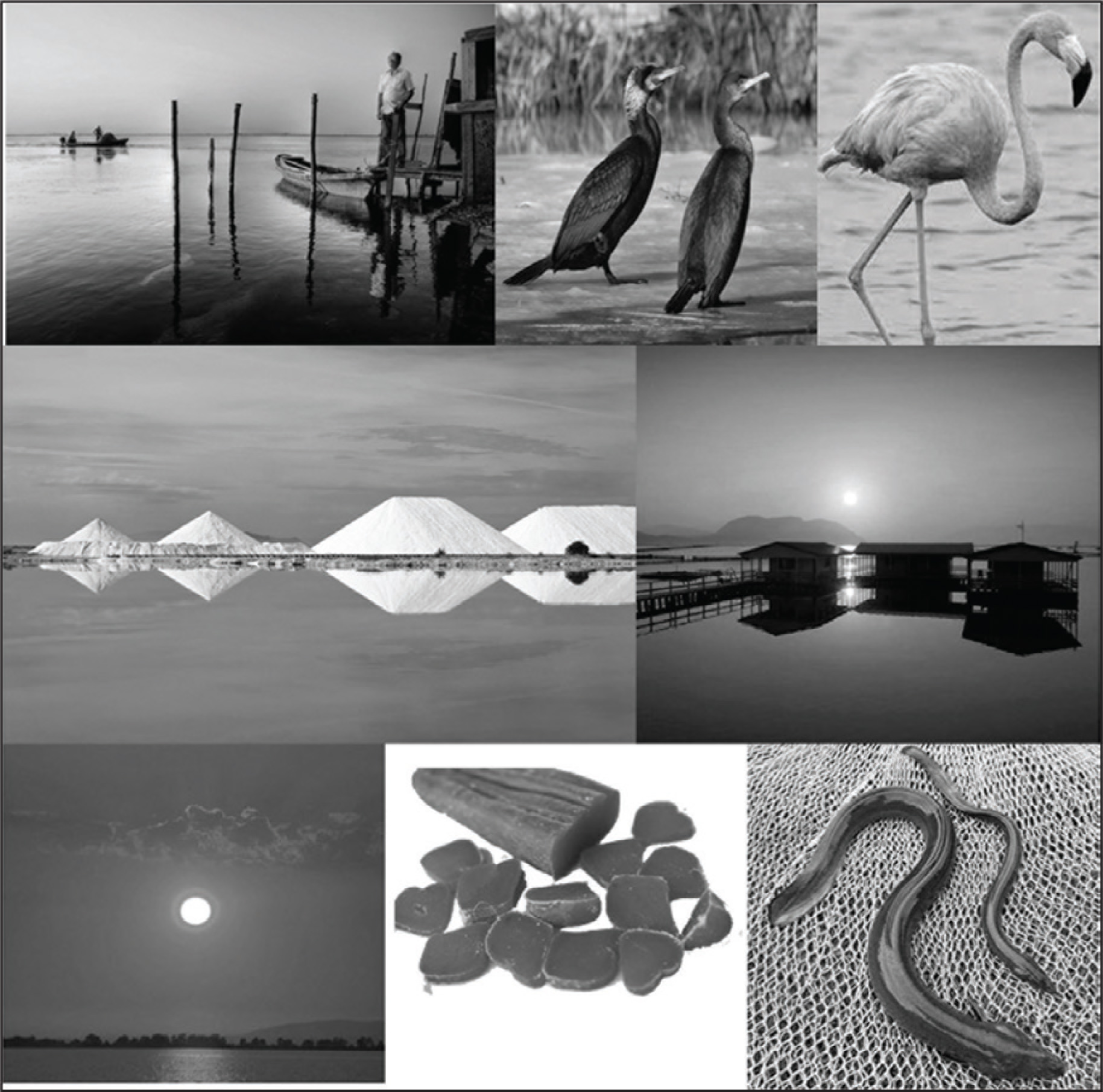
It was a fascinating experience to sail in this quiet site and realize how vivid the local activity is. As the area is protected, there is very little space for architectural intervention; therefore, their design was about enhancing the existing architectural character.
Architectural Intervention proposals by Siampani Architects
Avgotaracho Lab
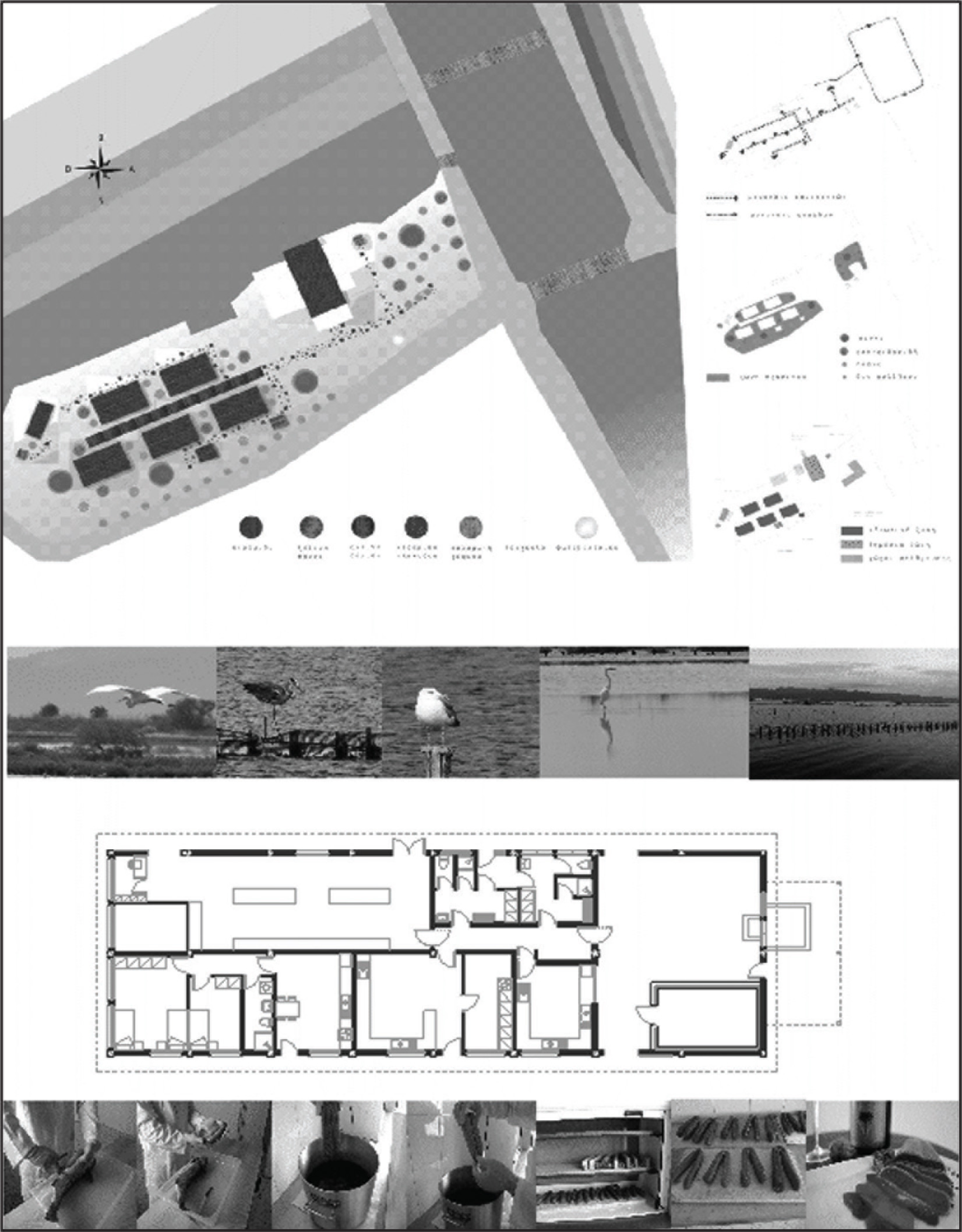
The production of avgotaracho requires special sanitary conditions as per law. The design of the avgotaracho laboratory followed the requirements of the Greek Public Health Control Bureau. All surfaces need to be easily cleaned; therefore, walls and floor are invested with tiles. The work benches are inox (stainless steel) while there is requirement for different size sinks operated by foot. The room where avgotaracho matures requires control of temperature and humidity to achieve the best flavour of the product.
Bird Watching Tower
Special static study due to extreme weather conditions (wind, humidity and salinity). The tower is 15 m high. It will require deep foundations, and in the case it is actually wooden as suggested, the foundations will have to be enhanced with concrete. Cypress wood is the most resistant in humid conditions with high salinity. The paint applied will also enhance the resistance of the material to the decay of time.
Interior Renovations of the Pelades
According to the changing needs of the fishermen (number of workers, production, etc.), the arrangement of the spaces often needs to be changed. They try to maintain a special area in each pelada complex for communal talks and assemblies.
Exterior Planning
At least once a year, maintenance of the Pelades is required. The works include piles replacement, wooden surfaces varnishing, non-slip flooring, fillings and acrylic base paintings.
Power Generators Replacement: Older systems replaced with new eco-technologies, such as windmills and solar panels.
Future Design Interventions by Siampani Architects
In terms of further expanding professional activity related to the lagoon for opening more livelihood opportunities, especially for the young people who are not all interested in following the fisherman occupation, they proposed alternative uses, in line with environmental sustainability design, for some of the existing spaces:
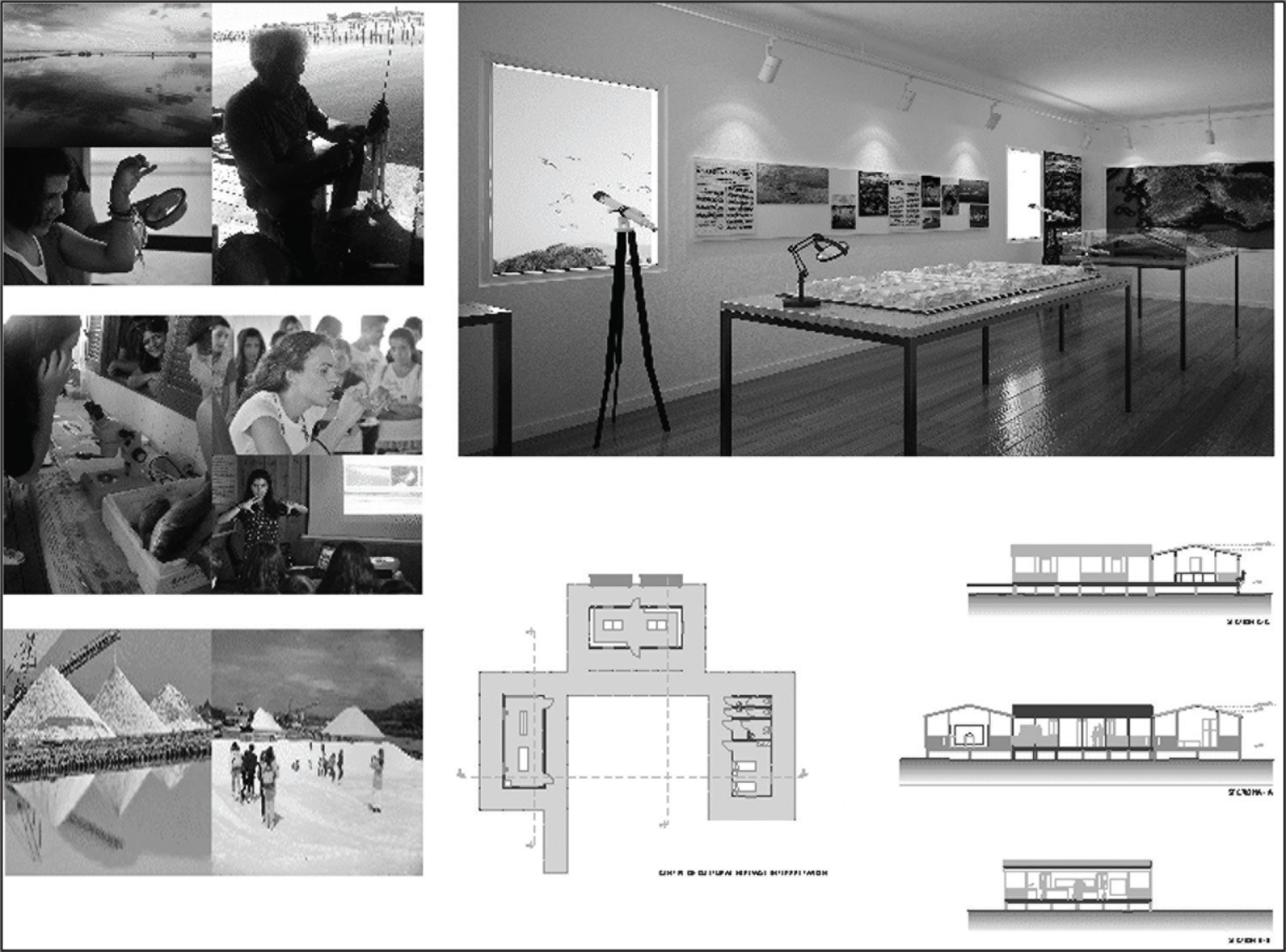
Information Centre
A one-stop place for knowing better the land’s history, nature, traditions, production. An exhibition hall will provide information about the natural characteristics of the biotope, historical and cultural information about the City of Mesolonghi, and information on the fishing method and fish-products.
Workshops
Salt extraction: The existing salina is already open for visits with appointments, and many schools and study groups have taken a guided tour through the place by the general manager, to get familiar with the process of salt extraction and the differences in salt qualities.
Fishing: Visitors along with the fishermen will be learning how to fish safely and sustainably without disturbing the natural balance.
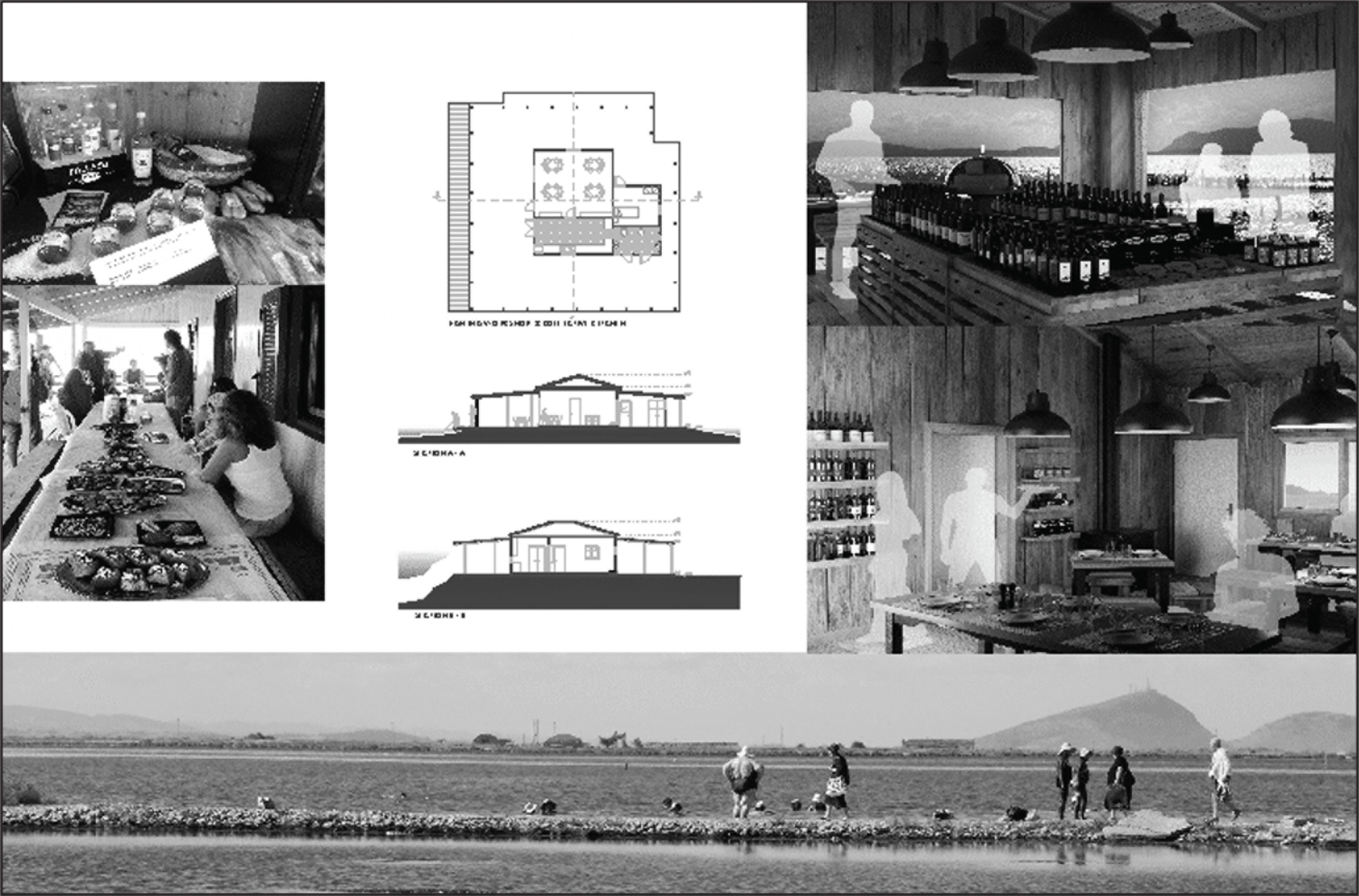
Avgotaracho production: In the avgotaracho laboratory, visitors will be attending the process of extraction of the fish egg and preparation of avgotaracho by the fishermen. Outside the lab, in a specially designed area next to the sea and under the Greek sun, they will be able to taste this and other local products of great gastronomical value.
Nature Observation: Birds, flora and fauna and water.
After identifying the strategic places for the observation of rare birds, flora, fauna and fish of the area, they proposed designing light structures such as towers and kiosks. These structures can be visited by anyone, anytime, while on certain occasions, guided tours with experts from the field (biologists, ichthyologists, botanists, etc.) will be giving specialized information.
Collective Kitchen
This activity can be combined with the fishing workshop. The fish caught by amateurs will be cooked with the guidance of local expert cooks and then enjoyed by all in the collective dining room either in the indoor or in the outdoor one. There are many local recipes for cooking fish and seafood that taste divine.
In general, local cuisine is strongly influenced by the sea element. Local dishes are made from fresh fish catches in a traditional way. The use of seawater in cooking, maintenance of salty fish and special ways of catching fish (petali, savor) all add to local flavour. The fishing and aquaculture activity recorded in the Mesolonghi-Aitoliko sea lagoon complex are inextricably linked to the region’s identity.
Agora
In ancient Greece, the Agora was a central public space for people to meet. Nowadays, it has the meaning of shopping area. They would like this space to work both ways as a bazaar of local products such as avgotaracho, salted fish, olives and olive oil, wine, cosmetics, arts and crafts and designed objects and as a place of meeting and exchanging information on the local traditions in an informal way. It will be located next to the dining area.
Natural Spa
The area is famous for its beneficial effects on health. Mud baths and salt spas have been common since ages, and lots of local people gather in certain spots of the lagoon, all year long and indulge in the warm surrounding. This activity does not require specialized staff guidance. They would rather suggest visitors to talk with the elder ladies who have spent a lifetime beautifying themselves within the sea lagoon’s waters with amazing, time-defying results. The mud is suitable for treating arthritis and dermatological problems, but it is also said that it improves psychology and cures depression. Apply some on the body and let it dry. Then wash off in the salty water.
Their contribution to the above suggestions is of interior and product design, landscape planning involving also non-invasive interventions such as steps, kiosks, benches and lighting. Sustainability has been of prior importance for them and they integrate those elements in their design as well.
For the future, they suggest replacement of some construction materials, such as the plastic grid used for fencing the Ivaries, plastic tubes that cover the wooden piles to avoid erosion, asbestos roofs and other unsuitable materials that pollute the lake and de-characterize the traditional landscape with new innovative and sustainable design. Recent studies imply the extensive use of algae as a material that can replace the catastrophic use of plastic. 13 Microalgae also applies in architecture (Qiu, 2013) with high aesthetic value effects as its different species of have different properties. Some of them can produce light when combined with fluorescent proteins. Others have interesting colours depending on their density in the water. Fast-growing microalgae is a dynamic sun shading. Algae panels have the same results as solar panels. And of course it is well known, by now, as a biofuel (Demirbas, 2009).
Epilogue
The sea lagoon has both a natural and a cultural dimension like all landscapes, and its sustainability should consider both aspects in order to be achievable. The links between the two are inseparable, forming the source of inspiration for all cultural activities and even legends and myths.
It is a pity that parts of nature such as the wetlands have only recently been regarded as life-giving and most of them after being already endangered with extinction, heavy pollution or overexploitation. The Mesolonghi-Aitoliko sea lagoon has only recently and after strong efforts been recognized for its cultural value and is being proposed for further study as such.
Despite the well-known historical legacy of the place, still remembered and honoured by its local traditions, the correspondence of those traditions with the landscape is not evident to most. Nikos Belavilas, architect, urban planner and university professor, writes for Mesolonghi:
It is a place surrounded by its sea lagoon, strange for those who don’t know it, too quiet in comparison to the historical load it carries…In the summer there is a three days and three nights festival celebrating Saint Simeon, Ai Simios as they call it…They say the nightingales die those nights in their effort to sing louder than the music. (The dawn The citizen, 2005)
The slow apocalypse of this land’s beauty is the element that makes it so charmingly poetic. That is exactly the quality they want to highlight through design, management and conservation proposals without eliminating it due to a sudden overexposure. A holistic approach on the study of the place and the synergy between community, experts and government could be the key to a bright future of this, and every, wetland.
Footnotes
Declaration of Conflicting Interests
The author declared no potential conflicts of interest with respect to the research, authorship, and/or publication of this article.
Funding
The author received no financial support for the research, authorship, and/or publication of this article.