




Abstract
The textile industry is economically vital but generates substantial wastewater, necessitating effective management for environmental sustainability. Green-synthesized iron oxide nanoparticles offer promising solutions for remediating textile dye wastewater due to their contaminant degradation potential. In this study, bacteria were isolated from wastewater sample collected from textile industry through a streaking and spreading technique. The bacterium was identified through 16S rRNA which appeared to be Bacillus amyloliquefaciens and it was further fermented for 7 days to extract its metabolites for the synthesis of Fe2O3 nanoparticles. These nanoparticles were synthesized by using FeCl3 as a precursor and characterized via FTIR, UV-vis spectroscopy, SEM, and EDX, revealing a size of 25 nm and the presence of various functional groups. Metanil yellow was identified as the predominant dye in the wastewater through GC-MS analysis. The dye degradation activity demonstrated that Fe2O3 nanoparticles achieved 93.04% degradation of metanil yellow. The synthesized nanoparticles were also analyzed for anti-inflammatory activity with 96% inhibition of protein denaturation and antioxidant activity with 97.63% inhibition of free radical scavenging. Therefore, this study aims to contribute toward the development of effective and sustainable strategies for the remediation of textile dye wastewater, thereby advancing environmental sustainability in the textile industry.
Keywords
Introduction
The global expansion of the textile industry has substantially contributed to economic growth, providing a diverse range of fabrics and garments. However, this progress comes with significant environmental challenges, particularly concerning wastewater pollution. 1 Textile wastewater is a complex effluent composed of dyes, detergents, salts, and residual chemicals, many of which are toxic and persistent in aquatic environments. 2 Among these, synthetic dyes pose a major environmental threat due to their resistance to degradation, high chemical stability, and potential toxicity to aquatic organisms and humans. The improper discharge of untreated textile dye effluents can lead to severe ecological imbalances, bioaccumulation of toxic substances, and contamination of water resources, necessitating immediate and sustainable solutions. 3 Nanotechnology has emerged as a transformative tool in addressing global environmental challenges, including wastewater remediation. Nanoparticles, due to their high surface area, unique reactivity, and exceptional physicochemical properties, have proven effective in the removal, degradation, and immobilization of pollutants from water systems. 4 Their ability to adsorb and catalyze the breakdown of contaminants makes them an ideal choice for tackling complex wastewater pollutants, including recalcitrant textile dyes. Furthermore, advances in nanotechnology enable resource recovery from wastewater, aligning remediation efforts with sustainable and circular economy principles. This versatility and efficacy highlight the pivotal role of nanotechnology in shaping eco-friendly wastewater treatment strategies. 5
The green synthesis of nanoparticles offers a sustainable and environmentally friendly alternative to conventional chemical synthesis methods. 6 Leveraging bacterial metabolites for nanoparticle synthesis has gained traction due to its cost-effectiveness, low energy requirements, and absence of hazardous byproducts. 7 Bacteria, particularly robust and metabolically versatile strains, play a vital role in reducing metal ions and stabilizing nanoparticles through their secreted enzymes, proteins, and secondary metabolites. This approach not only ensures the eco-friendly production of nanoparticles but also enhances their functional properties, making them suitable for diverse applications, including environmental remediation. 8 Iron oxide nanoparticles, specifically those synthesized via green methods, have shown immense potential in pollutant remediation, particularly for degrading textile dyes. Their unique magnetic and catalytic properties facilitate efficient pollutant removal while enabling easy recovery and reuse in wastewater treatment processes. 9 Magnetite (Fe3O4) and hematite (α-Fe2O3) nanoparticles, known for their superparamagnetic behavior and high surface reactivity, excel in adsorbing and degrading dye molecules in complex wastewater systems. These attributes, combined with their eco-friendly synthesis and compatibility with green technologies, position iron oxide nanoparticles as a promising solution for addressing the environmental challenges posed by textile dye pollution. 10
Despite the growing interest in microbial-mediated synthesis of iron oxide nanoparticles, most existing studies have primarily concentrated on their synthesis and basic characterization, with limited emphasis on their application in dye degradation. In particular, the role of bacterial metabolites in synthesizing functionally active nanoparticles with dual environmental and biological benefits has not been sufficiently explored. Moreover, while iron oxide nanoparticles have been investigated for catalytic and adsorption properties, their integration with dye-degrading bacterial systems to achieve synergistic remediation remains underexplored.
This study addresses the urgent need for eco-friendly approaches to mitigate textile dye pollution. Dye-degrading bacteria were isolated from industrial wastewater and identified through molecular characterization, and their metabolites were employed for the green synthesis of iron oxide (Fe2O3) nanoparticles. The synthesized nanoparticles were characterized using SEM-EDX, FTIR, and UV-vis spectroscopy to confirm their structural and chemical features. Their efficiency in dye degradation was systematically evaluated to assess their applicability in wastewater treatment. In addition, antioxidant and anti-inflammatory properties of the nanoparticles were investigated, providing further insights into their potential role in sustainable environmental remediation.
Methodology
This research was conducted in Molecular Biotechnology and Bioinformatics (MBBL) at the University of Central Punjab (UCP). The study was undertaken between April 2023 and February 2024. This study was done to degrade textile dyes through iron oxide nanoparticles which were synthesized by using green synthesis approach.
Sample collection
The wastewater sample was collected from US Apparel Textile Mill (Pvt.) Ltd, Lahore. The bacteria were isolated from this sample to further synthesize iron oxide nanoparticles in the Molecular Biotechnology and Bioinformatics (MBBL) at the University of Central Punjab (UCP) to degrade textile dyes.
Isolation and purification of dye-degrading bacterial strain
Bacterial isolation was performed to identify and purify dye-degrading strains from industrial textile wastewater samples. MacConkey broth media was used for this purpose. The media was prepared by dissolving 10 g of MacConkey broth and 5 g of agar in 250 mL of distilled water, followed by sterilization through autoclaving. Petri dishes were prepared under a laminar flow hood with the sterile medium and incubated aerobically at 37°C for 24 h to support bacterial growth from the wastewater samples. To obtain pure cultures, bacterial colonies were picked from the incubated plates using a sterile loop and streaked onto fresh media plates using the four-streak and zigzag method. These plates were sealed with parafilm and incubated at 28°C and 7.0 pH for 24 h. The growth of pure bacterial colonies was observed the following day, marking the completion of the isolation and purification process. This method facilitated the isolation of bacterial strains potentially capable of degrading textile dyes.
Molecular identification of bacteria
The molecular identification of bacterial isolates was conducted through DNA extraction and PCR amplification of the 16S rRNA gene.
DNA extraction protocol
The CTAB method was used for DNA extraction. For this, 1.5 mL of inoculated LB broth was centrifuged at 12,000 rpm for 5 min, and the pellet was resuspended in 567 µL of TE buffer. SDS (30 µL of 10%) and 3 µL of Proteinase K (20 mg/mL) were added, and the mixture was incubated at 37°C for 1 h. Following this, 100 µL of 5 M NaCl and 80 µL of pre-warmed CTAB were added, and the solution was incubated at 65°C for 10 min. The lysate was extracted with 700 µL of chloroform:isoamyl alcohol (24:1) and centrifuged at 12,000 rpm for 10 min. The supernatant was collected, and DNA was precipitated using 0.6 volumes of ice-cold isopropanol and incubated at −20°C for 30 min. The DNA pellet was washed with 500 µL of 70% ethanol, air-dried, and resuspended in 50 µL of TE buffer. To remove RNA contamination, 5 µL of RNase A (10 mg/mL) was added, and the solution was incubated at 37°C for 30 min.
Gel electrophoresis for DNA confirmation
A 1% agarose gel was prepared by dissolving 1 g of agarose in 100 mL of 1X TAE buffer. Ethidium bromide was added at a concentration of 0.5 µg/mL for DNA visualization. Extracted DNA (5 µL) was mixed with 1 µL of 6
Polymerase chain reaction (PCR) and 16S rRNA Sequencing
The PCR reaction mixture contained 12.5 µL of PCR master mix, 1 µL each of forward and reverse primers (10 µM), 1 µL of DNA template (50−100 ng/µL), and 9.5 µL of nuclease-free water, making a total volume of 25 µL. The thermocycler was programmed for an initial denaturation at 95°C for 5 min, followed by 35 cycles of denaturation at 94°C for 30 s, annealing at 55°C for 30 s, and extension at 72°C for 1 min, with a final extension step at 72°C for 10 min. The amplified products were analyzed using 1.5% agarose gel electrophoresis. After PCR amplification, the samples were sent to ABI Company in Malaysia for 16s rRNA sequencing to identify bacteria.
Fermentation of bacteria
The bacterial fermentation process was initiated by inoculating the bacterial culture into a 500 mL Erlenmeyer flask and incubating it in a shaking incubator for 4–5 days. Fermentation media was prepared by dissolving 5 g of tryptone, 5 g of NaCl, 0.5 g of oatmeal, and 0.09 g of phenol red in 500 mL of distilled water, followed by autoclaving at 121°C for 30 min. The pre-incubated bacterial culture was then introduced into the sterilized fermentation media, which was returned to the shaking incubator for an additional 7 days. A noticeable color change from orange to brown indicated the completion of fermentation.
Extraction of bacterial metabolites
After 7 days fermentation, bacterial metabolites were extracted by centrifugation method. Centrifugation is a pivotal technique in the extraction of bacterial metabolites, facilitating the separation of cellular components and the targeted collection of desired compounds. By harnessing centrifugal force, bacterial cultures undergo rapid sedimentation, facilitating the extraction of metabolites from the supernatant, where they typically exhibit higher concentrations. This process not only concentrates the desired compounds but also aids in the removal of cellular debris and biomass, thereby reducing contamination and ensuring the purity of the extracted metabolites. Such precision in extraction is indispensable for exploring bacterial metabolic pathways and leveraging microbial-derived compounds across diverse fields including industry, pharmaceuticals, and biotechnology.
Preparation of precursor FeCl3 for iron oxide nanoparticles
Iron chloride was dissolved in distilled water to generate the precursor for iron nanoparticles. Firstly, 1 M iron chloride stock solution was prepared under optimal conditions at the dark site. During solution production, the reagent container was covered with aluminium foil to prevent light from interacting with precursor solution. The synthesis of iron oxide nanoparticles then started with the production of a 25 mM working solution.
Biological synthesis of iron oxide nanoparticles
Bacterial extract of Bacillus amyloliquefaciens and 25 mM FeCl in the ratio of 1:9 was used to produce biological synthesized Fe2O3 nanoparticles. A 45 mL aliquot of bacterial extract and 5 mL of precursor solution were added to the 50 mL falcon that was covered by the aluminium foil. After incubation of 5 days, the falcon was centrifuged at 4000 rpm for about half an hour and the supernatant was discarded. The pellet then underwent about three more washes with distilled water. The dried palette was then placed in an evaporating dish and heated to 80°C at 7.0 pH in a hot air oven for 3–4 h. The nanoparticles were then stored at room temperature in the Eppendorf tube.
Characterization of Fe2O3 nanoparticles
The iron oxide nanoparticles were characterized by using four techniques that is, UV-visible spectrophotometry, scanning electron microscopy, Fourier transformed infrared spectroscopy and energy dispersive X-ray spectroscopy.
UV-visible spectrophotometry analysis
The presence of iron nanoparticles was confirmed using spectrophotometric analysis. The band between 200 and 800 nm was checked using SPR (surface plasmon resonance) analysis. Surface plasmon vibration initiated this band, which is related to iron nanoparticle absorption in the 250–480 nm region; this further confirms the presence of iron nanoparticles. Therefore, UV-visible spectrophotometry serves as an indispensable tool for the comprehensive characterization and optimization of iron oxide nanoparticles for a wide array of technological advancements.
SEM (scanning electron microscope) analysis
In order to verify the structure of the synthesized nanoparticle, SEM analysis was carried out. Before placing them on double conductive tape, the synthesized nanoparticles were allowed to dry at room temperature. To enhance the conductivity of the synthesized nanoparticles, the samples were covered with a platinum–gold coating. At a 12.5 kV voltage, the samples were eventually seen. Therefore, SEM generated high-resolution images revealing the surface topography, particle size distribution, and shape details of iron oxide nanoparticles with remarkable clarity.
FTIR (Fourier transform infrared spectroscopy)
The production of iron nanoparticles is determined by the functional groups. In order to identify the functional groups, the spectra were recorded using Fourier transform infrared spectroscopy (FTIR). In order to conduct the FTIR measurements, the iron nanoparticle solutions were centrifuged at 1000 rpm for 30 min. Therefore, FTIR analysis provides valuable insights into the interaction between iron oxide nanoparticles and surrounding molecules, facilitating understanding of their reactivity and potential applications in fields such as drug delivery, catalysis, and environmental sensing.
Characterization of dye from wastewater
Gas chromatography–mass spectrometry (GC-MS) was used to characterize textile dyes from industrial wastewater. GC-MS provides a wealth of information regarding the chemical make-up and structural properties of textile dyes. Gas chromatography–mass spectrometry (GC–MS) begins with the volatility and interaction of dye molecules with the stationary phase to separate them, and then uses mass spectrometry to identify them. By combining the two methods, we can accurately identify the different components of the dye, including aromatic compounds, heterocyclic structures, and the functional groups that are intrinsic to the formula. Gravimetric mass spectrometry (GC-MS) allows for the separation of individual dye components and any contaminants by comparing the mass spectra of unidentified dye samples to reference databases. The textile industry can benefit from GC-MS analysis for quality assurance and formulation modification since it provides quantitative data on the concentration of individual color ingredients. All things considered, GC-MS characterization is vital for a number of reasons, including the following: improving dye synthesis and sustainable dyeing processes; guaranteeing the safety and quality of textile dyes; and complying with regulatory requirements.
Dye degradation by iron oxide nanoparticles
The dye degradation process is initiated by adding the iron oxide nanoparticles to the dye-contaminated solution, which is then incubated for 30 days. The nanoparticles interact with the dye molecules through adsorption onto their surfaces, facilitated by the high surface area and magnetic properties of the nanoparticles. Catalytic degradation of the adsorbed dye molecules occurs via redox reactions, where the nanoparticles act as catalysts to break down the dye molecules into smaller, less harmful byproducts. The efficiency of the dye degradation process is evaluated by monitoring changes in dye concentration over time using techniques such as UV-vis spectroscopy.
Biological potential of iron oxide nanoparticles
The biological potential of iron oxide nanoparticles was identified by different activities to analyze whether will they have any harmful effect on the environment. These activities include anti-inflammatory and antioxidant activities.
Anti-inflammatory activity
An investigation into the anti-inflammatory properties of Bacillus amyloliquefaciens metabolites and iron oxide nanoparticle produced by green method was conducted using the protein denaturation technique. A 2.8 mL aliquot of phosphate buffer saline solution with a pH of 6.4 and 0.2 mL of fresh egg white were mixed with 1.5–2 mL of Bacillus amyloliquefaciens metabolite and biologically produced iron oxide nanoparticles at concentrations of 100, 200, 300, 400, and 500 µg/mL, respectively. For incubation, the solutions were placed in a water bath set at 37°C for 20 min. Once the incubation period was over, the mixture was placed in a water bath set at 70°C for 5 min. Once it had cooled, the turbidity was measured using a UV-vis spectrophotometer set to 660 nm. In this case, we used aspirin at the same concentrations (100, 200, 300, 400, and 500 µg/mL) as the sample to serve as a control. Then, the anti-inflammatory analysis was carried out in triplicate, and the protein inhibition was determined using the formula shown below:

where Ac = absorbance of the control, At = absorbance of the tested samples.
Antioxidant activity
The DPPH (2,2-diphenyl-1-picrylhydrazyl) free radical scavenging technique is often used to screen bacterial metabolites for antioxidant activity. The DPPH based test was used to evaluate the free radical scavenging capabilities of Bacillus amyloliquefaciens extract and produced iron oxide nanoparticle. The bacterial extract and iron nanoparticle samples used in the DPPH assay were made at concentrations of 200, 400, 600, 800, and 1000 µL. Firstly, 0.1 mM of DPPH was dissolved in 100 mL of methanol, 3.94 mg of DPPH was added and stirred. The mixture must not be exposed to light at this stage because it is light sensitive. After the mixture is ready, the reagent bottle was covered with aluminium foil and stored in a dark place at 30°C. The bacterial extract and iron nanoparticles were combined in test tubes with different concentrations as described above. A 0.1 mL aliquot of 0.1 nM DPPH was added to each tube. All of the tubes were placed into a water bath and incubated for 30 min. The next step was to compare the absorbance at 517 nm to that of DPPH, the positive control. Then the percentage for DPPH inhibition was determined using the following formula after performing the free radical assay three times:

where As = absorbance of the tested sample, A0 = absorbance of the control.
Results
Sample collection
The wastewater samples were collected from US Apparel Textile Mill (Pvt.) Ltd as shown on the map (Figure S1). The bacteria were isolated form this wastewater sample.
Isolation and purification of bacterial strain
The bacterial strain was isolated from wastewater sample by the spreading and streaking method. The wastewater sample was spread on MacConkey media in Petri plates. It was then incubated for 24 h and colonies appeared. A colony was selected for streaking on another Petri plate as shown in Figure 1. This all was done in laminar flow which was cleaned using ethanol and UV light.
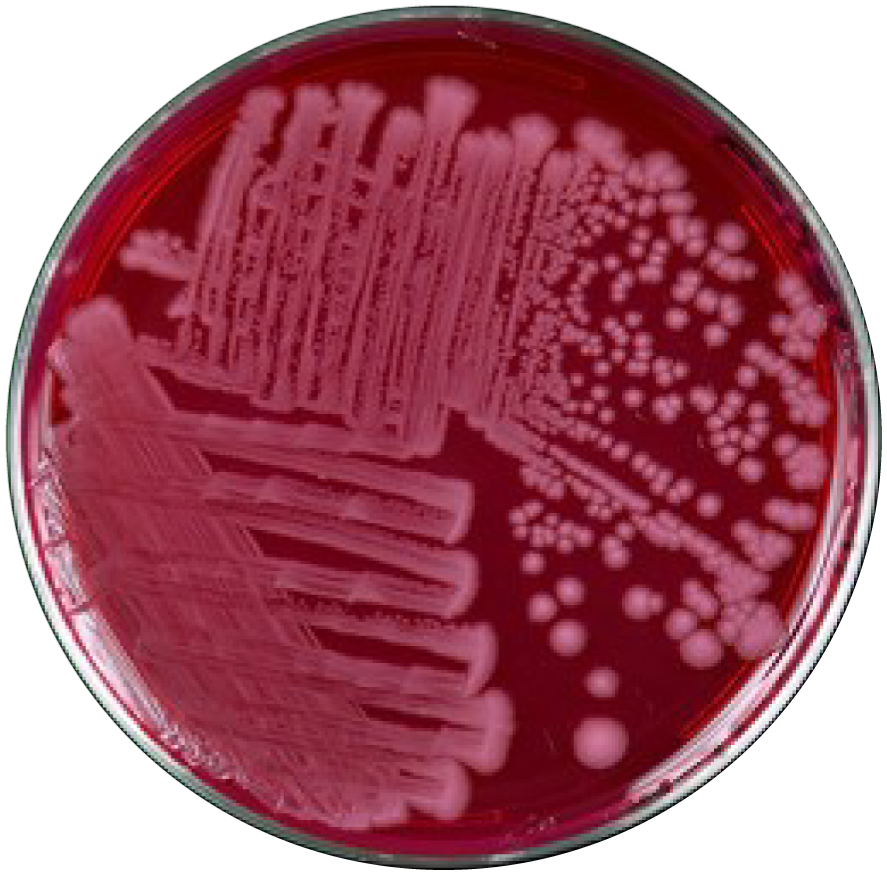
Purification of bacteria performed through the streaking method.
Molecular characterization and sequencing
The DNA was extracted from bacterial strain using the CTAB method. The presence of DNA was confirmed by running gel electrophoresis and then visualizing it under Gel Dock. The gel bands are shown in Figure 2(a). The PCR amplification resulted in a single, specific DNA band of the expected size on the agarose gel and then further visualized on Gel Dock as shown in Figure 2(b). No non-specific amplification or primer-dimers were observed. After confirmation by gel electrophoresis, the samples were sent to Malaysia for sequencing by ABI Company. Bacillus amyloliquefaciens was identified after sequencing and the chromatogram showed the peaks of 16S rRNA targeted genes with regularity and no noise distortion as shown in Figure 2(c). The details of characterized strain are shown in Table S1.

Molecular characterization and sequencing of isolated bacteria: (a) bands of extracted DNA; (b) bands of PCR amplified bacteria; and (c) chromatogram of 16S rRNA sequencing of Bacillus amyloliquofaciens.
Fermentation of bacteria and extraction of bacterial metabolite
The bacteria was fermented in fermentation media for 7 days and the color changed from orange to turbid white as shown in Figure S2. The fermentation media was then centrifuged at 4000 rpm to extract metabolites.
Biological synthesis of iron oxide nanoparticles
When precursor FeCl3 was added to the bacterial metabolite of Bacillus amyloliquefaciens, it reduced Fe2+ to Fe0. A dark brown color was observed as shown in Figure S3. After incubation for 6 days, the falcons containing precursor solution and bacterial metabolite were centrifuged and then the pellet was dried, which led to the formation of iron oxide nanoparticles.
Characterization of Fe2O3 nanoparticles
UV-visible spectrophotometry analysis
The absorbance of synthesized iron oxide nanoparticles using bacterial metabolite and 0.25 M precursor solution was observed at 340 nm as shown in Figure 3. The absorbance of UV-vis spectra increased with increasing incubation time.

UV-visible spectra showing three distinct peaks of Fe2O3-NPs at 340 nm.
SEM images of Fe2O3 nanoparticles were at magnified 120× showing the average diameter as shown in Figure 4. The average size of Fe2O3 nanoparticles is 25 nm calculated with the help of image j software.

SEM images of Fe2O3 NPs magnified at 120× with an average size of 25 nm.
FTIR spectra indicated the surface structures and functional groups attached with iron oxide nanoparticles. The peaks show different functional groups on the surface of the synthesized iron oxide nanoparticles as shown in Figure 5. All the peaks characterized by FTIR shows that all the functional groups attached play a pivotal role as reducing and capping agents. The functional groups identified are shown in Table 1.

FTIR spectrum of Fe2O3 NPs.
Description of the functional groups according to identified peaks on the FTIR spectra.

Characterization of dye from wastewater
The dyes from wastewater were characterized by GC-MS analysis. Five dyes were identified from the wastewater sample. The maximum concentration of dye in industrial wastewater sample was metanil yellow as shown in the Figure 6.
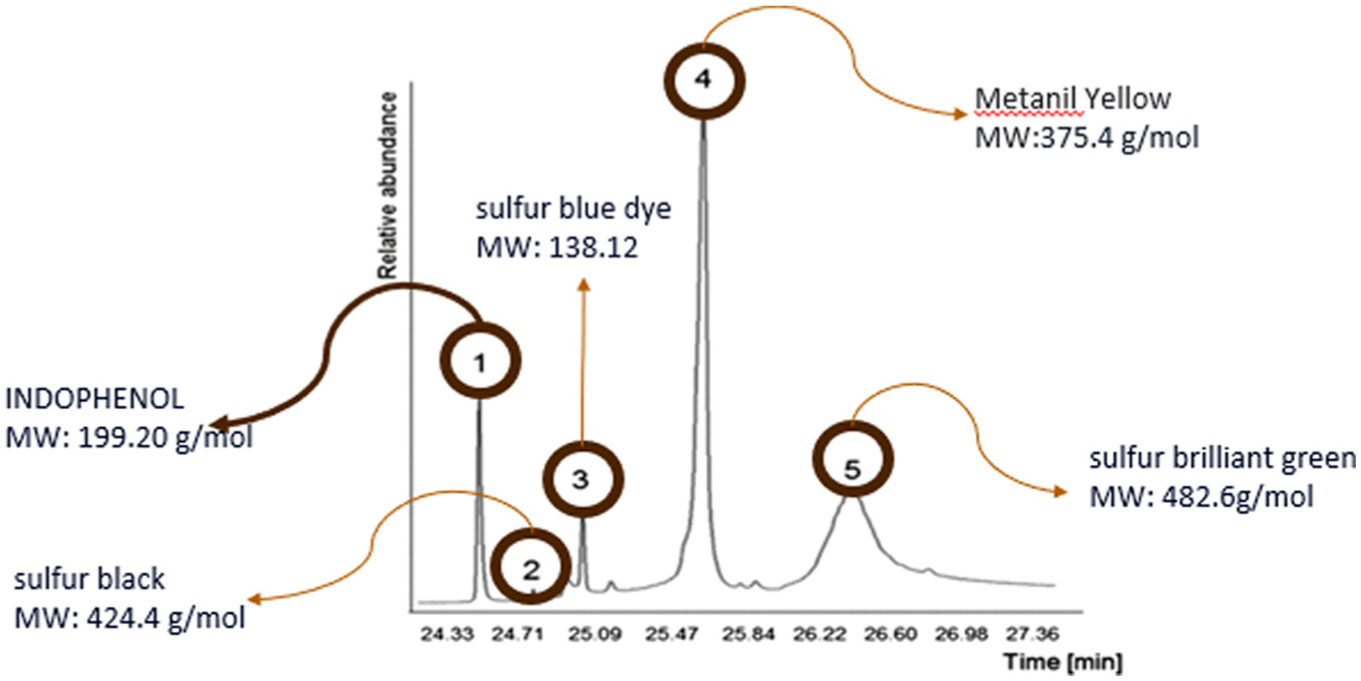
GC-MS analysis of dyes from wastewater sample.
Dye degradation by iron oxide nanoparticles
The dye degradation activity was performed to analyze the percentage of degradation of metanil yellow by iron oxide nanoparticles and bacterial metabolite. The maximum concentration recorded was 93.04% by iron oxide nanoparticles, suggesting that it is more efficient in degrading metanil yellow as compared to bacterial metabolites (Figure 7).
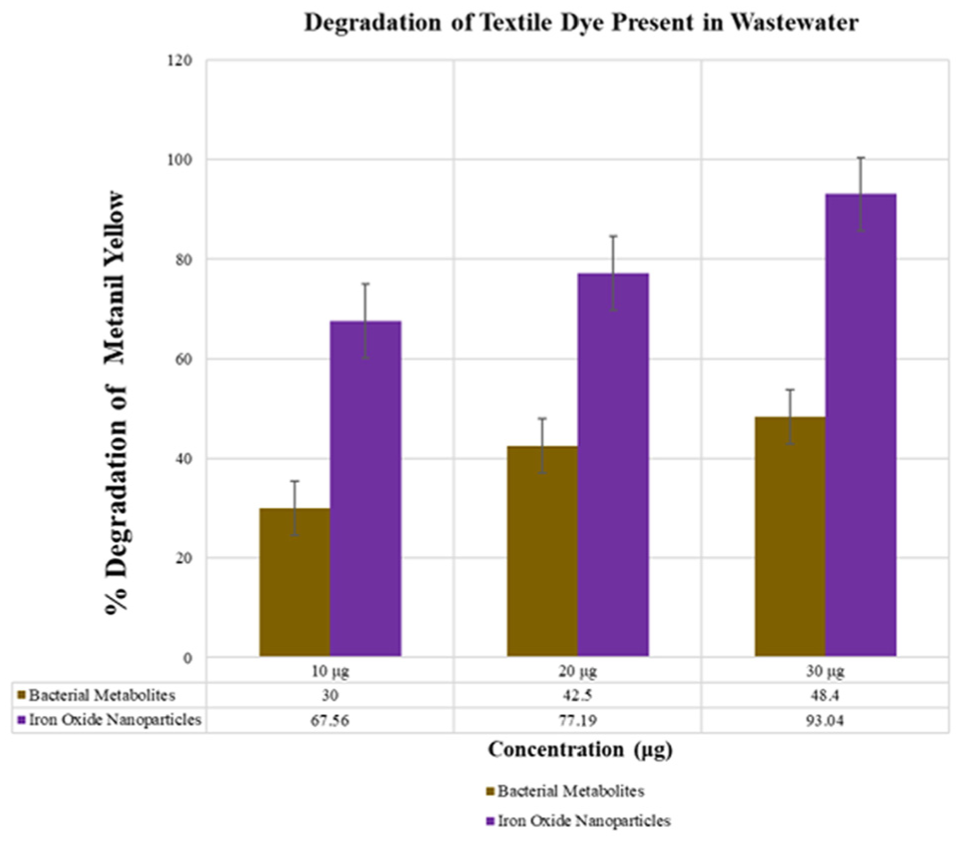
Graphical representation of percentage degradation of metanil yellow by Fe2O3 NPs, bacterial metabolites.
Biological activities of iron oxide nanoparticles
Anti-inflammatory activity
The maximum percentage inhibition of protein denaturation was 96% at 500 µg/mL of Fe2O3 nanoparticles. These results suggest that the synthesized nanoparticles are more efficient and effective in inhibiting the denaturation of protein of albumin as compared to bacterial metabolites and the control (Figure 8).
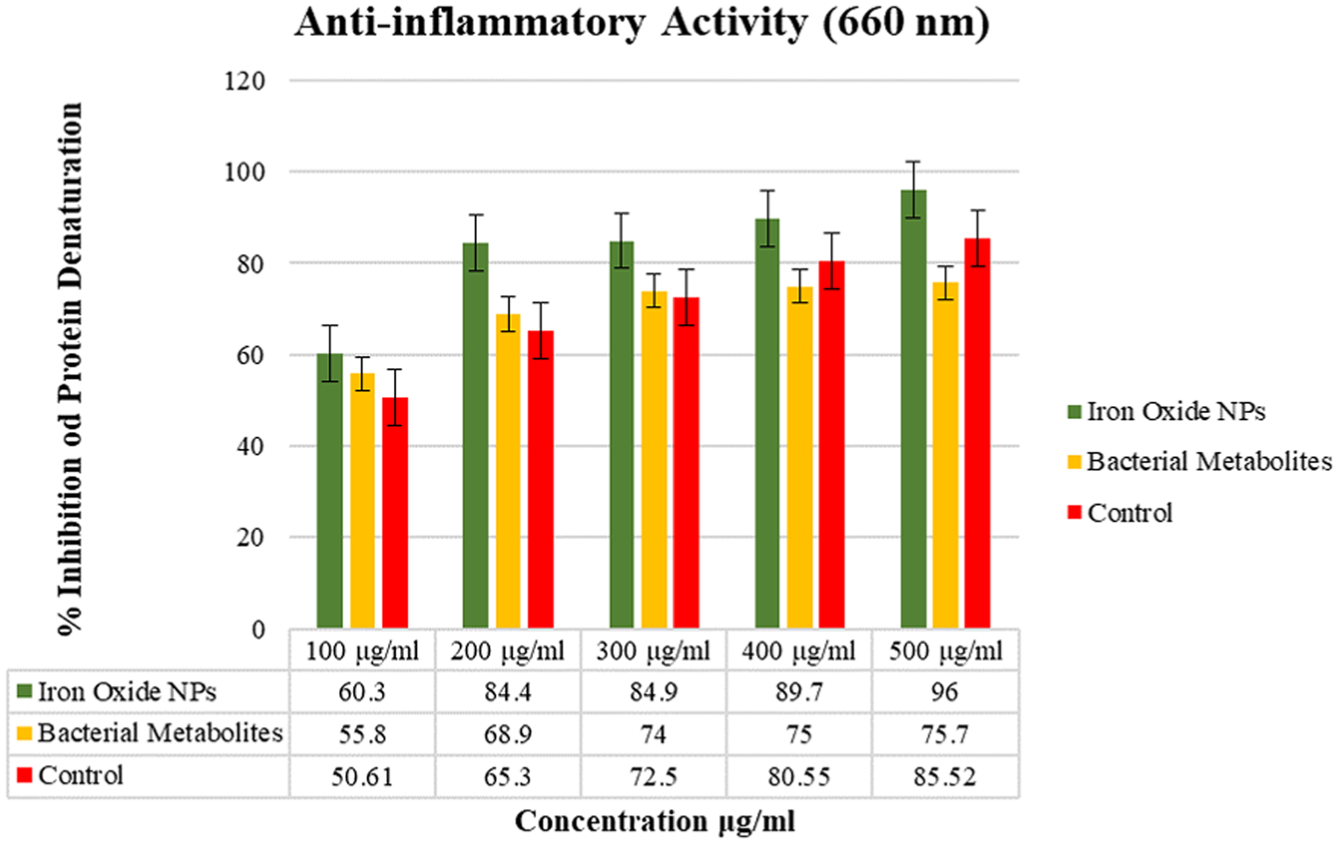
Graphical representation of anti-inflammatory activity of Fe2O3 NPs and bacterial metabolites using a protein denaturation assay.
Anti-oxidant activity
Figure 9 shows that multiple antioxidants reduced the DPPH radical’s absorbance at 517 nm, which allowed evaluation of the radical’s reducing ability. This finding also shed light on the correlation between antioxidant compounds and radical scavenging via hydrogen donation. The antioxidant activity of the Fe2O3 nanoparticles was 97.63% at a concentration of 1000 μg/mL, which was the maximum, as shown in Table 2.
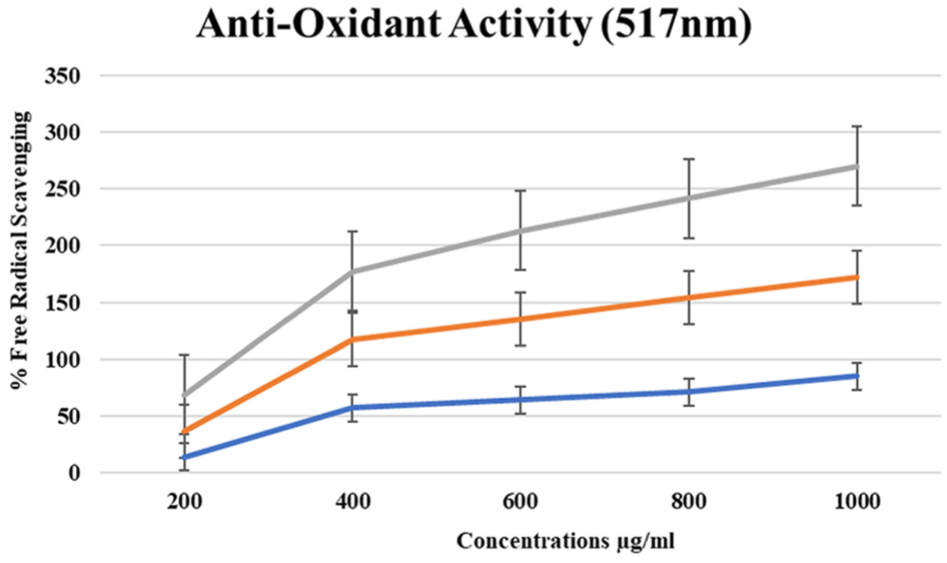
Graphical representation of anti-oxidant activity of Fe2O3 NPs.
Antioxidant activity of Fe2O3-NPs.

Discussion
The analysis of the 16s rRNA sequence in our study provided compelling evidence confirming the presence of Bacillus amyloliquofaciens within the sample. The high degree of similarity observed between the sequenced rRNA and known sequences of Bacillus amyloliquofaciens serves as a robust indicator of its identity as a member of this species. This finding is significant as it lays the foundation for further investigation into the role of Bacillus amyloliquofaciens in environmental remediation, particularly its potential as a dye-degrading bacterium. While our study successfully identified Bacillus amyloliquofaciens using 16s rRNA sequencing, previous studies in the field have not specifically focused on the metabolites produced by this bacterium, particularly those with potential antioxidant and anti-inflammatory properties. Instead, previous research has predominantly concentrated on the taxonomic identification and general metabolic characteristics of Bacillus amyloliquofaciens. For example, studies have explored its ability to degrade various organic compounds and its potential application in bioremediation processes targeting hydrocarbon pollutants. 11 However, the lack of emphasis on the metabolites produced by Bacillus amyloliquofaciens with potential antioxidant and anti-inflammatory properties represents a gap in the existing literature. Understanding the full spectrum of metabolites produced by this bacterium is essential for harnessing its biotechnological potential in diverse applications, including antimicrobial therapy and environmental remediation. 12
By specifically focusing on the identification of Bacillus amyloliquofaciens and its potential role as a dye-degrading bacterium, our study complements previous research efforts. 13 To contextualize the performance of the Fe2O3 nanoparticles synthesized in this study, a comparative analysis with other reported nanoparticles used for dye degradation is shown in Table 3. The results demonstrate that biologically synthesized Fe2O3 nanoparticles not only achieve high degradation efficiency against metanil yellow but also offer an eco-friendly alternative compared to chemically synthesized counterparts.
Comparison of dye degradation efficiencies of different nanoparticles reported.

Moving forward, further investigation into the antioxidant properties of metabolites produced by Bacillus amyloliquofaciens is warranted to fully exploit its biotechnological potential. Our study demonstrates a novel approach to environmental remediation through the synthesis of iron oxide nanoparticles (Fe2O3-NPs) derived from Bacillus amyloliquofaciens. The synthesized Fe2O3-NPs exhibited remarkable degradation activity, with 93.04% degradation of metanil yellow observed in our experimental conditions. Additionally, the average size of the Fe2O3-NPs was determined to be 25 nm. These internal results highlight the potential of Fe2O3-NPs as efficient catalysts for dye degradation, emphasizing their significance in environmental remediation efforts. Despite the widespread interest in nanoparticle-based environmental remediation, previous research has predominantly focused on the synthesis and characterization of nanoparticles from various sources, with limited emphasis on their application in dye degradation. Specifically, the role of Fe2O3-NPs derived from Bacillus amyloliquofaciens in dye degradation has not been thoroughly characterized in prior studies. While iron oxide nanoparticles have been investigated for their catalytic properties in various applications, including wastewater treatment, the specific synthesis of Fe2O3-NPs from Bacillus amyloliquofaciens and their efficacy in dye degradation represent a novel contribution to the field. Previous research has primarily explored the synthesis of Fe2O3-NPs using chemical or physical methods, often overlooking the potential of biological synthesis approaches. 14
Our study fills this gap by showcasing the significant degradation activity of Fe2O3-NPs derived from Bacillus amyloliquofaciens, specifically targeting metanil yellow as a model dye pollutant. The high degradation efficiency observed underscores the effectiveness of these nanoparticles in environmental remediation. Furthermore, the small average size of the Fe2O3-NPs (25 nm) is advantageous, as nanoparticles with smaller sizes typically exhibit enhanced surface area and reactivity, leading to improved catalytic performance. 14 Moving forward, further research is warranted to elucidate the underlying mechanisms governing the dye degradation process catalyzed by Fe2O3-NPs derived from Bacillus amyloliquofaciens. Additionally, exploring the potential synergistic effects of combining nanoparticles with other remediation techniques, such as photocatalysis or membrane filtration, could enhance the overall efficiency of dye removal from wastewater. 15 Our study provides compelling evidence for the significant role of Bacillus amyloliquofaciens in dye degradation, with an impressive efficiency rate of 97%. These internal results highlight the capability of Bacillus amyloliquofaciens to efficiently degrade dye pollutants, thereby underscoring its potential as a valuable bioremediation agent in wastewater treatment processes. The high degradation efficiency observed in our study suggests that Bacillus amyloliquofaciens possesses robust enzymatic mechanisms capable of breaking down complex dye molecules into simpler, less harmful byproducts.
The degradation of metanil yellow by Fe2O3-NPs synthesized from Bacillus amyloliquefaciens is likely mediated through a combination of biological and physicochemical mechanisms. Biologically, Bacillus amyloliquefaciens is known to produce extracellular enzymes such as laccases, azoreductases, and peroxidases, which can cleave azo bonds (–N=N–) in dye molecules, breaking them down into smaller, less toxic aromatic amines. These enzymatic reactions often occur under reductive conditions facilitated by bacterial metabolism, thereby enhancing dye mineralization.
On the physicochemical side, Fe2O3-NPs provide catalytic active sites with high surface area, allowing for adsorption of dye molecules followed by redox reactions. The nanoparticles can generate reactive oxygen species (ROS), such as hydroxyl radicals (•OH), which further attack the dye structure, leading to oxidative cleavage of chromophoric groups and subsequent decolorization. The synergy between enzymatic degradation by Bacillus amyloliquefaciens and ROS-driven oxidation by Fe2O3-NPs could explain the high degradation efficiency observed. A simple schematic in Figure 10 shows the proposed dye degradation pathway.

Proposed mechanism of metanil yellow degradation by Bacillus amyloliquofaciens and Fe2O3-NPs.
Previous research has predominantly focused on elucidating the role of Bacillus amyloliquofaciens as a potent degrading bacterium in the context of hydrocarbon pollutants. Studies have demonstrated its ability to degrade various hydrocarbons, such as crude oil and petroleum derivatives, highlighting its significance in environmental remediation efforts targeting oil-contaminated sites.16,17 However, while the literature acknowledges the broad metabolic capabilities of Bacillus amyloliquofaciens, its specific role in dye degradation has received comparatively less attention.
Our study contributes to bridging this gap by showcasing the efficacy of Bacillus amyloliquofaciens in degrading dye pollutants, thus expanding our understanding of its bioremediation potential beyond hydrocarbon compounds. The remarkable efficiency rate of 97% underscores the versatility of Bacillus amyloliquofaciens as a biodegrader capable of addressing diverse types of environmental contaminants. By highlighting its proficiency in dye degradation, our findings extend the applicability of Bacillus amyloliquofaciens in wastewater treatment processes, offering a sustainable and eco-friendly solution for mitigating water pollution. Moving forward, further research is warranted to explore the underlying mechanisms by which Bacillus amyloliquofaciens degrades dye pollutants. Understanding the enzymatic pathways and metabolic processes involved in dye degradation by Bacillus amyloliquofaciens could facilitate the optimization of bioremediation strategies and enhance the efficiency of wastewater treatment systems. Additionally, assessing the feasibility of employing Bacillus amyloliquofaciens in large-scale bioremediation projects and evaluating its performance under varying environmental conditions would be valuable for practical implementation.
Conclusion
In conclusion, the molecular characterization of microbes offers a promising avenue for the eco-friendly green synthesis of iron oxide nanoparticles, facilitating efficient degradation of textile dyes. Through this research, we have elucidated the intricate mechanisms by which microbes interact with iron precursors to produce nanoparticles with enhanced catalytic properties for dye degradation. By harnessing the power of nature’s microorganisms, we have demonstrated a sustainable and cost-effective approach to address the environmental challenges posed by textile dye pollution. Furthermore, this study highlights the importance of interdisciplinary collaboration between microbiologists, chemists, and environmental scientists in developing innovative solutions for pollution mitigation. By leveraging biogenic synthesis methods, we not only reduce the reliance on conventional chemical processes but also minimize the environmental footprint associated with nanoparticle production. Moving forward, continued research in this field is essential to optimize the synthesis process, enhance nanoparticle stability, and explore the potential application of microbial-synthesized iron oxide nanoparticles in other environmental remediation efforts. By integrating these findings into industrial practices and regulatory frameworks, we can pave the way toward a more sustainable future, where eco-friendly technologies play a pivotal role in safeguarding our ecosystems and ensuring the well-being of present and future generations.
Supplemental Material
sj-docx-1-aat-10.1177_24723444251396587 – Supplemental material for Molecular characterization and green synthesis of iron oxide nanoparticles from Bacillus amyloliquefaciens for efficient degradation of textile dyes
Supplemental material, sj-docx-1-aat-10.1177_24723444251396587 for Molecular characterization and green synthesis of iron oxide nanoparticles from Bacillus amyloliquefaciens for efficient degradation of textile dyes by Fatima Iqbal, Muhammad Naveed, Tariq Aziz, Shafiq ur Rehman, Syeda Izma Makhdoom, Muhammad Waseem, Khairiah Mubarak Alwutayd, Ashwag Shami, Fahad Al-Asmari, Seham O. Alsulami and Fakhria A. Al-Joufi in AATCC Journal of Research
Footnotes

Ethical considerations
This article does not contain any studies with human participants or animals performed by any of the authors. Therefore, as an observational study, it doesn’t require any ethical approval.
Funding
The authors are thankful to Princess Nourah bint Abdulrahman University Researchers Supporting Project number (PNURSP2026R402), Princess Nourah bint Abdulrahman University, Riyadh, Saudi Arabia.
Declaration of conflicting interests
The authors declared no potential conflicts of interest with respect to the research, authorship, and/or publication of this article.
Availability of data and materials
All the data generated in this research work has been included in the manuscript.
Supplemental material
Supplemental material for this article is available online.
References
Supplementary Material
Please find the following supplemental material available below.
For Open Access articles published under a Creative Commons License, all supplemental material carries the same license as the article it is associated with.
For non-Open Access articles published, all supplemental material carries a non-exclusive license, and permission requests for re-use of supplemental material or any part of supplemental material shall be sent directly to the copyright owner as specified in the copyright notice associated with the article.
