



Abstract
In Vietnam, based on documents researched by the author, Chinese character variants appeared and were used in writing from the 12th century at the latest, during the independent and self-reliant period in Vietnamese history, when Chinese characters were particularly prevalent among Vietnamese people. This paper analyses 14 variants of the character ‘佛’ (Vietnamese: Phật; Chinese: Fó; i.e. Buddha) and some other characters (such as ‘之’ Vn. Chi/Ch. Zhi, ‘聽’ Vn. Thính/Ch. Ting, ‘聖’ Vn. Thánh/Ch. Sheng), in comparison with variants in reference books of China, aiming at demonstrating the diversity of Chinese character variants generally and those of the character ‘Buddha’ specifically in Vietnam.
Introduction
Due to cultural exchanges, Chinese characters were popularly used in Vietnam as well as other countries in the region such as Japan, and the Korean Peninsula. Those countries were also strongly influenced by Chinese culture for a certain period. For Vietnam alone, Chinese characters were used as early as the first century CE. 1 From then on, Chinese characters caused increasingly greater influence in Vietnam over the period of Chinese domination (from the 1st to the 10th century). Although Vietnam gained independence in 939 CE, Chinese characters still remained prevalent and played a significant role in political and socio-cultural activities among Vietnamese people. Chinese characters became an important means of improving people’s cultural standards, conducting examinations, seeking talent and developing Vietnamese national culture. In the 10th century, by imitating Chinese characters, Vietnamese people created their own writing system named ‘Nôm’ (喃字), a type of square-block characters, to write the Vietnamese language. Chinese and Nôm characters were used concurrently in Vietnam over nearly 1000 years. In terms of importance, Chinese characters were highly appreciated and considered as the national orthodox characters by the Vietnamese feudal dynasties. Meanwhile, Nôm characters were mainly used in literary writing. Although they were esteemed during some periods, they could not replace the role of Chinese characters.
As regards the studies of Chinese character variants, many achievements have been gained in China with a wide range of research works, papers and dictionaries (Li GY, 2007; Li YF, 2006; Guojia Jiaoyu Yanjiuyuan, 2017; Wang, 2008; Zhu, 2013), whereas in Vietnam, Chinese character variants have not been studied systematically and a dictionary of Chinese character variants has not been yet compiled and published. There have so far been two papers on Chinese character variants published in the Journal of Sino-Nôm Studies (Tạp chí Hán Nôm). One paper was written by Phác (1997), providing a brief introduction to and classification of Chinese character variants according to the graphological theory proposed by Chinese scholars. However, it does not mention Chinese character variants in Vietnam at all. The other one was written by Trương (1999), introducing 11 variants of the character ‘佛’ in Sino-Nôm documents and assuming that they were ‘variant characters of the word “佛”’ (Vn. Phật) with the Nôm encoding’ (Vn. for Vietnamese, Ch. for Chinese). In my opinion, they cannot be called ‘Nôm encoded words’, because they are the available variants of 佛 in Chinese way. Of all the 11 variants introduced in this paper, 9 are variants of Chinese characters with the sound of ‘Phật’ in Vietnamese; the other 2 are Nôm characters with the sound of ‘Bụt’ in Vietnamese:  (Trương, 1999), consisting of ‘亻’ (pronounced as nhân in Vietnamese), ‘孛’ (Vn. bột) and ‘弗’ (Vn. phất), and
  (Trương, 1999), consisting of ‘孛’(Vn. bột), ‘亻’ (Vn. nhân) and ‘天’ (Vn. thiên). It is transcribed as Phật/fət/according to the Sino-Nôm phonetic pronunciation, but as Bụt/ɓut/according to the Nôm (Vietnamese) phonetic pronunciation. The two words have almost the same meaning and can replace each other in many circumstances; for example, ‘ông Phật’ also means ‘ông Bụt’ (i.e. Buddha).
Chinese character variants are a set of Chinese characters that have different shapes but the same sounds and the same meanings in all circumstances. They can replace each other in all contexts without changing the meanings. In Vietnam, Chinese character variants were used quite commonly in Sino-Nôm documents, especially religious books, prayers and worship texts circulated among the common people in religious sites. For the past few years, I have collected variant Chinese and Nôm characters from Sino-Nôm documents in Vietnam. This paper describes the variants of 佛 (Vn. Phật/Ch. Fó; i.e. Buddha) found in Sino-Nôm documents collected from ethnic communities in Vietnam, aiming at providing more comprehensive insights into the variants of ‘佛’ in Vietnam, in comparison with those in some reference books in China. Additionally, I would also like to mention and analyse variants of some other Chinese characters, which are found in Vietnam but have not been mentioned in the reference books in China.
Variant characters of 佛 in Vietnam
The following variants of ‘佛’ can be found based on a literature review of Chinese scholastic works. In the Kangxi Zidian 康煕字典, two variant characters of the word ‘佛’ are found, including 仏 and 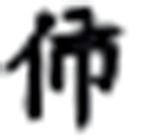 . They were noted to be the ancient characters of ‘佛’ (Zhang, 1985: 100). Of those two variant characters, ‘
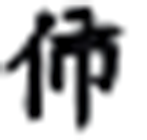 ’ has not yet been found in any documents in Vietnam.
In the book titled Chinese Character Variants: The Edition of Regular Script 中国异体字大系:楷书编, four variant characters of the word 佛 are introduced, comprising 彿,  ,
, and 仏 (Wang, 2008: 18). There is no information about the date or origin. Of those four characters, two –
  and
and  – have not so far been found in any documents in Vietnam.
In the online Yitizi Zidian (Guojia Jiaoyu Yanjiuyuan 2017), 12 variants of ‘佛’ are mentioned, comprising  ,
,  ,
,  ,
,  ,
,  ,
,  ,
,  ,
, 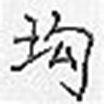 ,
, 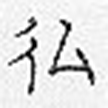 ,
, 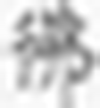 ,
, 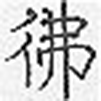 and
and  . In general, there are notes about the dates and origins of those variant characters. Of all the 12 characters, 6, consisting of
  ,
,  ,
, 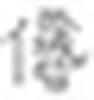 ,
,  ,
,  and
and 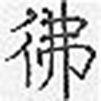 , have not yet been found in Vietna.
There is a wide variety of variant characters of the word ‘佛’ in Vietnam. Some of them are similar to those in reference books in China, but some have been found only in documents in Vietnam. The following is a summary of the variants of ‘佛’, which have so far been found in Vietnam.
1.The first variant character is ‘仏’ (亻+厶) found in the inscription Monument in the Great Chu Ma Mountain with Holy Rock Covered by Great Light (大朱摩山盎大光聖岩碑 Đại Chu Ma Sơn Áng Đại Quang thánh nham bi), library call number 29.477 in the collection of classical texts archived at the Institute of Sino-Nôm Studies, Hanoi, Vietnam (hereafter ‘call number’). It was engraved on the wall of Am Tiêm mountain cave in Trường Yên commune, Hoa Lư district, Ninh Bình province in 1166. The variant character ‘仏’ is found four times in the inscription; for example, in the sentence ‘百仏千臂’ (A hundred Buddhas and a thousand arms), and in the sentence ‘黃帝賴仏(佛)法之恩’ (The emperor relies on the Buddhist dharma) (École Française d’Extreme-Orient, 1998: 209). The variant character ‘仏’ is an associative compound (or compound ideogram; 會意字), dating back to 1166. It is the earliest among all the variant characters of
The variant character ‘仏’ is also found in the worship text in a book kept at Quang Khánh temple (popularly called Muống temple) in Ngũ Phúc commune, Kim Thành district, Hải Dương province. There is no information about the date of this text. The following is a paragraph in the worship text: ‘一心奉請,福基種就,心地栽培,必善緣還,長養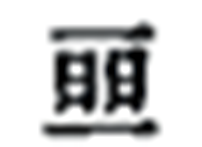 (聖)胎,非慧命旨,容成仏子’ (Praying wholeheartedly, building the foundation of happiness, cultivating good mind, good luck surely will come; nurturing the sacred embryo; the brainpower is better than others; the appearance looks like Buddha).
2.The second variant character is ‘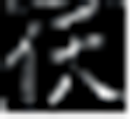 ’ (亻+ 天) written in the inscription Monument under the Bodhi Tree on the Road in Phúc Lâu Temple (造福摟寺
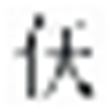 樹路碑 Tạo Phúc Lâu tự Phật thụ lộ bi), call number 5.830. It was engraved in 1607 on a stele located in Phúc Lâu temple in Trung village, Kì Vĩ commune, Gia Khánh district, Ninh Bình province. The variant character
 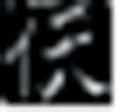 is also an associative compound, consisting of ‘亻’ (person) and ‘天’ (heaven) to imply that heaven and human are combined together to become Buddha. This variant is found quite abundantly in Sino-Nôm documents. One of the variant characters of ‘佛’ found in China is
 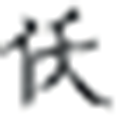 , consisting of ‘亻’ (person) and ‘夭’ (ogre, sprite). It looks quite similar to the variant character
  found in Vietnam, with a difference of ‘夭’ (Ch. yao) from ‘天’ (Ch. tian).
3.The third variant character is ‘ ’ (亻+ 西 + 國) written in the Inscription about Commemorative Consignment behind the Buddha (後
 碑記 Hậu Phật bi kí), call number 14.101. It was engraved in 1847 on a stele located in Bình An pagoda in Vĩnh Tường district, Vĩnh Phúc province. This variant character is an associative compound, consisting of ‘亻’ (person), ‘西’ (west) and ‘國’ (nation) to imply the person coming from the Western land, where Buddhism originated.
4.The fourth variant character is ‘ ’ (亻+ 西 + 天) written in the Inscription about Commemorative Consignment Following the Buddha (依
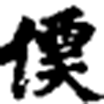 碑記 Y Phật bi ký), call number 31.574. It was engraved in 1859 on a stele located in the shrine of god worship in Trung Hoàng commune, Nghĩa Lương district, Quốc Oai prefecture (i.e. the present-day Trung Hoàng village, Thanh Bình commune, Chương Mĩ district, Hanoi). The variant character
  is an associative compound, consisting of ‘亻’ (person), ‘西’ (west), and ‘天’ (heaven, sky) to imply the person coming from the land under the Western sky, where Buddhism originated.
5.The fifth variant character is  (人 + 西 + 國) found in the Inscription about Commemorative Consignment behind the Buddha (依
 碑記 Hậu Phật bi ký), call number 31.567. This inscription is without any notes about the date. It was engraved on a stele located in the shrine of god worship in the above-mentioned Trung Hoàng commune. The variant character
 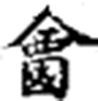 is an associative compound, consisting of ‘亻’ (person), ‘西’ (west) and ‘國’ (nation) to imply the person from the place in the Western land, where Buddhism originated.
6.The sixth variant character is 甶 (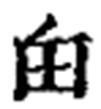 ,丿+ 田), which is found in the publication titled Five Thousand Characters Translated into National Language (五千字譯國語 Ngũ thiên tự dịch quốc ngữ), printed by Liễu Chàng publishers in 1909, call number AB.229. In the document, 甶 is printed clearly and phoneticised as ‘Phật’
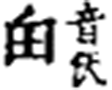 (甶音
(甶音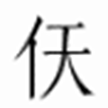 ). It consists of the upper part of the character ‘鬼’ (ghost). That is why it is often called ‘the character Buddha with a ghost head’ (Vietnamese: chữ Phật đầu quỷ) in Vietnam. This word was popularly used in Buddhist and Taoist worship books. There are two explanations for the composition of this variant character. According to the first explanation, it is formed from the word ‘鬼’ (ghost) without legs (the lower part); it is an indicative character (指事字), implying that those who lead a Buddhist life will be enlightened and become Buddha, if they have got rid of the ghost part. The second explanation presumes that 甶 consists of ‘丿’ (Vn. phiệt, left-falling stroke, or the radical variant of ‘撇’) and ‘田’ (Ch. tian; ‘field’), of which ‘phiệt’ shows the sound of ‘phật’, while ‘田’ implies the Buddhist robes worn by monks (田衣). Thus, it is a phono-sematic compound (形聲字). Herein, we can see that both the explanations for the formation of the variant character were appropriate for the purpose of teaching and disseminating Buddhist dogmas. I myself support the first explanation.
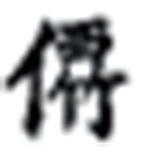
7.The seventh variant character is 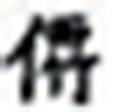 , consisting of ‘亻’ (person), ‘西’ (west) and ‘竹’ (bamboo). It is written in a book titled Nùng Family's Book (儂家書 Nùng gia thư) collected from the house of a shaman in Quản Bạ town, Quản Bạ district, Hà Giang province. The character ‘竹’ (Vn. Trúc/Ch. zhú, bamboo) is used instead of the character ‘竺’ (Vn. Trúc/Ch. zhú) in the compound ‘天竺’ (Western/Buddhist land), since they are homophones. This variant character
  is an associative compound that indicates the person from the ‘Western land’, the place of origin of Buddhism.
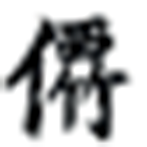
8.The eighth variant character is 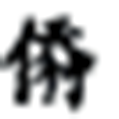 , consisting of ‘亻’ (person), ‘天’ (heaven), and ‘竹’ (bamboo, which is a homophone of ‘竺’). It is written in a worship book titled Worship Text (Cúng văn; 供文) found in the house of a shaman in Minh Khai commune, Thạch An district, Cao Bằng province. This variant character
 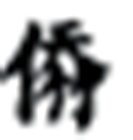 is an associative compound that implies the person coming from the Western land, where Buddhism originated.
9.The ninth variant character is 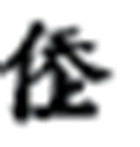 , consisting of ‘亻’ (person), ‘天’ (heaven), and ‘上’ (above). It is written in the above-mentioned Worship Text. This variant character
  is also an associative compound that implies the person coming from heaven or the Western land, where Buddhism originated.
10.While seeking and collecting research materials, I found a book titled Ancient Scientific Phonetic Interpretation for Handing Down to Posterity (音釋古學流傳後世 Âm thích cổ học lưu truyền hậu thế), which provides notes for the ancient sounds of Chinese character variants, including several variant characters of ‘佛’ (Vn. Phật). The variants from tenth to fourteenth are all from this text.
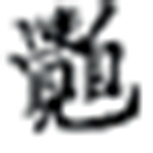
The tenth variant character is  , consisting of ‘
 ’ (conscious) and ‘自’ (self). It is an associative compound that means ‘self-enlightening’, implying that it is necessary to become self-enlightened first, before awakening others. It is one of the basic Buddhist tenets. A difference between the variant character
  in Vietnam and the variant character
  found in China is that the left part of the former is a simpler character (
 ) than the latter, which is traditional character (覺)
11.The eleventh variant character is  , consisting of ‘亻’ (person) and ‘市’ (pronounced as ‘Vn. thị/Ch. Shì’). The latter is used to replace the character ‘巿’ (pronounced as ‘phất/fú’), since they look similar in writing; it is also used to replace the word ‘弗’ (pronounced as phất) as they are homophones. Thus,
 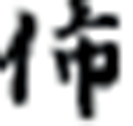 is a phono-sematic compound. This variant character closely resembles the variant character ‘
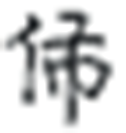 ’ written in the the online Yitizi Zidian (Guojia Jiaoyu Yanjiuyuan 2017), but the upper parts of the radical (部首) on the right are different.
12.The twelfth variant character is 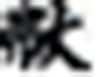 , consisting of ‘弗’ (Vn. phất/Ch. fú) and ‘大’ (Vn. đại/Ch. dà). It is a phono-sematic compound, in which ‘大’ is the sematic component and ‘弗’ is the phonetic component. This variant character
 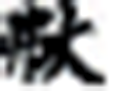 might have been formed due to a mistake in writing ‘弗’ (Vn. phất) and ‘人’ (Vn. nhân) on the right. However, this character can be explained by the idea that ‘nothing can be as great and generous as Buddha’ (弗大). This also means that it may be an associative compound.
13.The thirteenth variant character is 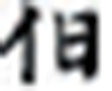 , consisting of ‘亻’ (Vn. nhân; i.e. person) and ‘日’ (Vn. nhật; i.e. daytime/sun). It is an associative compound that implies the great person with a radiant corona; that is, Buddha. In the book titled Complete Secrets for Buddhist Monks to Practise Precious Rites (釋氏寶鼎行持秘旨全章 Thích thị bảo đỉnh hành trì bí chỉ toàn chương), call number AC.225, compiled by Monk Huyền Quang (玄光), the character
  is found in the following sentence: ‘請其
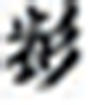 (諸)
(諸)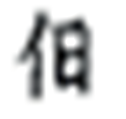 (佛)到壇場 (Invite politely all Buddhas to the preaching hall).
14.The fourteenth variant character is 仩 ( ), consisting of ‘亻’ (person) and ‘上’ (above). It is an associative compound that implies the person in the heaven above; that is, Buddha.
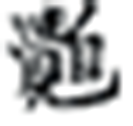
Of all the 14 variant characters of 佛, 12, comprising 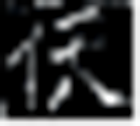 ,
,  ,
,  ,
,  ,
, 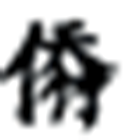 ,
, 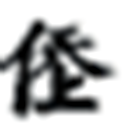 ,
, 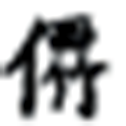 ,
, 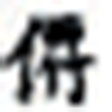 ,
,  ,
,  ,
,  and
and  , are uniquely found in Vietnam; they are not mentioned in the three above-mentioned dictionaries of variants of Chinese characters. It is a quite interesting point that shows the diversity of variant characters of 佛 in Vietnam.
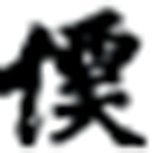
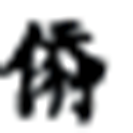
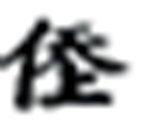
With regards to the principle of formation, 12 variants, comprising 仏,  ,
,  ,
,  ,
,  ,
,  ,
,  ,
,  ,
,  ,
,  ,
,  and
and 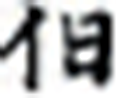 , are associative compounds (making up 85.70%), one (
 ) is a phono-sematic compound (making up 7.15%), and one (
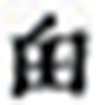 ) is an indicative character (making up 7.15%), according to the Liushu (六書; Six principles of writing). Thus, the variant characters belonging to the Huiyi (會意, associative compounds) type account for a majority of all the above-mentioned variant characters of ‘佛’ in Vietnam.
Surely, variant characters of ‘佛’ are not limited to a total of 14, but more variants will be found if we continue searching for them in Sino-Nôm documents in Vietnam.
Some particular variants of other Chinese characters in Vietnam
During the search for Chinese character variants in Vietnam, I came across some variants which are found in Vietnam but are not mentioned in the reference books of Chinese character variants in China. I would like to introduce some of them, as follows.
Two variants of the characters 之 (chi/zhi)
In China, as mentioned in the Kangxi Zidian (Zhang, 1985: 80), there are two variant characters of ‘之’:  and
and  . Meanwhile, the Chinese Character Variants: The Edition of Regular Script (Wang, 2008: 7) introduces four variant characters, comprising
  ,
,  ,
,  and
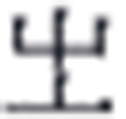
and 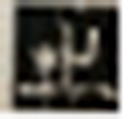 . At the same time, the online Yitizi Zidian (Guojia Jiaoyu Yanjiuyuan 2017) introduces 13 others; these are
  ,
,  ,
,  ,
,  ,
,  ,
, 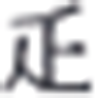 ,
,  ,
, 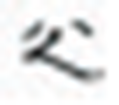 ,
,  ,
,  ,
,  ,
,  and
and  .
.
Apart from the above-mentioned variants of ‘之’, which have been found in China, I have collected two others in Vietnam, as follows. These two variants of ‘之’ might have been derived from the seal character ‘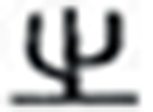 ’ of ‘之’ as shown in the Shuowen Jiezi (說文解字).
The first one is 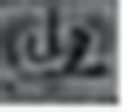 , consisting of ‘山’ (Vn. Sơn/Ch. shan; mountain) and ‘一’ (Vn. nhất/Ch. yi; one). It is found in the Inscription about Commemorative Consignment behind the Deity (Hậu thần chi bi 后神
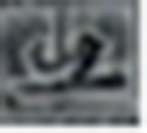 (之) 碑), call number 4.383. It was engraved in 1689 on a stele in the communal house of Phương Độ commune, Gia Bình district, Bắc Ninh province
The second one is  (亗), consisting of ‘山’ (Vn. Sơn/Ch. shan; mountain) and ‘二’ (Vn. nhị/Ch. er; two). It is found in the inscription Map of Vĩnh Phúc Inscription (Vĩnh Phúc bi chi đồ 永福碑
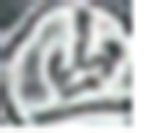 (之)圖), call number 3.284. It was engraved in 1680 on a stele in Bồng Lai commune, Từ Liêm county, Quốc Oai prefecture (i.e. present-day Bồng Lai village, Hồng Hà commune, Đan Phượng district, Hanoi).
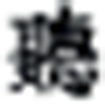
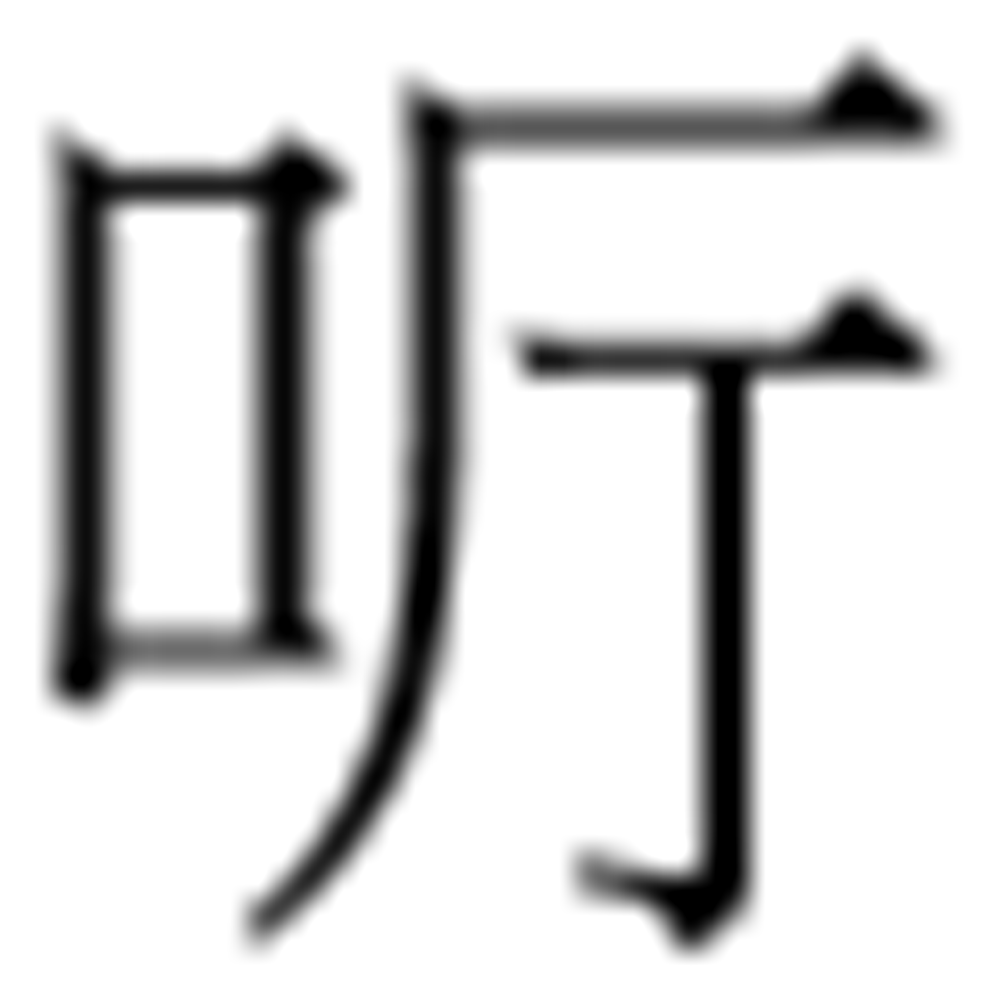
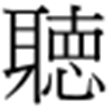
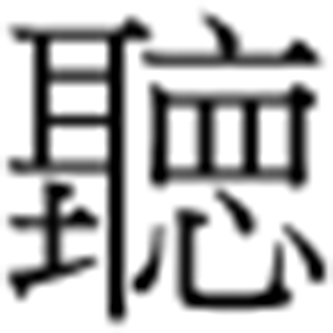
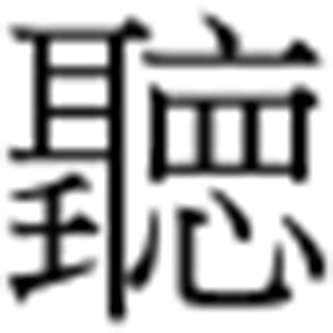
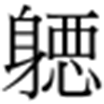
A variant of the character 聽 (thính/ting)
In China, the Kangxi Zidian (Zhang, 1985: 1079) mentions two variant characters of ‘聽’; these are 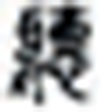 and
and  . The Chinese Character Variants: The Edition of Regular Script (Wang, 2008: 311) introduces eight variants, comprising
  ,
, 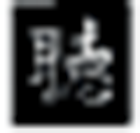 ,
,  ,
,  ,
,  ,
, 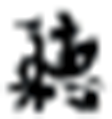 ,
,  and
and  . Meanwhile, the online Yitizi Zidian (Guojia Jiaoyu Yanjiuyuan 2017) introduces 21, consisting of
  ,
,  , 听,
, 听,  ,
,  ,
,  ,
,  ,
,  ,
,  , 聴,
, 聴,  ,
,  ,
,  ,
,  ,
,  , 聼,
, 聼,  ,
,  ,
,  ,
,  and
and  .
.
In Vietnam, ‘聽’ is also written as ‘咱’. It is, however, isomorphic to another Chinese character, 咱, implying the first-person pronoun, pronounced as zán according to the Beijing pronunciation or cha or gia in Vietnamese. It is probably a rebus, also called a phonetic loan character (假借字) of the Chinese character ‘咱’ (Vn. Cha/Ch. zán). In Trấn Quốc Buddhist temple, which was built in the 7th century but has been reconstructed many times and is now a very interesting tourist attraction in Hanoi, there is a pair of parallel sentences, of which one consists of the word ‘咱’ with the meaning of ‘to listen’: ‘湖外水澄魚咱偈,園中森茂鳥聞經’ (In the limpid lake, fish are listening to the gathas; In the verdant garden, birds are listening to the prayers) (Trịnh, 2009: 60).
In a book titled Thọ Mai Family Rituals (Thọ Mai gia lễ 壽梅家禮) written by Hồ Gia Tân in the 17th century (Trịnh, 2018: 185), which is one of the well-known publications on Vietnamese rituals, the word ‘咱’ referring to ‘聽’ is found in the following sentence: ‘凡書銘旌時併𡦂鬼酷灵咱勿犯鬼酷字’ (When writing the name and the title of the dead on the pennant, it is necessary to pay attention to the characters ‘鬼, 酷, 灵, 咱’; do not use ‘鬼’ and ‘酷’.)
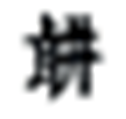
A variant of the character 聖 (thánh/sheng)
In China, the Kangxi Zidian (Zhang, 1985: 1076) mentions three variant characters of the word ‘聖’, which are  ,
,  and
and 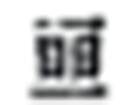 . The Chinese Character Variants: The Edition of Regular Script (Wang, 2008: 310) introduces four variant characters, consisting of
  ,
,  ,
,  and
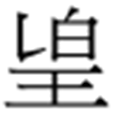
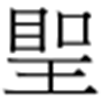
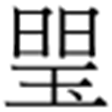
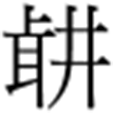
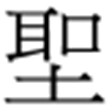
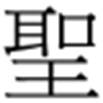
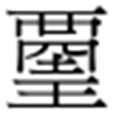
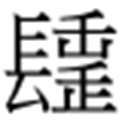
and  . Meanwhile, the online Yitizi Zidian (Guojia Jiaoyu Yanjiuyuan 2017) introduces 56, comprising
  ,
,  ,
,  ,
,  ,
,  , 圣, 垩,
  ,
,  ,
,  ,
,  ,
,  ,
,  ,
,  ,
,  ,
,  ,
,  ,
,  ,
,  ,
,  ,
,  ,
,  , 琞,
, 琞, 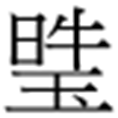 ,
, 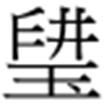 ,
,  ,
, 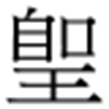 ,
,  ,
, 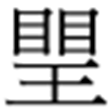 ,
,  ,
, 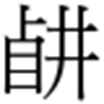 ,
,  ,
,  ,
,  ,
,  ,
,  ,
,  ,
,  ,
,  ,
, 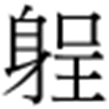 ,
, 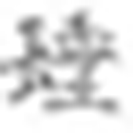 ,
,  ,
,  ,
, 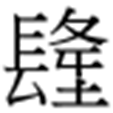 ,
, 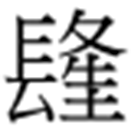 ,
, 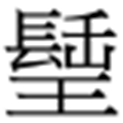 ,
, 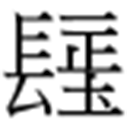 ,
, 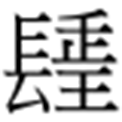 ,
,  ,
,  ,
,  ,
, 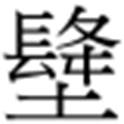 ,
,  ,
,  ,
,  and
and 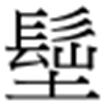 ..
..
In Vietnam, in the Inscription on Land Contribution for Động Temple/Praising for Rebuilding Work of Động Temple (Công đức điền Động tự bi kí ’ (王 + 王 + 王), consisting of three ‘王’ characters (Vn. vương/Ch. wang: king), is found in the sentence ‘至
 (聖)賢傳繼’ (to be continued by saints and sages) and the compound ‘
 (聖)子’ (saint). In a different copy of the book Complete Secrets for Buddhist Monks to Practise Precious Rites (寶鼎行持秘旨全章), call number VHv.1096, the variant ‘
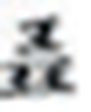 ’ is also found in the sentence ‘至靈至感是
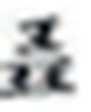 (聖)是賢’ (being extremely sacred and rehabilitated, you will become saints and sages). In the document titled Text for Worshiping Patriarch at Phúc Lâm Temple on His Death Date on the 13th Day of the Third Lunar Month (Phúc Lâm từ tam nguyệt thập tam nhật húy kị Thánh tổ khoa 福林祠三月十三日諱忌聖祖科) found in Phúc Lâm Buddhist temple, Quốc Oai district, Sơn Tây province (the present-day Sơn Tây district, Hanoi),
2
there are many Chinese character variants, including the character ‘
(聖)是賢’ (being extremely sacred and rehabilitated, you will become saints and sages). In the document titled Text for Worshiping Patriarch at Phúc Lâm Temple on His Death Date on the 13th Day of the Third Lunar Month (Phúc Lâm từ tam nguyệt thập tam nhật húy kị Thánh tổ khoa 福林祠三月十三日諱忌聖祖科) found in Phúc Lâm Buddhist temple, Quốc Oai district, Sơn Tây province (the present-day Sơn Tây district, Hanoi),
2
there are many Chinese character variants, including the character ‘ ’ in the sentence ‘
 (聖)壽无疆’ (Saints live forever). The variant character
  (王 + 王 + 王) is an associative compound, which implies that saints (聖) are more important than kings (王).
Conclusion
Chinese characters exerted a great influence on the countries in East Asia and became common property of all the countries in this region. In each of these countries, particular Chinese character variants were created, bearing the national characteristics of the country. Based on the analysis of the variant characters of ‘佛’ (Vn. Phật/Ch. Fó) in Vietnam, we can see that Chinese character variants appeared in Vietnam during the 12th century at the latest, when the Chinese script was prevalent in the history of Literary Sinitic in Vietnam. There have been, however, very few achievements gained in the research on Chinese character variants in Vietnam. This paper has aimed to introduce some Chinese character variants, focusing on the variant characters of the word ‘佛’ from the Sino-Nôm documents that have been collected, and demonstrating the diversity of Chinese character variants generally and those of the character ‘Buddha’ specifically in Vietnam. 3
Footnotes
Declaration of conflicting interests
The author(s) declared no potential conflicts of interest with respect to the research, authorship and/or publication of this article.
Funding
This research received no specific grant from any funding agency in the public, commercial or not-for-profit sectors.
1.

2.
A copy of this document was provided by Nguyễn Văn Thanh, enclosed with the phonetical transcription made by Lê Quốc Việt and Trần Trọng Dương. On page 10, it was also noted with the name ‘Cung Khắc Lược’. I would like to express my gratitude to these colleagues.
3.
The author thanks Dr. Nguyễn Tuấn Cường (Institute of Sino-Nom Studies) for his insightful comments and suggestions to this article.