




Abstract
Conservation projects commonly claim to convert local people into long-term environmental stewards and improve their well-being. Yet, evidence frequently contradicts these win-win claims. The “multiple environmentalities” framework outlines distinct approaches that projects often use to foster environmental motivation and behavior: (1) neoliberal: constructing material incentives, (2) sovereign: imposing protective laws, and (3) disciplinary: fostering norms and values. We use a mixed method approach to examine how combinations of these environmentalities shape the land use motivations and behavior of 270 families living in 15 project settings in the Peruvian Amazon. We identify four direct reasons why these projects often fail to achieve their intended outcomes, regardless of the environmentalities employed: (1) self-selection of like-minded individuals, (2) limited ability of extrinsic motivators (i.e. material incentives and protective laws) to reduce reported deforestation behaviors, (3) limited internalization of motivations for conservation, and (4) ignored broader economic drivers of deforestation. We argue that these challenges stem from the typical external design of conservation projects based on fixed and limited interpretations of human motivation. Our findings point to the importance of deliberative processes that can support local and external actors to navigate and reframe competing motivations to co-design approaches to conservation governance at local and broader scales.
Introduction
Diverse approaches are used to conserve nature in local settings around the world. Several strategies have become particularly prevalent worldwide, including protected areas, community-based regimes, and market-based approaches (Borgerhoff Mulder and Coppolillo, 2005; Büscher and Fletcher, 2015; Roe, 2008). Projects based on one or more of these strategies often promise multiple local and global scale benefits, such as to conserve biodiversity, maintain watersheds, preserve cultural values, reduce poverty, meet global food demands, and mitigate climate change (Muradian et al., 2013; Roe et al., 2003). The spread of these initiatives has outpaced the critical assessment of their impacts, with serious deficiencies and growing concerns regarding our understanding of how they shape local conservation and human well-being outcomes (Agrawal and Redford, 2006; McShane et al., 2011; Roe et al., 2015; Sunderland et al., 2008). This has led to heated debates in recent years over whether or not to give nature monetary value to conserve it (Kallis et al., 2013), and whether or not to support the top-down protection of nature versus more integrated participatory approaches (Büscher et al., 2017).
This paper sheds light on these debates by taking an in-depth look at how distinct conservation and development strategies interact with the heterogeneous motivations of people living in project areas to shape their land use motivations and behaviors. We employ the “multiple environmentalities” framework (see Fletcher, 2010) to guide our investigation, which outlines distinct ways of motivating conservation behavior, such as through offering incentives (i.e. neoliberal), imposing enforcement (i.e. sovereign), or internalizing new norms and values (i.e. disciplinary). The emerging literature that applies this framework has explained how and why conservation projects often produce contradictory and unintended outcomes in specific project settings (Bluwstein, 2017; Valladares and Boelens, 2019; Youdelis, 2013). To our knowledge, we provide the first study that systematically examines the full process of how and why different combinations of these environmentalities and other factors shape reported deforestation motivations and behaviors of diverse individuals living in multiple project sites in northern Peru. Our explanation of the most proximate reasons why win-win conservation projects often fail generates important practical insights for how interventions can foster long-term environmental commitment. We also offer theoretical insights that inform how interacting environmentalities are conceptualized and their role in advancing these practical efforts.
To elaborate these insights, we first begin with an overview of the key theoretical distinctions that the multiple environmentalities framework entails. We then reflect on some key concerns and debates raised across the literature regarding the implications of these intersecting approaches before proceeding with our analysis in the context of the San Martin Region in northern Peru. Our findings highlight some major reasons why joint conservation and development projects often fail, paving the way for our discussion of how projects could possibly be done differently, and the potential role of a reconceptualized environmentalities theory to inform this effort.
Multiple environmentalities to motivate conservation
The “multiple environmentalities” framework introduced by Fletcher (2010) draws upon Foucault's (2008) multiple governmentalities theory to explain distinct ways that interventions attempt to influence subjects to produce environmental behavior. The focus is on how interventions seek to “discipline” people to think, speak, and act in particular ways to achieve their objectives (Foucault, 1980, 1994). Three distinct environmentalities outlined include: (1) neoliberal: “manipulation of external incentive structures,” (2) sovereign: “top-down creation and enforcement of regulations,” and (3) disciplinary: “encouraging internalization of norms and values” (Fletcher, 2010: 178). These environmentalities are based on divergent assumptions regarding the major problem limiting conservation success, and thus necessary solution to motivate the desired behavior change (Figure 1). These problem-solution frames are rooted in contrasting views of human motivation, for example people can be seen as primarily “rational” self-interested actors most responsive to sticks and/or carrots or “moral” self-disciplined actors capable of leading conservation governance. However, these approaches are not mutually exclusive; indeed, projects often combine environmentalities, assuming complementary effects (Fletcher, 2017). We proceed by describing these three environmentalities and some key assumptions related to how they are employed alone or in combination (see Figure 2).
Fixed assumptions of each environmentality regarding the main problem to address, solution offered, and motivational result that creates environmental subjects. Conceptual map of overlapping approaches to conservation (informed by Douglas, 1978; Fletcher, 2010; Stern et al., 1993).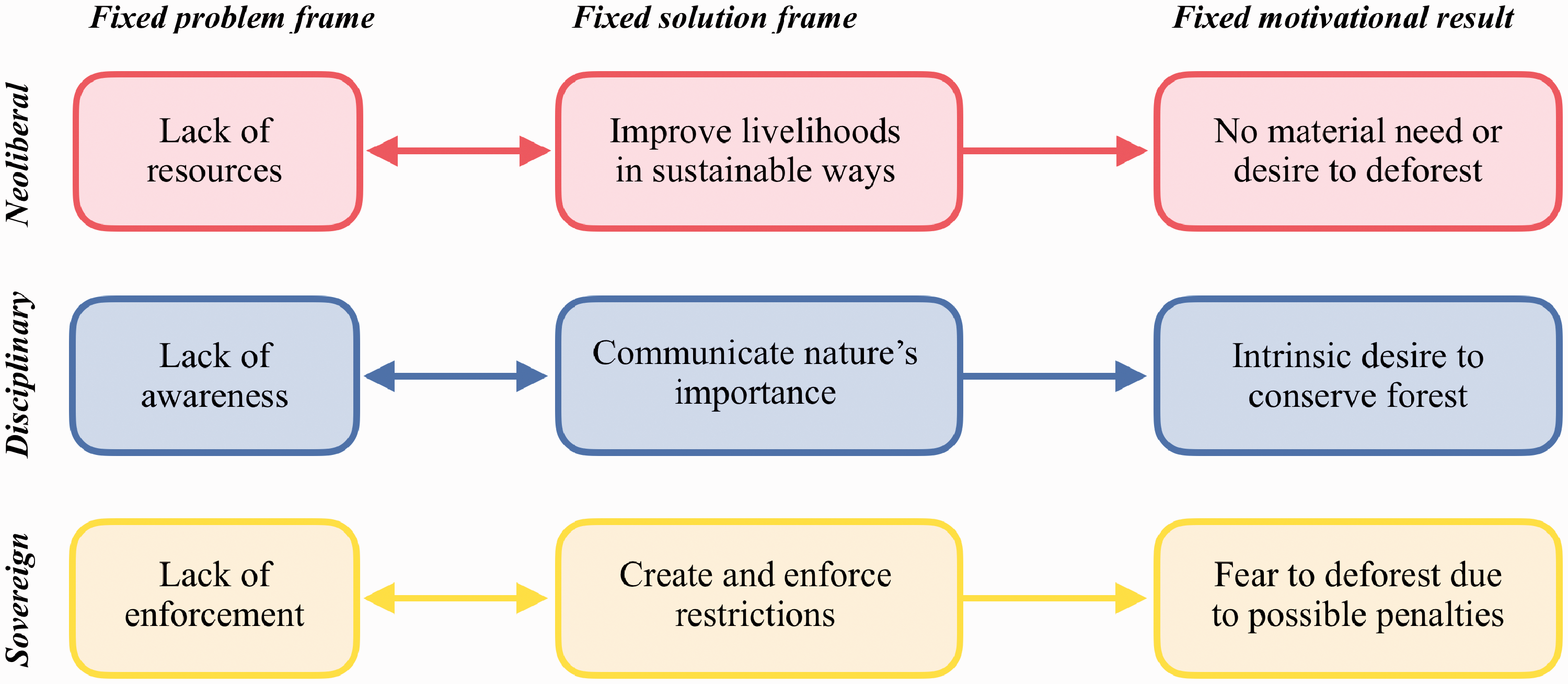

A neoliberal environmentality approach to conservation embraces the growing trend in conservation of increasing nature's economic value to incentivize its conservation (Fletcher, 2010; McAfee, 1999). This approach views people as primarily driven by “rational” economic and individualistic concerns (Douglas, 1978). Poverty is therefore often framed as a “critical constraint on conservation” (Adams et al., 2004: 1147), making income generation key to conservation success. Several mechanisms fall under this banner, such as integrated conservation and development projects (Blom et al., 2010), sustainable agricultural intensification (Tilman et al., 2011), ecological certifications (Blackman and Rivera, 2010), and voluntary payments for ecosystem services (PES) schemes (Farley and Costanza, 2010). These mechanisms range from the sole production of benefits to reduce people's economic need to deforest (Figure 2; approach N), to integrating environmental messages, such as through community-based ecotourism or PES schemes (Figure 2; approach ND). The former assumes that material benefits alone can incentivize conservation, while the latter assumes that people must jointly learn about the importance of the environment in order to “crowd in” (i.e. internalize) values that may outlive the incentives (see Frey and Jegen, 2001).
A sovereign environmentality approach to conservation is widespread globally through the creation and enforcement of protected areas (Fletcher, 2010). This approach (Figure 2; approach S) explicitly prioritizes conservation over development aims, a position embodied in the “nature needs half” discourse (Wilson, 2016) and the idea that nature must be safeguarded from local people (Oates, 1995; Redford, 1991). However, growing recognition of the negative social impacts of protected areas and the idea that local people's support may be critical for achieving conservation has produced a more socially sensitive variant. Such projects first secure conservation through hierarchical authority (Douglas, 1970, 1978), and then employ neoliberal environmentality to compensate local people for costs borne from restrictions and to incentivize compliance (Adams and Hutton, 2007; Brockington and Igoe, 2006) (Figure 2; approach SN). This effort may be driven by a concern for social equity—that conservation should do no harm to the poor—and/or may be seen as an efficient means to conservation if poverty is seen as the root cause of environmental degradation (Karsenty et al., 2017).
While the environmentalities discussed thus far rely on extrinsic structures to change behavior and therefore inherently assume that conservation is not in local people's self-interest, the disciplinary environmentality approach (Figure 2; approach D) instead views conservation as being important for local people. This is because poverty reduction is seen as dependent on conserving natural resources (Adams et al., 2004) and also often because people are seen to be capable of recognizing the intrinsic importance of nature. The widespread community-based natural resource management (CBNRM) movement embraces this assumption that interventions can instill biospheric and altruistic knowledge and values (see Stern et al., 1993) in order to promote conservation (Agrawal, 2005). Such projects also commonly seek to create and enforce governance regimes to regulate people's use of natural resources, such as through community forest guardians (i.e. Figure 2; approach SD).
Neoliberal, sovereign, and disciplinary environmentalities are rarely employed in isolation, but instead frequently combined in practice (Fletcher, 2017). For example, protected area regimes may jointly employ material incentives and/or environmental education (Figure 2; approach SND), with the assumption that these approaches are naturally complementary to enhance project success. Similarly, efforts to catalyze community conservation may involve the development of new income sources and efforts to create and enforce use restrictions. Despite many implicit assumptions regarding the effects of these distinct approaches and how they interact to shape local people's motivations for conservation, they are rarely systematically studied (Fletcher, 2017). Several recent papers have emphasized the need to better understand the causal mechanisms by which intervention approaches shape people's motivations and behaviors in particular ways (Börner et al., 2016; Fletcher, 2017; Miteva et al., 2012; Rode et al., 2015). We proceed with a brief overview of existing literature on the potential conservation implications of these environmentalities before moving on to our in-depth exploration of their implications in the context of forest conservation projects in the San Martin Region, Peru.
The promises and perils of distinct environmentalities
Using the lens of multiple environmentalities but drawing upon the broader conservation impact evaluation literature, we review some evidence for the potential implications of the approaches outlined above. We do not provide an exhaustive review, but rather highlight some key concerns and debates raised to date that we seek to inform with our study.
Fierce debate has emerged surrounding the implications of a neoliberal environmentality approach to resolving conservation problems. Proponents claim that giving nature economic value can directly incentivize its conservation (Blackman and Naranjo, 2012; Pagiola, 2008) and help “crowd in” long-term intrinsic motivations (Rosa et al., 2003; Wunder, 2013). Others caution that this approach can (1) perversely incentivize nature's degradation (Belcher et al., 2005; Crook and Clapp, 2002; Kusters et al., 2006; Lybbert et al., 2011); (2) shift ecologically destructive activities to other behavioral or spatial realms (Brashares et al., 2011; Madhusudan, 2005; Stronza, 2009); (3) exacerbate social inequalities through elite capture and resource grabbing behaviors (Corbera et al., 2007; Fairhead et al., 2012; Pokorny et al., 2012; Sommerville et al., 2010a); (4) produce limited effects that disappear when incentives do (Clough et al., 2009; Fisher, 2012); (5) “crowd out” moral reasons to conserve (Rode et al., 2015); and (6) reify relatively minor behavioral shifts of poorer actors while failing to question more ecologically damaging neoliberal patterns of power and resource distribution (Büscher et al., 2012; McAfee, 1999). It therefore remains unclear under what conditions material incentives can help further long-term conservation aims or may work against them.
Considering the role of sovereign environmentality, studies that have examined the effectiveness of terrestrial protected areas suggest that on average they have prevented 12% of deforestation within their boundaries (Andam et al., 2008; Miteva et al., 2012; Sims, 2010). Yet, high rates of deforestation and degradation persist in many protected areas with weak governance and limited funds (Bonham et al., 2008; Curran et al., 2004). Protected areas can also produce “leakage,” whereby pressures from human activities are displaced elsewhere (Ewers and Rodrigues, 2008; Gan and McCarl, 2007). In some cases, enforcement mechanisms may be so effective that biodiversity objectives can be achieved amidst a disregard for social impacts (Brockington, 2003). However, in many cases the social process by which restrictions are developed and enforced will heavily shape outcomes (Lele et al., 2010; West et al., 2006). Despite increasing efforts to improve livelihoods in protected areas, benefits have often failed to provide socially acceptable compensation for negative impacts such as constrained resource access and forced evictions, making protected areas significant sites of conflict and struggle (Adams and Hutton, 2007; Baker et al., 2013). It therefore remains unclear how creating and enforcing rules can play a productive role in conservation efforts, as opposed to hindering outcomes by alienating potential local allies.
The implications of disciplinary environmentality for fostering collective concern for conservation have been examined in the CBNRM literature, with numerous success stories reported (Chhatre and Agrawal, 2009; Kilbane Gockel and Gray, 2009; Ostrom and Nagendra, 2006; Persha et al., 2011). However, the causal mechanisms remain unclear given the typical self-selection bias of participating communities and wide diversity regarding what CBNRM means in practice (Bowler et al., 2012; Lele et al., 2010; Miteva et al., 2012). For example, early community-based management models, such as integrated conservation and development projects, were more focused on generating revenue (i.e. neoliberal environmentality) than enhancing the awareness, rights, and governance capacity of communities (Dressler et al., 2010). Systematic reviews show some evidence for improved social outcomes; however, conservation success has been limited, and joint success across both dimensions is rare (Bowler et al., 2012; Dressler et al., 2010; Lele et al., 2010; Samii et al., 2014). These failures have led some to demand renewed attention to protected areas (Hutton et al., 2005; Wilson, 2016). Other perspectives show that community driven efforts can be successful amidst strong democratic governance, state recognition, long-term facilitation, and equitable benefit-sharing (Brooks, 2016; Haller et al., 2018; Tole, 2010; Waylen et al., 2010). There is still limited understanding of how people come to embrace environmental values and norms.
We aim to contribute to all of these ongoing debates by providing the most systematic study to date of how these three environmentalities that underpin common conservation strategies worldwide shape the motivations of diverse local actors in northern Peru. Past studies have assessed the outcomes of one or more interventions in particular contexts (e.g. Ellis and Porter-Bolland, 2008; Ferraro et al., 2013; Sommerville et al., 2010b). The broader impact evaluation literature has often focused on individual policy instruments (such as PES or protected areas), across numerous contexts, without recognizing how these models often employ different mixtures of regulatory, economic, and/or informational strategies in practice (Barton et al., 2017). The emerging environmentalities literature has examined these components in specific project contexts using primarily qualitative methodologies. We apply a mixed method approach to investigate the detailed ways combinations of these environmentalities shape individual motivations and behaviors across 15 project sites in northern Peru.
Our findings explain how and why people often respond to these strategies in unintended ways to limit project success. We demonstrate that the improvement of projects is not so much a matter of what law, incentive, or message will work best, but rather how the competing motivations of internal and external actors are facilitated to interact and reshape each other. In doing so, we challenge the focus of the environmentalities framework on analyzing the implementation of strategies (cf. Cepek, 2011; Cortes-Vazquez and Ruiz-Ballesteros, 2018), and argue its potential lies in how it can help identify and negotiate competing motivations to co-design conservation governance initiatives. These insights are timely given how widespread these strategies are among projects in northern Peru and worldwide, and ongoing concerns regarding their impacts (Börner et al., 2016; Fletcher, 2017).
Background: A landscape of environmentalities
Overview of research area
The San Martin Region provides an ideal setting for this research, as it is home to a diverse array of intervention forms that combine different environmentalities. Environmental conservation first became an issue in San Martin with the construction of a major highway across the region in the 1960s. This set in motion a historical migratory pathway from the Peruvian highlands and northern coast to San Martin in pursuit of cheap land for agricultural expansion, leading to a six-fold increase in population and the loss of 26% of the region's forest cover by 2000 (MINAM, 2009). Initial efforts to conserve the region's forests in the mid-1980s involved the expansion of environmental regulation and protected areas at the national scale (Zinngrebe, 2016). Although protected areas in San Martin were initially poorly managed, the creation of the Regional Environmental Authority in 2010 greatly increased enforcement capacity. As a consequence, 142 people were prosecuted for deforesting a total of ∼900 hectares in 2012, up from just 11 people in 2009 (FEMA-Moyobamba, 2013). The steep increase in international funding for protected areas in San Martin since the late 2000s has supported the expansion of livelihood projects to compensate for negative impacts (Nakamura, 2017).
A contrasting conservation strategy spread throughout the San Martin Region in response to the global community-based conservation narrative and the passing of 11 major decentralization laws in Peru during 2002–2004, which handed over power and funding to regional and local governments to manage their territories (Martinez-Vasquez, 2013; Zinngrebe, 2016). This facilitated the development of a new legal tool—“conservation concessions”—which allowed civil society groups to formally manage state-owned lands for conservation purposes. The first conservation concession in San Martin was established by a community group in 2006; over 30 concessions now exist, covering more than 12% of the region's territory (ARA-GORESAM, 2017).
A third conservation strategy that emerged in the region of San Martin stems from the framing of the agroforestry cash crops coffee and cacao as sustainable alternatives to environmentally destructive coca and “slash-and-burn” practices in the early 2000s (UNODC, 2011). Related conservation interventions have since sought to jointly increase the economic and biodiversity value of cash crop areas by incentivizing agroforestry practices, planting trees on-farm, improving agricultural productivity, and developing ecologically certified value chains. In some cases, these efforts have been explicitly coupled to sparing natural habitat through voluntary conservation agreements. Over the past decade, international corporations seeking to voluntarily offset their carbon emissions have increasingly funded such approaches in San Martin, facilitated by the establishment of the San Martin REDD + Roundtable in 2011 (la Mesa REDD +San Martín, 2013).
As a result of all of these efforts, San Martin is now known as the “green region” of Peru, with 72% of its remaining forest cover (encompassing 47% of the total land area) presently under some form of conservation management, increased from just 12% in 2000 (ARA-GORESAM, 2017). Yet, at the same time, deforestation rates are on the rise since 2000 (la Mesa REDD + San Martín, 2013), driven by the 3.5-fold expansion of the major cash crops of coffee, cacao, and oil palm (DRASAM, 2013).
Overview of project sites
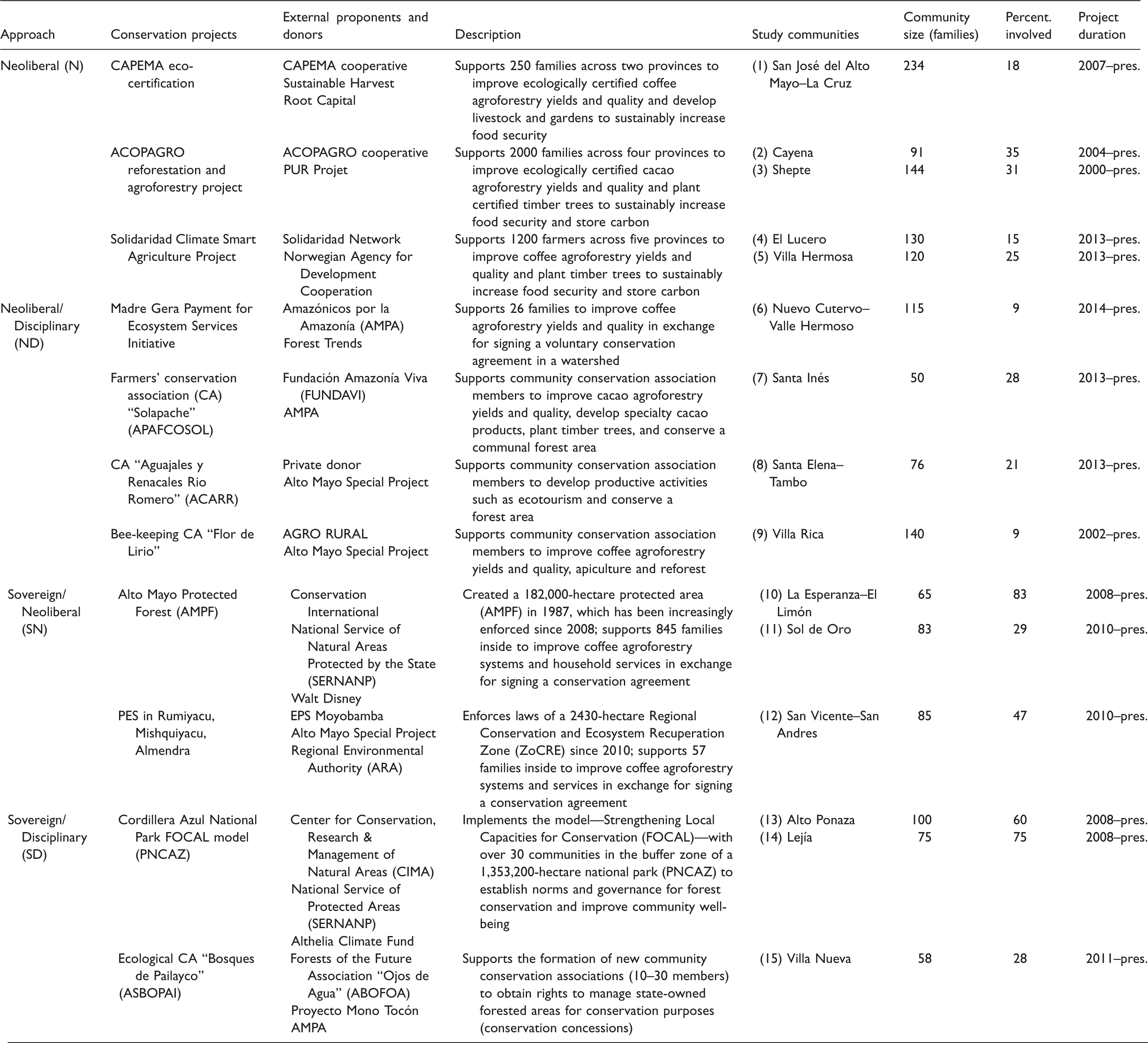
The historical expansion of protected areas, community-based management regimes, and cash crop incentive programs across the San Martin Region produced a diverse landscape of conservation projects that encompass various combinations of environmentalities. To examine multiple cases of interventions combining particular environmentalities, pilot interviews were conducted with 25 San Martin-based conservation project managers in 2013 to select a total of 15 study communities (Figure 3). We included at least three sites for each combination of two environmentalities (Figure 2; approaches SN, SD, and ND). Due to the much higher prevalence of projects mainly rooted in neoliberal environmentality (approach N), we chose to also examine five examples of this category. Although these fixed boundaries are necessary to distinguish between approaches, it is important to emphasize how fluid interventions are across the conceptual space portrayed in Figure 2. We did not label any cases as equally employing all three environmentalities (i.e. approach SND), as all projects tended to favor certain environmentalities over others. The sites selected for each approach are not evenly spaced throughout the region, as people only lived inside of protected areas in the northwest, and the only projects that combined disciplinary and sovereign environmentalities were located in the east.
Location of 15 study communities across four provinces of the San Martin Region, Peru.
Characteristics of conservation projects and study communities (numbers correspond with those in Figure 3).
Data collection and methods
The methods used in this study were designed to understand: (1) the main motivations and factors that shape deforestation behaviors, (2) the main implications of who does (or does not) participate in interventions, (3) how interventions employing distinct combinations of environmentalities influence people's motivations, and (4) the link between these motivations and reported deforestation behaviors. We will briefly describe the combined qualitative and quantitative methods we used to examine each of these topics with families living in each of the 15 project sites, with further details available in the Supplemental Materials. Our study design sought to balance our commitment to build mutual trust and respect with community members and listen to their in-depth perspectives with our desire to learn from diverse perspectives exposed to different conservation strategies by a range of organizations. Our design and methods piece together the process by which interventions enter communities, engage with particular actors, and shape their motivations in certain ways, with behavioral implications.
Selecting and interviewing households
In each of the 15 study communities, we first held a community meeting to explain the research purpose and plans, and to request permission (details provided in Appendix A of the Supplemental Materials). In 15 communities where permission was granted (of 16 total requests), we then worked confidentially with leaders to categorize all families according to their level of intervention participation and socio-economic status. We then randomly selected families in each category until we identified 18 families that accepted a visit, including both conservation project participants (nine) and non-participants (nine), and then within each of those groupings, families of higher (three), middle (three), and lower (three) socio-economic status. Among all families selected, 81% chose to accept the visit following free, prior, and informed consent.
With each of the 270 families, we employed a novel research approach that involved a day-long mixed method visit during March 2015–January 2016. Our ability to quickly build trust and relationships through these visits was aided by the long-term experience that all four interviewers had living and working in the region. With each family, we spent half of the day in participant observation, visiting their farm (in 86% of cases), and joining in daily activities such as farming, housework, playing sports, and eating meals. We contributed food to prepare lunch together to show a token of appreciation and avoid being a financial burden. The rest of the visit entailed a mean total of 6.5 hours of semi-structured and structured interviews dispersed throughout the day with both male and female household heads. The interview design was informed by half-day participatory workshops that we conducted in 2014 with separate groups of men and women in nine communities in the project areas (full details are available in Appendix B of the Supplemental Materials). We describe how these workshops specifically informed our various research methodologies below.
Understanding land use motivations and behaviors
Rather than assuming that intervention participation is the most relevant factor shaping conservation behaviors (as impact evaluation studies tend to do), we first sought to understand the broad range of factors that shape people's land use behaviors. To identify potentially influential factors, we conducted the following exercises in our initial participatory workshops with communities in 2014: (1) mapping of common land uses, (2) wealth ranking, (3) discussion of food security, (4) personal and communal future visioning, (5) ranking of expressed values, and (6) listing of motivations for farm and forest management. The range of factors explored in workshops was informed by reviewing deforestation studies in diverse contexts (e.g. Agrawal and Chhatre, 2006; Angelsen and Kaimowitz, 2001; Calkins and Thant, 2011; Farmar-Bowers and Lane, 2009), and human behavioral theories from the fields of social psychology, behavioral economics, and political ecology (e.g. Bandura, 1989; Deci and Ryan, 2002; Fletcher, 2010; Frey and Jegen, 2001; Ribot and Peluso, 2003; Sen, 1985; Stern et al., 1993).
Explanatory variables for self-reported deforestation behaviors.

In addition to specific motivations for conservation, several parts of the interview were designed to better understand people's values. The most notable distinctions among values expressed in the workshops closely followed Stern et al.'s (1993) biospheric, altruistic, and egoistic categories; thus, locally appropriate methods were trialed to explore these values. For example, people were placed in hypothetical scenarios where they had to make trade-offs between personal, communal, and ecological outcomes. These exercises produced measures that correlated with the extent to which respondents' future family and community visions expressed more biospheric, altruistic, or egoistic values (based on qualitative coding). These data were combined through a PCA to provide a solid basis for comparing relative values across households. Two main value orientation axes emerged—(1) materialistic versus non-materialistic and (2) social versus ecological—which together explained 43% of the total variance (see value orientations in Table 2 and Appendix C of the Supplemental Materials for details).
Defining conservation outcomes
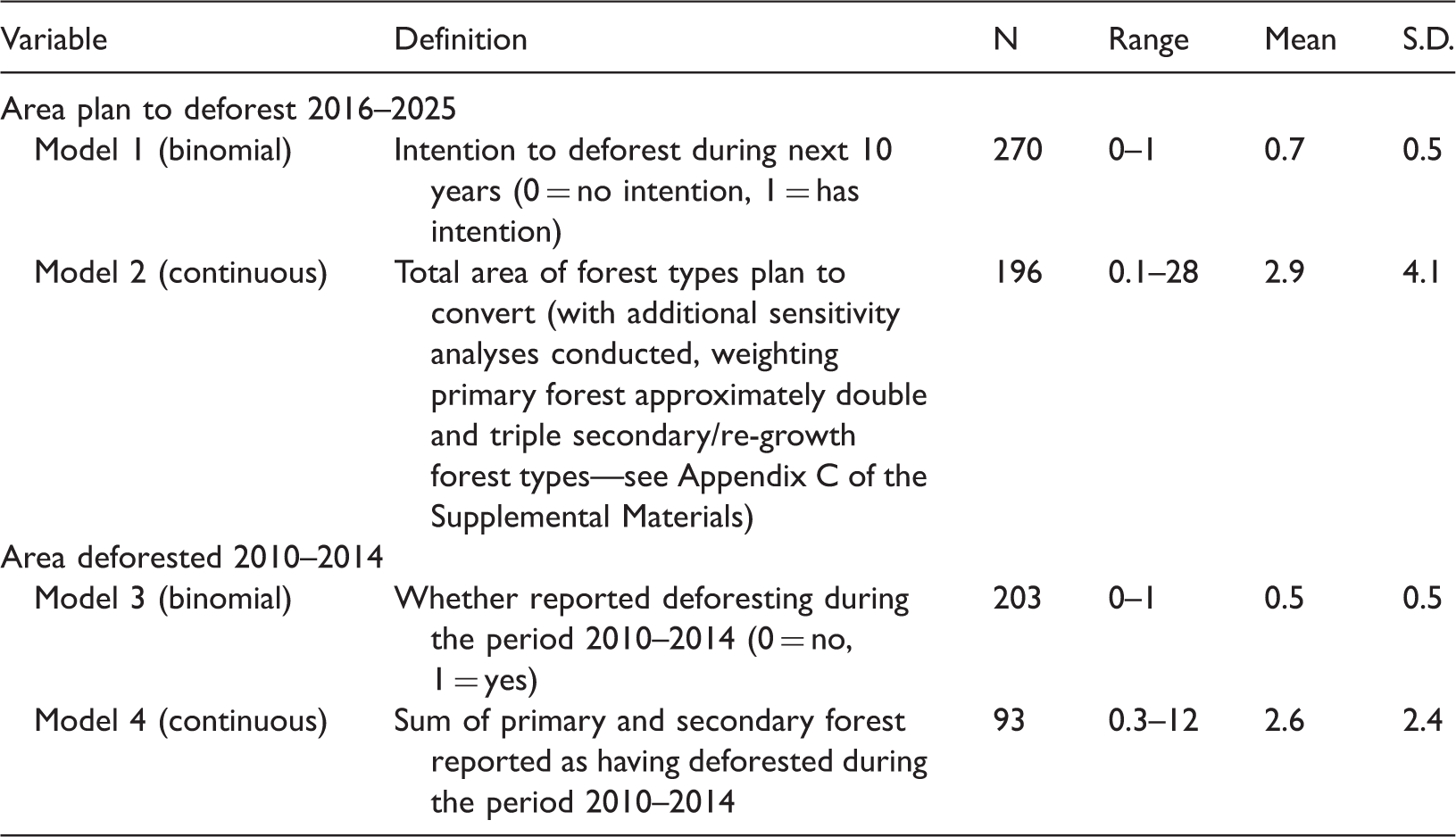
Model outcome variables: self-reported deforestation behaviors.
Exploring the political nature of participation
Our research design focused equally on intervention participants and non-participants. Impact evaluation studies commonly do this to control for self-selection biases using matching methods or randomized control trials (e.g. Andam et al., 2008; Bulte et al., 2016). A limitation of such approaches is that participation in interventions is rarely random in practice, and thus it is critical to empirically investigate the implications of who participates, rejects participation, or cannot participate, and the reasons why (cf. Li, 2007; Svarstad and Benjaminsen, 2017). People do not receive a unidirectional “treatment” but rather play a very active role in how they will be treated, and who wins or loses as a result (Mosse, 2005). We therefore asked each household about how they engaged with each current and recent past intervention in the area, their opinions of the work, and the reasons why they did or did not participate. One-way analysis of variance (ANOVA) tests were also performed to compare key features of participant and non-participant groups of interventions. This was not conducted to determine intervention impacts, given the self-selection biases, but rather to further explore the comparative characteristics of people who do versus do not participate in these interventions.
Investigating intervention influence on motivations
The common choice to use intervention participation as an explanatory variable can also obscure the causal chain between intervention actions and conservation outcomes. For example, interventions are highly heterogeneous and participation may mean very different things for different people, ranging from disillusionment over failed promises to genuine empowerment (Arnstein, 1969). People's behavior is also impacted by many different factors over their lifetime, making it difficult to pinpoint exactly what produced a certain outcome and how long that outcome is likely to last.
In order to pick apart the mechanism by which distinct intervention strategies interacted with diverse local people, we first developed an understanding of what types of motivations people hold regarding management of forests on their land (through the mixed method technique previously described). The categorization of these motivations directly relates to various environmentalities. For example, neoliberal environmentality seeks to foster the desire to not deforest because of receiving (or promises to receive) material benefits (i.e. “extrinsic material”). Similarly, a certain forested area may be perceived as worthless to develop because it will not be financially productive (i.e. “not profitable”). Sovereign environmentality aims to prevent deforestation by creating a desire to follow the law and not receive punishment (i.e. “extrinsic law”). Disciplinary environmentality aims to instill a desire to not deforest because people value the intrinsic worth of forests, whether due to their direct use value (i.e. “intrinsic use”) or deeper ethical considerations (i.e. “intrinsic moral”).
For each household, the interview solicited a personal narrative of how they developed these motivations, including any relevant interactions with people or organizations. To assess how different combinations of environmentalities shaped motivations, we randomly selected 20 participants of each of the four main approaches outlined in Table 1 for in-depth qualitative analysis. We identified key storylines regarding the role of intervention forms in shaping personal motivations and then quantified their prevalence. We also analyzed personal accounts of how and why people expressing strong “intrinsic moral” motivations for conservation became motivated (N = 67).
Examining the link between motivations and behaviors
The final part of the analysis sought to understand the behavioral implications of people holding combinations of these various motivations for conservation. We constructed regression models using the software R version 3.3.2 (R Development Core Team, 2016) to explore how particular motivations and other explanatory factors (Table 2) are linked to recent past self-reported and future planned deforestation (Table 3). Generalized linear mixed models were constructed to account for potential variation introduced by the crossed random effects of interviewer and community (Bolker et al., 2009). However, in all models the random effects were negligible, thus linear models (LMs) and generalized linear models (GLMs) were used. To strengthen the modeling approach given the large number of explanatory variables, we also constructed boosted regression trees (BRTs) for each outcome variable in order to identify the most independently influential explanatory variables for each outcome and potential interaction effects (Friedman, 2001). The detailed procedure for the statistical analyses, including model verification, is provided in Appendix D of the Supplemental Materials. The statistical results could only indicate correlation and not causation; thus, we used the rich qualitative data we gathered from the day-long household visits to construct interpretations of potential causality.
Results: Examining the implications of multiple environmentalities
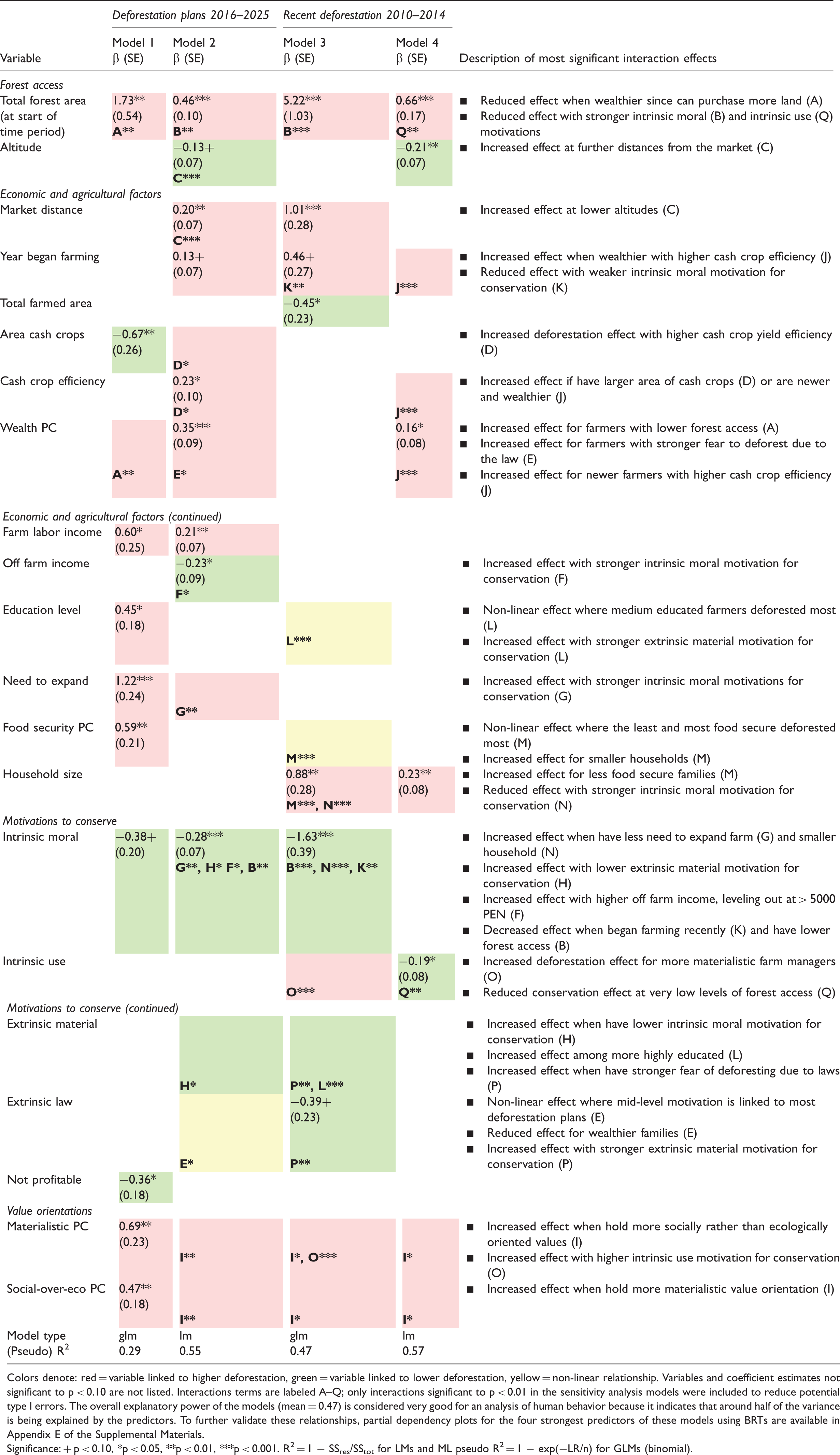
Across all four distinct combinations of environmentalities examined in this study, consistent stories emerged regarding their struggle to produce environmental subjects as intended. In this section, we describe four main reasons why these projects so often produced limited conservation outcomes in practice. Our interpretation is guided by the combined empirical insights of the four analytical components outlined in the “Data collection and methods” section. Figure 4 outlines the implications of the existing motivations of those engaged by interventions, as well as the influence of intervention strategies on extrinsic and intrinsic motivations. Table 4 shows the explanatory variables that are most heavily associated with more or less self-reported deforestation behavior, including the role of the motivations that distinct environmentalities seek to develop. The statistical results are complemented by qualitative data that indicate causal relationships. These findings hold important implications for how common strategies rooted in these environmentalities shape projects in Peru and worldwide.
Breakdown of how participants' motivations were shaped for each intervention approach. Intrinsic use motivation was excluded because it was expressed by a majority of respondents (81% with score 3–5). Regression analysis of deforestation behaviors. Colors denote: red = variable linked to higher deforestation, green = variable linked to lower deforestation, yellow = non-linear relationship. Variables and coefficient estimates not significant to p < 0.10 are not listed. Interactions terms are labeled A–Q; only interactions significant to p < 0.01 in the sensitivity analysis models were included to reduce potential type I errors. The overall explanatory power of the models (mean = 0.47) is considered very good for an analysis of human behavior because it indicates that around half of the variance is being explained by the predictors. To further validate these relationships, partial dependency plots for the four strongest predictors of these models using BRTs are available in Appendix E of the Supplemental Materials. Significance: + p < 0.10, *p < 0.05, **p < 0.01, ***p < 0.001. R2 = 1 − SSres/SStot for LMs and ML pseudo R2 = 1 − exp(−LR/n) for GLMs (binomial).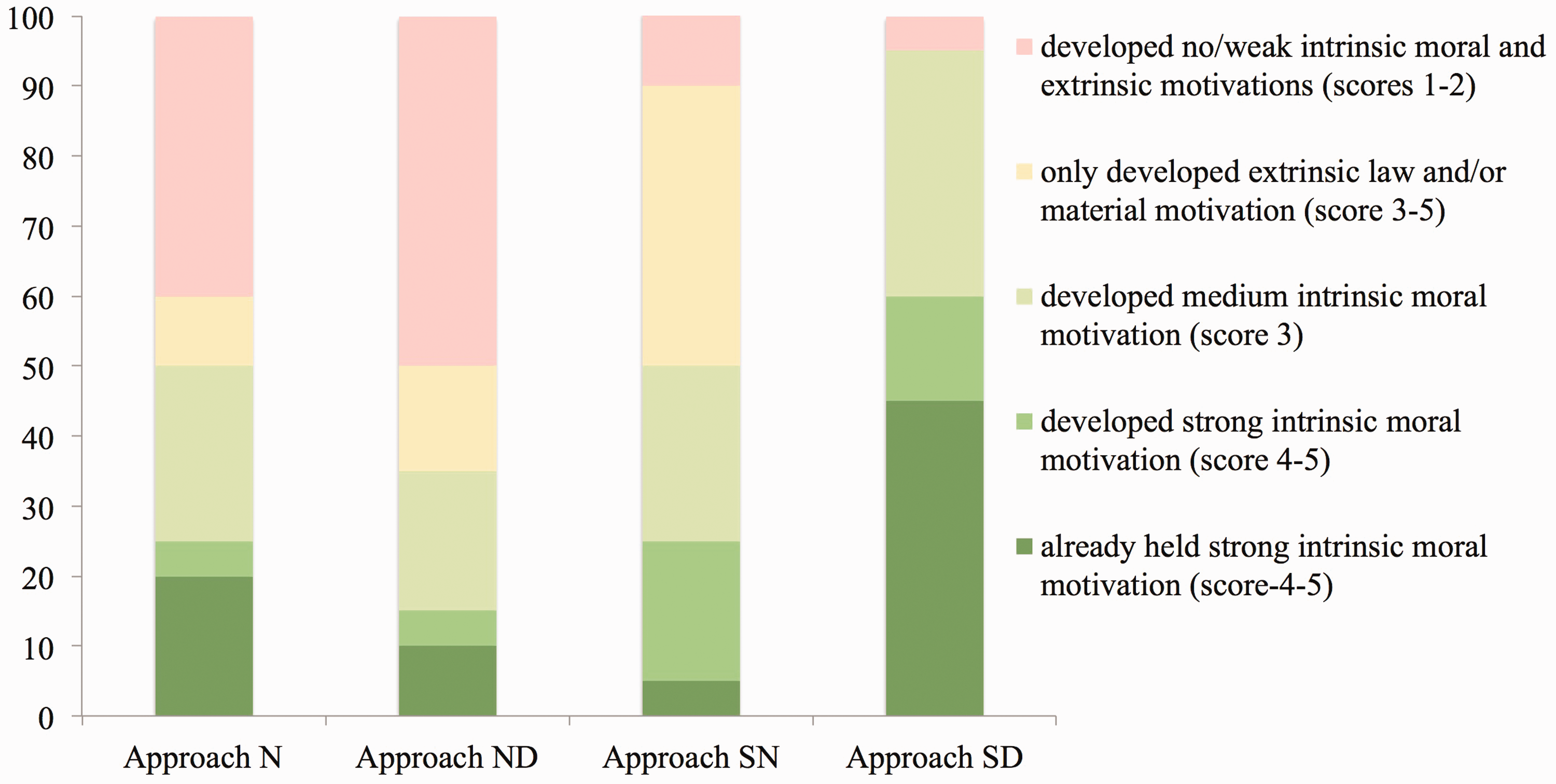
Self-selection of like-minded individuals
Our analysis demonstrated that projects typically engaged with actors who already best fit their notion of a successful environmental subject, dramatically reducing their potential impacts (cf. Appadurai, 2004; Li, 1999). For example, projects that tried to alleviate poverty to incentivize conservation tended to attract farmers who were wealthier and more interested in farm development than conservation, regardless of whether environmental messages were included. Poorer families struggled to participate due to expensive membership fees, frequent meetings, and more time and resource-intensive agricultural practices. Projects therefore reinforced existing social inequalities, as the poorest and least food secure families were often excluded from project benefits (cf. Svarstad and Benjaminsen, 2017).
In contrast, when farmers had to demonstrate conservation outcomes to obtain support, such as by signing conservation agreements (e.g. PES schemes), participants often enrolled areas they were not planning to develop anyways—either due to economic reasons or preexisting conservation concerns. Those who avoided participating in these schemes typically felt that the support would not substitute for the cost of not expanding their farm and were generally mistrustful of conservation organizations. Similarly, when incentives were offered to families living inside of protected areas, those who chose to participate revealed that they did so because they were already more in agreement with the law and had less need and/or desire to deforest. In contrast, the majority of farmers who chose not to receive support felt alienated by the imposed restrictions and did not want to participate in something they felt would “line the pockets” of the organizations responsible. Budgetary constraints meant that even if additional farmers chose to receive support over time, these requests could often not be fulfilled.
Conservation projects that primarily fostered environmental awareness most strongly self-selected people who already intrinsically cared about conservation (45% of participants; Figure 4), as there were no extrinsic reasons to participate. However, the non-participants in these project areas held both significantly lower intrinsic moral motivation (ANOVA, p<0.01) and higher rates of recent deforestation (ANOVA, p<0.01), as compared to participants, having recently deforested on average more than non-participants of any other intervention form. This highlights potential limitations of insular community groups that do not effectively engage people who do not share their values.
This recurring dynamic of self-selection across all intervention forms was caused by organizations commonly expressing their fixed values and assumptions to promote participation in their fixed solution. As intervention impact evaluations tend to focus on how impacts are produced with beneficiaries instead of the implications of who participates, these limitations often go overlooked.
Weak link between extrinsic motivators and self-reported deforestation behavior
Our analysis suggests a limited ability of incentives and laws to foster intended extrinsic motivations for conservation and translate those motivations into behavior change. Across projects where support was provided to sustainably intensify and certify crops (either inside or outside of protected areas), only 10% of participants felt motivated to conserve their forest due to material gain (Figure 4). In cases where support was not dependent on conditional conservation agreements, many farmers focused instead on translating efficiency gains into farm expansion instead of sparing forest habitat. Inside of protected areas, even if farmers received support, they typically did not feel that was a sufficient motivator to conserve, but were rather motivated by the restrictions, or due to an intrinsic interest in conservation. As one farmer expressed: “I almost went to jail for deforesting. I know the forests are important but the support is not sufficient. I want to expand my farm more, but I can't.” This quote reflects how incentives often could not sufficiently compensate for the effects of restrictions.
Among the small portion of farmers who became motivated to conserve forest because they had received and/or were expecting project benefits (i.e. “extrinsic material” motivation), the regression analysis showed a limited effect on reducing reported deforestation behaviors. This effect was not direct, however, and was only significant for farmers with lower intrinsic moral motivation, higher extrinsic law motivation, or a higher education level, suggesting that incentives can in some cases make restrictions more palatable and incentivize small amounts of conservation (Table 4; interactions H, L, and P). These effects strengthened when primary forests were weighed more heavily in the analysis, although overall effects were still limited compared to other forms of motivation.
For the vast majority of farmers who did not become motivated to conserve for extrinsic material reasons, the regression analysis contradicts the central underlying assumption of these projects that if farmers can obtain higher crop yields and income then they will not need to deforest. Table 4 instead shows that greater wealth was actually consistently linked to increased deforestation. Qualitative data confirmed that this relationship is bidirectional—more deforestation leads to more wealth, which in turn facilitates more deforestation. People held expanding concepts of “need”; while poorer farming households stated their need to deforest a small area to feed their family, wealthier households stated their need to deforest to send their children to university. Only greater off farm income was linked to reduced deforestation. Conservation strategies that promote crop intensification therefore risk facilitating the tools for further expansion (cf. Angelsen and Kaimowitz, 2001; Rudel et al., 2009).
Projects that use material incentives inside of protected areas seek to more directly couple increased crop efficiency to conservation gains. Such projects relied on the assumption that people will follow laws due to fear of punishment and can be convinced over time due to receiving tangible benefits. In practice, enforcement is often challenging; however, we purposefully focused on more heavily enforced areas to examine the effects. Indeed, many people were more motivated to conserve for extrinsic reasons in these settings (40%—mostly due to “extrinsic law” motivation; Figure 4—approach SN). Yet, the regression analyses revealed that this extrinsic motivation was not significantly linked to reduced deforestation (Table 4). The actual effect is likely even weaker, since some farmers living in protected areas could have felt compelled to artificially reduce their self-reported deforestation measures to hide illegal activities. This weak effect is due to two main reasons: (1) wealthier individuals managed to circumvent the law by purchasing land elsewhere or deforesting more between learning of the law and actual enforcement, and (2) people who held mid-range extrinsic law motivations (i.e. knew the law existed but felt it was poorly enforced) were most likely to state plans to deforest in the near future. As a result, the poorest families faced the heaviest burden of the restrictions despite planning relatively little expansion.
Our findings point to the highly limited role of extrinsic forms of motivation in producing long-term conservation behaviors due to farmers' abilities to resist and “sidetrack” these goals over time to suit their own goals (cf. Büscher and de Beer, 2011; Cortes-Vazquez and Ruiz-Ballesteros, 2018). Any potential for material incentives and protected areas to generate lasting impacts therefore seems to depend on their ability to foster intrinsic motivations for conservation—an issue that will be examined in detail in the next section.
Limited internalization of motivations to conserve
Before examining the ability of interventions to foster intrinsic forms of motivation for conservation, we first discuss their behavioral implications. The regression analyses consistently identified intrinsic moral motivation for conservation as the strongest and most consistent type of motivation linked to reduced reported recent past and future planned deforestation (Table 4). This type of motivation also helped mitigate the effect of several economic factors on deforestation outcomes, such as higher forest access (interaction B), and was stronger amidst fewer economic trade-offs, such as having a smaller household and feeling less need for farm expansion (interactions N and G). These findings suggest that the intrinsic desire to conserve for moral reasons has substantial direct and indirect effects on conservation behavior, but that competing development-oriented motivations also matter.
The more anthropocentric intrinsically held motivation to conserve forests because of seeing them as important due to their provision of water and/or natural resources (i.e. “intrinsic use” motivation) alone guaranteed the conservation of only small areas (Table 4). As one farmer stated: “I am conserving the strip of trees around my stream because it's important for water, but in the rest of my forest I will plant more coffee.” This finding points to the limits of only making the argument that people should conserve forest because it is in their self-interest to use its resources. This motivation, however, was highly complementary with intrinsic moral motivation (ρ = 0.61), and many people claimed how their awareness of the essential role forests play in community well-being caused them to care about forests for other reasons as well.
These empirical findings lead us to examine the following question—do material incentives and protected areas help internalize motivations to conserve? This is a popular claim that projects make through the storyline of a poor and unaware farmer who, after having received support, comes to realize the intrinsic importance of forests. This narrative is even commonly used by projects that only offer support and assume that benefits alone will foster more collective concerns (reminiscent of modernization theory—Inglehart and Welzel, 2005, and Maslow's hierarchy—Maslow, 1954). Our analysis found that, in fact, wealthier farmers are no more likely to hold intrinsic moral motivation for conservation than poorer farmers. Projects that only offered material incentives strongly internalized intrinsic moral motivations with 5% of farmers and to a medium extent with 25% (Figure 4). These farmers most commonly cited long-term social interactions with project actors as having played an important role in shifting their values, thus the specific role of the material benefits remains unclear. The presence of project actors was intermittent for many other beneficiaries, though, and 45% felt that organizations were offering false promises and benefiting themselves more than farmers.
Projects that explicitly sought to increase environmental awareness alongside incentives, such as through PES schemes or by supporting community conservation associations, ironically resulted in less crowding in than the three other approaches (Figure 4; approach ND). For example, in both associations, the additional focus on gaining profitable opportunities for individual members shifted their focus away from conserving forests for collective reasons. In both cases, the community groups actively excluded more marginalized actors, as the desire to capture personal benefits not only attracted participants less intrinsically motivated for conservation (Figure 4), but also shaped the rules by which people could engage. As one participant explained: There are people who criticize the association because they do not like that we receive support when they think it has arrived for the whole community. But it is for our association. It is good that people have to pay 500 S/. to enter because we have worked hard to get where we are, spent money, and there are many benefits.
The use of incentives inside of protected areas led to higher levels of internalization than for areas outside of restrictions, with 20% of farmers having strongly embraced intrinsic moral motivations to conserve, and another 20% having partially done so (Figure 4). However, qualitative evidence suggested that for many other inhabitants, the laws had inhibited any potential intrinsic interest in conservation. As one non-participant described: “The laws don't let us work freely. Those who already have enough farm area can cooperate with the laws, while the many people who live farther away don't follow them.” As a result, people rarely felt motivated for conservation due to both intrinsic moral reasons and restrictions (ρ = −0.49), suggesting that the laws contributed to polarizing perspectives. Protected area management first focused on enforcing laws before trying to use more participatory methods, thus overlooking the potential of the former to inhibit the latter.
The limited ability of incentives and laws to internalize moral reasons to conserve, and additional counter-productive effects, raises the question—what approaches could potentially be more effective? Among projects that primarily focused on environmental awareness, 95% of all participants held medium-strong intrinsic moral motivation for conservation on their private lands, as compared to just 35–50% of the other approaches. In addition, a much higher percentage of participants felt satisfied with these projects (90%). However, as previously mentioned, this was partly due to attracting so many participants who were already motivated in this way (Figure 4). Nonetheless, by sharing social experiences in pursuit of collective forest conservation action, these community groups achieved internalization of moral motivations to conserve both collective and private forest with most of the remaining participants. The problem instead arose with how they struggled to constructively engage with many people in their community who were not interested in conservation.
These findings call for a much more sophisticated conceptualization of how people come to embrace new moral values. Based on this empirical study and relevant theory on this topic, people's sense of self-autonomy and the experiences they share with people they trust around topics of concern seem to play a crucial role (see self-determination theory; Deci and Ryan, 1980, 2012). There is a clear need for better ways of negotiating competing values and motivations within communities and with external actors. By presenting local actors with fixed problem and solution frames (see Figure 1), neither intervention actors nor local people are empowered to deliberate and reframe their perspectives.
Ignored broader economic drivers of deforestation
Our analysis goes a step beyond examining the intended outcomes of interventions by also examining the broader array of factors that facilitate deforestation. For example, the regression analysis and qualitative data revealed that the strongest factors driving deforestation were related to people's possibilities and desire to materially develop, such as their forest access, distance to market, wealth, household size, cash crop efficiency, perceived need to expand their crops, and materialistic values (Table 4). Even farmers with strong intrinsic moral motivation for conservation were heavily influenced by economic opportunities due to selective moral disengagement (see Bandura, 2002). For example, one wealthier farmer commented: “I need to plant 10 more hectares for my cattle, but I plan to conserve the other 10 hectares of my primary forest for the little animals and because it is important for water.”
Many conservation interventions therefore either did not attempt to shape these broader economic drivers or may have even exacerbated them. For example, neoliberal environmentalities have quickly spread across the region over the past decade, yet these strategies seek to increase (not reduce) private income and reinforce (rather than challenge) materialistic motivations to develop. Other interventions, such as intrinsically motivated community conservation groups struggled to establish rules that were seen as legitimate amidst these external pressures and high levels of in-migration. An important tension therefore exists between the need for conservation interventions to engage, on the one hand, in long-term and in-depth ways in local settings to open possibilities to navigate and reframe competing motivations, and on the other hand, to extend beyond their local focus. Any attempt to shape the broader drivers that accumulate land and wealth in the hands of people who are materialistically driven to develop them requires actions at regional, national, and even international scales. The next section discusses this dual challenge and the possibility for environmentality theory to inform it.
Discussion: Advancing multiple environmentalities theory and practice
The discursive power of the popular approaches to joint conservation and development examined in this study lies in the partial truth of their assumptions. It is easy to agree that human behavior can simultaneously be shaped by all three environmentalities. Indeed, the presence of these multiple motivations for conservation—authority, benefits, values, and norms—in a local setting, when working in concert, could potentially produce long-term conservation results. The problem seems to arise with how interventions often embrace one particular story above all others about how people can become motivated for conservation and then employ top-down technical efforts to implement their proposed solution. This occurs when actors assume they know the best law (e.g. eight years in jail), incentive (e.g. increased coffee yields), and/or message (e.g. the importance of endangered species) to appeal to people and thus further their effort.
Such approaches are divorced from the realities of local contexts and can lead project managers and donors to believe that joint protected area formation, livelihood improvement, and community-based initiatives are naturally complementary to produce “ideal” conservation-productive landscapes. Yet, this analysis demonstrated how strategies to produce single or multiple motivations for conservation often generate tensions that can hinder long-term conservation outcomes. For example, imposing protected area laws alienated local people, generated social conflict, and inhibited the development of autonomous motivation for conservation, while wealthier actors managed to avoid many of their effects. Similarly, projects that sought to strengthen community conservation associations by providing individual incentives paradoxically weakened them by encouraging exclusive practices, generating social conflict, and inhibiting the development of more inclusive processes driven by collective concerns. The findings of this study also pose challenges to the equitability of these approaches to conservation, as richer farmers were planning to deforest more and thus would require the most benefits through a “win-win” approach (cf. Muradian, 2013).
These popular approaches to conservation experienced limited success in northern Peru due to overlooking the importance of the process by which benefits are framed, distributed, and meaning is generated. They also overlooked the process by which laws and norms are socially constructed and given meaning in their process of being defined, developed, and interpreted. Finally, they overlooked the process by which new values may become integrated with existing values in unplanned ways within individual subjects and communal spaces, and in particular, the role of autonomy and social relatedness in crowding in new values and norms (Deci and Ryan, 2012). By making fixed assumptions about people's motivations, interventions tended to attract like-minded perspectives and reinforce these motivations. This inhibited their ability to engage more diverse perspectives in deliberative processes that might challenge people's motivations and open up new governance pathways.
In order to shift conservation outcomes in local settings, the processes by which multiple types of motivations are navigated and reframed by both local and external actors are therefore critical for establishing new forms of governance (see “constitutionality”—Haller et al., 2016; “co-productive governance”—Wyborn, 2015; “social learning”—Ison et al., 2015; “agonistic pluralism”—Matulis and Moyer, 2017). This entails focusing not only on how motivations for conservation are developed (i.e. environmentalities), but also how motivations for development are developed (i.e. developmentalities), and the role of both local and non-local influences. In the literature, the term “developmentality” has been used to refer to a rationality of government which seeks to shape its subjects in ways which constrain their self-understanding and cause them to adopt policies and values—primarily neoliberal ones (Ilcan and Phillips, 2010; Lie, 2004). However, there has been less attention to how various policies and practices seek to engender distinct forms of developmental subjectivity, such as self-enhancement versus self-transcendence and openness versus resistance to change, and how these interact with environmentalities (Schwartz, 1992, 2012).
The potential for the multiple environmentalities framework to inform this effort depends on moving beyond analyses that emphasize the top-down creation of “environmental subjects.” Instead, it necessitates recognizing how local actors co-produce the outcomes of interventions in unplanned ways (cf. Cepek, 2011; Cortes-Vazquez and Ruiz-Ballesteros, 2018). However, it requires going a step further than this by asking what alternative processes can respect the self-determination and agency of people while facilitating their ability to navigate among competing environmentalities and developmentalities to prioritize long-term collective goods. At a practical level, this requires donors and project managers to not initiate dialogue through the lens of the fixed problem and solution frames that the various environmentalities entail. Rather, it requires them to acknowledge diverse views as a starting point to then search for and build common ground. Finally, the findings of this study caution against overly romanticizing environmentality theory through a “local” lens. Rather, it is critical to also extend this analytical lens upward to explore competing motivations with people who are intricately involved in distributing resources and ideologies in ways that reinforce the status quo in conservation and development. Such efforts require funding structures and timelines that support long-term forms of engagement that connect across scales.
Conclusion
The findings of this study raise serious questions regarding the impacts of conservation strategies that are commonly used across this landscape in northern Peru, as well as globally. Our analysis identified four major explanations for why conservation projects in northern Peru often fail, regardless of the combinations of environmentalities they employ. These findings raise several key issues that inform ongoing debates about the role of incentives and protected areas in conservation initiatives.
First, it is essential to reconsider the process by which interventions seek participation. Projects framed primarily as productive opportunities more successfully engaged people who were not necessarily interested in conservation, yet rarely internalized conservation values over time. Alternatively, projects framed in conservation language attracted like-minded individuals, leaving opposing perspectives by the way side. The self-selection bias of such projects, which typically have limited funds and opportunistically work with those who are more interested and already meet the criteria for success, often result in the weak additionality of these projects, and can further polarize perspectives.
Second, the theory and practice behind how material incentives and governance regimes may help to crowd in intrinsic long-term motivation for conservation remains poorly understood. In San Martin, the commonly put forward narrative that material incentives and protected areas provide an easy pathway to long-term forest “allies” was substantially overstated. Urgent attention is needed to explore more collaborative approaches that can support people to express their sense of autonomy to forge multiple pathways by which people may become motivated for conservation.
Third, the broader economic drivers that substantially limit possible outcomes in local settings necessitate linking local forms of conservation governance to intervention efforts at higher scales. Across these scales, this requires improved understanding of processes that can facilitate interactions among competing conservation and development motivations to reframe perspectives and establish new governance arrangements.
The multiple environmentalities framework can help inform these practical efforts through several avenues of future research. First, the literature suggests that many of the dynamics we find in northern Peru are likely more broadly applicable, thus similar in-depth examinations are needed in other contexts. Second, future environmentalities research should extend beyond simply critiquing how combinations of strategies play out in local settings. Rather, the framework holds great potential to inform how environmental policies and processes can actively facilitate diverse actors to explore and reshape their motivations, behaviors, and governance arrangements to further conservation and well-being aims.
Third, there is a need to explore these processes—not only in local settings—but also in regional, national, and global settings, and to connect these efforts. Finally, we have provided an explanation of why projects rooted in these environmentalities tend to fail on the ground in Peru. However, this says nothing about why these dominant ways of seeing and addressing conservation challenges continue to be reinforced throughout global networks. Thus, a ripe area for future research is to understand the processes that reinforce these globally circulating forms of expertise and to constructively seek to challenge them to create more diverse approaches to seeing and addressing environmental problems.
Highlights
Conservation projects in northern Peru commonly combine neoliberal, sovereign, and disciplinary environmentalities, with neoliberal environmentality the most widespread. Projects tended to attract like-minded actors, rarely internalized intrinsic motivations, and ignored broader economic drivers, hindering long-term conservation outcomes. Extrinsic motivations were poorly linked to environmental behavior, as many resisted restrictions and used project incentives for their own aims. Limited success of conservation projects stems from their external design based on a narrow understanding of human motivation and behavior. Local deliberative processes may help navigate the multi-faceted nature of people's motivations to strengthen local conservation governance.
Supplemental Material
Supplemental material for Why joint conservation and development projects often fail: An in-depth examination in the Peruvian Amazon
Supplemental Material for Why joint conservation and development projects often fail: An in-depth examination in the Peruvian Amazon by Josephine Chambers Margarita Del Aguila Mejía Raydith Ramírez Reátegui Chris Sandbrook in Environment and Planning E: Nature and Space
Footnotes
Acknowledgements
We express our gratitude to the many community members and conservation organization staff for their time and hospitality. We also thank Melanie Ryan and five anonymous reviewers for their useful comments on this manuscript.
Declaration of conflicting interests
The author(s) declared no potential conflicts of interest with respect to the research, authorship, and/or publication of this article.
Funding
The author(s) disclosed receipt of the following financial support for the research, authorship, and/or publication of this article: We would like to thank the Economic and Social Research Council (ESRC) – grant number RG97777, Marshall Aid Commemoration Commission, United States Environmental Protection Agency, Cambridge University Fieldwork Fund, and Cambridge Political Economy Society Trust for their generous financial support of this research.
Supplemental Material
Supplemental material for this article is available online.
References
Supplementary Material
Please find the following supplemental material available below.
For Open Access articles published under a Creative Commons License, all supplemental material carries the same license as the article it is associated with.
For non-Open Access articles published, all supplemental material carries a non-exclusive license, and permission requests for re-use of supplemental material or any part of supplemental material shall be sent directly to the copyright owner as specified in the copyright notice associated with the article.
