




Abstract
This article explores how human and animal agencies shape the socio-ecological lifeworlds of kangaroos as cultural icons, native wildlife, problematic pests, and commercial meat in contemporary Australia. Kangaroos’ resistance to Western, colonial ways of knowing and ordering the world fundamentally challenged the classificatory logic and foundations of early natural science. Kangaroos’ biological and behavioral resistance to domestication and farming – the traditional loci of animal exploitation – speaks to their inherent wildness, at the same time as it reveals their complicated dependence on ecosystems adapted for introduced livestock. Meanwhile, kangaroos’ resistance to government-endorsed population control programs, and the contested logic of (over)abundance that justifies kangaroo culling, both challenges and legitimates human calculations of who and what “counts” as worth conserving or killing. In tandem, the sensorial and symbolic valences of kangaroo flesh, compounded with the growing voices of animal welfare movements, generate visceral and political resistance to kangaroo meat as an unpalatable foodstuff. The article further centers the polysemic valences of kangaroos as a form of resistance to symbolic unity and coherence. Existing as many things at once, kangaroos eschew classification and treatment as any one thing. Instead, their ontology multiplies across the many epistemologies vying to determine kangaroos’ actual being and future becoming. The article concludes by assessing the opportunities and challenges of centering resistance and its diverse epistemic, vitalist, symbolic, and carnal manifestations to understand animal lifeways and deathways amidst entrenched capitalist and colonial regimes, whose reproduction depends on the production of the non-human as “killable.”
Highlights
Kangaroos occupy a conflictual position within Australian imaginaries as native wildlife, cultural emblem, targeted pest, and source of meat. Resistance offers a generative lens for understanding how human and animal agency shape the socio-ecological lifeworlds of kangaroos. Human and animal resistance manifest most explicitly in the context of kangaroo epistemologies, wilderness, (over)abundance, unpalatability, and symbolic plurality. These findings underscore the importance of attending to the epistemic and ethical potential and limits of resistance within capitalist-colonial regimes that produce the non-human as “killable.”
Introduction
Alongside koalas, emus, and platypuses, kangaroos constitute one of Australia's most recognizable icons. Endemic to the continent, they have come to represent all things Australian – from their inclusion on the national coat of arms and prevalence within popular literature, television, and film, to their symbolic mobilization as sport mascots, commercial logos, military iconography, and more (Harper and White, 2010; Simons, 2012; Tait, 2013). And yet, news and media discourses surrounding this emblematic organism reveal a rather different story. Within these discourses, the popularity of “roos” – the popular Australian moniker for kangaroos – as cherished wildlife and national symbol sits awkwardly alongside their prevalent characterization as problematic “pests.”
Kangaroo populations, we are told, are “soaring,” “overwhelming,” and “out of control” (Henderson, 2018; Phillips and Arthur, 2011). Their “unsustainably high” numbers have “exploded,” putting “increasing pressure on rangeland enterprises, pastoral ecosystems, and protected areas” and at times reaching “plague proportions” (Ellicott, 2018; O’Connor, Collard, and Prowse, 2019; NBC News, 2007; Nguyen and Claughton, 2017). Pathologizing and militarizing idioms undergird descriptions of “skyrocketing” kangaroo populations, kangaroo “booms” or “epidemics,” kangaroo “pestilence,” “roo hordes,” and the kangaroo as “scourge” and “vermin” (Gibbs, 2017; Hobday, 2021; Thistleton, 2014). Outnumbering humans by a ratio of two to one, the growing populace of this “problematic species” is said to “threaten the continent” (Daily Shout Times, 2016; Pavey, 2017). Unless they are systematically “managed,” “controlled,” and transformed “from pests to profit,” kangaroos may end up “overrun[ing] Australia” (Cooney, 2011; News.com.au, 2017). While far from the only way in which kangaroos are framed in media narratives, the extracts above tell us something important about the role of resistance in shaping kangaroo life and deathways in Australia. Each speaks to a dimension of kangaroo being that stubbornly escapes or subverts human control. The call for (better) management of kangaroo populations – a recurring motif within these discourses – only further highlights the fact that controlling and commodifying kangaroos remains a challenge.
Drawing from insights in the fields of multispecies studies, environmental history, animal studies, and Science and Technology Studies, and grounded in an analysis of Australian and international media sources and related grey literature, this article explores the various forms of resistance enacted by kangaroos and humans in Australia, historically and in the present. In doing so, the article contributes to a growing body of scholarship investigating human-animal entanglements through the lens of multispecies resistance. Pioneered by Jason Hribal in his seminal book, Fear of the Animal Planet: The Hidden History of Animal Resistance (2010), animal resistance studies examine the diverse ways in which non-human beings oppose, subvert, or otherwise push back against their domination by humans under regimes of capital, property, and commodification. In attending to everyday and eventful acts of animal defiance, including retaliation, escape, disobedience, attacks, and infrastructural damage, this scholarship seeks to counter the notion of resistance as a phenomenon graspable exclusively and exhaustively in human terms (Gillespie, 2016). Rather, it identifies in non-compliance an expression of animals’ collective agency as participants and producers of more-than-human worlds (Hribal, 2010) and approaches animal resistance as a response to unevenly distributed fields of power and speciesist hierarchies of worth (Wadiwel, 2016). Such acts of resistance challenge anthropocentric framings of agency at the same time as they invite human alliances with animal resisters towards the fulfilment of “multispecies social justice” (Colling, 2020; see also Chao, 2021a; Kirksey and Chao, 2022).
Studies of animal resistance have so far focused primarily on captive animals, or what geographer and critical animal studies scholar Kathryn Gillespie terms “commodified, live property” (2016, 118). This includes, for instance, pigs, cows, and chickens reared and slaughtered in industrial farms (Beldo, 2017; Blanchette, 2020; Gillespie, 2016; Pachirat, 2013), and lions, monkeys, whales, and elephants confined and exhibited in zoos, circuses, or marine parks (Colling, 2020; Gruen 2014; Nance, 2013; Warkentin, 2009). The case of kangaroos differs from these examples in several respects. 1 In Australia, kangaroos represent the only endemic species that at once lives in a state of wilderness, constitutes a subject of culling, and is industrially harvested and marketed. 2 As native wildlife, kangaroos are subject to various protections under federal and state-level legislation. As cultural and political icons, they conjure the uniqueness of the Australian continent and nation. As charismatic species, kangaroos are associated in popular Australian imaginaries with the outback (or “bush” in local parlance) and its rugged wilderness, as well as with the cuteness of anthropomorphized characters such as Skippy and Dot, immortalized in Australian children's books and television series.
As inconvenient pests, on the other hand, kangaroos purportedly threaten native ecosystems through their over-abundant numbers and undermine livestock and farmers’ wellbeing through their competition with ruminants over land, grasses, and water. This makes them the target of regular government-regulated culls, as well as commercial and non-commercial practices that are governed by codes of “humane harvesting” (Department of the Environment, Water, Heritage and the Arts, 2008; AgriFutures Australia, 2020). 3 Kangaroos do not easily lend themselves to domestication – and yet they are commodified as sources of food (and hide) for animal and human consumers, locally and overseas. The consumption of kangaroos harvested from the wild (rather than industrially reared) is often argued by entities including the kangaroo meat industry, government bodies, ecologists, and some members of the consumer public, to constitute a more environmentally friendly and ethically sound mode of meat sourcing than livestock rearing – even as killing kangaroos is also justified by these same actors as protecting the resources and interests of livestock and agriculturalists. 4 Meanwhile, concerns over the welfare and treatment of kangaroos are on the rise. Heated controversies across multiple sectors of Australian society continue to surround the how, why, and whether of kangaroo killing, culling, conserving, and commodifying (see Ben-Ami et al., 2013; Berlin, 2019; Mehmet and Simmons, 2016; Morton, 1990).
This article draws on the discursive struggles outlined above to uncover the multiplicity of ways in which resistance manifests in human-kangaroo relations – in conceptual and material terms, across divergent spatio-temporal domains, across differently situated human and other-than-human subjects, beyond the realms of consciousness and intentionality, and even beyond the ambit of life itself. Approaching resistance as a contested ecology of more-than-human practices, perceptions, and knowledges foregrounds kangaroos’ epistemic resistance to scientific intelligibility within settler-colonial taxonomic frameworks. It unearths in kangaroos’ biotic and behavioral attributes a potent, if ambivalent, mode of vitalist resistance to the dictates of domestication, commodification, and population control. This approach also foregrounds the ambiguous effects of kangaroos’ resistance to symbolic unity as emblematic icons, cherished wildlife, and targeted pests. It further invites attention to the carnal afterlives of resistance through the sensory unpalatability of kangaroo meat and its consequently limited marketability. In exploring each of these dimensions, I center the bodies, behaviors, and ecosystemic relations of animals as important yet under-acknowledged sources and sites of other-than-human resistance. In doing so, I respond to the call of scholars in critical animal studies who question the centrality of choice, sentience, subjectivity, and thought as the grounds for recognizing what counts as animal resistance and which animals deserve moral recognition (Kowalczyk, 2014; Wadiwel, 2016; see also Carter and Charles, 2013; Coppin, 2016; Philo, 1995; Wilbert, 2000). Approaching resistance through the lens of animal corporeality rather than consciousness also helps me avoid unwittingly reproducing in my analysis the Cartesian hierarchy of mind over body that, together with the correlative distinction of human and animal, constitute a fundamental premise in the normalization of animal compliance and the pathologization of animal resistance.
As the groundwork for a broader multidisciplinary, multisited, and multispecies research project investigating the diverse perceptions, practices, and knowledges surrounding human-kangaroo entanglements, this article engages with the perspectives of multiple sectors of Australian society, including government agencies, non-governmental organizations, scientific research bodies, animal welfare organizations, the kangaroo meat industry, Indigenous communities, agriculturalists, and urban, peri-urban, and rural settler-Australians. Given the highly culturally diverse (and conflicted) collective that is Australian “society” and the Australian “public,” these perspectives should not be taken as either exhaustive, mutually exclusive, static, or internally undifferentiated. Rather than aiming for a comprehensive, totalizing, or authoritative account of human-kangaroo lifeworlds, I bring a select range of dominant, emerging, and conflicting human perspectives into conversation with one another in order to foreground the diversity of ways in which kangaroos are conceptualized by equally diverse and situated human communities and actors.
I begin by exploring kangaroos’ epistemic resistance to Western ways of knowing and classifying the natural world, as practiced by early European colonial explorers, breeders, and scientists. This epistemic resistance foregrounded the strange “otherness” of kangaroos and their Antipodean continent in ways that challenged the classificatory logic and foundations of Western natural science. I then examine the biological and behavioral resistance of kangaroos to domestication and farming – two otherwise central dimensions of animal commodification. By evading the domus, or home, as a traditional site of capitalist (re)production, kangaroos embody a complex dependence on both wild ecosystems and on environments that, paradoxically, have been anthropogenically modified to suit the needs of introduced livestock animals. The third section of the article analyses kangaroos’ resistance to population control and the contested logic of (over)abundance that justifies their culling/killing. Engaging with questions surrounding the form and meaning of a “good life” and a “good death” (and their opposites), I invite attention to kangaroo “being” in itself as a form of resistance to human-centric calculations of who and what “counts” against seemingly incompatible ethical, economic, and environmental concerns.
In the final sections of the article, I examine the modes of human and animal resistance shaping the commodification and consumption of kangaroos as organisms, meat, and symbol. Here, I demonstrate how the perceived inedibility of kangaroo flesh among a significant portion of primarily non-Indigenous Australian consumers arises from the species’ conflicting associations with nativity and alienness, charisma and pesthood, and wildness and disease, among other dimensions. These conflicting associations, together with growing national and transnational anti-roo consumption activist and conservation movements, are integral to understanding the sensorial and symbolic unpalatability of kangaroo and its consequently limited popularity as a marketable commodity. They also invite attention to the polysemic meaning of kangaroos as a form of resistance to symbolic unity and coherence. By existing as many things at once, the kangaroo eschews classification and treatment as any one thing. Instead, the animal's ontology multiplies across the many epistemologies vying to determine kangaroo's actual being and future becoming. I conclude by reflecting on the opportunities and challenges involved in deploying resistance as an analytical optic to understand animal lifeways amidst entrenched capitalist and colonial regimes whose reproduction fundamentally depends on the production of the non-human as “killable.”
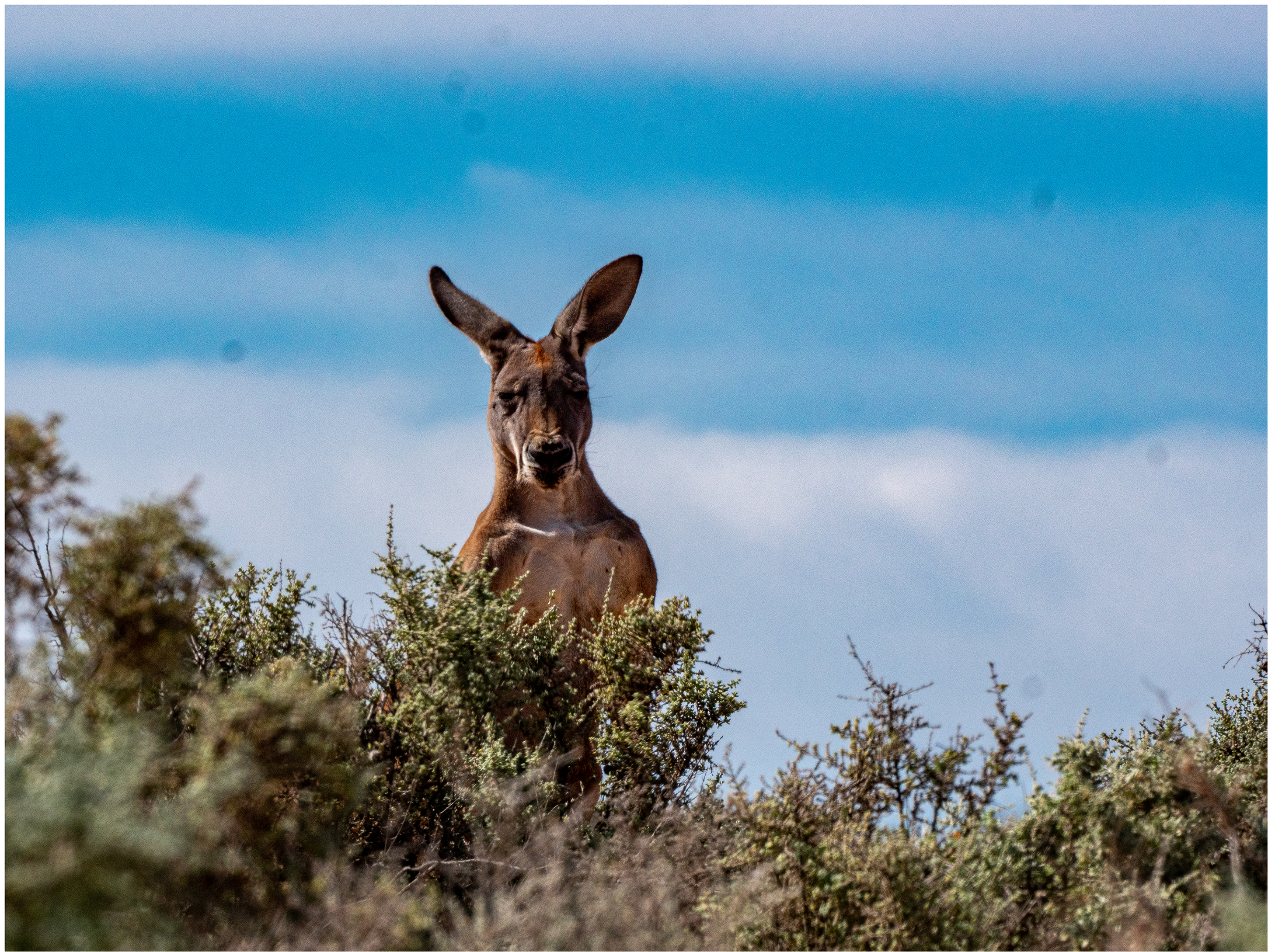
Native to the continent, targeted as a pest and exploited for its meat and hide, the kangaroo occupies a unique yet conflicted position in Australian socio-ecological imaginaries. Credits: Hans Pols.
Epistemic conundrums, or strangeness as resistance
Paleontological records reveal the Australian continent was inhabited by a wide variety of mega-macropods long before the arrival of humans, with the oldest known specimen (Palaeopotorous priscus, or the “ancient rat-kangaroo”) dating back some twenty-four million years (Uppsala University, 2018). The largest among these megafauna became extinct between 40,000 and 50,000 years ago, leaving an estimated sixty-five known species in Australia and neighboring Indonesia and Papua New Guinea. For Aboriginal peoples – the first human inhabitants of the Australian continent – kangaroos constituted an important component of the diet and valued source of protein. In Indigenous philosophies, practices, and protocols, kangaroos also hold central cultural and spiritual significance as totemic lifeforms, sentient kin, and ancestral spirits (Gammage, 2011; Pascoe, 2018). For instance, kangaroos occupy important roles in Indigenous origin stories and in the cosmological system governing land and its embedded social relations known as the Dreaming (Berndt and Berndt, 1987; Main, 2000; A. Newsome, 1980). These intimate and ancestral relationships of mutual interspecies coexistence stood in stark contrast to the gaze of early European explorers, settlers, and scientists, for whom the kangaroo came to embody the radical strangeness of a literally and figuratively “upside world” (see Olsen 2010).
This strangeness was apparent in the very first account of the British encounter with kangaroos. 5 Writing on 25 June 1770, during Captain James Cook's voyage up the coast of present-day Queensland, the naturalist Joseph Banks described in his journal “a beast so much talkd of, tho but imperfectly…what to liken him to I could not tell, nothing certainly that I have seen at all resembles him” (1768–1771). On 14 July, Banks was able to get a closer look at the beasts in question after he released his greyhound upon them and a lieutenant of the expedition managed to shoot one down. Observing the animal “that had so long been the subject of our speculations,” Banks noted that “To compare it to any European animal would be impossible as it has not the least resemblance of any one I have seen” (ibid.) Prefigured in these and other early colonial writings is a sense of curiosity, fascination, and novelty shrouding the kangaroo – one that accrued heightened significance in light of kangaroos’ epistemic resistance to being known, understood, and categorized through existing taxonomic regimes.
As Banks and subsequent natural scientists’ records intimate, kangaroos repeatedly evaded the bounds of the familiar through their radically different appearance and behavior. These animals did not walk but hopped. They bore a pouch. Their tail offered both motility and balance. At first, those who recognized marsupials as a unified group tried to assign kangaroos a position within established mammalian orders (Ritvo, 1997, 6–9). Which order was the right fit, however, was a matter of contention. For some, kangaroos bore closest affinities to primates – for others, rodents or ungulates. Uncertainties surrounded whether kangaroos should be classified as carnivores, herbivores, or ruminants. Some argued kangaroos should be classified as bipeds – others, as quadrupeds. The biped-quadruped distinction, however, was tripped up by the question of the tail, which kangaroos use as a counterbalance to hop and fight. Was this organ a tail, a fifth leg – or both?
Of greatest mystery was the matter of kangaroos’ reproductive biology, and specifically, how newborns entered their mothers’ pouch, which remained an object of speculation until the early twentieth century (see, for instance, Bartlett 1899; Hochadel, 2022; Le Souef, 1900). Was the pouch a kind of second uterus, and hence a kind of second birth? Did the teat in the pouch serve as a second umbilical cord, a blood vessel, or a channel for milky nutrients? Did the young kangaroo travel by itself into the pouch or was it transported there by the mother? Did the young develop in the pouch in the first place or possibly originate as “buds” on the nipple?
Observation, experimentation, and dissection in European zoos and the Australian bush led to multiple such theories, each vying for scientific primacy across metropole and periphery (see Ellis 2011). The French naturalist, Étienne Geoffroy Saint-Hilaire, hypothesized that female kangaroos inserted an organism in the state of an embryo into their pouches. Others, including the British naturalist Richard Owen and German veterinary Theodor Leisering, maintained that female kangaroos removed the young from their vulva and into their pouch with their lips and front paws. Meanwhile, German-Australian animal trader August Goerling and American zookeeper William T. Hornaday contended that joeys made their way into the pouch independent of the mother's help. Kangaroos’ contested reproductive biology in turn problematized their position within pre-existing mammalian categories, leading to debate over whether kangaroos represented an inferior, or second-class, type of mammal (closer to the egg-laying platypus and echidna), or whether they did not count as mammals at all (Sullivan, 1977). 6
It was not until the late 1950s that the precise functionings of the kangaroo birth and pouch were determined. Other kangaroo species that had long occluded the gaze of humans and science, too, have only recently been discovered – including a completely new species (the long-footed potoroo, potorous longipes) identified within a short drive of Melbourne in 1975 (Flannery, 2008, 6). As I return to later in this piece, the resistance of kangaroos to being known through any single or singular epistemology is further manifest in ongoing contemporary debates concerning their population numbers, patterns of reproduction, ecosystemic relationship to introduced livestock, potential risk of extinction, and more. The origins of these debates are partially rooted in earlier contestations over the zootaxonomic position of kangaroos that were profoundly shaped by the age of Enlightenment, when the issue of who and what belonged where and when was never just biological, but rather profoundly political and moral (Ritvo, 1997). Creatures like the kangaroo confused and crossed pre-existing categories at a systemic, rather than idiosyncratic, level. Their perceived strangeness as anomalous “matter out of place” (Douglas, 2002) challenged imperial and scientific agendas and (un)natural histories by unsettling the boxes and boundaries deployed to impose order on the natural world. 7 By refusing to fit into zoological frameworks elaborated in and imported from Europe, kangaroos refused to yield to the colonizer's conceptual grasp (Hempel, 2016, 306–7). In so doing, kangaroos brought into question the very functions and foundations of colonial ways of knowing and ordering worlds both New and Old.
Eschewing the domus, or wildness as resistance
In resisting the confines of early scientific classificatory orders, kangaroos and other Antipodean critters foregrounded and challenged the logic of mastery-through-knowledge at the heart of the imperialist project. This logic was rarely driven by the quest for empirical, scientific knowledge alone. Rather, mastery-through-knowledge served an instrumental purpose in justifying, intensifying, and optimizing the domination and exploitation of natural resources and human populations in places subject to colonialism's extractive gaze. 8
The impetus to render the natural world “productive” found expression in the 1800s in the form of acclimatization societies, where scientific knowledge generation went hand in hand with economic interests (Ritvo, 1989; 2014). First instituted in France, and then across Europe, Australia, Aotearoa/New Zealand, Canada, the United States, and Russia, acclimatization societies sought to maximize and optimize the exploitation of animal wealth in European colonies. Central to this endeavor was the introduction and domestication of exotic animals – kangaroos, emus, zebras, ostriches, and more – into metropole territory, where they were housed, observed, and manipulated across zoos, menageries, and breeding centers. This intentional displacement of species took for granted that animals could and should be transplanted from their native ecosystems without adverse effects on their wellbeing. It also entrenched the notion that animals were meaningful and valuable only insofar as they could be harnessed and transformed to serve (particular) humans’ needs.
As nature/culture, human/nonhuman, and other derivative Cartesian divides took hold of scientific, social, and economic imaginaries, alongside with paradigms of human exceptionalism and mastery all things deemed non- or less-than-human (Plumwood, 2002), so too the grip of empire on animal lives manifested in the systematic violence of captivity, coercion, cruelty, cages, and chains. This naturalized violence remains a defining trait of contemporary industrial livestock regimes and the broader commodification and commercialization of other-than-human life. Its grounding in hierarchical notions of human and non-human worth continues to legitimate asymmetrical forms of interspecies exploitation. Such forms of exploitation are also defining features of the Anthropocene – an epoch in which industrial capitalism and associated anthropogenic activities are reshaping the very form and future of the planet.
If the resistance of kangaroos and other Antipodean species to Western epistemic regimes constitutes one facet of their (un)natural history, their resistance to domestication constitutes another. This is not to say that kangaroos did not exist as companion species in other contexts. Kangaroos have historically been kept as pets by different local and international actors – from European aristocratic families and zoo-keepers, to First World War Australian military troops and nurses dispatched overseas (see Clode, 2006; Commonwealth of Australia, 2009). Their identity as cuddly companions has been reinforced in popular culture, notably through the interspecies friendships driving the plots and protagonists of the Australian TV series, Skippy the Kangaroo, and Australian writer Ethel Pedley's children's novel, Dot and the Kangaroo (Barnes, 2020; Probyn, 2011; Tait, 2013). Today, tamed kangaroos attract tourists to parks in the United States, Great Britain, France, the Netherlands, Austria, Japan, and Aotearoa/New Zealand (Simons, 2012, 137–72). And yet despite their physical and figurative uprooting from the native domus, or home, kangaroos continue to evade human governance through their biological and behavioral resistance to domestication, or what might be termed a vitalist mode of resistance. This resistance in turn has significant implications for kangaroos’ potential incorporation within industrial chains of commodification and associated forms of symbolic and material consumption.
In the early years of colonization, once livestock farming was established and killing wildlife rendered superfluous to survival, kangaroo hunting transformed into a popular settler pastime (Gelder and Weaver, 2020). Kangaroos’ wildness, along with their stamina and speed, made them challenging to capture, and therefore ideal hunting material. Soon afterwards, however, kangaroos, together with a range of other native species, were recast as “pests” due to their perceived competition with livestock over water, territory, and feed – a transformation that was officialized in the 1880 Pastures and Stock Protection Act and that has since served to legitimize (and legislate) kangaroo culling, as well as later (largely unsuccessful) attempts to control, contain, and commodify kangaroo populations through domestication. 9
Kangaroo farming in Australia was encouraged from the 1960s onwards, and further validated by the Garnaut Climate Change Review of 2008, which heralded the kangaroo meat industry as a pathway to land conservation and greenhouse gas reductions. In July 2021, news spread of a “radical new plan” to farm kangaroos in order to generate wealth for landholders and improve animal welfare outcomes (Dahlstrom, 2021). According to the plan, tenurial, proprietary, and managerial rights over ninety percent of kangaroos would be transferred from the government to landholders, with farmed kangaroos allowed to roam within large fenced-off farms, rather than contained in small enclosures. Echoing widespread contestations provoked by the Garnaut Climate Change Review and earlier domestication initiatives, the plan has fueled renewed debate over the feasibility of managing and breeding kangaroos for industrial purposes. To this day, and contrary to popular conceptions among the Australian public (Ampt and Owen, 2008), kangaroo meat and other products derive from animals that are hunted – or “harvested” – rather than farmed. The general consensus across the scientific community is that kangaroo farming, either in intensive or rangeland form, remains largely unfeasible (see, for instance, Ben-Ami et al., 2010).
The vitalist resistance of kangaroos to domestication manifests in many guises. Like some other mammalian species, kangaroos may experience a rush of adrenaline when chased, captured, otherwise handled by humans, provoking a condition known as capture myopathy. Also termed exertional rhabdomyolysis or stress myopathy, capture myopathy occurs when muscle damage results from extreme exertion or stress, and results in a rapid increase in lactic acid in the muscles, which if not cleared, can lead to acidosis (a spike in acid in body fluid Ph), heart failure, and muscle deterioration. Dying muscles then release myoglobin, which damages the kidney and lungs. Potassium released from damaged muscles can cause death from heart failure and heart attacks within months, days, or even minutes following capture (Terrestrial Ecosystems, n.d.).
While kangaroos remain highly resilient irrespective of the condition of myopathy, those afflicted tend to suffer from low survival rates, extreme dispersal movements, and higher rates of starvation upon release into unfamiliar environments. Similar impacts have been documented during wildlife translocation, which renders animals vulnerable to malnutrition, dehydration, decreased immunocompetence, and predation, while also enhancing the potential of disease spread across wildlife, livestock, and humans (Massei et al., 2010). No less significant in the context of commodification is the impact of capture myopathy on kangaroo meat. Intense stress causes damage and rupture to kangaroo muscle, causing it to acquire a bad taste (Zukerman, 2010, 44). When it comes to kangaroo domestication, process and product alike hit a sour note.
Kangaroos resist domestication in other ways. Their reportedly low reproduction and slow growth rates make them then less-than-ideal objects of agro-industrial investment (Shepherd, 1983). An optimal kangaroo farm will have only one male per group of females to prevent fighting. However, only males can be harvested as a result of pouch bacteria developing in female kangaroo meat during the skinning process that contaminates the carcass (Baynes-Rock, 2020, 137–38). Handling and husbandry are complicated by the speed and mobility of kangaroos across vast areas, which in turn demands large expanses of land that are not easily managed or surveilled. The vertical dimension to kangaroo mobility – namely, hopping – makes spatial containment an even tricker terrain to navigate. Red kangaroos can clear up to two meters in a single bound (equivalent to their own height) and the smaller eastern greys up to three. Building sufficiently high fences is unwieldy and expensive. In the meantime, some kangaroos have reportedly adapted to man-made infrastructures and learned how to dig under the fences to escape their enclosures (Baynes-Rock, 2020, 146–47). Economic, legal, and administrative obstacles further impede the large-scale farming of kangaroos – from the costs and procedures required to obtain permits, the fluctuating price of kangaroo meat on the market, and the fact that kangaroos are owned by the Crown and not by landholders (Ben-Ami et al., 2013; Chapman, 2003; Pascoe, 2018).
The wildness of kangaroos can be understood as a form of resistance to the biological, institutional, and infrastructural dictates of domestication as a common precursor to commodification. As an expression of animal sovereignty, wildness-as-resistance is not necessarily conscious or intentional. Rather, it stems from the biotic and behavioral traits of kangaroos as living organisms, imbued with their own particular modes of vitalistic agency. And yet, wildness-as-resistance is not necessarily or always beneficial to kangaroos themselves. While kangaroos may escape the violence of capture and captivity, they nonetheless remain vulnerable to hunting, culling, and killing. Indeed, ongoing attempts to farm kangaroos, and associated scientific research initiatives, can themselves be understood as expressions of a resistance on the part of humans to accept the resistance of kangaroos to domestication, together with their inherent dependence on wild ecosystems to survive and thrive (cf. Collard 2012). Multiple resistances thus intertwine and collide in the ongoing challenge of reconciling ethical, economic, and environmental interests across human and animal communities of life.
The problem of (over)population, or abundance as resistance
In their decolonial critique of neoliberal and postnatural conservation practices, geographers Rosemary-Claire Collard, Jessica Dempsey, and Juanita Sundberg offer strategies for achieving “abundant futures” in the era of planetary ruination that is the Anthropocene. While leaving the definition open in the spirit of “creativity and solidarity,” Collard et al. deploy the term “abundant futures” to refer to futures “with more diverse and autonomous forms of life and ways of living together” (2014, 323). Forging such futures collectively, they argue, is vital to sustaining the pluriversality of socioecological lifeworlds and shifting away from human exceptionalism and associated hierarchies of natures worth saving or sacrificing.
Imaginaries of “abundance” have in different yet central ways shaped the pasts, presents, and futures of kangaroos in Australia – albeit not always or necessarily in the interests of kangaroos themselves. Early colonial descriptions of the continent were replete with references to landscapes richly populated with grazing mobs of kangaroos, earning them the moniker of “kangaroo country” (see Gammage 2011). While some, such as the Scottish explorer Thomas Mitchell (1848), recognized that these landscapes was made possible through a profound and sustained interdependence of people, grasses, fire, and kangaroos, the fertility of the land (particularly in the present-day state of New South Wales) came as a surprise to many settlers, who failed to acknowledge its relationship to long-standing Aboriginal land management practices. These practices included firestick farming and selective or “mosaic” burning, which enhanced the density and quality of soil nutrients as well as the regeneration of perennial grasses that kangaroos feed on, notably Kangaroo grass (Themeda triandra) and Neverfail (Eragrostis setifolia) (Gammage, 2011, 32, 109; B. P. Murphy and Bowman, 2007). Together, these techniques helped keep kangaroos and other wildlife away from cultivated plots of grains and tubers and also improved hunting outcomes by attracting animals to recently burned areas, where young grass shoots flourished. Ecosystemic balance was further maintained through the activities of kangaroos themselves, their urine and feces fertilizing the soil and their dragging tails and soft-padded feet supporting plant germination through the pressing of seeds into the earth. Kangaroo grazing further enhanced the regeneration of vegetation by leaving the roots of plants intact, at the same time as it diminished the risk of wildfires by keeping grasses short (T. Newsome and Newsome, 2016; Tiver and Andrew, 1997).
Soon enough, however, the celebrated abundance of kangaroos came into question. Large-scale land-clearing for agricultural purposes, compounded with the introduction of livestock, conversion of forested landscapes into pastoral zones, prohibition and cessation of traditional burning practices, and gradual disappearance of predators of the kangaroo such as the dingo, thylacine, and wedge-tailed eagle, led to a perceived explosion in kangaroo populations, that were drawn to the grass- and water-rich areas where sheep and cattle tended to graze (Baynes-Rock, 2020, 144; Letnic, et al., 2011). Now recast in a negative light as over-abundant, kangaroos became official targets of extermination as a result of their reported competition with ruminants over space and resources. The perceived over-abundance of kangaroos, and its adverse impacts on farmers, livestock, and the environment, remains the primary (but by no means uncontested) rationale for the culling of kangaroos nation-wide.
Kangaroos’ resistance to scientific and institutional regimes of “letting live and making die,” or what Achillle Mbembe (2001) terms “necropolitics,” takes multiple forms within the contested terrain of kangaroo (over)abundance. Some relate to kangaroo biology and thereby exemplify another facet of the vitalist forms of resistance explored in the previous section. For instance, the ability of kangaroos to bounce back quickly after severe environmental stress and population depletion is in part aided by the reproductive strategy known as embryonic diapause, which allows kangaroos, among other mammals, to suspend or abort a pregnancy, or become pregnant while still nursing a joey. Kangaroos are thus biologically capable of self-managing and adapting their reproduction rate to suit environmental and climactic conditions – for instance, food availability or shortages, population abundance or scarcity, and prolonged drought or heavy rainfall. Indeed, the effectiveness of kangaroo culling has been problematized in light of findings that suggest it only stimulates population growth and distribution (Coulson, 2008). Non-lethal alternatives, such as contraception, relocation, the electrification of watering points, and cluster fencing, are expensive and remain largely at the stage of experimentation. Importantly, resistance is also growing among a range of human entities who question both the factuality of kangaroo (over)population and the consequent need for kangaroo culling – from animal welfare organizations, to scientists within the compassionate conservation movement, and members of the general Australian and international public (see Mehmet and Simmons 2016).
Kangaroo cull harvesting quotas are based on kangaroo numbers that are in turn estimated using aerial transect surveys and future population trends that are predicted on the basis of expected droughts and rainfall. The validity and effects of these measuring methods, however, have been criticized on a number of fronts. For instance, varying rainfall, density dependence, and environmental stochasticity (unpredictable spatiotemporal fluctuations in environmental conditions) have important but often indeterminate effects on what might count as a “sustainable” harvesting rate in different geographic and species contexts (McCarthy, 1996; New South Wales Parliament Legislative Council, 2021). While some members of the scientific community note that the current kangaroo population estimate of forty-six million represents a conservative figure given that it only encompasses numbers found within surveyed rangelands (Vernes, 2018), others remind us that this represents a dramatic decline since settlement days, when kangaroos numbered one to two hundred million (Auty, 2004). The risk of kangaroos facing local or national extinctions, while not yet authoritatively evidenced, accrues ominous potency in light of its resonances with nineteenth-century colonial land clearing and marsupial extermination (Chen, 2016, 319), and Australia's status as the country with the most rapid rates of plant and animal extinctions worldwide (Ben-Ami, 2009; Foley, 2020; Ramp and Vernes, 2015).
Other scientific experts have challenged the notion that kangaroos are a primary threat to the ecosystem, particularly when compared to the effects of domestic stock like sheep and cattle and feral species like goats and rabbits (Tiver and Andrew, 1997). Instead, these scientists highlight kangaroos’ important ecosystemic functions in fertilizing nutrient-poor soils, preventing soil compaction and erosion, and keeping grasses short, which in turn helps prevent wild bushfires – a regular occurrence across the Australian continent (Lorkin, 2017). In focusing solely on kangaroo populations, current measuring methods also neglect the impacts of culling on the symbiotic relationships of kangaroos to other species within their native habitats (Croft 2005). They are further said by some environmental scientists to rely on exaggerated reports of competition over resources between ruminants and kangaroos, who may be in fact entertain mutualistic relationships, whereby the grazing habits of livestock results in feeding facilitation for kangaroos by making grass more accessible or stimulating grass regrowth (Arsenault and Owen-Smith, 2002; T. Newsome and Newsome, 2016, 102; Viggers, 2005).
The (over)abundance of kangaroos epitomizes a refusal to fit within what (some) humans consider an “appropriate” or “sustainable” population. This refusal of/through numbers resonates to some degree with the notion of “surplus life” that Michelle Murphy (2017) deploys to critique the neoliberal economization logic governing which lives are worth living, killing, or simply best not born, across differently positioned and privileged human populations. How animal populations are represented and described – as plagues, vermin, and exploding hordes, for instance – further shapes the way their lives and deaths are perceived and alternately encouraged or undermined (Thorne, 1998, 168). Vice versa, one might read in those activities of kangaroos that undermine human interests – for instance, overgrazing, destroying fences and infrastructures, and causing road accidents – what Sarah Colling (2020) calls animals’ “everyday defiance” of established human orders.
Returning to Collard et al.'s manifesto, the kangaroo population problem invites reflection on the fine (and often violent) line distinguishing the promise of “abundance” from the perils of “overabundance” (Croft and Witte, 2021). This line is often less about science (as contested as the science is) as it is about vested human interests (Ramp, 2013). Here, it is not the kangaroo per se that is the problem but rather its numbers and consequent perceived economic impact on an industry – the livestock sector – that, ironically, has helped created the very conditions for kangaroo (over)abundance through the conversion of forested lands to grass-rich pastures. Kangaroo abundance, then, paradoxically manifests the resilient live-liness, or vitality, of kangaroo being, at the same time as it serves to justify kangaroos’ undoing. In the complex necropolitics of human-roo relations, the question of who and what “counts” as worthy of living, culling, or conserving is anything but neutral or uncontested (Brooks, 2021). Rather, the answers to these questions multiply across scientific, popular, and representational realms of situated knowledge production, opposition, and contestation.
Palate politics, or inedibility as resistance
The final section of this paper examines animal and human resistance in the context of kangaroo meat commodification and attendant environmental, ethical, and economic debates. Exploring kangaroo meat and its politics of palatability is of particular significance in the Australian context. According to the OECD-FAO Agricultural Outlook 2017–2026, Australia is the second-highest consumer of meat globally after the United States, consuming 97.1 kilograms per capita per year in 2016 alone. In 2015, Australia held first place in the global ranking, earning it the dubious titles of “meat-eating capital of the world” (Ting, 2015), “nation of meat-eaters” (Symons, 2007), and locus of “carno-nationalism” (Chen, 2014).
Australia's spectacular meat consumption is fueled by the livestock industry, which occupies over fifty-four percent of the country's landmass and produces over eleven percent of Australia's greenhouse gas emissions (Claughton, 2021; Ferguson and Colditz, 2019). Concerns over the adverse environmental impacts of the livestock sector prompted the emergence of a commercial kangaroo meat, hide, and skin industry in 1959, which has since created 4000 direct and indirect jobs (Kangaroo Industry Association of Australia, n.d.). The perception of kangaroo consumption as more environmentally friendly (kangaroos are pests and their numbers must be controlled) and ethically sound (kangaroos are wild, humanely harvested, and not farmed), compounded with the nutritional benefits of kangaroo meat as a low-fat, high-protein meat, free from antibiotics, growth hormones, and chemicals, has led some members of the Australian public to proclaim themselves “kangatarians,” or individuals who eat only kangaroo meat (Cushing, 2019). 10
Yet kangaroo consumption across the country remain remarkably low, accounting for only two per cent of Australia's total meat intake (Simons, 2012, 45). Although kangaroo meat is widely available in supermarkets at relatively affordable rates, only 4.7 per cent of Australians eat kangaroo at least once a month or more and only 14.5 per cent at least four times per year (Ampt and Owen, 2008, 15). As of 2013, kangaroo meat consumption per capita was just 0.35 kg, versus 37.2 kg for poultry and 34.1 kg for beef and veal (Boronyak et al., 2013, 19). Over seventy percent of kangaroo meat is exported overseas, including to the European Union, United States, and East Asia, where it caters both to the gourmet catering and pet food industries (Dunlop, 2013). 11 With an estimated value of $175 million Australian dollars, the kangaroo meat industry remains dwarfed by the $6 billion-dollar beef sector (Bloudoff-Indelicato, 2015). The very inclusion of kangaroo within the category of “meat” remains opaque (see Peace 2011). Although technically fitting the definition of “[fresh] meat” in Australian regulations – “red meat taken from the carcass of any cattle, sheep, goat, buffalo, kangaroo, camel, deer, pig, or rabbit” (Warner, Bittner, and Ashman, 2017, 51) – kangaroo meat, unlike beef, lamb, chicken, and pork, is often absent from Australian meat-related health, nutrition, and safety policies and recommendations.
For all the arguments in favor of consuming kangaroo meat, the sector and substance continue to be met with resistance. This resistance stems both from the fleshly materiality of kangaroo meat itself and how its provenance – kangaroos – is signified by diverse human agents. On the one hand, kangaroos make themselves unpalatable to many members of the Australian public through their negative sensorial and symbolic valences. On the other hand, some members of this public challenge the climate- and conservation-friendly discourses used to justify the kangaroo meat industry, as well as the “humane” harvesting practices that regulate it. Meanwhile, adherents of kangatarianism embody a resistance to the environmentally adverse, industrial farmed-based livestock sector by choosing to consume roo over other animal meats. Resistive agency thus disperses across differentially situated and politically motivated human actors.
Social science studies conducted among Australian consumers have identified strong connections between the sensory attributes of kangaroo meat and its association with repulsiveness and inedibility. These attributes often arise from kangaroo meat's unappealing visual aspects (“blood red,” “really dark,” “too dark”), its texture or taste (“tough,” “strong,” “chewy,” “strong,” “too rich,” “gamey,” “stringy”), and particularly its smell (“unpleasant,” “lingering,” “too strong,” “disgusting”) (see Cawthorn and Hoffman, 2016; Waitt, 2014; Waitt and Appleby, 2014). Some of these attributes can be linked to the particular characteristics of the polyunsaturated fat contained in kangaroo meat, which causes it to go rancid more quickly than other meats containing monounsaturated fats. At another level, and despite a rich and diverse European culinary tradition surrounding kangaroo meat initiated by the acclimatization societies of the 1800s (see Cushing, 2016; Abbott, 1864; Santich, 2012), kangaroo inedibility is often connected by present-day Australian consumers to a lack of knowledge on how to prepare and cook kangaroo meat, as opposed to more familiar, Anglo-derived household dishes featuring beef, lamb, and chicken (see Singley 2012). For others, consuming kangaroo meat evokes disgust because of the identity of kangaroos as both destructive pests and national icons, and also because of the association of kangaroo meat with pet (rather than human) food or bait for invasive species including wild dogs, cats, and foxes (see Bunyak 2019; Probyn 2011). 12 The fact that kangaroo meat derives from wild, rather than farmed animals, has further raised concerns about the transmission of bacterial diseases such as salmonellosis and toxoplasmosis to those who consume it.
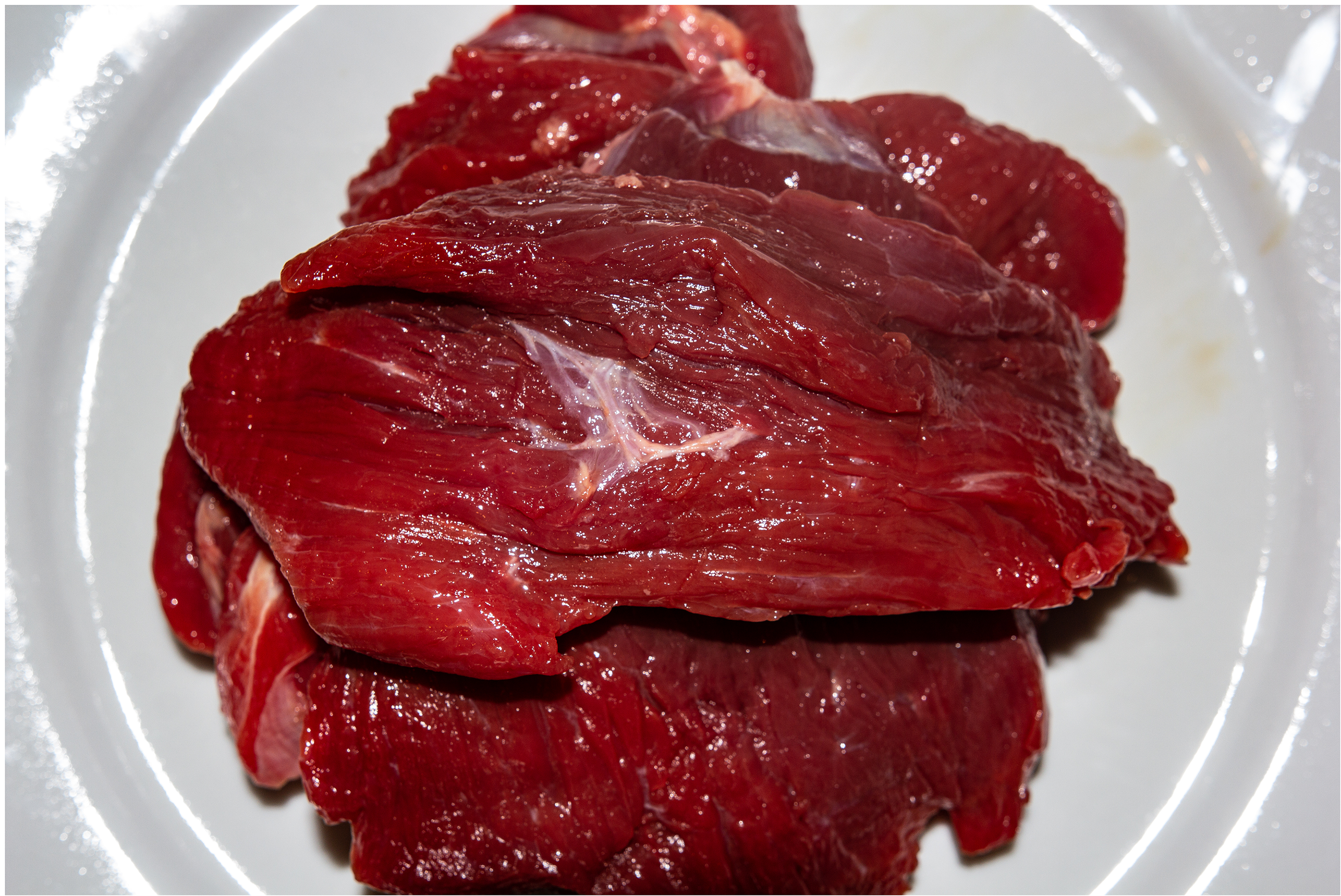
The sensory attributes of kangaroo meat as “dark,” “chewy,” and “gamey” have been found to undermine its palatability and consequent commercial marketability. Credits: Jacob Perrott.
Beyond the visceral, the discomfort produced by kangaroo meat as the carnal afterlife of kangaroo being can also be understood as intimately tied to the resonantly unpalatable politics of settler-colonization in Australia. As Gordon Waitt and Bryce Appleby note, kangaroo meat escapes the domain of the “domestic” as conceived by White settler Australians, leading to its characterization as “un-Australian” and “un-civilized” (2014, 95–97). A similar logic of spatialization undergirds the perception of kangaroo meat as representative of the rugged Australian outback, and therefore only palatable and pleasurable if consumed in the wild, rather than at home (Waitt, 2014, 419). The (in)edibility of roo, as Charlotte Craw (2008) notes, must therefore be approached in light of the contested meanings of nativity, nature, and nation, as they have and continue to shape the political ecology and ecological politics of (post)colonial Australia.
More recently, public resistance to the kangaroo meat industry at national and international levels has grown as a result of rising concerns over animal welfare within the commercial harvesting sector. Such resistance includes the emergence of transnational anti-roo consumption movements led by prominent animal welfare activist networks including People for the Ethical Treatment of Animals (PETA), Viva!, and Animal Liberation Australia (Lien, 2004), the dissemination of media and films documenting and condemning systemic animal cruelty within the kangaroo meat industry (e.g. Kangaroo: A Love-Hate Story, 2017), and the growing voices of ecologists and policy experts within the compassionate conservation movement, which promotes the treatment of all wildlife with respect, justice, and compassion (Bekoff, 2013; Ramp, 2013). 13
Opposition to the kangaroo meat industry has been prompted by mounting evidence of violations of the regulations governing the commercial kangaroo industry and the principle of “humane harvesting” (Ben-Ami et al., 2011; Boom and Ben-Ami, 2010; Boom et al., 2013). This includes reports of kangaroos suffering non-fatal body shots and young kangaroos and joeys (the by-products of commercial kills) left to die from starvation, dehydration, exposure, or predation, as well as reports of the difficulties involved in adequately controlling kangaroo harvesting given this tends to take place at night, in remote areas, and with monitoring responsibilities divided across federal and state jurisdictions. Of equal concern to opponents of the kangaroo meat industry is the incentivization created by kangaroo commodification for unsustainable harvesting, which may threaten the social and evolutionary stability of kangaroo individuals and populations. This concern sits in turn within a broader critique stemming primarily from the compassionate conservation movement of emergent “utilitarian conservation” and “sustainable use of wildlife” models, that position some species as killable “resources” in ways that ultimately serve to further the vested interests of human actors and economies (Boom et al., 2012; Ramp 2013). Other critics, notably Indigenous Australian community representatives and Indigenous corporate bodies, have condemned the ways in which both emergent conservation and commodification logics perpetuate the historical exclusion of Indigenous peoples, protocols, and practices (Croft and Witte, 2021; Thomsen et al., 2006). These actors highlight the need for genuine social and economic inclusion of Indigenous Australians as equal partners, entrepreneurs, and beneficiaries in the kangaroo meat industry, in order to counter both the whiteness of the sector's monopoly and the “white people thinking” driving anti-roo activist campaigns and boycotts (Kurmelovs, 2021).
Thinking with kangaroo meat as a problematic “pièce de resistance” highlights the intricate entanglements of matter and meaning shaping the transformation (or failure thereof) of animals as organisms into animals as food. Contestations abound over the ethical, environmental, and economic merits of either replacing, reducing, or outright refusing the consumption of meat, kangaroo or other. These contestations are produced by a complex interplay between kangaroo meat's physiological and sensorial affordances, the practices, perspectives, and knowledges of differently positioned human communities, and kangaroos’ own “dispersed ontology” (Chao, 2018) as vermin, icon, and resource. They speak, in Gordon Waitt's words, to kangaroo (meat)'s paradoxical positioning across the categories of “mainstream and gourmet, protected and hunted, friend and pest, … non-Indigenous and Indigenous, foodstuff and non-foodstuff” (2014, 409). This paradoxical positioning produces kangaroo meat as unpalatable at the same time as it serves to buttress kangaroo meat commodification and commercialization. It draw attention to the alliances and antagonisms arising between animals and the humans rooting for or against them, as they are generated by variably grounded understandings of transspecies solidarity, instrumentality, and sustainability. And it foregrounds how contestations over animal edibility manifest and disperse across the institutional spaces of policy, science, and advocacy, all the way down to the familiar spaces of pantry, palate, and plate.
Producing the killable, or the limits of resistance
This article explored how resistance, commodification, and conservation intertwine in the lifeworlds of kangaroos as problematic species, cultural icon, and commercialized resource. I sought to demonstrate how kangaroos resist their own commodification through various forms of epistemic, biotic, behavioral, and ecosystemic resistance to past and present regimes of settler-colonialism and capitalism that, paradoxically, create the very conditions for animal resistance by seeking to impose upon the natural world a humancentric logic of knowing, ordering, controlling, and (dis)valuing. In tandem, I highlighted how kangaroo fates and futures – as wildlife, pest, and resource – have in turn prompted multiple forms of resistance, both allied and antagonistic, on the part of humans who are variably implicated in kangaroo life and deathways through thick tangles of economic, ethical, and environmental interests. These include resistance in the form of opposition to culling roos, conserving roos, eating roos, not eating roos, and eating anything but roos. Bringing animal agency into the mix demonstrates that resistance, as an expression of agency, need not necessarily be conscious or intentional to merit critical analysis. Rather, conceptualizing animal worlds through the lens of resistance opens avenues for rethinking animal being, or existence itself, as a form of resistance to colonial-capitalist regimes that thrive on the production of the “non-human” as ungrievable and of “nature” as killable (Butler, 2010; Brooks, 2020; Haraway, 2008). This approach in turn offers a way of moving away from anthropocentric narratives of animal exploitation and towards multispecies stories of animal resistance – even if this resistance is “futile” (Wadiwel, 2015, 10). In so doing, accounts of more-than-human agency and resistance allow us to acknowledge the consequential doings of animals as biological, political, historical, and cultural protagonists who partake alongside humans in the making and unmaking of unevenly shared multispecies worlds (Chao, 2021b; Chao and Enari, 2021).
When approached through the lens of resistance, the multiple, co-existent meanings of kangaroos as cherished icon, native wildlife, troublesome pest, and food resource, invite attention to polysemy itself as a form of refusal – namely, a resistance on the part of other-than-human entities to be constrained or unified within a single, coherent, or otherwise straightforward category of being. The kangaroo evades such ontological flattening by inhabiting multiple spheres of meaning at once – some lively, others lethal. At once loved and unloved, its existence is less an “either or” between different spaces of signification, than a series of cumulative and often conflicting “ands” in which care and violence are, more often than not, bound at the hip (Chao, 2022; van Dooren 2014).
Reframing animal lifeworlds through the lens of resistance as a composite of corporeal and conceptual dynamics, as I have done in this article, can in itself be seen as an act of resistance to the hegemony of the human and of human-only stories. But such a reframing is not devoid of ethical, epistemological, or political conundrums. Approaching resistance in epistemic terms, for instance, invites broader reflection on the momentous (though not necessarily insurmountable) challenges entailed in entering the perceptual lifeworld of other-than-human beings (von Uexküll, 1957; Derrida, 2002). It also brings us to consider the promise and perils of anthropomorphization in alternately obscuring the alterity (and consequent unknowability) of animal being, or in enabling modes of transspecies empathy that can counter anthropocentrism and thereby foster more just forms of multispecies flourishing (Gillespie, 2016, 118; Hribal, 2010, 27; de Waal, 1999).
Other conundrums arise in approaching resistance in vitalist terms. For instance, to frame animal non-compliance as a process arising organically from the affordances of animals themselves runs the risk of naturalizing animal resistance (“it's just what kangaroos do”) in ways that can in turn be deployed to legitimize/naturalize human acts of counter-resistance in the form of intensified control and coercion (“it's just what humans do”). Framing resistance in symbolic terms demands nuanced attention to the consequential asymmetries across animals’ diverse symbolic valences within power-laden fields of meaning – as wildlife, pest, icon, or meat. Meanwhile, broadening the scope of resistance to encompass animals’ carnal afterlives as meat and commodity pushes us in troubling but generative ways to reimagine agency beyond the realm of the animate and into the realm of the flesh. Each of these dimensions in turn demand that we consider whether the lure of other-than-human resistance to technocapitalist forces – be it in the form of escape, wildness, defiance, ferality, liberation, retaliation, proliferation, or contagion – truly benefits the other-than-human parties involved, or whether it ends up serving the ideological interests of those who read into animal resistance the promise of a better elsewhere and elsewhen for themselves. There is, after all, something deeply enticing – perhaps even inspiring – about species that sabotage capitalist projects and their hegemonic logic. But such an angle can also obscure the ways in which animal resistance is itself co-opted to further justify and reinforce human modes of mastery and domination.
In the context of organisms like kangaroos, that are wild but also culled and commodified, deploying resistance as an analytical optic calls for nuanced attention to the difficulty of determining what counts as a “good life” and whether there is such a thing as a “good death” for animals who, at the end of the day, would “prefer not to die” (Wadiwel, 2016, 221, emphasis added) and whose lives are “important to them” (Colling, 2020, xiv, emphasis added). These questions invite critical empirical and theoretical reflection on how we distinguish harms perpetrated against other-than-humans as proportional, necessary, or incommensurable – and who gets to decide (Singh and Dave, 2015). Ultimately, then, these are questions of multispecies justice – namely, of who and what counts as a subject of justice, who does not, on what grounds, and in whose view (Kirksey and Chao, 2022). On-the-ground, multispecies, and multi-sited ethnographic research, to which this article acts as a precursor, can help address such questions by offering specific and detailed narratives of individual and collective kangaroo life and deathworlds, as they intersect materially, affectively, and politically with equally situated and internally diverse sectors of Australian society.
The question of a good or bad death brings us in turn to reflect on Donna Haraway's invitation to live by the commandment “thou shalt not make killable” – rather than “thou shalt not kill” – as a way of avoiding the pretence of purity and innocence in acts of interspecies exploitation and of reckoning with the storied, fleshly lives and relations of the beings whom we consume (2008, 80; see also Shotwell, 2016). Specifically, it invites us to consider what difference this difference makes for animals themselves. The ethical and political challenges entailed in centring resistance and its limits, as both experiential realm and representational practice, become increasingly salient given the ongoing violence shaping the actual lives of kangaroos today. Kangaroos remain targets of the largest land-based commercial slaughter of wildlife in the world (Singer, 2018; Wilson, 1999). During the Black Summer of 2019–2020, when over three billion animals lost their lives in the bushfires, media footage scarred the public with images of incinerated kangaroos, alongside scorched koalas and bloated cattle. Yet less than four months later, a kill-quota of over two million kangaroos was announced for the state of New South Wales alone, representing an increase of 300,000 from the previous year (Brooks and Celermajer, 2021). In the context of intensifying droughts, temperatures, bush fires, and other extreme weather events symptomatic of climate change, government, scientific, and industry bodies are exhorting Australians to “use their stomachs” (Panko, 2017) to spare kangaroos suffering and death from starvation and thirst in the wild. Here, killing and consuming kangaroos is framed as an act of compassion, or even sacrificial love. When kangaroo numbers rise during the periods of heavy rainfall that tend to follow fires and droughts, the same exhortation is made – only this time in the name of preventing kangaroo population booms and their consequent negative impacts on farmers and livestock. Here, killing and consuming kangaroos reverts to a rationale of population control and containment, anchored in a narrowly defined notion of the “environment” as encompassing primarily agricultural spaces, species, and sectors. No matter what logic applies, then, kangaroos invariably end up in the position of the killable. Meanwhile, the anthropogenic causes of fires, drought, and other extreme climate events are met with strong institutional resistance, or go unquestioned. Of course, this story is nothing new to kangaroos, or other Antipodean species, who have lived with anthropogenic violence since the earliest days of settler-colonization. Kangaroos' first direct encounter with European explorers – recall James Banks’ journal entry of July 1770 – ended with death by greyhound and gun. Since then, over ten percent of Australia's land mammals have become extinct and many more live on the edge of endangerment. While kangaroos have so far managed to survive and even thrive, how and whether they continue to bounce back remains to be seen.
Footnotes
Acknowledgements
I thank Warwick Anderson, Thom van Dooren, Anika Gauja, Eben S. Kirksey, Elspeth Probyn, Lee Wallace, Sonja van Wichelen, and members of the Sydney Environment Institute for providing insights into the analysis and arguments presented this article. I thank Hans Pols and Jacob Perrott for providing photographs to accompany the text. I also thank the three anonymous reviewers of this article for their constructive and generous feedback.
Declaration of conflicting interests
The author(s) declares no potential conflicts of interest with respect to the research, authorship, and/or publication of this article.
Funding
Research towards this article was funded by the Australian Research Council under a Discovery Early Career Researcher Award (DECRA) project on “Human-Kangaroo Relations: Reconciling Perceptions, Knowledges, and Practices” (Ref: DE220100025).
Endnotes
