




Abstract
In the Peruvian Andes, huertas (home gardens) are sites of everyday adaptation that are critical for communities living with melting ice, droughts, and the many intertwined social and physical effects of climate change. Huertas are most often managed by women and to date, there have been no studies on how women's home gardens in the Andes facilitate adaptation to both social and environmental change. These everyday spaces are critical because they offer counternarratives of adaptation that resist dominant discourses of loss and center Quechua women, who are consistently sidelined in adaptation projects. Through an ethnographic examination of women's everyday lives in the Peruvian Callejón de Huaylas, we argue that huertas are undisciplinable sites where adaptations can be tried regularly and can fail flexibly, creating at times joyous spaces that elevate feminist care practices, which offer alternatives to large-scale government and NGO-sponsored adaptation projects. We also argue that these everyday adaptations cannot continue indefinitely without support, given the disproportionate amount of labor that falls on women and the rapid pace of social and environmental change that is transforming daily life in the region. This article contributes to the growing body of literature on everyday and transformative adaptation, which centers justice for people who have been pushed to the margins of major adaptation programs and who must therefore create emergent, flexible adaptations that cannot be distilled into structured and scalable projects. By highlighting counternarratives of adaptation from women's huertas, we show distinct spaces where everyday adaptations are currently unnoticed and unsupported, but where globally applicable lessons for feminist and care-centered adaptations consistently emerge.
Introduction
In the Peruvian Andes huertas, or home gardens, are sites where primarily women tend to crops like vegetables, flowers, herbs, and fruit that can be harvested for sale or family use depending on household, regional, and national economic conditions. These huertas often represent critical inputs to household food security and economic autonomy for women. Yet huertas receive limited attention amidst the robust scientific research and management practices that address climate change adaptation in the region, which is famous for ice loss, water scarcity, and hazards as a result of its shrinking tropical mountain glaciers (Huggel et al., 2019). While research and planning for hazards is vital, Quechua women's huertas are a crucial source of household and community adaptation that has been overlooked by this broad and oftentimes technical framing of adaptation. Additionally, policy and research in Peru often conflate the chacra—farms where men and women grow potatoes and other staple crops in high-altitude plots—and the near household huerta when discussing climate impacts and vulnerability (Heikkinen, 2021; McDowell et al., 2022; “World Bank,” 2023). As a result, smallholder agriculture gets collapsed into a single bucket, thereby erasing Quechua women's specific adaptations, given their outsized role in cultivating huertas. This occurs despite the Peruvian government's focus on women as agents of food security for the nation who are “essential for rural development” (“Agencia Agraria,” 2021), which almost never translates into actual support and sustained attention to the challenges women face.
Building on research on the micropolitics of everyday adaptation (Garcia et al., 2024; Henrique and Tschakert, 2019) and feminist adaptations (Gonda, 2019; Haverkamp, 2021; Sultana, 2022), this study of the social and gendered politics of huerta cultivation in the Callejón de Huaylas valley, Peru reveals both the uneven adaptation burden that Quechua women in the region face and the broader transformative potential of their adaptation strategies. By viewing huertas as feminist spaces, rather than imposing a feminist label on the women themselves, we show how women cultivate future viability and the possibility for care amidst crisis. They do this on a scale that is often overlooked and even structurally undermined by current adaptation strategies and narratives of damage tied to gender and race (Tuck, 2009). As people and sites that are often neglected by capitalism, Indigenous women and their huertas demonstrate the disjuncture between grand adaptation programs (infrastructural change, project-based adaptation, relocation) and everyday struggles for agency. This research provides context for more just adaptation policies and research agendas that address the everyday concerns of women in global regions where their voices have historically been sidelined and where gendered approaches to everyday adaptation have been understudied. In this research, we ask: How do women in the Callejón de Huaylas narrate their own stories of change within shifting environmental and social contexts? Huertas were a major category that women elevated and expanded upon in surprising ways. A more fluid understanding of on-the-ground adaptation through the lens of huertas therefore helps to contest dominant discourses of adaptation that continuously underserve the most marginalized.
This article adds an understudied element to the climate change adaptation and climate justice literature by unveiling the stakes of gendered adaptation in a small scale and easily overlooked place. We find that women's everyday adaptations in huertas subvert dominant understandings of climate change adaptation in the region, creating patchwork, undisciplinable, and unscalable practices that are meant to shift quickly and respond to social and environmental change. Our argument is twofold: that Quechua women's huertas seek to counteract structural injustices that play out in climate change and social policy negotiations, and that romanticizing women's huertas as provincial sites of domesticity or mere survival misses the broader politics of this work in resisting adaptation as usual.
Huertas resist the dominant sociotechnical framework of adaptation projects that are shaped by state and development objectives, which often include infrastructure, local scale projects that target funder priorities, and workshops and projects that do not address women's specific priorities and challenges. Gardens also refract larger issues of gender and power, including the stubbornly patriarchal and colonial nature of adaptation projects, despite evidence that more situated, responsive, and flexible adaptation measures are needed. This expands the debate on sociotechnical adaptations to make the case for messiness, adaptations without a template, and adaptations performed in the shadows of government and capitalism (Nightingale et al., 2022), despite the enactment of programs designed to increase Indigenous and women's representation in places like Peru (“MIDAGRI”, 2024). Huertas should therefore be studied as diverse spaces where everyday adaptations are unnoticed and unsupported. We show, for example, how gardens differ based on altitude, proximity to irrigation canals, level of education, family structure, interest, intergenerational training, and emotions–even in a single geographic region.
This research was conducted collaboratively by Holly, a then PhD candidate with experience working on climate change and ice loss research teams in the Cordillera Blanca mountain range, and Inés, a Quechua-speaking woman from Pariapata in the Callejón de Huaylas valley who has extensive experience on international and state-funded climate and leading fieldwork for social science research projects. This article draws on 22 semi-structured interviews conducted by the Inés with Quechua women across three regions of the Callejón de Huaylas. We also draw on participant observation and Inés' lived experiences as a resident of the region. We ask about women's lived experiences of adaptation and everyday life, and how these experiences intersect with struggles around gender, land, water, and agriculture in places experiencing climate-related glacier melt, flooding, and water scarcity. Interviews were conducted during the height of the pandemic lockdown in late 2020 through 2021. Accordingly, women were adapting to interlocking crises of climate change, national political instability, the movement towards agricultural monopolies and away from local production, rising consumer prices, and COVID 19. We are attentive to the power dynamics that surface when a white researcher from the Global North works in local communities that are on the frontlines of climate-related (Godden et al., 2020; Sultana, 2021). As such, this collaborative effort is an attempt to foreground not just the knowledge of women, but also the expertise of local researchers like Inés.
Climate change in the Andes
In landscapes that are rapidly losing ice like the Peruvian Andes, water access and quality are central concerns for local communities. These communities are often rural but may also be located in periurban settings, such as outside the cities of Cusco and Huaraz, which are major tourist hubs that are already experiencing shifts in local economies and employment options due to climate change (Brügger et al., 2021; Monge-Rodríguez et al., 2022). Families in rural areas are increasingly adapting to changes in precipitation in addition to glacier melt, which causes shifts in agriculture such as decreased crop resilience and limited water and forage for cattle (Heikkinen, 2021; Postigo, 2021). In some cases, family members are moving to major cities and sending remittances to supplement household incomes, which are no longer supported by farming and pastoralism alone (De Figueiredo et al., 2019; Paerregaard, 2024). These adaptations receive little sustained attention in research and planning, especially because everyday adaptations may appear ad hoc from the outside, are hyperlocal, and centrally involve Indigenous or campesino (peasant) people.
In the Callejón de Huaylas in particular, there are many social and biophysical changes that influence women's specific adaptations in huertas. For example, there are shifts in water supply, access, and quality as glaciers retreat (Huggel et al., 2019), seasonal changes in precipitation that influence crop health and intensify droughts (Fyffe et al., 2025; Potter et al., 2023), and land use and access changes (Rasmussen, 2019). Glacier melt contributes nearly half the discharge to some proglacial streams in the dry season (Somers et al., 2016) and retreating glaciers cause this discharge to diminish over time, meaning water scarcity is a frequent preoccupation for local women (Moulton and Carey, 2023). Farmers and pastoralists increasingly encounter dried groundwater-fed springs and deteriorated bofedales (wetlands) and must walk further to find water for cattle to drink or for irrigation (Baraer et al., 2015; Zimmer et al., 2022). Water quality is also deteriorating in several rivers due to acid rock drainage. As glaciers melt, heavy metal containing rocks are exposed, leading to high concentrations of dissolved trace metals in rivers that comes primarily from increased wet season discharge (Guittard et al., 2020). This contamination can make the water completely unpotable and unhealthy even for irrigating huertas. Finally, the region is internationally famous for glacial lake outburst floods (GLOFs), which occur when glacier meltwater fills up lakes beds and overflows, causing large amounts of water to overtop dams or natural moraines and destroy towns or cut off access to potable water for days, particularly in the watersheds where interviews were conducted for this study (Carey, 2010; Emmer et al., 2020).
The literature on the social dimensions of adaptation in the Andes, especially in the Cordillera Blanca mountain range, largely focuses on the effects of melting glaciers, changing precipitation, and shifting access to and quality of water (Carey et al., 2017; Drenkhan et al., 2015; Monge-Rodríguez et al., 2022; Motschmann et al., 2022; Stuart-Smith et al., 2021; Vuille et al., 2018). Studies of climate change perceptions among the public in Peru, and especially in the Andes, show that water is a central preoccupation amongst people directly experiencing climate impacts, and that lower income communities in rural areas attribute these shifts to climate change (Brügger et al., 2021; De Figueiredo et al., 2019; Gurgiser et al., 2016). Yet many Andean residents view climate change induced shifts in water as one among a constellation of linked social, political, and environmental changes (Paerregaard, 2023). The regional adaptation literature has recently expanded to include everyday experiences of climate change adaptation (Haverkamp, 2021; Moulton and Carey, 2023) but this research is still lacking compared to biophysical or perceptions-focused climate change studies. Therefore, there is a need for research that addresses the diverse claims of residents regarding the impacts of interlinked climatic and social change, especially the uneven adaptation impacts that women in the region experience.
Most of the climate change adaptation support in the area has been focused on flood prevention through engineering and public awareness (Carey, 2010; Huggel et al., 2020), and only more recently on acidic water remediation and freshwater access (Rangecroft et al., 2023). Local and community-based adaptations in the Andes increasingly consider wetlands (Zimmer et al., 2022), small reservoirs (Walker-Crawford et al., 2018), climate justice (Huggel et al., 2020; Walker-Crawford, 2019), and ancient systems developed by Quechua people to manage water quality in the Andes (Recharte, 2021). But projects that are implemented in the area, often by the state and international development organizations, still provide template-based and large-scale solutions that are often “imported” from other locations and are not well tailored to a local-needs-first framing (Byers et al., 2015; Michaela, personal communication, September 4 2019). There are no enduring projects that specifically address women's climate adaptation needs and desires.
Everyday climate change adaptations
In rapidly deglaciating mountain ranges across the globe, everyday adaptations or adaptations “from below” are crucial strategies for community-level well-being. Communities in these regions, which are frequently rural and remote, often exist in the shadows of the state, and therefore receive limited support for everyday and smaller-scale adaptations (Chakraborty et al., 2023; Cuni-Sanchez et al., 2022; McDowell et al., 2022). Risk and concomitant solutions are still defined by institutions “from above,” which creates an unequal power dynamic as places may be deemed ruined or lost by technical experts living far away (Paprocki, 2022). Everyday adaptation is a burgeoning field of scholarship that addresses these adaptations “from below,” or adaptations that occur outside of large-scale, state-based, and technical adaptation solutions that privilege institutional actions (Castro and Sen, 2022). These hyper-local adaptations are the most common method of adapting to climate change in the absence of formal support (Castro, 2024) and in this particular study, they are led by women. Everyday adaptations are diverse and may range from shifting crop production (Clay, 2023) to repair and care of changing places (Carr, 2023; Johnson et al., 2023) to grappling with the affective dimensions of adaptation, like grief and loss (Tschakert and Wheatley, 2025).
Research shows that these hyperlocal adaptations are often framed as mere coping strategies or may be invisible to institutions due to their small scale (Mikulewicz et al., 2023; Nagoda, 2015). Yet there are also advantages to not being “seen” by dominant adaptation mechanisms (Henrique and Tschakert, 2019; Johnson et al., 2023) given their tendency to implement paternalistic solutions that do not reflect the real experiences and desires of marginalized communities. Dominant adaptation mechanisms may deploy the label of “vulnerability” in an effort to convince decisionmakers to pay attention to people who are disproportionately impacted by climate change (Dewan, 2021; Mikulewicz, 2020). Yet this term often erases the agency and knowledge of marginalized groups and creates corollary narratives of urgency and helplessness that justify interventions on their behalf (Anderson et al., 2020; Goh, 2019; Paprocki, 2019). Researchers have therefore shown the importance of carefully examining local power structures and political inequalities that affect how diverse groups of people respond to and benefit from adaptation interventions from above (Marino, 2018; Nightingale, 2017; Nightingale et al., 2020) rather than simply labelling them vulnerable and acting on their behalf. At the same time, scholarship that addresses how adaptations authentically emerge from local contexts and within local power structures is still limited, which can lead to either maladaptation or continued risk for groups of people who are already marginalized (Juhola et al., 2016).
Feminist political ecology and climate justice
This study is in conversation with feminist political ecologists who assess how gender is negotiated through resource struggles and climate change adaptation (Gonda, 2019; Mollett and Faria, 2013) and how uneven access to shifting water and land reflect broader structures of power with material and embodied effects (Sultana, 2011; Zaragocin and Caretta, 2021). Feminist political ecology pays attention to the ways that people from historically marginalized communities recursively engage in these negotiations (Garcia et al., 2024, 2021). This elevates the micropolitics of adaptation (Tschakert et al., 2023) or, in feminist terms, the everyday as an active space that reflects both personal desires and political concerns (Bee et al., 2015). While this study draws on interviews with Quechua women due to their historical exclusion from climate change research in the Andes and their primary role in managing huertas, it considers gender within a broad set of institutions, structures, and expectations that constrain and facilitate everyday life for both men and women (Amorim-Maia et al., 2022). Indeed, scholars have shown that progress in tackling gender inequalities is hindered by longstanding assumptions that essentialize both men and women, such as the idea that women are homogeneously vulnerable, are more caring and connected to the environment, or that gender equality is a numbers game (Lau et al., 2021; Lawless et al., 2022). These stereotypes can be particularly trenchant where representations of rural women in the Global South as water bearers and caretakers still endure (Gay-Antaki, 2025; Lau et al., 2021). As such, the results of this research reflect both gender as it manifests in the huerta and structures like patriarchy that give shape to dominant forms of adaptation.
Static conceptualizations of gender persist at the intersection of development and climate change in particular, which leads to a “leaning back on” ineffective technical solutions like agricultural reform in the Global South (Gonda, 2019). These hegemonic adaptations tend to create one size fits all solutions that are rigid and that reflect the colonial and racial nature of mainstream adaptations (Shah et al., 2025). This study addresses these issues by showing how axes of difference like gender and socioeconomic status matter in assessing adaptation options. Huertas are not scalable and transposable in the ways that other development projects are designed to be. Indeed, emerging scholarship shows a “quiet resistance” to these sociotechnical adaptations (Vargas Falla et al., 2024). In this study, we show that women's adaptation strategies in huertas follow a trend of small-scale gardening as patchwork and feminist (Braga Bizarria et al., 2022) and of community-based adaptations in the region as a care-based processes (Haverkamp, 2021). Despite the volumes of research on gender and climate change (Iniesta-Arandia et al., 2016; Iniesta-Arandia and Ravera, 2025), there are still limited examples of policymakers and project planners effectively implementing lessons on the relationship between gender and power in adaptation, and fewer still in relation to everyday or domestic spaces.
Gardens are spaces of socio-environmental transformation that reflect broader political struggles for women in the Global South, where they act as extensions of home and everyday life rather than separate spaces for leisure (Shillington, 2008). Feminist geographers have argued that the home is intimate and political and reproduces daily life at other scales (Dyck, 2005; Hall, 2020; Massey, 2013). As domestic spaces, gardens are often considered to be sites of social reproduction by women that support the individual home and family. Typically, such spaces have been ‘feminized’ and remove women's agency while undervaluing households as a sites of agency, power, and broader societal value (Oberhauser et al., 2018). This has been studied in Colombia's burgeoning flower industry, where the push for economic development through flower exports has created unsafe labor conditions for women while simultaneously generating political mobilization amongst women concerned with the intersection of climate change and gender (García and Olarte-Olarte, 2023). It has also been studied amongst Mapuche women in the Chilean Andes, whose huertas demonstrate local knowledge and biocultural memory that endures across generations and leads to more sustainable futures (Marchant Santiago et al., 2020). While men also tend to huertas in the Andes, the majority of these near household spaces are managed and cared for by women who also identify as Quechua and are therefore navigating the intersectional politics of climate change and agriculture in a specific way.
Adaptation and agriculture in Peru
The experiences that Quechua and campesina women are having on the ground in the Cordillera Blanca are reflected in trenchant national struggles over Peru's changing agricultural economy. Andean women in particular are seen as having a distinct relationship with agricultural labor, given the gendered and racialized narratives that connect rural and Indigenous women with reproduction, cultivation, and tradition (Babb, 2018; de la Cadena, 1995; Sikkink and M., 1999). The national government of Peru leverages this image by inscribing Andean women as the guardians of rural agriculture, a point of national pride (Castro, 2022; “Mujer rural,” 2020). The government also positions Indigenous women in particular as leaders in the climate adaptation movement (“MINAM,” 2020), all the while undercutting women's ability to adapt with self-determination by investing in mining, agricultural monopolies, and fossil fuels (Bebbington and Bury, 2013; Gamu and Dauvergne, 2018; Leinius, 2021). The expansion of agricultural monopolies along the Peruvian coast, for example, has exacerbated the unequal position of campesina women in agriculture versus the large companies that dominate the food system (Flora Tristán, 2024). Moreover, the gendered discourse of carework in home gardens has led to a reliance on women's labor at the household level, a phenomenon that has been documented globally as men migrate for work and women are left to shoulder local adaptation (Birkenholtz, 2023). This labor has real emotional and health effects that produce compounding barriers to adaptation, leading to the feminization of agriculture and local adaptation without corresponding social supports (Leder, 2022; Vercillo, 2022).
Despite the stated importance of campesina women for national food security, very limited monetary and policy support is directed towards women at the local level, meaning that there is slippage between discursive importance of rural and Indigenous women at the national-level and the commitment to material change. Despite the Peruvian state's investment of 57 million soles in women's organizations between 2020–23 to support agricultural workers (“MIDAGRI,” 2024) most organizations and women themselves criticize the state's lack of response to intertwined climate, gender, and agricultural challenges (ECMIA, 2022; Flora Tristán, 2024). For example, a report on public spending in smallholder agriculture showed that in 2015, only 2.3% of the public budget was earmarked for smallholder agriculture, with the authors suggesting “it's clear that interest in smallholder agriculture was ephemeral and not a sustained commitment by the state” (Boeren, 2015) an issue that affects rural women in particular due to their reliance on agriculture. Investments in small scale agriculture were framed as support for rural and Indigenous women in Peru during the Pedro Castillo presidency, where campesino and Indigenous people hoped that Castillo would direct support to rural and Indigenous people through a second agrarian revolution, with a focus on women's agriculture (“Andina,” 2021). But this dissolved even before Castillo was removed from office in December 2022 and there has been limited progress at the national level since.
Study sites
The study sites are divided into three watersheds in the Callejón de Huaylas, a river valley located in the Cordillera Blanca mountain range in the central Peruvian Andes (see Figure 1). This study focuses on multiple towns and villages within the provinces of Carhuaz, Huaraz, and Recuay—all of which are in rural regions where people largely engage in a combination of subsistence agriculture and work in tourism, hospitality, or construction. Women in the region live in a variety of peri-urban and rural settings, with houses that are near major urban centers but often lack centralized urban infrastructure (such as piped water). Most people are considered part of the informal economy—in particular agriculture, tourism and hospitality— and receive limited social services.
Locations of interview sites in the Callejón de Huaylas. Image source: Google Maps.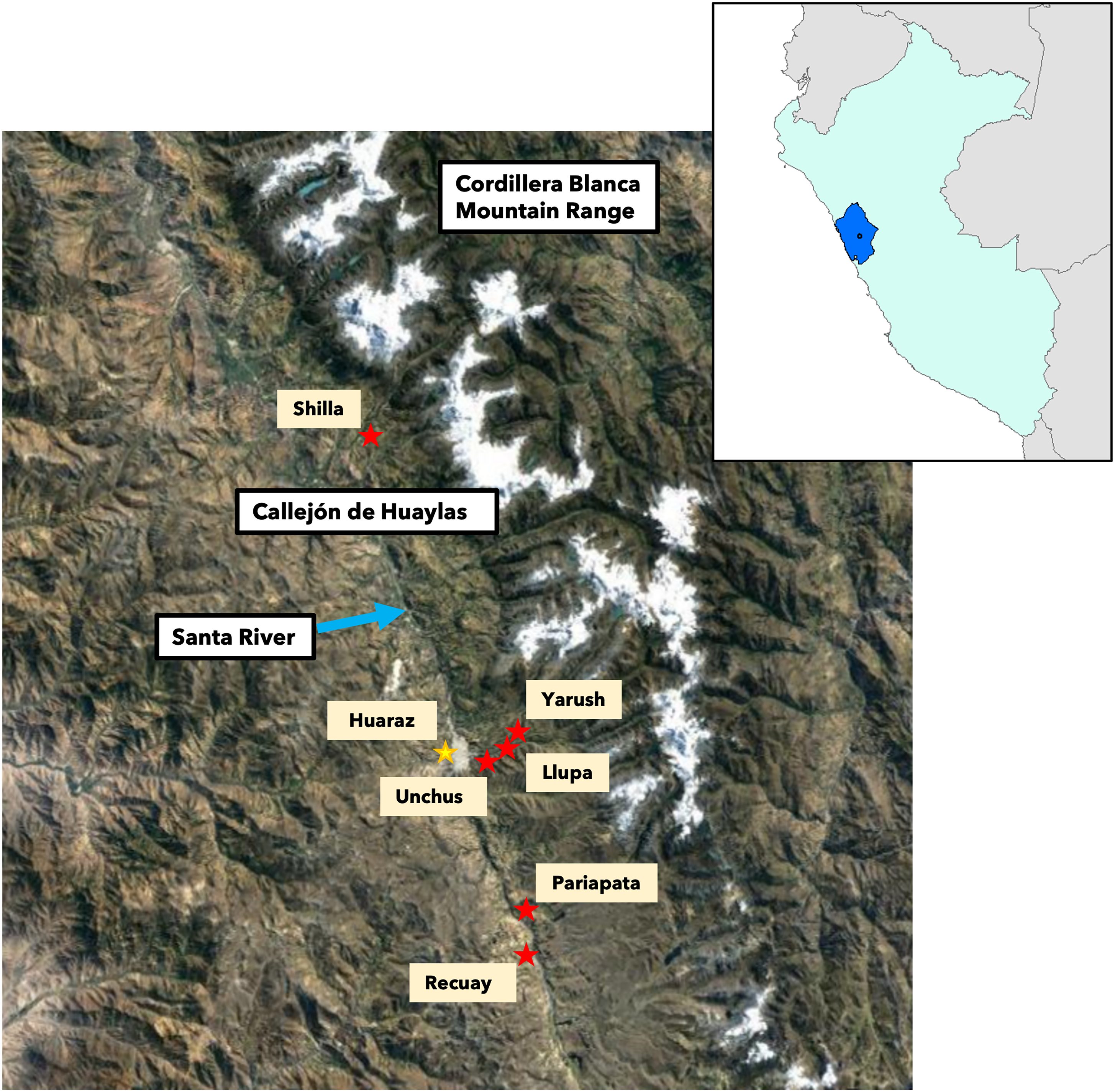
All study sites are located about 10–15 kilometers from the regional capital of Huaraz. We chose field sites based on common environmental and social challenges, which were identified based on the Inés's knowledge from living in Recuay and Huaraz and from her firsthand experience with NGOs working on issues of climate change in the Cordillera Blanca, as well as Holly's research on women's adaptations in Llupa and GLOF management projects in the Santa River Valley. Sites in Recuay and Pariapata were chosen based on Inés's personal connections in the area and the ability to travel safely during the COVID lockdown.
Methods
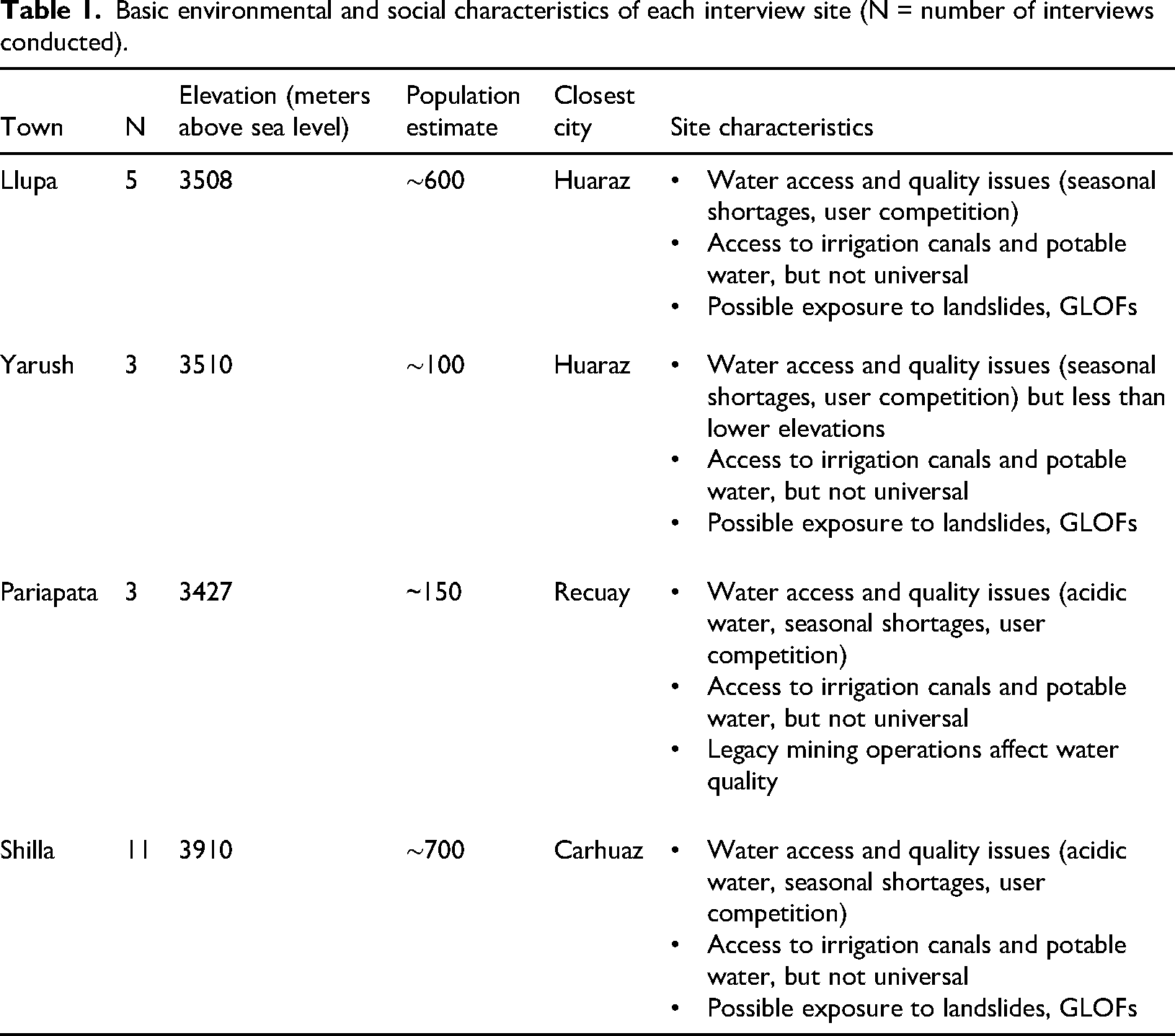
We used collaborative ethnography to conduct 22 semi-structured interviews with Quechua women in four towns (see Table 1) from July to December 2021. Feminist and collaborative methodologies are well suited to these research contexts, since they consider intersectionality, power structures within and outside of climate impacts, and the historical antecedents of these structures (Garcia et al., 2021). Interview questions were open ended and included space for participant storytelling. All interviews were conducted by Inés, a fluent Quechua speaker who has her own lived experiences of climatic and social change in the region.
Basic environmental and social characteristics of each interview site (N = number of interviews conducted).
This collaborative ethnographic work reflects both necessary changes to research methods in a time of multiple crises (political upheaval at the national level in Peru, the devastation of COVID) and the authors’ commitment to generating responsive adaptation research. Holly and Inés connected through mutual collaborators due to their shared commitment to research on the social dimensions of ice loss in the Cordillera Blanca. Holly is trained in human geography and interdisciplinary environmental studies and approaches this research through ethnography and academic studies as a tenure track professor at a liberal arts college in the United States. Inés is from the town of Pariapata and runs a local NGO called Wayintsik Perú that elevates and advances environmental security and mitigation projects related to climate change in the Cordillera Blanca. She also has extensive experience supporting local agricultural and gardening practices, conducting and translating interviews, managing projects, and supporting interdisciplinary teams researching everything from climate litigation (see https://rwe.climatecase.org/en) to perceptions of adaptation (Hagen et al., 2023). As a white researcher from North America, Holly's understanding of the lived experiences of women interviewed for this study is partial and limited. Inés, as a woman from the town of Pariapata in the Cordillera Blanca, was able to correct misunderstandings and build trust with participants, writing culturally appropriate interview questions and navigating the difficulties of COVID with understanding, safety, care, and expertise. Since one author is based in Peru and the other in the United States, we spoke every two to four weeks on the phone to address adjustments in the interview process and share crucial context. We worked from the overarching question: What are the everyday experiences of Quechua women living in this region, which is experiencing a myriad of climate change impacts? We then collaboratively developed a set of interview questions that would address this broad research question.
Inés chose participants through connections she had made through her work as a local specialist in social science research and Quechua language. Inés carried out interviews in the participant's location of choice, with health and safety factored in given the pandemic and Peru's high rates of infection. Most women chose to meet at their homes, where Inés could easily walk through or take pictures of their huertas. The majority of residents of rural, highland communities in the Callejón de Huaylas identify as either Quechua or mestizo (mixed Spanish and Indigenous descent) (INEI, 2018) and we anticipated a desire to conduct interviews in both Quechua and Spanish (15 Quechua interviews transcribed by Inés, seven Spanish interviews transcribed by Holly). In addition to these interviews, we also drew on Holly's initial research that involved participant observation and shared living with one family in Llupa (July-August 2019), who Holly has had a longstanding relationship with. Holly accompanied the women in the family (two adult sisters, two young daughters, one grandmother) in daily activities: grazing cattle, gardening, building an addition on the home, walking the children home from school, and shopping in the market. This helped to build a base of knowledge of how huertas are managed and valued within a large women-headed household and to set the stage for future interviews.
Holly conducted the first round of interview coding based on the five categories of questions that were included in the interview itself. After this broad coding, this section of each interview was analyzed separately, and Holly read through each set of responses and performed a grounded coding analysis, identifying themes within each category (Saldaña, 2015). These analytical themes were then sorted and thematic codes were created, which form the basis of the empirical sections of this article. Inés then read through a summary of the findings and the codes, adding clarifying material to each section and correcting any mischaracterizations of the data. Both authors reviewed multiple drafts of the paper for clarity and accuracy.
The following sections show how unexpected framings arise in women's descriptions of huertas, framings that bely the seeming inevitability of decline and loss and allow them to cultivate an alternative future. Each section is organized according to major themes that emerged in the process of analysis beginning with the basic context of huertas and climate change.
Climate change adaptation in the huerta
Women adapt their huertas to a variety of social and environmental changes, including untimely frosts, seasonal shifts in rain and irrigation water, and extreme heat. Water access was the most pervasive issue in our interviews, which women connected to seasonal climatic changes as well as infrastructural, geographic, and sociopolitical challenges. Nearly every woman we spoke with said that, compared to when they were younger, there is far less high-quality water available for irrigation and drinking. One woman named Cristina said she doesn’t even have enough water to wash her clothes in the dry season, and that now it rains sporadically and unpredictably. In the transition between the dry season and the wet season, and increasingly in the early wet season itself, women described waiting anxiously for rain, sometimes for weeks. Juana notes that “in the dry season the river [Buyín] looks like a dry irrigation canal” and attributes this to glacier melt, since there used to be sufficient water in the river during all seasons when she was younger and more predictable dry and wet seasons. Women also sounded alarm bells about water quality, including both the effects of acidic water on huertas and the health effects of low-quality water on people in the region, especially more vulnerable family members like children and elderly people. For example, Lidia notes that huertas are not in fact adaptable when you consider the quality of produce, which is declining due to acidic water compounded with pests and extreme temperatures, and the increase in childhood anemia that she attributes to overall poor water and food quality.
To adapt to these changes, women rely on acequias (irrigation canals) and irrigation systems like sprinklers (mariposas) to water huertas, rather than waiting for rainfall (see Figure 2). Since huertas are highly dependent on access to irrigation water as rains become unpredictable with climate change, the composition of huertas differs greatly depending on location and altitude. Women said that huertas “higher up” often have better access to water, but there are different growing conditions and access to acequias depending on the proximity to major towns and cities like Huaraz, Carhuaz, and Recuay—including associated markets, infrastructure, and business centers. In Llupa, Cristina said that it's better to live lower down in the zone, because you have better access to irrigation and do not rely solely on rainfall. However, other women talked about how access to the irrigation canal itself is insufficient if the water does not reach your house in a lower altitude section due to competition for water. This sets the stage for women in different parts of the Callejón de Huaylas to manage their huertas differently and to be able to adapt to social and climatic change differently depending on access to water. The adaptability of huertas is therefore not consistent across space and time and changes based on the health and availability of resources that each of the women has access to.
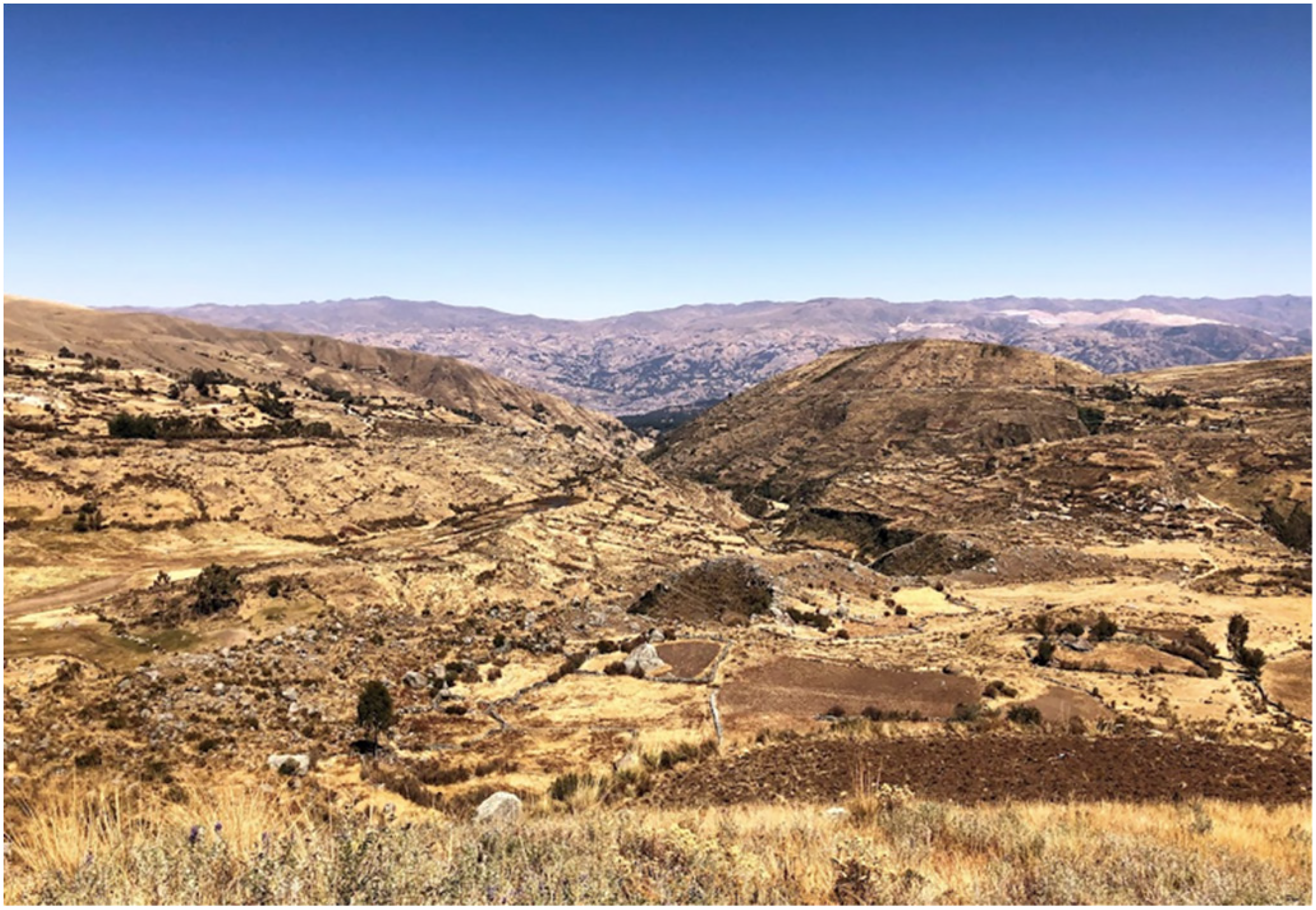
One of the most profound adaptations that women have made in response to social and climatic changes is to shift more food production to the huerta from the chacra. Women tend to spend more time cultivating and managing huertas, which are smaller and closer to home than chacras, which are larger plots of land traditionally used for growing potatoes, corn, or wheat that may be located on distant parcels at higher altitudes (see Figure 3). Chacras have traditionally been stable sources of staple household food supplies like potatoes. However, women say that chacra crop yields are becoming increasingly unpredictable due to changing precipitation patterns and heat. Moreover, chacras are increasingly beset by struggles with pests that are difficult to remediate without expensive pesticides and then fertilizer to rehabilitate the soil. At the time these interviews were conducted, the intertwined crises of the recently begun war in Ukraine and pandemic supply chain challenges had made the cost of purchasing fertilizer untenable for most families.
Huerta adjacent to an acequia (irrigation canal) in Unchus (photo by H. Moulton). A chacra in the high-altitude puna (plains), Shallap Sector (photo by H. Moulton).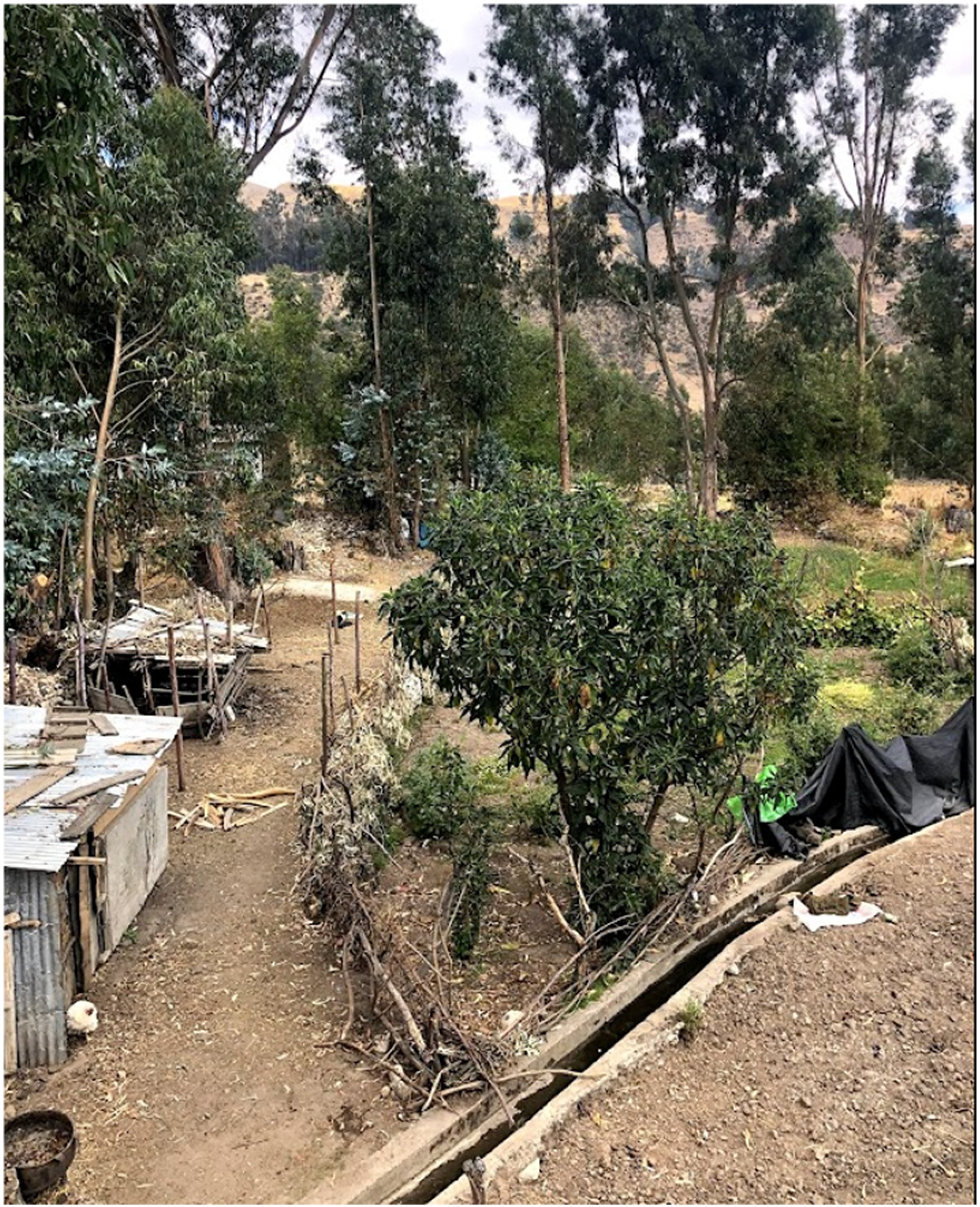
A woman named Paola highlighted the multiplicity of agricultural roles that women play, saying “Women dedicate ourselves to agriculture, we dedicate ourselves to the business of herbs, we bring the herbs to sell then we buy our vegetables. The men work in the chacra, together with the women, we support the men, harvesting potatoes and other things.” Many women highlighted the seasonal work that is necessary to sow and harvest potatoes in the chacra, and the near continuous work needed to plant, tend, and water a variety of fast-growing vegetables and herbs in the huerta (see Table 2). This means that labor, including planning and anticipation, is shifting towards huertas and therefore towards women, whereas previously labor may have been shared by men and women who collectively farmed chacras.
A list of produce and herbs grown and used in women's gardens, by location.
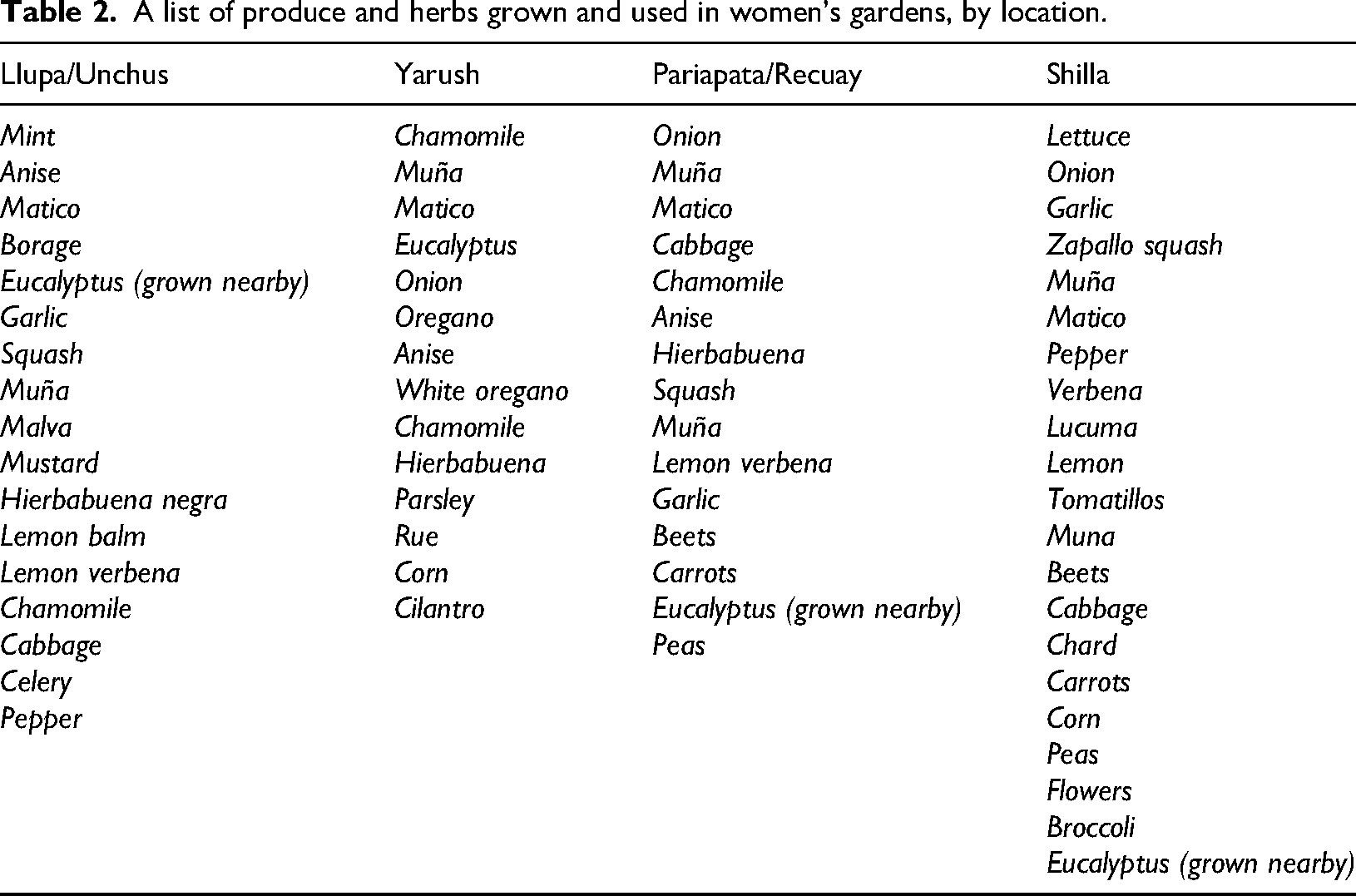
Most women emphasized that huertas are more adaptable than chacras, especially in intertwined crises of social and environmental change. Crops can be switched out quickly based on household needs and market demand, irrigation is more readily accessible than at higher elevation chacras due to proximity to acequias, and transportation time to huertas is minimal compared to walking an hour or more to the chacra, often with livestock in tow. Maria explained, “Yes, we irrigate the huerta continuously. In contrast, other chacras are only irrigated when it's time to plant crops. We can adapt our huerta to our needs, like the vegetable.” Carolina said “When there is water, we can immediately irrigate the huerta, if we don’t the plants dry out and they do not produce well. It always used to rain, but now it doesn’t rain, they say it's because of contamination of the environment…but you can irrigate the huerta to save it, from the acequia, even when there is little water.” Carmen cautioned that it is difficult for those who are not in an irrigation zone, because they cannot easily water their huerta during extreme heat or a drought without traveling to and carrying water, and near household springs have been drying. Indeed, many other women noted that despite the adaptability of huertas, those who had to walk to find water increasingly encountered dried springs and limited options as a result of climate change.
Women cultivate specific crops depending on what is growing well seasonally, what is selling well in the market, and what remains after household consumption. Most of the women we spoke with do not cultivate huertas primarily to sell; they are largely for household food production and animal feed. If there is a surplus of fruits and vegetables, women often gift this to neighbors or family members, a practice that was especially important during the pandemic market closures. However, huertas do provide an additional source of income for some women like Ernestina, who sells bundles of herbs like chamomile and muña (Andean mint) at the market. Every 15 days she sells a new crop, which she can do throughout the year. Women do not sell their herbs as individual vendors at the market. Rather, they sell them to revendedoras or people who buy the herbs at the local level and then resell them to national or transnational companies operating in Lima. This practice reduces their profit and creates uncertainty based on national and global pricing but facilitates year-round sales.
Women also encounter unpredictable hailstorms, unseasonable frosts, and wet season deluges that kill seedlings and less hardy crops in their huertas. Ana said frosts kill crops like corn and potatoes because they are planted on the puna (high altitude plain), but they affect the huertas in her town of Shilla little, because they are planted behind the house and can be tended to quickly. Women use strategies like covering young plants and seedlings with eucalyptus boughs or fabric to prevent damage from increasingly frequent hail,frost, or extreme heat (see Figure 4). This is laborious though and sometimes unsuccessful, especially since frosts no longer occur within expected seasons. Deluges also soak the top layer of soil in both huertas and chacras without penetrating to the roots, which washes away seedlings or kills plants. Cristina said that sometimes it will rain so much that the plants in her huerta rot, and sometimes it will rain very little and suddenly downpour, and that kills or washes away the crops. She has started using fertilizer and pesticides on the potatoes in particular, which was not necessary in the past. Diana mentioned, “Before herbs grew in abundance, you could harvest and gather them quickly, this must have been in 2002 in the time when my oldest son was born, there were herbs in abundance.” She attributes the lack of abundance both to a changing climate, including heat and hail, as well as novel pests that killed crops quickly without the use of expensive and toxic insecticides.
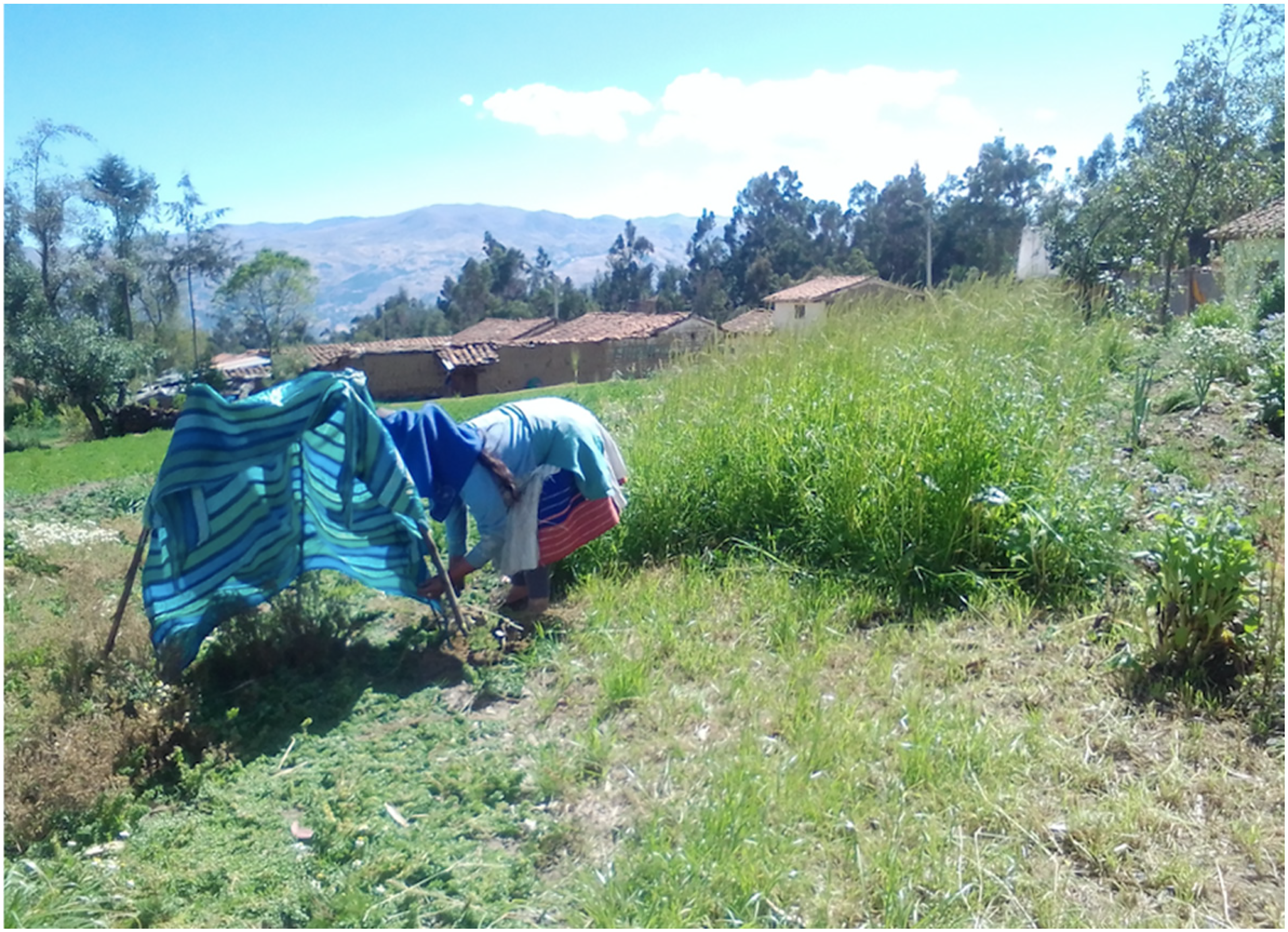
Shading seedlings from harsh midday sun in Llupa (photo by I. Yanac).
Huertas are key for survival and intergenerational permanence on the land, according to many of the women we interviewed. For instance, Juana said, “I think, in the event that I didn’t have my huerta, how would it be? Surely I wouldn’t have enough of the basic food necessities to survive.” Carmen further specified that without access to crops, you have to purchase food at high prices and low quality. She said, “On the other hand you can easily eat the food from your huerta or chacra and store it for the year. You cannot live just buying from Huaraz.” Especially in times of interlocking crises, the huerta becomes an important tool to supplement food security by providing vegetables for household consumption or through growing crops that can be sold in the market, the profits from which can then be used to purchase food. Several women noted that without access to a huerta, it was necessary to live in a city to access basic goods, causing young people leaving Huaraz for the capital city of Lima. Huertas are therefore not simply supplemental sources of food; women drew a direct line between cultivating huertas and keeping their families safe and tied to the region.
Huertas as emergent spaces for everyday adaptation
Despite the real social and climatic challenges that affect women's adaptation strategies, women operate huertas as spaces that transcend damage narratives. In fact, we find that women operate huertas as micropolitical sites of emergent adaptations that subvert dominant framings of loss, adapting in the temporality of the everyday. This section shows how unexpected framings come through in women's descriptions of huertas, framings that bely the seeming inevitability of loss and allow women to create an alternative future. They do this through cultivating joy through care, managing huertas as healing spaces, and knowing when to let go.
Cultivating joy through care
Joy was a consistent theme in our discussions of huertas. Many women framed huertas as more entrepreneurial, adaptable, lifegiving, and conducive to everyday maintenance than chacras. Juana said, “It's not stressful for me, being in my huerta passes the time, I don’t feel tired, because the work is minor. In contrast when I work in the chacra yes, it's tiring.” Joy in the huerta is not just an individual emotion. It represents faith that with care, the plants that women cultivate are more likely to thrive under collective conditions of contentment and happiness. Pilar emphasized she remains happy in the huerta even while surrounded by daily worries, because this increases the well-being of the plants. Several other women mentioned that their worries left as soon as they entered the huerta, citing the care that they felt towards and indeed from their plants as the primary “distraction” from the preoccupations of daily life. These examples show that the huerta is a space that can transform the primacy of daily preoccupations and stresses, instead allowing for a mutual transfer of emotion between women and the plants they are caring for. In this way, the huerta is both a physically and emotionally generative space, which rewrites the narrative of women's agricultural labor as an onerous lifestyle due for technological modernization and resists the prevailing story that crises remove opportunities for joy and regeneration beyond bare survival.
Adaptation is seen and often discursively framed as a burden rather than a chance to create new opportunities. Joy in this process is not just a private emotion, but is politically and materially significant counternarrative to the idea that labor is always burdensome. For example, Ana responded to a question about work in the huerta with, “I don’t get tired of planting, I do it with enthusiasm…In my huerta I do everything with high spirits, because I have faith that the seeds I plant are going to germinate.” The huerta, for several, is a space that is not just labor intensive but actually fuels content and allows women to connect with other emotions like calm and delight at beauty. Paola said that that while she is healthy, she will always tend to her crops despite the work that is required. “Like they say, from the chacra to the olla (cooking pot), calmer, to be looking around, how beautiful, how delicious. And while I have my health, I want to be here…Now I have my chickens, roosters, bulls, pigs, and with this it's easy and I can irrigate. Up until I can’t. And then when I can’t, my children can take over and I can sit still.” To have joy in the huerta alongside other beings is therefore an opportunity to create and sustain energy to challenge the politics of who is allowed to live and who is left to die in times of climate change.
Many women also expressed a sense of well-being in the huerta, and how it helps reduce the stress of adapting to economic pressures like high food prices, changing environmental conditions, and lack of government support for daily life. Both wellbeing and joy constitute resistance in a moment of polycrises, especially in the midst of the pandemic lockdown, rising fertilizer prices because of the war in Ukraine, prolonged climate change related drought, and presidential impeachment and turnover in Peru. Many women described huertas as spaces where the struggles they recounted throughout the interview process were made less acute. Gabriela said, “For me planting the huerta is fun because sometimes I am weeding or planting, I also put down manure, with these activities I forget all my worries, when I do these things I am calm.” Joy is therefore a generative and subversive emotion that provides a care-centered counternarrative to crisis.
Crucially, the factors that create the conditions for joy are not included in adaptation planning, especially for women living in rural spaces who are also caring for plant and animal beings. Adaptation planning is often reduced to project planning that strives to ensure that just the elements of bare survival are available. For example, the focus on flood prevention infrastructure, GLOF early warning systems, and even remediating water quality through wetland management is focused solely on hazard prevention and the provisioning of ecosystem services. Creating opportunities for joy amidst climate and social changes does not fit into these survival-centered adaptation strategies. Joy is transformative, cannot be disciplined into planning processes, and emerges through the act of tending a huerta.
Medicine and women's agency in huertas
In times of interlocking crises in Peru, the huerta has served as a food security backstop, a pharmacy, and a space to cultivate healthy food. Since women often conserve traditional knowledge of medicinal plants, they have long managed “botiquines familiares” during times of crisis and when medicine is not readily available (Baca Olayunca and Tofflinger, 1990) two instances of which occurred both during the internal conflict of the 1980s and 1990s and during COVID lockdown. These botiquines consisted almost entirely of herbal remedies that were either grown in huertas or locally foraged. However, climate change is affecting women's ability to maintain these botiquines familiares, amidst a deep skepticism about Western medicine and pills that many older women harbor.
Medicinal herbs are a form of care—literally rooted in everyday, intimate spaces tended by women—which reflect feminist ethics such as relationality and reciprocity that are often absent in Western healthcare paradigms. Although medicinal herbs can be gathered in some places, nearly all women told us that they cultivate medicinal herbs in their gardens, but especially women over 45. They do this either because they do not trust pills from local doctors or because they lack access to formal healthcare, with women in their 40 s and above more likely to have relied on medicinal herbs as a primary mode of healing during their childhoods due to limited access to Western medicine. The most common ailment that is treated with medicinal herbs is gastritis, often with chamomile, mint or muña (which is wildharvested along waterways), or hierbabuena. Herbs are also used for stress headaches (chamomile), urinary tract infections (oregano), menstrual cramps (oregano with garlic and chard) and other ailments that disproportionately affect women, according to interviewees. This is especially important given that the rates of anemia are locally attributed to social and environmental stress, poor water quality, and processed foods and oils.
This element of the huerta, a space that provides healthcare even in small measure, is critical for the health of individual members but also for the agency that women feel in choosing their own path towards healing. Maria says you can always go harvest something from the huerta for immediate medicine or nutrition, even if it's a young plant. But if you rely solely on the market, you need constant access to money to purchase medicine. Carmen grows chamomile not just because of the digestive distress that most women spoke of—which several women say is related to stress or low-quality food and water—but as a sleep aid, because it's difficult for people to sleep sometimes with the worries that they have (see Figure 5). Many women said they used to gather medicinal herbs in healthy bundles inside nearby Huascarán National Park, including muña and herbs that reduce symptoms of altitude sickness and headaches. As a result of climate change and shifts in precipitation, they are now walking further for medicinal herbs such as muña and matico that used to grow in abundance along riverbeds or in the higher altitude puna. Additionally, women said they are not legally allowed to gather herbs in the park anymore, forcing them to engage more with costly Western medicine, to gather illegally, or to cultivate what they can in their huertas.
Chamomile growing in a garden in Unchus (photo by I. Yanac).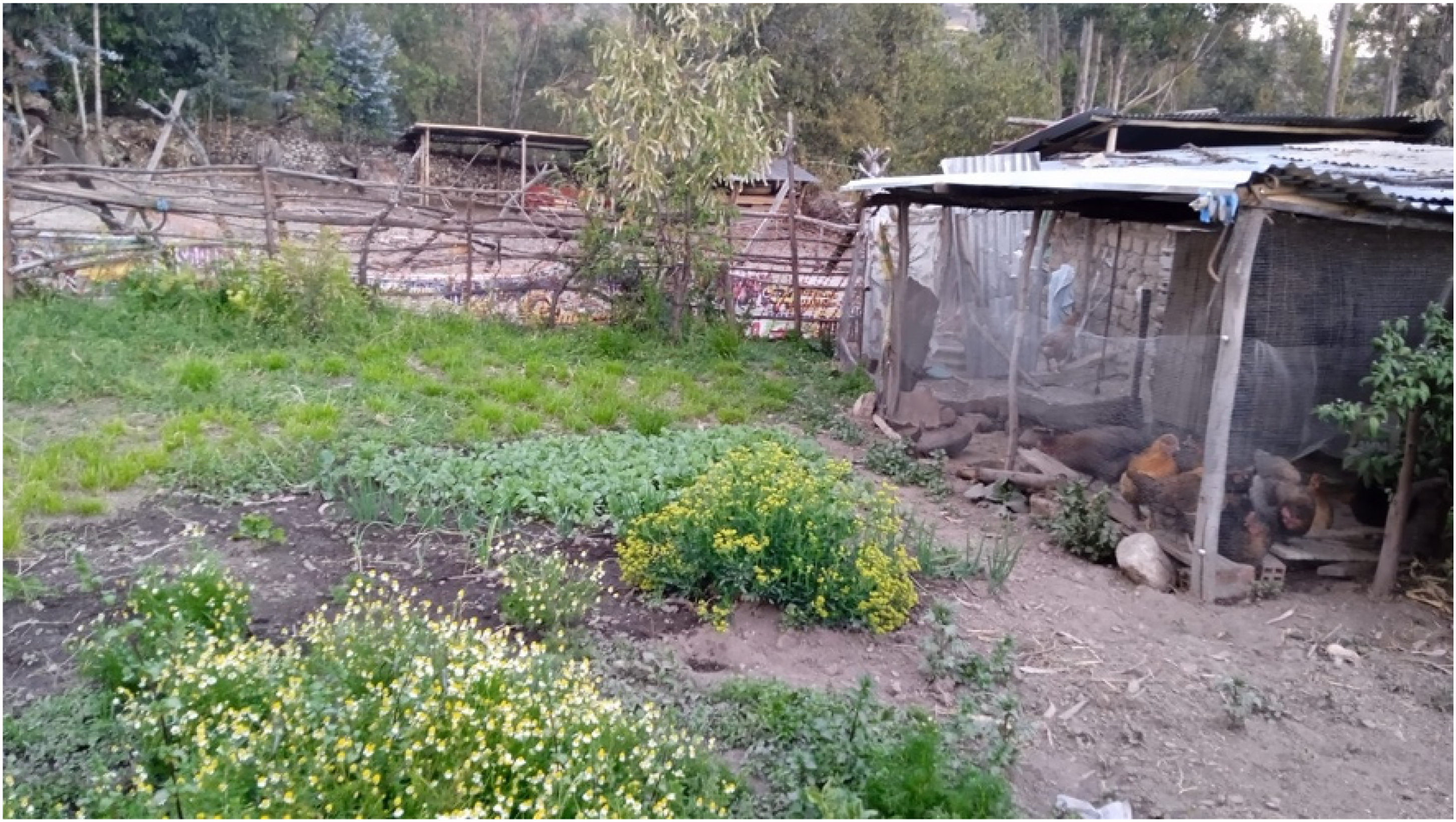
Women learned to cultivate food and medicine in huertas in a variety of ways, but the majority learned from other women in their family, whether that be a mother, a grandmother, or a sister-in-law. For example, Maria's grandmother and parents taught her to plant both the chacra and the huerta. Her grandmother said “we eat healthier from the huerta because we only plant with the manure from animals” versus the plants in the market that had additional inputs like chemical fertilizers. Marisol's father initially taught her to cultivate her huerta, then she fortified this understanding at reuniones de mujeres (women's meetings). Ana said, “I carry forward the teachings and habits of my mother” but she emphasized that it was her agency and desire that personally drove her to pursue a huerta, especially because her husband is often out of the house working, just like her father who left the region to work in coastal Peru. Carmen said, “In the old days grandmothers knew about these herbs, when I said to my grandmother that my stomach hurt, she prepared mint, white oregano, chus mejorana and hierbabuena, these things we drank (as an infusion) for colic.” This intergenerational knowledge, often shared amongst women, is highly valued as the primary way that women learn how to cultivate huertas that can provide both food security and healing.
Several women lamented the fact that climate change was causing an increased dependence on fertilizer and pesticides in both huertas and chacras, since pesticides change the nutritional and medicinal quality of the food. Many women strive to keep their huertas organic by using natural fertilizer made of animal feces and composted household food scraps. One woman mentioned that in years with low rain, women in the Andes travel to the market to buy potatoes that are grown on the coast with fertilizer and insecticide, and these potatoes do not have the same nutritional value, are gritty and hard, and are possibly poisonous. She said that people used to live to 100 years old just by using plants as remedios (remedies), now they are dying at 50 because of poisonous, pesticide-ridden food and ineffective medicine. Food grown in the huerta rather than on the coast is now seen as more flavorful, nutritious, and medicinal because large amounts of insecticide and fertilizer are not yet necessary. Importantly, the store-bought food that is eaten today is often framed as poisonous, full of fat and sugar, and as products that undermine the health of the family.
In some cases, women identified opportunities to leverage activities in the huerta, especially related to medicinal properties of plants, to advance their well-being. Carmen was already gathering eucalyptus to create tents to protect her huerta from frost and hail. During the COVID pandemic, she found out that global eucalyptus prices increased due to demand for their therapeutic properties for the respiratory system, so she decided to gather and sell some of the leaves. She said that she bundled up the eucalyptus with matico (an anti-inflammatory herb)that she had also gathered from her huerta and, “I don’t care if I get sick, I told them, because I don’t have meat to eat and I was only bringing it to Nueva Florida, there was a person I knew there who would buy the eucalyptus.” Another woman named Ernestina lost her daughter at the beginning of the pandemic and said that, to have some agency, she defied police barricades and snuck down to Huaraz in the middle of the night to sell her herbs. This sense of agency should not be conflated with a bootstrap narrative that forces women to engage in autonomous adaptation in perpetuity without government support. This has long been a stereotype in rural households in the Global South, and too easily reproduces narratives of resilience that would have the most marginalized people be responsible for systemic challenges like climate change. Instead, this sense of agency and the subversion of oppressive rules represents an “in the moment” adaptation that responds to current conditions and household needs in the absence of government support for the dual threats of climate change and COVID.
Temporal transformations and knowing when to let go
Despite the opportunities that huertas create, it also is critical to discuss the emotional toll of community-based adaptation despite the prosaic way that outsiders view it—as a normatively good, sustainable, equitable, and traditional endeavor. Women told us that staying in the countryside used to be critical for the reproduction of the family, since markets were expensive, there was limited access to staple foods outside of chacras, and city life was hard. This is now shifting as families, and mothers in particular, urge their students to get an education. Children can then leave and get jobs in Huaraz, Lima, and elsewhere. For example, Paola told her children, “I don’t want you to be like me, in the chacra turning over the earth, that they yell at you and dishonor you and tell you many things. I can take it all, but you have to be something else. Study study study so you aren’t like me, for yourselves and not for me.” Additionally, men have begun to leave the area for construction, mining, and tourism jobs, further fracturing the role of the entire family in reproducing an agrarian way of life and putting more pressure on the ways that women remain and take care. This underscores the need to question romantic notions of returning to traditional farming practices as an adaptation to climate change, which women say were never inherently peaceful. Pilar says, “I tell [my children] to study and to not be ignorant like me. My mother sent me to study but I did not want to. Because of this sometimes I am regretful, and because of this I tell my children that they should study so that they do not end up in the chacra, because it's difficult. With their knowledge they could go anywhere.” Cultivating land is therefore, for many women over 45 in particular, an old way of life that may not be sustainable for their children, despite their sadness in acknowledging this.
Global and local market conditions also change how women relate to selling goods from their huertas, sometimes forcing them to allow the huerta to grow temporarily fallow with fluctuating prices or demand. Monica notes that “sometimes it made me sad when I couldn’t sell anything, I even wanted to give up and become a house worker. Sometimes [the huerta] didn’t produce anything, or we sold 4 or 5 for one sol, which isn’t even enough to shop. Sometimes they don’t want to buy, we got 10 or 20 soles. It was then that I thought why don’t I get an education? If I had been a professional, I wouldn’t have suffered.” Even when prices are low in the local markets in Huaraz and Carhuaz, most women continue to sell small amounts of herbs and produce for their own personal income (see Figure 6).
Harvesting beets in Yarush for sale at local markets and for family use (photo by I. Yanac).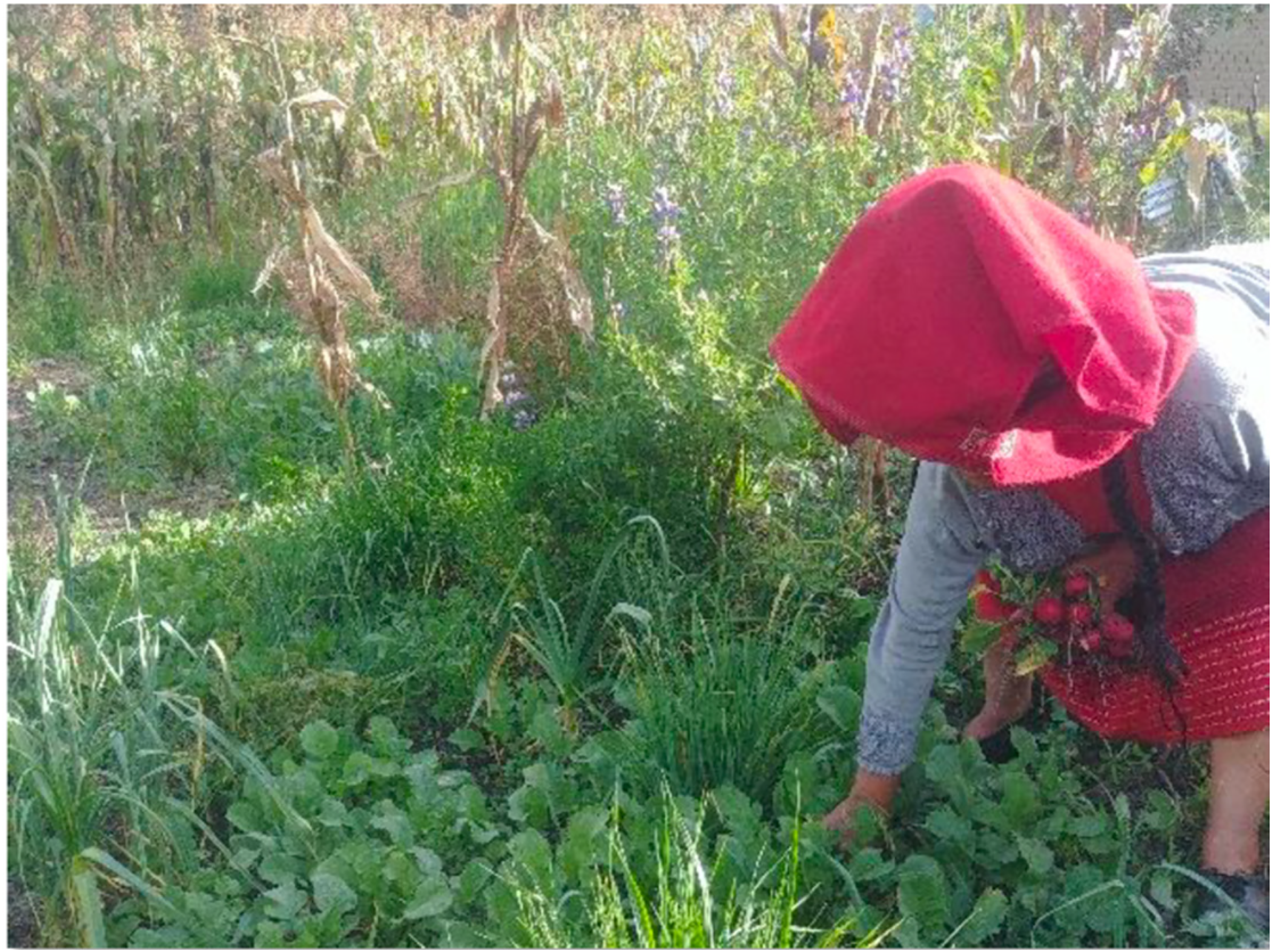
This permanent confrontation with new experiences due to multiple interlocking crises disproportionally affects women's adaptations and requires them to maintain entire homes and communities. But women are constantly shifting their temporal frame, thinking about the next generation and how they can raise children to avoid the stress of dependence on markets. Fluctuating market prices undermine the sense of agency people have over their current circumstances, but women shift either their current strategy or their future orientation to avoid the worst consequences of a capitalist system that does not center rural people and the environment. There is therefore a temporal element to huertas that highlights both the costs and benefits of managing impermanence.
Importantly, women set up alternative systems of mutual support in times of crisis to ameliorate impersonal and constantly fluctuating systems like agricultural monopolies and exploitative labor. This is a different form of letting go—adapting to the loss of life as usual when social conditions change, or when there is a drought or hail event that may affect other families in the area. Lorenza told us, “I am not so in love with money. What I do is that if I have vegetables, I bring them to people who I know or I exchange them for potatoes, oca, corn, or with whatever they have. What I bring most often is green onions.” Julia consistently shares crops with her neighbor across the street who is too old to tend to a chacra or a huerta, hauling potatoes from her chacra when the harvest is sufficient or dropping off zapallo from the huerta. Inés stressed that her family and several others in the area would trade vegetables from their huertas during the pandemic, when markets were closed and it was too unsafe to travel down to grocery stores. It is this care for the spaces and people, and knowledge of when to let go, that makes continuing to live in the region possible.
Adaptation challenges and invisible huertas
Despite these adaptation strategies, women underscored the challenges that they face in adapting within structures and environments that do not support them, as well as the efforts they are making to circumvent or change these systems. Interviews with women show two main intertwined social and environmental barriers to huerta cultivation: climate change induced shifts in the quality and quantity of water available for use in the huerta, and the lack of political will to support women's specific adaptations.
Women explained that geographic differences in huerta productivity and health were not inherent to the physical landscape or biophysical differences in water availability. They are always produced by social factors as well, including conflicts between communities and various levels of the government and between community members. Carmen explains how geographical differences and government neglect combine to produce inequities: “There are problems with the water. Sometimes the authorities don’t release the water, other times we are irrigating and people divert the water to their chacras, they don’t let us irrigate in peace, so in taking care of this [we are irrigating] all day. Irrigation water has diminished, alongside potable water.” In fact, many women said that houses that were higher in altitude received more water because they were able to water before the municipality shut off the water supply for the day or the week. Carmen says that in Llupa, the municipality expresses support for structural changes to irrigation, but “later it seems like they forget. A long time ago they said they were going to improve the irrigation canal and build a reservoir because not a lot of water arrives in Llupa.” This lack of responsibility on the part of the municipal (and regional) government is leading to additional stress and labor for women. Women either have to travel further for water or wait for their irrigation day (often only once a week) or increasingly unpredictable rainfall, all the while watching their huertas dry out, even as they pressure local governments to address water quality and quantity. This amplifies the marginalization of Quechua women, who are now having to do the labor of the government to fill in for these missing social services.
Women in Shilla noted that nothing was being done to remediate the acidic water problem either. When Paola was asked if there were other people who cultivate huertas around her, she said no, because the irrigation water is acidic and it spoils the plants. She said “the water has iron in it, it's acidic it spoils the vegetables and the flowers.” She said that the community wants to engage in a bioremediation project, and that currently the water in the acequias, even the water that is used for domestic purposes, “looks like chicha,” a yellow, cloudy, fermented corn drink that is common in the region. She said that the current mayor blames this on previous local leaders who never should have allowed this to happen, who should have been taking water “from above.” Daniela notes that the irrigation water in her area turns the plants yellow. She says that glacier melt causes this problem because the water comes from directly below the glacier from Auquiscocha lake and the level is worst in July. She guesses they are going to start having issues with potable water too.
The gendered discourse of service or social reproduction means that there is an assumption that work in the huerta should be done voluntarily without external support. However, women are seeing structural issues play out in their gardens that are no fault of their own, such as changing access to scarce water resources, increasing fertilizer prices and the need for chemical insecticide and fertilizer application that comes along with novel pests and climate change, and increasing food prices and reduced wage labor opportunities. Almost every woman interviewed discussed the effects of increasing fertilizer prices on the huertas. They were unable to afford fertilizer if they needed it because global gas prices and transportation strikes, along with Peru's increasing investment in agricultural monopolies, had made fertilizer unaffordable. The Peruvian government's lack of support for smallholder farmers like women has therefore not only undermined their ability to adapt to climate change, but has exacerbated their unequal position versus global agricultural monopolies that can afford fertilizer, insecticides, and irrigation that is subsidized by the Peruvian government (Aquino, 2025; Villegas, 2025). The need to increasingly rely on fertilizer to manage changes in cultivation conditions, many said, will undermine the long-term health and viability of huertas.
Despite these challenges, women are actively making changes to demand support and accountability. Julia has been responding to intertwined environmental and social change for years. She has started her own hotel in Llupa to supplement her family's income and to fulfill her own desire for financial independence, but still tends her family's chacra in Shallap sector, and mentioned that she and the community had also petitioned the municipal government for an irrigation canal that would serve chacras in the puna at higher elevation. The requests were repeatedly denied, so families were beginning to move out of the area and stop planting. Other women have told us that they are seeking support for rain barrels and tanks and other methods to store water for their huertas, since it seems like the municipalities will not be helping any time soon. Angela told us that before there were problems with people taking water away from each other, but now they take turns irrigating through a system they have self-organized amongst homes with huertas, and it is better now because they take it from the less-contaminated Buyín river. These specific examples of urging local and regional governments to be politically accountable further highlights the importance of the micropolitics of women's adaptations in the huerta.
Conclusion
This article provides a case study of climate change adaptations that break the mold of technical adaptation planning in the Andes and beyond, showing how careful attention to everyday and gendered adaptation roles requires a re-assessment of the development and state-based priorities and practices that shape adaptation planning. The intimate, care and emotion-laden, grounded, and place-specific information about huertas that women shared with us is invaluable testimony about the challenges women experience in managing the everyday effects of interlocking crises that affect adaptation options in the Cordillera Blanca. There is an implicit rejection of too-easy labels of climate vulnerability and women's work in huertas that can be seen through our interviews, which instead show constant adaptation, critiques of and resistance to maladaptive government efforts, joy and care in garden spaces, opportunities for healing, and gardens as places where attempted adaptations may succeed and fail to various degrees, but do not signal inevitable decline. This does not deny the inequality and injustice in climate adaptation as usual, but rather, that women and their huertas resist easy categorization as climate victims.
This research shows that projects that hope to support women's role in local agriculture within the context of adaptation should start by asking women what their needs are in a way that addresses the contextual fabric of their everyday lives, rather than asking questions that only center damage and short-term project objectives. It is important for development and state actors to recognize that autonomous, community-based adaptation stems from a long history of social, cultural, and technological changes and innovations that are developed by communities themselves, and that women play a vital and specific role in these processes that is often overlooked. However, this does not mean that women and the communities they care for are not in need of support. The pace of interlocking climate, social, and political changes—which is exacerbated by ongoing colonialism and economic activities that displace Indigenous communities and therefore interrupt knowledge transmission about specific places and environments—can undermine a community's real or perceived ability to adapt. Instead of installing top-down adaptation efforts, vulnerable populations within marginalized communities, like Quechua women in the Andes, should have choice over their adaptation options, choices that are clearly present in our interviews but which are not funded and supported.
Highlights
Huertas are home gardens that allow women, families, and communities to adapt to climate change. Technical adaptation projects overlook huertas as a result of scale and perceived lack of impact. In huertas, women cultivate future viability and the possibility for feminist care amidst interlocking social and environmental crises. Women's huertas center joy, medicine and women's agency, temporal transformations, and learning when to let go. Adaptation planning should center women's practices in huertas to counter colonial and patriarchal project structures and technical research biases.
Footnotes
Acknowledgements
We would like to thank The Glacier Lab at the University of Oregon for valuable feedback on early stages of this manuscript. We would also like to thank Rosa Serafín Aurelio for supporting Holly during early research trips to the Huaraz.

Author contributions
Holly Moulton - conceptualization, methodology, analysis, writing, review and editing. Inés Yanac León – investigation, methodology, review and editing.
Funding
The authors disclosed receipt of the following financial support for the research, authorship, and/or publication of this article: This work was supported by the Center for the Study of Women & Society and the Center for Latino/a and Latin American Studies at the University of Oregon, as well as a Fulbright Hays DDRA [grant #P022A200028].
Declarations of interest
The authors declared no potential conflicts of interest with respect to the research, authorship, and/or publication of this article.
Data availability
The datasets generated during and/or analyzed during the current study are not publicly available due privacy concerns. Limited and anonymized data may be available from the corresponding author on reasonable request.
Human subjects and IRB
The University of Oregon's Institutional Review board issued an exempt determination for this research after review. IRB Protocol Number: 06112019.020. Protocol title: Complicating Vulnerability: Gendered disaster narratives, ice loss, and resilience in the Peruvian Cordillera Blanca.” Informed consent was obtained verbally before participation. The consent was audio-recorded in the presence of an independent witness.