



Abstract
Interdisciplinary entrepreneurship programs are becoming the norm rather than the exception at universities across the world. This paper examines trends in student enrollment, interests, motivations, career goals, and perceived competency over the past decade at a large public university offering an entrepreneurship credential to undergraduate students in all majors. Several trends were identified via pre- and post-program surveys (n = 5,271 and n = 1,323) administered to participants. Engineering, technology, science, and international student enrollment grew; the motivations and interests of non-business students evolved slightly over time; and gender differences, but not disciplinary ones, were detected in relation to program outcomes and perceived effectiveness. Implications of this work for entrepreneurship education include showing how monitoring enrollment trends can inform program development and serve as a foundation for new research questions.
Entrepreneurial activity is key to the vibrancy and standard of living of communities and society (Herrington & Kew, 2017; Urbano et al., 2019). It is for this reason that academic institutions are expanding access to entrepreneurship education and startup resources. These university assets are particularly vital in a period of economic and societal transformation, driven by technological innovation and global competition. Today, college graduates cannot rely on stable, full-time employment in established companies, as were past generations. Instead, in this era of business optimization, universities must equip graduates with a greater understanding of how their individual talents and uniqueness can generate value in organizations and society.
These trends serve as the rationale for the proliferation and expansion of entrepreneurship education. The growth is not only in the number of programs but also in the breadth of offerings and target audiences. Originally, entrepreneurship education was primarily directed at business students; however, today, investments are being made in delivering entrepreneurship education to both undergraduate and graduate students in a wide range of academic disciplines, including engineering, science, and liberal arts (Janssen & Bacq, 2010; Morris et al., 2013). This trend is driven by the fact that many entrepreneurs come from non-business disciplines (Hsu et al., 2007), and the belief that students in all majors can benefit greatly from exposure to the skills and mindset associated with entrepreneurship education (De Carolis & Litzky, 2019).
Given this interdisciplinary movement, this study examines enrollment trends over a period of ten years, in a campus-wide entrepreneurship program at a large public university offering a certificate in entrepreneurship and innovation, a minor-like credential available to undergraduate students in all majors. This work explores demographic trends, why students chose to enroll in introductory entrepreneurship classes, and the value they derived from doing so by examining changes in student interests, motivations, career goals, and perceived competency related to entrepreneurial topics. These analyses were based on pre- and post-program survey data (n = 5,271 and n = 1,323, respectively) collected between 2009–2018. Our intent is to demonstrate the value of ongoing evaluation and assessment practice to program development, as well as associated challenges. It also shows how these data can serve as a foundation for future research that explores whether trends can be attributed to individual, educational, institutional, generational, economic, or other factors.
Literature Review
Description of the Interdisciplinary Entrepreneurship Education Program
The undergraduate entrepreneurship program discussed in this study was launched in 2005 to enable students in all majors to create economic and social value from their knowledge, regardless of disciplinary background. The program was among the first launched in a new entrepreneurship center that was the centerpiece of an interdisciplinary research park designed to serve the entire campus. The goal of this research park was to attract the interest and interdisciplinary involvement of faculty through a wide range of facilities and resources focused on areas such as environmental sciences, biosciences, and nanotechnology, thus enabling them to compete for external grant funding that was ambitious in terms of scale and scientific impact. The role of the entrepreneurship center within this context was to support the university’s technology, talent, and commitment to economic development through education and venture startup resources.
The undergraduate program offers students a certificate in entrepreneurship and innovation, a credential similar to a minor that appears on their academic records. At the launch of the program, the university president set a goal of having 1000 students involved within three years. To encourage the interdisciplinary buy-in required to achieve this objective, the vision was that no one college should be perceived as “owning” the credential, which would be the case had it been designated a minor. At the time of the launch, the entrepreneurship program was administered through the interdisciplinary research park but subsequently moved to the Office of the Provost to align with the educational activity of the university and better serve the campus. The strong support of the business school dean at the time was crucial to the successful launch of this interdisciplinary initiative.
The program requires the completion of five courses. These include two entrepreneurship fundamentals courses, and a selection of three option and capstone courses, some of which can overlap with requirements in students’ majors. Recognizing that most undergraduate students are unlikely to become entrepreneurs immediately after graduation, the overarching program objectives are to enable students to: 1) assess new venture opportunities; 2) acquire fundamental knowledge and skills related to the launch of new ventures; 3) develop leadership and communication skills needed to direct new initiatives; and 4) enhance job prospects and choices. Building flexibility into the program became increasingly important over time, given the institution’s strategic goals related to shortening time to graduation, capping degree program credit hours, as well as the reality that many curricular and extracurricular activities were competing for students’ time.
Program Evaluation in Entrepreneurship Education
Given our enrollment goals, collecting data from students was vital to understanding who was, or would be, attracted to the entrepreneurship program and why. Interdisciplinary undergraduate entrepreneurship education was rather novel in 2005, and information about it was scarce in the literature. However, we recognized that collecting program-related data was critical for three major reasons. First, we needed to understand the characteristics of our population and determine the value they placed on various aspects of entrepreneurship education to inform curriculum development. Second, we needed these data to help us position and market the program to recruit students. Third, program evaluation and impact data were critical for communicating the value of entrepreneurship education to department heads and university administrators, who could influence program funding decisions and acceptance within curriculum committees.
Program evaluation is grounded in a belief that at various times, policymakers, funding organizations, participants, and other stakeholders need to distinguish worthwhile programs from ineffective ones so that they are able to revise them or launch new ones to achieve the desired results (Rossi et al., 2004). Practical information about how to implement program evaluation within entrepreneurship education is difficult to find despite its potential value to stakeholders. Most importantly, it can enhance program development and teaching activities through a better understanding of the audience for instruction. This enables the tailoring of educational interventions, the ability to measure their impact, and strive for continuous quality improvement (Palomba & Banta, 1999).
A review of the literature indicates that there are few examples of ongoing, rigorous program evaluation and educational assessment taking place in entrepreneurship education (Fayolle et al., 2006; Huang‐Saad et al., 2018; Pittaway et al., 2009). One reason may have to do with the fact that faculty in business-related fields typically are not trained in educational evaluation or education research methods, and are unlikely to be rewarded for it by their peers (Pfeffer & Fong, 2002). Another reason may be that interdisciplinary and cross-campus entrepreneurship programs sit outside the boundaries of the accreditation activities required in many business and engineering schools, which tend to drive substantive, ongoing program evaluation initiatives at universities.
There are many barriers to conducting ongoing program evaluation that prevent its successful implementation, even where there are accreditation requirements (Kundu, 2019). Evaluation and educational assessment activities require considerable time, resources, expertise, and commitment. Entrepreneurship education is considered by many to be particularly challenging to assess due to its diverse target populations, potential outcomes (Duval-Couetil, 2013), and varied pedagogical approaches (Neck & Corbett, 2018), which can lead to complexity in developing and implementing evaluation research designs (Nabi et al., 2017; Rideout & Gray, 2013). Most importantly, when assessing entrepreneurship education, we are often attempting to associate educational outcomes with professional and economic outcomes that typically manifest over a long period of time (i.e., becoming an entrepreneur). From a methodological perspective, given the many personal and professional variables that influence career choice, it is challenging to associate educational interventions with these long-term professional outcomes. From a practical standpoint, there are many challenges associated with conducting the longitudinal research that prevent us from examining long term impact, including sample attrition over time, and the resources necessary to undertake it (Bauer, 2004).
As a result, studies of entrepreneurship students tend to examine their characteristics and interests at one point in time, often for research purposes rather than ongoing program evaluation. These studies have focused on demographic characteristics such as gender, which has been shown to impact both entrepreneurial self-efficacy (De Noble et al., 1999; McGhee et al., 2009), as well as entrepreneurial intention (Kolvereid, 1996; Souitaris et al., 2007). The mostly positive influence of entrepreneurial role models, parents in particular, also has been discussed extensively in the literature (Mungai & Velamuri, 2011; Scherer et al., 1989, 1990).
Despite the significant growth in interdisciplinary entrepreneurship programs over the past two decades, there is limited published information about the relationship between academic discipline and variances in students’ entrepreneurial motivation, interests, and intentions. However, given the increasing attention being paid to delivering entrepreneurship within fields such as engineering and computer science, interest in exploring such differences is growing (Gilmartin et al., 2019; Huang-Saad et al., 2020; Yi & Duval-Couetil, 2018). At a programmatic level there are interesting questions around cultural acceptance within and across disciplines, as well differing outcomes expectations (Janssen & Bacq, 2010). This paper explores a wide range of variables at a program level to show how monitoring enrollment trends can inform program development and serve as a foundation for new research questions.
Interdisciplinary Program Data Collection Background and Prior Analyses
We began collecting student data through surveys administered during the first year of the entrepreneurship program primarily for program development purposes, and in subsequent years, refined them to also serve as a foundation for research. As stated, our first objective was to understand the targeted audience for entrepreneurship education and examine whether the program met their perceived needs and interests. Our second objective was to collect data that would help us promote the value of the program to prospective students and the institution. Therefore, we sought data in the following categories: a) the demographic characteristics of those who were drawn to the program; b) why they were interested in studying entrepreneurship (i.e., motivations); c) specific topics of interest; d) their perceived competency relative to these topics (i.e., self-efficacy); and e) when they intended to pursue entrepreneurship (i.e., entrepreneurial intention).
Since we did not find published instruments to achieve this, we created program entry and exit surveys. These were developed based on a review of the literature and with the input of entrepreneurship faculty and assessment experts. The entry survey was comprised of sixty-five items organized into several categories, including demographics, prior work experience, post-graduation goals, reasons for taking an entrepreneurship course, interest in entrepreneurship-related topics, and perceptions of knowledge and ability. The exit survey paralleled the entry survey with the addition of questions asking about specific post-graduation career plans. We asked students to complete the survey during the first week of classes, and the exit survey upon program completion.
In 2014, we reported on the cumulative characteristics and motivations of a sample of over 2600 students from whom we had collected entry survey data to date (Duval-Couetil et al., 2014). Select findings from that study are in Figure 1. This study expands on our prior work considerably by examining ten years of both entry and exit survey data, as well as trends during the period (the previous study presents only entry survey data, in aggregate, at one point in time). The purpose of this study is to explore the interdisciplinary entrepreneurship student population in more depth to inform program development and best practices. It also offers a foundation for future research by exploring factors that might influence changes in enrollment or the target audience for entrepreneurship education on our campus.
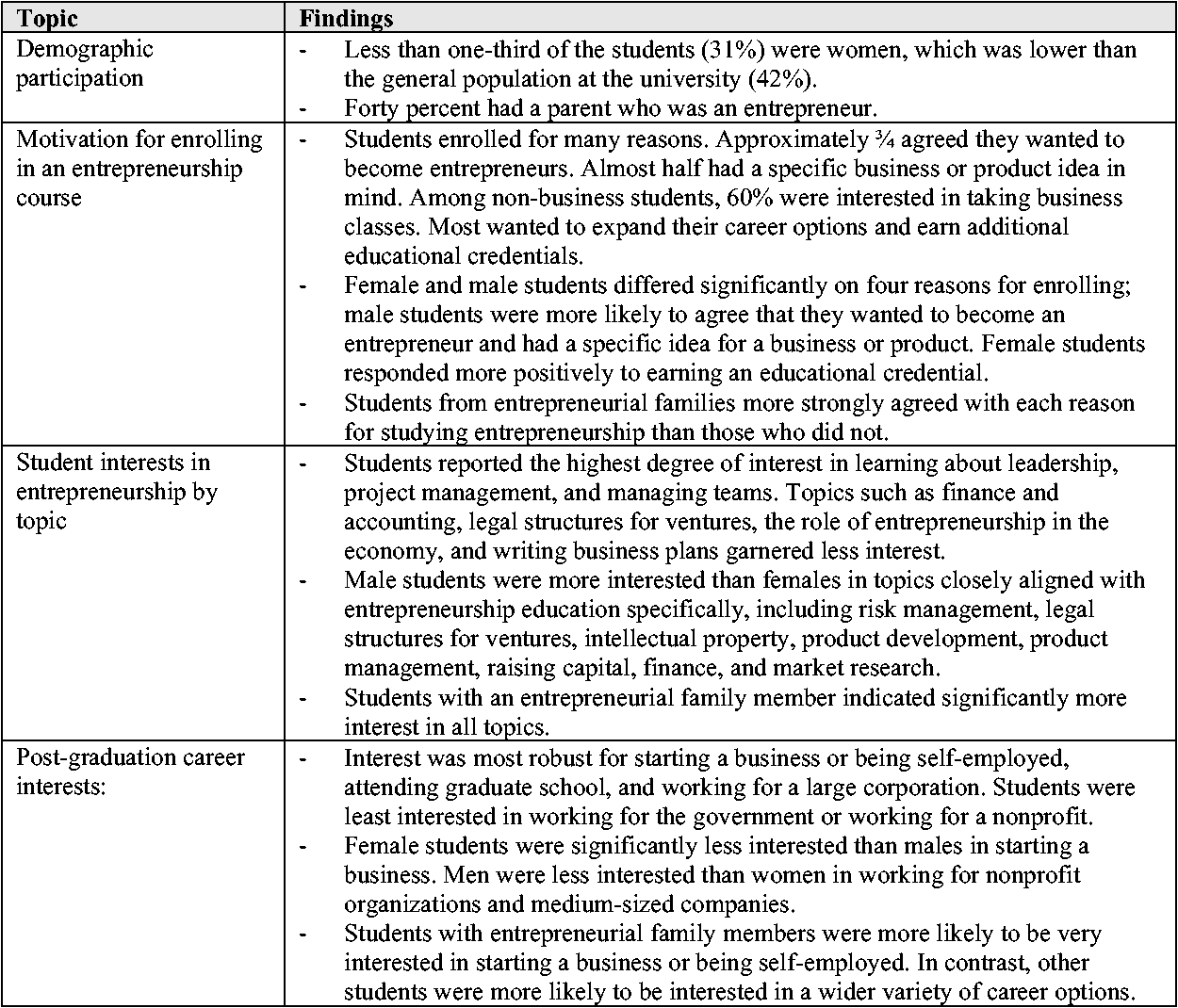
Summary of Select Findings from Duval-Couetil et al. (2014).
Methods
Our analysis is based on data collected between 2009 and 2018 through the entrepreneurship program entry and exit surveys described above. The interdisciplinary entrepreneurship program is housed at a public, 4-year research university in the Midwest of the United States. By 2018, a total of 6,803 students had enrolled in our introductory level entrepreneurship course, and 2,730 students had received the educational credential.
Students who enrolled in the program were asked to take the entry survey during the first week of classes, and 5,271 students responded (78%). Exit surveys were sent to students when they completed the program, and 1,323 students (48.5%) responded. The discrepancy in the number of exit surveys completed versus the entry surveys is likely due to the timing of surveys and the way they were administered (i.e., students are urged by faculty to complete the surveys at the start of the program, but faculty and administrators have no such leverage once the program is completed). For the demographic analyses part of this paper, we used only the entry survey data. Other than demographics, most responses to survey items are measured using 5-point Likert scales. We also analyzed enrollment data provided by the university to compare how our survey respondents aligned with the overall population of students who enrolled in the entrepreneurship program during the same period.
The entry survey respondents were from engineering (24.6%), technology (20.1%), management (13.6%), and health sciences (10.7%). Most of the students were sophomores (37%) and juniors (30%). The demographics of the survey participants aligned reasonably well with university enrollment data well with university enrollment data from that period, in terms of student major and semester. The enrollment data showed that most students started the program as sophomores (38%) and juniors (30.9%), and most were from engineering (18.2%), management (15.7%), technology (15.2%), science (8.7%), health science (8.5%), and agriculture (7.4%).
The research questions that guided our analyses were the following: RQ 1. What are the changes in the demographic characteristics of entrepreneurship students who responded to the survey from 2009 to 2018? Are there any underserved groups? RQ 2. Has students’ motivation for and interest in entrepreneurship education changed or evolved over time? Are there differences in the motivations and interests of students by sub-groups? RQ 3. How did students’ pre- and post-scores on perceived competencies in entrepreneurship change over time? Do they differ by subgroups of students?
Results
Trends in Demographic Characteristics
Results indicated that the proportion of female students who were enrolled in the program and responded to the survey fluctuated over the ten years and was consistently below that of male students each year,
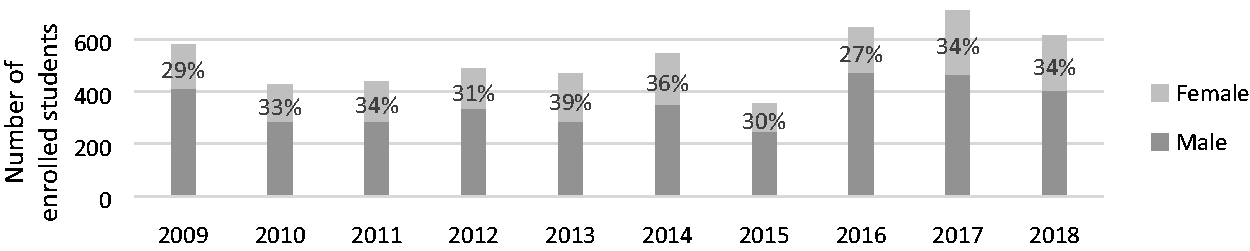
Enrolled Students by Gender: 10-Year Trends.
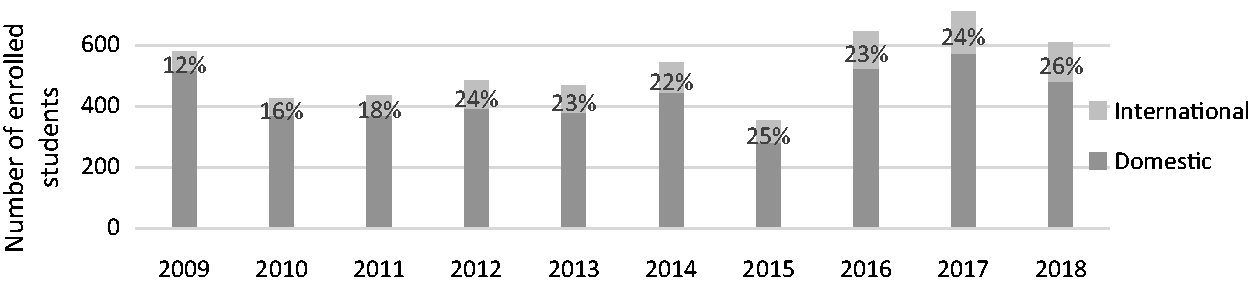
Enrolled International and Domestic Students: 10-Year Trends.
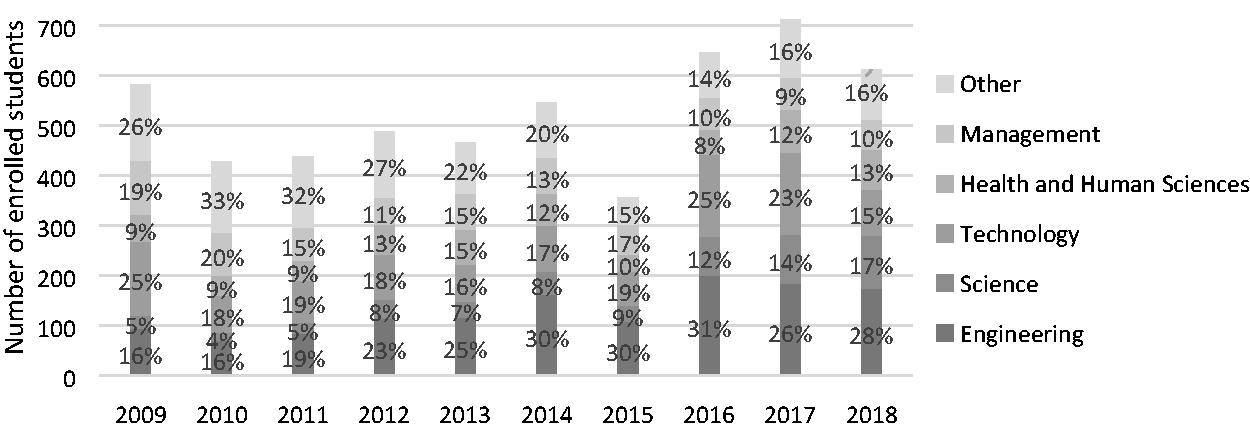
Enrolled Students by College: 10-Year Trends.
Changes in Motivation and Interests
Students were asked about their motivations for enrolling in an entrepreneurship course, and were able to choose more than one reason. Broadening career prospects and choices and having a general interest in the topic were consistently strong survey responses, and they remain so with no significant changes over time, F (9, 5193) = 1.59, p > .05 and F (9, 5193) = 0.93, p > .05. Taking business classes has been an increasingly attractive reason for enrolling in entrepreneurship courses over the past decade, F (9, 5193) = 4.95, p < .001, which is not surprising given the influx of science and engineering students, and decrease in business students. Interestingly, more recently, students are less motivated to take an entrepreneurship course because they have an idea for a business or product or want to find out what it takes to be an entrepreneur, F (9, 5193) = 2.37, p < .05; F (9, 5193) = 5.41, p < .001 (Figure 5).

Changes in Reasons for Enrollment: 10-Year Trends. Items were measured based on a 5-point Likert scale measure. ***p <.001; **p <.01; *p <.05.
In terms of interest in specific topics related to entrepreneurship education (Figure 6), more recently enrolled students were less interested in learning about legal structures for ventures, business ethics, sales and selling, and advertising and promotion than they were a decade prior. However, there have been fluctuations over the years. Only interest in product development has been growing more recently, F (9, 5193) = 2.33, p < .05, which again, could be attributed to the growth in students from science and engineering.

Changes in Interests by Entrepreneurship Education Topic: 10-Year Trends. Items were measured based on a 5-point Likert scale measure. ***p <.001; **p <.01; *p <.05.
We also examined whether there were differences in reasons for enrolling in an entrepreneurship class by gender and students’ residence status (Table 1). Similar to prior studies, male students had higher levels of interest in most of the reasons for enrolling in an entrepreneurship class, including having a general interest in the topic (t = 4.30, p <.001), becoming an entrepreneur (t = 9.46, p < .001), having an idea for a business or product (t = 8.10, p <.001), and taking business classes (t = 4.34, p < .001). Female students were more interested in reasons including obtaining an additional credential (t = −3.15, p < .01) and broadening career prospects and choices (t = −2.71, p < .01) than male students. International students reported higher motivation than domestic students for reasons such as having a general interest in the topic (t = −5.07, p < .001), becoming an entrepreneur (t = −11.57, p < .001), having an idea for business (t = −4.58, p < .001), finding out what it takes to be an entrepreneur (t = −3.96, p < .001), and taking business classes (t = −6.51, p < .001).
Differences in Reasons for the Enrollment by Demographic Characteristics.
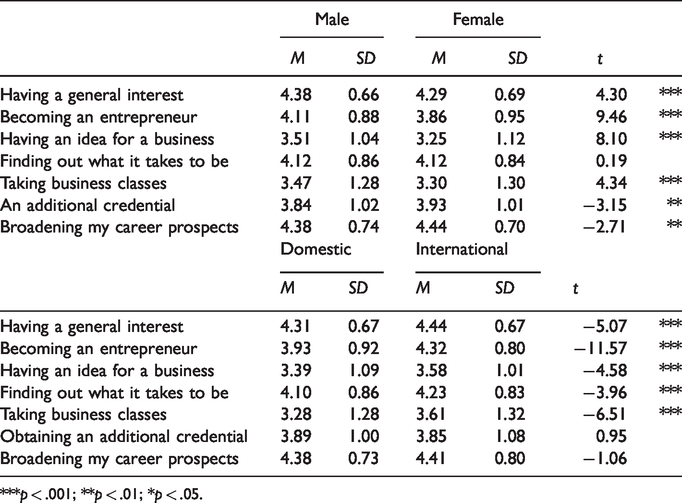
***p < .001; **p < .01; *p < .05.
Perceived Impacts and Outcomes of Entrepreneurship Education
Figure 7 represents differences in pre- and post-self-assessment in terms of entrepreneurial skills and knowledge for students who took both the entry and exit surveys. For all items, students reported that they increased their entrepreneurial skills and knowledge after completing the program. We examined whether the pre- and post-assessments differed by major and gender (Table 2). In terms of student majors, there were no significant differences in pre- and post-assessment except for the topic finance and accounting (F = 2.09, p < .05), where business students rated changes in their skills and knowledge highest due to the entrepreneurship program.

Pre- and Post-Changes in Entrepreneurial Skills and Knowledge: 10-Year Trends. A 5-point Likert scale was used to measure perceived skills and knowledge. Black indicates pre-test and gray indicates post-test.
Differences in Pre- and Post-Self-Assessments in Entrepreneurial Knowledge and Skills.
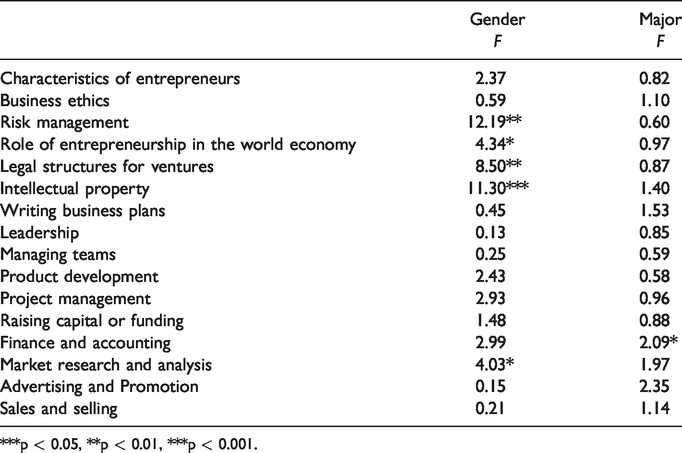
***p < 0.05, **p < 0.01, ***p < 0.001.
Interestingly, females rated increases in their skills and knowledge higher than males in the following areas: risk management (F = 12.19, p < .01), the role of entrepreneurship in the world economy (F = 4.34, p < .05), legal structures for ventures (F = 8.50, p < .01), and intellectual property (F = 11.30, p < .001).
Discussion
The purpose of this study was to explore a decade of enrollment trends in an interdisciplinary entrepreneurship program, as well as changes in entrepreneurship students’ interests, motivations, and perceived outcomes over that same period. At the launch of the cross-campus program in 2005, our primary goal was to collect entry and exit data that would inform and support program development efforts from both a curricular and administrative standpoint, and it continues to serve that purpose. Over time, it has become evident that ongoing evaluation activity can also inform scholarship by identifying trends which can serve as the foundation for generating new research questions.
While we review cumulative survey results from time-to-time, this is our first examination of trends over such a long period. It should be noted that collecting a consistent set of data each semester, year after year, can be challenging due to hurdles such as competing priorities, a lack of expertise, resource constraints, and even changes in leadership and staffing (Kundu, 2019). We have been able to achieve this because it has been a priority of the leadership team and we have invested in the protocols and processes necessary to maintain this activity on an on-going basis. We should also acknowledge that program-level evaluation is not a substitute for course and student-level assessment that also should be taking place as part of curricular and experiental activities (Wenninger, 2019).
These data serve as an excellent foundation for examining trends that can inform program development and administration. For instance, from a recruiting standpoint, both survey and university enrollment data show that we have not significantly increased the number of female students over the past decade. This is despite taking deliberate steps to reach out to this population, and even developing a course focused on women and leadership that sits within the entrepreneurship program. However, from these data, it is also clear that limitations in recruiting women may be beyond our control given the growth of certain academic disciplines at our university, which tend to enroll more male students (e.g., engineering and computer science). If that is the case, it is not necessarily that entrepreneurship is unappealing to female students. Instead, it could be that our pipeline for recruiting them may be constrained due to the enrollment practices of the university, or norms and practices associated with particular academic disciplines that tend to enroll fewer women.
These data do reinforce the importance of continuing to actively engage women to maintain diversity in our program. Interestingly, female responses to our surveys did increase in certain years, leading to interesting questions that warrant further investigation. For example, did we employ a particular marketing strategy that appealed to women during these periods? Did we engage a greater diversity of majors during those years? Or, might we have had more female instructors or role models at the university at that time? As far as perceived competencies are concerned, we also found that female students rated changes in their skills and knowledge higher than males in certain areas such as risk management, legal structures for ventures, and intellectual property. However, it is unclear without further research, whether women are getting more out of entrepreneurship education, or whether this is a function of sampling or response bias associated with enthusiastic participants who chose to complete the survey.
Survey data also showed that involvement by students in non-business disciplines has grown over the decade, highlighting the value of entrepreneurship education and interdisciplinary experiences to these students. These data also imply that faculty, academic advisors, and administrators in disciplines other than business support entrepreneurship education for their students, given that they have made it accessible through plans of study. Much of the growth in our program has come from engineering (conventional engineering disciplines), technology (majors such as building construction management, computer graphics, aviation, and engineering technology), and science (majors such as computer science, biology, and chemistry). Today, each of these academic disciplines places more value than they did a decade ago on professional skills development for their students (Huang-Saad et al., 2020). Program evaluation data allow us to offer enrollment and impact data to faculty and administrators in these academic disciplines, helping us demonstrate the value of entrepreneurship to their students, thereby further bolstering support for cross-campus, interdisciplinary programs.
Interestingly, the proportion of business management students involved in entrepreneurship education has declined over the past decade. This could simply be because they are a proportionally smaller group of students than they were a decade ago, given the growth and interest in majors such as engineering and computer science. However, it could also be due to changes in the admissions strategy of the university or business school, which can influence the number of students being accepted, and their characteristics (e.g., demographics, their level of interest in entrepreneurship). Similarly, we found a significant increase in international students, which aligns with enrollment trends at the university over this same period. However, without additional research, we cannot be sure if the higher participation is due solely to enrollment trends, or if international students have a stronger interest in entrepreneurship than domestic students, or both.
Data related to student motivation for entrepreneurship strongly supports its role as a form of professional development and career preparation. Students continue to be very interested in more general topics such as learning about leadership, managing teams, and project management. Many survey respondents reported they were not interested in developing a venture or product in the near term. This is not surprising given that most undergraduate students are interested in getting professional experience in established organizations immediately after graduating. Over the ten-year period, there was also an increase in students taking entrepreneurship as a means to learn about business. Again, this may be due to the influx of engineers and computer scientists, who traditionally do not get business education as part of their academic programs despite it being a valuable complement to a technical degree. This reinforces the belief that entrepreneurship education is an efficient way to learn about the many facets of business, often without the full-semester courses in accounting and finance, which some business minors require.
Overall, the survey data indicate that fewer students than a decade ago have ideas for products or ventures when they enter the program. However, interestingly, more are interested in product development than they were ten years ago. This, too, may have to do with the higher proportion of engineers and computer scientists enrolling in entrepreneurship classes. It could also have to do with heightened awareness among students of product development and prototyping, due to more access to makers spaces and an increasing emphasis on experiential learning in recent years. The influence of these movements within academia is understudied, and these data suggest that entrepreneurship education may serve as a means for enhancing involvement and competency in these areas.
The decreased interest students have in creating new ventures does warrant further investigation if we are to promote entrepreneurship education as a means of generating startups and economic development. This trend may be influenced by many personal, institutional, economic, societal, and cultural factors warranting further investigation. For example, at the individual level, as an entrepreneurship program expands in size and breadth, does it tap into an audience with a more “diluted” interest in entrepreneurship? At an institutional level, as we seek a higher academic profile for incoming students (e.g., higher SAT), could we be recruiting fewer entrepreneurially-minded students? Or, might the higher proportion of international students, many of whom are unable to stay in the U.S. and become entrepreneurs in the short term, impacting this metric? At a societal level, to what extent are policy issues such as student loan debt and access to healthcare making the entrepreneurial path less feasible for many? Over the past decade, these issues have received little attention in terms of their impact on the career and financial risks that contemporary graduates are able to take.
As we found in our cumulative analysis in 2014, male students have a strong interest in topics more directly aligned with entrepreneurship. In this study, international students had a stronger interest than domestic students for these as well. It is possible that international students have a higher likelihood of coming from parents who are entrepreneurs, suggesting that intersectionality in entrepreneurship education is worth exploring, given the overlapping demographic and social categorizations that exist within our target population. In contrast to this, female students had a stronger interest in the professional development and career readiness outcomes of entrepreneurship education. This is not surprising given prior research indicating that female students had a longer-term interest in pursuing entrepreneurship, usually after gaining professional experience or a graduate degree (Duval-Couetil & Long, 2014), and the dominance of masculine entrepreneurial stereotypes that can influence college students (Dohrman, 2010).
The good news is that students continue to derive significant value from entrepreneurship education as rated by their self-report measures. Gaining a deeper understanding of internal and external factors that influence entrepreneurial career pathways through education is essential if the ultimate goal of entrepreneurship education is to enable students to create new ventures. Interestingly, students have far more access to information about entrepreneurs and entrepreneurship through the internet and social media than they did a decade ago, which at once expands their knowledge of entrepreneurship, but can also reinforce stereotypes that limit participation by certain groups. As educators and scholars, we must pay attention to the individual, institutional, and societal factors that influence these trends. This paper offers an example of where to start.
Implications for Entrepreneurship Education
This work provides a greater understanding of the target population for entrepreneurship education over a period of ten years, which can inform recruiting, teaching, and learning activities. It also demonstrates the value of ongoing evaluation and assessment to program development, as well as entrepreneurship education research. Our results provide a foundation for future research questions that we should ask as we scale entrepreneurship education offerings. These have to do with both internal and external factors that influence participation, and the extent to which we are preparing graduates to create entrepreneurial ventures in contemporary society.
Footnotes
Declaration of Conflicting Interests
The author(s) declared no potential conflicts of interest with respect to the research, authorship, and/or publication of this article.
Funding
The author(s) received no financial support for the research, authorship, and/or publication of this article.
