




Abstract
Control over extraction and destination of waste can be just as important as it is for ore. Waste haulage is a major operating cost, especially as open-pit mines deepen and waste dumps expand, increasing strip ratios and haul distances. Moreover, potentially acid-generating (PAG) waste rock can lead to substantial rehabilitation liabilities through acid rock drainage (ARD). Progressive reclamation can be integrated into production scheduling optimisation to reduce PAG exposure during operations, thereby mitigating ARD and lowering environmental risk. Furthermore, traditional production planning approaches overlook geological uncertainty, limiting their ability to generate schedules robust to waste misclassification and metal grade variability. This study incorporates haulage management into a simultaneous stochastic optimisation framework for mining complexes to create a production schedule and waste placement plan that reduces haulage costs and mitigates ARD risk through progressive reclamation. A case study at a copper–gold mining complex compares performance when waste placement is optimised sequentially rather than simultaneously. The simultaneous case deferred waste haulage costs, reducing them by 38.7% in the first year, contributing to an 8.3% increase in net present value. At the end of operation, the sequential optimisation failed to encapsulate 16% of total PAG material extracted, compared with 22% in the simultaneous case.
Introduction
Waste management and reclamation are crucial operational aspects to consider when optimising long-term production schedules of open-pit mines; neglecting them can lead to substantial environmental and financial impacts. Haulage costs can account for around 50% of total mining costs (Alarie and Gamache, 2002), with studies indicating that they may represent the third-largest operating cost overall after milling and crushing (Mboyo et al., 2025). In this context, waste haulage can constitute most of the total mining cost, especially as operations progress toward deeper pits with higher strip ratios and expanding waste-dump facilities that increase haulage distances (Li et al., 2013). Apart from haulage costs, potentially acid-generating (PAG) waste can incur significant long-term environmental and financial treatment expenses (Kuyucak, 1999; Masindi et al., 2022; Park et al., 2019; Price, 2003). However, prediction methods that enable mitigation strategies to be incorporated into the mine plan can avoid remediation costs, which can be an order of magnitude higher than preventive measures implemented during mine planning (Price, 2003). Furthermore, if implemented during operation, mitigation plans can be particularly effective, enabling progressive reclamation while minimising the exposure of PAG material to oxidising conditions as early as possible, thereby lowering the probability of acid rock drainage (ARD) formation (EEC Ltd., 2004; Kuyucak, 1999). Considering these components directly when optimising long-term mine production schedules reduces environmental risk and can significantly improve the financial and environmental performance of a mining complex over its lifetime.
Designed cover waste dumps can offer an effective alternative for implementing progressive reclamation and minimising the risk of ARD formation. When implemented progressively, waste dump encapsulation allows for continued monitoring of cover performance and reclamation alongside revenue generation. In contrast, end-of-life rehabilitation strategies may take several years to reveal symptoms of uncontrolled ARD, often at a stage when sufficient funds may no longer be available for corrective works. Several examples of the application of progressive encapsulation are documented in the technical literature. Pearce et al. (2016) present a case study at the Martabe Gold Mine in Indonesia, where the progressive encapsulation of PAG waste rock was integrated with the ongoing construction of a tailings storage facility embankment using an engineered structure designed to account for the inherent properties of the waste rock materials, the run-of-mine waste rock schedule and geotechnical standards. This approach was subsequently validated through field instrumentation and monitoring during construction, which demonstrated low oxygen ingress and high degrees of saturation within the sealing layers, confirming the effectiveness of the progressive encapsulation strategy (Pearce et al., 2017). However, the success of such progressive encapsulation strategies depends on a long-term production schedule that ensures balance between the quantities of PAG and encapsulation materials extracted during the life of the mine.
Grohs and Pearce (2019) demonstrate that life-of-mine waste scheduling can be aligned with progressive encapsulation requirements to balance PAG and encapsulation material supply at an operational site; however, the approach remains site-specific, and no generalised or transferable planning framework for achieving this balance is formally proposed. A related effort to explicitly integrate material availability for reclamation into long-term production scheduling is presented by Badiozamani and Askari-Nasab (2014), who developed a mixed-integer linear programming framework to generate a production schedule in the oil sands context that maximises net present value (NPV), while satisfying mining and processing capacity constraints, ensuring that tailings slurry does not exceed capacity in each period, and that the required material for reclamation remains within yearly prescribed ranges. While this work represents an important step toward balancing ore production and reclamation material supply, it outlines the importance of extending the approach to balance non-acid generating (NAG) and PAG material for progressive encapsulation in hard-rock mining environments.
Previous studies have explicitly incorporated waste management into mine planning, primarily through the optimisation of waste placement and haulage costs, while enforcing end-of-life encapsulation of PAG material. For instance, Li et al. (2013, 2014) developed mixed-integer programming models to control the placement of waste rock with the objective of minimising haulage and re-handling costs, while ensuring that PAG material is encapsulated by NAG material given a predetermined production schedule. However, these approaches rely on a sequential optimisation structure, in which the production schedule is first determined, and the waste placement schedule is optimised afterward. This sequential treatment can lead to suboptimal solutions, as it does not explicitly account for the additional costs and operational implications associated with mining PAG material, which may result in misclassification of ore and waste and in suboptimal extraction sequences over the life of the mine.
These problems were partially addressed by Fu et al. (2019), who proposed a mixed-integer programming formulation that simultaneously optimises the production schedule, destination of materials, and waste dump placement to maximise the mine's NPV, while explicitly considering haulage costs and the encapsulation of PAG material. Lin et al. (2024) subsequently extended this framework to mining complexes by incorporating multiple mines, processing facilities and stockpiles within a simultaneous optimisation model. However, the large-scale nature and combinatorial complexity of the resulting formulation limited its practical applicability when solved using exact methods. To address this computational limitation, Lin et al. (2025) further advanced this line of research by developing a tailored simulated annealing-based solution algorithm with dedicated variable-reduction and perturbation strategies, improving solution time for larger instances of the problem. Despite these important contributions toward the integration of waste management in long-term mine planning, the proposed approaches only guaranteed encapsulation at the end of the life of the mine, rather than being enforced on a yearly basis, which may increase the exposure of PAG material and, consequently, the risk of acid generation.
A common limitation of the aforementioned studies is that they neglect uncertainty both in the classification of potentially hazardous material and in metal grades, which are the primary drivers of revenue in a mining complex. However, geological uncertainty has proven to be a major source of risk that directly affects the accuracy of forecasted key performance indicators (Dimitrakopoulos, 2011; Dimitrakopoulos et al., 2002; Dowd, 1994; Godoy and Dimitrakopoulos, 2011; Ravenscroft, 1992). Levinson and Dimitrakopoulos (2019) specifically addressed the impact of geological uncertainty on PAG classification through a comparative risk analysis between a conventional deterministic mine production schedule and a simultaneous stochastic optimisation framework. The results showed that the deterministic orebody estimates produced mine plans that underestimate annual PAG production by approximately 12%, leading to a more than 90% probability of violating waste dump permitting constraints in early production periods.
Geological uncertainty has been explicitly incorporated into simultaneous long-term mine planning for decades; however, its application to waste management for ARD risk mitigation has remained limited until recently (Castillo and Dimitrakopoulos, 2019; Dimitrakopoulos and Lamghari, 2022; Goodfellow and Dimitrakopoulos, 2016, 2017; Jiang and Dimitrakopoulos, 2025; Montiel and Dimitrakopoulos, 2015, 2017a, 2017b; Paithankar et al., 2020). Recent work by Levinson and Dimitrakopoulos (2024) extends the simultaneous stochastic optimisation framework to explicitly integrate waste management and progressive reclamation under geological uncertainty, while accounting for operational handling strategies for PAG material. In their formulation, waste dumps are divided into cells that must be filled with an appropriate balance of PAG and NAG material to achieve a chemically stable blend, thereby reducing the risk of ARD. Reclamation targets are incorporated as soft constraints, with associated deviations penalised in the objective function. Guimaraes and Dimitrakopoulos (2026) also consider waste management and progressive reclamation in the simultaneous stochastic optimisation framework, but through the use of progressive encapsulation as a preventive and/or mitigation strategy for ARD. In their work, dualised constraints are used to ensure a balance of extraction of NAG and PAG materials during the operation for successful yearly encapsulation of the PAG extracted. Although the proposed models address many of the previously identified limitations, they do not consider haulage costs to generate a production schedule and a schedule of placement of waste that minimises the transportation costs related to waste.
This work presents an extension of the formulation presented in Guimaraes and Dimitrakopoulos (2026) aimed to incorporate haulage management of waste at the same time as it integrates yearly encapsulation as a strategy for progressive reclamation. The extended framework aims to create an extraction sequence and a waste placement schedule that minimises haulage costs while balancing the production of NAG waste during the life of mine to accommodate reclamation requirements. The waste dump is divided into sectors, each of which must be filled at the end of a production period with enough encapsulation material for the corresponding PAG production.
Simultaneous stochastic optimisation of mining complexes
A mine complex can be seen as an integrated system composed of mines, stockpiles, waste disposal and tailings storage facilities, processing destinations and transportation; all leading to the generation of sellable products delivered to customers and/or the spot market. This system can be represented as a directed acyclic graph, denoted by
Geological uncertainty is represented by a set of orebody simulations denoted by
Once the graph representation of the mining complex is defined in terms of its vertices and arcs, the primary and hereditary attributes associated with each destination can be computed directly from the decision variables. As an extension of the general framework proposed by Goodfellow and Dimitrakopoulos (2016), four sets of decision variables are considered.
The extraction-sequence decision variables
Processing stream decision variables are modelled as scenario dependent, as it is assumed that once material arrives at a destination, uncertainty is revealed and the flow of materials between downstream destinations can be controlled accordingly. In contrast, extraction sequence, destination policy and waste placement scheduling decisions are scenario independent and must be made resilient to uncertainty.
Objective function
An extension of the objective function introduced by Goodfellow and Dimitrakopoulos (2016) is proposed to evaluate the performance of the mining complex, as presented in Equation (1). Haulage costs related to the movement of waste to different dump locations are directly included in the model along with encapsulation penalties to generate production schedules that mitigate the risk of ARD and minimise transportation costs of waste.
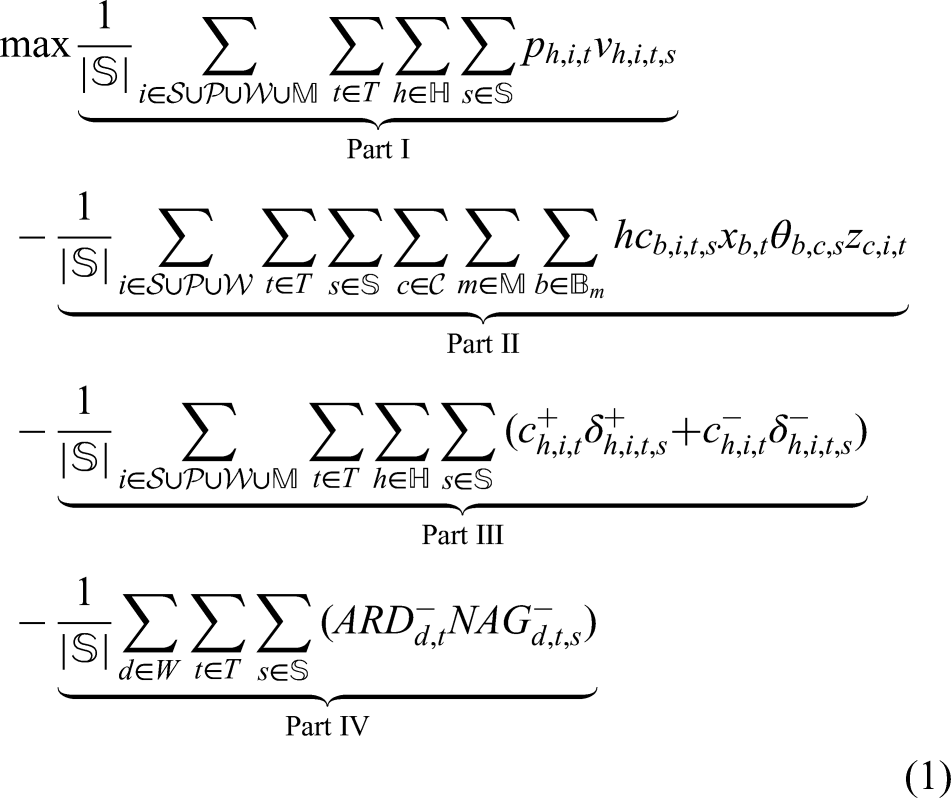
Part I represents the discounted value of all relevant attributes within the mine complex that contribute to revenues and expenditures, excluding haulage costs from the multiple mines. Specifically,
Finally, Part IV penalises deviations from encapsulation requirements. Encapsulation is integrated into the model by decomposing the waste dump area into multiple independent sectors. Each sector is designed with an overall dump geometry that satisfies established guidelines for the construction of encapsulated waste dumps (Wetherelt and van der Wielen, 2011; Williams, 2012; Williams et al., 2006). These sectors must be filled one at a time each year. Each dump sector must then receive sufficient NAG material to encapsulate the PAG produced in the year in which the sector is scheduled. Any shortfall is penalised in proportion to the missing NAG required for appropriate encapsulation. Combined with Part II, Part IV enables the model to produce a schedule for the placement of waste that minimises haulage costs while, at the same time, mitigating the risk of ARD. Since each dump location is encapsulated in the same year it is scheduled, exposure of PAG to weathering conditions is limited and reclamation is performed progressively throughout the life of the complex. In the objective function,
Constraints
Waste scheduling constraints (2) and (3) ensure that only one dump location or sector of the legal waste dump area is used per year, and that no location is used more than once. Partitions of the waste dump are adjacent to one another and do not require any precedence constraints:


Constraints (4), (5), and (6) restrict the flow of material from stockpiles and mines to dump locations that are closed, and prevent processing facilities from sending any material to dump locations:





Constraints (9) and (10) determine, for each dump location
In these expressions,


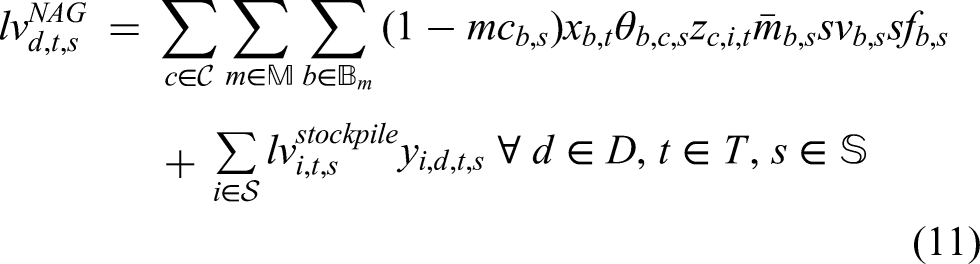
Constraints (11) and (12) determine, respectively, the quantity of NAG waste allocated for encapsulation and the shortfall of NAG waste required to achieve proper encapsulation at dump location d in period t and scenario s. The loose volume of NAG waste available in a stockpile

Other constraints included in the model, such as those related to the calculation of hereditary attributes, reserve and access constraints, mass conservation at downstream destinations such as stockpiles and processing plants, and integrality, are explained in detail in Goodfellow and Dimitrakopoulos (2016).
Solution method
The simultaneous stochastic optimisation framework employed integrates non-linear transformations to more accurately represent the behaviour of the mining system. The incorporation of non-linearities, a large number of decision variables, and explicit geological uncertainty makes the resulting formulation intractable for commercial solvers. Consequently, the solution methodology employed consists of a hybrid metaheuristic that integrates multi-neighbourhood simulated annealing (Goodfellow and Dimitrakopoulos, 2016) with adaptive neighbourhood search (Yaakoubi and Dimitrakopoulos, 2023). The adaptive neighbourhood search component selects heuristics dynamically during the solution process by learning from their past performance, forecasting their effectiveness, and preferentially applying those expected to yield the greatest improvement.
Application at a copper–gold mining complex
The simultaneous stochastic optimisation model presented in the previous section is applied to a copper–gold mining complex, as illustrated in Figure 1. The complex has an expected remaining life of 10 years and consists of three mines and four material types, classified according to their metal grades and geochemical properties. Blocks with zero copper and gold grades are classified as waste, whereas blocks with nonzero copper or gold grades are classified as potential ore. This classification serves solely to reduce the computational complexity of the problem and is not a requirement of the model. The blocks are then further categorised as PAG or NAG based on their net producing ratio (NPR), the calculation of which is discussed at the end of this section.
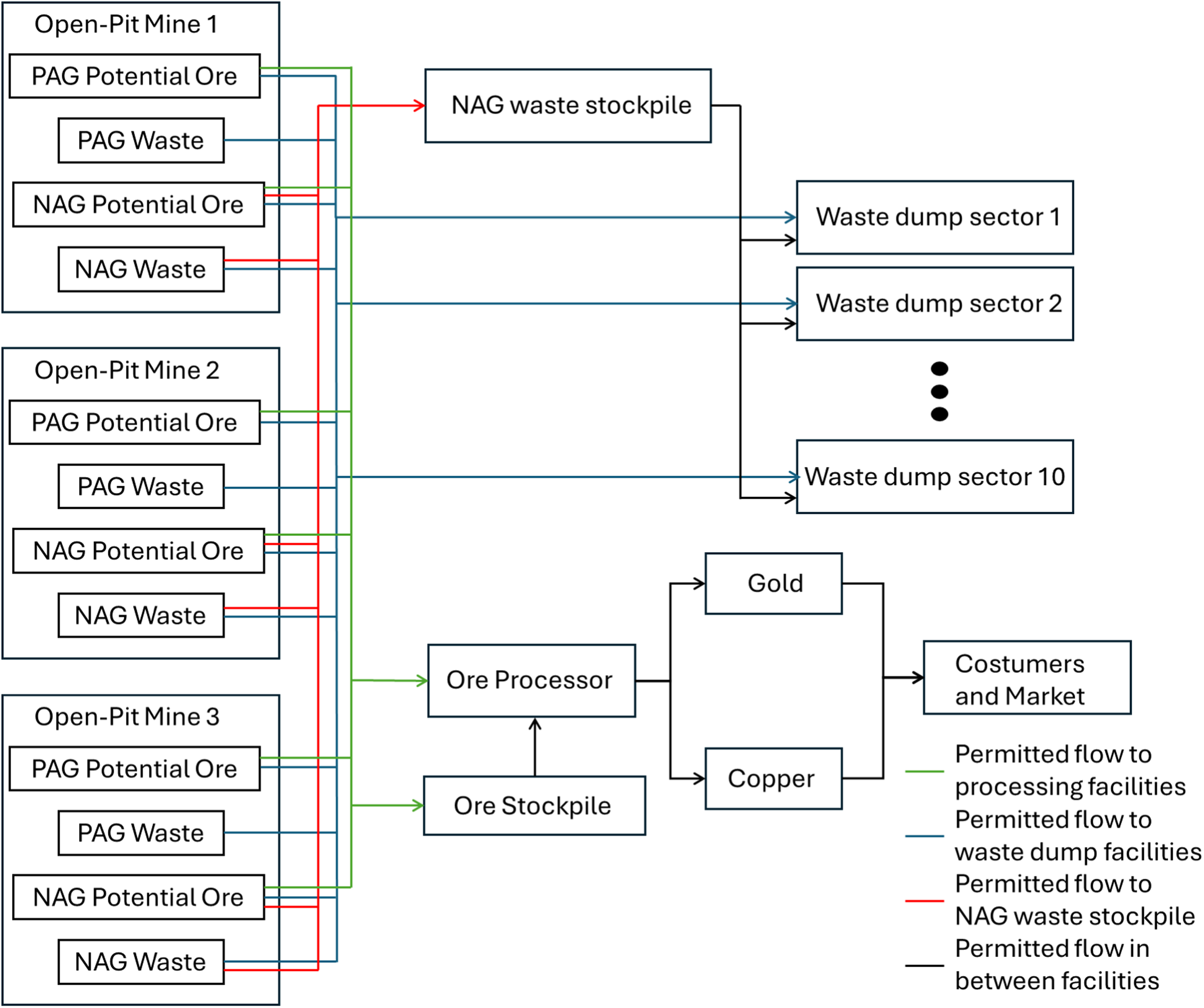
Mine complex with three open-pit mines, stockpile for NAG waste material, stockpile for marginal grade material, one processing plant and waste dump sectors designed for progressive encapsulation of PAG.
Potential ore identified as PAG is either treated immediately at the processing plant or directly sent to the waste dump; stockpiling of PAG material is excluded due to the risk of prolonged exposure to weathering. In contrast, NAG potential ore may be safely stockpiled over multiple periods, as it is assumed to not contribute to ARD generation, and may, therefore, be routed to the processing plant, the waste dump or a stockpile. To ensure the long-term availability of encapsulation material, the model incorporates a NAG waste stockpile, which allows NAG material extracted in earlier periods to be stored and later used for encapsulation when the NAG produced in the current period is insufficient to satisfy the encapsulation requirements of PAG material. The inclusion of a NAG waste stockpile anticipates an increase in the proportion of PAG material as mining advances below the groundwater table. Without the integration of this stockpile, encapsulation could become impractical or result in substantially higher material handling costs. NAG waste may be directed either to the NAG stockpile or to the waste dump, whereas PAG waste is restricted to direct disposal in the waste dump.
Joint stochastic orebody simulations (Boucher and Dimitrakopoulos, 2009) were used to quantify uncertainty and variability in copper and gold grades, as well as geochemical properties relevant to the classification of PAG materials. Sulphur grades were used to calculate the quantity of calcite required to neutralise all acid produced under the assumption that all sulphur is associated with pyrite, thereby providing a measure of acid potential (AP). Similarly, calcium grades were used to calculate calcite concentration, providing a measure of the neutralisation potential (NP) (Pearce et al., 2016). These values are then used to compute the NPR, defined as the ratio
Haulage cost of waste is minimised by including in the block model the haulage cost associated with the transportation of material from its current position in the ground to each of the available waste dump sectors. Each waste dump sector is treated independently and is assumed to have the same design parameters as described in Guimaraes and Dimitrakopoulos (2026). During the optimisation, the extraction sequence, destination policies, downstream decisions and waste placement schedule are determined to balance extraction of PAG and NAG, while, at the same time, minimising haulage distances.
Comparative case study
A comparative case study was conducted to assess the impact on haulage costs related to waste and mine plans when the production plan and waste placement schedule are jointly optimised, as opposed to when they are optimised sequentially. In a simultaneous case, the extraction sequence, destination policy, processing stream decisions and waste placement schedule are jointly optimised. This is compared with the sequential case, in which waste placement is optimised separately.
The sequential case decomposed the optimisation into two steps by first determining the extraction sequence and, subsequently, determining the waste placement schedule. The sequential case did not consider waste haulage costs based on the distance travelled to the dumping location; instead, the average waste haulage cost derived from the simultaneous case was used as an estimate of the average waste haulage cost in the sequential case. Therefore, the first step did not consider waste placement scheduling decisions, and only the extraction sequence, destination policies and processing stream decisions were optimised.
In the second step, the extraction sequence obtained from the first step was fixed, and the remaining decisions were optimised to produce a waste placement schedule. Just as in the simultaneous case, in this step the haulage cost related to waste was accounted for based on the travel distance from each block to the waste dump location to which it was assigned, according to the waste placement schedule being optimised. Both steps of the sequential case, as well as the simultaneous case, incorporated encapsulation penalties to balance PAG and NAG production and to allow for the progressive encapsulation of waste dump facilities. The magnitude of these penalties was selected based on preliminary trial runs. These tests showed that excessively increasing the encapsulation penalties can have adverse effects and may lead to unrealistic solutions. For example, PAG waste may be processed to avoid encapsulation penalties, high-grade NAG material may be sent to the waste dump to encapsulate PAG, production may cease completely in periods when it is not possible to supply the waste dump with sufficient NAG, or PAG material may be deferred to the final years, when geological-risk discounting reduces the impact of encapsulation penalties. Therefore, the penalty values were selected to encourage progressive encapsulation while avoiding unrealistic production and destination decisions.
In addition, in both the simultaneous case and the two steps of the sequential optimisation, the algorithm was run for approximately one week. Given the scale and nonlinear stochastic nature of mining-complex optimisation problems, the true global optimum is generally unknown in practical applications (Yaakoubi and Dimitrakopoulos, 2025). Therefore, the stopping criterion was defined by elapsed optimisation time rather than by an optimality gap. The one-week run time was selected based on preliminary trial runs showing that the incumbent objective-function value had stabilised, with little to no subsequent improvement. Table 1 presents the economic parameters for the mine complex, followed by Table 2, which lists the penalty parameters applied during the optimisation.
Economic parameters.
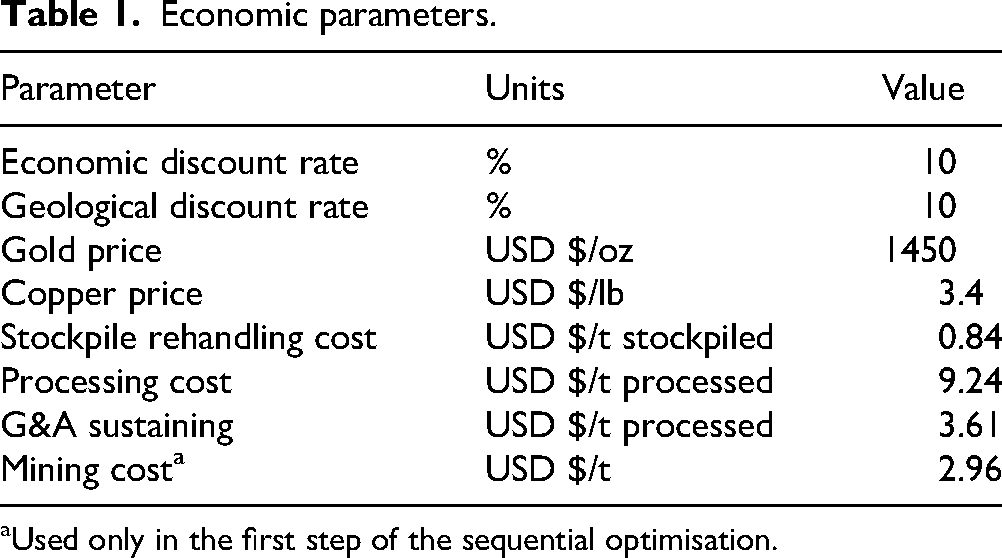
Used only in the first step of the sequential optimisation.
Penalties applied to deviations over constraints.
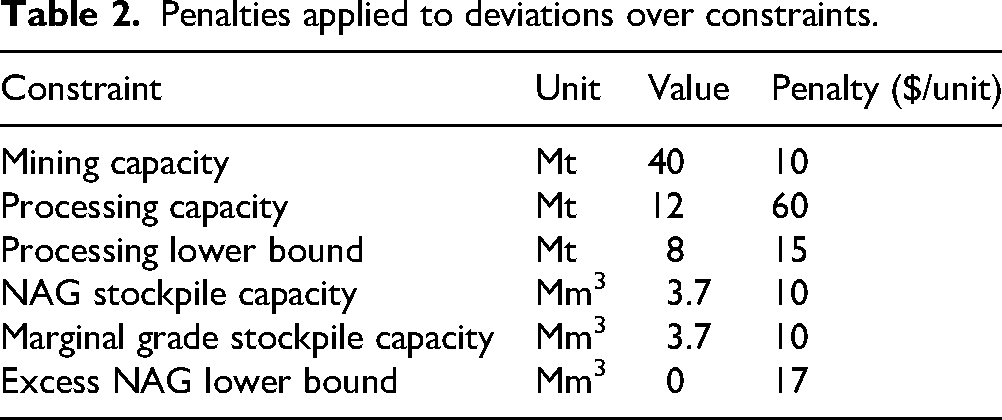
Table 1 shows the economic parameters used in the optimisation. The mining cost presented was applied only in the first step of the sequential optimisation. In contrast, in the second step of the sequential optimisation and in the simultaneous case, mining costs varied according to the travel distance of the waste material and the waste dump sector assigned for its deposition during the optimisation. The priority of the different production targets and production constraints was controlled by adjusting the penalty parameters shown in Table 2. Penalties were determined by analysing the risk profiles generated during the execution of the algorithm in order to create decisions that are capable of managing risk throughout the operation (Benndorf and Dimitrakopoulos, 2013).
The mine complex consists of approximately 1.8 million blocks, each measuring 10 × 10 × 16 meters, distributed across three mines containing about 930,000, 455,000, and 500,000 blocks, respectively. A total of 10 orebody simulations were used to quantify uncertainty in metal grades and geochemical properties. Previous studies have shown that this number of simulations is sufficient to generate production schedules that are resilient to uncertainty (Albor Consuegra and Dimitrakopoulos, 2009; Montiel and Dimitrakopoulos, 2017a). This is mainly due to the support-scale effect observed when relevant annual information of the mine complex is calculated based on the combined attributes of thousands of blocks, making the problem less sensitive to the variability of individual blocks.
Results
Figure 2 illustrates the risk profile of different key performance indicators in the mine complex, with P10, P50 and P90 representing the 10th, 50th and 90th percentiles, respectively. Figure 2(a) shows the mining production rate of the mine complex for all years of operation. Note that the risk analysis of the tonnage mined produces overlapping curves, since the extraction sequence decision variables are scenario independent and density was not a simulated attribute. As shown in Figure 2(a), integrating waste placement in the optimisation led the simultaneous case to decrease mining production in the first year of production, delaying the extraction of materials to years 2 to 5 when more mass was mined than the sequential case. This is reflected in Figure 2(b), which shows a significantly lower mining cost for the simultaneous case in the first year of operation, followed by a higher mining cost from years 2 to 5. Figure 2(c) and (d) shows that, at the end of the life of the mine, the simultaneous case mined 6% more material and incurred 6.3% higher mining costs, when considering the differences in P50. The haulage costs represented in Figure 2(e) follow the same pattern from Figure 2(a) and (b), but with a larger cost reduction in the first year and a smaller cost increase during the periods when the simultaneous case mines more material. At the end of the operation, the simultaneous case showed a haulage cost increase of 6.5%, in terms of P50, due to the higher quantity of material mined.
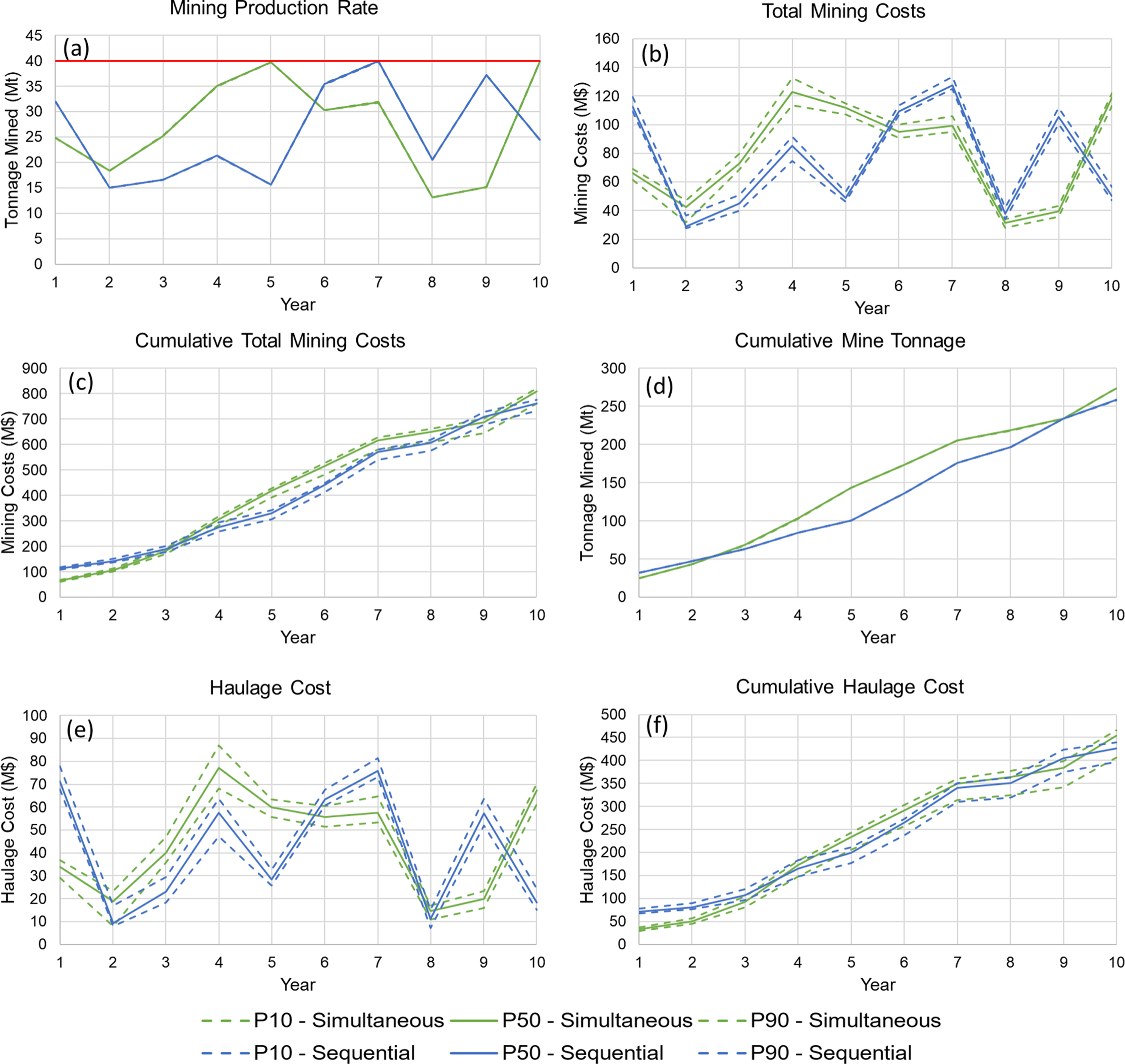
Risk analysis of the simultaneous and sequential optimisation for (a) the total mining costs, (b) mining production rate, (c) cumulative mining costs, (d) cumulative mine tonnage, (c) haulage cost and (d) cumulative haulage cost.
Potential improvements in haulage efficiency are illustrated in Figure 3(a) and (b). As shown in Figure 3(a), the haulage cost per ton in the first year of operation for the simultaneous case is significantly lower than that observed in the sequential case, with a 38.7% reduction in the P50 value of the cost per ton. It should be noted that haulage costs in this strategic formulation are represented through distance-based cost parameters and do not explicitly model fleet interactions, including truck congestion, fixed cycle times, or equipment availability constraints. Therefore, the reduction observed in the first-year haulage cost should be interpreted as a strategic indication of improved spatial coordination between extraction and waste placement decisions. In the remaining years, the haulage cost per ton in both cases follows similar risk profiles, with the exception of years 2, 8 and 10, during which the simultaneous case presents significantly higher costs, and year 4, during which the sequential case presents higher costs. Figure 3(b) shows the cumulative haulage cost per ton, accounting for the mass movement in each year. The cumulative haulage cost per ton is calculated by dividing the total haulage costs accumulated up to a given year by the total mass extracted up to that year. As shown in Figure 3(b), the simultaneous case operates with a lower cumulative haulage cost per ton throughout the entire life of the mine, with the exception of the last period. More specifically, both cases reach the end of the operation with similar cumulative haulage costs per ton, with the simultaneous case presenting a marginally higher value (0.4%); however, the simultaneous case is able to defer costs more effectively over time.
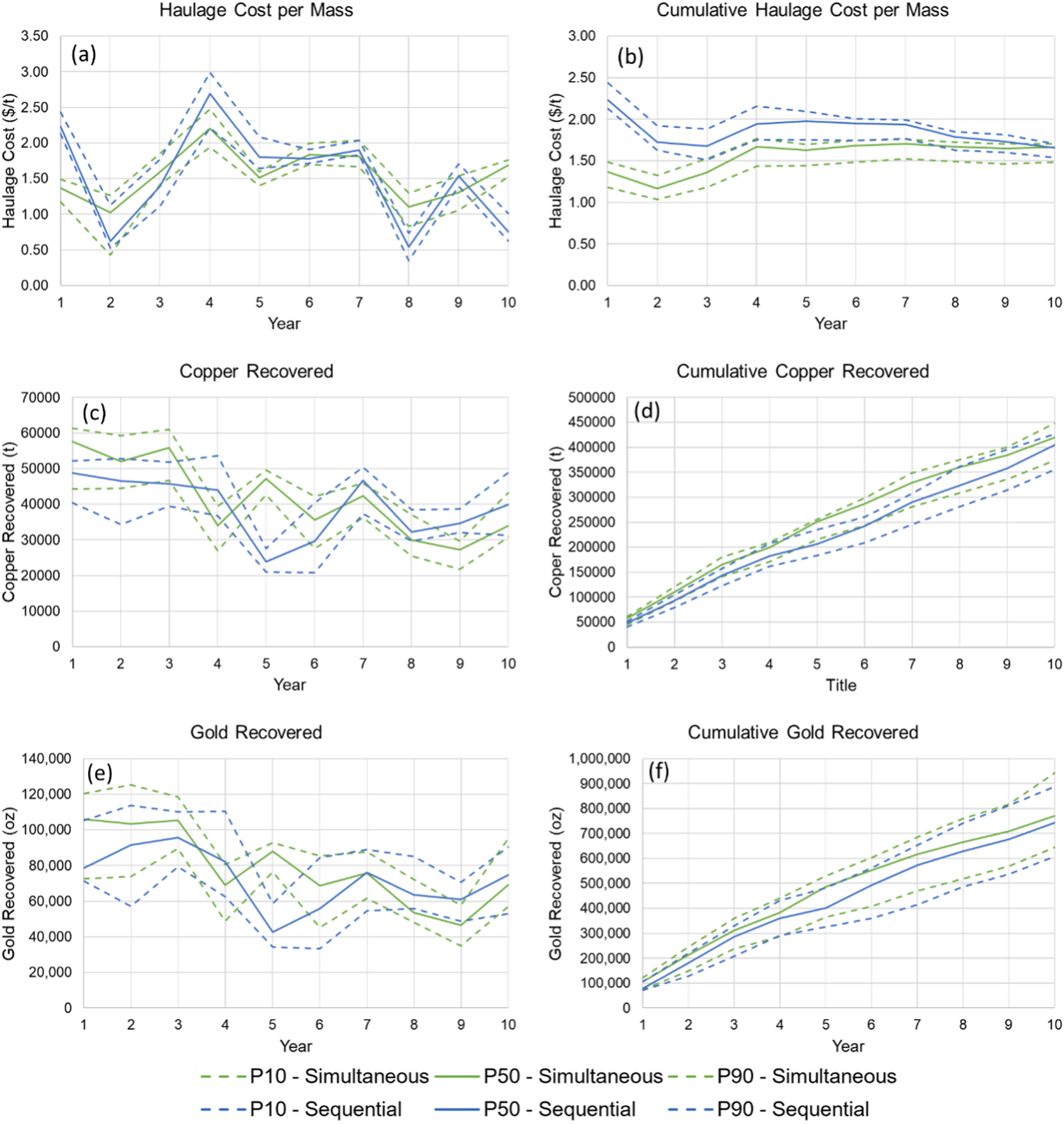
Risk analysis of the simultaneous and sequential optimisation for (a) the haulage cost per mass, (b) cumulative haulage cost per mass, (c) copper recovered, (d) cumulative copper recovered, (e) gold recovered and (f) cumulative gold recovered.
The risk profiles related to metal recovery are shown in Figure 3(c) to (f). Figure 3(d) and (f) reveals that, with a 6% higher total tonnage extracted, the simultaneous case demonstrates increases of 3.8% and 3.7% in total copper and gold recovered, respectively. In addition, Figure 3(c) and (e) shows that, when waste placement and extraction sequence optimisation are integrated, the quantities of copper and gold recovered in the first three periods increase. This effect is likely due to the larger amount of material mined in the simultaneous case during periods 2 and 3; it is also likely owed to the fact that, when haulage management is integrated, higher-grade areas of the deposit also correspond to lower mining costs than the estimated fixed mining cost used in the first step of the sequential optimisation, allowing the simultaneous optimisation to capitalise on mining these areas earlier.
Figure 4(a) shows that both the simultaneous and the sequential optimisation follow the production targets for the processing plant in all years of operation, with deviations only at years 8 and 9 for the P10 of the simultaneous case. In total, the P50 of the simultaneous case delivers 4% more ore than the P50 of the sequential case to the processing plant, mainly because of the higher quantities of material extracted in the simultaneous optimisation. Figure 4(b) shows higher utilisation of the marginal grade stockpile in the simultaneous case, especially at the beginning of the operation, contributing to the optimisation of prioritising higher grade blocks early in the life of the mine.
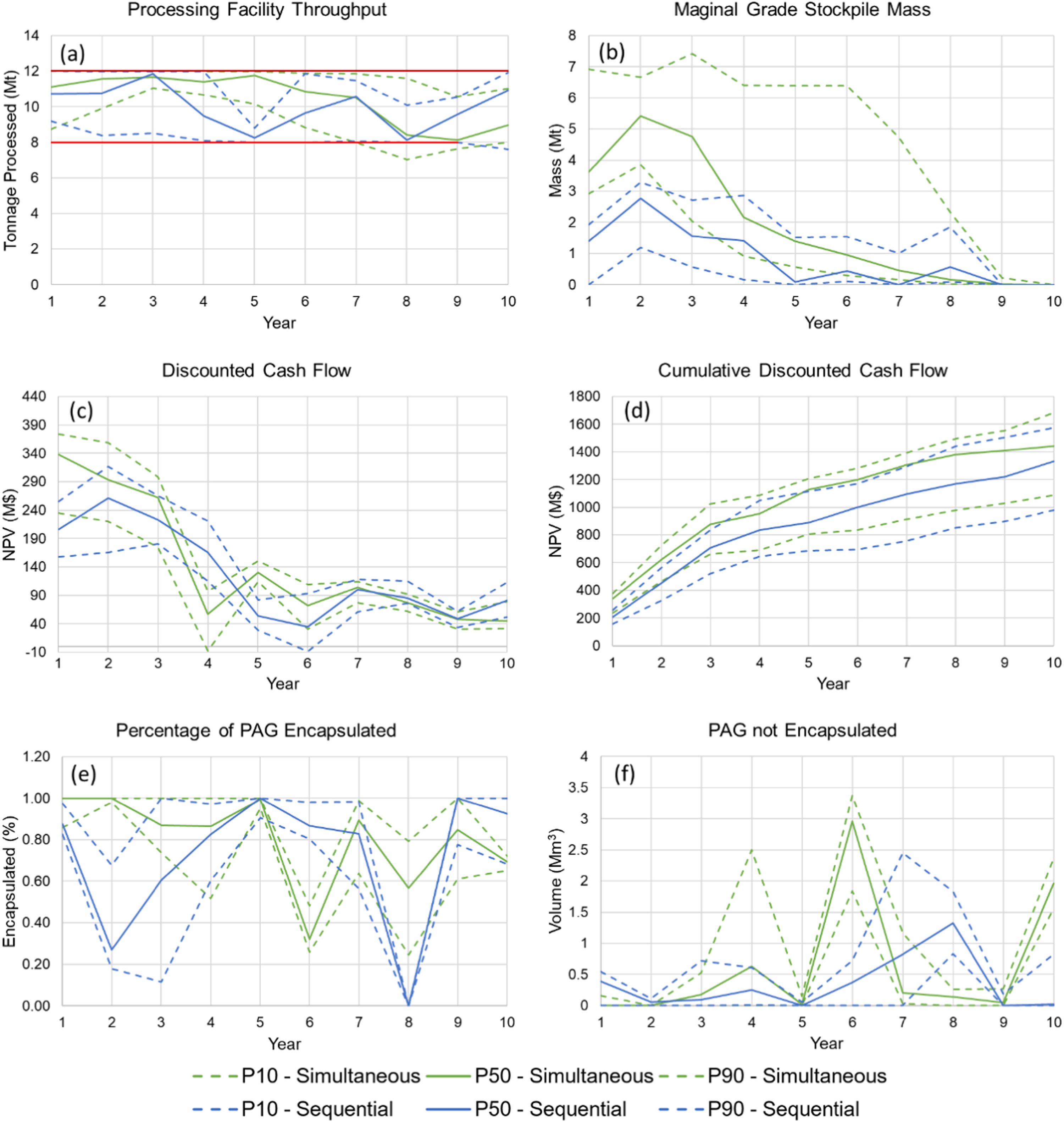
Risk analysis of the simultaneous and sequential optimisation for (a) processing facility throughput, (b) marginal grade stockpile mass, (c) discounted cash flow, (d) cumulative discounted cash flow, (e) percentage of PAG encapsulated and (f) PAG not encapsulated.
As a result of the lower haulage cost per ton in the simultaneous case during the first year of operation, and its increased copper and gold recovery in the first three years, the P50 of the discounted cash flow from the simultaneous optimisation is significantly higher than that of the sequential case shown in Figure 4(c). When analysing the cumulative discounted cash flow in Figure 4(d), the higher profits in the early years resulted in an 8.3% increase in the P50 NPV for the simultaneous case.
When examining the performance of the encapsulation strategy in Figure 4(e) and (f), the simultaneous case shows higher overall performance than the sequential case in terms of the P50 of the percentage of PAG encapsulated for all years of operation, with the exception of years 6 and 10. The risk profiles reveal a high probability that the encapsulation constraints are not met in both of these periods for the simultaneous case, and in periods 2 and 8 for the sequential case. However, Figure 4(f) shows that, although the percentage of PAG encapsulated for the sequential optimisation may be low in year 2, the volume of PAG waste produced in the same year is also low, which helps to mitigate the environmental impact of the encapsulation failure in that period. In terms of the total amount of PAG not encapsulated, the sequential optimisation failed to encapsulate 16% of the PAG produced, while the simultaneous case failed to encapsulate 22%. These results demonstrate that progressive encapsulation is strongly dependent on the waste dump design, which controls the quantity of encapsulation material required to adequately limit PAG exposure, and ultimately on the geological distribution of NAG and PAG materials in the ground. This is because the mine plans must be adjusted to balance their extraction while production constraints are met and discounted cash flow is maximised.
Figures 5 and 6 show the differences in the extraction sequence for all three mines when waste placement and extraction sequence optimisation are performed either simultaneously or separately. Mine 1 has already been partially mined, and the image shows the extraction sequence of its two mining areas. As can be seen, considering haulage management leads to the extraction of a considerable portion of Mine 1 at an earlier stage in the simultaneous case, as compared to the sequential case. At the same time, the opposite effect is observed in Mine 2, where material extraction is delayed in the simultaneous case, relative to the sequential case.
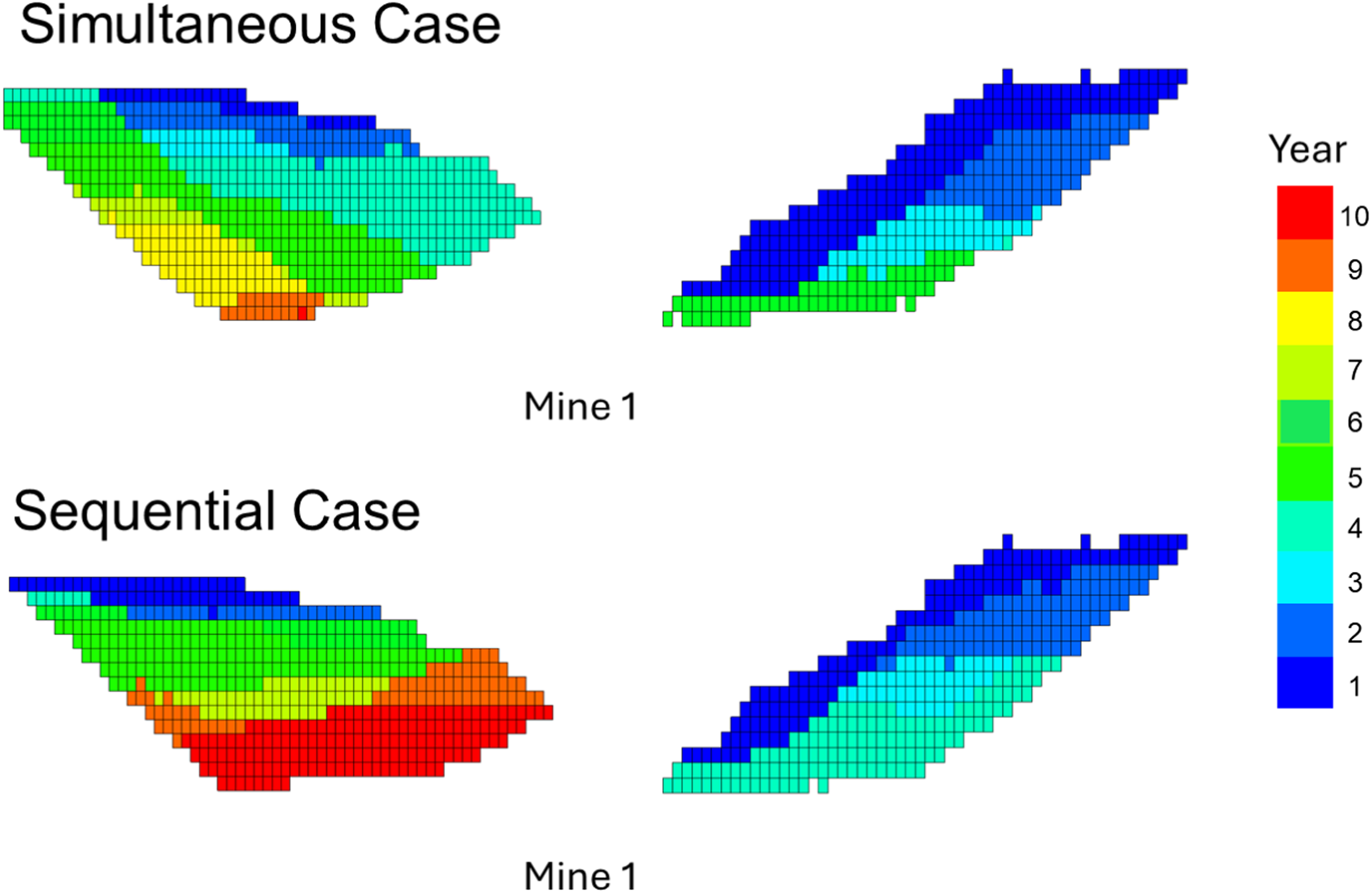
Comparison between the extraction sequences obtained from the simultaneous and sequential approaches for Mine 1 (east–west cross-section).
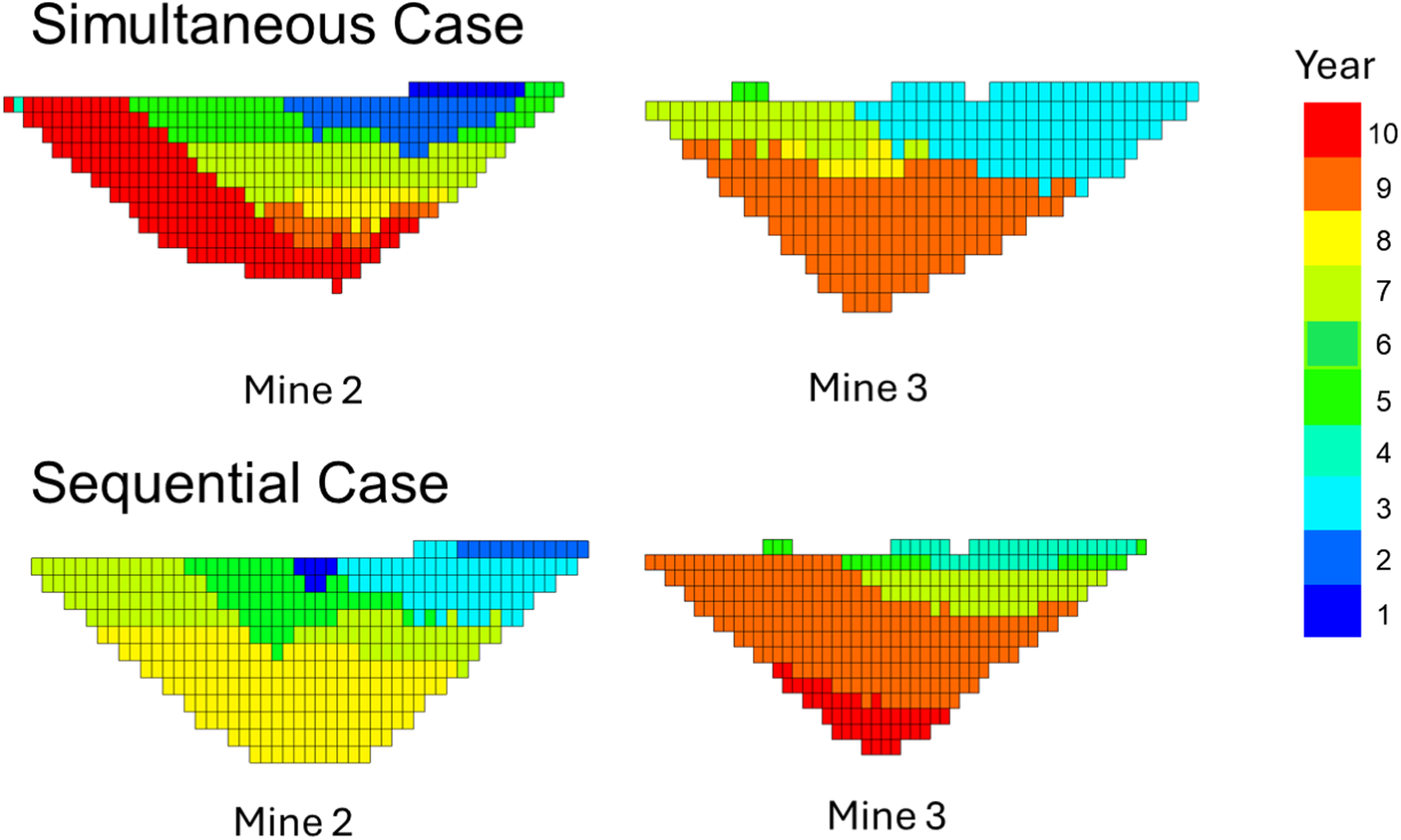
Comparison between the extraction sequences of the base and integrated cases for Mines 2 and 3 (east–west cross-section).
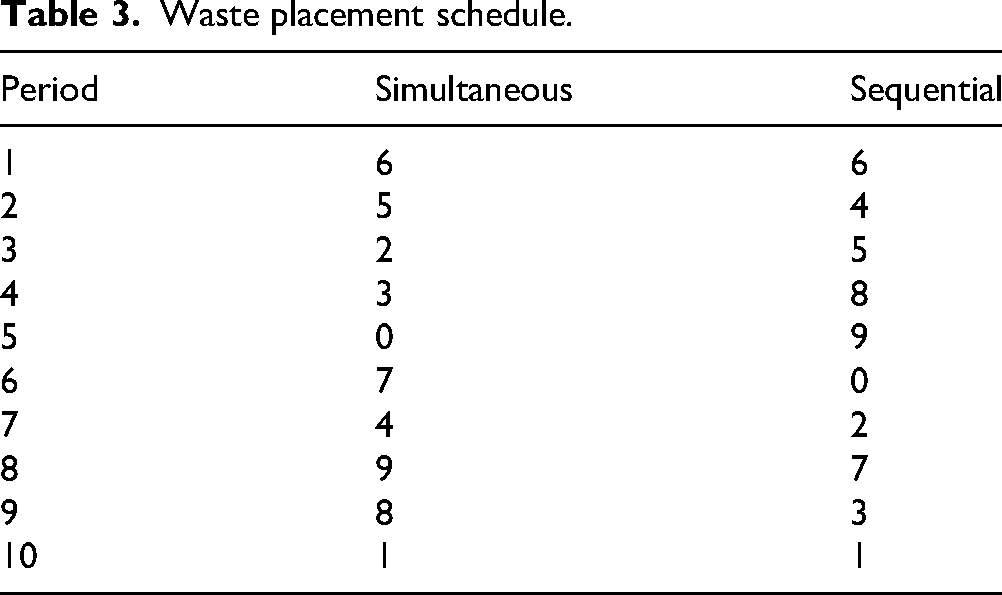
Finally, Table 3 presents the waste placement schedule, which is schematically illustrated in the top view shown in Figure 7. Mine 1 has already been partially mined and, in the top view, its two mining areas belonging to the same pit can be observed. As mentioned previously, the waste dump was divided into ten independent sectors, each sized to accommodate all waste material extracted during each period, while accounting for PAG encapsulation. Table 3 shows that, with the exception of periods 1 and 10, the sequential and simultaneous optimisations selected different waste dumping locations. This indicates that the differences observed in haulage cost per ton in the first period between the two cases result from the ability to adapt the extraction sequence in the simultaneous case.
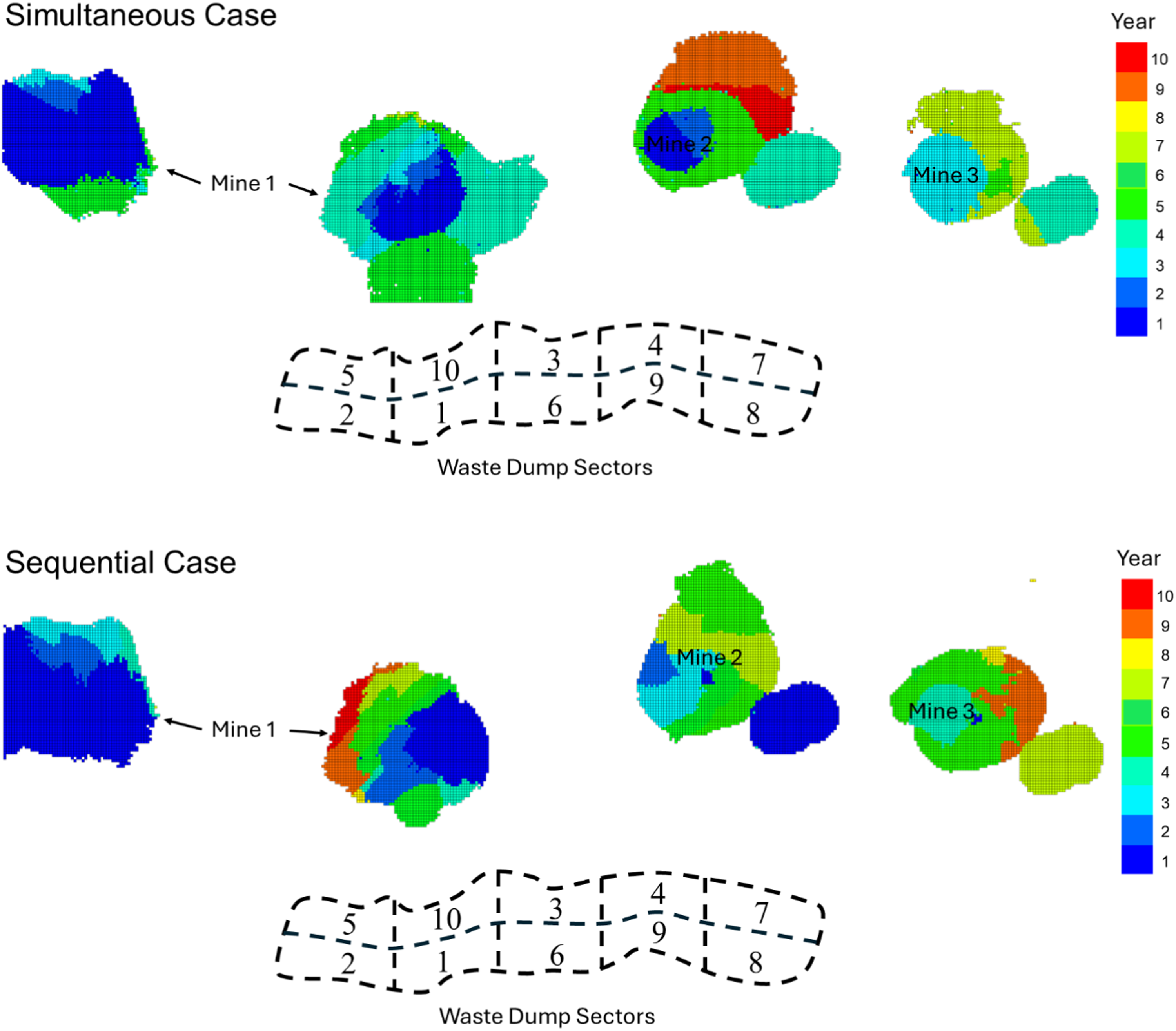
Spatial progression of waste placement and extraction sequence over the life of the mine.
Waste placement schedule.
Conclusions
This study presents an extension of the simultaneous stochastic optimisation framework to integrate waste haulage management and yearly encapsulation as a strategy for progressive reclamation. The extended framework aims to generate an extraction sequence and a waste placement schedule that minimise haulage costs while balancing the production of NAG and PAG waste over the life of the mine to meet reclamation requirements. A case study at a copper–gold mine complex compared the performance of mine plans when the extraction sequence and waste placement are optimised simultaneously with those obtained when they are optimised sequentially. The simultaneous optimisation reduced the haulage cost per ton in the first year of operation by deferring haulage costs to later periods, where they are subject to greater discounting. Integrating waste haulage management also enabled a more accurate assessment of the in-situ value of materials, which, in this case, incentivised the earlier extraction of higher-grade areas because those areas corresponded to lower mining costs than the estimated fixed mining cost used in the first step of the sequential optimisation. In addition, the total mined tonnage in the simultaneous case was 6% higher, resulting in increases of 3.8% and 3.7% in total copper and gold recovered, respectively. As a result, the simultaneous case showed an 8.3% increase in P50 NPV.
However, it should be noted that the basis for comparing the sequential and simultaneous optimisations requires further investigation. Despite efforts to create a case study that fairly compares both cases, the impact of the haulage cost calculation method used in the first step of the sequential optimisation on the final results should still be examined. Haulage costs are directly related to travel distance. Nevertheless, this was not considered in the haulage cost calculations of the first step of the sequential optimisation, as manually defining the waste dump location could itself introduce bias into the optimisation. For this reason, the average haulage cost from the simultaneous case was used as the fixed haulage cost in the first step of the sequential case, under the assumption that it represented the best achievable average haulage cost. However, using a fixed haulage cost per bench could potentially have improved the performance of the sequential case and reduced the NPV gap between the two optimisations.
It should also be noted that haulage costs in the proposed formulation are represented at a strategic level through distance-based cost parameters. Fleet interactions, including truck congestion, fixed cycle times, and equipment availability constraints, are not explicitly modelled. Therefore, the haulage-cost improvements observed in this study should be interpreted as strategic benefits arising from the improved spatial coordination between extraction and waste placement decisions, rather than as detailed operational fleet-scheduling results. Future research could extend the proposed framework by integrating fleet availability, truck cycle times and congestion effects to assess whether the strategic haulage-cost improvements remain achievable under more detailed operational conditions.
In both the sequential and simultaneous optimisations, progressive encapsulation targets were not met in all years of operation, partly due to the spatial distribution of PAG and NAG materials in the deposit, and partly due to the adopted waste dump design, which dictated the proportion of NAG required relative to the PAG extracted. In this case study, waste dumps were modelled in accordance with established guidelines for the construction of encapsulated waste dumps (Wetherelt and van der Wielen, 2011; Williams, 2012; Williams et al., 2006); however, other established encapsulation designs for PAG material could be explored to reduce the required quantities of encapsulation material.
Future research can also focus on combining multiple prevention and mitigation measures, such as water covers and the blending of PAG rock with alkaline material, within the simultaneous stochastic optimisation framework. This would allow alternative strategies to be considered when production targets related to progressive encapsulation cannot be met in every year of operation. In addition, haulage management can be extended to incorporate environmental factors such as greenhouse gas emissions and carbon credits.
Footnotes

Author contributions
Victor Freire Guimaraes: conceptualisation, data curation, formal analysis, investigation, methodology, software, visualisation, writing – original draft, writing – review & editing; Roussos Dimitrakopoulos: conceptualisation, funding acquisition, methodology, supervision, validation, writing – review & editing.
Funding
The authors disclosed receipt of the following financial support for the research, authorship, and/or publication of this article: The work in this article was supported by the National Sciences and Engineering Research Council of Canada (NSERC) Discovery Grant 239019; the mining industry consortium members of McGill's COSMO Stochastic Mine Planning Laboratory (AngloGold Ashanti, Agnico Eagle, BHP, AngloAmerican/De Beers, IAMGOLD, Kinross Gold, Newmont, and Vale SA, Vale Base Metals); and the Canada Research Chairs Program.
Declaration of conflicting interests
The authors declared no potential conflicts of interest with respect to the research, authorship, and/or publication of this article.
Data availability statement
Data is not publicly available.