




Abstract
Background:
This co-produced study explores the experiences of autistic students regarding their transition to and enrollment at an Irish Higher Education Institution (HEI). Autistic students’ experiences of belonging, acceptance, and support were explored, and the study was collaboratively conducted by autistic and non-autistic researchers at all stages of the research.
Methods:
A sample of autistic student participants (n = 14) took part in either flexible semi-structured interviews (n = 12) or text-based responses to the interview framework (n = 2). Interviews were conducted flexibly in accordance with participant preferences and communication needs. Data were analyzed using reflexive thematic analysis.
Results:
The findings of this study reveal diverse experiences across the participants in higher education, emphasizing the need for inclusive approaches recognizing autistic neurology and differences to support belonging and acceptance in university. The transition experiences for some participants were challenging, with a lack of personalized and flexible support leading to anxiety and a lack of predictability. Participants also identified barriers while navigating college life, including hostile learning environments, a lack of understanding regarding autistic neurology among university staff and peers, inconsistent and inflexible pedagogical approaches used by academic staff, and stringent requirements to access disability support services. These barriers often led to students being unable to access support or choosing not to disclose their autistic status. Participants also found socializing and developing relationships with non-autistic peers challenging but reported that autistic student community groups, such as the Neurodivergent Society, were a very positive factor in supporting well-being, social acceptance, and a sense of belonging. Other supports were specialist support staff, such as the autism-friendly coordinator and occupational therapist at student services.
Discussion:
The study highlights the importance of early guidance, systemic integration, and increased awareness among university staff. It underscores the role of structural support systems, such as specialist disability access routes into university and specialist support staff, in easing transitions and supporting predictability and acceptance.
Community Brief
Why is this an important issue?
Understanding the transition experiences of autistic students to higher education institutions (HEIs) is crucial for fostering inclusivity and support. This co-produced study highlights the challenges faced and the need for tailored support systems.
What is the purpose of the study?
The study explores autistic students’ experiences transitioning to and enrolling in Irish HEIs. It focuses on their sense of belonging, acceptance, and support, using inclusive approaches and collaborative research methods.
What did the researchers do?
Autistic and non-autistic researchers collaborated equally. Flexible semi-structured interviews were conducted with 14 autistic students. Findings were analyzed using reflexive thematic analysis.
What were the results of the study?
The findings reveal diverse experiences, pointing to the need for inclusive practices that recognize autistic neurology. Key challenges include a lack of personalized support, inaccessible learning environments, and communication differences. Autistic student groups and specialist staff support well-being and belonging.
What do these findings add to what was already known?
These findings build on existing literature by offering specific insights into the challenges and supports autistic students experience in both transitioning to and enrolling in higher education. They provide insights for HEIs to implement inclusive practices, support mechanisms, and community-building initiatives.
What are the potential weaknesses of the study?
As a small-scale qualitative study, findings may not be generalizable across all HEIs or autistic students.
How will these findings help autistic adults now or in the future?
The study underscores the importance of fostering belonging and inclusion through early guidance, integrated support, and greater staff awareness. Structural mechanisms such as access routes and specialist staff are vital in easing transition and promoting acceptance.
Background
Recent studies have increasingly explored autistic students’ experiences in higher education, covering academics, social interactions, mental health, and support services.1–3 Gormley et al. 1 reviewed 93 studies, identifying major gaps, particularly limited focus on social experiences (5%) and physical environments (1%). 4 Most studies took place in U.S. universities, with little participation from the autistic community. 4 Despite increased recognition of participatory methods,4–6 autistic involvement in higher education research is limited. 1
Research indicates a growing enrollment of autistic students in higher education institutions (HEIs)1,2; however, they continue to face challenges that can impede their academic success and sense of belonging.2,7,8 These include social isolation, academic stress, self-advocacy difficulties, and mental health concerns remain widespread.2,3,8 Tailored transition programs and inclusive environments are crucial in addressing these challenges.9,10 Fostering connectedness and belonging within the university community is essential in enhancing autistic students’ educational experiences.2,3,7
The current study was a co-produced collaborative initiative from inception to completion involving autistic and non-autistic researchers to investigate autistic students’ experiences at an Irish HEI. All researchers have strong ties to the autistic community through membership, advocacy, or allyship, enabling a design informed by autistic perspectives.5,11 These research questions provide a critical framework for improving autistic students’ experiences in Irish higher education.
Autistic experiences
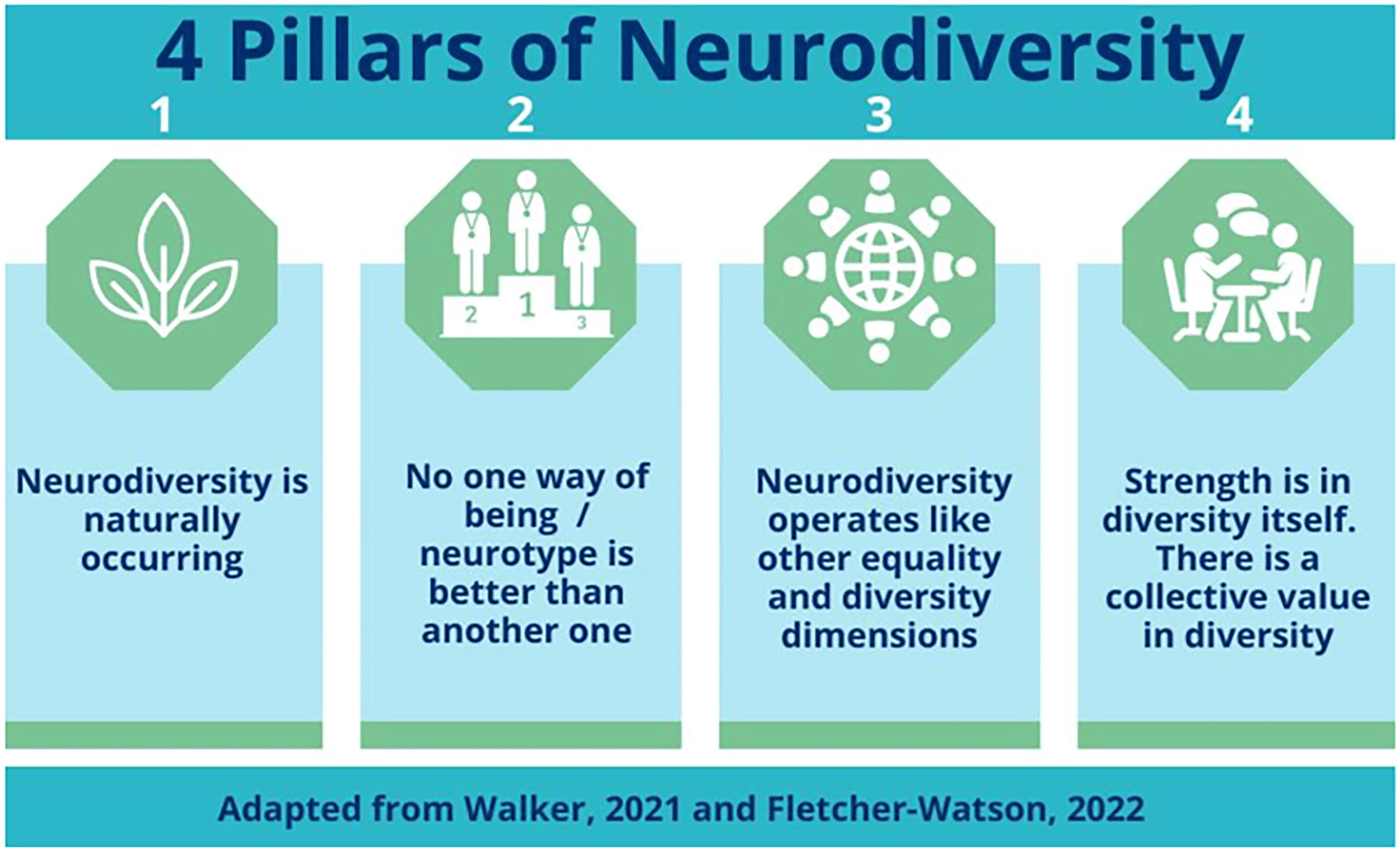
Autistic neurology is characterized by differences in communication, sensory perception, cognition, learning styles, self-regulation, and emotional expression. 12 Research perspectives are gradually shifting from the deficit-based view in the Diagnostic and Statistical Manual of Mental Disorders (DSM-5-TR) 12 toward the neurodiversity paradigm and its four key pillars13,14 (see Fig. 1, adapted from O’Neill and Kenny 15 ).
While the neurodiversity paradigm promotes respect for neurological differences, deficit-based stereotypes persist, limiting access to diagnosis, support, employment, and income. 16 These barriers contribute to poorer physical and mental health,14,15 higher rates of co-occurring conditions,17,18 and elevated suicide risk. 19 A broader, systemic shift is needed to reflect the lived experiences of autistic individuals across society, including education.
There are growing calls for a mind shift 16 in services and discourse, from focusing solely on deficits or health-related challenges to prioritizing well-being and quality of life.17,18,20 A rights-based approach promotes autistic voices in shaping services and policy.17,18,21 Understanding autistic life experiences requires a deeper examination of how societal structures enable or inhibit participation.
Inclusion and transition to higher education
Autistic participation in higher education is increasing,22,23 yet Irish data show that disabled people remain underrepresented compared to non-disabled peers.23,24 In Ireland, where 256,785 students were enrolled in 2022/23, 25 6.9% of students registered with disability services, of which 10.1% were autistic undergraduate and 7.9% postgraduate students.22,23 International research suggests that 0.7% to 1.9% of college students may identify as autistic,1,22 though this likely underestimates true figures due to low rates of disclosure.26,27 Studies show significant disparities in completion rates between autistic and non-autistic students, 28 underscoring the need to understand and support autistic learners’ specific needs to promote success and inclusion.
Supports vary but include academic aid, counselling, and assistive technology. Access requires a verified diagnosis and eligibility under the Fund for Students with Disabilities. The Autism Friendly University initiative, launched by Dublin City University and Irish autistic-led charity AsIAm, promotes inclusive practices. Six HEIs have earned the designation by meeting nine autism-friendly principles, which include supporting and building capacity to equip students to meet social and academic challenges, establishing an autism-informed operational environment, combating stigma, facilitating understanding, and giving autistic students and staff a voice. 29
The transition to higher education presents numerous challenges, including social isolation, academic pressure, mental health issues, and difficulties with self-advocacy. Social isolation arises from differences in social communication and the double empathy problem, 30 where mutual misunderstandings between autistic and non-autistic individuals exacerbate feelings of loneliness. 31 The academic demands, such as managing multiple responsibilities and adhering to strict deadlines, are challenges that may lead to heightened stress and anxiety. 28 Disclosure of an autism diagnosis is also a concern, as many students struggle with when or how to self-advocate. 32
Previous research has indicated that some supports may have utility in supporting positive transition experiences for autistic students into higher education. In general terms, approaches like Universal Design for Learning (UDL) 33 offer broad support by reducing barriers and increasing access to learning, 34 although providing multiple means of engagement, representation, and action/expression. 33 While UDL is explicitly focused on supporting access for all learners within an educational setting, there is evidence suggesting that UDL effectively supports the transition of autistic learners into higher education.10,35 Targeted supports like the Disability Access Route to Education (DARE) are available, which is an alternative admission scheme for disabled school leavers in Ireland who have experienced educational disadvantage. A formal autism diagnosis from a relevant professional, such as a consultant psychiatrist, psychologist, neurologist, or paediatrician, is required.
Formal transition programs, including orientation sessions/mentoring, help ease the adjustment to university life. 9 Academic accommodations, such as extended test times and note-taking assistance, are crucial in helping students manage their workload. 36 Peer mentoring and informal supports like clubs/societies can promote inclusion and reduce isolation. 23 Mental health services are also vital. 31 Training staff in autism awareness and inclusive practice is essential to creating supportive learning environments. 37 Frameworks like UDL and schemes like DARE provide important supports, but their success depends on fostering truly inclusive, barrier-free environments that address academic and social needs and foster autistic belonging.
Space and inclusion
Research suggests campus environments are far from neutral or uniform and can reflect or perpetuate social hierarchies that favor certain students over others.7,38 A sense of belonging, shaped by acceptance and support, is influenced by both environmental factors and accessible social networks. 7 Goodenow 39 defined it as “the extent to which students feel personally accepted, respected, and supported by others” (p. 80). Gravett and Ajjawi 40 emphasize that belonging is not a neutral concept but one that should be perceived as “situated, fluid, and sociomaterially constituted” (p. 1193). Belonging is tied to both academic and social dimensions. 34 Wong 7 proposes spatial belonging as a framework for understanding how to foster student belonging within diverse higher education spaces, encompassing physical, digital, relational, and structural dimensions. These interlinking spatial dimensions are outlined in Figure 2.
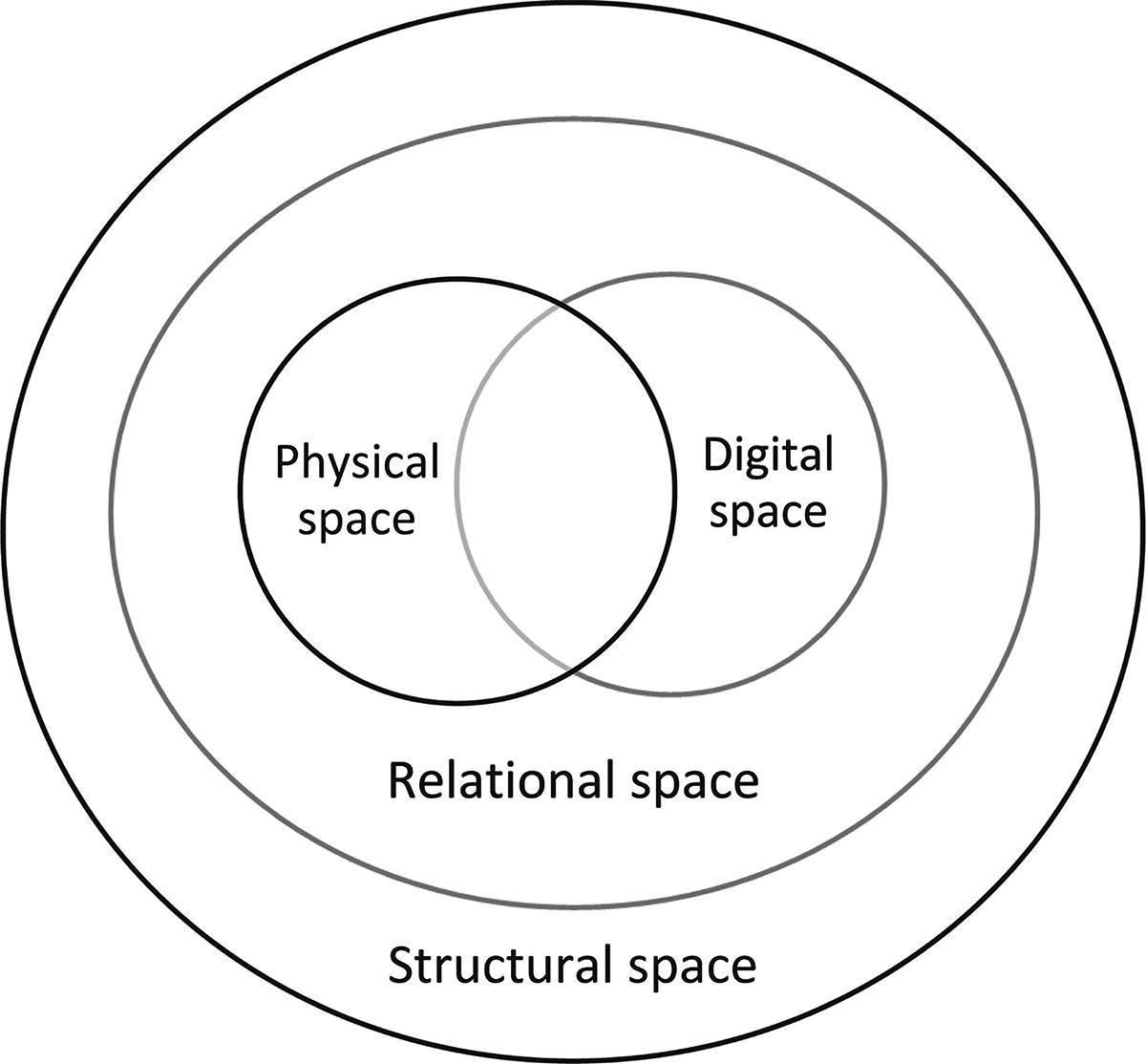
Four dimensions of spatial belonging. 7
Physical space influences sensory comfort, yet many university environments remain inaccessible. Digital space plays a growing role in access and engagement but may also isolate. Relational space involves peer and staff relationships, and structural space encompasses institutional policies and ideologies.
Doherty et al. 17 re-introduced the concept of Autistic SPACE, first described by Sinclair (2005 in Doherty et al. 21 ) as a framework that aimed to enhance access for autistic individuals in medical services. This autistic-led framework aims for equitable service design, focusing on sensory, predictability, acceptance, communication, and empathy factors, and has the potential to guide the planning of neuro-affirming environments and social environments (see Fig. 3 for visual representation) to support access for autistic people.
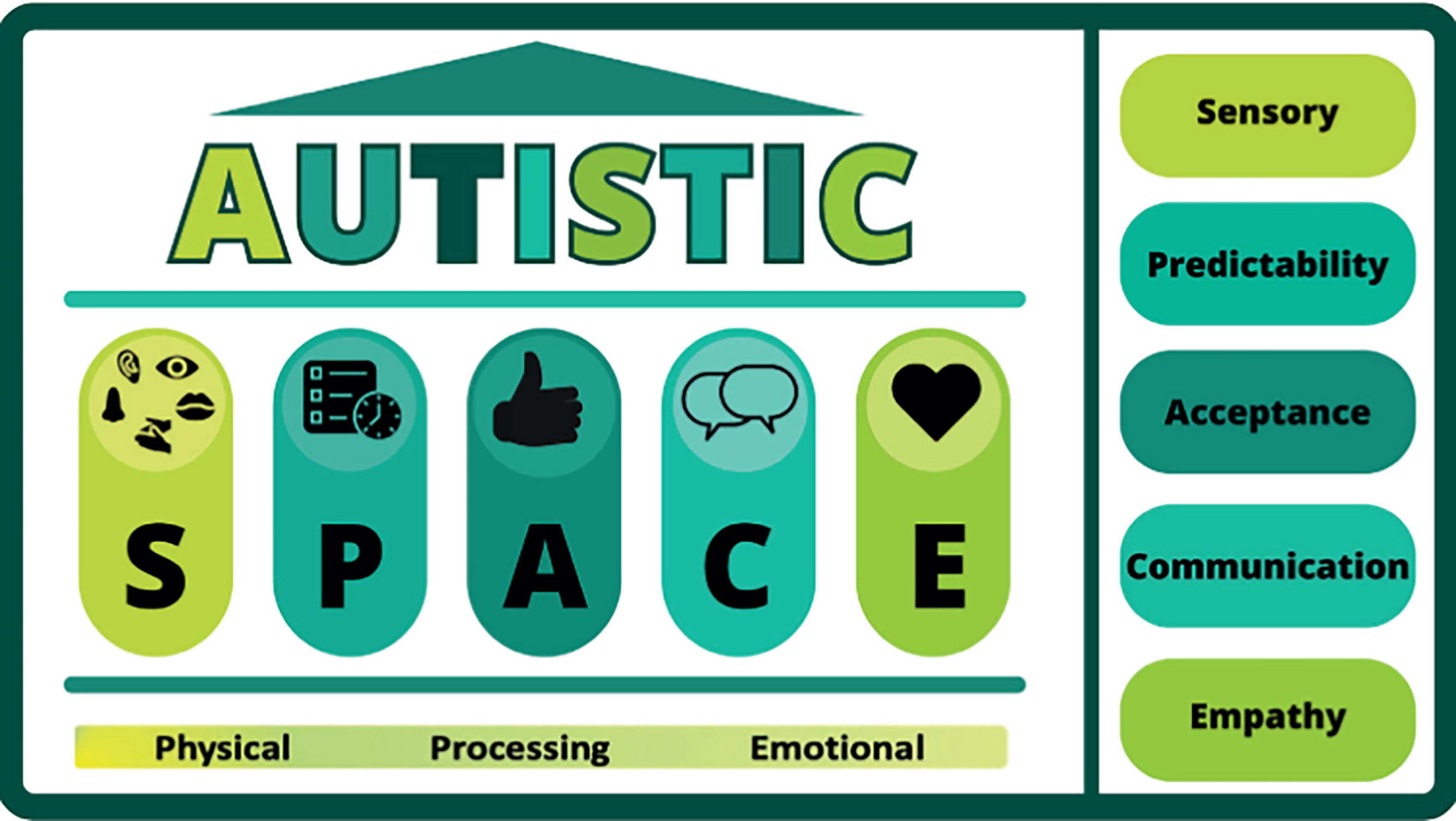
Autistic SPACE framework. 17
Supporting autistic students’ access to higher education requires a system-wide, holistic approach that includes their voices and priorities.1,2 Van Rensburg and Liang, 3 similarly supporting both individuals and autistic communities, require an ecological model. This shared-responsibility model underscores the need for institutional structures that actively promote autistic culture, support autonomy, and implement inclusive, affirming practices across all levels of campus life.
The current study
This study addresses a key gap in the Irish literature.
1
Despite rising interest in autistic students’ experiences of higher education, most studies are based in the United States and the United Kingdom, with very few in Ireland.
1
This co-produced study explores the experiences of autistic students at an Irish HEI. Specifically, the study addressed the following research questions:
What challenges and supports do autistic students experience in the transition to an Irish HEI? What are the perspectives of autistic students regarding the supports and barriers they experience while enrolled in university? What do participating autistic students recommend to support engagement and overcome barriers to flourishing in higher education?
Methodology
The study uses a co-produced research approach, entailing collaboration between researchers and community stakeholders, including autistic individuals, as equal partners throughout the research process.6,11,21 Autistic and non-autistic team members co-designed instruments, conducted interviews, analyzed data, and co-authored findings.
Addressing power dynamics is essential to ensure authentic participation rather than tokenism.6,11 A key aspect of co-production is the negotiation of roles at various “choice points,” moments where decisions are made about research questions, methods, or data interpretation. 21 Clear communication, shared goals, and inclusive, predictable practices support cross-neurotype participation.6,41,42 This includes understanding emotional and practical needs, creating supportive environments, and ensuring all voices are valued.6,42 Co-produced methods enhance research relevance and ensure findings are meaningful to the autism community.8,43,44
All members of the research team are connected to the autism community, and their preferences around language, communication modes, and accommodations informed the study design. A steering group (comprising autistic and non-autistic researchers, university staff, and the autism-friendly coordinator) provided oversight of the study.
Methods
Participant recruitment
A convenience sampling approach was used to recruit autistic participants by an online advertisement distributed through email by the Student Support Services, Students Union, and the university’s Neurodiversity Society in April 2021. The email contained a project information sheet and a Google Form for informed consent and opt-in.
Inclusion criteria:
Enrolled as undergrad or postgrad students Formal diagnosis and/or self-identification as autistic Member of the university’s Neurodivergent Society Willing to participate
Participants
Eighteen people responded to the invitation, and 14 met the criteria and were interviewed (10 undergrad, 4 postgrad). The demographic characteristics of the participants are presented in Table 1.
Participant Information
This table summarizes the demographic and educational characteristics of the study participants.
Procedures
Research involving autistic students must take into account common needs, for example, their right to have their voices heard, as well as individual needs, such as specific accommodations required to communicate effectively.
45
Consequently, a three-step process was designed to support individual preferences:
Initial Zoom or in-person contact to discuss the study and collect consent. Interview conducted according to participant preference. Member checking: each participant reviewed their transcript and could add clarifications.
One researcher was allocated to each participant and worked with them across the data collection process.
Data collection
Due to COVID-19, all interviews took place via university-licensed Zoom (April–July 2021). Twelve semi-structured interviews were conducted; two participants submitted typed responses using a structured question framework (see Supplementary Appendix A1). These were emailed to their assigned researcher and uploaded securely per data protection policy. Recordings were transcribed and anonymized prior to data analysis, with participants assigned pseudonyms.
Data analysis and credibility
Data were interpreted using thematic analysis (TA), 46 a flexible approach to analyzing qualitative data. Analysis followed six phases: familiarizing yourself with your data, generating initial codes, searching for themes, reviewing themes, defining and naming themes, and producing the report. To support credibility, participants reviewed their interview transcripts (member reflection) and offered clarifications. 47
In line with the co-produced research process, collaborative steps and safeguards were undertaken:
First, team members selected roles as analysts or peer reviewers. A four-person, mixed-neurotype analysis team (two autistic, two neurotypical) conducted the analysis. Second, a group moderation and peer debriefing process was used. All team members analyzed the same transcript, sharing their analysis to support consistency and fidelity. Finally, to ensure reflexivity and fidelity, each coder also moderated the analysis of another coder.
21
A detailed audit trail supported transparency. 47 Codes and themes were reviewed collaboratively by the full team across several meetings, with the steering committee providing additional feedback to enhance coherence and credibility.
Study limitations
As a small-sample, single-site study, generalizability is limited. Context-specific findings and participant homogeneity may introduce selection bias. The lack of varied settings constrains broader thematic insights. Additionally, being conducted in a high-income, Global North context may limit the applicability of findings to regions with different social, cultural, or economic conditions, particularly low- and middle-income countries.
Results
The findings comprise three main themes and six associated subthemes (outlined in Fig. 4). Transition to higher education explores change associated with commencing university, with the subtheme focusing on unpredictability and inadequate support. “Navigating College Life” addresses experiences at university, including subthemes “a hostile environment,” the need to build autistic community and support,” “specialist, flexible supports,” and “inconsistencies, barriers, and lack of understanding.” The third theme “Stigma, Masking, and Inclusion” highlights societal attitudes and the subtheme addresses the need for “reasonable, autistic-informed accommodations.” De-identified pseudonyms are used throughout the results to protect participant identity.
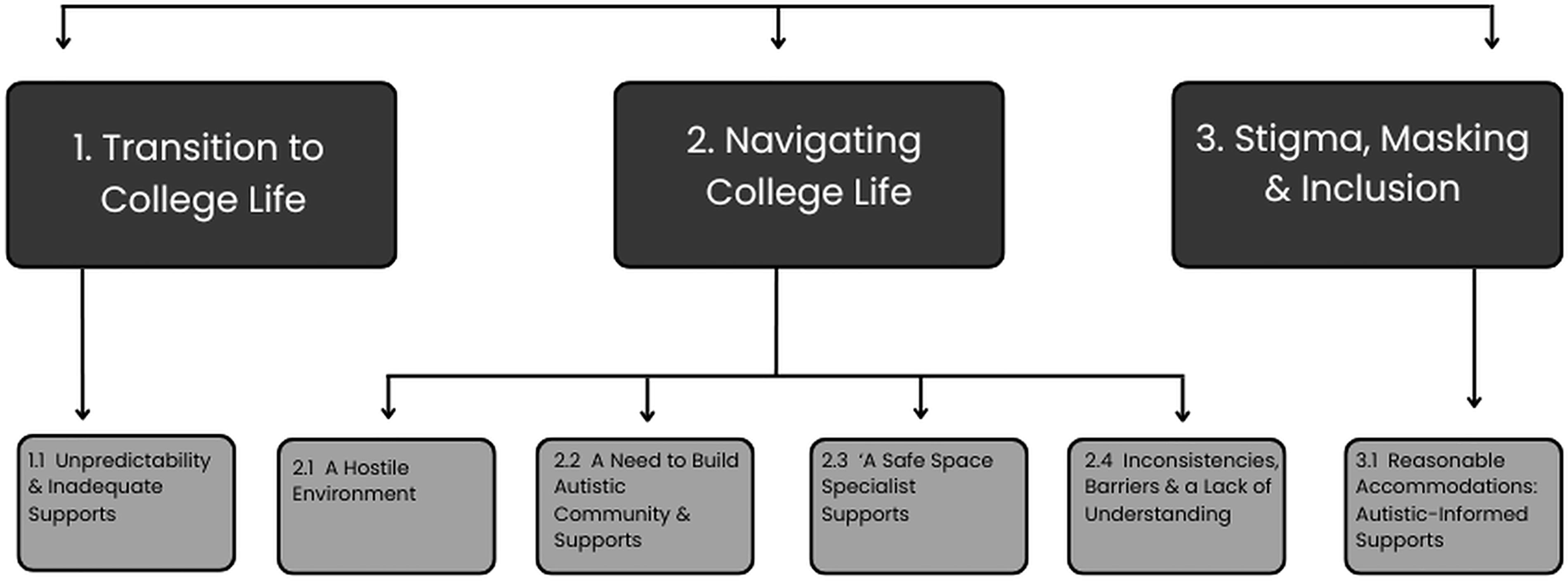
Themes and subthemes.
Transition to higher education; “It’s an awful lot of change”
For many of the participating autistic students, the transition to university was the cause of strong emotions and heightened levels of doubt. This theme addresses the first research question by illustrating the challenges students encountered during their move into Irish higher education. Trudy, for example, questioned their decision, overwhelmed by change: “Oh, horrible. Horrible! I … questioned my entire decisions…I just cried the whole way home…it’s an awful lot of change, and I don’t do very well at change.” Accounts such as this indicated the impact of changes in routine, a lack of predictability, and a feeling of uncertainty.
Some participants tried to mitigate these feelings by preparing extensively. Sarah reflected: “… never prepared as thoroughly for anything before or since….” Despite the planning, Sarah still described intense anxiety: “… extremely apprehensive. I did an excessive amount of stressing and preparing timetables, checklists and module descriptions. I felt so worried and insecure.”
Other participants, like Clare, also admitted feeling similar anxiety and apprehension, but this led to a different outcome concerning planning for college. “I didn’t prepare, I didn’t plan, I did nothing.” Experiences such as Clare’s underscore how inadequate preparation left students feeling out of control and challenged by unpredictability. Anne echoed this challenge, saying: “changes in routines are always tough for me. I don’t like it. It causes me discomfort.”
Unpredictability and inadequate support
These transition challenges were compounded by perceived gaps in guidance about college and course choices. This subtheme directly addresses the first research question, with many students reporting limited support in navigating this critical phase. Trudy described feeling unprepared and unsupported due to insufficient guidance and support: “… the school guidance counsellor… wasn’t much help at all [because] there wasn’t enough information readily available in the schools.” This participant felt “pigeon-holed” and had to undertake extensive independent research. This student “… my main thought would be that there wasn’t enough individual help, from a person knowing you,” indicating the importance that some autistic participants placed on familial relationships and individualized support. Claire reflected that: “I had no idea what to expect,” indicating that transition planning needs to be more holistic than academic requirements, course content, or schedules.
Unsurprisingly, prior familiarity or knowledge guided some participants’ choice of university courses to reduce unpredictability and the unknown. University-based programs for school-aged students, such as sports or exceptional academic ability programs, were named. The Centre for Talented Youth (CTYI) was mentioned, which provides enrichment courses for students with high academic ability as well as university-style courses for students of all abilities from Ireland and abroad. Susan expressed, an “ease as well when I was choosing a course… from that familiarity.” Open days were reported by many participants as being a big influence on choosing a university. Open days describe opportunities afforded by Irish universities to prospective students to visit the campus and access both university and course-specific information. Trudy stated, “I went to [names university], and I just started talking to the physics department and to the guys there… It was the students from … the physics department that … swayed me to make that decision.” Participants who developed a prior familiarity with the specific university felt this supported them in their transition.
Some student made their choice based on the designation of a university as autism-friendly. Mary expressed this: “I learned that the university wanted to become autism friendly and I saw it as, em, as my chance to get, to get, a degree” (Mary). But experiences were mixed. Anne acknowledged the intent: “… tries to be an Autism Friendly campus (Anne), Chris was less convinced: “apart from those library things and the Disability Service, I’m not very sure what else constitutes it to being autism friendly…” (Chris).
Effective transition planning is crucial for autistic students, often requiring well-established routines and strategies for communication and coping with changes. However, there was a reported lack of support from universities in areas like independent living, transportation, and financial management. Some who accessed the DARE program found the experience more positive. Chris, for example, stated: “[the university] let us register to get like our student IDs and stuff, early that was really good… to get a bearing of like…I took the opportunity to figure out where the classes are, and stuff like that … that was like, that was really good.” Students who entered the university via the DARE program received early access and structured support. Others, without such access, had to navigate systems independently. This created unequal experiences and access to resources. While participants were aware that there were supports, participants who did not enter via the DARE program were less sure how they could access these supports. Chris reflected: “I think it also helps that I’m one of those like, nerdy people who like, stays on top of like, emails and sh*t like that, but like, if you didn’t, it would be very easy to get lost.” This highlights a broader issue: institutional reliance on email and self-directed support navigation may unintentionally exclude those who need more accessible and proactive systems.
Navigating college life
Autistic students face diverse challenges in navigating both academic and personal aspects of university life. These findings address research questions 2 and 3 by highlighting the barriers students face and the supports they recommend to improve engagement and success in higher education. Chris shared: “the outside college bit, was tricky,” referring to “commuting and travelling up and down” …It made.me introspective, I get like, tired and angry very easily, so, yeah, I didn’t really enjoy that bit” (Chris). Mary highlighted communal accommodation challenges,
Here in Dublin, I can’t afford an apartment, so I’ve had to live, share a living space with other people which is really, really difficult for me… because we would still share a kitchen and, and that’s a part of the problem for me because, I’m not comfortable sharing a kitchen with other people so I don’t make food as often, and make dishes as often in the kitchen, if it was my own place with my own kitchen… (Mary)
Transition planning rarely considers such practical living issues, despite their central role in student well-being and academic performance.
A hostile environment
Participants often noted that physical and digital learning environments posed significant sensory and structural barriers, directly addressing research question 2, illustrating how the learning environment affects academic, social engagement, and most importantly, self-regulation. Anne described:
The sensory [experience] is always a big challenge. I found the lighting in the rooms difficult to deal with. Very bright. There was a lot of buzzing equipment (pc’s overhead lighting). The library was the best environment from a sensory point of view. The social areas were quite naturally a sensory disaster. (Anne)
Some participants also use “headphones [to manage the] inadequate quiet spaces on campus” (Sarah). Participants suggested that more quiet areas and fewer visual distractions would support better accessibility and regulation. These recommendations respond directly to research question 3, showing how relatively simple environmental adjustments can foster inclusion.
The findings regarding the efficacy and impact of online learning for autistic students at universities offered mixed experiences. Mary appreciated reduced sensory demands: “...the good thing about being online is that there was a lot less stress from sensory, em, sensory stress…” However, others found online formats difficult. Trudy commented: “I personally, hate, is such a strong word, but I’ve hated the college course over Covid…”
Chris also reflected on the emotional toll:
…it’s just kind of like the social things, of being stuck, stuck in your room, and your routine kind of being confined, to like 5 kms, and just kind of, missing real life or whatever.
(Clarification: During a period of the COVID-19 pandemic in Ireland there mandated restrictions on movements beyond 5 km of a person’s home.) Clare, conversely, found online learning accessible due to recorded lectures. Still, both Chris and Clare noted technical issues and poor support with digital platforms. These findings point to the need for proactive technical and academic support for online engagement.
The need to build autistic community and support
In the bustling environment of university life, students experienced a contrast between inclusion and isolation in social settings. Mary, for example, reflected: “I think I expected myself to be able to engage socially more than I was able to, but I wasn’t able to divide, to actually, because everything was so, em, overwhelming for me, so I didn’t have, I wasn’t able to, to engage socially with the other students” (Mary). Mick reported finding socialising: “Socialising with other students has been by far the most difficult-to-manage aspect of college life for me.”
Developing autistic networks of support and community was identified as a key aspect of an inclusive environment for autistic students. Mick suggests that “a meetup group for students who are finding themselves alone during lunch hour would be a good outlet, allowing people to socialise rather than sit around the campus by themselves” may alleviate the barriers felt by some autistic students. Sarah highlights: “meetups with autistic people, like Neurodivergent Society to build a community,” providing a space for students to embrace their identities and access understanding or support. Mick echoed these sentiments, stating, “The best friends I have made have been in the Neurodivergent Society which I became a committee member of in my second year at [university].” These responses directly inform research question 3, identifying community-building as a strategy to promote belonging and engagement.
“A safe space”—Specialist flexible supports
The availability of specialized and supportive staff members was an important structural support identified by many participants, who highlighted the occupational therapist (OT) and autism-friendly coordinator (AFC) in particular. Mary noted:
I got in touch with an OT very quickly after I commenced college, and they helped me
to create structure, in the assignment can be very difficult for me the OT helps me with the structuring my work better.
Joan also valued the OT’s approach, “.I was very impressed with her, with her work… the work she did was, you know, exceptional.” The personal approach and regular check-ins in a flexible, individualized, and non-judgmental manner were greatly appreciated. “I would speak to the AFC if I had a problem, and I am very glad that she can provide this outlet for me. For example, she had met me for a cup of tea at lunchtime on various occasions to discuss how things are going” (Mick). Susan said the AFC created “.a safe space,., there was no judgement.” Mick also appreciated the coordinator’s assistance: “[She] has always been on hand to help out at any time and this has been of great benefit to me.” These accounts underscore the importance of flexible, individualized, and non-judgmental supports, which students recommend as critical for fostering a sense of inclusion and enabling success.
Inconsistencies, barriers, and a lack of understanding
In contrast to a flexible approach, several participants cited systemic barriers that discouraged disclosure or limited access to support. Mark suggested many have “fallen through the cracks.”
The rigid criteria for accessing disability services left many students in a quandary, particularly those without a formal diagnosis. Clare highlighted: “While I tried to access services, I didn’t get them because, because there was no official diagnosis, epilepsy didn’t matter, it had to be from a neurologist…you have to prove yourself to other people…”
Some students identified a specific lack of awareness and understanding regarding autistic neurology, which contributed to negative experiences. Anne’s experience is telling: “I was constantly saddened that my lecturers clearly understood very little about autistic women (perhaps autism in non-LD people in general?)….” Trudy reflected: “.girls present so differently…. “And that’s why an awful lot of girls go under the radar and then feel like different or weird, or whatever, but they’re not, well, they, they, they’re different but like, they’re just a different person.”
Participants also perceived a lack of understanding or flexibility among the academic staff: “Lecturers can be inconsistent in their own teaching methods, . consistency would be appreciated across the board” (Paul). Mary pointed out that context is important: “sometimes [lecturers] would just start talking about a topic, without me understanding why they were talking about that topic, because they didn’t provide context…that was difficult for me because then I would feel lost.”
Students reported that overlapping assessments caused stress. Ruth said: “when I’ve got like a couple of assignments at once that can be a little overwhelming for me.” Mary agreed: “I can’t do that, I can only concentrate on one CA [continuous assessment assignment] at a time, one, one thing at a time, so, I would be late, if we had another CA …during the same time period.” These responses speak directly to research question 3, urging better staff awareness, flexibility, and understanding of autistic learners’ needs.
Stigma, masking, and inclusion
A significant challenge for many autistic students was whether to disclose their identity, with fears of stigma and negative repercussions shaping their decisions. This theme addresses research question 2 by illustrating how stigma and masking limit access to support and research question 3 by identifying ways to create more inclusive environments. Disclosure often led to difficult experiences. Anne recalled: “I withdrew from the course for a year…due to burn out and depression: when I met with the head of the course.her comments ‘you need to be robust to be a PhD student.’ I felt such shame and mortification in that moment.” Trudy had a similar experience: “[my diagnosis] wasn’t entirely received, amazingly …[when] I needed an extension….” John noted emphasis on disclosure to access accommodations: “…it’s presumed you don’t unless you have to say it.”
Chris did not disclose because of not wanting to be co-defined by his autistic neurology and/or co-occurring condition.
I mean, I like that I have the supports and stuff, in place, it’s just I don’t like being co-defined by it, you know? Like I know there’s the Neurodivergent Society . I know it’s probably aimed towards, maybe someone like me, but I’m not, not really into it.
Support was often accessed only in urgent need. John said: “I wouldn’t want to reach out just for the sake of reaching out, I’d want to have a reason to reach out too.” Late diagnosis also prevented timely access. Trudy reflected:
I didn’t have my diagnosis, like, first half of my college experience. So like, I’m 4 years, I’m 4 years to date, and 2 out of those years I had no idea where to go, what supports, I just went and got through it on, on my own. . having a diagnosis later on, while it’s great now, it would have been nice to have it a lot earlier on!!
Misunderstandings of autism also led Trudy to advocate for her autistic status with others: “…no but mam like, I am actually autistic, I actually do have these struggles, I’m just really good at hiding it.” She went further to say that ongoing masking of their behaviour and interactions has been a constant feature of their lives: “I’m a pro[professional] at this stage, like I’ve been in it for 20 years like (Trudy).
Fear of stigma led to masking. Anne described internal barriers: “My biggest challenges and barriers are within. Lack of self-confidence. Painfully shy. I was fearful that I would fall over my own feet and attract attention (I’m dyspraxic and quite clumsy).” She felt painfully aware that she differed from those around them, saying: “I felt like a child amongst adults, as if I didn’t belong. Wasn’t good enough. I felt small (like a child) and scared” (Anne).
Reasonable accommodations. Autistic-informed supports
Addressing research question 3, participants offered clear suggestions to improve university inclusion. Mick spoke about isolation due to sensory issues:
I tend to isolate myself at times when socialising is highest with my fellow students, and this is a real sensory problem…. I do value times when I can find a more silent space but it inevitably leads me to spending much time alone….
Mary suggested: “lights that you can turn up and down, in all the lecture halls, and not just a switch…” Susan suggested a structured first-year transition program:
I think courses, and bridge courses in year 1. for, to get the general life skills communication the confidence, or, even the knowledge, …to be able to communicate, to talk to lecturers.
Mary suggested a peer mentor system for incoming autistic students to “.have a contact with an older student who could, be there and meet up on the first day and help me, help, help finding the way to where….I’m supposed to be.” Participants highlighted the need for staff training in autism awareness, flexibility, and inclusive practice. Trudy added the importance of recognizing diverse presentations and fostering an environment where everyone has the opportunity to thrive both socially and academically. These student-led recommendations, peer mentoring, structured transition programs, and staff training offer actionable strategies to foster inclusion, directly addressing research question 3.
Discussion
Our research questions sought autistic students’ experiences of, perspectives on, and recommendations for future delivery of supports when transitioning to higher education. The findings highlight the often challenging nature of these experiences and the absence of tailored systems to support a smooth transition. This study emphasizes the need for expanded, well-funded, inclusive approaches that prioritize predictability and foster both academic and social well-being.
Transition to higher education
The transition to higher education is particularly complex for autistic students, influenced by their past engagements, personal interests, and support systems. Many participants described insufficient support during this critical time, leading to heightened anxiety and uncertainty. A lack of coherent school guidance and limited preparation for university’s practical were frequently reported, underscoring the need for more integrated and accessible services.1,48
Insufficient preparation for key logistical and functional skills contributed to early distress. 18 This complexity is further understood through the neurodiversity paradigm, which emphasizes an appreciation of differences in neurotype,13,42 preferences,13,17 and experience. 49 Programs like DARE were effective in easing transition through early campus access and pre-arrival communications. However, not all students could access such support, leaving some to navigate systems independently, often unaware of available services.
Early exposure to top university environments, such as through CTYI or open days, fostered familiarity, predictability, and confidence.2,3,48 As Scanlon and Doyle 48 argue, early exposure supports the development of practical skills and enhances predictability. This reflects a neurodiversity-informed approach that prioritizes environmental understanding and autonomy in unfamiliar spaces.
University experiences and spatial belonging
Autistic students’ experiences are shaped by physical and digital spaces, influencing their sense of spatial belonging. 7 This aligns with ecological-based viewpoints on inclusion as a shared responsibility among peers, support staff, instructors, faculty, and the institution.2,3 It calls for institutional restructuring to actively promote autistic culture and provide tailored support and accommodations. Sensory aspects of physical spaces are challenging, aligning with the literature’s emphasis on sensory sensitivities within the Autistic SPACE framework.1,17
Digital spaces, by contrast, provided relief for some, offering autonomy and flexible engagement. However, others found online learning isolating and demotivating, particularly during the COVID-19 pandemic. Cranfield et al. 50 note students’ mixed reactions to online learning, with some appreciating its flexibility and others struggling with engagement. Kalman et al. 51 suggest that while more experienced students adapt better to online environments, early-stage students may feel disconnected and unsupported.
University policies play a critical role in shaping students’ sense of acceptance and belonging, influencing their decision to disclose or mask their autistic identity. 52 Peer relationships also shaped belonging, emphasizing the relational dimension. 7 Difficulties in socializing highlight the importance of inclusive social opportunities and networks. The Neurodivergent Society, for example, was praised by participants as a valuable source of community, acceptance, and peer support.
Supports and barriers in higher education
Students identified both meaningful supports and persistent barriers. Programs like DARE and specialist staff, such as the AFC and OT, were valued for their empathetic, relational approach. Students described these services as flexible, safe, and tailored to individual needs. Such roles were seen as crucial in helping students navigate academic demands and develop sustainable routines. Participants suggested that tailored access programs like DARE should be universally available to support all autistic students’ transitions.
Barriers included challenges in accessing services, especially for those without a formal diagnosis, as well as inconsistent teaching, limited understanding among staff, and inflexible assessment timelines. These barriers echo broader issues in the literature around spatial justice and the structural inequalities faced by autistic students. 53
There was consensus that training for academic and support staff is vital. Consistency, contextual clarity, and flexibility in teaching were all identified as essential for equity.21,35 Internationally, frameworks like UDL promote inclusive practices through multiple means of engagement, representation, and expression education.31,34 Participants’ varied experiences reflect both the progress and ongoing challenges in achieving meaningful inclusion for neurodivergent students.1,2
Conclusions
In conclusion, this study makes a key novel contribution to existing literature by using autistic-led frameworks 17 that focus on the impact of environmental factors on autistic students’ experiences. 7 The findings reveal that, while there are supportive mechanisms in place, more inclusive preparation, flexible teaching, and staff awareness are needed. This study offers insights to inform future policies and improve autistic students’ transitions, engagement, and belonging in higher education, presenting a cohesive view of their experiences, needs, and the systemic barriers they face.
This co-produced study adds to the literature exploring how social, sensory, and structural factors affecting autistic students in higher education impact their feelings of belonging and access. These factors impact their initial transition to their ongoing university experiences and the supports and barriers they encounter.
The following eight recommendations are proposed:
Ensure that HEIs interpret accounts from autistic participants as a call to action to lead a mind-shift in creating accessible systems to ensure autistic students enjoy equitable rights to quality education and community involvement, on par with their neurotypical peers. Establish funded autistic-informed transition programs bridging secondary school to higher education, enhancing awareness of access initiatives and supports like DARE. Emphasize the imperative for access programs such as DARE, alongside student support services in HEIs, to proactively adapt and respond to the diversity of autistic applicants. Significantly reduce the barriers to accessing disability support services at universities, scrutinizing and, where feasible, eliminating the rigorous bureaucratic hurdles that autistic students face in accessing support. Introduce and appropriately funded autistic-led and designed (or co-produced at a minimum) accessible autism training for HEI administrative and academic staff. This should focus on enhancing knowledge regarding autistic neurology and neurodiversity, student social participation, and how to enhance autistic belonging on campus and create more accessible, sensory-friendly spaces for these (and all) students. Elicit and address the views and accounts of autistic (and other neurodivergent) students in the development of inclusive policies across the Higher Education sector to cultivate learning and social environments that are both inclusive and tailored to divergent needs. Advocate for and fund appropriate continuous professional development for staff to support educational practices and resources that are accessible for all learners, including neurodivergent and disabled students, to emphasize equal success opportunities for everyone. For example, frameworks based on UDL (CAST 2023) principles have become commonly used to guide the evolution of accessibility and inclusion within higher education internationally. Strongly recommend that universities not only fund but also proactively create neurodiversity-affirmative and autistic-led initiatives, establishing autistic-friendly social spaces and facilitating connections among neurodivergent peers. This is crucial for cultivating a profound sense of belonging on campus and strategically developing supportive autistic community networks.
Footnotes
Acknowledgments
The authors are grateful to Fiona Early, the Autism Friendly University Coordinator, for her helpful comments and assistance in participant recruitment for this study.
Authorship Confirmation Statement
N.K.: Conceptualization (equal), methodology (equal), resources (lead), investigation (lead), formal analysis (equal), investigation (lead), and writing—original draft (lead). J.O.: Conceptualization (equal), methodology (equal), investigation (equal), resource (supporting), and writing—review and editing (equal). J.K.D.: Conceptualization (equal) and writing—review and editing (equal). S.N.: Conceptualization (equal), investigation (equal), and writing—review and editing (equal). S.B.: Formal analysis (lead). C.O.: Writing—review and editing (equal). J.M.: Conceptualization (equal), investigation (equal), and writing—review and editing (supporting). The article has been submitted solely to Autism in Adulthood.
Ethics Approval
This study was performed in line with the principles of the Declaration of Helsinki. Approval was granted by the Research Ethics Committee of Dublin City University (Reference No. DCUREC/2020/182).
Data Availability
The data used in this study are available from the corresponding author upon reasonable request.
Author Disclosure Statement
The autism-friendly coordinator of the sample university is a member of the steering group advising the research team. While the Neurodiversity Society did support the dissemination of the recruitment request of the study, it should be noted that a range of other channels were also used across the full university student body. The authors declare no conflicts of interest. The autism-friendly coordinator of the sample university is a member of the steering group.
Funding Information
This research was funded by a Dublin City University, Institute of Education research grant and a small research grant from AsIAm.

References
Supplementary Material
Please find the following supplemental material available below.
For Open Access articles published under a Creative Commons License, all supplemental material carries the same license as the article it is associated with.
For non-Open Access articles published, all supplemental material carries a non-exclusive license, and permission requests for re-use of supplemental material or any part of supplemental material shall be sent directly to the copyright owner as specified in the copyright notice associated with the article.
