




Abstract
Background:
Research about the experience of autistic adults has highlighted the interests and challenges related to engaging in romantic and sexual relationships. Many autistic adults identify these topics as a crucial unmet service need. To address the complexities of autistic individuals’ experiences related to dating and sex, the increasing demand for autism-specific interventions, and the relatively scarce strengths-based literature, in this article, we aim to center autistic voices to explore their experiences firsthand. Our goal was to identify strengths of autistic individuals and barriers they may face in identifying and realizing their intimate relationship ideals.
Methods:
Participants (N = 28) were autistic adults aged 19–28. Participants completed semi-structured qualitative interviews (mean length 44 minutes), addressing their experiences, challenges, desires, and goals for romantic or sexual relationships. Each interview was manually transcribed verbatim and double-checked for accuracy before analysis. Analysis utilized conventional content analysis and consensual qualitative research processes to identify repeating ideas and inductively derive higher order themes from participants’ narratives. We ensured rigor and consistency between coders through regular team meetings, iterative codebook development, double-coding of all transcripts, and consensus-based discrepancy resolution procedures.
Results:
Themes include (1) navigating implicit social cues, (2) self-perceptions shaping current attitudes and expectations for the future, (3) barriers and facilitators to relationship success, and (4) social support influencing knowledge and expectations.
Conclusions:
Some of our findings align well with the existing literature on gaps in sex education, and others offer novel insights into how autistic identity shapes dating and sexual experiences. Participants reported strengths, such as high levels of acceptance and empathy, and vulnerabilities, including difficulties navigating social communication and engaging in partnered relationships. Results contribute to a growing body of work advocating for more nuanced and individualized health care approaches to relationship development and sexual health for people on the autism spectrum, emphasizing the importance of centering autistic perspectives.
Community Brief
Why is this an important issue?
Many people believe that autistic people do not want romantic or sexual relationships. Yet, research shows that many autistic adults want these relationships, but face challenges in forming them. Autistic adults have said that learning about dating, sex, and social skills is an important need that is not being met.
What was the purpose of this study?
This study looked at the relationship experiences of autistic adults. We asked about:
• Their dating and sexual history and goals. • Their experiences with sex education. • Their relationship strengths and challenges. • How being autistic affects their dating and sex lives.
What did the researchers do?
We talked with 28 autistic adults (average length 44 minutes). We looked for similarities in their comments.
What were the results and conclusions of this study?
Adults said some of their autistic traits help them in relationships. These included empathy, flexibility, and accepting differences in others.
Many adults said that they learned about dating and sex from websites and books. They said learning about sex in school was not very helpful because it was only offered once when they were too young. They also said parents avoided these talks.
Autistic adults wanted more chances to practice talking with potential partners and to learn to flirt. Many adults wanted relationships even if they were not interested in sex. Adults were also anxious about changes in relationships, finding the right partner, and meeting sexual norms.
What is new or controversial about these findings?
This study gives new insights into both the struggles and the strengths autistic adults have in relationships. It also shows that some autistic adults feel like “late bloomers” because their early sex education did not help them when they were ready to date.
What are the potential weaknesses in this study?
Adults with various sexual orientations, genders, and races were included in the study, but most were White and heterosexual. None of the adults had an intellectual disability. Adults who were less comfortable talking about sex and dating may not have joined the study. This means that some important viewpoints may be missing.
Non-autistic researchers wrote the interview questions. If autistic adults helped write the interview, we may have asked different questions.
How will these findings help autistic adults now or in the future?
These ideas can help professionals design better education and support for autistic adults who want relationships. The findings may also help autistic adults seek relationships and speak up for support with dating and sex that take an autism-friendly point of view.
Background
Research increasingly recognizes the needs and desires of autistic individuals in dating and sexual relationships.1–4 Autistic adults report levels of sexual desire and satisfaction comparable with non-autistic peers,5,6 and many have had sexual and romantic relationships.7–10 However, despite comparable desire and engagement,5,7 many autistic adults report being in relationships that do not align with their ideals 11 and struggle to articulate their conception of a healthy relationship and sexuality. 12 This discrepancy points toward a need for deeper understanding of potentially unique barriers and facilitators autistic adults may face in intimate relationships.3,13,14
Some amount of difficulty is present in the negotiation of romantic or sexual relationships of all people. However, autism-specific traits may create additional challenges. Sala and colleagues15,16 found that autistic and non-autistic people have similar notions of intimacy, but differ in their experiences of it. For example, although both groups agreed that communication, respect, and similarities enable intimacy, only the autistic group highlighted communication and overall uncertainty about relationships as barriers. 15 For autistic adults, challenges with social pragmatics, interpreting nonliteral language, social–emotional reciprocity, and relationship maintenance can be significant. These features impact both dating and partnered sex, making it difficult for many autistic people to identify and approach potential partners and interpret romantic cues, such as flirting.3,17 Once in a relationship, effectively communicating one’s needs necessitates partners working together to adapt to each other’s communication styles. In addition, autism-related sensory responsiveness issues may also contribute to physical pain and anxiety during sex, further diminishing sexual receptivity. 18 These findings highlight potential barriers that maintain the disconnect between desired and actual experiences.
Autistic identity also plays a critical role in shaping how people experience and pursue romantic and sexual relationships, as well as how others support those desires. Although autistic adults without intellectual disability report biological knowledge comparable with their peers, they tend to have lower overall knowledge,11,12,18 perceived competence, pragmatic communication skills, 19 and sexual awareness.5,20 These differences may result from reduced opportunities for conversations about sex and relationships with primary care providers,6,8,21 parents, 18 or same-aged peers. 22 Across studies, autistic adults reported that, when such conversations do occur, they are often focused on reproduction and reproductive biology, rather than the emotional or logistical aspects of intimate relationships.18,23 Assumptions by others about what information is relevant, based on one’s autistic identity, reduce opportunities to develop communication skills related to sex and romance, both for facilitating desired experiences and preventing victimization. Indeed, one of the most striking findings of the literature about autistic adults and their sexual experiences is the unfortunately high rates of sexual victimization as well as high rates of inadvertent perpetration. 24 Autistic adults are more likely to rely on media for information about romantic and sexual relationships where representations of intimacy are often inaccurate or incomplete.
Moreover, others’ assumptions about the gender identity or sexual orientation of autistic adults may further restrict the crucial information that is available to them. Autistic people are more likely than their non-autistic peers to identify as homosexual, bisexual or asexual, and non-binary gender identities.15,25–27 These intersectional identities add complexity to autistic adults’ romantic and sexual experiences, particularly given the limited information they receive in these areas. The selective or incomplete exchange of information based on presumed interest, ability, or identity can leave individuals without the tools they need to navigate desire or advocate for themselves in relationships. Heteronormative, reproductive-focused education overlooks critical components of intimacy and desire for the autistic community.
Although a growing body of literature highlights barriers autistic adults face in intimate relationships, fewer studies explore potential strengths or facilitators of relationship success.4,25,28 Deficit-based approaches have certainly yielded some useful insights. However, they often overlook the ways that the unique experiences of autistic adults may be positive, and not detrimental, to relationships4,25,28 and exclude their own perspectives on romance and intimacy. A deficit-based approach limits the depth of our understanding and ability to support the relational outcomes that are desired by many in our autistic communities.
In response to these complexities and the growing call for autism-specific relationship and sexual health interventions, in this study aim, we centered autistic voices to provide a more comprehensive and firsthand understanding of autistic adults’ experiences. Using conventional content analysis, 24 we explored participants’ dating and sexual experiences, desires for the future, reflections about how they perceive the influence of their autistic identity, and their self-identified strengths and challenges in relationships. By amplifying these perspectives, we aim to contribute to a more fine-grained understanding of what autistic adults want and need in their romantic and sexual lives.
Methods
Participants
Participants included 28 young adults aged 19–26 years (M = 22.6, SD = 2.2) with a previous diagnosis of autism spectrum disorder, autistic disorder, Asperger’s syndrome, or pervasive developmental disorder not otherwise specified and an IQ > 70. A licensed psychologist confirmed diagnoses by reviewing clinical records or collateral reports of current symptoms via the Social Responsiveness Scale, Second Edition. 29 Most participants (n = 22 or 78.6%) also completed the Autism Diagnostic Observation Schedule, Second Edition (ADOS-2), 30 and all met the clinical criteria for autism spectrum disorder. The ADOS-2 could not be completed for some participants (n = 6 or 21.4%) due to the hospital’s prohibition on face-to-face visits during the early phase of the coronavirus pandemic. We estimated cognitive ability using the two-subtest version of the Wechsler Abbreviated Scale of Intelligence, Second Edition 31 (WASI-II; M = 108, SD = 18.2, 75–148).
We collected demographic data via a survey developed for this study. Most participants identified as cisgender (89.3%). We over-recruited for female-identified participants, resulting in a sample that identified as 35.7% female (compared with the expected sex ratio of 1:4). Roughly half of the participants identified as heterosexual (53.6%), and 14.3% identified as asexual. Most participants reported having receipt of some type of formal sex education (78.6%). Participants overwhelmingly endorsed the desire for a romantic relationship (89.3%), and more than half reported having been in a romantic relationship (60.7%). See Table 1 for participant demographics.
Participant Demographics
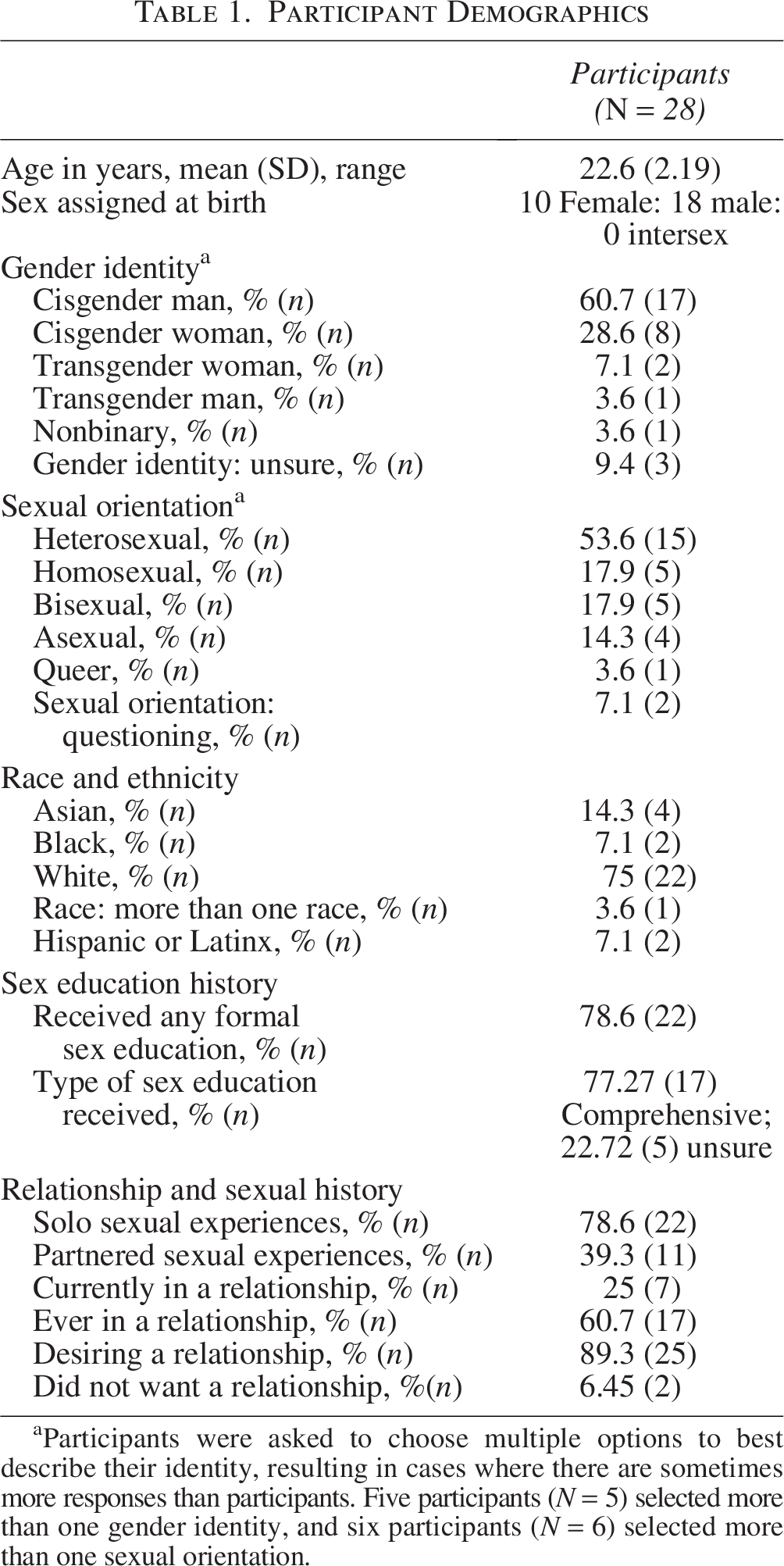
Participants were asked to choose multiple options to best describe their identity, resulting in cases where there are sometimes more responses than participants. Five participants (N = 5) selected more than one gender identity, and six participants (N = 6) selected more than one sexual orientation.
Procedure
The institutional review board of Boston Children’s Hospital approved all study procedures. Participants were recruited from the community as part of a larger mixed-methods study conducting the formative work that could in the future be used to create and culturally tailor a program focused on increasing skills related to romantic and sexual relationships (i.e., no intervention was offered as part of the protocol). A trained research assistant conducted a phone screening with each potential participant to assess their ability to provide informed consent. Adults with documented legal guardianship were permitted to participate with the consent of their guardian. We obtained informed consent at the first study appointment. To support understanding of study procedures, risks, and alternatives to participation, we provided visual schematics, schedules, checklists, and flowcharts.
Following consent, participants completed the WASI-II, a self-report questionnaire designed to elicit background and demographic information, and a qualitative interview with a trained study clinician. Participants completed study visits either at home in a private room (n = 8) or in a private room in the laboratory (n = 20). We compensated participants $80 cash for their time and effort.
Data collection
We developed the interview guide based on prior literature and refined it iteratively in collaboration with study leadership. Before beginning data collection, we sought feedback from autistic adults and their families to ensure that the study meaningfully addressed the priorities of the population. Interview questions addressed various topics, including romantic and sexual relationships, challenges, experiences, and goals. We used a series of standardized questions with individualized follow-up probes (see Supplementary Data for interview guide). Interviews lasted, on average, 44 minutes (range: 17–75 minutes). Participants were reminded throughout the interview that they could skip any questions or take a break at any time. Interviews were audio-recorded, transcribed manually by research staff, and reviewed for accuracy by a second staff member before being finalized for coding.
Positionality
Authors include White and Latinx, nonbinary and cisgender men and women. One author has a neurodevelopmental disability and one author has a family member on the autism spectrum.
Data analysis
We analyzed interviews using conventional content analysis, 32 allowing us to inductively derive themes directly from the repeating ideas that emerged from participants’ narratives, centering their voices without imposing predefined categories. This approach offers a systematic and flexible framework for identifying and interpreting patterns in qualitative data. In addition, to enhance the trustworthiness of our analysis, we used elements from another qualitative research methodology, consensual qualitative research, 33 to address any discrepancies that we identified across coders for each code in every transcript.
In the first coding phase, all transcript content relevant to the research questions was included. Three coders independently coded seven transcripts to identify meaningful units of text and create codes using the participants’ language or a summary statement of the participant’s language. When discrepancies emerged, coders met to review and reach consensus about which code best captured the participants’ thoughts, feelings, or experiences. We generated a codebook to guide further coding once all discrepancies were resolved. New codes were added iteratively, with group consensus, as additional transcripts were coded. A fourth coder joined in the second phase, and each transcript was coded independently by two coders using all possible pair combinations. The four coders met regularly to discuss codes and to ensure consistency. By the end of coding, no new codes emerged, indicating saturation.
All coders participated in the final analysis phase by meeting multiple times to examine each specific code and subcode, identifying higher order categories and broader themes that best captured the participants’ experiences. To illustrate each theme, we selected representative quotes based on their clarity, relevance, and ability to reflect the diversity and richness of participant perspectives. We used pseudonyms to protect the identity of the study participants. In Table 2, we provide information about participants’ age, sexual orientation, and gender identity by pseudonym.
Identity Information by Pseudonym
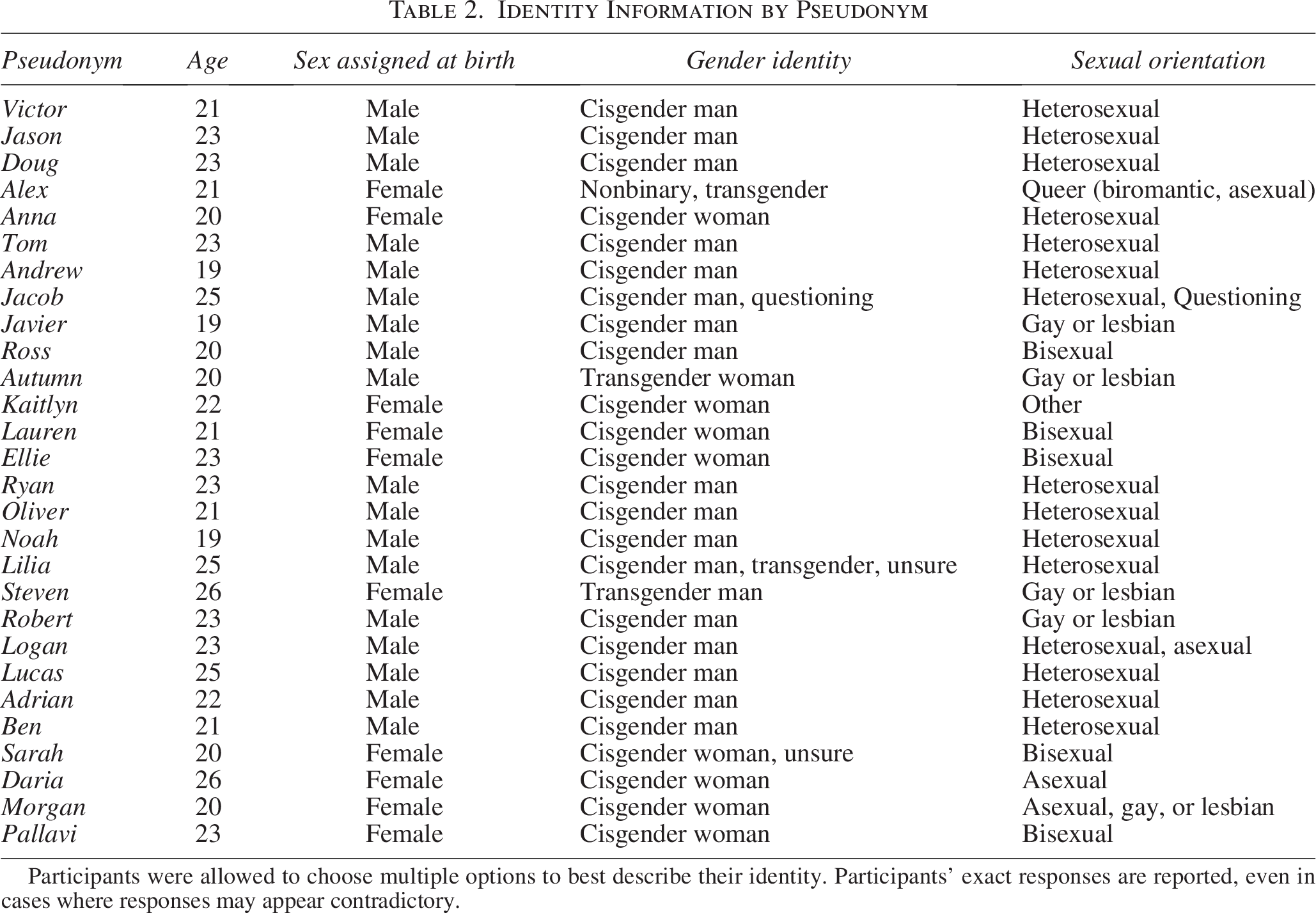
Participants were allowed to choose multiple options to best describe their identity. Participants’ exact responses are reported, even in cases where responses may appear contradictory.
Results
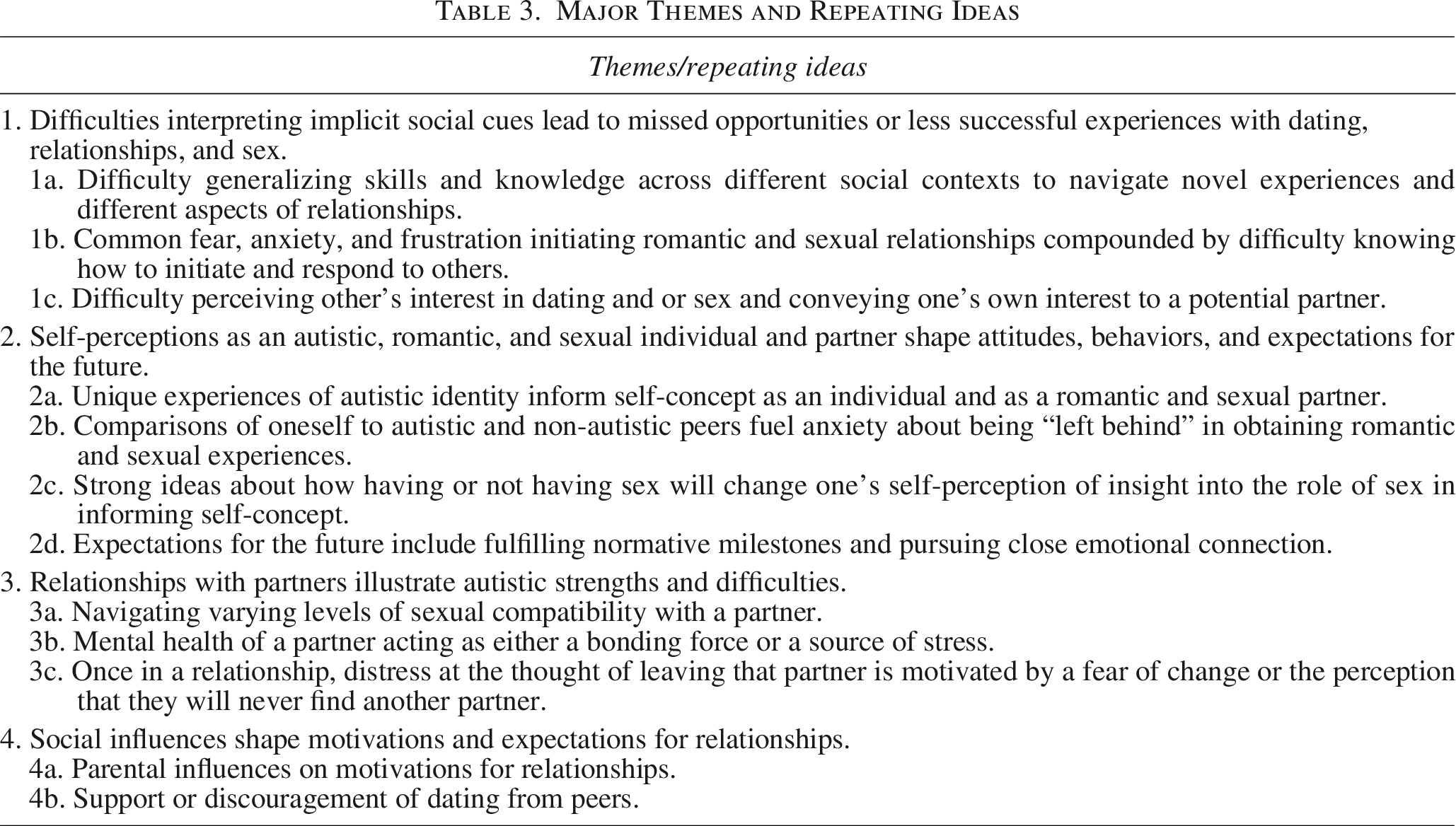
Using the 28 coded interviews, we identified and categorized repeating ideas into four themes (see Table 3). They include: (1) Difficulties interpreting implicit social cues lead to missed opportunities or less successful experiences with dating, relationships, and sex; (2) self-perceptions as an autistic, romantic, and sexual individual and partner shape attitudes, behaviors, and expectations for the future; (3) relationships with partners illustrate autistic strengths and difficulties; and (4) social influences shape motivations and expectations for relationships.
Major Themes and Repeating Ideas
Difficulties interpreting implicit social cues lead to missed opportunities or less successful experiences with dating, relationships, and sex (Theme 1)
The most consistent theme was difficulty recognizing implicit social cues in potentially romantic interactions (1). Difficulties in communicating intentions and understanding the intentions of others led to negative dating and sexual experiences, missed opportunities, or no experience at all (1a and 1b). Participants described missing cues in the moment and realizing that another individual had been interested in them romantically only after the fact: “There was this one girl who asked me to the prom, and I thought she was just trying to mess with me… I think that was one of those scenarios where someone liked me, and I just didn’t know because they wouldn’t tell me [explicitly]” (Victor). However, many participants expressed frustration that communication typically used for dating and sex is difficult to decipher: “My relationship course in college said like 60%+ of dating is nonverbal, and I was like, ‘Well, that might explain why I’m having so many problems!’” (Jason).
Nearly all participants who pursued relationships reported difficulty initiating these interactions related to navigating social cues (1c). Many described fears of rejection or discomfort that hindered expressing interest: “I’m afraid of making people feel uncomfortable or embarrassing myself, and so I tend to err on the side of caution. Which means that people can’t tell when I’m flirting” (1; Victor). This fear often led to inaction: “I really don’t want to be creepy or do anything that anyone’s uncomfortable with, and I don’t know, I feel like a lot of flirting can be quite overt, and I don’t want to make anyone uncomfortable.” (1b; Morgan).
Many participants reported fear of doing or saying “the wrong thing” and causing discomfort or harm to others in their process of seeking romantic and sexual relationships (1b). Although this caution sometimes shielded them from negative experiences, it comes with a cost: “The one thing that I can say has gone well is the fact that I haven’t had any negative experiences, but I haven’t had any experiences” (1b; Robert). Some adults intentionally developed feelings for unavailable or incompatible individuals to avoid potential rejection:
With my anxiety, it’s just easier to live in a fantasy world – to imagine what it might be like… I read all these stories and watch all these movies where someone is devastated that their crush doesn’t like them back, but I’ve just sort of already accepted it as fact (Morgan).
Participants identified two possible strategies as follows: (a) forming relationships only if a partner initiates or (b) avoiding relationships altogether due to fear of negative consequences. Many participants reported accepting these as their only possible options. However, some participants linked unwanted experiences to their struggles reading social cues—especially distinguishing friendly from romantic behavior (1). One participant described an experience that he believed was a casual, friendly encounter; however, he later reflected on how the situation may have been perceived as a date by the other person: “We met at a coffee shop, which I suppose could’ve been interpreted as a stereotypical first date… Looking back, I could’ve realized where they were trying to direct the situation.” The participant reported not identifying these signals until the encounter turned physical without his full consent: “They asked if they could kiss me, and I went with it, extremely reluctantly. I said, “On the cheek” was okay. But they kept pushing after that…” (Lucas). Many participants reported difficulty understanding nonverbal cues or reading the intentions of a potential partner, which, for some, led to missed opportunities to attend prom or go on a date, and for others led to sexual assault (1).
Some participants who identified as women emphasized their fear of the potential dangers that some women face when dating men, for example, sexual assault: “I really want to know this person because otherwise they [may be] a predator” (Pallavi). Of the women who reported having friends, almost all mentioned relying on friends to ensure safety in a dating scenario. Overall, participants described how their difficulty with reading implicit or nonverbal social cues and anxiety surrounding dating and flirting directly impacted their self-esteem, self-perception, and actual and ideal partnered experiences (1 and 2).
Self-perceptions as an autistic, romantic, and sexual individual and partner shape attitudes, behaviors, and expectations for the future (Theme 2)
All participants described how their autistic identity shaped their self-concept, including as romantic and sexual partners (2). A prominent theme was comparing themselves to non-autistic peers, which appeared to fuel anxiety, frustration, and low self-esteem (2b). Many participants described perceiving others as having a greater capacity to manage general social skills and social relationships, leading to feelings of inadequacy:
I know I shouldn’t try to run my life based on other people’s lives. But… I have other friends who are probably [at a] similar level social skill-wise, and it took them a while to get dating. But now, even they’ve started dating. And I’m like, what’s not connecting here [for me]? (Jason).
Participants expressed that their lack of relationship experience led to a fear of not meeting social expectations that prevented them from initiating relationships (1 and 2): “What especially worries me at my age is I feel like there is probably an expectation to already have that experience. I feel like there’s less tolerance for screw-ups [as an adult] than when you’re a teen.” (Logan). Low self-efficacy prevented some participants from pursuing desired opportunities, impacting their partnered experiences (2) and further perpetuating their sense of being “behind.”
Participants shared diverse opinions on how their autism diagnosis, or disability more generally, influenced their choice of partners (2a). While most did not express a preference for dating an autistic partner, some saw benefits in doing so:
We had a very easy time communicating. It is not necessarily because either of us is inherently good at it, but because we understand why the other one isn’t. The two of us are on the same wavelength. (Alex).
In contrast, others preferred a non-autistic partner due to perceptions of stability and support: “I want someone who doesn’t have a disability, just because I want someone to provide for me, and people with autism can’t always work” (Anna).
Some participants expressed anxiety about how their unique social communication styles and behaviors might impact their relationships with non-autistic partners: “I would like to know how to navigate… a relationship with all these quirks I have as a person on the spectrum” (Jason). Thus, participants’ views on partner selection were deeply intertwined with their autistic identity and perceptions of others on the spectrum (2a and 2b).
The degree to which participants identified with others on the spectrum and as part of an autistic community varied (2a). Frequently, they viewed their experiences as unique and not representative of others, considering themselves “outliers” (Victor). Participants believed their needs were not “applicable to anyone else” because sex education programming would be “focused on normal autistic relationships” (Victor), which they did not believe they had experienced. These comments were often accompanied by descriptions of experiences that were, in fact, reported by many other participants, such as navigating a relationship with a partner who has a disability or dating for the first time in their mid-20s.
Participants also expressed feeling as though they had “slipped through the cracks” (Logan), even when describing normative experiences of rejection, relationship conflict, and attraction.
Despite these varied experiences and challenges, nearly all participants expressed desires for long-term relationships, often including marriage and children, even among asexual individuals (2d). These aspirations often seemed to align with traditional social norms or media tropes: “I’m getting kind of old. Basically, just getting married…And having kids, the typical stuff… [is what I know I should be doing]” (Tom).
Some participants recognized the stereotypical nature of these goals: “I feel like everyone wants it. It’s like cool, but it’s mainly to die old with someone” (Pallavi).
Asexual participants, while less focused on sexual relationships, also expressed a desire for a life partner and a close emotional connection, with sex being secondary or absent (2d and 3a): “I’m more interested in all of the emotional stuff [such as] holding hands, and going on dates, and cuddling, and being emotionally close with someone.” (Morgan).
However, not all participants felt the need for a future relationship. One participant shared a different vision of their future: “Possibly. Although, right now, what I’m picturing is just living alone with pets” (Daria).
For many participants, the connections between sexual experience and self-concept were important, although perspectives varied widely. Some participants were adamant about not engaging in premarital sex: “I’m saving myself until marriage… I don’t want any children out of wedlock” (Anna). Conversely, others experienced intense feelings of distress about their lack of sexual experience: “I hate being a virgin!” (2c and 4; Andrew).
Overall, participants’ perceptions of themselves as sexual beings, shaped by both their comparisons to non-autistic peers and societal norms, played a crucial role in their romantic and sexual self-concept. These complex and sometimes conflicting views illustrate the diverse ways in which autistic identity influences self-esteem and relationship goals.
Relationships with partners illustrate autistic strengths and difficulties (Theme 3)
Participants often discussed navigating mismatched sexual desires in relationships (3a). Some with sexual experience felt “indifferent” toward sex and engaged primarily to meet their partner’s needs (Ross).
We could never have sex, and I wouldn’t care… but she has the same amount of sexual appetite as a bear does for salmon. So, I think, as far as the future is concerned, she’s going to want it all the time, and I’ll just be like, “Sure, why not?!” (Victor)
Although this participant reported being comfortable with their relationship arrangement, others reported tolerating discomfort for the sake of their partner: “When I was dating him, he would touch me…and I was just tolerating it. You know, if you do it, okay, if you don’t do it, that’s fine.” (Daria).
Others viewed sex as “secondary” and not the “focal point” of relationships (Alex). Among participants who identified as asexual, many worried about their ability to match a potential partner’s sex drive: “I don’t want someone who constantly wants to do it because… I can’t provide it for them” (Logan), or that being in a relationship with an allosexual partner would mean withholding something valuable from their partner: “I would never want to deprive anybody of that, even though I know that it is possible for an ace person and a non-ace person to be in a relationship and for that to be okay” (Morgan).
Some participants regarded sex as an activity they would engage in primarily as a “prerequisite for [having] children” (Jacob) or for “the sake of reproduction” (Pallavi). Others described engaging in sexual acts to not “miss out” on anything, “I felt like it was an opportunity missed if I [didn’t have sex]…it was something to be a part of” (2b and 3a; Pallavi).
Most participants with prior dating experience reported partners with non-autism diagnoses, such as anxiety or bipolar disorder (3b). Many participants expressed wanting to learn how to support their partners’ mental health needs. Knowing how to be supportive of a partner, especially within the context of mental health challenges, was described by some participants as an added challenge to relationships: “My current partner has anxiety, and that can be really bad. And they don’t handle it well when it’s bad, so that has been a point of contention with me and made me nervous about things” (Jason).
Another repeating idea related to feeling “stuck” (Noah) upon entering a relationship (3c). Many participants implied that fear of change guided their dating behavior and their motivation to pursue relationships:
When I told her I liked her, I wanted her to say she wasn’t interested… I wanted that. Because I was scared of having a relationship. But, at this moment, now that I have a relationship with my girlfriend—that was a change that was scary at first, and now I’ve settled into it—and now I don’t want to go back… There’s been two times where we almost broke up and… I felt an extreme emotional distraught. Like I was about to have a heart attack. (Victor)
Many participants in their first relationship expressed a firm conviction that they did not, and would not, need to date anyone else: “The first person that [I have] ever dated… is going to be the one I’m going to be spending the rest of my life with” (Victor). While the desire for lasting relationships is not unique to autism, autistic participants cited specific reasons for valuing permanence. Some feared breakups, worrying that their social communication challenges and strong preferences tied to their diagnosis would hinder finding another partner: “It’s the only [relationship] I’ve had so far… I do want to meet new people, but I’m afraid there’s no one for me” (Andrew).
Fears of anticipated difficulty in being able to communicate about conflict or break up with a partner were also reported, even in participants who did not have prior dating experience (3c):
It’s worrisome ’cause… once I finally get over this initiation ‘hill,’ am I walking into a trap or something I’m not ready to deal with? (Oliver).
Social influences shape motivations and expectations for relationships (Theme 4)
Many participants described the significant influence of parents and social networks in supporting or discouraging their pursuit of romantic relationships (4). Participants described family members as strongly influencing their motivations for engaging in relationships (4a). The impact of family expectations was particularly striking, as exemplified by a participant who reported being motivated to have sex primarily because: “I owe my mother that—she needs grandkids” (Jordan). Although some participants were grateful for the information their parents shared, others saw their parents withholding vital knowledge from them. Some participants reported that their parents omitted information or set limits on their behavior due to strong religious views about sex or expectations about the abilities of their autistic child:
The first time I asked about sex, my mom basically gave me the whole Christian spiel of ‘Oh, yes. You should be pure. Your body is a temple of God, and you gotta keep your body pure. That’s how you honor God.’ Nothing about ‘Well, you see. When this happens, that’s how you get pregnant.’ Nothing like that. (2c, 3, and 4; Daria)
Another reported explicit discouragement of dating by a parent:
My mom’s explaining it to me like, ‘Dude, you’re not going to get a girlfriend. If you do, it’s going to be a long way down the road…’ She said it doesn’t end well if you try to [date] and joked that [she] would kill me if I [had sex before marriage]. (2c and 4; Ben)
Even participants who described their families as being more open to discussing some aspects of dating or sex reported viewing their parents as providing insufficient information: “We’re very open about periods, but I don’t have those conversations [about sex] with my mother” (Anna). Overall, although some parents provided information that participants found helpful, a more common sentiment was that the information provided was incomplete and biased toward the parents’ personal views (4a).
Many participants described themselves as “lone wolves” (2; Victor); however, those who reported having close friends spoke of how interactions with their peers, ranging from supportive to discouraging, strongly shaped their relationship-related experiences (4b). Some participants found validation of their sexual identity from their friends: “The first people who told me that it was okay to be ace were friends my age” (Morgan). Another participant had an exceptionally positive experience with her roommates acting as coaches and cheerleaders to prepare her for a first date: “Yeah, it felt like an event for all of us. They helped me with my hair and makeup and picking out my outfit. They were very excited for me… It takes a village to plan a first date” (Ellie). Other participants expressed frustration with friends with more experience who offered advice. In some instances, hearing about relationship conflicts from friends even discouraged participants from wanting to pursue relationships of their own (2 and 4b):
[My friends] would always come to me to rant about the ex-boyfriend or the ex-girlfriend…it made me realize that maybe I don’t want [a relationship] because this looks pretty hard. So, I just chose to be that one dude who listened rather than did my own thing with it. (Ben)
Overall, participants described strongly weighting the views of family members and friends into their relationship expectations for the future.
Discussion
The present study adds to the growing literature about barriers and facilitators to successful romantic relationships for autistic people.14,18,20,34,35 Our interviews with autistic young adults about their past, current, and desired experiences with romantic and sexual relationships yielded four main themes as follows: (1) Difficulties interpreting implicit social cues lead to missed opportunities or less successful experiences with dating, relationships, and sex; (2) Self-perceptions as an autistic, romantic, and sexual individual and partner shape attitudes, behaviors, and expectations for the future; (3) Relationships with partners illustrate autistic strengths and difficulties; and (4) Social influences shape motivations and expectations for relationships. Participants generated several novel insights, such as how autistic identity and features impact their pursuit of dating relationships and sex (2) and how self-perceptions and comparisons with non-autistic peers impact dating expectations and motivation (2b and 4b). Participants also provided insights about how their attitudes, expectations, and ideals for sexuality were shaped (4) and the multilayered barriers autistic adults face when navigating dating and sexual relationships. Finally, participants shared unique strengths and perspectives that could facilitate growth and learning for providers and educators seeking to support autistic adults.
Self-perception, identity, and anxiety
A growing body of research highlights autistic individuals’ fears surrounding dating and sexuality.36–38 Similarly, participants in this study expressed anxiety about pursuing romantic relationships, linking their concern to limited, foundational social communication skills and low confidence in applying knowledge to real-world situations (1 and 3). Many reported feeling uncertain about how to navigate social nuances (e.g., when to text or when to initiate a kiss), and aligned with past literature, this lack of confidence negatively impacted their self-esteem, self-image, and self-efficacy in this domain.8,15,25 Participants also expressed some insights that are novel in this literature. For example, voicing fears about their ability to manage the emotional challenges of others as a barrier to achieving their relationship goals (3b).
Autistic identity shaped participants’ views of themselves as romantic partners. As in prior studies, some participants’ autistic identity appeared to lower their self-efficacy, optimism about future relationship success, and overall perceived ability to initiate and sustain romantic and sexual relationships (1c and 2).3,20,25,36 Novel to the current study, participants reported seeing strengths in their autistic traits—such as empathy, adaptability, and acceptance of differences—especially when partnering with others who share similar experiences (2 and 3). Acceptance of differences was viewed as strengthening communication, understanding, and support within their relationships. Incorporating this strengths-based information into a potential intervention, emphasizing personal competencies, self-determination, and character strengths, may address expressed feelings of inadequacy and improve overall self-esteem.28,39 Recognizing these unique strengths may empower autistic individuals and highlight how their identities and unique perspectives may be desirable to potential partners.
External perceptions limit access to accurate information about sex and dating
Participants identified ways in which others’ assumptions about their identities presented challenges to increasing relationship knowledge and practicing skills. Sexual and gender minority participants noted that parents often provided noninclusive, heteronormative guidance, creating a lack of open communication (4a). As with other studies, limited information from parents or schools left participants to rely on external sources (e.g., internet, porn, media, books) to supplement their knowledge, and many struggled to find reliable information (1c and 4a). 36 Aligned with prior research, many autistic adults in our study emphasized the futility of receiving accurate sex education without concurrent opportunities to develop requisite social abilities for dating and intimate relationships (1a and 1b).8,12,15,16,18,20 Although participants often had factual knowledge about sex, they reported that differences in social thinking, communication, and interpretation of social cues hindered their ability to maintain emotional intimacy (1).12,16,20,32 Participants expressed an understanding that social skills are essential to be able to approach others skillfully, initiate dates, have a successful date, and form romantic and sexual relationships. Therefore, education that assumes the presence of these skills without formal guidance was a disservice to supporting their ability to learn and apply the relevant information. Unlike other studies that emphasized masking or focus on concerns about being exploited, participants in our study emphasized the challenges they face in conveying interest and in recognizing unwanted advances. These findings reinforce the need for education focusing on overall relationship functioning, including romantic relationships and not just the sexual elements, to help autistic adults meet their relational goals and reduce their victimization risk.
Uniquely, our study is the first to articulate that the experience of being “late bloomers,” as many of our participants described themselves, contributed to a feeling that educational conversations surrounding sex and dating often came too early to be relevant. We theorize that delivery of information before it felt relevant further enforced reliance on nonsocial resources, which sometimes skewed expectations toward media-driven stereotypes. This suggests that promoting critical engagement with accurate external sources, considering the timing of delivery, and facilitating practical discussions about applying knowledge could help autistic individuals develop realistic and informed perspectives on relationships and sexuality.
Autistic young adults’ experiences with dating and romantic relationships
Our interviews extend work showing that autistic adults have a similar interest in relationships and sex as their non-autistic peers12,15,40 by elaborating on the importance of dating and partnered sex for autistic adults (2 and 4). Most participants expressed a desire for long-term relationships, but identified barriers such as fears of change and conflict and difficulty finding compatible partners. This motivation to have romantic and sexual relationships guided their dating behavior.
Participants expressed diverse and at times specific expectations for sex; some had strong interest, while others had no desire. Participants who reported being in relationships often reported deferring to their partners’ needs or feeling unfulfilled, echoing prior findings, 11 alongside fears about being able to find another suitable partner in the future. Parental values, such as views on premarital sex or traditional gender roles, strongly shaped some participants’ perspectives and, at times, their drive for relationships altogether. The variability in experiences underscores the multitude of factors that contribute to autistic adults’ motivations for romantic relationships and sex.
Strengths and limitations
This study makes several contributions to the literature. First, although much prior research on this topic has been conducted outside the United States,8,16,18,35,36 this study offers U.S.-based insights that can be compared cross-culturally to highlight universal needs and foster potential future collaboration. Second, in this study we adopted a strengths-based approach, emphasizing both the challenges and strengths that autistic adults bring to intimate relationships. Last, in our use of qualitative methods, we present findings in participants’ own words and use those words to inductively identify themes. Our one-on-one interviews with autistic adults provide credibility and depth compared with studies utilizing surveys, focus groups, or indirect reporters.8,15,16,18,41 Study limitations necessitate caution in interpreting results. The sample does not represent the breadth of autistic individuals, as our recruited participants had relatively high IQs and likely greater social connectedness. Absent from the sample are perspectives of those individuals who are less comfortable discussing dating and sexuality. Especially given the diversity within autistic communities, such as differences in verbal ability, co-occurring conditions, and independence levels,15,18,37 we would have needed to interview a much larger sample to reflect those experiences to saturation. Although the sample included non-heterosexual, non-cisgender, and racially marginalized participants, these perspectives did not reach saturation despite evidence that autistic individuals are more likely to identify as non-heterosexual than non-autistic peers.17,42–44 Variability in responses also presented challenges, as some participants shared detailed insights and others provided brief or incomplete answers, suggesting that alternate data collection methods (e.g., typing) might have been helpful to capture additional information. Finally, the study and interview guide were designed by non-autistic researchers. A more collaborative, community-engaged approach might have yielded different or enriched findings.
Conclusion
Our analysis revealed novel insights into the dating and sexual experiences of autistic adults. Participants reported that social communication challenges influenced how they accessed relationship information and that the timing of sex education was incongruent with the timing of their interest in romance. Gaps in sex education, compounded by reliance on nonrealistic media and nonobjective internet sources, exacerbated difficulties in understanding and applying effective social communication skills. These factors shaped participants’ self-perception, autistic identity, ability to navigate relationships, and expectations for the future. Importantly, participants noted that both actual and ideal experiences influenced how they viewed themselves. These findings add to the literature critical information about how autistic adults experience romance and could inform the development of autism-specific romantic relationship interventions going forward.
This study is among the few U.S.-based studies using semi-structured interviews with autistic adults and corroborates prior findings on the low utility of traditional sex education programs for this population. In addition, our findings emphasize how autistic identity, self-esteem, and anxiety about social performance can serve as barriers to achieving desired romantic relationships and drivers for expectations of intimacy. Uniquely, our findings also demonstrate how autistic traits can serve as strengths within romantic and sexual relationships, offering a more balanced perspective on autistic experiences in this context.
Ethical Approval
This study was approved by the Human Subjects Divisions at Boston Children’s Hospital.
Footnotes
Authorship Confirmation Statement
B.H.K.: Conceptualization, formal analysis, project administration, methodology, investigation, data curation, and writing—original draft. E.T.P.: Formal analysis, conceptualization, methodology, and writing—original draft, review, and editing. D.S.: Investigation, formal analysis, and writing—original draft. S.F.: Funding acquisition, investigation, conceptualization, supervision, project administration, and writing—review and editing. D.W.P.: Funding acquisition, methodology, investigation, conceptualization, supervision, project administration, and writing—review and editing. This article has been submitted solely to Autism in Adulthood.
Supplemental Material
References
Supplementary Material
Please find the following supplemental material available below.
For Open Access articles published under a Creative Commons License, all supplemental material carries the same license as the article it is associated with.
For non-Open Access articles published, all supplemental material carries a non-exclusive license, and permission requests for re-use of supplemental material or any part of supplemental material shall be sent directly to the copyright owner as specified in the copyright notice associated with the article.
