




Abstract
Background:
Autism genetics has historically attracted a substantial proportion of autism research funding internationally. However, more recently, several controversies centered on ethical conduct and lack of community consultation have emerged. This has triggered Autistic-led protests for the functional and meaningful inclusion of Autistic voices in the research design.
Methods:
We collaborated with Autistic people, their allies, and other stakeholders concerned with Autistic outcomes to cocreate a qualitative study investigating individuals’ perceptions of autism genetics. We spoke to 33 Australian Autistic people, their families and supporters, and autism professionals in a series of codesigned semi-structured interviews (n = 20), focus groups (n = 2 groups), and qualitative surveys (n = 7). Interviewees were predominantly women (79%), White (67%), held postgraduate qualifications (i.e., master’s, doctorate) (36%), and received their autism diagnosis or self-diagnosed in adulthood (where applicable, 93%). Many interviewees held multiple intersecting roles across the Autistic and autism communities. We transcribed their data verbatim and analyzed these within a critical realist framework using reflexive thematic analysis.
Results:
Community members reported concerns about the eugenic potential of genetics research and how it perpetuates negative attitudes about autism and Autistic people. Interviewees felt a sense of disillusionment and distrust toward the field stemming from persistent failure of autism researchers to integrate community needs within its aims. Some believed that while genetics knowledge could hold health benefits for the Autistic community, these could only be achieved through trust-building and improved engagement of Autistic voices in this research.
Conclusion:
Findings highlight the diverse community perspectives on autism genetics research within Australia, capturing how genetic studies are perceived to ignore the wants, needs, and priorities of Autistic people and their supporters. These insights offer a unique opportunity to reevaluate the trajectory of autism genetics research into the future, with a strong call to action from participants to embed Autistic voices in a functionally meaningful way at all levels and stages of knowledge generation.
Community Brief
Why is this an important issue?
Autism genetics research is often a concern for the Autistic community. Some people worry about how this type of research could be used. There has been a long history of researchers not involving Autistic people in decisions about genetic research. This often means that the research (as well as funding goals for this research) is not aligned with the needs of the community. Listening to Autistic people about genetic research can help ensure this work is ethical, respectful, and helpful for Autistic people.
What was the purpose of this study?
This Australian-based study looked at what Autistic people, their families, and autism professionals think and feel about autism genetics research. The goal was to understand each group’s concerns, hopes, and ideas for improving how this research is done.
What did the researchers do?
The research team worked with Autistic people to design the study. The researchers spoke with 33 participants, including Autistic people, family members, and relevant professionals. Researchers spoke to these groups by conducting interviews, focus groups, and surveys. The team then analyzed the responses to find common themes in what the Autistic and autism communities shared.
What were the results and conclusions of the study?
Many participants were worried about the risks of genetics research. In particular, people were worried about genetic research being used in ways that could harm Autistic people, such as trying to prevent autism. They also felt that the research often focused on “fixing” autism rather than understanding and supporting Autistic people. People said these concerns have led to a lot of mistrust. However, some people believed that genetics research could provide useful health insights if it were done ethically and included Autistic voices from the start. The study highlights the need for researchers to work together with the Autistic community to rebuild trust and ensure that genetics research reflects their needs.
What is new or controversial about these findings?
This study adds to ongoing conversations about the challenges of ethics in autism genetics research. It shows that mistrust stems from a lack of inclusion and consideration of the community’s priorities. It also suggests that while many people are skeptical, there is hope for positive outcomes if researchers take the right approach.
What are potential weaknesses in the study?
This study included a relatively small number of people, all from Australia, which means the results may not reflect everyone’s views, especially those with different lived experiences. However, the results provide valuable insights into the experiences and concerns of those who took part.
How will these findings help Autistic adults now or in the future?
These findings encourage researchers to listen to Autistic people and involve them at every step of the research process. By doing this, future genetics research can focus on improving the lives of Autistic people in ways that are ethical and respectful rather than harmful. This approach could lead to greater trust and research that truly benefits the community.
Introduction
Autism diagnoses show patterns of recurrence within families.1,2 However, the underlying genotype remains unresolved. This is partly due to heterogeneity in the known genetic associations of Autistic differences,3,4 with significant investment dedicated to progressing knowledge of the genetic etiology of autism. Genetic studies receive greater resource allocation than all other areas of autism research internationally,5–9 suggesting that understanding the genetic architecture of Autistic difference is of exceptional interest to researchers. Notably, despite significant investment into genetics research, the attitudes of the Autistic10,11 and autism (i.e., parents/carers, health care professionals, researchers)11–16 communities toward such studies have rarely been surveyed.
In the Australian context, den Houting and Pellicano 5 found that when determined in partnership with community, research expenditure on Autism genetics decreased substantially. The authors examined the investment portfolio of the following three major national funders: the Australian Research Council (ARC), the National Health and Medical Research Council (NHMRC), and the Cooperative Centre for Living with Autism (Autism CRC). The Autism CRC uniquely uses a nationwide collaborative model for autism research, engaging with stakeholder communities to determine funding priorities. The authors reported that between 2013 and 2017, the Autism CRC directed less than AUD 3 million of a cumulative ∼AUD 20 million research budget (15%) to biological and etiological studies. This contrasted with the AUD 15 million allocated to equivalent studies by the NHMRC and ARC in the same period, dominating the total ∼AUD 23.5 million (63%) expenditure on autism-associated research. Although the Autism CRC has demonstrated its commitment to genetics research through the establishment of the Australian Autism Biobank, 17 the majority of resources were dedicated to studies pertaining to infrastructure and surveillance (45%), intervention (15%), and lifespan issues (∼14%), aligning with wider community priorities.8,18–21
Biobanks and similar repositories represent significant ongoing resources to accelerate biological discovery efforts nationally and internationally. There is a social and ethical imperative to utilize the range of donor materials held by the Autism CRC and similar biorepositories (e.g., North America, 22 Europe, and the United Kingdom 23 ) to conduct neuro-affirming, practically beneficial research. 24 However, the Autistic and autism communitiesa hold varied attitudes toward the collection and long-term storage of such materials, spanning from enthusiasm to staunch opposition.11,25 This can be explained, at least in part, by the lack of consensus toward the perceived utility of the studies that apply them.11–16 Parts of the community contend that there is inherent worth in understanding the role of predisposing genetic factors in autism. Such information is believed to offer improved diagnostic and therapeutic capabilities, creating opportunities to support Autistic people earlier in life.10–13,16 Within Australia, community members’ have articulated that they are motivated to contribute to the Australian Autism Biobank by the possibility for genetics research to support advances in autism health care. 11 However, they and others surveyed in the literature have raised several critiques for the conduct of autism genetics research, ranging from perceived existential risk for the community10,16,24 to failed translation of genetic research into clinical benefit. 26 Such critiques have provoked academic and public discourse about the value of these studies23,25,27 and culminated into a sense of cynicism toward autism genetics as a whole. 25
Considering the continued and substantial investment in autism genetics,5–7,9,17,22 it is important to understand the community’s perceptions toward genetics research. We aimed to explore the Australian Autistic and autism communities’ attitudes, experiences, and concerns about autism genetics. This study was produced in partnership with Autistic people and their allies, ensuring that the research questions and methodologies were both relevant and accessible for members of the community. Through codesigned semi-structured interviews, focus groups, and qualitative surveys, we collected firsthand accounts of peoples’ thoughts and beliefs about the intentions and function of genetic studies about autism. These perspectives can better inform future autism genetics research, ensuring its alignment with community priorities.
Methods
Participatory methods
Community members have made diverse contributions to this study. The research team consisted of academic and health care professionals with varied lived experience within the Autistic and autism communities. The study involved three advisory groups: one with Autistic adults (n = 5), one with parents of Autistic people (n = 5), and one with autism research and health care professionals (n = 5). Community members self-allocated to groups. Most advisory group members identified as Autistic (n = 10, 67%). The primary author, a non-Autistic autism researcher, and the second author, a lived experience advocate and consultant, cofacilitated advisory group meetings. Each group met four times between March and August 2024, influencing the research questions, ethics and participant resources, data collection protocol, and preliminary data analysis.
The codesign process was informed by current guidelines 28 and involved collaborative decision-making for each phase of the research, benefiting from peoples’ diverse experiences and expertise. Decisions regarding study design were made in partnership. This included participant eligibility requirements, the recruitment strategy, study governance, data collection methodology, and analysis approach. We adopted open and flexible communication strategies to redress potential power imbalances, 29 enhancing group members’ capacity to contribute to discussions. We incorporated the use of video, audio, and text-based communication, created opportunities for asynchronous collaboration, and conducted regular anonymized session evaluations.
Group members were remunerated in accordance with the Monash Partners Consumer and Community Involvement (CCI) guidelines. They were not financially compensated for involvement in later stages of data analysis or article preparation due to funding limitations. Community members were able to opt-in to these research activities and are credited as named authors on this article. We discussed these funding limitations at the outset of the codesign process, ensuring everyone involved was aware and comfortable with these terms.
Recruitment and participants
Participants had to be ≥18 years old and identify as an Autistic person, parent or supporter of an Autistic person, or both. Nonparental family members and people with other close personal relationships with members of the Autistic community (e.g., friends, neighbors) were considered supporters. We advertised the study through formal (e.g., advocacy and support groups) and informal (e.g., social media, word-of-mouth) community networks. Recruitment materials were available in English only. Eligible community members completed an online expression of interest form to collect broad demographic information and a brief statement about why they wanted to take part. This helped detect disingenuous participants. 30
Thirty-three participants took part. Many held multiple roles within the Autistic and autism communities. Twenty-eight participants (85%) identified as Autistic, 13 (39%) as parents of Autistic and/or neurodivergent children, and 12 (36%) as autism-related professionals (e.g., researchers, advocates, health care workers). Most Autistic people received their diagnosis (n = 24, 86%) or self-diagnosed (n = 2, 7%) in adulthood (total n = 26, 93%). Participants were an average of 38.9 years old at the time of interview (range = 21–76, standard deviation = 13.3). They were mostly women (n = 26, 79%), White (n = 22, 67%), held university-level or postgraduate qualifications (e.g., master’s, doctorate) (n = 21, 64%), were employed (n = 27, 82%), and urban residents (n = 21, 64%). Table 1 provides additional demographic information. We use pseudonyms to protect participants’ identity.
Characteristics of Autistic and Autism Community Members Involved in the Study
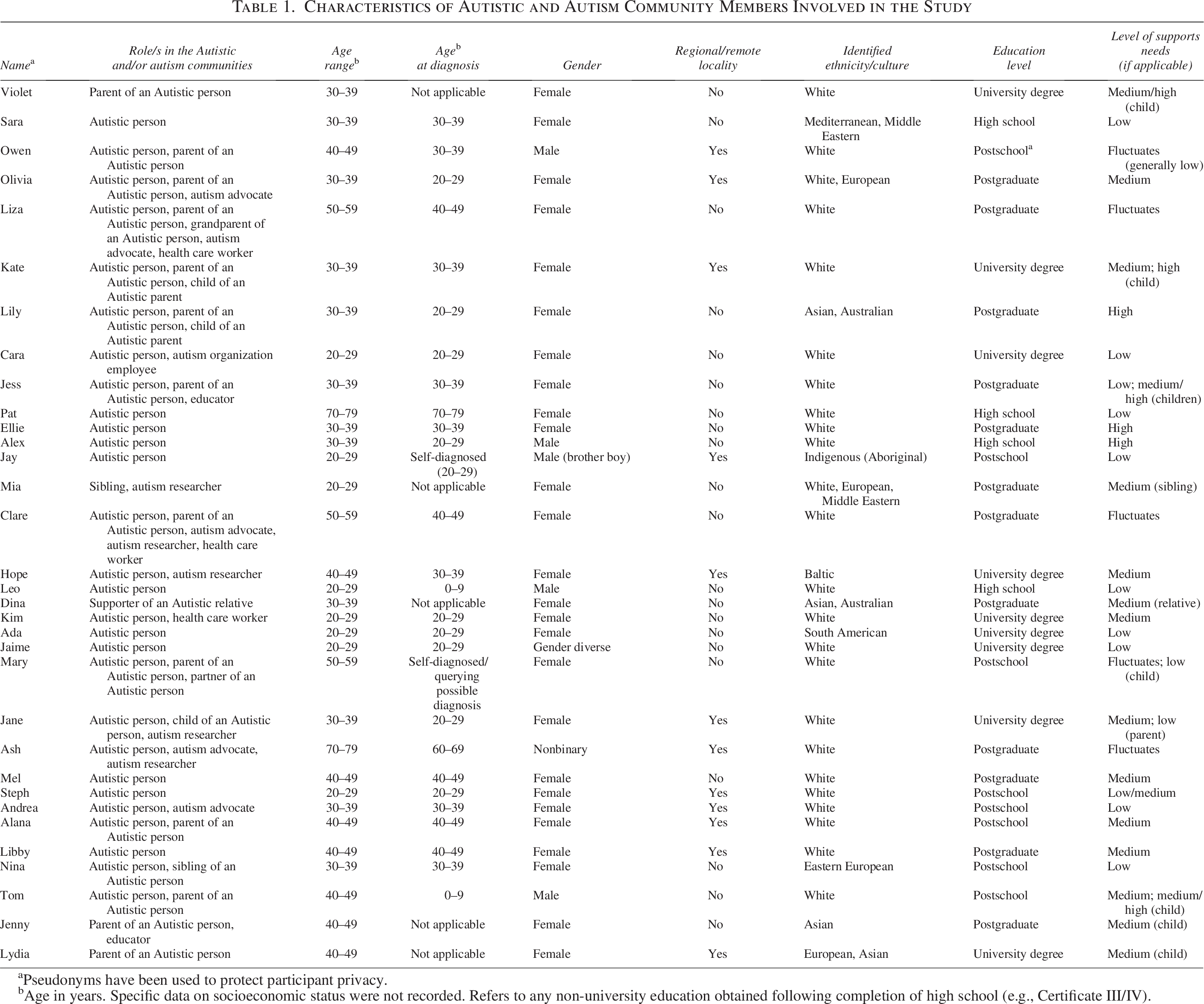
aPseudonyms have been used to protect participant privacy.
bAge in years. Specific data on socioeconomic status were not recorded. Refers to any non-university education obtained following completion of high school (e.g., Certificate III/IV).
Procedure
The Monash University Human Research Ethics Committee approved the conduct of this research (ID: 39468). All participants provided written informed consent. We prepared plain and easy English versions of the participant information and consent forms according to recommendations from the Centre for Inclusive Design. 31
A summary of study participation is provided in Figure 1. Data collection occurred between May and July 2024. We provided three modes of participation to accommodate participants’ communication preferences, with both online and in-person formats (where applicable): one-on-one semi-structured interviews (n = 20), focus groups (n = 2; three participants per group), and written interviews. All written interviews were completed asynchronously via Qualtrics (Qualtrics, Provo, UT) (i.e., survey, n = 7), with further clarification of responses obtained via email correspondence. All focus groups and most interviews (n = 20, 95%) were completed via Zoom. One interview (5%) was completed in-person. The interview and focus group durations ranged from 60 to 122 minutes (M = 86 minutes). While participants were offered the option to ask for an Autistic interviewer and/or to bring a support person to their interview, none made this request. We recorded and manually transcribed interview and focus groups verbatim. Participants reviewed their transcripts before deidentification and were able to edit the contents to improve data accuracy. 32 Only minor amendments to transcription errors were suggested. All participants were compensated for their time.
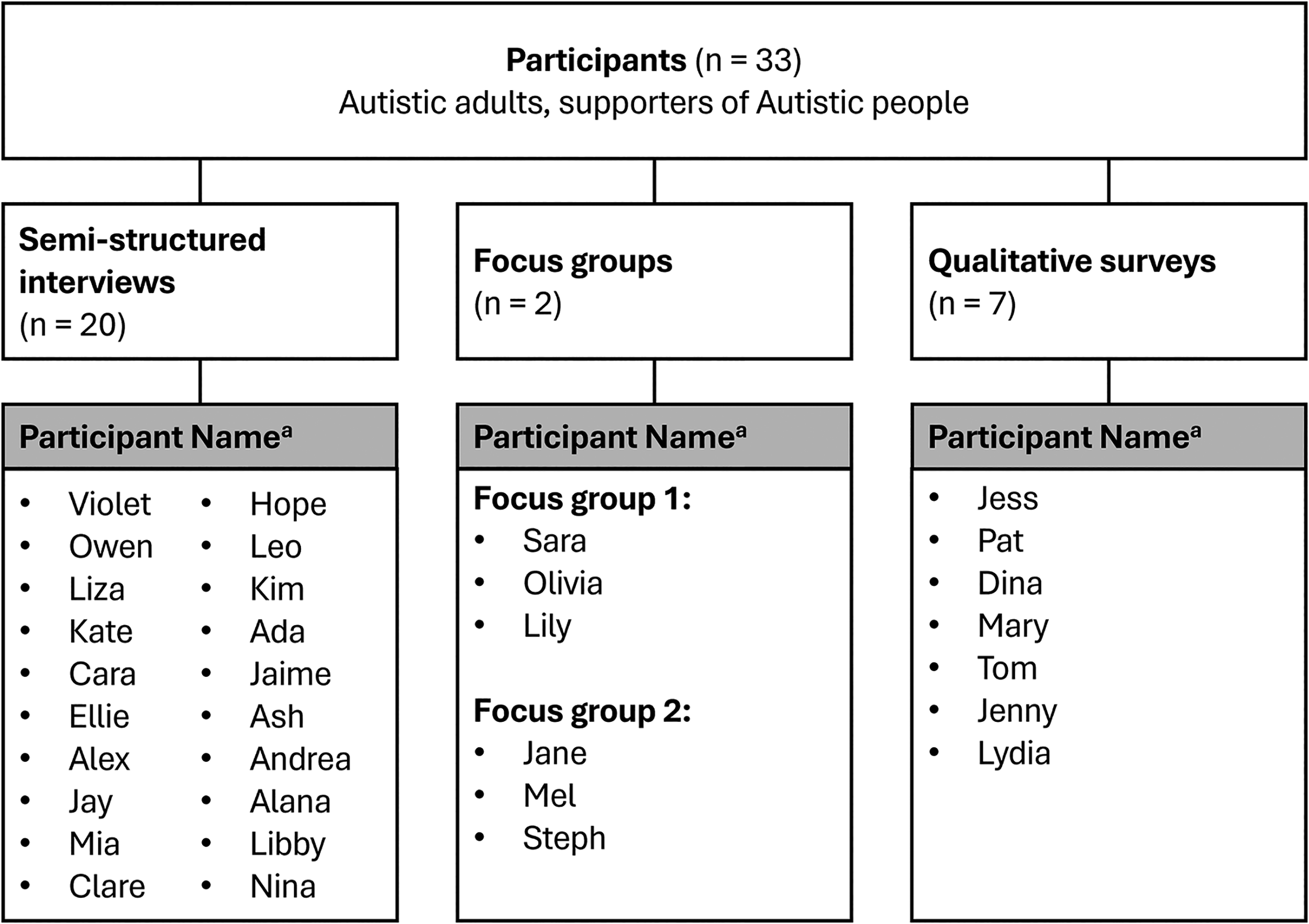
Summary of study participation. aPseudonyms have been used to protect participant privacy.
Materials
Demographic information
Participants’ age, gender, ethnicity, locality, diagnosis, and self-described support needs were collected in an online survey before participation.
Semi-structured interview
The primary author and members of the advisory groups cocreated the interview schedule (see Supplementary Appendix A). The questions explored participants’ familiarity with autism genetics, perceived impacts on the community, and any concerns regarding its conduct. Interview questions were similar across all delivery modes, with slight differences in phrasing for increased clarity (see Supplementary Appendix B [focus group], Supplementary Appendix C [written interview]).
Data analysis
We followed Braun and Clarke’s33,34 six-phase method for reflexive thematic analysis within a critical realist framework. We acknowledged that participants’ perception of reality is embedded within their social and cultural contexts. 33 We distinguished between concepts of experience (i.e., perceptions), events (i.e., things that take place in the world), and causal mechanisms (i.e., forces that produce events which can be perceived), 35 and recognized that the interaction of these contributes to how participants create meaning. As such, we viewed the data as providing a partial representation of reality. 36
The primary author conducted the first two phases of the data analysis independently: data familiarization through immersion and critical engagement (phase 1), and assignment of the initial codes using NVivo 14.23.2 software 37 (phase 2). These codes were determined on the basis of recurring elements in the semantic content. The primary author then met with the community advisory groups and members of the research team to discuss the coding scheme and to identify preliminary themes (phase 3). The themes were inductive, independent of any predetermined theories. These were iteratively and collaboratively reviewed, placing greater emphasis on the latent content of the data set (phase 4). We refined the themes and, once clearly demarcated, defined and named them (phase 5). Finally, we wrote the research report (phase 6).
We validated data credibility and trustworthiness38,39 through data crystallization. 40 The authors and community advisory group members continually debriefed and discussed the data to enrich interpretation, permitting integration of varied positionalities and constructions of the truth.
Positionality statement
The diverse lived experiences of the researchers and advisory group members informed our analytic approach. This included peoples’ roles within the Autistic and autism communities; training in education, psychology, genetics, and autism studies; occupational roles in government and policy; and engagement in autism advocacy within the context of academia and more broadly. These experiences have influenced how each author understood and analyzed the data, as well as their perspectives of autism research more broadly (e.g., medical model of disability, neurodiversity affirming paradigm, social model of disability).
Results
We identified three themes relating to community members’ attitudes toward autism genetics (Fig. 2). For conciseness, we refer to all participants as interviewees.
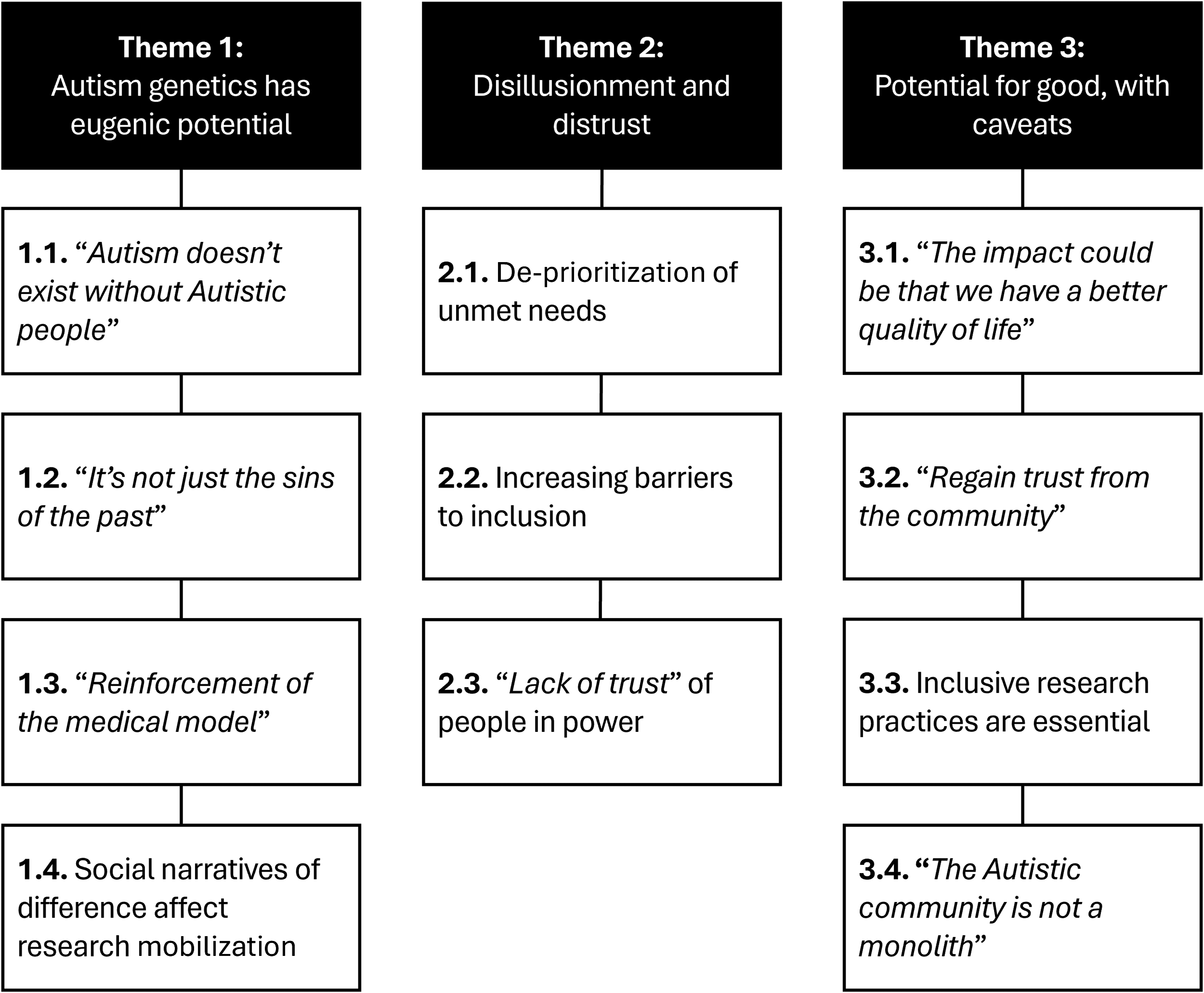
Themes and subthemes identified in our interviewees’ discussions about autism genetics research.
Theme 1: Autism genetics has eugenic potential
Members of the Autistic and autism communities agreed that autism is “just very obviously genetic” (Olivia). Interviewees shared anecdotal evidence of “Autistic apples falling from Autistic trees” (Owen), referring to “potential” (Dina) and “obvious” (Mary) patterns of autism in their families. Although some remarked that “environmental circumstances” (Ellie) can contribute to the etiology, community members acknowledged that “pretty well the only known cause of autism that [researchers] can find is genetics” (Jane). However, interviewees expressed “fear” (Alex) of the “eugenic” (Leo) risks posed by autism genetics research, noting that “when you hear ‘genetics’ or ‘DNA,’ you think ‘are they trying to change us or adjust us?’” (Alana).
Interviewees felt that genetic information could be used to “prevent autism from happening” (Cara) by facilitating “prenatal testing” (Olivia). They reasoned that such testing would allow genetically Autistic babies to be “detected in utero” (Jaime) and inform “decisions about termination” (Liza). Ellie, an Autistic interviewee, remarked that “autism doesn’t exist without Autistic people” (subtheme 1.1). This echoed sentiments that using genetic information to “decrease the incidence of autism” equated to “decreasing the number of Autistic people in the population” (Jaime). Community members expressed that the goals of genetics research reinforced the idea that Autistic “traits or ways of being in the world” are “undesirable” (Hope), and the knowledge learnt through its conduct could be “utilised in such a way that the Autistic community would cease to exist” (Kate). Several interviewees discussed this concern, contending that the motivations for genetics research imply that autism causes “suffering” (Ellie) and that Autistic people “are broken, wrong, and bad just for existing” (Jess). Such conceptualizations were seen to devalue the “innovation,” “creativity,” and “intelligence” (Libby) held by Autistic people, contrasting with the view that autism is “a diversity in the way someone’s brain works” (Mia).
Community members frequently referred to the ways other developmental differences are subject to eugenics. They highlighted that “very few babies with Down’s syndrome are born anymore, because almost all of them are aborted when parents find out in the womb that they have it” (Cara). Interviewees “anticipate that the same thing will happen to Autistics” (Ash), arguing that the research positions autism as a genetic “flaw that we can get rid of” (Kim). Olivia, an Autistic community member, described fears that similar family planning choices could be made for autism, stating “people are encouraged to have terminations if it is found that the baby they’re carrying has the Down’s syndrome gene. I would hate to start seeing that for autism. I think it’s a form of eugenics, and it’s really discriminatory.”
Interviewees felt that autism genetics research has been “hardly benevolent” (Ash) toward Autistic people, and that the community “has been hurt by past genetic research that was aimed at ‘curing’ or eliminating us” (Jess). They spoke to “underlying concerns from World War II” (Kate), referring to the early works of “Hans Asperger” (Andrea) and the “T4 stuff that happened in Germany” (Liza). However, they acknowledged that “it’s not just the sins of the past” (Hope) (subtheme 1.2) and that “you don’t have to look very far to find people who are clearly dancing around the fact that they are pro-eugenics” (Owen). Interviewees discussed that present-day researchers viewed “autism as a problem” (Leo) and that “so much of the research is focused on deficiencies and describing the way that we are alien” (Alex). These studies were considered “dehumanising” (Mia), treating the “community as lab rats rather than actual humans that need better understanding” (Hope). This research approach was labeled “inherently unethical” (Jess) and although interviewees felt “the motivation [of the research may be] to know more [and] to help … whether [it’s] helpful or not is another question” (Libby).
Community members reflected that autism genetics research is embedded in “models and social structures that don’t align with the neurodiversity movement” (Kim). Interviewees felt that genetic studies of autism acted as “reinforcement of the medical model” (Mia) (subtheme 1.3), “perpetuating [autism] as an illness and therefore something to be cured” (Jaime). Interviewees perceived the medicalization of autism affected “the way people view Autistic people” (Owen) and is the reason that they are often depicted as being “sick or defective” (Jess). Given these trends, community members felt that autism genetics research could always be used “to formulate cures” (Liza). They spoke to the fact that “treatments like ABA (applied behaviour analysis)” (Kim) that aim “to make Autistic people less Autistic” (Hope) already exist, so they felt it reasonable to consider the “curative” (Libby) potential of the research. Interviewees stressed that even if developing a cure was not researchers’ goal or motivation, that “you can have the best intentions when you’re creating something, [but] there’ll always be someone who will do something you’re not happy with [using] it” (Nina). For this reason, they felt that “you can’t know for sure what you’re contributing to is a good thing or bad thing” (Ada) when participating in studies of this nature.
Interviewees contended that because “health and education systems still lean on research as a basis for their interventions” (Kim), this understanding of autism might mean that “social participation and therapeutic approaches are less likely to be prioritised” (Dina) in research. Several community members expressed being “very proud of being Autistic” (Alana), so they felt that medicalization of their experiences challenged their own “neuro-positive” (Andrea) and “strengths-based” (Lily) self-concept. Others felt that “for Autistic people, just existing in the world is often quite traumatic” (Kate) because autism “is a condition of the environment that exists around them” (Leo). However, these views were not unanimous, with some interviewees “half agreeing with the medical model” (Jane) because they felt being Autistic could be “hard” and “challenging” (Cara) at times.
Community members expressed that “the policy response to something like a cure for autism is not gonna be unilateral” (Alex) and that social narratives of difference affect research mobilization (subtheme 1.4). They discussed how in certain cultural communities, neurodivergence is “seen as a personal failure” (Nina), and that “people with disabilities are considered less than” (Andrea). Interviewees felt that the utilization of autism genetics would depend on “which country you live in” (Liza) and “the political powers at play at that time” (Kate). Although they noted this view to be “sort of dystopian novel-type talking” (Clare), community members worried about “the government’s power” and “reach” (Jay) in circumstances where autism became a genetically identifiable condition. Interviewees highlighted that “constructs like capitalism and neoliberalism” (Hope) could also impact the application of genetics research, particularly as “autism is expensive in a lot of ways” (Ellie). Community members described being portrayed as “burdens” (Kate) in social discourse, recalling governments’ commentary that “there’s too many Autistic people, and [they’re] costing [us] too much” (Olivia). One Autistic interviewee, Alex, elaborated that “in an environment where politicians or corporations are not out to protect Autistic people, [genetic] tools [could be] used to actually marginalise us further.” Another, Jaime, recognized that there are “ebbs and flows in how progressive governments or societies are at any given point in time”; hence, it is unlikely that “there’s ever gonna be a point where we are so far removed from ‘autism as illness’ that there will never be anyone who [doesn’t] think that way.”
A number of community members acknowledged their own concerns could be perceived as “a bit conspiracy-like” (Kate). They conceded that “the complexities of the genes involved” (Violet) meant it is not possible to “look at the DNA and go ‘that’s the autism gene right there’” (Lily). One Autistic interviewee, Cara, expressed that there is “this paranoia that people are gonna be forced to take cures against their will, and I really can’t see that happening.” However, others felt that the impact of genetics research extended beyond the possible practical application, observing that “just going down that line of inquiry perpetuates stigma” (Hope). Olivia, an Autistic parent and advocate, described the effect this has on Autistic self-concept, remarking:
When you see ads constantly on social media about studies that aim to reduce rates of autism or Autistic characteristics, or when you see funding being put into genetic research that is talking about finding cures for autism, it’s awful. When you are Autistic, your whole family’s Autistic, and your friends are Autistic, it’s just like “oh, well the world doesn’t value us.”
Theme 2: Disillusionment and distrust
Autism genetics as a research focus was viewed to represent a “microcosm of society’s wider values” (Ellie). Researchers’ and funding bodies’ continued prioritization of such studies was perceived to contribute to a deprioritization of unmet needs (subtheme 2.1), “diverting funds from other projects” (Pat) that could better support “Autistic flourishing” (Mia). Interviewees felt that “genetics is something that you’re born with, and you can’t really alter it throughout your life” (Cara). They were therefore unclear what “value the outcomes of [genetic] research” (Clare) held and considered other avenues to be “more important” (Mia) for researchers to explore. Community members identified “health care” (Liza), “mental health” (Jay), “education” (Mel), and “employment” (Jane) as needing “urgent system reforms and improvements” (Dina). Particularly, interviewees discussed that there is a plethora of “chronic” (Nina) “medical conditions that often come with an autism diagnosis” (Jenny) (e.g., “Ehlers-Danlos syndrome” (Lydia), “POTS/postural orthostatic tachycardia syndrome” (Jess), “inflammation” (Sara), “anxiety, PTSD/post-traumatic stress disorder, and depression” (Jay)). They considered exploring these co-occurring conditions to be especially important as Autistic people’s “physiological needs present differently” (Hope) to their non-Autistic peers, and their responses to medications can range from “no reaction” to “hypersensitive” (Libby). Lack of research on Autistic-specific responses to mainstream health care may therefore cause “gold standard interventions” to be less “effective for Autistic people” (Jaime), necessitating greater research attention to ensure their needs are not “overlooked” (Olivia). Although interviewees acknowledged that there could be a role for genetics in “improving people’s lives” (Cara), they felt “researchers need to be asking themselves ‘does this information become apparent without going down the genetics route?’” (Alex).
Community members believed that overinvestment in autism genetics had “slowed the progression of other research” (Kim). They felt that this had been a “waste of time” (Ellie) and “resources” (Mia), arguing that researchers had failed to reach “scientific consensus” (Nina) for the autism genotype after “decades” (Kim) of trying. As “they haven’t really narrowed it down completely” (Violet), interviewees recognized that “it’s not like you can go and get a blood test” (Kate) for autism. However, community members discussed how this practice could risk increasing barriers to inclusion (subtheme 2.2). They recognized that there has been no “genetic profile identified that all Autistic people fit” (Liza), so an eventual genetic test for autism would only achieve a “probability diagnosis” (Pat). This information could be used as “grounds for exclusions, especially by the government” (Jane) to “save money” (Andrea) on federal support for Autistic people. Kate, an Autistic parent, elaborated: “It will become a requirement. Instead of just providing a letter from your psychiatrist or paediatrician, you will need to go get this blood test done. If you don’t meet this [threshold] the government says, then you might be Autistic but you’re not Autistic enough to need support.”
A significant concern was that incorporating genetic information into autism diagnoses could lead to “exclusion of people who are currently included under the diagnostic model” (Alex). Interviewees reflected that many people experience “imposter syndrome” (Sara) and “self-gaslighting” (Nina) before and throughout the diagnostic process, especially “late diagnosed folks” (Kim). They spoke about how “hard” (Jaime) it could be to access autism diagnoses, particularly when “current testing can be costly” (Lydia) and there is “very limited understanding of how it does present” (Steph) for “women or [people] assigned female at birth (AFAB) [and] ethnic minorities” (Ada). Community members acknowledged the “absolute identity confusion” (Libby) they would experience if their diagnosis was rescinded or changed on the basis of a genetic test. Hope, an Autistic researcher, expressed that “I think for all Autistic people, the kind of emotional labour that goes into establishing that community and identity, and trying to build something that you can feel positive about and proud of, is significant. The potential of a swab test to topple that tower—that’s a scary thing.”
Community members reported a general “lack of trust” (Alex) of people with power (subtheme 2.3). Interviewees felt “let down in so many ways by these people that are supposed to help and care for [them]” (Ada), referring to governments’ desire to “reduce autism” (Ellie) and personal experiences of “medical trauma” and “gaslighting” (Lily) (referring to instances where health care workers have dismissed or invalidated episodes of acute or chronic of ill-health, often on the basis of the person’s lived experiences as an Autistic person). In the context of academia, community members viewed autism researchers as “ego-driven” (Hope), primarily focused on their “professional identity as it’s seen by the rest of the world” (Owen). Many acknowledged that “the way [researchers] talk about autism and approach things” (Owen) suggested they are a “third-degree removed” (Clare) from the community and that they only engage its members “to tick a box” (Lily). At the level of research participation, interviewees expressed that “it is especially upsetting when adult Autistic experiences are ignored, and neurotypical parents of Autistic children are asked instead” (Jess). Although many appreciated that “it’s not easy” being a parent, they felt that “the difficulties of the Autistic person are overlooked” (Ash) in favor of those experienced by “autism parents” (Owen). Regarding the dissemination of research findings, community members felt that studies “are written in a way that don’t make sense” (Leo) and tend to be “opaque” (Alex). This inaccessibility contributed to interviewees’ sense that the research is not for the “benefit” of “Autistic people” (Ellie), reporting that they are “sick of being poked and prodded” (Libby) at “for the sake of doing research” (Dina).
Theme 3: Potential for good, with caveats
Interviewees widely acknowledged “that real fear” (Hope) and “distrust between the professional field and the [Autistic] community” (Ada). However, more nuanced discussion led to views that although “the more social kind of [research] would have greater impact on the lives of [Autistic] people, there’s validity and importance in the biological aspects as well” (Steph). Some community members expressed that autism genetics research “doesn’t have to be evil and eugenics based” (Clare) and that “the impact could be that we have a better quality of life” (Alex) (subtheme 3.1). Interviewees felt there was “a lot of good to come from genetic research, like unpacking why there are so many co-occurring rare diseases amongst an Autistic population” (Hope). Others viewed that genetics knowledge could help uncover if there are “any sort of pharmaco-benefits” (Violet) for certain genes associated with autism, allowing physicians to “curate medication just for us” (Mel). These advances offered promise in helping address some of the “disabling” (Andrea) factors associated with autism or co-occurring conditions that greatly “impact [community members’] lives” (Liza). Interviewees additionally believed increasing genetic knowledge would help establish “a more concrete diagnosis” (Pat) for autism. They emphasized this was distinct from “screening for genetics during pregnancy” (Violet), instead applying genetic information during diagnosis to “bring an understanding that you’re not making it up” (Jay). Community members considered this important because “there’s a lot of scepticism about autism diagnoses” (Olivia), so “if it was very well established that there was a genetic cause, people might change their attitude towards it” (Cara).
Interviewees felt it was important for academics to “try and regain trust from the community” (Ada) (subtheme 3.2). This need was particularly important in the context of autism genetics, as Kim, an Autistic health care provider, highlighted that this type of research “feels big and scary and not very transparent.” Interviewees asserted that Autistic “participants need to understand what exactly the research involves” (Mary), stressing the importance of “potential participants know[ing its] purpose” (Ada). They emphasized that the “rationale” (Lily) of genetics research was critical to comprehend and that “greater awareness of the intention behind studying autism genetics is required” (Jenny). Equally, community members wanted to be sure that the researchers “have safeguards in place to make sure that [their] information cannot be abused” (Kate), expressing “concerns around things like privacy and what would be done with [their] DNA” (Alex). They felt that, overall, “if more information is given, then hopefully [community] fear will disappear or decrease” (Lily).
Interviewees contended that inclusive research practices are essential (subtheme 3.3) for the conduct of “community-centred, strongly ethical, genetic research” (Clare). Community members believed that including “Autistic voices gives [the research] more nuance” (Steph) because “if you’re not Autistic, you can’t understand what it is to be Autistic” (Mel). There was general agreement that “research run by and with Autistic people just tends to be better” (Olivia), although Hope, an Autistic academic, noted the importance of engaging with community members “outside of the research space, because we’re all indoctrinated.” Many expressed that they wanted to take part in “research that may be beneficial to [their] tribe” (Pat), and that “the biggest green flag” for that research was the meaningful involvement of “people in the process of designing the study who have lived experience” (Leo). However, Owen, an Autistic parent, felt “when it comes to autism and genetics, any attempts to be collaborative generally appear to be disingenuous.” It was stressed that researchers “have to put themselves out” (Ash) and “actively work to bridge that gap” (Alex), making sure “Autistic people have a say in what the research priorities are” (Liza) to “get worthwhile stuff happening” (Hope). Encouragingly, some interviewees reflected that “at least in the Australian context, [the goals of autism genetics research are] generally shifting towards understanding rather than cure or treatment” (Jaime), and that “we have the research maturity” (Liza) and “advocacy bodies” (Andrea) to do “really wonderful” (Lily) autism genetics research.
Community members repeatedly highlighted that “the Autistic community is not a monolith” (Mel) (subtheme 3.4). They discussed that “we’re all varied with our traits and understanding” (Alana) and that peoples’ “range of needs can be wide” (Jenny). Interviewees also reflected that there is significant variability in the ways Autistic people engage with others, as many community members experience co-occurring “intellectual disability” and/or “use accessibility aids when communicating” (Alex). Thus, an already marginalized cohort of Autistic people are likely to be further excluded from participation in autism research of any kind unless researchers actively adapt their processes to be inclusive of diverse cognitive and communication needs. Others commented on the fact that autism is typically understood through the experiences of “White young men” (Mel) with “obvious and blatant” (Pat) Autistic traits. They felt there was a lack of representation in autism research of Autistic people who are “high masking, AFAB, [and/or] people of colour” (Kim), many of whom find it “harder to get diagnosed” (Jay). Interviewees tended to feel that they “cannot speak on behalf” (Jane) of all members of the community given this high degree of diversity. They urged that any efforts to integrate Autistic voices in autism genetics research needed to ensure research inclusion processes are accessible to a diverse range of Autistic experiences—taking an “intersectional approach” (Alex).
Discussion
This study provides crucial insights into the Autistic and autism communities’ perceptions of genetics research, contributing to a limited and largely parent-centric body of empirical data. Interviewees disclosed fears of the possible policy and health applications of gene discovery in autism. Their apprehensions were founded on a pervasive distrust toward researchers and other professionals, drawing from both personal experiences and historical examples. Although many recognized the potential benefits of genetic literacy for the community, these were considered contingent on functionally and meaningfully embedding lived experience in the processes of knowledge generation about autism.
Interviewees voiced complex and conflicting attitudes toward autism genetics research, corroborating similar findings in existing literature.10–16 Many opposed its conduct, referring to the ways comparable works had been leveraged in the prevention of other developmental differences. Advances in genetic literacy have spurred application of prenatal screening for several early-life health conditions, often coinciding with the selective termination of fetuses carrying genetic markers of disability.41–43 Community members asserted that integration of these practices in autism could lead to the implementation of systematic eugenics in the guise of “family planning” and would amplify existing stigmas and discrimination toward Autistic people in social and health care settings.
Interviewees’ fears for the harms posed by prenatal testing are not unique. They reflect the central tenets of expressivist objection: the philosophical argument that interventions focused on preventing or curing disability devalues the lives of disabled people. 44 Other communities whose lived experiences are subject to in utero diagnostics echo these sentiments,45–49 communicating similar concerns and experiences of genomic investigations. Similar to these communities, interviewees held varying perspectives on the acceptability of genetics research. Although many contested its application in making decisions about pregnancy progression and termination, others forecast several health and wellness benefits that genomic discoveries could afford Autistic people.
The perceived function for genetic knowledge among interviewees departed from the academic aims which motivate etiological research in autism. Autism genetics studies typically center on identification or diagnostic goals, as well as the development of pharmacological tools for identifying and/or reducing Autistic traits.26,50 Some interviewees expressed that these developments were needed, particularly in light of their own experiences of diagnostic skepticism and medical gaslighting. However, many asserted that the greatest possible benefit afforded by autism genetics was investigating the links between autism and other chronic health conditions. In line with recent evidence, 51 interviewees discussed that concurrent physical52,53 and mental health54–56 challenges were often more debilitating than the traits associated with their autism diagnosis. Research efforts seeking to mitigate these auxiliary factors were therefore of significant interest, paralleling other community-led, priority-setting exercises in Australia 57 and internationally.19,21
Interviewees perceived researchers’ desire for genetically informed “interventions” for autism to stem from alignment with the medical model of disability. Conceptualizations of Autistic differences within this framework have been associated with the conduct of research focusing on the “prevention” and “eradication” of Autistic traits. 58 Such studies are grossly misaligned with the research priorities shared by interviewees (e.g., quality of life, health care, mental health), and were perceived to correspond to a chronic deprioritization of nonbiological queries for autism. Interviewees felt these discrepancies reflected a contrast in the ways autism is understood in these contexts. Similar to other members of the Autistic and autism communities,59,60 interviewees largely rejected the medicalization of autism. They instead spoke about their preference for the ideologies of the neurodiversity affirming movement. Within this framework, autism is considered part of natural variation in neurocognitive functioning,61–63 and peoples’ experiences of disability are contended to be externally mediated (i.e., incompatibilities between their neurotype and the physical and social environment manifest as distress symptoms). These ideas map to the research goals highlighted by Autistic people participating in this study, indicating the questions and aims considered most important for researchers to pursue.
Some interviewees argued that, given its historical application to uphold a medicalized framework of disability, 64 the conduct of autism genetics research was incongruent with their lived experiences and beliefs about autism. Others acknowledged that if autism is conceptualized as a form of innate human diversity—demonstrating recurrence within families—genetics likely plays a role in its development. From this perspective, the neurodiversity affirming movement can be viewed as at least partially congruous with biological essentialism. 65 This describes the idea that autism corresponds to specific genes and gene variants; hence, a person’s genome can be regarded, in part, deterministic of their Autistic traits. Genetics research is therefore permissible within this framework and even considered desirable by parts of the community. However, as highlighted by interviewees and elsewhere, 8 considerations must be made for the urgency and utility of its conduct; discerning whether scientific investment may be better directed to other areas of need that carry lower risk of exploitation of research data by people, governments, or corporations in the future.
Our interviewees believed that realizing the community gains identified for autism genetics research impinged on academics’ uptake of participatory research practices. Referring to studies conducted in collaboration with the researched community (in this case, Autistic people themselves), participatory frameworks seek to embed research processes that facilitate joint decision-making and distribute power to people with lived experience. 66 These approaches help foster meaningful partnerships between researchers and community members, and have been demonstrated to improve the relevance, sensitivity, and overall applicability of research findings in broad consumer contexts.67,68 Interviewees highlighted that while national efforts by organizations such as the Autism CRC encourage participatory practices in the Australian context, this is not reflected in the literature. Australian Autistic people who have engaged in participatory studies have indicated that lived experience roles in research governance are unclear and often tokenistic. 69 They report that researchers, the vast majority of whom are not Autistic themselves, retain most, if not all, of the executive authority, and that academic priorities remain at odds with those informed by experience. Such trends are common in autism research, 70 suggesting that greater efforts to create power sharing opportunities are needed to achieve effective and equitable community partnerships.
Existing research guidelines28,71–75 feature recommendations consistent with interviewees’ feedback, including prioritization of research to benefit Autistic quality of life, rebuilding trust and maintaining transparency, establishing protocols for genuine power sharing, and ensuring research partnerships involve Autistic people with diverse lived experiences, including those with more marginalized communication or cognitive profiles, and particularly those outside academia. 28 The application of these approaches in autism genetics research is currently lacking,70,76 with few studies actively engaging Autistic people in the preliminary stages of study development in a meaningful and genuinely impactful way. Natri et al. 24 recently highlighted opportunities to overcome this pattern of research conduct, providing a series of community-informed recommendations for ethically governing genetic studies in autism. They outlined several specific ways in which the general frameworks of participatory research can be adapted into the conduct of basic sciences, instituting a clear guide for the implementation of cocreation methodologies in studies of the autism genotype. The recommendations focus on upholding key ethical principles of beneficence, nonmaleficence, autonomy, and justice, placing onus on researchers, policymakers, and funding bodies to ensure genetics research is conducted to enhance rather than infringe on Autistic well-being. Adherence to these is a moral and ethical imperative for autism genetics researchers, ensuring the concerns of the community are proactively addressed in the research design, and embedding systems that protect Autistic people from possible future harms as a result of the research.
Limitations
Participants of this study were mostly formally or self-diagnosed as Autistic in adulthood. Their experiences of missed and misdiagnosis may have influenced their attitudes toward autism research dissimilarly to people identified as a child. Interviewees were additionally able to engage in spoken communication, many had previous affiliation with academia (e.g., postgraduate education), identified as having low support needs, and were predominantly White and English speaking. The views of nonspeaking people and people with higher support needs, as well as interviewees from diverse cultural backgrounds, are therefore underrepresented. This is an important limitation to be addressed in future work, as many interviewees felt unable to speak on behalf of Autistic people with different lived experiences to their own (subtheme 3.4). Greater consideration of overcoming barriers for participation in follow-up studies, including investment in developing trust and channels of communication among marginalized groups of Autistic people, may encourage nonspeaking and linguistically diverse members of the community to take part.
Conclusion
Our findings provide novel insights into the attitudes and priorities of the Australian Autistic and autism communities regarding the conduct of genetics research. This knowledge affords a greater understanding of the perceived misalignment of contemporary genomic studies with the priorities of Autistic people and their allies. We assert that the future direction of autism genetics must be guided by the wants and needs of the community, and any research conducted be governed by those impacted by possible genetic discoveries.
Footnotes
Acknowledgments
Participant consent and written interview data for this article were collected using Qualtrics software, Version April–July 2024 of Qualtrics. Copyright© 2020 Qualtrics. Qualtrics and all other Qualtrics product or service names are registered trademarks or trademarks of Qualtrics, Provo, UT, USA ( ). The authors thank their interviewees for taking part in the study. They are extremely grateful that they shared their time, knowledge, and experiences with them. The authors extend their sincere thanks to members of the community advisory groups who are not included as authors in this article: Aileen Too, Renee Thomas, Grant Samphier, Lisa S Russell, and Jacob Gratten. Their expertise and guidance were critical to the success of this study, as well as the professional and personal growth of the primary author. The authors also extend their thanks to Professor Katrina Williams for contributing to the project formulation process.
Authorship Confirmation Statement
K.P.: Conceptualization, methodology, formal analysis, investigation, resources, data curation, writing—original draft, writing—review and editing, project administration, and funding acquisition. N.S.: Conceptualization and methodology. G.A.A.: Conceptualization, methodology, and writing—review and editing. E.B.: Conceptualization and methodology. M.A.B.: Conceptualization, resources, supervision, funding acquisition, and writing—review and editing. T.C.: Conceptualization. L.C.: Conceptualization and methodology. H.C.: Conceptualization. S.D.: Conceptualization and methodology. K.F.: Conceptualization. R.-L.G.: Conceptualization and methodology. A.J.G.: Conceptualization and methodology. Z.H.: Conceptualization and writing—review and editing. R.K.: Writing—review and editing. A.K.: Conceptualization, methodology, and writing—review and editing. K.K.: Methodology. R.P.: Conceptualization and methodology. A.S.R.: Methodology and writing—review and editing. M.R.: Conceptualization and methodology. J.T.: Conceptualization, methodology, and writing—review and editing. A.U.: Conceptualization. E.P.: Conceptualization, methodology, formal analysis, writing—review and editing, and supervision. B.P.J.: Conceptualization, methodology, supervision, and funding acquisition. The article has been submitted solely to Autism in Adulthood.
Supplemental Material
Supplemental Material
Supplemental Material
References
Supplementary Material
Please find the following supplemental material available below.
For Open Access articles published under a Creative Commons License, all supplemental material carries the same license as the article it is associated with.
For non-Open Access articles published, all supplemental material carries a non-exclusive license, and permission requests for re-use of supplemental material or any part of supplemental material shall be sent directly to the copyright owner as specified in the copyright notice associated with the article.
