




Abstract
Introduction:
Autistic people often encounter barriers to social connectedness, leading to feelings of loneliness and isolation. Tabletop role play games (TTRPG) groups have shown potential as a neurodiversity-affirming way to enhance the social connectedness of autistic adolescents and young adults. TTRPGs involve interactive collaborative storytelling through player constructed characters, often with involvement of a Game Master, and include games such as Dungeons and Dragons. Our study aimed to explore the experiences of autistic adolescents and young adults participating in socially led TTRPG groups.
Method:
We employed a qualitative phenomenological design. Thirteen participants (10 males, 1 female, 2 non-binary/diverse gender) with ages ranging between 14 and 29 years from Australia took part in semi-structured interviews, which we analyzed using thematic analysis.
Results:
We identified four key themes. Theme 1: Safe space that encouraged happiness, self-expression, and escapism; explored how TTRPGs created a safe environment that encouraged participants to unmask and express themselves through escapism and creativity. Theme 2: Learning to manage group dynamics and resolve conflict; included how TTRPGs provided opportunities to learn through conflict. Theme 3: Connection and belonging through friendships; described how social confidence was facilitated through a sense of belonging in TTRPGs. Theme 4: Personal growth and learning; explored how TTRPGs facilitated development of social and emotional awareness, cognitive flexibility, and problem-solving abilities.
Conclusion:
Socially-led TTRPG supported autistic adolescents and young adults to explore their authentic selves, feel more socially connected and happier, develop genuine and long-lasting friendships, social confidence, and cognitive skills. Participants experienced conflict in TTRPG groups but described that this enabled development of conflict resolution skills. It is important to note that no therapists were involved in these groups. Future research could explore TTRPGs with mixed neurotype participants to further understand the roles of shared interests in communication between mixed neurotype participants.
Community Brief
Why is this an important issue?
Autistic people are more likely to feel lonely due to negative social experiences and feelings of being excluded. This can lead to difficulties with mental and physical health, including masking, depression, anxiety, burnout, and suicidality. Tabletop role play games (TTRPGs) are games in which a group of people work together to create and experience a story, often guided by a Game Master. The most well-known TTRPG is Dungeons and Dragons. Each player can decide on their unique character. TTRPGs may help autistic teenagers and young adults feel less lonely and more connected.
What was the purpose of this study?
We wanted to understand how TTRPGs led by people in the community may impact the loneliness and friendships of autistic teenagers and young adults.
What did the researchers do?
We interviewed 13 autistic adolescents and young adults aged between 14 and 29 years who lived in Australia and had a range of TTRPG experiences. They participated mainly in socially-led TTRPGs, which had no therapists involved. We developed interview questions with input from an autistic advisor. The interview questions asked about positive and negative experiences of TTRPGs. We then found the common themes that autistic young people talked about.
What were the results and conclusions of the study?
The autistic people in our study said that TTRPG groups created safe spaces where they could connect with others without masking, due to being able to explore through their characters. TTRPGs brought mainly positive experiences, with long-term friendships being formed or consolidated. Autistic young people felt more socially confident, more flexible, and learnt life skills that helped outside of the TTRPGs. Most people said they experienced hard times in TTRPGs; however, these situations helped them to learn how to manage conflict, negative experiences and emotions. These findings suggest that TTRPGs can be a neurodiversity-affirming, strengths-based way to help autistic adolescents and young adults feel more connected and to develop friendships.
What is new or controversial about these findings?
Most research in the past has focused on how therapists can develop the social skills of autistic people. Our study found that social confidence, friendships, and connections can be developed through being in safe spaces related to the person’s interests that allow personal growth and exploration, without therapists present.
What are the potential weaknesses in the study?
We interviewed people in Australia and mostly male participants. Therefore, our study may not reflect the thoughts of everyone, particularly related to masking, which is more common in autistic females.
How will these findings help autistic adults now or in the future?
These findings suggest that autistic people can enhance their happiness and unmask by engaging in a socially led interest-based group, such as TTRPGs. Autistic adults may feel empowered to know that by finding a safe space with a group of people who have similar interests, they can develop strong friendships and life skills that can be helpful in other areas of their life.
Background
Navigating the social world can be challenging for autistic adolescents and young adults. Social connection is equally important to autistic and non-autistic individuals, 1 but evidence shows that autistic individuals are more likely to experience loneliness 2 and lower quality of life 3 in adulthood. This disconnect is important, because low social connectedness and loneliness have been shown to contribute to adverse physical and mental health outcomes among autistic people, including depression, anxiety, and suicidality.4,5
Many autistic people attribute their feelings of loneliness to negative social experiences and feelings of exclusion.6–8 Autistic and non-autistic people may engage in social interactions and verbal and non-verbal communication in ways that may not align with the natural communication styles of the other, leading to misunderstandings and social isolation of the autistic individual.9–11 This experience arises from the “double empathy problem,” which describes a breakdown in mutual understanding between two people, becoming an interpersonal situation for them both to problem solve. 12 However, when one of the pair is autistic, the breakdown is most often attributed to the autistic individual, due to a common social framing that autistic people have communication difficulties. 12 The “double empathy problem” reveals that the communication breakdown occurs more due to the mismatch between two people and their contexts, not social communication challenges in one person. 13 Often, the autistic person needs to work hard to understand non-autistic person and culture, and unless the non-autistic person has a close social connection, they don’t have a personally compelling reason to reciprocate. 13
Various interventions have been developed to support the social needs of autistic individuals, with group-based social skill interventions being the most common type.14–18 However, these interventions often focus on teaching autistic individuals how to engage in social behaviors that conform to neurotypical standards, including interpreting non-verbal cues, turn-taking in conversations and emphasizing eye contact,16–20 and reducing autistic behaviors.14,15,20,21 This emphasis on normalization assumes that autistic individuals must learn to behave like neurotypical individuals to fit into society.14,15,20,22 This can result in autistic individuals masking their behaviors to fit neurotypical standards.21,23 A recent study explored autistic adults’ perceptions of social skills training, and found that whilst some participants found the training helpful, others found it increased stigma associated with autism in the wider community and encouraged them to hide their autistic characteristics, and felt the onus shouldn’t just be on them to change. 24
Masking or repressing autistic traits limits an autistic person’s authenticity, increases external demands and expectations, and can cause negative impacts to mental health, causing burnout and in more extreme cases, suicidality.4,5 The neurodiversity-affirming paradigm views autism as a form of neurological diversity rather than a disorder and encourages unmasking, promoting well-being through authentically autistic ways of socializing, communicating, and being.14,15,20,22,25,26 Neurodiversity affirming terminology and approaches emerged from autistic online spaces in the 1990s and have been credited to autistic and disability advocates. 27 Neurodiversity affirming practice encourages professionals who work with autistic people to use more inclusive approaches that respect the differences in autism, rather than trying to “correct” them.28–30 Neurodiversity affirming practice moves the focus away from changing autistic behavior to align with neurotypical standards, and toward supporting the inclusion of autistic individuals in ways that suit their needs, and values diverse thoughts, ideas, and identities.20,22,26 This includes a focus on modifying the environment rather than the person to ensure autistic people have spaces where they are not under social pressure to fit in with neurotypical standards and their differences are accepted.20,26,28,31
Friendships and relationships with peers protect against loneliness for autistic individuals. 2 However, when autistic individuals form friendships while camouflaging or heavily masking to fit in, these friendships are not experienced as genuine and loneliness persists. 32 Autistic individuals have reported success in developing friendships with like-minded people such as other autistic people or non-autistic individuals with shared interests. 33 In both scenarios, these friendships provided a space in which autistic people could be themselves and their atypical behavior was normalized through understanding and/or joint enjoyment of a shared interest. 33 Leveraging individual strengths and interests has been found to improve and enhance social participation.26,28,34–36
One way that autistic people engage with like-minded individuals over shared interests is through boardgames. Autistic individuals are over-represented in the hobbyist boardgame community 37 representing 6.7% of a 1600-person sample of board gamers (with an additional 29% of participants scoring in the subclinical Broad Autism Phenotype range on the Autism Quotient), 38 much higher than the 1% prevalence in the general population. 39 Board games have been found to provide autistic individuals with structure that is supportive of their social connections, provide an escape from everyday stressors and an outlet to engage in topics of strong interest. 38
One genre of board games that has enjoyed significant growth in recent years is tabletop role play games (TTRPGs). TTRPGs can be played face to face or online and are semi-structured games in which players embody a character in a fictional world, progressing the narrative through collaborative storytelling. 40 Characters are designed by the players themselves including role, gender, personality, physical traits, motivations, strengths, and challenges. The structure of the game is provided by a Game Master (GM) who might create a novel world along with quests and challenges for players to overcome or select a published setting. One well known example of a TTRPG that enjoys pop culture status is Dungeons and Dragons (DND). TTRPGs encourage communication, cooperation and problem-solving in a dynamic imaginative setting with the success of player choices and actions being determined by dice rolls.29,30,40–42
TTRPGs have been used therapeutically to support the development of interpersonal skills and improve mental health outcomes in mental health populations.40,41,43 Emerging evidence suggests that TTRPGs could be used as a well-being tool with general populations, with participants recruited from a community sample reporting significantly lower levels of stress, anxiety and depression as well as improved self-esteem and self-efficacy after 8 weeks of TTRPGs. 44
TTRPGs have also been explored as therapeutic intervention for autistic people, with initial evidence finding them to be beneficial.29,30 One quantitative study found that five sessions of face-to-face autistic-only, therapist-led TTRPG groups improved social communication, specifically intentional speech and consensus making, and quality of life for autistic adolescents aged 13 to 14 years. 29 Another qualitative study identified that a 6-week, online, autistic-only, therapist-led TTRPG provided a safe space for adults aged 20–34 years to engage in unmasked social interactions and provided additional benefit of self-exploration through their characters. 30 Both of these studies reported on TTRPGs facilitated by researchers or therapists, and had only autistic group members.29,30 There is a need for research that explores autistic young people’s experience of socially led TTRPGs, which do not involve researchers or therapists. Socially-led TTRPGs are communities of people who have organically started a TTRPG without therapist involvement. Research into socially-led TTRPGs is warranted, given that autistic children have described adult-led support in social situations as intrusive and that it can undermine efforts to socialize. 45 In addition, the experience of mixed-neurotype TTRPGs for autistic individuals has not been fully explored. We wanted to determine if the benefits of TTRPGs are exclusive to therapist run and autistic only TTRPGs, or if they extend beyond this. Therefore, our aim for this study was to explore the experience of autistic adolescents and young adults in their existing, socially-led, mixed neurotype TTRPG groups, and their perceived impact on social connectedness and loneliness.
Methods
Research design
We used a qualitative phenomenological design, 46 utilizing semi-structured individual interviews to explore autistic young adults’ experiences of TTRPG groups. We defined adolescents and young as individuals between the ages of 14 and 30 years for the purposes of our study. We used a co-production approach20,47,48 consistent with the Australian participatory and inclusive practice guideline. 47 An autistic community member on the research team informed all aspects of the study, including study conceptualization, study design, development of interview guide, data collection, data analysis, and write-up.
Recruitment and inclusion criteria
We used convenience sampling to recruit autistic adolescents and young adults who participated in TTRPG groups. We posted flyers on social media groups and distributed them via email to research networks and organizers of TTRPG groups across Australia. To be included in the study, participants had to be between the ages of 14 and 30 years, have an autism diagnosis (self or formal diagnosis), and have participated in at least one TTRPG group. Participants could partake in any TTRPG group, regardless of neurotype composition. TTPRG groups were socially-led and not therapist-run. We selected the age range of participants to focus on the developmental periods of both adolescence, and emerging adulthood, which is typically considered to be between 18 and 29 years. 49 The interviewers did not have any conflicts of interest or prior relationships with participants.
Participants
Thirteen participants took part in interviews (see Table 1 for demographics). Most participants identified as male (10 males, 1 female, 2 non-binary/diverse gender) and were aged between 14 and 29 years. All participants lived in Australia, and most resided in Western Australia (11 Western Australia, one Victoria, one Australian Capital Territory). All participants were autistic; 10 had a formal diagnosis, and the other 3 participants did not disclose the source of their diagnosis. Participants had varying levels of education; two in high school, two high school graduate or equivalent, six completed TAFE (Technical and Further Education) or vocational study certifications, one was undertaking a bachelor’s degree, and two had completed bachelor’s degrees. Most participants reported that they were experienced with TTRPG games (four intermediate, nine experienced). Most played Dungeons & Dragons and some played other games, including Pathfinder, Call of Cthulhu, Tales of Xadia, Mass Effect, Cyberpunk RED, and My Little Pony RPG. Participants were not explicitly asked about the neurotype composition of the TTRPG groups that they participated in, but many participants incidentally mentioned that they participated in mixed-neurotype groups.
Participant Demographics (N = 13)

Materials and procedure
Each participant took part in a semi-structured interview, the length of which ranged from 20 to 50 minutes. Interviews took place at a location of the participant’s preference, which included online or in person at the participants’ university, home, or a public location. One or two researchers facilitated each interview. Researchers who conducted interviews included: C.A., N.L., R.N., A.P., J.W., C.W., and M.H. The research team including the autistic community member, who is also a speech pathologist, co-produced a semi-structured interview guide. The interview guide benefitted from the autistic community members valuable input into the wording of the interview questions, the format of the interview, guidance on providing research questions to participants beforehand and options to modify the interview as needed to support participation. 48 The interview guide consisted of four open-ended questions and prompts (refer to Table 2). The semi-structured format allowed researchers to prompt and gain insight into the participants’ reasoning behind their responses. 46 We audio recorded interviews when they were in person, and video recorded them when online. We transcribed these recordings using either OtterAI or Microsoft Teams and reviewed the transcripts for accuracy.
Interview Guide
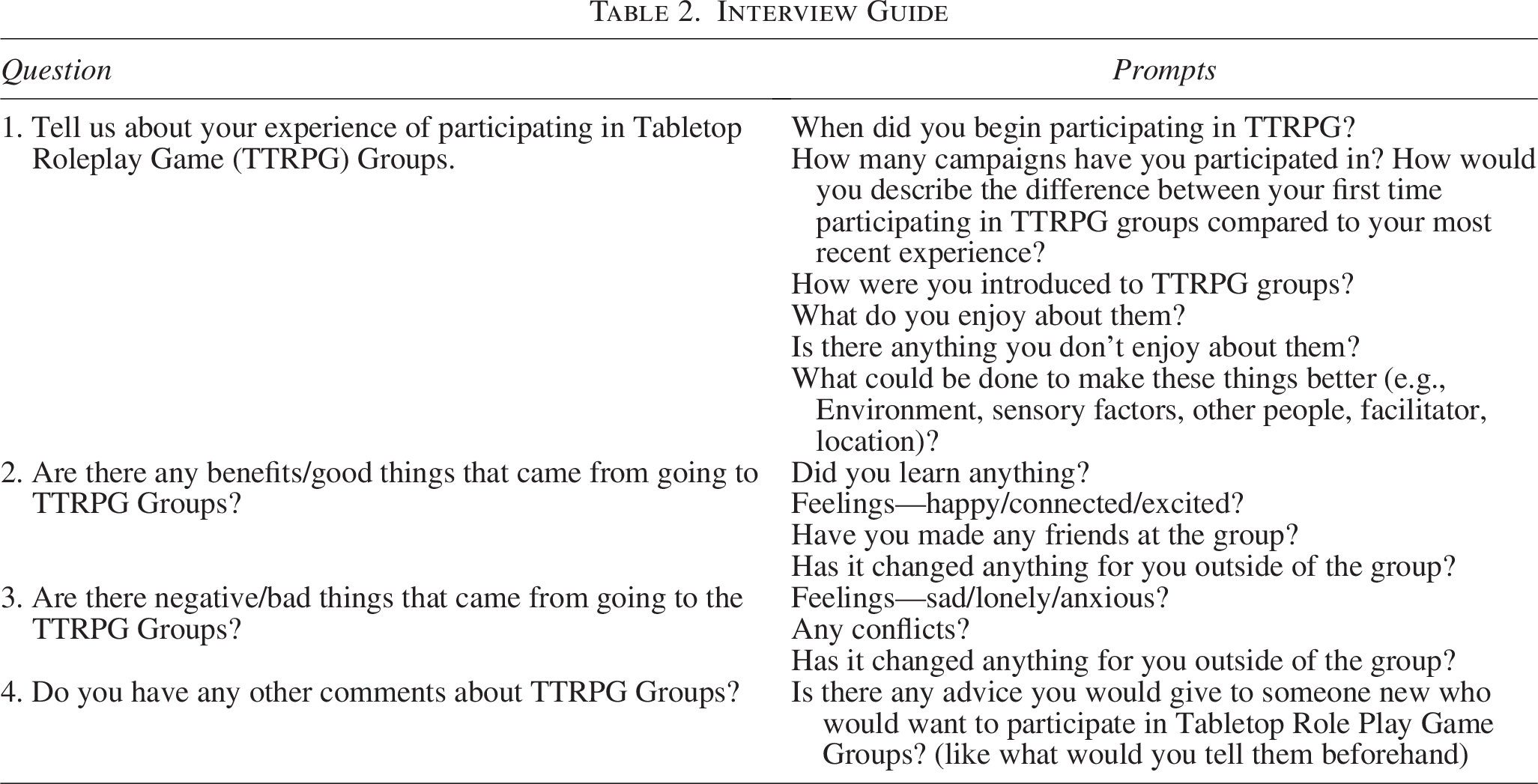
We used neurodiversity-affirming practices throughout the interview process to ensure participants’ comfort and accessibility of the interview. 20 Our autistic research team member and our familiarity with the literature informed these practices. Participants determined the location and time of the interview to ensure they felt as comfortable as possible. Interviewers encouraged participants to bring sensory aids or have a support person with them, as needed. One week before the interview, the interviewers emailed participants the questions, allowing time to consider and prepare their answers. Interviewers supported multiple means of communication, including speaking, typing, writing, or using responses such as nodding or pointing out answers. Interviewers used prompts as needed to support engagement with the questions.
We ensured trustworthiness of the data by using several strategies aimed at addressing the four pillars of trustworthiness—credibility, transferability, dependability, and confirmability. 50 We supported credibility through a reflective diary, which was kept by researchers and completed after every interview to note specific findings and decrease individual biases of the data collected. We provided thick descriptions of participants to enhance transferability. We increased dependability through the use of audit trails in NVivo and using both transcription software and manual reviews by researchers to avoid transcription errors. 51 We enhanced confirmability through peer debriefing within the research team throughout the research process. We invited participants to provide member checking of the themes once confirmed. We sent participants a survey that included a summary of each theme and space for feedback via open ended responses to the following questions: 1) How accurately do the findings capture your thoughts/experiences? 2) Is there anything that could be added to the findings to capture your experiences better? 3) If there is anything you would remove, what would that be and why?
Researcher positionality
We took an interpretivism epistemological stance, recognizing that all knowledge is strongly influenced by the values and interests of the observer. 52 L.B. is an autistic, white, cisgender speech pathologist. B.M. is a white, cisgender ADHDer occupational therapist and experienced TTRPG player. J.W is a Eurasian, cisgender occupational therapist. C.A., N.L., and R.N. are South-East Asian, cisgender occupational therapists. A.P., M.H. and C.W. are white, cisgender occupational therapists.
Ethical considerations
We obtained ethics approval from the Curtin Human Research Ethics Committee (HRE2024-0021). Participants over 18 years old provided written, informed consent from. Participants under 18 years provided written, informed assent, and their parents/caregivers provided written, informed consent.
Analysis
We analyzed interview transcripts using reflective thematic analysis (RTA) and Braun & Clarke’s six steps of thematic analysis. 53 We used RTA to act out the interpretivist epistemological stance, allowing understanding of experiences from the autistic TTRPGer perspective, and elevate personal knowledge and stories in this research.54,55 In the first stage, researchers C.A., J.W., and M.H. read the transcripts several times and noted initial observations. In the second stage, C.A., J.W., and M.H. developed initial codes, and then in the third stage the researchers C.A., J.W., M.H., C.W., and L.B. met for an extended brainstorm about the codes and how they could be grouped. In stage four, C.A., J.W., M.H., C.W., and L.B. refined codes into initial themes, with participant quotes re-reviewed against each code to ensure accuracy. In stage five, C.A., J.W., M.H., C.W., and L.B. further defined and named the themes by reviewing quotes that fell under each code. In the sixth stage, producing the report, C.A., J.W., M.H., C.W., B.M., N.L., A.P., R.N., and L.B. wrote the themes into a final summary that included direct quotes from participants.
Results
Themes
We identified four themes related to how participants described their experiences with TTRPGs: (1) Safe space that encouraged happiness, self-expression, and escapism; (2) Learning to manage group dynamics and resolve conflict; (3) Connection and belonging through friendships; and (4) Personal growth and learning. Each theme is discussed in detail below, with some differences highlighted within each theme.
Nine participants shared feedback on the themes by completing the online member-checking survey. All participants reported finding the themes accurately described their experiences of TTRPGs. Some participants provided suggestions for improving the findings, which have been integrated into the themes.
Theme one: Safe space that encouraged happiness, self-expression, and escapism
Multiple participants described TTRPG groups as spaces that promoted happiness, self-expression, and escapism. Three subthemes included: Safe Environments, Unmasking and Exploring Self-Identity, and Escapism and Creativity.
Safe environments
Participants described TTRPGs as “safe spaces” or “safe environments” where participants could relax and “just enjoy” themselves without pressure to conform to neurotypical social expectations. Many used words like “fun” and “happy” to express the emotional impact of the groups. The sense of safety came from the feeling that people won’t be judged for acting differently. As one participant put it: “everyone sort of knows that everyone’s being a bit weird and it’s sort of like, I guess, you know, no one’s going like, you know, people aren’t going and making fun of you for it.” It seemed that the feeling of safety and personal expression came from when people were willing to put themselves out there, and others followed suit: “So if one person’s willing to express themselves, other people are, and so you know, then everyone seems everyone sort of becomes more.”
Unmasking and exploring self-identity
Participants described how this safe space allowed them the freedom to unmask. The TTRPG setting encouraged authenticity, with participants describing how there was “no reason to sort of hide who you are.” Many participants described the ability to create characters as the element that allowed them to experiment with unmasking. The element of exploring through characters also meant that people could take their time to explore before acting out their authenticities in the real world.
Being able to experience things out of my comfort zone in a safe environment and being able to experiment with growing as a person, I think it’s like, because I don’t need to mask? Well, I am masking because I’m playing a different character. But I am me. I found that often, I’m not actually masking at all. When I’m playing the character, I’m being myself. But I feel safe doing that, because I don’t know. It’s kind of hard to explain. But generally, my characters are a lot more akin to myself than what I might display at school, or at the shops.
TTRPG groups helped participants to feel emotionally safe to explore their creativity, fostering both self-expression and a sense of freedom from real-life pressures: “It was being able to express myself in and you know, do whatever you want in sort of a space where it doesn’t matter if you screw up. In fact, sometimes it’s funnier.” One participant described how gameplay allows people to “live vicariously through their character.” TTRPG allowed players to explore aspects of their identity and enabled them to “experiment with growing as a person.” Participants explored acting in ways they wouldn’t in the real world: “I can be chaotic and just have fun. And I can make a socially awkward joke, and that’s okay” and “I get a lot more boisterous. I get a lot more into it. I react more excitedly and more impulsively. I have a lot more fun.”
Participants highlighted TTRPG groups as spaces for exploring more complex aspects of identity. For example, one participant shared about their TTRPG group: “It’s the only place I came out as bi” and another observed that playing the game allowed a fellow player to explore “his more feminine qualities.” The safe environments provided by TTRPG groups were described as crucial for participants’ emotional well-being and exploration of identity: “Everyone can just be themselves unrestrained, usually.”
Escapism and creativity
Many participants mentioned how the imaginative and creative nature of TTRPGs fostered engagement and interest, which supported the feeling of safety and enjoyment: “The ability to let my imagination run wild is pretty great.” They described how being creative was something that they had in common with their fellow TTRPG players. TTRPGs are unique in that they are not limited by rules: “You have a source of creativity that in TTRPGS like is just simply unmatched because the only game engine is another person. It’s not limited to the rules preset to you. If I want to experiment, the only thing that stops me from experimenting is myself and whatever the GM says can and can’t be done.”
Participants also discussed how the game helped develop their creativity skills: “it’s kind of let me build up more creativity skills. So, I’ve never, I’ll never be someone who say I’ve been overly creative. And then I was kind of in this very comfortable setting to be more creative and more.” Participants also described TTRPG groups as a form of escapism allowing them to step away from the challenges of daily life. One participant described the space as a “separation of reality,” while others found the groups to be an outlet to “wind down or relax” or feel “less burdened.” Participants described that for this to be effective, they really had to exist in the created world and immerse themselves in the gameplay.
Theme two: Learning to manage group dynamics and resolve conflict
Participants described conflict as an inherent part of TTRPG groups, and that this created learning experiences in managing group dynamics and resolving issues. Managing Conflict and Navigating Exclusion emerged as subthemes.
Managing conflict
Participants experienced stress when conflicts arose which was common in TTRPGS. Participants described the disruption they experienced when conflicts occurred, a sense of unpleasant reality drawing them out of the game to deal with the problem. This caused frustration as they identified TTRPGs as spaces where they didn’t want to deal with problems. Participants described that conflicts most often arose because of “self-centered” or disruptive “problem players.” For example, one participant described a fellow player who “basically hijacked the game.” To mitigate disagreements, participants developed conflict resolution skills. Some learnt strategies to address problems, such as suggesting everyone “take a break” if a conflict arose. Some learnt to manage issues through firm boundaries if conflicts remain unresolved, removing themselves from the situation: “I left that group.” In some cases, the Game Master’s direct and clear communication helped group members understand the value of addressing conflicts. These skills transferred into their daily life, “In arguments with my partner… Let’s take a step back. Let’s breathe.”
Setting expectations early before gameplay also helped prevent conflicts. Helpful strategies included having “preventative measures” in place, “setting expectations,” and having an open table policy (a TTRPG community developed safety tool) to help maintain group cohesion and inclusivity:
It’s like, if you need to get up, you need to go. You can go cook something in the middle of the game if you need a fidget with something like you can if you need to stand up and like, run around the table, you can.
Navigating exclusion
Some participants also experienced exclusion within their groups. A participant recalled how their character had been “excluded from a lot of things” and in an extreme case, another participant recalled being told “out of the blue,” “We don’t want you in this group anymore” causing them to contemplate “suicide after that [experience]” highlighting how these experiences of exclusion could exacerbate feelings of loneliness within the group. However, from this negative experience, this participant reported developing a strategy of communicating with group members at the start of the game: “If I am doing something you don’t like, tell me immediately so I know,” indicating development of communication and advocacy skills. These skills supported their engagement in future TTRPG groups. One participant who was a GM for some of their groups said that most conflicts could be navigated without having to exclude people: “usually, it doesn’t mean that they get kicked out. But it’s, it’s ends up sort of being in a situation of like, we have to put in measures preventative measures in place, we got to do all this sort of stuff to like, accommodate everyone.”
Overall, while conflicts within TTRPG groups could cause stress, they also presented participants with opportunities for personal development in learning skills to manage group dynamics and resolve interpersonal issues that they then used in other areas of their lives.
Theme three: Connection and belonging through friendships
Participants felt connected and that they belonged to a community because of the social environment provided by the TTRPG group. Belonging and Friendships emerged as two subthemes from this theme.
Belonging
Participants described TTRPGs as inclusive environments that provided a place where they felt they belonged: “it’s a nice place to fit in, not like, they also think the same way, it’s a nice diverse group to hang out with.” Participants described that they enjoyed being with people who had the same interests and ways of thinking: “I guess I do enjoy hanging out with people who are a bit more like minded, especially when I’m, you know, more of an adult. Now you find that people who share your hobbies are few and far apart sometimes.” These connections eased feelings of isolation, with participants describing feeling “less alone in my age” and appreciating being part of “a group that… see[s] who you are.” Participants appreciated the diversity within TTRPG groups. They enjoyed interacting with individuals from varied backgrounds including LGBTQ+ and neurodivergent communities. These experiences contributed to a broader sense of belonging and awareness outside of TRPGs: “lots of different attitudes and personalities in a room and having [to] make them all work together is… something that has helped outside of D&D.” Some participants did not have this experience, with one participant sharing that their group did not have diversity in gender and sexuality.
Friendships
A common experience was the development of new and lasting friendships. Participants described how through TRPGs they had “met some really good people that I still have as friends now,” and formed friendships that would “last a while.” For some, these groups were central to social life. One participant mentioned that their “entire social circle is from D&D [Dungeons and Dragons]” and another shared, “from that participation… I’ve been able to basically make a nice group of friends.” For some, TTRPGs was their primary way of connecting with others: “this group… is like the only way I really socialise.” Just one participant expressed uncertainty about forming friendships through TTRPGs, stating “It’s hard to say exactly if I’ve made friends.” So, whilst most participants indicated TTRPGs supported friendships and connections, not all participants shared this experience.
In addition to forming new friendships, TTRPG groups also consolidated existing relationships. Friendships had been strengthened or supported through gameplay: “For my existing friends… it’s been maintaining.” One participant mentioned that playing TTRPGs had been positive for their family relationship too: “if my family bond wasn’t as strong… it [D&D] would have made it better.” TTRPG groups fostered deep connections and a sense of belonging, offering opportunities to build both new and existing friendships. Overall, the sense of community and shared experiences promoted strong interpersonal bonds.
Theme four: Personal growth and learning
Many participants discussed personal growth, particularly in developing social and cognitive abilities through participation in TTRPG groups. The two subthemes under this theme included: Social and Emotional Skills, and Cognitive Skills.
Social and emotional skills
Participants noted increased social confidence after playing TTRPGs for a while. Many noted that, at first, they felt overwhelmed and shy and did not talk much, but with time their confidence in socializing improved: “It’s brought me out of my shell.” Participants described typical socializing as difficult, while they found socializing felt easier whilst playing TTRPGs: “I don’t normally talk to other people and like going I was talking to people I’ve never met before. And like making jokes and everyone’s getting along it’s quite fun.” Participants felt they learnt new skills: “my social skills, and my ability to converse with new people, and my ability to tolerate more social aspects in life were significantly improved by doing an active part in TTRPGs.” TTRPGs helped some participants feel less socially anxious. Participants said TTRPGs helped them to feel more confident in other social situations, feeling “it’s definitely improved my confidence in actual real-life encounters. Social interactions, encounters.” Some participants stated they helped provide them with “conversation starters” and “points of discussion.” Participants described TTRPGs as a way to learn how to socialize without explicitly being taught and in a more enjoyable way:
“To learn like how do I do it with these people, with this person? Or um even as the character? How do I behave as the character to this other character? So you actually not only just roleplay and escape, you actually can learn how to behave as well. It’s um, it’s a very good way of like being taught without being taught in a way… making it more fun.”
TTRPGs provided an indirect way of facilitating greater emotional awareness: “it’s helped me a lot with understanding my own emotions [and] understanding other people’s emotions.” Participants described TTRPG groups as a supportive environment that allowed them to practice collaboration during gameplay and supported their abilities to work in a team. One participant reported “it’s improved my team skills.”
Cognitive skills
TTRPG groups also fostered cognitive skill development, in particular executive functions such as cognitive flexibility and problem-solving abilities. Many participants stated that TTRPGs had helped them develop more flexible thinking, supporting them to be able to manage when things change unexpectedly. The structure of TTRPGs encouraged flexible thinking, as one participant described: “rules, as written, isn’t the way the game is always played,” which “can challenge your ways of thinking.” Another discussed the need to “come up with solutions on the spot and think outside the rules.” One participant described that whilst they still always preferred routine, they felt since starting TTRPGs it’s felt easier reacting to unexpected circumstances. One participant said “if you’re trying to get someone to understand rigid or flexible thinking and trying to make their thinking more flexible, DND might be a good way to do that.”
The groups promoted critical thinking and perspective taking and helped some participants develop commitment and planning skills. Participants spoke about how the balance between some structure but also often not having the scaffolding has challenged them to learn how to problem solve and make decisions. Through interacting with a wider range of people, TTRPGs supported some participants to think about other people’s perspectives:
“It’s broadened my perspective. And it’s certainly helps with sort of, like aspects of like, you know, be more tolerant, such as other groups and other people’s and ideas and perspectives as well. Like, before D&D, I only really met guys like me that like football and such, I didn’t really know other perspectives of my own. Now, I’ve met a lot of people with different sort of perspectives, ideas, beliefs.”
Overall, TTRPG groups contributed to participants’ personal growth by enhancing social and cognitive skill development. Consequently, participants grew in terms of social confidence and gained a deeper understanding of themselves and others.
Discussion
We investigated autistic adolescent and young adult’s experiences of their existing socially-led mixed-neurotype TTRPG groups to understand their impact on social connectedness and loneliness from participants perspectives. Our main findings show that socially-led community run TTRPGs had an overall positive impact on the social well-being and self-concept of autistic players. Participants found TTRPGs to be a safe space where they could unmask, engage in authentic self-expression, experience genuine friendship, social connection, a sense of belonging amongst a diverse group of people and expand their social confidence. Participants also developed social and emotional skills and cognitive flexibility through routine engagement in TTRPGs that proved valuable outside of the TTRPG setting. Conflict can arise between players in TTRPGs and these moments provided participants with opportunities to develop conflict resolution skills independently and in partnership with the GM that transferred to other areas of their lives. Participants experienced an increase in social connectedness and the experience of being known and accepted as their authentic selves through their engagement in socially led community run mixed-neurotype TTRPGs.
TTRPGs provided a safe space that encouraged happiness and self-expression. This is consistent with a previous study that found an online researcher-run TTRPG helped autistic adults to have more positive social interactions. 30 Our study also described TTRPGs as safe spaces, social spaces in which autistic individuals can be their authentic self without masking or camouflaging and feel accepted. 30 We found that getting together with a group of people with shared interests and participating in an activity that had structure but also the opportunity for exploration allowed autistic people to unmask and freely express themselves, resulting in genuine connection and belonging. It is important for autistic adolescents to unmask for their well-being, but there are limited opportunities to do this when they are encouraged to internalize their autistic behaviors and traits or risk being socially disconnected and isolated.4,5 The character-based nature of TTRPGs was an important element supporting personal exploration and growth, a finding echoed in previous research.30,40 TTRPGs provide the freedom for self-discovery and expression when utilizing characters to experiment with various identities.38,43,56 These results emphasize the importance of providing safe spaces for autistic young people to explore their identities and encourage authentic self-expression.
Cognitive flexibility can help people to adjust their thinking and adapt to unexpected changes, especially when working with others. 57 Our participants articulated that participating in TTRPG groups supported them to develop more flexible thinking, the benefits of which extended beyond the group. Participants felt that the nature of TTRPG groups, being rule-based but also involving unexpected changes, is what allowed for their increased cognitive flexibility to develop. This balance of consistency and challenge allowed them to develop new communication and problem-solving skills and work as a team. These findings align with previous research, in which autistic participants’ benefitted from the collaborative nature of TTRPGs to develop their flexible thinking and problem-solving within the group and context of the story. 30
Participants described learning indirectly in a fun, safe environment, and that they formed genuine long-lasting friendships. Whilst other studies have identified the social benefits of researcher-run TTRPGs for autistic young people,29,30 our study is unique in that participants engaged in socially led TTRPGs. In addition, these groups did not have an overt aim of enhancing social skills, as in previous research.29,30 Yet participants still described that TTRPGs helped them to develop their social confidence, which enhanced their feelings of belonging and sense of community both within the group and outside of gameplay. Therefore, we identified that socially-led community TTRPGs could support social and cognitive skills and may offer an alternative to interventions that provide explicit instruction for social behavior, often in an isolated clinical setting.58,59
Participants in our study described that conflict in TTRPGs allowed them to learn new interpersonal skills in a safe space. Previous studies have utilized targeted interventions video modelling, worksheets, and instructional videos to teach social conflict resolution with in promising outcomes.60–62 We found that an alternative method to support conflict resolution may be through involvement in interest-based groups, as participants described learning these skills through being motivated by the connections and friendships they had in the groups. Participants described how these sometimes initially negative experiences exacerbated their disconnection but on reflection identified that they had learnt how to set expectations and establish personal boundaries. Participants then used these skills often outside of TTRPGs in other relationships. Participants also described tools such as an open table policy, one of several safety tools developed for GMs and freely available to the TTRPG community, focused on maintaining group cohesion and individual player safety. For a repository and descriptions of available safety tools for TTRPGs see Shaw and Bryan-Monk’s TTRPG Safety Toolkit. 63
Studies looking at TTRPGs in general populations have described how they can support perspective taking and conflict resolution skills.40,43 In a study with autistic young people, conflict was described by participants as being less daunting in a game environment than the real world, allowing participants to experience and explore this. 30 However the authors did not link conflict to learning conflict resolution skills. Participants in our study engaged in TTRPG groups not exclusively for autistic people and likely had players of various neurotypes and cultural identities. This contrasts with other studies, which consisted of autistic participants only.29,30 This is a potential reason why conflict and its associated benefits emerged as a theme in our study. For example, some of the conflict challenges described in the study fit the description of the “double empathy problem.” 13 Two participants described being excluded seemingly without any prior warning. As a result, one participant learnt to communicate pre-emptively to other game participants and give permission for them to notify them of any problems. This can serve to reduce the awkwardness of raising an issue and produce a simple or speedy resolution. Much like the finding that diagnostic disclosure can improve rapport between autistic and non-autistic individuals, the acknowledgement of difference smoothed the social interactions. 64 In this particular case, the autistic individual carried the burden of resolution; however, ideally it would be something all players or communications partners engage in. Further exploration of different neurotypes in TTRPG groups is warranted to explore the potential benefits and challenges of these groups in comparison with autistic-only groups.
Participants articulated that TTRPG groups provided an environment free from neurotypical and societal pressure to conform, resulting in autistic players authentically expressing themselves and feeling accepted. This aligns with neurodiversity-affirming practice, in which the aim is to create environments to enhance the social strengths of autistic individuals. 65 One of the key elements was the ability to create characters in TTRPGs, which enhanced creativity and allowed unmasking. Previous research has also found that when players select characters who are similar or entirely different to themselves, there are numerous benefits including facilitating experimentation with various communication styles and identities, supporting perspective taking, and building empathy for self, peers, and distanced empathy for characters. 30
Strengths and limitations
Our study centered the voices of autistic young people, providing them the opportunity to share their personal experiences of socially-led community TTRPGs. We co-produced our study with an autistic community member, who provided invaluable input in all aspects of the research study to ensure the study focused on autistic people’s unique perspectives and strengths rather than deficits. A recent study indicated that autistic community members are currently more often involved in the study materials design and modification, or in analysis; 66 however, ideally research should include an autistic representation throughout the entire research process. 67 Therefore, a strength of this project is the involvement of an autistic community member in all aspects of the study. Ideally this project would have engaged with a steering committee to ensure a wider range of autistic perspectives in guiding the research. Engaging with the autistic community would be important in guiding the next steps for research in this area. Peer debriefing and all researchers reviewing the transcripts before interpreting the results enhanced credibility of the findings, helping to reduce any personal biases. 50 This collaborative process encouraged critical reflection and supported researchers in identifying potential biases, ensuring the conclusions accurately reflected participants’ experiences.50,68
Limitations of our study should be considered. We used convenience sampling and this may have resulted in self-selection bias. 69 All participants resided in Australia, with the majority from Western Australia, limiting cultural and geographical transferability. 70 We aimed to recruit participants between the ages of 14 and 30 years, to gather experiences from people in the adolescent and emerging adulthood stage of life. It would have been preferrable to have recruited participants from 10 years and upwards to align with the World Health Organization definition of adolescence. 71 In addition, focusing on adolescence and emerging adulthood limits transferability to those outside this age range. It would be helpful to explore the perspectives of adults above the age of 30 years. Most participants in our study identified as male, with two participants identifying as non-binary/diverse gender and only one female participant. Without sufficient female representation, the study may not have identified gender differences in masking and social interaction during TTRPG play, as autistic females are more likely to camouflage their traits compared with autistic males. 72 Ten of the participants had a formal diagnosis; three participants did not disclose the type of diagnosis (formal vs. self-diagnosed). Future studies should ensure the diagnosis type is specified and to aim to include autistic people who are self-diagnosed. Another limitation of our study is that the participants level of support needs is not known. We acknowledge the difficulty in describing support needs for autistic people accurately and without oversimplifying them, and the need for more research in this area. Participants were asked to describe their level of TTRPG experience by selecting one of the following categories: beginner, intermediate, or experienced. Ideally these categories would not have been open to interpretation, and we would have just asked how many campaigns they had completed and approximately how many TTRPG individual play sessions per month per year in case of long running campaigns for a more objective description of the participants TTRPG experience. Most participants indicated in the interviews that the TTRPG groups they participated in had a mix of neurotypes; however, participants were not asked explicit questions about this. This information would have been helpful to explore the possible impact of different neurotypes interacting within community settings.
Implications for future research and autistic communities
Future research should quantify whether socially-led community-run TTRPG groups enhance social connectedness and decrease loneliness for autistic young adults. This research should aim to include a more diverse sample, broadening the sample to include various ethnicities, genders, age groups, and geographical locations, and seek to undertake qualitative research with specific minority identity cultural groups.
For the autistic community and for clinicians who work with autistic young people, it is interesting to consider how participation in interest and group-based activities may provide social connection whilst strengthening authenticity and identity. Therapists may not need to be directly involved in these groups but could play a role in supporting young people to find groups that work well for them and perhaps debriefing if any issues arise. This aligns with previous research that suggested that direct adult-led support in social situations may actually undermine efforts to socialize for autistic children. 45 The benefit of TTRPGs is that they allow the exploration of identity through roleplay; hence, it would be helpful to explore whether this ability to unmask in a safe space is also experienced in other interest- and group-based activities.
Conclusion
This research explored autistic young people’s experiences of socially-led TTRPG groups, identifying that they enhanced social connectedness and belonging among autistic individuals. Participants described TTRPGs as a safe space, which supported authentic self-expression, enhanced social confidence, provided a sense of belonging, and instigated personal growth. When conflict arose, this occasionally caused discomfort but facilitated the development of conflict-resolution skills that could be applied outside the groups. Future research on TTRPGs should include specific minority identify groups, as well as exploring how other interest-based groups may support social connectedness.
Footnotes
Acknowledgments
The authors would like to acknowledge the participants for sharing their valuable views and experiences.
Author Disclosure Statement
The authors disclose that they have no actual or perceived conflicts of interest. The authors have not used artificial intelligence in the ideation, design, or write-up of this research as per Crawford et al. (2023).
Funding Information
The authors disclose that they have not received any funding for this article beyond resourcing for academic time at their respective university.
Authorship Confirmation Statement
M.H., L.B., and C.W.: Supervision, conceptualization, methodology, formal analysis, writing—review and editing, project administration. B.M.: Supervision, conceptualization, methodology, writing—review and editing, project administration. C.A., N.L., R.N., A.P., and J.W.: Project administration, conceptualization, investigation, data curation, formal analysis, writing—original draft.