




Abstract
Background:
Sexual and gender diversity is greater in Autistic populations than in non-autistic populations, yet little research has been conducted to understand what resources related to sexual and gender identity may promote well-being and flourishing among lesbian, gay, bisexual, transgender, queer, intersex, and asexual (LGBTQIA+) Autistic people. We characterized sample sexual and gender diversity and tested associations of LGBTQIA+ personal and social identity dimensions with well-being outcomes using a strengths-based approach.
Methods:
Using a subsample of Autistic participants (n = 98; ages 16–54) of the Queer Joy Project conducted in Aotearoa New Zealand and the United States (2023–2024), linear regression tested associations between LGBTQIA+ identity dimensions (centrality, cognitive clarity, affective pride, behavioral engagement, and interpersonal closeness) and holistic well-being, flourishing, and life satisfaction.
Results:
The sample was 72% transgender, 40% nonbinary, 33% asexual spectrum, and 26% Black, Indigenous, and other People of Color. LGBTQIA+ personal and social identity dimensions significantly predicted well-being (β = 0.30), flourishing (βs = 0.25–0.40), and life satisfaction (βs = 0.30–39). Behavioral engagement with LGBTQIA+ people, community, and culture, a social identity dimension, was the strongest and most consistent predictor of well-being outcomes. Well-being outcomes were lower among participants who were asexual or experiencing economic insecurity.
Conclusion:
Facilitating personal sexual and gender identity development and integration and connection with LGBTQIA+ others may be important processes for promoting and supporting well-being and flourishing for LGBTQIA+ Autistic people. Services and programming for Autistic adolescents and adults should be attuned to the unique needs of LGBTQIA+ Autistic adolescents and adults and the opportunities for promoting well-being through facilitation of LGBTQIA+ identity development and social connections.
Community Brief
Why is this an important issue?
Other research has shown that there are a lot of Autistic people who are also LGBTQIA+. Understanding what happens in the lives of people with both of these identities can help improve our ability to best support these people in nurturing joy in their lives.
What was the purpose of this study?
This study aimed to understand the demographic information of who LGBTQIA+ adolescents and adults are and to examine how that relates to positive wellness outcomes for them. This study used an international sample from the United States and Aotearoa New Zealand.
What did the researchers do?
We performed a secondary analysis of data produced from an online survey to look specifically at the responses from LGBTQIA+ Autistic people (n = 98). The purpose of the original survey was to examine the positive experiences of LGBTQIA+ individuals and included both survey questions and brief free-writing and open-ended responses.
What were the results and conclusions of the study?
The results of this study show a link between LGBTQIA+ identity-related experiences (e.g., identity pride, closeness to other LGBTQIA+ people) and positive outcomes for Autistic people, including well-being, flourishing, and life satisfaction. Results also showed evidence that economic stability and asexual identity are connected to positive outcomes.
What is new or controversial about these findings?
This study shows that LGBTQIA+ identity creates positive experiences for Autistic people, when many other studies focus on the negative experiences related to being LGBTQIA+ and Autistic.
What are potential weaknesses in the study?
This study’s sample may not be representative of the community of Autistic LGBTQIA+ people as a whole. In addition, questions on the survey focused on LGBTQIA+ identity, and did not ask in particular about experiences with Autism, which could mean that some parts of how Autistic LGBTQIA+ people experience both parts of their identities could be left out.
How will these findings help Autistic adults now or in the future?
Understanding what helps to bring joy to these Autistic LGBTQIA+ people can help with understanding how we can help other Autistic LGBTQIA+ people to find joy. By understanding both the things that are related to greater joy and the areas where there are additional challenges, we can point to key areas to help support people in nurturing joy in their lives and identities.
Background
Diversity in gender and sexual identities is greater among Autistic adolescents and adults relative to the non-autistic general population.1–5 This greater diversity includes higher prevalence of transgender and nonbinary identities as well as lesbian, gay, bisexual, asexual, and other queer sexual identities among Autistic populations. 6 Both scholarly and advocacy groups have sought to understand this apparent co-occurrence through a human diversity perspective, in contrast to a pathologizing comorbidity approach.1,7 This human diversity lens allows an affirming approach for understanding the co-occurrence of Autism and sexual and gender diversity and the possibility that unique strengths and resources could exist at this intersection and provide lesbian, gay, bisexual, transgender, queer, intersex, asexual and other sexual and gender-minoritized (LGBTQIA+) Autistic individuals with unique personal and social resources for positive psychological development.
Self-categorization theory explicates how people balance their personal and social identities to categorize themselves into groups.8,9 For LGBTQIA+ Autistic individuals, identity self-categorization necessitates navigating their personal understanding of their intersecting sexual, gender, and Autistic identities while integrating this sense of self with a broader understanding of what it means to belong to an LGBTQIA+ Autistic community within cisheteronormative, neurotypical societies. Through processes of social comparison, LGBTQIA+ Autistic individuals can identify distinct positive aspects of the group(s) to which they belong. 10 By identifying and aligning themselves with these positive traits, LGBTQIA+ Autistic adolescents and adults can decrease their need for additional social comparison and foster positive psychological benefits such as greater self-esteem or self-worth, especially in relation to group membership. 11 Generally, for individuals in minoritized outgroups, more certainty in one’s understanding of their personal and social identities is associated with even greater positive psychosocial outcomes. 12 This is especially true when individuals find or create deeper meaning and connection to social identities, despite the prevailing stigma and marginalization, thereby increasing the salience of these identities and the potential for positive outcomes related to these identities.10,13 Due to the high prevalence of LGBTQIA+ identities in Autistic samples across the lifespan,1,4,14,15 research on personal and social identity LGBTQIA+ dimensions among Autistic populations has the potential to uncover identity-related mechanisms for improving psychosocial outcomes among Autistic populations.
Trans and queer lenses of identity development conceptualize gender and sexuality as interwoven identity dimensions that together shape lived experiences and social status. 16 Both gender and sexuality reflect personal and social aspects of identity that allow individuals to integrate their personal sense of self within broader groups to which they belong. 17 Gender identity refers to a person’s individual understanding of their own gender, including expectations around their bodies, emotions, expression, and other socially defined factors18,19 and the social construction of gender into hierarchies that privilege gender-conformity and adherence to binary norms of masculinity and femininity. 20 For LGBTQIA+ individuals in particular, developing a positive sense of gender or sexuality includes not just understanding of self but of discovering positive dimensions of self and group in societies that stigmatize their minoritized identities and bodies as well.
Autistic gender diversity
Perspectives and experiences of gender among Autistic populations differ from gendered norms in dominant groups. Neurotypical and cisgender dominant groups often seek to enforce social norms and maintain systems that exclude other neurodivergent and transgender individuals; pressures that are compounded for individuals who are both Autistic and transgender. Studies of Autism and gender identity highlight the seemingly conflicting evidence that transgender, nonbinary, and other gender-expansive Autistic adults may engage in more masking behaviors but also experience greater authenticity in their identities, relative to cisgender Autistic adults.21,22 One explanation for increased masking is the additive components of Autistic camouflaging (i.e., behaviors and strategies concealing the presentation of Autistic features 23 ) and transgender, nonbinary, and other gender-expansive individuals’ compensation-oriented masking (i.e., masking through practicing social behaviors to meet normative standards), which trans Autistic individuals engage in more than cisgender individuals. 22 For individuals who are both Autistic and transgender, masking an Autistic identity may be further complicated by conceptions of gender passing. Indeed, the social norms around the conception of gender complicate the idea of being able to “pass” as a certain gender, especially when Autistic people may not recognize or choose not to adhere to certain gendered norms. For transgender Autistic adults, this may become especially complex as they navigate not just the gendered norms that cisgender people face but also their own desires (or lack of desires) to integrate themselves into a different conception of gender than the one assigned to them. 24
Despite greater levels of masking and camouflaging, Autistic transgender and nonbinary adolescents and adults may draw on their Autistic identity or status to find identity authenticity and reduce suppression of their gender identity. 21 From a self-categorization perspective, this reflects the potential duality of finding positive distinct traits of minoritized identities while also continuing to exist in larger social contexts that enforce conformity (i.e., masking and camouflaging). Indeed, experiences of discrimination for transgender Autistic individuals can contribute to internalized fear about their capacity to understand gender identity. 21 Together with pressure to mask, experiences of discrimination can make it difficult for transgender and nonbinary Autistic individuals to feel a sense of belonging. This process of social othering can leave them instead with an outsider status due to their minoritized gender identity. 25 Identifying and cultivating positive traits related to transgender and nonbinary identity thereby serve the important psychological purpose of solidifying a sense of self, facilitating social identity within a broader group, and cultivating positive psychological outcomes. Although broader social identity theory suggests a connection between identity strength and psychological benefits, research has yet to explore how positive dimensions of both personal and social gender identity may contribute to well-being among transgender and nonbinary Autistic adolescents and adults.
Autistic minoritized sexual identities
Minoritized sexual identities, including gay, bisexual, pansexual, and asexual, among others, are more common among Autistic people compared with neurotypical people.6,15 Individuals with a minoritized sexual identity (i.e., any sexual identity other than straight/heterosexual) may experience stress, othering, and mistreatment as a result of dominant groups and systems seeking to enforce heterosexual norms.26,27 The negative psychosocial experiences targeting sexual identity may overlap with prejudicial treatment of Autistic individuals. This can manifest in dual experiences of shame that surround both Autistic identity and sexual identity 28 or increased likelihood of having negative sexual experiences. 2 Notably, although higher co-occurrence of minoritized sexual identities is documented in Autistic samples, 3 a majority of research exploring this intersection focuses on minority stress and disparities, 29 leaving unexplored any possible strengths or benefits of identifying as both sexual minority and Autistic. It remains important to research and to understand experiences of othering, shame, and marginalization in lived experiences and environments of sexual minority Autistic individuals; however, an overfocus on harms and hardships can render invisible their resistance to dominant norms and development of a robust sense of their sexual, gender, and Autistic identities.30,31
Furthermore, identifying on asexual and aromantic spectra (e.g., demiromantic, gray ace) is also more common in Autistic than non-autistic populations. 5 Highlighting the unique intersection of Autism and asexuality, some asexual Autistic adults ascribe their asexuality to a lack of skill or interest in relationships rather than to the absence of sexual desire. 32 Others speculate that there may be an overlap in asexuality and Autism, in which both share conceptions of romantic and sexual attractions and nonpartnered sexuality. 33 However, among asexual Autistic individuals, some express interest in romantic connections and relationships. 34 One theoretical approach suggests that Autistic people may be more likely to refuse norms of compulsory heterosexuality and adopt an asexual identity label not because they are more likely to be asexual but because their identities and lived experiences persist outside of social norms, thereby reflecting autonomous self-reflection and transcendence beyond heteronormativity. 35 Indeed, contemporary researchers have cautioned against attributing a higher prevalence of asexuality to Autism directly,6,32 thereby calling for research that examines the lived experiences of asexual Autistic individuals rather than searching for explanations of the correlation. Although asexuality is not the only minoritized sexual identity overrepresented in Autistic communities, individuals on the asexual spectrum are often further invisibilized within LGBTQIA+ communities 36 and may experience additional barriers to psychological well-being 37 associated with personal and social identity.
Integrating queer theory with indigenous critical perspectives
By naming and challenging societal and cultural assumptions rooted in cisheteronormativity, neurotypicality, and settler colonialism, we are able to uncover not only the ways that societal structures position some groups on the outside but also the ways that members of these groups find meaning in their sense of self and belonging to minoritized groups. A critical Indigenous approach to queer theory centers Indigenous sources of knowledge and ways-of-knowing, disrupts and interrupts colonial control over knowledge production, and shares understandings of Indigenous traditions of gender and sexuality. 38 For example, precolonial Māori, the Indigenous people of Aotearoa New Zealand, had accepting views of sexual diversity and embraced differences in sexuality as evidenced in oral histories, art, carvings, and archives; yet religious expansion fueled by colonialism sought to impose narrow expressions of sexuality. 39 These tensions continue to be navigated today. Beyond including Indigenous people in studies of sexuality, using modern Indigenous methods is another act of queering and challenging the power of colonial ways-of-knowing as normal in colonizer-dominated academic spaces. Notably, Indigenous people have heterogeneous conceptualizations of Autism rooted outside of colonial knowledge systems. Māori use the term Takiwātanga—“in one’s own time and space”—to refer to Autism, 40 reflecting repudiation of Western medicalization of Autism and focusing on strengths and nurturing uniqueness. Similarly, some North American Indigenous nations also view Autism with reverence, celebration, and positivity. The Plains Cree, for example, use the term ê-mihkosit pihtos ê-si-waskawiht—“given the gift of moving and being different”—to recognize the diversity, uniqueness, and acceptance of Autistic people. 41 These perspectives encourage us to recognize diversity and strengths in minoritized groups, and provide an Indigenous lens that calls for understanding the ways that identities and lived experiences are intertwined holistically with well-being.
For LGBTQIA+ Autistic individuals, their membership in multiple minoritized groups is often characterized in research by interpersonal violence,42,43 exclusion and isolation, 44 lack of affirming services and spaces,44,45 and other identity-related stressors. This emphasis on deficits and harms reflects a prevailing perspective that experiences of minority groups are inherently characterized by suffering and hardship and obscures reality that a strong sense of self, including salience of minoritized identities, can confer psychosocial benefits to individuals. Cross-cultural perspectives allow resistance to homogenous narratives that may, at times inadvertently, ascribe a single dominant narrative to lived experiences, including those of LGBTQIA+ Autistic people. A cross-cultural, indigeneity-informed approach to queerness and Autism invites us to expect diversity in experiences and potential for positive outcomes among LGBTQIA+ Autistic people. Deficits-focused and pathologizing descriptions of Autism, gender identity, sexual orientation, and Indigenous ways of living are common in academic literature and history.15,46–48 Moreover, in Autism research specifically, scholars have called for approaches that recognize and celebrate neurodiversity, and resist deficits-framing and medicalization of Autism.40,41 Together with Westernized notions of social identity and self-categorization, we incorporated cross-cultural Indigenous knowledge to more holistically examine possible positive expectations and diverse explanations for LGBTQIA+ Autistic positive psychological development.
Connecting well-being to personal and social dimensions of LGBTQIA+ identity
Research focused on well-being can uncover mechanisms for promoting transformative health experiences by enhancing positive psychological outcomes49,50 in tandem with ongoing efforts to eliminate health inequities and injustices impacting LGBTQIA+ Autistic people. 51 By applying queer and Indigenous critical lenses to self-categorization theory, researchers can learn more about personal and social identity dimensions that support LGBTQIA+ Autistic individuals to thrive. Uncovering positive psychological benefits drawn from a stronger social identity can be valuable when considering ways to nurture and amplify well-being for LGBTQIA+ Autistic people. Well-being refers to both a person’s positive functioning and perceptions of their life satisfaction, emotional experience, and sense of purpose and meaning in life.52,53 Theories of well-being acknowledge individual experiences of happiness and life satisfaction and consider the multidimensionality of flourishing, which holistically includes positive relationships, social engagement, and meaning making. 54
Given the evidence that LGBTQIA+ Autistic individuals may ascribe more salience to their sexual, gender, and Autistic identities than their non-LGBTQIA+ Autistic peers, 55 it is especially important to consider how a strong LGBTQIA+ personal and social identity may contribute to positive psychological outcomes. As suggested by self-categorization theory, research among general LGBTQIA+ samples provides evidence that a strong personal and social identity may contribute to well-being and flourishing. Examples of personal LGBTQIA+ identity dimensions include identity centrality and cognitive clarity. Identity centrality reflects the importance or prominence of an identity to sense of self for a given individual. 46 Studies show that identity centrality is connected to mental well-being and positive identity affirmation for LGBTQIA+ populations.56–59 Similarly, stronger LGBTQIA+ identity clarity—certainty around one’s sexual and/or gender identity60,61—has been linked to greater psychological well-being among sexual minority adults in Aotearoa New Zealand. 62 LGBTQIA+ social identity dimensions include feelings of pride about group membership, behavioral engagement with LGBTQIA+ others, and feelings of social closeness. Affective pride reflects the affirming positive regard one holds toward their LGBTQIA+ identity and their belonging to the larger LGBTQIA+ group. 59 Studies of bisexual cisgender and transgender adults provide evidence that identity affirmation, inclusive of identity pride, is associated with life satisfaction. 63 Moreover, engagement with other LGBTQIA+ people,64,65 LGBTQIA+ student organizations,66,67 and LGBTQIA+ community events68,69 is associated with better mental health outcomes for LGBTQIA+ individuals. Alongside evidence that general social support and Autistic identity authenticity benefit LGBTQIA+ Autistic individuals,21,70,71 the self-categorization theory would suggest that strengthening LGBTQIA+ personal and social identities could further promote well-being in this population. Evidence from small samples and exploratory studies provides initial evidence of personal and social strengths among LGBTQIA+ Autistic samples and points to the need for further investigation of these strengths.
Current study
Focusing on the intersection of LGBTQIA+ identities and Autism, and aiming to challenge deficit narratives often present in research in this population, we aimed to characterize demographic composition and examine links of LGBTQIA+ personal and social identity dimensions with well-being in an international sample of LGBTQIA+ Autistic adolescents and adults in the United States and Aotearoa New Zealand. Because demographic research on population characteristics of LGBTQIA+ Autistic people is nascent, we first described the gender, sexual identity, ethnicity and race, economic security, and other major demographic variables in this sample. Second, to examine potential psychological benefits of LGBTQIA+ personal and social identity dimensions, we used multivariable linear regression to test the associations of LGBTQIA+ personal identity (i.e., centrality, cognitive clarity) and social identity (i.e., pride, engagement, closeness) with holistic well-being, flourishing, and life satisfaction. In line with the self-categorization theory, we expected that stronger personal and social LGBTQIA+ identity dimensions would be positively associated with well-being, flourishing, and life satisfaction.
Methods
The Queer Joy Project was a cross-sectional, international study conducted in the United States (US) and Aotearoa New Zealand (NZ) from August 2023 to March 2024. We applied a strengths-based approach to identify potential protective factors and positive developmental processes among LGBTQIA+ individuals. We recruited participants through social media (i.e., paid and unpaid Instagram advertisements) and outreach to LGBTQIA+ organizations and groups. We developed advertising strategies and content and then made minor adjustments for cultural differences in language (e.g., “Rainbow” is often used to describe LGBTQIA+ communities collectively in NZ but not in the United States). Eligible participants were as follows: (1) currently living in the US or NZ, (2) were at least 16 years old, (3) endorsed an LGBTQIA+ identity, and (4) confirmed ability to complete the study in English. We collected data through a multimethod web-based survey that included both quantitative measures and brief qualitative open-ended questions (only quantitative measures are used in this study). At the conclusion of the survey, participants chose whether to opt into a drawing to receive a $40 gift card. Participants provided written consent to participate in the study. All human subjects research was reviewed and overseen by the Massey University Human Ethics Committee for participants in NZ and the University of Delaware Institutional Review Board for participants in the US.
Positionality
To guide the purpose and scope of this project, we conducted a 1-hour listening session with four LGBTQIA+ and non-LGBTQIA+ Autistic adults in the US who serve on an ongoing advisory board for the third author’s research program. An early article draft was shared with the advisory board for feedback, which was discussed during another 1-hour meeting. Advisory board members received $50 for their time and expertise. In addition, we consulted with LGBTQIA+ community members in the US and NZ for guidance on study design and interpretation of results. We acknowledge that the identities and lived experiences of researchers may introduce bias to the research design and interpretation.72,73 Our authorship team includes five US authors and one NZ author, including one author with Māori whakapapa/ancestry. We acknowledge that although part of our lived experiences overlap with the study sample, these experiences may also be different in magnitude, consequences, and cultural meaning from those of study participants. For example, authorship is composed of LGBTQIA+ and non-LGBTQIA+ individuals with varying experiences of Autism and neurodivergence more broadly that may shape the way we interpreted results.
Sample
This exploratory, secondary analysis includes an Autistic subsample (n = 98) of the broader Queer Joy Project (n = 566). Reflective of diversity in LGBTQIA+ communities, the Queer Joy Project was designed to more comprehensively describe sample diversity than is common practice. Participants endorsed all applicable identities or relevant lived experiences across numerous social categories, including neurodivergence. Participants who endorsed “neurodivergent” as a self-descriptor (n = 316) then had the option to specify more details about their neurodivergence. Using data from participants who provided write-in responses (n = 175), we identified participants who self-described an Autistic identity or status (n = 98). The current study used data only from this self-identified LGBTQIA+ Autistic subsample.
Measures
Gender identity
We aggregated participants’ descriptions of their gender identity into the following groups (to describe the sample): agender, bigender, demigender, genderfluid, genderqueer, nonbinary, trans femme/woman, trans masc/man, cis woman, and cis man. Using Beischel and colleagues 74 three-category options for gender modality, participants selected one of the following options for themselves: a cisgender category, a trans/transgender category, neither category (with write-in), or unsure (with write-in). To contrast transgender and gender-expansive participants with cisgender participants, we combined the latter three categories to allow a dichotomous comparison of trans and gender-expansive participants with cisgender participants (referent).
Sexual orientation
We aggregated participant descriptions of their sexual orientation into the following groups: asexual (i.e., asexual, aromantic, demisexual), monosexual (i.e., gay, lesbian, homosexual), polysexual (i.e., bisexual, pansexual), queer, or something else. For analyses, we further collapsed these groups into a binary variable with asexual versus all other sexual identities (referent).
Race and ethnicity
Due to cultural differences in terminology, we measured racial and ethnic identities according to each country’s standard practices. In the US, participants chose one or more from the following options: American Indian/Alaska Native/Indigenous American, Asian, Black/African American/African, Hispanic/Latinx/Latino/Latina, Middle Eastern/North African, Native Hawaiian/Pacific Islander, White, and Another Group (with write-in). In NZ, participants chose one or more from the following options: NZ European, Māori, Samoan, Cook Islander, Tongan, Niuean, Chinese, Indian, and Another Group (with write-in). To describe the US and NZ samples together, a summative category for Black, Indigenous, and other People of Color (BIPOC) was created to include participants who were Asian, Black/African, Indigenous American, Māori, Middle Eastern/North African, any Pacific Islander/Pasifika, and Latinx.
Other demographic factors
Participants reported their age in years. Participants reported financial security based on their household’s ability to make ends meet using a 6-point Likert scale with options: with great difficulty (1), with difficulty (2), with some difficulty (3), fairly easily (4), easily (5), and very easily (6). Participants reported whether any of the following categories described them: polyamory, fat or large-bodied, person with a disability/disabled, and religious.
LGBTQIA+ personal and social identity dimensions
LGBTQIA+ identity centrality was measured using the 5-item Identity Centrality subscale from the Lesbian, Gay, and Bisexual Identity Scale. 61 In addition, we included three subscales from the Lesbian, Gay, and Bisexual Group Identity Measure 59 : Cognitive Clarity (2 items), Affective Pride (4 items), and Behavioral Engagement (4 items). Adapted scale items used LGBTQIA+ in place of LGB. Using a 6-point Likert scale ranging from disagree strongly (1) to agree strongly (6), participants rated their agreement with statements such as “I believe being LGBTQIA+ is an important part of me” (Identity Centrality), “I have a clear sense of my LGBTQIA+ identity and what it means to me” (Cognitive Clarity), “I am happy that I am a member of the LGBTQIA+ community,” (Affective Pride), and “I have spent time trying to find out more about the LGBTQIA+ community” (Behavioral Engagement). We created subscale scores for each identity dimension by averaging across subscale items. Subscale demonstrated acceptable to excellent internal consistency (centrality α = 0.72; cognitive clarity α = 0.62; affective pride α = 0.80; behavioral engagement α = 0.71).
To measure perceived closeness between oneself and the LGBTQIA+ community, participants completed the one-item Inclusion of Other in the Self scale. 75 This single-item scale is widely used due to evidence of low social desirability bias and demonstrated validity across cultural groups (including LGBTQIA+ 76 and Autistic samples 77 ). Participants viewed circles with self (labeled “You”) and other (labeled “LGBTQIA+ community”). Seven visualized options ranged from no overlap between circles (labeled “no overlap”) to nearly total overlap between circles (labeled “most overlap”). Participants selected which visual depiction best described their relationship with the LGBTQIA+ community. Ranging from 1 to 7, scores with higher values reflected more closeness between the participant and the LGBTQIA+ community.
Well-being outcomes
Participants completed the Hua Oranga, an Indigenous Māori measurement tool for assessing holistic well-being and health. 78 The Hua Oranga encompasses four dimensions of well-being: taha wairua (spiritual), taha hinengaro (cognitive and emotional), taha tinana (physical), and taha whānau (family and relationships). We adapted scale language for use among US participants by using labels spiritual, emotional, physical, and social, respectively. All participants rated their well-being on each dimension from extremely good (1) to very bad (5). We reverse-coded all items and created a mean holistic well-being score. Higher scores indicated greater well-being. The scale demonstrated high internal consistency (α = 0.83). Participants completed the 8-item Flourishing Scale 79 by rating their agreement on a 7-point Likert scale with statements such as, “I am a good person and live a good life,” and “I am optimistic about my future.” We created a flourishing score by summing across items with response options ranging from strongly disagree (1) to strongly agree (7). Higher scores reflect a person with more psychological resources and strengths. The scale demonstrated high internal consistency (α = 0.81). To measure life satisfaction, participants responded to the question, “All things considered, how satisfied are you with your life as a whole nowadays?” with response options ranging from extremely dissatisfied (0) to extremely satisfied (10). 80
Data analysis
In this exploratory, secondary analysis, we characterized this international LGBTQIA+ Autistic sample descriptively and then tested the associations of LGBTQIA+ personal and social identity dimensions with well-being, flourishing, and life satisfaction. First, we used descriptive statistics to describe primary sample demographic characteristics: sexual orientation, gender identity, gender modality, race and ethnicity frequencies, age, and economic security means. We tested differences between countries in LGBTQIA+ identity dimensions and well-being outcomes using two-tailed independent samples t-tests. We also described secondary sample characteristics to further highlight diversity in the sample (e.g., polyamory, body size, disability, religion, and other neurodivergent identities or disorders). We then tested correlations among LGBTQIA+ personal and social dimensions, well-being outcomes, demographic characteristics known to be overrepresented in LGBTQIA+ Autistic samples (asexual, transgender), and other social statuses known to be associated with well-being (race and ethnicity, economic security).
To test the associations of LGBTQIA+ personal and social identity dimensions with well-being outcomes, we conducted covariate-adjusted linear regression to test the associations between each LGBTQIA+ personal and social dimension and each well-being outcome, in separate models. Due to moderate to high correlation among LGBTQIA+ dimensions, we tested separate models for each dimension first. We adjusted all models for age, economic security, transgender identity (non-transgender as referent), asexuality (non-asexual as referent), and BIPOC identity (White/European as referent). We performed sensitivity analyses with multivariable linear regression to test all LGBTQIA+ personal and social dimensions together in three separate models for well-being, flourishing, and life satisfaction. Results of sensitivity analyses were compared with single-dimension models to identify which LGBTQIA+ dimensions were most robustly associated with well-being outcomes when adjusting for all other identity dimensions and covariates. We completed regression analyses in R Studio with R version 4.2.1 81 using the lavaan package to estimate linear regressions 82 with a Benjamini–Hochberg correction to account for potential false discovery rate due to multiple comparisons. 83 We reported model results with standardized coefficient estimates to allow direct contrast between coefficient effect sizes. We accounted for missing data using full information maximum likelihood and the fiml.x option in lavaan. As recommended for secondary data analysis, we reported confidence intervals (CIs) for all regression outputs in addition to conducting post hoc power analysis. 84 Post hoc power analysis for secondary data conducted in G*Power indicated that the sample size was sufficient for detecting moderate effects. 85
Results
As shown in Table 1, participants were relatively balanced between the US (48.0%) and NZ (52.0%) and were majority transgender (72.4%). The most frequent gender and sexual identities were nonbinary (39.8%) and asexual spectrum (32.7%), respectively. Around a quarter of participants (25.5%) were BIPOC, with the largest subgroups being participants who belonged to more than one ethnic group (14.3%) and Indigenous groups (7% Māori, 2% Indigenous American). The mean age was 25.6 years (SD = 7.9), with participants’ ages ranging 16–54 years. Mean financial security was 3.1 (SD = 1.4), approximately indicating that participants, on average, had some financial insecurity. Country-specific demographic summaries in Table 1 demonstrate that, overall, demographic characteristics were similar with some exceptions (differences >10%), including proportions of cis women (greater in NZ), BIPOC participants (greater in the US), and Indigenous participants (greater in NZ). There were no significant differences between countries in LGBTQIA+ identity dimensions, age, economic security, or well-being outcomes. Additional sample summary is reported in Supplementary Table S2.
Sample Summary and Descriptive Statistics
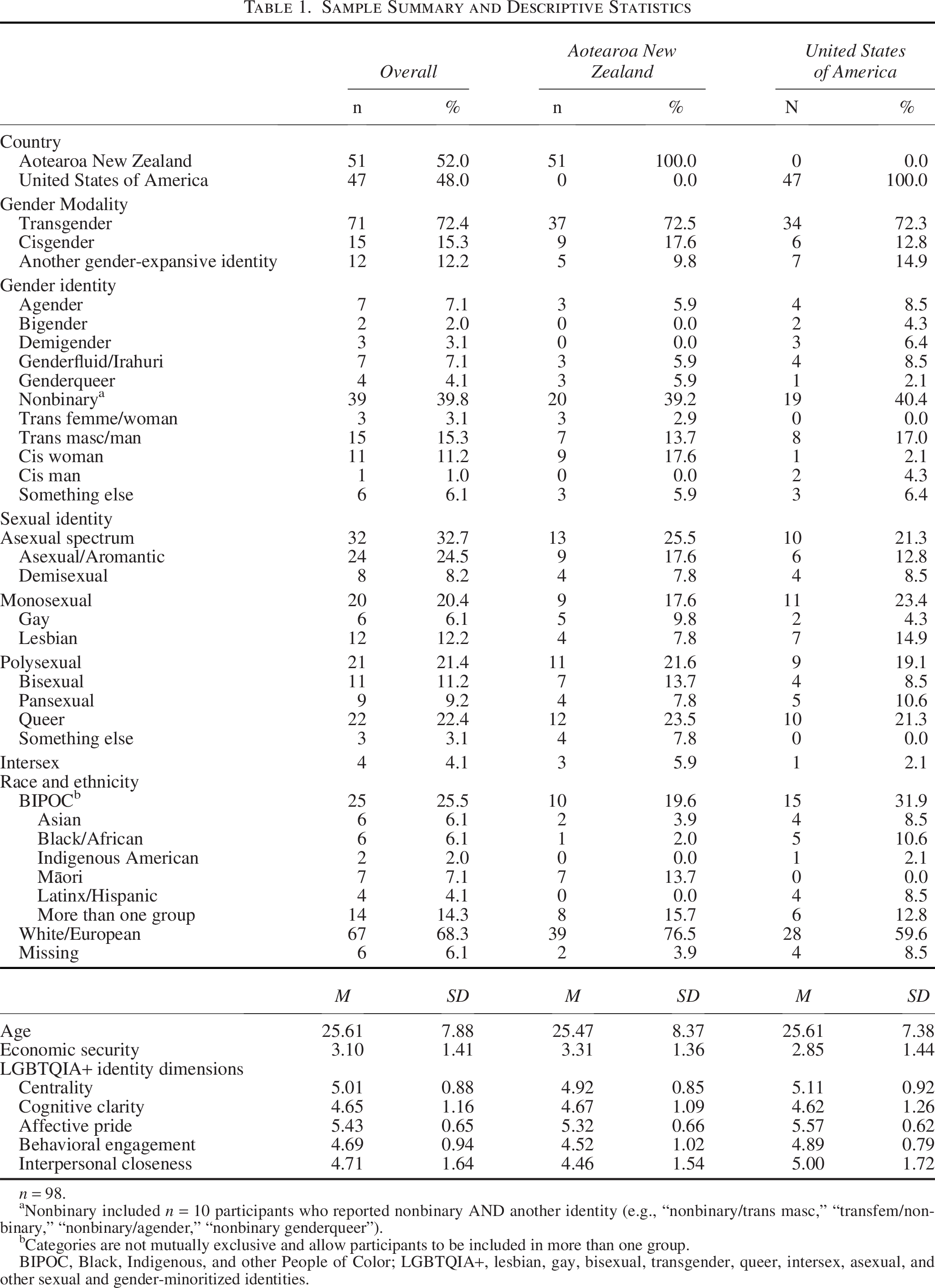
n = 98.
Nonbinary included n = 10 participants who reported nonbinary AND another identity (e.g., “nonbinary/trans masc,” “transfem/non-binary,” “nonbinary/agender,” “nonbinary genderqueer”).
Categories are not mutually exclusive and allow participants to be included in more than one group.
BIPOC, Black, Indigenous, and other People of Color; LGBTQIA+, lesbian, gay, bisexual, transgender, queer, intersex, asexual, and other sexual and gender-minoritized identities.
Means for LGBTQIA+ personal and social identity dimensions were 5.01 (SD = 0.88) for centrality, 4.64 (SD = 1.16) for cognitive clarity, 5.43 (SD = 0.65) for affective pride, 4.69 (SD = 0.84) for behavioral engagement, and 4.71 (SD = 1.64) for interpersonal closeness (Table 1). Mean scores for well-being outcomes were 3.11 (SD = 0.68) for holistic well-being, 41.50 (SD = 7.03) for flourishing, and 6.06 (SD = 1.92) for life satisfaction. Correlations between analytical variables are in Supplementary Table S2.
Are LGBTQIA+ personal and social identity dimensions associated with well-being outcomes?
Holistic well-being was positively associated with behavioral engagement (β = 0.30, 95% CI [0.08, 0.53]), but not with centrality, cognitive clarity, affective pride, or interpersonal closeness (Table 2). Across all single-dimension models, economic security was positively associated with holistic well-being (βs = 0.38–0.46, ps < 0.001; Supplementary Table S3). Flourishing was positively associated with cognitive clarity (β = 0.30, 95% CI [0.09, 0.52]), behavioral engagement (β = 0.40, 95% CI [0.18, 0.61]), and interpersonal closeness (β = 0.25, 95% CI [0.02, 0.48]), but not with centrality or affective pride (Table 2). Economic security was positively associated with flourishing (βs = 0.23–0.35, ps = 0.00–0.06), and being asexual was negatively associated with flourishing (βs = −0.30–−0.28, ps = 0.00–0.02; Supplementary Table S4). Life satisfaction was positively associated with centrality (β = 0.30, 95% CI [0.03, 0.57]), affective pride (β = 0.33, 95% CI [0.09, 0.58]), behavioral engagement (β = 0.39, 95% CI [0.16, 0.63]), and interpersonal closeness (β = 0.31, 95% CI [0.07, 0.55]), but not with cognitive clarity (Table 2). Economic security was positively associated with life satisfaction (βs = 0.22–0.37, ps = 0.00–0.04; Supplementary Table S5).
Associations of LGBTQIA+ Identity Dimensions with Psychological Well-Being Outcomes Adjusted for Covariates
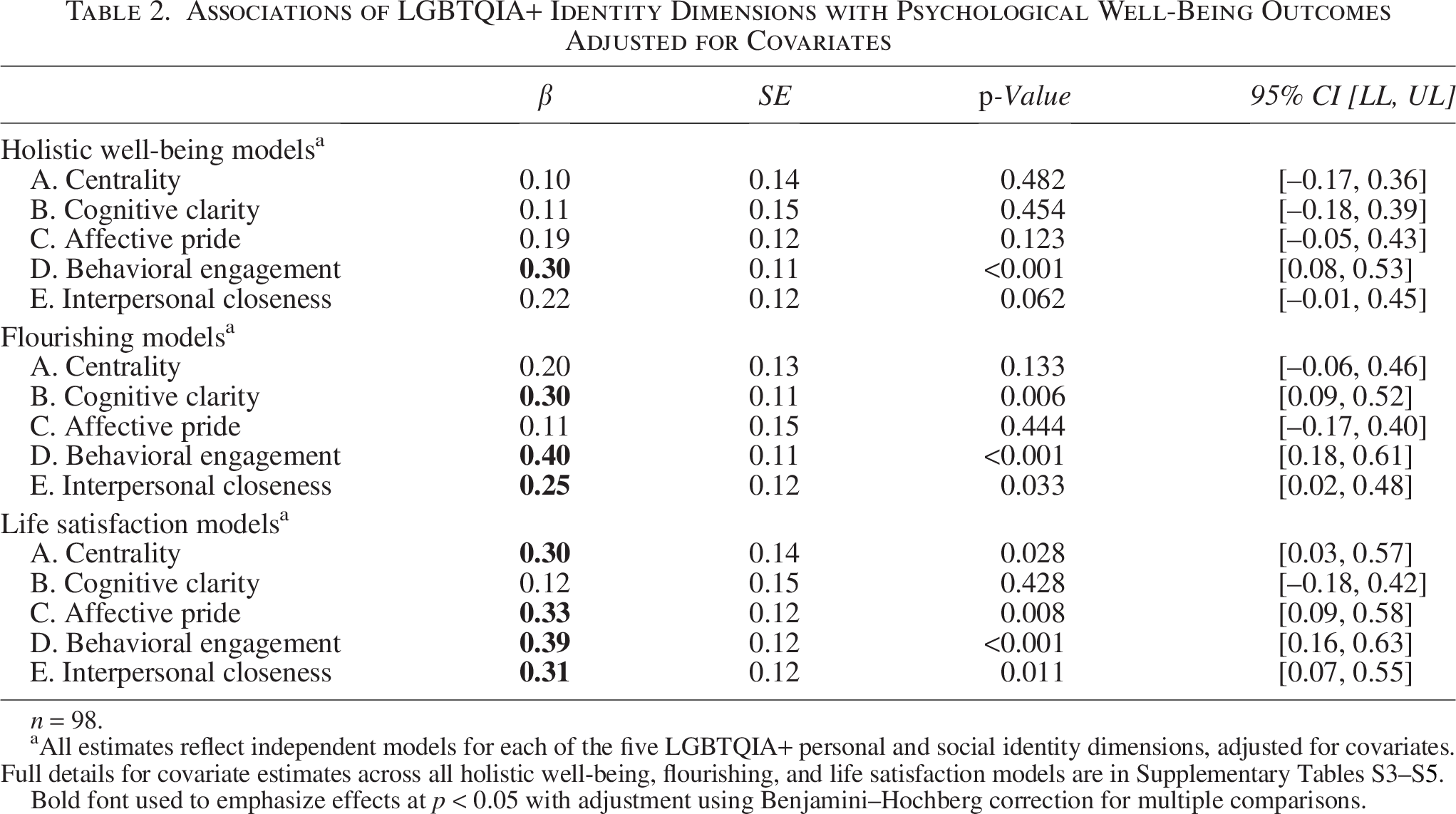
n = 98.
All estimates reflect independent models for each of the five LGBTQIA+ personal and social identity dimensions, adjusted for covariates. Full details for covariate estimates across all holistic well-being, flourishing, and life satisfaction models are in Supplementary Tables S3–S5.
Bold font used to emphasize effects at p < 0.05 with adjustment using Benjamini–Hochberg correction for multiple comparisons.
Sensitivity analysis
Table 3 shows results of multivariable regression models including all five LGBTQIA+ personal and social dimensions together in three separate models for well-being, flourishing, and life satisfaction. Behavioral engagement remained a significant positive predictor of flourishing (β = 0.33, 95% CI [0.05, 0.61]) and life satisfaction (β = 0.31, 95% CI [0.01, 0.61]) but not holistic well-being. No other identity dimensions were significant in the multivariable models, thereby highlighting the relative strength and robustness of associations between behavioral engagement and both flourishing and life satisfaction, compared with all other LGBTQIA+ dimensions.
Multivariable Associations Between Personal and Social Identity Dimensions and Positive Psychological Dimensions
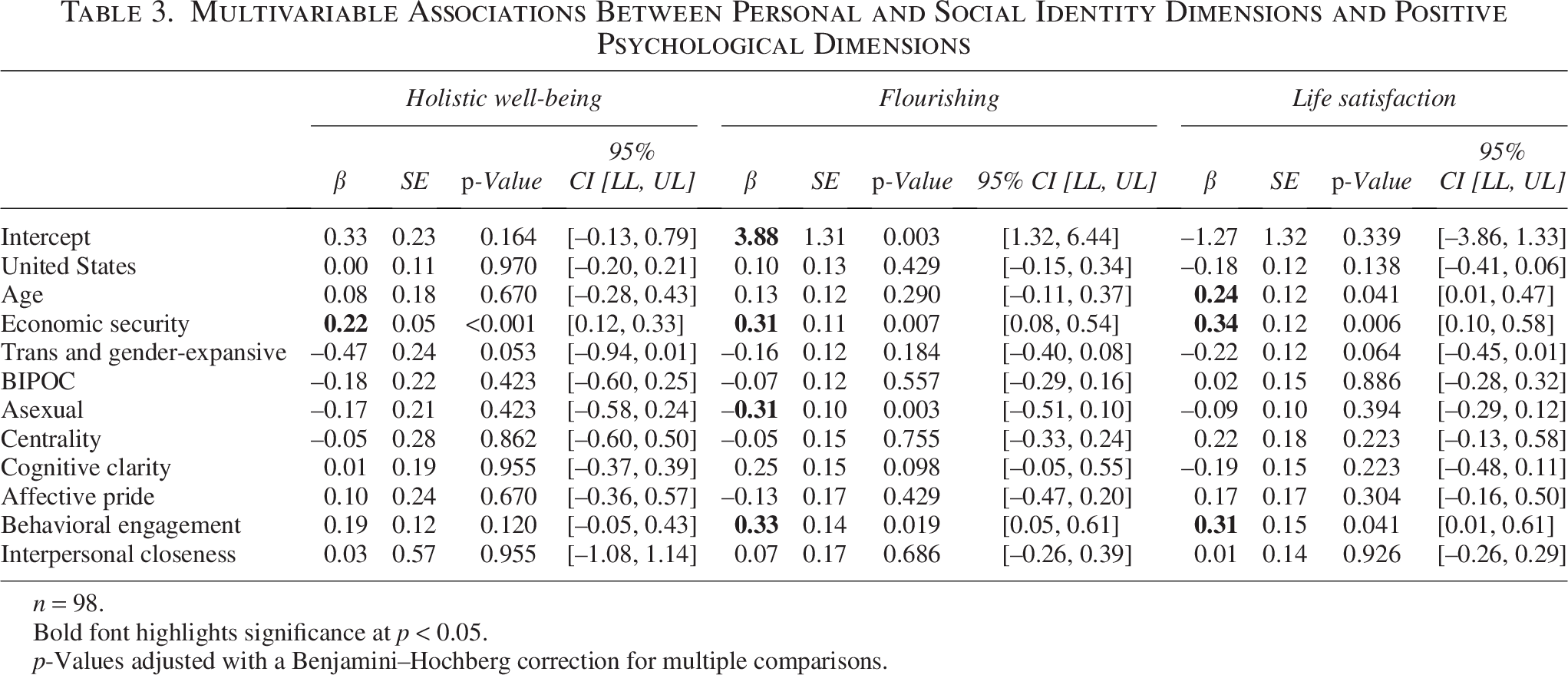
n = 98.
Bold font highlights significance at p < 0.05.
p-Values adjusted with a Benjamini–Hochberg correction for multiple comparisons.
Discussion
This first-of-its-kind study of LGBTQIA+ Autistic individuals used an international sample from New Zealand and the United States to first describe the diversity in gender and sexual identities and then demonstrate links between LGBTQIA+ personal and social identity dimensions and holistic well-being outcomes. By focusing on the intersection of Autism and LGBTQIA+ identities, the results of this study evidenced a robust link between LGBTQIA+ personal and social identity dimensions and well-being, flourishing, and life satisfaction. As expected, results confirmed the association suggested by self-categorization theory8,9—that stronger identification with the social identity (e.g., LGBTQIA+ group membership) was associated with more positive psychological outcomes. These results were contextualized by evidence that economic stability and asexual identity are also connected to well-being outcomes. Both LGBTQIA+ personal identity and social community identity may provide possible pathways for promoting well-being and flourishing among Autistic LGBTQIA+ individuals in diverse contexts.
This LGBTQIA+ Autistic sample had high levels of personal and social LGBTQIA+ identity. Personal and social identity metrics were above the midpoint for most participants, thereby characterizing this sample as a subset of the LGBTQIA+ Autistic community for whom both personal understanding of LGBTQIA+ identity and social affiliation are relevant. Self-categorization theory suggests that these higher levels of both personal and social identity could confer positive psychological benefits.8,10,11 Notably, identity centrality and pride were the strongest dimensions in this sample, reflecting participants’ certainty in understanding their identities and the positive connection between their personal identities and broader LGBTQIA+ groups. Identity centrality and pride are both known to be connected to more positive well-being and mental health among LGBTQIA+ samples,56–58 and this study shows the strength of these dimensions in an Autistic sample. This evidence thus supports the relevance of these dimensions in this population. In addition, the lowest reported identity dimension, on average, was interpersonal closeness—a measure of closeness and overlap between the individual self and the general LGBTQIA+ community. 75 This dimension contrasts with the higher score on behavioral engagement—a measure of activity and behavioral connection and involvement with LGBTQIA+ others and community. 59 Given the evidence that Autistic adults may be especially motivated to connect with other Autistic people through structured activities, 86 the relatively lower endorsement of interpersonal closeness in contrast to behavioral engagement could indicate that behavioral dimensions are more relevant and accessible to Autistic people than emotional or relational affiliation.
The primary novel contribution of this study is the evidence that LGBTQIA-specific personal and social identity dimensions are associated with multiple well-being outcomes among LGBTQIA+ Autistic individuals in two countries. The queer and Indigenous approaches38,87 to the current study provide a theoretical framework that emphasizes diversity and potential for positive, nonmedicalized lived experiences of diverse LGBTQIA+ Autistic people, thereby adding to and expanding upon self-categorization theory by emphasizing not only the importance of personal and social identity meaning but also the strengths found in minoritized identities. Results suggest that LGBTQIA+ Autistic individuals possess strengths related to their sexual and gender identity. This is the first study, however, to demonstrate the connection of LGBTQIA+ identity dimensions to well-being and flourishing among LGBTQIA+ Autistic people specifically. As indicated in the current study by measures of identity centrality, cognitive clarity, and affective pride, a strong LGBTQIA+ identity may support LGBTQIA+ Autistic individuals’ psychological strengths. When considered alongside prior literature, both an authentic Autistic identity 21 and a strong LGBTQIA+ identity may each be important aspects of supporting and promoting positive psychological outcomes for LGBTQIA+ Autistic people.
In addition to a strong internal sense of LGBTQIA+ identity, collective aspects of LGBTQIA+ identity and community connection were also consistently associated with well-being across both countries. These findings expand and elaborate prior research on LGBTQIA+ Autistic people, which has highlighted the importance of finding meaningful social connection with similar others. 88 Specifically, the results of the current study demonstrate potential benefits to making these social connections with LGBTQIA+ others. Both behavioral engagement with LGBTQIA+ community and feelings of interpersonal closeness with LGBQTIA+ others were associated with well-being outcomes. Collective dimensions of LGBTQIA+ identity reflect the integration of the self into the social group of similar others through affective connection, behavioral engagement and participation, connection with other LGBTQIA+ people and culture, and emotional feelings of closeness. This interaction between collective experiences and well-being also aligns with Indigenous conceptualizations of health and well-being, in which well-being is not just an individual process, but rather a collective one as well. 78
Social isolation and loneliness have been identified as particularly challenging barriers to health for LGBTQIA+ Autistic people.44,89 Results of the current study deepen this understanding in the literature by providing more nuance to the costs of isolation among LGBTQIA+ Autistic people and by pointing to particular types of social connection with the LGBTQIA+ community that appear linked to well-being. In particular, behavioral engagement with LGBTQIA+ community was the most consistent predictor of well-being, flourishing, and life satisfaction, underscoring the need not just for a strong sense of LGBTQIA+ identity and emotional closeness, but also for learning and talking about LGBTQIA+ community and culture, active engagement in LGBTQIA+ groups and organization, and participation in LGBTQIA+ events. 59 These types of structured social activities and events may be especially appealing to Autistic adolescents and adults as a means of creating social connection. 86 LGBTQIA+ community spaces and gatherings are sometimes experienced as a place for sanctuary away from the cisgender heterosexual society, where LGBTQIA+ people can feel group belonging. 90 For Autistic people, this may provide a space that accommodates neurodiversity through the broader rule-breaking, norm-bending culture of queerness, but others may experience discrimination because of their Autistic identity.88,91,92 It may be especially important for LGBTQIA+ Autistic individuals to find community and engagement not just with any LGBTQIA+ people but with LGBTQIA+ Autistic people specifically as well. Studies have found that while the LGBTQIA+ community can provide social connection, there are barriers to accessing broader LGBTQIA+ communities such as overwhelming sensory issues and lack of understanding from non-autistic LGBTQIA+ people. 91 As some Indigenous cultures increasingly recognize and celebrate their Autistic members, culturally specific spaces that affirm both Autistic and LGBTQIA+ identities might be particularly well-suited to providing the aforementioned social connection for Autistic LGBTQIA+ Indigenous people (especially as some LGBTQIA+ identities are intrinsically intertwined with culture; e.g., takatāpui in Māori culture). These culturally attuned and Autistic-friendly LGBTQIA+ spaces and events can provide opportunities for LGBTQIA+ Autistic individuals to establish and build their personal understanding of sexual and gender identities while doing so in collective, social spaces. This development and strengthening of both personal and social LGBTQIA+ identities may then grant individuals increased psychological benefits by strengthening the affiliation between the self and the group.
This study highlights the positive lived experiences of LGBTQIA+ Autistic people who represent a large subgroup of the Autistic population across the two countries. The sample was heterogeneous not just in nationality but also in represented sexual and gender identities, age, and, to a lesser extent, racial and ethnic groups. Findings of the current study are thus contextualized by this heterogeneity and provide evidence that the benefit of LGBTQIA+ identity strength may be applicable across a vast variety of subgroups among LGBTQIA+ Autistic communities. Centering multiple minoritized identity groups reveals different experiences than individuals in only one minoritized group,4,89 and thus, research on those with intersecting identities, such as in the current study, can amplify voices and uncover ways to best support these populations. In this international LGBTQIA+ Autistic sample, we found a high prevalence of nonbinary and asexual identities across nationalities. This elevated representation of nonbinary and asexual Autistic participants points to a need to understand the experiences of these groups specifically, and the importance of disaggregating LGBTQIA+ groups to identify promotive resources and unique hardships faced by these groups. For many Autistic individuals, well-being is often compromised by social and environmental challenges, such as bullying and lack of support,93,94 and this may be especially true for groups pushed furthest to the margins such as transgender, nonbinary, asexual people, and Indigenous people.
Across models, economic security was an important and consistent predictor of well-being outcomes. Macro-level concerns such as economic security are often absent from discussions of personal well-being with an emphasis on individual positive outcomes and processes. The social model of disability provides a lens for understanding the interaction between the individual and societal barriers 95 such that both disability and well-being can be understood only in context. Our data suggest that economic insecurity can create barriers to well-being, flourishing, and life satisfaction for LGBTQIA+ Autistic people. This interpretation, supported by previous research, identified that LGBTQIA+ Autistic people experience exclusion, safety concerns, stereotyping, and accessibility issues in the workplace. 96 These factors likely cause barriers to employment for LGBTQIA+ Autistic people and contribute to economic insecurity. Furthermore, Autistic college students report concerns about finding work that they find meaningful and that provides enough income to support a livelihood while maintaining a work–life balance, 97 suggesting Autistic people consider economic security in their own understanding of well-being. Indigenous communities also frequently report economic hardship (as conceptualized by Western metrics), which may contribute to these findings. 98 Our findings add to these results by demonstrating that although personal and collective identity dimensions are connected to well-being for LGBTQIA+ Autistic individuals, consideration of economic variation revealed that attaining greater well-being, flourishing, and life satisfaction may not be equally possible for LGBTQIA+ Autistic individuals facing more economic hardship.
Asexual Autistic participants had lower levels of flourishing compared with participants with other minoritized sexual identities. Given that our findings also indicate the importance of engaging with LGBTQIA+ community for LGBTQIA+ Autistic people, we might consider the impact of interactions with that community in understanding why this might be. Asexual people can face exclusion from LGBTQIA+ community spaces due to the perception that asexual and other ace-spectrum identities have experiences that deviate from sexual liberation elements of early LGBTQIA+ activism. 99 It has also been noted before that Autistic people face infantilization in discussions of their sexuality, 100 which being asexual may further contribute to. In addition, in contrast to other sexual identities (i.e., gay, lesbian, homosexual), asexuality remains formally pathologized in medical settings and diagnostic guidelines. 101 Some research shows that stigma against asexual people may surpass that of other sexual minorities. 102 With institutional and social barriers such as these, it is possible that asexual Autistic people may receive less positive impact even from similar amounts of engagement with LGBTQIA+ communities, which could contribute to the lesser amounts of flourishing that we see here.
Notably, the lack of differences between the US and NZ across LGBTQIA+ identity dimensions and well-being outcomes suggests the relevance of these constructs and their associations across multiple cultural contexts. Although the US and NZ are both Western, settler nations, policy, and structural systems for LGBTQIA+ and Autistic individuals vary (e.g., NZ’s availability of universal health care 103 and legal human rights protections that include transgender people 104 ). Evidence from the current study suggests that stronger LGBTQIA+ identity and more engagement with LGBTQIA+ others confer benefits despite differences in cultural and political landscapes in the two countries. In the future, larger samples of LGBTQIA+ Autistic adults from both countries, and from other countries, would allow more rigorous cross-cultural comparison and potential identification of LGBTQIA+ identity dimensions that may confer greater protective effects in various national contexts.
Implications for supporting LGBTQIA+ autistic development
Results of this study provide direction for supporting LGBTQIA+ Autistic development and well-being. First, supporting LGBTQIA+ community engagement should be a priority for facilitating well-being, flourishing, and life satisfaction for LGBTQIA+ Autistic adolescents and adults. In doing so, it may be necessary to consider accessibility of non-Autistic LGBTQIA+ spaces due to the challenges some LGBTQIA+ Autistic people experience in community involvement. 88 Connection to and involvement in the LGBTQIA+ Autistic community, in person or online, may be especially helpful. Second, other dimensions of LGBTQIA+ identity provide additional tools for supporting well-being. Exploring, understanding, and affirming LGBTQIA+ identity constitute an individual psychological pathway for promoting well-being among LGBTQIA+ Autistic adolescents and adults. Due to the social and developmental nature of identity development,8,10,105 development of a strong sense of LGBTQIA+ personal and social identity may be especially helpful to cultivating well-being and building toward flourishing in adolescence and earlier in adulthood. Third, although results demonstrate robust evidence that LGBTQIA+ identity dimensions are associated with well-being, access to resources and opportunities for promoting well-being may not be equal across subgroups of LGBTQIA+ Autistic people. Addressing economic hardship among LGBTQIA+ Autistic people may have an equal or greater impact on well-being, relative to strengthening LGBTQIA+ identity dimensions. Similarly, barriers to well-being and flourishing are exacerbated for asexual participants 44 and necessitate specific resources, programming, and support for LGBTQIA+ individuals from these groups for whom institutional systems and cultural attitudes remain barriers to resource access and acceptance. 102
Limitations and future directions
Guided by queer and Indigenous approaches, our focus on the strengths of LGBTQIA+ Autistic people allows us to identify LGBTQIA-specific factors that are associated with well-being and flourishing. Still, it is essential to acknowledge the limitations of the current study. Although the study data allowed identification of many Autistic participants, the parent study was not designed with a focus on Autistic or neurodivergent participants; thus, measures and recruitment were not specific to Autistic experiences. Relatedly, the two-step survey question required participants to first identify with neurodivergence and then write-in Autism. This process required participants to complete an optional follow-up question to be identified, which may have resulted in an under-identified sample due to participants declining to self-disclose their Autistic identity or status. In addition, measures of LGBTQIA+ identities provided inclusive tools that allow participants with diverse identities to participate, yet these measures do not provide more specific nuance related to the unique experiences of different identity groups. Targeted research on asexual participants, for example, may reveal unique ways that personal and social identity dimensions confer distinct benefits to Autistic people with these identities and communities. Finally, as a cross-sectional study, all significant associations should be considered correlational and not directional or causational. Future research must examine the directionality of associations between LGBTQIA+ identity dimensions and well-being outcomes using longitudinal or experimental research.
The study is also limited by the parent study’s focus on LGBTQIA+ identities, which limited the inclusion of Autism-specific measures and constructs. The data allowed analysis of positive, LGBTQIA+ identity dimensions but did not measure positive personal and social Autistic identity dimensions. The current study was exploratory and secondary analysis designed to take advantage of and prioritize the substantial data from LGBTQIA+ Autistic participants; however, future studies should be fully powered to examine both identity and well-being outcomes among this sample specifically to provide even more robust and confirmatory tests. Future research on LGBTQIA+ Autistic identity and flourishing should consider both LGBTQIA+ and Autistic-positive identity together, including through engagement with LGBTQIA+ Autistic individuals in all stages of research, to better understand how LGBTQIA+ Autistic individuals may draw on multiple, intersecting sources of strengths both intra- and interpersonally. Furthermore, future research using well-being measures that have been validated with Autistic populations is needed, as other scholars have identified concerns about established well-being measures and their relevance to Autistic populations. 106
Finally, although this sample included participants from two countries and a variety of sexual and gender identities, the diversity in the sample also makes it challenging to test differences among subgroups. Future research should consider how LGBTQIA+ and Autistic identities and flourishing may be differentially connected and experienced within this diverse population. In addition, future research is needed to examine facilitators and barriers to Autistic well-being and flourishing among groups that were present but underrepresented in the current sample, including Māori and Indigenous Americans, Black, Latinx, and Asian people, as well as transgender women and cisgender sexual minority men.
Conclusion
In an international sample of LGBTQIA+ Autistic individuals, we conducted a strengths-based study informed by queer and Indigenous approaches to provide evidence that LGBTQIA+ personal and social identity dimensions are associated with well-being, flourishing, and life satisfaction. Results provide evidence that a stronger sense of LGBTQIA+ identity and stronger connection to and engagement with LGBTQIA+ others may confer psychological benefits to Autistic individuals. Engaging with the LGBTQIA+ community, culture, and resources may be a particularly important tool for promoting well-being and flourishing among LGBTQIA+ Autistic people. Despite positive evidence linking LGBTQIA+ identity dimensions with well-being, some groups experienced additional barriers to achieving high well-being, including asexual individuals and those experiencing greater economic instability. We provide evidence of the ways that the gender and sexual identities of Autistic people are linked to their well-being and point to the need for resources in Autistic communities that promote personal and social development of LGBTQIA+ identities and relationships.
Footnotes
Acknowledgments
Work on this study was facilitated by the University of Delaware Well-being, Health, and Equity Collaborative. The authors acknowledge the contributions of community advisory board members. They also recognize the contributions of student members from the University of Delaware Queer Development Lab and Massey University PRIDE Lab who contributed to the development of the Queer Joy Project, including Jayden Lesko, Meagan Lambert, Kanmani Duraikkannan, Ezra Griffin, Michael Shields, Ariel Cronin, Grey Woods, and Andrina Westerbaan. Finally, the authors acknowledge LGBTQIA+ community organizations and leaders who made this research possible by connecting community members to this study opportunity all across Aotearoa New Zealand and the United States.
Author Disclosure Statement
The authors declared no potential conflicts of interest with respect to the research, authorship, and/or publication of this article.
Funding Information
Funding for this research was provided by the Massey University School of Psychology Postgraduate Research Fund and by the University of Delaware College of Education and Human Development.
Authorship Confirmation Statement
E.K.L.: Conceptualization, methodology, software, formal analysis, investigation, data curation, writing—original draft, writing—review and editing, supervision, and project administration. L.K.B.: Conceptualization, writing—original draft, and writing—review and editing. S.L.C.: Conceptualization, writing—original draft, and writing—review and editing. T.N.B.: Conceptualization, writing—original draft, and writing—review and editing. A.X.W.: Writing—original draft and writing—review and editing. I.S.v.D.: Conceptualization, investigation, data curation, writing—original draft, writing—review and editing, supervision, and project administration.
Supplemental Material
References
Supplementary Material
Please find the following supplemental material available below.
For Open Access articles published under a Creative Commons License, all supplemental material carries the same license as the article it is associated with.
For non-Open Access articles published, all supplemental material carries a non-exclusive license, and permission requests for re-use of supplemental material or any part of supplemental material shall be sent directly to the copyright owner as specified in the copyright notice associated with the article.
