




Abstract
Background:
Autistic individuals face significantly elevated risk for suicidality, yet existing suicide risk assessment tools often lack cultural and linguistic validity—particularly in low- and middle-income countries (LMICs) and where English is not the primary language. The Suicide Behaviors Questionnaire—Autism Spectrum Conditions (SBQ-ASC) is a validated instrument developed in English for autistic adults without intellectual disability. However, the lack of availability of this instrument in other languages limits its clinical and research applicability worldwide. This study reports the foundational phase of a translational research program: the linguistic and cultural adaptation of the SBQ-ASC into Spanish, intended for eventual psychometric validation studies across Latin America.
Methods:
Adaptation followed the International Test Commission Guidelines and the Ecological Validity Framework, using a seven-country participatory process involving autistic adults, clinicians, and bilingual researchers, with integrated expert judgment on sufficiency, clarity, coherence, and relevance.
Results:
The final Spanish version demonstrates conceptual, functional, and linguistic equivalence, and the original developer of SBQ-ASC approved it for research use. Clinicians can integrate it into primary care, community clinics, and telehealth platforms in under-resourced settings. This tool addresses a critical equity gap in mental health screening for autistic adults in LMICs and supports early identification of suicide risk in a population often overlooked in prevention efforts.
Conclusion:
This tool provides a necessary foundation for ongoing validation studies and supports translational efforts to improve early identification and eventually suicide prevention among autistic adults in Spanish-speaking populations. It addresses a critical equity gap in mental health screening tools and advances global autism research infrastructure.
Community Brief
Why is this an important issue?
Autistic people face a much higher risk of thinking about or attempting suicide compared with non-autistic people. Tools designed to spot this risk often do not work well for autistic individuals because they use confusing or emotional language that can be hard to understand. This issue is even bigger in Spanish-speaking countries, where no tools have been specially adapted for autistic adults.
What was the purpose of this study?
This study aimed to translate and adapt an English questionnaire called the SBQ-ASC—designed specifically for autistic adults without intellectual disability—into Spanish. The goal was to create a version that is easy to understand, respectful of autistic ways of thinking, and that fits the cultural contexts of Latin America and other Spanish-speaking regions.
What did the researchers do?
The team used international guidelines to adapt the questionnaire step by step. They collaborated with autistic adults, clinicians, and researchers from six countries: Argentina, Chile, Dominican Republic, Mexico, Spain, and Uruguay. The process involved translating into Spanish, checking for cultural fit, including expert evaluations of clarity and relevance, gathering feedback from autistic people in each country, making improvements, translating back to English for accuracy, and getting final approval from the tool’s original creator.
What were the results and conclusions of the study?
The original developer approved the final Spanish version of the SBQ-ASC for use in research studies. However, researchers still need to test it in other settings, like clinics or online surveys, to confirm that it accurately identifies suicide risk among Spanish-speaking autistic adults. It includes clearer, more neutral wording, cultural examples, and ways autistic people in these regions express distress.
What is new or controversial about these findings?
This is the first suicide risk tool for autistic adults adapted into Spanish through a collaborative process involving people from multiple countries. The adaptation process highlights how autistic people may understand questions differently and why cultural differences matter in mental health tools. The findings emphasize the need to include autistic voices in creating these tools to make them more accurate and respectful.
What are potential weaknesses in the study?
Some limitations include the fact that the study focused only on translation and adaptation. It did not test how well the Spanish version works in practice. In addition, we chose the autistic adults who gave feedback because they were easy to reach through our networks, which might mean the group did not include a wide enough range of backgrounds or experiences. This phase did not include formal testing to check if the tool gives consistent answers over time or truly measures what it is supposed to (like suicide risk). The study also focused on self-identified autistic adults without intellectual disability, so it may not apply well to all autistic people, such as those with intellectual disabilities or from less represented groups.
How will these findings help autistic adults now or in the future?
This adapted tool can help doctors, therapists, and community workers better identify suicide risk in autistic adults who speak Spanish. Doctors, therapists, and community workers can use it in clinics, hospitals, and even through telehealth. With more testing, it may support earlier intervention and better mental health care for autistic people in Latin America and other Spanish-speaking regions in the future.
Introduction
In Latin America, suicide accounts for 10% of injury-related deaths (5.23 per 100,000 population). 1 Population-based studies show that autistic people have disproportionately higher risk of suicidal ideation, attempts, and death,2–5 and suicide is one of the leading causes of premature mortality among autistic individuals. 2 This vulnerability is amplified in low- and middle-income countries (LMICs), where 73% of global suicides occur. This vulnerability is greater in LMICs, where 73% of global suicides occur6,7 amid limited mental health resources and diagnostic overshadowing.8,9 In Latin America specifically, suicide deaths have risen by 17% since 2000—the only WHO region showing such an increase—underscoring the critical gaps in culturally sensitive assessment tools for autistic adults in these settings. 10 Compared with the general population, autistic individuals 11 are up to 20 times more likely to die by suicide 12 and six times more likely to attempt it. 13 Autistic women are especially vulnerable (suicide mortality is up to 13 times higher than non-autistic peers).14,15 Many also face unique chronic risk factors such as social isolation, camouflaging, and unmet support needs.16–18
Despite this risk, systemic barriers hinder early identification and intervention. For instance, many tools used to assess suicidality in the general population are not validated for autistic individuals and often fail to account for differences in emotional communication, social motivation, and cognitive processing.15,19 Recent developments, such as the Suicide Assessment Kit-Modified Interview, 20 represent progress in creating clinician-administered interviews for suicidal thoughts in autistic adults. However, self-report tools such as the Suicide Behaviors Questionnaire—Autism Spectrum Conditions (SBQ-ASC) 15 remain essential for accessible screening, particularly in LMICs where clinical resources are limited. In addition, autistic adults may interpret standard suicidality questions differently from non-autistic individuals—for example, they may respond more literally, struggle with abstract or vague language, or misinterpret the emotional intent of the question—which can lead to misclassification and missed opportunities for intervention.15,18,21,22 Unique risk markers such as autistic traits, camouflaging, and peer victimization—particularly victimization related to being autistic—require nuanced assessment approaches that are rarely available in clinical or community settings. 11 In Spanish contexts, experiences of boundary transgression and sexual abuse among autistic women and non-binary individuals further heighten vulnerability, often stemming from social misunderstandings and fear of rejection. 23 Moreover, even within the autistic community, differences such as gender disparities in suicide risk and mental health concerns underscore the importance of culturally and demographically sensitive assessment tools that can capture the diverse experiences and risk profiles within the autistic community.
Suicide risk in autism
Multiple longitudinal studies underscore the persistent vulnerability of autistic individuals to suicidal behavior. A 20-year statewide study reported a cumulative suicide incidence of 0.17% among autistic people—markedly higher than the rate observed in non-autistic individuals. 13 This risk begins early: autistic adolescents and young adults show elevated rates of suicide attempts even after adjusting for psychiatric co-occurrences. 17 Risk is particularly high among those who do not require significant support, likely due to the burdens of navigating non-autistic environments without adequate services.16,18,24 In LMICs like Uruguay, qualitative studies reveal persistent diagnostic and service access barriers, with families reporting “there is nothing” in terms of support, leading to prolonged undiagnosed periods that often extend from childhood into adulthood and heighten mental health vulnerabilities. 25 A recent nonsystematic review of the literature found no Brazilian studies specifically addressing suicidal ideation among young people and autistic adults in Brazil. 26 Additional risk factors include co-occurring anxiety and depression, trauma exposure, and difficulties with emotional regulation.5,27 According to Fuld, 28 core features of autism—such as differences in social communication and difficulty navigating unexpected changes—may increase autistic individuals’ exposure to stressful or traumatic experiences. These traits can make everyday social interactions and novel or unpredictable situations particularly overwhelming for autistic individuals. Environmental demands that are manageable for non-autistic peers may be perceived as chronically stressful and, in some cases, may even become traumatic over time. 23 Research suggests that autistic individuals may exhibit heightened responsiveness of the hypothalamic-pituitary-adrenal (HPA) axis to certain types of stressors, including routine social interactions, unfamiliar environments, and aversive sensory stimuli. Another factor to consider is late diagnosis, as it worsens quality of life and mental health. For instance, autistic adults diagnosed later in life report prediagnosis experiences such as barriers to accessing services, worsening of their mental health conditions, lack of understanding of peer rejection, long periods of masking, emotional exhaustion, emotional dysregulation, and loss of self-identity. 29 In Spain, a participatory study reveals that late diagnosis in autistic women often exacerbates these issues due to societal expectations and diagnostic biases. 30
Despite the known rates, population-wide prevalence estimates may understate the true extent of suicidality in autism due to limitations in current assessment tools.31–33 Studies indicate that rates of suicidal ideation in autistic populations range from 10.9% to 50%, depending on how questions are framed. 19 Cervantes et al. 34 conducted a secondary analysis using data from the U.S. Healthcare Cost and Utilization Project Nationwide Emergency Department Sample, focusing on emergency department visits by youth aged 7–25 years from 2006 to 2014. The study found that the prevalence of suicidal ideation was not only significantly higher among autistic individuals compared with the general comparison group (all p < 0.001) but also that there was a notable variation across age groups. Among children aged 7–12 years, the prevalence of visits involving a diagnosis of suicidal ideation or intentionally self-inflicted injury was 2.0% in the autistic group, significantly greater than in the intellectual disability (ID) group (1.3%) and the general comparison group (0.3%). These studies highlight the need for autism-informed instruments that are linguistically and conceptually suited to capture suicidality within neurodivergent populations.
The SBQ-ASC: An Autism-specific tool
In response to these concerns, the SBQ-ASC was developed as a self-report tool specifically for autistic adults without co-occurring ID. 14 Adapted from the widely used Suicidal Behaviors Questionnaire–Revised, 35 the SBQ-ASC was refined through qualitative interviews and cognitive testing with autistic adults to ensure that items were accessible, unambiguous, and representative of the diverse ways suicidality manifests in this population. Psychometric evaluations of the SBQ-ASC in autistic and possibly autistic samples demonstrated acceptable structural validity, internal consistency (0.792), and content relevance, distinguishing it as one of the few instruments developed with direct input from the autistic community. 15
However, while the SBQ-ASC represents a critical advancement in autism-informed suicide assessment, its reach has been limited by language availability. To date, the tool has only verified psychometric properties in English and in high-income countries, restricting its use in regions where both suicide risk and mental health service gaps are pressing concerns.
The need for culturally appropriate tools in LMICs
This limitation is particularly salient in LMICs, where mental health systems are under-resourced and culturally adapted tools are scarce. In Latin America, for example, autism research and service provision are often fragmented and not grounded in the lived experiences of local communities. 36 Autistic adults in these regions face the dual burden of systemic neglect and the absence of tools that reflect their cultural and linguistic contexts. 37 Although Spanish is spoken by over 460 million people globally, 38 no suicidality screening instruments have been culturally adapted and explicitly validated for Spanish-speaking autistic adults. This gap perpetuates inequities in mental health care, particularly in Latin America, where fragmented services and limited research infrastructure exacerbate barriers to early identification, prevention, and intervention.36,37 Effective translation and validation of tools like the SBQ-ASC are essential not only for linguistic accessibility but also for ensuring that assessments capture culturally specific expressions of distress and suicidality, thereby supporting more accurate risk detection and ethical practice in diverse populations.39–42
Translation alone is not sufficient. As emphasized by cross-cultural research in psychiatry and test development, adaptation processes must attend to local idioms of distress, social norms surrounding suicide, and culturally specific expressions of suffering.39–41 For autistic individuals, who may communicate internal states differently or in ways not readily recognized by clinicians or caregivers, this level of cultural and linguistic precision is not optional but essential for accurate risk identification and ethical practice.15,42
To address these gaps in cultural and linguistic validity—particularly the absence of adapted suicidality screening instruments for Spanish-speaking autistic adults—established frameworks such as the International Test Commission (ITC) Guidelines 43 offer a structured approach to cross-cultural test adaptation, ensuring conceptual, linguistic, and functional equivalence across diverse populations. Complementing this, the Ecological Validity Framework (EVF) 44 promotes alignment with real-world ecological and neurodivergent contexts, enhancing relevance and reducing misinterpretation in underserved settings like LMICs. Both frameworks are detailed in the Methods section.
Aims
This study aimed to linguistically and culturally adapt the SBQ-ASC into Spanish for autistic adults without ID for use in Latin America and other Spanish-speaking regions. Specifically, we addressed the research question: How can the SBQ-ASC be adapted to achieve conceptual, linguistic, and functional equivalence while incorporating autistic voices and regional cultural contexts? To achieve this, we followed ITC guidelines, and the EVF, and incorporated participatory input from autistic adults, clinicians, and researchers across seven countries to enhance cultural relevance and accessibility. The adaptation addressed key sub-objectives: (1) linguistic harmonization across regional dialects; (2) incorporating neurodivergent preferences for clear, direct language; and (3) preserving core constructs to support psychometric validation and clinical/community implementation.
Methods
Theoretical frameworks guiding the adaptation
This study followed the ITC Guidelines for the Adaptation of Psychological and Educational Tests, 43 which are organized into six categories—(1) precondition (e.g., evaluating construct relevance), (2) test development (e.g., translation and adaptation procedures), (3) confirmation (e.g., empirical validation), (4) administration (e.g., standardization of procedures), (5) scoring and interpretation (e.g., minimizing bias), and (6) documentation (e.g., transparent reporting). In our study, the ITC Guidelines for the first two steps (precondition and test development) informed the structured, multiphase process, including forward and back translation, consensus building, and developer approval, to preserve the original intent of SBQ-ASC while adapting it for Spanish-speaking autistic adults in Latin America and Spain.
The EVF 44 complements the ITC by focusing on eight dimensions—language (e.g., idiomatic appropriateness), persons (e.g., cultural matching of participants and providers), metaphors (e.g., symbolic expressions of distress), content (e.g., relevance of examples), concepts (e.g., alignment with local understandings of constructs), goals (e.g., culturally congruent objectives), methods (e.g., adaptive procedures), and context (e.g., sociocultural and environmental factors)—to enhance ecological validity and cultural resonance. This framework ensures that adaptations reflect the lived realities of target populations, reducing misinterpretation and increasing acceptability. In our work, the EVF shaped the community review and stakeholder consultations, prioritizing autistic input to refine items for clarity, neutrality, and cultural fit across Latin American and Spanish contexts, as further aligned with recent conceptualizations of ecological validity in assessment. 45
During the precondition phase, the research team obtained formal authorization from the original developers of the SBQ-ASC and evaluated the conceptual relevance of the suicidality construct across diverse cultural settings. Particular attention was given to ensuring that any linguistic or cultural adaptations preserved the core meaning of the items, thus minimizing construct-irrelevant variance. This process was guided by the EVF, 44 which emphasizes evaluating key dimensions such as language, content, context, and persons to ensure that psychological measures reflect the cultural realities of the populations being assessed.
During the test development phase, the translation and adaptation process was carefully designed to ensure both semantic equivalence and cultural relevance, following best practices outlined in the ITC and EVF frameworks. Translators and reviewers were selected based on their expertise in linguistics, clinical practice, and regional knowledge of autism. Items were reviewed to ensure that the language used was accessible and respectful, that metaphors and content resonated within the cultural frameworks of the target populations, and that the goals and methods of the measure remained appropriate. In line with ITC recommendations, the research team also ensured that item formats, rating scales, and administration procedures were suitable and comprehensible across diverse Spanish-speaking contexts. This dual-framework approach supports a robust and ethically grounded adaptation process that prioritizes both scientific validity and cultural inclusivity.
The Red Espectro Autista Latinoamérica (REAL; Latin American Autism Spectrum Network) conducted this study. REAL is a multidisciplinary team comprising researchers, clinicians, and advocates from eight countries: Argentina, Brazil, Chile, Dominican Republic, Mexico, Spain, Uruguay, and Venezuela (although Brazilian researchers were included as members of the REAL network, contributing to broader team discussions and expertise, Brazil did not participate directly in the study due to its primary language being Portuguese, as the adaptation focused exclusively on Spanish-speaking countries and populations). Team members brought diverse expertise in autism spectrum conditions, suicidality, mental health, and cross-cultural instrument adaptation, with many having lived experience of autism or professional backgrounds in LMIC contexts. We acknowledge potential biases, such as a focus on practical, community-engaged approaches that may prioritize accessibility and rapid implementation in under-resourced settings over extensive psychometric rigor in initial phases, while striving to center autistic perspectives for ethical and cultural relevance.
Instrument
SBQ-ASC is a validated self-report tool specifically designed to assess suicidality in autistic adults without ID. Developed by Cassidy et al., 6 it uses autism-friendly language and structure to address the limitations of general population measures. The SBQ-ASC consists of six items designed to assess a broad range of suicidality dimensions specifically relevant to autistic adults. These include (1) lifetime experiences of suicidal ideation and behavior, (2) the frequency of suicidal thoughts over the past 12 months, (3) the duration and intensity of perseverative suicidal thoughts, (4) the perceived likelihood of acting on suicidal thoughts in the future, (5) the extent to which individuals communicate suicidal thoughts or behaviors to others, and (6) the reasons for choosing not to disclose such thoughts or behaviors.
Each item offers multiple-choice response formats designed to reflect both the complexity and nuance of suicidal experiences in autistic populations. Scoring is cumulative, with higher scores indicating increased risk for suicidality. The SBQ-ASC has demonstrated robust psychometric properties, including excellent internal consistency (Cronbach’s α = 0.87) and construct validity, in a large sample of 367 autistic adults in the United Kingdom. 6
Procedure
The ITC and EVF frameworks minimized construct-irrelevant variance and ensured that the adapted tool would retain the conceptual, semantic, and functional integrity of the original instrument while being appropriate for use in diverse cultural settings. In addition, for step 3, the study adhered to the Community-Based Participatory Research framework, as we included autistic adults as codevelopers of the adaptation. 46 The five-step process shown in Figure 1 included the following:
Forward translation
Professional translators from the University of Texas Rio Grande Valley (UTRGV) Translation Department performed the forward translation of the original English version of the SBQ-ASC into Spanish, ensuring semantic accuracy and attention to language nuances common across Latin American dialects. We conducted this step without involving the research team to maintain linguistic objectivity.
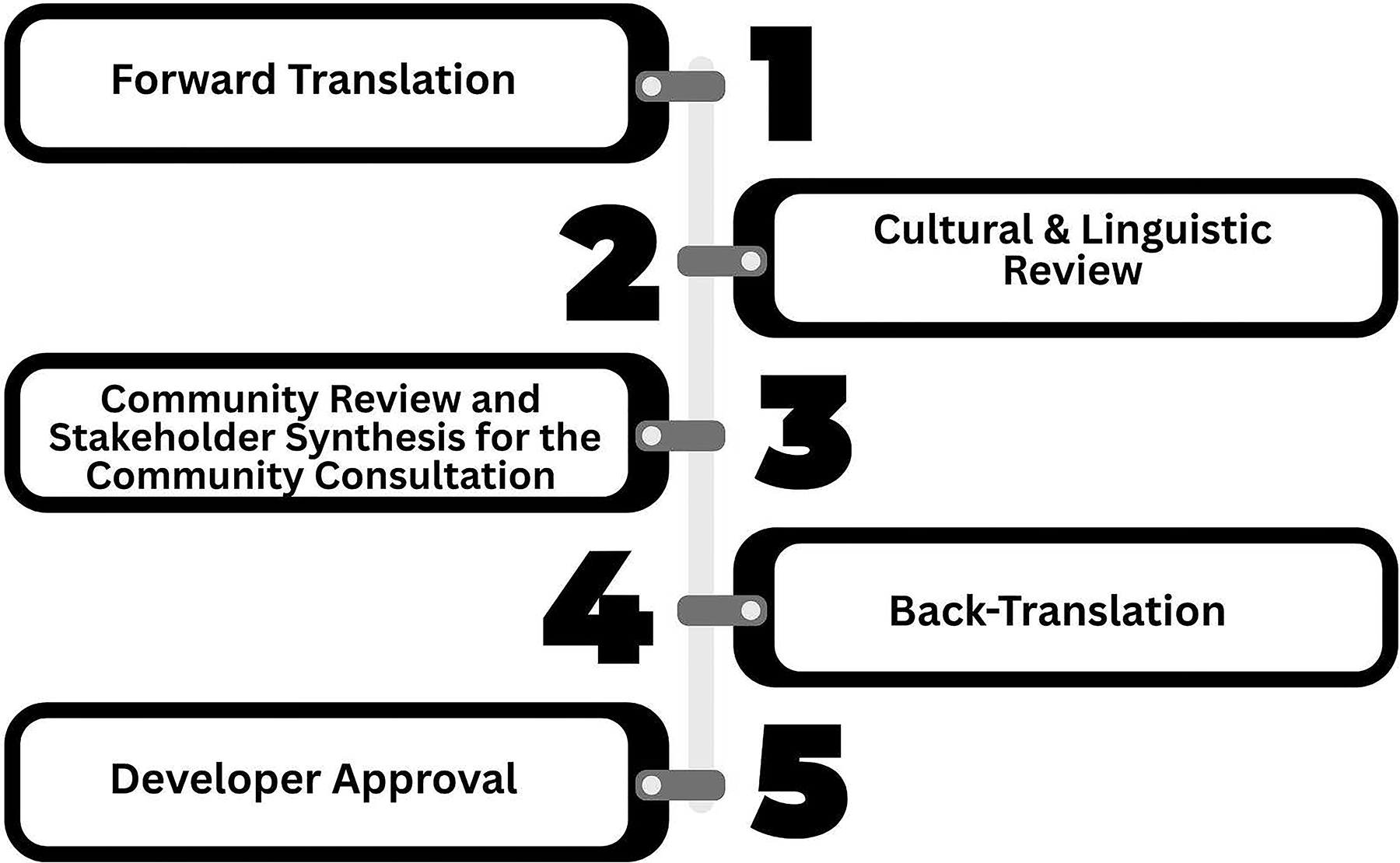
Multiphase cultural adaptation process of the SBQ-ASC–Spanish. SBQ-ASC, Suicide Behaviors Questionnaire—Autism Spectrum Conditions.
Cultural and linguistic review
The REAL research team, native speakers of Spanish and proficient in English, revised the translation to ensure cultural appropriateness across participating countries. A multidisciplinary research team consisting of child psychiatrists, psychologists, and a physician (all native Spanish speakers proficient in English and experienced in working with autistic individuals) reviewed and revised the translation. This team served as the expert panel, in alignment with ITC Guideline TD-1, which recommends selecting experts with combined knowledge of languages, cultures, test content, and testing principles to ensure high-quality adaptations. These professionals represented seven different countries—Argentina, Chile, the Dominican Republic, Mexico, Spain, Uruguay, and Venezuela—ensuring a broad cultural lens in evaluating and refining the scale. During this phase, the experts systematically assessed items for sufficiency (e.g., construct overlap across cultures), clarity (e.g., natural and unambiguous language), coherence (e.g., consistent meaning), and relevance (e.g., cultural fit), as per ITC Guideline TD-3, which calls for evidence of equivalent meaning through native reviewer input. This step also aligns with the EVF’s dimensions of language, metaphors, and content, which emphasize local idiomatic expressions, culturally grounded terminology, and relevance of test content to the target population. Professionals performed the revision to evaluate the semantic, experiential, idiomatic, and conceptual equivalence of the items.
Community review and stakeholder synthesis
For the Community Consultation with the stakeholders. We recruited 14 autistic adults (two per country) via convenience sampling through advocacy networks and clinics. We specifically invited autistic adults without ID, aged 18+, fluent in Spanish, and residing in one of the target countries. Participants provided written feedback on clarity, cultural fit, and potential distress, aligning with EVF dimensions of persons, context, and goals. The REAL team thematically synthesized the input, prioritizing autistic perspectives while preserving psychometric integrity. All changes are detailed in Table 1 and Supplementary Table S1. We provided no financial reimbursement to any participant to comply with local regulations which prohibit/discourage monetary compensation for research participation in noninterventional, low-risk studies involving community consultation. These policies aim to prevent undue influence and maintain equity in unfunded, community-driven research.
Thematic Summary of Item-Level Adaptations of the Suicide Behaviors Questionnaire—Autism Spectrum Conditions–Spanish
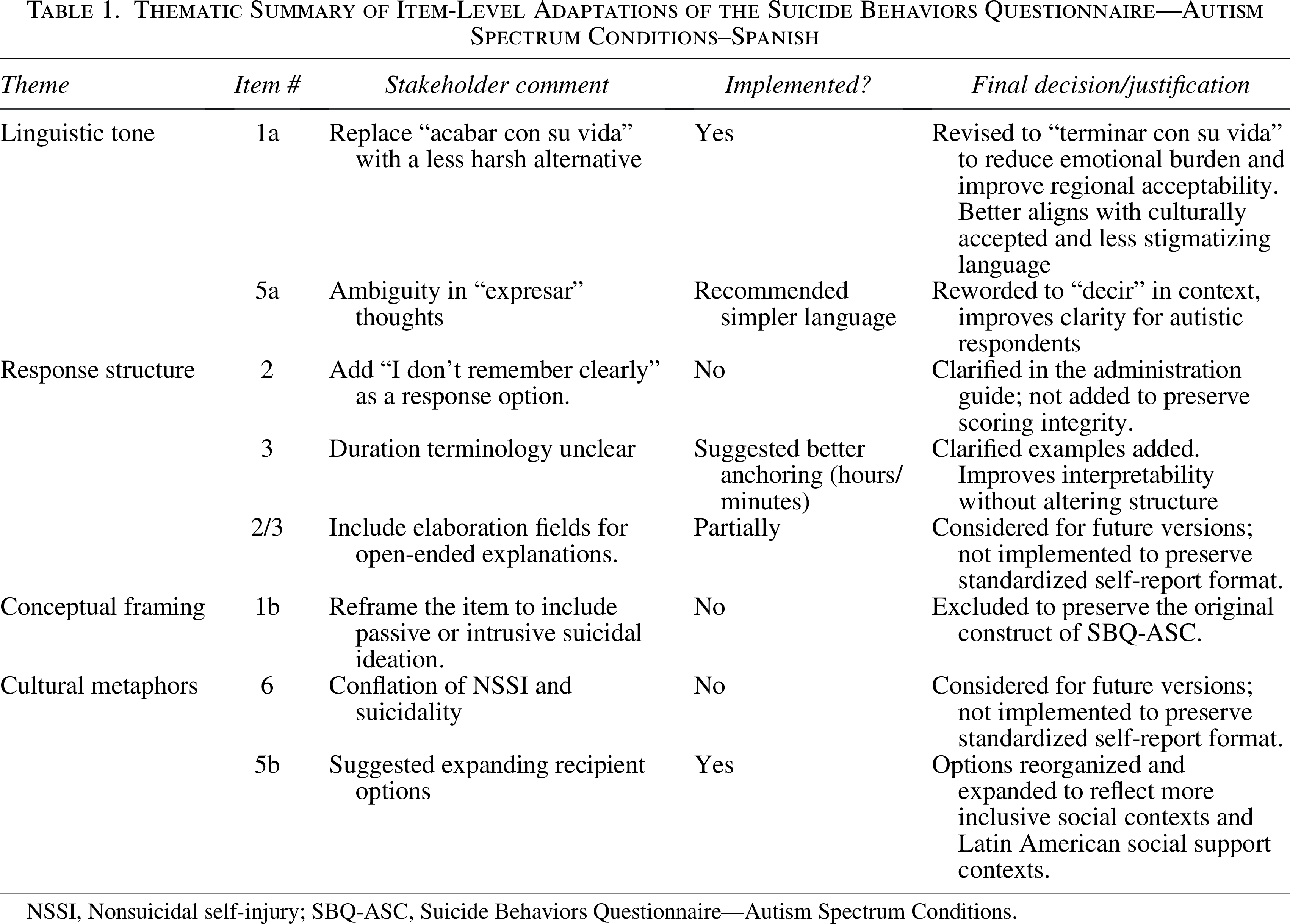
NSSI, Nonsuicidal self-injury; SBQ-ASC, Suicide Behaviors Questionnaire—Autism Spectrum Conditions.
Synthesis of stakeholder feedback
The REAL team systematically reviewed and synthesized this input, prioritizing minimization of construct-irrelevant variance as per ITC guidelines. Researchers used a qualitative thematic analysis approach, which involved inductively coding the written comments for recurring patterns, such as preferences for neutral language, cultural interpretations of disclosure, and clarity in response formats, followed by grouping codes into broader themes through iterative team discussions. Consensus on revisions was reached through collaborative discussions, integrating autistic perspectives to ensure cultural appropriateness and ecological validity. This thematic analysis went beyond mere description, providing a rigorous foundation for the item-level adaptations summarized in Table 1. This synthesis was built upon the expert judgment from the prior revision phase, integrating community perspectives to further refine equivalence.
Back translation
Of the finalized Spanish version into English by a native speaker of English and proficient in Spanish from the UTRGV Translation Department, who had not participated in the initial English-to-Spanish translation, thereby maintaining independence and avoiding cross-referencing bias. This step focused on evaluating the grammatical structure, idiomatic usage, and textual coherence of the translated items, while also accounting for cultural nuances embedded in the adaptation. The back-translation process served to confirm that the adapted items maintained their intended meaning across languages and cultural contexts, particularly in terms of metaphors, language use, and content, which are core dimensions of the EVF. 44 This step allowed for the verification of semantic fidelity and alignment with the source instrument, as recommended by ITC guidelines. 43
Developer review and approval
Whereby the original author of the SBQ-ASC (Sarah Cassidy) reviewed the back-translated version to confirm conceptual consistency and approved the final Spanish adaptation for further use.
This structured, multiphase adaptation process supports the development of a culturally and linguistically valid version of the SBQ-ASC that is appropriate for use in Spanish-speaking Latin American and Spanish contexts and aligns with international best practices for test adaptation and cultural sensitivity in autism research.
Results
The primary aim of this study was to conduct a linguistic and cultural adaptation of the SBQ-ASC into Spanish, ensuring its suitability for autistic adults in diverse Spanish-speaking contexts across Latin America and beyond. In the sections that follow, we present the results for each phase of this multistep process, including key refinements, stakeholder feedback, and outcomes that enhanced the tool’s clarity, cultural resonance, and equivalence to the original instrument.
Forward translation
The UTRGV Translation Department produced an initial Spanish version that preserved the semantic and structural integrity of the original English SBQ-ASC. This draft used neutral, pan-Spanish terminology to ensure broad accessibility across dialects, serving as the foundation for subsequent adaptations. The linguistic and cultural review, community consultation, and synthesis phases then identified opportunities for refinement, resulting in several meaningful changes to enhance conceptual equivalence, clarity, emotional neutrality, and cultural resonance for Spanish-speaking autistic adults in Latin America and Spain.
Cultural and linguistic review
The Cultural and Linguistic Review, conducted by the multidisciplinary REAL team of native Spanish speakers proficient in English, focused on evaluating the forward translation for semantic, experiential, idiomatic, and conceptual equivalence. 43 In this phase, the REAL team identified several areas needing refinement to align with regional dialects and cultural nuances while preserving the autism-friendly structure of SBQ-ASC. For instance, in the instructions, “afección” was changed to “condición” to decrease stigma; “autoinforme” to “autoreporte” for more natural phrasing; and “probabilidad de que actúe en base a ellos” to “posibilidad de que lo haga” to reduce potential stigma and emotional intensity. These adjustments drew on EVF dimensions of language and metaphors for more neutral, accessible phrasing common in Latin American and Spanish contexts. Similarly, abstract terms like “probabilidad” were clarified to “posibilidad” to minimize literal misinterpretation among autistic respondents, ensuring conceptual equivalence as per ITC guidelines. These revisions were documented in team consensus meetings and served as the refined draft for subsequent community review, balancing fidelity to the original with cultural inclusivity.
Community review and synthesis of stakeholder feedback
Table 1 presents a comprehensive thematic summary of the community feedback and summarizes all key adaptations across the SBQ-ASC items, capturing major patterns such as lexical refinements, response format adjustments, and cultural considerations without omission. To illustrate both the process and its outcomes, Table 1 includes selected excerpts from participant feedback that exemplify how cultural, linguistic, and contextual considerations shaped the final Spanish version. For full transparency and step-by-step traceability of each change, the exhaustive item-by-item details are presented in Supplementary Table S1. These include the original English text, forward translations, stakeholder feedback, final Spanish wording, and back translations. This documentation enhances transparency and demonstrates how the voices of autistic participants meaningfully shaped the adapted instrument.
Linguistic harmonization and lexical preferences
The most consistent adaptations were lexical. Items referencing suicidal ideation and behavior were revised to align with culturally preferred terminology, enhancing the cultural and linguistic relevance of the SBQ-ASC for Spanish-speaking autistic adults. The most impactful modifications involved lexical refinements to reduce emotional intensity and improve clarity—such as replacing acabar con su vida with the more neutral terminar con su vida (both of which translate to “end one’s life”). Adjustments were also made to better reflect naturalistic language use, including the substitution of expresar with decir to align with autistic individuals’ preference for direct communication. In addition, response options were expanded or clarified in areas where cultural norms around disclosure or interpretation of time and frequency varied across regions. While some stakeholder suggestions—such as distinguishing intrusive ideation or adding elaboration fields—were not implemented to preserve the tool’s psychometric integrity, they were carefully documented for future consideration. These adaptations reflect a balance between maintaining fidelity to the original instrument and ensuring accessibility, clarity, and cultural resonance for the target population. While various verbs such as “acabar” or “quitarse” were considered from the forward translation and initial reviews, stakeholder feedback—especially from self-advocates and clinicians across Latin America and Spain—overwhelmingly favored “terminar con su vida” for its neutrality and reduced emotional intensity. This shift was implemented across all relevant items (e.g., 1a, 1b, 5a, and 6), supporting EVF principles of culturally grounded language use.
Minor revisions were also made to improve clarity. For instance, in Item 5a, the verb “expresar” was replaced with “decir” to better reflect naturalistic and direct language, consistent with autistic individuals’ preference for concrete communication, which may be influenced by differences in receptive or expressive language processing.
Response format and structural clarifications
Several suggestions addressed how autistic individuals might interpret or interact with response options. In Item 2 (frequency of suicidal thoughts), stakeholders recommended adding an option such as “I don’t remember clearly” to reduce literal misinterpretation or exclusion due to recall difficulties. While this change was not implemented to preserve scoring integrity, clarification was added to the administration guide.
For Item 3 (duration of suicidal ideation), examples were added to better anchor temporal estimates, ensuring consistent interpretation without altering the item’s core structure. Proposals to incorporate optional elaboration fields were considered but ultimately deferred to future iterations to maintain the standardization necessary for reliable scoring.
Conceptual integrity and scope
In a few cases, self-advocate suggestions were not incorporated. For example, in Item 1b (impulsivity and access to means), stakeholders suggested adding response options reflecting intrusive thoughts or fantasy-like ideation in the absence of intent or planning. To maintain psychometric comparability while documenting these insights for future work, we prioritized fidelity to the original instrument’s structure and deferred expansions such as distinguishing intrusive ideation or adding elaboration fields. These suggestions are documented in Table 2 and may guide future qualitative or scale-development work.
Integration of the International Test Commission Guidelines and Ecological Validity Framework in the Cultural Adaptation of the Suicide Behaviors Questionnaire—Autism Spectrum Conditions–Spanish
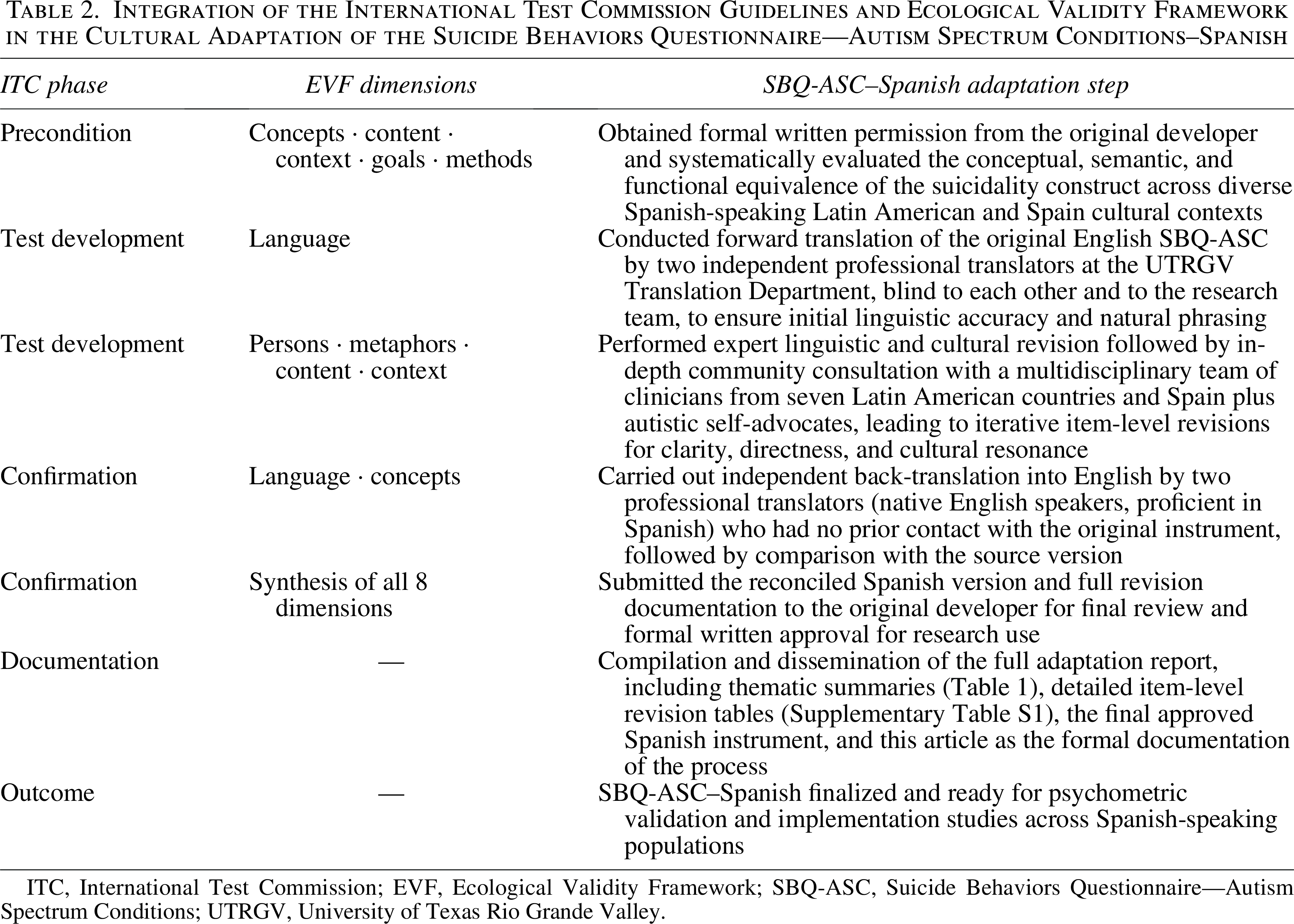
ITC, International Test Commission; EVF, Ecological Validity Framework; SBQ-ASC, Suicide Behaviors Questionnaire—Autism Spectrum Conditions; UTRGV, University of Texas Rio Grande Valley.
Cultural context and disclosure
Feedback for Item 5b led to meaningful revisions in the representation of disclosure contexts. Originally limited to friends and family, response options were expanded to include acquaintances and community members to better reflect social norms across Latin America and Spain. In the original English version, these options would be categorized under “others.” Thus, the Spanish version will allow for greater detail in this item, without representing a modification of the instrument. In addition, some response categories were reordered to improve interpretability and mirror disclosure hierarchies common in collectivist cultures.
Distinguishing self-injury and suicidality
Stakeholders highlighted the need to clarify the distinction between nonsuicidal self-injury (NSSI) and suicidal behavior in Item 6. While there was strong support for refining the language to avoid conflating these constructs, the item was not modified to maintain consistency with the original SBQ-ASC structure. This decision was made to preserve the instrument’s standardized self-report format and scoring comparability. However, this issue has been flagged for future revisions or potential adaptation in clinical versus research settings.
Back translation
The independent back translation confirmed high semantic fidelity, with only minor tonal adjustments needed to align with the source instrument. Minor differences in tone were harmonized in consultation with the adaptation team.
Developer approval
Dr. Sarah Cassidy, the developer of the original SBQ-ASC, then reviewed the back-translated version and formally approved the Spanish version for research purposes. This step ensured that adaptations remained faithful to the intended constructs and aligned with ITC (2017) best practices for source-instrument validation.
Discussion
This study represents the first adaptation of SBQ-ASC into Spanish, involving different countries of Latin America and Spain. Our culturally grounded, cross-national adaptation of this tool lays the necessary foundation for future validation and implementation across Spanish-speaking countries in Latin America and Spain, where there is a critical gap in both autism-specific mental health services and research infrastructure. 35 The thematic analysis not only captured lexical preferences but also deeper cultural insights, such as the need for neutrality in suicide-related terminology to mitigate stigma in Latin American and Spanish contexts. Beyond demonstrating feasibility and acceptability, the results of this study reveal several culturally and linguistically significant adaptations that enhance the relevance of SBQ-ASC for Spanish-speaking autistic adults. For instance, replacing emotionally intense terms such as “acabar con su vida” with the more neutral “terminar con su vida” reflects not only lexical preference but also cultural sensitivity to how suicide is discussed in Latin American contexts, where stigma and emotional burden can inhibit disclosure. 1 Similarly, the substitution of “expresar” with “decir” aligns with autistic individuals’ preference for direct, concrete language, which is essential for accurate self-reporting given known challenges with abstract and metaphorical phrasing.15,47 By embedding expert judgment throughout the linguistic and cultural revision and synthesis phases, we ensured comprehensive evaluations of sufficiency, clarity, coherence, and relevance, providing a solid foundation for subsequent confirmation of other psychometric properties.
These changes reduce misinterpretation, enhance emotional safety, and improve ecological validity.44,45
Expanding disclosure options to include acquaintances and community members reflects Latin American collectivist norms and enhances cultural resonance. 48 This is particularly important given evidence that culturally adapted tools perform better when developed within the populations they are intended to serve. 42 Together, these adaptations illustrate how culturally and neurodivergently informed revisions can improve both the accessibility and interpretability of suicide risk assessments.
Without adapted tools, clinicians may miss distress in autistic individuals because standard instruments ignore neurodivergent communication styles. This leads to underdiagnosis and missed intervention opportunities. 49 Autistic adults may respond literally to abstract phrasing or misinterpret emotional intent, leading to underreporting and misclassification of risk.4,47,50
The SBQ-ASC–Spanish addresses this need by incorporating feedback from autistic adults across diverse Latin American countries and Spain, ensuring that the adapted items reflect both neurodivergent communication styles and regional cultural norms. For instance, lexical choices were revised to reduce emotional intensity and improve clarity, and disclosure-related items were expanded to align with collectivist social dynamics typical in Latin America and Spain. This participatory and culturally grounded approach, particularly in the codevelopment and community review stages, enhanced the ecological validity of the SBQ-ASC–Spanish and exemplifies a broader shift in mental health measurement—away from top-down, one-size-fits-all models and toward inclusive, community-informed development. By centering the lived experiences of autistic individuals—through stakeholder consultation, linguistic harmonization, and iterative feedback—the adaptation process improves the interpretability of test items and supports more accurate, ethical, and equitable suicide risk assessment in underrepresented populations. Fletcher-Watson et al. 51 emphasize that participatory research not only enhances the scientific quality of autism studies but also ensures that research priorities align with the needs and values of autistic communities. This approach challenges deficit-based models and promotes inclusive, strengths-based frameworks that are more likely to result in meaningful and respectful outcomes. In this context, the SBQ-ASC–Spanish not only fills a critical gap in suicide risk screening for autistic adults in Latin America but also models a replicable framework for culturally responsive tool development in global mental health research.
While this adaptation aimed to ensure broad linguistic relevance across Spanish-speaking populations, it is important to acknowledge the potential impact of regional dialectical variation. Spanish is a pluricentric language with significant phonological, lexical, and pragmatic differences across regions, which can influence how individuals interpret and respond to assessment items.52,53 These differences are not merely linguistic but are also shaped by sociocultural and experiential factors that influence how language is perceived and used in context. 54 Therefore, future validation studies should explore whether additional regional tailoring is needed to ensure the SBQ-ASC–Spanish remains accessible and meaningful across diverse Spanish-speaking communities.
Implications in Latin American LMIC contexts
Throughout the adaptation, we prioritized psychometric equivalence to the original English SBQ-ASC, 43 ensuring comparable properties like reliability, validity, factor structure, and scoring interpretations. This choice, rather than developing an entirely new instrument or extensively modifying the existing one, was driven by the need to leverage the established evidence base of SBQ-ASC—including validated cut scores (e.g., ≥7 indicating elevated suicide risk in autistic adults 14 ) that can be provisionally applied in screening pending local validation—while addressing urgent gaps in LMICs where resources for developing new tools are limited. 36 While this led us to defer certain stakeholder-suggested enhancements (e.g., elaboration fields or distinctions for intrusive ideation) to avoid compromising integrity and cross-cultural comparability, it was not an endorsement of “legacy flaws” but a pragmatic strategy to accelerate access to a reliable, autism-informed tool. The benefits include facilitating multinational research collaborations, enabling meta-analyses across languages, minimizing the burden of generating new normative data in under-resourced settings, and supporting rapid ethical implementation in clinical contexts. 43 This balanced, translational approach fosters equity by extending the reach of a proven instrument to Spanish-speaking autistic adults, while our documentation of deferred ideas sets the stage for future refinements or complementary tools that could address identified limitations without starting from scratch.
The SBQ-ASC–Spanish represents a critical advancement for suicide risk screening in autistic adults across Latin America and Spain, where mental health systems are often under-resourced, fragmented, and lacking culturally appropriate tools.36,37 Its development directly addresses the urgent need for autism-informed instruments that are linguistically and contextually relevant to Spanish-speaking populations in LMICs. This work reaffirms the imperative that equity in autism care must include equity in mental health screening and suicide prevention. In addition, the SBQ-ASC–Spanish can support multidisciplinary care planning by providing standardized data to inform referrals, safety planning, and therapeutic interventions. This adaptation addresses a critical equity gap in mental health screening for autistic adults in LMICs and supports early identification of suicide risk in a population often overlooked in prevention efforts. Our participatory approach aligns with community perspectives on suicide prevention, which emphasize systemic changes to “make lives worth living” rather than solely focusing on crisis interventions. 55 By centering autistic voices and regional cultural contexts, the SBQ-ASC–Spanish lays the groundwork for future psychometric validation and scalable implementation. Autistic adults were recruited from both Latin American countries (Argentina, Chile, Dominican Republic, Mexico, Uruguay) and Spain, ensuring the adaptation accounts for linguistic and cultural variations across these regions, such as differences in terminology and disclosure norms. It also contributes to the development of culturally responsive infrastructure in global autism research and suicide prevention.
Given the scarcity of autism specialists in many regions,25,56,57 this tool empowers general practitioners and frontline providers to identify suicide risk in autistic adults who may otherwise go unrecognized due to communication differences or diagnostic overshadowing. Telehealth platforms, which expanded significantly during the COVID-19 pandemic, offer a promising avenue for implementation in geographically isolated or underserved regions.57,58 The SBQ-ASC–Spanish’s self-report format is compatible with digital delivery, allowing for remote screening and follow-up in areas where in-person services are limited or unavailable.
Notably, the tool’s cultural and linguistic adaptation ensures that it resonates with the lived experiences of autistic adults in Latin America and Spain, where concepts of distress, disclosure, and help-seeking differ from those in high-income, English-speaking contexts. By integrating the SBQ-ASC–Spanish into these real-world settings, clinicians and community health workers can initiate structured, culturally sensitive conversations about suicidality, improve risk detection, and support timely interventions.
Future directions for conceptual refinement
While the current adaptation of the SBQ-ASC–Spanish prioritized fidelity to the original instrument’s structure and scoring framework, several stakeholder suggestions—particularly those related to distinguishing intrusive suicidal ideation and clarifying NSSI—highlight important conceptual nuances that merit further exploration. These insights, although not implemented in the present version to preserve psychometric comparability, underscore the need for complementary tools or future iterations that can more precisely capture the spectrum of suicidal thoughts and behaviors in autistic populations. Intrusive or passive suicidal ideation—characterized by unwanted, repetitive thoughts of death or dying without intent or planning—has been reported as a distinct and distressing experience among autistic individuals, often not adequately captured by standard suicidality measures. 59 Similarly, NSSI is highly prevalent in autistic adults, with studies reporting rates as high as 44%–56%, and it often co-occurs with suicidal ideation, although it may serve different psychological functions such as emotional regulation or sensory modulation.59,60 The overlap and divergence between NSSI and suicidality in autistic populations remain underexplored, and failure to distinguish them may lead to misinterpretation of risk and inappropriate clinical responses. 15
These observations will inform future qualitative studies and may guide the development of expanded modules or adjunct instruments tailored to specific clinical contexts. For instance, future iterations of the SBQ-ASC–Spanish could include optional elaboration fields or parallel items that assess the phenomenology of intrusive ideation and the function of self-injurious behaviors. Such refinements would enhance the tool’s clinical sensitivity while maintaining its core structure for research comparability. In sum, while the current version of the SBQ-ASC–Spanish maintains alignment with the original tool’s validated structure, stakeholder feedback has illuminated areas for conceptual refinement that will be considered in subsequent phases of this translational research program.
This study was limited to the translation and cultural adaptation phase. While the process followed best-practice standards as outlined by the ITC 43 and EVF, 44 the adapted Spanish version of the SBQ-ASC has not yet undergone empirical validation. This adaptation marks the foundational phase of an ongoing translational research program within the REAL network, aimed at developing and validating culturally responsive tools for autism and mental health in Latin America and Spain. Changes to response options were not pursued, as this is an established, validated instrument, and alterations require consent from the original authors to maintain integrity. The next stage will involve comprehensive psychometric evaluation—including assessments of reliability, validity, and predictive utility—in diverse Spanish-speaking populations across participating countries. These validation studies are currently in preparation and will be conducted by our multidisciplinary team to ensure that the SBQ-ASC–Spanish is ready for clinical and research implementation.
In addition to broader validation efforts, a key priority for future research will be to conduct a linking study to evaluate psychometric equivalence between the English and Spanish versions of the SBQ-ASC. This could involve bilingual autistic adults completing both versions in a counterbalanced design, followed by analyses such as differential item functioning, confirmatory factor analysis across groups, and tests of measurement invariance to confirm that item responses, factor structures, and score interpretations are comparable. Such evidence would affirm the integrity of our adaptations, enable cross-linguistic comparisons in multinational research, and support the tool’s ethical use in diverse populations. Without this step, as noted, the emphasis on fidelity during adaptation could be undermined, highlighting the need to integrate equivalence testing into our ongoing translational program within the REAL network.
Conclusion
The linguistic and cultural adaptation of the SBQ-ASC into Spanish represents a critical advancement in suicide risk assessment for autistic adults in Latin America and Spain. By adhering to internationally recognized frameworks such as the ITC Guidelines and the EVF and incorporating participatory input from autistic individuals and regional experts, this study ensures that the adapted tool is both scientifically rigorous and contextually relevant. The process preserved the psychometric integrity of the original instrument and enhanced its accessibility and acceptability across diverse Spanish-speaking populations. This work responds to long-standing calls for culturally competent mental health tools in LMICs 36 and aligns with global priorities for equity in autism care and suicide prevention.14,15,18,31 By centering lived experience and cultural nuance, the SBQ-ASC–Spanish lays the groundwork for future validation studies and scalable implementation in clinical, community, and digital health settings. Ultimately, this adaptation contributes to a growing infrastructure for autism-inclusive mental health services in underrepresented regions, reaffirming that equity in suicide prevention must include linguistic and cultural inclusion for neurodivergent populations.
Authorship Confirmation Statement
C.M.-N., conceptualization, data curation, formal analysis, investigation, and writing—original draft; A.R., conceptualization, data curation, investigation, and writing—review and editing; R.G.S., conceptualization, data curation, and writing—review and editing; D.V., conceptualization, data curation, investigation, and writing—review and editing; G.G.C., conceptualization, data curation, investigation, and writing—review and editing; A.R.M., conceptualization, data curation, investigation, and writing—review and editing; F.A., conceptualization, data curation, investigation, and writing—review and editing; G.P.L., conceptualization, data curation, investigation, and writing—review and editing; N.V.A., investigation and writing—review and editing; M.C.M., investigation and writing—review and editing; M.C.T.V.T., conceptualization, investigation, and writing—review and editing; and C.S.P., conceptualization, investigation, and writing—review and editing. The article has been submitted solely to Autism in Adulthood.
Footnotes
Author Disclosure Statement
No competing financial interests exist.
Funding Information
No funding was received for this article.
Supplemental Material
References
Supplementary Material
Please find the following supplemental material available below.
For Open Access articles published under a Creative Commons License, all supplemental material carries the same license as the article it is associated with.
For non-Open Access articles published, all supplemental material carries a non-exclusive license, and permission requests for re-use of supplemental material or any part of supplemental material shall be sent directly to the copyright owner as specified in the copyright notice associated with the article.
