




Abstract
Background:
Dating apps are a common way to meet partners, yet little is known about how autistic adults use and experience these platforms. Existing studies are few, consist of small samples, and none have specifically focused on disclosure decisions, responses to disclosure, or experiences of victimization. This study examined autistic adults’ use of dating apps, focusing on the connections formed, decisions about disclosing an autistic identity, responses received, and experiences of victimization.
Methods:
We employed a convergent mixed-methods design, using an online survey to collect quantitative and qualitative data. Eligible participants were autistic adults (professionally diagnosed or self-identified) with experience using dating apps or websites. In total, 102 participants completed the survey. We analyzed quantitative data using descriptive statistics, chi-square tests, and Mann–Whitney U tests. We analyzed qualitative open-text responses through conventional content analysis.
Results:
Most participants (83.3%) had met someone in person through dating apps, forming long-term (49%), short-term (41.2%), or casual connections (43.1%). More than half (54.5%) chose not to disclose their autistic identity in their profiles, although some disclosed later in interactions. Disclosure was motivated by authenticity, filtering for compatible partners, and avoiding misunderstandings. Reasons for nondisclosure included fear of stigma and safety concerns. Responses to disclosure ranged from acceptance and reciprocal disclosure to stereotyping, ghosting, and stigma. Victimization was widespread: 40% received unwanted sexually explicit messages, and 43% reported verbal abuse. Women and nonheterosexual participants reported significantly higher rates and a greater variety of victimization experiences than men and heterosexual participants.
Conclusion:
Dating apps provide autistic adults with meaningful opportunities for connection but also expose them to stigma and victimization. Disclosure decisions are shaped by weighing authenticity and safety. Findings highlight the need for safer, more inclusive online dating environments and broader societal efforts to reduce autism stigma.
Community Brief
Why is this an important issue?
Many autistic adults want meaningful relationships yet face barriers to forming them. Dating apps are now one of the most common ways people meet partners, but little is known about how autistic adults experience these platforms. Dating apps may offer real benefits for autistic people seeking connection, but there are also possible pitfalls, such as how safe the platforms feel to use, how others respond to disclosure of being autistic, and experiences of harassment or exploitation. Understanding these experiences is important for autistic adults and their families, as well as for the people and services that support them, so that online spaces can be made safer and more inclusive.
What was the purpose of this study?
This study set out to learn about autistic adults’ use of dating apps: The types of connections they make, how they decide whether or not to disclose they are autistic, how others respond when they do disclose, and what kinds of negative experiences they face, such as harassment or abuse.
What did the researchers do?
The research team, which included autistic researchers and family members of autistic people, designed an online survey with both multiple-choice and open-ended questions. A total of 102 autistic adults (57 women, 34 men, 9 nonbinary participants, and 2 agender) completed the survey. We asked participants about the dating apps they used, the kinds of relationships they were seeking, if and when they disclosed, responses they received, and whether they had faced harassment or other harmful experiences.
What were the results and conclusions of the study?
Most participants (over 80%) had met someone in person through dating apps, and many had formed long-term or short-term relationships or casual connections such as hook-ups or friendships. Negative experiences were common: Around 40% received unwanted sexually explicit messages, and many reported verbal abuse. Women and nonheterosexual participants faced higher rates and a wider variety of victimization compared with men and heterosexual participants. Just over half chose not to disclose that they were autistic on their profiles, though some chose to disclose later on. Reasons for disclosing included wanting to be authentic, filtering for compatible partners, and preventing misunderstandings. Reasons for not disclosing included fear of stigma, rejection, or exploitation. Responses to disclosure were mixed: While some received curiosity, respect, or support, others reported ghosting, stereotyping, or dismissive reactions.
What is new or controversial about these findings?
This is the first study to specifically focus on autistic adults’ disclosure decisions, responses to disclosure, and online victimization when using dating apps. The results show that autistic adults are forming a wide range of relationships online, while also pointing to some difficulties they may face in digital spaces.
What are potential weaknesses in the study?
Most participants were from Australia, and many were White and college-educated, so the findings may not reflect the experiences of all autistic adults. The study also relied on people’s own reports, which can be shaped by memory and personal perspective.
How will these findings help autistic adults now or in the future?
These findings can help autistic adults by showing that dating apps can be a real way to meet people and build connections, while also making clear what challenges might come up. Knowing both the positives and the difficulties can help autistic people decide how, when, and whether to use dating apps. The study may also encourage app designers and services to create safer, more supportive spaces. In the longer term, it points to the need for greater understanding and acceptance of autism so that online dating becomes more welcoming and inclusive for everyone.
Background
The rise of online dating apps and websites (hereafter referred to as dating apps) has fundamentally transformed how people seek and establish romantic relationships, casual encounters, and other sexual or intimate connections. 1 Dating apps such as Tinder, Grindr, and OkCupid have become increasingly popular over time, with a large-scale U.S. study by Rosenfeld et al. 2 revealing that online dating is now the most common way people meet, whether for romantic relationships, casual encounters, or other intimate connections. Dating apps are especially popular among adults under age 30 and those who identify as lesbian, gay, bisexual, transgender, queer/questioning, intersex, asexual, or otherwise diverse in their sexual orientation or gender identity (LGBTQIA+). Almost half of young adults aged 18–29 years (48%) and just over half of LGBTQIA+ adults (55%) report ever having used a dating app. 3
These platforms offer convenience, access to a wider pool of potential partners, and a degree of control over communication, which can be particularly appealing for individuals who may experience barriers to traditional social interactions. Studies examining dating-app use among people with disabilities indicate that these platforms offer important benefits, such as expanded opportunities to meet partners, greater control over communication, and reduced barriers associated with mobility, sensory environments, or limited social networks. 4 For autistic adults, whose social experiences are often shaped by differences in communication style 5 and experiences of stigma or exclusion,6,7 dating apps may therefore provide unique opportunities as well as specific challenges.
Autistic adults face several complexities when navigating intimate relationships. Despite a desire for romantic relationships, 8 they often encounter significant challenges in forming and maintaining these connections. 9 For example, autistic individuals report fewer opportunities to meet potential partners, shorter relationship durations, greater concerns about future relationships, and heightened anxiety when meeting potential partners.8,10 This can contribute to increased social isolation, reduced learning opportunities, and lower self-esteem. 11 Individual-level factors such as differences in social communication and interaction; heightened anxiety in social situations; 12 distinct patterns of understanding, expressing, and regulating emotions 13 ; and sensory differences 14 can affect the experience of forming and maintaining romantic connections. Broader societal factors such as stigma, discrimination, and the perpetuation of stereotypes through media, including newspapers and television 15 further contribute to these challenges.
Dating apps could be a particularly helpful option for autistic individuals, as online communication offers potential benefits such as increased control over communication, avenues for self-expression, and a higher likelihood of finding like-minded individuals. 16 These benefits map directly onto autistic adults’ preferences for text-based, asynchronous communication 17 and align with broader evidence that online spaces can provide opportunities for connection, identity exploration, and a sense of belonging for autistic people.18,19 Although research specifically examining autistic adults’ use of dating apps is limited, 20 existing studies suggest that online dating may feel more comfortable and manageable than in-person approaches, enabling autistic people to set their own pace, reduce the pressure of immediate social demands, and communicate within a more controlled environment.21–23 Some also choose to disclose they are autistic in their profiles to attract partners who value authenticity, which may help foster genuine connections and identify more accepting matches.24,25 In other contexts, such as employment and health care, responses to disclosure vary widely, from supportive and accommodating to dismissive or discriminatory,26–29 yet no studies to date have focused specifically on disclosure decisions and responses in the context of dating apps.
Despite potential advantages, online dating also carries well-documented risks. In the general population of dating-app users, experiences of harassment, unsolicited sexual messages, and coercive or abusive behavior are widespread,30,31 particularly among women and LGBTQIA+ individuals.31,32 The broader disability literature similarly shows that disabled people frequently encounter harassment, stigma, and various forms of online victimization when using dating platforms.4,33 These background patterns are important for contextualizing autism-specific research, as autistic people face disproportionately high rates of sexual victimization and harassment across both offline and digital contexts.34–36 In the limited research focusing specifically on dating app users, autistic individuals have reported higher rates of harassment, unwanted sexual advances, and exclusion compared with their neurotypical peers.23,37 This disproportionate exposure to harm may also be shaped by the higher prevalence of sexual minority identities within autistic communities compared with the general population.38,39 Given established evidence that sexual minority individuals face elevated rates of harassment and discrimination in digital dating contexts,31,32 a greater representation of these marginalized identities may influence overall patterns of victimization. These intersecting marginalized identities may compound exposure to harm in online dating environments, underscoring the importance of examining whether gender and sexual orientation shape autistic people’s experiences of victimization on dating apps.
The current study
Although several studies have explored autistic adults’ use of online dating,20,22–25 the evidence base remains small, often relying on convenience samples of fewer than 20 participants, and is outdated relative to the rapid evolution of dating technologies.
20
Important gaps include understanding the factors that influence disclosure decisions, the responses such disclosures receive, and whether negative experiences such as online victimization differ across gender and sexual orientation. In addition, little is known about the kinds of connections or relationships autistic adults form through dating apps—whether casual, long-term, or nonromantic—and how they evaluate the usefulness of these platforms for other autistic people. Addressing these gaps can inform strategies to maximize the benefits of dating apps for autistic people while reducing risks. In this study, we aimed to address these gaps by examining autistic adults’ experiences with dating apps, guided by four research questions: How do autistic adults engage with dating apps, and what are their preferences and motivations for using them? How do autistic adults navigate disclosure of their autistic identity on dating apps, and how are these disclosures received? What negative or harmful experiences do autistic adults report on dating apps, and how do these experiences vary based on gender or sexual orientation? What kinds of connections or relationships do autistic adults form through dating apps, and how do they evaluate the usefulness of these platforms for other autistic people?
Methods
Positionality
Our research team included autistic researchers—two of whom had recent experience using dating apps—and a parent and sibling of an autistic person, bringing diverse lived experiences to the study. The first author is a nonautistic autism researcher and the parent of an autistic young adult. Her son’s experiences—struggling to meet people and turning to dating apps with limited success—shaped an interest in exploring autistic people’s experiences of meeting others through dating apps. Prior research conducted separately by the first and senior authors on victimization34,40–42 highlighted the high rates of violence and abuse perpetrated against autistic people, which led to the inclusion of a measure of victimization in this study. Together, our team’s professional expertise and lived experience informed a study design that sought to reflect both the challenges and perspectives of the autistic community.
Study design and procedure
We employed a convergent mixed-methods design, collecting quantitative and qualitative data concurrently via a single online survey. 43 The quantitative items examined patterns of dating app use how participants shared their autistic identity, responses received after such sharing, as well as reported relationship outcomes and experiences of victimization. Qualitative open-text responses provided nuanced personal accounts that enriched understanding of these experiences and their contextual influences. We gained ethical approval from the Griffith University Human Research Ethics Committee (2025/187). This survey was part of a larger mixed-methods project that combined quantitative and qualitative approaches. After completing the survey, we invited a subset of participants to take part in follow-up interviews to provide more detailed insights into their experiences. The present article reports only on the survey findings; results from the interviews will be presented in a separate publication.
We collected data between April and June 2025 from autistic adults (professionally diagnosed or self-identified) who have used dating apps or websites at any time in the past to try and meet a romantic or intimate partner (including causal hook-ups and casual and long-term relationships). We recruited participants through multiple channels. We posted information on the social media accounts (LinkedIn, X, and Facebook) of Autism Spectrum Australia, as well as the personal social media accounts of the research team. We also distributed invitations via email through our personal and professional networks and through the Autism Spectrum Australia research registry, which consists of autistic adults who have expressed interest in participating in research.
All recruitment materials included information about the study’s purpose and a link to the survey that was hosted on Qualtrics. We first presented potential participants with a plain-language information sheet and consent form. We required participants to indicate their consent before they were able to proceed to the survey; only those who actively consented were able to access the questionnaire items. We recruited personal networks. We initially received 162 survey responses; we excluded 58 due to incomplete responses (i.e., did not progress past the demographics section) and a further two due to the failure of one or more validity check items (detailed in the following section).
Participants
Our final sample comprised 102 autistic adults aged between 18 and 69 years (M = 35.62, standard deviation [SD] = 11.22). All participants completed the survey in full (excluding optional open-ended items) with an average completion time of 13.5 minutes (SD = 3.5 minutes). The sample was composed of 57 women (55.9%), 34 men (33.2%), 9 nonbinary participants (8.9%), and 2 agender participants (2.0%). The survey asked participants to select from the categories “male,” “female,” “nonbinary,” and “agender.” In this article, we report these categories using gender-based terminology (men, women, nonbinary, and agender) to align with current recommendations for reporting gender diversity. Most participants were professionally diagnosed (88.2%, n = 90), with 11.8% self-identifying as autistic. In terms of sexual orientation, 45.1% identified as heterosexual, while others identified as bisexual (19.6%), pansexual (6.9%), lesbian (4.9%), fluid (4.9%), gay (3.9%), asexual (3.9%), queer (3.9%), questioning (3.9%), unsure (2.0%), or preferred not to say (1.0%). Participants were predominantly based in Australia (75.4%), with others residing in the United States (12.7%), the United Kingdom (7.3%), Canada (1.9%), Indonesia (0.9%), India (0.9%), and Germany (0.9%). The majority identified as White (85.3%), and educational attainment was high, with three-quarters holding a university or college qualification. Many participants reported co-occurring developmental or mental health conditions. The most commonly reported were anxiety disorders (59.8%), ADHD (52.0%), and mood disorders (47.1%). Full demographic characteristics are presented in Supplementary Data.
Online survey
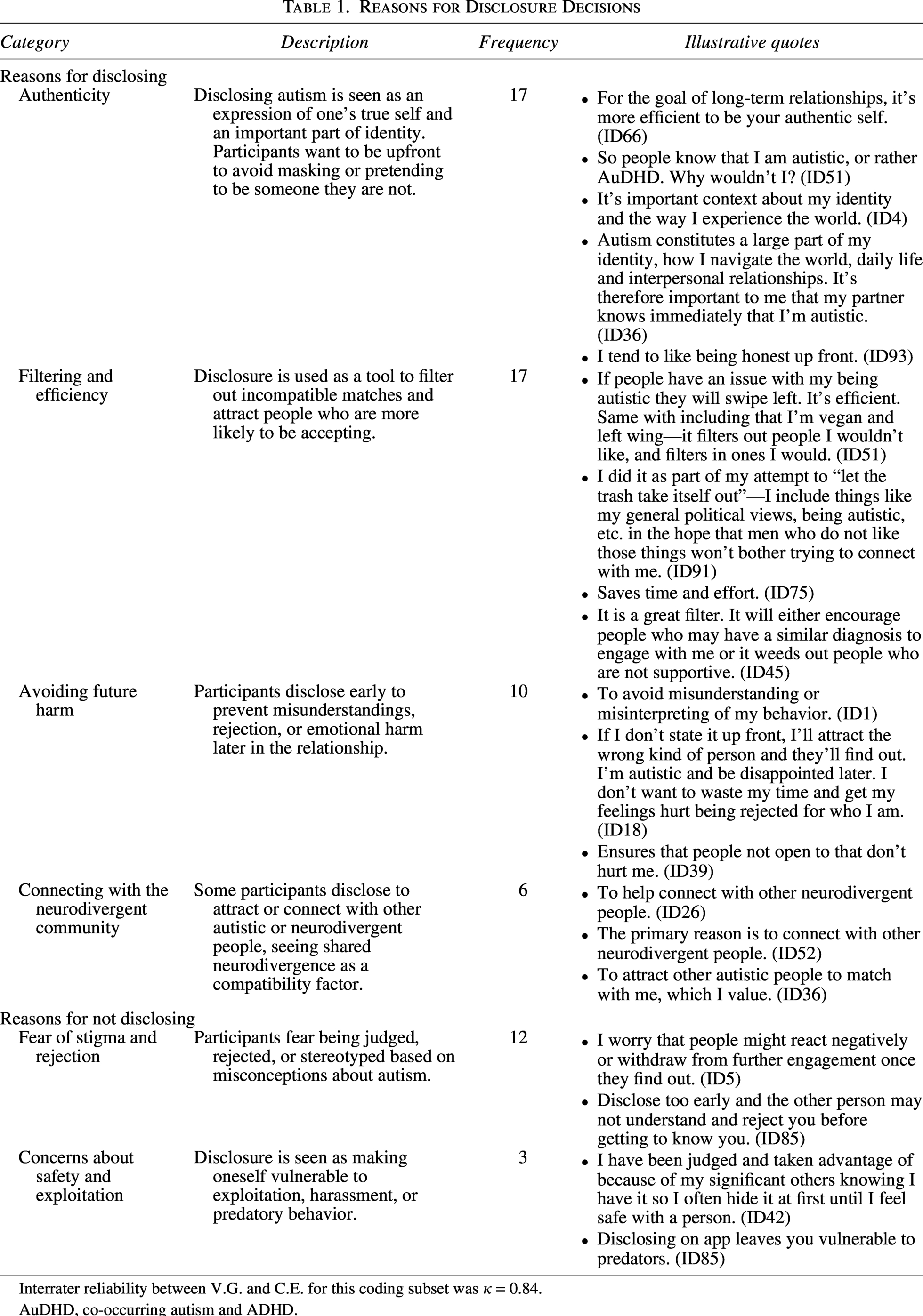
We developed an anonymous, cross-sectional online survey to explore the dating app experiences of autistic adults (see Supplementary Data). Following eligibility screening and the completion of demographic questions, we asked participants about their use of dating platforms, including the apps or websites used, their relationship preferences, and their motivations for using dating apps. The next section explored participants’ approaches to disclosing being autistic on these platforms, including reasons for disclosure or nondisclosure and the responses they received from others. Participants then completed a 14-item checklist developed by Wolbers and Boxall, 33 designed to investigate sexual harassment, aggression, and violence victimization among dating app users in Australia. This checklist covers experiences of online harassment (6 items), abusive and threatening language (3 items), online stalking (2 items), and online image-based sexual abuse (3 items; see Table 1 for a full list of items). The final section asked about relationships formed through dating apps and invited participants to share their overall impressions of the value of these platforms for autistic people. Both closed- and open-ended questions were used to capture quantitative data and qualitative insights related to the study’s aims. With the exception of the victimization checklist, we developed all survey items for this study.
Victimization Experiences
In line with recent recommendations for maintaining data integrity in online autism research, 44 we implemented several proactive measures to reduce the risk of fraudulent participation. These included built-in Qualtrics security tools such as CAPTCHA and IP duplication prevention, as well as additional validity checks like cross-referencing participants’ reported age with their birth year and including two attention-check items. To further discourage fraudulent responses, we did not offer direct incentives. Instead, participants were invited to select a charity to receive a small donation ($2AUD) as a gesture of appreciation for their involvement in this community-driven study.
Data analysis
We analyzed quantitative data using IBM SPSS Statistics (version 29). We calculated descriptive statistics, including frequencies, percentages, means, and standard deviations where appropriate, to summarize participant characteristics and key categorical variables. For example, we calculated the proportion of participants who disclosed being autistic on their dating profiles and those who reported different types of victimization. To assess differences in victimization experiences by gender and sexual orientation, we conducted chi-square analyses and Mann–Whitney U tests due to the nonnormal distribution of the data.
We used a conventional content analysis approach 45 to examine open-text responses related to (1) reasons for disclosing or not disclosing autism on dating apps, (2) responses received following disclosure, and (3) reasons to recommend or not recommend dating apps for autistic people. The first author performed an initial inductive coding process, which involved closely reading the responses and grouping them into categories based on emerging patterns. She then developed a preliminary coding framework, retaining categories supported by at least three illustrative quotes. This framework was refined in consultation with the second author, after which both authors independently coded a 20% subset of responses, achieving substantial inter-rater agreement (κ = 0.78). The first author then applied the finalized framework deductively to recode the full dataset.
Results
RQ1: How do autistic adults engage with dating apps, and what are their preferences and motivations for using them?
Most participants had used mainstream dating apps, including Tinder (75.5%, n = 77), Bumble (57.8%, n = 59), Hinge (52.0%, n = 53), OkCupid (33.3%, n = 34), Plenty of Fish (20.6%, n = 21), and eHarmony (16.7%, n = 17). A smaller proportion reported using apps specifically designed for neurodivergent or disabled people, such as Hiki (18.6%, n = 19) and Wable (2.0%, n = 2) in addition to mainstream apps. In addition, participants reported using apps designed for the LGBTQIA+ community, including Grindr (8.8%, n = 9), HER (8.8%, n = 9), and Feeld (6.9%, n = 7). We asked participants about their preferences for different types of dating apps, with the option to select more than one. Most preferred mainstream apps open to anyone (42.2%, n = 43). Smaller proportions indicated a preference for identity-specific platforms, including apps for neurodivergent or autistic people (29.4%, n = 30), LGBTQIA+-focused apps (15.7%, n = 16), and apps aimed at disabled people more broadly (6.9%, n = 7). Just under one-third (30.4%, n = 31) reported no particular preference, and four participants (3.9%) noted they were not aware that autism- or disability-specific dating apps existed but felt they would be a good option.
In terms of motivations, just under three-quarters of participants reported they were mainly looking for a long-term relationship when using dating apps (73.5%, n = 75); 11 participants (10.8%) preferred a casual or short-term relationship, with the remainder (15.7%) open to any kind of relationship.
RQ2: How do autistic adults navigate disclosure of their autistic identity on dating apps, and how are these disclosures received?
We asked participants whether they disclose that they are autistic on their dating app profiles. Just over half (54.5%, n = 55) reported never doing so, and 10.9% (n = 11) said they rarely disclosed. In contrast, 9 (8.9%) always disclosed on their profile, and an additional 13 (12.7%) reported often doing so. One participant did not respond to this item. The remaining 13 participants indicated that they disclosed sometimes. Participants who reported rarely or never disclosing their autistic identity on their profiles were asked whether they disclosed after meeting with a potential partner. At this later stage, nearly one-third still disclosed infrequently, with 7.6% (n = 5) reporting they never disclosed and 22.7% (n = 10) saying they rarely did so. Participants who had disclosed being autistic on dating apps were asked how others typically responded to their disclosure. The most common response was a mix of positive and negative reactions (38.6%, n = 39), followed by mostly positive responses (29.7%, n = 30). Only a small proportion (5.0%, n = 5) reported experiencing mostly negative responses.
We asked participants to elaborate on their reasons for disclosing or not disclosing as well as the nature of responses they had experienced. Content analysis of these open-text responses identified four categories of reasons to disclose (Authenticity [n = 17], Filtering and efficiency [n = 17], Avoiding future harm [n = 10], and Connecting with the neurodivergent community [n = 6]) and two categories of reasons not to disclose (Fear of stigma and rejection [n = 12] and Concerns about safety and exploitation [n = 3]). Responses to disclosure were categorized as Reciprocal disclosure (n = 23), Acceptance (n = 19), Ghosting and blocking (n = 16), Ignorance and stereotypes (n = 16), Stigma and ableism (n = 7), and Neutral or Indifference (n = 6). Tables 2 and 3 summarize the findings related to disclosure decisions and responses to disclosure, respectively. Each table includes category descriptions, the number of participants who mentioned each reason/response, and illustrative quotes with participant identifiers (ID1-102).
Reasons for Disclosure Decisions
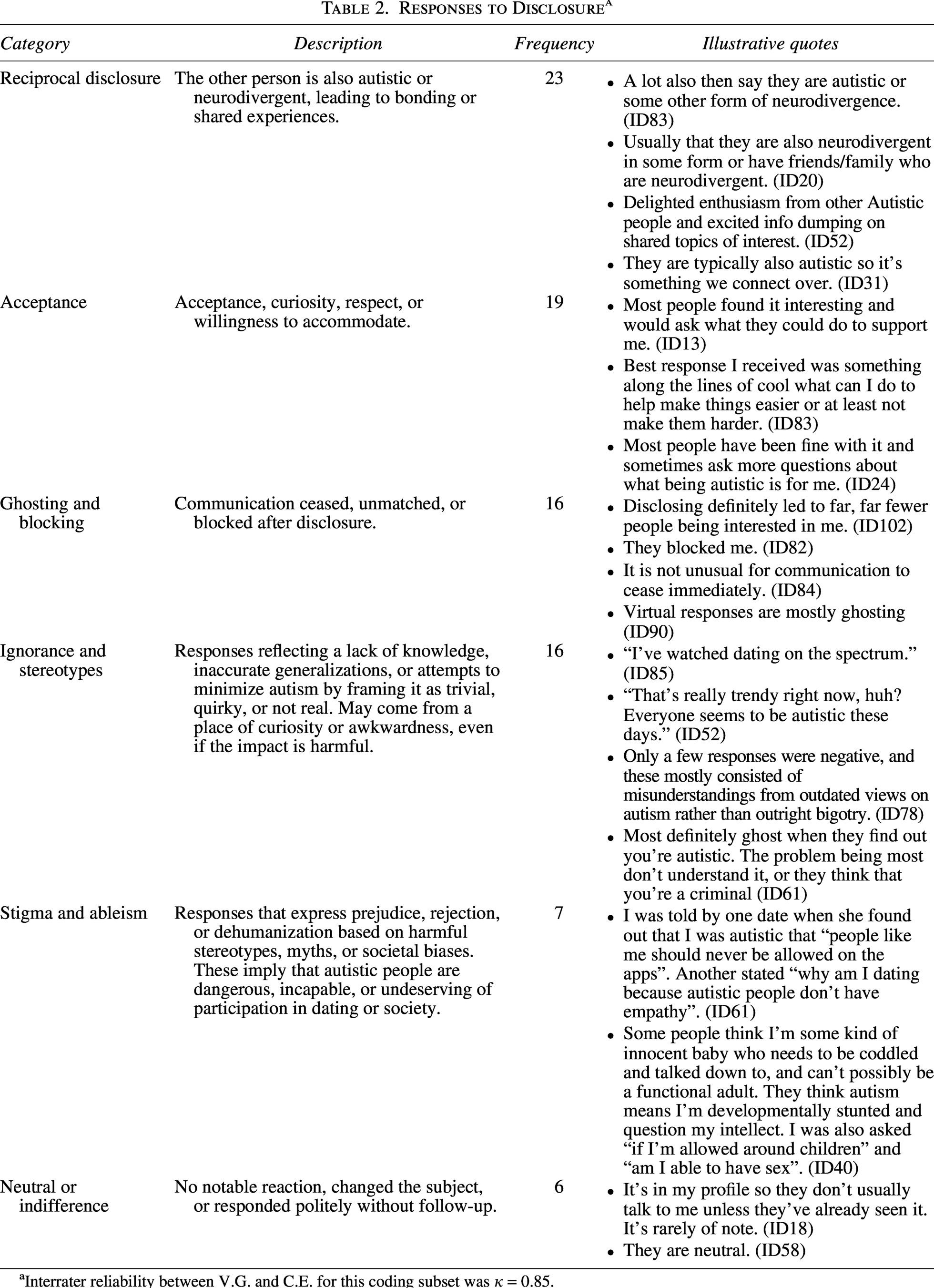
Interrater reliability between V.G. and C.E. for this coding subset was κ = 0.84.
Responses to Disclosure
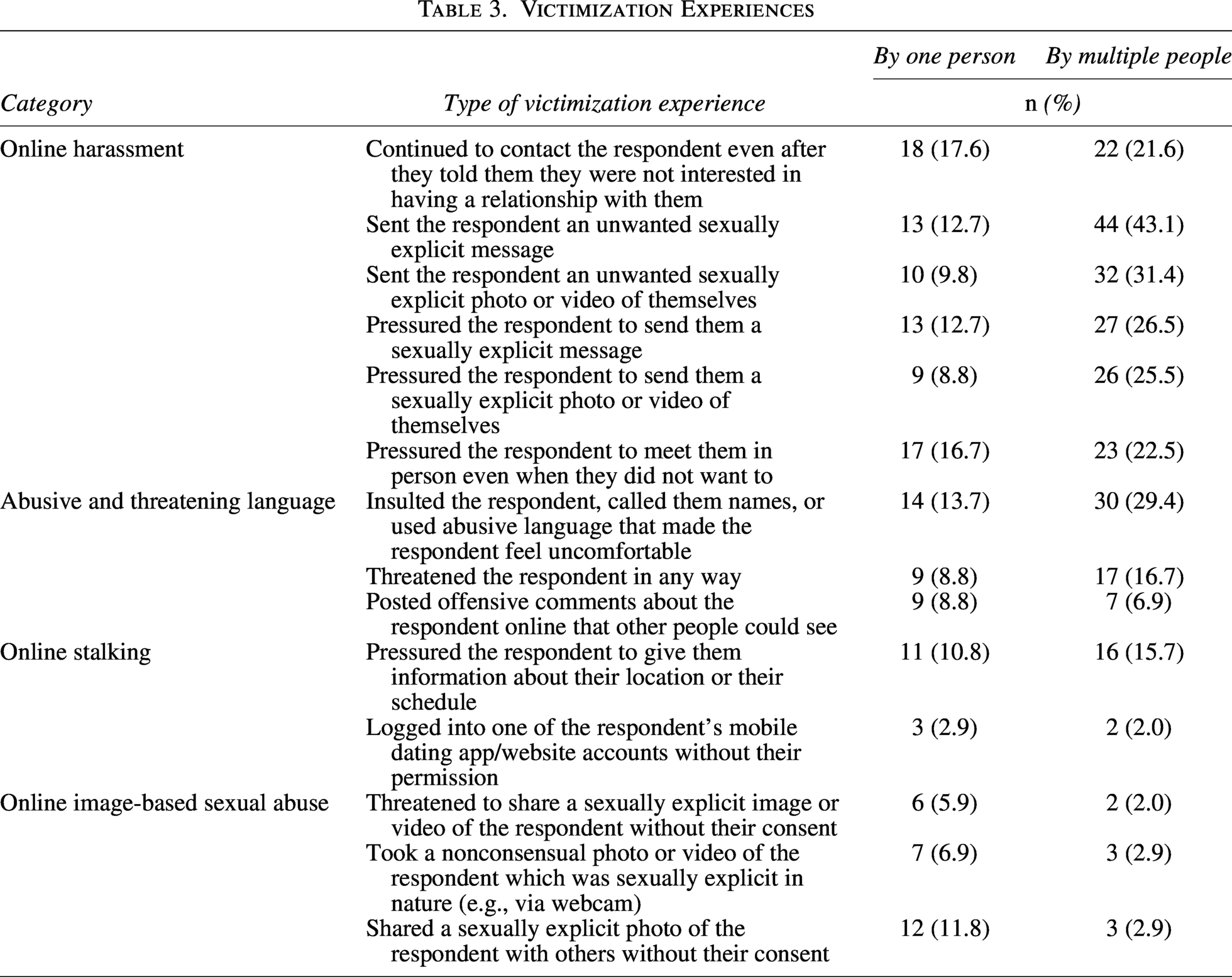
Interrater reliability between V.G. and C.E. for this coding subset was κ = 0.85.
RQ3: What negative or harmful experiences do autistic adults report on dating apps, and how do these experiences vary based on gender or sexual orientation?
Across the sample, the number of victimization types experienced ranged from 0 to 12. Nearly half of participants (45.1%, n = 46) reported no victimization. A further 19.6% (n = 20) reported one to two types, 14.7% (n = 15) reported three to five types, and 20.6% (n = 21) reported six or more types.
Table 1 shows the proportion of participants who reported various forms of online victimization, either by a single perpetrator or by multiple people. Harassment was the most commonly reported experience, particularly receiving unwanted sexually explicit messages (over 40% received such messages from multiple people) and being pressured to send explicit messages or images, with around one-quarter of participants reporting that these behaviors involved multiple perpetrators. Just over 40% reported being insulted, called names, or verbally abused while using dating apps, with most reporting this had occurred with multiple people. The mean number of victimization types reported by participants was 4.01 (SD = 3.8, range = 0–13).
To examine differences in online victimization by both gender and sexual orientation, we compared the number and types of victimization experiences across these groups. For sexual orientation analysis, nonheterosexual participants were defined as those who self-identified with any nonheterosexual sexual orientation. Due to the small number of gender-diverse participants (nonbinary or agender), inferential gender comparisons were conducted between women and men only. Victimization experiences among nonbinary and agender participants are therefore reported descriptively rather than included in inferential analyses.
Online harassment was significantly more common among women (77.2%) than men (48.5%) [χ2(1, 90) = 7.75] and among nonheterosexual participants (78.6%) compared with heterosexual participants (60.0%) [χ2(1, 101) = 4.12]. A greater proportion of nonheterosexual participants (57.1%) also reported experiencing abusive or threatening language compared with their heterosexual peers (32.6%) [χ2(1,102) = 6.12]. No significant group differences were found for stalking or image-based violence.
Across the 14 victimization types, on average, women reported 4.43 types of victimization (SD = 3.81), compared with 2.88 for men (SD = 3.57), while nonheterosexual participants reported 4.96 types (SD = 3.95), compared with 2.82 (SD = 3.28) among heterosexuals. These differences were statistically significant (gender: U = 687.50, z = –2.15, p < 0.05; orientation: U = 863.00, z = –2.74, p < 0.05). Full statistics are included in Supplementary Data.
Nonbinary and agender participants (n = 11) reported a mean of 5.18 victimization types (range = 1–13). All reported experiencing online harassment; 45.5% reported abusive or threatening language, 18% reported stalking, and 18% reported image-based sexual abuse.
RQ4: What kinds of connections or relationships do autistic adults form through dating apps, and how do they evaluate the usefulness of these platforms for other autistic people?
The majority of participants (83.3%, n = 85) reported having met someone in person after connecting via a dating app. Many had formed long-term (49%, n = 50) or short-term relationships (41.2%, n = 42), organized hook-ups (43.1%, n = 44), or established friends-with-benefits arrangements (24.5%, n = 25), although nearly one-quarter (23.5%, n = 24) had not formed any relationship through dating apps.
When asked to reflect on whether they would recommend dating apps for autistic people seeking new relationships, just over half (56.9%, n = 58) indicated “it depends.” About one-quarter responded “yes” (26.6%, n = 27); 8.8% (n = 9) responded “no,” while a small proportion (7.8%, n = 8) were unsure. Content analysis of open-text responses identified three categories of reasons to recommend dating apps for autistic people (Socialization is easier; Access to a wider range of people; and Facilitates practice and skill building) and two categories of reasons not to recommend (Risk of exploitation or abuse and Exhaustion or burnout). Table 4 presents a summary of these findings with illustrative quotes.
Reasons for Recommendations
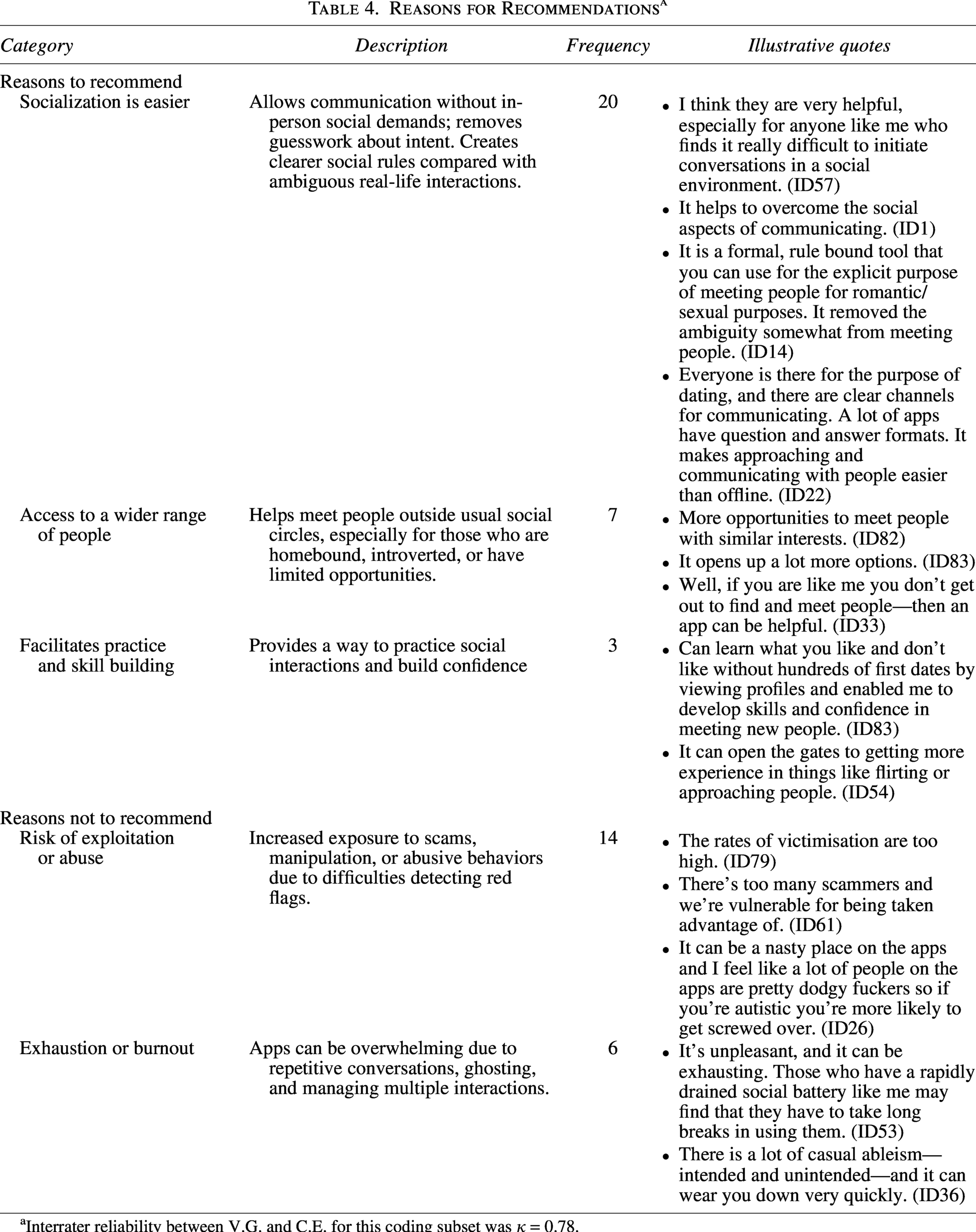
Interrater reliability between V.G. and C.E. for this coding subset was κ = 0.78.
Discussion
This study explored autistic adults’ experiences with dating apps, focusing on disclosure decisions, responses to disclosure, negative experiences, and perceived usefulness of these platforms. Our findings reveal that autistic adults are predominantly engaging with dating apps designed for the general public or serving sexual minority communities. While the study was not designed to prospectively evaluate relationship development, a substantial proportion of participants reported forming long-term relationships through their use of dating apps and also reported engaging in short-term relationships, hook-ups, or friends-with-benefits arrangements. Autistic adults’ desire for relationships is consistent with prior research showing comparable relationship aspirations to nonautistic adults.8,10 However, the extent to which participants reported forming these types of connections is surprising, given previous studies highlighting the significant barriers autistic people often face in establishing and maintaining intimate relationships.8,10,46,47 One possible explanation is that, for some autistic people, dating apps may help to reduce some of these barriers by providing structured opportunities for connection and communication. Indeed, our participants highlighted that apps make socialization easier by removing some of the ambiguity of in-person interactions, creating clearer social rules, and expanding access to a wider pool of potential partners. These benefits closely resemble those reported in broader disability research, where dating apps are described as lowering barriers related to mobility, stigma, and limited social opportunities, thereby enabling people with disabilities to pursue relationships in ways that may be less feasible offline. 4 At the same time, other factors may also help explain these findings. Individuals who are more confident using digital platforms, more socially motivated, or more proactive in seeking relationships may have been more likely to participate, potentially inflating reports of relationship success. Positive experiences may also have increased willingness to take part, introducing a degree of self-selection. In addition, broader contextual factors, such as increasing awareness of neurodiversity, greater community visibility, or shifting social norms, may have supported participants’ relationship outcomes in ways not directly captured within this study.
We also explored disclosure decisions and responses to disclosure, which were typically strategic and reflected a balance of anticipated benefits and risks. Many participants decided to disclose that they were autistic to promote authenticity, filter for compatible partners, or avoid misunderstandings, while others chose not to disclose to protect themselves from stigma, rejection, or exploitation. Consistent with previous research in employment, healthcare, and justice contexts,26–29,48 these motivations reflect the cost–benefit calculations autistic people undertake in deciding whether to share their autistic identity in socially and emotionally significant settings.
Responses to disclosure were varied, ranging from enthusiastic acceptance, often underpinned by shared neurodivergence, to overtly ableist or stigmatizing comments. Some positive responses involved curiosity, respect, or offers of support, suggesting that disclosure can facilitate connection and understanding when met with openness. However, a substantial number of participants reported ghosting, stereotyping, or infantilization, underscoring that disclosure can also lead to exclusion and harm. These patterns echo findings from the broader disability literature, where online dating often amplifies fears of stigma and where disclosure commonly prompts mixed or negative reactions, including fetishization, intrusive questioning, or swift rejection, highlighting that disabled users more generally face comparable risks when revealing disability online. 4 These findings are also consistent with the broader autism literature on disclosure, which indicates that although nonautistic individuals frequently anticipate positive outcomes from disclosure, autistic adults continue to report negative consequences across a range of contexts, including digital spaces.27,49,50 This divergence highlights how disclosure is often positioned as a pathway to inclusion in theory, yet in practice, it remains a risky and unpredictable option for autistic people. Within online dating contexts, our findings suggest that disclosure can function as a double-edged sword: Not only facilitating connection and understanding but also reproducing broader societal patterns of stigma when responses are filtered through persistent stereotypes—for example, that autistic people lack empathy or are socially disinterested.51,52 Addressing these entrenched societal misconceptions is essential to ensure that disclosure in digital environments is met with recognition and respect rather than risk and harm.
Our findings on autistic adults’ experiences of harassment, coercion, and abuse on dating apps are consistent with broader evidence that people with disabilities and other marginalized groups face disproportionate rates of online sexual violence compared with the general population. 33 These patterns are also aligned with the wider literature demonstrating that autistic people experience higher levels of violence and victimization across the lifespan compared with nonautistic individuals,34,53,54 although our study did not include a nonautistic comparison group. In this context, the elevated levels of harassment, verbal abuse, and coercion reported in our study demonstrate that exposure to harm is not just isolated to offline environments but also extend into digital spaces, where persistent stereotypes and ableism continue to shape harmful interactions. Within our sample, gender and sexual orientation also shaped patterns of victimization. Online harassment was significantly more common among women than men, and among nonheterosexual participants compared with their heterosexual peers. Nonheterosexual participants were also more likely to report abusive or threatening language. Moreover, both women and nonheterosexual participants reported experiencing a greater number of victimization types overall, highlighting not only differences in prevalence but also in the breadth of harms encountered. These findings are consistent with broader research indicating that autistic women and sexual minority individuals report higher rates of interpersonal violence compared with autistic men and heterosexual people.34,53,54 They also align with general-population studies of dating-app use showing that women and sexual minority users experience disproportionately high levels of harassment, coercion, and online abuse.31,32 Given the wide variation in the number of victimization types reported, including a subgroup experiencing extensive polyvictimization (six or more types), these patterns should be examined in future studies with larger and more powered samples to better understand the heterogeneity of autistic adults’ exposure to harm in online contexts. At the same time, nearly half of participants reported no victimization experiences. Understanding the factors associated with these comparatively safer experiences, such as app choice, disclosure strategies, communication patterns, boundary-setting, or contextual supports, may be equally important. Future research should therefore explore not only disproportionate exposure to harm but also potential protective factors that contribute to safer online dating experiences for autistic adults. Although statistical comparisons could not be conducted for nonbinary participants due to a small sample size, this also remains an important area for further exploration.
Participants’ reflections on whether they would recommend dating apps to other autistic people revealed both opportunities and challenges. On the positive side, some participants felt that apps could make socialization easier by reducing the ambiguity of face-to-face encounters, echoing research showing that autistic adults often find digital communication advantageous because it allows additional time to process and reduces sensory and social demands.55,56 Online environments more broadly have been shown to offer autistic people important avenues for community, identity development, and self-acceptance, 18 particularly for nonheterosexual autistic individuals, who often find online spaces more accessible and affirming than in-person community settings. 19 Access to a wider pool of potential partners was also valued, particularly for those who were socially isolated or had limited opportunities in their offline networks. At the same time, participants highlighted substantial concerns that tempered these potential benefits. Chief among these was exposure to exploitation, abuse, or manipulation—forms of harm that autistic people are already known to face at disproportionately high rates in both online and offline contexts.53,54 Some participants described challenges in identifying red flags in online interactions, particularly given the prevalence of scams and predatory behavior in digital environments, which they felt increased exposure to harm. Others described the emotional toll of app use, including feelings of burnout from repetitive conversations, experiences of ghosting, and the effort required to sustain multiple interactions simultaneously. Taken together, these accounts suggest that, much like decisions about disclosure, autistic adults’ engagement with dating apps may involve weighing potential risks and benefits in light of their emotional resources at a given time.
Limitations
Several limitations should be acknowledged when interpreting our findings. First, recruitment relied on social media and the personal and professional networks of the research team. This approach may have introduced selection bias, favoring participants who are connected to autism-related online communities, who are more comfortable engaging in research, or who have stronger views, either positive or negative, about dating apps. As a result, the descriptive statistics reported here may over-represent the experiences of individuals who are more engaged online or more motivated to share their perspectives and under-represent those with limited digital access, higher support needs, or different cultural or socioeconomic backgrounds. Although our study was intended to be international, most participants were Australian, and the sample was predominantly White and college educated. These factors further limit the generalizability of the findings to the broader autistic population.
Second, the study relied on retrospective self-report data, which may be influenced by recall bias or participants’ current relationship circumstances. Third, the small number of nonbinary participants prevented us from conducting our planned analysis of victimization experiences within this group. We did not conduct an a-priori power analysis because there was insufficient prior evidence to generate a meaningful effect size estimate for this specific cohort. As a result, the inferential analyses comparing victimization experiences across gender and sexual orientation should be interpreted cautiously. The modest subgroup sizes, particularly when comparing women and men and heterosexual and nonheterosexual participants, may have limited statistical power and increased the risk of Type II error. In addition, conducting multiple comparisons across the 14 victimization items increases the risk of Type I error, so these findings should be considered exploratory rather than confirmatory.
Finally, aside from the items pertaining to victimization, the survey was developed by our research team, which may limit both the comparability of our findings with other studies and the reliability of the tools used to assess the constructs of interest.
Future research and implications
Future studies should aim to recruit larger, more diverse samples to further explore how gender, sexual orientation, and other sociodemographic factors influence autistic people’s online dating experiences. In particular, greater inclusion of nonbinary and gender-diverse participants is needed to ensure that their experiences are not overlooked, given the disproportionate exposure to harm they may experience in both online and offline contexts. 57 Broader recruitment strategies that combine online and offline methods and expand international reach would help achieve more geographically and culturally diverse samples and reduce the self-selection patterns observed in our study. It will also be important to examine awareness and uptake of dating platforms specifically designed for people with disabilities or neurodivergence, as our participants reported limited engagement with such apps. Understanding barriers to their use and whether these platforms offer safer or more supportive environments could provide valuable insights. Further research could also explore the role of dating app design in promoting safety and inclusivity for neurodivergent users, including features that support informed disclosure and mitigate harassment.
Beyond research priorities, these findings have several implications for practice and policy. They highlight the need for online dating platforms to adopt more inclusive and accessible design features, strengthen safety mechanisms, and provide clearer pathways for reporting harmful behavior. Services that support autistic adults, including disability organizations, mental health providers, and community programs, may also play a role in helping individuals navigate dating apps, particularly in recognizing risks and providing guidance around disclosure decisions. In addition, comprehensive, neurodiversity-affirming sexuality education that addresses consent, boundaries, online communication, and recognizing red flags may help autistic people engage in digital dating environments more safely and confidently.
Conclusion
This study highlights the complex landscape autistic adults navigate when using dating apps. While these platforms can offer opportunities for authentic self-expression, connection, and access to a wider dating pool, they also expose users to risks of rejection, stereotyping, and victimization. Disclosure decisions are deeply personal and context-dependent, with the potential to either foster meaningful connections or invite harm. Addressing these challenges will require both broader societal changes to reduce autism stigma and targeted strategies to make online dating environments safer and more inclusive for autistic people, particularly those with intersecting marginalized identities.
Footnotes
Acknowledgments
The authors would like to thank Ainslie Robinson, an Autistic community member who provided valuable input into the design of our questionnaire. They also extend their sincere gratitude to the Autistic adults who participated in our study and generously shared their time and experiences by completing the survey. This research was only possible because of their contributions.
Authorship Confirmation Statement
V.G.: Project administration, conceptualization and design, methodology, data collection, analysis, interpretation of results, and original writing. C.E.: Conceptualization and design, analysis, interpretation of results, and review and editing. R.Y.C.: Conceptualization and design, interpretation of results, and review and editing. A.M.A.L.: Conceptualization and design, interpretation of results, and review and editing. A.P.: Conceptualization and design, interpretation of results, and review and editing.
Author Disclosure Statement
No competing financial interests exist.
Funding Information
No funding was received for this article.
Supplemental Material
References
Supplementary Material
Please find the following supplemental material available below.
For Open Access articles published under a Creative Commons License, all supplemental material carries the same license as the article it is associated with.
For non-Open Access articles published, all supplemental material carries a non-exclusive license, and permission requests for re-use of supplemental material or any part of supplemental material shall be sent directly to the copyright owner as specified in the copyright notice associated with the article.
