




Abstract
Introduction:
Cannabis legalization and consumption in the United States have accelerated over the past decade, resulting in a rapidly diversifying marketplace of medical and adult-use products. As of 2025, medical cannabis is permitted in 47 states, while adult-use markets are authorized in 24 states and the District of Columbia. This expansion underscores the urgent need for robust and consistent safety testing to ensure consumer protection. Despite federal prohibition, states have independently developed their own regulatory frameworks for contaminant testing, leading to wide variability in allowable limits, analyte lists, and method validation requirements.
Method:
This review critically compares contaminant regulations across U.S. adult-use jurisdictions and evaluates analytical methodologies published between 2020 and 2025 for four major hazard categories: heavy metals, pesticides, mycotoxins, and residual solvents. Emphasis is placed on sample preparation strategies, analytical instrumentation, and method performance parameters relevant to complex cannabis matrices such as flower, concentrates, and infused products.
Results:
Sample preparation approaches are tailored to matrix complexity and frequently utilize Quick, Easy, Cheap, Effective, Rugged, and Safe (QuEChERS) extraction followed by dispersive solid-phase extraction (dSPE). Cartridge SPE is commonly applied for enhanced cleanup, and immunoaffinity columns is used for selective isolation of aflatoxins and ochratoxin A. Instrumental analysis typically relies on Inductively Coupled Plasma-Mass Spectrometry (ICP-MS) for trace metals, liquid chromatography-tandem mass spectrometry and gas chromatography-tandem mass spectrometry (GC-MS/MS) for pesticide and mycotoxin detection, and headspace GC with flame ionization detection or GC-MS for residual solvent quantification.
Discussion:
Although current methodologies provide sensitive and reliable detection, inconsistencies in regulatory oversight across jurisdictions limit data comparability and complicate interstate commerce. Establishing harmonized performance criteria, standardized reporting units, and national proficiency testing programs would improve method reliability and consumer confidence. Continued innovation in sample preparation and validated multi-residue methods will be critical as product diversity and testing demands continue to expand.
Keywords
Introduction
History of cannabis
Cannabis has a 5,000-year history of medicinal, textile, and recreational use. Traditionally, its fibers were utilized for industrial materials such as rope, while its seeds and resins were incorporated into early pharmacopeia. However, the legal landscape shifted in the early 20th century as cannabis became associated with criminal activity, leading to global prohibition. In the United States, the Controlled Substances Act of 1970 classified it as a Schedule I substance. In recent decades, public and legal attitudes have shifted toward legalization, driven by the therapeutic potential for conditions such as epilepsy and chronic pain, alongside its significant economic value. 1 Despite this progress, federal prohibition persists in many regions, and concerns remain regarding health impacts on vulnerable populations, including adolescents and pregnant women.2,3
Cannabis chemical composition
Cannabis is a complex plant with over 120 phytocannabinoids and a variety of other bioactive compounds. The most well-known cannabinoids are Δ9-tetrahydrocannabinol (THC) and cannabidiol (CBD). THC is responsible for the psychoactive effects of cannabis, whereas CBD is non-psychoactive and has been studied for its therapeutic applications, including in the treatment of anxiety, chronic pain, and seizures. 4 Other cannabinoids such as cannabinol (CBN), cannabichromene, and cannabigerol (CBG) are present in smaller amounts but are gaining attention for their distinct effects and potential health benefits.5,6 In addition, cannabis contains terpenoids, which contribute to its aroma, and flavonoids, which have antioxidant properties. The plant also produces fatty acids, phenolic compounds, and vitamins, contributing to its overall therapeutic profile. Cannabis has a wide array of uses, from recreational to medicinal. It has been employed for centuries in treating pain, nausea, and inflammation, and more recently, it has gained approval in many places for the treatment of chronic conditions such as multiple sclerosis, cancer-related symptoms, and epilepsy. Edibles and oils further diversify consumption methods, offering alternatives to smoking. 7
Cannabis legalization in the United States
Cannabis regulation in the United States is a patchwork of state and federal laws. At the federal level, cannabis remains classified as a Schedule I controlled substance, meaning it is considered to have a high potential for abuse and no accepted medical use. Cannabis laws in the United States differ widely across states and generally fall into three categories (see Fig. 1): States that have fully legalized both recreational and medical use for adults; states that permit cannabis for medical purposes only, with a physician’s recommendation; and states where cannabis remains largely illegal or is limited to low-THC CBD products, which includes six states: Idaho, Wyoming, Nebraska, Kansas, North Carolina, and South Carolina. 8 These states have implemented regulatory frameworks to manage cannabis production, sales, and consumption. 9 Overall, the legal landscape has been changing rapidly as more states have moved toward legalization, particularly for medicinal use.
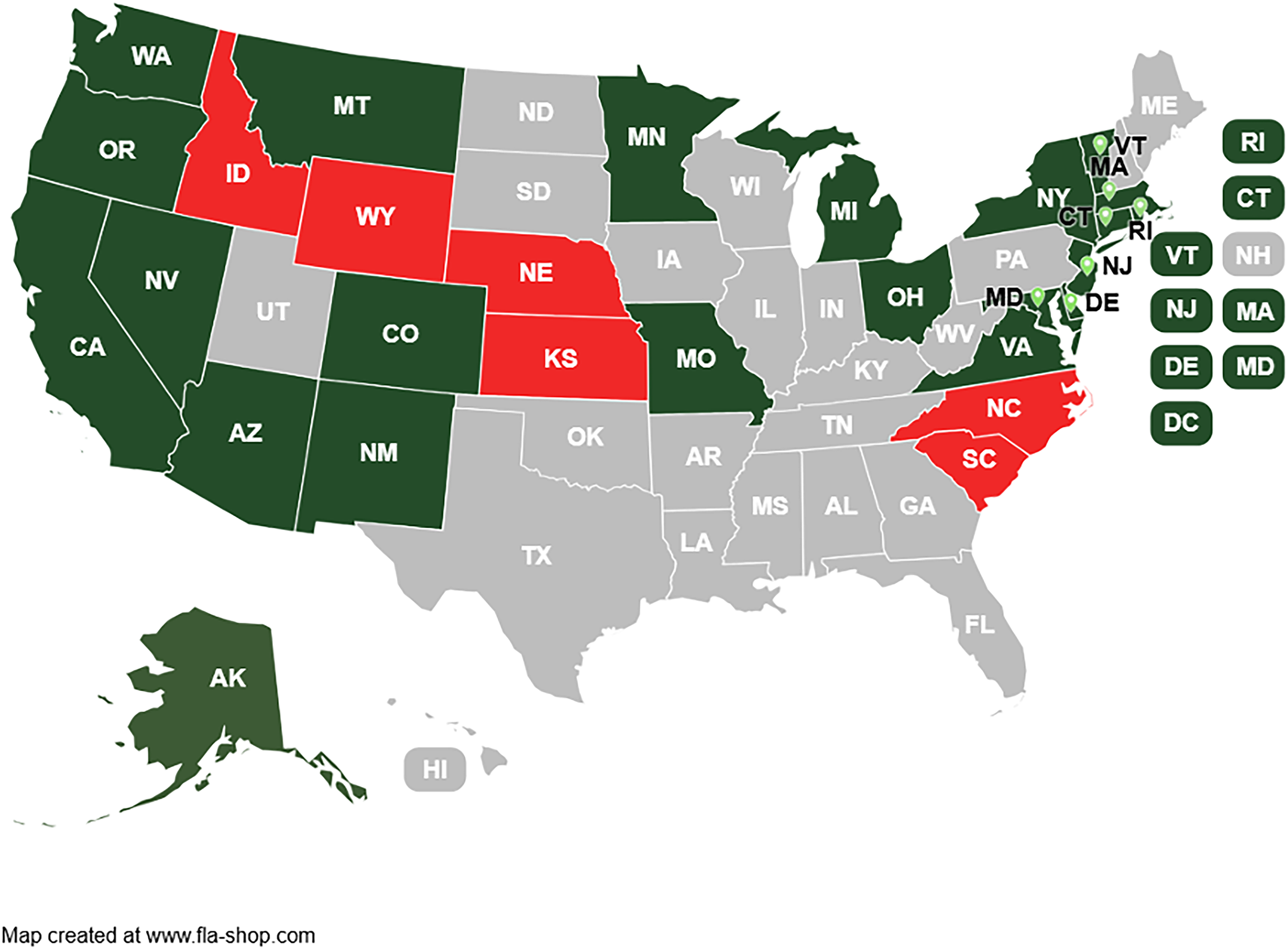
Overview of Cannabis Legalization across U.S. States. Green states indicate those where recreational cannabis is legal, while red states represent those where cannabis remains illegal, and the Gray represent states with mixed. This map highlights the status of cannabis legalization for medical and recreational use across the United State.
In the absence of unified federal standards, regulation of cannabis safety testing is left to individual states, 10 resulting in significant inconsistencies in testing protocols and allowable contaminant levels. This approach leads to variability in consumer protection across the United States. 11 Even among states that have legalized cannabis, regulatory frameworks differ widely—spanning cultivation practices, product labeling, and taxation—making compliance complex for producers and confusing for consumers.
In this review paper, we examine the cannabis regulations from the 24 U.S. states and the District of Columbia that have fully legalized cannabis. A systematic literature search was conducted via Google Scholar for the period 2020–2025 using targeted keywords such as cannabinoids, pesticides, and method validation, to identify and evaluate the most recent single-lab validations and research-based analytical methodologies. We analyze the required potency testing, regulated contaminant types, and allowable pesticide limits in each state. By compiling and comparing these regulatory frameworks, our goal is to support policymakers, scientists, and industry stakeholders in developing more unified, science-based standards that enhance consumer safety and improve product integrity in the cannabis market.
Cannabinoid Potency Testing in Jurisdictions with Legal Recreational Cannabis
As of August 2025, recreational cannabis is legal in 24 U.S. states and Washington, DC, each with varying requirements for potency testing (see Table 1). Nearly all mandate core cannabinoids—Δ9-THC, Δ9-THCA, CBD, and CBDA—while some expand to include minor compounds. For example, California tests CBN and CBG, Colorado adds Δ8-THC, Δ10-THC, and Exo-THC, and Maryland and New Jersey require comprehensive panels of 9–15 cannabinoids, including totals and acids. In contrast, states such as Illinois, Rhode Island, and Montana focus on basic profiles or totals for efficiency. These differences, shaped by regulatory maturity, priorities, and public health concerns, create an uneven system that impacts industry costs, consumer safety, and highlights the need for federal standardization.
Potency Testing Requirements in U.S. Recreational Cannabis Jurisdictions
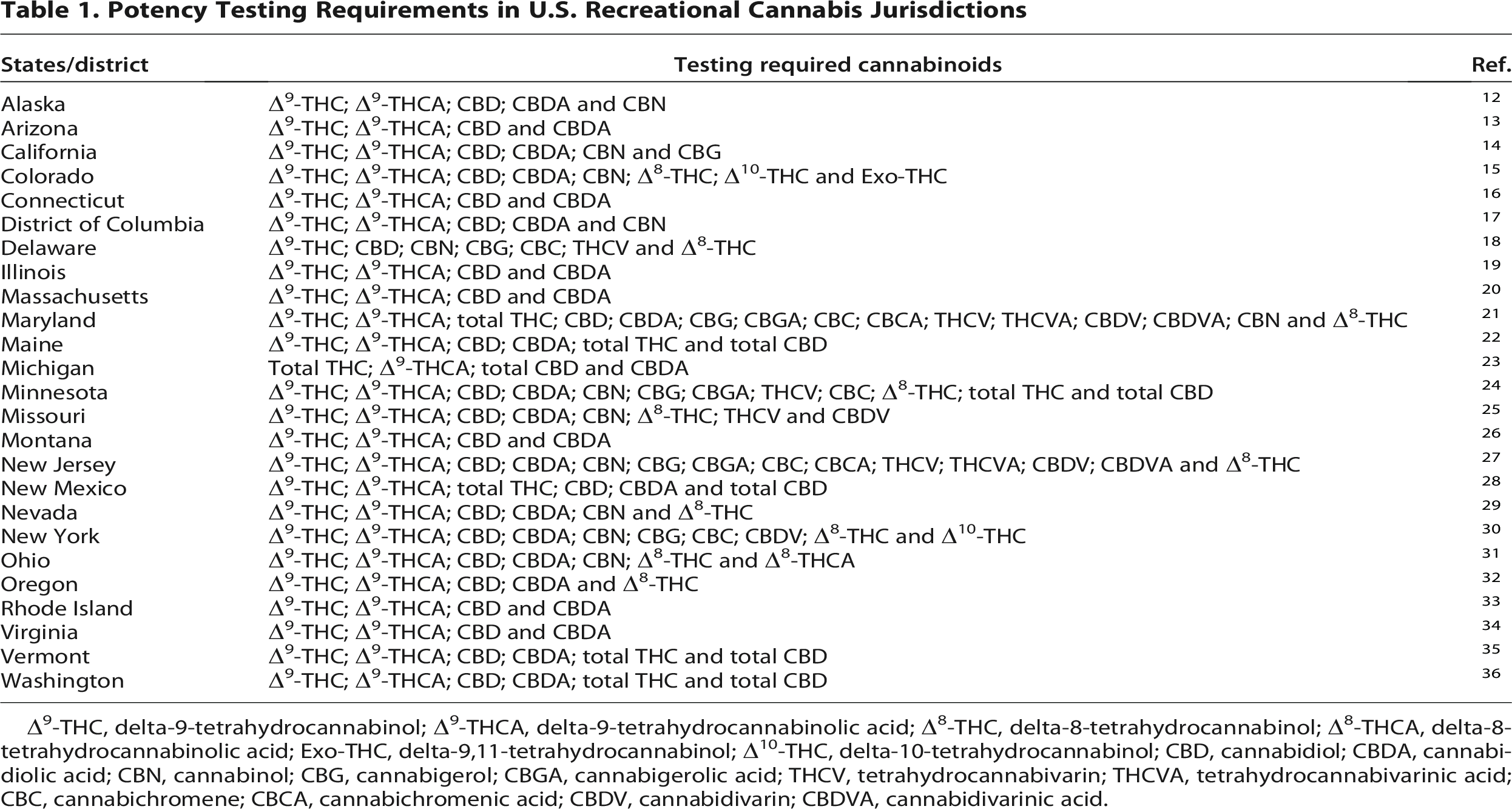
Δ9-THC, delta-9-tetrahydrocannabinol; Δ9-THCA, delta-9-tetrahydrocannabinolic acid; Δ8-THC, delta-8-tetrahydrocannabinol; Δ8-THCA, delta-8-tetrahydrocannabinolic acid; Exo-THC, delta-9,11-tetrahydrocannabinol; Δ10-THC, delta-10-tetrahydrocannabinol; CBD, cannabidiol; CBDA, cannabidiolic acid; CBN, cannabinol; CBG, cannabigerol; CBGA, cannabigerolic acid; THCV, tetrahydrocannabivarin; THCVA, tetrahydrocannabivarinic acid; CBC, cannabichromene; CBCA, cannabichromenic acid; CBDV, cannabidivarin; CBDVA, cannabidivarinic acid.
Cannabis Contaminants Regulation in the United States
In the rapidly evolving landscape of cannabis consumption and regulation, the presence of contaminants in cannabis and its derived products has become a pressing public health concern. As the legal cannabis industry continues to expand, ensuring the safety and quality of cannabis products is paramount. Contaminants such as pesticides, residual solvents, heavy metals, and mycotoxins are among the most frequently detected substances that can pose serious risks to consumers. Despite these risks, regulatory standards for contaminant testing vary significantly across jurisdictions, with each state in the United Sates establishing its own framework for cannabis safety. 37 The urgent need for standardized testing protocols and harmonized regulations across all legal cannabis markets cannot be overstated. 38 Inconsistent regulations not only create confusion for producers but also hinder the development of a cohesive public health strategy.
Cannabis pesticide regulation in the United States
Pesticide contamination is a major concern in cannabis cultivation due to the widespread use of chemical agents to control pests, mold, and environmental stressors. Common agricultural pesticides—such as organophosphates, carbamates, pyrethroids, and neonicotinoids—are persistent and toxic, often remaining in the final cannabis product. Unlike traditional crops, cannabis is frequently inhaled, and heating or combustion can transform residues into more toxic byproducts. 39 Compounds such as malathion, carbaryl, and chlorpyrifos can generate harmful derivatives linked to neurotoxicity, carcinogenicity, and endocrine disruption. Furthermore, many of these pesticides were never evaluated for inhalation safety, posing additional health risks.
Because cannabis remains a Schedule I substance under U.S. federal law, pesticide regulation is determined at the state level, resulting in wide disparities in testing requirements and permissible limits. As of August 2025, 24 U.S. states and Washington, DC, have fully legalized recreational cannabis, each with distinct pesticide testing regulations (Tables 2 and 3). The number of regulated pesticides varies widely—from 9 in Massachusetts to 99 in Colorado—though most states monitor between 40 and 60 compounds. States such as New York (70) and California (66) maintain extensive oversight, while Colorado’s 99 compounds represent the broadest scope. Mid-range regulatory programs, including those in Arizona, Minnesota, Maine, Michigan, Missouri, Oregon, and Washington, test for 54–59 pesticides with similar thresholds, indicating regional consistency. Virginia and Illinois reference the U.S. Environmental Protection Agency’s food residue standards (40 CFR Part 180) as their compliance benchmark. 47
Cannabis Pesticide Contaminant Testing Regulations in Arizona, California, Connecticut, Maine, Michigan, Minnesota, Missouri, Montana, New York, Oregon, Rhode Island, and Washington
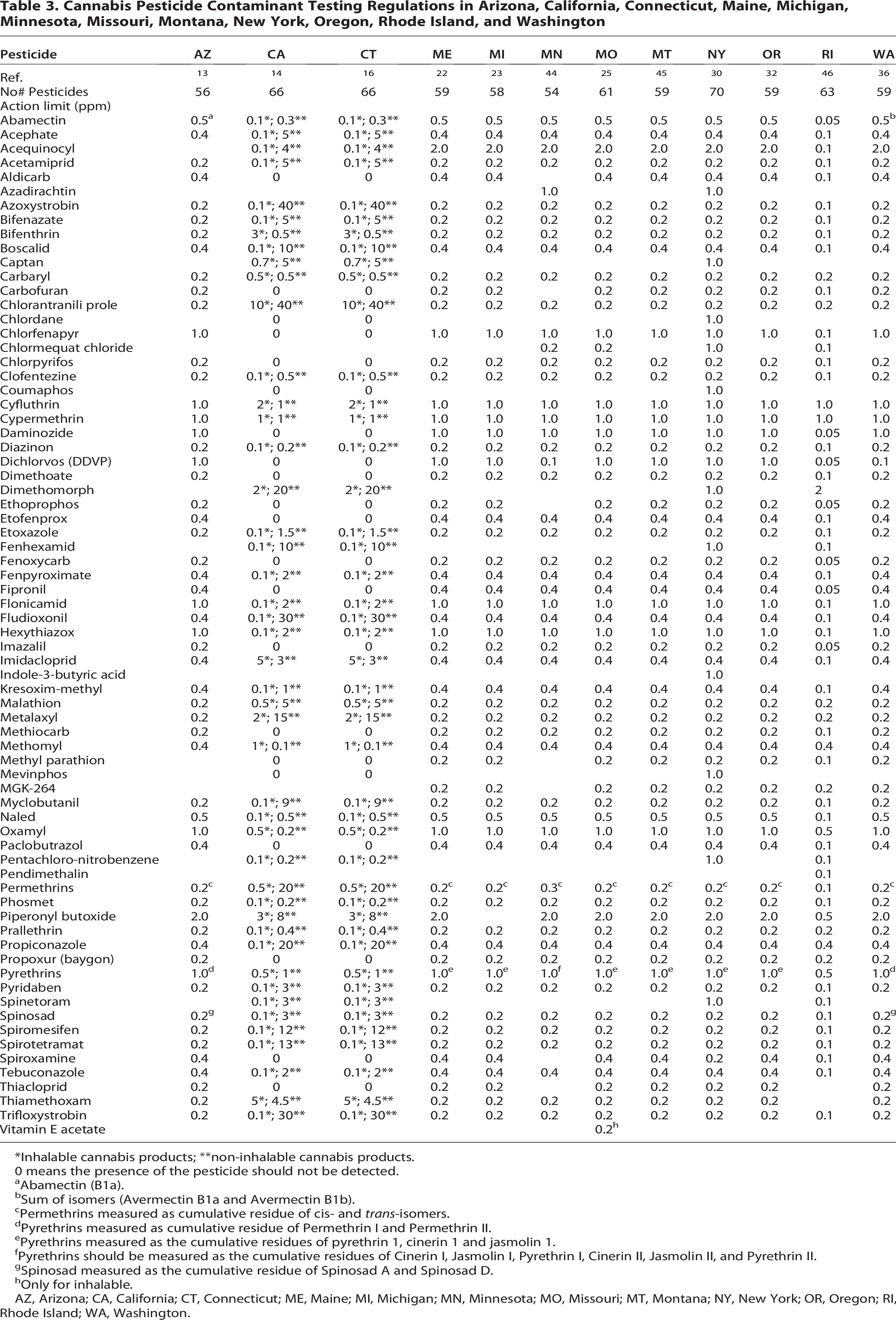
*Inhalable cannabis products; **non-inhalable cannabis products.
0 means the presence of the pesticide should not be detected.
Abamectin (B1a).
Sum of isomers (Avermectin B1a and Avermectin B1b).
Permethrins measured as cumulative residue of cis- and trans-isomers.
Pyrethrins measured as cumulative residue of Permethrin I and Permethrin II.
Pyrethrins measured as the cumulative residues of pyrethrin 1, cinerin 1 and jasmolin 1.
Pyrethrins should be measured as the cumulative residues of Cinerin I, Jasmolin I, Pyrethrin I, Cinerin II, Jasmolin II, and Pyrethrin II.
Spinosad measured as the cumulative residue of Spinosad A and Spinosad D.
Only for inhalable.
AZ, Arizona; CA, California; CT, Connecticut; ME, Maine; MI, Michigan; MN, Minnesota; MO, Missouri; MT, Montana; NY, New York; OR, Oregon; RI, Rhode Island; WA, Washington.
Cannabis Pesticide Contaminant Testing Regulations in Alaska, Colorado, Delaware, Massachusetts, Maryland, New Jersey, New Mexico, Nevada, Ohio, Vermont, and Washington, DC
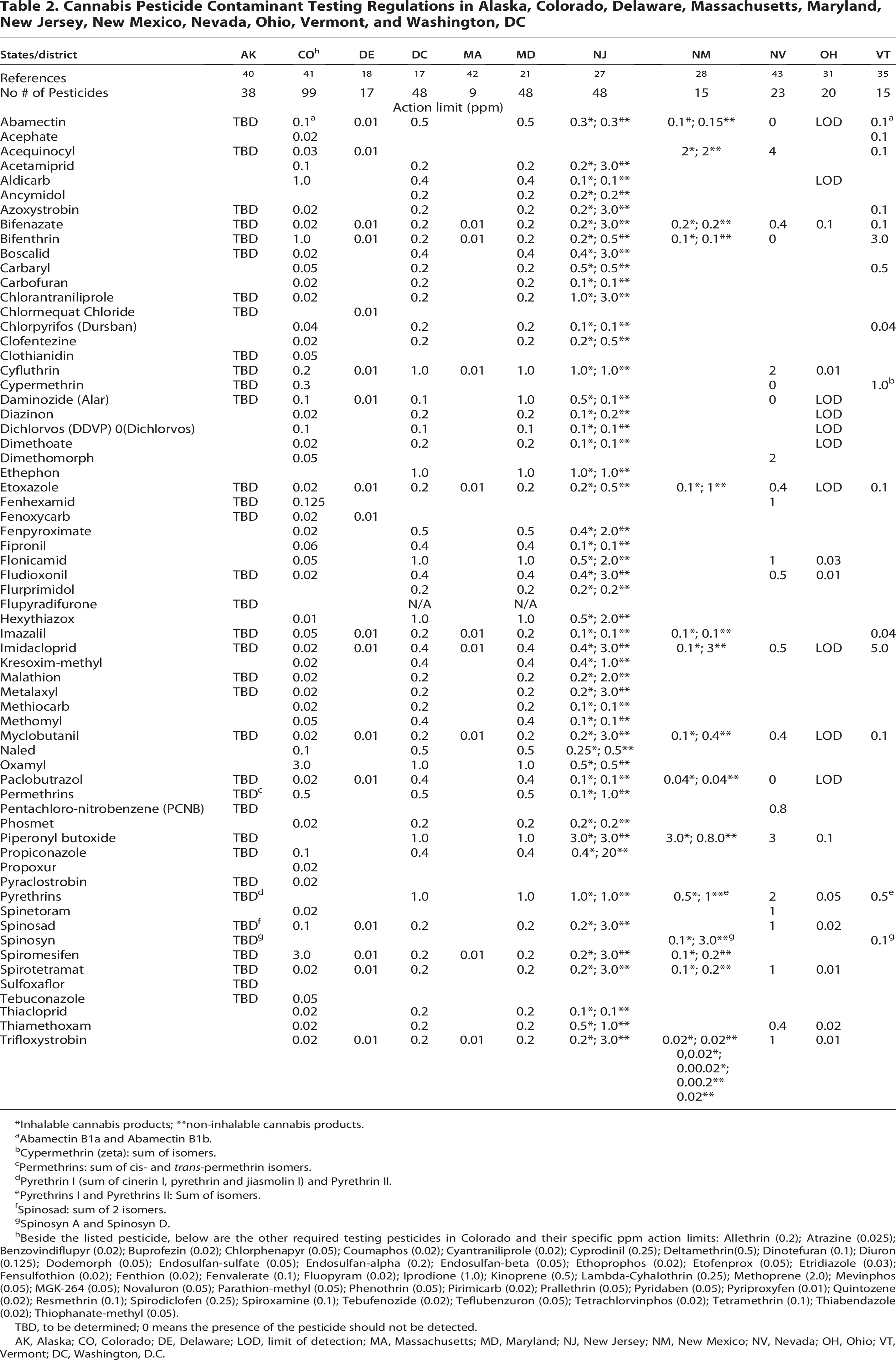
*Inhalable cannabis products; **non-inhalable cannabis products.
Abamectin B1a and Abamectin B1b.
Cypermethrin (zeta): sum of isomers.
Permethrins: sum of cis- and trans-permethrin isomers.
Pyrethrin I (sum of cinerin I, pyrethrin and jiasmolin I) and Pyrethrin II.
Pyrethrins I and Pyrethrins II: Sum of isomers.
Spinosad: sum of 2 isomers.
Spinosyn A and Spinosyn D.
Beside the listed pesticide, below are the other required testing pesticides in Colorado and their specific ppm action limits: Allethrin (0.2); Atrazine (0.025); Benzovindiflupyr (0.02); Buprofezin (0.02); Chlorphenapyr (0.05); Coumaphos (0.02); Cyantraniliprole (0.02); Cyprodinil (0.25); Deltamethrin(0.5); Dinotefuran (0.1); Diuron (0.125); Dodemorph (0.05); Endosulfan-sulfate (0.05); Endosulfan-alpha (0.2); Endosulfan-beta (0.05); Ethoprophos (0.02); Etofenprox (0.05); Etridiazole (0.03); Fensulfothion (0.02); Fenthion (0.02); Fenvalerate (0.1); Fluopyram (0.02); Iprodione (1.0); Kinoprene (0.5); Lambda-Cyhalothrin (0.25); Methoprene (2.0); Mevinphos (0.05); MGK-264 (0.05); Novaluron (0.05); Parathion-methyl (0.05); Phenothrin (0.05); Pirimicarb (0.02); Prallethrin (0.05); Pyridaben (0.05); Pyriproxyfen (0.01); Quintozene (0.02); Resmethrin (0.1); Spirodiclofen (0.25); Spiroxamine (0.1); Tebufenozide (0.02); Teflubenzuron (0.05); Tetrachlorvinphos (0.02); Tetramethrin (0.1); Thiabendazole (0.02); Thiophanate-methyl (0.05).
TBD, to be determined; 0 means the presence of the pesticide should not be detected.
AK, Alaska; CO, Colorado; DE, Delaware; LOD, limit of detection; MA, Massachusetts; MD, Maryland; NJ, New Jersey; NM, New Mexico; NV, Nevada; OH, Ohio; VT, Vermont; DC, Washington, D.C.
Action limits differ by compound and product type, typically stricter for inhalable products due to higher exposure risks. Thresholds range from 0.01 ppm (e.g., Bifenazate) to 40 ppm (e.g., Azoxystrobin), with zero tolerance for highly toxic substances such as Aldicarb and Carbofuran. This regulatory variability highlights the need for federal standardization to ensure consistent consumer protection and streamline compliance across the expanding U.S. cannabis industry.
While U.S. state regulations provide a localized framework for consumer safety, significant discrepancies exist when compared to international benchmarks like Health Canada. For instance, while most U.S. states allow for varying “action levels” of pesticides, Health Canada enforces a mandatory list of nearly 100 unauthorized pesticide active ingredients with strictly defined limit of quantitation (LOQ), often as low as 0.01 ppm. The scientific justification for these differences is often criticized; while Health Canada’s limits are designed specifically for cannabis products, many U.S. state limits are adapted from EPA food-crop tolerances. This is problematic because food-based safety data assumes oral ingestion and first-pass metabolism, failing to account for the unique toxicokinetics of inhalation. This regulatory gap highlights the need for a transition toward inhalation-specific toxicological models to harmonize safety standards between the fragmented U.S. state markets and the more centralized Canadian framework.
Cannabis heavy metal regulation in the United States
Heavy metal contamination presents a significant challenge in cannabis cultivation due to the plant’s natural tendency to bioaccumulate toxic elements from its environment. Cannabis readily absorbs heavy metals such as lead (Pb), cadmium (Cd), arsenic (As), and mercury (Hg) from soil, water, and even atmospheric sources. This bioaccumulation makes it particularly susceptible to contamination, even when grown under otherwise controlled conditions. These metals pose serious health risks: lead exposure is linked to cognitive dysfunction and developmental delays; cadmium can cause renal impairment and bone demineralization; arsenic is a known carcinogen; and mercury has potent neurotoxic effects, particularly through inhalation of contaminated vaporized products. The primary sources of contamination often include polluted soils, contaminated fertilizers, and irrigation with metal-laden water. 48 As a result, rigorous monitoring and environmental control throughout the cultivation process are critical to ensure product safety and consumer health.
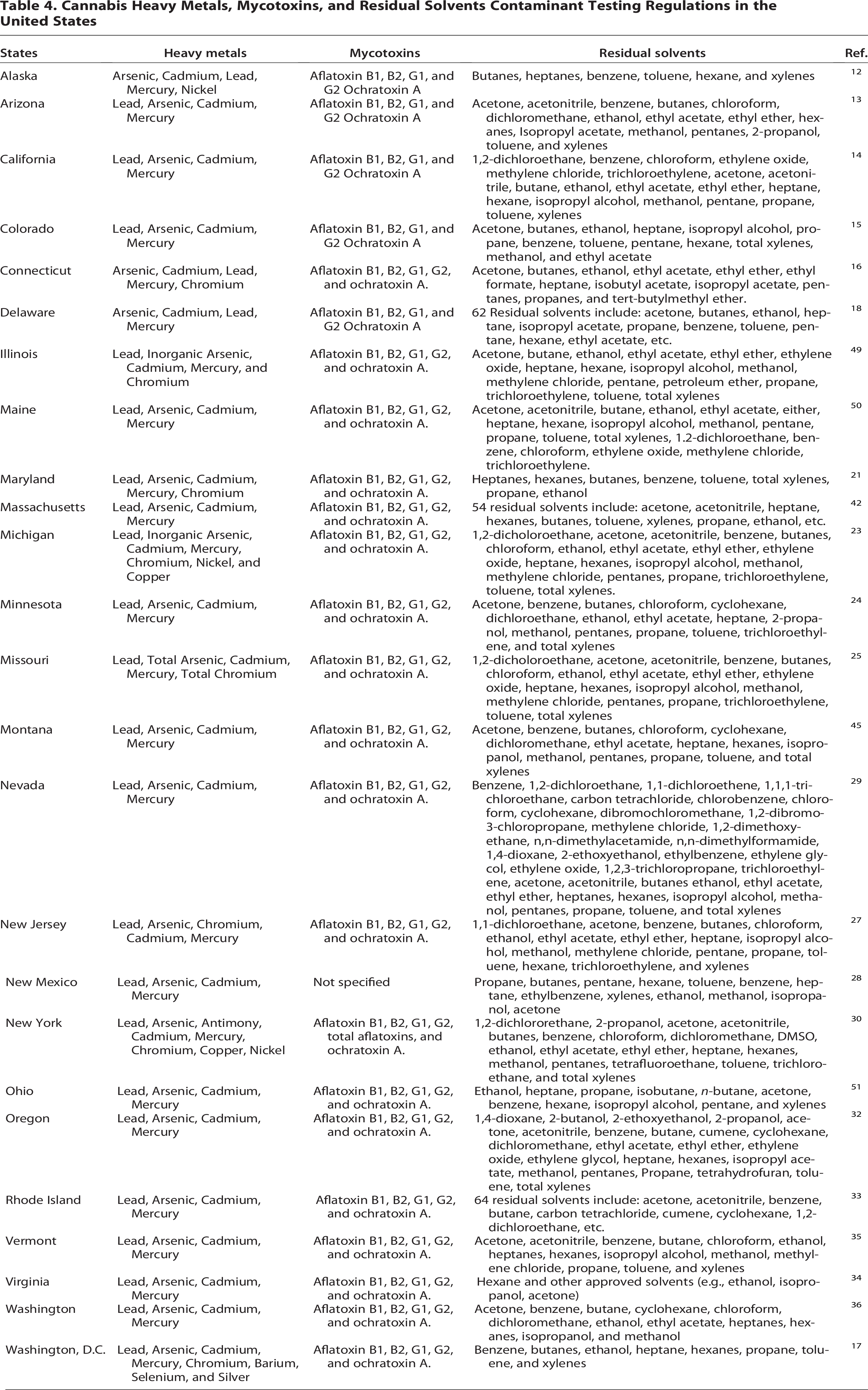
There is a broad consensus across states on testing for four key heavy metals (Table 4): Lead, Arsenic, Cadmium, and Mercury, which are regulated in nearly every state. Some states go further, including Chromium, Nickel, Copper, Barium, Selenium, Silver, and Antimony (e.g., New Jersey and New York), reflecting differing assessments of risk. The consistency in regulating core heavy metals suggests a recognized baseline of concern, though the expanded lists in some jurisdictions point to varying risk tolerances and public health goals.
Cannabis Heavy Metals, Mycotoxins, and Residual Solvents Contaminant Testing Regulations in the United States
Cannabis mycotoxins regulation in the United States
Mycotoxins, toxic secondary metabolites produced by various fungal species, represent a serious biological contaminant in cannabis products. These compounds can develop at multiple stages—including cultivation, harvesting, drying, storage, or processing—especially under warm and humid conditions that promote fungal growth.52,53 These toxins are also mutagenic, teratogenic, and immunosuppressive, with strong associations to liver cancer in both humans and animals. Among the most concerning mycotoxins in cannabis are aflatoxins (AFs), primarily produced by Aspergillus flavus and Aspergillus parasiticus, and ochratoxin A (OTA), commonly produced by Aspergillus and Penicillium species. AFs are potent carcinogens, with AF B1 being classified as a Group 1 carcinogen by the I International Agency for Research on Cancer. 54 OTA is nephrotoxic and has been shown to impair immune function by inhibiting T and B cell proliferation and interfering with cytokine signaling pathways such as interleukin-2 production. 55 Inhalation of spores or combustion of contaminated cannabis materials could pose heightened risks due to direct exposure to these biohazards via the respiratory route. 56 Most states that regulate mycotoxins focus on AFs B1, B2, G1, G2, and OTA, the most toxic and carcinogenic fungal metabolites (Table 4). Consistent regulation would ensure better consumer protection and help prevent potentially life-threatening exposures, particularly among immunocompromised patients who may rely on cannabis for medical purposes.
Cannabis residual solvents regulation in the United States
Residual solvents pose a significant health risk, especially in cannabis concentrates and extracts, where high levels of processing are required. 57 Common solvents such as butane, propane, ethanol, and acetone are frequently used in the extraction process to isolate cannabinoids and terpenes from the plant matrix. When these solvents are not properly purged from the final product, they can pose serious health risks. Inhalation of residual solvents—particularly when the product is vaporized or combusted—can cause a range of adverse health effects, including respiratory irritation, central nervous system depression, and potential organ toxicity. 58 To protect consumers, modern extraction facilities are required to implement stringent purging protocols and analytical testing (e.g., headspace gas chromatography) to ensure that residual solvent levels fall below safety thresholds. However, inconsistent regulations across jurisdictions can lead to variability in enforcement and product safety.
States show substantial variability in residual solvent regulation, both in the number of solvents monitored and in the solvents themselves metabolites (Table 4). Some states test for a small list (e.g., Alaska with 6 solvents or Maryland with 8), while others, like Delaware and Massachusetts, test for over 60. Commonly regulated solvents include Butane, Propane, Benzene, Toluene, Hexane, Ethanol, Methanol, and Xylenes, reflecting their frequent use in cannabis extraction processes. The wide range in solvent lists reflects differing levels of scrutiny and permissible processing methods across jurisdictions.
Sample Preparation Methods for Cannabis Contaminant Analysis
Sample preparation is widely regarded as the most time-consuming and technically challenging step in the analytical process, a reality that holds particularly true for cannabis contaminant testing due to the plant material’s complex matrix. 59 This matrix comprises a diverse array of compounds, including cannabinoids, terpenes, flavonoids, and interfering substances such as chlorophyll and lipids. Effective sample preparation is essential to ensure the accurate determination of analytes, particularly contaminants. It minimizes matrix effects, which occur when non-target sample components interfere with the analytical signal, potentially leading to suppression or enhancement of the signal and thus inaccurate quantification. A notable example is ion suppression in mass spectrometry, where co-eluting compounds reduce the ionization efficiency of the target analyte. To address this, techniques such as QuEChERS (Quick, Easy, Cheap, Effective, Rugged, and Safe) extraction are widely employed in cannabis contamination analysis to effectively reduce matrix effects. 60 Moreover, effective sample preparation enhances method sensitivity by concentrating the analyte of interest and removing substances that could compromise analytical instruments. Without rigorous sample preparation, even the most advanced analytical instruments can yield unreliable results, highlighting its critical role in ensuring the accuracy of cannabis contaminant testing. Below are the commonly used sample preparation methods for analyzing cannabis contaminants.
Liquid–Liquid extraction
Liquid–liquid extraction (LLE) is a widely used technique for extracting contaminants such as pesticides from cannabis samples, relying on the partitioning of target compounds between two immiscible solvents. 61 This biphasic separation is particularly effective for isolating pesticides from complex matrices like cannabis flowers or oils, where numerous interfering substances may be present. The resulting organic layer, enriched with the extracted pesticides, can then be analyzed by HPLC hyphenated to a detection method such as mass spectrometry (MS) for accurate identification and quantification. LLE is widely used in cannabis testing for its simplicity, low cost, and high throughput, but it requires large volumes of hazardous solvents, risks incomplete separation and co-extraction of impurities, and often demands multiple extraction steps to achieve adequate recovery.
Supercritical fluid extraction
Supercritical fluid extraction (SFE) has emerged as a powerful “green” alternative for isolating pesticides from complex sample matrices.62–64 By utilizing supercritical CO2, SFE significantly reduces total solvent consumption and prevents the degradation of thermolabile compounds. This method offers high selectivity and faster extraction times compared to LLE. This method offers high selectivity and faster extraction times compared to liquid–liquid extraction (LLE). SFE also shows strong potential for high-throughput pesticide monitoring while maintaining environmentally sustainable laboratory practices. Its ability to produce clean extracts with minimal enrichment steps makes it increasingly attractive for cannabis pesticide analysis.
QuEChERS
QuEChERS is a modern extraction and cleanup technique valued for its speed, efficiency, and low cost, 65 making it a preferred choice for routine pesticide residue testing in cannabis. 66 The procedure usually starts by hydrating the sample with water, then extracting it with acetonitrile. Next, a salt mixture—typically magnesium sulfate and sodium chloride—is added to assist the phases’ separation (see Fig. 2). This step is usually followed by dispersive solid-phase extraction (dSPE) cleanup to remove residual matrix interferences before analysis by GC-MS or LC-MS. Advantages of QuEChERS include broad applicability to a wide range of pesticides and contaminants, high extraction efficiency from complex cannabis matrices, minimal solvent and reagent usage, and compatibility with high-throughput workflows. However, the method can have limitations, such as incomplete removal of highly polar compounds, variability in analyte recoveries across different cannabis products, and occasional co-extraction of interferences that can affect detection limits.
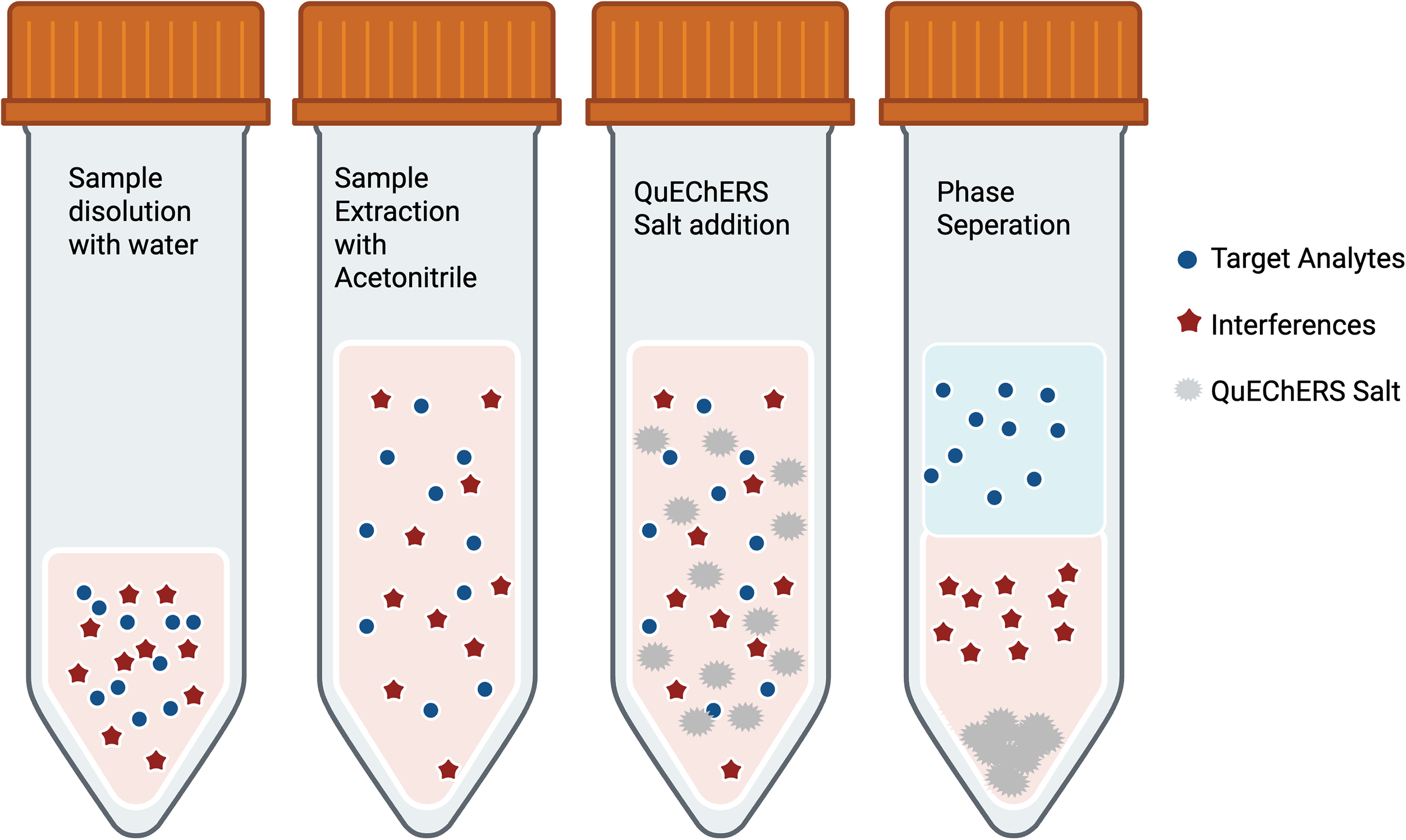
QuEChERS extraction workflow. QuEChERS, Quick, Easy, Cheap, Effective, Rugged, and Safe.
Solid-phase extraction and solid-phase microextractions
Solid-phase extraction (SPE) and solid-phase microextraction (SPME) provide complementary strategies for cleanup and enrichment in cannabis contaminant analysis, and a clear transition between them helps laboratories select the most appropriate workflow (see Fig. 3). In SPE, a liquid extract is passed through a selective sorbent that retains target analytes while permitting matrix interferences to be washed away; the analytes are subsequently eluted with an appropriate solvent and quantified by GC-MS or LC-MS. This cartridge-based approach offers high capacity and robust matrix removal across diverse products—dried flowers, edibles, and viscous oils—and is well suited to broad multi-residue panels when low limits of quantitation and reproducible recoveries are paramount. 67 The chief trade-offs are consumable cost, method-development time to tune sorbent chemistry and elution conditions for specific pesticides, and the possibility of analyte loss through irreversible adsorption or incomplete elution.
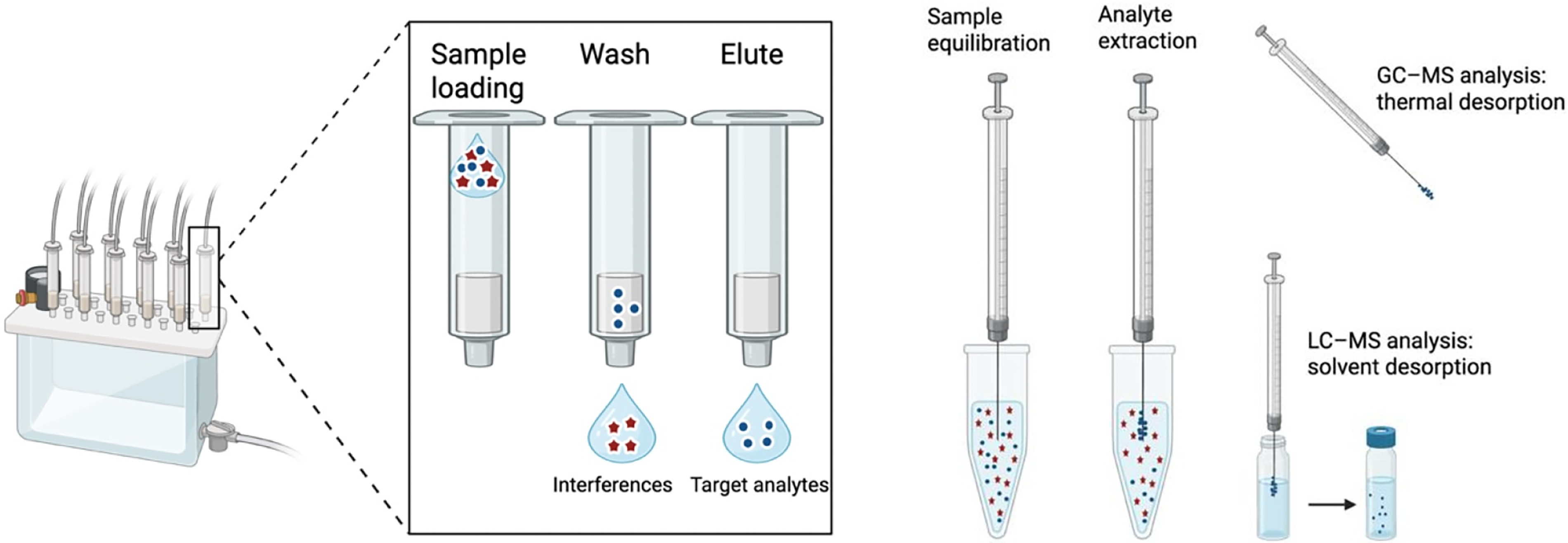
Solid-phase extraction
SPME, in contrast, replaces bulk extraction and elution with direct partitioning of analytes onto a coated fiber that is exposed to the sample or its headspace and then introduced into LC or GC for thermal or solvent desorption. 68 By eliminating organic solvents and minimizing handling, SPME enables rapid, automation-ready workflows that are particularly effective for volatile and semi-volatile pesticides in oils and concentrates or wherever sample amounts are limited. These gains in speed and simplicity come with practical constraints: fiber coatings have limited sorptive capacity for trace and non-volatile analytes, are susceptible to fouling in terpene- and lipid-rich matrices and require careful optimization to maintain performance across different product types.
Taken together, SPE provides the deeper cleanup and capacity needed for quantitative confirmation at stringent action limits, whereas SPME offers a streamlined, low-solvent route for high-throughput screening—especially in headspace mode for volatile residues. In many laboratories, SPME serves as a front-end, rapid assessment tool that complements SPE-based confirmatory analysis, creating a coherent sample-prep strategy that balances throughput, sensitivity, and matrix complexity.
Microwave digestion
Closed-vessel microwave digestion is the dominant sample-prep approach for quantifying toxic elements in cannabis matrices before ICP-MS analysis. Typical workflows weigh ∼0.1–0.5 g of homogenized material into PTFE/TFM vessels and add concentrated HNO3 alone, or HNO3/HCl, with H2O2 used as an oxidant for organic-rich samples; inclusion of a small amount of HCl helps stabilize Hg in solution. A representative program ramps to ∼200°C–210°C under pressure and holds for 10–20 min, followed by controlled cooling. After digestion, solutions are quantitatively transferred and brought to a defined volume with ultrapure water.69,70 Digests are analyzed by ICP-MS for As, Cd, Hg, and Pb and often alongside optional elements (e.g., Sb, Ba, Cr, Cu, Ni, Ag, Se, Zn) under the AOAC performance framework for cannabis heavy-metal testing. 71 The approach has been validated across diverse products (flower, oils, edibles, topicals), showing spike recoveries within AOAC acceptance criteria and low μg kg−1 LOQs.69,71 Notably, greener protocols using diluted HNO3 (as low as 20% v/v) have been demonstrated for cannabinoid-based foods while maintaining quantitative recoveries for priority metals, reducing reagent use and spectral interferences from residual acidity. 72
Applications of Analytical Methods for Cannabis Contaminant Detection
Ensuring product safety and regulatory compliance in the cannabis supply chain requires routine analytical testing for chemical and biological contaminants—most commonly pesticide residues, mycotoxins, and elemental impurities (heavy metals). Although requirements vary by jurisdiction, U.S. states generally mandate contaminant testing and establish action limits, and targeted testing for these contaminants is also defined in AOAC performance standards.71,73,74 Laboratories deploy chromatographic separations coupled to detectors such as mass spectrometry (MS), ultraviolet (UV) absorbance, and fluorescence (FLD), depending on analyte volatility, polarity, and required sensitivity.75–77 Residual solvents in cannabis products are typically measured using headspace gas chromatography, which easily detects leftover chemicals like butane or ethanol without requiring a complex cleaning process for the samples. LC-MS/MS and GC-MS/MS dominate pesticide testing; LC-MS/MS also underpins mycotoxin methods; ICP-MS is standard for heavy metals; and HPLC-UV/PDA remains common for cannabinoid quantification and general screening when MS is unnecessary. Here, we summarize recent analytical techniques for cannabis contaminant detection, with the goal of supporting both cannabis testing laboratories and state regulatory agencies.
Detection of heavy metal in cannabis products
Inductively Coupled Plasma Mass Spectrometry (ICP-MS) is recognized as the gold standard for detecting heavy metals in cannabis due to its exceptional sensitivity and precision. The analytical process begins with digesting the cannabis sample into a liquid form, typically using microwave digestion, followed by introduction into an argon plasma, where the heavy metals are atomized and ionized. Mass spectrometry then separates these ions based on their mass-to-charge ratio, enabling accurate quantification of each metal. ICP-MS provides ultra-trace detection capabilities, meeting stringent regulatory safety limits, which is critical given that even trace levels of heavy metals can lead to adverse health effects. This high sensitivity, coupled with its ability to analyze multiple elements simultaneously, highlights its essential role in ensuring the safety of cannabis products.
Table 5 summarizes recent ICP-MS studies quantifying elemental contaminants in hemp and cannabis-derived products. Reported method performance generally meets acceptance criteria, with recoveries for As, Cd, Hg, and Pb clustering around ∼90%–110% (occasionally ∼80%–125% depending on matrix and element), reflecting the challenges of diverse cannabis matrices yet adequate trueness after matrix correction. Detection limits vary depending on the instrument and sample matrix. In solution-phase measurements, LOQs for As, Cd, Hg, and Pb often fall in the single- to double-digit ng/L range. At the product level, LOQs and limit of detection are usually reported in μg/kg (ppb) or μg/g (ppm), ranging from sub-ppb levels (for example, ∼0.01–0.05 μg/kg for Hg and As in one study) to tens or even hundreds of μg/kg in broader surveys. These differences mainly arise from factors such as sample mass, dilution, digestion chemistry, and interference-control settings. Practically, the table highlights several best practices for cannabis heavy-metal testing: match digestion chemistry to lipid- or sugar-rich matrices (including H2O2 to oxidize organics), include Hg-stabilizing modifiers, use matrix-matched or standard-addition calibration with robust internal standards, and verify accuracy with spikes and certified reference materials. Overall, these datasets indicate that modern, well-validated ICP-MS methods tailored to the matrix can deliver sensitive, accurate, multi-element monitoring across cannabis supply chains, enabling laboratories to detect and control trace-metal contamination before products reach consumers.
Heavy-Metal Detection in Cannabis and Cannabis-Derived Products
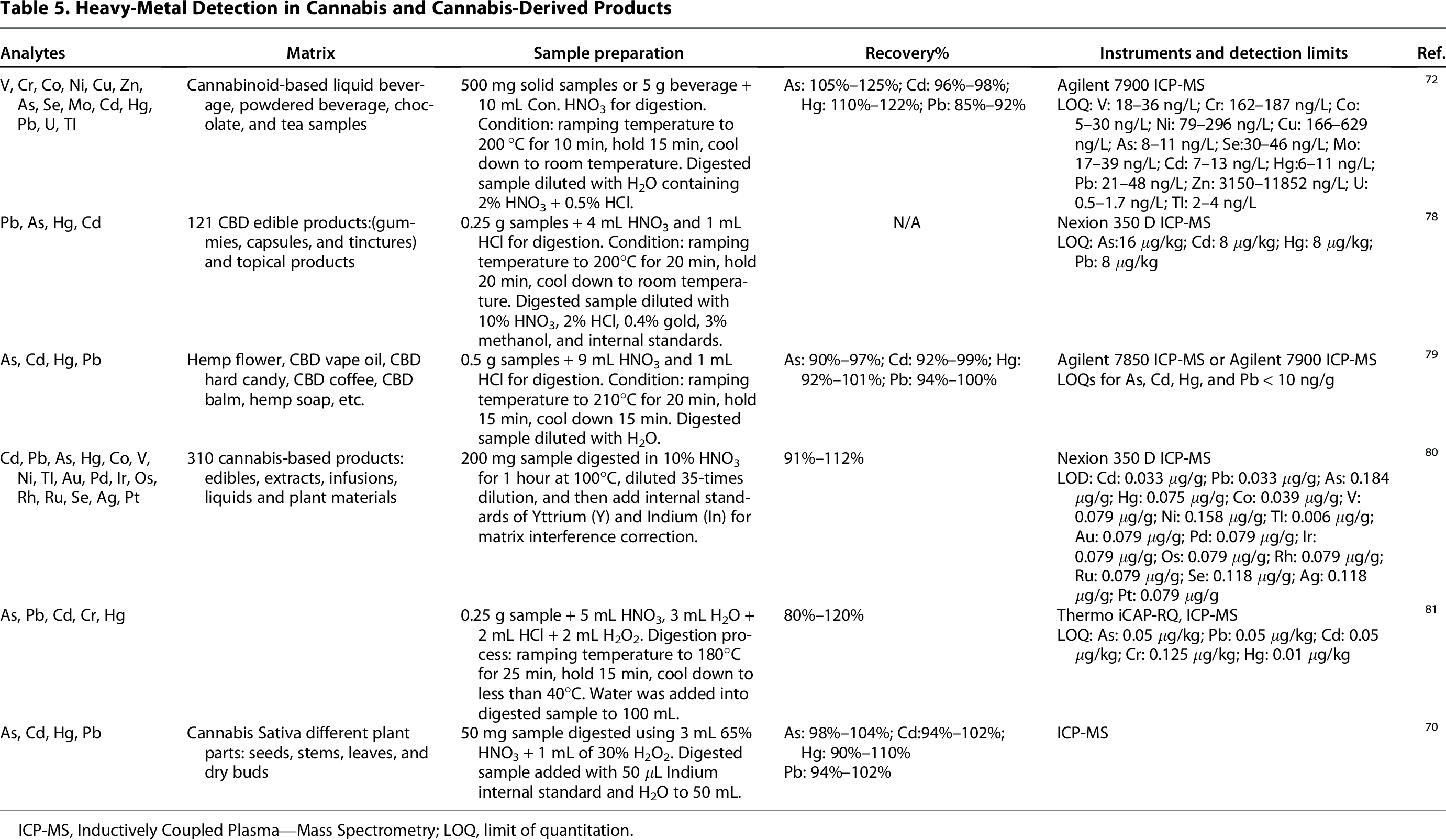
ICP-MS, Inductively Coupled Plasma—Mass Spectrometry; LOQ, limit of quantitation.
Detection of mycotoxin and pesticide in cannabis products
GC and LC form the complementary backbone for separating pesticide and mycotoxin residues in cannabis. Detector choice is dictated by analyte chemistry and analytical intent: UV/diode-array detection remains useful for general screening where chromophores are present, and fluorescence detection is highly selective for mycotoxins that fluoresce naturally or after derivatization, providing sensitive, economical measurements.82,83 Meanwhile, Supercritical fluid chromatography has become an increasingly popular tool for pesticide analysis due to its ability to provide high-resolution separations of polar and non-polar contaminants with significantly higher throughput and lower solvent waste compared to traditional LC.84–86 For regulatory-grade quantitation and confirmation, both LC and GC are most powerful when coupled to mass spectrometry. In practice, laboratories frequently pair LC with liquid chromatography-tandem mass spectrometry (LC-MS/MS) to cover polar and labile pesticides and mycotoxins and use GC-MS/MS to capture volatile, thermally robust pesticides, with the two modes together providing complete panel coverage across flowers, concentrates, vape oils, and edibles.
Within these platforms, multiple reaction monitoring (MRM) using triple-quadrupole mass spectrometers serves as the primary tool for quantitative analysis. 87 By monitoring at least two transitions per analyte (a quantifier and a qualifier), MRM provides the selectivity needed to make reliable measurements in terpene- and lipid-rich matrices, while maintaining limits of quantitation from low ng/g to low µg/kg. Scheduled or dynamic MRM helps preserve dwell time in large multi-residue panels, and isotope-dilution with matrix-matched calibration corrects for variable recoveries and matrix effects. Together, these practices ensure precise, auditable results at action limits. High-resolution MS (QTOF or Orbitrap) complements QQQ by providing accurate-mass full-scan data for suspect and non-targeted screening, 88 and structural elucidation of unexpected contaminants or degradants. Where terpene and diluent interferences remain challenging—particularly in viscous oils—orthogonal separations such as GC × GC can be introduced to improve resolution. 89
Table 6 summarizes the most recent method for mycotoxin detection from cannabis flowers, extracts/concentrates, vape products, resins, isolates, edibles, hemp biomass, and seized materials, with a focus on AFs (AFB1, AFB2, AFG1, AFG2) and OTA. Across these matrices, recoveries typically fall within acceptance ranges for regulated testing—roughly 70%–105% for AFs and ∼67%–104% for OTA—when appropriate cleanup is used. Method sensitivity is generally adequate for action levels: LC-MS/MS workflows report LOQs for AFs on the order of 0.05–0.11 µg/kg and for OTA around ∼1 µg/kg in flower/extracts, 56 while HPLC-FLD paired with immunoaffinity yields AF LOQ ≈ 0.12 µg/kg and OTA LOQ ≈ 1 µg/kg in seized cannabis and resins. 82 Single-laboratory validations using immunoaffinity cleanup across diverse cannabis product types (plant material, resins, vapes, isolates, edibles) demonstrate similar performance, with sub- to low-µg/kg reporting limits and recoveries in the expected range. 83 Faster extractions with minimal cleanup (e.g., acetonitrile sonication and direct LC-MS/MS injection in dry cannabis) can achieve AF LOQ ≈ 1.7–6.7 µg/kg, 92 but require rigorous matrix-matched calibration to offset ion suppression from pigments, terpenes, and lipids. These data collectively support the conclusion that both LC-MS/MS and HPLC-FLD can meet routine testing requirements in cannabis, provided matrix-appropriate cleanup and validation at action limits are performed.
Mycotoxin Detection in Cannabis and Cannabis-Derived Products
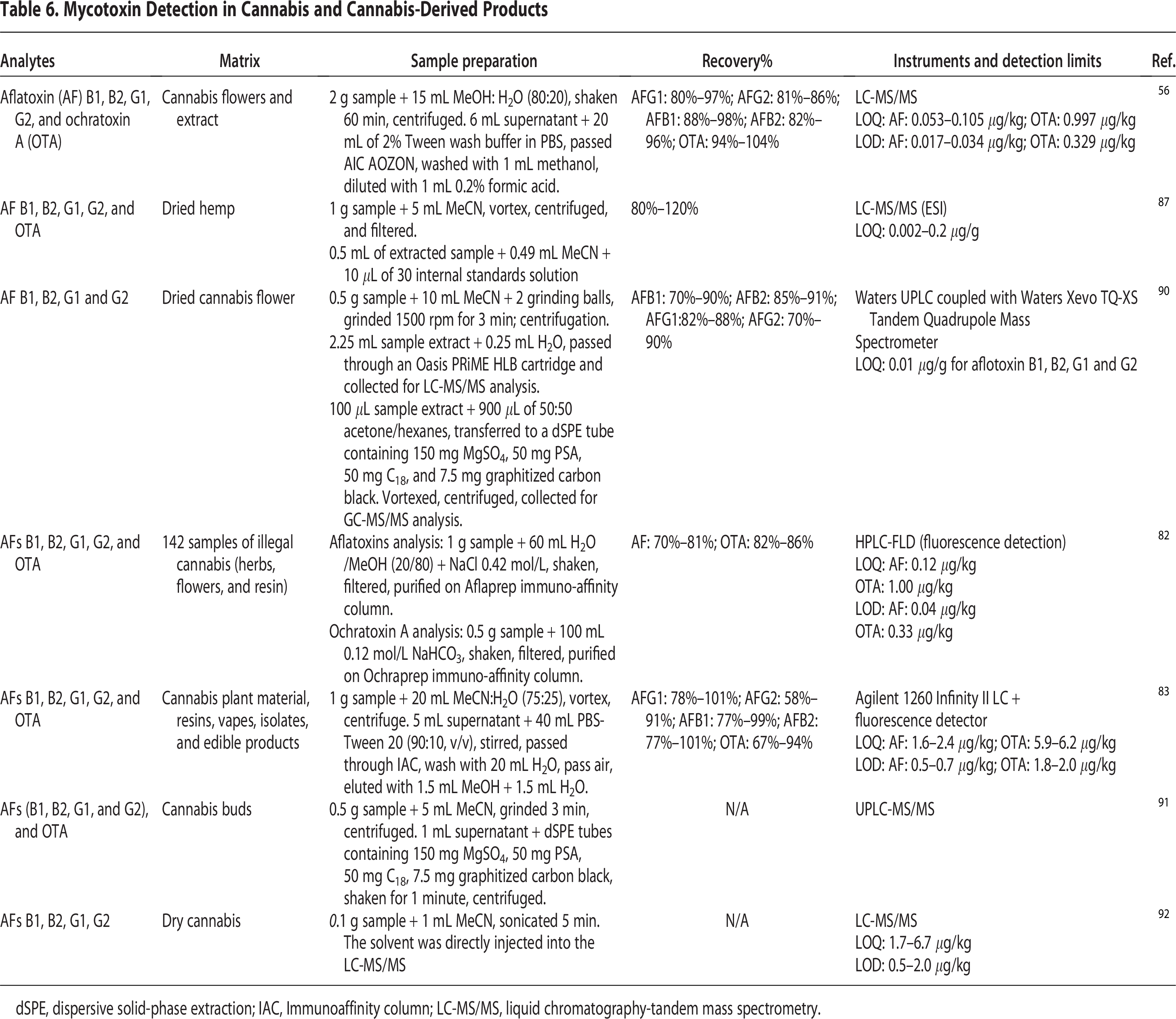
dSPE, dispersive solid-phase extraction; IAC, Immunoaffinity column; LC-MS/MS, liquid chromatography-tandem mass spectrometry.
For mycotoxin analysis in cannabis, four sample-preparation routes are most common and often combined. dSPE cleans acetonitrile extracts by mixing in bulk sorbents (PSA for acids/sugars, C18 for lipids, optional GCB for pigments); it is fast and high throughput, but GCB can adsorb planar AFs, so low-level recovery checks are essential. Cartridge-based SPE (e.g., C18, HLB/PRiME HLB, ENVI-Carb, mixed-mode) provides higher capacity and cleaner extracts for difficult oils and edibles at the cost of more handling and solvent. QuEChERS uses salting-out (MgSO4/NaCl) to partition into acetonitrile, typically followed by a brief dSPE polish; it scales well and can share homogenates with pesticide workflows, but sorbent choice must be verified not to lose AFs. Immunoaffinity columns selectively capture AFs and OTA from hydro-organic extracts after aqueous dilution, producing the cleanest fractions for HPLC-FLD or LC-MS/MS and enabling low reporting limits, though at higher cost and with a narrower analyte scope.
Table 7 summarizes the most recent method for pesticide testing in cannabis products. Across cannabis matrices, pesticide detection relies on complementary LC and GC methods operated on triple-quadrupole instruments in MRM mode, enabling selective, regulatory-grade quantitation with mass/ion-ratio and retention-time confirmation. Multi-day validations on hemp-derived products show that combined LC- and GC-MRM workflows achieve recoveries of 70%–120% for most analytes, with LOQs below 10 ng/g. For dried hemp, LOQs are routinely reported in the 0.002–0.2 ppm range, underscoring the low-ng/g to low-µg/g sensitivity attainable in real matrices. Coverage for volatile and thermally stable pesticides is extended by GC-MS/MS; in lipid-rich oils, comprehensive two-dimensional GC (GC × GC) paired with QQQ improves separation and yields LOQs of 0.01–0.5 mg/kg, and in cannabis flowers, GC-MS/MS/GC × GC-TOF studies report LOQs of 0.005–1.25 mg/kg.89,94 High-resolution MS augments targeted MRM with broad screening and retrospective identification. GC-QTOF methods have been configured for suspect/non-targeted analysis of panels exceeding 1,000 pesticides, with targeted MRM confirmation used for reportable results. 88
Pesticides Detection in Cannabis and Cannabis-Derived Products
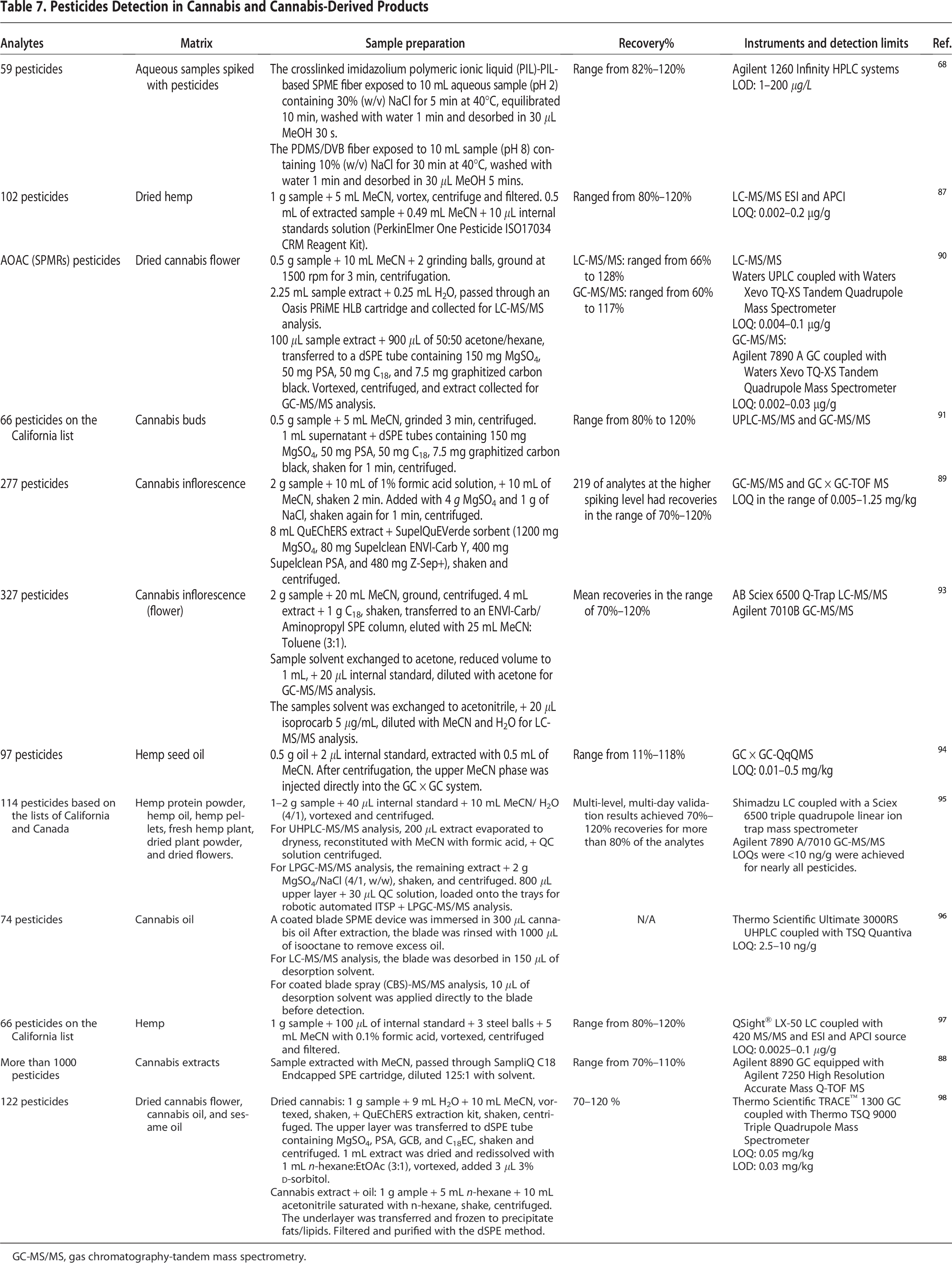
GC-MS/MS, gas chromatography-tandem mass spectrometry.
Overall, most LC-MS/MS and GC-MS/MS platforms achieve the sensitivity required to meet U.S. state action levels; their performance is highly matrix-dependent. In complex matrices such as cannabis concentrates (oils, waxes, and shatter), methods often struggle due to extreme ion suppression caused by the high cannabinoid and lipid load, which can compromise the detection of trace-level pesticides like abamectin and spinosad. High-throughput methods utilizing modified QuEChERS 95 or Coated Blade Spray 96 are ideally suited for screening purposes due to their speed. However, these methods often struggle with cannabis concentrates, where high cannabinoid and lipid load cause severe ion suppression for trace analytes. Under these specific conditions, the methods may fail to meet the rigorous signal-to-noise requirements of regulatory enforcement. Consequently, more intensive cleanup such as cartridge-based SPE and strict ion-ratio verification is necessary to ensure compliance and prevent false negatives in complex matrices.
Conclusion
The comprehensive review of cannabis contaminant detection methods and regulatory frameworks reveals several priorities for future safety and quality control. Rapid legalization across the United States has created an urgent need for standardized testing protocols and uniform regulatory requirements. Current analytical approaches consistently quantify major contaminant classes, including pesticides, heavy metals, and mycotoxins. However, state-by-state rules still impede consistent quality standards and interlaboratory comparability.
Pesticide contamination remains a central concern and demands highly selective, sensitive methods. MRM on triple-quadrupole instruments has become the quantitative backbone because it monitors predefined precursor/product ion transitions, reduces matrix interferences, and enables simultaneous measurement of large panels at trace levels. Studies using LC-MS/MS in MRM have demonstrated low limits of detection for more than 100 pesticides, supporting compliance decisions across diverse matrices. Advances in sample preparation—such as QuEChERS, cartridge SPE, and other optimized extractions—further improve accuracy and robustness.
Looking forward, the industry would benefit from unified federal guidance on targets, action limits, validation criteria, and proficiency testing. Consistent national standards would enhance product safety and facilitate interstate commerce as legalization expands. Continued research into improved analytical methods and automation is also essential to meet demand for rapid, reliable, and cost-effective quality control. Emerging technologies complement targeted MRM workflows and expand analytical capability. High-resolution MS (e.g., QTOF/Orbitrap) provides accurate-mass, full-scan data for suspect and non-targeted screening of unexpected contaminants and degradation products; findings near regulatory thresholds should then be verified quantitatively by LC-/GC-MS/MS in MRM. Comprehensive two-dimensional separations—GC × GC for volatile, thermally stable analytes and LC × LC for complex, polar mixtures—offer orthogonal resolving power that exposes co-elutions, clarifies matrix-effect causes, and can reveal differences in cleanup efficiency. Together, these tools allow laboratories to meet evolving regulatory expectations while protecting public health. Strategic combinations of separation and detection methods—using matrix-appropriate sample preparation with LC- or GC-MRM for definitive quantitation, supported by HRMS and GC × GC/LC × LC—enable reliable detection of trace contaminants in flowers, oils, concentrates, tinctures, and edibles.
The future of cannabis safety testing lies in more sensitive, efficient, and comprehensive analytical methods implemented within consistent national frameworks. Achieving this will require sustained collaboration among researchers, regulators, and industry stakeholders to define and maintain standards that safeguard consumers while supporting the growth of a rapidly expanding market.
Authors’ Contributions
M.S. was responsible for the conception and design of the study, critical revision of the article for important intellectual content, and final approval of the version to be published. D.V.R.P. contributed to the analysis and interpretation of the data and drafted the article. H.L. assisted in revising and editing the article. All the authors have read and approved the final article and agreed to be accountable for all aspects of the work.
Footnotes
Acknowledgments
The authors thank the administration of Kean University for providing research opportunities through Research Release Time. The authors also acknowledge the support of the Kean Group Summer Scholars Research Program. Finally, the authors thank Harnaz Jhajj, Zara Doshi, Cleo Tong, Max Ventura, Reena Alam, and Eshaan Patwardhan for their assistance in editing the tables.
Author Disclosure Statement
The author has no conflicts of interest to disclose.
Funding Information
This project was supported by the NSF Major Research Instrumentation Grant, Award ID 2409248.