



Abstract
Background:
Photodynamic therapy (PDT) combined with biliary stenting reportedly has better efficacy and safety in the treatment of extrahepatic cholangiocarcinoma (EHC). Considering the shortcomings of traditional PDT methods, we proposed a novel modified approach, defined as initial biliary stent placement followed by PDT, for the treatment of EHC. The study aimed to evaluate the effect and safety of biliary stent placement prior to PDT versus only stent placement on the treatment of EHC.
Methods:
A total of 30 patients diagnosed with EHC between January 2017 and December 2024 were included in the retrospective study. Ten patients underwent biliary stent placement, followed by PDT (Stenting with PDT group). Survival time, surgical success rate, and postoperative adverse events were compared to 20 patients receiving biliary stent placement alone (Stenting only group).
Results:
The success rate of all operations in both groups was 100%. After 96 months of follow-up, the stenting with PDT group had significantly longer median survival after stent placement than the stenting only group (10.5 vs. 4.0 months, p = 0.028). There were no statistically significant differences in the rates of postoperative total adverse events (5 [25%] vs. 2 [20%], p = 1.000), asymptomatic hyperamylasemia (1 [5%] vs. 1 [10%], p = 1.000), acute pancreatitis (4 [20%] vs. 1 [10%], p = 0.272), and postoperative acute cholangitis (0 vs. 1 [10%], p = 0.333) between the two groups.
Conclusions:
Compared with stenting alone, modified stenting combined with PDT resulted in longer survival in patients with unresectable EHC without significant adverse events.
Introduction
Cholangiocarcinoma is a highly aggressive malignancy that originates in the biliary epithelium. Based on the anatomical location, cholangiocarcinoma is classified into intrahepatic cholangiocarcinoma and extrahepatic cholangiocarcinoma (EHC), with EHC accounting for approximately 80%–90% of cases. 1 Cholangiocarcinoma is the second most common primary hepatic cancer after EHC, accounting for approximately 15% of all primary liver cancers and 3% of all gastrointestinal malignancies. 2 Globally, the incidence and mortality rates are increasing. 2 Surgical resection remains the most effective treatment for cholangiocarcinoma. However, owing to the asymptomatic nature of early cholangiocarcinoma, most patients are diagnosed at a stage at which surgery is no longer feasible. The overall survival (OS) of patients with unresectable cholangiocarcinoma remains under 1 year, with only approximately 35% of patients eligible for surgery at the time of diagnosis. 1 Even among patients undergoing resection, recurrence is common, with approximately 80% of patients experiencing relapse within 2 years post-surgery. 3 Therefore, there is an urgent need for more effective therapeutic strategies to improve the survival outcomes of patients with cholangiocarcinoma.
Biliary stent placement is a widely accepted treatment for unresectable malignant biliary strictures. 4 However, stent placement alone provides only temporary relief. 5 In recent years, novel techniques such as photodynamic therapy (PDT) have been increasingly applied to the treatment of various malignancies. PDT was introduced domestically in the 1980s and has gained significant attention in recent years because of its minimally invasive nature, low toxicity, repeatability, ability to target occult cancerous lesions, and clinical efficacy. These advantages have led to their rapid development and widespread application in the research and treatment of various malignancies. 6,7 PDT is based on the selective affinity of “photosensitizers” for tumor cells compared with normal tissues. Upon activation by light, photosensitizers generate reactive oxygen species that induce oxidative reactions, ultimately destroying tumor cells. 7
Numerous studies have demonstrated that for EHC, combining PDT with stent placement not only alleviates malignant biliary obstruction but also inhibits tumor cell growth and invasion, thereby significantly extending patient survival and improving the quality of life. This combined approach represents a feasible treatment option for EHC. 4,8 In clinical practice, the risk of cannulation failure during PDT procedures should be considered, 9,10 especially as PDT requires administering a photosensitizer 48 h prior to the procedure, which incurs significant costs. Failure in PDT can impose a substantial financial burden on patients. 11 In addition, patients experience malignant biliary obstruction, often accompanied by severe symptoms such as fever, abdominal pain, and jaundice, and are in poor general condition, 12 making them less suitable for prolonged procedures. To address these issues, we modified the traditional approach. Our modified method is defined as performing endoscopic retrograde cholangiopancreatography (ERCP) first to prioritize the implantation of a biliary stent to quickly relieve obstruction and alleviate symptoms. Once the patient’s general condition has improved, a second ERCP is performed to administer PDT for local antitumor treatment (Fig. 1). This study aimed to investigate the efficacy and prognosis of biliary stent placement prior to PDT for the treatment of EHC, with the hope of providing clinicians with a new practical endoscopic palliative treatment for EHC.
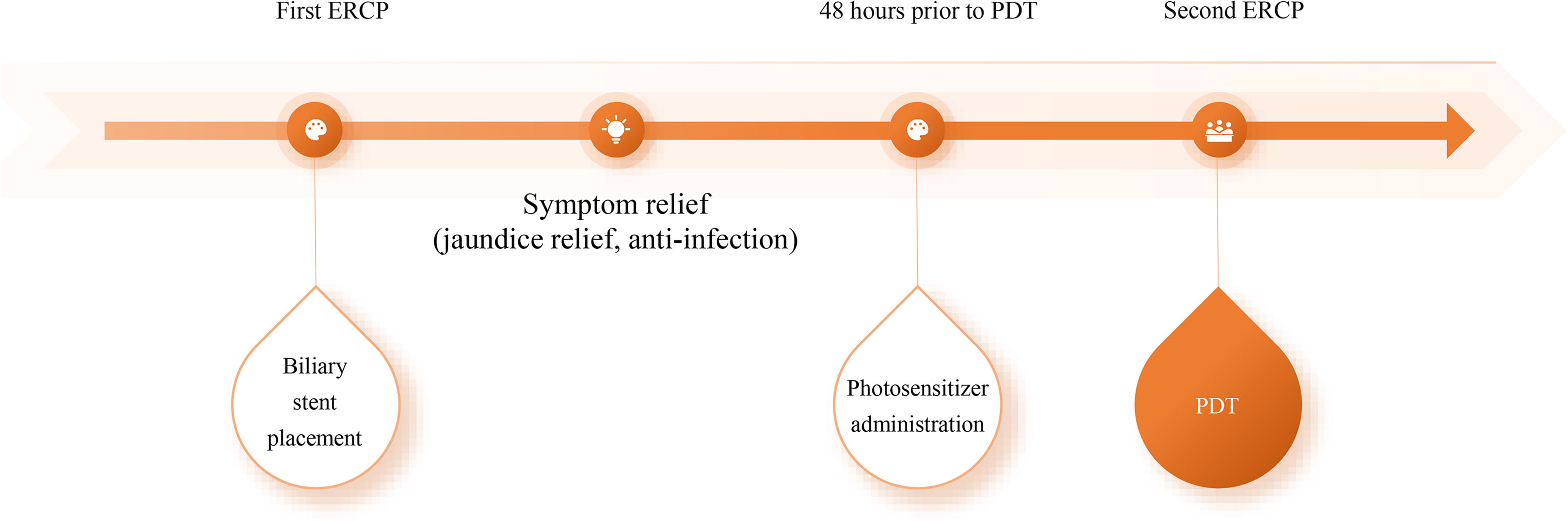
Timeline figure for the new modified method (Pre-PDT biliary stent placement). Abbreviations: PDT, photodynamic therapy.
Methods
Patients
Between January 2017 and December 2024, a total of 53 patients treated at the Department of Gastroenterology, Affiliated Hospital of Qingdao University (Qing Dao, Shan Dong province, China), who met the after criteria, were included in this study: (1) intrahepatic bile duct dilatation and hilar biliary lesions detected by magnetic resonance cholangiopancreatography; (2) diagnosis confirmed by cytology brushings or histopathological biopsy; (3) no prior radiotherapy or chemotherapy; (4) fulfillment of the criteria for unresectable hilar cholangiocarcinoma, including: (a) Bismuth–Corlette type IV disease not suitable for liver transplantation, (b) Tumor, Node, Metastasis (TNM) stage III or IV disease, 13 (c) recurrent hilar cholangiocarcinoma after curative resection, or (d) surgical contraindications independent of Bismuth classification and TNM staging; and (5) thorough discussion between the surgeons, patients, and their families regarding the potential risks and benefits of the modified PDT treatment strategy and all possible alternative treatment options, with full respect for patient and family preferences, and provision of written informed consent. Of these, 3 patients with ERCP contraindications, 5 patients with history of chemotherapy or radiotherapy, 3 patients with partial resection of cholangiocarcinoma, 4 patients with prior technically successful biliary stent placement, and 2 patients with extrahepatic metastases with poor prognosis were excluded. During the follow-up period, 2 patients were lost in the Stenting with PDT group and 4 patients were lost in the Stenting only group. Finally, the analyses comprised a total of 30 patients. Of these patients, 10 (33.3%) underwent biliary stent placement with PDT (Stenting with PDT group) and 20 (66.7%) were treated with endoscopic stenting only (Stenting only group). The filtering process is illustrated in Figure 2.

Study flowchart. ERCP, endoscopic retrograde cholangiopancreatography.
ERCP technique
Endoscopic procedures were performed by one of the two experienced pancreaticobiliary endoscopists. All ERCPs used therapeutic duodenoscopes (TJF 160 F, TJF-160 VF, and TJF-Q180 V; Olympus America, Center Valley, PA) and standard guidewires. Any previously placed biliary stent was removed when possible. Cholangiograms were obtained before each biliary stent placement and ablation procedure to assess biliary anatomy and locate the target structure. The interventional endoscopist performing the procedure selected malignant strictures to be treated with PDT. Dilation was performed as needed, using a balloon or bougie dilator to facilitate the passage of endoscopic instruments and stents. For cases in which the use of a metal stent was technically impractical, plastic stents were chosen at the discretion of the endoscopist. For patients with plastic stents, stent replacement was scheduled every 3 months. All stents were placed across the papilla to allow for potential future interventions. Patients received standardized postoperative care, including routine antibiotic administration, to reduce the risk of infection.
Photodynamic therapy
48 hours prior to ERCP-guided PDT, porfimer sodium (Photofrin; Pinnacle Biologics, Bannockburn, IL) was administered intravenously at a dose of 2 mg/kg over 5 min, followed by an infusion of 500 mL of 0.9% saline solution. During ERCP, a 10 F bougie dilator catheter (Soehendra Biliary Dilation Catheter, SBDC-10; Cook Medical, Bloomington, IN) was advanced over the guidewire to the level of the malignant stricture, serving as a conduit for the laser fiber. Photodynamic therapy was activated using a diode laser system (InGaAIP Laser Diode; Diomed, Andover, MA), with the activating light delivered via a 3.0 m optical fiber featuring a 2.5 cm diffuser tip (Pioneer Optics, Windsor Locks, Conn). The maximum power output is 2 W, with a wavelength of 633 ± 3 nm. The PDT average irradiation time is set to 500 sec, with a power density of 300–400 mW/cm and an energy dose of 180–200 J/cm (of diffuser length) (Fig. 3).
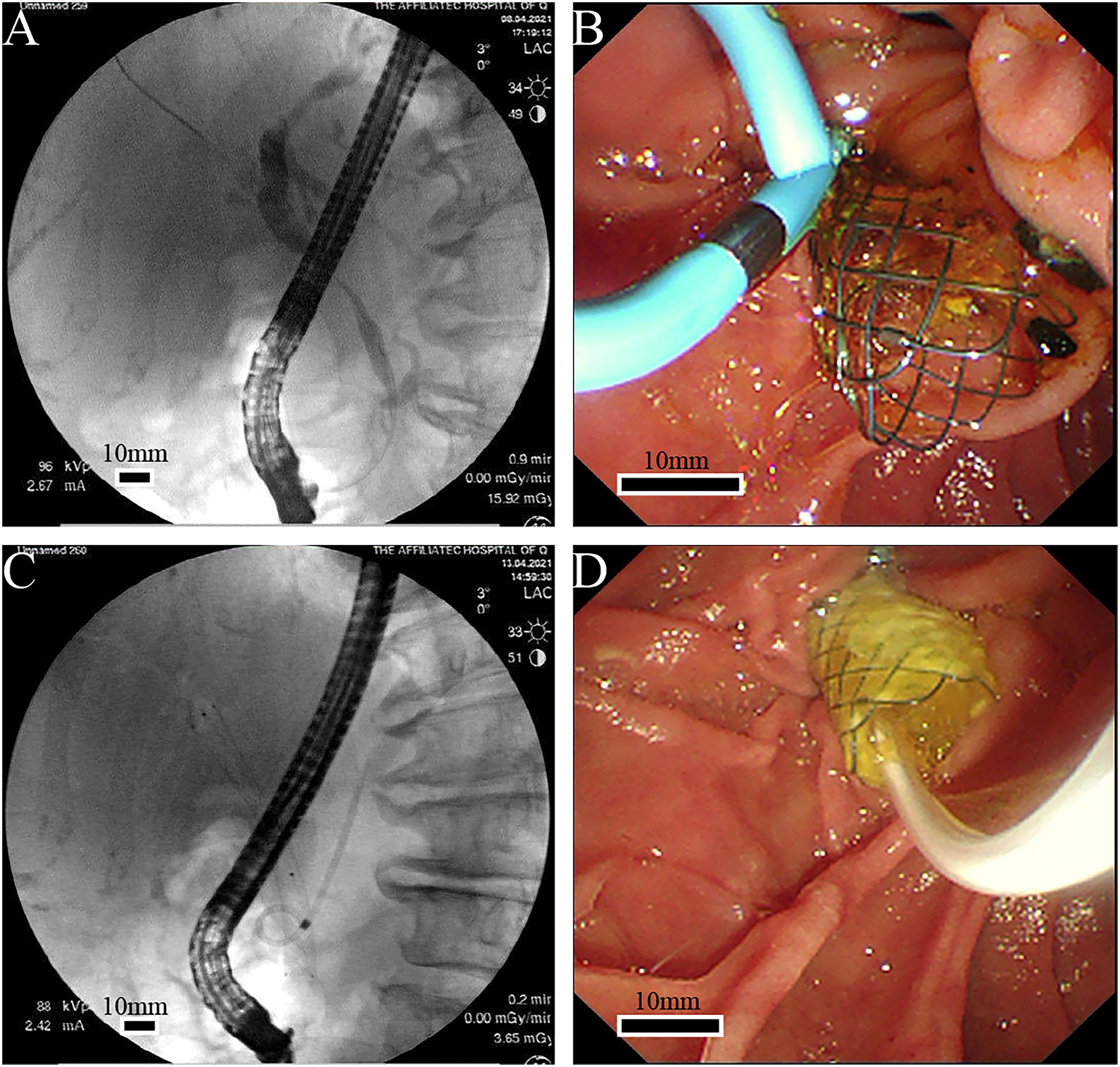
ERCP-directed stenting with PDT procedure for EHC.
Stent placement
Plastic biliary stents measuring 7.0 or 8.5 Fr (Boston Scientific) or fully covered metallic stents (10 × 80 mm) were placed under ERCP guidance. Indications for metallic stents included: age over 80 years, refusal of additional PDT due to cost, and declining physical status during follow-up after referral from a remote location. As a practical guideline, plastic stents were replaced every 3–4 months to prevent occlusion and bacterial cholangitis (Fig. 4).
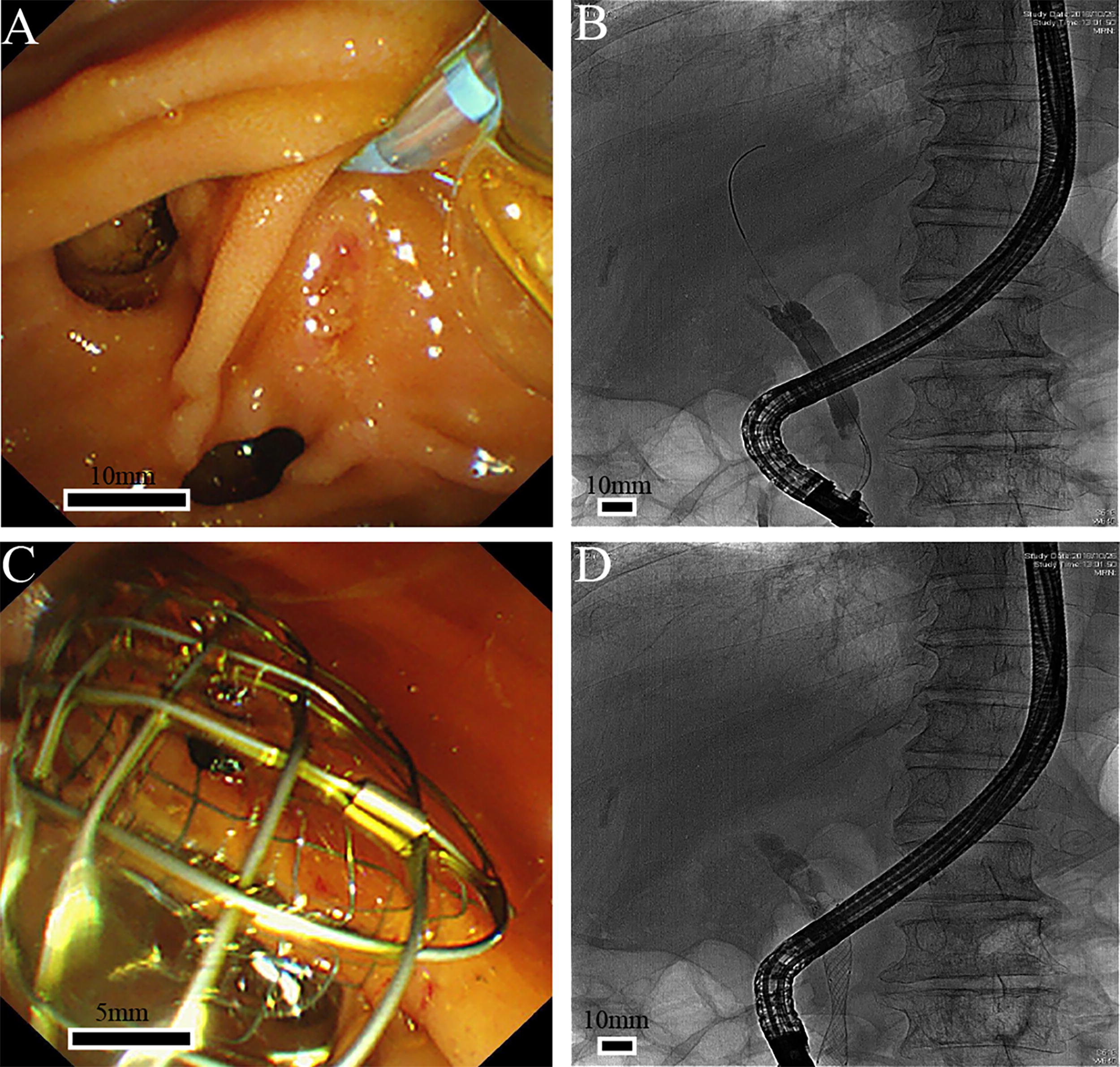
ERCP-directed stenting only procedure for EHC.
Outcome measurements
The primary outcome measure was survival time. Secondary outcomes included surgical success rate, changes in pre-and post-operative liver function markers [total bilirubin (TBil), direct bilirubin (DBil), alanine aminotransferase (ALT), aspartate aminotransferase (AST), gamma-glutamyl transferase (GGT), and alkaline phosphatase (ALP)], post-ERCP pancreatitis (PEP), asymptomatic hyperamylasemia, bleeding, cholangitis, and stent perforation.
Survival time was defined as the time from the date of biliary stent placement to the last follow-up or death from any cause. Procedural success was strictly defined as the consecutive achievement for the Stenting with PDT group:
(1) Successful biliary stent placement (confirmed by fluoroscopic visualization and free bile flow). (2) Subsequent effective PDT administration (including proper photosensitizer activation and adequate light dosimetry). For the Stenting only group, procedural success was defined solely by successful biliary stent deployment meeting the same fluoroscopic and functional criteria as above. Preoperative liver function tests were performed 1–3 days before the biliary stent placement. All patients were hospitalized for at least one night after ERCP to monitor for potential early adverse events, including PEP, bleeding, perforation, and infections (e.g., cholangitis). Abdominal CT and hematological tests, including complete blood count, pancreatic enzyme levels, and C-reactive protein levels, were performed 6–24 h postoperatively. Postoperative liver function tests were performed 5–30 days after biliary stent placement. Clinical follow-up was conducted every 1–3 months and included symptom assessment (fever, abdominal pain, and jaundice), hematological tests, and abdominal CT. Early adverse events (occurring within 30 days after the stent placement) and their severity were classified according to the lexicon of the American Society for Gastrointestinal Endoscopy (ASGE). 14 PEP was defined as the presence of persistent abdominal pain for 24 h or more after ERCP, with serum amylase levels exceeding three times the upper limit of normal. 14 Bleeding was defined as the occurrence of hematemesis, melena, or a hemoglobin drop of >2g/dL. 14 Cholangitis was defined as a fever (exceeding 38°C for more than 24 h) accompanied by biliary obstruction. 14 Perforation was diagnosed based on the evidence of extraluminal air or gastrointestinal contents. 14
Statistical analyses
Continuous variables were presented as means with standard deviation or medians with interquartile ranges (IQR), while categorical variables were expressed as percentages. Paired Wilcoxon test analysis was used to compare changes in liver function indices in patients before and after biliary stent placement. Kaplan–Meier curves were generated to assess survival time in both groups. Statistical analyses were performed using R software (version 4.3.2). Statistical significance was set at p < 0.05.
Results
Population characteristics
Table 1 summarize the characteristics of the 30 patients. The mean age of the patients was 77.0 ± 7.9 years, and 13 participants were females (43.3%). No significant between-group differences were observed regarding age, sex, body mass index, liver metastasis, lymphatic metastasis, American Joint Committee on Cancer (AJCC) stage, CA19-9, pre-operative TBil, DBil, ALT, AST, GGT, ALP, albumin, or length of common bile duct stenosis.
Baseline Clinical Characteristics of the Patients
American Joint Committee on Cancer, 8th edition.
AJCC, American Joint Committee on Cancer; BMI, body mass index; IQR, interquartile range; PDT, photodynamic therapy; SD, standard deviation.
Survival time
Follow-up to date, median survival time was 10.5 months in the stenting with PDT group and 4.0 months in the stenting only group (p = 0.028). The Kaplan-Meier survival curve showed that the stenting with PDT group had significantly longer survival after stent placement than the stenting only group (Fig. 5).
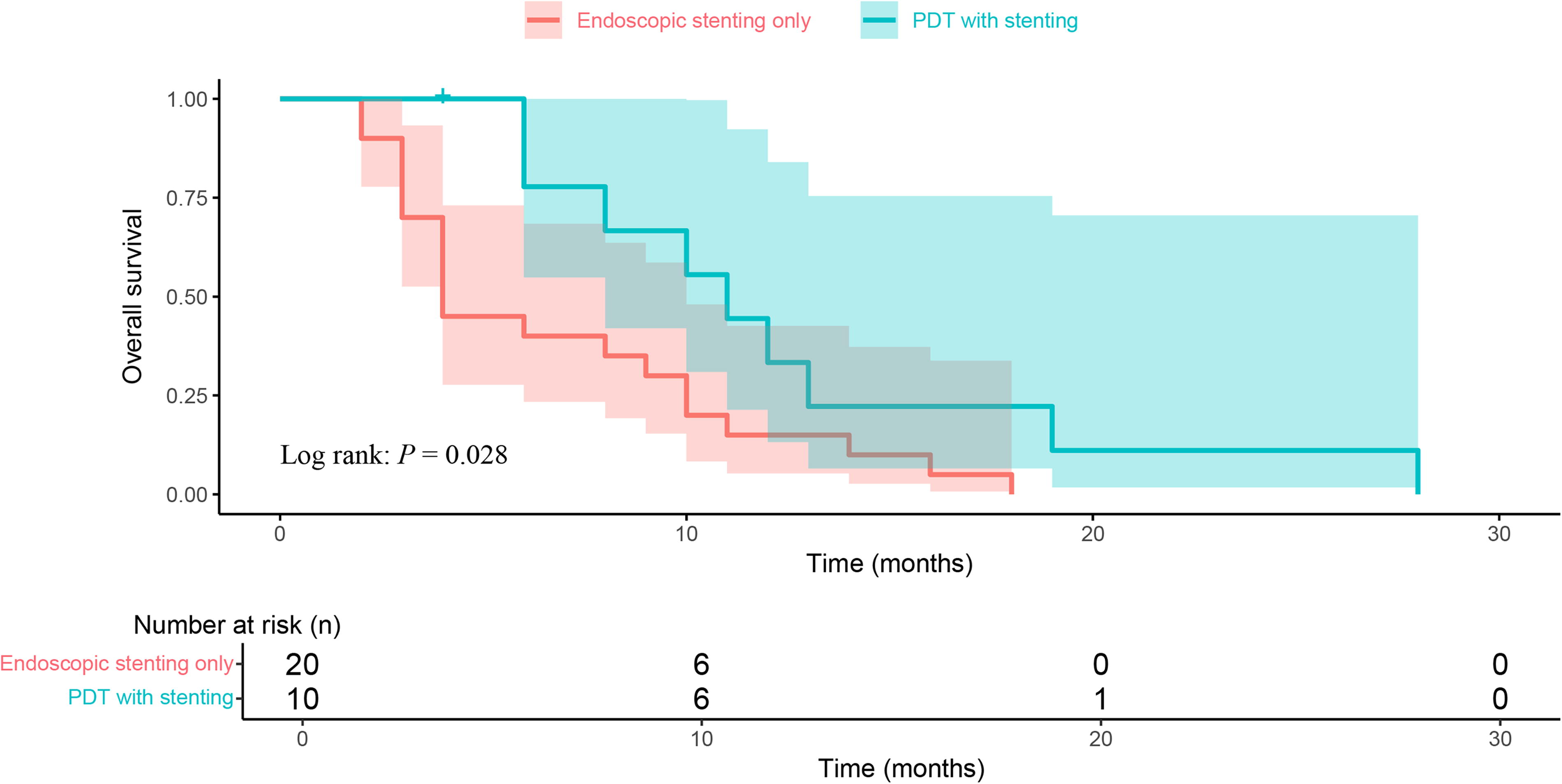
Kaplan–Meier survival curves between the two groups. The shaded part represents the 95% confidence interval.
Clinical outcomes, and adverse events
All patients successfully completed biliary stent placement and PDT. The success rate of the modified method was 100%. Paired Wilcoxon test analysis was performed to analyze the liver function indexes of patients before and after biliary stent placement and TBil (203 vs. 33, p < 0.001), DBil (131 vs. 17, p < 0.001), ALT (92 vs. 37, p < 0.001), AST (79 vs. 31, p < 0.001), GGT (485 vs. 129, p < 0.001), and ALP (367 vs. 187, p < 0.001) were significantly improved after biliary stent placement (Table 2).
Comparison of Preoperative and Postoperative Clinical Outcomes After Stent Placement
Adverse events
In stenting with PDT group, one patient developed asymptomatic hyperamylasemia and one patient developed acute cholangitis after treatment. In stenting only group, one patient developed asymptomatic hyperamylasemia and four patients developed acute pancreatitis after treatment. There were no statistically significant differences in the rates of postoperative total adverse events (5 [25%] vs. 2 [20%], p = 1.000), asymptomatic hyperamylasemia (1 [5%] vs. 1 [10%], p = 1.000), acute pancreatitis (4 [20%] vs. 1 [10%], p = 0.272), acute cholangitis (0 vs. 1 [10%], p = 0.333), perforation, and bleeding between the two groups (Table 3).
Comparison of Adverse Events Between the Two Groups
Discussion
In this study, all patients had unresectable EHC and underwent successful biliary stent placement. After achieving notable improvements in liver function and overall physical condition, ten patients underwent PDT with a 100% procedural success rate. After 96 months of follow-up, the stenting with PDT group had significantly longer median survival after stent placement than the stenting only group (10.5 vs. 4.0 months, p = 0.028). There were no statistically significant differences in the rates of postoperative total adverse events, asymptomatic hyperamylasemia, acute pancreatitis, and postoperative acute cholangitis between the two groups.
In recent years, numerous studies have reported favorable clinical outcomes with PDT combined with stent placement for EHC, establishing these combinations as important palliative treatments. Two meta-analyses that compared the efficacy of PDT combined with stenting versus stenting alone also showed that PDT was significantly more effective than stenting alone. The authors suggested that PDT should be considered as an adjunctive therapy for patients undergoing biliary stenting. 13,15 In our study, the new modified method achieved a 100% procedural success rate, demonstrated superior outcomes in improving liver function and prolonging OS, and presented no significant adverse events. In our study, the median OS (10.5 months) appears comparable to that reported for traditional treatment strategies involving PDT combined with biliary stent placement in patients with EHC. 9,10,16 –20 A prospective, open-label, randomized, multicenter trial conducted by Marianne et al. compared the efficacy of PDT combined with stenting (Group A) versus stenting alone (Group B) in patients with unresectable cholangiocarcinoma. The results demonstrated a significantly prolonged survival in the PDT group compared to the stent-only group (Group A: n = 20, median survival = 493 days; Group B: n = 19, median survival = 98 days; p < 0.0001). 19 In addition, Do Hyun Park and colleagues conducted a prospective, randomized phase II trial in patients with unresectable hilar cholangiocarcinoma, reporting a median survival of 8 months in those receiving PDT. 20 Notably, our cohort included older patients, with an average age around 75 years for ten patients, while other studies reported mean patient ages ranging from 62.0 to 68.5 years. 9,10,16 –20 This suggests that our modified approach may offer better prognosis improvements, which warrants further validation in large-scale randomized controlled trials.
This study is the first to propose a modified approach of stent placement prior to PDT for the treatment of EHC. Using this method, we successfully treated ten patients and achieved promising outcomes. Compared to PDT performed before stent placement, our approach offers several advantages: (1) Enhanced Procedural Success Rate and Reduces Treatment Costs: PDT theoretically can achieve a 100% success rate and can significantly reduce the operating time. Owing to anatomical variations, such as small or deviated duodenal papillae, large diverticula, pyloric stenosis, duodenal deformities, or complications from gastrointestinal tumors or previous surgeries, approximately 11% of therapeutic ERCPs encounter difficult cannulation, leading to treatment failure. 21 As PDT requires photosensitizer injection 48 h in advance and is expensive, a failed PDT procedure can impose a substantial financial burden on patients. In our modified approach, metal stents were first placed to create a wider diameter at the duodenal papilla and common bile duct, facilitating insertion and manipulation of the fiber-optic probe. This modification ensures procedural success, smooth treatment flow and reduces treatment costs. (2) Relief of Obstructive Symptoms and Reduction of Procedural Risks: The initial stent placement can quickly alleviate biliary obstruction, improve bile drainage, and reduce bile stasis. This intervention not only enhances the patient’s overall clinical status (e.g., nutritional condition and liver function) but also lowers the risk of infection associated with obstruction, thereby increasing the patient’s tolerance for subsequent PDT and reducing the risk of complications. (3) Optimizing Targeted Treatment and Enhancing Efficacy: After stent placement, observing the patient’s clinical response allows for assessment of the stent’s effectiveness in relieving obstruction and evaluating tumor invasion extent. This information supports a more precise targeting plan for subsequent PDT, enabling a more tailored secondary intervention.
This study has several limitations. First, the sample size was relatively small, especially since only 10 patients were included in the PDT group. Although the difference in survival time between the two groups reached statistical significance (p = 0.028), a retrospective power analysis indicated that to detect the observed effect size using the log-rank test at an alpha level of 0.05 with 80% power, each group would require 43 patients (total sample size of 86). The limited sample size in the present study may have reduced the ability to detect secondary efficacy or safety outcomes and increased the susceptibility of the results to the influence of outliers. In addition, due to the small sample size and the low incidence of adverse risks associated with ERCP, it is difficult to accurately assess whether there is a difference in the incidence of adverse events between the two groups. Nevertheless, the findings provide preliminary clinical evidence supporting the potential survival benefit of the intervention. Second, there may be selection bias between the two groups of patients. Based on our clinical experience, economic factors are the primary reason influencing patients’ decision to undergo PDT. Patients in the PDT group may have better economic conditions compared to those in the stent-only group, which could potentially impact patient outcomes. However, since this study is retrospective, information on patients’ family economic status is incomplete, and we cannot rule out the influence of this confounding factor. Future prospective multicenter clinical trials should include sufficiently large sample sizes and detailed follow-up data to validate the clinical efficacy of this modified approach compared to conventional treatments and to comprehensively assess its safety profile.
Conclusions
In conclusion, this study demonstrates the feasibility of stent placement prior to PDT allows a new avenue of treatment sequence in EHC patients.
Footnotes
Authors’ Contributions
J.W.: Methodology, software, formal analysis, and writing—original draft. Q.D.M.: Methodology, data curation, and writing—review and editing. J.H.L.: Data curation, validation, and investigation. K.X.: Validation and investigation. P.Q.: Data curation and endoscopic procedures. H.J. and B.H.: Project administration and writing—review and editing. B.C.: Conceptualization, endoscopic procedures, writing—review and editing, and funding acquisition.
Ethics Statement
Approval of the research protocol by the Ethics Committee of Affiliated Hospital of Qingdao University.
Informed Consent
All patients signed the informed consent forms.
Author Disclosure Statement
Authors declare no conflict of interests for this article.
Funding Information
No funding was received for this article.