



Abstract
Japan took the lead in proposing a proposal on education for sustainable development (ESD) at the United Nations and actively implements ecological civilization education domestically. This article uses knowledge-mapping approach to analyze 681 papers on environmental education and ESD in J-STAGE database since 2000 to clarify publication trends, core authors, major journals, keyword co-occurrence, research hot spots, and emerging themes. This article finds that these papers mainly involve forest environmental education, energy environmental education, life cycle assessment, life cycle thinking, and consumer education as the contents, and also involve experiential activities in “Period for Integrated Studies” through school–community cooperation as the practical methods. The increasing specialization of themes, diversification of research subjects and methodologies signifies both the maturing of Japan's ecological civilization education research and the continued enrichment of its practice.
Keywords
Introduction
As a concept unique to China, ecological civilization represents a consciousness, value system, and culture of prioritizing the ecological environment and environmental protection. This is predicated on respecting and protecting nature; aims for harmonious coexistence between humans and nature, among humans themselves, and between humans and society; embodies sustainable production and consumption patterns; and focuses on guiding humanity toward a path of sustainable and harmonious development (Zhao et al., 2016). The goal of ecological civilization education is to achieve the healthy and sustainable development of ecological civilization by comprehensively enhancing individuals’ ecological civilization literacy and effectively strengthening their capacity-building for ecological civilization (Jiang & Tian, 2021). Encompassing various domains, such as school, social, and vocational education, its theoretical foundation is built upon disciplines such as ecology, environmental science, and geography. The goal of ecological civilization education is to help the public better understand the relationship between humanity and nature, cultivate a sense of moral responsibility toward nature, and ultimately induce cognitive and behavioral changes in individuals, promoting the practice of ecological civilization principles in daily life and increasing public awareness of ecological and environmental protection (People's Daily Online, 2022). Ecological civilization education is considered to have absorbed and drawn upon the developmental achievements of environmental education and education for sustainable development (ESD), representing an approach that is more profound and comprehensive than its predecessors (Xu, 2017).
Ecological civilization education in Japan originated in the 1960s and was spurred by a series of pollution issues that led to the development of pollution education and nature conservation education initiatives organized by schools and nonprofit organizations (NPOs). Severe pollution incidents (kōgai), exemplified by events such as Minamata disease and Yokkaichi asthma involving significant air and water contamination, quickly became a focal point of public opinion. In December 1970, the Japanese government submitted a total of 14 pollution-related laws aimed at controlling these public hazards to the National Diet of Japan (the Diet). Subsequently, the Environment Agency was established in 1971 (and was later upgraded to the Ministry of the Environment). Following these developments, the intense social debate surrounding kōgai largely subsided. In the late 1980s, global-scale environmental problems became increasingly prominent. However, their inherent complexity made such issues difficult for the general public to widely understand and accept at that time. Furthermore, Japan's experience with the Second Oil Crisis during the 1980s led to economic recovery and growth being established as priority policy objectives, so environmental policy was relegated to a somewhat secondary position. Despite this context, sustained advocacy by researchers, the news media, and citizen practitioners gradually fostered broader social recognition of the concept of environmental education. The establishment of the Japanese Society of Environmental Education (JSSEE) in 1990 marked a shift from the previous terminology of educational on industrial pollution (kogai kyoiku) and nature conservation education to the concept of environmental education (Okajima, 2006). The enactment of The Basic Environment Law in 1993 provided a legal basis for the implementation of environmental education, further promoted by the gradual introduction of the “period for integrated studies” into school curricula in 2002. Within this context, the Japanese government proposed the United Nations Decade of Education for Sustainable Development (UNDESD) at the 2002 Johannesburg Summit (Nakamura, 2022), fostering international attention and practical efforts toward ESD. Arguably, while it has been continually influenced by the international community, Japan's approach to ecological civilization education has charted a unique course, even playing a leading role in the global advancement of ESD.
The terms “ecological civilization education” and “ecological civilization” are conceptual formulations specific to the Chinese context. Within Japan, directly corresponding expressions such as seitai bunmei kyōiku, seitai bunmei, or eko bunmei have emerged primarily through the process of reporting on and researching China's environment-related policies and educational practices. The connotations of these Japanese terms directly align with and are translations of related Chinese concepts. In other words, the use of this terminology in Japan represents a direct adoption and localized application of the concepts of “ecological civilization education” and “ecological civilization” originating from the Chinese discourse. While the term “ecological civilization education” is employed when referencing Chinese policies and practices, Japan predominantly uses the concepts of “environmental education” and “education for sustainable development.” Japanese environmental education emphasizes environmental protection and human–nature harmony through understanding the links between the environment and societal, economic, and cultural aspects, aiming for a sustainable society. Education for sustainable development (ESD) takes a broader approach, cultivating citizens capable of addressing global challenges such as environmental issues, poverty, human rights, and peace to develop a holistically sustainable society (Ministry of Education, Culture, Sports, Science and Technology [MEXT], 2021). ESD can be viewed as an extension of environmental education, yet the two concepts, while related, are not interchangeable in practice and coexist within the Japanese educational landscape. This study, therefore, primarily uses search results based on the keywords “environmental education” and “education for sustainable development” as the principal avenues for investigating ecological civilization education in Japan. To capture the latest trends, the scope of analysis is limited to relevant research published since the beginning of the twenty-first century.
Data Sources and Methods
This study employs CiteSpace, a visual analysis software for citation data, to construct a scientific knowledge map of the research literature on ecological civilization education in Japan. On the basis of this map, we conduct a co-occurrence analysis of keywords, analyze the evolution of research frontiers, and perform a citation analysis.
The data for this study are sourced from J-STAGE (Japan Science and Technology Information Aggregator Electronic), a database developed by the Japan Science and Technology Agency (JST). J-STAGE contains more than 4,000 journals published by more than 2,400 academic societies in Japan. This study examined journal articles published since the beginning of the twenty-first century, filtering for those containing “environmental education” or “education for sustainable development” in their titles or keywords. Furthermore, only peer-reviewed articles were included. This initial search yielded 883 journal articles. Following manual screening of titles, abstracts, and keywords to exclude nonacademic articles, the final dataset comprises 681 valid articles. These articles constitute the data source for this study. After the literature sample was obtained, data cleaning, data entry, and result output were performed sequentially.
CiteSpace is an information visualization software application used for scientific literature analysis that has been widely adopted across various academic disciplines in recent years. Since the data format exported from J-STAGE is not directly compatible with CiteSpace, this study used a custom Python script to process and convert the data format, referencing the WOS format. The converted data were subsequently verified, supplemented, and adjusted to generate a data file suitable for CiteSpace analysis.
Current Status of Ecological Civilization Education Research in Japan
Time Distribution Analysis
The annual publication output of Japanese ecological civilization education research since 2000 is shown in Figure 1. The number of publications fluctuated, initially increasing but then stabilizing. Rapid growth occurred from 2000 to 2009, peaking at 57 in 2009, which coincided with the Japan Society for Environmental Education's 20th anniversary. From 2010 to 2021, the number of publications stabilized between 29 and 50, with a slight decline from 2022 onward to approximately 20 annually. This suggests that the continued development of the field in Japan is influenced by social and policy factors.
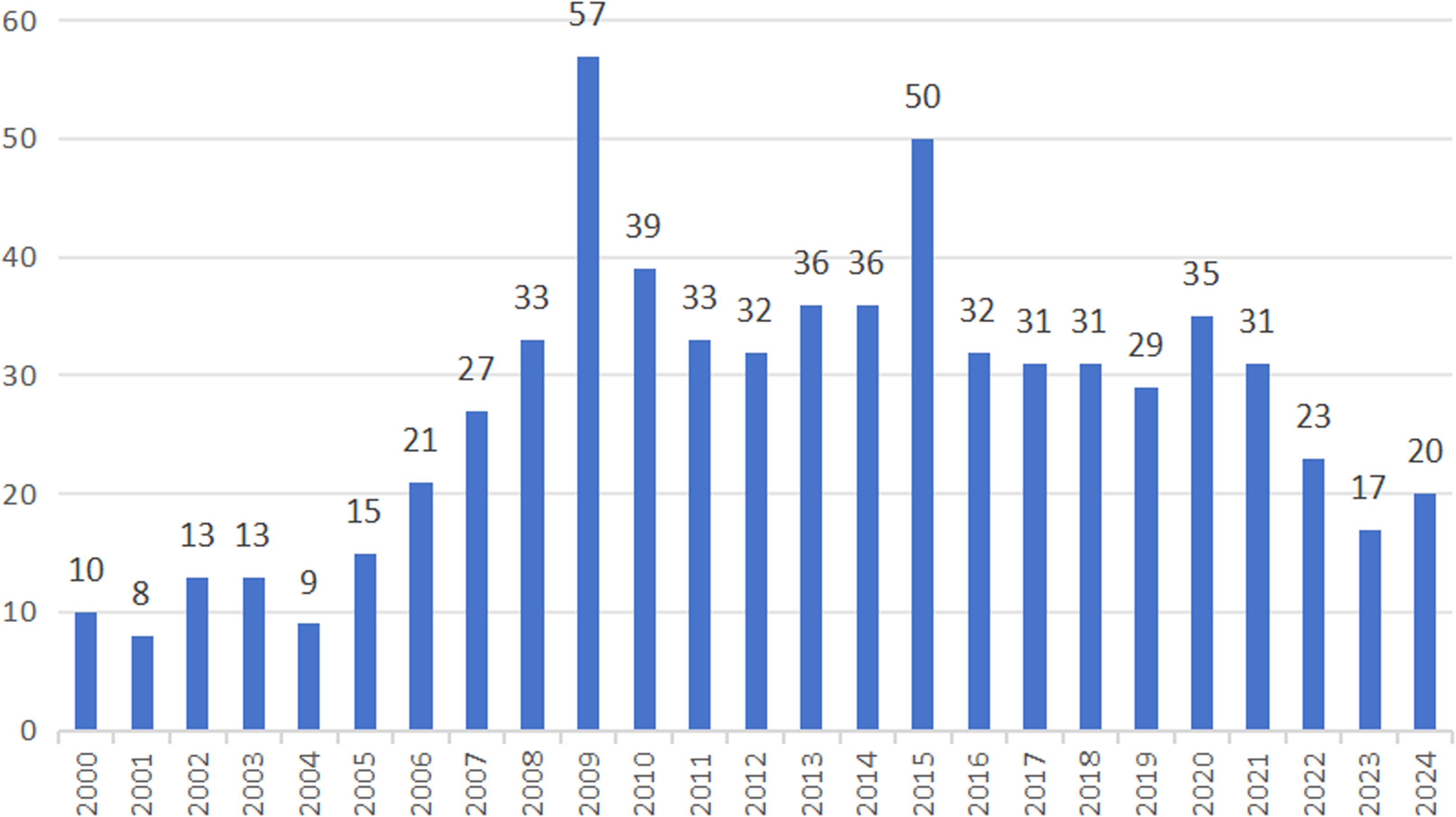
Publication outputs of ecological civilization education research in Japan (2000–2024).
Major Journals Analysis
As of the literature retrieval date (December 17, 2024), a total of 153 journals were identified as publishing relevant articles. These journals encompass both specialized and general publications and include journals hosted by universities as well as various research institutions. In terms of publication volume, journals such as Kankyo kyoiku [Japanese Journal of Environmental Education] (206 articles), Nihon LCA gakkaishi [Journal of Life Cycle Assessment, Japan] (30 articles), and Randosukepu kenkyu [Journal of the Japanese Institute of Landscape Architecture] (21 articles) account for a significant proportion.
The data from the Japanese Journal of Environmental Education, the official journal of the Japan Society for Environmental Education, constitute more than 30% of the literature in this study. In addition, other Japanese academic organizations directly or indirectly related to environmental education, such as The Institute of Life Cycle Assessment, Japan (30 articles), the Japanese Forest Society (10 articles), and the Ecological Society of Japan (6 articles), have played a significant role in promoting research in this field. Notably, the journals publishing relevant research span a wide range of disciplines, encompassing not only education and ecology but also psychology, geography, and electronic information. This reflects the diverse disciplinary backgrounds of the researchers and contributes richer perspectives to the study of environmental education.
Core Author Analysis
Within the network comprising 524 author nodes, the authors with higher publication counts include Masahisa Sato (6 articles), Yoshie Hirayama (6 articles), Matsubaguchi Reiko (6 articles), Sachi Ninomiya-Lim (5 articles), Akiharu Kamihogi (4 articles), Takashi Shimomura (4 articles), Manita Shuresuta (4 articles), and Shinichi Furihata (4 articles). The remaining authors published 3 or fewer articles. Using Price's law for calculating the number of core authors (mp = 0.749√(npmax), where npmax represents the highest number of publications by a single author), with npmax = 6, we obtain mp = 1.8. This indicates that authors with two or more publications are considered core authors. According to the statistics, 67 authors published 2 or more relevant articles, totaling 299 publications, which accounted for 43.9% of the sample literature. Since this proportion does not reach 50%, it can be inferred that a core author group in this research area has not yet formed.
The preceding analysis indicates that research on ecological civilization education in Japan experienced rapid growth in the early twenty-first century before gradually stabilizing. The distribution patterns of key journals and core authors suggest that a relatively stable academic foundation has been established in this field. The following section focuses on the content of this research, conducting an analysis of research hotspots and the evolution of research frontiers within Japanese ecological civilization education research.
Research Hotspots, Themes, and Frontiers in Ecological Civilization Education Research in Japan
Research Hotspots
By using CiteSpace's keyword co-occurrence and betweenness centrality statistics, we can identify research hotspots and thematic distribution characteristics within a given research field.
As concise representations of academic content, keywords and their co-occurrence patterns effectively highlight research themes and trends. In this study, 681 papers (2000–2024) were analyzed using CiteSpace (node type: “keyword,” time slice: 1 year) to generate a keyword co-occurrence network (Figure 2), where node size reflects frequency and font size indicates centrality. Analysis of keyword frequency and centrality (Table 1) identifies leading areas of focus. High-frequency keywords denote frequently discussed topics, whereas high-centrality keywords indicate a stronger mediating influence.
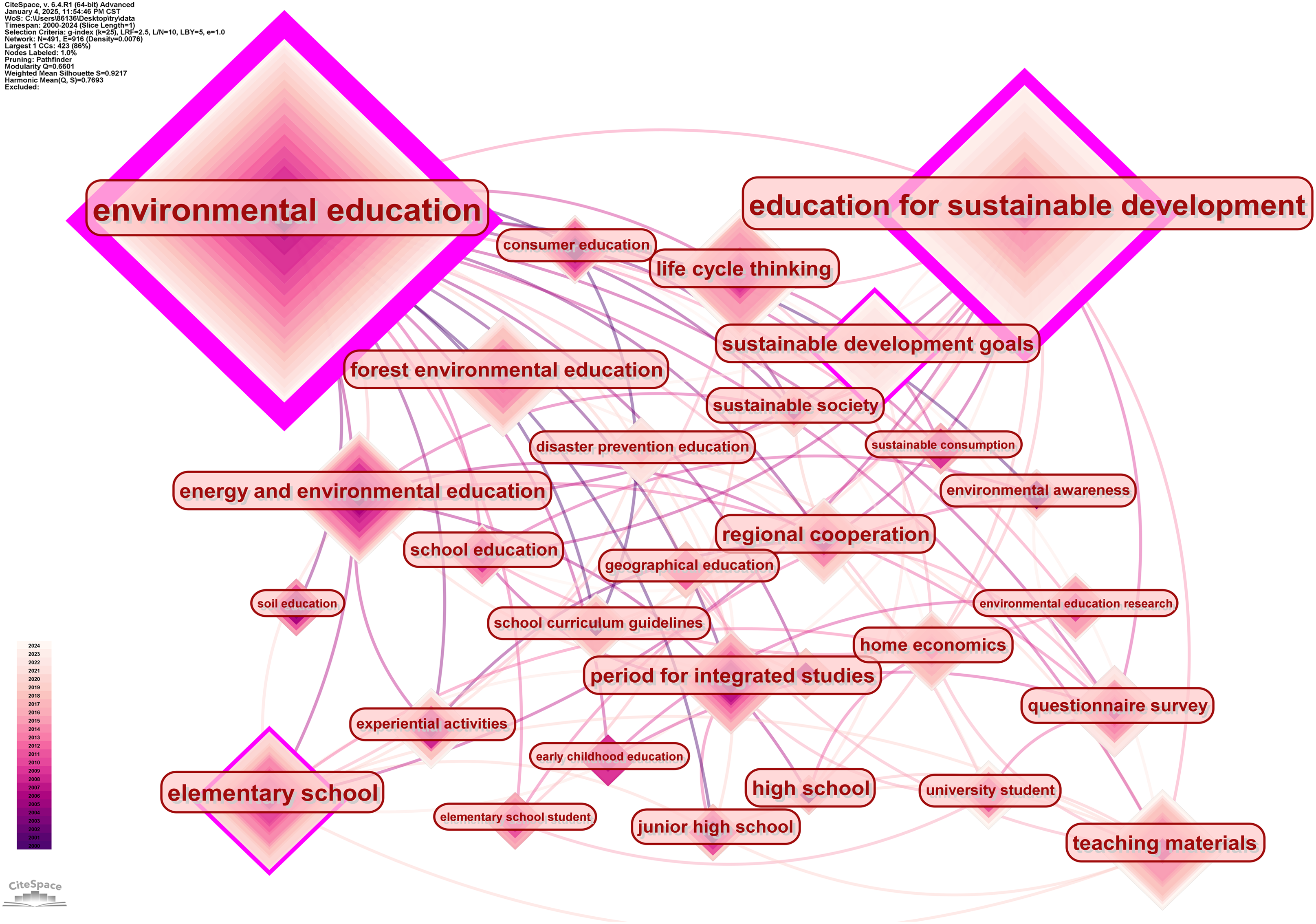
Co-occurrence mapping of keywords in Japanese ecological civilization education research.
Keyword Frequency and Centrality.
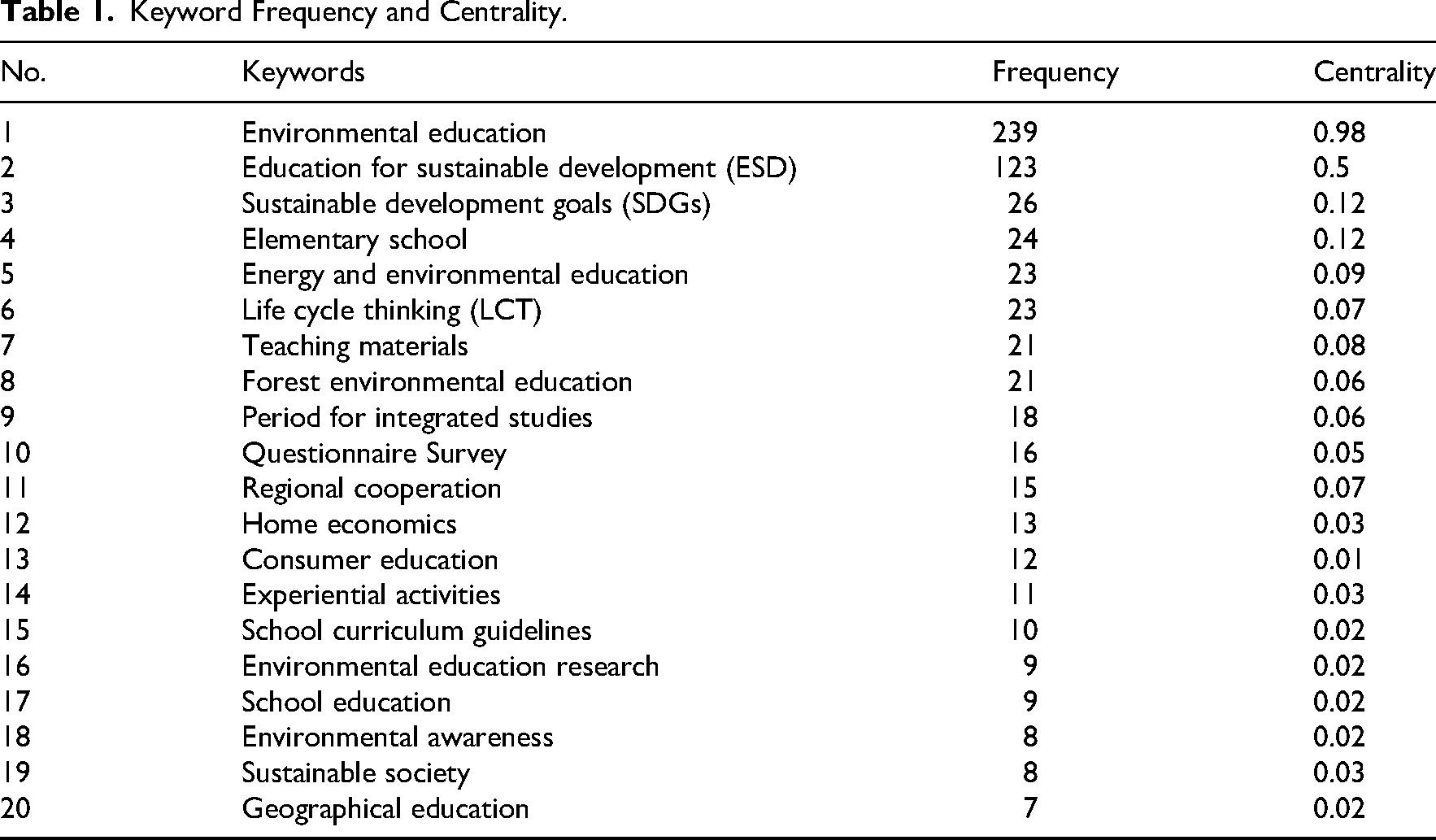
The keyword co-occurrence graph (Figure 2) generated by the software allows for visual observation of the general distribution of research hotspots in ecological civilization education in Japan. The top eight most frequent keywords are, in descending order, environmental education (239 occurrences), education for sustainable development (123 occurrences), sustainable development goals (SDGs) (26 occurrences), elementary school (24 occurrences), energy environmental education (23 occurrences), life cycle thinking (LCT) (23 occurrences), teaching materials (21 occurrences), and forest environmental education (21 occurrences) (Table 1). The remaining keywords occur fewer than 20 times. Having established “environmental education” and “education for sustainable development” as our primary search terms, the prominent appearance of keywords such as “Sustainable Development Goals,” “elementary school,” and “life cycle thinking” indicates their significant prominence in Japanese ecological civilization education research.
The betweenness centrality of a keyword reflects the strength of its connecting role within the network structure; a higher value indicates a more significant mediating function in the network's information flow and a greater contribution to overall network connectivity. According to the results presented in Table 1, four keywords have a betweenness centrality value of 0.1 or higher: “Environmental Education,” “Education for Sustainable Development (ESD),” “Sustainable Development Goals (SDGs), and “Elementary School.” The centrality values for the other keywords fall significantly below this threshold. These findings suggest that keywords such as “Environmental Education,” “ESD,” “SDGs,” and “Elementary School” occupy crucial hub positions within this research domain. They function as essential bridges connecting diverse research themes and directions within the field of Japanese ecological civilization education research, collectively forming, along with other high-frequency keywords, the core research agenda of the field. In contrast, other keywords with lower betweenness centrality possess relatively weaker network connecting roles. These may represent more specialized and thematically independent research areas, playing roles more akin to those of marginal or secondary connectors within the overall research network.
Core Theme
Keyword co-occurrence network analysis, using clustering algorithms, can be used to effectively simplify the complex web of relationships between keywords and reveal underlying connections by grouping them into several clusters. A timeline view of keyword clusters further integrates the temporal dimension, arranging the literature within each cluster chronologically and visualizing it as a timeline, with each cluster represented by a separate line. In the visualization, square nodes represent keywords, and connecting lines represent the relationships between them. By integrating the keyword co-occurrence network analysis with the examination of keyword frequency and betweenness centrality presented in the previous section, we are able to systematically trace the research trajectory and evolutionary patterns of ecological civilization education research in Japan.
From a structural perspective, “environmental education,” “ESD,” and the “SDGs” constitute the long-standing and stable conceptual foundations of this research field. These core concepts not only appear with high frequency but also occupy prominent hub positions within the keyword network. As illustrated in Figure 3, “environmental education,” as a traditional concept, has been widely employed since the early twenty-first century. With the subsequent introduction of ESD and the SDGs, these newer concepts have progressively expanded and reshaped the connotations of environmental education, becoming central areas of sustained scholarly engagement in Japanese ecological civilization education research.
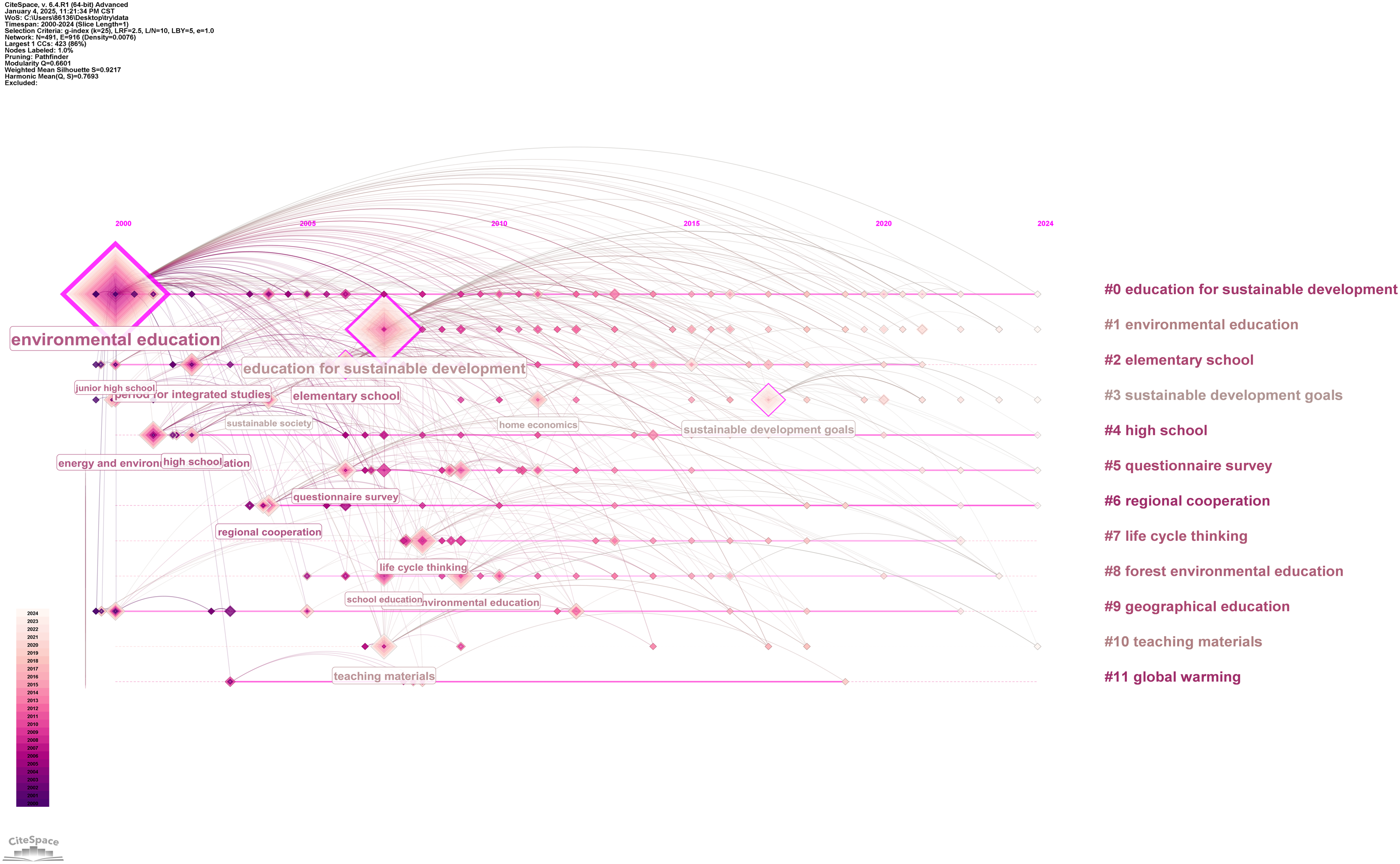
Keyword timeline clustering diagram.
The keyword co-occurrence network analysis also highlights the pivotal role of basic education within this research domain. In addition to “elementary school,” which exhibits high betweenness centrality, keywords associated with other educational stages, such as “junior high school” and “high school,” as well as curriculum- and practice-oriented themes including “home economics” and “teaching materials,” remain consistently active. This pattern indicates that both research and practice in Japanese ecological civilization education are primarily situated within the formal education system. In particular, increasing emphasis has been placed on curriculum integration and pedagogical practices aimed at systematically cultivating students’ values, competencies, and capacities related to sustainable development at the basic education level.
In contrast, themes such as “forest environmental education” and “energy environmental education,” while demonstrating a certain degree of research activity, exhibit relatively lower betweenness centrality, suggesting that they function as more specialized and thematically independent research areas. This structural characteristic reflects ongoing scholarly efforts to translate global sustainability agendas—most notably ESD and the SDGs—into concrete educational content and practical pathways within specific subfields. At the same time, the frequent appearance of keywords such as “regional cooperation” and “questionnaire survey” indicates an increasing reliance on empirical research approaches and collaborative mechanisms to assess educational outcomes, social impacts, and modes of cooperation.
Overall, the keyword clustering results and their temporal evolution reveal that ecological civilization education research in Japan has undergone a clear transformation—from an initial phase centered on environmental issues to a more advanced stage characterized by sustainability-oriented frameworks, educational practice, and social collaboration. This evolutionary process not only reflects the continuous expansion and diversification of research themes but also demonstrates how Japan has gradually developed a distinctive research trajectory in ecological civilization education while responding to domestic social needs and engaging with international sustainability agendas.
Cutting-Edge Research
On the basis of the CiteSpace keyword map analysis, a keyword burst analysis was conducted. The top 15 keywords with the greatest burst strength were selected for analysis, as shown in Figure 4.
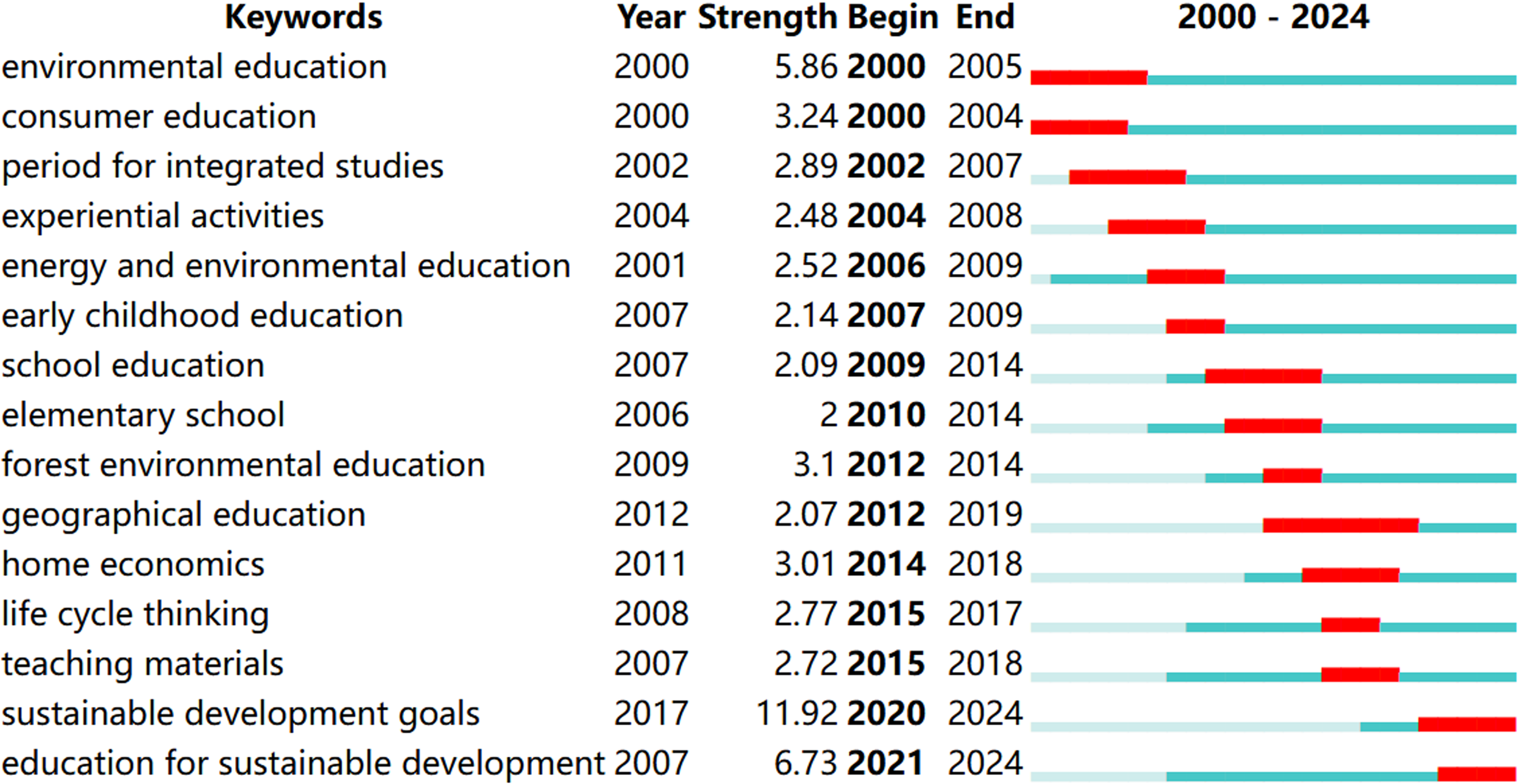
Keyword emergence rate (top 15) of ecological civilization education.
Burst analysis reveals the dynamic nature of a research field. “Sustainable development goals” has the highest burst strength (11.92), followed by “Education for sustainable development” (6.73) and “environmental education” (5.86). Other keywords with significant bursts, in descending order, are consumer education, forest environmental education, home economics, period for integrated studies, LCT, teaching materials, energy environmental education, experiential activities, early childhood education, school education, geographical education, and elementary school.
Concrete Content and Practical Approaches to Ecological Civilization Education in Japan
The previous section focused on analyzing the research hotspots and evolving trends of Japanese ecological civilization education. Building on this, the current section delves deeply into specific research themes and content, demonstrating the main content and practical approaches of ecological civilization education in Japan.
Concrete Content of Ecological Civilization Education in Japan
Article 2 of the Act on the Promotion of Environmental Conservation Activities through Environmental Education defines environmental education as education and learning about environmental conservation at home, school, workplace, a local community, or any other place, with the aim of establishing a sustainable society, with the purpose of providing a better understanding of the link between the environment and society, economy and culture, and other aspects of environmental conservation. Article 3 further elaborates on the objectives of environmental education: the aim of nurturing the attitudes of setting a high value on lives, treasuring nature, and contributing to environmental conservation. Thus, environmental protection is a central objective of environmental education in Japan.
Unlike traditional environmental education, which emphasizes environmental protection, ESD has broader objectives, with the goal of nurturing future citizens to be capable of building a sustainable society (MEXT, 2021). “Sustainable development” encompasses not only environmental issues but also poverty, human rights, gender equality, peace, health, and other concerns. The concept of ESD was initially proposed by the Japanese government at the 2002 World Summit on Sustainable Development in Johannesburg. In 2015, the United Nations Summit adopted the SDGs, comprising 17 goals and 169 targets, with ESD explicitly included as target 4.7 under Goal 4, “Quality Education.” Recognizing education as the foundation of societal transformation, ESD is considered not only a specific target within the SDGs but also a crucial factor for achieving all 17 goals, thus receiving considerable attention.
Since the international discourse regarding ESD is rooted in environmental education, with the latter providing the foundation for the former's development and with Japanese domestic policies positioning environmental education as a crucial aspect of ESD, the mutual influence between the two is unavoidable (Ninomiya-Lim & Abe (2015)). Currently, environmental education is often viewed as a component of the ESD framework. As the Act on the Promotion of Environmental Conservation Activities through Environmental Education states, environmental education has the aim of “establishing a Sustainable Society,” signifying a high degree of integration between environmental education and ESD in terms of their connotations.
According to Ninomiya-Lim and Abe (2015), the influence of ESD on environmental education research can be summarized as follows: (a) ESD promotes increased collaboration between environmental education and development education, international education, and social education. (b) It has promoted the application of sustainable development concepts within environmental education, extending from educational content and methods to school operations and curriculum design. (c) It emphasizes collaboration between schools and local communities in environmental education. For instance, Higuchi and Kawazoe (2018) reported a correlation between the frequency of collaborative environmental education activities between schools and communities and teachers’ positive perceptions of such collaborations. Sato and Fujioka (2022) illustrated the value of geoparks in junior high school science education related to natural disasters, suggesting that incorporating activities in geoparks into science, social studies, and integrated studies can contribute to achieving ESD and SDG objectives.
On the basis of the literature, Japanese ecological civilization education also encompasses several unique elements.
Forest Environmental Education
This refers to educational activities conducted in forests, encompassing various learning and experiential activities, to deepen the understanding and concern regarding the relationships among forests, life, and the environment (Forestry Agency, 2023). The concept of “forest environmental education” was first proposed in a consultative report by the Central Forest Council on February 18, 1999 and formally clarified in the 2002 Annual Report on Forest and Forestry in Japan.
Social and educational needs have driven the practice and promotion of forest environmental education. Globally, the increasing severity of environmental issues such as deforestation and global warming has heightened public awareness of the ecological functions of forests. Concurrently, urbanization has led to decreased interactions between humans and forests, resulting in a deficiency of natural experiences. Forest environmental education has become a vital means of bridging this gap between humans and nature. With the introduction of a period for integrated study in school education, interdisciplinary and experiential learning has become important, and forests, with their rich natural resources and biodiversity, provide ideal settings for such activities (Kiyotatsu, 2014). Because forests fulfill multiple functions essential for human life, serve as habitats for diverse species, and provide wood as a renewable resource for materials and fuel, forest-based educational activities are considered highly compatible with ESD principles. They effectively promote the development of a sustainable mindset and play a significant role in cultivating citizens with relevant competencies.
Research on forest environmental education can be broadly categorized into community-based forest environmental education, school-based forest environmental education, and theoretical research on forest environmental education. School-based research predominates, including case studies on the design and implementation of forest environmental education programs in schools (Nakagawa, 2013), the development of related teaching materials (Nakamura et al., 2009), and research on students’ forest awareness (Kawase, 2012).
Energy Environmental Education
The Great East Japan Earthquake and the Fukushima Daiichi Nuclear Power Plant accident in 2011 profoundly affected Japan's energy policy, prompting a reassessment of its energy mix and increasing its focus on renewable energy. As a crucial branch of environmental education, energy environmental education aims to enhance students’ understanding and critical thinking regarding energy development, utilization, supply, and environmental protection, guiding them toward responsible decision-making and actions. It targets students, teachers, and future technology developers; emphasizes school-based education integrated within a lifelong learning framework; and advocates for societal participation in research, practice, and support. Compared with environmental education, which addresses broader environmental concerns, energy environmental education focuses specifically on the environmental impact of energy development and utilization and how to achieve sustainable development while ensuring energy security. The two complement and reinforce each other.
Research on energy environmental education focuses primarily on school-based practices, including curriculum development, teaching method research, and case studies on integrating energy environmental education content into subjects such as physics, chemistry, and information technology (Ito & Takaki, 2015; Kayano et al., 2006). Furthermore, some studies explore models of collaboration with local communities, utilizing local resources for energy environmental education (Ando & Nagai, 2009; Ohta & Morishima, 2009).
Life Cycle Assessment and Life Cycle Thinking Education
Life cycle assessment (LCA) is a method for assessing the environmental impacts of a product or technology throughout its entire life cycle by quantifying environmental burdens. LCT is a broader concept that emphasizes considering all relevant activities and impacts throughout a product's or technology's life cycle. The core of LCT is systems thinking, which involves considering all relevant activities and stakeholders (Hondo, 2009).
LCT plays a unique and vital role in ecological civilization education. The connection between modern environmental problems and daily life is not always apparent. LCT can help learners understand the environmental impact of their actions, bridging this gap in knowledge. By understanding the entire life cycle of a product or service, learners gain a more comprehensive understanding of environmental issues and become more motivated to change their consumption behaviors and lifestyles. LCT emphasizes systems thinking, encouraging learners to view environmental problems from a broader perspective, fostering holistic thinking, and understanding the interconnectedness of different environmental issues.
Research on incorporating LCT into ecological civilization education focuses primarily on the development and practical application of educational materials. Examples include educational software that calculates the CO2 emissions of items in a student's backpack, helping them understand the link between daily life and global warming (Nemoto, 2009), and learning projects centered on mobile phones, utilizing lectures, discussions, and factory visits to explore the environmental impacts of the production, use, and disposal of materials such as plastics, semiconductors, and batteries (Narita et al., 2009).
These educational approaches that incorporate LCA and LCT not only enhance students’ environmental knowledge but also promote their understanding of the relationship between daily consumption behavior and environmental impact, strengthening environmental responsibility and awareness of the environmental consequences of a product's life cycle, thereby increasing their willingness to adopt environmentally friendly actions.
Consumer Education
Consumer education extends beyond self-protection in transactions to include environmental protection, energy, and biodiversity, aligning with ecological civilization principles. Article 3 of the Act on the Promotion of Consumer Education emphasizes understanding the impact of consumption on socioeconomic trends and the global environment and coordinating with environmental education policies (Japanese Law Translation, 2012). “Sustainable production and consumption” is a key part of ESD, making consumer education for sustainable consumption vital to ecological civilization education.
In the 2000s, Japan legally promoted a recycling-oriented society on the basis of the 3Rs (Reduce, Reuse, Recycle). Basic Act on Establishing a Sound Material-Cycle Society and Act on Promoting Green Procurement aimed at promoting environmentally friendly consumption. These policies connect to research on consumer education and sustainable consumption.
Existing research focuses on investigating consumer environmental awareness; developing consumer education curricula, programs, and materials; and exploring the effective integration of consumer education into the school education system. For example, Matsubaguchi (2017) argued that integrating consumer education into integrated studies and life skills courses helps create a systematic consumer education curriculum and enhances students’ understanding of its importance. Ishijima (2020) designed an educational program based on cooking practices, integrating cooking with environmental protection knowledge and skills to guide students in reducing food waste. These studies, from different perspectives, aim to cultivate sustainable consumption patterns among students and citizens, ultimately contributing to the sustainable development of the economy and society.
Practical Approaches to Ecological Civilization Education
The preceding sections explored the rich content of ecological civilization education. However, high-frequency keywords and core research themes encompass not only this content but also practical approaches and concepts such as “experiential activities,” “Period for Integrated Learning,” and “school-community collaboration.” This section will delve further into the specific practical pathways of ecological civilization education in Japan on the basis of these keywords and related research themes.
Experiential Activities
Experiential activities, “conscious and planned experiential opportunities for learners,” are crucial for ecological civilization education (MEXT, 2007). Nature-based experiential learning is considered key to environmental education (Furihata et al., 2009). Article 3 of the Act on the Promotion of Environmental Conservation Activities through Environmental Education emphasizes a deeper understanding of environmental protection through nature-based activities. Current trends emphasize cultivating a sense of circulation and symbiosis through diverse experiential learning, not only limited to nature but also including social experiences with sustainable practices, intercultural life experiences, and interactions with role models. Experiential learning also emphasizes the learner's expression and output of the meaning derived from these experiences (MOE, 2021).
The 2007 revision of the School Education Act explicitly promotes school-based and extracurricular nature experiences to cultivate students’ respect for life and nature and foster an attitude of contributing to environmental protection. Experiential learning in early childhood cultivates children's affinity, interest, and love for the natural environment, laying the foundation for their future role as builders of a sustainable society. Kindergarten education goals have been adjusted accordingly, emphasizing “cultivating children's interest in surrounding social life, life, and nature and promoting the development of correct understanding, positive attitudes, and preliminary thinking skills regarding these matters.” These policy adjustments are closely linked to the academic focus on research themes such as “nature experience” and “agriculture and forestry experience.”
The data analysis in this study reveals “experiential activities” as a high-frequency keyword appearing 11 times, and a series of related terms can be found, such as “experiential learning,” “nature experience,” “forest experience activities,” “authentic experience,” “nature-based activities,” and “environmental industry experience,” which collectively appeared 25 times. This diverse range of experience-related keywords highlights the widespread and multifaceted application of experiential activities in Japanese ecological civilization education, establishing them as one of the primary pedagogical approaches in this field. The relevant research encompasses surveys on the implementation status of nature-based experiential learning in school education and the design of experiential learning programs. For example, some studies explore how to conduct nature-based experiential learning in specific environments such as forests, farms, and seashores (Okubo et al., 2019; Nakagawa, 2013), how to collaborate with local communities to implement such learning (Honda & Yoshitomi, 2010; Shimatani et al., 2008), and how to evaluate the effectiveness of experiential learning (Oishi et al., 2017; Shiodawara & Andoh, 2013), yielding substantial research findings.
As the main practical method of ecological civilization education, experiential activities provide students with the opportunity to learn and understand the concept of ecological civilization in real-life situations, but their effective implementation relies on the flexible arrangement of “periods for integrated studies” and close cooperation between schools and regions.
Period for Integrated Studies
The “Period for Integrated Studies,” which was introduced in Japan after 2000, offers an ideal platform for ecological civilization education. This curriculum arrangement, parallel to subjects such as math and science, allows students to solve problems in an interdisciplinary and comprehensive manner. It aims to cultivate life skills such as independent learning and thinking through interdisciplinary courses. Japan's curriculum standards recommend incorporating international understanding, information, environment, welfare, and health into this period.
Its practical, diverse, and interdisciplinary nature requires more than traditional knowledge transmission does. Adequate time and flexible arrangements are needed for experiential activities. The “Period for Integrated Studies” ensures that schools can schedule time for these activities outside the constraints of the traditional curriculum. The Japanese government emphasizes independent, dialog-oriented, and deep learning, advocated for improved teaching methods such as inquiry-based learning and independent learning opportunities, and reinforced learner agency. Collaborative learning, promoting discussion and investigation, is also crucial (MEXT, 2021).
Environmental education is not a standalone subject in Japan. Since 2002, the “period for integrated studies” has been gradually introduced into school curricula, providing new opportunities for their dissemination. The Japanese government emphasizes that the content of Integrated Studies should be based on the specific circumstances of the region, school, and students, aiming to create transversal and comprehensive learning activities that transcend disciplinary boundaries. The incorporation of inquiry-based and collaborative learning models is also essential (MEXT, 2017). The characteristics of integrated studies align closely with the requirements of ecological civilization education, making it an ideal platform.
This practice resonates with the concurrent academic focus on research hotspots such as “Period for Integrated Studies,” “integrated studies,” and “curriculum development.” The term “Period for Integrated Studies” alone appeared 18 times, ranking ninth among all high-frequency keywords. Numerous studies during this period focused on case studies of ecological civilization education within the integrated studies framework, actively exploring how to effectively integrate its content (Hatada & Hirano, 2006; Kiriyama, 2001).
School–Community Collaboration
Collaboration between schools and local communities is crucial for effective ecological civilization education. The breadth of ecological civilization education places greater demands on schoolteachers, and not all schools possess the necessary facilities. Experiential activities require diverse resources and professional guidance, which is often beyond the capacity of the schools themselves. The cooperation of schools with communities provides the necessary external support, such as venues, resources, and professionals, for experiential activities. To enhance educational outcomes, schools need to strengthen their collaboration with local communities, universities, and businesses (MEXT, 2021). The Japanese government advocates for ecological civilization education to extend beyond the school setting, utilizing local natural environments such as forests, rural areas, fields, and rivers, as well as diverse local resources such as regional culture and residents. As previously mentioned, experiential learning in real-world contexts yields better results, and leveraging local resources facilitates this.
In addition to optimizing educational outcomes, integrating a local perspective into ecological civilization education promotes interactions between students and local residents and groups, enhances the value and appeal of the region, and ultimately contributes to regional development. In areas facing challenges such as declining birth rates, aging populations, and population decline, collaborative education with schools represents a vital pathway for regional revitalization. Research by Inoue and Kosuga (2023) revealed that a school–community collaborative forest education program in Nichinan town, Japan, not only effectively promoted forest environmental education within the school but also positively affected the cultivation of local forestry professionals and regional revitalization.
Beyond the frequently appearing “regional cooperation” and “cooperation of school with community” (18 times), terms such as “industry–academia collaboration,” “community support,” “collaboration with society,” and “high school–university collaboration” collectively appeared 15 times. Keyword clustering (Figure 3) indicates that Japanese researchers have explored these themes, covering cooperation between regional organizations (government, business, and academia) and schools, as well as between educational levels (e.g., kindergarten–elementary and high school–university). This suggests a broad trend of multistakeholder collaboration in ecological civilization education practices. Research focuses primarily on case studies of school–community collaboration (Hirozumi et al., 2019; Shimizu et al., 2019) and surveys on the impact of this type of education on local residents, students, and teachers (Habara et al., 2020). Community-based ecological civilization education enhances content and methods and promotes students’ respect for nature, communication skills, and community belonging (Higuchi & Kawazoe, 2018).
Case Study: Ecological Civilization Education Practice Based on Invasive Species Monitoring (Adapted from Hatada & Hirano, 2006)
In a rural Japanese area impacted by invasive alien species (IAS), an elementary school collaborated with local ecologists to develop an integrated learning program focused on “invasive species monitoring.” This program aimed to raise IAS awareness among students and community members and promote environmental protection through education.
A project team of teachers, ecologists, and community representatives designed a curriculum to cultivate students’ ecological awareness and scientific inquiry skills through IAS monitoring while disseminating knowledge about their hazards and control. The year-long curriculum integrated IAS monitoring into the school's learning framework, encompassing lectures, field investigations, data recording, and community outreach.
The program began with classroom lectures from ecologists, providing a systematic understanding of IAS concepts, invasion mechanisms, and impacts. Multimedia materials and specimens emphasized the severity of the problem. Teachers then led discussions on identification methods and the significance of monitoring, stimulating student interest.
Following initial instruction, the students engaged in field practice at selected sites (farmland, rivers, and forest edges) near the school. Guided by ecologists and teachers, they surveyed IAS distributions, recorded plant characteristics and locations, created distribution maps, and documented data on maps and record sheets. Classroom data collation and analysis allowed students to observe dynamic changes in IAS distribution over time.
Then, the students compiled their findings into an informational brochure, “Nature News,” distributed to the community to raise awareness about IAS and control measures. The school also organized exhibitions and public lectures by ecologists to further enhance community awareness.
Through field monitoring and data analysis, students gained a direct understanding of the impact of IAS, enhancing their ecological awareness and developing scientific inquiry skills such as data collection and analysis. Students actively proposed strategies for IAS control. Community members gained a deeper understanding of IAS issues through student outreach and actively participated in prevention and control. This collaborative model offered new approaches to addressing IAS problems and fostered community-based ecological education.
The successful implementation of this learning project can be attributed to two key factors: First, school–community collaboration. This collaboration not only provided students with rich practical learning opportunities but also, more importantly, extended ecological education to families and the wider community through the student body, creating a positive educational ecosystem. Collaboration with professional ecologists allowed the school to incorporate specialized ecological knowledge and technical support, significantly enhancing the scientific rigor and professionalism of the integrated learning curriculum. The active participation of community members provided students with richer learning resources and practical settings, substantially strengthening the effectiveness of ecological education. Second, the flexibility and openness of the period for integrated studies. This curriculum offered a cross-disciplinary learning platform, enabling students to effectively integrate and apply their knowledge in practical contexts and fostering the holistic development of their competencies and abilities.
In conclusion, the application of experiential activities, a period for integrated studies, and school–community collaboration in ecological education practices, as exemplified by this Japanese case study, provides a valuable model for effective ecological education.
Experiential activities, school–community collaboration, and a period for integrated studies constitute the pillars of the current practical model of ecological civilization education in Japan. These interconnected and mutually supportive elements shape its unique characteristics. An interdisciplinary, practical, and life-relevant educational model is crucial for its effective promotion. Integrated studies provide the space and opportunity for such education. Within this framework, students can participate in field trips, connect with nature, and cultivate environmental awareness. This requires educators to carefully design specific experiential activities. However, schools often lack the resources to support these activities independently. Collaborating with local stakeholders, including local governments, businesses, and NPOs, enhances feasibility and can positively impact regional revitalization by fostering local talent development and strengthening students’ sense of belonging to the community.
Through these pathways, students receive diverse ecological civilization education within the school system and, with community support, have opportunities to engage with various natural and social environments and learn about different topics within ecological civilization education, such as forest environmental education, energy environmental education, and LCT, as mentioned earlier. These topics are not merely textbook knowledge or teacher lectures but become tangible issues experienced firsthand. This experiential learning significantly enhances students’ understanding and concern for environmental issues, achieving a depth that traditional classroom teaching often cannot achieve.
Key Characteristics of Ecological Civilization Education Research in Japan
On the basis of the preceding systematic review and summary of research hotspots, evolutionary trends, specific content, and practical approaches within Japanese ecological civilization education, this section aims to provide an in-depth analysis of the characteristics of Japanese research in this field.
Specialization of Research Themes
The study identified 630 keywords, with 527 appearing only once, and a burst analysis revealed a lack of sustained research hotspots in ecological civilization education. Prominent themes indicate an expansive, rather than progressive, trend with many parallel agendas. The interdisciplinary nature of the field attracts scholars from diverse backgrounds, further contributing to the variety of research perspectives.
Ecological civilization education in Japan has evolved from nature conservation and pollution education to environmental education and then interaction with ESD. These concepts are primary keywords for literature selection. Beyond these core concepts, numerous subordinate or parallel themes have emerged, such as forest environmental education, LCT, energy environmental education, and consumer environmental education. These themes are rooted in societal needs and historical contexts, leading to dedicated societies and journals.
Within the evolving framework of Japanese ecological civilization education, new themes continually emerge and develop. This dynamic reflects a key characteristic of the field: its constantly expanding scope. From an initial focus on environmental pollution, the content has broadened to encompass wider socioeconomic dimensions, leading to a deeper understanding of ecological civilization. This evolution suggests that the goals of ecological civilization education are multifaceted and multilayered. It necessitates both a granular approach, breaking down environmental issues into specific areas of inquiry, and a broader perspective, developing a more comprehensive and diverse range of sustainability education curricula. Furthermore, the practical methodologies employed across various studies demonstrate increasing diversification, encompassing classroom instruction, extracurricular activities, curriculum design, and software development. This diversification indicates that the practice of ecological civilization education extends significantly beyond the confines of traditional classrooms.
Diversification of Research Subjects
Ecological civilization education in Japan transcends the confines of formal schooling, encompassing all age groups from early childhood to senior citizens. Furthermore, the agents of education extend beyond schools to include families, workplaces, and communities. Similarly, research in this field addresses diverse subjects and actors, broadly categorized as school-based education and societal education. Driven by school–community collaboration, ecological civilization education within schools requires the support of local experts and professionals, whereas community-led initiatives rely on the participation of students. This interdependent partnership blurs the lines between school and societal education, fostering the potential for a systematized framework for ecological civilization education within the local educational ecosystem.
However, compared with societal education, school-based education, particularly in early childhood and elementary school, constitutes a major focus of academic research. Keyword prominence analysis (Figure 4) reveals that since the turn of the twenty-first century, researchers have concentrated on school-based practices such as “period for integrated studies,” “home economics,” and “teaching materials.” Apart from “regional cooperation,” research themes related to societal education remain relatively scarce. Article 9 of the Act on the Promotion of Environmental Conservation Activities through Environmental Education mandates that national, prefectural, and municipal governments implement necessary measures to promote environmental education in both schools and broader society, ensuring that citizens at all developmental stages, particularly from early childhood, have opportunities to deepen their understanding of and interest in environmental protection through various avenues (Japanese Law Translation, 2011). Academia's prevailing focus reflects, to some extent, the prioritization of school-based education, especially in the early years, within Japanese ecological civilization education practices.
Diversification of Research Methods
Ecological civilization education emphasizes practical activities beyond the classroom, aiming to motivate individual action toward environmental protection. It prioritizes the cultivation of attitudes and awareness in addition to knowledge transfer. Owing to the specific nature of its content, research in this field focuses heavily on empirical methodologies.
Surveys are the most commonly employed research method and primarily use questionnaires to gauge public environmental awareness and assess the experiences and perceptions of participants in ecological civilization education programs. Researchers also utilize interviews and discourse analysis to examine microlevel interactions within educational settings, seeking to elucidate the underlying mechanisms driving educational behaviors.
Practical research plays a significant role, involving the design, implementation, and evaluation of ecological civilization education curricula and projects. In addition to academics, primary and secondary school teachers contribute substantially to this body of research, providing valuable practical experience and insights.
While less prevalent, theoretical research also exists, encompassing conceptual analysis, discussions of definitions, and critical evaluations of existing scholarship. Moreover, since the 2010s, historical research has gained momentum, with scholars examining the trajectory of ecological civilization education and its subfields, summarizing achievements and challenges, and offering guidance for future development.
Comparative studies are also widely conducted, with keywords such as “China” and “United States” appearing frequently, indicating a strong international perspective among Japanese researchers and sustained interest in the practices of other nations. Notably, these comparative studies are not limited to developed countries but also include developing nations such as Nepal, Indonesia, and Thailand.
Conclusion and Discussion
This study employed CiteSpace software to conduct a visual mapping analysis of the research literature on ecological civilization education in Japan since the beginning of the twenty-first century, revealing the current state, hotspots, and trends within the field. The analysis highlights several key characteristics: Thematically, the research has expanded from an initial focus on environmental pollution to encompass broader socioeconomic dimensions, giving rise to specialized areas of inquiry such as forest environmental education, energy environmental education, LCT education, and consumer education. The practical methods of environmental education and education for sustainable development studied in these papers are mainly “experiential activities” in “Period for Integrated Learning” through “school–community cooperation.” With respect to the subjects of study, while school-based ecological civilization education, particularly at the early childhood and elementary levels, remains a primary focus, research now extends across all age groups and societal sectors. Methodologically, empirical research dominated, encompassing surveys, practical research, and comparative studies, primarily focused on practical application. The increasing specialization and diversification of research topics within Japanese ecological civilization education indicate its evolution into a multidisciplinary and multifaceted field of inquiry.
An examination of research on ecological civilization education in Japan reveals its practical characteristics. Specialized research themes reflect rich, systematic educational content. Going beyond general environmental protection, it encompasses defined subfields such as forest, energy, LCT, and consumer education, facilitating deeper learning. The dynamic and increasing research volume demonstrates its adaptability to emerging issues. Japan primarily implements this education through experiential activities via the “Period for Integrated Learning” and school–community cooperation, addressing the need for extracurricular resources. These initiatives contribute to effective education and positively impact regional development.
However, academic research alone is insufficient for depicting the entire landscape. Japan emphasizes practical application, with legal and institutional frameworks often preceding theoretical development (Harako, 2009). Policy, rather than research, often shapes the field. Future research needs to integrate policy and practice perspectives to examine the interplay between them. This study aims to provide a foundation for such research.
With respect to future research directions in ecological civilization education, it is essential to focus on the transformations and opportunities brought about by emerging technologies. The literature review conducted in this study has preliminarily revealed that some frontline educators have begun actively incorporating information technology into ecological civilization education curriculum design. Considering the real-world orientation and dynamic nature of the issues addressed by ecological civilization education, future research should actively explore how to more deeply utilize cutting-edge technologies, such as big data and artificial intelligence, to assist students in gaining a more comprehensive and in-depth understanding of the complex environmental problems currently facing human society and in exploring more effective solutions.
Furthermore, a critical challenge for future research lies in developing scientifically sound and effective methods for evaluating the long-term effectiveness of ecological civilization education rather than solely focusing on short-term knowledge acquisition or behavioral changes. Constructing an evaluation system capable of tracking deeper changes in students’ values, sense of environmental responsibility, and other such aspects and quantifying the long-term impact of ecological civilization education are crucial for examining the effectiveness of educational practices and optimizing educational strategies.
Footnotes

Ethical Considerations
Ethical approval was not required for this study since no empirical studies were conducted, and no human data or participants were involved.
Funding
The authors received no financial support for the research, authorship, and/or publication of this article.
Declaration of Conflicting Interests
The authors declared no potential conflicts of interest with respect to the research, authorship, and/or publication of this article.