



Abstract
It has been over a decade since China entered the competition for international students. However, the experiences of these students in China, especially regarding academic assessment, have not been thoroughly studied. Using the assessment for learning (AfL) framework and qualitative research methods, this article examines the assessment experiences of international students in Chinese higher education institutions. The findings show that the university studied employs various assessment methods, such as final papers, presentations, article reviews, exams, and group projects, depending on the instructors’ teaching styles and course content. Additionally, the data suggest that AfL practices, including questioning, feedback, and peer assessment, help students improve their learning and develop sustainable learning skills. Nevertheless, some teachers do not fully understand or value students’ participation and fail to provide clear assessment criteria and feedback. This article aims to enhance educators’ understanding of AfL and influence assessment practices at HEIs, ultimately improving international students’ learning experiences.
Keywords
Introduction
Currently, many higher education institutions (HEIs) worldwide are competing for international students. Similarly, China has entered the competition by building world-class universities and offering scholarships, making it the fourth-largest host country after the USA, the UK, and Canada (Wen & Hu, 2023). There are approximately 500,000 international students in China (Frezghi & Tsegay, 2019; Zhang & Liao, 2021). Research shows that Chinese HEIs use various strategies to build a reputable image and compete globally for international students (Frezghi & Tsegay, 2019). One successful strategy is to internationalize their curriculum, which enhances students’ global and intercultural perspectives and skills (Harrison, 2015; Leask, 2015). They also focus on developing global competence by providing quality education and social services (Guo et al., 2022; Tsegay et al., 2018). According to the OECD (2018), developing global competence involves understanding different perspectives, effectively engaging with people from diverse cultures, and taking actions to promote collective well-being and sustainable development. Furthermore, the use of well-designed assessment methods—central to this article—plays a key role in enhancing global competence and the internationalization of higher education, including student mobility (Frezghi & Tsegay, 2019; Sadler, 1998). An effective assessment method evaluates student learning and the institution's ability to prepare students with the knowledge and skills necessary to become productive and responsible citizens (Boud & Falchikov, 2005; Hawe & Dixon, 2017; Tsegay, 2016).
Recognizing these circumstances, the Chinese government has been working to internationalize its HEIs to improve global rankings and attract international students (Frezghi & Tsegay, 2019; Tsegay et al., 2018). These efforts include enhancing educational services, revising teacher recruitment strategies, adopting foreign textbooks, and fostering collaborative academic programs (Dady & Sang, 2022; Zhang & Liao, 2021). However, despite these efforts and a notable increase in international student enrollment, concerns about the quality of education in Chinese HEIs still remain (Dady & Sang, 2022). A recent study by Singh and Kaur (2023), for instance, showed that HEIs face challenges such as the dominance of Chinese-language instruction, limited classroom discussion and autonomy, restricted interaction between international and local students, and a lack of practical learning opportunities, all of which impact the process of internationalization and recruiting foreign students (see also Tsegay et al., 2018). Furthermore, research indicates that international students’ learning experiences are underrepresented in the existing literature (Ma & Wen, 2018). There is a research gap regarding assessment methods in Chinese HEIs, although the importance of effective assessment in equipping students with the necessary knowledge, skills, and experiences is well established (Ďurišová et al., 2015; Hawe & Dixon, 2017). It is also particularly valuable to examine assessment methods from the perspective of international students, as this reflects the HEIs’ ability to meet the needs and interests of students from diverse cultures and backgrounds.
This article explores international students’ experiences and perceptions of assessment methods at Chinese HEIs. The following research questions guide the research:
What assessment for learning (AfL) practices are commonly used in Chinese HEIs? How do international students view the assessment practices at these institutions?
The findings are expected to inform stakeholders such as policymakers and educators and to help shape policies on assessment methods at Chinese HEIs. Additionally, it enhances the quality of education provided to international students in China.
Research Context: International Students in Chinese Higher Education
With approximately half a million international students, China has established itself as a primary global destination for international students (Frezghi & Tsegay, 2019; Zhang & Liao, 2021). Moreover, Chinese HEIs have taken significant steps to create an inclusive and welcoming environment for the increasing number and diverse nature of international students visiting the country (Tsegay et al., 2018). According to Zhang and Liao (2021), 295,043 international students in China are from Asia, 81,562 from Africa, 73,618 from Europe, 35,733 from the Americas, and 6,229 from Oceania. This data indicates that most students originate from the Global South, primarily due to improved scholarship and visa opportunities (Frezghi & Tsegay, 2019; Tsegay et al., 2018; Wen & Hu, 2023). Chinese HEIs have implemented various programs and services tailored to meet the needs of diverse student populations, including language support, cultural integration programs, and academic guidance to address students’ needs within the country (Kuroda, 2014; Tsegay et al., 2018; Yang, 2018). Consistent with this, Dady and Sang (2022) noted that these initiatives have positively influenced international students’ perceptions and satisfaction regarding the quality of education and services provided.
Conversely, numerous studies have highlighted ongoing challenges in providing high-quality education and services to international students in Chinese HEIs. For instance, Kihwele et al. (2022) noted that teacher-student interactions, stereotyping, and cultural biases in knowledge sharing—often prejudiced against the cultures of underdeveloped nations—are among the primary issues. The study suggested a shift in instructional strategies at Chinese universities, emphasizing the importance of effective, practical training in university teacher expertise (UTE) to better serve multicultural classrooms (see also Ashraf et al., 2021). Additionally, other challenges include a lack of globally recognized educational programs and qualified educators (Yadav et al., 2021), insufficient academic motivation (Ding, 2016), limited access to English-language learning resources and support, and restricted interaction between Chinese and international students (Ma & Wen, 2018; Tsegay et al., 2018). Despite the rapid growth in the number of international students in China, there is comparatively less research on their experiences during the teaching and learning process, especially regarding their academic assessment. Therefore, this article investigates the AfL strategies commonly used in Chinese HEIs and international students’ views on the assessment practices.
Theoretical Perspectives
Understanding AfL
This study is informed by the AfL concept. Many HEIs have shifted their focus to AfL, which has gained increasing international recognition in policy and practice across many regions, including the Asia-Pacific (DeLuca et al., 2018; Klenowski, 2009; Swaffield, 2011; Wu et al., 2021). However, there is still debate on the effective implementation of AfL in many countries and institutions. For example, Wu et al. (2021) noted that AfL has been a key focus in Chinese HEIs, especially in English as a foreign language (EFL) class. Despite AfL being promoted at the policy level to encourage students’ active participation in assessment, their study revealed a disconnect between reform goals and classroom practice, as well as between teachers’ practices and values (Wu et al., 2021). This indicates the need for alignment between HEIs’ AfL plans and teachers’ ability to implement them successfully.
Many scholars have provided various definitions of AfL, but they all agree that AfL is a teaching and learning practice aimed solely at improving students’ learning or performance (Black & Wiliam, 1998; Black et al., 2006; Brown, 2019; Flórez & Sammons, 2013). For instance, Klenowski (2009, p. 264) defined AfL as “part of everyday practice by students, teachers, and peers that seeks, reflects upon, and responds to information from dialogue, demonstration, and observation in ways that enhance ongoing learning.”
The Assessment Reform Group (ARG, 2002) also identified ten principles of assessment for learning.
AfL is part of effective planning; AfL focuses on how students learn; AfL is central to classroom practice; AfL is a key professional skill; AfL is sensitive and constructive; AfL fosters motivation; AfL promotes understanding of goals and criteria; AfL helps learners how to improve; AfL develops the capacity for self-assessment; AfL recognises all educational achievements (ARG, 2002, p. 2).
As outlined in the principles of AfL, this approach emphasizes the use of various learning techniques and strategies that promote effective teaching and learning. It primarily relies on student-centered and interactive methods, which encourage student participation and enhance students’ learning and academic performance (Black et al., 2006; Boud & Falchikov, 2005; Flórez & Sammons, 2013; Hawe & Dixon, 2017; Marshall & Jane Drummond, 2006; Schellekens et al., 2021) through various means such as questioning, peer evaluation, and self-assessment (Black & Wiliam, 1998; Brown, 2019; DeLuca et al., 2018; Swaffield, 2011; Wu et al., 2021). It often begins with careful planning to assess students’ current levels, define lesson objectives, and select appropriate methods (Swaffield, 2011). In such a way, AfL has transformed teachers’ and students’ views of summative assessment.
While AfL is typically seen as a way to support and enhance students’ learning, summative assessment is often primarily used for accountability and ranking purposes (Schellekens et al., 2021). However, with AfL, even summative assessments are now aimed at improving learning rather than just judging students’ performance (Flórez & Sammons, 2013; Marshall & Jane Drummond, 2006; Schellekens et al., 2021; Taras, 2010). This relies on the idea that assessment affects students’ learning, including their interest, motivation, class participation, and understanding of tasks (Schellekens et al., 2021). Additionally, as mentioned earlier, effective AfL practices require careful planning and professional skills to promote students’ participation and learning, ultimately fostering students’ autonomy or independent learning (ARG, 2002; Marshall & Jane Drummond, 2006).
AfL and International Students
Many scholars have studied international students’ perceptions of the assessment practices used by their host universities (Cho et al., 2021; Van Rompay-Bartels & Geessink, 2023; Ryan & Henderson, 2018; Warner & Miller, 2015). For example, Warner and Miller (2015) examined international students’ perceptions of assessment in Australia and found that feedback primarily focuses on correcting errors rather than providing ongoing guidance. However, the study showed that students prefer formative feedback that helps them improve their knowledge and skills. Moreover, the study highlights students’ concerns about negative comments and their difficulty understanding lecturers’ feedback, with only 29% of students fully comprehending the feedback. The results suggest that educators should provide thoughtful feedback, taking into account its nature, delivery method, and impact on the development of international students. Furthermore, Cho et al. (2021) reviewed studies on the management of Asian international students at American universities. The research examined students’ motivation, perceptions of assessments, and learning methods across different disciplines and found that students’ self-motivation positively influences their views of assessments. This positive attitude also encourages students to adopt learning strategies associated with strong academic performance.
Moreover, Ryan and Henderson (2018) examined two student variables, citizenship backgrounds (domestic and international) and grade expectations (higher or lower than anticipated), emphasizing that feedback is essential for enhancing learning strategies and academic performance. Their study also revealed that international students are more likely to perceive feedback as discouraging, upsetting, and critical compared to domestic students. Additionally, students who receive lower-than-expected grades and negative feedback tend to feel sad, ashamed, and angry more often than those who get higher-than-expected results. The study suggests that instructors should be mindful of their biases and consider students’ experiences when designing assessment and feedback processes.
Research indicates that students’ perceptions of feedback are influenced by their personal and cultural backgrounds (Van Rompay-Bartels & Geessink, 2023; Zhou et al., 2023). Van Rompay-Bartels and Geessink (2023) argued that cultural background, or bias, significantly influences how students give and interpret peer feedback. This requires teachers to look beyond domestic cultural values, as these may not fully account for international students’ backgrounds and experiences (Zhou et al., 2023). Furthermore, Shahijan et al. (2016) suggested that perceived brand orientation, intercultural friendships, and university reputation significantly affect course satisfaction and students’ intentions to continue studying. This suggests that educators should understand students’ educational identities and epistemological beliefs to enhance the feedback process. In this line, Bloxham et al. (2011) emphasized the importance of assessment criteria and clear communication in boosting students’ performance.
Overall, various factors influence international students’ perceptions of AfL practices, which in turn affect their academic performance. Cho et al. (2021) argue that self-determined motivation influences students’ adaptive assessment beliefs, leading to the adoption of different self-regulatory learning strategies and improved academic performance. Furthermore, Bearman and Ajjawi (2021) noted that using explicit marking criteria significantly enhances students’ academic performance.
Methodology
This article is based on a qualitative research approach, which enables us to understand the participants’ realities through their experiences and perceptions (Creswell, 2013; Yin, 2003). Below, we outline the research process used to conduct the study and write this article.
Research Design
The article used a case study, a research design employed to explore a phenomenon in its real-life setting (Priya, 2021; Yin, 2003, p. 2009). It is frequently used in social science research because it provides a thorough and detailed examination of a phenomenon using any data collection method (Crowe et al., 2011; Priya, 2021). It is important for answering ‘what’, ‘how’, and ‘why’ questions and is open to the “use of theory or conceptual categories that guide the research and analysis of data” (Meyer, 2001, p. 331). De Vaus (2001) argues that a case study research unit of analysis can be an organization, a community, a household, a family, an individual, an event, or even a decision (see also Priya, 2021). Different research questions can also lead to different cases or units of analysis. In this article, AfL strategies and international students are the cases or units of analysis. Furthermore, Yin (2009) emphasizes the importance of context (i.e., a Chinese university in this article), as a case study is characterized by blurred boundaries between the case and its context.
Sample and Sampling Procedure
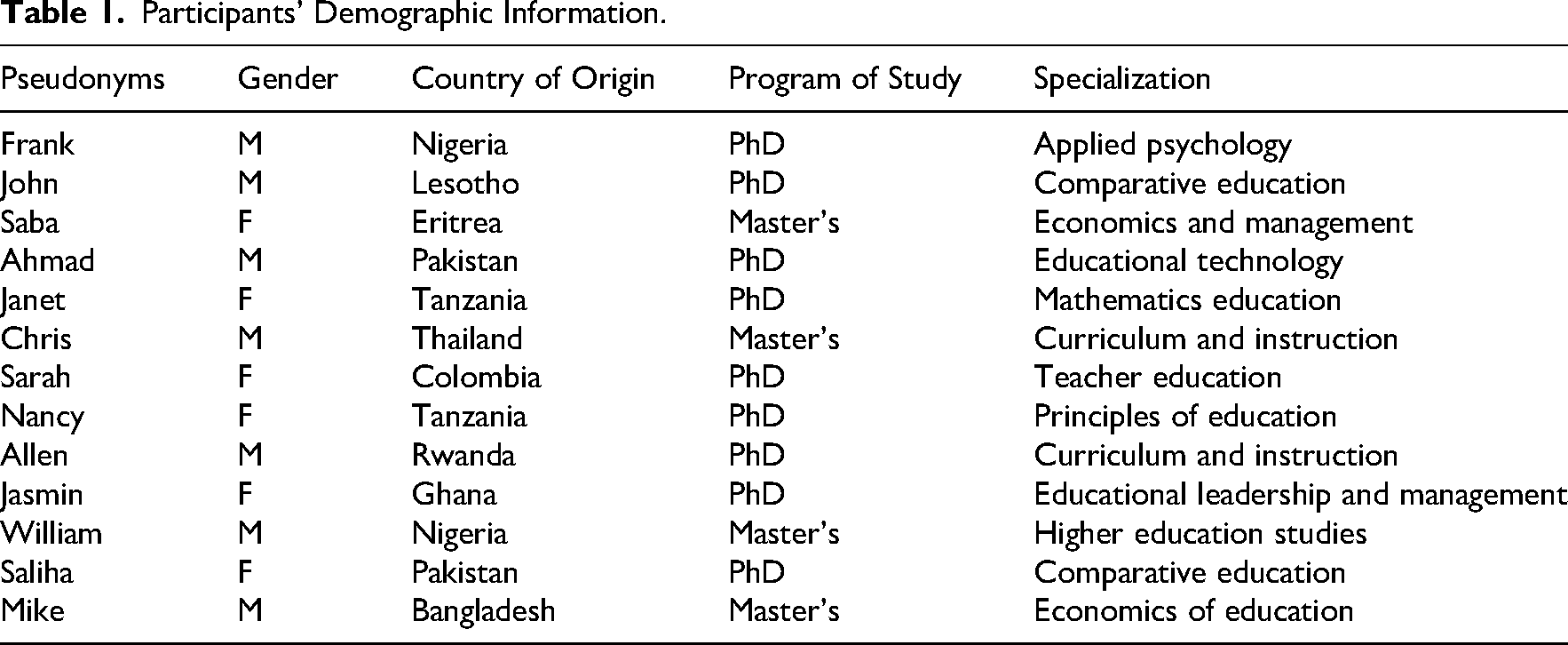
Purposive sampling was used to select 13 master's and doctoral international students from a sample Chinese university. Purposive sampling is a non-probability method in which researchers select participants based on their knowledge, skills, and characteristics relevant to the study (Nyimbili & Nyimbili, 2024). The university was selected for its high quality and for the presence of international students in English-taught programs. It ranks among the top three universities in the region and within the top 100 nationally. It has many international students studying in English at the master's and doctoral levels. Additionally, the same approach was used to select 13 master's and doctoral students from the Global South who have completed at least one year of study at the university (see Table 1 for participants’ profiles). Students from the Global South were chosen because of their numbers at the university and their socio-economic backgrounds (i.e., developing countries). They were also selected from education or related fields to ensure they could discuss AfL practices, although the definition of AfL was provided during the interview to jog their memory.
Participants’ Demographic Information.
Data Collection and Analysis
Data for this article were collected through in-depth interviews with 13 master's and doctoral students studying at the sample university. In-depth interviews were used because they were found to be convenient for conducting “intensive individual interviews with a small number of respondents” to explore their ideas, perspectives, and experiences on AfL practices at their university (Boyce & Neale, 2006, p. 2). Participants were asked questions about the assessment practices used at their university and their perceptions of those practices. Specifically, the interview addressed questions such as the assessment criteria employed, student participation, and teachers’ support/feedback. Participants were asked to draw from their experiences in one or more classes to gather rich data. The interviews were audio-recorded with the participants’ consent for thorough data analysis.
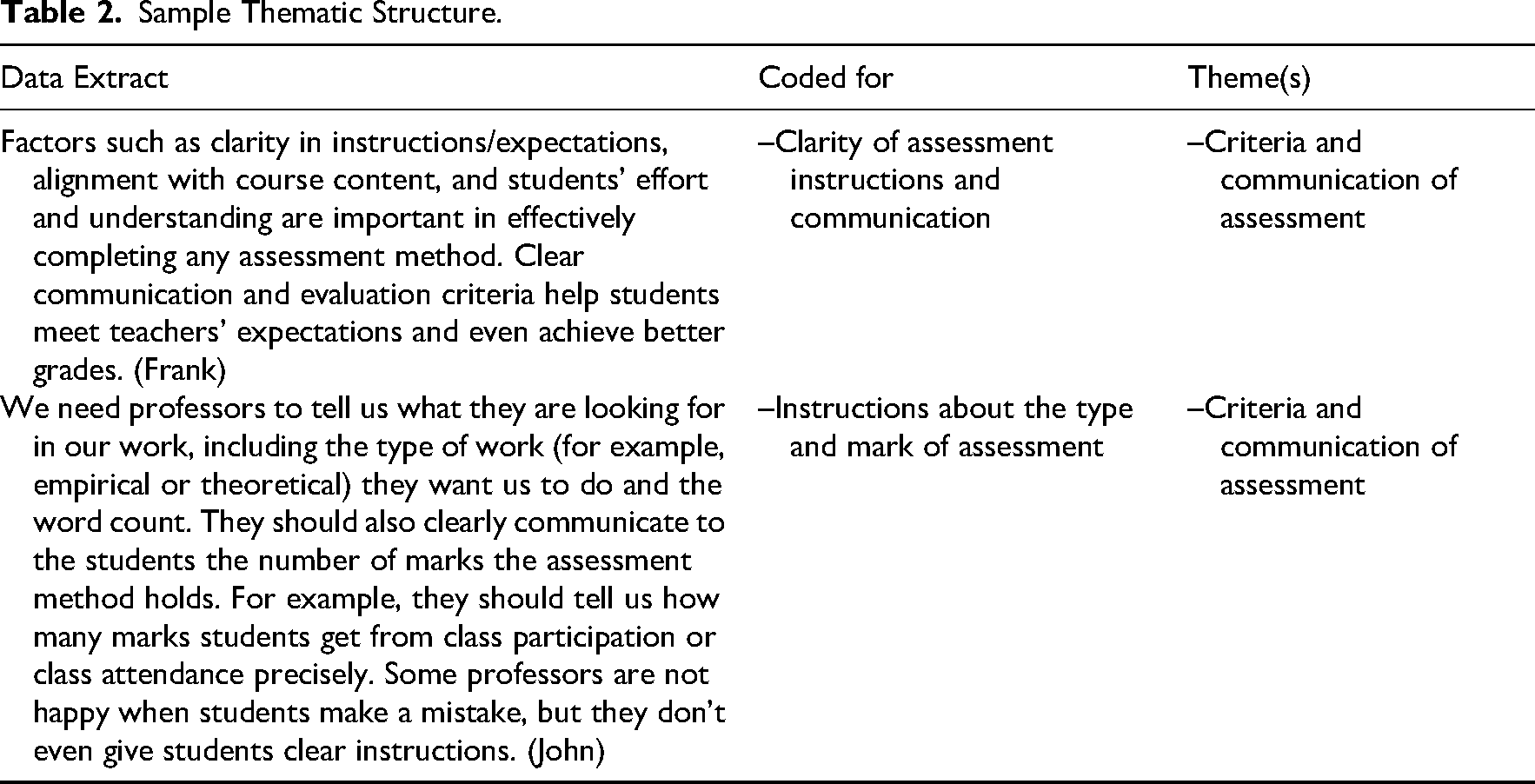
The data collected were analyzed thematically, following Braun and Clarke's six phases of thematic analysis: familiarizing with the data, generating initial codes, searching for themes, reviewing themes, defining and naming themes, and writing up (Braun & Clarke, 2006). Thematic analysis proved useful for systematically categorizing and analyzing data related to participants’ perceptions and experiences. First, we transcribed the recordings to ensure meticulous coding and data analysis. We read and re-read the data, discussing the ideas presented and their placement into codes. After agreeing on how to code the data based on the research questions, we generated initial codes and grouped them into two themes, creating one central theme for each research question (Table 2). This was followed by reviewing, defining, and naming the themes. The two themes are titled: (1) assessment practices used in Chinese higher education, and (2) international students’ perceptions of assessment practices in Chinese higher education. However, given its complexity, we decided to split the second theme into four sub-themes: assessment practice, criteria and communication of assessment, students’ participation and peer collaboration, and teachers’ support and feedback. Finally, we wrote the article by analyzing the findings in relation to the research questions and the theoretical frameworks. In doing so, we aim to produce a detailed description of the data (Braun & Clarke, 2006).
Sample Thematic Structure.
Ethical Considerations
The article adhered to proper ethical guidelines based on the core principles and applications of respect for persons, beneficence, and justice outlined in the 1978 Belmont Report. Emphasis was also placed on safeguarding participants’ rights and privacy through a consent form that provided relevant information and ensured comprehension, enabling participants to make an informed and voluntary decision to participate. Pseudonyms were used to protect participants’ identities and confidentiality.
Findings
Assessment Practices Used
This section addresses the first research question regarding the AfL practices used in Chinese HEIs. The findings suggest that different assessment practices, such as final papers, presentations, article reviews, exams, and group projects, are used at the sample university, depending on teachers’ teaching methods and course content. For example, Sarah said: We use a variety of assessment methods, such as tests and course papers. Well, I still think that the teachers offered some support because, at first, we were not sure we were supposed to take a test. Then they explained this [its relevance], and kept updating us about the test requirements, including the parts we should be studying. Moreover, the teachers were very helpful in terms of offering their support and feedback (particularly when we were in class) whenever we needed it. (Sarah)
In addition, Allen noted that some teachers use class discussion, presentations, and questions. Teachers use learner-centered methods like student presentations, probing questions, and class discussions. They check students’ learning through assignments, the quality of submissions, and students’ participation. Presentations and assessments also serve as checkpoints for students’ academic performance. (Allen)
The assessment methods mentioned by Sarah and Allen can be used for formative and summative assessment. This suggests that the assessment's purpose is crucial for these practices to qualify as AfL, which aims to enhance students’ learning or performance through questioning, feedback, and peer and self-assessment. Sarah's and Allen's excerpts have partly addressed this issue, as they stated that teachers were constructive in offering support and feedback, and in using assessments to understand students’ learning and performance. In this context, John mentioned teachers’ use of assignments, while Nancy added class discussions as a tool for AfL. Teachers often identify the limitations of student work and offer suggestions. They sometimes suggest more high-quality articles and books for students to read and use in their assignments. Some teachers are more focused on the format and style of students’ work, which are often taken normally but make a big difference to students’ work. These include citation, referencing, grammar, etc. However, some teachers just put the mark, and we do not even know where to revise and where to improve. (John) We always have some sort of class discussion, followed by an assignment. In that way, teachers check our level of understanding and provide us with written or oral feedback. I prefer a written one, if I have to choose from both, because it is easy to figure out and remember. (Nancy)
John's and Nancy's quotations suggest that many teachers provide feedback and encourage student participation, which are essential parts of AfL practices. This emphasizes that AfL is linked to teachers’ professional skills; without teachers’ efforts to involve students and provide feedback, AfL would remain limited to the policy level without a significant impact on students’ learning.
Additionally, the data indicated that assessment activities such as article reviews, final papers, and group projects help students become more independent learners. However, participants like John, Frank, and Mike also emphasized that achieving independent learning for students requires teacher support and clear, informative feedback to learn from their mistakes and deepen their understanding of the subject. Therefore, teachers must establish a means of interaction, whether through question and answer or feedback, to help students identify “where to revise and where to improve,” as John indicated. Additionally, John's idea of focusing on “where to revise and where to improve” emphasizes students’ view of assessment, including summative assessment, as an opportunity for learning rather than just a means of grading. This indicates a formative use of summative assessment.
Perceptions of International Students
This section answers the second research question by examining how international students view the assessment practices of Chinese HEIs. In discussing their perceptions of the assessment practices at their university, the study participants focused on four interconnected points: (a) the focus of the assessment methods used; (b) the criteria for these assessments and how they are communicated to students; (c) student participation; and (d) teachers’ support and feedback. The students believed that these four points determine whether assessment practices aim to enhance students’ learning or are merely for grading.
The Focus of the Assessment Method
As mentioned above, various teachers employed different assessment methods, some of which qualify as AfL practices, while others do not. The AfL practices mainly include questions and answers, feedback, and peer and self-assessment, all of which can help students improve their learning. However, as indicated in the above section, this is mainly dependent on teachers’ assessment methods, with the focus on meeting the course requirements. For example, Saba noted: Generally, the focus is directly related to the course. For example, if it is educational research, we are requested to write a course paper that corresponds to the course we have just taken. The paper can be qualitative or quantitative, and we can also write a reflection paper on what we have discussed and learned during the course. If students have any questions, they can then ask teachers. (Saba)
Similarly, William stated that the assessment practices are focused on the course requirements. Teachers often check students’ understanding through assignments. However, sometimes giving assignments might seem like fulfilling the course requirements rather than truly ensuring students’ learning. Not all assignments also allow for detailed teachers’ feedback. Teachers must provide detailed feedback and discuss with students to assess their learning and understanding. (William)
The data further shows that assessment practices influence students’ perceptions of teachers (such as their competence), the teaching and learning process, and their academic performance. The participants argued that assessment practices include students’ participation as well as teacher and peer feedback. For example, John stated that if the assessment relates to class activities (like a class presentation), students are more likely to receive immediate feedback from the teacher and their peers. This means such assessment practices promote student participation and peer assessment through questions, answers, and feedback, aligning with AfL practice. However, as William noted, some teachers use assignments focused on completing coursework rather than providing feedback and supporting students’ learning.
Criteria and Communication of Assessment
The study participants emphasize that assessment criteria and communication methods are crucial for students’ learning. However, they also mentioned that some teachers do not provide clear information on the assessment sheet. This lack of clarity causes confusion and wastes time, which impacts students’ performance and motivation. Like other participants, John and Frank shared that they have mixed feelings about the assessment criteria and how teachers communicate with students. Johan said: We need professors to tell us what they are looking for in our work, including the type of work (for example, empirical or theoretical) they want us to do and the word count. They should also clearly communicate to the students the number of marks the assessment method holds. For example, they should tell us how many marks students get for class participation or class attendance precisely. Some professors are not happy when students make mistakes, but they do not even give students clear instructions. (John)
Regarding clarity of communication and evaluation criteria, Frank further expressed: Factors such as clarity in instructions/expectations, alignment with course content, and students’ effort and understanding are important in effectively completing any assessment method. Clear communication and evaluation criteria help students meet teachers’ expectations and even achieve better grades. (Frank)
John's and Frank's excerpts demonstrate that students should be informed about the assessment criteria related to their course objectives. Janet, Jasmin, and William also pointed out that teachers should align their assessment criteria with the course objectives and/or students’ interests. This is because many teachers ask students to write final course papers on topics related to the teachers’ research interests, rather than the course content or students’ interests. As Saliha noted, sometimes students should be allowed to choose their own topics for final essays, which could increase their sense of agency in their learning.
Students’ Participation and Peer Collaboration
The participants stated that interactive dialogue and peer collaboration are essential in assessment practices. They also emphasized that most teachers are eager for students to participate and collaborate with their peers, typically through group assignments, class discussions, and question-and-answer sessions. For instance, Saba mentioned: Most teachers are keen to be asked at any time in class. For example, you can stop the teacher in the middle of the class and ask questions. Students can also provide their suggestions for the rest of the class without any concern. Most teachers love such participation and interaction with students and among students. (Saba)
On the contrary, Ahmed noted that some teachers do not allow students to interrupt their instruction to ask questions. Some teachers do not want to be disturbed while teaching, but students can ask at the appropriate time. There is time designated for students to ask if they have any questions or comments. If there is a need to ask during the session, students need to request permission to ask a question related to the lecture/discussion that is taking place. (Ahmad)
Saba's and Ahmad's statements indicate that some instructors offer students fair opportunities to engage with their peers during class and promote teamwork through questions and answers. However, some set a designated time for questions and answers, rather than allowing students to engage at any time.
Furthermore, many teachers encourage students to participate in peer assessment and collaboration, which are also key features of AfL. Mike mentioned that peer collaboration, such as peer assessment, is more valued and accepted by students because it offers external perspectives and is seen as advice from peers rather than authority figures. It is also important to recognize that active learning methods can lead to positive changes in students’ engagement with courses over time. However, Chris pointed out that this opportunity is not available to all instructors, indicating that some teachers fail to recognize students’ participation and their role in assessment practices.
Teachers’ Support and Feedback
As mentioned earlier, most participants highlighted the significance of teachers’ support and feedback. The findings show that students tend to be more satisfied and learn more effectively when they receive constructive, comprehensive, timely, and immediate feedback. In John's words, they need to know “where to revise and where to improve.” In the same vein, Frank added: Many teachers are supportive; they give students answers to and constructive feedback on the questions we raise. They also encourage us to ask more questions. Nevertheless, when it comes to the course papers, some professors only give marks without detailed feedback, while others give detailed feedback on areas that need improvement. (Frank)
Regarding the significance of constructive feedback, Mike also said: Feedback is important for reflection and learning if they are provided constructively, rather than belittling and demotivating students. Polite and constructive feedback motivates and encourages improvement. (Mike)
The excerpts above show that the suggestions students receive from their teachers and peers help them improve their learning. Constructive feedback enables students to learn from their mistakes as AfL is, by nature, constructive, helping learners to improve and develop the capacity for self-assessment.
Saba further highlighted, “I think our teachers give us good, constructive, and comprehensive feedback, which helps us as students to do better and improve our mistakes.” Likewise, Johan and Jasmin stated that teachers’ support and feedback are crucial in enhancing students’ learning and future growth. Although the shift of Chinese teachers from a teacher-centered to a student-centered classroom environment is well-established, particularly in higher education (Tsegay, 2015), their primary focus on students’ assessment remains more on testing students’ abilities rather than fostering their motivation and improving their learning (Ashraf et al., 2017; Guo et al., 2019). This article suggests that AfL is essential for students’ learning and self-development.
Discussion
The findings show that the sample university teachers employ a range of assessment methods, including final papers, presentations, article reviews, exams, group projects, and peer assessments, designed to enhance students’ understanding and learning. These assessment methods are considered AfL approaches (see Klenowski, 2009) due to their nature and goal of boosting students’ learning or performance (Black & Wiliam, 1998; Black et al., 2006; Flórez & Sammons, 2013; Marshall & Jane Drummond, 2006; Schellekens et al., 2021). However, as Saba and William noted, the assessment practices are focused on completing the course requirements. This means that some teachers focus on completing their coursework rather than on AfL practices that enable students’ independent learning.
The findings further emphasized that teachers’ contributions are essential for effectively implementing AfL. Teachers must provide clear assessment instructions and deliver immediate, constructive, comprehensive, and timely feedback to ensure the success of AfL (see also Black et al., 2006; Flórez & Sammons, 2013; Marshall & Jane Drummond, 2006; Schellekens et al., 2021). Additionally, they should view assessment as an opportunity for learning rather than just completing coursework or assigning grades. In other words, teachers need to adopt a formative approach to summative assessments to support student development and independent learning, aligning their assessment methods with the principles of AfL (Schellekens et al., 2021; Taras, 2010). Moreover, Wu et al. (2021) highlighted the impact of teachers’ values, practices, and competence in AfL (Black & Wiliam, 1998), underscoring the importance of professional development for teachers to implement AfL effectively. Considering the diverse needs of international students, teachers should develop effective communication strategies to help students understand “where and how to improve” regardless of their social and cultural backgrounds (see also Black et al., 2006; Flórez & Sammons, 2013; Marshall & Jane Drummond, 2006; Schellekens et al., 2021).
This article demonstrates a connection between AfL and students’ perceptions of teachers, especially the teaching and learning process. As mentioned earlier, applying AfL requires not only a teacher-centered approach but also teachers’ values and assessment practices (Wu et al., 2021). That could be why many participants noted that AfL enables them to be active participants in the teaching and learning process through class presentations, questions and answers, and peer assessments. Such assessment practices also have a positive impact on their academic growth and align with AfL practices proposed by ARG (2002) and other researchers (see Black & Wiliam, 1998; Flórez & Sammons, 2013; Schellekens et al., 2021; Taras, 2010).
The article found that students are more motivated to participate in AfL activities when they receive clear instructions and feedback. Such approaches boost students’ academic engagement and performance (Hallinger & Lu, 2013). However, as mentioned above, not all teachers implement AfL practices, with many failing to provide clear guidance and constructive feedback, and some forcing students to write their final essays based on the teachers’ research interests. This indicates that some teachers misunderstand students’ participation in the teaching, learning, and assessment processes. Overall, the findings support studies on the importance of assessment criteria and effective communication in enhancing AfL practices and student outcomes (Bearman & Ajjawi, 2021; Bloxham et al., 2011). In addition to other scholars (see Schellekens et al., 2021; Taras, 2010), the article also emphasizes that teachers should see assessment as a tool for students’ learning.
Conclusions
This article explores international students’ experiences in Chinese higher education regarding academic assessment, particularly AfL. Informed by the AfL framework and data from in-depth interviews, the paper demonstrates that the HEI uses various AfL practices, including class presentations, group work, tests, final papers, and class participation. The data suggest that these assessment practices are mainly used to enhance students’ learning through questions and answers, feedback, and peer assessment. In such situations, teachers play a leading role in applying AfL practices, providing clear assessment criteria, ensuring students’ participation and collaboration, and supporting students’ learning through feedback for improvement. The findings also revealed that some teachers fail to acknowledge students’ roles and participation in assessment practices.
The article has both theoretical and practical contributions. It improves educators’ understanding of AfL and influences assessment practices and procedures at HEIs. The findings highlight the importance of teachers’ competence and feedback in AfL, as well as the impact on students’ learning and academic performance. Additionally, the paper reaffirmed that interactive dialogue and students’ collaborative activities—such as peer assessment—are essential for active class participation and motivation to learn. This adds further context to the study by Cho et al. (2021) and Hallinger and Lu (2013), which identified students’ motivation as a key factor influencing the learning strategies of Asian international students. Additionally, the paper has practical implications for teachers and HEIs. It emphasizes that teachers play a key role in AfL by utilizing participatory student assessment methods to improve learning. This implies that HEIs need to work on the pedagogical knowledge of their staff. The findings inform and shape the assessment policies and practices of HEIs and enhance the experiences of international students.
However, the article has limitations in scope and participant numbers. Even though qualitative research emphasizes in-depth understanding rather than generalizability, the fact that the article was based on 13 participants from one HEI might still affect the findings’ representativeness. The article would be more robust with multiple data sources, such as data from teachers, to better understand their assessment practices. Therefore, a large-scale study using various sources and possibly mixed research methods is needed to further explore AfL practices in Chinese higher education.
Footnotes
Acknowledgments
The authors would like to thank all study participants for their time and information.

Ethical Approval
The study received ethical approval from the Institutional Review Board of the Faculty of Education, Southwest University (Ethical Approval Number: SWUFEIRB 2022-1009).
Informed Consent
The authors confirm that informed consent was obtained from all the participants for participation in the study.
Funding
The authors received no financial support for the research, authorship, and/or publication of this article.
Declaration of Conflicting Interests
The authors declared no potential conflicts of interest with respect to the research, authorship, and/or publication of this article.
Data Availability Statement
Data supporting the findings of this study are available within the article.