



Abstract
This study investigates spatial access equity in school enrolment, defined as fair opportunities for students to enroll in high-quality schools. It introduces controlled randomization into assignment systems to mitigate persistent spatial and socioeconomic disparities. Access equity is conceptualized through two dimensions: minimizing variance in educational quality across assignments, and achieving probabilistic closeness to a uniform distribution where students have equal chances of accessing any school. Randomization generates more balanced access opportunities than proximity-based systems, but consistently increases average home-school distances, highlighting a tension between fairness and commuting burden. Comparative analysis reveals contextual heterogeneity: randomization yields greater equity gains in less developed districts with dispersed resources, while benefits are limited in affluent districts with concentrated school quality. The study concludes that while randomization can enhance procedural equity, durable progress requires parallel efforts to equalize inter-school quality and tailor policies to local structural conditions.
Keywords
Introduction
Background and Context
In contemporary urban China, parents face intense competition to secure enrolment in high-quality schools, a pursuit intensified by the stark spatial unevenness in educational resources. Elite and high-performing schools remain heavily clustered in select neighborhoods due to decades of concentrated historical investments and urban planning priorities (Chen & Kesten, 2017; Jin et al., 2023). This geographic concentration, reinforced by the hukou system that ties access to local public schools to household registration and residential location, creates pronounced disparities: families in central or advantaged districts enjoy disproportionate proximity to top-tier institutions, while those in peripheral or migrant-heavy areas face systematic barriers to similar opportunities (Andersson et al., 2024; Lei & Yu, 2025).
These spatial inequities in school access are not unique to China but represent a global challenge, even in systems with abundant overall resources (OECD, 2018; Owens & Rich, 2023; Wei et al., 2018). In Chinese cities, however, the issue is particularly acute because randomized or proximity-based assignment mechanisms often fail to counteract underlying quality gradients (Bai, Lei et al., 2023). The public school system, developed over decades, has relied heavily on proximity-based enrolment mechanisms, where school assignment is tied to residential location (Wu et al., 2016; Xiang et al., 2018). This mechanism has led to a sharp divide between “key” (high-performing) and ordinary schools, concentrating superior resources in top-tier institutions and allowing wealthier families to gain access to better education at comparatively lower direct costs (Bai, Liang et al., 2023; Bi & Zhang, 2016).
Despite reform initiatives, the tension between equity goals and practical access persists. Recent policies prioritize equality over efficiency, aiming for fair opportunities irrespective of family background or location (Dai et al., 2019). As part of this shift, China has introduced lottery-based mechanisms supplementing proximity-based rules. For instance, Beijing's 2019 multi-school zoning (MSZ) reform uses lotteries to allocate school places across clusters, curbing school-district housing premiums and elite school dominance (City X Municipal Education Commission, 2019). Shanghai's synchronized lottery admissions for public and private schools similarly promote fairness (Dai et al., 2019). International evidence suggests randomization enhances equity by diminishing wealth-based advantages in school access (Hamnett & Butler, 2013; Lincove & Valant, 2024).
These contextual variations and trade-offs call for rigorous, model-based analysis to redefine equity measures in randomized systems, quantify interactions between factors such as travel costs and fairness, and evaluate differential impacts across districts with varying economic, demographic, and educational profiles.
This study addresses these imperatives by developing two simulation models to examine the interplay between enrolment access equity and key parameters, including school quality distribution, commuting distances, and socioeconomic variations, in diverse socio-economic Districts. Building on prior work in school choice research, which has largely examined market-driven mechanisms such as vouchers and charter schools in Western settings (Chubb & Moe, 1991; Hoxby, 2003), this study extends the conversation to administrative randomization within China's non-market, state-controlled system, exploring its interaction with entrenched geographic privileges in a high-stakes, exam-oriented environment.
It also advances assignment mechanism literature, which critiques proximity systems for enabling strategic residential sorting and manipulation (Abdulkadiroğlu & Sönmez, 2003; Pathak & Sönmez, 2008), by modeling how Chinese lottery reforms mitigate these issues while introducing unique trade-offs. Furthermore, it engages recent scholarship on randomized assignments, which highlights commuting barriers and information asymmetries but overlooks district-level heterogeneity in large-scale, non-Western settings (Cohodes et al., 2023; Kapor et al., 2020). Through model-based evaluations of equity-commuting dynamics across Chinese districts, this analysis offers policy-relevant insights and bolsters the generalizability of administrative reform findings.
The Present Study
This study investigates how randomization can promote educational equity in school enrolment with a specific focus on access equity, ensuring fair opportunities to enroll in high-quality schools regardless of socioeconomic status or residential location.
Our research is driven by three core questions:
RQ1: How can access equity be conceptualized and measured when randomization mechanisms are introduced into school enrolment systems? RQ2: In what ways does home-school commuting distance interact with school quality constraints to shape the equity of enrolment allocations? RQ3: How do randomized allocation models perform across districts with differing levels of socio-economic development, and what variations emerge in their outcomes?
These questions guide our exploration into the practical potential and limitations of using randomization as a policy tool for equitable access to education.
To answer these questions, we first introduce a novel metric, probabilistic equity, defined as the statistical distance from a perfectly random allocation, directly addressing our need for a robust measure of fairness. We then develop and compare two simulation models: the MSZ model, which prioritizes probability similarity, and the probabilistic similarity (PS) model, which focuses on minimizing quality variance. We simulate the performance of these models by progressively relaxing commuting distance constraints and running scenarios in three socio-economically diverse districts. This approach allows direct observation of the distance-quality trade-off and evaluation of model generalizability across varied local contexts.
This research provides three key contributions to the field:
We introduce probabilistic equity as a novel and quantifiable standard for assessing fairness in randomized school assignment systems. We demonstrate a robust approach for constructing nuanced school quality metrics by integrating administrative, geographic, and survey data. Our comparative analysis of allocation models across three distinct districts yields practical insights into how local socio-economic context influences the effectiveness of randomization in promoting equitable access to education.
Literature Review
The Evolution of School Assignment Models: From Efficiency to Equity
School assignment systems were historically optimized for spatial efficiency through operations research frameworks including central-place theory (Malczewski, 2009) and spatial competition models (Hotelling, 1929). These theories prioritize minimizing aggregate travel distances and transportation costs. Within China's compulsory education system, this paradigm institutionalized residential proximity as the primary assignment criterion through decades of nearest-school enrolment policy. While proximity guaranteed the right to enroll in a nearby school, it conflated geographic convenience with substantive access equity (Xu & Wu, 2022; Yin et al., 2025). It is often neglected how spatial proximity alone cannot ensure equitable exposure to quality educational opportunities when schools exhibit significant performance heterogeneity across neighborhoods (Brighouse, 2003). In sum, this efficiency-oriented approach addresses neither procedural barriers to access nor compensatory redress for historical disadvantage. Rather, it merely optimizes convenience within an unequal opportunity landscape.
This limitation manifests starkly in China's urban context, where proximity rules transformed residential capital into educational capital. Robust demand for top-tier school catchment properties has driven housing price premiums ranging from approximately 10% to over 17% for top-tier schools in major Chinese cities (Chan et al., 2020; Han et al., 2021), effectively pricing low-income families out of high-opportunity neighborhoods. Such dynamics reveal that proximity-based assignment reproduces socio-spatial exclusion even while guaranteeing formal enrolment rights, which is a failure of substantive equality of opportunity (Anderson, 2007). True access equity requires not merely enrolment rights but effective opportunity to attend schools of comparable quality regardless of residential location or family wealth (Gewirtz, 1995). Consequently, recent reforms have shifted toward randomized mechanisms that disrupt wealth-based sorting while preserving parental choice. China's MSZ policies in Beijing and Shanghai embed lotteries within spatially reconfigured assignment zones to distribute enrolment opportunities across neighborhoods (Dai et al., 2026; Yang et al., 2024). This approach draws on mechanism design theory that establishes strategy-proof assignment with random tie-breaking as a procedural fairness safeguard when demand exceeds capacity (Abdulkadiroğlu & Sönmez, 2003).
Nevertheless, international evidence reveals critical limitations of lottery-based assignment when school quality heterogeneity remains unaddressed within the mechanism design. For instance, In Chicago's magnet school lotteries, Cullen et al. (2006) demonstrated that random assignment produced heterogeneous effects by neighborhood socioeconomic status despite procedural neutrality, as students in disadvantaged neighborhoods faced systematically lower expected quality of placement due to spatial clustering of high-performing schools. Similarly, Epple et al. (2016) showed that voucher systems with unweighted randomization reproduce stratified quality outcomes when school quality varies substantially across space. Pathak and Sönmez (2013) formalized this limitation mathematically: when assignment mechanisms ignore quality heterogeneity, equilibrium outcomes systematically disadvantage less-informed families in heterogeneous markets, resulting in unequal expected quality of placement even under randomization. The OECD (2019) synthesized cross-national evidence to conclude that lotteries improve equity in quality exposure only when the assignment algorithm explicitly incorporates school quality differentials.
These findings establish a fundamental insight, that is, procedural fairness (equal assignment probabilities) and substantive fairness (comparable quality exposure) constitute distinct equity dimensions that may diverge under spatial constraints. This divergence necessitates explicit optimization of outcome homogeneity embodied in the variance-minimization objective.
Minimizing Variance in School Quality: Toward Substantive Equality of Opportunity
Educational equity in school assignment has evolved beyond procedural fairness toward substantive equality of opportunity, ensuring students experience comparable exposure to school quality regardless of residential location or socioeconomic status (Coleman et al., 1966). Durable progress toward educational equity in school assignment systems requires fundamentally improving the inter-school distribution of quality itself, such as reducing the steep gradients in resources, teacher quality, peer composition, and outcomes that characterize many urban systems (Clotfelter et al., 2006; Rothstein, 2006). Absent such equalization, even sophisticated assignment mechanisms. In competitive urban contexts like China's, where elite schools cluster due to historical and institutional factors, assignment models that ignore underlying quality variance will at best achieve partial, fragile gains in opportunity equality (Pritchett & Viarengo, 2015).
Nevertheless, minimizing variance in the quality of schools students actually attend offers a powerful, substantively grounded pathway to greater equality of opportunity under current constraints. This objective moves beyond procedural fairness toward ensuring more comparable long-term exposure to high-quality education, regardless of residential location or socioeconomic status (Coleman et al., 1966; Goldhaber et al., 2015). By reducing between-school heterogeneity in attained quality, variance minimization directly weakens a key mechanism of inequality reproduction: the way unequal school quality amplifies residential and socioeconomic sorting into stratified opportunity structures.
This approach draws formal grounding from location-allocation theory, where equity constraints supplement traditional efficiency criteria (e.g., Hakimi, 1964). Marsh and Schilling (1994) classified variance reduction as an equity measure within facility location models, specifically applicable when service quality determines opportunity value. Current and Ratick (1995) operationalized this principle by incorporating variance constraints into multi-objective location models that simultaneously optimize efficiency and equity, demonstrating that explicit variance minimization yields more homogeneous service distributions across demand points than efficiency-only solutions. Empirical evidence substantiates quality variance as a stratification mechanism. In the United States, Rothstein (2006) demonstrated that between-school test score variance explains over 40% of the Black-White achievement gap, highlighting how unaddressed quality heterogeneity reproduces inequality independent of individual student characteristics. Similarly, Clotfelter et al. (2006) found that socioeconomic segregation in North Carolina intensified precisely because school assignment operated across steep quality gradients without variance-reduction mechanisms.
Operationalizing variance minimization requires robust school quality measurement under real-world constraints. Three approaches dominate the literature: (a) input-based indicators (teacher qualifications, per-student funding, infrastructure), serving as administratively accessible proxies for institutional capacity and resource availability (Lafortune et al., 2018; Rivkin et al., 2005), (b) output-based indicators (standardized test scores, graduation rates), which directly capture student performance and align closely with long-term outcomes (Chetty et al., 2014), and (c) composite indices that integrate inputs and outputs into a multidimensional metric for more comprehensive and equitable assessment (Jackson et al., 2016). In China's context, where privacy laws and data restrictions often limit access to granular, individual-level outcome data, composite approaches provide pragmatic validity and balance by combining readily available inputs with aggregated outputs. Input measures remain practical proxies for quality, particularly in resource-constrained settings, while output measures better reflect parental priorities, as evidenced by housing market capitalization of school quality (Bayer et al., 2007; Black, 1999). School choice research consistently shows that parents prioritize academic performance alongside peer composition when evaluating schools, with preferences varying by socioeconomic status and often stronger for high-achieving peers among advantaged families (Abdulkadiroğlu et al., 2017), making composite quality metrics essential for capturing the multidimensional opportunity value that assignment mechanisms must equitably distribute.
Probabilistic Equity and Distributional Similarity: Complementary of Variance
Variance minimization in school assignment promotes homogeneity in attained school quality within zones but overlooks higher-order distributional disparities in probabilistic access across communities. For instance, two neighborhoods may have identical mean quality exposure yet face structurally different lottery risk profiles, one bimodal, the other unimodal centered on mid-tier schools. Such differences create unequal opportunity structures despite equivalent expected values, especially where variance metrics miss skewness in peer composition that drives stratification (OECD, 2005; Owens, 2016; Reardon & Owens, 2014). This limitation is evident in systems where socioeconomic variation between schools persists, as assigning students to minimize such disparities requires considering not just averages but full distributions.
Probabilistic equity addresses this limitation by assessing whether assignment mechanisms yield comparable full probability distributions of school access across communities, benchmarked against system-wide proportional fairness. This metric captures a distributional facet of substantive equality of opportunity, ensuring comparable risk exposure across groups (Arnosti, 2023; Roemer, 1998). By evaluating lottery outcomes beyond means, it highlights how randomized assignments can inadvertently perpetuate inequities if not designed to balance probabilities.
In Chinese cities, where elite schools cluster due to historical investments and hukou-driven residential segregation (Chen & Kesten, 2017; Sun et al., 2024), unweighted lotteries produce systematically divergent probability distributions despite formal neutrality. Mathematical analyses show that standard tie-breaking generates unequal outcomes for spatially defined groups (Ashlagi & Nikzad, 2020; Basteck & Mantovani, 2023). Counterfactual simulations further reveal that peripheral communities bear disproportionate low-tier placements under randomization, even with matching mean exposure (Andersson et al., 2024), a distributional inequity invisible to variance metrics but captured by distributional similarity measures such as Kullback-Leibler divergence (Burgess et al., 2015). Correlated lotteries, which adjust probabilities to enhance cohesion without altering individual chances, offer a potential remedy by reducing segregation (Ashlagi & Shi, 2014).
Probabilistic equity thus serves as a procedural constraint within multidimensional justice frameworks, preventing spatial distortions in opportunity while complementing compensatory policies for historical disadvantage (Fleurbaey, 2008). In China's hukou-shaped context, it diagnoses whether mechanisms exacerbate geographic barriers, particularly for migrant children facing enrolment restrictions (Lei & Yu, 2025). Its full value requires dynamic simulation: modeling probability distributions under varying spatial constraints reveals non-linear effects—initial constraint relaxation may improve both variance and distributional equity, but beyond thresholds, divergence emerges. No prior study jointly optimizes variance minimization and distributional similarity while tracing district-specific trajectories under parameterized constraints, a gap addressed by dual-model simulations.
Simulating Multidimensional Equity: Parameterized Trade-Offs and District Heterogeneity
Parameterized simulation is essential to diagnose non-linear dynamics between complementary equity metrics. Static assessments obscure critical threshold effects: modest relaxation of distance constraints may initially improve both outcome homogeneity and distributional similarity, yet beyond inflection points generate distributional divergence wherein peripheral districts absorb accelerating exposure to bimodal risk profiles while central districts capture disproportionate high-tier access (Burgess & Briggs, 2010). Such dynamics remain undetectable when metrics are evaluated in isolation yet determine whether assignment policies reproduce spatial stratification despite aggregate improvements (Hastings et al., 2006).
District heterogeneity further complicates this landscape. Identical policy parameters produce divergent equity trajectories contingent on local school quality gradients, residential density, and historical investment patterns (Black, 1999). In contexts with entrenched spatial stratification, unweighted randomization systematically redistributes lottery risk toward geographically isolated communities (Epple et al., 2016). Counterfactual models and spatial equilibrium analyses reveal how relaxing constraints can amplify sorting pressures in heterogeneous environments, where peripheral areas face compounded disadvantages from distance and limited high-quality options (Agostinelli et al., 2024). To move beyond district-specific or context-bound findings and derive more generalizable insights into the conditional effectiveness of probabilistic and variance-minimizing assignment reforms, comparative simulation across diverse districts is necessary.
Critically, no existing study simultaneously optimizes variance minimization and distributional similarity to the proportional benchmark while tracing their co-evolution across heterogeneous districts under parameterized constraints. Prior work has explored related trade-offs in lottery design, community cohesion via correlated lotteries, or boundary redrawing impacts, but lacks integrated dynamic optimization across these dimensions (Ashlagi & Shi, 2014; Basteck & Mantovani, 2023). Our dual-model simulation directly addresses this gap, transforming simulation from a mere optimization tool into a diagnostic lens for identifying threshold effects, localized vulnerabilities, and policy-sensitive trajectories.
Methodology
Case Selection
City X serves as an exemplary case for studying randomized school assignment reforms in China. As a national leader in basic education policy innovation, City X has pioneered the implementation of nearby enrolment combined with MSZ and computerized lotteries since the Ministry of Education's 2014 mandate for exam-free compulsory admissions (Ministry of Education, 2014). Its annual severe concentration of high-quality resources in elite key schools, rampant school-district housing speculation, and pronounced spatial and socioeconomic inequities. These conditions create a high-stakes testing ground where policy intent (equity and fairness) confronts powerful interest (including group dynamics, parental choice pressures, and implementation realities) making the city an ideal, sensitive, yet replicable lens for understanding broader trends in China's education governance modernization.
The city's advantages for research are substantial: high policy transparency, extensive media and public scrutiny, abundant official gazettes, interpretive documents, zoning maps, enrolment boundary data, and accessible district-level statistics through education department websites and open-data platforms. Moreover, City X exhibits marked intra-urban heterogeneity, spanning affluent central cores with intensive resource concentration to rapidly urbanizing peripheral areas with shifting supply-demand dynamics. This diversity enables meaningful comparative analysis of how randomization performs under varying local conditions.
To capture this heterogeneity, the study purposely selects three districts (District A, B, and C) that represent a clear spectrum of economic development, urban structure, and educational resource distribution. District A and B are advanced urban cores characterized by high population density, elevated GDP per capita, premium infrastructure, and strong clustering of elite schools in central or affluent communities. District C represents an emerging growth area with lower economic baseline, more dispersed school and community layout, ongoing urbanization, and greater variability in school quality across neighborhoods.
Table 1 shows District A and B's superior GDP per capita and higher growth rates compared to District C and the city average. Table 2 reveals upward trends in District C amid expansion, variability in central districts, and differences in staffing ratios, reflecting distinct capacity and resource dynamics.
Economic Indicators for Selected Districts (2010–2019 Averages).

Source: City X Statistical Yearbook.
Note: Averages computed from annual reports.
Educational Expenses and Public Funding per Primary School Student from 2016 to 2019.
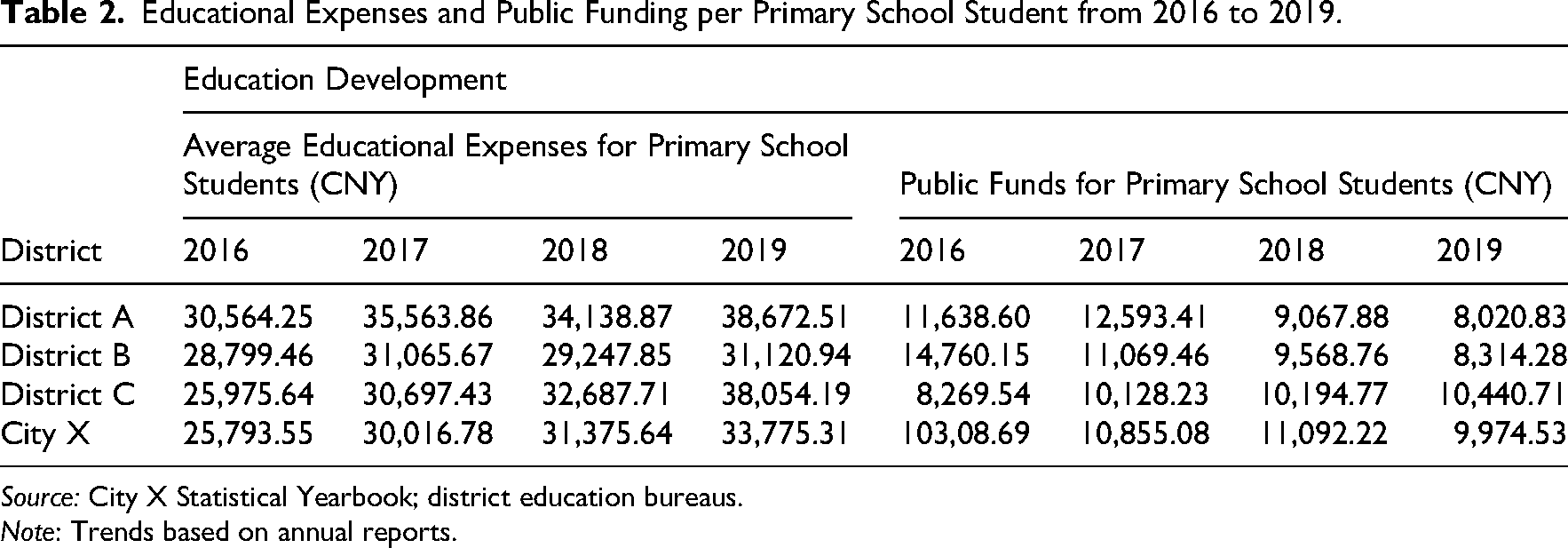
Source: City X Statistical Yearbook; district education bureaus.
Note: Trends based on annual reports.
Informed by theoretical work on conditional effects of randomization in unequal settings (e.g., Ashlagi & Nikzad, 2020; Basteck & Mantovani, 2023) and emerging empirical patterns from Chinese city reforms, hypotheses focus on common directional trends and magnitude and pattern of variation are set as following: Across districts, relaxing the travel distance threshold is expected to produce consistent directional improvements in equity metrics under both PS and MSZ model. In particular, we anticipate reductions in probability distance and reductions in variance of expected school quality, as greater flexibility in assignment geography enables mechanisms to better counteract spatial clustering of high-quality schools. Moreover, variation in specific equity outcomes (such as the degree, speed, and trade-off structure) will differ across districts due to their multidimensional heterogeneity.
This district-level comparative analysis employs a two-step methodological framework to evaluate how randomization mechanisms in school assignment policies mediate the equity-efficiency trade-off across diverse urban contexts. First step leverages geospatial data to map socio-spatial conditions, including neighborhood socioeconomic indices, school quality distributions, and baseline travel distances. This establishes contextual baselines, revealing stark intra-district disparities: affluent urban cores typically cluster near high-quality “key” schools, while peripheral and migrant-dense communities face pronounced education deserts. Second step models admission outcomes under both assignment regimes. It quantifies three critical dimensions: access equity, distance burdens, and distributional impacts. This integrated approach moves beyond universal prescriptions, instead generating place-specific evidence for calibrating China's enrolment reforms to local spatial inequalities.
Data Sources
One of the study's methodological contribution is the synthesis of administrative, geospatial, and demographic data to enable fine-grained modeling of school assignments. Administrative data from local education authorities provide comprehensive accounts of primary school resources, encompassing personnel, infrastructure, and funding, to underpin equity evaluations.
Demographic details on school-age children (ages 6–12) derive from Metrodata Net, an established platform for City X community analytics. Geospatial elements, including school and community locations alongside road-network distances, were obtained from AMAP, China's premier mapping service. This integrated framework surpasses conventional survey-dependent approaches by incorporating verifiable spatial realities, facilitating simulations of zoning against random allocation with attention to practical commuting barriers (see Figures 1–3 for district visualizations).
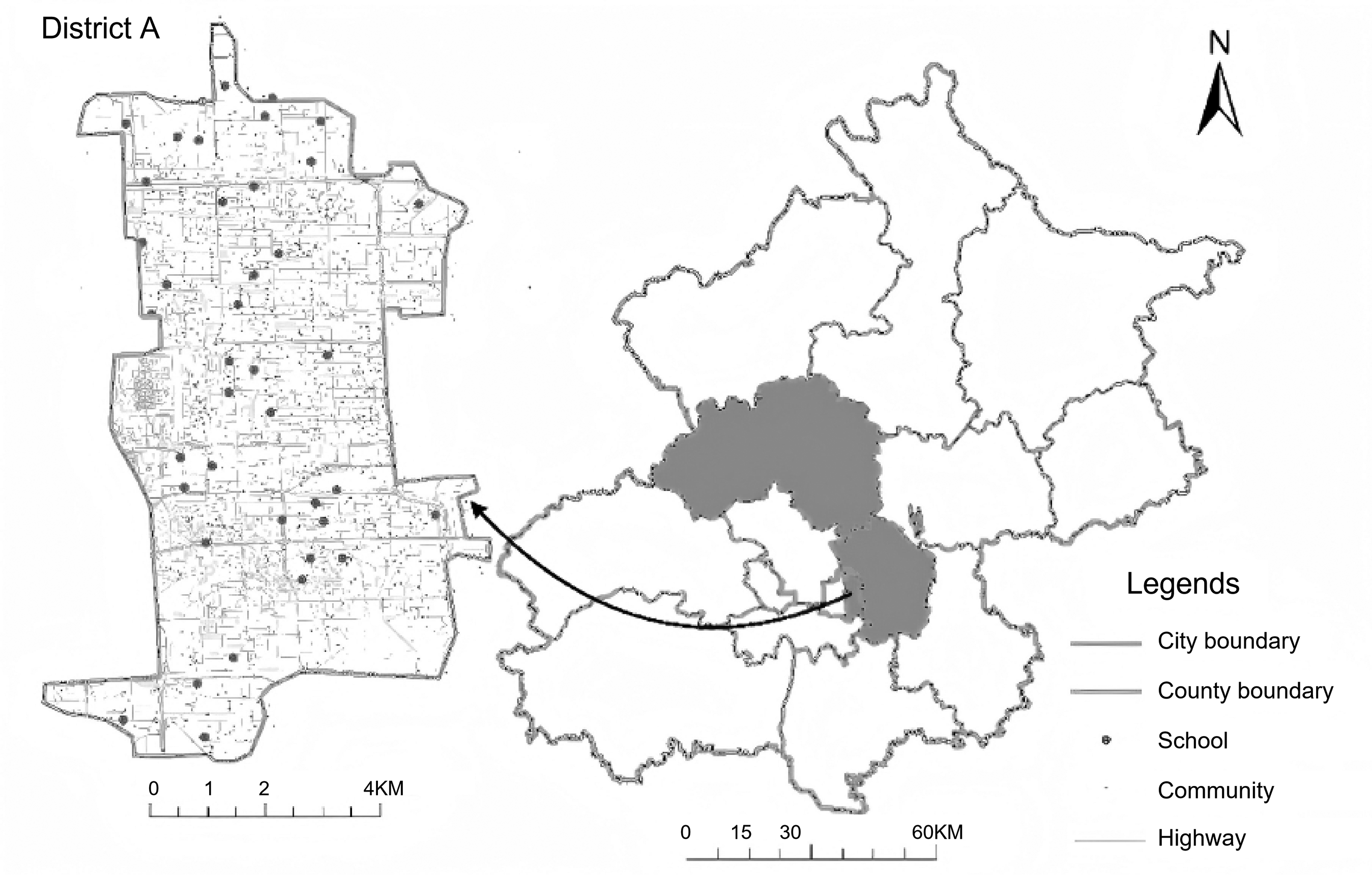
Geographical information for District A.
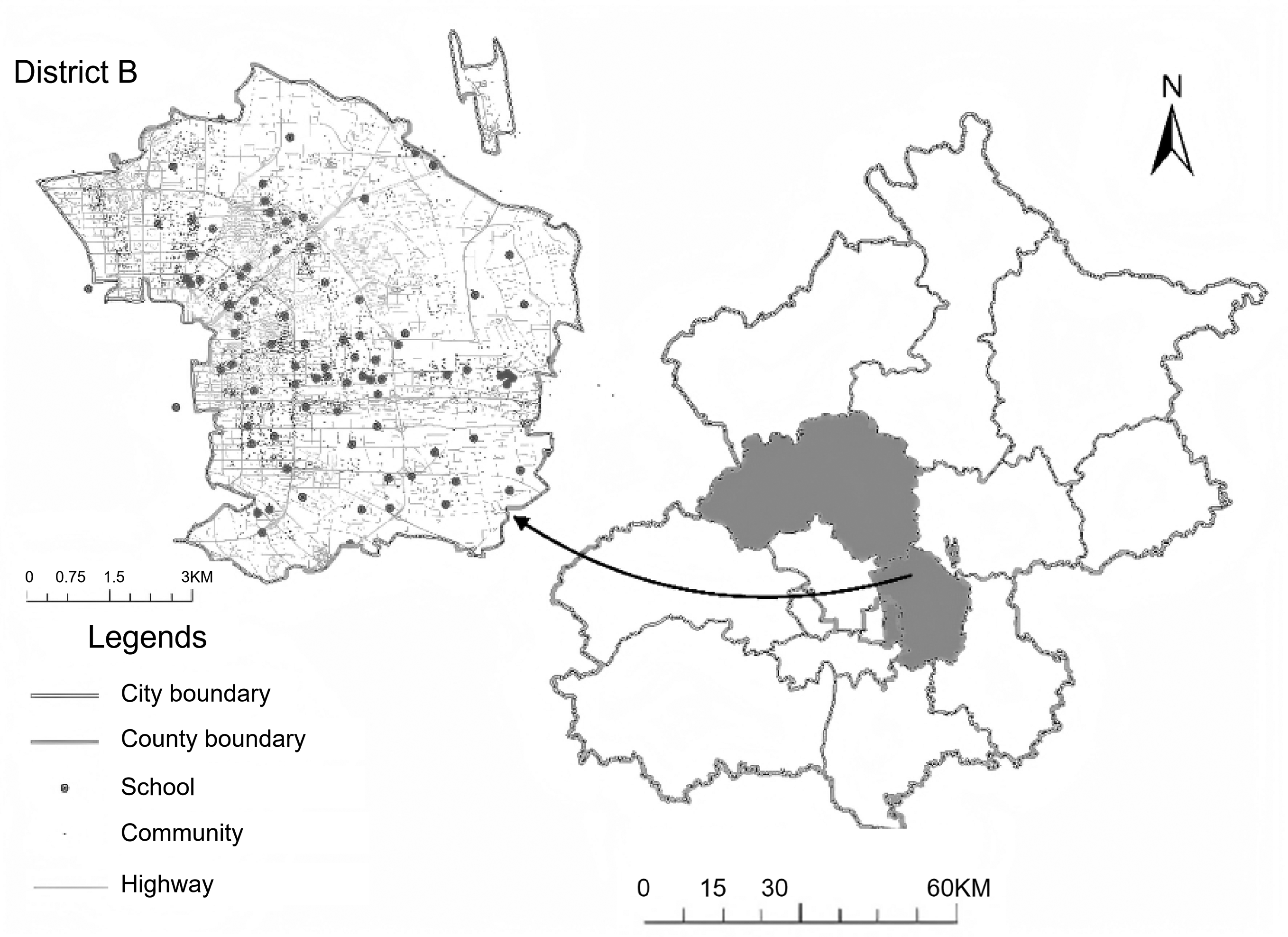
Geographical information for District B.
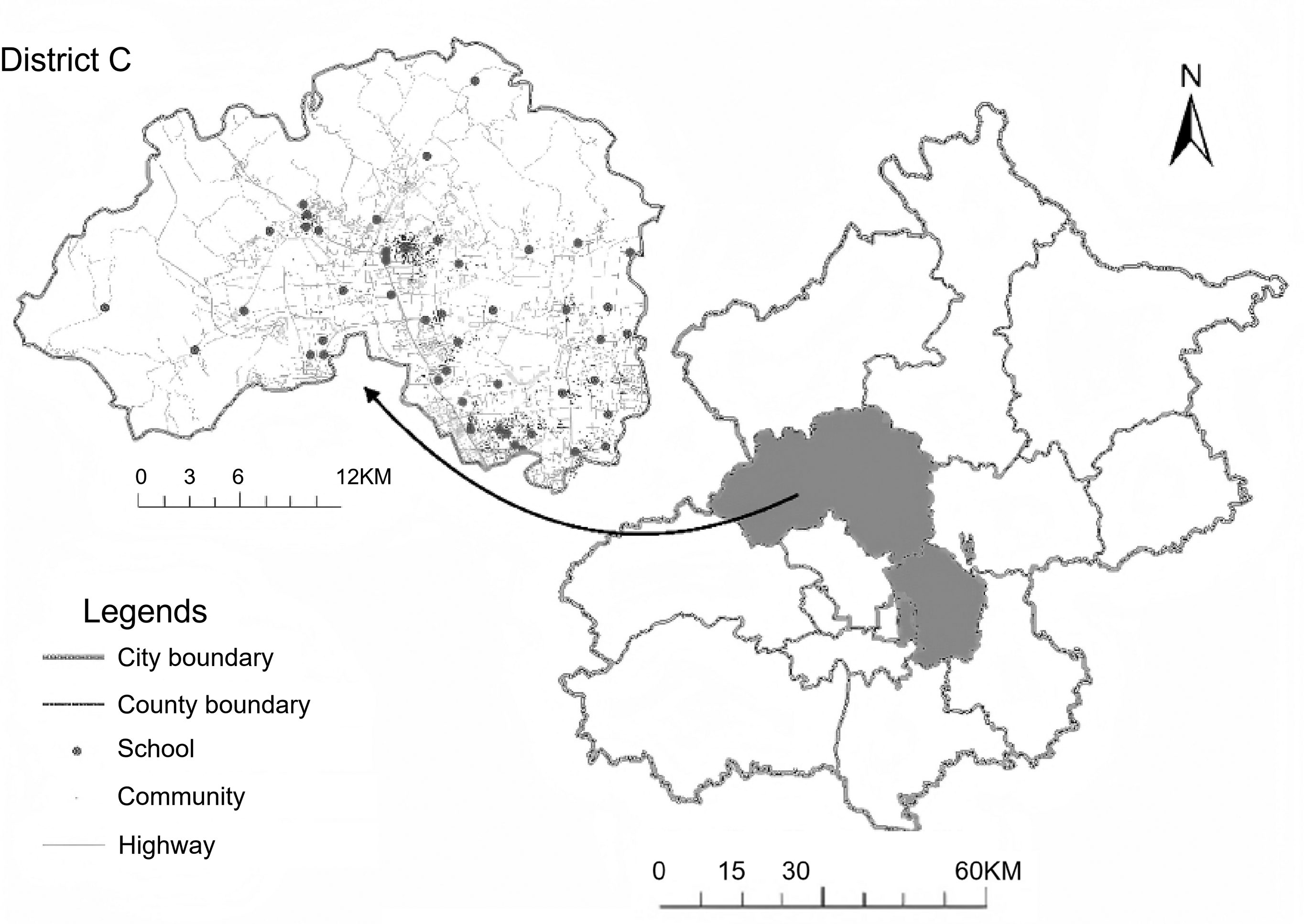
Geographical information for District C.
The sample drew from 3,285 communities, excluding 249 with fewer than one school-age child or isolated geographies (131 in District A, 53 in District B, 65 in District C) to maintain viability, resulting in 1,035 communities in District A (50,175 children), 1,767 in District B (25,774 children), and 681 in District C (79,665 children). These figures correspond closely to official education bureau records, affirming representativeness. Ultimately, this data fusion illuminates subtle spatial inequities, such as network-derived access hurdles, and bolsters evidence on policy efficacy for equitable opportunities.
Model Specification
To ensure objective and data-driven weighting of school quality indicators, we employed the entropy method. It assigns weights to indicators based on their information content and variability across observations. Indicators with greater variation (lower entropy) receive higher weights, as they provide more discriminatory power in distinguishing between units (Liu & Zhang, 2023; Zhang et al., 2019). The method involves standardizing data, calculating entropy values for each indicator, determining information utility, and deriving normalized weights. This approach minimizes subjective bias in composite index construction by letting the data itself determine the relative importance of each component, making it particularly suitable for multidimensional quality assessments.
To develop a comprehensive measure of school quality, we constructed an input-output framework that captures both educational resources and outcomes. This system integrates multiple dimensions of school performance into a single composite index (see Table 3). The measurement system consists of four distinct categories representing key quality dimensions: human resources, material resources, financial resources and academic performance.
Variables and Corresponding Categories.
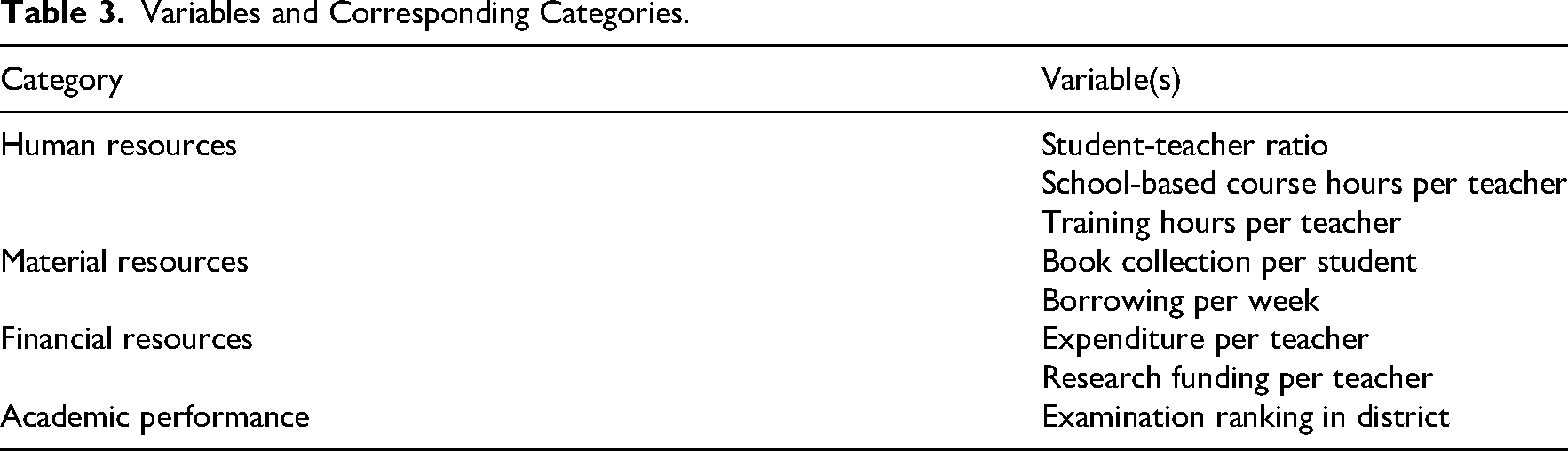
The construction of the overall school quality index follows a two-stage process: aggregating raw variables into category scores, and synthesizing these categories into a composite index using entropy weighting.
In the first stage, raw indicators of each resource category (human, material, and financial) are standardized using min-max transformation. For positive indicators,
In the second stage, the overall education quality index Convert normalized scores into relative proportions: Compute the information entropy for each dimension compute entropy: Derive the degree of dispersion: Obtain final entropy weights: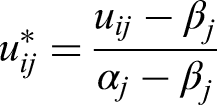
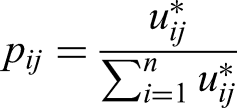
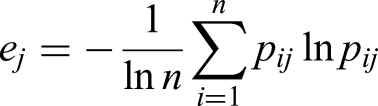
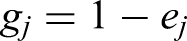
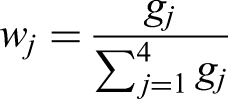
Finally, the overall education quality index is then calculated as the weighted sum: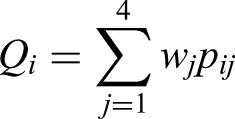
This approach emphasizes objective, data-driven weighting throughout the synthesis process, ensuring that both resource integration and overall quality assessment are grounded in empirical variability rather than subjective judgment.
In this study, the optimal spatial allocation of educational resources is measured via the MSZ model and the PS model. These two models represent educational quality equity using the variance of the expected value of educational quality and the probability distance to maximizing probabilistic fairness, respectively. In the MSZ model, the expected value of educational quality is the weighted average of each school's educational quality based on the number of students enrolled in the school. The PS model, on the other hand, defines school access as the expected value of a probability distribution of students’ access to each school, thus characterising educational equity in terms of the variance of each probability distribution from the distribution of the probability of maximizing fairness. The PS model is a completely stochastic model with more randomness than the MSZ model.
MSZ Model
This model aims to minimise the education quality variance, that is, the weighted average of the corresponding schools, Table 4 provides the corresponding meaning of the notations in the model.
Notations for the MSZ Model.
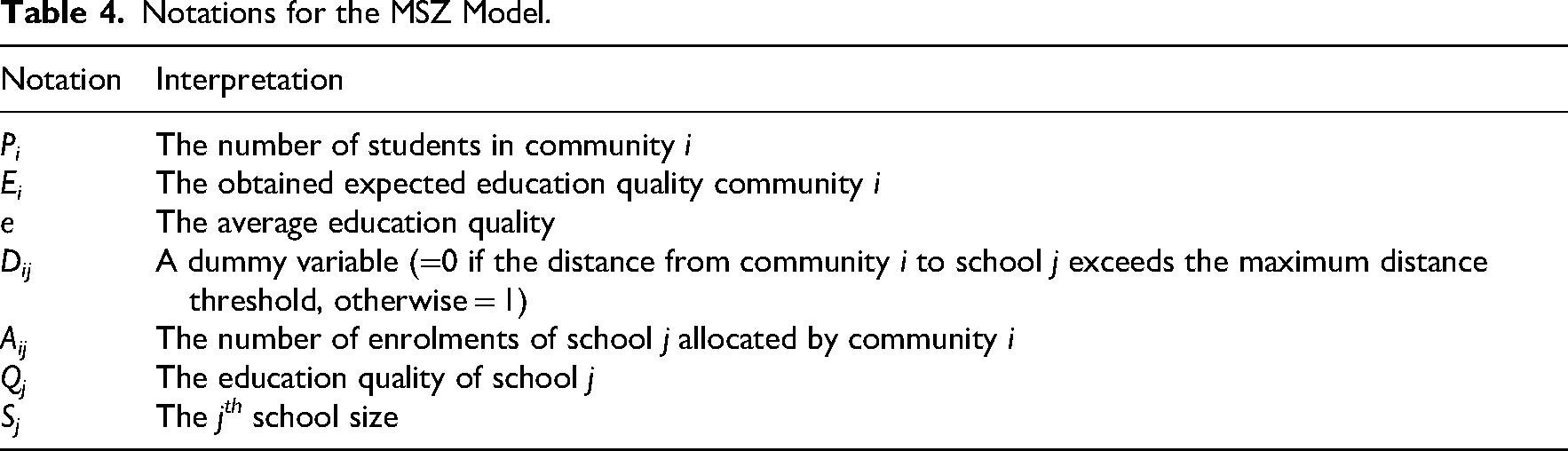
The equations are as follows:







PS Model
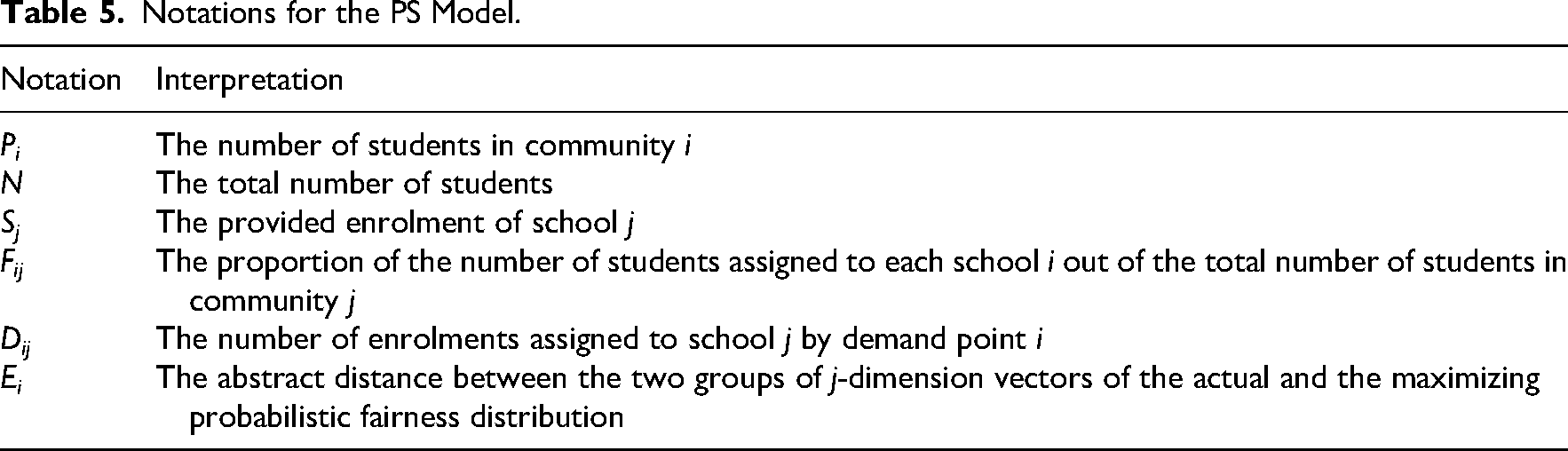
Based on the Gini coefficient and the calculation of attribute distances in geographic, we calculate the overall degree of similarity of multiple probability distributions by the accumulation of the difference between each probability distribution and the maximizing probabilistic fairness distribution (Table 5).
The maximizing probabilistic fairness distribution refers to the probability distribution of enrolment opportunities in each community when the probability of each student entering the school is equal without any distance constraint.
The probability of all students entering school j forms a group of j-dimensional vectors 

The distance between the two sets of probability distributions reflects the difference between actual and maximizing probabilistic fairness distribution:
A smaller sum of distances represents a smaller difference between the actual probability and the maximizing probabilistic fairness distribution, and therefore a fairer distribution of access:





Where equation (13) ensures all students from each community i are assigned, equations (14) and (15) set minimum and maximum capacity for each school, equation (16) forces zero assignment if distance exceeds limit, and equation (17) requires assignment variables to be non-negative integers.
Algorithm Solution
The school assignment problem we address is fundamentally one of equitably matching residential neighborhoods (demand nodes) to schools (supply nodes) subject to hard capacity constraints that reflect statutory enrolment limits at each institution. The primary objective is not merely to maximize the number of assignments, but to minimize spatial inequity in access probabilities or expected school quality across communities.
The features of this problem, including bipartite structure, fixed upper bounds on school enrolments, the need to enforce minimum enrolment thresholds in some settings, and an equity objective that penalizes uneven distributions, make classical maximum-flow algorithms insufficient. Instead, we formulate the problem as a bounded minimum-cost flow problem on a carefully constructed flow network. In this framework:
Neighborhoods send “student flows” toward schools through assignment arcs. Each school node has both upper and (where relevant) lower capacity rounds. The cost on each arc reflects the contribution to spatial inequity (e.g., distance-based or probability-distance penalties in the PS model). Solving the minimum-cost flow problem finds the assignment that satisfies all capacity constraints while minimizing the total inequity cost.
This network-flow approach provides a natural and computationally tractable way to simultaneously enforce feasibility (respecting statutory limits) and pursue equity objectives in large-scale, MSZ systems. A more detailed technical description of the network construction, cost function specification, and solution algorithm, including adaptations for the MSZ and PS frameworks, is provided in Appendix 1.
Results
Expectations Regarding Education Quality and Probability Distance
Figures 4–6 show the admission opportunity allocation results for the MSZ model and PS model in the three districts. In the MSZ model, which is influenced by the geographical environment and the spatial layout of schools and communities, the southern region in District A, the western region in District B, and the south-eastern region in District C have large student enrolments, with enrolments in District B and C denser than those in A. This suggests that there will be a more equal geographical distribution of primary schools in the PS model. The PS model overcomes the geographical distribution restrictions of the existing schools and communities, enabling District A, B and C to reach the optimal state of enrolment opportunity allocation, and has the greatest impact on the overall education quality balance in District B.
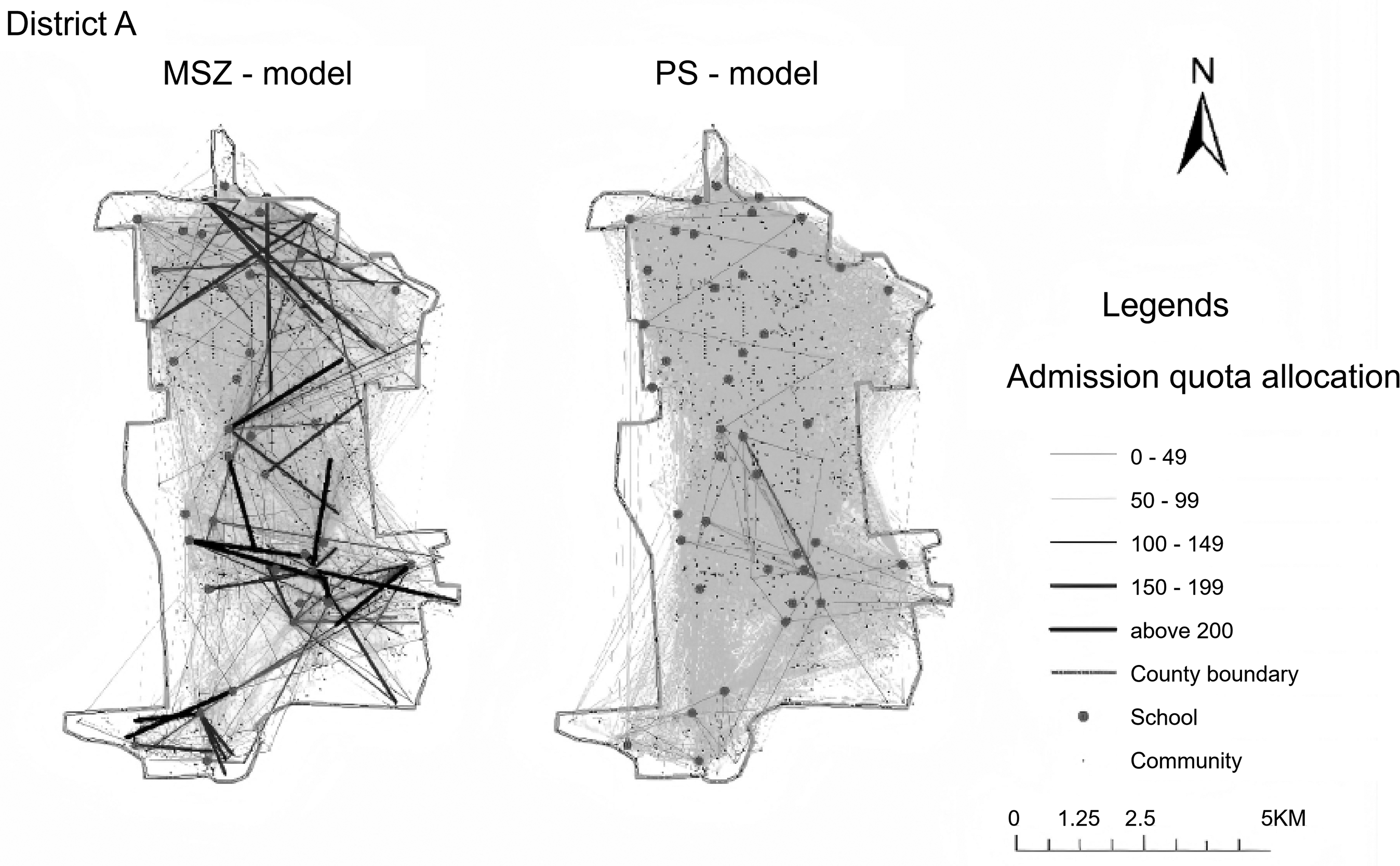
Admission opportunity allocation results for the two models in District A.
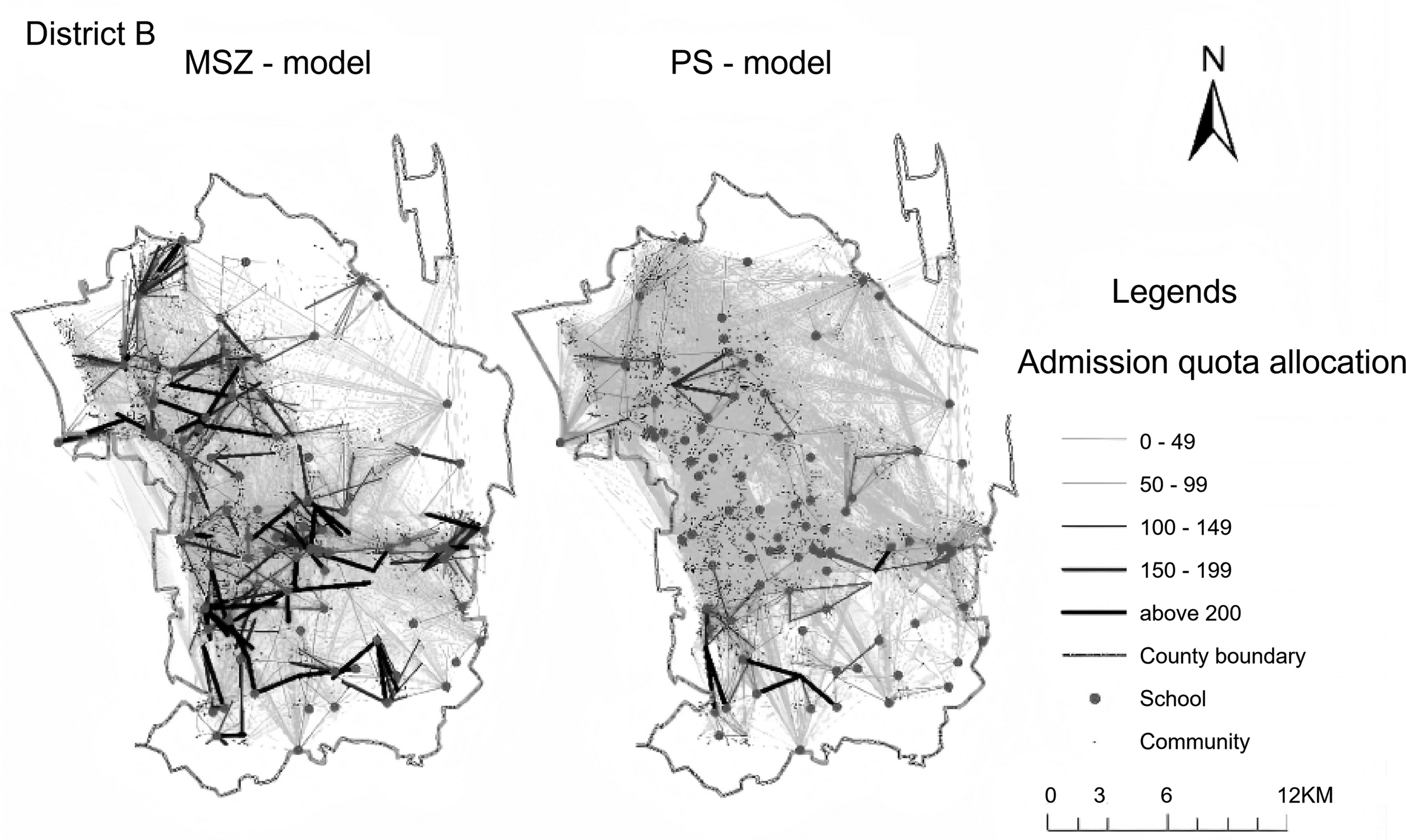
Admission opportunity allocation results for the two models in District B.
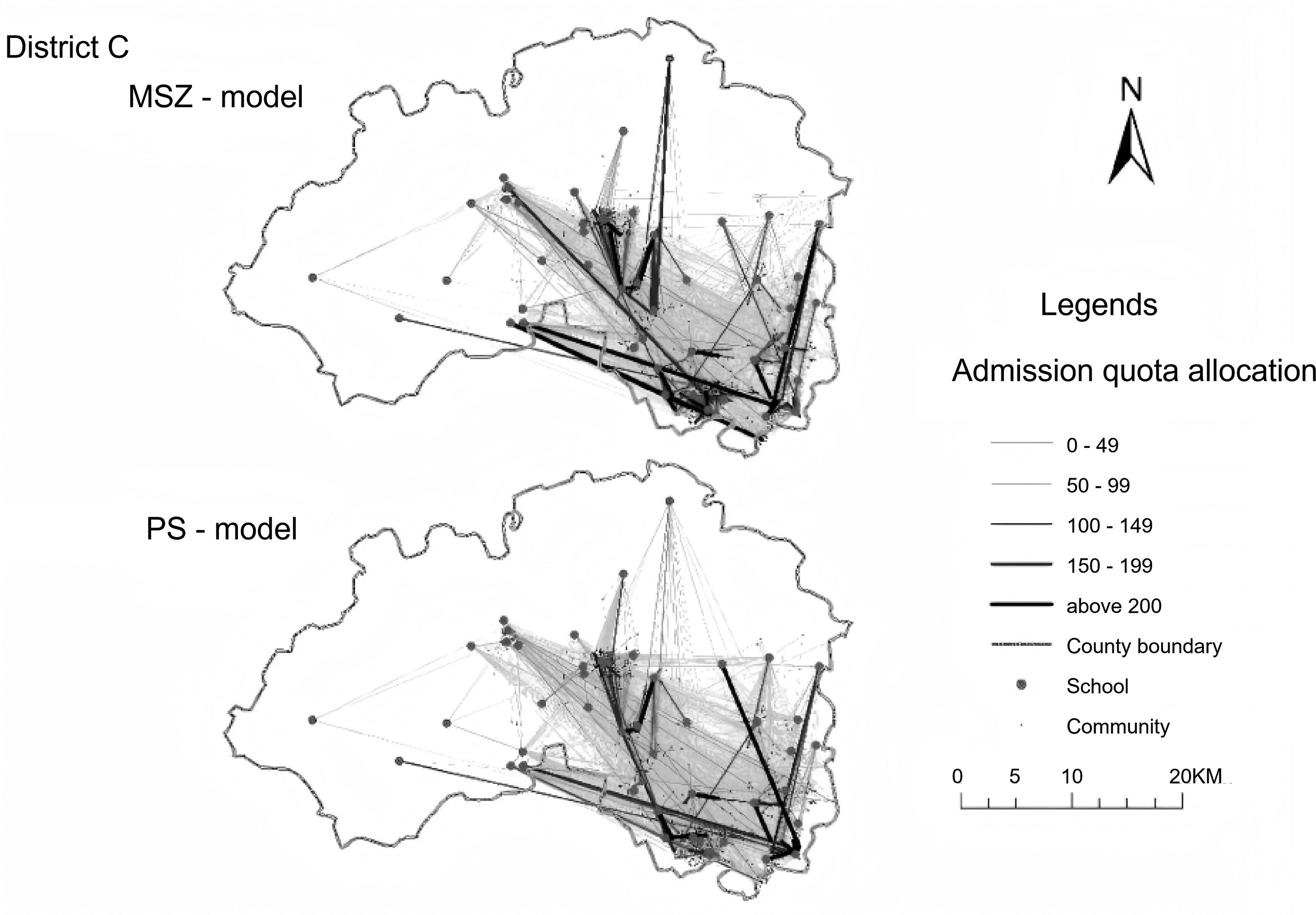
Admission opportunity allocation results for the two models in District C.
Figure 7 shows the distribution of expected educational quality values in each district for the MSZ model and the PS model. The dispersion of the expected values and the extreme distance are greater in the MSZ model than in the PS model. Compared with the MSZ model, the PS model significantly improves the spatial distribution of admission opportunities in District B, while having the least effect in District C. The expected value of education quality in District B was generally lower than that in District A and C in both models.
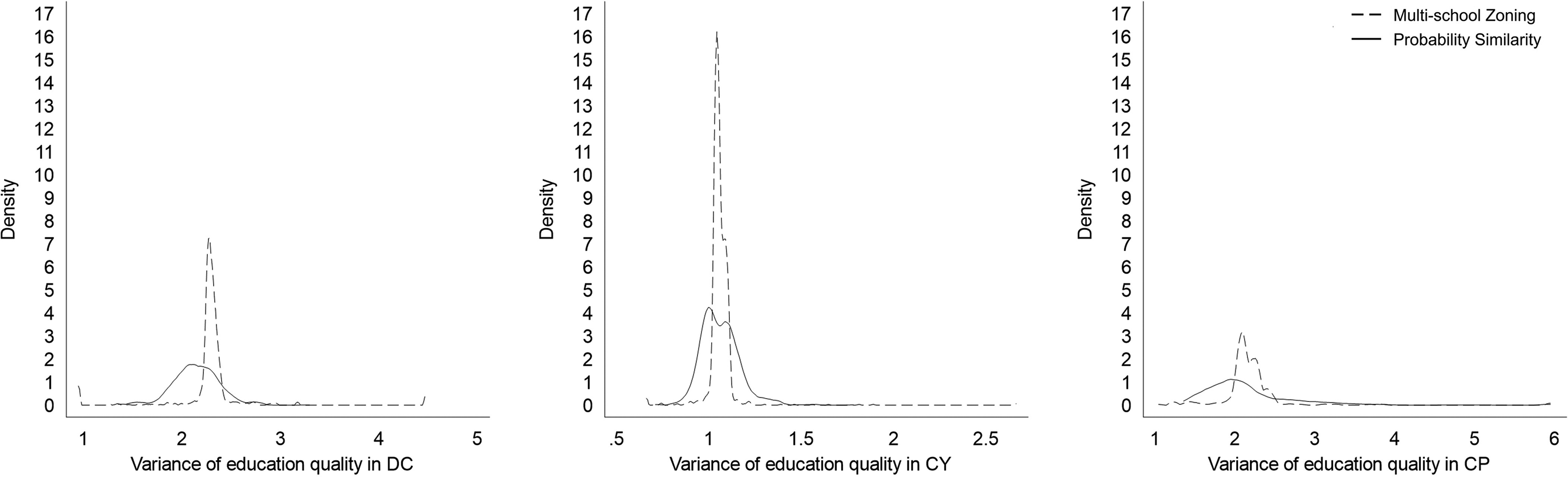
Density distribution of the variance in education quality in the three districts.
The main model indicators include the expected value of education quality, the probability distance and the distance to school. The expected value of education quality and the probability distance are used to measure regional fairness, and the distance to school is used to measure the cost to students in terms of time and distance. The expected value of education quality is measured by the variance, while probability distance and distance to school are measured by the average value.
In District A and C, the results from the MSZ model exceeded those from the PS model for all indicators, whereas in District B, the results from the PS model exceeded those from the MSZ model for education quality and probability distance (see Table 6). This shows that the PS model provided a more balanced spatial distribution of admission opportunities than the MSZ model in District A and C, and reduced the cost to students. However, the PS model weakened the balance of spatial distribution of admission opportunities in District B.
Notations for the PS Model.
Education Quality, School Distance (km), and Probability Distance (M ± SD) in the Three Districts.
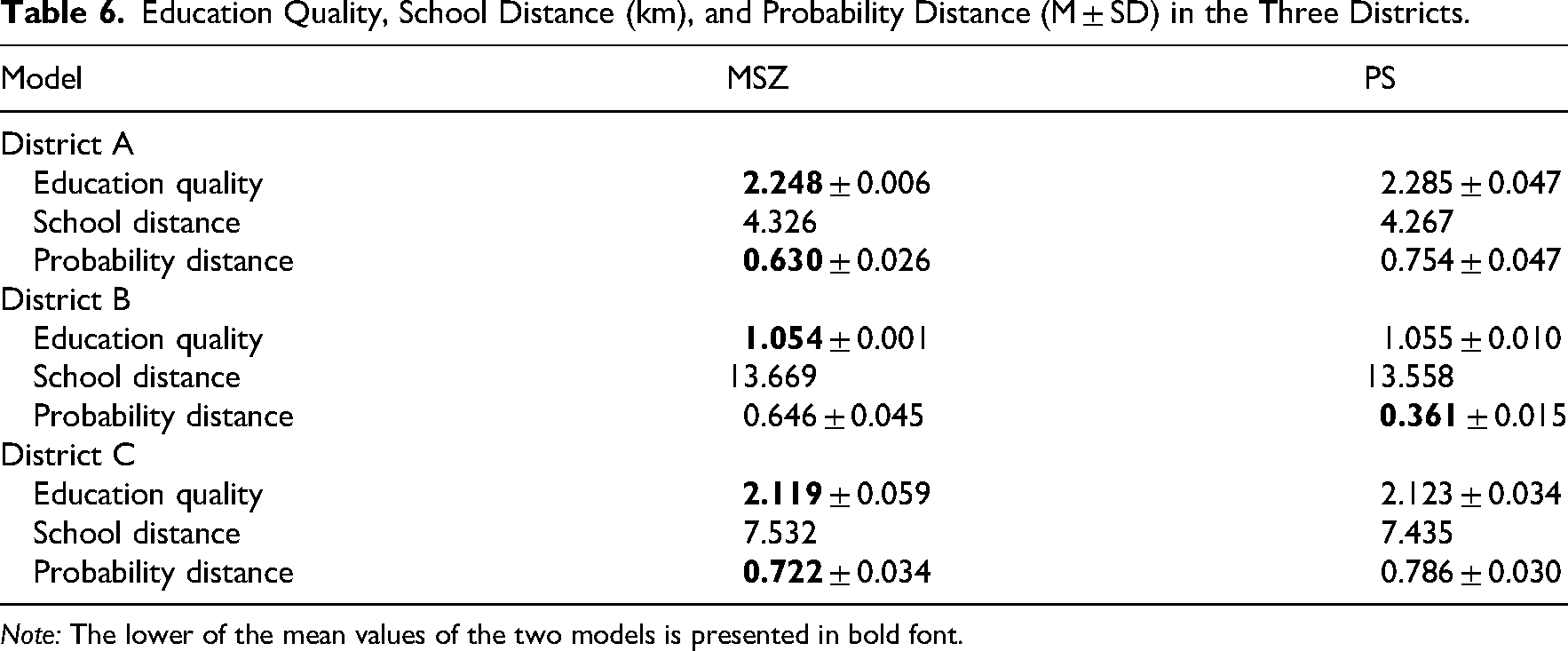
Note: The lower of the mean values of the two models is presented in bold font.
A critical and non-intuitive finding of this study is that the probabilistic school (PS) assignment model fails to improve, and may even undermine, educational opportunity balance in the District B. This outcome stems not from technical flaws in the model but from a structural mismatch between probabilistic randomization logic and spatial-institutional configuration of District B. In District B, high-quality schools are tightly clustered in a few core zones, while residential populations are widely dispersed, with densely populated areas often lacking proximate quality options. This poor spatial alignment creates a rigid opportunity topology: regardless of allocation mechanism, student demand concentrates around a limited set of premium school nodes, causing opportunity distribution to oscillate within a narrow, pre-determined range. Probabilistic randomization, operating within this constrained framework, cannot generate new access pathways; it merely reshuffles probabilities among already privileged nodes. Consequently, the model's “formal fairness”, equalizing admission chances procedurally, decouples from “substantive spatial equity,” as students in peripheral zones remain systematically distanced from quality education. Statistical measures of opportunity balance thus decline under PS, revealing a fundamental limitation: when spatial resource polarization is severe, randomization redistributes risk without meaningfully redistributing access.
By contrast, the PS model performs effectively in District A and C due to their more favorable spatial architectures. In District A, schools are evenly dispersed and exhibit strong spatial coupling with population centers, forming a multi-node support structure where dense residential areas consistently align with multiple nearby school options. Here, probabilistic randomization operates across numerous relatively balanced local sub-networks rather than concentrating pressure on a few hubs. This distributed topology allows chance-based allocation to genuinely diversify exposure patterns, enhancing overall opportunity equilibrium. District C presents a different but equally conducive structure: though quality gradients may exist, school node density is sufficient to create “belt-like” or zonal coverage around population clusters. This configuration disperses demand across adjacent schools, granting the network robust buffering capacity against concentration effects. Even with parental preference for higher-tier schools, spatial proximity and node abundance prevent overload on singular institutions. Within this resilient framework, PS-based probability allocation functions across multiple secondary centers, smoothing disparities and elevating aggregate balance. These cases demonstrate that the equity-enhancing potential of randomization is conditional on spatial preconditions, specifically, moderate inter-school quality gaps combined with distributional patterns that permit meaningful variation in student-school exposure.
The case of District B thus illuminates a substantive boundary condition for randomized assignment strategies: in contexts of acute spatial segregation and sharp resource polarization, probabilistic mechanisms alone cannot overcome structural inequities. Randomization excels where the underlying network permits redistribution to alter real access patterns, but falters where geography funnels all pathways toward a handful of privileged nodes. The tension between procedural fairness and spatial opportunity balance becomes acute precisely in highly non-homogeneous districts like District B, where the model's mathematical equity masks persistent geographic exclusion. This does not invalidate randomized approaches but clarifies their domain of efficacy. Policymakers should recognize that PS-type models function optimally as complements to, not substitutes for, structural interventions. In stratified districts, equity requires coupling probabilistic assignment with deliberate spatial rebalancing, such as strategic school capacity expansion in underserved zones, targeted quality-improvement initiatives to flatten steep hierarchies, or transportation policies that mitigate distance barriers. Only by addressing the spatial-institutional substrate can randomization fulfill its promise of substantive, not merely formal, educational equity. The lesson is clear: fairness in mechanism cannot compensate for unfairness in structure.
Overall, the PS model was more randomised than the MSZ model, and provided greater spatial equilibrium in terms of enrolment opportunity allocation. The results of our model analysis suggest that random enrolment is a fundamental way to improve the equity of regional admission opportunities.
Adjustment of Distance Parameters
We adjusted the distance constraint to further analyse the interaction between distance to school and education quality variance.
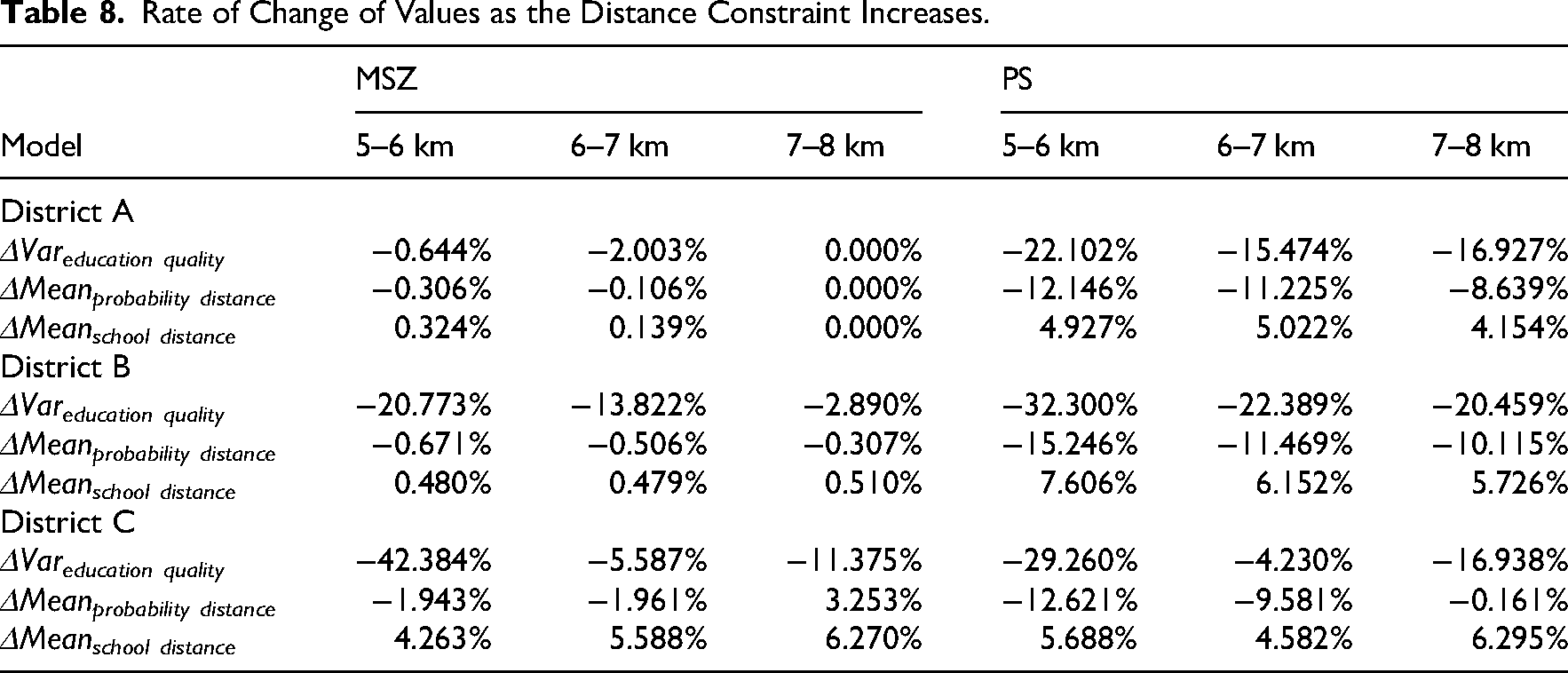
Tables 7 and 8 report the relationship between the distance parameter and the spatial equity of access under the two models.
Outcome Variables for Various Distance Parameter Values.
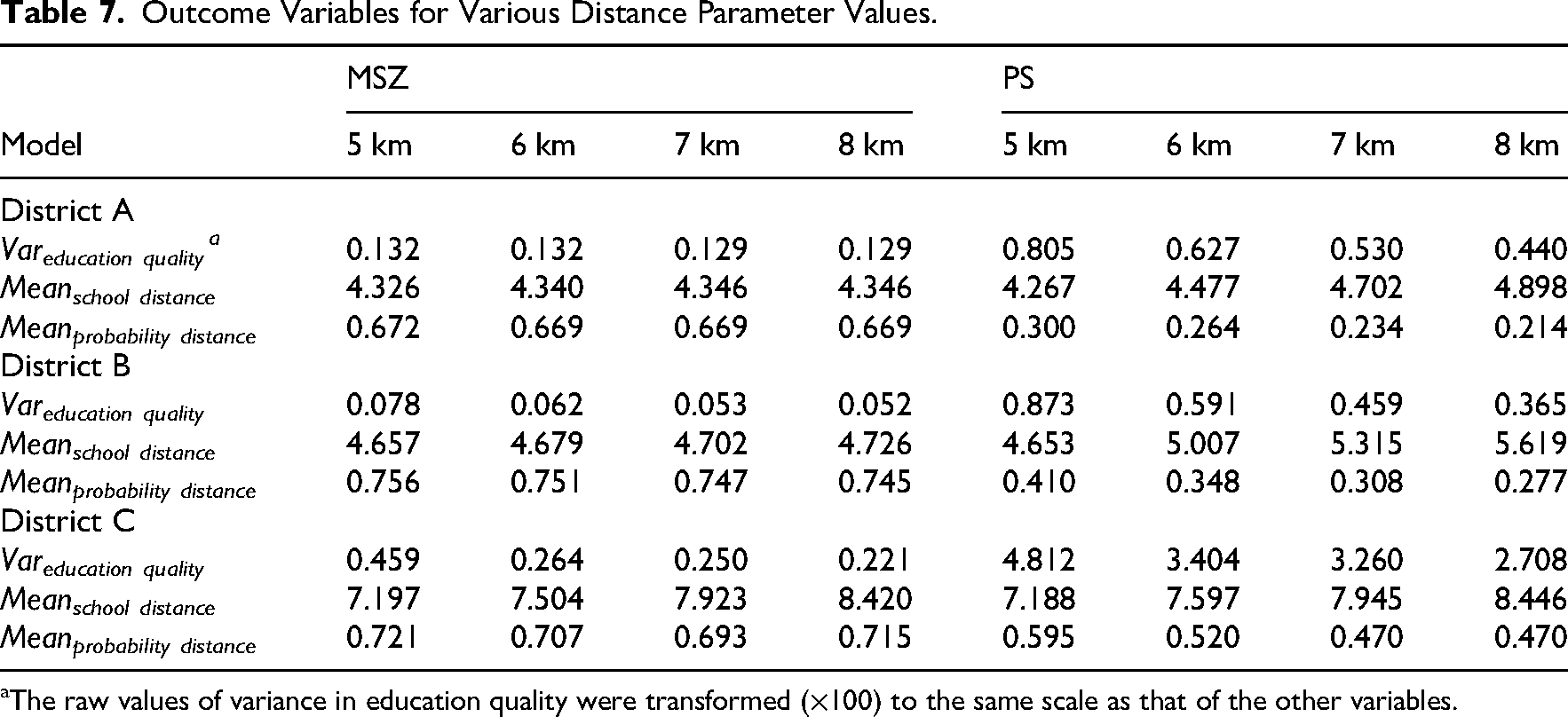
The raw values of variance in education quality were transformed (×100) to the same scale as that of the other variables.
Rate of Change of Values as the Distance Constraint Increases.
Based on simulation results, the impact of distance parameter expansion varies significantly across districts. For the District A, increasing the distance parameter from 6 to 7 km achieves optimal spatial equity in enrolment opportunities (variance of education quality: 0.129; average probability distance: 0.669). Further expansion beyond this threshold yields minimal additional improvement in spatial equity. In contrast, the District B demonstrates continuous improvement in spatial equity as the distance parameter expands. Both the variance of education quality and probability distance decrease consistently with larger parameters, indicating that relaxing home-school distance constraints progressively enhances equity, though the marginal gains diminish with each increment. The District C presents a mixed pattern: education quality variance declines continuously with parameter expansion (at a decreasing rate), while probability distance reaches its minimum mean value (0.693) specifically at the 7 km threshold. Notably, District C's average school distance substantially exceeds the international standard of 5 km from the outset, and further parameter increases would accelerate commuting distance growth, significantly raising transportation costs for students, a concern we address in the following section.
Second, under the PS model, an increase in the distance parameter brings about a continuous decrease in the variance of education quality and probability distance in both District A and B, with a change in the distance parameter from 5 to 6 km resulting in the most substantial decrease. Meanwhile, as the distance parameter increased, the average school distance of students steadily increased. In District C, the relationship between the increase in distance parameter and enrolment opportunity spatial equity is more unusual, with the variance of education quality experiencing a more substantial decrease when the distance parameter is changed from 5 to 6 km, and from 7 to 8 km (change rates of 29.26% and 16.94%, respectively), whereas the change in distance parameter from 7 to 8 km brought about only a 4.23% change in the variance of quality of education, which could be attributed to the fact that with the increase in the distance parameter.
From the above analysis, it can be concluded that 6–7 km is the optimal zone in terms of spatial allocation of regional access, while the 7–8 km zone suffers from slow optimisation of the equitable spatial distribution of regional access and large distances for students to access the school. At the same time, the level of development and geospatial distribution of the region have an important impact on the spatial allocation of access opportunities, so the distance of access in each region should be adjusted dynamically.
Noticeably, the distance from school greatly exceeded 5 km in District C, mainly because of the data-processing strategy we used. Provided that the number of overdistance students in the District C exceeded 16% of the total, we considered 

Simply, this approach made the excess number of overdistance students a penalty for variance. We activated this penalty using a ReLU function, and because the ReLU function is convex, the new model was still a convex optimization.
The value of
This study further investigated the proportion of districts and students affected by the adjustment of the distance parameter to the overall population, and the results are shown in Table 9.
Percentage of Affected Communities and Students with Respect to the Three Outcomes as the Distance Constraint Increases.
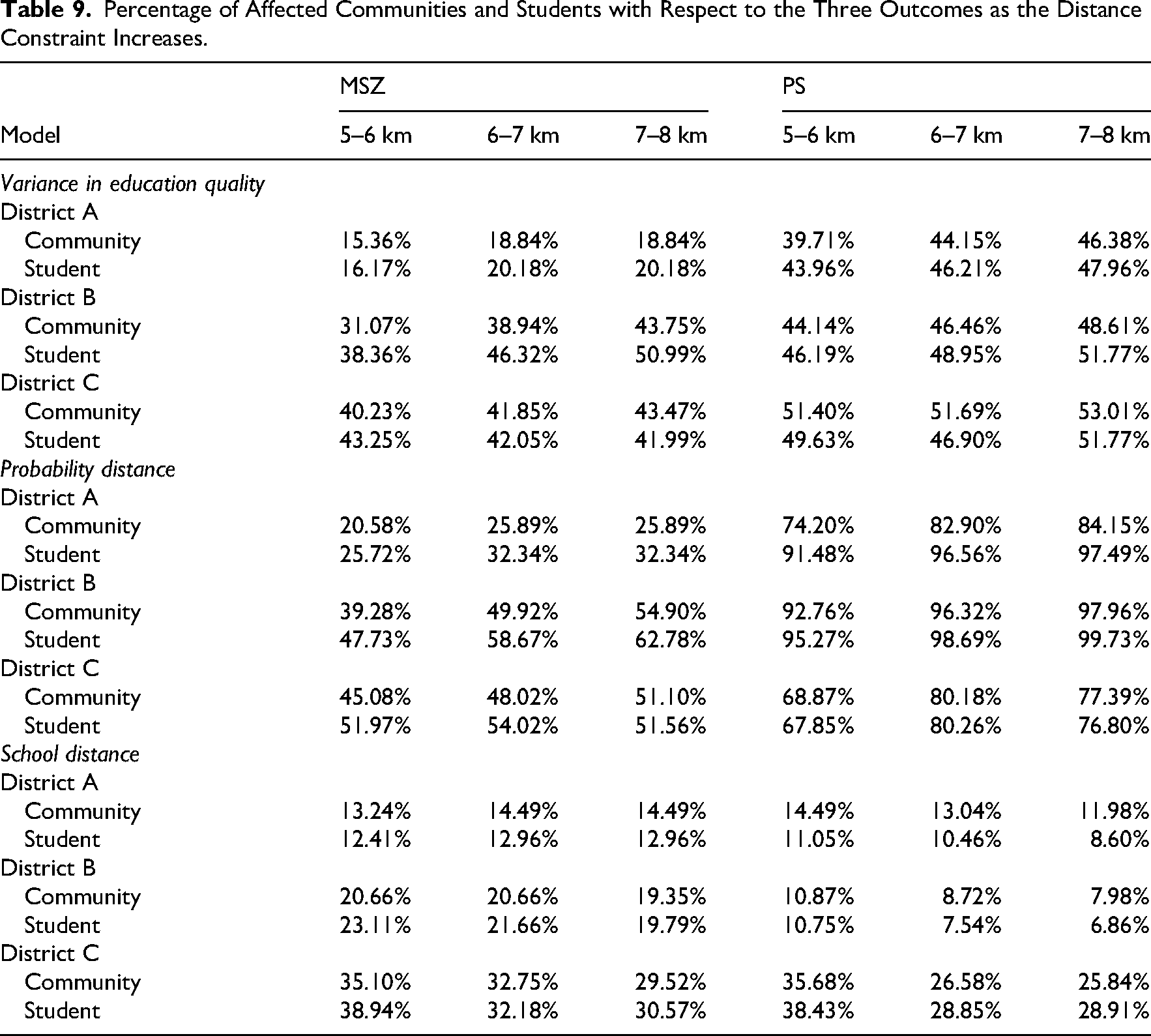
Compared within the same district, when the distance parameter is increased, the proportion of districts and students affected in terms of variance of education quality and probability distance is higher than the proportion affected in terms of student enrolment distance, especially under the PS model. As an example, in District B under the PS model, when the distance parameter is changed from 5 to 6 km, the proportions of its communities affected in terms of variance in education quality and probability distance are 44.14% and 92.76%, respectively, and the proportions of its students affected in terms of distance of students’ enrolment are 46.19% and 95.27%, respectively, while in terms of distance of students’ enrolment, the proportions of districts and students affected in terms of distance of students’ enrolment are only 10.87% and 10.75%.
This result suggests that increases in the distance parameter in the interval of 5 to 8 km lead to more significant gains in spatial equity in enrolment opportunities than the negative impacts on average student enrolment distance. Nonetheless, the improvement in equity in education by increasing spatial randomness in the distribution of enrolment opportunities always comes at the cost of commuting costs for some students. Especially in District C, the increase in average student enrolment distance due to the increasing allowable commute radius is also undeniable, with both districts and students being affected by more than one-third with respect to average student enrolment distance when the distance parameter is relaxed from 5 to 6 km.
As the fitting curves show (see Figures 8–10), with a 1-km increase in the distance parameter, the variance in education quality and probability distance declined exponentially, whereas the distance to school increased arithmetically, suggesting that a looser distance constraint results in a more rapid improvement in equality. The average distance to school increased linearly with the loosening proximity limits. The incremental mean distance to school per 1-km relaxation of the distance constraint was highest in District C at 0.409 km (MSZ model) and 0.412 km (PS model), while it was lowest in District B at 0.006 km (MSZ model) and 0.212 km (PS model). The average incremental distance to school was 0.006 km (MSZ model) and 0.212 km (PS model). In contrast, the variance in the quality of education and probabilistic distance declined exponentially, with the difference across districts in the rate of decline of the former more pronounced than that regarding the latter. For example, in the MSZ model, the variance in education quality decreased fastest in District C (
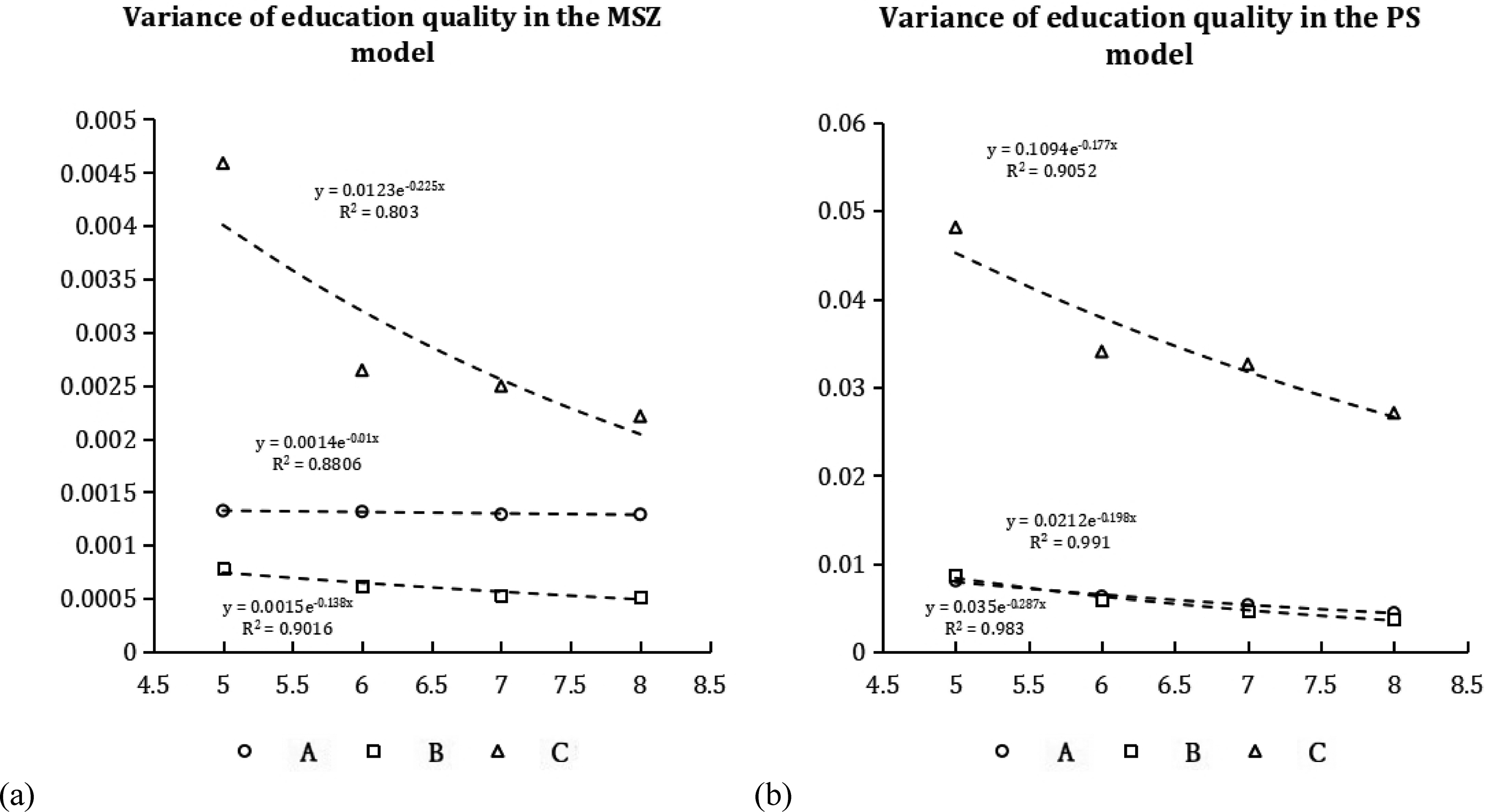
Variance in education quality based on the MSZ (a) and PS (b) models.
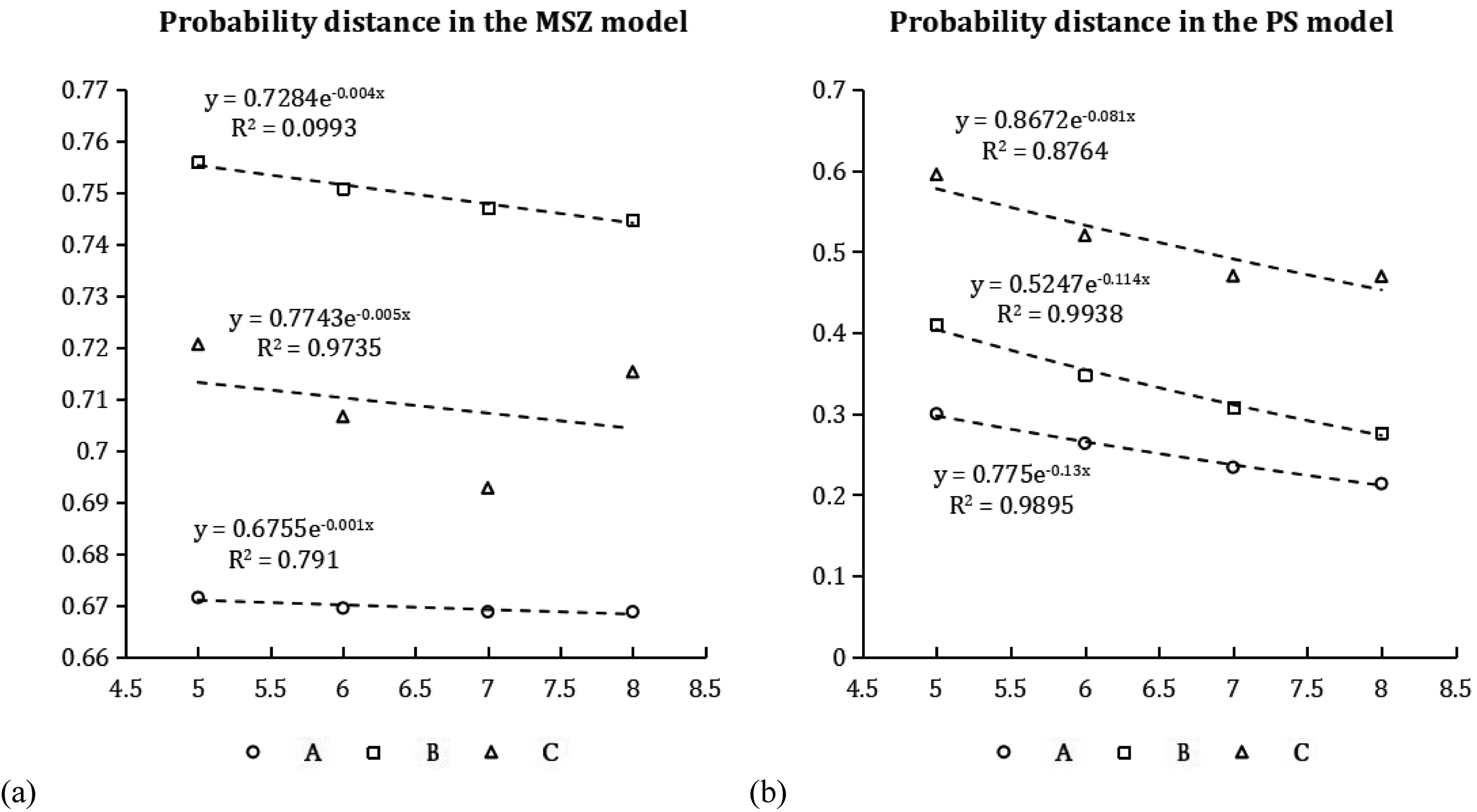
Probability distance to maximizing fairness based on the MSZ (a) and PS (b) models.
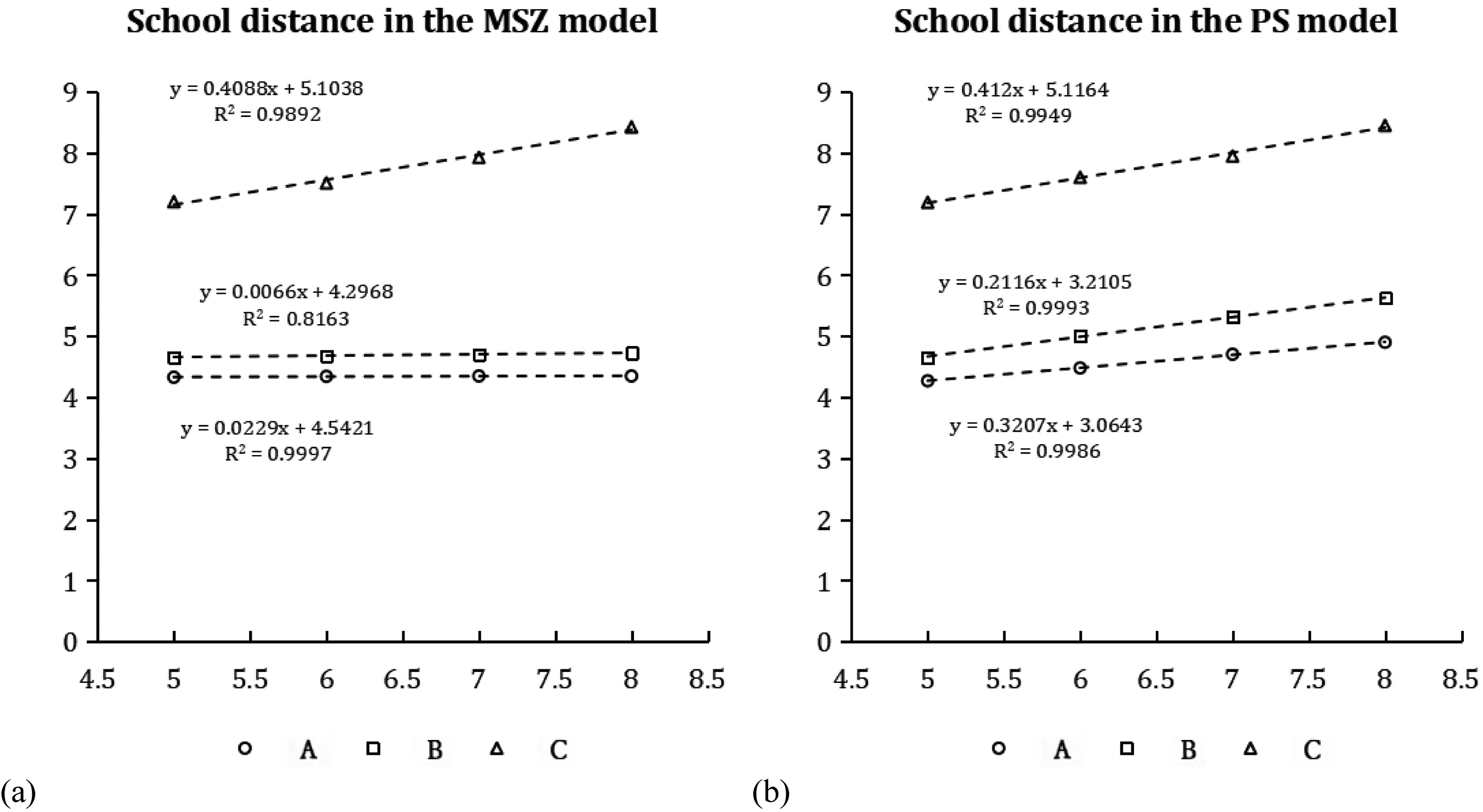
Distance to school based on the MSZ (left) and PS (right) models.
Discussion
This study develops and compares two simulation models, namely the MSZ model and the PS model, to examine how different enrolment rules shape equity in access to compulsory education. By applying these models to three districts of City X with distinct socioeconomic profiles, we assess not only the distributional effects of enrolment mechanisms themselves but also how their performance is conditioned by the broader macro-environment. The results demonstrate that while randomized or probabilistic enrolment can improve spatial equity under certain conditions, its effectiveness is highly contingent on inter-school quality differences, distance constraints, and district-level economic development. In particular, the findings reveal a tension between procedural equity achieved through randomization and substantive equity constrained by uneven school quality and institutional contexts.
This contextualized tension resonates with international literature on school assignment mechanisms, which increasingly recognizes that procedural fairness through randomization alone cannot overcome substantive inequities rooted in institutional structures. Recent comparative research demonstrates that while lottery-based systems and multi-school options can mitigate housing-market distortions and improve spatial access, as seen in experiments from New York to Santiago, their equity gains remain conditional on underlying quality distributions and local development patterns (Che et al., 2025). Our findings extend this global discourse by showing how district-specific macro-environments act as decisive filters: in economically heterogeneous contexts like City X, the same probabilistic mechanisms yield divergent outcomes depending on pre-existing resource configurations and geographic constraints. This aligns with emerging theoretical work highlighting that assignment rules must be deliberately calibrated to local institutional realities rather than imported as universal templates, particularly in settings where school quality stratification intersects with residential segregation (Hakimov & Kübler, 2021). The international evidence thus reinforces our conclusion that meaningful equity requires not just fair procedures but deliberate quality equalization strategies operating alongside assignment reforms (Arnosti, 2023).
While the simulation results demonstrate the potential of probabilistic similarity (PS) and variance-minimization models to enhance spatial equity in school assignments under controlled conditions, several limitations temper the generalizability of these findings, particularly in China's distinctive institutional and cultural context. First, the analysis relies on a composite school quality index that remains an approximation due to data constraints. Privacy regulations and limited public reporting of granular, individual-level outcomes (e.g., value-added metrics or longitudinal student trajectories) restrict the depth of output-based indicators, potentially understating dynamic peer effects or unmeasured dimensions of quality such as school climate and extracurricular access. Second, the models do not fully capture endogenous behavioral responses from parents and households. In China's long-standing tradition of “educational migration,” parents often view residential choices as a primary mechanism for translating socioeconomic resources into educational advantages. Randomized systems may thus be perceived as eroding parental agency, fostering misunderstandings or resistance that could manifest in strategic circumvention, housing market adjustments, or reduced public support for reforms. Third, the simulations assume static boundaries and fixed capacities, overlooking potential general equilibrium effects like induced residential sorting or teacher mobility in response to policy shifts. These China-specific factors highlight the need for caution in extrapolating results, as they underscore how deeply embedded cultural norms and institutional rigidities can mediate the translation of algorithmic fairness into substantive opportunity gains.
The findings underscore that durable equity in compulsory education enrolment requires policies that not only refine assignment algorithms but also address the lived realities of parental school choice in a high-stakes, exam-oriented system. From the parental vantage point, randomization introduces valuable procedural neutrality but can inadvertently heighten perceived burdens, shifting responsibility for navigating uncertainty from the state to families while imposing compliance costs (e.g., mastering complex rules), psychological strain (e.g., anxiety over unpredictable outcomes), and practical challenges like extended commutes. These burdens often fall disproportionately on lower-income and migrant households, who lack the informational or financial buffers to adapt, potentially undermining the very equity goals of reform (Hastings et al., 2007; Jabbar et al., 2025; Scott & Holme, 2016). To mitigate these risks, future policies should embed randomized enrolment within a supportive ecosystem that preserves parental agency while aligning individual choices with system-wide fairness.
A combined admissions model integrating MSZ (with lotteries) and single-school zoning should be scaled more broadly. This hybrid approach counters the limitations of purely deterministic proximity rules, such as excessive capitalization of school quality into housing prices (Dai et al., 2026), while introducing controlled randomness to dilute elite clustering. By allowing parents some choice within zoned clusters, it respects cultural expectations of predictability and entitlement, reducing the sense that system-wide equity erodes personal leverage. Evidence from Beijing's MSZ implementations shows this can stabilize regional housing markets (Dai et al., 2025), fostering broader acceptance among middle-class families who value proximity without fully sacrificing agency.
Randomized mechanisms alone cannot sustain equity without parallel efforts to narrow quality gradients. Policies must accelerate the balanced development of schools through coordinated teacher allocation and mobility incentives, targeted infrastructure upgrades, equitable funding reforms, and strategic diffusion of high-performing models across districts. As Xu and Wu (2022) demonstrate, absent these structural interventions, even sophisticated lotteries risk “leveling down” opportunities in highly stratified contexts. From a parental perspective, this reduces the urgency of migration-driven strategies, reframing randomization as a tool for collective uplift rather than a threat to individual advancement.
School district designs should adopt a multi-circle model centered on high-quality hubs, with enrolment probabilities differentiated by distance bands (e.g., higher odds for closer residents, tapering outward). This spatially nuanced approach controls excessive travel burdens while promoting equitable access. To enhance parental buy-in, reforms must be paired with administrative aids: user-friendly platforms delivering multidimensional school performance data (e.g., growth metrics, peer composition, and value-added indicators), transparent monitoring of non-random elements (e.g., special-needs priorities), and targeted supports for vulnerable groups (e.g., subsidized transport or counseling for migrant families). Such measures align decision-making with equity objectives, transforming randomization from a source of uncertainty into an empowering framework (Haderlein & Tomiyama, 2021; Houston & Henig, 2021).
In sum, these implications position randomized enrolment not as a standalone fix but as part of a holistic strategy that honors China's parental ethos of proactive investment in education. By addressing behavioral and institutional frictions, policymakers can foster sustainable reforms that enhance both perceived fairness and realized opportunities. To build on these insights, future studies should incorporate dynamic elements absent from the current simulations. This includes modeling endogenous parental responses and longitudinal tracking of quality improvements under varying policy scenarios.
Conclusion
This study investigates the spatial allocation of compulsory education resources in three districts of City X using the MSZ and PS models. The findings show that while the MSZ model is more practical for minimizing inter-school quality variance, the PS model achieves superior equity in the regional distribution of enrolment opportunities, particularly when school quality differences are assumed away. Randomized enrolment therefore represents the most effective mechanism for spatial equity under conditions of quality equalization.
However, district-level heterogeneity indicates that multi-school enrolment is more effective in economically developed areas than in less developed ones. Sensitivity analysis further suggests that adjusting enrolment distance constraints can improve equity, but excessive distances impose unacceptable burdens on students. A maximum distance of 6 km balances equity gains with feasibility. Overall, randomized admissions can enhance equity in compulsory education, but only when embedded within broader reforms that address school quality disparities and institutional constraints.
Supplemental Material
sj-docx-1-bre-10.1177_25902547261462467 - Supplemental material for Optimising the Spatial Assignment of Schools to Provide Equal Educational Opportunities in China: Multi-School Zoning or A Random Approach
Supplemental material, sj-docx-1-bre-10.1177_25902547261462467 for Optimising the Spatial Assignment of Schools to Provide Equal Educational Opportunities in China: Multi-School Zoning or A Random Approach by Ran Zhao, Ziyu Liu, Jiaqi Guan and Jianpo Ma in Beijing International Review of Education
Footnotes

Ethical Statement
Not applicable for there are no human subjects involved in this study.
Funding
This work was supported by the 2024 Fundamental Research Funds for the Central Universities, the 2024 First-class Education Discipline Development Project, Beijing Normal University (No. YLXKPY-XSDW202406), and the 2022 First-class Education Discipline Development Project, Beijing Normal University (No. YLXKPY-XSDW202208).
Declaration of Conflicting Interests
The authors declared no potential conflicts of interest with respect to the research, authorship, and/or publication of this article.
Supplemental Material
Supplemental material for this article is available online.
References
Supplementary Material
Please find the following supplemental material available below.
For Open Access articles published under a Creative Commons License, all supplemental material carries the same license as the article it is associated with.
For non-Open Access articles published, all supplemental material carries a non-exclusive license, and permission requests for re-use of supplemental material or any part of supplemental material shall be sent directly to the copyright owner as specified in the copyright notice associated with the article.
