



Abstract
Although Corporate Social Responsibility (CSR) has been an extremely critical pillar for many years now, the role that the human resources function plays in facilitating a more socially responsible and sustainable organisation remains unclear. In practice, this lack of clarity is due to the multiple factors including not integrating the human resources (HR) and CSR functions. This article provides a broader perspective on the role HR should play in CSR and Sustainability as well as its impact beyond organisational boundaries. The overall orientation of the HR leadership to ensure that it recognises the criticality of CSR and its own role in facilitating this charter in an organisation as a key metric for the function itself, is an important step in this direction.
Introduction
In every discourse on sustainability, the first thought that arises is why it should be focused on. The answer is equally simple. It is the right thing to do. While being the right thing to do, it has a resounding impact on business operations and policies.
As it is imperative to utilise resources from the global pool to run a business, its environmental consequences are marked by carbon emissions and water shortage among others. As organisations take from the earth, it becomes an inherent duty to give back. This is where the concept of net zero comes into play. It is brought to life with the spirit of sustainability that drives change in organisations. In order for change to be effective, a sustainable mindset must be intrinsically immersed into the day-to-day activities, catalysed by the HR function, that exist beyond large-scale policies and processes.
As a subsegment of the sustainability charter, CSR has a unique position in the organisation. Sustainability initiatives that are driven beyond the statutory agenda go a long way, especially since the projects undertaken in CSR help to do the right things with a sustainable perspective. Altering policies and processes in the organisation to fulfil sustainable key performance indicators (KPIs) and goals can have a greater impact than a sustainable initiative in the local area to merely meet local CSR requirements.
It is exactly at this juncture that HR has a pivotal role to play, and that is to create an ecosystem that facilitates the involvement of employees to give back to the society we live in. CSR should always be driven by the people demonstrating accountability to the society at large, facilitated by the people function. Moreover, businesses need to do more than just demonstrate this visibly. They must imbibe the value that giving back to where you’re taking from is a part of good citizen behaviour.
Employees, in order to be good citizens, who live and breathe the spirit of giving back, need to understand the very purpose of CSR. Firms can address the CSR agenda with three fundamental decisions:
Creating an ecosystem that facilitates giving back to the society by enabling and empowering people to take initiatives
Identifying the right projects and initiatives to invest time and resources on Efficient and optimal allocation of funds and other resources
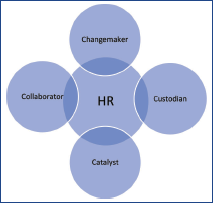
As countries are committing to net zero, organisations need to create an image that is truly global and sensitive to issues that matter. Therefore, it is vital for organisations to play a visible role in sustainability initiatives, especially since they impact communities and families across stakeholder groups. The role of HR to bring this agenda as a key conversation within the organisation is critical.
But how does an organisation contribute to the sustainability agenda? And where does HR come into the picture?
Catalyst
First, organisations, whether large or small, need to get their policies straightened out. Extensive and thoughtful benchmarking with realistic and scalable policy formulation can work in the firms’ favour in navigating through the mostly untested waters of net zero companies.
Changemaker
As a beneficiary of the ecosystem, organisations are in a silent contract with the society they thrive in. They also play a defining role in being accountable to society and demonstrating ideal citizen behaviour to society at large. It is important to demonstrate visibly to underline the importance of giving back.
Sustainable business goes much beyond reducing CO2 emissions. Firms that operate multiple factories and plants release pollutants, effluents, wastewater and gaseous emission. Setting up water purifiers, rooftop solar panel systems and creating bio parks within campuses and business districts are some infrastructural changes HR can recommend for the business to incorporate.
Custodian
Giving back or contributing without targets can be tokenistic and unsuccessful. The people function has to lead the way by defining targets and taking all the functions and business units together. Devising decision-making models to create a system of checks and balances along with smart reporting of environmental impact through annual sustainability reports or environmental, social, and governance (ESG) reports are ways for organisations to be custodians of sustainability.
Ensuring that the right things need to be done regarding CSR has been predominantly an HR prerogative. The people function must draw the bigger picture for the organisation to look at as its people are inherently stakeholders for corporate social responsibility.
Collaborator
Sustainability is not a battle for HR to fight on its own. Moreover, gatekeeping employees from being involved in sustainable policy-making and implementation can have implications for the cultural aspects of employee relations. HR as a function must collaborate within the organisation and outside as well. From sourcing to logistical partners and vendors to clients, every stakeholder needs to be involved and accounted for in order to create a visible sustainable impact.
Beyond the 4Cs that define the role of organisations, the leadership must have conversations with the stakeholders who contribute to the collective impact on the environment. These conversations may not always be easy but should reflect the ethos and values cherished by the people function.
Although there is a surge in the number of organisations disclosing their intentions and commitment to embrace the circular economy for building a sustainable future, the role of individuals in these firms and their management continues to be unremarkable. Going beyond rational, it calls for HR to be inspirational while shaping the dialogue on sustainability and CSR. After all, it is people who make a difference.