




Abstract
Background:
Sexually transmitted infections (STIs) continue to pose a substantial public-health challenge globally, resulting in considerable morbidity, death, and socioeconomic impact. Notwithstanding progress in preventative strategies, millions of new illnesses arise each year, with geographical disparities shaped by healthcare accessibility, cultural practices, and surveillance capabilities.
Methods:
This narrative review consolidates evidence from international health reports, peer-reviewed studies, and surveillance data to analyse the epidemiology, health consequences, and public-health concerns associated with STIs. A continental perspective was employed to emphasise variations in prevalence, predominant infections, and intervention tactics throughout Africa, Asia, Europe, North America, South America, and Oceania.
Results:
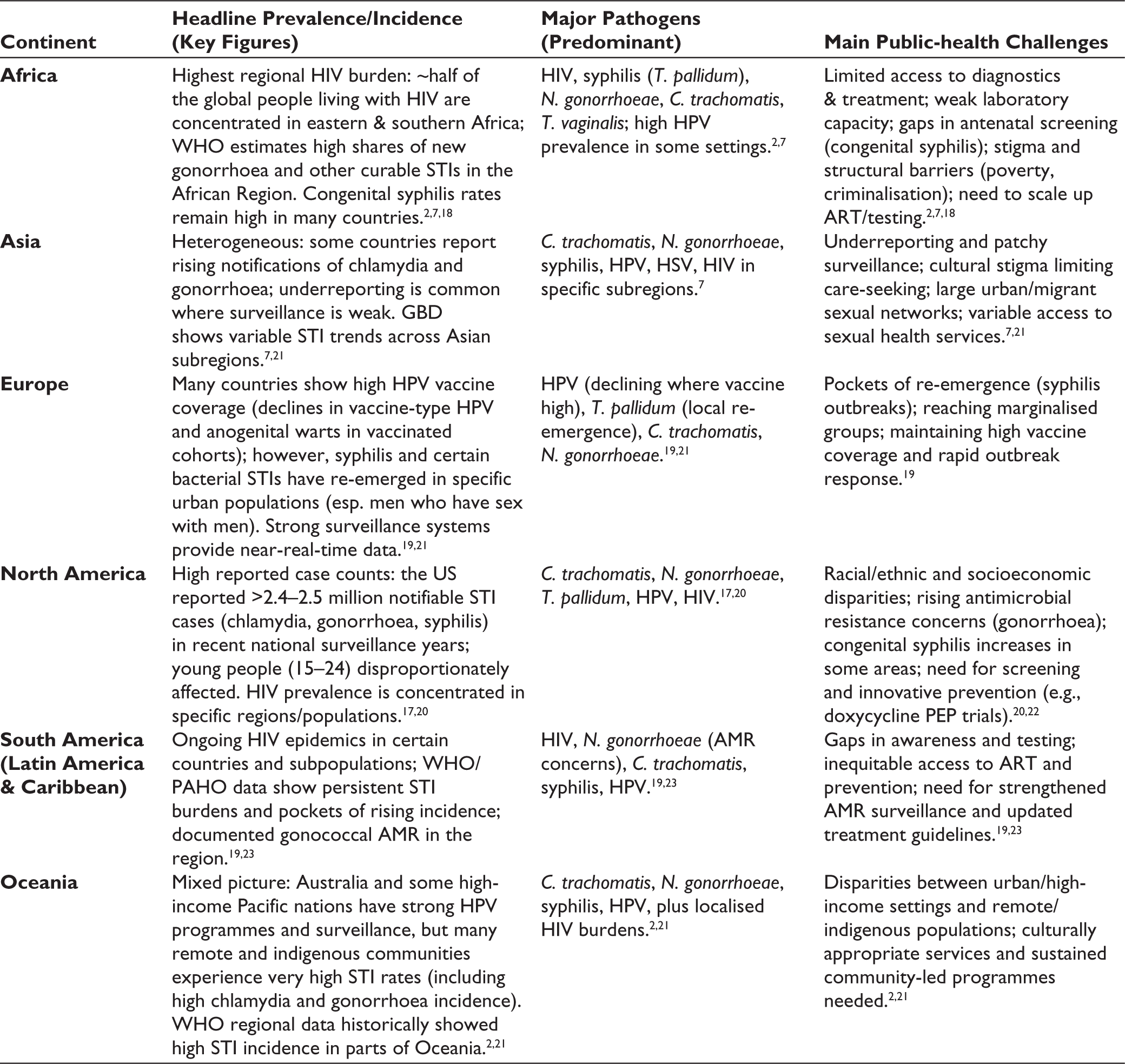
Africa endures the worst burden of HIV and syphilis, exacerbated by restricted access to healthcare. Asia is experiencing an increase in the prevalence of gonorrhoea and chlamydia, frequently overlooked due to underreporting and cultural shame. Europe exhibits efficacy in HPV vaccination and comprehensive surveillance; however, syphilis is resurging. North America exhibits consistently elevated rates of chlamydia and gonorrhoea, with notable differences among ethnic groups. South America faces concerns with HIV prevalence, insufficient awareness, and antimicrobial resistance, while Oceania confronts distinct issues within indigenous communities. STIs also result in infertility, problems during pregnancy, neonatal morbidity, malignancy, stigma, and considerable economic losses. Antimicrobial resistance in Neisseria gonorrhoeae is a pressing global menace.
Conclusion:
A comprehensive multidisciplinary strategy highlighting preventive education, immunisation, early detection, enhanced surveillance, and culturally attuned interventions is crucial for mitigating the global burden of STIs. Addressing healthcare disparities worldwide is essential for attaining equitable sexual health outcomes and promoting global health objectives.
Keywords
Introduction
Sexually transmitted infections (STIs) encompass more than 30 bacterial, viral, and parasite pathogens mostly spread by sexual intercourse (vaginal, anal, or oral) and, in certain instances, vertically (from mother to child) or through blood exposure. Common agents comprise curable pathogens such as Chlamydia trachomatis, Neisseria gonorrhoeae, Treponema pallidum (syphilis), and Trichomonas vaginalis, as well as chronic viral agents that may or may not have a complete cure, including human papillomavirus (HPV), herpes simplex virus (HSV), hepatitis B virus (HBV), and HIV.¹ Globally, about one million new treatable STIs are contracted daily among individuals aged 15–49 years, many of whom are asymptomatic and hence underdiagnosed. In 2020, around 374 million new infections occurred with one of four treatable STIs: chlamydia, gonorrhoea, syphilis, or trichomoniasis. 2
Other treatable bacterial infections, such as chancroid (Haemophilus ducreyi),3,4 granuloma inguinale (Klebsiella granulomatis), 3 and lymphogranuloma venereum (LGV; C. trachomatis L1-L3 serovars)3,5 continue to occur sporadically, with resurgent or endemic cases reported in parts of Asia, Africa, and Oceania.
Comprehending the global epidemiology of STIs is essential for various reasons. The burden, measured by incidence, prevalence, and disability-adjusted life years (DALYs), persists at a high level and is unevenly distributed among various regions and people, serving as both a catalyst and result of health inequities. 6 The Global Burden of Disease (GBD) 2021 study revealed that the total incidence of STIs has risen by about 60% since 1990, predominantly affecting regions with poor socio-demographic indices (SDI). 7 Second, STIs substantially impact negative sexual and reproductive health consequences, including infertility, unfavourable pregnancy results, congenital infections, malignancies (notably cervical cancer due to HPV), and heightened susceptibility to HIV acquisition. 8 Third, surveillance, diagnosis, preventive, and management strategies exhibit significant variability both within and between nations, complicating the monitoring of trends, resource allocation, and intervention design. 9
A continental viewpoint is particularly pertinent for addressing STIs on a global scale. The prevalence of diseases, predominant pathogens, modes of transmission, accessibility to treatment and diagnostics, healthcare infrastructure, sociocultural norms (including stigma, gender norms, and sexual behaviours), and public-health policies vary significantly among continents. 10 Recent evaluations indicate a resurgence of syphilis in certain regions of Europe, Asia, and North America, while many sub-Saharan African nations continue to experience elevated rates among pregnant women, alongside deficiencies in the management of congenital syphilis. 11 In the Middle East and North Africa, inadequate surveillance and cultural obstacles lead to underreporting, obscuring the actual prevalence and burden of STIs. 12 Furthermore, antibiotic resistance (e.g., in N. gonorrhoeae) and vaccination adoption (e.g., HPV) exhibit significant regional variability, rendering universal strategies ineffectual. The WHO has emphasised the necessity of region- and country-specific data to inform customised policy measures. 13
This review, titled ‘Global Epidemiology of Sexually Transmitted Infections: A Continental Perspective,’ aims to synthesise recent data on STI incidence, prevalence, pathogen distribution, and associated risk factors across major continents; identify key regional differences and common themes; and highlight gaps in surveillance, prevention, and control efforts. This continental perspective enables a more refined comprehension of the interplay of geography, socioeconomic status, culture, healthcare systems, and policy in influencing the epidemiology of STIs, hence assisting in the development of contextually relevant initiatives for global health.
Global Overview of STIs
STIs continue to be one of the most prevalent communicable diseases worldwide, leading to significant health, social, and economic impacts. The worldwide impact is largely influenced by the high occurrence and ongoing presence of pathogens that are curable or lack a complete cure. The World Health Organization reports that more than 1 million curable STI infections are contracted each day by individuals aged 15–49, leading to an estimated 374 million new cases each year of chlamydia, gonorrhoea, syphilis, and trichomoniasis. 2 The analysis of the GBD 2021 indicated a significant increase in the total number of STI cases since 1990, highlighting that low- and middle-income countries bear a disproportionate burden of DALYs. 7 In addition to acute infections, the long-term consequences, such as infertility, negative pregnancy outcomes, genital deformities, congenital infections, and neonatal fatalities, render STIs an ongoing global health issue. 5
The prevalent pathogens consist of bacterial agents like C. trachomatis, N. gonorrhoeae, and T. pallidum, along with the parasitic T. vaginalis, and viral agents including HPV, HSV-2, HBV, and HIV. 7 Chlamydia often ranks as the most reported notifiable STI in high-income areas, whereas syphilis and trichomoniasis continue to be significantly prevalent in various low-resource environments. 8 Viral STIs represent a significant share of global prevalence due to their persistent characteristics; for example, HSV-2 impacts over 490 million individuals, while more than 300 million women are estimated to be infected with HPV globally, which carries a considerable risk of advancing to cervical cancer. 14 Chronic infections significantly contribute to the burden of STI-related DALYs, particularly through their roles in malignancies, infertility, and heightened vulnerability to HIV acquisition. 15
The surveillance conducted by WHO, along with regional data, underscores the evolving trends. Although initiatives like HPV vaccination programmes and enhanced syphilis screening in antenatal care have led to better outcomes in certain areas of Europe and the Americas, other regions, especially sub-Saharan Africa and Southeast Asia, still face significant challenges with high incidence rates and underdiagnosis. 8 Alarmingly, the resistance to antimicrobials in N. gonorrhoeae has been documented globally, posing a significant challenge to the efficacy of existing treatments and highlighting the critical need for the development of new pharmaceutical molecules. 16 The findings highlight the critical need for global monitoring systems and tailored strategies for specific regions, as one-size-fits-all approaches fall short in addressing the varied epidemiology of STIs worldwide.
Continental Perspectives
Global Impacts of STIs
Health impacts: infertility, pregnancy complications, neonatal outcomes, cancers STIs affect health, society, and economies globally. First, direct health effects are severe. C. trachomatis and N. gonorrhoeae are the leading causes of pelvic inflammatory disease (PID), which increases the risk of ectopic pregnancy, tubal-factor infertility, chronic pelvic pain, and other long-term reproductive sequelae. Longitudinal and systematic studies link prior chlamydial infection and PID to increased infertility risk.24,25 Untreated maternal syphilis persists as a major cause of adverse pregnancy outcomes, with WHO estimates of hundreds of thousands of congenital syphilis cases and tens of thousands of foetal and neonatal deaths, preterm/low-birthweight babies, and clinically ill infants.26,27 Oncogenic HPV infections are the leading cause of cervical cancer and a large share of other anogenital and oropharyngeal cancers worldwide, while perinatal herpes causes high infant morbidity and mortality.28,29
Psychological and social consequences: stigma, relationship issues. Mental and social effects of STIs extend beyond physical health. Stigma, shame, anxiety, depression, and relationship strain are often associated with STI diagnosis or disclosure. Qualitative and quantitative studies show that affected individuals may experience internalised stigma, social isolation, self-esteem decline, and avoidance of future healthcare seeking, all of which can delay testing or treatment and perpetuate transmission.30,31
Economic burden: healthcare costs, workforce productivity loss. Multifactorial STIs have a high economic cost. Diagnostics, outpatient visits, hospitalisations, therapies, and long-term care for consequences (e.g., infertility, cancer) are direct medical costs. Indirect costs include lost productivity, absenteeism, and lifetime productivity losses from sickness and premature mortality that tax society. Global and country-level estimates show billions of dollars in direct and indirect costs from incident STIs, with young individuals accounting for a large portion.32,33
Antimicrobial resistance, especially in N. gonorrhoeae, is a growing global issue that threatens empiric therapy. Global surveillance programmes like WHO’s GASP and recent multicountry assessments show the rise of multidrug-resistant gonorrhoea strains, compromising single-dose regimens and driving treatment change in numerous locations. There is an urgent need for improved AMR surveillance, stewardship, and novel therapies to reduce treatment failures, infectious periods, downstream consequences, and costs.34–36
These health, psychosocial, economic, and AMR-related impacts show that STIs are public-health issues that require integrated prevention, timely diagnosis and treatment, stigma-sensitive psychosocial interventions, and sustained surveillance and biomedical tool investments.
Challenges in STI Control
Underreporting and weak surveillance systems are significant barriers to successful STI management. Numerous STIs are asymptomatic or induce mild symptoms, leading to an underestimation of actual incidence and prevalence through routine passive surveillance. Additionally, public-health reporting was interrupted during the COVID-19 pandemic, exposing weaknesses in conventional notification systems and resulting in ongoing surveillance gaps in various contexts. 37 Proposed enhanced and multi-source surveillance methods, encompassing sentinel sites, laboratory networks, health information exchanges, and novel adjuncts like wastewater-based epidemiology, aim to improve case ascertainment, timeliness, and representativeness; however, their implementation varies significantly across regions.38,39
Stigma and cultural obstacles significantly impede preventive, diagnostic, and treatment efforts. Stigma associated with STIs is prevalent in numerous civilisations and can lead to avoidance of seeking medical care, postponed testing, nondisclosure to partners, and psychological distress; legal or social repercussions targeting marginalised groups (e.g., men who have sex with men, sex workers) exacerbate these consequences. 40 Qualitative and quantitative literature indicate that stigma functions at various levels: individual, interpersonal, and structural, necessitates multifaceted interventions (community engagement, provider training, confidentiality safeguards, and legal/policy reforms) to mitigate its effects on care-seeking and transmission. 16
Limited access to sexual health services in low-income regions: Restricted access to sexual health care in low-income and remote areas exacerbates the issue. Financial obstacles, insufficiently educated personnel, fragile laboratory and supply chains, and geographic remoteness diminish the accessibility of diagnoses, effective treatments, partner services, and preventive measures like as condoms and HPV immunisation. 39 Systematic reviews and regional studies consistently demonstrate that underserved and marginalised populations encounter intersecting obstacles (poverty, gender inequality, low health literacy) that elevate STI risk and restrict access to care; enhancing primary health systems, incorporating sexual health into standard care, and eliminating direct and indirect cost barriers are crucial strategies.41,42
Vaccine gaps (HPV, HIV research progress): Vaccine disparities represent a significant, addressable challenge. Despite the evident reduction in vaccine-type infections and associated diseases due to population-level HPV vaccination in areas with high coverage, global HPV uptake remains inadequate and markedly inconsistent both between and within countries; numerous low- and middle-income nations have only recently incorporated HPV into their national immunisation programmes or continue to exhibit low coverage rates. 25 An effective prophylactic HIV vaccine remains an aspirational objective; recent trial insights and novel platforms (mosaic immunogens, viral vectors, mRNA, germline-targeting strategies) exhibit potential, yet licensed, broadly effective HIV vaccines are not currently accessible, necessitating reliance on existing biomedical tools (PrEP, condoms) and behavioural interventions for primary prevention. Ongoing investment in vaccine delivery methods to enhance HPV coverage and expedited, coordinated research on HIV vaccines are also essential.43,44
Antibiotic resistance, especially in N. gonorrhoeae, jeopardises decades of advancements in the treatment of prevalent bacterial STIs. The World Health Organization’s Global Antimicrobial Surveillance System (GASP) and upgraded programmes monitor the emergence and global dissemination of organisms exhibiting diminished susceptibility or resistance to various antibiotic classes. 34 Antimicrobial resistance (AMR) elevates the likelihood of treatment failure, extended infectiousness, complications, and escalated healthcare expenditures; it requires enhanced AMR surveillance, prudent management of current antibiotics, innovation of new therapeutics, and prompt revisions of treatment guidelines based on local susceptibility data. 36
Public-health Strategies and Future Directions
Successful public-health strategies for STIs necessitate a synthesis of established preventative methods, enhanced immunisation efforts, prompt screening, comprehensive surveillance, focused research (particularly on antimicrobial resistance and vaccines), and interventions that are culturally relevant and community-driven.
Prevention (education, condom use, safe practices): Behavioural interventions, comprehensive sexual education, condom advocacy, and youth-oriented outreach are essential for STI prevention. Condoms (both male and female), when utilised consistently and accurately, significantly diminish the transmission of HIV and numerous other STIs; systematic reviews indicate substantial efficacy in HIV prevention and notable decreases in other STI occurrences when condom usage is prevalent and programmes enhance accessibility and proper application. 45 In addition to condom distribution, contemporary prevention programmes integrate educational initiatives in schools and communities, digital outreach, peer interventions, and the provision of sexual health services (testing, counselling) to alter norms and enhance health-seeking behaviour. Multifaceted programmes that combine education with complementary condom distribution and accessible testing demonstrate the most substantial evidence for enduring decreases in STI prevalence. 46
Immunisation initiatives (HPV, Hepatitis B): The HPV vaccination is a highly effective preventative measure against STI-related diseases; population-level data indicate significant reductions in vaccine-type HPV infections, anogenital warts, and precancerous cervical lesions in areas with extensive coverage and multi-cohort vaccination efforts. Expanding HPV vaccination initiatives, particularly in low- and middle-income nations, has the potential to significantly reduce cervical cancer incidence; nevertheless, obstacles such as expense, supply chain issues, distribution problems, and vaccine scepticism persist. 47 The universal vaccination of infants against Hepatitis B, including a timely birth dose, has significantly decreased the prevalence of chronic HBV infections in vaccinated populations and continues to be a universally endorsed, cost-effective approach to prevent sexually and perinatally transmitted hepatitis B. Enhancing immunisation initiatives, guaranteeing fair access, and combating misinformation are urgent goals. 48
Screening and early identification: Timely identification through focused screening (e.g., annual chlamydia screening for sexually active young women, standard prenatal syphilis screening, and site-specific testing for MSM) diminishes further transmission and averts problems by facilitating prompt treatment. Point-of-care diagnostics, streamlined sample collection (self-sampling), and the incorporation of STI screening into standard primary care and HIV services enhance participation. 49 Evidence endorses risk-based and population-based screening in high-risk populations, along with expedited partner therapy and care linkage to optimise public-health outcomes. Scaling up programmes must emphasise accessibility, confidentiality, and connectivity mechanisms to prevent attrition. 50
Strengthening global surveillance (WHO initiatives): Comprehensive monitoring is crucial for tracking trends, identifying outbreaks, and informing policy. The WHO’s Global Health Sector Strategies (2022–2030) and its STI strategic information resources prioritise the enhancement of case reporting, laboratory networks, sentinel surveillance, and the application of data for actionable insights. The promotion of molecular surveillance integration, enhanced laboratory capacity, and interoperable health information systems aims to increase timeliness and representativeness. Investments in surveillance within low-resource environments (training, supplies, data systems) are crucial for bridging information gaps and allocating few resources effectively. 51
Research on antimicrobial resistance and vaccines. Antimicrobial resistance in N. gonorrhoeae and other bacterial STIs is a critical research priority. Recent advancements in medication development, such as innovative oral medicines and expedited clinical trials, exhibit potential; yet, enduring solutions necessitate worldwide antimicrobial resistance surveillance, stewardship initiatives, and investment in novel therapies and speedy diagnostic tools. 52 Simultaneously, enhanced HIV vaccine research, utilising novel platforms (mRNA, mosaic antigens) and insights from previous trials, continues to be essential for sustained control. The WHO’s research prioritisation initiatives advocate for synchronised global investment in both antimicrobial resistance mitigation and vaccine development to ensure the sustainability of STI control. 53
Need for culturally sensitive interventions. Interventions that neglect local culture, language, gender norms, or historical traumas are improbable to succeed. Programmes that are community-engaged and culturally congruent, developed collaboratively with impacted populations, utilising reliable local practitioners and culturally tailored messaging, enhance the adoption of prevention, screening, vaccination, and treatment. Indigenous-led and peer-based approaches, confidential juvenile programmes, and policies that mitigate criminalisation and stigma have shown enhanced service accessibility and outcomes. Expanding culturally sensitive methodologies must be an integral component of forthcoming STI efforts. 54
Conclusion
Summary of Global and Continental Trends
STIs are a significant global public-health concern, exhibiting high incidence and prevalence across all continents. Notwithstanding medical advancements, diseases including HIV, syphilis, gonorrhoea, chlamydia, HPV, and herpes persist in causing considerable morbidity, mortality, and economic burdens. Global estimates underscore significant burdens related to DALYs and healthcare costs, with Africa exhibiting the highest HIV prevalence, Asia witnessing an increase in bacterial STIs such as gonorrhoea and chlamydia, and North America persistently contending with disparities among ethnic and marginalised populations. The achievements of Europe in HPV vaccination and robust surveillance underscore the efficacy of integrated methods in diminishing disease burden, while the resurgence of syphilis is troubling. South America and Oceania, despite advancements in prevention and awareness, continue to contend with antimicrobial resistance and disparities impacting indigenous and underprivileged communities. These regional disparities highlight that although STIs are universally prevalent, their epidemiology and public-health implications are influenced by distinct sociocultural, healthcare, and economic environments.
Advocate for a Cohesive, Multidisciplinary Global Health Strategy
Effective management of STIs requires a coordinated, multidisciplinary approach that integrates biological therapies, behavioural methods, public-health policies, and sociocultural modifications. Vaccination initiatives, especially for HPV and Hepatitis B, should be expanded equitably, while sustained investment in HIV vaccine research and novel antimicrobial treatments is essential. Global surveillance systems must be enhanced to address underreporting and monitor antimicrobial resistance, especially for N. gonorrhoeae. Simultaneously, community involvement, culturally attuned health promotion, and digital advancements in teaching and care provision are essential to guarantee that programmes are both acceptable and sustainable. Cooperation among governments, NGOs, healthcare professionals, researchers, and impacted communities will be essential for executing comprehensive responses.
Emphasis on Bridging Disparities Across Continents
A fundamental lesson from the worldwide context of STIs is the enduring differences within regions, influenced by inequitable healthcare access, resource limitations in low-income nations, and structural obstacles including stigma, gender inequity, and cultural taboos. Addressing these discrepancies necessitates prioritising sexual health as a fundamental aspect of universal health care and allocating resources to enhance infrastructure, provide inexpensive diagnostics, and guarantee equitable access to treatment and prevention. Investing in education, youth empowerment, and women’s health initiatives, while addressing stigma at both the policy and community levels, can not only diminish STI transmission but also improve overall reproductive and sexual health outcomes. Ultimately, addressing these imbalances and promoting international solidarity is essential for global health systems to reduce the burden of STIs, enhance quality of life, and attain the Sustainable Development Goals pertaining to health and well-being.
Footnotes
Declaration of Conflicting Interests
The author declared no potential conflicts of interest with respect to the research, authorship and/or publication of this article.
Ethical Approval
This study did not require ethical approval as it is a narrative review of previously published, publicly available literature.
Funding
The author received no financial support for the research, authorship and/or publication of this article.
Informed Consent
Not applicable. This review did not involve human participants or the use of any identifiable personal data.