




Abstract
This study investigates gender-based differences in communication competence among Tamil-medium engineering graduates, focusing on their academic and pre-professional experiences. Employing a mixed-methods approach, data were gathered through questionnaires and interviews to assess linguistic confidence, classroom participation, peer interaction, and professional communication readiness. Findings highlight significant gender variations in communicative self-efficacy and engagement patterns. Female graduates exhibited greater communication anxiety and lower confidence in formal settings, despite similar technical abilities to their male counterparts. The study attributes these disparities to socio- cultural expectations and classroom practices that shape communication behavior and psychological preparedness. These findings underscore the need for inclusive, gender-sensitive communication training and pedagogical support to enhance confidence and employability. Integrating linguistic empowerment with institutional initiatives can promote equitable educational outcomes and psychological well-being among engineering graduates.
Keywords
Introduction
English communication competence has emerged as a central factor influencing academic engagement, psychological readiness, and employability among engineering graduates in the contemporary global workforce. The transition of engineering education and industry expectations thus emphasizes English communication as a core employability criterion, rather than an ancillary skill. Consequently, communication proficiency is indeed, recent empirical evidence indicates that both verbal and non-verbal communication skills significantly influence engineering students’ employability in today’s digital age. 1
A national-level survey of English classes in Indian engineering colleges concluded that many graduates, even in their final years, lack the confidence and fluency required for campus placements—a trend linked to traditional teaching methods and lack of interactive, practice- oriented sessions. 2 Moreover, a systematic review of pedagogy for communication skills in engineering education found that across numerous institutions, conventional lecture-based instruction remains dominant, while experimental and evidence-based teaching approaches are rare. 3 This pedagogical gap is further compounded by infrastructural limitations: many colleges lack functional language labs or fail to deploy them effectively, thereby depriving students of much-needed opportunities for repeated speaking, listening, and interactive practice. 4
The problem is compounded for students from vernacular-medium backgrounds or rural schooling contexts. Studies conducted in Tamil Nadu and other Indian states highlight that such students often arrive at engineering colleges with limited exposure to spoken or academic English, leading to low confidence, restricted vocabulary, hesitant speech, and reluctance to participate in oral tasks. 5
Addressing this gap requires rethinking not only the content but also the methodology of English communication training in engineering education. Activity-based, learner- centered pedagogies—such as collaborative projects, group discussions, role-plays, and task-based learning—have been shown to yield significantly better outcomes in terms of oral fluency, confidence, and employability-related communication competence.
A recent study on language lab usage among engineering undergraduates demonstrated that well- structured lab sessions significantly enhanced students’ writing, speaking, and collaborative communication skills. Similarly, research employing artificial intelligence (AI)- and ICT-based speaking tools showed notable improvements in students’ pronunciation, fluency, and self- confidence. These innovations are particularly relevant for large classrooms and contexts where individual attention is challenging—common scenarios in Indian engineering institutions.
Objectives of the Study
This study aligns with the journal’s focus on language education, higher education reform, and employability research by integrating communicative competence, psychological readiness, and pedagogical innovation within engineering education contexts.
To assess English communication competence among engineering undergraduates from vernacular-medium backgrounds.
To identify communication-related challenges affecting students’ confidence, psychological readiness, and employability across genders.
To evaluate the effectiveness of institutional language support and communication-learning resources.
To examine pedagogical strategies that enhance communicative competence and interview preparedness.
Significance and Relevance of the Study
The study highlights communication barriers faced by vernacular-medium engineering students and their impact on employability and psychological readiness.
It identifies gaps in existing pedagogical practices, emphasizing the need for interactive and technology- supported communication training.
The findings inform educators, curriculum designers, and policymakers in developing inclusive and industry- relevant communication instruction.
This study advances theoretical understanding, empirical evidence, and pedagogical practice by situating communicative competence within psychological, institutional, and socio-economic frameworks, thereby aligning with and contributing meaningfully to the journal’s scope on higher education, language development, and employability enhancement.
Review of Literature
English communication has become a core employability skill for engineering graduates in both national and global job markets, shaping much of the current research in technical education. Despite a growing emphasis on communicative proficiency, notable disparities persist between the expectations of employers and the actual skill levels demonstrated by students, particularly during internships and recruitment processes. Recent studies reveal that engineers are now assessed not only for their technical expertise but also for their ability to convey ideas clearly, collaborate effectively, and perform confidently in professional interactions such as interviews, group discussions, and presentations. Within this broader context, gender-based differences in communication competence have gained increasing attention. Research indicates that male and female engineering students often experience varied levels of linguistic confidence, participation, and professional readiness, shaped by socio-cultural norms, pedagogical practices, and access to communication-enhancing opportunities across the curriculum.
A key focus of research in engineering education is the integration of communication-skill development within the Outcome-Based Education (OBE) framework. Studies emphasize that communication competence forms a critical graduate attribute linked to employability, especially in technologically advanced and globalized work environments. Evidence from India suggests that engineering graduates proficient in academic writing, oral presentations, professional etiquette, and interpersonal interaction demonstrate a higher rate of employability. However, gender-based variations often influence the extent of such communicative readiness. Female students, in particular, report lower confidence and participation in formal communication settings due to socio-cultural and institutional factors, despite comparable technical knowledge. The findings suggest that traditional approaches emphasizing grammatical accuracy are inadequate. Instead, the OBE model should incorporate gender-sensitive pedagogies that view communication competence as both a measurable outcome and an evolving process shaped by learner experience, educational context, and workplace diversity expectations.
Recent work in Indian engineering education shows that communication training practices differ widely across institutions. Needs-analysis studies indicate that students preparing for campus recruitment require carefully structured guidance in résumé writing, discipline-specific vocabulary, interpersonal communication, and workplace- oriented genres. At the same time, many curricula do not fully match the communicative demands of contemporary industries, where engineers must handle client interactions, participate in online and hybrid meetings, produce detailed technical reports, and collaborate in cross-functional teams. These shortcomings are intensified by the limited use of experiential and performance-based learning, which leaves many learners unfamiliar with authentic professional communication.
Reviews of engineering communication pedagogy also reveal uneven progress in instructional reform. Communication is widely acknowledged as a core employability attribute, yet teaching in many colleges remains dominated by lectures, textbook exercises, and exam- focused tasks. There is a growing call to move toward integrated, learner-centered approaches that include simulations, role-plays, workplace-focused projects, and interdisciplinary communication activities within the technical curriculum. Professional development for teachers is equally important so that instructors can design and deliver advanced communication training aligned with global engineering expectations.
Within this broader context, gender has emerged as an important but often overlooked dimension. Studies report that many female engineering students, especially those from regional, medium, rural, or semi-urban backgrounds, experience greater communication anxiety, stronger self-monitoring, and reluctance to speak in high-stakes academic or professional situations, even when their academic performance equals or exceeds that of male peers. Male students are more likely to participate visibly in discussions and presentations, influenced by social expectations, classroom norms, and peer culture. These differences highlight the need for gender-responsive pedagogies that promote equitable participation, recognize diverse linguistic trajectories, and strengthen psychological readiness and communicative self-confidence.
Structured lab sessions can improve pronunciation, listening skills, and spoken fluency by offering repeated practice, multimodal input, and immediate feedback in a relatively low-pressure setting. Such environments are particularly helpful for learners from Tamil-medium and other non-English-medium backgrounds, who may have had limited exposure to English before entering engineering programs. Gender-focused observations suggest that although both male and female students benefit from lab-based training, female learners often begin with higher levels of anxiety and self-consciousness. When labs are managed with sensitive facilitation, anonymous response options, and gradual performance tasks, they can reduce apprehension and foster confidence. As a result, language laboratories function not only as technological tools but also as strategic spaces for inclusive, gender-sensitive communication development in engineering education.
Pedagogical innovations form another major area of interest in the literature. A 2024 study examines the impact of structured instructional strategies aimed at improving spoken communication proficiency among engineering students. The study found that curriculum components explicitly designed to enhance speaking ability—such as role-plays, peer dialogues, structured presentations, and instructor-led feedback—significantly improve learners’ communication performance. Importantly, the study emphasizes the need for consistent practice rather than one-time activities, indicating that speaking-skill development must be embedded throughout the academic program rather than confined to isolated modules.
Collaborative learning also appears prominently in recent scholarship. Research conducted in 2025 demonstrates that group-based learning activities, such as peer evaluation, problem-solving tasks, team presentations, and collaborative discussions, substantially strengthen students’ speaking skills and interpersonal communication abilities. 6 The findings highlight that collaborative learning not only increases student engagement but also fosters supportive peer networks, reducing anxiety associated with speaking tasks. The study argues that engineering students benefit considerably from practicing communication in collaborative contexts, as such settings reflect the teamwork-based nature of most engineering workplaces.
The significance of personality development as part of communication training is also emphasized in contemporary research. Experimental studies conducted in 2024 examine how language lab-based personality development modules enhance both verbal and non-verbal communication. Activities such as mock interviews, public speaking exercises, etiquette training, and reflective self-assessment contribute to improved confidence, body language, professional discipline, and overall communicative clarity.
Project-based learning (PBL) approaches have gained traction as effective pedagogical mechanisms for engineering communication. Research presented in 2025 illustrates that when students engage in real-world projects—such as community tasks, research documentation, technical demonstrations, and prototype presentations— they naturally develop communication skills as part of the problem-solving process. PBL encourages students to articulate ideas clearly, frame project outcomes logically, collaborate with peers, and present findings persuasively.
Collectively, the reviewed literature underscores the urgent need for comprehensive, practice-oriented communication curricula that reflect authentic workplace expectations. The convergence of OBE frameworks, technology-enhanced learning, collaborative pedagogy, and project-based training suggests a transformative shift in communication education within engineering contexts. However, many researchers note that systemic challenges—including curricular rigidity, insufficient training hours, limited faculty development, and variable institutional priorities—continue to impede effective implementation. The literature, therefore, calls for sustained collaboration among educators, employers, policymakers, and training specialists to ensure that communication-skill development remains central to engineering education and adequately prepares students for global professional environments.
Methodology
Data Collection
The data for the present study were collected from 120 undergraduate engineering students drawn from various departments of a technical institution in Tamil Nadu. The sample consisted of 68 female students and 52 male students, allowing for a gender-based examination of English communication competence with particular attention to female learners. A structured questionnaire and observational rating scale formed the core instruments. The questionnaire focused on self-assessment of language comfort levels, perceived challenges in communication, and the usefulness of language lab activities, while the observation scale measured specific language skill performance in controlled tasks such as speaking, writing, listening, and presentation activities.
Responses for comfort levels were captured through a five-category scale ranging from “Very High Comfort” to “Very Low Comfort.” Students’ skill proficiency was recorded on a 0–10 rating scale for components such as listening, reading, writing, grammar, vocabulary, pronunciation, and presentation skills. The effectiveness of various language lab activities was measured through a four-level perception scale, and students’ perceived improvement after language lab exposure was documented through another structured rating scale.
Data collection was conducted anonymously to ensure honest and unbiased responses. Students were informed that the information gathered was exclusively for academic research and would not influence internal assessments. The environment during data collection remained supportive and non-threatening, allowing students to reflect on their abilities without fear of evaluation. The researcher also recorded naturalistic observations during group discussions, presentations, and listening activities in the language lab. The overall process produced rich, reliable, and varied data suitable for detailed quantitative and qualitative interpretation.
Data Analysis
The first stage of the analysis examined the mean perception scores for the five constructs. These scores provided an overall sense of the areas in which teachers felt the communication program was performing well and the areas where improvement was required. The chart below represents the average scores across the constructs. Curriculum relevance received a relatively strong
mean score, suggesting that teachers generally perceived the curriculum as aligned with student needs in principle. Teaching resources and language laboratory usage also received moderately favorable scores, indicating that the availability of instructional materials and technological facilities was acceptable, though there remained room for improvement. In contrast, student engagement and industry alignment recorded lower mean scores, signaling that students’ active participation and the program’s connection with workplace expectations required further strengthening.
The overall data presents a detailed picture of the students’ English language comfort levels, skill competence, communication challenges, and the impact of language lab training.
The gender-wise distribution of English communication comfort levels, as depicted in Figure 1, reveals marked disparities between male and female engineering students. Overall, a substantial proportion of learners in both groups cluster in the moderate and lower comfort bands, signaling pervasive difficulties in using English with confidence in academic and semi-professional contexts.
Students’ Comfort Level in Using English (N = 120).
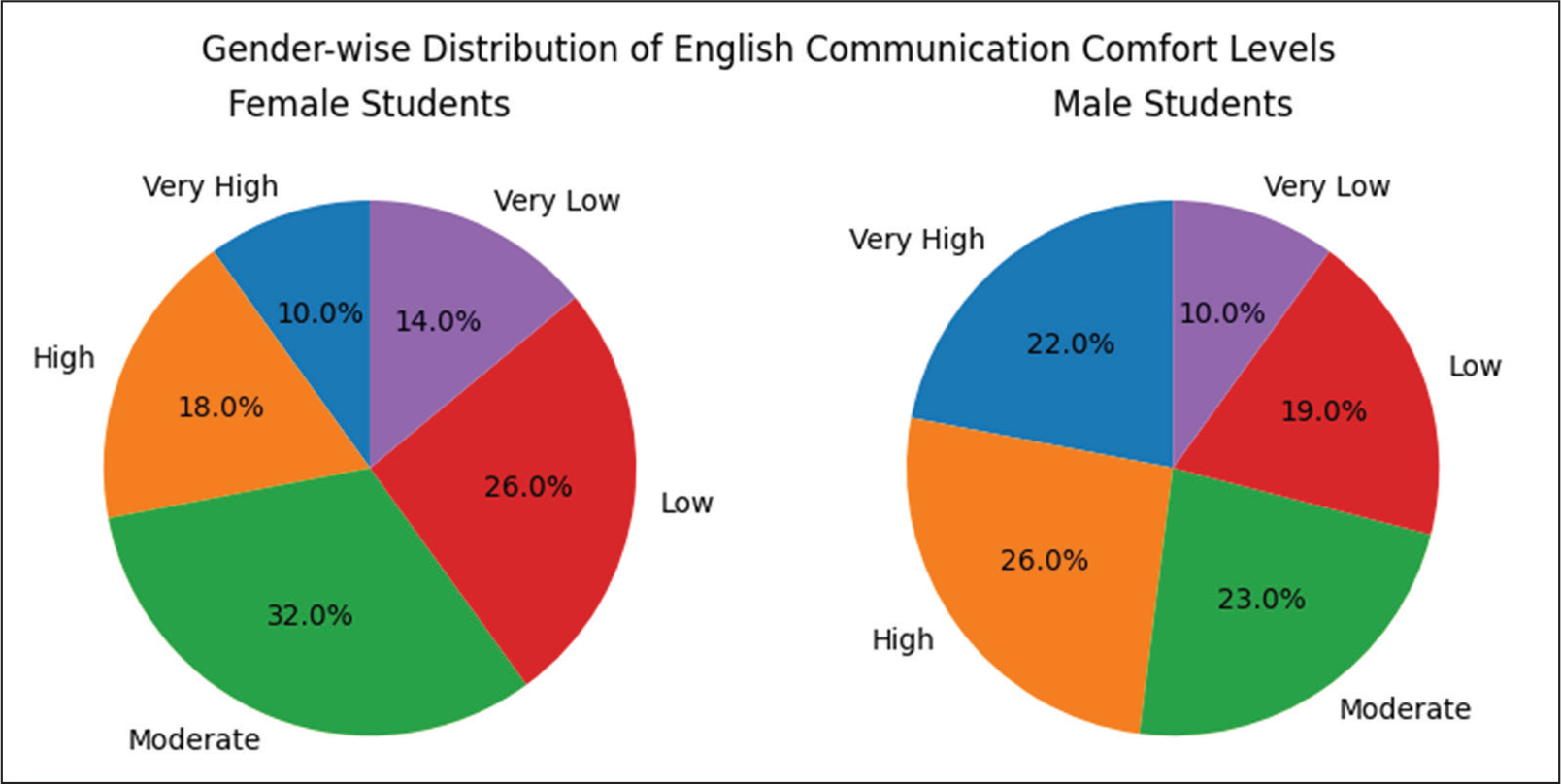
Among female students, the largest segment (32%) occupies the moderate comfort category, indicating functional competence in routine classroom exchanges but persistent hesitation in high-stakes situations such as presentations, interviews, and group discussions. 7 A further 26% report low comfort and 14% very low comfort, reflecting elevated communication apprehension, frequent recourse to the mother tongue, and limited assurance in spontaneous speaking and extended written production.
Male students exhibit relatively stronger representation in the high (26%) and very high (22%) comfort categories, suggesting greater ease in oral participation and informal interaction. Nonetheless, 23% remain at a moderate level, while 19% and 10% report low and very low comfort, respectively, confirming that communicative barriers are not confined to one gender. The pattern indicates, however, that female learners are disproportionately concentrated in the lower comfort bands, pointing to the intersecting influence of linguistic background, confidence-related factors, and classroom participation norms. These trends reinforce the urgency of gender-responsive, psychologically supportive communication pedagogy that systematically nurtures female students’ participation, self-efficacy, and communicative autonomy.
Figure 2 presents the gender-wise analysis of English communication skills reveals clear variations across skill domains when measured on a 0–10 scale. In receptive skills, female students obtained a mean score of 7.5 in reading and 6.8 in listening, while male students recorded higher mean scores of 8.1 and 7.4, respectively, indicating stronger comprehension abilities among male learners.
Skill Assessment Scores (0–10 scale).
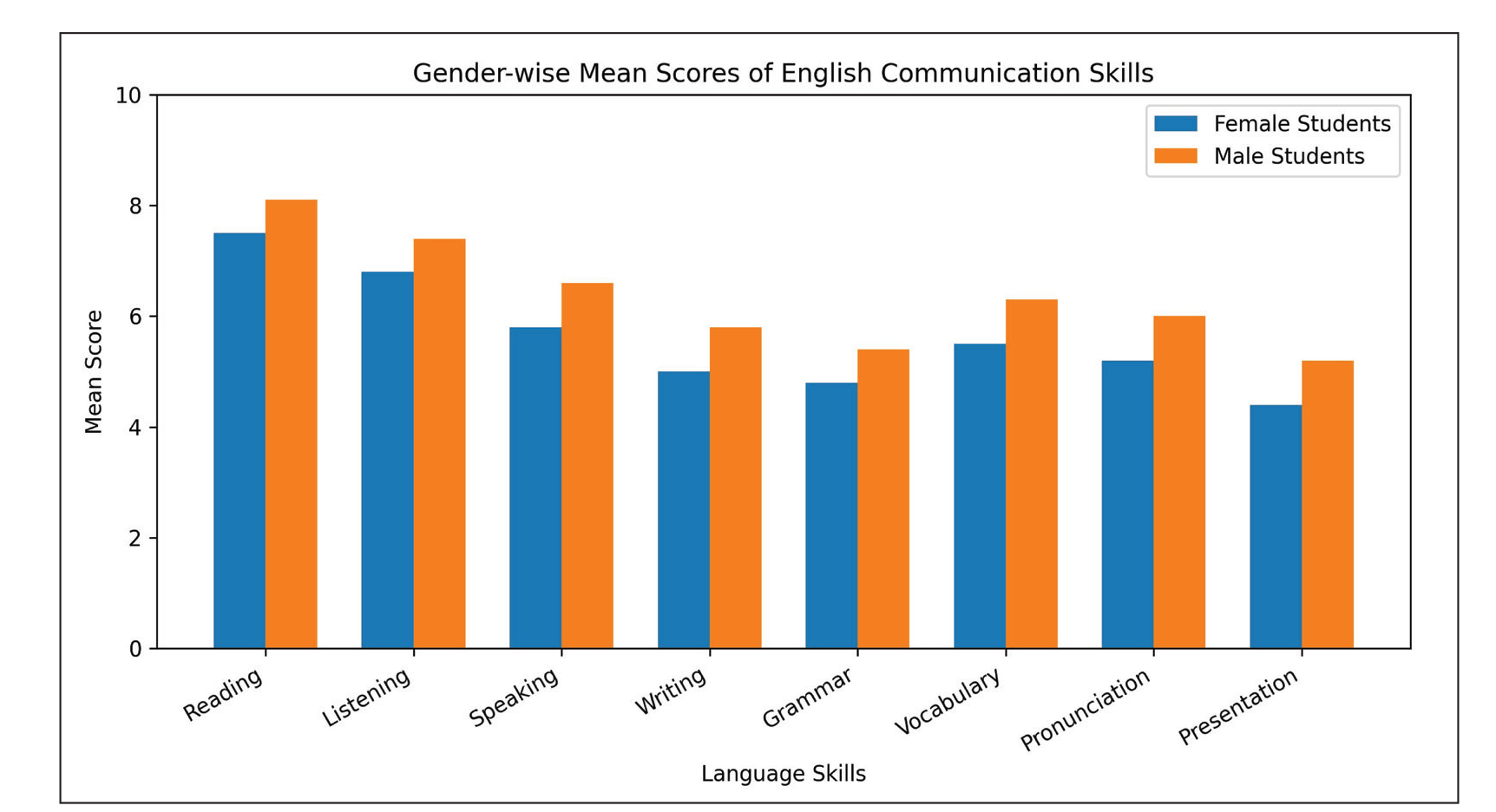
Female students achieved a mean score of 5.8 in speaking and 5.0 in writing, whereas male students scored 6.6 in speaking and 5.8 in writing, reflecting greater ease in oral and written expression among male students. Grammar proficiency remains moderate, with female students recording a mean of 4.8 compared to 5.4 among male students. Vocabulary skills followed a similar pattern, with mean scores of 5.5 for females and 6.3 for males.
Pronunciation scores indicate modest oral accuracy, with female students obtaining a mean score of 5.2 and male students 6.0, suggesting limited spoken fluency, particularly among female learners. Presentation skills emerged as the weakest area for both genders, with female students recording the lowest mean score of 4.4, compared to 5.2 among male students. Overall, the findings demonstrate that while both genders face challenges in productive and confidence-dependent skills, female students consistently exhibit lower mean scores, highlighting the need for targeted pedagogical interventions to enhance communicative confidence and performance
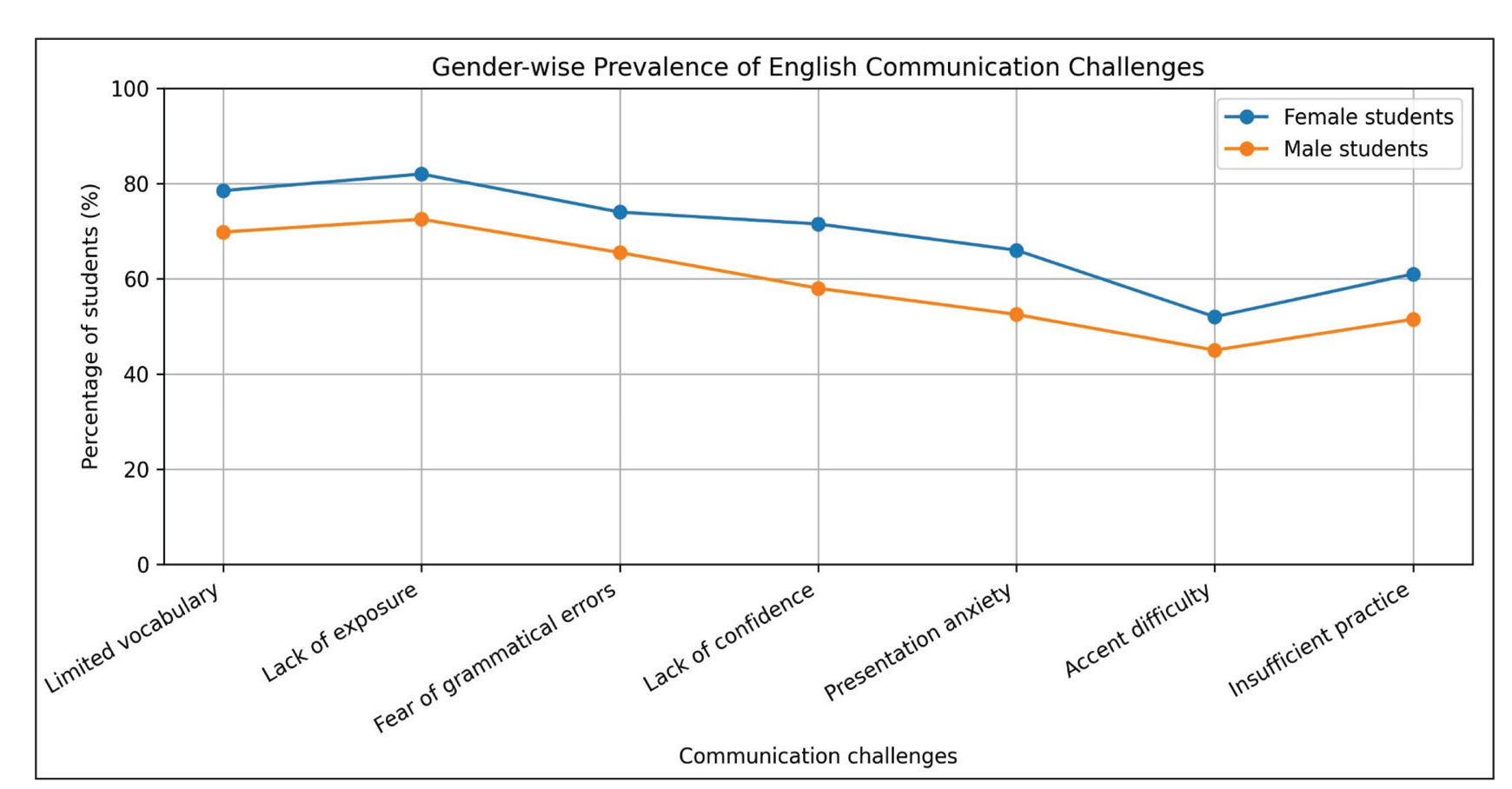
Figure 3 illustrates the gender-wise distribution of challenges in English communication among engineering students. Limited vocabulary is reported by 78.5% of female students compared to 69.8% of male students, indicating a wider lexical gap among females. Lack of exposure to English outside the classroom emerges as the most prevalent challenge, affecting 82.0% of females and 72.5% of males. Fear of making grammatical mistakes is reported by 74.0% of female students, while 65.5% of male students experience the same concern. A lack of confidence inhibits communication for 71.5% of females and 58.0% of males, highlighting a pronounced gender disparity in affective factors. Presentation-related anxiety affects 66.0% of female students, compared to 52.5% of male students, reflecting higher performance-related stress among females. Difficulty in understanding different accents is reported by 52.0% of females and 45.0% of males, while insufficient practice opportunities are cited by 61.0% of female students and 51.5% of male students.
Challenges Faced by Students in English Communication.
In Figure 4, the percentage-based analysis of language laboratory activities reveals notable gender-wise differences in perceived effectiveness. Listening exercises are rated as highly effective by 68.0% of female students, compared to 52.0% of male students, indicating a stronger perceived benefit among females. Role-play activities also receive favorable responses, with 63.5% of females and 47.0% of males identifying them as highly effective. Vocabulary-learning software is positively evaluated by 59.0% of female students and 44.0% of male students, while pronunciation drills are rated as highly effective by 57.0% of females and 41.0% of males, underscoring the value of technology-assisted practice. In contrast, activities requiring greater spontaneity and public interaction show comparatively lower effectiveness ratings. Group discussions are perceived as highly effective by 46.0% of female students and 38.0% of male students, while presentation practice records the lowest ratings, with 42.0% of females and 34.0% of males expressing high effectiveness. Overall, the percentage distribution indicates that female students consistently report greater benefits from structured language lab activities, highlighting the role of supportive, practice-oriented environments in enhancing communicative confidence level. 8
Effectiveness of Language Lab Activities (N = 120).
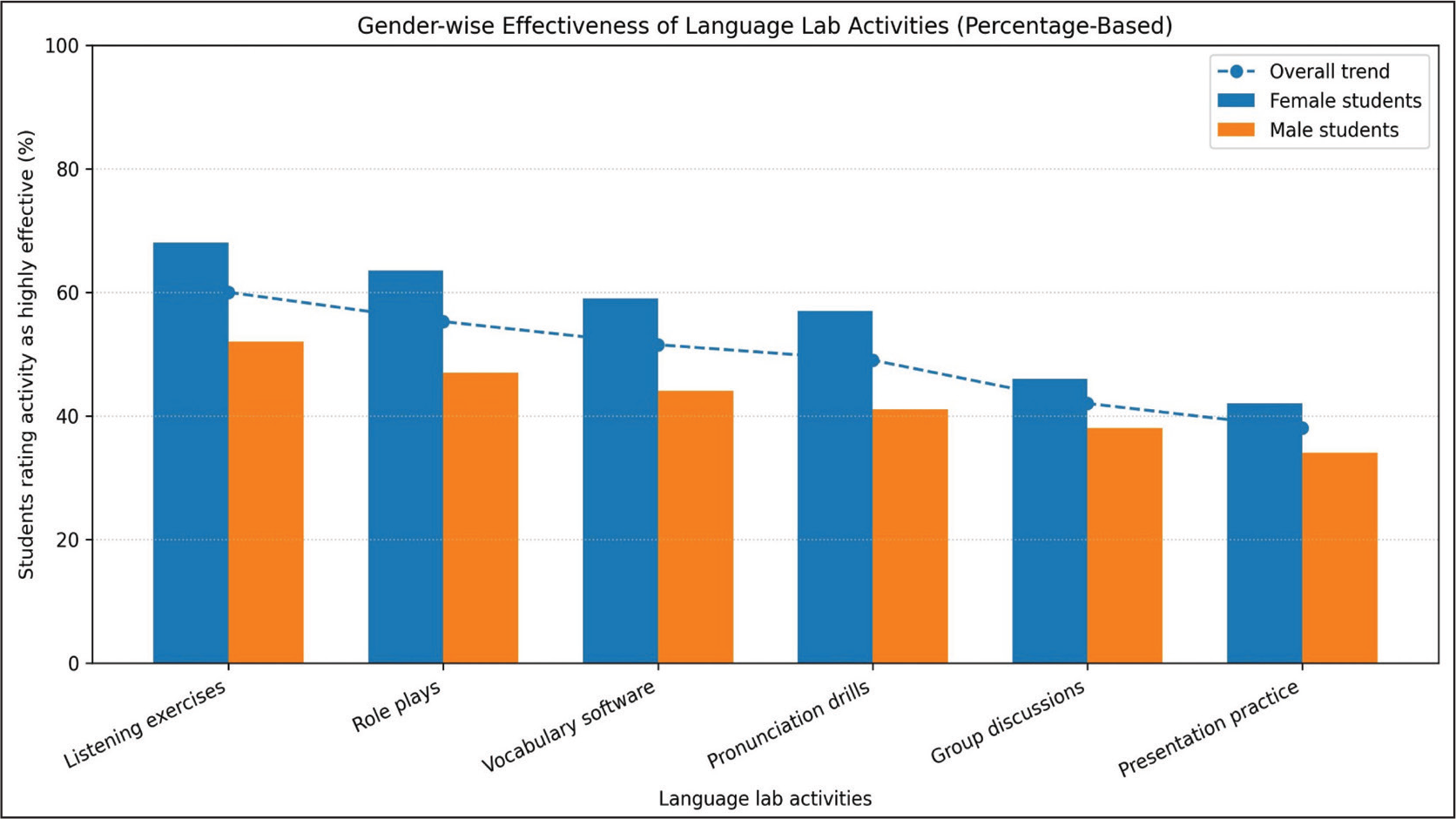
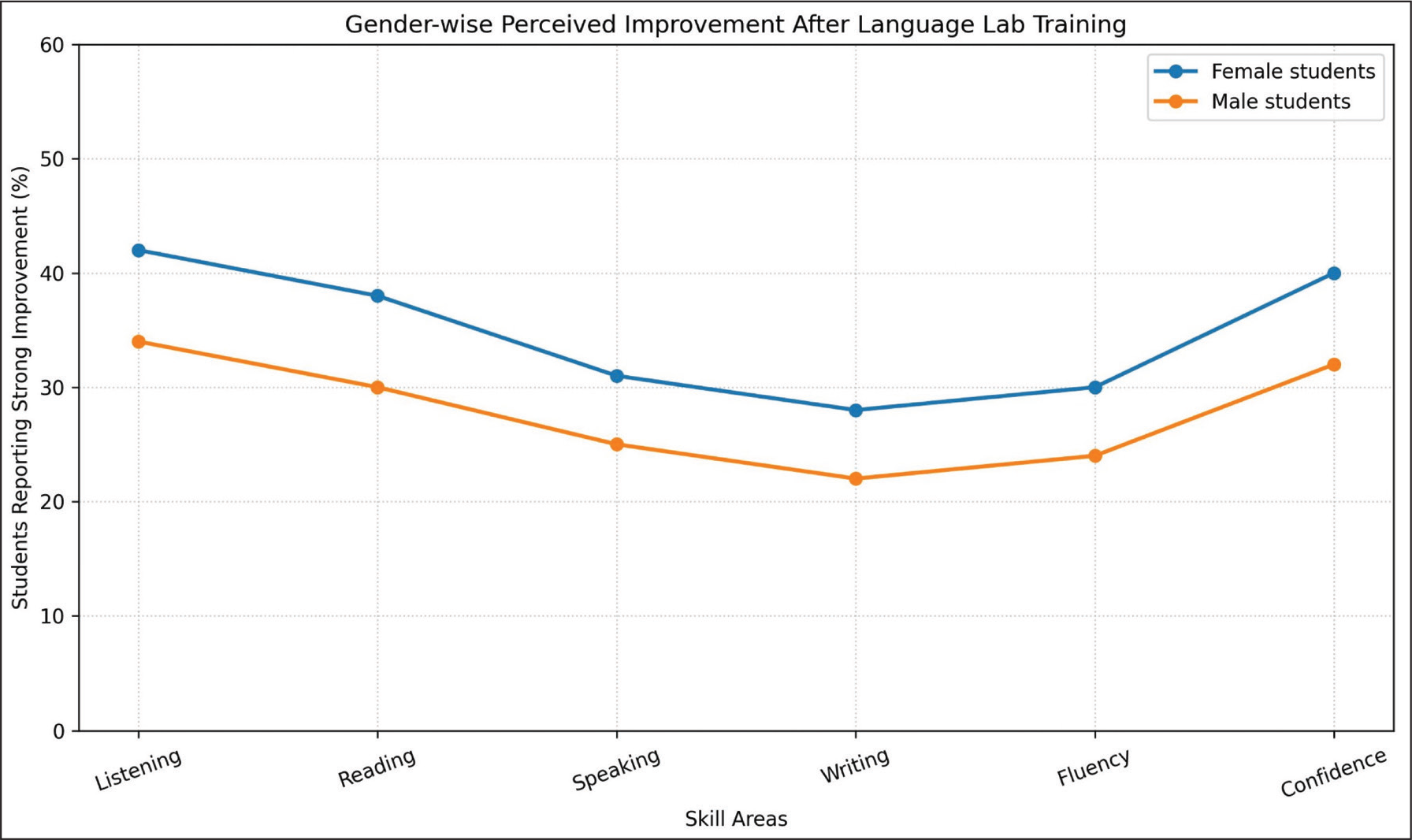
Figure 5 presents the gender-wise distribution of students reporting strong improvement across key language skill areas following language lab training. Receptive skills show the highest perceived gains for both genders, with 42% of female students and 34% of male students reporting strong improvement in listening, and 38% of females compared to 30% of males indicating significant improvement in reading. Confidence enhancement emerges as another major outcome, reported by 40% of female students and 32% of male students, highlighting the role of the language lab in reducing communication anxiety and fostering participation. Productive skills demonstrate moderate but meaningful progress. A great improvement in speaking is reported by 31% of females and 25% of males, while writing improvement is noted by 28% of female students and 22% of male students. Fluency development is observed in 30% of females and 24% of males, suggesting that sustained and extended practice may be required for higher gains in spontaneous language use.
Students’ Perceived Improvement After Language Lab Training.
Results and Discussion
The analysis of the collected data provides a comprehensive understanding of engineering students’ English communication competence, comfort levels, challenges, and perceived learning gains following language lab training, with particular attention to gender-based patterns. While both male and female students exhibit similar academic exposure, the findings reveal meaningful gender variations in confidence, communicative performance, and perceived benefits of instructional interventions. The discussion situates these results within the broader context of linguistic background, affective factors, and pedagogical practices shaping communication development.
Overall Discussion
The results of this study reveal a multifaceted relationship between linguistic competence, emotional readiness, instructional exposure, and pedagogical support. Learners demonstrate comparatively stronger receptive skills than productive ones, and their comfort in using English is shaped as much by psychological variables—such as fear, anxiety, and confidence—as by linguistic proficiency. The challenges identified expose structural limitations, including restricted exposure and insufficient practice, which interrupt the natural development of communicative ability. In this context, the language laboratory emerges as a particularly effective pedagogical space, where technology-rich, structured, and collaborative tasks foster measurable gains in comprehension, confidence, and expressive fluency. Overall, the findings indicate that a robust framework for communicative competence must balance receptive and productive skills, guarantee sustained engagement with English, and foreground active, interactive learning. 9 A carefully designed, learner-centered language lab program with adequate instructional time holds substantial promise for addressing the observed skill gaps systematically and sustainably. The gender differences observed in communication confidence reflect deeper socio-psychological conditioning. Female participants demonstrated higher apprehension despite comparable linguistic competence, suggesting the presence of stereotype threat and fear of negative evaluation. Male participants, conversely, exhibited greater communicative risk-taking behavior, possibly influenced by socio-cultural expectations of assertiveness. These findings underscore the need for psychologically informed communication training modules.
Conclusion
The results indicate substantial variation in student comfort with English across academic and social contexts. Although a small proportion of learners—predominantly male students—demonstrate high confidence, a significant majority exhibit moderate to low comfort levels. Female students are more frequently represented in these lower comfort categories, reflecting heightened linguistic anxiety, fear of error, and limited opportunities for informal English use. These trends suggest that communicative discomfort is not solely a matter of language proficiency but is also influenced by gendered experiences and socio-academic expectations.
Skill-based assessment reveals a consistent distinction between receptive and productive competencies for both genders. Reading and listening emerge as relative strengths, while speaking, writing, grammar accuracy, pronunciation, and presentation skills remain underdeveloped. However, female students report lower self-confidence in productive tasks despite demonstrating comparable comprehension abilities.
Importantly, the findings emphasize the positive role of the language lab as a supportive instructional environment. Students from both genders report that activities such as listening tasks, role-plays, pronunciation drills, vocabulary software tools, and group discussions facilitate meaningful improvement. Female students, in particular, perceive the language lab as a safe and enabling space that reduces anxiety and encourages experimentation with language. Reported gains in confidence, listening, reading, speaking, writing, and fluency demonstrate that structured, practice-oriented interventions can effectively mitigate communicative barriers.
Overall, the study concludes that strengthening English communication competence among engineering students requires a shift toward practice-driven, technology- supported, and learner-centered pedagogy, with explicit sensitivity to gender-based needs. Creating inclusive learning environments that reduce anxiety, ensure continuous exposure, and promote risk-free language use is essential for preparing students for academic success and professional communication.
Footnotes
Declaration of Conflicting Interests
The authors declared no potential conflicts of interest with respect to the research, authorship, and/or publication of this article.
Ethical Approval
Not applicable.
Funding
The authors received no financial support for the research, authorship, and/or publication of this article.
Informed Consent
Not applicable.