



Abstract
Although 65% of school-based health centers (SBHCs) offer mental health services, at-risk youth are commonly overlooked or do not follow up when referrals are made. Universal screenings may increase identification of those in need of mental health support. We examined the number of youth at three SBHCs referred for mental health consultations. Comparisons were made between provider referrals and those with elevated scores on the Youth Pediatric Symptom Checklist-17 (Y-PSC-17). Of the 585 patients in this study, 37 (6.32%) were referred solely by their Y-PSC-17 score, 36 (6.15%) youth were singularly referred by providers, and 19 (3.25%) were referred by both modalities. Almost three-quarters (n = 67; 72.8%) of identified youth elected to receive psychotherapeutic services. Approximately half of the youth referred by providers (n = 19; 52.8%) received individual services, while 36.11% (n = 13) received group services. Smaller proportions of youth with elevated Y-PSC-17 scores received individual (n = 7; 18.9%) and group services (n = 11; 29.7%). Youth referred solely by a medical provider had significantly lower scores than those identified through an elevated Y-PSC-17 score. Findings highlight the necessity of universal screening in pediatric settings in addition to physician referrals to provide a supplemental layer of prevention and early identification of behavioral health concerns. In this study, 40% referrals would have been missed if both modalities were not in place. Educating medical providers on youth mental health concerns may enhance identification of those in need of mental health supports and in turn improve long-term outcomes.
It is estimated that the lifetime prevalence of mental health disorders among children and adolescents aged 13 to 18 years in the United States is as high as 50%, with just over one-third of those diagnosed receiving treatment (Merikangas et al., 2011). Even more concerning is that most youth with diagnosable mental health illnesses are unidentified and/or untreated (Kataoka et al., 2002; Merikangas et al., 2011; Mills et al., 2006). Research suggests untreated mental health difficulties among youth are associated with increased discipline referrals and school absences, reduced state standardized tests scores (Durlak et al., 2011; Taylor et al., 2017), and continued social-emotional challenges and maladjustment difficulties during adulthood (Fombonne et al., 2001; Micali et al., 2010). Recent studies also support that rates of mental health disorders among youth have been increasing over recent decades (Bor et al., 2014). These rates have been recently exacerbated due to the COVID-19 pandemic and social distancing requirements imposed on schools (Lee, 2020), with existing disproportionalities in low-resourced communities (Czeisler et al., 2021; Rothman et al., 2020). Thus, an urgent and ever-growing need exists to identify youth with mental health needs and provide an appropriate level of care to improve long-term physical and mental health outcomes.
Many experts view school-based health centers (SBHCs) as one of the most effective ways to address the need for identification and treatment of youth with mental health difficulties, highlighting that more than 6.3 million students in the United States have access to some form of school-based healthcare (Husky et al., 2010; Levitt et al., 2007; Love et al., 2018; Mills et al., 2006). Children and adolescents spend a substantial amount of time at their respective schools, making SBHCs familiar as well as accessible to students. SBHCs were first implemented in the early 1960s to target preventative and minor medical needs of youth (Keeton et al., 2012) and have continued to expand their services, with some now offering more comprehensive care (i.e., managing chronic illnesses; Dunfee, 2020). Currently around 2,500 SBHCs exist in the United States, and the majority of these centers treat the underserved and uninsured at no cost to students or their families. In this manner, SBHCs play an important role in decreasing health disparities among youth, particularly those identifying as Hispanic or African American and of low socioeconomic status (Love et al., 2018; McNall et al., 2010).
The 2016 to 2017 National School-Based Health Care Census indicated that approximately 65% of SBHCs provide some form of mental or behavioral health service for at-risk and symptomatic youth (Love et al., 2018). Services that are provided in SBHCs often include mental health screening, crisis management/intervention, psychological evaluations and treatment, management of behavioral health medications, substance use counseling, and treatment of learning problems (Lofink et al., 2013). However, the services offered and training of mental health providers varies between centers as a function of funding availability, licensure requirements, and other state-mandated requirements (Larson et al., 2017; Love et al., 2018). This variability results in some SBHCs providing more comprehensive treatment services while others focus primarily on preventative efforts such as drug prevention and sex education programs (Larson et al., 2017; Love et al., 2018; National Center for Educaiton Statistics, 2016). Although SBHCs with mental health providers are significantly more equipped to provide comprehensive services than those without mental health providers, the adopted service delivery model is also an important variable in considering mental health outcomes. SBHCs also vary in their service delivery models, with some adopting a coordinated care model (i.e., medical and mental healthcare providers are in separate locations but coordinate the care of patients), others adopting a co-located care model (i.e., medical and mental healthcare providers located in the same facility/location), and still others adopting an integrated care model (i.e., medical and mental healthcare providers collaborate to provide care) (Lai et al., 2016). Research suggests integrated care models facilitate the screening and identifying of mental health difficulties in youth (Lai et al., 2016).
Implementing screening procedures facilitates collaborations among medical and mental health providers on integrated teams and improves medical providers’ identification of social-emotional difficulties during medical visits (Jellinek et al., 1986). Though research on integrated practices within SBHCs is limited, one study found that medical and mental healthcare providers who are integrated within their service delivery system are more likely to utilize universal screeners and detect those with mental health needs (Hacker et al., 2009). The existing literature on screening in SBHCs more often focuses on identifying youth engagement in health-promoting and health-compromising behaviors (Harrison et al., 2003; McCarty et al., 2019), with less frequent attention to social-emotional health. One major concern surrounding the utilization of a primary care mental health screener is that some patients may endorse a score at or above the clinical cut-off but do not follow through with the referrals for mental health care (Chisolm et al., 2009; Hacker et al., 2006, 2009). Integrated SBHCs may minimize or altogether eliminate barriers that exist in standalone primary care clinics and SBHCs without mental health providers. Integrated SBHCs can offer patients continuity of care through the collaboration of their medical and mental health providers and the convenience and familiarity of location for mental health services. Moreover, as students have access to SBHCs during school hours, integrated SBHCs diminish other barriers such as unavailability of parents for mental health services, transportation, cost, and stigma (Stephan et al., 2007). Given the unique advantages of integrated settings, increasing medical providers’ education on detecting mental health difficulties is likely key to facilitating collaboration between providers and increasing detection and referral for those in need of mental health supports.
Efforts to identify children and adolescents with mental health needs through screening have been implemented within pediatric primary care settings and SBHC settings. Recommendations from the American Academy of Pediatrics and recent legislation, including the 2010 Patient Protection and Affordable Care Act, have resulted in efforts to increase mental health screening for youth, particularly for depression among adolescents (Wissow et al., 2013). Mental and behavioral health screenings in primary care clinics are conducted primarily through youth self-report measures with a focus on anxiety and depression such as the Patient Health Questionnaire-9 (assessing depressive symptoms; Wissow et al., 2013). The Pediatric Symptom Checklist (PSC) is one of the most utilized screening tools within pediatric primary care settings (Blucker et al., 2014; Jellinek et al.,1988, 1999; Pagano et al., 2000; Wissow et al., 2013). Originally a 35-item measure, the PSC has been further refined into a brief 17-item measure with both parent- and youth-report versions (Gardner et al., 1999). The youth PSC-17 (Y-PSC-17) is a well-validated measure that correlates with parent and teacher reports of child and adolescent functioning (Pagano et al., 2000). The Y-PSC-17 has been endorsed by the American Academy of Pediatrics as a free, brief, and easy-to-use assessment tool targeting a wide scope of symptoms for children and adolescents ages 11 and above (Murphy et al., 2016). Previous research suggests the Y-PSC-17 is a valid measure among youth with diverse socioeconomic and racial and ethnic backgrounds (Gall et al., 2000; Hacker et al., 2011; Pagano et al., 2000; Rinke et al., 2019).
The screening of youth in SBHC with a version of the PSC has been associated with subsequent long-term improvements in functioning as a result of subsequent mental health services provided. For example, Gall et al. (2000) screened 383 adolescents utilizing the original 35-item Patient Symptom Checklist youth report (Jellinek et al., 1988). Findings indicated that youth who reported elevated scores on the Y-PSC were more likely to present with psychosocial risk factors (e.g., higher rates of tardiness, insured by Medicaid). In this study, youth saw improvements in academic functioning and reductions in absenteeism as a result of participation in outpatient therapy at their SBHC, highlighting the benefits of early identification and services being provided in a convenient venue. Another study utilized the Y-PSC-17 in an urban SBHC center with only 50.5% of youth electing to receive subsequent SBHC supports as a result of their elevated scores (Burke et al., 2021), thus indicating that further research remains necessary to examine the utilization of this measure in SBHC practice. Despite the existing literature base on mental health screening practices, no prior studies have directly compared mental health screeners’ utility, as administered in SBHCs, in identifying those in need of services as opposed to those only identified by medical providers.
Study Purpose
This study focused on the utilization of the Y-PSC-17 as a universal screener in a SBHC setting. We did this by (a) comparing medical provider mental health referrals to elevated Y-PSC-17 scores in a diverse sample of high school-aged adolescents who resided in the United States; (b) comparing differences in the level of services (e.g., individual therapy, group services, no services required) received by youth referred by providers and those with an elevated Y-PSC-17 score; and (c) examining demographic differences across referral method, Y-PSC-17 scores, and level of service subsequently received.
Methods
Study Design
This study utilized retrospective chart reviews to acquire patient demographic information and Y-PSC-17 scores. Appropriate institutional review board approval was obtained to extract these data from patient charts from the sponsoring academic medical center. These data were deidentified prior to conducting any analyses.
Procedure
A chart review was utilized to study 585 youth who received healthcare at one of three local high school clinics serviced by a university affiliated SBHC in a large metropolitan city in the Southeastern United States. All 585 youth in this study were seen by a medical provider and completed the Y-PSC-17 prior to their scheduled medical appointment (e.g., well-child visit, sports physical, sick visit). Follow-up visits for the same patient were not included in the sample. The SBHCs in this study provide free medical and mental health services to youth in nine total schools (four elementary, two middle, and three high schools) within one county’s public school system. The SBHCs provide yearly well visits, sick/urgent care visits, annual health screenings, routine and catch-up vaccinations, sports pre-participation physical examinations, sexual/reproductive health services including HIV and sexually transmitted infection testing, telehealth referrals to specialty care providers, mental health consultations, and individual and group therapy. Parental consent to receive services at the clinics is required for all patients. Over 90% of patients who receive services in the clinics are from minority or immigrant backgrounds. With respect to socioeconomic status, most students (between 79.3% and 82.3%) in the general population of the participating schools qualified for free or reduced-price lunch.
Between September 2019 and March 2020, the Y-PSC-17 was administered to all patients who had a medical appointment as part of the standard of care clinical protocol to target students at-risk for mental health problems. The questionnaire was provided in three languages on the same form: English, Spanish, and Haitian Creole. As standard of care, all patients scheduled completed the Y-PSC-17 during their first school clinic appointment of the year. Patients did not complete the Y-PSC-17 if (a) they self-reported that they could not read English, Spanish, or Haitian Creole, or (b) had a severe cognitive impairment. A staff member (i.e., nurse, patient navigator) provided the patients with the Y-PSC-17, and patients independently and privately completed the measure after having checked in for their medical appointment and while waiting to be seen by the medical provider. The screening questionnaire results were reviewed only by the mental health providers at a separate point in time.
Patients were also separately referred for mental health consultation by the medical providers in each of the three clinics if a need was determined during their medical visit. Medical providers were not shown the patient’s Y-PSC-17 but were able to place a psychology referral should the patient be exhibiting mood/behavioral concerns deemed needing treatment. Paper referrals that included presenting symptoms and concerns were completed by medical providers and placed in a referral file for clinic-based mental health staff to review.
Per standard of care, if a patient scored above the previously established clinical cutoff (i.e., raw score of 15 or above) or a psychology referral was placed by a medical provider, the adolescent was automatically offered a referral to the mental health team for a follow-up visit with the mental health provider (e.g., doctoral psychology resident, licensed psychologist) assigned to that school’s clinic within a 1-week time frame. Individual and group services were offered at each of the three high school clinics. Mental health clinicians triaged patients according to severity of symptomatology as assessed via the Y-PSC-17 and a clinical interview. Treatment decisions were discussed with a clinical supervisor to determine the level of service necessary to meet each student’s needs.
Instruments
Demographic Data and Referrals
Demographic data was obtained from electronic medical records. Information collected included: gender, age, grade, race, and ethnicity. The source of referral was documented and included: provider referral, elevated Y-PSC-17 score referral, or referral by both an elevated Y-PSC-17 score and provider. Additionally, course of treatment after the initial mental health consultation was recorded as individual therapy, group therapy, or further services not needed.
Youth-Pediatric Symptom Checklist-17
The Youth-Pediatric Symptom Checklist-17 (Y-PSC-17; Bergmann et al., 2020; Gardner et al., 1999; Pagano et al., 2000) is a 17-item general mental health screener that is freely available in several languages, including English, Spanish, and Haitian Creole and is widely used in pediatric primary care settings (Bergmann et al., 2020; Murphy et al., 2016). Individuals are asked to indicate the frequency of the target behavior or emotional state on a 3-point Likert scale from “Never” (0) to “Often” (2), with higher scores indicating greater severity of symptoms. The sum indicates the overall level of symptoms with scores at or above 15 warranting further clinical evaluation. This measure includes three subscales that can be analyzed separately: internalizing behaviors (e.g., “Feels sad, unhappy”), externalizing behaviors (e.g., “Fights with other children”), and attention (e.g., “Daydreams too much”). Specifically, Gardner et al. (1999) found that internal consistency of the composite score (α = .89) as well as the internalizing (α = .79), externalizing (α = .83), and attentional problems (α = .83) subscales were sufficient. This measure also has sufficient test-retest reliability in a sample of 173 school age youth (r = .50; Pagano et al., 2000).
We sought to assess the reliability and validity of the Y-PSC-17 in this study. In doing so, we evaluated the fit of the data to the hypothesized three-factor model using statistical criteria (χ2, standardized root mean square residual [SRMR], root mean square error of approximation [RMSEA], and comparative fit index [CFI]) along with conceptual judgment that reflects theoretical relationships among these forms of psychopathology utilizing RStudio. Models with large sample sizes are biased to provide a significant χ2, which may suggest that the model is not strictly correct. Thus, we focused on the measures of fit utilizing cutoff values of SRMR < .08, RMSEA < .06, and CFI ≥ .90 for acceptable fit. For the three-factor hypothesized model, model fit was as follows: SRMR = .047, RMSEA = .047, CFI = .920, χ2(116, N = 513) = 248.82, p < .001. With respect to internal consistency, the composite score was adequate with a Cronbach’s alpha coefficient of α = .82. We also calculated the internal consistency of the internalizing (α = .78), externalizing (α = .59), and attentional problems (α = .71) subscales.
Participants
The total sample across the three school-based health clinics included 585 patients who completed the Y-PSC-17 prior to their corresponding medical appointment between September 2019 and March 2020. See Table 1 for a summary of demographic factors. Forty-seven percent of the patients were enrolled in School A, 31.8% enrolled in School B, and 21.2% were enrolled in School C. The sample of each clinic was representative of the demographics of the larger school populations. The makeup of the total sample included 66.5% girls and 33.5% boys, with 74.0% of patients identified as Black/African American and 23.20% as White. Hispanic ethnicity accounted for 22.6% of the patients who were screened. The ethnicity of 11 patients and the race of 15 patients were not reported in electronic medical records. These demographic factors were drawn from the previously established electronic medical record system, thus limiting the classification of some ethnic groups (i.e., Haitian), which constituted a predominant proportion of the Black/African American sample. In terms of grade composition, the sample included an equally dispersed number of high school-aged youth: 28.9% of patients were enrolled in 9th grade, 22.6% in 10th grade, 26.2% in 11th grade, and 22.4% in 12th grade. The average age of patients in this study was 16.37 years old (SD = 1.33) on the day they completed the Y-PSC-17.
Sample Demographic Characteristics
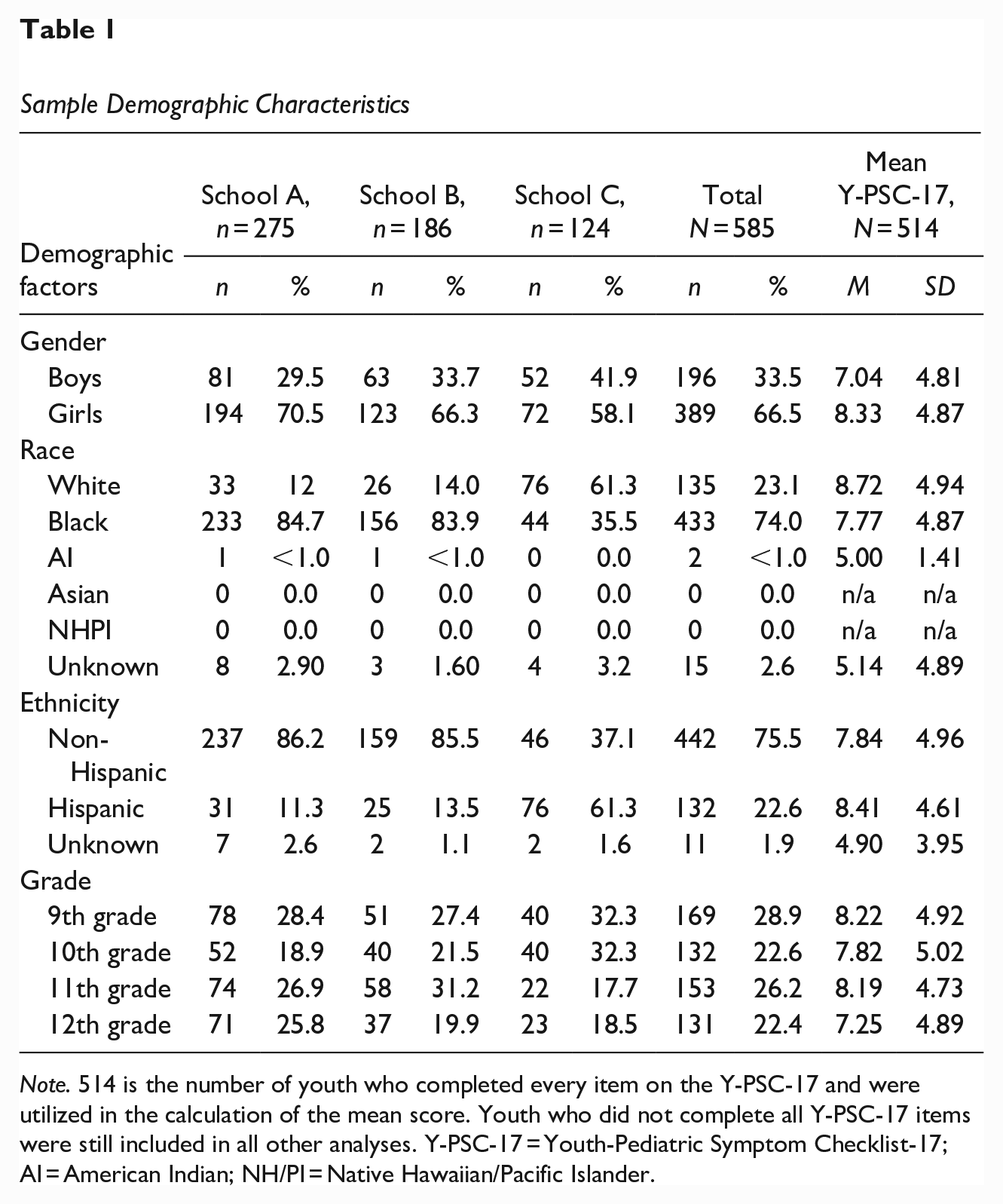
Note. 514 is the number of youth who completed every item on the Y-PSC-17 and were utilized in the calculation of the mean score. Youth who did not complete all Y-PSC-17 items were still included in all other analyses. Y-PSC-17 = Youth-Pediatric Symptom Checklist-17; AI = American Indian; NH/PI = Native Hawaiian/Pacific Islander.
Data Analyses
Analyses were conducted using the Statistical Package for the Social Sciences (version 26) and RStudio. Descriptive statistics were calculated to report patient-endorsed scores on the Y-PSC-17 (Murphy et al., 2016) as well as the percentages of youth scoring in the elevated range for the sum score and for each of the three measure subscales. A series of analysis of variance (ANOVA) and chi-square analyses were completed to compare the make-up of respective level of services received and referral groups. With respect to missing data, participants who did not answer all 17 questions were included in the analyses that examined percentage of youth with elevated scores; however, the scores of these participants were not included in the calculations of Y-PSC-17 means.
Results
Y-PSC-17 Mean Score and Elevations
All 585 patients who were included in this study completed the Y-PSC-17 upon arrival to their scheduled medical appointment. The average score on the Y-PSC-17 was 7.91 (n = 514; SD = 4.89) out of a possible 34 points. In this study, no participant endorsed scores above 25. Descriptive statistics and demographic factors are displayed in Table 1. Of the 585 patients who completed the Y-PSC-17, approximately 10% (n = 56) identified scores that were at or above the clinical cutoff score of 15.
Comparisons Between Y-PSC-17 Elevation and Provider Referrals
About 10% (n = 55) of patients were referred by a medical provider to the psychology team for a mental health consult. Only 3% (n = 19) of the sample simultaneously reported elevated scores on the Y-PSC-17 (Murphy et al., 2016) and were referred by a provider. Therefore, about 6% (n = 36) were singularly identified by the provider, and 6% (n = 37) were singularly identified by elevated scores on the Y-PSC-17.
Mental health consults were completed with 92 patients (16% of the total sample) who scored in the elevated range on the Y-PSC-17 and/or referred by provider. Thus, 40% of youth would have been missed if only the provider methodology for referring patients was in place. Table 2 provides a summary of mean scores of youth who were deemed eligible for mental health services by either an elevated Y-PSC-17 score, a medical provider referral or through both formats.
Comparisons Between Referral Method and Level of Service

Note. Tukey-Kramer comparisons were employed to analyze group means in cases of significant F tests. Significant differences between group unadjusted means are indicated by different letters. Means having the same subscript are not significantly different. Y-PSC-17 = Youth-Pediatric Symptom Checklist-17.
Level of Psychological Service Received
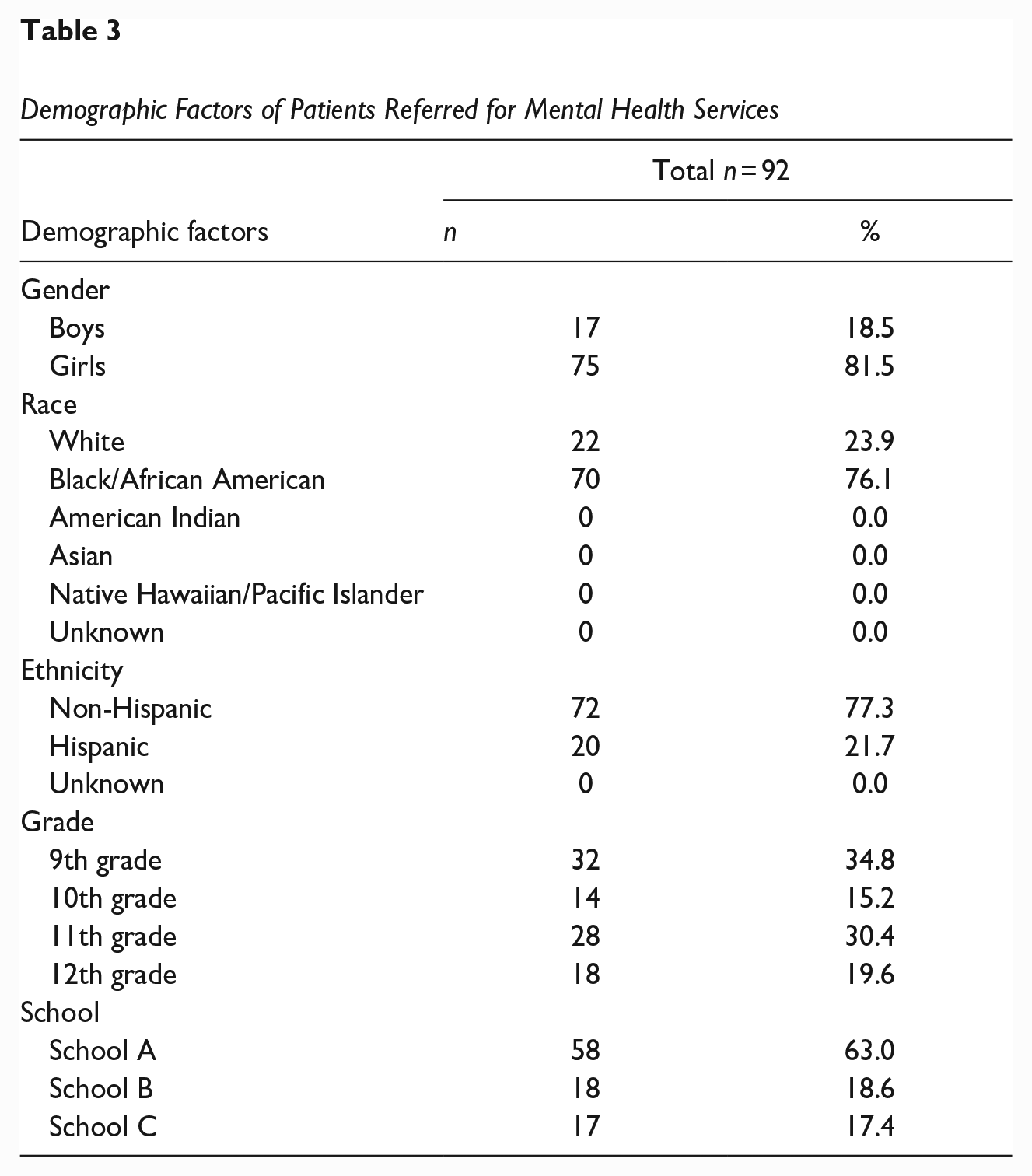
Almost three-quarters (n = 67; 72.8%) of youth identified for a mental health consultation elected to receive psychotherapeutic services. Approximately half of the youth referred by providers (n = 19; 52.8%) received individual services, while 36.11% (n = 13) received group services. Smaller proportions of youth with elevated Y-PSC-17 (Murphy et al., 2016) scores received individual (n = 7; 18.9%) and group services (n = 11; 29.7%). In summary, adding the Y-PSC-17 to primary care clinics identified an additional 18 patients (3.08% of total sample; 26.87% of youth receiving mental health supports) who desired to receive services, beyond those referred solely by the medical providers. Table 2 provides a summary of mean scores of youth who were deemed eligible for mental health services and the level of services received. The demographic information of all the patients who were referred for mental health services is displayed in Table 3.
Demographic Factors of Patients Referred for Mental Health Services
Demographic Differences
With respect to group differences on the composite Y-PSC-17 (Murphy et al., 2016) score, no statistically significant differences were identified in comparisons across race or ethnicity. In terms of gender differences, an independent samples t-test revealed that girls (M = 8.33, SD = 7.04) reported significantly higher Y-PSC-17 scores than boys (M = 7.04, SD = 4.81); t(512) = −2.83, p < .01. Results of a one-way ANOVA indicated that patients who were referred singularly by a provider (M = 9.48, SD = 3.03) reported significantly lower scores than those who were referred due to an elevated Y-PSC-17 score (M = 17.27, SD = 2.11) and those who were both referred by a provider and endorsed an elevated Y-PSC-17 score (M = 17.17, SD = 3.14; F(2, 81) = 80.54, p < .001).
In terms of demographic differences in identification method (provider referral versus elevated screening score), chi-square analyses identified that Hispanic patients were more likely to be identified by medical providers than by an elevated score on the Y-PSC-17 (X2 [2, n = 67] = 6.06, p = .05). No other demographic differences were identified with respect to provider referrals versus elevated Y-PSC-17 scores.
Comparisons were also made between referral methods and clinically elevated scores on the Y-PSC-17 subscales. Means are presented in Table 4. Chi-square analyses did not reveal any relationships between referral status and elevated scores on the attention (X2 [2, n = 92] = 3.36, p = .19), externalizing (X2 [2, n = 92] = 5.53, p = .06), or internalizing (X2 [2, n = 92] = .752, p = .69) subscales. Fewer patients who were identified solely by providers scored in the elevated range on the internalizing (16.7%), attention (2.7%), or externalizing (0.0%) subscales. However, those who were identified solely based on elevated Y-PSC-17 scores reported higher rates of elevated scores on the internalizing (18.9%), attention (13.5%), or externalizing (13.5%) subscales. Those patients who were identified through both means also reported higher rates of elevated scores for the internalizing (26.3%), attention (15.8%), or externalizing (5.3%) subscales when compared to solely provider referrals. Thus, the genesis of provider referrals was more with global appraisal of behavioral health concerns, whereas the Y-PSC-17 more readily identified specific problematic behaviors.
Comparisons Between Y-PSC-17 Subscales
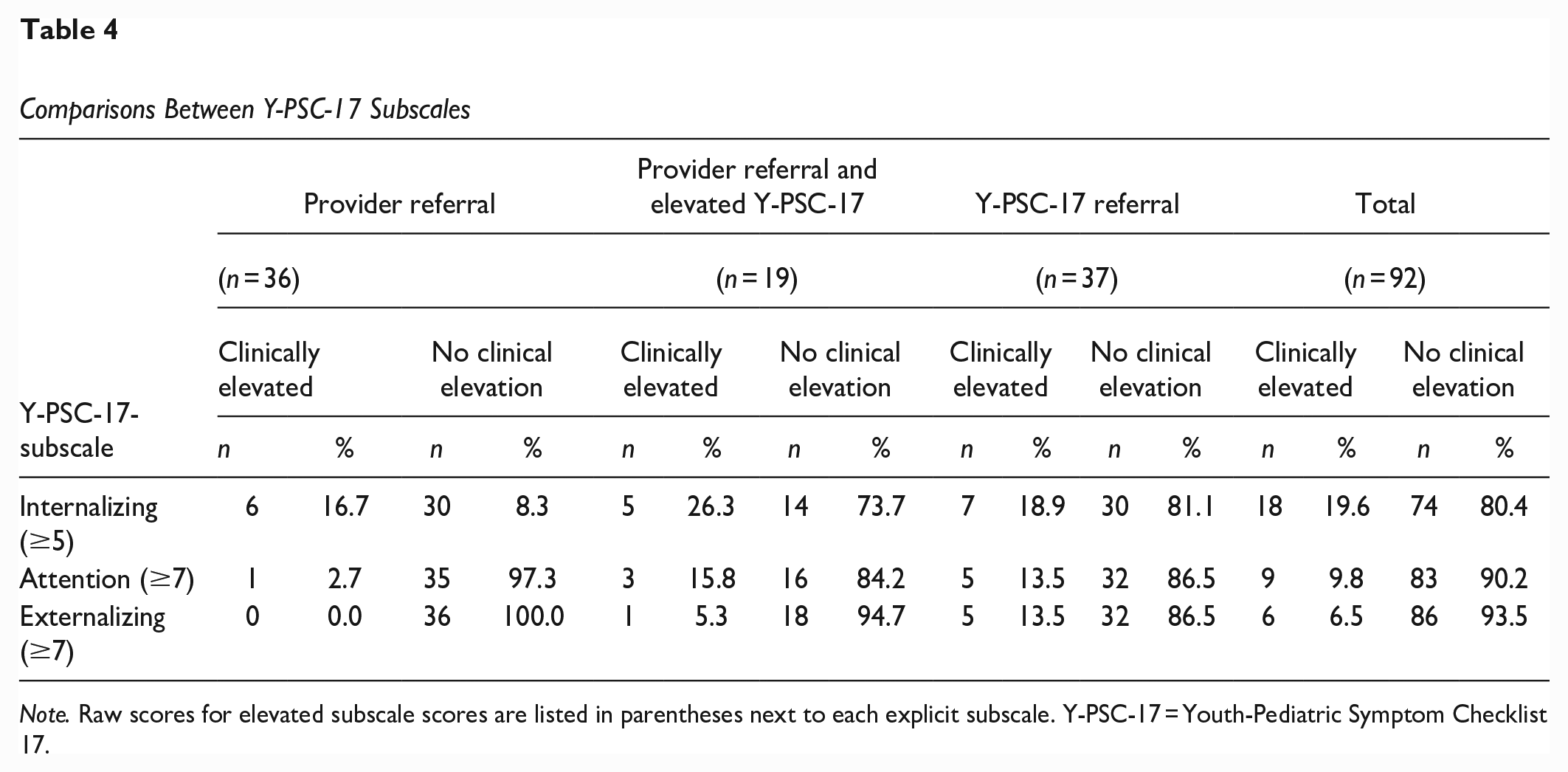
Note. Raw scores for elevated subscale scores are listed in parentheses next to each explicit subscale. Y-PSC-17 = Youth-Pediatric Symptom Checklist 17.
Results of a chi-square analyses indicated that the proportions of patients who received individual or group services did not differ by referral method (X2 [1, n = 50] = 1.94, p = .16), gender (X2 [1, n = 67] = 2.25, p = .33), race, or ethnicity. Although generally representative of the larger sample, the subgroup that was provided with mental health intervention as a result of a screening referral, provider referral, or both methods, included more girls (81.5%) than boys (18.5%), and the largest proportion of the patients were enrolled in School A (63.0%).
Discussion
Summary of Findings
The purpose of this study was to determine the utility of adding a mental health screener to an integrated SBHC standard of practice. Specifically, we compared referrals from medical providers to those made through an elevated Y-PSC-17 (Murphy et al., 2016) score, compared differences in levels of treatment across referral source, and examined demographic differences across referral method and level of treatment received. Similar proportions of youth were referred for a mental health consult by a medical provider (6.15%) as were referred through elevated scores on the Y-PSC-17 (6.32%), while a smaller percentage were referred by both modalities (3.25%). While mental health screeners are often used in integrated SBHCs (Lai et al., 2016), it is a practice that could be incorporated into SBHCs without mental health providers being present on site as a means to identify patients in need of mental health services even if patients will be referred out for treatment. Although the medical team was already referring patients for mental health consultations, we were interested in determining whether the Y-PSC-17 administered to all patients prior to the medical visit would result in additional referrals and if there would be overlap in the patients referred by both the providers and the Y-PSC-17. It was expected that the screener would result in additional referrals; however, the lack of consistency between the patients referred was surprising. Only 21% of the referrals received by the mental health team were identified by both the providers and the Y-PSC-17. Thirty-nine percent of referrals were identified by medical provider only, and 40% were identified only by the Y-PSC-17.
The majority of patients who were referred by the provider or a combination of the provider and an elevated Y-PSC-17 (Murphy et al., 2016) score subsequently completed individual treatment. Additionally, nearly half of patients referred by an elevated Y-PSC-17 score alone also engaged in ongoing psychological intervention, including individual and group treatment modalities, with a larger proportion electing to receive group services. While it is not surprising that the Y-PSC-17 identified additional patients in need of some type of mental health follow-up, it is notable that almost 48% of patients referred for ongoing care after an initial mental health consultation did not score in the elevated range on the Y-PSC-17. This may be a result of the type of screener used versus the types of presenting problems the providers identified. The Y-PSC-17 focuses on attentional, internalizing, and externalizing symptoms; whereas, a medical visit with an adolescent might provide adolescents the opportunity to self-disclose a wider array of presenting concerns by including open-ended questions. This finding also highlights the importance of comprehensive psychosocial screening in adolescent patients beyond a screening questionnaire to ensure accurate identification and subsequent treatment of mental health needs, particularly during this current time of high stress and anxiety in the context of the COVID-19 pandemic (Lee, 2020; Racine et al., 2020). In terms of demographic factor differences with this study, few were identified with respect to the Y-PSC-17 or the level of services that youth received, though this is potentially due to the homogenous nature of our sample.
Implications for Practice
Additional consideration as to the utilization of the Y-PSC-17 in SBHCs remains important. Our findings were somewhat inconsistent with prior studies in that a smaller than anticipated proportion of youth scored in the elevated range on the Y-PSC-17 (Murphy et al., 2016). For example, Burke et al. (2021) found that approximately one in four youth reported an elevated Y-PSC-17 score—though Burke et al. also anticipated a larger proportion of youth would be identified through the Y-PSC-17 score. The less-than-anticipated number of youth identified with elevated Y-PSC-17 scores could be attributed to social desirability that is often associated with false negatives among adolescent screening research (Du Rietz et al. 2016). Moreover, often a gap exists in identifying mental health concerns and treatment seeking/acceptance among Haitian youth (Eustache et al., 2017), of which the majority of our study population is comprised. Other researchers have emphasized that the sensitivity and specificity of the utilized measure remains critical for capturing youth who receive services in urban SBHC who may not traditionally score in the elevated range (Soleimanpour et al., 2020). Given that many SBHCs are in urban areas and youth present with more risk factors, recent research has sought to examine the sensitivity and specificity of screening measures in SBHC practice. Soleimanpour et al. (2020) propose that lowering existing cutoff scores in urban SBHC can identify a higher proportion of youth who are subjected to various traumas and in need of services, who may not endorse high-enough scores to be identified by traditional metrics. Thus, by further examining the cut off score, additional at-risk youth may be identified.
Furthermore, while mental health screeners currently cannot replace clinical judgement and provider insight, they are useful in identifying a subset of students who need mental health referrals and perhaps do not report their concerns during their standard medical visit. Prior research has indicated that physicians have an easier time identifying youth mental and behavioral health concerns when caregivers completed the 35-item PSC prior to the medical appointment (Jellinek et al., 1986). It is also important to consider how training medical providers on the use of mental health screeners can enhance their clinical practice and referral rate. Given that this study took place in a training setting, medical provider training consideration is critical to consider in the conceptualization of integration. Despite the fact that pediatricians serve as a primary source of mental health referrals, adolescents complete fewer medical appointments than any other age groups, placing them at greater long-term risk (Rand & Goldenstein, 2018; Rand et al., 2007). Therefore, it remains vital that pediatricians, residents, and medical students receive explicit training in the benefits and utilization of mental health screeners in primary care as an additional form of early identification and prevention. Moreover, recent research has indicated that providing medical residents with didactic trainings surrounding youth presenting with mental health concerns has been associated with increased trainee confidence in managing mental health disorders (McLaurin-Jiang et al., 2020). Enhancing medical providers’ ability to identify mental health concerns while providing an additional method of self-identification among at-risk youth, with respect to socioeconomic status and age, has merit. Further enhancing medical provider training in mental health can also provide opportunities for at-risk youth to complete primary care monitoring visits with their provider at later points in time as a method of continuous monitoring and subsequent linkage to services, as needed (Burke et al., 2021).
Also, attention to cultural and contextual factors when choosing a mental health screener is critical to ensure comprehensive service delivery (Gall et al., 2000). Given that many youth in this sample immigrated to the United States, the screener may be culturally unfamiliar or may have language barriers related to mental health terms like anxiety and depression. Given the high-risk population these clinics serve, patients with a history of trauma and complex immigration histories may be better identified by an in-person evaluation with a provider rather than a generic screener or a combination of the two. For many students, SBHCs are their initial and sometimes only points of healthcare, and they are only seen by a medical provider on one occasion (Arenson et al., 2019; Keeton et al., 2012), which could limit the amount of information surrounding functioning and mental health history that is acquired. Burke et al. (2021) propose a solution for increasing youth comfort with medical providers and mental health service delivery. Specifically, they suggest having youth who endorse an elevated score and decline services complete subsequent primary care follow-up visits, which can lead to more youth being amenable to services during subsequent visits due to comfortability. Taken together, an effective patient–clinician relationship can assist with the mental health referral process to combat barriers such as stigma, while also identifying other potential external risk factors that can contribute to mental health concerns.
Additionally, as another form of identification, a SBHC would ideally receive referrals from school staff for those youth exhibiting social-emotional challenges. Having this additional layer in place might identify a higher proportion of youth who are in need of services given their comfort disclosing stressors to someone with whom they are more familiar. Collaborating and triaging cases with school-based mental health professionals could also streamline universal screening efforts and link those youth who score within an elevated range with more immediate services at their respective school. Overall, it is challenging to determine which is the best referral method that can capture all potential referral issues. A SBHC would ideally have access to multiple strategies for identifying the largest number of patients in potential need of mental health services. Our findings emphasize the utility of an integrated mental and behavioral health model in a school-based healthcare setting to most effectively identify and follow-up with as many students as possible with underlying mental health concerns.
Limitations and Future Research
Due to the retrospective nature of this study, there were some reliability analyses that were not able to be conducted, such as test-retest reliability of the Y-PSC-17; however, the internal consistencies and confirmatory factor analysis of the measure in this diverse sample were promising. No other studies to our knowledge use the Y-PSC-17 with a primarily Haitian sample, and the measurement indicators were within the acceptable range. Although we did not have other measures to utilize for comparison, our findings provide initial support for using the Y-PSC-17 with Haitian youth. This measure was chosen by our interdisciplinary team because it covers three of the domains often seen in primary care consults (internalizing problems, externalizing problems, and attention problems) and is brief enough to administer in a timely matter. Other measures might be more appropriate depending on the presenting problems and needs of specific health systems. Many primary care practices use the Patient Health Questionaire-9 and/or Generalized Anxiety Disorder 7-item scale-7 to target symptoms of depression and anxiety, respectively (Bryden, 2020; Chowdhury & Champion, 2020; Murphy et al., 2016). Regardless of the chosen screening measure, it should be validated in the sample of interest. Additional replication of this study, utilization of longitudinal designs, and comparing the referral rates of the Y-PSC-17 to other screening measures could assist with building upon our findings to investigate these understudied areas.
Another limitation is the lack of additional demographic or long-term outcome data as mental and behavioral health outcomes to identify the clinical gains associated with identifying at-risk youth who were not formally tracked. Future studies should globally track behavioral health outcomes (e.g., reduced scores on standardized measures of internalizing, externalizing, and attentional concerns) to unveil added benefits of utilizing both screening methods and if outcomes differ across demographics. As this was a retrospective chart review, additional data that would be worthwhile to explore was unavailable. For example, non-retrospective chart review studies could allow for recruitment of more heterogenous and representative samples and the subsequent examination of demographic differences that exists with respect to the Y-PSC-17 (Murphy et al., 2016). Furthermore, were patients referred from one source versus another more or less likely to continue treatment? Additionally, what type of training or information did the medical providers receive that may have impacted their referral rate? Many different residents and fellows with varied expertise in mental health assessment are found at training clinics, which may have impacted referral rates. Another consideration for this study is that patients were referred to individual versus group treatment based on the mental health clinician’s assessment and the patient’s openness to treatment. However, individual clinician and patient factors impacting care are important considerations in clinical practice and program capacity building. Also, no data is available on those who refused treatment despite recommendations. Exploration of youth who decline additional services despite elevated scores or medical referral is warranted in future studies.
Conclusions
The current study found that a higher proportion of students in need of mental health services were referred by medical providers as opposed to the Y-PSC-17 (Murphy et al., 2016); however, a meaningful proportion of youth that were not identified by medical providers were still deemed in need of mental health supports. These findings bring attention to the need to fully integrate psychological services into SBHCs and to ensure that medical providers receive additional training in identifying mental health needs. By fully integrating services with SBHCs, comprehensive care can be provided to at-risk youth who may be unable to receive care in another venue. The utilization of screeners can help clinicians identify patients who may not be disclosing high levels of mental health concerns during the in-person visit and provide an additional preventative safeguard for those not in active distress but remain at-risk for long-term social-emotional difficulties and, in turn, poorer health outcomes. These results provide preliminary evidence that utilizing two methods for mental health referrals, as opposed to a singular method, identifies a larger proportion of youth who could be at-risk of social-emotional difficulties and are in need of services. It remains vital to evaluate methods for identifying youth in need of services, particularly during the context of the ongoing COVID-19 pandemic and its exacerbated impact on underserved communities (Fegert et al., 2020; Rothman et al., 2020), where a SBHC may be a child’s only point of contact with a medical or psychological provider. Implementing these initiatives can more effectively identify mental health needs and deliver services to a greater proportion of at-risk students, both preventative and intensive in nature.
Footnotes
Acknowledgements
The authors would like to acknowledge the Children’s Trust and the Dr. John T. Macdonald Foundation for their continued support and funding of the school-based primary care clinics reported on in this study. We would also like to acknowledge the clinic support staff and youth and parents who choose to receive care at the School-Based Health Initiative clinics.
Declaration of Conflicting Interests
The author(s) declared no potential conflicts of interest with respect to the research, authorship, and/or publication of this article.
Funding
The author(s) disclosed receipt of the following financial support for the research, authorship, and/or publication of this article: This work was supported by The Children’s Trust [School Health Initiative Grant; 005259]; and Dr. John T. Macdonald Foundation School Health Initiative.