



Abstract
The current study seeks to enhance the theoretical development of fear of crime by exploring the complex cognitive processes involved in risk perception formation. We apply Trope and Liberman’s construal level theory (CLT) of psychological distance to understand how and why these complex cognitive processes might shape an individual’s worry about crime. We pilot survey measures designed to capture perceptions of psychological distance and worry about crime using a convenience sample of N = 265 residents from Townsville, Queensland, Australia. Results of confirmatory factor analyses (CFA) reveal that these new measures have good scaling properties and that each dimension of psychological distance is empirically distinct. Multiple linear regression demonstrates that temporal, social and hypothetical psychological distance predicted worry at a statistically significant level, however, spatial distance was in the expected direction but was not statistically significant. These findings suggest that CLT is an appropriate lens to understand how individuals perceive their risk of criminal victimisation, but further research is needed to refine spatial distance survey measures. We recommend future research explores how psychological distance may interact with other well-known correlates of worry, such as age, gender and ethnicity.
Introduction
For many years, scholars have explored the reasons why individuals fear crime and disorder. This research has led to a significant body of knowledge about the various correlates of fear, including individual-level variables (i.e., age, gender, underlying attitudes and anxieties; Ferraro & LaGrange, 1992; Jackson, 2005, 2009; Jackson & Gray, 2010), neighbourhood level variables (i.e., disorder, collective efficacy; Foster et al., 2010) and the nature and impacts of perceived risks (Chadee et al., 2007; Gray et al., 2011). Explaining the complex relationship between risk perception and fear of crime is of critical importance to fear of crime scholars because prior research has found that individuals tend to overestimate their likelihood of falling victim to crime, when compared to their actual (objective) risk of victimisation (Chadee et al., 2007; Ditton & Chadee, 2006; Jackson, 2006). The presumption of crime risk is found to increase feelings of concern and worry about becoming the victim of crime (Farrall et al., 1997; Farrall & Gadd, 2004; Jackson, 2006; Warr, 2000).
Several explanations have been put forth for this relationship between risk perception and worry about crime, such as the vulnerability hypothesis and incivilities hypothesis (Franklin et al., 2008; LaGrange et al., 1992; Skogan, 1986; Skogan & Maxfield, 1981). However, these hypotheses have been tested using ad hoc models of fear of crime (Jackson, 2004; van der Wurff et al., 1989). These ad hoc models combine several variables (e.g., demographic, sociological and/or psychological variables) without hierarchy to explain an individual’s proportion of worry about crime (van der Wurff et al., 1989). Because the variables contained within these ad hoc models lack theoretical justification, there are limits to explaining the complex emotional and cognitive processes involved in the development of fear of crime (Gabriel & Greve, 2003; Gouseti, 2016; Jackson, 2004; van der Wurff et al., 1989). These models can be used to identify whether variables associated with risk perception predict worry about crime, but not how these variables reflect the processes involved in the development of fear of crime (van der Wurff et al., 1989). To address this, van der Wurff et al., (1989) advocated for the use of more sophisticated and coherent theoretical frameworks to understand fear of crime because they contain hierarchies and established explanations for how and why each variable is related. Applying a coherent theoretical framework to understand the complex emotional cognitive processes may lead to an explanation of how and why individuals become worried about crime. This knowledge could subsequently inform fear of crime intervention and management strategies that target these complex processes.
The current study seeks to advance our existing knowledge about the complex emotional and cognitive processes associated with fear of crime from a new perspective. We propose that Trope and Liberman (2010) construal level theory (CLT) of psychological distance can be used to understand how individuals subjectively perceive their risk of criminal victimisation and emotionally respond to imagined crime events. At its core, CLT suggests that individuals are capable of cognitively transcending their ‘here and now’ to react to events that are not present within their immediate location. The perception of this imagined event is sensitive to psychological distance, which describes how ‘far’ the event is perceived to be from an individual’s point of reference. We argue that, coinciding with CLT, individuals are capable of emotionally responding to crime that is not happening to an individual in their immediate time, place, or reality. Despite the appeal of CLT for understanding fear of crime as a subjective experience, few scholars have attempted to develop survey measures capable of capturing psychological distance outside of experimental settings. Further to this, there are a lack of empirical models that explore the relationship between perceptions of psychological distance and fear of crime. This article addresses these limitations in the extant literature in this field by piloting new survey measures of psychological distance and fear of crime using a community sample.
Review of literature
Theorising fear of crime
Several theories have been proposed to understand the relationship between risk perception and fear of crime. Many scholars rely on data-driven theoretical frameworks to understand determinants and correlates of worry about crime and risk perception (Chataway & Hart, 2016; Covington & Taylor, 1991; Franklin et al., 2008; Jackson, 2005, 2011; Smith et al., 2001; Taylor & Hale, 1986; Warr, 1987). Most commonly, survey data are collected and fitted to theoretical models to hypothesise how constructs such as risk perception and demographic characteristics relate to worry (Henson & Reyns, 2015). van der Wurff et al., (1989) have criticised such models because they do not provide a theoretical justification for the inclusion of each variable, nor do they contain a hierarchy, meaning each variable is considered equally important for predicting worry about crime. The conclusions drawn from these models largely coalesce around questions of whether each construct predicts an individual’s worry about crime, rather than how and why each construct predicts an individual’s worry about crime (van der Wurff et al., 1989). The vulnerability and incivilities hypotheses are prominent ideas associated with risk perception that have been tested in these ad hoc theoretical frameworks.
The vulnerability hypothesis suggests that individuals who perceive themselves as vulnerable to crime will experience greater worry about victimisation (Franklin et al., 2008; Skogan & Maxfield 1981; Taylor & Hale, 1986). This hypothesis emerged as an explanation for why individuals with certain characteristics would report higher levels of worry about crime across fear of crime research. Specifically, women (Fisher & Sloan, 2003; LaGrange & Ferraro, 1989), the elderly (Killias, 1990; Killias & Clerici, 2000) and low socio-economic status individuals (Covington & Taylor, 1991; Skogan & Maxfield, 1981) were more likely to report being worried about crime. Scholars such as Skogan and Maxfield (1981) proposed that these individuals perceive themselves as more vulnerable to crime (i.e., more likely to fall victim to crime and possess a lower capacity to prevent victimisation), which subsequently increased their level of worry about victimisation (Killias, 1990, 2000; Taylor & Hale, 1986). Tests of the vulnerability hypothesis often combine demographic variables such as age, gender and socio-economic status with perceptions of victimisation risk to predict worry about crime using an ad hoc model (Franklin et al., 2008; Jackson, 2009). The vulnerability hypothesis has advanced fear of crime survey research by identifying these important relationships between demographic characteristics, risk perception and worry about crime (Hale, 1996; Henson & Reyns, 2015). Some scholars have critiqued the underlying concept of vulnerability for its seemingly paradoxical nature. Those who are objectively at a higher risk of falling victim to crime (i.e., those objectively vulnerable to crime) do not always report higher levels of worry or perceived risk of victimisation. For example, young men, who are more likely to fall victim to personal crimes, such as being physically attacked, tend to perceive themselves as less likely to fall victim to those crimes when compared to women and the elderly (Franklin et al., 2008; Hale, 1996; Jackson, 2009; Maxfield, 1984). Rather than a limitation, vulnerability may instead reflect the subjective nature of risk perception, given individuals consistently overestimate their risk of falling victim to crime (Chadee et al., 2007; Jackson, 2015). The vulnerability hypothesis has identified the importance of demographic characteristics and subjective perceptions of risk in the development of fear of crime.
Similarly, the incivilities hypothesis is commonly tested using ad hoc theoretical models. The incivilities hypothesis asserts that risk perception is informed by perceptions of the immediate physical and social environment, rather than a direct threat of victimisation (Covington & Taylor, 1991; Innes, 2004; Skogan, 1986). Incivilities are described as breaches of social norms that signal the decay of social order and informal social control (Skogan & Maxfield, 1981). Physical incivilities describe signs of disorder, such as rubbish or graffiti, while social incivilities describe behaviours of individuals within the immediate environment, such as people engaging in inappropriate behaviour in public spaces (Skogan & Maxfield, 1981). According to the incivilities hypothesis, individuals who perceive a greater amount of physical and or social signs of disorder within their immediate environment perceive a greater risk of falling victim to crime, and subsequently become worried about crime (Innes, 2004; LaGrange et al., 1992; Skogan & Maxfield, 1981). The ad hoc theoretical models testing the incivilities hypothesis have demonstrated that perceptions of the immediate environment are an important component for informing individuals’ perceptions of risk and worry about crime (Franklin et al., 2008; McCrea et al., 2005). This has informed contemporary fear of crime research which asks participants about their immediate environment using momentary data collection methods (e.g., Engström & Kronkvist, 2021; Irvin-Erickson et al., 2020). However, the explanation for why perceiving incivilities in the immediate environment affects risk perception and its relationship with worry is limited to post hoc speculation and further hypotheses. Innes (2004) suggests that perceiving disorder within the immediate environment signal to an individual that they may be exposed to the risk of crime. In other words, individuals perceive a higher risk of encountering crime because it is perceived to happen nearby. This process of reacting to distal threats of crime may explain how and why individuals become worried about crime in situations where their actual risk of victimisation is negligible.
Currently, it is not clear how individuals are capable of reacting to crime events that are not present in their immediate environment. Exploring how individuals respond to distal threats of crime is an important theoretical question to address to understand how subjective psychological mechanisms shape and inform judgements of crime risk and worry about crime (Gouseti, 2016). While the vulnerability hypothesis and incivilities hypothesis have contributed significant knowledge regarding correlates and determinants of fear, their confinement to ad hoc theoretical frameworks means they are limited in their ability to explain how the complex processes involved in risk perception affect fear of crime (van der Wurff et al., 1989). In response to the overwhelming focus of theory-building within the fear of crime scholarship, researchers have advocated for more coherent theoretical frameworks to understand the processes of risk perception to explain its association with worry about crime (Farrall et al., 1997; Farrall & Gadd, 2004; Jackson, 2006; Warr, 2000). Recently, scholars such as Gouseti (2016) have suggested that CLT of psychological distance can be used to understand how individuals mentally transcend their 'here and now' to perceive and worry about crime in environments where their risk of crime is negligible.
CLT of psychological distance
CLT describes how individuals mentally transcend their ‘here and now’ to experience and express emotions about events that are not occurring in their immediate environment 1 (Trope & Liberman, 2010). Construal level and psychological distance are distinct but related cognitive processes (Trope & Liberman, 2010). Construal level describes how detailed our mental image (construal) of an event is. Events that are construed at a high level are abstract with broad and de-contextualised features. Events that are construed at a low level are concrete, containing specific and contextual details.
Psychological distance describes how ‘near’ or ‘far’ we perceive an event to be from our egocentric point of reference (i.e., the self). Construal level and psychological distance are positively correlated; when an event is construed at a low level, it is perceived as psychologically proximal, and when an event is construed at a high level, it is perceived as psychologically distal (see Figure 1 for an example; Trope & Liberman, 2010). There are four dimensions of psychological distance: temporal distance, spatial distance, social distance and hypothetical distance which refer to ‘…the perception of when an event occurs, where it occurs, to whom it occurs, and whether it occurs’ respectively (Trope & Liberman, 2010, p. 442).
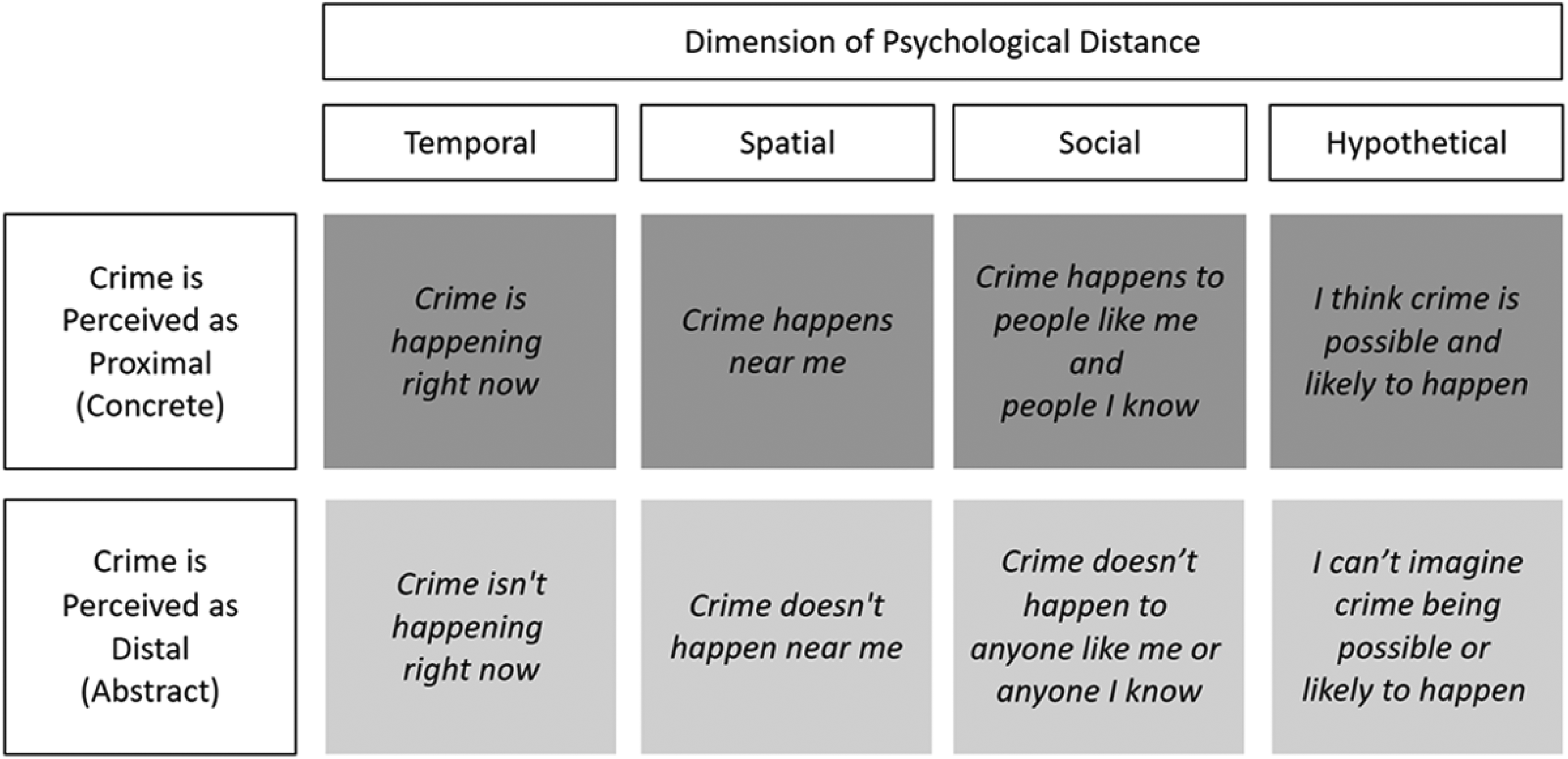
Interaction between construal level and psychological distance of a crime event.
Temporal distance was the first dimension of psychological distance to be developed and proposed by Liberman and Trope (1998) and refers to how soon an event is perceived to occur. A temporally proximal event will occur in the immediate future, while a temporally distal event will occur in the distant future. Temporal distance has been most commonly measured by asking participants when they perceive an event will occur (Liberman et al., 2002; Spence et al., 2012).
Spatial distance refers to how far away from the individual’s location an event is perceived to occur. Spatial distance is commonly measured by asking participants where they believe an event will occur (i.e., a location close to them or a location far away from them; Fujita et al., 2006; Henderson et al., 2006; Spence et al., 2012). Because individuals use less clearly defined terms such as ‘here’ or ‘there’ when construing an event’s spatial distance, spatial distance is not commonly described using specific units such as metres or kilometres (Trope & Liberman, 2010).
Social distance describes who is perceived to be involved in an event. This dimension of psychological distance emerged in response to research investigating concepts such as actor-observer biases (Fiedler et al., 1995). The most common features used in judgements of actor-observer similarity include age, gender, race, occupation (Linville et al., 1996; Nisbett et al., 1973) and familiarity (Idson & Mischel, 2001). As a result, to measure social distance, researchers have used a variety of techniques such as asking participants whether they believe an event will happen to an individual who is perceived as similar to or different from themselves (e.g., Spence et al., 2012).
Hypothetical distance describes how likely or realistic an individual perceives an event is to occur (Soderberg et al., 2015; Wakslak et al., 2006). Hypothetically proximal events are likely and realistic, while hypothetically distal events are unlikely and unrealistic (Trope & Liberman, 2010). It has most commonly measured by asking participants to rate the likelihood of a hypothetical event, such as becoming a victim of crime (Gouseti, 2016) or the occurrence of climate change (Spence et al., 2012).
The interaction between construal level and psychological distance is considered to have effects referred to as downstream consequences on decision making, engagement, beliefs, behaviour and emotions (Soderberg et al., 2015; Trope & Liberman, 2010). These downstream consequences have garnered attention from a variety of disciplines including consumer behaviour (Zhao & Xie, 2011), targeted advertising (Shan et al., 2017) and climate change action (Chang et al., 2015; Spence et al., 2012). Spence et al., (2012) investigated the effects of psychological distance on people’s beliefs, feelings and preparedness to act about climate change. The survey asked participants about when they believed they would experience the effects of climate change (temporal distance), how climate change would affect the participants’ country versus a distant country (spatial distance), whether climate change would affect people similar to the participant (social distance) and how certain the participants believed that climate change was happening (hypothetical distance; Spence et al., 2012, p. 962). Consistent with CLT, these items reflect that psychological distance is subjective and independent of objective or actual distance (e.g., participants perceived climate change as socially distal, despite climate change being a global issue). Spence et al.’s (2012) survey items demonstrated strong internal consistency, with results revealing that participants who perceived climate change as psychologically distal were less likely to express concern (emotion) about climate change and demonstrated a lower preparedness to reduce energy use (behaviour). Spence et al., (2012) suggest that manipulating psychological distance may be an effective method of encouraging public behavioural and emotional change. This example of interdisciplinary research highlights how the effects of psychological distance can be used to understand complex emotional and cognitive processes such as worry about crime.
Using CLT to understand subjective risk of victimisation
CLT could be a useful theory for addressing current challenges within the fear of crime literature, and in particular, to enhance the theoretical development of the area (see Chadee et al., 2019; Gouseti, 2018; Hale, 1996; Jackson & Gouseti, 2015). The subjective nature of fear of crime, wherein individuals worry about crime in crime-free contexts, aligns with crime construal (Gouseti, 2016). Crime construal describes how individuals mentally transcend the ‘here and now,’ absent of crime, to construe crime-related events or situations (Gouseti, 2016). Coinciding with CLT’s assertions, high-level crime construal involves an abstract, de-contextualised and generic representation of crime. Low-level construal involves a detailed, context-bound and specific representation of crime. Gouseti (2016) hypothesises that worry about crime is a consequence of low-level crime construal, and that an individual’s crime construal can be affected by perceptions of psychological distance, where proximal perceptions of crime are associated with low-level crime construal. Like perceptions of risk of criminal victimisation, psychological distance is a subjective cognitive process and is independent of actual distance from an event (Trope & Liberman, 2010). Individuals are capable of perceiving events as temporally, spatially, socially and hypothetically proximal even when they are objectively distal and vice versa (Spence et al., 2012; Trope & Liberman, 2010; Wakslak & Trope, 2009). These subjective perceptions of crime’s distance from an individual may inform their judgements about victimisation risk and their levels of worry about crime.
To date, the relationship between crime construal and psychological distance has been tested under experimental conditions by Gouseti (2016). In their experiments, Gouseti (2016) manipulated the level of crime construal to explore its effect on perceptions of spatial distance and worry about crime. Three hundred participants (164 women and 134 men) were randomly assigned to one of six possible conditions asking participants to generate possible causes or consequences of hypothetical crimes that were phrased as close to their neighbourhood, far from their neighbourhood, or were absent of spatial specification, depending on the assigned condition (Gouseti, 2016, p. 129). Crime construal was manipulated across two levels by asking participants to generate causes of crime (high-level construal) or consequences of crime (low-level construal; Gouseti, 2016). Spatial distance was manipulated across three levels (proximal, distal, neutral; Gouseti, 2016). Participants were also asked about their intensity of worry about crime using a 4-point scale item (Gouseti, 2016). Gouseti (2016) found that participants’ intensity of worry about crime decreased when crime was perceived as psychologically distal, when controlling for construal level. These results highlight that the psychological proximity or distance at which crime is construed can affect individuals’ worry about crime. As a result, the cognitive processes of crime construal and psychological distance reflect how individuals can subjectively experience worry about crime in environments that contain a low or negligible risk of crime (Chadee et al., 2007; Gouseti, 2016).
Shortcomings in literature and proposed theoretical model
Despite the potential appeal of CLT for understanding how fear of crime develops, few researchers have explored how perceptions of psychological distance shape an individual’s fear of crime (Chadee et al., 2019; Gouseti, 2016). While Gouseti (2016) demonstrated that there is a relationship between psychological distance and worry about crime, further research is needed to test whether the processes involved in CLT are valid in the context of an individual’s natural environment. Methodologically, the theoretical constructs associated with CLT have been predominantly tested under experimental conditions (Bar-Anan et al., 2006; Gouseti, 2016; Liberman & Trope, 1998; Sánchez et al., 2021; Soderberg et al., 2015; Trope & Liberman, 2010; Wakslak & Trope, 2009). Regarding CLT’s application to fear of crime, Gouseti (2016) notes that an experimental design may not have captured the way in which psychological distance shapes fear of crime in a natural environment. Testing the relationship between psychological distance and worry about crime in a natural environment is important for determining the external validity of these constructs.
The present study aims to address the current gaps in literature by (a) validating new survey measures of psychological distance and worry about personal crime and (b) testing a theoretical model of psychological distance of personal crime with a community sample. Figure 2 shows the hypothesised relationship between worry about crime and psychological distance, where psychological proximity (indicated by smaller scores for psychological distance) is correlated with an increase in worry about crime. It is worth noting that crime construal is not directly observed in this model, rather worry and psychological distance represent the downstream consequences and correlates of construal level, respectively (Gouseti, 2016).
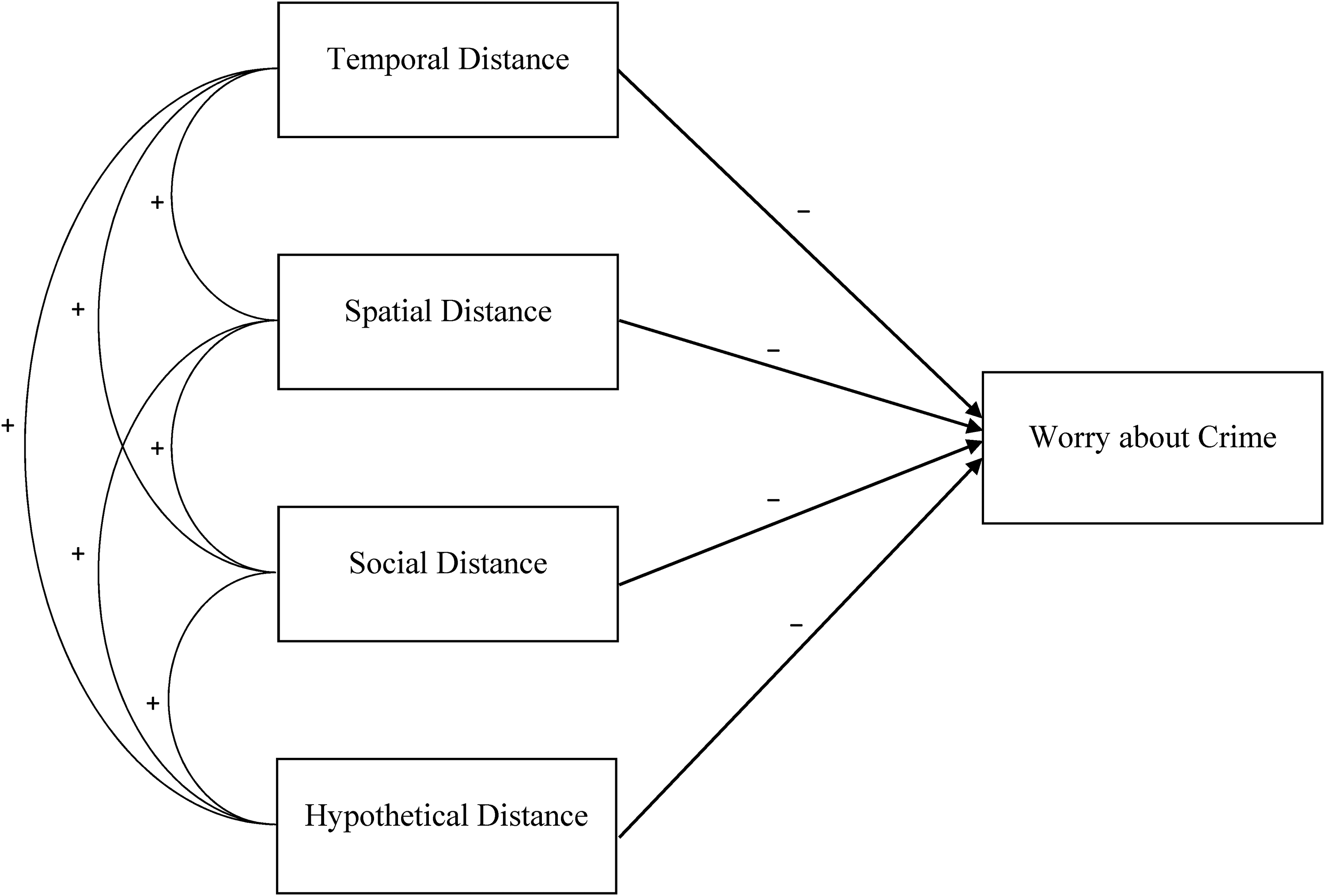
Hypothesised relationships between psychological distance and worry about crime.
Methodology
The current study
The current study adapts and expands upon existing measures from previous experimental research testing psychological distance and worry about crime Gouseti (2016) and interdisciplinary survey research measuring psychological distance (e.g., Spence et al., 2012). We begin by examining the reliability and scaling properties of measures of worry about crime, and perceived psychological distance of each crime type (i.e., physical attack, verbal harassment and/or verbal abuse and mugging). Then, using confirmatory factor analyses (CFA),we test whether the proposed dimensions of psychological distance are empirically distinct, which is a key assumption of CLT. Finally, we examine the relationship between constructs of psychological distance and worry about crime, using multiple linear regression. By testing the scaling properties of the crime types, the dimensionality of psychological distance, and the predictive capability of psychological distance of personal crime on worry about personal crime, the current study will empirically test and present a new theoretical model of psychological distance and worry about crime.
Sample
Data were collected using the Qualtrics survey platform (Qualtrics, Provo, UT, USA). A convenience sample of 299 residents living in Townsville, Queensland were recruited for the pilot study using advertisements on social media sites (i.e., Facebook), targeting users aged 18 years and older. This location was selected as a recruitment site due to localised COVID-19 lockdown restrictions impacting broader recruitment in denser locations, such as Brisbane, Australia. Townsville was selected as the alternative location because it had the highest population of cities that were unaffected by the restrictions while retaining similar demographic characteristics to Brisbane 2 (Australian Bureau of Statistics, 2019). Social media recruitment was used because it is cost-effective and enables researchers to sample specific audiences according to geographical locations, and other characteristics of interest (Liu & Mattila, 2017; Ramo & Prochaska, 2012). The advertisement ran for 36 days, appeared in 8383 newsfeeds, with 467 unique link clicks. The cost per link click was 37 cents. Missing Values Analysis was undertaken with data collected by the survey, with no patterns in missing values detected (χ2 = 192.90, df = 166, p = .075; Little, 1988). Therefore, missing data were deleted (n = 34 cases) from the dataset to allow for CFA models to be estimated with complete data (Schafer & Graham, 2002). The final sample for analyses comprises N = 265 residents. In terms of participant characteristics, the mean age of the sample was 55 years (SD = 13.2), with the sample comprising more women than men. According to Townsville Community Profiles (Townsville City Council, 2020), there were 186,765 Townsville residents recorded during the most recent census. The mean age of the population was 35 years (SD = 22), with 20- to 24-year-old residents being the largest age group at 8.4%. Men and women each made up 50% of the population (Australian Bureau of Statistics, 2019; Townsville City Council, 2020). The current sample is, therefore, overrepresented by women and older individuals. More detailed participant information is provided in Table 1.
Demographic characteristics for participants (N = 265).
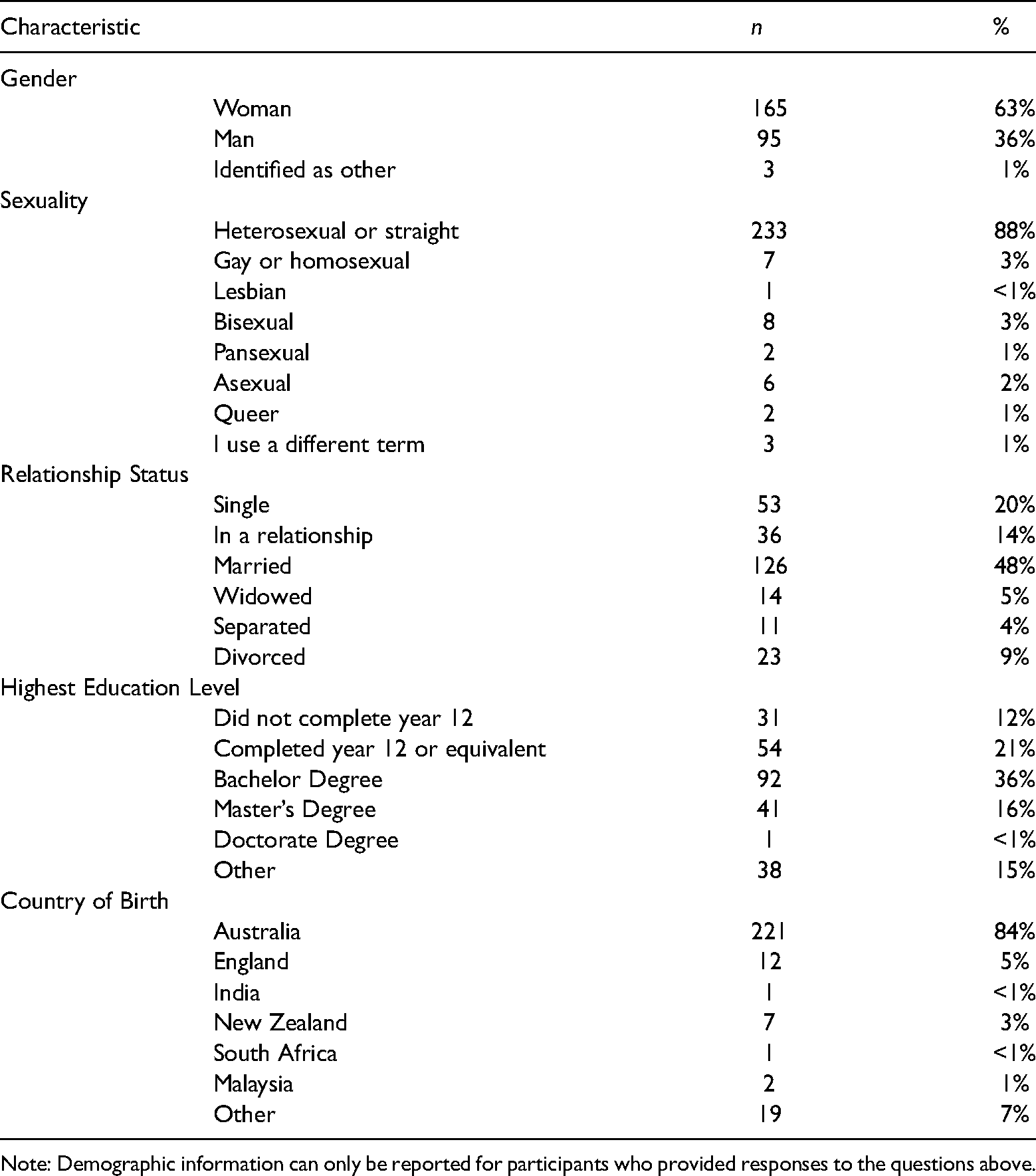
Note: Demographic information can only be reported for participants who provided responses to the questions above.
Measures
The community survey administered via the Qualtrics Survey Platform contained several items designed to capture participants’ levels of concern/worry about crime and perceptions of psychological distance (e.g., how close they perceive crime in their immediate environment in terms of space, time and so on). These measures were adapted from previous research, as discussed above, and modified to suit an Australian sample. The item wording and scaling properties of each construct contained in the survey are provided below, along with the justification for each item.
Personal crime
The three crime types included in the worry and psychological distance items were (a) falling victim to a physical attack; (b) falling victim to harassment and/or verbal abuse; and (c) falling victim to a mugging. These crime types were selected because they are commonly used items in National Victimisation surveys in Australia (Australian Bureau of Statistics, 2019), the United Kingdom (Brunton-Smith & Sturgis, 2011; Jackson & Gray, 2010) and the United States (Franklin & Franklin, 2009; Liska et al., 1988). These types of crime also represent the broader category of personal victimisation, which can be defined as crimes which threaten or cause physical harm directly to the person rather than indirectly to a person’s property 3 (Australian Bureau of Statistics, 2019). Indicators of personal victimisation were selected because they are construed from the egocentric point of reference without manipulating temporal, spatial, social, or hypothetical distance (Gouseti, 2016). This ensures that an individual’s worry about crime can be captured as a separate experience from their perceptions of temporal, spatial, social and hypothetical distance. The current research does not capture worry about property victimisation, because such questions have specific spatial reference points relating to the home/residence of the individual.
Worry
First, participants were asked how worried they felt about falling victim to three different types of crime. Specifically, participants were asked How worried are you about falling victim to [a crime]? where 1 = Not at all worried; 2 = A little bit worried; 3 = Fairly worried; 4 = Very worried. This intensity measure of worry has been validated across several geographical contexts including in the United States (Brunton-Smith & Sturgis, 2011; Scarborough et al., 2010), the United Kingdom (Gouseti, 2016; Jackson & Gray, 2010) and in Australia (Chataway & Hart, 2016; Chataway & Mellberg, 2021). Intensity measures of worry are preferred over other types of worry questions, such as frequency questions, because they do not use spatial or temporal reference points (i.e., in your neighbourhood, over the last month, etc.) that may influence one’s perceptions of psychological distance and the proximity of crime to themselves.
Psychological distance
Next, participants were asked about their perceptions of psychological distance in relation to each type of crime. To measure perceptions of psychological distance, scale items adapted (and changed to suit recruitment in natural environments) from Gouseti (2016) and Spence et al., (2012) were used. Participants were asked how much they agree or disagree with statements on a 5-point scale, where 1 = Strongly Disagree, 2 = Disagree, 3 = Neither Agree nor Disagree, 4 = Agree and 5 = Strongly Agree.
Temporal distance: I believe that I will fall victim to [a crime] in the near future. This item was adapted from Gouseti (2016). Previous fear of crime research has also asked participants prospectively whether they believe they will fall victim to crime (Jackson, 2005, 2009; Warr, 2000). However, because these studies operationalise such items as risk perception (i.e., likelihood) rather than how temporally proximal or distal crime is perceived to be, they have not measured temporal distance alongside other dimensions of psychological distance.
Spatial distance: I believe that I will fall victim to [a crime] in a location near me. This item was kept intentionally broad to avoid manipulating participants’ egocentric point of reference or other dimensions of psychological distance. For example, asking participants whether they believe they might fall victim to crime in their neighbourhood may result in the participant construing a location that is close to their home, but not currently close to them (Bar-Anan et al., 2006; Trope & Liberman, 2010). In this situation, because the egocentric point of reference refers to the self in the current situation, the participant’s perceived spatial distance could be greater than if they were construing their current location. Likewise, asking participants whether they believe they might fall victim to crime in their neighbourhood risks manipulating social distance, which is concerned with familiarity (Bar-Anan et al., 2006; Trope & Liberman, 2010).
Social distance: I believe that [crime] happens to people who are similar to me. Compared to other dimensions of psychological distance, social distance can be manipulated by a variety of factors (Trope & Liberman, 2010). For example, a socially proximal perception of crime can encompass whether an individual perceives crime will happen to themselves, someone similar to themselves, or someone that they know. Following from Gouseti (2016), the current study asks participants to determine whether each type of crime happens to someone similar to the respondent. This measure is preferred over asking whether a participant believes crime will happen to themselves or whether they believe crime will happen to someone that they know. The former would result in wording that is too similar to hypothetical distance (described below) while the latter would potentially reflect altruistic worry about crime (wherein an individual worries about other people falling victim to crime) rather than individual worry about crime (Heber, 2009; Warr & Ellison, 2000).
Hypothetical distance: To measure hypothetical distance, participants were asked to respond to the statement I believe that it is likely that I will fall victim to [a crime]. This item is in line with previous psychological distance survey research (Spence et al., 2012). In the fear of crime scholarship, researchers have asked participants to rate their perceived likelihood of falling victim to specific crimes (Chataway & Hart, 2016; Jackson, 2005, 2009). However, this item is operationalised as risk perception rather than the perceived closeness of crime to an individual’s reality. The purpose of this study is to propose a new model that grounds worry and risk perception in the context of psychological distance.
Participant survey feedback
Because this is the first time that psychological distance measures have been piloted in an Australian context, the survey contained one additional question, seeking information about participant’s experiences of doing the survey and the questions contained in the survey. The feedback provided on the survey instrument provides further context to the quantitative findings reported below.
Results
Scaling properties and reliability of survey instrument
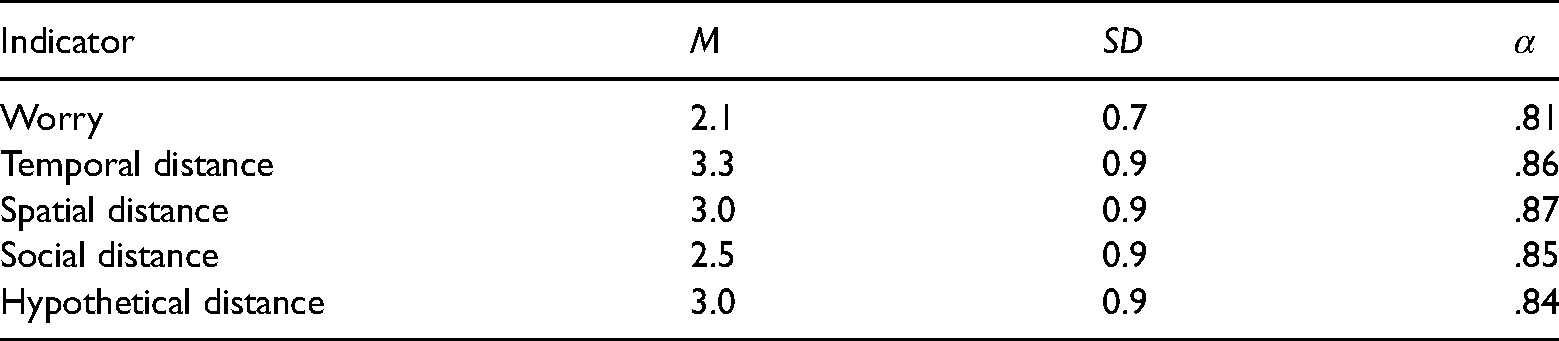
Scales for worry about personal crime and each dimension of psychological distance were constructed using composite scores across all three types of crime. The psychological distance items were reverse coded (i.e., a lower score would represent a psychologically proximal perception of personal crime, while a higher score would represent a psychologically distal perception of personal crime), in line with the hypothesised relationships presented in Figure 1. First, reliability analyses were undertaken with each scale contained in the instrument. The Cronbach’s alpha values ranged between .81 and .87, which is above the acceptable cut-off of α = .70 (Pallant, 2007). This demonstrates that the items contained in the worry, temporal distance, spatial distance, social distance and hypothetical distance scales were internally consistent. Coinciding with previous fear of crime research conducted in Australia (e.g., Chataway & Mellberg, 2021; Xiong et al., 2017), participants reported relatively low levels of worry about crime (M = 2.1; SD = 0.7). Tables 2 and 3.
Reliability analysis of worry and psychological distance indicators (N = 265).
Multiple linear regression between psychological distance and worry about personal crime.
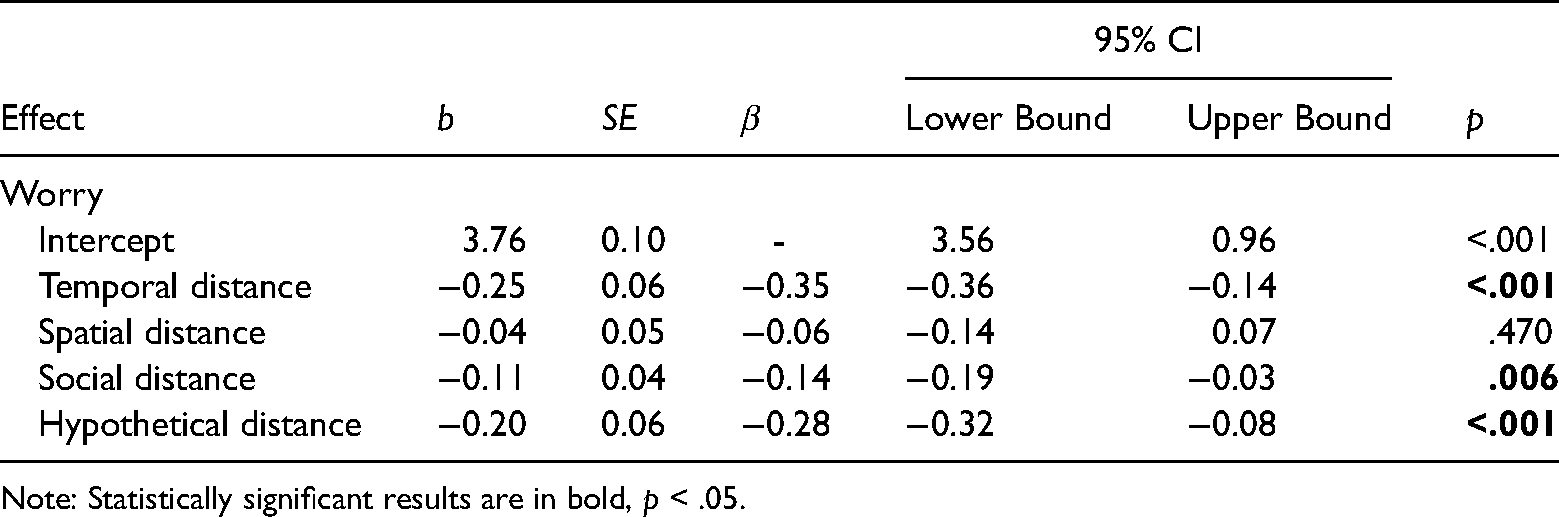
Note: Statistically significant results are in bold, p < .05.
CFA
CFA was performed using IBM Statistics Package for the Social Sciences (SPSS, 2017) 27.0 and Analysis of Moment Structures (AMOS, 2011) to (a) explore the scaling properties of psychological distance of and worry about personal crime and (b) determine whether each dimension of psychological distance is empirically distinct. All models were estimated using a variance-covariance matrix and maximum likelihood estimation.
First, a five-factor model was estimated to test the scaling properties of worry about and perceptions of psychological distance of each crime type. After correlating the error terms, the model fit for the five-factor solution had an acceptable fit across all indices except exact fit indices (χ2 = 211.69, df = 68, p < .001). Exact fit statistics, however, are sensitive to sample size (Kline, 2015). Relative fit indices were instead considered, which demonstrated an acceptable fit (SRMR = 0.04; GFI = .90; CFI = .96; NFI = .95; TLI = .95). The five-factor model outlined in Figure 3 demonstrates that the constructs have reasonably good reliability and validity (Fornell & Larcker, 1981). All R2 values exceed 0.50 except for worry about verbal harassment and/or abuse, while all standardised factor loadings are above 0.65, suggesting that each variable explains at least 42.25% of the variance in the corresponding latent factor (Brown, 2015).
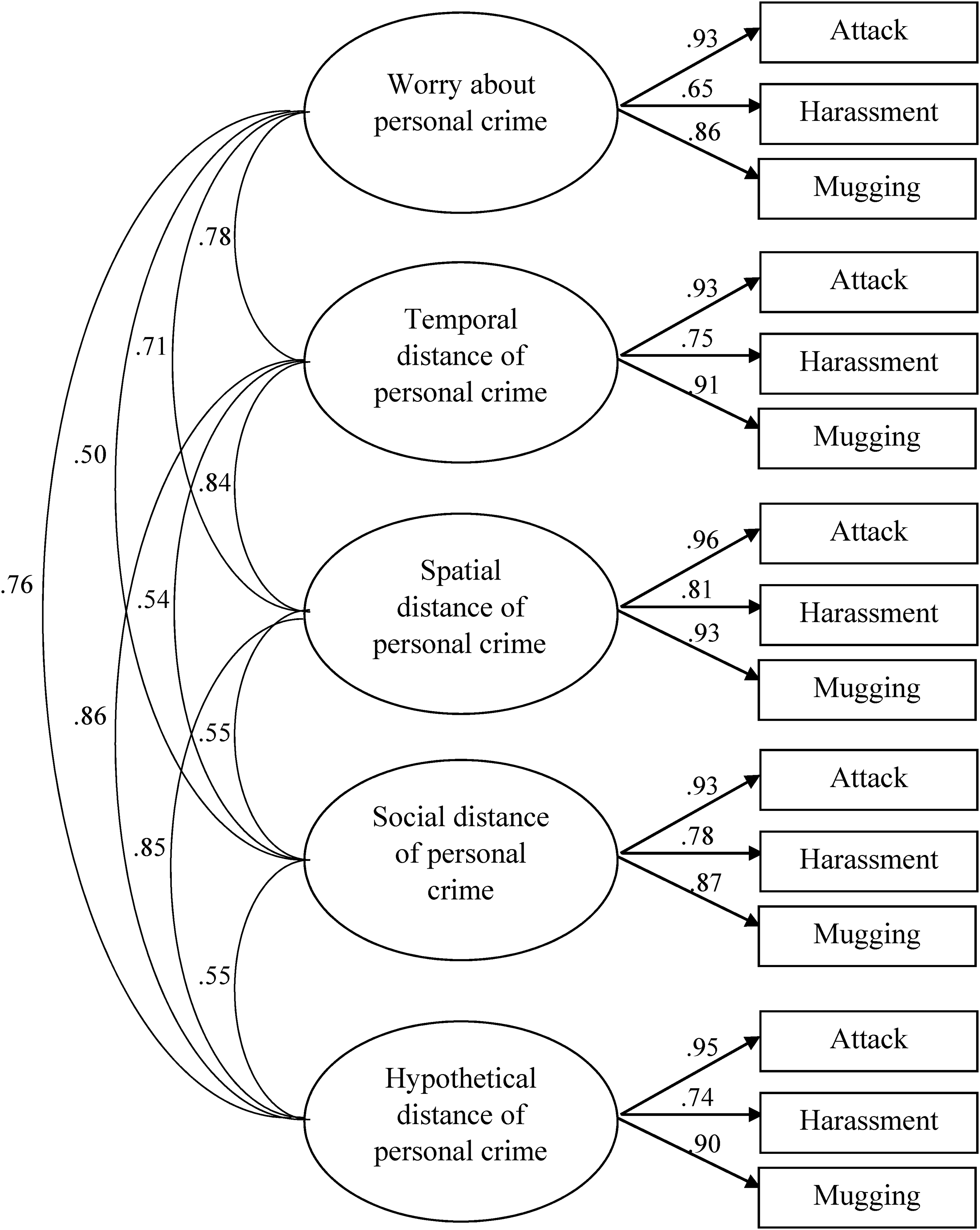
A five-factor solution of perceived psychological distance of and worry about personal crime.
To determine whether each dimension of psychological distance contained within the broader theoretical model were empirically distinct, a four-factor model that excluded worry about personal crime was estimated. After the error terms were allowed to covary, the model had an acceptable fit across all relative fit indices (χ2 = 113.30, df = 38, p < .001; SRMR = .04; GFI = .94; CFI = .98; NFI = .97; TLI = .96), suggesting that each dimension of psychological distance is indeed distinct. The measures contained within the model also demonstrated good reliability and validity, with all R2 values exceeding 0.54 and all standardised factor loadings exceeding 0.74, suggesting that each variable explains at least 54.76% of the variance in the corresponding latent factor (Brown, 2015).
Regression analysis
Multiple linear regression was used to determine whether perceived psychological distance from personal crime predicted worry about personal crime. Prior to performing multiple linear regression, the data were screened for outliers, multicollinearity and independent errors. No outliers were identified, with all standard residual statistics falling within −3.29 and 3.29 (Std. Residual Min = −2.90, Std. Residual Max = 2.70). Collinearity diagnostics indicated that the data were not multicollinear, with all tolerance statistics exceeding .20 and variance inflation factor (VIF) scores falling below 5 (Salmerón et al., 2018; Stine, 1995). The data also met the assumption of independent errors (Durbin–Watson value = 1.75). The fitted regression model was worry about personal crime = 3.76 − 0.25*(temporal distance of personal crime) − 0.04*(spatial distance of personal crime) − 0.11*(social distance of personal crime) − 0.20*(hypothetical distance of personal crime). The full regression model was statistically significant and in the hypothesised direction (R2 = .55, F[4, 260] = 78.29, p < .001). However, perceived spatial distance of personal crime was in the hypothesised direction, but was not statistically significant.
Discussion
The current study aimed to (a) validate new survey measures of psychological distance and worry about personal crime and (b) test a theoretical model of psychological distance of personal crime with a community sample. The reliability analyses determined that each scale measuring the dimensions of psychological distance and worry about crime were internally consistent. Our CFA results suggest that the dimensions of perceived psychological distance from personal crime are empirically distinct. The predictive ability of psychological distance for worry about personal crime was tested using multiple linear regression, demonstrating that temporal, social and hypothetical distance were statistically significant predictors of worry about personal crime. Potential explanations and implications of these findings for future psychological distance survey research are discussed below.
The full regression model was statistically significant and in the hypothesised direction. Spatial distance, although correlated with worry in the expected direction, did not predict worry at a statistically significant level. It is unclear why this is the case, given previous fear of crime research has identified the importance of perceptions of space and place for influencing individual’s worry about crime and risk perception (Chataway & Mellberg, 2021; Irvin-Erickson et al., 2020; Solymosi et al., 2015). Scholars such as Chataway et al., (2017) and Engström and Kronkvist (2021) have used surveys delivered via smartphones to ask participants about their level of worry about and perceived risk of becoming a victim of crime in their current location. By asking participants to respond to questions about their perceived risk of becoming a victim of crime in their immediate environment, Chataway et al., (2017) and others have found that individuals’ perceptions of their immediate environment are ecologically valid predictors of their worry about crime (Engström & Kronkvist, 2021; Irvin-Erickson et al., 2020). Subsequently, the finding in the current study may be attributed to the broad wording used for spatial distance items. A number of participants who included qualitative comments in their survey response expressed that the spatial distance questions were somewhat broad and/or it was not easy to establish what the reference point was for the question. For example, one participant commented ‘“Far away”… could be a little more specific – still in Australia? Or overseas?’ This aligned with other responses such as ‘It was difficult to know whether “far away” meant within Australia or overseas.’ and ‘Not very clear about close/far locations. I went with at home/at work….’ The current study used similar item phrasing as Gouseti (2016) who also found that spatial distance did not significantly predict worry. Future research may wish to consider using an item that asks participants whether they believe that they will fall victim to crime in their current location to avoid manipulating spatial distance while retaining the egocentric point of reference. This is also in line with previous fear of crime research, which asks participants to estimate their risk of becoming a victim of crime in their immediate environment (Chataway et al., 2017; Chataway & Mellberg, 2021; Engström & Kronkvist, 2021; Irvin-Erickson et al., 2020; Solymosi et al., 2015).
The full regression model suggests that temporal distance, social distance and hypothetical distance predict 55% of the variance within participants’ worry about personal crime. This is an encouraging finding that suggests psychological distance is a suitable lens through which subjective perceptions of crime can be understood, while also leaving room for further exploration of known correlates of fear of crime and how they may interact with psychological distance. Fear of crime scholars have identified several demographic correlates of worry and risk perception, such as gender (Jackson, 2009; Wilcox et al., 2006) and age (Ferraro & LaGrange, 1992; Jackson, 2004). Women and the elderly, tend to report higher levels of worry about crime and perceive their risk of victimisation as higher when compared to their counterparts. Particularly, elderly women are commonly cited as the demographic group most worried about crime (Ferraro & LaGrange, 1992; Hale, 1996; Jackson, 2004). However, these findings are not universal, with some studies finding no significant effects for age or gender (Chataway & Hart, 2019; Jackson, 2005; Lee et al., 2020). Jackson (2009) found that younger people reported more frequent worry about personal crime (i.e., being physically attacked) compared to older people who worried more frequently about property crime (i.e., having one’s home vandalised). The fear of crime scholarship still lacks a concrete explanation for how these demographic differences interact with perceived risk and worry about crime and why different individuals report higher levels of worry about crime (Jackson, 2011).
Meanwhile, in terms of CLT, it is currently unclear whether demographic variables, such as age, gender, or ethnicity, affect perceptions of psychological distance. Experimental CLT research has not identified any significant gender or age differences in the relationship between construal level and perceptions of psychological distance (Bar-Anan et al., 2006; Fujita et al., 2006; Liberman & Trope, 1998; Wakslak et al., 2006). A meta-analysis by Soderberg et al., (2015) likewise did not identify any significant moderator effects for gender on psychological distance and construal level. Some CLT research has, however, identified the effects of ethnicity on construal level and psychological distance. Because CLT assumes all events and objects are perceived from the egocentric point of reference, Wong and Wyer (2016) tested whether allocentric perspectives, commonly exhibited by individuals from collectivist social orientations, affected the processes involved in CLT. Participants who demonstrated higher perspective flexibility (i.e., the tendency to take the perspective of others when construing events) in Wong and Wyer (2016) experiments perceived proximal events as further away and distal events as closer than participants with little perspective flexibility. These findings suggest that individual differences such as social orientation can affect the distance at which events are perceived. Further research is needed to investigate whether individual differences including age, gender and ethnicity influence perceptions of psychological distance and worry about crime.
Worry about certain crime events may also be more sensitive to different dimensions of psychological distance. Gouseti (2016) found that participants’ worry about being physically attacked and worry about being mugged were not significantly affected by the manipulation of spatial distance, while participants’ worry about being verbally harassed was significantly affected by the manipulation of spatial distance. 4 These results suggest that: (a) individuals’ worry about crime may be more sensitive to different dimensions of psychological distance and (b) that the type of crime that is being construed is pertinent to the relationship between psychological distance and worry (Gouseti, 2016). These relationships between worry, psychological distance and crime type are important to investigate because certain types of crime may be more salient to different groups of people. For example, several studies have found that women report higher levels of worry about sexual assault compared to men (Franklin & Franklin, 2009; Rader et al., 2007; Warr, 2000). There may be differences between the distance at which women construe particular crimes compared to men. Jackson (2009) found that women worried more frequently than men about personal victimisation, but not property victimisation (p. 381). Further investigation revealed that women’s worry about personal victimisation was explained by perceived control over victimisation while men’s worry was explained by perceived likelihood (Jackson, 2009). This may suggest that men are more sensitive to the hypothetical distance of personal crime compared to women. Understanding the differences in this process may guide fear of crime management and reduction strategies that focus on salient dimensions of psychological distance.
CLT may also be able to address broader theoretical questions about fear of crime. One of the downstream consequences of psychological distance explored by scholars is the capacity for behavioural change (e.g., Spence et al., 2012; Zhao & Xie, 2011). There may be additional downstream consequences of perceptions of psychological distance of crime and crime construal beyond worry about crime, such as precautionary behaviour. Fear of crime scholars have investigated the role of behavioural responses to worry about crime and risk perception (Liska et al., 1988; Rader et al., 2007). More recently, Gray et al., (2011) and others have suggested that some behavioural responses might enable individuals to self-manage their worry about crime and perceptions of risk (Jackson & Gray, 2010; Lee et al., 2020). However, it is unclear what causes some individuals to engage in functional behaviours which reduce their worry about crime instead of dysfunctional behaviours that increase their worry about crime or negatively impact their quality of life. Individuals engaging in functional responses may self-manage specific perceptions of psychological distance of crime. For example, the qualitative component of the survey contained a number of responses related to self-protective behaviours, ‘My answers reflect that I choose not to go out of An [sic.] evening unless something specific.’ and ‘…My answers were strongly influenced by the fact that I am careful not to expose myself to attack.’ and perceived risk avoidance, “I minimise my potential exposure to risks…’ and ‘Do you deliberately avoid placing yourself in a situation that would lead to being a victim of crime? Yes.’ Investigating whether individuals engage in precautionary behaviour which mediates their psychological distance of crime and worry could be useful for informing fear of crime management and reduction campaigns.
Conclusion
The current study aimed to (a) validate new survey measures of psychological distance and worry about personal crime and (b) test a theoretical model of psychological distance of personal crime with a community sample. Our results indicate that, although further work is required on improving the measurement of some dimensions of psychological distance in surveys (e.g., spatial distance), perceptions of psychological distance can be used to explain worry about personal victimisation. Future work should expand on this application of CLT to address a number of the challenges faced by the fear of crime literature, such as differences in subjective perceptions of crime risk and worry between women and men. Understanding how perceptions of psychological distance inform these complex processes of risk perception and worry for different groups of people could help guide targeted messaging for fear of crime reduction campaigns.
Footnotes
Declaration of conflicting interests
The author(s) declared no potential conflicts of interest with respect to the research, authorship, and/or publication of this article.
Funding
The author(s) received no financial support for the research, authorship, and/or publication of this article.
