



Abstract
Ensuring sustainable nutrition and reducing food waste play a role in reducing the effects of the climate crisis. The purpose of this study is to evaluate the sustainable healthy eating behaviors of college students and how these behaviors relate to food waste. This cross-sectional study was conducted with 423 students at a state university. 76.6 percent of participants had never heard of “sustainable nutrition”. 34.0 percent of participants reported that they do not waste food, 13.0 percent waste it, and 53.0 percent sometimes waste it. Participants living at home had higher scores for sustainable and healthy eating behaviors than those living in dormitories (p = 0.047); participants who had heard of sustainable nutrition had a higher score than those who had not (p < 0,001). The sustainable and healthy eating behavior scores of participants who did not waste food were also significantly higher than those who did waste food (p < 0.001). A one-unit increase in sustainable nutrition scores was associated with a 58.2 percent reduction in always wasting food and a 41.3 percent reduction in sometimes wasting food compared to non-wasters. Actions aimed at promoting sustainable eating habits among young people and reducing food waste are recommended to protect human and environmental health in today’s and tomorrow’s world.
Introduction
Climate crisis environment
The Sixth Assessment Report of the Intergovernmental Panel on Climate Change notes that recent changes in the climate system are at levels not seen for centuries (Masson-Delmotte et al., n.d.). Human impact is further exacerbating the climate crisis, and extreme weather events such as heat waves, heavy rainfall, and drought are being observed. In today’s world, the effects of climate change are damaging ecosystems, livelihoods, and reducing food security (Intergovernmental Panel On Climate Change, 2023).
Food waste
In 2021, between 702 and 828 million people were affected by hunger, and about 2.3 billion people experienced moderate or severe food insecurity (FAO et al., 2022). Where one-eighth of the population suffers from chronic hunger, agriculture produces enough food for 12–14 billion people (FAO, 2014). About one-third of the food produced for human consumption is lost or wasted worldwide. Wasting food means that huge amounts of resources are used in vain for food production and that greenhouse gas emissions are unnecessarily generated in the production of lost or wasted food (FAO, 2011, 2014). Globally, the estimated amount of food waste in 2019 is approximately 931 million tons, with 61 percent coming from households, 26 percent from food services and 13 percent from retail (United Nations Environment Programme, 2021). Therefore, the causes of food loss and waste are closely related to consumer behavior (FAO, 2011), and in Turkey, 93 kg of food is wasted per person per year (United Nations Environment Programme, 2021). One approach to reducing food loss and waste includes models of sustainable nutrition (FAO, 2014).
Sustainable healthy eating
Sustainable and healthy nutrition is a way of eating that is accessible, affordable, safe, culturally acceptable, has low environmental impact, and supports individual health (FAO and WHO, 2019). A unifying approach to ensuring that the diet is both sustainable and healthy is presented in the World Wide Fund for Nature’s “LiveWell for Low Impact Food in Europe” project. It outlines six principles of a healthy and sustainable diet: increase plant consumption, moderate meat consumption, eat a varied diet, reduce fat, salt, and sugar, eat safely, and reduce food waste. Hence, reduction of food waste is expected among sustainable dietary behaviors (World Wide Fund for Nature, 2014). Healthy and sustainable diets provide opportunities to reduce greenhouse gas emissions and improve health outcomes (FAO and WHO, 2019).
Purpose of the study
Young adulthood is closely related to the formation of individual eating habits and long-term health behaviors (Nelson et al., 2008). Health behaviors developed during this period often continue later in life (Parcel et al., 1988). Therefore, young adult participants were targeted in this study. This study aimed to evaluate the healthy and sustainable nutrition and food waste behaviors of university students in the climate crisis environment.
Methods
Study participants
The research is cross-sectional, and its population is students of the faculty of health sciences at a state university. The total number of students studying in the academic year 2021–2022 is 1715. To determine the minimum number of students to be sampled, the formula n = [NZ2P(1-P)]/[d2(N-1)+Z2P(1-P)] was used (n: minimum number to be sampled, N: size of the population, Z: for a confidence level Z statistic [1.96 for 5 percent margin of error], P: expected rate, d: standard error of the rate to be determined in the survey) (Naing et al., 2006). Based on this formula, the sample volume is; n = [1715 × (1.96)2 × 0.50 × 0.50]/[(0.05)2 (1715–1) + (1.96)2 × 0.50 × 0.50] ≈314.
A total of 423 students were included in the study. Students were selected by convenience sampling from nonprobability sampling methods. Participants filled out the survey form based on their self-reports by face-to-face method. The study was initiated after the approval by the Non-Interventional Clinical Researches Ethics Committee. The study was conducted in accordance with the Principles of the Declaration of Helsinki.
Measures
The data form prepared by the researchers was used to learn some knowledge and behaviors of the participants about the research subject. The scale developed by Żakowska-Biemans et al. (2019) and validated in Turkish by Köksal et al. (2022) was used with a higher score indicating higher engagement in sustainable and healthy eating behaviors. This scale consists of seven factors and a total of 32 items. The seven factors in the scale are as follows: quality labels (regional and organic), seasonal food and avoiding food waste, animal welfare, meat reduction, healthy and balanced diet, local food, and low fat. The 32 items of the scale are of the Likert-type—the rating of the individual items is in the following form: “never (1 point), very rarely (2 points), rarely (3 points), sometimes (4 points), often (5 points), very often (6 points), and always (7 points).”
Statistical analysis
Data were analyzed using the SPSS Statistical Package® 20.0 program. The descriptive results of the study group, number (n) and percentage (%) distributions are reported as mean and standard deviation (
Results
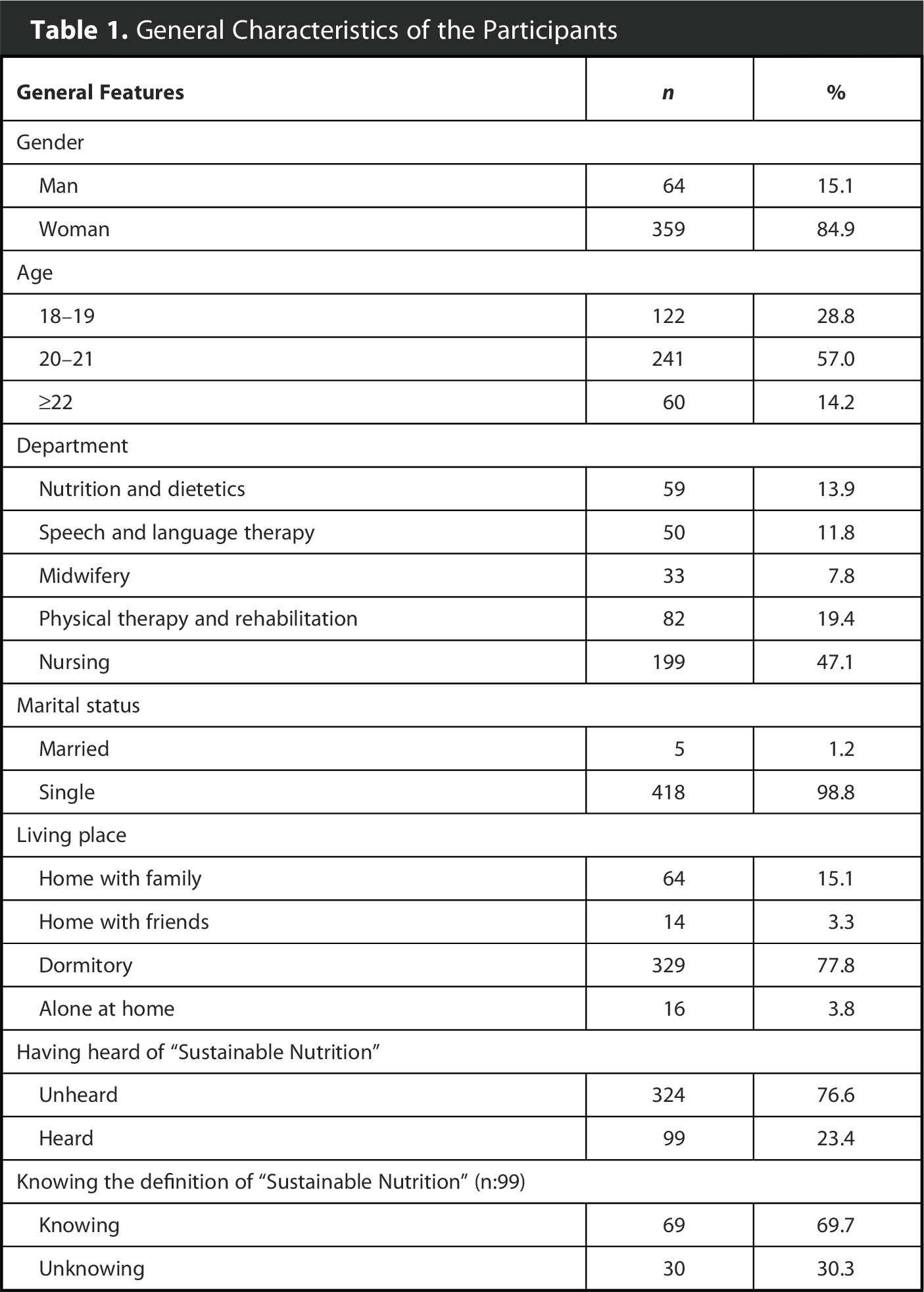
The study was conducted with 423 students studying at the Faculty of Health Sciences of a state university. The general characteristics of the students participating in the study are shown in Table 1. 84.9 percent of the participants are women, 98.8 percent are single, and 47.1 percent are students in the nursing department. 77.8 percent of the students live in a dormitory. 76.6 percent of the participants reported that they had never heard of “sustainable nutrition”. Of the participants who had heard, 69.7 percent gave the correct definition (Table 1).
General Characteristics of the Participants
Data on participants’ food waste behaviors are presented in Table 2. 34.0 percent of participants reported that they do not waste food, 13.0 percent always waste it, and 53.0 percent sometimes waste it. The main causes of wastage were mold on food (21.9 percent), spoiled taste (19.2 percent), and exceeding the recommended consumption date (18.2 percent). The most wasted products were bread and bakery products (47.8 percent) (Table 2).
Food Waste Behaviors of Participants
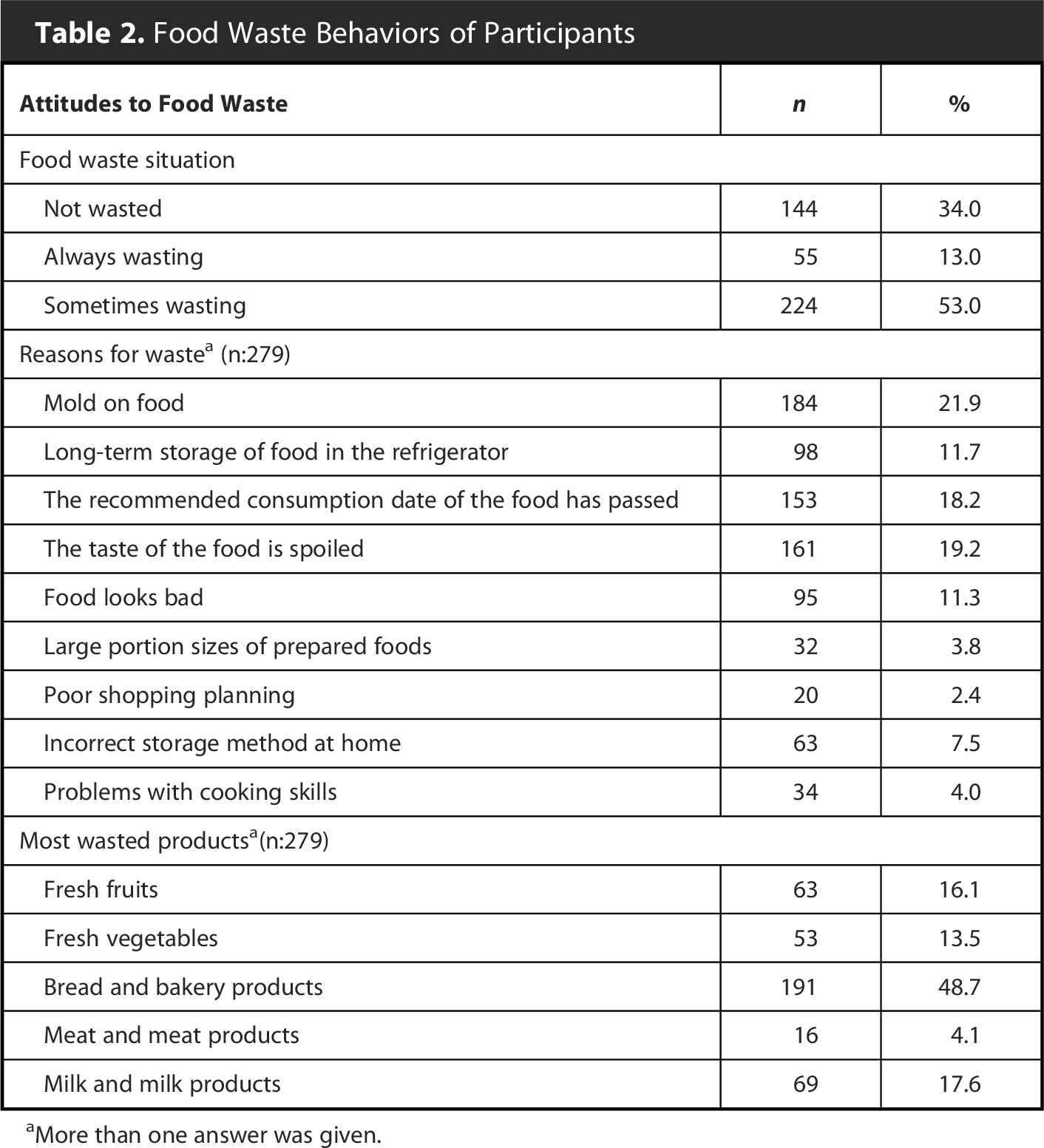
More than one answer was given.
Food waste status was compared based on some characteristics of the participants. No significant difference was found in food waste according to residence, age, gender, department, and having heard of the sustainable nutrition (Table 3).
Food Waste Status by Some Sociodemographic Characteristics of the Participants

Pearson chi-square test.
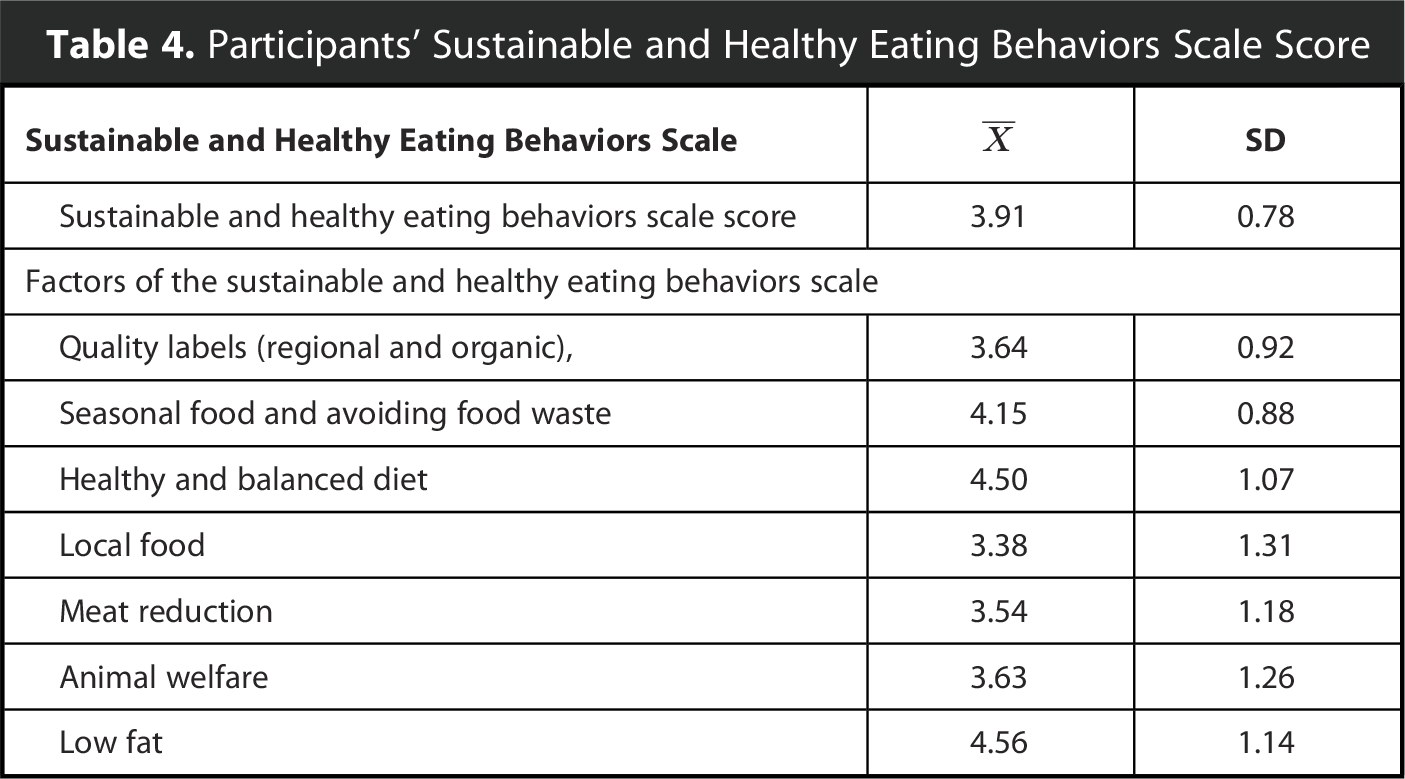
The mean score of participants in the “Sustainable and Healthy Eating Behaviors Scale,” was 3.91 ± 0.78 points (Table 4).
Participants’ Sustainable and Healthy Eating Behaviors Scale Score
The sustainable and healthy eating behavior scores of participants living at home were significantly higher than those living in dormitories (p = 0.047). There were no significant differences between genders (p = 0.360). The scores for sustainable and healthy eating behaviors differed by department of the participants (p = 0.033). Students in the Department of Nutrition and Dietetics have the highest average scores. This difference could not be shown in the post hoc analyses carried out to determine which departments had a significant difference. Participants who had heard of “sustainable nutrition” scored significantly higher than those who had not (p < 0.001). Healthy and sustainable eating behavior scores differed significantly according to food waste (p < 0.001). According to the Bonferroni post hoc analysis, the sustainable and healthy eating behaviors score of the participants who do not waste food was significantly higher than those who always waste (p < 0.001), and the score of participants who did not waste food was significantly higher than those who sometimes wasted food (p = 0.001) (Table 5).
Sustainable and Healthy Eating Behaviors Score According to Some Sociodemographic Characteristics of the Participants
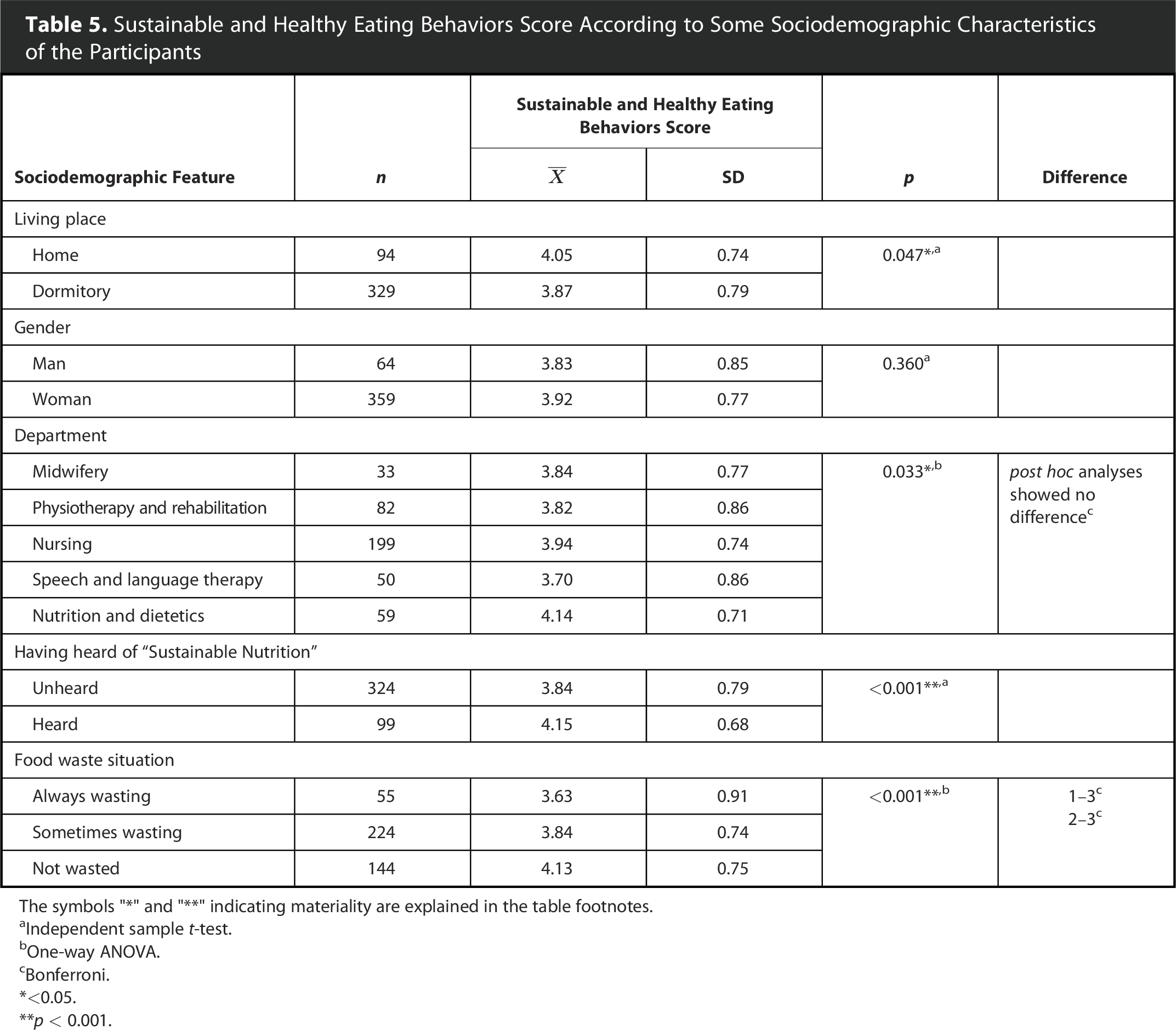
The symbols "*" and "**" indicating materiality are explained in the table footnotes.
Independent sample t-test.
One-way ANOVA.
Bonferroni.
*<0.05.
**p < 0.001.
The relationship between food waste and sustainable and healthy eating scores, age, gender, place of residence, and department was analyzed. Age, gender, place of residence, and department did not have a significant relationship with food waste (p > 0.05); however, it was found to be significantly associated with healthy and sustainable nutrition scores. When those who do not waste food are taken as a reference, those who always waste food (p < 0.001) and sometimes waste food (p < 0.001) have lower sustainable nutrition scores. A one-unit increase in sustainable nutrition scores was associated with a 58.2 percent [(1–0.418)×100] reduction in always wasting food and a 41.3 percent [(1–0.587)×100] reduction in sometimes wasting food, compared to not wasting food (Table 6).
Factors Affecting Food Waste
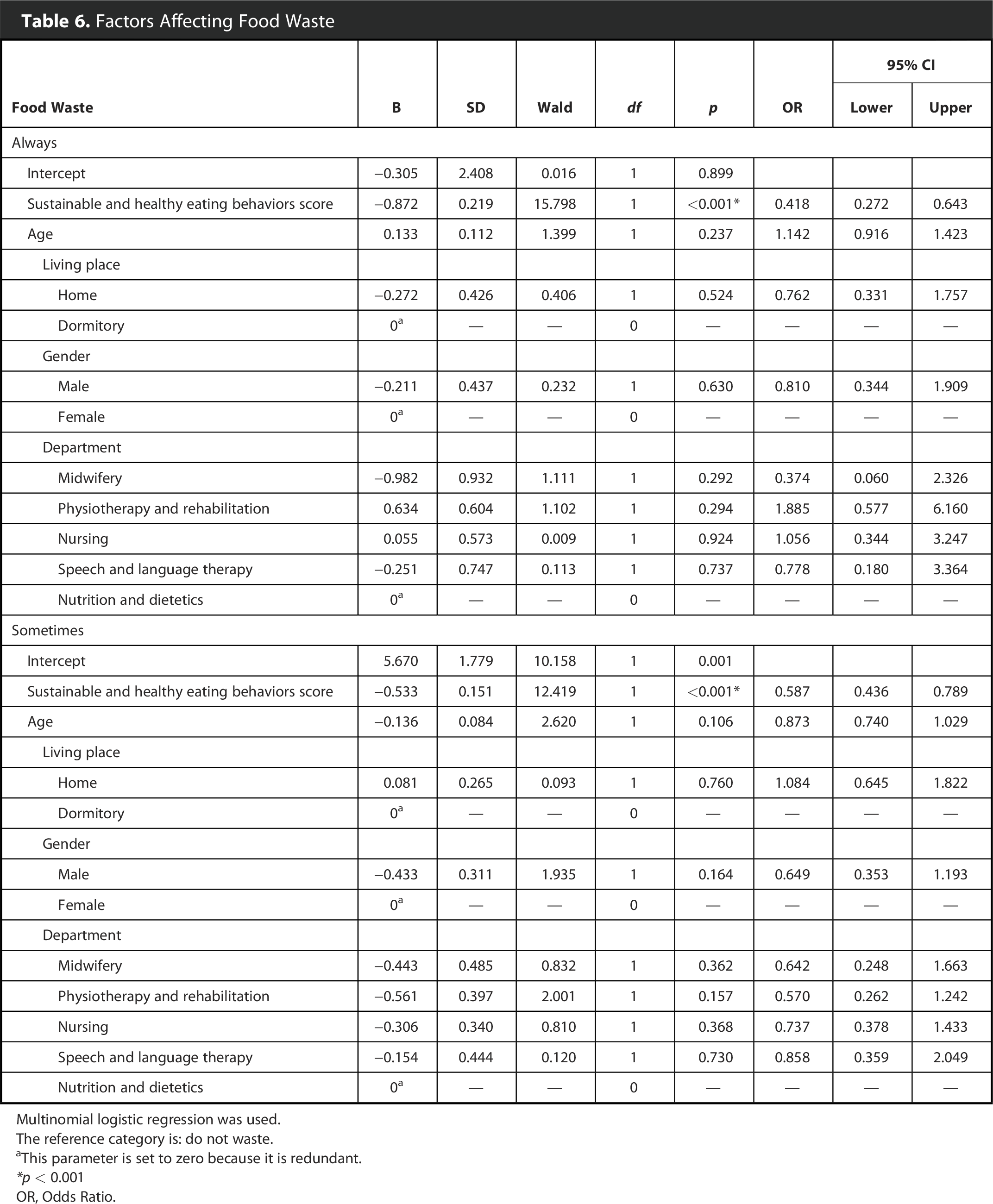
Multinomial logistic regression was used.
The reference category is: do not waste.
This parameter is set to zero because it is redundant.
*p < 0.001
OR, Odds Ratio.
Discussion
Based on the results of the present study, 2/3 (76.6 percent) of college students had never heard of sustainable nutrition before, and more than half (66.0 percent) wasted food. Scores for sustainable and healthy eating behaviors were significantly higher in those living at home, who know about sustainable nutrition, and who report that they do not waste food. Combining the behavior of not wasting food with the behavior of sustainable and healthy eating leads to a more controlled use of food.
Only 23.4 percent of the participants had ever heard of “sustainable food”; 69.7 percent of them ticked the correct definition. This situation suggests that university students lack knowledge about sustainable nutrition and that training on this topic is needed. Some studies reported that the consumption of health and environmentally conscious food among university students is very low and needs to be improved (Bauerné Gáthy et al., 2022); the biggest obstacle for university students to achieve a sustainable healthy diet is the lack of knowledge (AlBlooshi et al., 2022). In the present study, the scores of participants who had already heard of “sustainable diets” were significantly higher than those who had not. Students in the Department of Nutrition and Dietetics had the highest mean score. In a study conducted with university students who had previously studied in the health field, it was found that the average score of the “healthy and balanced diet” factor in the Sustainable and Healthy Eating Behavior Scale was higher among students in the Nutrition and Dietetics Department than among students in other departments (Yolcuoğlu and Kızıltan, 2022). In another study, it was found that most of the students who have health and environmental awareness have a health and economics education (Bauerné Gáthy et al., 2022). These findings support that knowledge of sustainable diets is also reflected in behaviors and the importance of nutrition education for sustainable and healthy eating behaviors. Studies show that methods such as school-based curricula, individual research, and social media are effective in improving knowledge about sustainable diets (AlBlooshi et al., 2022); it is reported that university education can also play a role in this area (Bauerné Gáthy et al., 2022).
Based on the results of the present study, the highest scores in the sustainable and healthy eating behavior scale were obtained by the factors of low-fat, healthy and balanced diet, seasonal food, and food waste avoidance. In an earlier study, the highest scores were for the factors of quality marks, low fat, reduced meat consumption, and seasonal foods and food waste avoidance (Köksal et al., 2022). Another study found that the focus of sustainable eating behaviors among college students was on eating seasonal fruits and vegetables and buying regional foods (Kamenidou et al., 2019). These results showed that college students generally tend to consume seasonal foods. One reason for this could be that seasonal foods are often more accessible and less expensive. The lowest score in the present study was for the local food factor. This could be due to the fact that local food is not cost-effective in Turkey. In the present study, the factor “reducing meat consumption” received the lowest score after local foods. This finding could indicate that students are not close to reducing meat consumption. According to a previous study, college students believe that reducing their meat consumption is less effective in maintaining sustainability than other behaviors to mitigate climate change, such as recycling and using less plastic. However, positive attitudes toward environmental sustainability were associated with lower red meat consumption (Slotnick et al., 2023). In another study, participants who were more concerned about their carbon footprint were found to consume less red meat (Alhothali et al., 2021). In this context, it can be assumed that knowledge and motivation can lead to sustainable health behaviors.
An expected correlation, sustainable and healthy eating behavior scores were found to be significantly higher among those who did not waste food than those who did. These results demonstrate that food waste prevention behaviors are related to sustainable and healthy eating behaviors. Reducing food waste is an important component of a sustainable diet (FAO, 2014). To ensure a sustainable diet, environmental impacts should be reduced and resources should be used efficiently (Werner et al., 2014). A study evaluating future scenarios for food waste treatment or prevention reported that halving food waste by 2030 could save 15 times more greenhouse gas emissions than the best treatment scenario without waste reduction. Therefore, waste prevention strategies are important and necessary (Slorach et al., 2020). Previously, a healthy diet was associated with a greater amount of food waste, and this was thought to be due to fruits and vegetables (Conrad et al., 2018). Although dietary changes to include more plant-based foods are necessary to achieve a sustainable diet, these dietary changes should be accompanied by efforts to reduce food waste, as waste rates can be high for some plant-based foods such as fruits and vegetables (Conrad and Blackstone, 2021).
Sixty-six percent of participants reported wasting food. Similarly, a study conducted with 9192 university students found that 74 percent of students produced plate waste in university cafeterias (Qian et al., 2021). The most common reasons for food waste in the present study are: mold growth on the food, its taste is spoiled, and the recommended consumption date has passed. In some previous studies with university students, the most common causes of food waste were excessive purchases, attitudes, mishandling, and expiration dates (Yagoub et al., 2022); lack of organization in meal planning and shopping; and long storage in the refrigerator (Ozanne et al., 2022). To prevent these common causes, it is recommended to make a shopping list before food shopping, buy enough food, eat only as much as fits on the plate, follow the recommended consumption dates, and prevent spoilage by paying attention to proper storage conditions and times. Although food waste varies depending on the foods commonly consumed in the region, bread and baked goods were the most wasted in the present study. In Turkey, the rate of daily bread purchases is 78.9 percent, and nationwide, 5.9 million pieces of bread are wasted every day (Republic of Turkey Ministry of Food Agriculture and Livestock, 2012). In a study of food waste by university students in China, the most wasted foods were wheat, rice, and vegetables (Qian et al., 2021).
In the present study, no significant difference was found between different age groups in terms of food waste. In previous studies conducted with different groups, the age of the participants had a positive effect on food waste prevention (Ilakovac et al., 2020), higher age was associated with lower food wasting behavior (Grasso et al., 2019), the most frequent food wasting occurred between 25 and 34 years old; people over 55 years old wasted less food (Huho et al., 2020); it was reported that more than half of university students thought that young people wasted more food than older people (Yagoub et al., 2022). In another study comparing university students and workers, it was found that students waste food more often and in larger amounts than workers (Przezbórska-Skobiej and Wiza, 2021). As people age, their ability to plan, prepare, and shop for food may improve, which can help reduce food waste. The lack of an age difference in the present study is probably due to the fact that the participants were relatively close in age and were university students.
Related to the present study results, there was no significant difference between participants’ food waste status depending on their field of study. College students studying in nutrition-related subjects and students studying in other subjects were compared before. It was found that students with nutrition knowledge were less likely to waste food and were better at managing food at home (Nicewicz and Bilska, 2022). According to another study on college students, graduate students tend to waste less food than undergraduate students. It has been highlighted that education helps to reduce food waste (Qian et al., 2021). Increasing knowledge, especially in the field of nutrition, can enable more planned shopping, pay attention to expiration dates, better evaluate excess food, and may be effective in reducing food waste.
The strength of the present study is that it was studied in a sample of young adults. The study has some limitations. Food waste behavior was based on the student self-report, which may bias responses from students who are sensitive to waste. The study did not examine the economic situation, which may affect food-wasting behavior and food choices. Another limitation is that the sample studied is not representative of all young adults. Studies conducted in groups with different educational levels and characteristics could provide further ideas.
The results of the study are significant in that they show that 76.6 percent of students studying at a health university have never heard of “sustainable nutrition.” This situation shows that there is an urgent need to increase knowledge. Participants who have heard of “sustainable nutrition” and students studying in the field of nutrition have higher sustainable and healthy eating scores; it is believed that as knowledge of the topic increases, behaviors may also change in a positive way.
Conclusion
In this study, it was determined that the majority of university students (76.6 percent) had not heard of sustainable nutrition before, and most of them (66.0 percent) wasted food. Among the participants, those who lived at home, had knowledge about sustainable nutrition, and did not waste food had significantly higher scores in sustainable and healthy eating behaviors.
In today’s conditions where the climate crisis is increasing, it is especially important to educate young college students about sustainable diets. Future studies could focus on methods and strategies that can be effective in increasing knowledge. Sustainable and healthy eating habits include reducing food waste. This is because for every single food that is wasted, the environment is unnecessarily harmed. Not wasting food was associated with a higher score for healthy and sustainable eating behaviors. This suggests that positive sustainable eating behaviors are associated with motivation to reduce food waste.
To protect the health of tomorrow, concurrent efforts are needed to develop healthy and sustainable eating habits and reduce waste. Actions to improve knowledge and awareness of this issue can be carried out by relevant ministries and universities in collaboration, and by developing appropriate strategies.
Authors’ Contributions
H.P.B.: Writing—original draft, methodology, investigation, formal analysis, conceptualization. H.Y.: Writing—review and editing, methodology, investigation, conceptualization.
Footnotes
Author Disclosure Statement
No competing financial interests exist.
Funding Information
This research did not receive any specific grant from funding agencies in the public, commercial, or not-for-profit sectors.
Ethical Statement
The study was approved by Non-Interventional Clinical Researches Ethics Committee of Kutahya Health Sciences University (Decision No: 2022/05-24).