




Abstract

Goutam Challagalla & Frederic Dalsace, Clean Winners: Sustainability Strategy that Puts Customers First. 2026. Harvard Business Review Press, 229 pages.
Sustainability initiatives are being scaled back in many firms because, contrary to popular belief, sustainability is not paying off in terms of creating consumer or business value. Unilever is a case in point. In 2010, under CEO Paul Poman, the consumer-products giant (which includes brands such as Lipton, Omo, Dove, and Hellmann’s) launched its Sustainable Living Plan, as a 10-year blueprint for achieving a host of social, environmental, and business goals, aimed at doubling its sales. Unilever promised to halve its products’ environmental footprint and improve the health and well-being of more than a billion people. Initially, Unilever made good headway, winning awards as a model sustainability leader. But by 2024, the company’s economic performance trended downward, and under new leadership, Unilever announced it was delaying or trimming back several sustainability pledges citing the need for more realistic, achievable goals amid economic pressures and challenging targets.
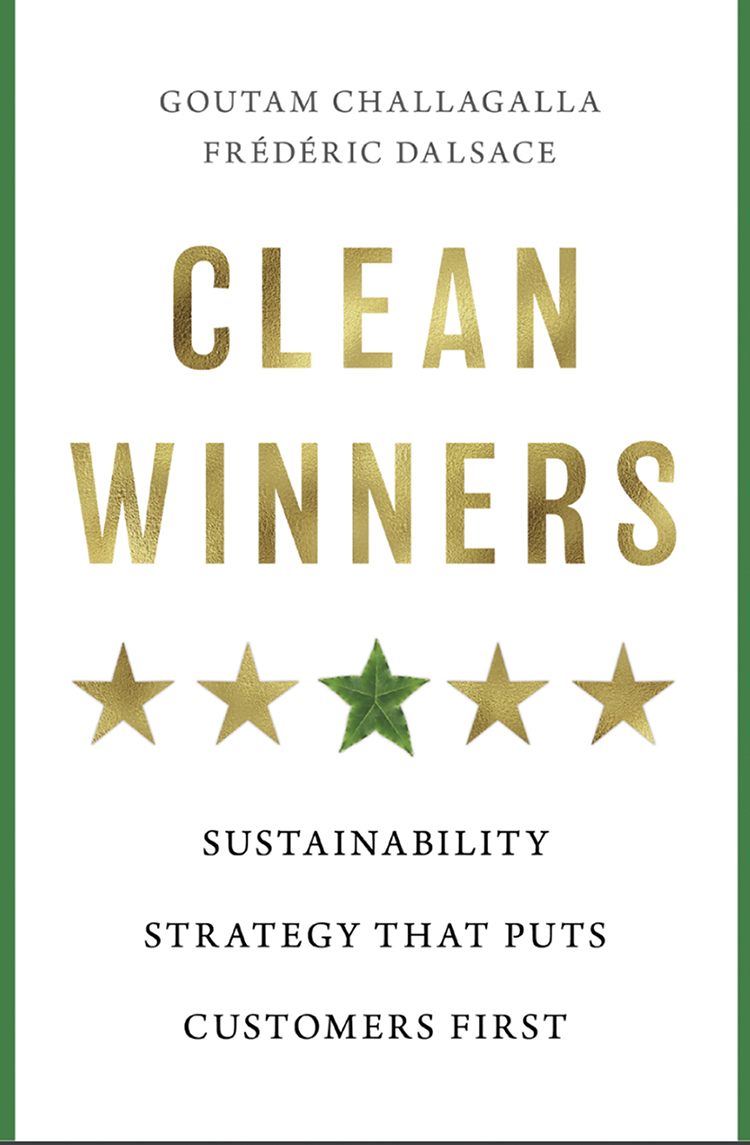
What happened? In Clean Winners: Sustainability Strategy that Puts Customers First, Challagalla and Dalsace, marketing professors with extensive consulting experience and who co-direct the Integrating Sustainability into Strategy program at the IMD Business School in Lausanne, Switzerland, argue that Unilever, like many other companies with good intentions, fell into the trap of chasing too many sustainability goals but failing to leverage those goals for profit. The conventional wisdom that sustainability will naturally lead to both business and society gains hasn’t really worked out as advertised, they claim. The assumption that consumers and businesses will support sustainability, embrace environmentally preferable products, and pay more for them has not panned out. Indeed, some consumers view green products negatively as offering inferior performance. Consequently, sustainability is distracting companies from businesses’ true priority: Making products more affordable and/or delivering better performance to make profits. In practice, sustainability is often treated as a costly add-on, and though well-intentioned, it often faces resistance within companies among stakeholders more concerned about customers and corporate bottom line. In short, sustainability has become unsustainable.
To solve this problem, Challagalla and Dalsace recommend that instead of asking, “How can we make our products more sustainable without raising cost or compromising performance?” companies should ask, “How can we use sustainability to improve product performance, sell them for less, make them less expensive, or all the above?” By flipping conventional sustainability strategy on its head, Challagalla and Dalsace assert that sustainability should be viewed as an intrinsic, value-generating element of a product offering rather than a costly add-on. Sustainability needs to be more strategic, viewed as a prism or catalyst to improve traditional product benefits (e.g., performance, convenience) or affordability (e.g., lowering upfront product cost, offering long-term money savings) that will appeal to all customers, not just the greenest ones. Indeed, Challagalla and Dalsace claim the best sustainability strategies make sustainability optional for consumers. For green consumers, they’ll like products’ sustainable attributes. But for consumers who don’t care about sustainability, they’ll buy the greener products if they’re better than others, regardless of their greenness.
The book’s title, Clean Winners, refers to businesses who get the alignment of sustainability and profits right. Specifically, clean winners are companies that recognize that sustainability is rarely the primary reason customers make purchases. Customers buy products to get a specific job done (e.g., clean clothes, get to work, satisfy hunger). Thus, a product’s features (e.g., being more sustainable) are less important than the benefits that a customer is seeking from those features. Products are simply a means to an end.
Challagalla and Dalsace lay the groundwork for their clean winners framework by first noting some uncomfortable truths. For example, green consumers, those who care a lot and will sacrifice some performance or spend more to prioritize environmentally preferable products, are typically a very small market segment. The other larger groups of mainstream consumers include blues, who occasionally will consider sustainability in product purchases, and grays, who may be indifferent or oppose sustainable options on the grounds that they may cost too much or offer inferior performance (e.g., natural clothing detergents may be viewed as having less stain-fighting power). Thus, if sustainable products are to make a difference in society and for the company’s bottom line, businesses need to design green products to appeal to everyone. Sometimes, a product’s sustainability attributes may need to be masked as not to offend gray consumers. Persil Wonder Wash is a detergent formulated to wash clothes in cold water in just 15 minutes, as an example. It’s more sustainable compared to alternatives in that it saves water and electricity, but it also appeals to even the most environmentally indifferent consumer with its savvy positioning on convenience and cost savings; Wonder Wash’s environmental attributes aren’t even mentioned in its “Fast Just Got Better” marketing. Clean winners accept the reality that not all consumers care about sustainability, and they must navigate the world as it is rather than hoping to change it.
Consequently, for companies to be actual clean winners, they need to have the mindset of resonators rather than enthusiasts. Enthusiasts are companies that put sustainability at the heart of everything they do, investing heavily across a profusion of activities, with the hope that long-term growth and profits will follow. Enthusiasts include well-known companies like Patagonia, Ben & Jerry’s, Burt’s Bees, Whole Foods, and Seventh Generation that famously target the green niche and seek to be the sustainability leaders in their markets. The problem, according to Challagalla and Dalsace, is that enthusiasts rarely appeal to consumers beyond their elite green niche consumers, and it’s questionable if their sustainability initiatives result in lower prices or superior product performance for consumers outside the green niche. Indeed, Whole Foods is often referred to sarcastically as “Whole Paycheck,” and Patagonia jackets can retail for hundreds of dollars more than competitive alternatives without seemingly offering superior performance or other traditional benefits.
By contrast, resonators don’t care to be sustainability leaders per se. Rather, resonators are companies that strategically select initiatives where sustainability will clearly create (or resonate with) the greatest value for the company and consumers alike. According to Challagalla and Dalsace, Schneider Electric is a model resonator, focusing on reducing carbon emissions through energy efficiency as a catalyst for product innovation and helping customers cut costs. Specifically, in the early 2000s, Schneider Electric shifted from traditional electricity-distribution offerings (e.g., relays, circuit breakers) to providing energy-efficiency services, including integrated hardware and software solutions via smart thermostats that automatically lowered the temperature when a building is unoccupied. In 2016, the company continued its efficiency drive to launch EcoStruxure, an open digital platform that combined cloud-connected infrastructure, applications, analytics and services. This, in turn, allowed the firm to expand into energy consulting services, including real-time monitoring, decarbonizing, and complying with new energy regulations. Its latest offerings include a suite of eco services that provide dedicated expert and analytics support to help customer sites run more efficiently. As a resonator, Schneider Electric has used decarbonization and energy efficiency to drive creating customer value, product innovation, and profits for the last 25 years!
The way to align sustainability with opportunities to create consumer value centers on identifying undesired outputs all businesses face that drive up costs, such as business inefficiencies (waste, such as underutilized labor or poor-quality inspection processes) and sustainability externalities (harmful side effects, such as greenhouse gas emissions). Resonators are particularly astute at identifying inefficiencies and externalities as lenses for developing products that create new consumer value. A farmer’s excess fertilizer use is an inefficient practice that drives up costs and negatively impacts the environment offers a specific case. A resonator would seek ways to solve these entangled undesired outputs. For instance, East–West Seed, based in Thailand, has developed numerous innovations that have helped tropical farmers cut costly waste and improve the sustainability of their practices. Many tropical areas suffer from drought and poor soil conditions, and the company offers seed varieties that use less water with no compromise in yield. It has cultivated seed varieties that are pest-resistant, but blossom better than regular varieties, directly impacting farmers’ input costs and yield while reducing negative environmental outcomes.
Challagalla and Dalsace note that there are three types of resonance—product, usage, and strategic resonance. Developing product resonance isn’t easy, and Challagalla and Dalsace present a 2 × 2 matrix for categorizing existing products, acquisitions, and potential innovations along two axes, sustainability impact (negative to positive) and customer value impact (negative to positive) to drive thinking. Ideally, companies want to move their products into the win-win quadrant of increased positive sustainability gains and consumer value, and Challagalla and Dalsace explain how Sika, a company that makes bonding, sealing and coating chemicals for construction and automotive industries, employed the framework to enhance the overall resonance of its product portfolio.
Regarding usage resonance, Challagalla and Dalsace discuss the growing shift from buying products to buying their usage. Specifically, product purchases can be wasteful and unsustainable. For example, people may buy dresses or formal wear for a wedding or prom that may be worn only once. Rent-the-Runway addresses this costly inefficiency by renting designer gowns for one-time events. Additionally, there’s growing recognition that in industrial settings business customers may not have the expertise for using and maintaining the products they buy, leading to misuse and waste (e.g., trucking companies may not have the expertise for efficient tire maintenance). Michelin offers a tires as a service for haulers on a pay-per-kilometer model. Michelin handles tire maintenance, including tire permutation, regrooving, and retreading so that tires are replaced and serviced more efficiently, maximizing fuel efficiency to reduce CO2 emissions. Challagalla and Dalsace assert that shifting from product sales to usage can bring gains for customers, business value, and sustainability.
Strategic resonance focuses on what markets companies choose to operate and how to win in those markets, and Challagalla and Dalsace discuss contingencies on how businesses can choose to launch new resonant products or enter new adjacent playing fields profitably (e.g., an electric vehicle manufacturer moving into battery swapping to eliminate the inefficiencies of drivers waiting to recharge their cars at charging stations).
Challagalla and Dalsace conclude Clean Winners by discussing ways artificial intelligence and digital technologies can be leveraged to better see, act, and scale resonant initiatives. Further, they provide an overview of contingencies with regard to marketing communication strategies and the risks of greenwashing, proposing a framework for how intensely sustainability should be communicated to target audiences (green, blue, or gray) based on the complexity of a sustainable benefits offered by resonant products and the industry’s exposure to sustainability scrutiny by the media, regulators, or militant environmental NGOs. Sometimes, clean winners simply keep quiet about their sustainability benefits. Finally, Challagalla and Dalsace offer recommendations on how to champion resonance within organizations. They suggest sustainability champions should start out as activists to kickstart the sustainability transformation effort within firms, but then quickly shift to become actors grounded as market realists by communicating with those responsible for the company’s profit and loss statements and advocating that the company use sustainability as a lens to holistically examine both customer needs and unwanted outputs. Challagalla and Dalsace also assert that building a sustainability culture is a distraction; a customer-centric culture is the only one a company needs to remain profitable.
If there is a limitation of Clean Winners, it is its narrow focus on pursuing only sustainability initiatives that can deliver tangible consumer and business value, primarily on efficiency/cost-savings. Challagalla and Dalsace recommend that businesses need to just accept the reality that most consumers don’t buy/act on sustainability and that it isn’t businesses’ responsibility to change consumers’ values or behaviors to become more sustainable. Corporate sustainability goals, however, often need to take into account how consumers use (or misuse) their green products, and businesses need to educate consumers on how to use the product. However, educating or nudging consumers to become greener (e.g., encouraging hotel guests to reuse towels to reduce water use) and to use environmentally preferable products appropriately warrants consideration that is only briefly addressed in the book. Indeed, businesses are in the best position to educate their consumers about going green because they understand them better than anyone else (Stafford & Graul, 2020), and as Clean Winners attests, resonator companies can design environmentally preferable products, services, and processes to appeal to their consumers’ needs.
On balance, Clean Winners’ core message about the opportunities for pursuing sustainability for profits is compelling and alluring. Academics outside of business and economics will find the book valuable to better understand how savvy business leadership and creativity can leverage and advance sustainability while meeting corporate bottom-line needs.
Footnotes
Author Disclosure Statement
No competing financial interests exist.
Funding Information
No funding was received for this article.