



Abstract

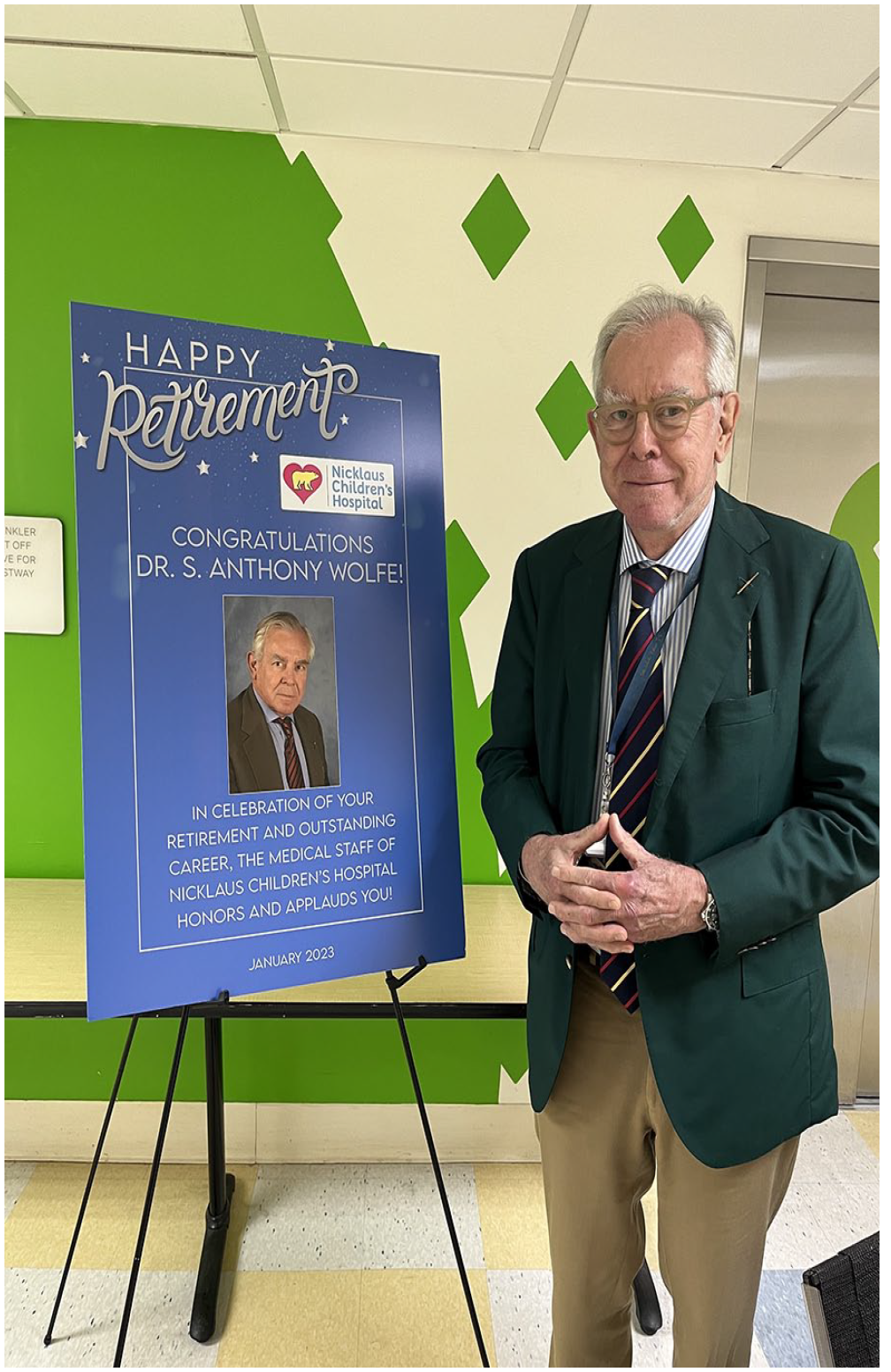
On December 26, 2023, our dear friend and esteemed colleague in plastic and craniofacial surgery, S. Anthony Wolfe, MD, passed on to eternal rest. Having relocated to Miami, Florida 2.5 years ago and partnered with Dr. Wolfe for this short time period, as well as having assumed the follow-up care for a number of his patients after his retirement in April 2022, I feel both empowered and honored to pay tribute to this legendary figure whose presence in the office and in our respective professional societies we will always remember (Figure 1). As many have remarked in the weeks since his death, Dr. Wolfe was quite simply a Renaissance man, with a life full of pioneering innovation, travels, hobbies (especially cooking), acquaintances, and accomplishments that few others have achieved. Craniofacial surgery colleagues will readily recall his more prominent professional accolades, but few may know the details of his other personal traits that endeared him to devoted and loyal staff of more than 40 years, to hospital workers at all levels, to patients and family members across the globe, and to his 10 surviving children and other extended family. Here I hope to capture a glimmer of these characteristics, such that we may properly acknowledge and praise the gifts of a man who devoted his life to purpose and to bettering the care of others for decades into the future.
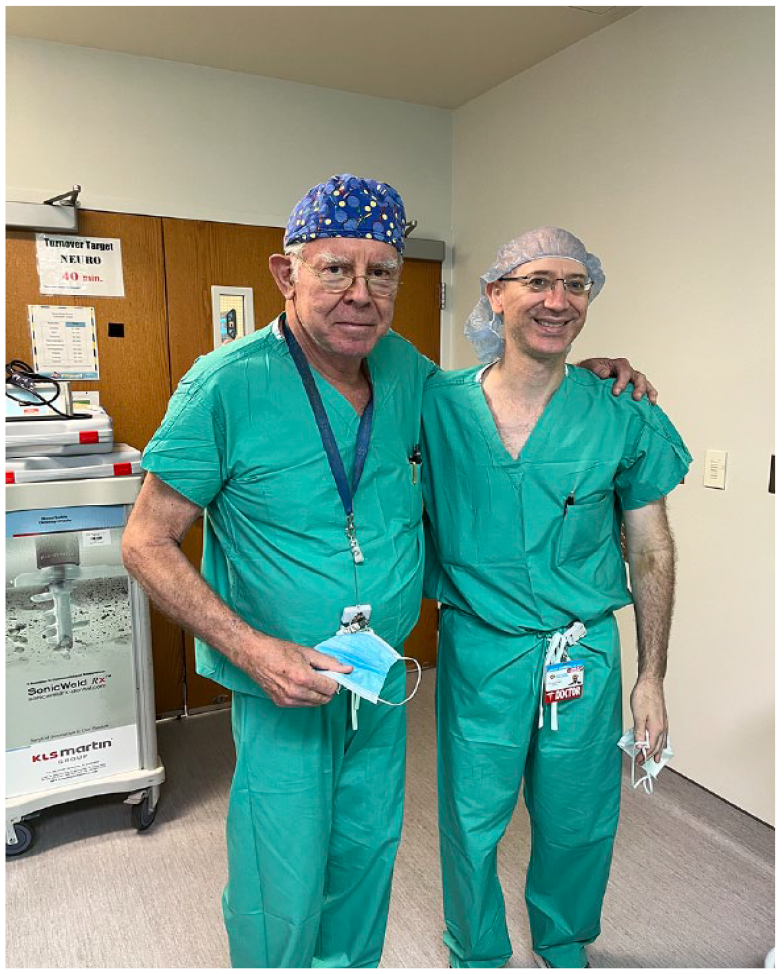
S. Anthony Wolfe and Jordan P. Steinberg in the operating room at Nicklaus Children’s Hospital, Miami, FL, U.S.A., August, 2022.
Approximately 6 months after his retirement, I sat down with Dr. Wolfe in the media studio at Nicklaus Children’s Hospital, formerly Miami Children’s Hospital, to conduct a detailed interview of his early life as well as the range of his professional career. Dr. Wolfe was born into a military family and traveled extensively during his youth. He spent significant time in Russia when his father served as Air Force Attaché at the US Embassy, and there learned to speak Russian. He also learned to speak French during other periods in Europe, which served him well when he joined the US Public Health Service and was stationed in Senegal, West Africa. This was following his undergraduate education at Dartmouth and then at Harvard Medical School. There were family ties to medicine, specifically to Urology, however Dr. Wolfe found himself more drawn to other surgical specialties. It was after he heard Paul Tessier speak in Montreal in 1971 at the American Society of Plastic and Reconstructive Surgery Meeting that he decided on a career in plastic surgery, a specialty still in its early stages. From that point onward, he began researching plastic surgery training programs across the United States, and connected with associates of Dr. Ralph Millard, who invited him for an interview. Dr. Wolfe was drawn to Dr. Millard’s fastidiousness, and when it was clear there would be an opportunity for him to complete his residency there, he seized upon this. As he later came to do with Dr. Tessier, Dr. Wolfe studied the nuances of Dr. Millard’s technical mastery of reconstructive techniques of the central face and lips, noting all of the pearls and principles for later reproduction in his own practice. Dr. Wolfe essentially became one of Dr. Millard’s most well known disciples and later partner in the practice in Miami, and it was through Dr. Millard that Dr. Wolfe then landed the opportunity to visit Paris in 1974. Dr. Wolfe’s observership in Paris turned into a more formal yearlong training opportunity as Dr. Tessier’s assistant, which ultimately culminated in a return to Miami in 1975 to practice craniofacial surgery at a time when few others had any familiarity with complex bony reconstructive techniques for the face. Dr. Wolfe was immediately busy in practice alongside Dr. Millard soon after his return. His scope included complex primary trauma at Jackson Memorial Hospital in Miami (with the University trainees under his guidance), secondary trauma reconstruction, and congenital craniofacial reconstruction utilizing the newly described methods of Paul Tessier. Dr. Wolfe came to do the latter procedures at Variety Children’s Hospital, later Miami Children’s Hospital, once a surgical intensive care unit was established there and neurosurgery collaboration was available. It was during this era that Dr. Wolfe helped establish the successes of primary bone grafting in trauma cases, for example, as well as to establish the incredible versatility of Tessier’s craniofacial techniques to correct congenital cranio-orbital deformities. It was with great pride that Dr. Wolfe recounted to me his ability in the early years to execute these most complex of craniofacial surgeries, only to later receive praise from the master himself, Paul Tessier, at a 1991 meeting of the International Society of Craniofacial Surgery (ISCFS). Dr. Wolfe himself was a founding member of the ISCFS, and later served as its president.
From Joe Murray to Ralph Millard to Paul Tessier, the impact of strong mentoring in the development of a surgeon’s career is no more evident than in the example of Dr. Wolfe. “A Tale of Two Teachers” was the title of Dr. Wolfe’s presentation at a symposium we held in his honor at Nicklaus Children’s Hospital in January 2023 to commemorate his retirement from clinical practice. Dr. Wolfe detailed the teachings and lifetime work of Dr. Millard and Dr. Tessier in his presentation, which he also subsequently gave at an honorary lecture for the Southeastern Society of Plastic Surgeons virtually in June 2023. I assisted Dr. Wolfe with the preparation of a recording for this lecture at the Southeastern Society meeting, which was well received by a large audience (and was essentially Dr. Wolfe’s last formal academic presentation). At the suggestion of one of my personal mentors, Dr. Joseph Williams, the Southeastern Society has added a section for Craniofacial Surgery at their annual meeting, and the S. Anthony Wolfe, MD Best Presentation Award will recognize the most highly rated contribution to the symposium in perpetuity. “A Tale of Two Teachers” is also the title of a new book Dr. Wolfe had just recently completed before his passing with the help of his daughter Erin, now a plastic surgery resident herself. It is clear that Dr. Wolfe wanted nothing more than to keep the sacred, basic principles of these true legends alive and well as we head into the next generation of technologically advanced reconstructive surgery. In his brilliant execution of the principles himself, Dr. Wolfe became the master in his own right. He studied, he researched, he cataloged, he lectured, he organized, and he accomplished. For years well beyond the death of Dr. Tessier, he showcased the techniques for the craniofacial world, and brought them to adult and pediatric patients near and far who had nowhere else to turn for their complex and disfiguring anomalies. We often say that “those who do not learn history are doomed to repeat it,” but Dr. Wolfe’s example can be taken as the inverse: “those who do learn history can recapitulate the results with great success.” This, I believe, is one of Dr. Wolfe’s lasting legacies that I will cherish as one of my own personal teachers.
I asked Dr. Wolfe at the end of our long interview to reflect on some of his own principles, and what he would consider most important to pass on to our younger generation of craniofacial surgeons. Certainly it is hard to distill all of his teachings down to a few points, as it would have been for Millard or Tessier. Nonetheless, several themes emerged in our conversations, ones which I will take to heart as I continue forward in my career, and ones that I also hope to pass to future trainees in our program. First is the principle of preferentially using autogenous materials. As our community of craniofacial surgeons knows well, there was not a more fierce proponent for the use of autogenous bone than S. Anthony Wolfe, MD. In large cohorts of pediatric patients requiring cranioplasty or augmentation for skeletal deficiencies, Dr. Wolfe showed over decades that, in his own words, “bone rules.” He did admit toward the end of his career that there were limited cases in which alloplasts could have a role (e.g., 3 dimensionally complex anatomic regions with poor long-term predictability of bone integrity). Nonetheless, he was a champion of teaching and learning bone harvesting techniques from a variety of sources, and advocated that this facility would give the craniofacial surgeon unparalleled control with rebuilding complex defects in the safest manner possible, with a reduction in long-term sequelae that sometimes did not surface for many decades. The tenets have been adopted with many techniques, and not just with bone (e.g., microtia reconstruction with autogenous cartilage). The second principle is the importance of dental training in craniofacial surgery. Dr. Wolfe was a master of cranio-orbital surgery as many know, but also enjoyed a voluminous caseload of maxillofacial deformities requiring close collaboration with dental specialists. He recounted for me many conversations with longtime contemporary colleague and friend, Dr. Henry Kawamoto, during which they discussed the possibility of incorporating more formal dental training into the craniofacial subspecialty. While this has still not been fully realized, it is an important point for further discussions in our respective societies. The final principle relates to the “end goal” of all plastic surgery, or the state of “normal.” We are so accustomed to hearing others say at end of a case that the patient “looks so much better than before,” and feeling motivated and accomplished by this, but Dr. Wolfe would not accept this as the benchmark. His favorite video clip of all time was a very brief, and slowly spoken, response by Paul Tessier in a nationally televised English language interview in which he said that the goal of this new field of craniofacial surgery was to make people “look normal.” Not “better,” but “normal.” This was a quest for Dr. Wolfe throughout his career. Some of his patients with the most complex of conditions underwent numerous surgeries, but if he thought it would get them 1 step closer to “normal,” he would always offer a next stage. Dr. Wolfe’s staff came to know him for this perseverance and drive to achieve the ultimate outcome.
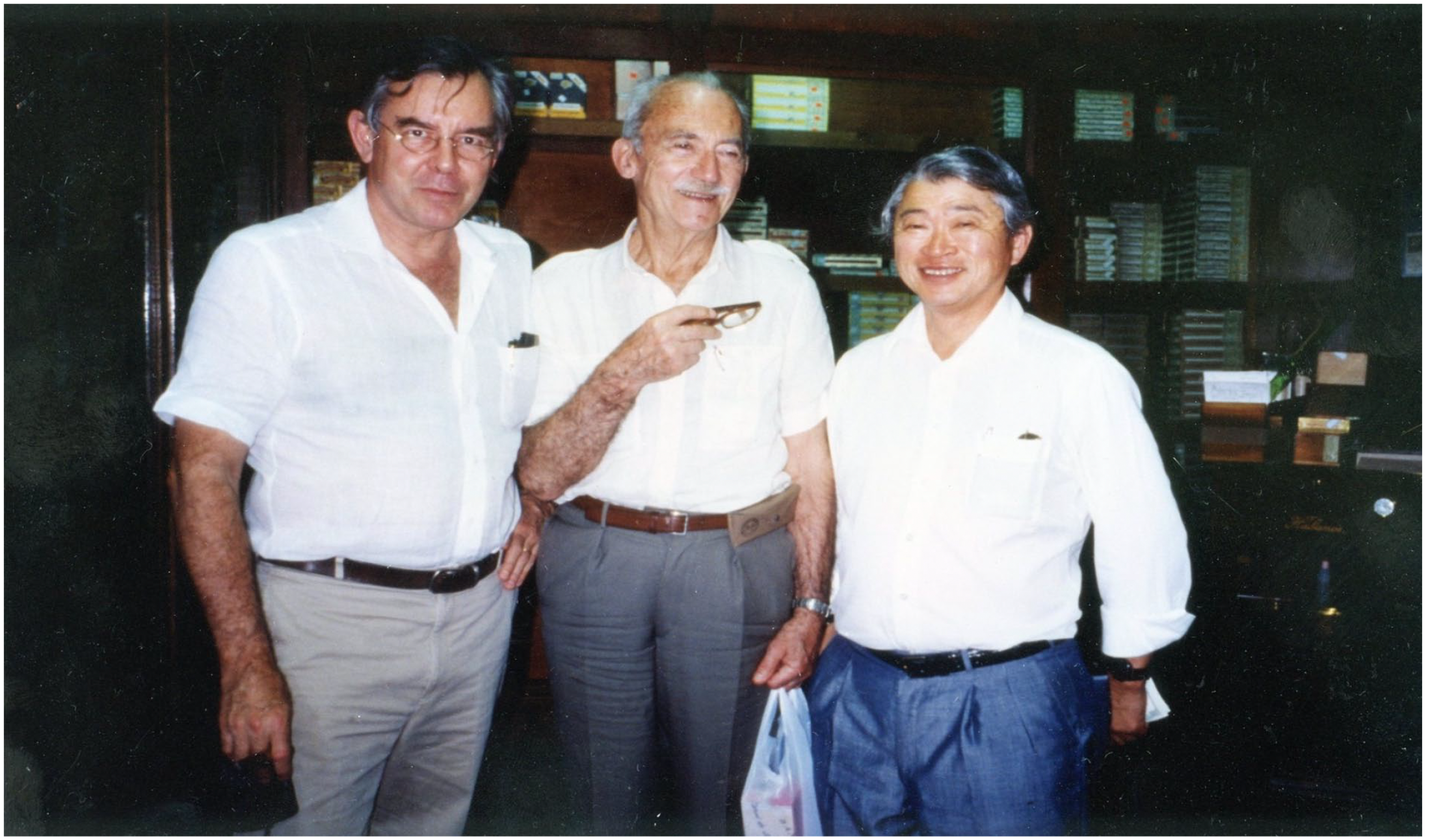
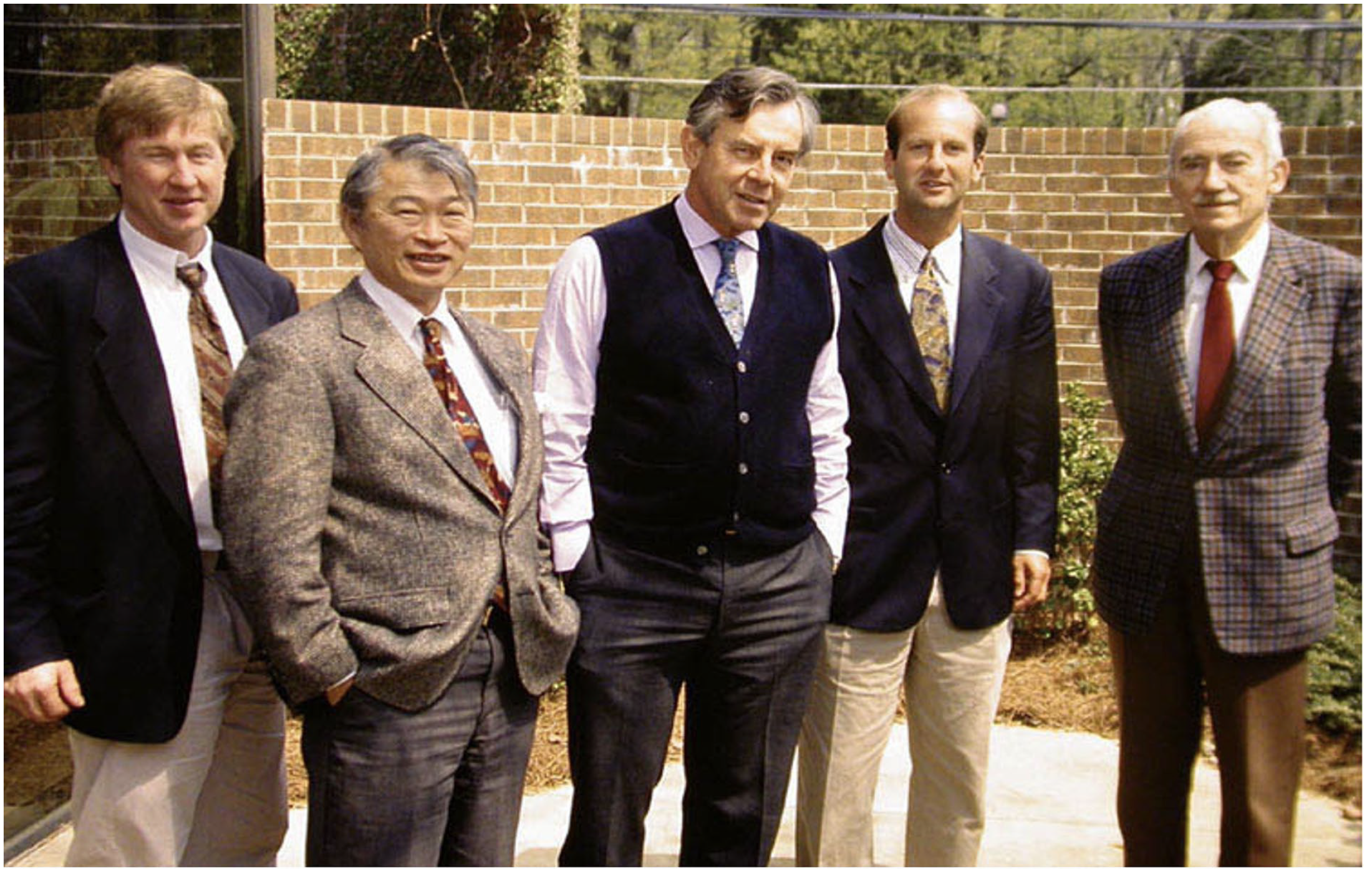
“Mon Cher Tony” is how Paul Tessier addressed his personal letters to Dr. Wolfe. As recounted in Dr. Wolfe’s book, “A Man from Heric,” the last of these letters came on May 12, 2008. The 2 had made plans to disseminate much of Tesser’s unfinished or unpublished work before his death. Dr. Wolfe had spent countless hours combing through Tessier’s archives, and collating information to not only better understand the genius of Paul Tessier for his own self, but also to make Tessier’s artifacts widely available for generations of surgeons to come. It is emblematic of the way Dr. Wolfe lived his own life. It was a life lived in the service of others. He retained his own personal office staff through the entirety of his career. Administrative Assistant Nora Silva, front office manager Lucila Batista, photographer Jorge Insua, surgical assistant Dr. Marek W. Taylor, and scrub technician Jared Horenstein are just a few of the staff members that worked with this talented, selfless, and remarkable surgeon through the decades. All would attest to his high energy level and his willingness to help any patient in need.
Amongst all the things Dr. Wolfe did so well, one that perhaps received less attention was planning for his latter years. He worked with a swift pace right up until his retirement in April 2022, just short of 2 years ago now. His family and significant other, his historic home in Miami, and the hospital were his life. While he certainly traveled extensively and participated in meetings and symposia all over the world, his home base at Miami Children’s/Nicklaus Children’s Hospital and the care of his patients were sacrosanct. It has been the honor of my career to continue care for some of these patients. I only wish I had a few more years with Dr. Wolfe – a few more arhinias, a few more atypical clefts, a few more orbital dystopias, etc. I had several such cases to discuss with him in the weeks before he passed away. No matter his state of physical health at the time, seeing and discussing examples of patient cases brought him light on dark days, and renewed energy where perhaps there was little left. He was a man of purpose, a man of deep thought and intensity, and a pioneer for all of us in the plastic surgery community. We will miss you, Tony. Adieu.
Footnotes
Declaration of Conflicting Interests
The author declared no potential conflicts of interest with respect to the research, authorship, and/or publication of this article.
Funding
The author received no financial support for the research, authorship, and/or publication of this article.
