




Abstract
For more than a century, the primordial inhabitants of the Zimbabwe, the Tjwa people, have experienced numerous injustices. The most significant of these has been the conspicuous absence of recognition from both the colonial and post-colonial administrations. It was not until the 2013 Constitution, in Chapter 1, Section 6 (1), that the Tjwao language – erroneously categorised as Khoisan – was finally acknowledged by the current government. Tragically, this indigenous language is now on the brink of extinction, with fewer than 3000 members, and less than 20 fluent speakers in the Tsholotsho region. This paper explores the challenges faced by these people using qualitative research methods, which reinforced their marginalisation in the context of Zimbabwe, in terms of culture and language.
Introduction
To properly understand how a certain group of people are marginalised, there is need to hear their narratives, and some of their concerns when it comes to speaking their own language, as well as interacting with others (Magwa, 2010; Mapfumo, 2024). This is the case for the Tjwa community in Zimbabwe, whose language has not been included in the language policies enacted by the Ministry of Primary and Secondary Education (MoPSE) in Zimbabwe. This paper seeks to shed light on some of the issues that they face and in conclusion will look at some recommendations that if followed will improve their status in the Zimbabwean context. For more than a century, the primordial inhabitants of Zimbabwe, the Tjwa people, have experienced numerous injustices (Nhongo and Nkomo, 2024; Dlodlo, 2024; Ncube and Siziba, 2017). The most significant of these has been the conspicuous absence of recognition from both the colonial and post-colonial administrations. It was not until the 2013 Constitution, in Chapter 1, Section 6 (1), that the Tjwao language – erroneously categorised as Khoisan – was finally acknowledged by the current government. Tragically, this indigenous language is now on the brink of extinction with few villages with people who speak the language in the Tsholotsho district in Western Zimbabwe (Andrason et al., 2024; Hitchcock, 2016). More than a decade after the enshrinement of the 2013 Constitution, the Tjwao language continues to face an existential threat, its development languishing, save for the limited efforts of independent anthropologists and linguists (Dlodlo, 2024). This paper highlights the challenges of the Tjwa people in Zimbabwe.
The Constitution of Zimbabwe in 2013 officially recognises 16 languages that include Chewa, Chibarwe, English, Kalanga, Khoisan, Nambya, Ndau, Ndebele, Shangani, Shona, sign language, Sotho, Tonga, Tswana, Venda, and Xhosa. Section 6 of the constitution mandates the government and its institutions to ensure equitable treatment of all officially recognised languages and to consider the preferences of people affected by government measures or communications. The Tjwa community had hoped that the 2013 Constitution would recognise their minority language. However, the National Constitution erroneously listed the Tjwao under the broader category of ‘Khoisan’, which as already mentioned is an umbrella term akin to ‘Bantu’ and cannot be used to refer to specific ethnic groups. However research by Andrason et al. (2024) highlight that it is part of the Tshwa clutser of languages of which the Tjwa is part of them. This misrepresentation has led to the Tjwa people experiencing low self-esteem, low self-efficacy, and limited opportunities provided by other communities.
The overall aim of this study is to explore the challenges of recognition of the Tjwa people in Zimbabwe, focusing on historical injustices, the impact of constitutional provisions, government actions, and measures needed to address linguistic and cultural marginalisation (Magwa, 2010, 2015).
Research questions
1. What historical injustices have the Tjwa people experienced in Zimbabwe, particularly regarding recognition and language? 2. How has the recognition of the Tjwao language in the 2013 Constitution impacted the Tjwa community’s expectations and realities? 3. How have government actions (or inactions) contributed to the ongoing linguistic and cultural marginalisation of the Tjwa people? 4. What measures are necessary to address the linguistic exclusion and improve the situation for the Tjwa community?
The next section looks at the contextual background of the Tjwa community and the extent of their marginalisation.
Background
Tjwa people across Southern Africa (source: Madzudzo, 2001).
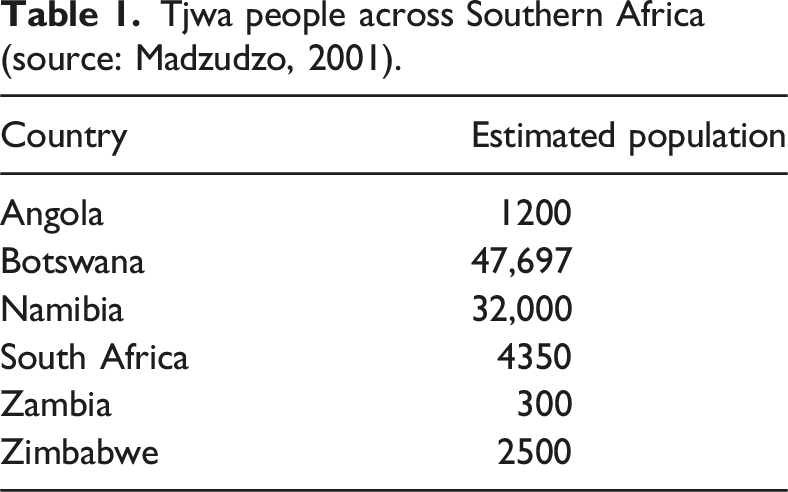
Traditionally, the Tjwa people sustained themselves through the time-honoured practices of hunting game and foraging for wild edible fruits (Kangira, 2016). However, this primitive nomadic existence underwent a dramatic shift in the aforementioned six countries, owing to the prevalence of displacements and the enactment of land tenure laws (Makoni, 2011; Zhou, 2014). These legislations encouraged permanent settlements and outlawed hunting. This meant that the interactions and interconnections among the Tjwa communities in Southern Africa have remained remarkably minimal (Magwa, 2015). This meant that they became assimilated into diverse ethnic enclaves within their respective countries have resulted in a significant loss of cultural homogeneity, manifesting in altered socio-cultural norms, language, self-identity (nomenclature), historical narratives, and belief systems (Are, 2015; Kangira, 2016; Mpofu and Salawu, 2019). Besides, a wealth of research has been conducted pertaining to the Tjwa people in Botswana, Namibia, and South Africa, in contrast to the paucity of scholarly endeavours focused on the Zimbabwean Tjwa. Consequently, it is imperative to delve into and elucidate the historical trajectory of the Tjwa populace within the context of Zimbabwe (Hurwitz, 2020; Magwa, 2010; Makoni, 2011).
The Tjwa people reside in the adjoining Bulilima, Mangwe, and Tsholotsho districts in the northwestern region of Zimbabwe (see Figure 1). Nevertheless, the focus of this study is on Tsholotsho District, which has a higher density of Tjwa population compared to Bulilima and Mangwe. Before hunting was outlawed by the colonial government, the Tjwa in Tsholotsho were semi-nomadic hunter-gatherers, relying on the land and its resources for their livelihoods (Andrason et al., 2024). They developed specialised skills in tracking animals, foraging for edible plants, and making tools and weapons from natural materials (Romero, 2008; Ravindranath, 2009). Their intimate knowledge of the environment is reflected in their language, which contains a variety of click consonants that imitate sounds found in nature. Of late, the Tjwa people have faced significant challenges in recent decades. As modern development and agriculture have encroached on their traditional lands, the Tjwa have struggled to maintain their lifestyle and cultural identity. Many have been displaced from their ancestral territories, leading to a decline in their population and the disruption of their traditional ways of life. Location of Tsholotsho on Zimbabwean Map (Source: Google Maps).
The arrival of armed British people in the 1890s is thought to have led to the disunity in the Ndebele kingdom, compelling the Ndebele and Kalanga to relocate to the more arid and semi-arid regions of the country, which had an impact on the Tjwa community in terms of migration and influence. With nowhere else to go, the Tjwa were compelled to slowly assimilate into the Ndebele and Kalanga patterns of life. The expanding European population, with their mining and hunting expeditions, further hastened the erosion of the Tjwa’s way of life.
The establishment of wildlife preserves, such as the Wankie Game Reserve (now Hwange National Park) in 1928, further diminished the Tjwa’s hunting and gathering spaces, pushing them to the outer fringes of the nation, where they now reside as landless and impoverished citizens. The assimilation of the Tjwa has precipitated a drastic transformation in their social fabric, resulting in the loss of many of their core values and identity, most notably their language. Tragically, the Tjwa are often perceived by their neighbours as troublesome, primitive, unsophisticated, and resistant to change.
The Tjwao language is a beautiful, complex language that provides them insights into their culture, their relationship with the environment and nature, and their worldview. Losing their language would mean losing a vital part of their cultural identity and heritage. The Tjwa hope that preserving Tjwao will give them insights into their early history and promote their socio-economic resilience. Besides facing marginalisation from the government, the Tjwa have also endured emotional injuries from domination by the Ndebele and Kalanga. Given the context, it then becomes essential to find out the challenges faced by the Tjwa people.
Theorising the conundrum of the Tjwa people
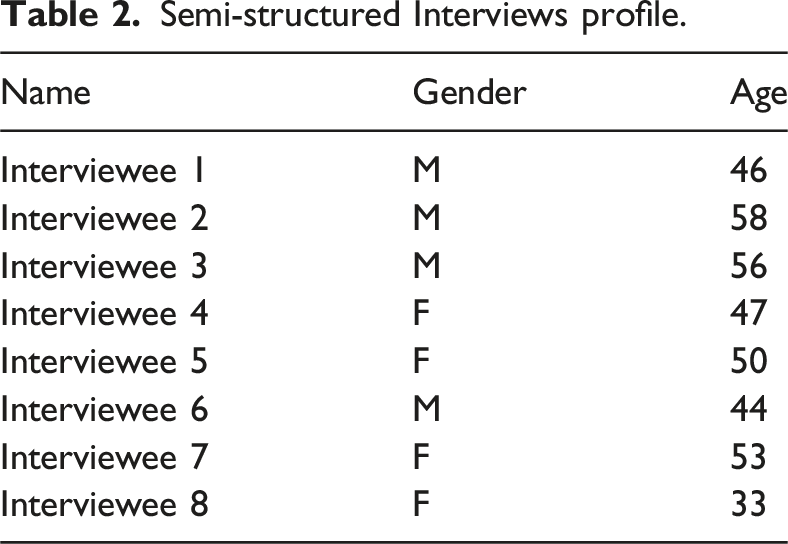
The research employed a qualitative empirical approach, that made use of semi-structured interviews and focus group discussions. This methodological approach was chosen to gain an in-depth understanding of the perspectives and lived experiences of the Tjwao language activists and Tjwa community members. The participants were selected using a purposive sampling technique, targeting individuals and groups who were actively involved in Tjwao language advocacy or were regarded as knowledgeable elders within the Tjwa community. The data collection process was conducted over a 4-month period, from January to April 2023. The purpose was to hear the challenges faced by the Tjwa people in spreading their language.
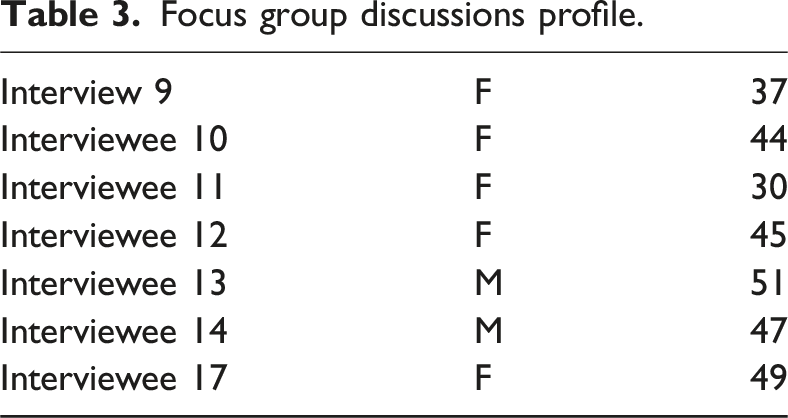
The researchers conducted a total of 15 individual interviews with Tjwao language activists and Tjwa individuals residing in the Tsholotsho District. The interviews lasted between 45 and 60 minutes each and more broadly focused on the Tjwa community’s experiences about language recognition, and the challenges they faced, in the context of changes in policy in 2013. Additionally, the researchers facilitated three focus group discussions with the Tjwa community in the Tsholotsho region. Each focus group had 8–10 participants and lasted approximately 60 minutes. The focus group discussions (FGDs) provided insights into the communal experiences, historical context, and collective narratives surrounding the Tjwa language and its recognition. The interview and focus group transcripts were analysed using thematic analysis. The researchers carefully coded the data, identified recurring themes, and interpreted the findings in the context of the Tjwa community’s experiences with language recognition and implementation of the 2013 constitutional provisions.
Semi-structured Interviews profile.
Focus group discussions profile.
This paper is grounded in the theoretical construct of language endangerment. The notion of languages facing the existential threat of extinction has been the subject of extensive academic discourse and deliberation (see also, Crystal, 2000; Brenzinger, 1997; King, 2001; Obiero, 2010). While the phenomenon of language endangerment is a global one, the rate of language loss is believed to be comparatively lower in the African continent relative to other regions of the world (Blench, 1998; Dlodlo, 2024; Mpofu and Salawu, 2019). Even during the time of Batibo (2005), the issue of language endangerment has recently emerged as a pressing concern not merely for linguists but also for policymakers, ethnographers, and language planning professionals worldwide (Dlodlo, 2024; Mpofu & Salawu, 2019). Batibo (2005) further observed the importance of the matter, which was further exacerbated by alarming statistics highlighted by Krauss's (1992) projection that indicated that approximately 600 languages will remain by the end of the 21st century, implying that 90% of the world’s linguistic diversity will have vanished. This shows that languages and their associated cultures are currently undergoing a rate of attrition faster than any other juncture in human history (Nhongo and Nkomo, 2024: Magwa, 2010). Although there exists no universally accepted definition of the term ‘language endangerment’ (Majidi, 2013), linguists generally concur that it denotes the gradual disruption and threat to the intergenerational transmission of a language within a speech community (Sallabank, 2010; UNESCO 2003).
Numerous factors can contribute to a language’s decline and eventual endangerment or extinction. Besides the dwindling number of native speakers, other key factors include the age of speakers, the use of the language by children, the presence and influence of other languages, the overall attitude towards the language and its speakers, as well as the speakers’ sense of ethnic identity. Government policies and job opportunities also play an important role in a language’s survival and preservation. If a language lacks crucial elements like a standardised writing system, literary works, or fluent writers and readers, it becomes more vulnerable (Phiri et al., 2020). Crucially, languages often die out due to political, economic, or cultural pressures, as speakers may opt to prioritise learning a language that is tied to economic success and social advancement. The loss of a language can severely undermine a community’s sense of identity and belonging, leading to their incorporation into the dominant language and culture (Mapfumo, 2024). Intergenerational transmission of the language can be disrupted by external forces that drive members of the language community to favour a more dominant language.
Findings
The findings suggest that the Tjwa community felt the recognition they received in the Constitution of 2013 was not only erroneous but also completely unimplemented. The research participants unanimously reported that the Zimbabwean Government has made no discernible effort to address their linguistic plight. They had hoped that the constitutional acknowledgment of the Tjwao language would open avenues for education, improve their standards of living, foster inclusion in development initiatives, and expand employment opportunities. Yet, the Tjwa continue to face relentless ‘language shift’, compelled to adopt the dominant Kalanga and Ndebele languages to secure even the most basic jobs. This paper unequivocally argues that the Tjwa people of Zimbabwe have been subjected to egregious linguistic exclusion, and it concludes that their plight must be urgently and diligently remedied by the government of Zimbabwe.
It is crucial to note that a given language can, over time, reach a juncture where it loses all its speakers. This lamentable stage is commonly referred to as language endangerment. When such a scenario transpires, the ensuing effect is the loss of knowledge and traditions of a community that are typically transmitted through the medium of that language. It has been observed that a lost language equates to a lost culture, and a lost culture signifies the irretrievable loss of invaluable knowledge (Austin, 2006). This unfortunate occurrence often transpires because the more dominant language is perceived or presented as a prerequisite for ensuring a desirable quality of life. For instance, the requirement to speak a particular language might be a condition for securing employment, accessing healthcare, or obtaining education, as noted by the eminent scholars Crystal in 2000, Fishman in 1997, and Erdal in 2015. Under such overwhelming pressures, many individuals opt to shift their allegiance to the favoured language.
Fear of language endangerment
Should a community forfeit its language, the resultant effect is the lamentable loss of a truly unique perspective and profound insight. Given the review of the literature that has shown the exclusion and marginalisation of the Tjwa language in some parts of Zimbabwe (Nhongo and Nkomo, 2024), the interviewees feared that this could signal their unique language disappearing. Most significantly, the demise of a language also entails the irretrievable forfeiture of people’s sacred stories, mythological histories, medical wisdom, geographical familiarity, navigational secrets, and zoological comprehension. Furthermore, the attrition of languages can also impede socio-economic resilience. The examination of the linguistic possibilities inherent in the vast array of global languages affords researchers a profound and multifaceted understanding of the human cognitive faculties and the remarkable capacity of the human mind to acquire such a complex system at such a tender age. Intriguingly, the fewer languages available for rigorous academic study, the more constrained and limited our comprehension of the extraordinary capabilities of the human intellect.
For example, one Tjwa language activist mentioned that:
‘The recognition in the Constitution was a hollow gesture, as we continue to face challenges in accessing education and public services in our mother tongue’.
Another member of the Tjwa community stated that: ‘The lack of implementation has been deeply frustrating, as we feel our language and identity are still not fully respected’.
The study of an endangered language presents a unique challenge, for the researcher must delve deeply to uncover language-learning resources and engage with native speakers to hone their proficiency. Most significantly, the study of an endangered language would imbue the researcher with a distinctive cultural connection to the communities concerned.
Marginalisation of Tjwao
The Tjwa people residing in Zimbabwe are lagging in developing their own identity and are thus marginalised in this context, since they are not accorded the full rights that they deserve (Nhongo and Nkomo, 2024). Fishman, in his seminal work published in 1997, posits that a language is also considered endangered when it is not being transmitted to the succeeding generation, lacks the sustenance of daily life, is not being taught within academic institutions, and does not possess official or national status. This sentiment resonated with Ndlovu’s keen perception in 2010 that even the dwindling number of elderly individuals (fewer than 20) who retained the capacity to speak the Tjwao language had failed to impart it to the younger generation. Furthermore, there exists no published material in the Tjwao language, as it has yet to be codified into a written system or orthography, as noted by Ndlovu in 2013. The participants felt that they had experienced historical injustices, which largely speaks of marginalisation: Interviewees 1: ‘For generations, we have been invisible; our language and culture were ignored by everyone’. Interviewees 2: ‘Colonial powers saw us as less than human, stripping away our identity’. Interviewees 3: ‘Even after independence, we were still marginalised; no one acknowledged our existence’. Interviewees 4: ‘Our language was misclassified, which only deepened our sense of erasure’.
The interviewees highlight the need for recognition and identity, especially when it comes to speaking their own language, so that they can do what they observe to be the norm with other Zimbabwean languages that they are aware of. The review of the literature highlight challenges faced by policymakers in ensuring that Tjwa language is included in the curriculum discourses (Nhongo and Nkomo, 2024). Even though efforts are underway to improve the situation, the interviewees still felt that there is a long way before this language is fully embedded into the curriculum of the Zimbabwean educations system. It is against this backdrop that the Tjwao language faces the peril of endangerment, for its speakers do not acquire literacy in this tongue, focusing instead on the Ndebele and Kalanga languages (Mpofu and Salawu, 2019). As observed by a number of scholars such as Dlodlo, 2024; Mpofu and Salawu (2019); Callahan and Herring (2012), and Bamgbose (2011), highlight the need for languages such as Tjwa to be preserved alongside those that are dominant such as a Shona and Ndebele languages in Zimbabwe (Magwa, 2010).
In the education sector, the predominant linguistic mediums utilised within Matabeleland are Ndebele and Kalanga languages for the purposes of instruction and examination. Nonetheless, over the initial 3 years of primary schooling, the Ndebele language emerges as the sole mode of tuition and assessment within the curriculum. This is a consequence of the Education Act of 1987 and the refined iteration of 2006, which stipulate that the medium of communication for the initial grades 1–3 shall be the Shona language in Shona-speaking enclaves, and the Ndebele in the Matabeleland domain.
This is despite the myriad of other languages prevalent within the Matabeleland region, one of which is the Tjwao. Although certain non-governmental entities have endeavoured to advocate for the instruction of the Tjwao language at Landa John Nkomo High School in Tsholotsho, a dearth of qualified teachers as well as sufficient literary resources on the subject persists. A distinguished American professor who once visited the University of Zimbabwe, the Wills, with a keen interest in the field of linguistics, offered to assist in funding the education of 24 Tjwa community pupils at the aforementioned Landa John Nkomo High School in Tsholotsho, on the condition that the institution commenced instruction in their native Tjwao language (Sunday News Online, 16 September 2018). The overarching objective was to achieve the teaching of the Tjwao language at the school, thereby ensuring the preservation of this linguistic heritage and preventing its demise. The incorporation of Tjwao language instruction at the school would have been a monumental milestone in the development of this language and the lives of the community itself, which stands perilously on the verge of extinction. Yet, despite the merits of this proposition, it ultimately failed to come to fruition. Against this arid and acidic backdrop, the sole ‘Messiah’ for the Tjwa people was the esteemed 2013 Constitution of Zimbabwe. Results highlight the need to evaluate the impact of the constitution, especially considering the Impact of the 2013 Constitution on Expectations and Realities; the participants stated that: Interviewee 5: ‘We thought the recognition would mean real change, but it feels like a broken promise’. Interviewee 6: ‘The Constitution gave us hope, but that hope has turned to disappointment’. Interviewee 7: ‘We expected to see our language taught in schools, but nothing has happened’. Interviewee 8: ‘Recognition without implementation is meaningless; we still struggle to communicate in our own language’.
The study findings highlight the implementation of post-colonial language policies in Zimbabwe even after Independence in 1980, marginalising indigenous language such as Shona and Ndebele which resulted in the use of English as the official language in schools and government institutions. Moreover, the colonial language policy had a flawed binary framework, recognising only Shona and Ndebele as the official indigenous languages to be taught in schools excluding Tjwao and other language of those in the minority. Regrettably, the Education Act of 1987 and its subsequent 2006 revision perpetuated this problematic colonial-era binary, leading to further marginalisation and discrimination of minority languages in Zimbabwe.
The Constitution of 2013 had raised hopes for a meaningful shift in language policy and praxis. However, the study has revealed that the laudable constitutional provisions have not been adequately translated into tangible action, owing to a lack of robust political commitment to develop and implement effective strategies for the operationalisation and monitoring of these reforms. The government has done little to train educators in minority languages like Tjwao or provide essential resources such as textbooks. Furthermore, the MoPSE in Zimbabwe candidly acknowledged the government’s unpreparedness to offer examinations in most of the 16 languages recognised by the new constitution, citing a shortage of textbooks and adequately trained teachers.
Despite the human rights guarantees enshrined in the 2013 Constitution, the study has unravelled that the Tjwa people do not fully enjoy the realisation of these rights. Untill more recently the Zimbabwean government was thought to have contributed to the ongoing neglect of the Tjwa people and their language by denying them a Tjwa chieftainship, with the chief now in place this will serve as a critical avenue for the preservation and promotion of Tjwa cultural and linguistic identity.
Like many other Zimbabweans, the Tjwa supported the liberation struggle, and some of their members joined the Zimbabwe People’s Revolutionary Army (ZIPRA) in active combat against the Rhodesian Front (Zhou, 2018). The advent of independence in general, and the crafting of the 2013 Constitution in particular, provided hope for the Tjwa, who expected to experience sustainable development in their area, leading to improvements in their livelihoods. However, their lives did not change for the better. Unsurprisingly, they would rather return to the bush to survive on hunting and gathering than live under a government that treats them like animals. Elders of the community told the researchers that: It would be more salutary for us to retreat to the pastoral expanse of the wilderness; the governing authorities have utterly failed in their duty to facilitate a life of dignity and comfort for us in these recent years. Moreover, certain political figures have perpetually beguiled us with hollow promises and deceptive rhetoric. We have grown weary of being the unwitting subjects of exploitation and manipulation. Henceforth, we shall have no further dealings with the realm of politics, for our pleas for representation in local councils and the halls of parliament have fallen upon deaf ears, callously ignored by those in power. (Interview, 2 June 2022).
Basing on the above, the Tjwa people are indeed expressing a deep-seated disillusionment and disenchantment with the governing institutions and political class. They have concluded that a return to a more primal, agrarian existence would be preferable to continued reliance upon the mechanisms of the state. The perception is that the governing authorities have utterly failed to uphold their duty in ensuring a reasonable standard of living for the populace over an extended period. Furthermore, the Tjwa alleges that certain elected officials have engaged in a pattern of deception, misleading the citizenry for their own self-serving purposes. This has engendered a profound sense of exploitation and betrayal within the individual, leading them to adamantly renounce any further involvement with the political process. Repeated pleas for meaningful representation within local and national legislative bodies have, by their account, fallen upon deaf ears – a grievance that has only heightened their alienation and mistrust of the established order. What, therefore, are the interventions needed to serve the Tjwao language from total extinction? The findings suggest that interviewees felt the government was not involved in their affairs: Interviewee 9: ‘The government has done nothing to support our language; it feels like they want us to disappear’. Interviewee 10: ‘We have approached officials, but they brush us off as if our concerns don’t matter’. Interviewee 11: ‘Promises were made during the constitutional talks, but now we see no action’. Interviewee 12: ‘Our plight is ignored; we are left to fend for ourselves without any support’.
Discussion and implication of findings
The incorporation of the Tjwao language into the Constitution of Zimbabwe represents a remarkable stride in the recognition and safeguarding of the linguistic entitlements of the Tjwao people (Dlodlo, 2024; Mpofu and Salawu, 2019). However, the reality on the ground has not fully lived up to the expectations and promises made during the constitutional reform process. While the official status of Tjwao has increased its visibility and enabled some progress, such as the translation of key government documents, the implementation of language policies has been uneven. Funding and resources allocated for Tjwao language development, education, and public services have been inadequate (Magwa, 2010; Gift et al., 2018). Tjwao speakers continue to face challenges in accessing public services and exercising their linguistic rights in practice. To fulfil the constitutional guarantees, the Zimbabwean government must prioritise the sustained implementation of language policies, increase budgetary allocations, and work closely with the Tjwao community to address the gaps between the legal framework and the lived experiences of Tjwao speakers. Only then can the constitutional recognition of Tjwao lead to meaningful and lasting change in the lives of this indigenous linguistic minority. The struggle for linguistic rights is an ongoing process, and the Tjwao people’s journey towards achieving true linguistic equality and inclusion within Zimbabwe’s multilingual landscape remains a work in progress. This paper has shed light on the complexities and nuances involved in translating constitutional provisions into tangible improvements for marginalised language communities (Kadel, 2013; Ndlovu, 2017; Ncube and Siziba, 2017). It serves as a cautionary tale, reminding us that the path towards linguistic justice requires unwavering commitment, resources, and genuine collaboration between the state and the affected communities (Magwa, 2010; Dlodlo, 2024; Mpofu and Salawu, 2019).
The Tjwa community has achieved a momentous milestone which has seen the Integration of the Tjwa people into the Zimbabwe Prison and Correctional Services (ZPCS). This study highlighted the importance of Tjwa language and the need of the government of Zimbabwe to be involved in promoting it through various media platforms and other channels. Hence, the participants highlight he need to conduct a comprehensive language survey to assess the approximate size of the Tjwao-speaking population. This will be essential to know what resources are needed to support these communities. In addition, particular attention must be made on cultural activities of the Tjwa people to make them feel part of the wider communities, and the government can help by ensuring that the national media, and print media, such as local newspapers capture some of the highlights of the Tjwa people. Lastly, there will be need for collaboration activities with the Tjwa community, especially its elders, and language experts so that its dialects and grammar become mainstream, or for books and other publications to be considered to improve language literacy among the Zimbabwean people.
Footnotes
Acknowledgements
Davy Ndlovu and the Tjwa Language Research Institute that facilitated with the data collection, as well as giving consent for the study to be undertaken in their community. We also thank all the participants who were part of the study.
Declaration of conflicting interests
The author(s) declared no potential conflicts of interest with respect to the research, authorship, and/or publication of this article.
Funding
The author(s) received no financial support for the research, authorship, and/or publication of this article.
