




Abstract
This observational study examines gender differences in classroom behavior and learning strategies among Swedish pupils in grades 2 and 5. Drawing on pragmatic theory and employing an abductive analytical approach, the research investigates how boys and girls interact with the learning environment and respond to various teaching settings. The study reveals that boys and girls exhibit distinct behavioral patterns in the classroom, with boys showing a greater dependence on teacher support and structured environments. Key findings indicate that boys are more sensitive to classroom management styles, physical environment organization, and the prevalence of independent work. Girls demonstrated more effective help-seeking strategies and adaptability to various learning contexts. As pupils progress from grade 2 to year 5, boys increasingly employ avoidance strategies in less structured environments. The study also notes a shift in peer relationships and goal orientation from mastery to performance, particularly affecting boys’ engagement. These findings highlight the complex interplay between gender, learning environment, and educational practices, suggesting that current classroom structures may inadvertently perpetuate gender disparities in academic performance. The research contributes to understanding the roots of boys’ underperformance in education and offers insights for developing a more equitable learning environment.
Keywords
Introduction
A persistent gender disparity in educational pathways and achievement has emerged across the Western world, with significant implications for both secondary and tertiary education systems. In all OECD countries, men are more likely than women to pursue vocational tracks at the upper secondary level (OECD, 2021). Throughout the Western world, girls constitute the majority of pupils admitted to university programs and courses. For example, in Sweden, the context of this study, six out of 10 university pupils are women (Swedish Higher Education Authority, 2022). Gender differences extend beyond higher education; the gender gap persists throughout the entire school system, from primary and secondary education to upper secondary school and into higher education (National Agency for Education, 2023; Swedish Higher Education Authority, 2022).
According to official statistics, the performance differences are more pronounced among younger pupils (National Agency for Education, 2023). In the sixth grade, a higher percentage of pupils who achieved passing grades among girls than boys in every subject during the spring semester of 2023, except for physical education and health (National Agency for Education, 2023). Girls reached passing grades more frequently than boys in all subjects studied (girls 73.7%, boys 68.8%). The differences are especially prominent in Swedish and subjects requiring reading comprehension, such as languages and the social sciences (National Agency for Education, 2023; SKR [Swedish Association of Local Authorities and Regions], 2022).
The ongoing issue of boys’ lower academic performance remains a significant concern in educational research, considering the profound implications of academic underachievement on future life trajectories (Legewie and DiPrete, 2012). A key factor in understanding this phenomenon is the influence of the learning environment. Empirical evidence indicates that the classroom context plays a vital role in shaping both boys’ and girls’ behaviors and their perceptions of the educational experience (Jackson, 2006; Timmermans et al., 2016).
The learning environment, conceptualized as a multifaceted construct, is essential to the educational process and has a significant impact on pupils’ experiences and outcomes (De Kock et al., 2004; Jackson, 2006). Fraser (1998) and Legewie and DiPrete (2012) thoroughly defines the learning environment as a social, psychological, and pedagogical context in which learning occurs, affecting pupils’ achievement and attitudes. This definition captures the complex interplay of factors that contribute to the learning process. To clarify the impact of these environmental dimensions on learning outcomes, especially regarding gender disparities, it is crucial to examine learning processes within the framework of ongoing classroom practices (Östman and Öhman, 2022).
Such in situ research can offer valuable insights into how specific elements of the learning environment impact academic performance across genders. By examining these dynamics in authentic educational settings, researchers can potentially uncover the underlying mechanisms that contribute to observed gender disparities in educational achievement. This approach not only deepens our theoretical understanding of the issue but also informs the development of evidence-based interventions aimed at creating more equitable learning environments and addressing the persistent issue of boys’ underperformance in academic settings (Reichert and Nelson, 2020).
This study aims to contribute to understanding boys’ situation in classroom practices by drawing on evidence of their weaker relative academic performance and the complexity of the question. It will examine how boys and girls transact with the learning environment and how conditions in the learning environment enable, limit, and constitute certain actions.
Previous research
Previous research has identified key areas related to gender differences in school performance, including social relations, teacher expectations, and teaching methods (Åhslund, 2019). The research presented below primarily focuses on the relationships between pupils and teachers, as well as interactions among pupils and with the learning environment.
The teaching and teachers are prominent research subjects regarding gender differences in schools. Research shows that the relationship between teachers and the pupils is crucial for promoting pupils’ development academically, socially, and emotionally (Allen et al., 2013; Aspelin, 2023; Roorda et al., 2017). Boys, especially younger ones and those with lower performance, seem to rely more on relational support from teachers to engage in their schoolwork (Francis et al., 2010) . Furthermore, teachers’ expectations appear to significantly impact pupils’ learning outcomes (Rubie-Davies, 2010). Rubie-Davies noted that teachers tend to be more supportive of pupils perceived as high achievers and more corrective of low achievers. In this context, girls are generally viewed by their teachers as organized, independent, and hard-working, while boys are more often seen as idle, less motivated, and immature (Timmermans et al., 2016; Åhslund and Boström, 2018).
Interplay and communication are other areas recognized as impacting gender differences in school achievement. A well-established observation is that teachers engage with boys more frequently than with girls in the classroom (Bellamy, 1994; Kimotho, 2019; Mäkipää, 2021; Sadker and Zittleman, 2016). Teachers also tend to call on boys more often, ask them higher-order questions, and provide faster and more extensive feedback (Mäkipää, 2021). However, Mäkipää also notes that boys perceive the feedback they receive as harsher and more discouraging than girls do. Despite boys experiencing more interplay with their teachers, this engagement is often centered on a select few boys and primarily focused on monitoring and correcting their behaviors (Jones and Dindia, 2004). High-achieving middle-class boys also attract more positive attention from their teachers (Asp-Onsjö and Öhrn, 2015). While a few boys receive the majority of the teacher’s attention, others go unnoticed in the classroom (; Jones and Dindia, 2004; Lunabba, 2013). Lunabba argues that some boys, mainly quiet withdrawn ones, receive little to no attention and, as a result, do not get the support they need.
In line with previous research, it is also important to consider developmental differences between boys and girls when interpreting observed differences in classroom behavior. In general, boys develop language skills later than girls (Petersson et al., 2007; Rinaldi et al., 2023), which can lead to slower progress in reading and writing. These early language differences tend to widen during the school years (Halldórsson and Ólafsson, 2009; Manu et al., 2021). Beyond linguistic factors, boys’ attention and awareness are crucial for their school engagement. Their tendency towards more disruptive behavior is often linked to difficulties with attention (Glock and Kleen, 2017). Biological differences, such as later development of the frontal lobes in boys compared to girls, affect their ability to plan, make decisions, regulate emotions and control impulses. This developmental delay manifests in difficulties with focus, self-control, and executive functions, particularly self-regulation (Weis et al., 2013), and correlates with the development of more mature behavior in school settings. The developmental differences may provide yet another understanding of why boys and girls may respond differently to instruction and the learning environment, and underscore the importance of designing instructional strategies that are tailored to these different needs.
It is also frequently argued that boys and girls have different approaches to schoolwork. Niemivirta (2004) concludes that girls generally show a higher level of learning and success orientation in school, as they strive to learn new things, acquire and enhance their knowledge, and develop their skills (consistent with what is known as mastery orientation). In contrast, according to Niemivirta, boys aim to outperform their peers and appear competent (aligned with what is called performance orientation). Additionally, boys tend to use various strategies to maintain their self-worth and avoid failure ( Jackson and Nyström, 2015; Niemivirta, 2004; Watson et al., 2022). For instance, boys might often seek to succeed without effort (to be effortless achievers).
Strategies to avoid failure significantly impact the social climate in the classroom. More extensive research on this topic critically examines boys’ academic achievements through the lens of power structures and socially contingent conditions (e.g., Asp-Onsjö and Öhrn, 2015; Holm, 2008; Lahelma, 2002; Lyng, 2009). The need for boys to demonstrate their community membership within the framework of traditional masculinity is persistent, and no one is immune to the consequences of this need (Manninen et al., 2011). Many boys are willing to jeopardize their academic success as long as their image is valued among peers, and they often act as if alienation from the group must be avoided at all costs (Halldórsson and Ólafsson, 2009; Holfve-Sabel, 2011).
Taken together, existing research clarifies a complex process of social interaction among boys in the educational sphere. The depiction of an aspirational masculine archetype is detailed in the research, showing that local contextual factors also influence the criteria for achieving high social status. Furthermore, researchers emphasize that alternative skills beyond those previously mentioned can confer increased social standing, such as expertise in popular video games (Holm, 2008; Lyng, 2009; Öhrn, 2004). Recent studies further reveal that the hierarchical structure inherent in male peer groups can lead to a delicate balance for boys, where popularity competes with academic achievement (Asp-Onsjö and Öhrn, 2015). Successful boys, primarily from middle-class backgrounds, employ a finely tuned strategy that balances active participation in academic activities while maintaining their position within the peer group.
In summary, research indicates that girls are more successful than boys at navigating the classroom learning environment. For example, the support girls receive from teachers is often more conducive to their learning. Furthermore, girls tend to adopt a mastery orientation towards schoolwork, which positively impacts their learning and academic performance. Research also reveals that boys generally employ weaker learning strategies in school, as many tend to focus more on competition and achievement, embodying a performance orientation. Additionally, boys who underperform often demonstrate different avoidance strategies. In terms of work approaches, boys face more challenges with individual tasks. They are more reliant on supportive relationships with their teachers, particularly during the elementary and middle school years.
A theoretical understanding of transactions, agents, and learning environment
In this study, John Dewey’s key concepts of transactions, meaning-making, and habit acquisition serve as a theoretical framework to understand the relationship between the educational learning environment and the actions of boys and girls in the classroom.
Individuals actively engage in dynamic transactions with their environment, interweaving personal traits, actions, and contextual factors (Dewey and Bentley, 1948). This study examines gender-specific environmental processes through a transactional lens, exploring how boys’ and girls’ actions differ in educational settings. Transactional learning theory posits that learners selectively absorb elements from their environment, co-constructing their learning context through reciprocal interactions (Östman and Öhman, 2022). These gender-specific environmental processes manifest in pupils’ encounters, interpretations, and actions, providing valuable insights for educational research.
This framework illuminates how gender-specific environmental processes influence knowledge construction and learner identities. It frames adaptation as a continuous interplay between individuals’ interpretive frameworks of knowledge, beliefs, and experiences (Biesta and Burbules, 2003). Pupils emerge as proactive agents, capable of shaping their lives and learning environments. Their agency integrates with Dewey’s concept of habit, predisposing them to act based on past experiences (Musolf, 2001).
Habits influence and control how we behave in various situations. One working definition of habits refers to learned behaviors or routines that individuals develop over time through repeated actions and experiences (Pratten, 2015). These habits tend to become automatic and affect how people respond to different circumstances; they also shape a person’s character, as they influence the manner in which transactions with the world occur. Pratten argues that habits can be both beneficial and constraining, as they can either enhance one’s ability to adapt and learn or limit one’s openness to new experiences and ideas. In Dewey’s framework, habits are not rigid or fixed constructs; rather, they can be modified and transformed through deliberate effort and introspection (Dewey and Bentley, 1948). Dewey asserted that in the transactional process, individuals possess the ability to recalibrate habits, thereby altering their personal actions and development trajectories as well as the environment they occupy. With this in mind, this study focuses on pupils’, particularly boys’, behavior in the classroom, as these actions make the significance of the learning environment apparent. According to Dewey and Bentley, different ways of acting in the classroom for boys and girls create different kinds of meaning-making, leading to distinct transactions with the learning environment for both genders.
Methodology
This section outlines the methodology and method of this study, specifically the adoption of a pragmatic approach and an abductive analysis. The study is designed as a cross-sectional qualitative observation study to examine the transactional process between aspects of the educational learning environment and the pupils’ experiences and participation. The observations also based on areas of particular significance for boys identified in previous research (Åhslund, 2019). The observations were structured and followed an observation schema in which the identified areas were broken down into observable units (Appendix 1) based on recommendations by Fangen (2005).
Sample
The setting of the observations that form the basis of this study was within a municipality in central Sweden, specifically at a school with low SES 1 . Over 50% of the school’s pupils had parents of immigrant descent. The sampled school years were grades 2 and 5, with five classes studied over these 2 years in total. Both male and female teachers were present. The classes were selected in collaboration with the school’s principal based on the premise that they were strategically significant. In the second school grade, classes were chosen because, by that time, pupils had become familiar with the school environment and expectations but had not yet undergone national assessments. In Sweden, national assessments are conducted in the third, sixth, and ninth grades, which means that pupils experience different assessment regimes over time. The fifth grade was selected as, by this time, pupils had neither received grades nor taken the national assessments given in the sixth year. Selecting the second and fifth grades was also a strategic choice, facilitating a cross-sectional design and allowing conclusions to be drawn about the demands faced by pupils at different stages of their schooling.
Ethical considerations
The importance of ensuring no harm is tied to the research being conducted. Heggen and Guillemin (2012) assert that it is vital for researchers to thoughtfully consider the consequences of the investigations they plan to undertake. An ethical review has been carried out as the study involved interviews with pupils aged 9 to 15. The application has received approval from the Ethics Review Authority, with the review reference number being Dnr 2023-00147-01. This review was conducted because participation in the interviews could involve disclosing sensitive situations and because the interviews might raise delicate topics that could have emotional impacts (Allmark et al., 2009). In this study, issues of voluntariness, exploitation, and confidentiality were carefully examined, based on the principle that when researchers involve human subjects, they must not inflict harm on the participants.
Before the observations started, the classes were visited, and both the teachers and the pupils were verbally informed about the study’s aim and implementation. Then, the teachers, pupils, and their guardians were given a letter of intent that described the purpose of the study and its implementation, along with a form for giving written consent. Written consent was collected from all guardians of the participating pupils and the teachers.
Research process
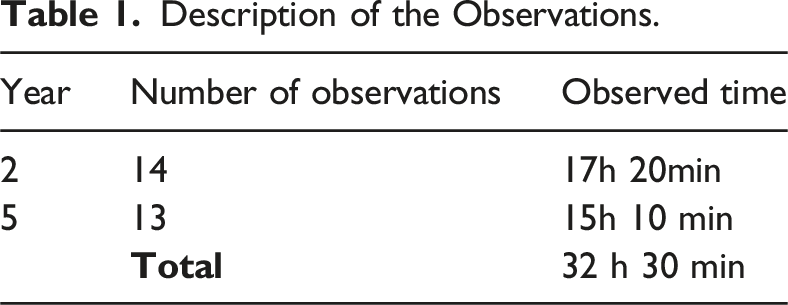
Description of the Observations.
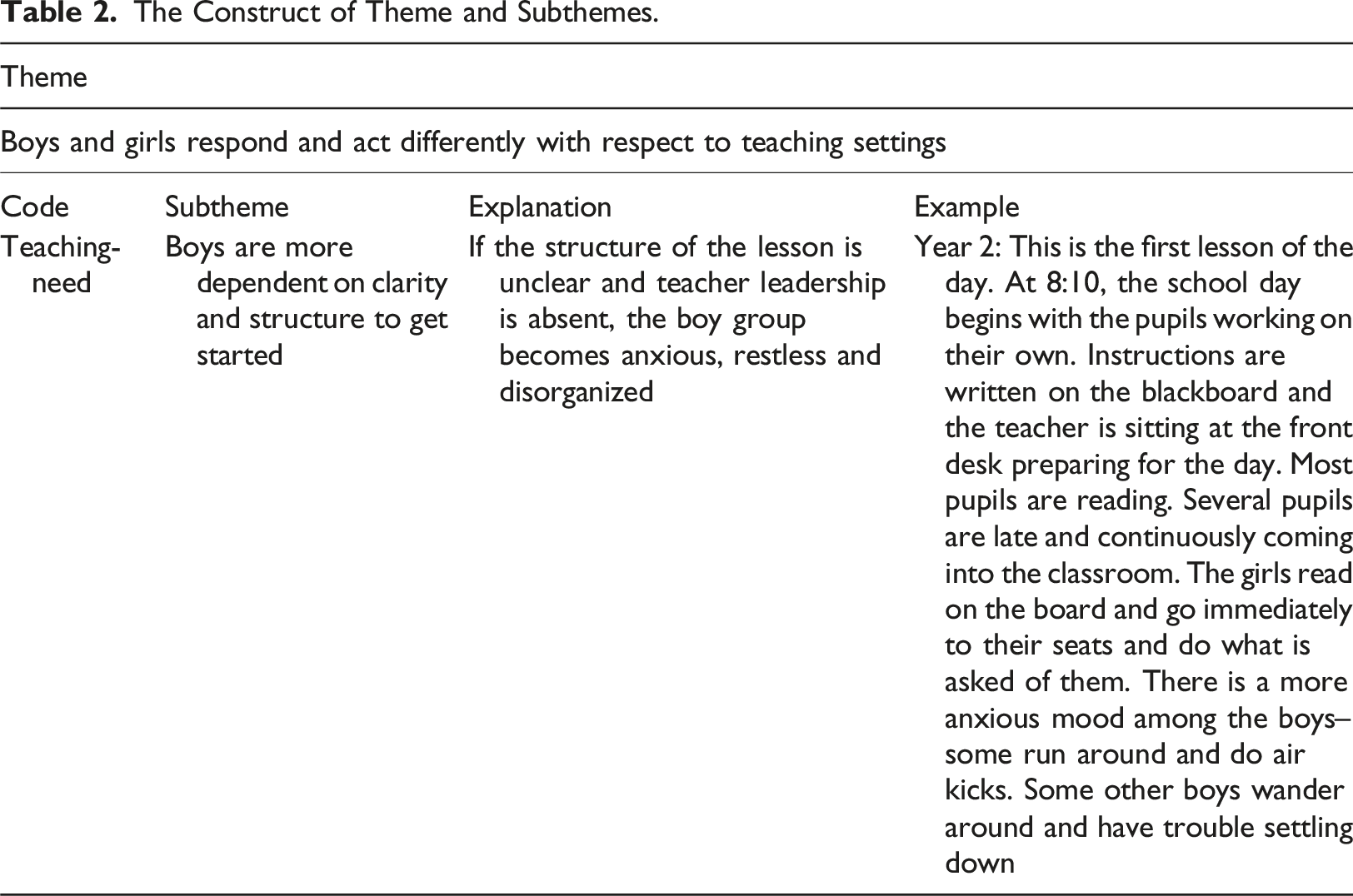
The Construct of Theme and Subthemes.
The protocol
The protocols were anchored in the domains delineated as pivotal within antecedent scholarly inquiries (Åhslund, 2019; Åhslund and Boström, 2018). The focal points of the observations predominantly encompassed. • Physical learning environments • The social climate in the classroom/relationships • Working methods and teaching • Speech patterns between teacher and pupils, as well as between pupils.
In each area, there were guiding questions. For example, regarding the physical learning environment, the questions included: “How is the classroom arranged? How are the pupils seated? What teaching materials are being utilized? Are the same teaching materials provided for all pupils? What other educational tools are utilized within the classroom? Who uses what and how? Any other reflections?”
In total, over 30 hours of observations were rendered into 103 pages of written documentation coded by school year and date.
Analysis
From a pragmatic perspective, the analysis starts by framing the “problem” based on observations. The “problem” in this study consists of the differing academic outcomes for boys and girls, along with the idea that these differences may arise from interactions within the learning environment. The abductive analysis employed in this study involves a dynamic relationship between theory and practice, where various theories and hypotheses have been tested, reformulated, and either accepted or rejected. According to Peirce (1990), the research procedure in abductive analysis involves creating and testing hypotheses in conjunction with theoretical and empirical data. Abduction also facilitates a discussion on the applicability of theories based on practical considerations.
After framing the “problem,” the next step in the analysis involved using the main areas established by existing theoretical constructs. These main areas were shaped by previous research. The analyses focused on agents (pupils), actions, and the environment, examining how these elements intersected, with actions understood as central to meaning-making. Thus, grounded in a deep understanding of the context, the analysis aimed to explore transactions and meanings at a more underlying or implicit level. Sundberg (2015) describes this creative process in abductive analysis as an interplay between theory and real-world observations, consistently striving to develop the most suitable explanations. This approach also relies on a profound understanding of the specific context being studied, aiming to transcend conventional dominant understandings of the subject matter in question.
The analysis of the empirical data was framed by the themes of the observation protocol mentioned earlier. Within these themes, the empirical data was coded openly to develop substantial codes that could conceptualize and describe different aspects of the “problem.” Constructing the codes was abductive, moving back and forth between the empirical data and theory (Rinehart, 2021). Based on occurrences in observed classroom practices, theory and previous research were utilized to gain a deeper understanding of what the various action patterns might represent. Following Thompson’s (2022) 8-step recommendations, the connection between the codes was organized according to their ability to highlight potential differences in actions between boys and girls. In the final step, the themes were revisited, defined, and conceptualized. Below is an example of how the themes and subthemes were constructed.
Results
In this study, actions are viewed as representations of possible meaning. The actions of Boys and girls observed in the classroom are considered part of a transactional process, between individuals and the environment. The analysis shows that boys and girls interplay differently in the classroom’s learning environment. The different actions undertaken by boys and girls are considered constitutions of divergent experiences, meaning-making, and habits. The analysis identified the following themes and subthemes. • The conditions of the learning environment, encompassing the subthemes of the physical environment, teaching methods, and the teacher’s classroom management • Gender differences in classroom actions and teacher interplay include the subthemes of boys’ greater need for distinct leadership from teachers and the differing help-seeking strategies of boys and girls. • Boys and girls and the social settings in the learning environment, with the subthemes of shifting from cooperation to mischievous behavior and the centrality of relationships with the teacher.
The conditions of the learning environment
The pupils are constantly transacting with the classroom context, which weaves together the mutual influence of individual differences, actions, and the conditions of the learning environment. One of the identified aspects was the different impact the physical environment seemed to have on the boys and girls. The physical environment refers to the physical layout of the learning environment, including classroom design, seating arrangements, lighting, and the availability of resources such as technology and educational materials.
The analysis revealed a significant relationship between the physical environment and the effectiveness of teaching and learning in the classroom. Notably, the findings indicated that boys showed a stronger correlation between the level of order in the classrooms and their commitment to learning than girls, even though the classroom’s physical setup seemed to support various teaching methods and structures for all pupils. Overall, classrooms with more organized physical environments fostered better conditions for the pupils to engage in their schoolwork.
The observations across different grade levels revealed distinct patterns in how classroom organization influenced pupil behavior, highlighting significant differences between boys and girls. In second grade, where each of the three teachers had their own classrooms, the effect of room arrangement was especially evident. One classroom was notably disorganized, with books and items scattered about, while another was carefully organized, with the teacher utilizing break times for preparation and tidying up. Boys, in particular, seemed more affected by this contrast, exhibiting increased restlessness and off-task behavior in the less organized environment.
As pupils progressed to fifth grade, the classroom structure appeared to have transitioned to subject-specific rooms with designated home classrooms for pupils. In these spaces, desks were often arranged individually, seemingly intended to minimize student interaction. This arrangement also resulted in crowded areas that could be difficult to navigate. Some observations suggested that this setup might have had a more negative impact on boys’ behavior compared to girls. The overall attention given to organizing these learning environments seemed to decline from second to fifth grade, accompanied by a corresponding increase in challenging behaviors, particularly among male pupils. Based on how the pupils acted in the different classrooms, one conclusion was that a tidy and well-designed classroom helps to create and sustain the supportive structures that promote engagement and reduce challenging behavior. However, these observations may also have other interrelated explanations.
Another aspect of the learning environment was the teaching methods. During the observations, it became clear that the lessons emphasized independent work. The observed lessons often followed a similar structure (24 out of 27 lessons), starting with a brief lecture by the teacher, followed by individual and independent student work in books or on worksheets. A typical lesson in these five classes that followed this structure could look like this. (a) The teacher starts the lesson by greeting the pupils and informing them pupils of the purpose and content of the lesson; (b) The introduction is followed by reading aloud from the learning material. The teacher asks some pupils to read aloud from the textbook for the other, and after this; (c) the pupils are supposed to work individually. The individual work in this lesson consisted of working with photocopies of question sheets.
The observations revealed a significant emphasis on individual work during lessons, often taking up two-thirds of the allotted time. This extended period of solitary engagement seemed to have negative effects on pupil focus and behavior. Pupils displayed signs of boredom and waning motivation as the individual work sessions continued. Notably, gender differences in behavior became evident, with boys showing more pronounced restlessness. This was reflected in various forms of off-task behavior, including unauthorized conversations and activities discouraged by the teacher. Some male pupils even started moving around the classroom, disrupting the intended quiet work environment.
These observations raise critical questions about the optimal duration of individual work sessions and their effectiveness in maintaining student engagement. The issue becomes particularly significant in classroom settings where desks are arranged to discourage collaboration, such as in individual seating configurations. Such layouts may limit opportunities for peer interaction and increase the challenges associated with extended periods of solitary work. In many of the observations, individual work comprised two-thirds of the lesson time. After a while, working alone, the pupils appeared to grow bored and lose momentum. They, especially the boys, exhibited signs of restlessness, such as chatting and engaging in behaviors the teacher discouraged. Some of the boys began walking around the classroom. The question of work duration becomes especially relevant in classrooms where pupils are seated individually, making other forms of collaboration difficult.
The last identified aspect of the learning environment relates to the teacher’s classroom management, which in this study involves how the teacher exercises power and establishes goal orientation in the classroom. During the analysis, a pattern emerged in which the teacher used the distribution of speaking space to gain and maintain control, power, and order. Throughout lectures, the teacher would ask seemingly random questions aloud to the pupils. However, although the teacher may have wanted the pupils to believe that respondents were chosen at random, it became apparent that it was primarily slightly restless boys who were called upon to answer. Typically, the boy responding had not raised his hand beforehand. Not knowing whether one would be called on may have made the pupils, particularly the boys, feel cautious.
The pattern of distributing speaking opportunities in the classroom was most prominent in school year five. Another example mentioned earlier was the turn-taking in reading out loud for the rest of the class. Also, in this scenario, boys who seemed to need to be kept in order were primarily chosen to read aloud to the others.
An additional way the teachers managed the classroom was by arranging the pupils’ desks. In school year two, the pupils sat in rows of two to four. In school year five, all the pupils sat one by one. The furniture arrangement likely aimed to increase the teacher’s control and reduce the pupils’ opportunities to chat with one another. While the physical arrangement of the classroom played a crucial role in managing pupil behavior, the teachers also employed different pedagogical approaches to guide and motivate their pupils.
Another way the teachers managed the classroom was by arranging the pupils’ desks. In school year two, the pupils sat in rows of two to four, while in school year five, they sat one by one. The furniture arrangement likely increased the teacher's control and reduced the pupils' opportunities to chat with one another.
In addition to these physical management strategies, teachers also applied distinct pedagogical approaches tailored to various age groups. In second grade, the focus was primarily on creating a learning environment centered around skill development and understanding. Teachers highlighted the significance of comprehension, practice, and mastery, seldom discussing formal assessments or accomplishments. This strategy aligned with the more collaborative seating arrangement, promoting peer interaction and support.
In contrast, during the fifth grade, a shift toward a more individualized and assessment-focused approach was observed, reflecting the change in desk arrangement. Teachers frequently emphasized the importance of completing assignments for evaluation, often mentioning the upcoming national exams. The shift in goal orientation from mastery to performance mirrored the change from group seating to individual desks, highlighting a growing focus on personal accountability and preparation for standardized testing as pupils progressed through their education.
Furthermore, the analysis suggested that there may be differences in how boys and girls receive assistance from their teachers. The observations indicated that the support provided to girls seemed to foster a potentially deeper understanding of their work. For instance, when assisting girls, teachers appeared to spend more time at their desks, often engaging in more detailed discussions about their work. These interactions frequently involved asking girls to describe their thought processes, which could enhance their comprehension.
In contrast, the assistance provided to boys tends to be shorter and sometimes more direct. For example, during fifth grade, it was observed that teachers would occasionally just point to the correct answer in the book as they walked by a boy with his hand raised. The support given to boys often seemed to consist of brief instructions or answers, such as “do this,” “the answer is,” or “look here.” There were also instances when teachers approached some boys without them raising their hands, possibly to ensure they had started their work and were focused on the task at hand.
An example from Year 2 illustrates these tendencies. In this instance, a boy called for the teacher’s attention by raising his hand, prompting several other pupils to follow suit, resulting in a queue of raised hands, with both boys and girls seeking assistance. Despite being first in line, the teacher approached one of the girls first, asking comprehension-deepening questions (“Tell me how you were thinking,” Year 2, May 2nd). After assisting the first girl, the teacher helped a few other girls. Once she had attended to three girls, she finally turned to the boy who initially asked for help. At this point, he received not an answer to his question but a reprimand for not sitting quietly. Following this, the teacher directed her attention to another restless boy who had not requested help. The teacher then asked the boy who previously sought help if he checked his text for capitalization and punctuation without even considering what his concern was (Year 2, May 2nd).
The last aspect of classroom management identified was how teachers utilized verbal and nonverbal communication as part of essential support structures. In two classrooms, the teachers employed signs and gestures to reinforce and clarify the instructions they provided. For instance, in an example from the second school year, a teacher clapped her hands to capture the pupils’ attention and then patiently waited for them to respond to this signal indicating a transition in activities. This approach appeared to maintain and reinforce peace in the classroom, further enhancing clarity and providing a sense of calm for the pupils (Year 2, May 3rd).
Gender differences in classroom actions and teacher interplay
The second theme focuses on the varying actions that boys and girls exhibit in the classroom depending on different teaching environments. Within this theme, two aspects can be identified: the greater need for teachers to adopt distinct leadership styles with boys, and the differing help-seeking strategies used by boys and girls.
The observational data revealed several key aspects of gender-differentiated behavior in the classroom, most notably the evident increased need for explicit teacher leadership among male pupils. This phenomenon was observed in both examined grades, but it was most pronounced in grade five.
In fifth grade, a group of male pupils showed a significant reliance on the teacher’s visible classroom management to engage effectively with their academic tasks. When the lesson structure was unclear or the teacher’s authoritative presence was less prominent, these boys displayed heightened signs of restlessness and anxiety. This behavior may indicate a potential link between clear instructional frameworks and male pupils’ ability to focus and participate actively in classroom activities.
An illustrative example of this tendency was observed in the second year of school, possibly indicating that this pattern may emerge early in pupils’ academic careers. During one morning session, the teacher had written instructions on the board and was engaged in individual work at the front of the classroom. While most pupils, particularly girls, adhered to the written directives and participated in independent reading or task completion, a notable divergence in behavior was seen among some male pupils. Specifically, as the classroom population increased with the arrival of new pupils, a subset of boys exhibited off-task behaviors. These off-task behaviors ranged from physical activities such as running and performing “air kicks” to more disruptive actions like wandering around the classroom and interfering with their peers’ work. This disarray persisted until the teacher actively took charge by standing at the front of the class and formally announcing the beginning of the day’s activities in an authoritative tone. Only then did the boys settle into their seats and adjust their behavior to meet classroom expectations (Observation dated May 29th).
Another example from fifth grade involves incidents where pupils were supposed to present their work orally in front of the class. The teacher briefly introduced the lesson at the beginning and then sat at the back of the room. Some boys displayed signs of anxiety, such as wanting to skip the assignment, going first or last when it was not necessary, or speaking erratically. In the overlap of the pupils’ nervousness about the presentations and the lack of outspoken leadership, some of the boys began to act out both toward each other and others, behaving disturbingly and condescendingly toward their classmates. During the presentations, the boys, especially, laugh at each other (but also at the girls) and behave badly at times with facial expressions, comments, and questions aimed at disrupting the presenter. The teacher has to intervene repeatedly. One boy loudly comments to the presenter, ‘Your language is so bad.’ (Year 5, May 29th).
The other aspect related to differences in how boys and girls ask for help involves their distinct help-seeking strategies. Particularly in second grade, the girls employed more effective strategies when seeking assistance from their teachers. At the start of several observed lessons, the teacher instructed the pupils to remain seated and raise their hands. However, when the girls in second grade needed help, they took their books, stood up, and approached the teacher, even while she was assisting another pupil. They politely demanded immediate attention. In contrast, the boys followed the teacher’s instructions and raised their hands. If they did not receive help within a reasonable timeframe, they lost interest, often ending up sitting and staring or engaging in activities that led to reprimands. During one observed lesson, 12 girls approached the teacher at the front of the classroom while she was helping other pupils. In comparison, only four boys came to the front during the lesson, and they only did so when the line of girls had already become long (Year 2, May 12th).
Boys and girls and the social settings in the learning environment
The first aspect of the social settings identified in the analysis was how peer relationships from school years 2 and 5 changed, shifting from cooperation to mischievous behavior. In school year two, there were generally positive relationships among the pupils. The pupils, both boys and girls, willingly helped each other and consistently interacted in a friendly manner. For both boys and girls, it did not seem to matter whether they worked with a classmate of the same sex or the opposite sex, and they all played together during recess. In school grade five, however, the relationships between pupils became considerably more complicated and less secure than in school year two. In this grade, boys primarily used their peers for support and as an audience when they engaged in mischievous behavior toward others. There was also more shifting in and out of friendship groups in school year five. On one occasion, during a presentation in year five, a group of boys became unfriendly toward one another. Additionally, they commented negatively on other pupils’ presentations, leading to two boys refusing to deliver their own presentations.
The second aspect of the social settings in the classroom pertains to the boys’ reliance on their relationship with the teacher. This aspect involves the boys’ dependence on the teacher’s classroom management to engage with and demonstrate motivation for their schoolwork. Observations revealed that the relationship between the teacher and the pupils was the most significant connection within the school. When the relationship (teacher-pupil) was positive, it appeared to encourage boys to be more willing to tackle tasks, even the challenging ones. Conversely, if the relationship was weaker, it seemed to hinder the boys’ readiness and willingness to try.
Furthermore, the analysis suggests that effective relationship building could offset other shortcomings, such as lack of clarity, planning, and organization. Another aspect of the teacher-pupil relationship is that teachers were willing to assist their pupils and remain ahead of them. However, they risked isolating underperforming pupils (in these observations, only boys) in front of the other pupils by continuously returning to them during the lesson to provide unsolicited assistance.
There was also a notable difference in the work strategies of boys and girls concerning the strength of the relationship between pupils and teachers. In the second school year, all three teachers seemingly had trusting and secure relationships with the pupils. This was evident in how closely the pupils were willing to stand near their teachers and how several of them, mostly girls, lingered in the classroom to chat with the teacher when it was time for recess. In the fifth grade, the relationships between the teachers and the pupils did not seem equally positive for either of the teachers. One of the teachers in the fifth year had a similar approach to the teachers in the second year, while the other was more distant and stricter (authoritarian). In the class with the teacher who exhibited this authoritarian attitude, the pupils, especially the boys, only worked well and behaved nicely with one another when the teacher was present and hovering over their shoulders.
Discussion and conclusions
This observation study aimed to understand the dynamics of the learning environment and of teaching methods in relation to how boys and girls manage the classroom and teaching conditions.
Boys and girls in different teaching settings?
There are clear signs that boys and girls, at the aggregated level, acted differently in the classroom. In relation to the study’s theoretical framework, the different actions taken by boys and girls may constitute different experiences, meaning-making and acquisition of habits. The results also point to the impact of different aspects of the learning environment, the physical environment, the pupils’ amount of independent work, and various aspects of the teacher’s classroom management.
In the observations, a pattern emerged showing that the teacher’s classroom management—such as leadership, teaching structure, communication, and the physical environment—seemed to affect the boys’ actions more than those of the girls. When distinct leadership, effective communication, and supportive structures were fostered within an orderly, structured physical learning environment, this appeared to promote the boys’ participation and involvement in schoolwork. In classrooms with a highly supportive learning environment, it became more challenging to identify differences between boys’ and girls’ actions. These findings are particularly relevant to research highlighting the importance of the teacher-pupil relationship (Allen et al., 2013; Aspelin, 2023; Roorda et al., 2017), especially given the previous findings that younger and low-performing pupils rely more on teachers for support to engage in their schoolwork (Francis et al., 2010). One conclusion related to this is that boys tend to respond to vagueness and insecurity in ways that counteract their learning. Their need for external support structures may indicate a level of immaturity and dependency. Unstructured teaching conditions might place demands on boys’ executive functioning that are too high, resulting in an inability to learn. In other words, it is the structure of classroom interaction, not its content that may hinder boys’ learning.
Another area where boys and girls differ is in their responses to learning methods and their strategies for seeking assistance from the teacher. During most of the observed lessons, pupils engaged in independent and individual work. This learning approach appeared challenging for many boys, as such tasks demand high levels of self-control, autonomy, and independence. In these five observed classes, the boys seemed to respond negatively to the burden of independent work. If solitary tasks lasted too long, the boys often lost their commitment and focus, began engaging in off-task behaviors, or wandered around the classroom, eventually prompting reprimands from the teacher. In fifth grade, the boys also appeared to develop alternative strategies to cope with individual assignments, reflecting a form of resistance or self-preservation, where they did not complete tasks according to the teacher’s expectations, possibly to avoid failure (see Jackson and Nyström, 2015;Niemivirta, 2004; Watson et al., 2022). Consequently, observations suggest that unstructured teaching methods requiring pupils’ ability to self-organize, plan, and maintain independence may hinder boys more than girls in their academic development, as boys seem to struggle more with maintaining structure independently.
The observed gender differences in classroom behavior and engagement can be further illuminated by considering developmental distinctions between boys and girls. Consistent with other research, boys often experience delayed language acquisition compared to girls, which may impede their early literacy progress and contribute to wider academic gaps over time (Halldórsson and Ólafsson, 2009; Manu et al., 2021; Petersson et al., 2007; Rinaldi et al., 2023). These linguistic delays, combined with boys’ higher prevalence of attentional difficulties (Glock and Kleen, 2017), suggest neurodevelopmental underpinnings that affect classroom interactions and learning engagement. Specifically, the later maturation among boys hampers executive functions such as planning, emotional regulation, and impulse control, which are critical for self-regulation and academic success (Weis et al., 2013). This developmental perspective might help explain the greater observed need among boys for explicit teacher leadership and structured environments, as well as their higher rates of off-task and restless behaviors, especially during prolonged independent work. Recognizing these developmental trajectories underscores the importance of adaptive instructional strategies tailored to the distinct learning and behavioral needs of boys and girls, potentially mitigating gender disparities in educational outcomes.
Another theme in previous research that was less obvious in this study relates to the discrepancy in how teachers interact with male and female pupils, often to the benefit of boys (Bellamy, 1994; Kimotho, 2019; Mäkipää, 2021; Sadker and Zittleman, 2016). According to the research, teachers tend to favor boys by calling on them more frequently, asking more advanced questions, providing them with more extensive feedback, and waiting longer for girls to respond. These tendencies were not evident in the classrooms of this study. The analysis reveals that in these five classes, girls received significantly more help due to their more effective help-seeking strategies, which involved approaching the teacher more often. Meanwhile, boys could be sitting idle or worse, engaging in activities that were not allowed.
Different experiences, different meaning-making, and different ways of acquiring habits
From a pragmatic perspective, our capacity to take action is closely tied to the concepts of experience, meaning-making, and the acquiring of habits. Habits represent automatic learned behaviors that influence how individuals react to various situations and are integral to the transactional process (Musolf, 2001; Pratten, 2015). Dewey and Bentley (1948) noted that habits can both enhance one’s adaptability and learning capacity while limiting one’s openness to new experiences and ideas.
The study revealed significant gender-based differences in classroom behavior and age-related changes in pupils’ actions. Boys consistently displayed distinct behavior patterns compared to their female peers across both age groups examined. A common theme observed in both school years was the boys’ strong reliance on teacher-established relationships and classroom structure. This dependence was more pronounced among older boys, who exhibited a significantly increased tendency to use avoidance strategies in the absence of explicit teacher leadership. The analysis suggests that as boys progress through their academic years, their need for clear, teacher-led direction becomes increasingly important for maintaining engagement and appropriate classroom behavior.
The development of habits over time is intrinsically connected to individuals’ beliefs and past experiences (Musolf, 2001; Pratten, 2015). In this context, the observed rise in avoidant strategies among boys can be viewed as a reflection of their ongoing struggle to manage the demands and expectations of the learning environment. This challenge seems to be intensified by the increased focus on performance and assessment in fifth grade.
Previous research has indicated that boys generally exhibit a higher performance orientation than girls (Niemivirta, 2004). The classroom environment’s goal orientation may inadvertently reinforce this tendency among boys, potentially widening the gap between male and female pupils’ approaches to learning. This dynamic is further complicated by the different support strategies teachers employed for boys and girls.
The observations revealed that teachers often provided boys with quick, unsolicited assistance in an instructive manner, sometimes even directly giving the correct answer. In contrast, girls were more frequently encouraged to elaborate on their thought processes, an approach that may promote deeper learning. This difference in support strategies may inadvertently reinforce performance-oriented behaviors in boys while fostering a more mastery-oriented approach in girls. The interplay among these factors—the boys’ initial difficulties, the increasing performance focus in higher grades, and the differential teacher support—creates a complex dynamic that may contribute to the observed gender differences in classroom behavior and learning strategies.
Another noticeable change in behavior as boys aged was the greater use of avoidance strategies. The older boys showed a faster tendency toward what could be seen as avoidance strategies, possibly linked to a harsher social climate, weaker relationships with teachers and peers, and a lack of structure in the classroom. In fifth grade, some boys were unkind to their classmates, creating a hostile learning environment and hindering everyone’s learning (cf. Asp-Onsjö and Öhrn, 2015; Holm, 2008; Lahelma, 2002; Lyng, 2009).
An additional contextual consideration relates to the potential effects of the COVID-19 pandemic on pupils’ classroom experiences and social development, particularly for the older cohort. It is important to acknowledge that the learning environment and social behaviors observed in this study may have been shaped, in part, by the effects of the COVID-19 pandemic, particularly for the older cohort (Year 5). While many Western countries experienced significant educational disruptions, Sweden adopted a distinctive approach: schools for younger children largely remained open, and national education policies prioritized minimizing learning interruptions and maintaining routine (Hall et al., 2022). These measures may have mitigated some negative social and educational consequences observed elsewhere, yet subtle effects on classroom interactions and social development cannot be fully excluded (Skolverket, 2022).
In conclusion, this study emphasizes the interplay between the conditions in the learning environment and the experiences of boys and girls in shaping their learning experiences, actions, and habits. In the observed classrooms, there were indications that the educational context led boys and girls to derive different meanings from the learning environment, which in turn resulted in the development of varied habits leading boys to exhibit habits that are detrimental to their learning.
Supplemental Material
Supplemental Material - Analyzing gendered responses to the learning environment: An observational study on the differences between boys’ and girls’ classroom strategies
Supplemental Material for Analyzing gendered responses to the learning environment: An observational study on the differences between boys’ and girls’ classroom strategies by Ingela Stenberg in Equity in Education & Society
Footnotes
Declaration of conflicting interests
The author declared no potential conflicts of interest with respect to the research, authorship, and/or publication of this article.
Funding
The author received no financial support for the research, authorship, and/or publication of this article.

Supplemental Material
Supplemental material for this article is available online
Note
References
Supplementary Material
Please find the following supplemental material available below.
For Open Access articles published under a Creative Commons License, all supplemental material carries the same license as the article it is associated with.
For non-Open Access articles published, all supplemental material carries a non-exclusive license, and permission requests for re-use of supplemental material or any part of supplemental material shall be sent directly to the copyright owner as specified in the copyright notice associated with the article.
