




Abstract
Lesson planning in Mathematics is complex and time-consuming for preservice teachers. Artificial intelligence (AI) offers promising support, warranting integration into teacher education. This study examined how 23 preservice mathematics teachers from a Philippine Teacher Education Institution used AI in lesson planning during an AI-assisted workshop. Thematic analysis of prompts and reflections identified two main AI functions: content generation and support tool. Artificial intelligence effectively produced curriculum-aligned objectives, student-centered tasks, and organized lesson formats, but outputs could be verbose, unrealistic, or inaccurate. As a support tool, AI-aided content organization showed weaknesses in formatting, clarity, and content retention. Participants addressed these through refined prompts and manual edits, highlighting AI's potential and limitations, and the need for training in prompt engineering and critical evaluation.
1. Introduction
Lesson planning is a core component of teaching and a fundamental professional task that enables teachers to organize learning objectives, instructional activities, assessments, and classroom procedures into coherent instruction (Koberstein-Schwarz & Meisert, 2024; Lika, 2017; Shen et al., 2007). Literature recognizes lesson planning as central to effective teaching because it translates curriculum goals into meaningful learning experiences responsive to students’ needs and classroom contexts (Cevikbas et al., 2024; Ding & Carlson, 2013). Beyond being a procedural requirement, lesson planning is also viewed as a cognitive and pedagogical process requiring teachers to interpret curriculum standards, anticipate learners’ prior knowledge and misconceptions, select appropriate instructional strategies, and revise instructional decisions based on contextual demands and learning goals (Cevikbas et al., 2024; Shen et al., 2007; Yinger, 1980).
Within mathematics education, lesson planning is further viewed as a pedagogical and decision-making process involving the organization of mathematical content, selection of instructional strategies, anticipation of students’ thinking and misconceptions, and design of meaningful learning experiences aligned with curricular goals (Cevikbas et al., 2024). Effective mathematics lesson planning also involves sequencing activities, preparing appropriate mathematical tasks, and adapting instruction based on students’ prior knowledge and learning needs. Consequently, mathematics lesson planning is considered an iterative and reflective process in which teachers continuously refine instructional decisions based on classroom realities and student learning.
Because lesson planning shapes instructional decision-making, it is emphasized in professional teaching standards and classroom practice. In the Philippine context, the Philippine Professional Standards for Teachers, particularly Domain 4: Curriculum and Planning, emphasizes teachers’ ability to design sequenced instruction, align learning outcomes with competencies, implement responsive programs, and utilize diverse instructional resources, including ICT (Gonong et al., 2017). Mathematics instruction further requires teachers to design inquiry-based and student-centered learning experiences that promote reasoning, conceptual understanding, and meaningful application of mathematical ideas (Ozyildirim-Gumus, 2022; Palobo et al., 2018).
Because of its importance in teaching practice, lesson planning is likewise emphasized in preservice teacher (PST) education. Teacher Education Institutions (TEIs) integrate lesson planning into teacher preparation programs to develop instructional competence and bridge theory and practice among future teachers (Koberstein-Schwarz & Meisert, 2024; Lika, 2017). Through lesson planning, PSTs learn to align objectives, instructional activities, and assessments while considering curriculum standards, learner needs, and pedagogical appropriateness.
1.1 Difficulties of lesson planning
Despite its importance, lesson planning remains a persistent challenge for PSTs and practicing teachers. Prior studies report difficulties in subject-specific analysis, curriculum alignment, instructional design, and differentiated instruction (Ding & Carlson, 2013; Gonzalez et al., 2020; Koberstein-Schwarz & Meisert, 2024). Teachers often struggle to anticipate students’ thinking and misconceptions, connect mathematical concepts to real-life situations, and align lesson objectives with curriculum standards and learner needs (Tataroglu-Tasdan et al., 2022; Taylan, 2018; Turnuklu, 2014). Additional challenges include limited use of formative assessment data, confusion regarding curriculum requirements, and difficulties integrating inquiry-based and reasoning-oriented activities into lesson plans (Lika, 2017; Palobo et al., 2018; Tanjung & Amalia, 2023). These instructional demands are further compounded by time and resource constraints, making lesson planning a demanding and often discouraging process for PSTs (Lika, 2017; Tanjung & Amalia, 2023). These persistent challenges have contributed to growing interest in technological tools that can support teachers during lesson planning.
1.2 Artificial intelligence in lesson planning
The emergence of generative artificial intelligence (AI) has introduced new possibilities for supporting lesson planning and instructional design. Recent studies suggest that AI tools, particularly large language models such as ChatGPT, can assist teachers in generating lesson outlines, instructional materials, assessments, and learning activities, potentially improving the efficiency and flexibility of lesson preparation (Kerr & Kim, 2025; Powell & Courchesne, 2024). Studies further report that AI can support lesson organization, differentiated instruction, instructional creativity, and the development of innovative learning experiences (Belloula, 2025; Kanvaria & Ritika, 2024; Lee & Zhai, 2024). Research involving PSTs also suggests that AI-assisted lesson planning can support idea generation, lesson organization, and pedagogical experimentation during instructional preparation (Kerr & Kim, 2025; Lee & Zhai, 2024).
Despite these benefits, existing literature consistently emphasizes that AI should function as a support tool rather than a replacement for teacher expertise. Studies identify concerns regarding inaccurate information, weak pedagogical alignment, overreliance on AI, and limited contextual appropriateness in AI-generated outputs (Getenet, 2024; Powell & Courchesne, 2024). Consequently, researchers highlight the importance of teacher agency, pedagogical judgment, and critical evaluation of AI-generated content during instructional planning (Alreiahi & Alrwaished, 2025).
1.3 Artificial intelligence in mathematics teacher development
Within mathematics teacher education, AI has been used to support instructional preparation, problem-solving, assessment design, and pedagogical simulation (Bernardi et al., 2025; Egara & Mosimege, 2024; Son et al., 2024; Wardat et al., 2023). Artificial intelligence has also been used to generate lesson ideas, differentiated activities, and assessment materials, although concerns regarding conceptual depth, contextual appropriateness, and mathematical accuracy persist (Getenet, 2024; Walkington & Bainbridge, 2025; Yaman, 2024). Research involving preservice mathematics teachers further suggests that AI-assisted lesson planning can support efficiency, creativity, and instructional preparation (Alreiahi & Alrwaished, 2025).
Although research on AI in mathematics teacher development continues to grow, limited studies have examined how Pre-Service Mathematics Teachers (PSMTs) use AI across specific lesson-planning tasks and how perceptions of usefulness and limitations shape AI-assisted instructional decision-making, particularly within the Philippine context. Addressing this gap, the present study investigates how PSMTs engage with AI during lesson planning and how their perceptions shape the ways AI is used, adapted, or limited in instructional planning.
2. Research questions
Investigating AI functions in lesson planning can provide evidence-based insights to inform future policies and practices in teacher education. Thus, this study aims to explore how PSMTs integrate AI into lesson planning, specifically focusing on their prompting behaviors and perceived usefulness of AI tools. This study seeks to answer the following research questions:
How do PSMTs use AI in lesson-planning tasks? How do PSMTs perceive the usefulness and limitations of AI in lesson planning?
3. Framework
This study is grounded in the Technology Acceptance Model (TAM) and the competence model of mathematics lesson planning proposed by Cevikbas et al. (2024) to examine PSMTs’ use of AI in lesson planning. Developed by Davis (1985) and adapted from the Theory of Reasoned Action, TAM explains technology acceptance through two key factors: perceived usefulness and perceived ease of use. Perceived usefulness refers to the extent to which users believe that a technology improves task performance, while perceived ease of use refers to the extent to which the technology can be used with minimal effort (Na et al., 2022; Runge et al., 2025). Together, these factors influence users’ behavioral intention and actual technology use (Abulail et al., 2025; Runge et al., 2025; Xu, 2025).
Within educational contexts, TAM has frequently been used to explain teachers’ and PSTs’ adoption of emerging technologies, including AI-assisted instructional tools. Studies suggest that PSTs are more likely to adopt AI when they perceive it as useful for improving efficiency, creativity, instructional quality, and workload management during lesson planning (Powell & Courchesne, 2024; Zhang et al., 2023). Existing literature also suggests that perceived usefulness may exert a stronger influence than perceived ease of use in instructional settings, particularly when AI outputs are viewed as pedagogically valuable despite requiring revision or refinement (Runge et al., 2025). Within this study, TAM explains how perceptions regarding the usefulness and ease of use of AI influence the extent to which PSMTs integrate, revise, or discontinue AI-generated outputs during lesson planning.
To contextualize AI use within mathematics lesson planning, this study also draws on the competence model proposed by Cevikbas et al. (2024), which conceptualizes lesson planning competence as the interaction among dispositions, situation-specific skills, and performance. Dispositions include teachers’ pedagogical knowledge, beliefs, attitudes, and motivation that shape instructional decision-making. Situation-specific skills involve teachers’ ability to perceive, interpret, evaluate, and respond to contextual instructional demands, while performance refers to the actual design, implementation, evaluation, and revision of lesson plans (Cevikbas et al., 2024).
Within AI-assisted lesson planning, dispositions may be reflected in how PSMTs evaluate the instructional quality, realism, appropriateness, and pedagogical value of AI-generated outputs. Situation-specific skills may be reflected in how PSMTs refine prompts, contextualize outputs, revise instructional activities, and respond to inaccuracies or limitations in AI-generated lesson components. Performance, meanwhile, may be reflected in the actual planning behaviors demonstrated during AI-assisted lesson development, including the integration, modification, or rejection of AI-generated outputs. Consequently, perceptions of AI-generated outputs are understood not only as determinants of technology use but also as pedagogically mediated evaluations shaped by instructional reasoning and professional judgment.
The framework conceptualizes AI use in lesson planning as an iterative and task-based process consisting of three interrelated constructs: (1) AI functions in lesson planning, (2) perceptions of AI functions, and (3) AI strategies in lesson planning (Figure 1). Rather than evaluating completed lesson plans, the study focuses on how PSMTs use AI across specific lesson-planning tasks.
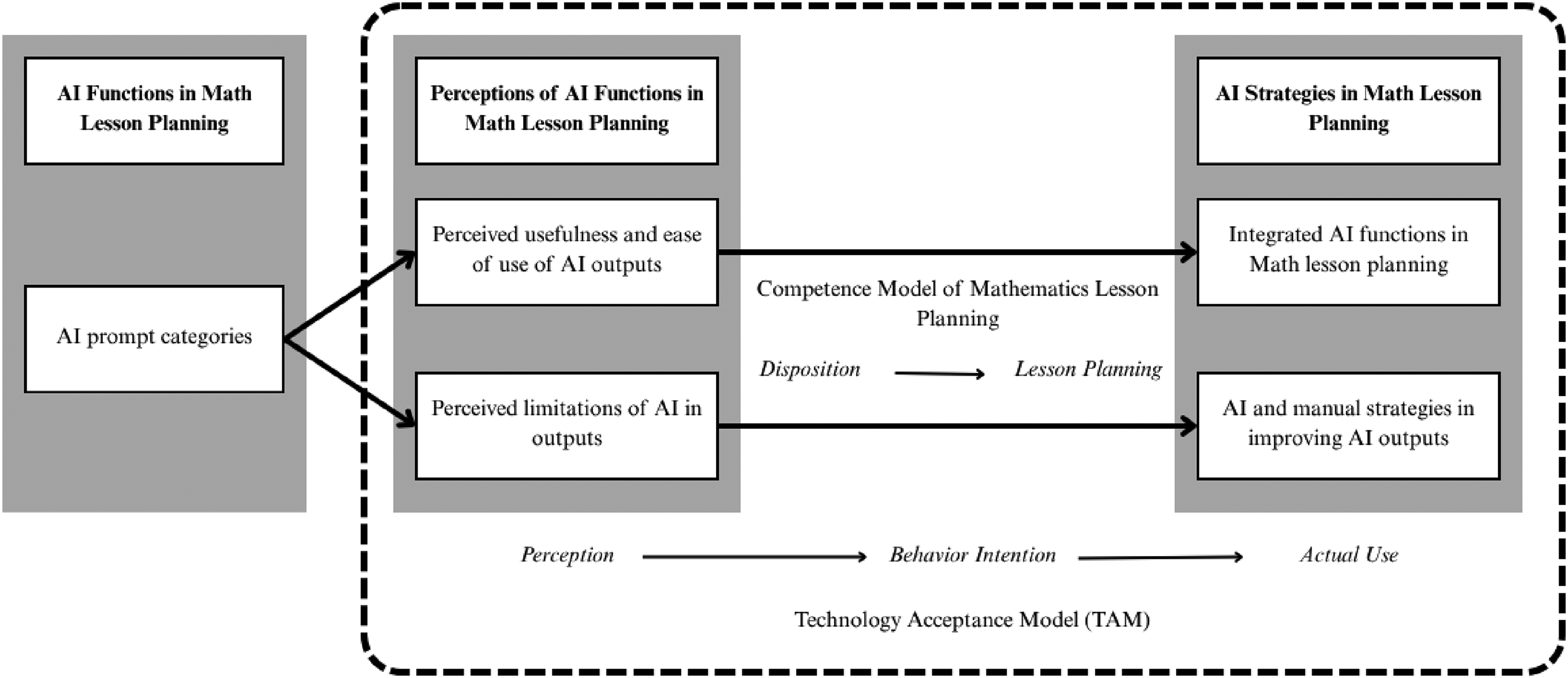
Conceptual framework.
The first construct, AI functions in lesson planning, refers to the task-specific manifestations of AI integration during lesson planning identified through in vivo coding of teachers’ AI prompts (Korzynski et al., 2023; Tapan Broutin, 2024). Prior studies suggest that these functions generally involve content generation and instructional support. As a content-generation tool, AI assists in creating lesson outlines, instructional materials, assessments, and learning activities (Kerr & Kim, 2025; Lee & Zhai, 2024; Powell & Courchesne, 2024). As an instructional support tool, AI assists in curriculum alignment, lesson organization, personalization, language editing, and iterative refinement of outputs (Kanvaria & Ritika, 2024; Tran et al., 2025). Existing studies consistently emphasize that AI functions as a collaborative planning assistant rather than a replacement for teacher judgment (Belloula, 2025; Powell & Courchesne, 2024).
The second construct focuses on PSMTs’ perceptions of AI functions. Drawing from TAM, these perceptions are operationalized as positive or negative evaluations of AI-generated outputs based on perceived usefulness, perceived ease of use, and perceived limitations (Abulail et al., 2025; Runge et al., 2025; Xu, 2025). Positive perceptions occur when AI outputs are viewed as efficient, helpful, creative, or requiring minimal revision (Na et al., 2022; Runge et al., 2025), whereas negative perceptions arise when outputs are inaccurate, poorly contextualized, or pedagogically weak (Getenet, 2024; Walkington & Bainbridge, 2025). Consistent with the competence model, these evaluations are shaped not only by technical usability but also by pedagogical expectations and professional conceptions of lesson quality.
The third construct, AI strategies in lesson planning, refers to how PSMTs use AI following their task-specific perceptions. Positive perceptions may encourage direct integration of AI-generated outputs, whereas negative perceptions may prompt adaptive strategies such as prompt refinement, AI-based revisions, manual modification, contextualization, or selective rejection of outputs (Runge et al., 2025; Xu, 2025). These strategies are likewise consistent with the competence model, which emphasizes that instructional dispositions and situation-specific skills influence planning decisions during lesson development (Cevikbas et al., 2024). Consequently, AI-assisted lesson planning is conceptualized as a selective and adaptive process in which PSMTs critically evaluate, refine, and contextualize AI-generated outputs rather than relying on them uncritically (Pender et al., 2022; Powell & Courchesne, 2024).
Within the framework, AI functions shape the lesson-planning tasks for which AI is used, while perceptions of usefulness and ease of use influence whether AI-generated outputs are accepted, revised, or rejected. These evaluations subsequently inform the AI strategies employed by PSMTs during lesson planning.
4. Methods
This study employed a qualitative research design to examine how PSMTs experience the use of AI in lesson planning. The design focuses on teachers’ lived experiences of AI use, particularly their perceptions of usefulness and ease of use, and how these perceptions shape actual lesson-planning practices (Neubauer et al., 2019). Technology Acceptance Model is used as an interpretive lens to explain whether AI-generated outputs are adopted, revised, or limited during lesson planning. Rather than evaluating completed lesson plans as products, the study examines lesson planning as a process, capturing how PSTs engage with specific planning tasks while using AI tools. Participants planned a Mathematics lesson of their choice using AI, documented their AI prompts, and reflected on their experiences, allowing shared patterns of meaning related to AI use in lesson planning to be identified.
4.1 Setting and participants
The study was conducted at a TEI in Metro Manila, Philippines. The institution is recognized as the country's National Center for Teacher Education, making it an appropriate setting for examining AI use among PSTs. Through purposive sampling (Creswell, 2017), the study selected 23 PSMTs in the fourth year and final term of their Mathematics education program. At this stage of their program, the participants had already completed their teacher assistantship (Field Study 1 and 2) and practice teaching (Practice Teaching), providing them with prior experience in lesson planning and classroom implementation. Such experiences were expected to provide them with practical insights into the use of AI in planning and implementing Mathematics lessons as novice teachers.
Data collection took place during an AI-assisted lesson planning workshop conducted in one of the TEI's computer laboratories. The participants were divided into 13 groups consisting of one to three members based on their preferred collaborators. Each group was tasked with developing a lesson plan for a Mathematics topic of their choice using AI tools.
Prior to the implementation of the study, the research proposal underwent ethical review and was granted clearance to proceed (REC Code: 2025-076). Prospective participants were oriented regarding the study's purpose, procedures, and their rights and responsibilities as participants. All 23 PSMTs voluntarily signed informed consent forms before participating in the study.
4.2 Data collection
Data were collected during an eight-hour AI-assisted lesson planning workshop involving PSMTs. Prior to the lesson planning activity, participants attended an orientation session introducing common types of AI prompts (Korzynski et al., 2023), basic principles of prompt engineering (Lucas & Weber, 2025), and procedures for documenting AI prompts and reflections. This orientation was necessary because AI tools had not yet been formally integrated into the participants’ teacher education curriculum, and baseline familiarity with AI-assisted lesson planning could not be assumed.
Following the orientation, the researchers introduced the lesson plan template and demonstrated how ChatGPT could be used to generate lesson components aligned with the template. The lesson planning activity then commenced, with participants working in self-selected groups of two to three members. While all groups were required to use AI tools during lesson planning, they were given autonomy in selecting the Mathematics topic, choosing the AI tool, determining how AI would be integrated into the lesson plan, and deciding the extent to which AI-generated content would be used. Group-based planning was adopted to encourage collaborative reflection and to accommodate the limited number of available computer units (Figure 2).
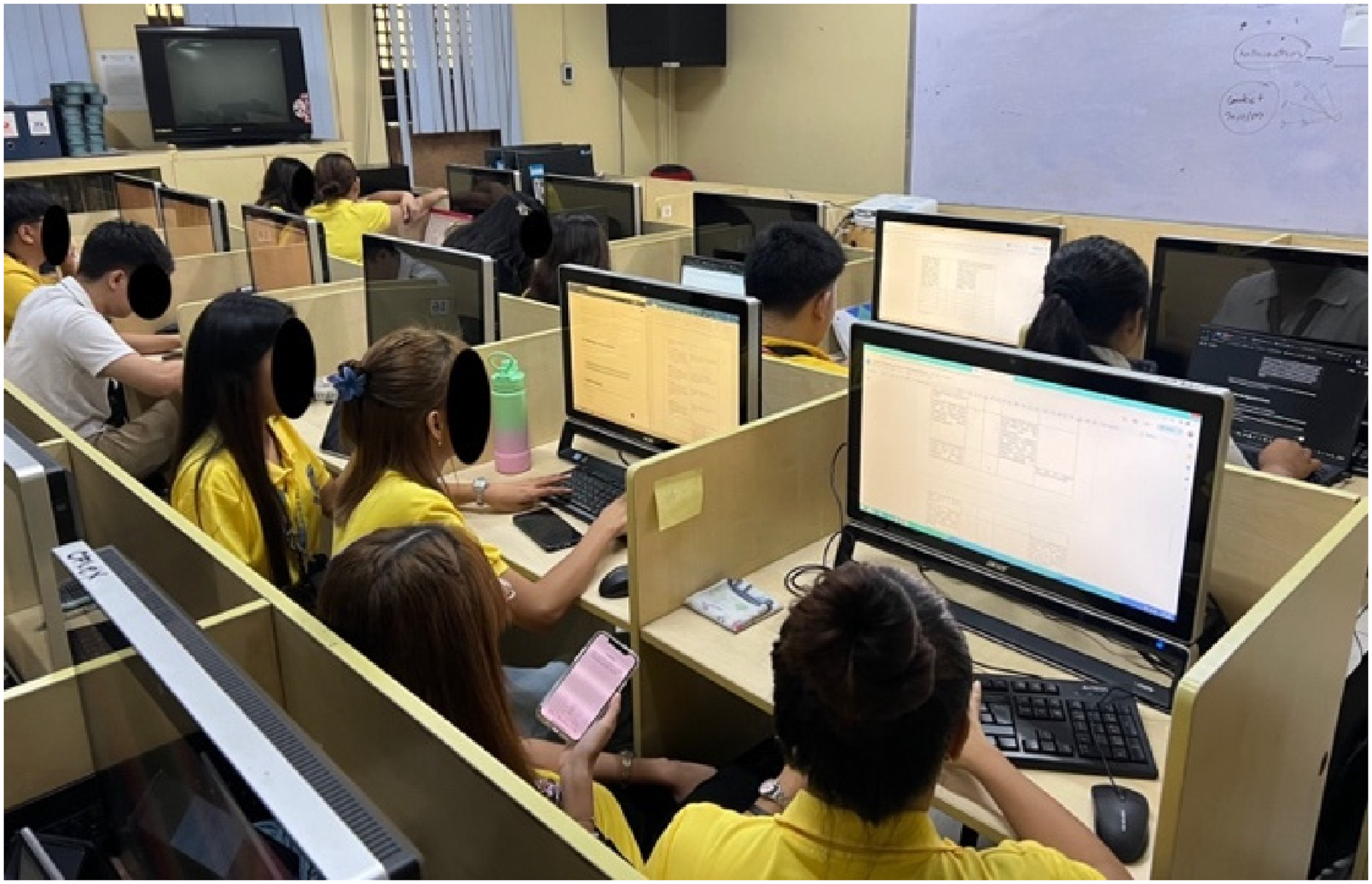
Data collection set-up.
During the lesson planning process, each group documented all AI prompts used and reflected on the usefulness of the corresponding AI-generated outputs using a shared Google Docs file titled AI Prompt Reflection Form. The form consisted of four columns: (1) the exact AI prompt used, (2) a binary assessment of whether the output was satisfactory for use in the lesson plan (Yes/No), (3) a written reflection explaining why the output was perceived as useful or not useful, and (4) a description of strategies employed to improve outputs perceived as unsatisfactory or difficult to use. Evaluation of AI-generated outputs was based on participants’ self-assessed perceptions of usefulness and ease of use for lesson planning.
At the conclusion of the workshop, each group submitted their completed lesson plan and reflection form via Google Forms to ensure anonymity. In total, 13 reflection forms and corresponding lesson plans were collected. Reflection data were compiled into a Microsoft Excel spreadsheet for thematic analysis, while the analysis of the lesson plans themselves is reported in a separate paper.
4.3 Data analysis
Data were analyzed using a three-stage thematic analysis aligned with the study's framework, corresponding to AI prompts, reflections on AI-generated outputs, and strategies used to improve unsatisfactory outputs. This structure enabled systematic examination of AI functions, perceptions of usefulness and ease of use, and resulting AI strategies in lesson planning. An inductive, iterative approach was employed, grounded in data from the AI Prompt Reflection Forms, allowing themes to emerge from participants’ documented planning practices (Miles & Huberman, 2013; Saldaña, 2009). Across all stages, initial coding was assisted by ChatGPT using an AI prompt coding protocol and subsequently reviewed, revised, and validated by the researcher and an independent validator. In-vivo coding was used to preserve the contextualized and authentic representation of participants’ AI use and perceptions, with themes refined through multiple iterations until agreement between the researcher and validator was reached.
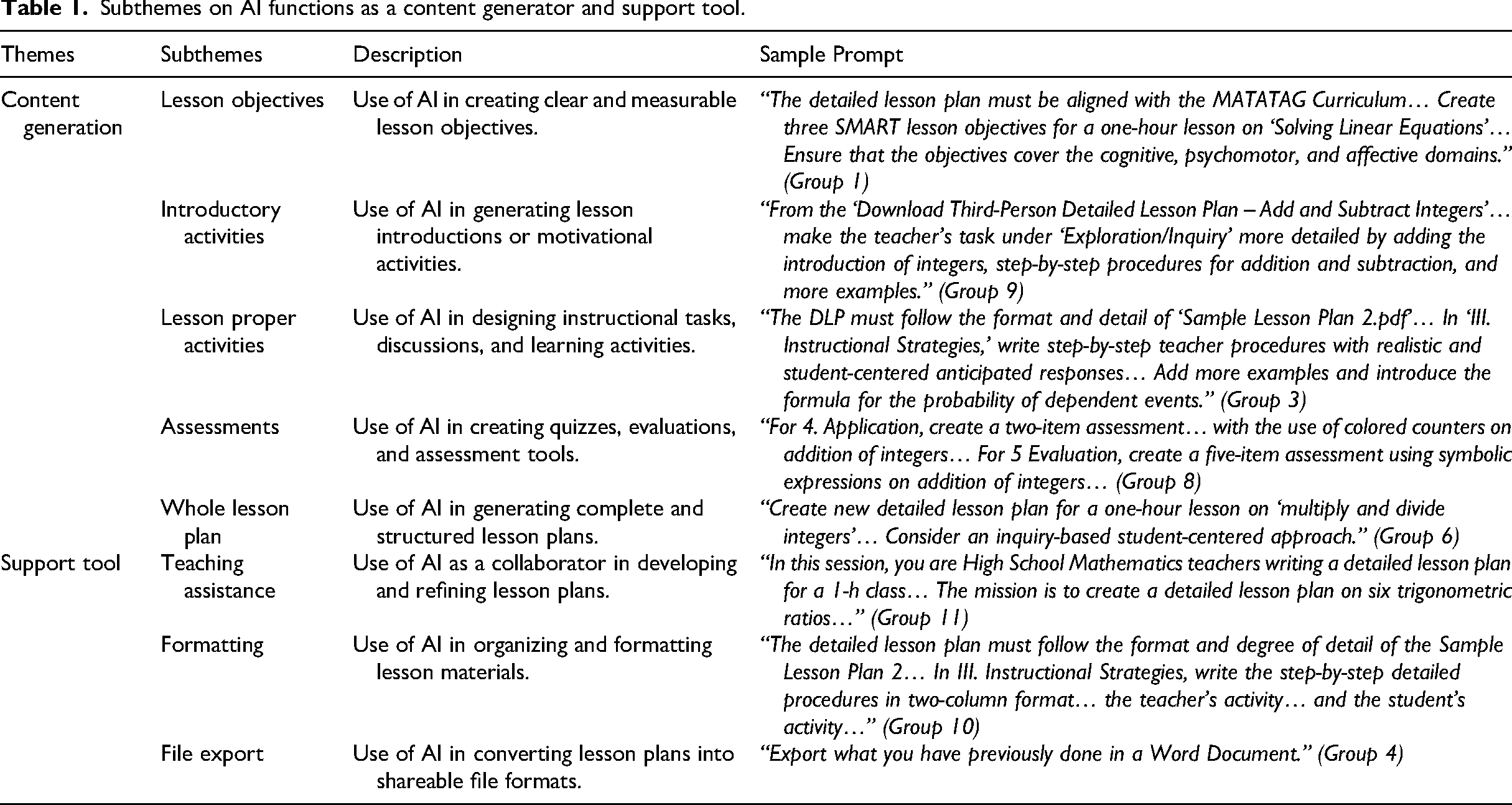
The first analytic stage focused on AI prompts recorded in Column 1. Prompts were coded according to the instructional requests articulated by participants, and code frequencies and co-occurrences were examined to determine the prominence of different AI uses (Miles & Huberman, 2013). Related codes were then grouped into themes and subthemes, resulting in two overarching themes—AI as Content Generator and AI as Support Tool—with corresponding AI functions reported in Table 1.
Subthemes on AI functions as a content generator and support tool.
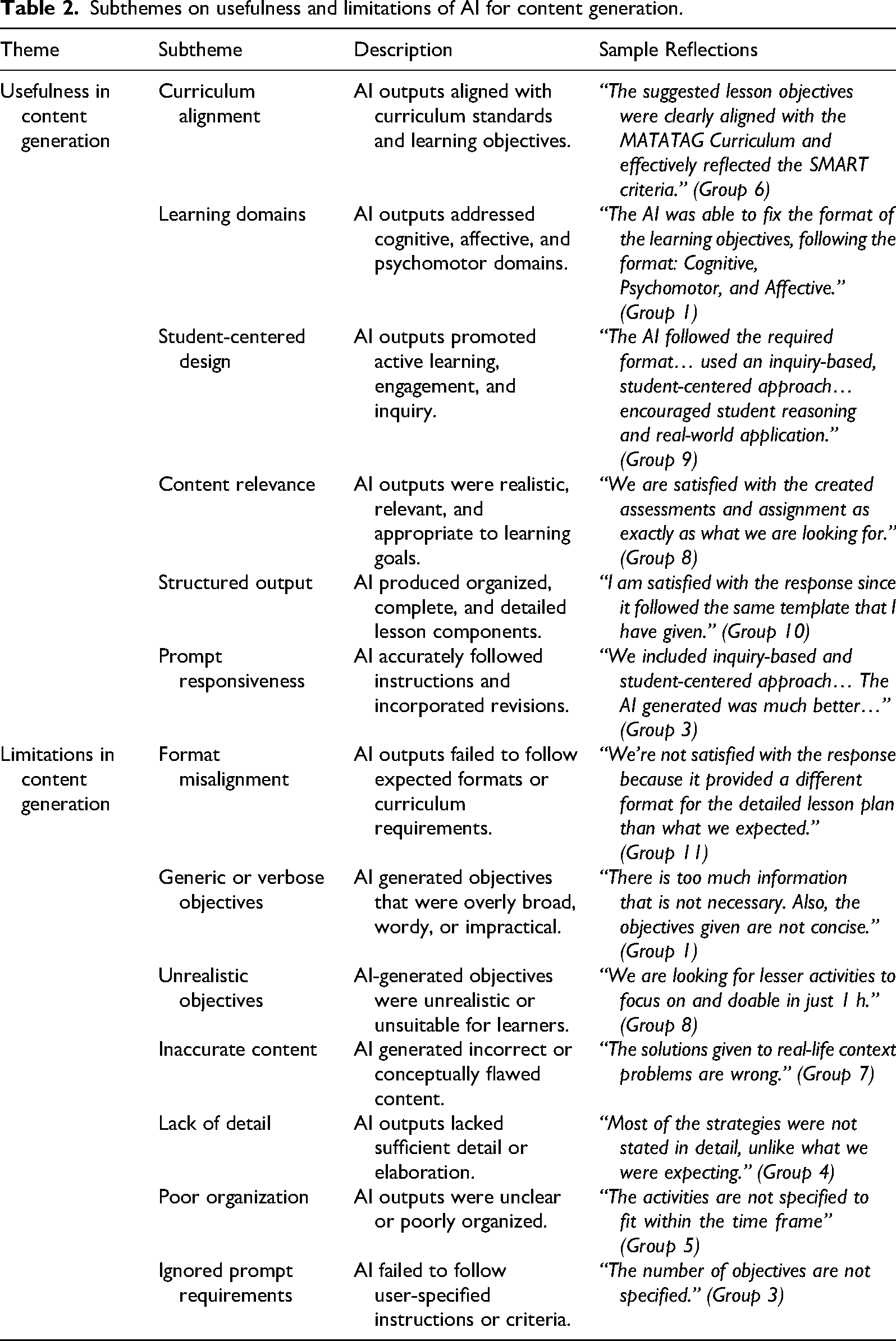
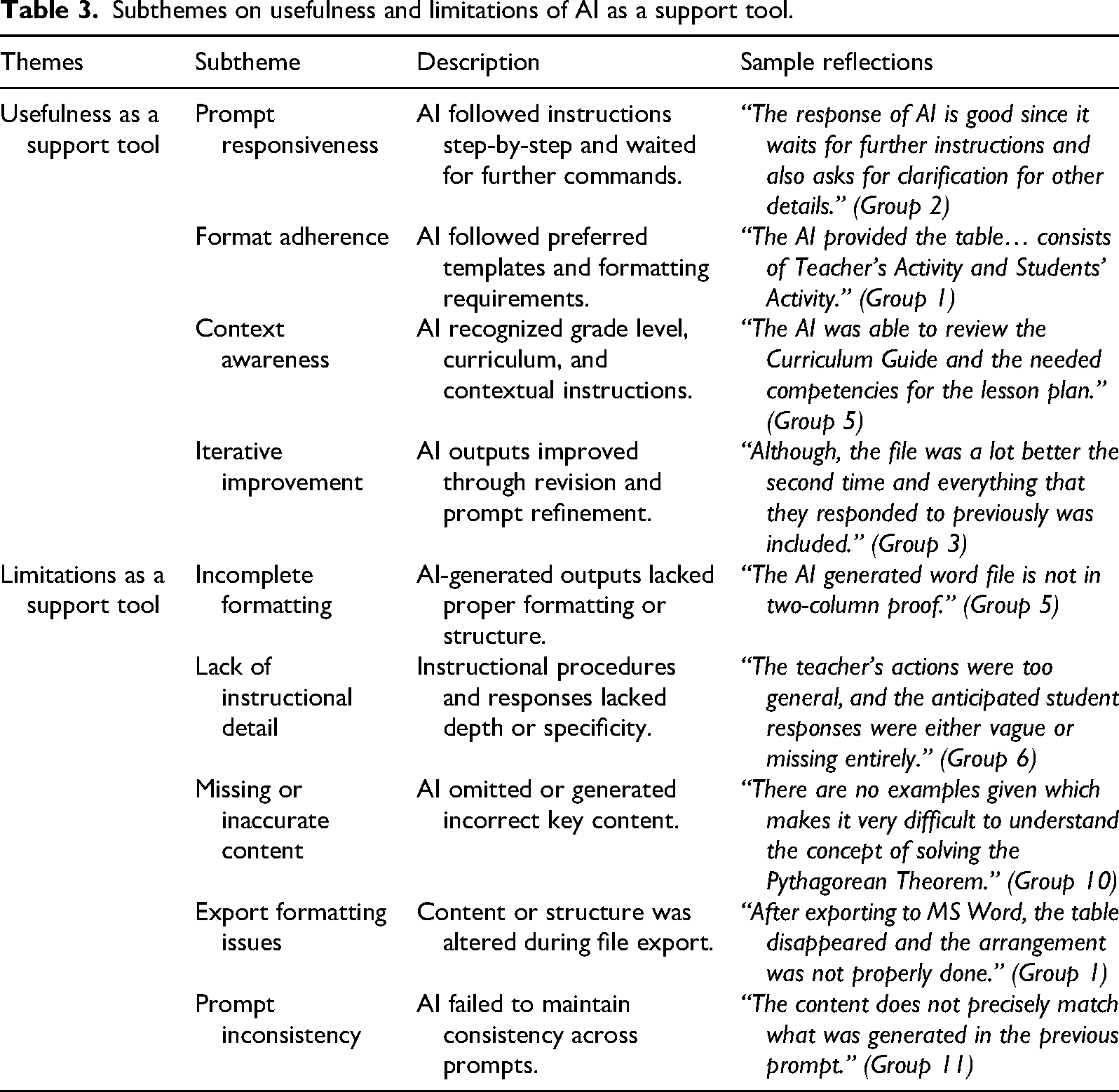
The second analytic stage examined reflections on the usefulness and ease of use of AI-generated outputs drawn from Column 3 and organized based on satisfaction in Column 2. Guided by TAM, coding positive reflections determined conditions of perceived usefulness and ease of use, while negative reflections captured conditions under which AI was not helpful (Abulail et al., 2025; Runge et al., 2025; Xu, 2025). Hence, two parallel thematic analyses were conducted, resulting in themes on the usefulness and limitations of AI as a Content Generator (Table 2) and as a Support Tool (Table 3). Subthemes captured task-specific conditions under which AI outputs were perceived as useful or limiting.
Subthemes on usefulness and limitations of AI for content generation.
Subthemes on usefulness and limitations of AI as a support tool.
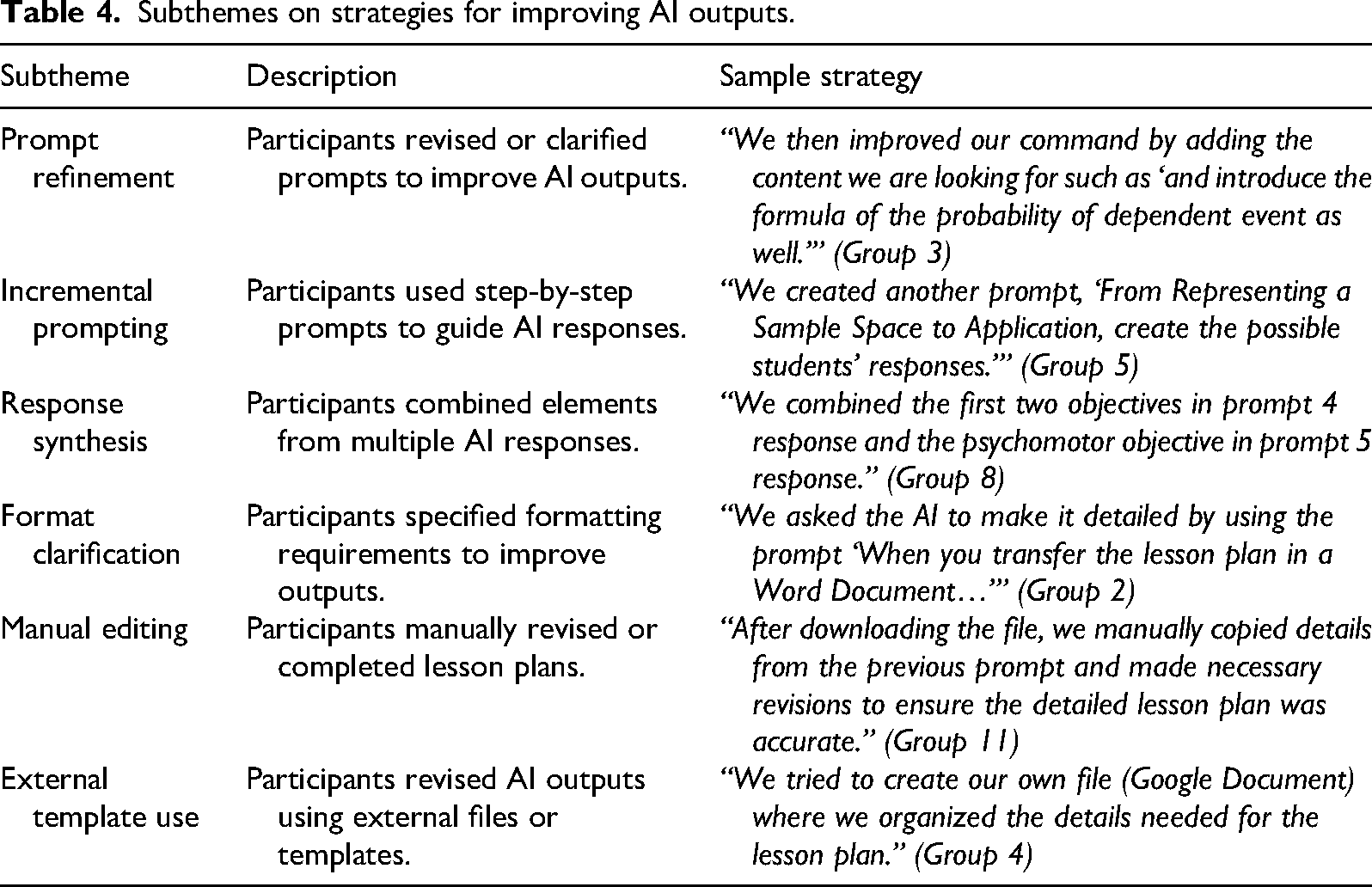
The third analytic stage analyzed Column 4 entries describing actions taken in response to unsatisfactory AI-generated outputs. These entries were coded based on the strategies used to refine or replace AI-generated content, resulting in subthemes representing AI-based and manual improvement strategies. These were consolidated into a single theme, AI Strategies in improving unsatisfactory AI outputs, reported in Table 4.
Subthemes on strategies for improving AI outputs.
Finally, themes across the three analytic stages were integrated to describe AI strategy in lesson planning. Using TAM as an analytic lens, perceptions of usefulness and ease of use were linked to identify AI functions and the strategies employed in response to unsatisfactory outputs. This integration explains how perceived usefulness and ease of use shaped the use, revision, or nonuse of AI-generated outputs across lesson-planning tasks and ensured traceability from raw data to reported findings.
5. Results and discussions
The results address how PSMTs utilized AI during lesson planning and how they perceived its usefulness in supporting instructional design. Their reflections on each prompt reveal satisfaction and dissatisfaction with AI outputs, highlighting its perceived value in lesson planning.
5.1 Artificial intelligence functions in mathematics lesson planning
Each AI prompt used by PSMTs was coded according to its role in lesson planning. Thematic analysis identified two overarching AI functions: content generation and support tool. Table 1 presents the results of this analysis, outlining the main AI functions as themes, the specific AI functions as subthemes, and their corresponding descriptions and sample prompts.
Looking at the content-generation functions, PSMTs appeared to use AI iteratively by requesting specific lesson plan components—such as objectives, introductory activities, lesson proper activities, and assessments—rather than asking AI to generate an entire lesson plan at once. Similar patterns were reported in previous studies where AI was commonly used to generate learning resources, student-centered activities, and assessments (Belloula, 2025; Kerr & Kim, 2025; Lee & Zhai, 2024; Powell & Courchesne, 2024). Although prior studies also documented the use of AI in generating complete lesson plans (Pender et al., 2022; Powell & Courchesne, 2024), the greater prevalence of targeted prompts in the present study suggests that participants did not perceive fully AI-generated lesson plans as sufficiently contextualized for direct instructional use. Instead, the iterative generation of specific lesson components implies that participants exercised pedagogical judgment in determining which aspects of lesson planning could be efficiently supported by AI and which required closer instructional control.
This pattern aligns with Tapan Broutin's (2024) findings that PSTs tend to use AI for smaller and more targeted instructional tasks rather than delegating the entire planning process to AI. From the perspective of TAM, the continued use of iterative prompting suggests that participants perceived AI as sufficiently useful to justify repeated refinement despite the effort required to improve outputs. Simultaneously, the competence model of mathematics lesson planning (Cevikbas et al., 2024) helps explain how participants engaged in situation-specific instructional reasoning by continuously evaluating whether AI-generated outputs aligned with pedagogical expectations, learner appropriateness, and lesson objectives. Rather than passively accepting outputs, participants appeared to engage in an ongoing process of instructional evaluation and refinement.
Beyond content generation, AI also functioned as a support tool, particularly as a planning partner and formatting assistant. Similar uses of AI have been reported in existing literature, where AI was described as a teaching assistant and as a tool for curriculum alignment, formatting, and language refinement (Alreiahi & Alrwaished, 2025; Belloula, 2025; Kerr & Kim, 2025; Powell & Courchesne, 2024). In the present study, prompts that positioned AI as a teaching assistant often involved goal and role setting, likely influenced by the prompt-engineering orientation conducted before the activity. Artificial intelligence was also used for repetitive and less cognitively demanding tasks, such as layout organization and exporting outputs.
These findings suggest that participants selectively outsourced procedural tasks to AI while retaining control over more pedagogically demanding aspects of lesson planning. Such selective delegation further indicates that PSMTs differentiated between administrative efficiency and instructional decision-making, allowing AI to support routine planning processes without displacing teacher responsibility over pedagogical quality. Consequently, AI functioned less as an autonomous planner and more as a collaborative planning tool whose outputs remained subject to professional judgment and contextual adaptation.
5.2 Perceived usefulness and limitations of AI in lesson planning
The usefulness of each AI function in lesson planning was assessed based on the PSTs’ reported satisfaction or dissatisfaction with the prompts they used. Since each prompt was coded according to its specific function, Figure 3 shows that satisfaction rates were similar for content generation (58%) and support functions (59%), indicating that participants viewed both roles as equally useful and not useful. Within content generation, the highest satisfaction was reported for AI-generated introductory activities and assessment tasks (noting that only four prompts were used for assessment). In contrast, lesson objectives, despite having the largest number of prompts, received the highest dissatisfaction. For support functions, participants were most satisfied with AI's role as an assistant in organizing lesson plans and least satisfied with its ability to export lesson plan files.
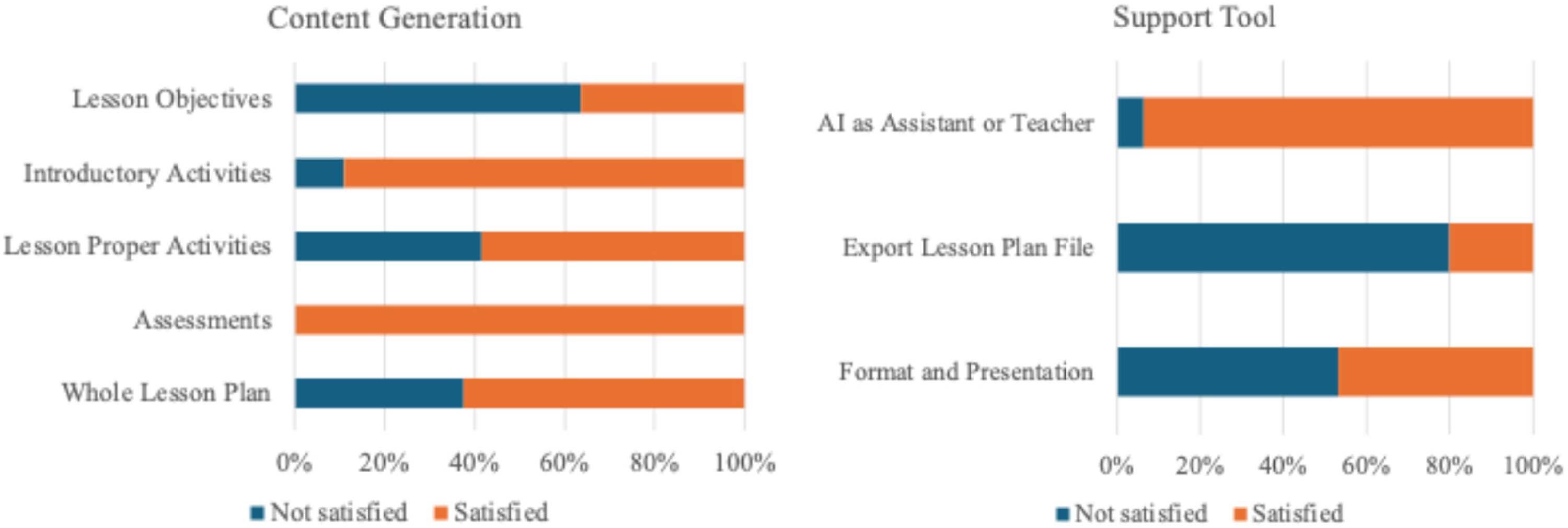
Percentages of satisfaction and dissatisfaction in artificial intelligence (AI) functions.
5.2.1 Perceived usefulness and limitations of AI as a content generator
PSMTs reported both benefits and constraints in using AI tools for lesson planning. Table 2 summarizes the subthemes related to the perceived usefulness and limitations of AI in content generation. Participants’ reflections indicated that AI was particularly useful for generating instructional components—such as learning objectives, assessments, and activity ideas—that aligned with curriculum standards and pedagogical intentions.
The generated subthemes suggest that AI was perceived as useful for content generation when outputs aligned with curriculum standards, student-centered approaches, and real-life contexts. Similar perceptions have been reported in studies highlighting AI's effectiveness in designing active and developmentally appropriate learning experiences (Bernardi et al., 2025; Walkington & Bainbridge, 2025; Yaman, 2024). Artificial intelligence was also perceived as easier to use when outputs were already organized, detailed, and responsive to prompt requirements. In contrast, AI was viewed as less useful when outputs were misaligned, inaccurate, unrealistic, or either underdetailed or overly verbose. Similar concerns have been reported in prior literature, where AI-generated content was found to contain incorrect information, weak explanations, and contextually inappropriate lesson components (Kerr & Kim, 2025; Powell & Courchesne, 2024).
PSMTs’ evaluations of AI-generated content appeared to reflect their existing pedagogical expectations regarding quality lesson planning. Artificial intelligence–generated objectives, for instance, were perceived as useful when they aligned with curriculum standards and addressed cognitive, affective, and psychomotor domains. However, objectives were viewed less favorably when they became overly broad, unrealistic, or inconsistent with required formats. These findings suggest that participants did not simply evaluate outputs based on technical correctness alone, but according to broader instructional considerations such as feasibility, curricular alignment, and learner appropriateness. Consistent with TAM, these perceptions of usefulness influenced whether AI-generated outputs were retained, revised, or rejected during lesson planning. At the same time, the competence model of mathematics lesson planning (Cevikbas et al., 2024) suggests that such evaluations reflect instructional dispositions that shaped how AI-generated outputs were interpreted and integrated into lesson plans.
A similar pattern was observed in lesson activities and assessments. Student-centered and inquiry-based activities were generally perceived as useful, whereas inaccuracies and insufficient detail reduced their direct usability. Participants appeared to value AI-generated outputs that promoted active learning and learner engagement, consistent with constructivist and inquiry-based orientations in mathematics instruction. However, the continued refinement of these outputs suggests that AI-generated activities were not automatically perceived as instructionally complete. Instead, participants evaluated whether activities were realistic within classroom constraints, aligned with lesson goals, and appropriate for the cognitive demands of learners.
Although some prompts requested complete lesson plans, participants perceived these outputs as useful only when they satisfied structural and instructional expectations. Overall, the findings suggest that AI primarily functioned as an idea generator and drafting tool rather than as a producer of finalized lesson plans. The tendency to revise and contextualize outputs further indicates that participants prioritized instructional quality over the convenience of direct AI adoption.
5.2.2 Perceived usefulness and limitations of AI as a support tool
As a support tool, PSTs perceived AI as both helpful and constrained. Table 3 presents the conditions under which AI functioned effectively or ineffectively as a support tool. Artificial intelligence was perceived as useful in tasks such as formatting lesson plans, responding to step-by-step prompts, and organizing instructional materials. These uses primarily supported the planning process rather than replacing teachers’ instructional decision-making. Preservice teachers particularly valued AI's assistance with technical and procedural aspects of lesson preparation.
The use of AI as a support tool elicited both positive and negative perceptions among PSMTs. Artificial intelligence was perceived as useful when it produced structured outputs, followed instructions accurately, and responded appropriately to specific formatting and organizational requirements. Comparable findings have been reported in previous studies involving AI-assisted lesson planning and mathematics instruction (Filiz & Gür, 2025; Getenet, 2024; Wardat et al., 2023). In these situations, AI supported lesson organization and reduced procedural workload, making it easier for participants to complete planning tasks.
In contrast, AI was perceived as less useful when outputs became unclear, inconsistent, or incomplete. Participants reported dissatisfaction when instructional procedures lacked detail, when key content was omitted, or when AI-generated formatting did not match the expected structure. Similar limitations have been identified in prior research, particularly regarding AI's inconsistency and difficulties in maintaining coherent instructional representations (Walkington & Bainbridge, 2025; Yaman, 2024). These findings suggest that participants evaluated AI support functions not only according to technical responsiveness but also according to their instructional usability within actual lesson-planning contexts.
A similar pattern emerged in formatting and exporting lesson plans. Artificial intelligence was perceived as useful when it adhered to required templates and layouts, but dissatisfaction arose when formatting errors occurred or when content and table structures were lost during file export. Because these issues disrupted the usability and coherence of lesson plans, participants often discontinued AI use during the final stages of lesson preparation and instead relied on manual formatting and editing. This shift toward manual intervention suggests that perceived ease of use alone was insufficient to sustain AI adoption when outputs no longer supported instructional reliability and organizational consistency. In TAM terms, participants appeared willing to continue using AI only when its perceived usefulness outweighed the operational difficulties associated with formatting and exporting lesson-plan materials.
5.2.3 Strategies for improving AI outputs
The reflections of PSMTs reveal various strategies for improving unsatisfactory AI-generated outputs during lesson planning. When AI outputs failed to meet instructional expectations, participants responded through two broad approaches: refining AI use through prompting strategies and bypassing AI through manual interventions. These responses suggest that participants were not passive recipients of AI-generated content but critical users who actively negotiated the limits of AI usefulness. Table 4 outlines the subthemes of these corrective actions.
Many groups improved AI-generated outputs by refining prompts through additional contextual details, clearer expectations, or more specific instructions. Some groups also used segmented and sequential prompting to guide AI step-by-step through complex lesson-planning tasks, while others combined elements from multiple AI responses to create more coherent lesson components. These findings align with Tapan Broutin's (2024) “adjust-and-refine” and “merge-and-blend” frameworks, which describe AI as a scaffold for pedagogical work rather than a replacement for teacher input. Similar studies likewise highlight the importance of structured prompting in improving instructional relevance and lesson coherence (Walkington & Bainbridge, 2025; Wardat et al., 2023).
The refinement strategies observed in the study further suggest that participants engaged in active instructional decision-making throughout the planning process. Rather than treating AI-generated outputs as finalized products, PSMTs appeared to evaluate outputs against pedagogical expectations and revise prompts accordingly to improve alignment with instructional goals. From a TAM perspective, the persistence of iterative prompting behaviors suggests that participants continued engaging with AI because they still perceived instructional value in the generated outputs despite the need for repeated revisions. Concurrently, the competence model (Cevikbas et al., 2024) explains these behaviors as manifestations of situation-specific instructional skills, particularly the ability to recognize limitations in instructional materials and adapt planning decisions in response.
When prompt refinement remained insufficient, participants shifted toward manual intervention to ensure instructional quality and completeness. Some participants revised AI-generated outputs using their own pedagogical knowledge to reorganize, expand, or correct lesson components, while others created external files and templates to independently refine lesson plans rather than continue interacting with AI. These strategies suggest that participants retained responsibility for instructional soundness despite using AI-assisted tools.
Overall, PSMTs primarily used AI to generate initial lesson-planning outputs that were subsequently evaluated for accuracy, appropriateness, and instructional completeness. Although AI-generated content was valued for its efficiency and originality, outputs were rarely adopted without modification and instead underwent iterative refinement through additional prompting or manual revision. These patterns highlight strong teacher agency, with participants critically evaluating and adapting AI-generated outputs to maintain pedagogical alignment and instructional quality.
6. Conclusion
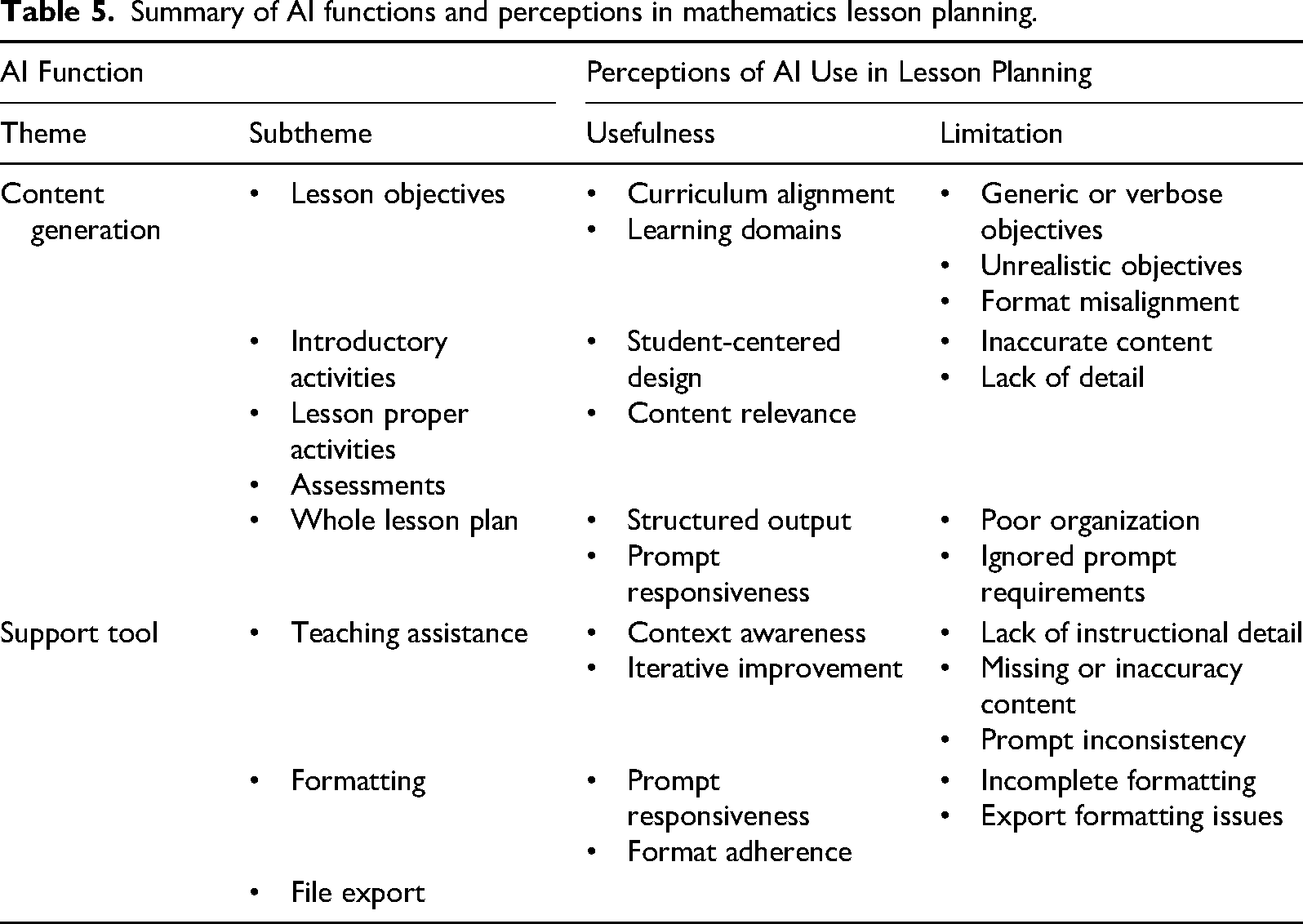
This study examined how PSMTs integrate AI into lesson planning, focusing on their prompting practices and their perceptions of AI's usefulness and limitations. Analysis of AI prompts and reflective accounts revealed two primary functions of AI in lesson planning: AI as a content generator and AI as a support tool. Across these functions, PSTs demonstrated varied and task-dependent perceptions of AI's usefulness and ease of use, which shaped how AI-generated outputs were adopted, revised, or constrained in practice. Table 5 presents a synthesis of the identified AI functions in lesson planning and the corresponding perceptions of usefulness and limitation reported by the participants.
Summary of AI functions and perceptions in mathematics lesson planning.
The findings show that perceptions of usefulness and ease of use played a central role in determining actual AI use in lesson planning. Artificial intelligence was perceived as useful when it supported curriculum alignment, student-centered and inquiry-based activity design, instructional clarity, and planning efficiency. These conditions encouraged engagement with AI, particularly during the early stages of lesson development. However, AI-generated outputs were also perceived as limiting when they lacked accuracy, instructional depth, formatting consistency, or responsiveness to specific instructional requirements. In TAM terms, such limitations reduced perceived ease of use and led PSTs to revise AI outputs, combine AI-assisted and manual strategies, or discontinue AI use for certain lesson-planning tasks.
Rather than relying on AI to produce complete lesson plans, PSMTs adopted selective and strategic approaches to AI integration. Artificial intelligence–generated outputs were commonly used as initial drafts or idea generators and were subsequently refined through iterative prompting or manual revision. This pattern reflects an iterative and corrective mode of AI use, wherein perceived usefulness motivated engagement, while perceived limitations constrained direct adoption. Consistent with the competence model, the selection of AI-generated outputs to be integrated into the actual lesson plan appears to be influenced by preservice mathematics teachers’ dispositions regarding the quality aspects of lesson planning. Overall, the findings highlight strong teacher agency, with PSTs exercising professional judgment to evaluate, adapt, and override AI-generated outputs in order to maintain instructional quality and alignment with pedagogical goals.
7. Recommendations
The findings suggest that meaningful adoption of AI in lesson planning depends on PSTs’ task-specific perceptions of usefulness and ease of use. The observed patterns of selective and corrective AI use indicate that AI is most effective when positioned as a co-planning support rather than as a fully automated solution. Accordingly, TEIs are encouraged to integrate AI systematically into PST preparation, with instruction emphasizing prompt engineering skills to enhance ease of use and pedagogical judgment to support informed evaluation of AI-generated outputs. Strengthening these competencies can help PSTs assess alignment with curriculum standards, learner needs, and instructional objectives, thereby supporting responsible and purposeful AI use in lesson planning.
Given that AI does not offer uniform solutions across lesson-planning tasks, teacher education programs should explicitly model selective and strategic AI use. Preservice teachers should be guided to determine when AI outputs may be directly integrated, when revision is required, and when manual intervention is necessary to maintain instructional quality. This study is limited to PSMTs’ perceptions and does not evaluate the quality of completed lesson plans; future research should therefore examine instructional outcomes associated with AI-assisted planning and explore how task-based perceptions of usefulness and ease of use relate to teaching effectiveness. Larger-scale and confirmatory studies, including those involving other subject areas and in-service teachers, are recommended to extend the transferability of these findings.
Footnotes
Acknowledgements
The author acknowledges the use of ChatGPT to assist in grammar, wording, referencing, screening, and initial coding. The prompts used for grammar, wording, and referencing included “correct grammar,” “improve wording,” and “format references in APA 7th edition.” The outputs from these prompts were used to revise sentence structure, enhance clarity, and generate properly formatted in-text citations and reference entries. The prompts used for initial coding are presented in Appendix A; the resulting outputs were carefully checked and manually revised by the researcher and another coder. While acknowledging the use of AI, the author affirms that he is the sole author of this article and takes full responsibility for its content, in accordance with COPE recommendations.

Ethical Approval and Informed Consent
All participants were at least 18 years old and provided informed consent to participate. Each submitted a signed consent form outlining the study's purpose, their rights, and the voluntary nature of their participation. The study underwent ethical review and received clearance from the Philippine Normal University Research Ethics Committee (REC Code: 2025-076).
Funding
The author received no financial support for the research, authorship, and/or publication of this article.
Declaration of Conflicting Interests
The author declared no potential conflicts of interest with respect to the research, authorship, and/or publication of this article.
Data Availability
The data supporting the findings of this study are available from the corresponding author upon request.