



Abstract
Background:
Yoga is increasingly recognized for its therapeutic benefits in managing chronic medical and psychiatric conditions, including substance use disorders. Despite its growing clinical acceptance, challenges remain regarding its real-world feasibility, particularly in medically oriented settings.
Objectives:
This analysis aimed to explore reasons for nonparticipation in a randomized controlled trial evaluating the efficacy of add-on yoga (dhyana meditation) in patients with opioid dependence who were stable on pharmacological treatment.
Design, Setting, Participants, and Interventions:
This sub-analysis was part of a larger randomized controlled trial of add-on yoga conducted at a tertiary care addiction treatment center in north India. Patients on stable doses of medications for opioid use disorder treatment were approached for participation in yoga that included 7 consecutive days of training followed by yoga practice or wait list control.
Main Outcome Measures:
The main outcome measures for the present analysis were the reasons for nonparticipation.
Results:
Only 24% (n = 120) of approached participants consented to join the trial. The most common reason for refusal was lack of time (73.2%), followed by logistical challenges and lack of familiarity with yoga. Education level was significantly associated with participation (p = 0.018). While 80.3% of nonparticipants believed yoga could be beneficial, few expressed interest in online formats or reduced-frequency visits, indicating limited practical feasibility.
Conclusion:
Despite a general belief in yoga’s benefits, participation was limited by time and logistical constraints. Future interventions should consider hybrid or digital formats, flexible scheduling, and tailored recruitment strategies. Understanding nonparticipation reasons can enhance engagement and guide future yoga-based trials in clinical populations.
Introduction
Yoga, which was earlier overlooked as a spiritual practice, has recently been gaining acceptance in the scientific community due to its clinically validated therapeutic approach. 1 It has been shown in scientific studies to improve cognitive performance, emotional control, and general well-being while lowering stress, anxiety, chronic pain, and inflammation.2–6 Due to the many adverse effects of drugs, yoga has gained recognition in contemporary health care and is becoming more and more popular for treating mental health and chronic medical diseases.2–7
Patients with substance-use disorders present with a variety of symptoms, including cognitive, physical, behavioral, and psychiatric, making management difficult. 2 Yoga can assist people in managing their substance use in the near term (detoxification) as well as the long-term.8–11 Substance use disorders can have a lengthy course that includes both relapses and remissions. Finding innovative treatments has been fueled by high treatment dropout rates.9–12 Numerous hospitals, rehabilitation facilities, and mental health clinics now provide yoga-based interventions in addition to traditional treatments, and prominent health organizations such as the National Institutes of Health and the World Health Organization recognize yoga as a complementary therapy.4,13,14
Nevertheless, there is still a lack of knowledge regarding the effectiveness and acceptability of these treatments for individuals receiving medical care, as the literature shows that stringent eligibility requirements, low awareness, accessibility issues, skepticism about efficacy, time constraints, physical limitations, fear of side effects, personal disinterest, financial barriers, and logistical challenges are common barriers to participation among the general population, 15 and people with conditions such as cardiovascular disorders, 16 gastrointestinal problems, 17 and cancer. 18 Fatigue and poor energy are major challenges for people with chronic diseases.19–20 The effectiveness and adherence rates of many therapies in the real world are still unknown, despite the fact that they may demonstrate efficacy in controlled research. Understanding the reasons behind nonparticipation in yoga-related studies can help us in identifying and removing obstacles to trial enrolment. In addition, this can render the outcomes nonrepresentative. We conducted a randomized control trial to see whether add-on yoga (dhyana meditation) was beneficial for improving sleep and quality of life in patients with opioid dependence who were stable on treatment. The study’s enrolment rate was quite low. Thus, the current analysis aimed to assess reasons for patient nonparticipation and their views towards yoga.
Materials and Methods
This study was conducted as a subcomponent of a larger parallel design randomized controlled trial that had ethics committee approval. The trial took place in the outpatient department of a tertiary care center in North India, affiliated with a medical college. The center is a facility for the treatment of substance use disorders and offers both inpatient and outpatient services. The clientele generally comprises patients with alcohol or opioid use disorders. Treatment is largely subsidized and is provided by a team of psychiatrists, psychologists, nurses, and other professionals working in the field of addiction. For management of patients with opioid dependence, both agonist (buprenorphine) and antagonist (naltrexone) treatments are available, supported by psychosocial interventions. The STROBE (Strengthening the Reporting of Observational Studies in Epidemiology) checklist was used. This study was conducted following the STROBE (Strengthening the Reporting of Observational Studies in Epidemiology) guidelines (in Supplementary Data).
A total of 120 eligible participants were identified for inclusion in the study. Based on calculations derived from the findings of Dhawan et al., 3 a sample size of 60 participants per group was required to detect a significant difference in psychological quality of life between the intervention and control groups (mean improvement of 5.14 vs. 1.12, with a standard deviation of 7.84), using an alpha level of 0.05 and a power of 80% (https://clincalc.com/stats/samplesize.aspx). Therefore, the planned total sample size for randomization was 120. Anticipating a nonacceptance rate of approximately one-third, consistent with data reported by Uebelacker et al. 21 it was estimated that at least 180 eligible individuals would need to be approached for participation.
The inclusion criteria for the study included patients diagnosed with opioid dependence as per ICD-10 diagnostic criteria, aged more than 18 years, on stable treatment for opioid dependence (defined as unchanged medication and adherence of more than 80% in the last 30 days and not requiring any immediate change in their medication regimen). They were required to express willingness to engage in meditation practice at least 5 days a week for a minimum of 1 month (this was to start after receiving online or in-person training for 7 days). Exclusion criteria included unwillingness to participate in the study, current engagement in psychotherapy or regular yoga practice (at least once a week) in the past month, presence of clinically significant substance intoxication or withdrawal that interfered with assessment, any medical illness that interfered with assessment, and a current or past history of psychotic illness or hypomania/mania.
Patients who had already been stabilized on their medications and did not require any changes to their medication regimen were identified as potential participants for the study. Eligible individuals were approached and provided a detailed explanation of the study’s purpose, procedures, potential risks, and benefits. Informed consent was obtained from those who expressed willingness to participate. The details of intervention and outcomes are being presented in another paper focusing on efficacy.
Of the 501 patients screened between August 2022 and August 2024, 381 could not be enrolled in the trial. For patients who declined participation, research staff asked their reasons for nonparticipation. These individuals were also asked whether they might have been interested in alternative forms of yoga, or if they would have considered meditation under different circumstances (i.e., if the yoga intervention is online, if they are asked to come only once, rather than daily, or if they are interested in any other intervention than yoga). In addition, demographic information and relevant clinical information, including current illness and substance use history, were gathered through structured interviews.
The yoga intervention was delivered by a certified yoga instructor who was also serving as a research assistant for the project. The instructor did not have any preexisting relationship with the participants. Similarly, recruitment was carried out by a separate member of the research staff, who also had no prior relationships with the participants.
The 1-h training session included instructions, demonstration of asanas, and guided yoga meditation comprising Surya Namaskar (5–10 rounds; 10 min), Nadi Shodhan Pranayama (5 min), and Panchkosh Meditation (20 min).
All study procedures were conducted per ethical guidelines, and institutional review board approval was obtained before participant recruitment.
Data collection were conducted using hard copies, with online backups maintained to ensure data security and accessibility. Statistical analysis was performed using standard statistical software (SPSS version 20). For assessing the nonparticipation, descriptive statistical methods such as mean, median, standard deviation, frequencies, and percentages were utilized. A p-value of <0.05 was considered statistically significant for all analyses.
Results
A total of 501 potential participants were approached for the study to reach the randomized number of participants of 120 (a considerable proportion of the participants were ineligible or did not consent). The characteristics of the participants approached are presented in Table 1. The median age was 30 years, with an interquartile range of 26 to 38 years, indicating that most participants were young adults. Most individuals approached were male (99.6%), with only a small proportion being female (0.4%). This distribution may be influenced by the natural setting of the study center, where most patients seeking treatment are male.
Individuals Approached for the Study (n = 501)
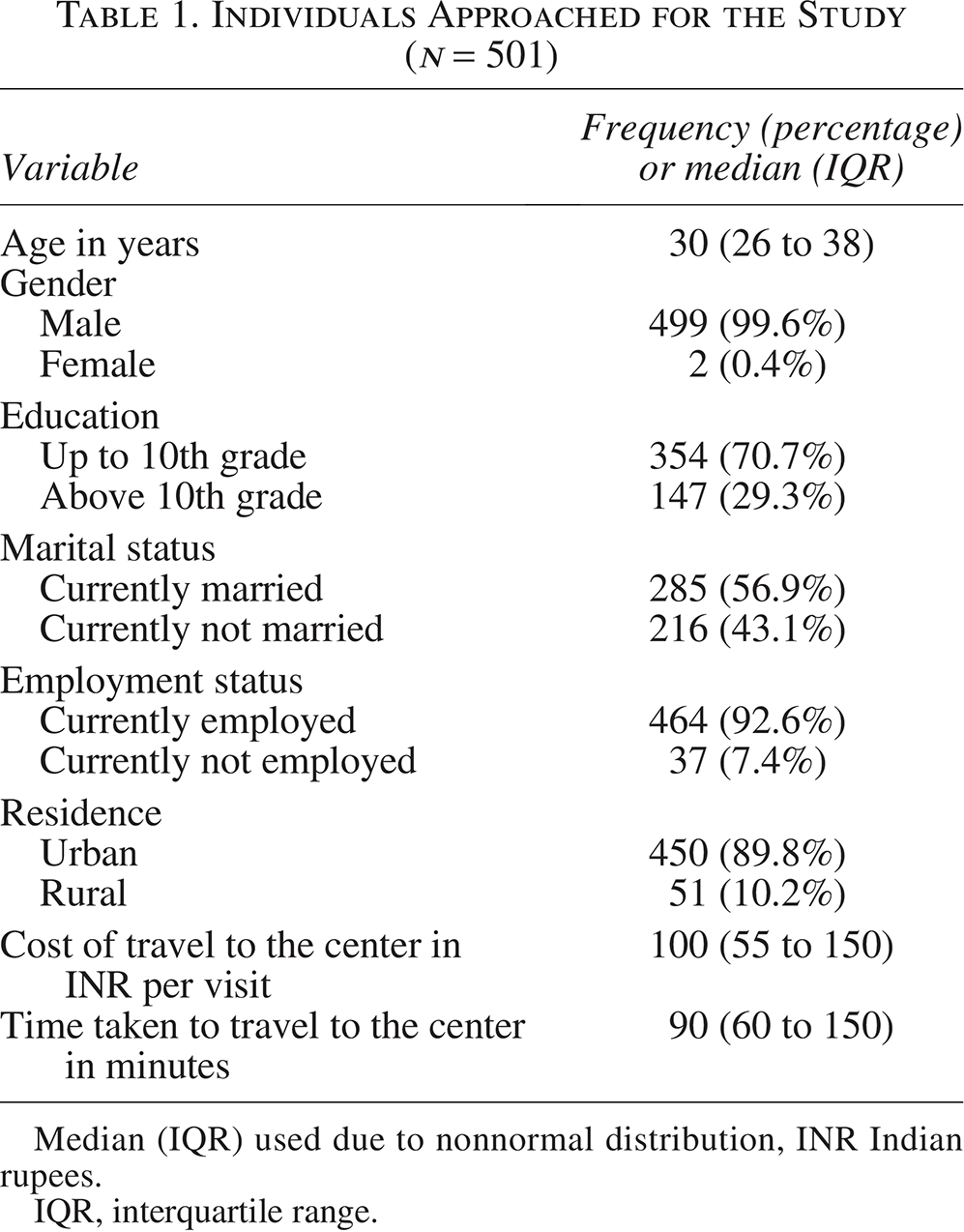
Median (IQR) used due to nonnormal distribution, INR Indian rupees.
IQR, interquartile range.
Among the 501 approached participants, only 120 (24%) were willing and further consented to participate in the trial, as shown in Table 2. Two participants initially consented but withdrew before randomization. The majority (62.5%) refused to consent, while 13.2% expressed initial interest but deferred their participation and ultimately did not take part. These numbers reflect challenges in recruiting the participants to engage in such interventions, potentially influenced by logistical or personal barriers.
Willingness to Participate in the Trial
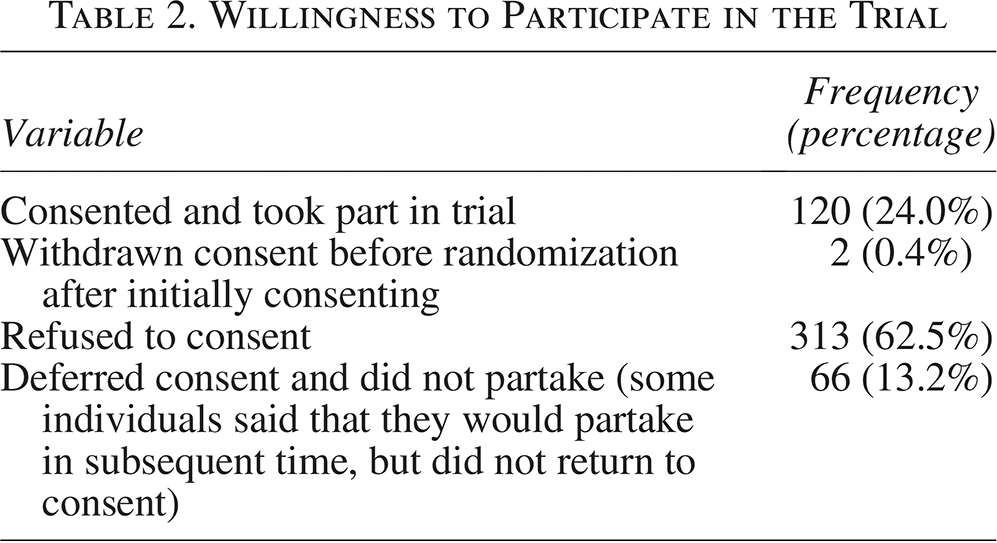
Table 3 compares those who consented to participate in the trial (n = 120) with those who refused (n = 313). Individuals who consented to participate did not differ from those who did not consent to participate in terms of age, gender, marital status, employment, residence, travel costs, and travel time. However, education did show a difference between the groups. A higher proportion of individuals who were educated above the 10th grade consented to participate.
Comparison Table of Individuals Consented and Those Refused against Multiple Factors
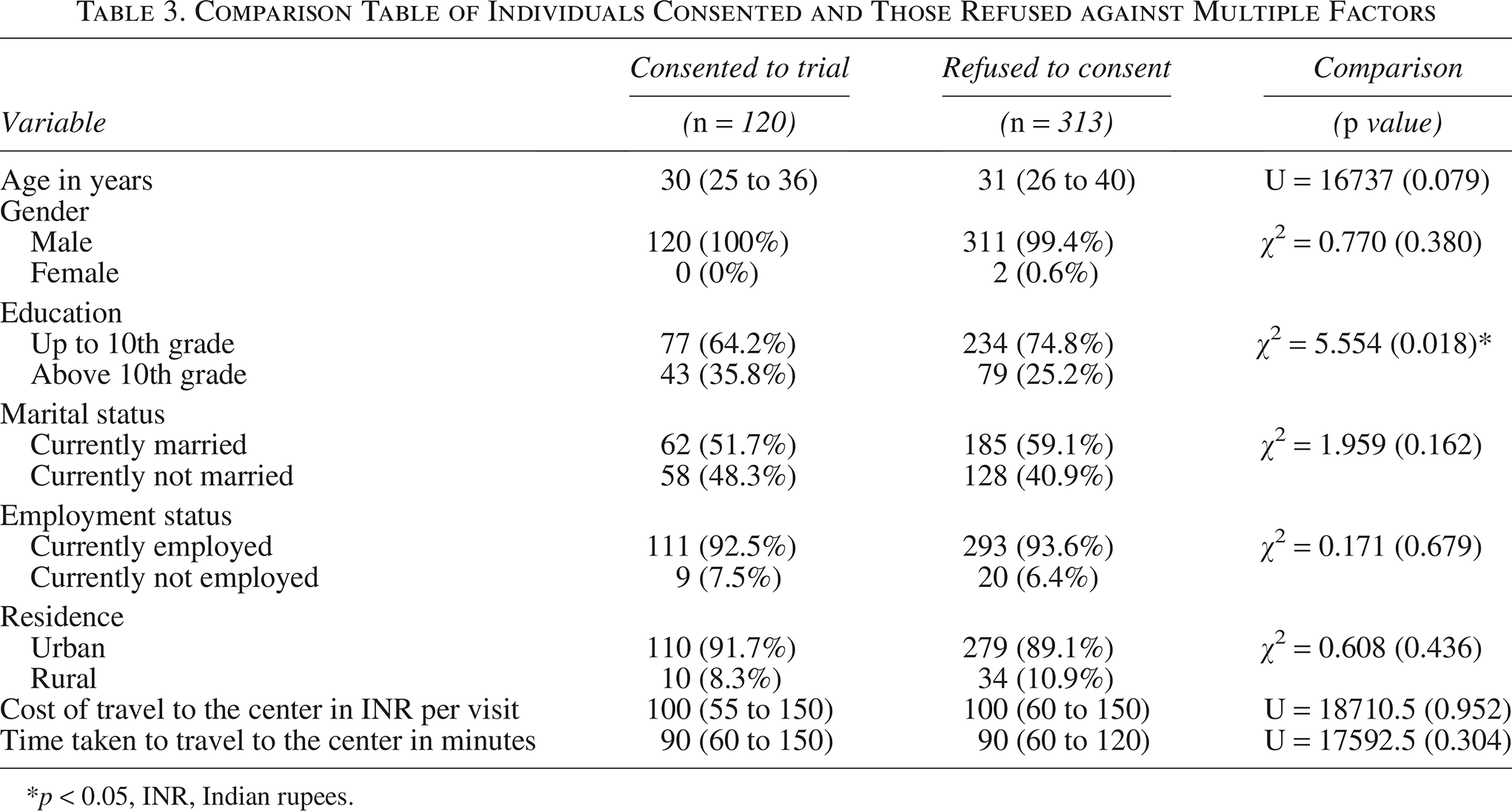
*p < 0.05, INR, Indian rupees.
Figure 1 demonstrates the reasons for refusal among the 313 participants, the most common reasons being lack of time to perform yoga and lack of time for the training. A smaller percentage cited the distance from the center, no smartphone access, or physical limitations such as injury or old age as their key reason. Only 7% (n = 22) believed that yoga was unnecessary alongside their current treatment. These findings underline that time constraints were the dominant barrier, while other logistical or belief-related factors played a lesser role.

Reasons of Nonintending to Participate in Yoga Trial.
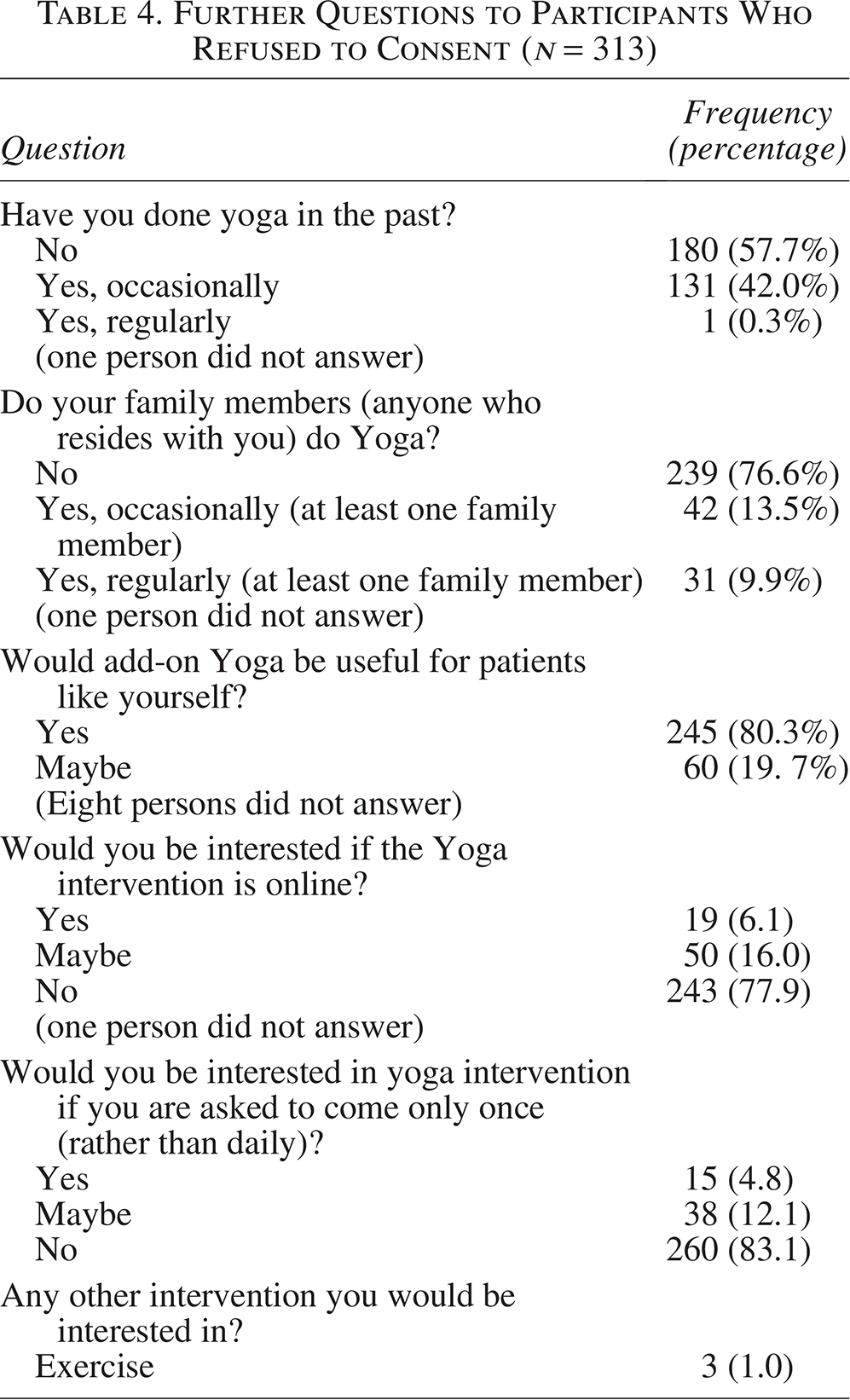
When further enquired to those who refused to consent to the trial (n = 313), 58% revealed that they had no prior experience with yoga, while 42% had tried it occasionally, and just one person had practiced it regularly. Most nonparticipants (78%) believed yoga could benefit patients like themselves, yet interest in alternative formats of intervention was limited. For example, in Table 4, it can be observed that only 6% expressed interest in online yoga interventions, and just 4.8% were willing to visit the center once instead of daily. These responses indicate a general perception of yoga’s benefits but limited feasibility or willingness to incorporate it into their routine lifestyle.
Further Questions to Participants Who Refused to Consent (n = 313)
Discussion
The present analysis aimed to assess reasons for nonparticipation and their views towards yoga. One of the primary barriers to engagement with the intervention was the participants’ perceived lack of time. Among the 313 individuals who refused to participate in the study, the majority (73.2%) cited time constraints as the primary reason for either training or actual yoga practice. This aligns with previous research indicating that structured behavioral interventions often face difficulties in uptake among individuals with substance use disorders, particularly when competing with other treatment demands. 7 Another pilot randomized trial assessed the feasibility and acceptability of a hatha yoga program targeting chronic pain in individuals receiving opioid agonist therapy. The study demonstrated feasibility in several domains, including recruitment and retention for follow-up assessments. However, only 50% of participants in the yoga group attended at least 6 of 12 possible classes, indicating challenges in adherence. The authors suggested exploring strategies to increase the “dosage” of yoga received, such as enhancing class attendance or home practice. 21 In addition, a study exploring yoga as an adjunctive intervention to medication-assisted treatment with buprenorphine-naloxone emphasized the importance of addressing impediments to implementing yoga in clinical settings. The study aimed to evaluate compliance in attending yoga sessions and identified barriers such as time constraints and logistical challenges. The authors concluded that integrating yoga into treatment requires careful consideration of these factors to enhance acceptability and adherence. 22
Recruitment challenges also played a significant role in determining the feasibility of the intervention. Despite initial interest, a majority of potential participants declined enrolment due to logistical constraints, misconceptions about yoga, and perceived lack of immediate benefit. In addition, education level played a role in trial participation (p = 0.018), with individuals having education beyond the 10th grade being more likely to enrol. This finding aligns with the previous studies done by Uebelacker et al., and Zgierska et al.6,21
This finding may suggest that individuals with higher educational attainment are more likely to be aware of the potential benefits of yoga, more open to add-on interventions, or perhaps better able to comprehend the nature and rationale of the intervention as explained during the consent process. Conversely, those with lower education levels may have had difficulty understanding the potential relevance or perceived applicability of yoga as part of their treatment plan, or they may have held misconceptions about yoga practices. To address this potential barrier in future studies, tailored participant information materials (e.g., using simpler language, visual aids, or demonstrations) could be used to better engage individuals with lower education levels.
Our findings underscore the need for future studies to explore ways to improve patient engagement, possibly through digital interventions, shorter session durations, or flexible scheduling to accommodate participants’ schedules. To enhance effectiveness, future interventions should explore strategies to improve enrolment, such as tailored intervention models, motivational components, or incentive-based participation. 23 In addition, given the cultural acceptance of yoga in India, community-based interventions leveraging social support mechanisms may help increase engagement and sustainability of practice.
In addition, mobile-based interventions offering virtual yoga guidance with adherence tracking could serve as an effective mechanism for increasing accessibility and engagement. A study conducted at the National Institute of Mental Health and Neurosciences in Bengaluru, India, evaluated the feasibility of tele-yoga for patients with substance use disorders. Thirty participants received an initial in-person yoga session followed by 4 weeks of thrice-weekly online sessions. The results indicated that tele-yoga was well-received, with participants finding the practice easy to learn and reporting no adverse effects. Significant improvements were observed in yoga performance, clinical severity, and perceived stress levels. These findings suggest that tele-yoga can effectively enhance adherence and reduce logistical barriers associated with traditional in-person sessions. 24 During the analysis, a question was asked regarding the acceptability of online-delivered yoga, to which these findings provided supportive evidence within our population. Incorporating tele-yoga into clinical practice offers a practical approach to overcoming challenges related to recruitment and adherence in yoga-based interventions. By reducing logistical barriers and providing flexible access to therapy sessions, tele-yoga can potentially enhance patient engagement and contribute to more effective treatment outcomes.
Limitations
Several limitations of this study should be considered. This study was conducted in a busy, medically oriented clinical setting in North India, specifically at a single site where yoga interventions are not routinely offered as part of standard care. Limitations also include possible selection bias, given the specific population and setting; interviewer bias, which may have influenced how information was collected or interpreted; and responder bias, which could have affected the accuracy or honesty of participant responses. There was male preponderance in the study population. Previous studies from the center and the region also suggest that the male gender was far more common in the treatment-seeking population.9,12 Given gender-specific differences in treatment responses, future studies should aim for a more gender-balanced sample.
Conclusion
Considering the nonparticipation observed in this study, which may reflect real-world clinical settings, future research could explore several important directions. One area involves the development of hybrid interventions, where yoga is integrated with other established behavioral therapies from the outset to potentially improve treatment outcomes. In addition, investigating digital or remote delivery models, such as app-based or virtual platforms, may help address accessibility issues and enhance adherence, which were commonly reported barriers to participation. It is also essential to explore strategies that reinforce motivation and encourage sustained engagement with yoga practices. Tailoring interventions based on individuals’ interest in yoga, along with implementation research, can help identify effective components and eliminate less impactful ones. Patients approached were already on stable doses of medications and may not have been actively seeking additional treatments. To gain a deeper understanding of the acceptability and applicability of yoga, it may be valuable to employ an in-depth qualitative or mixed-methods approach. Lastly, more gender-inclusive studies with balanced male and female representation are needed to understand how yoga interventions may differently affect individuals based on gender.
To conclude, this study highlights challenges in recruitment and adherence, suggesting that standalone yoga interventions may face feasibility issues in real-world settings. Including patients receiving psychotherapy in future research could provide valuable insights into the combined or complementary effects of psychotherapy and yoga and might better reflect real-world clinical scenarios where individuals often receive multiple forms of support simultaneously. Future research should focus on optimizing intervention delivery, improving adherence, and integrating yoga into comprehensive treatment frameworks to maximize the therapeutic potential of yoga. By understanding reasons for noninclusion, it can lead to more efficient and effective recruitment efforts in future trials and also guide the design of future studies to minimize dropout rates and ensure a representative sample.
Authors’ Contributions
S.S.: Conceptualization, methodology, supervision, funding acquisition, formal analysis, revision of draft. P.S.: Writing—original draft, writing—review and editing. P.S.N.: Data curation. A.K.: Data curation. M.K.: Data curation. R.Q.: Investigations and resources. A.D.: Conceptualization, methodology.
Footnotes
Author Disclosure Statement
No competing financial interests exist.
Funding Information
The work was funded by a grant from the Department of Science and Technology, Government of India with reference number DST/SATYAM/2020/457(G).
Ethics Committee Approval Number
IEC-214/04.03.2022. (Approved by All India Institute of Medical Sciences, New Delhi).
Supplemental Material
References
Supplementary Material
Please find the following supplemental material available below.
For Open Access articles published under a Creative Commons License, all supplemental material carries the same license as the article it is associated with.
For non-Open Access articles published, all supplemental material carries a non-exclusive license, and permission requests for re-use of supplemental material or any part of supplemental material shall be sent directly to the copyright owner as specified in the copyright notice associated with the article.
