



Abstract

Introduction
As artificial intelligence (AI) becomes integrated into health care workflows, it is expected to streamline procedures for the purpose of enhancing medical effectiveness. This shift will also necessitate reassessment of health care roles as professionals adapt to working alongside AI. While many assume AI’s chief contribution will be efficiency, its greater potential may lie in supporting more patient-centered models of care and improving outcomes. 1 In particular, AI holds the capacity to profoundly increase medicine’s current capacity for patient-centered care, via several distinct pathways. AI-powered diagnostic tools can process patient data, such as medical records and imaging results, to support diagnoses and more individualized treatments. 2 Integrative medicine practitioners could utilize these tools to enhance their assessments and gain a more holistic understanding of their patients’ health.2–4 AI tools can empower individuals seeking an active role in their health-an integral aspect of integrative medicine and its patient-centered decision-making approach.5–7 These tools include virtual health assistants that enhance patient engagement by providing information, answering questions, guiding therapeutic choices, and tailoring educational materials to align with patients’ specific treatment plans and health goals.2,8
The rapid progress of AI has already begun to transform modern health care. These transformations have also led to promising applications for various aspects of acupuncture practice. For example, by analyzing specific symptoms, medical history, and health metrics, AI models can suggest customized acupuncture point prescriptions that align with a patient’s Traditional Chinese Medicine (TCM) pattern differentiation 9 or can mimic human clinical reasoning in acupoint selection. 10 At a traditional Korean medical clinic, an artificial neural network (ANN) trained on 232 anonymized clinical records from 81 patients achieved an 86.5% accuracy in predicting acupoint prescriptions by analyzing patterns of symptoms and diseases. 11
In addition, acupuncture manipulation relies on intricate needling manipulations that are challenging to replicate consistently. 12 AI-supported technologies, such as ultrasound-guided sensors and robotic devices, can enhance the precision of needle placement by measuring tissue depth and automatically adapting needle insertion based on resistance changes. 13 Using deep learning and computer vision, AI models analyze manual techniques to extract kinetic parameters, including needling frequency, amplitude, and angle. 14
AI has the potential to play a significant role in predicting the clinical effectiveness of acupuncture treatments for individuals and certain populations.15,16 Furthermore, AI will be deeply integrated into the Topological Atlas and Repository for Acupoint Research (TARA, https://tara-repository.mgb.org/)-an online tool being developed by the Society for Acupuncture Research (SAR) and the National Center for Complementary and Integrative Health. 17
AI’s potential does not, however, negate the limitations and challenges that prevent the realization of these improvements in patient-centered care. A key concern is trust: patients are more likely to trust AI when its processes and decisions are explainable, which proves difficult when digital literacy is often low among health care providers and patients. 18 Trust remains precarious, as concerns about losing human connection and fears of data misuse can significantly diminish it. 19 Beyond trust, persistent issues such as fragmented and of varying quality health care data, along with difficulties in training effective AI models, remain obstacles. In addition, ensuring data privacy, standardizing data formats, and achieving interoperability among disparate systems are essential challenges for AI integration. 1
In 2023, SAR initiated the AI and Digital Health Special Interest Group (SIG) to facilitate a responsible approach to AI for acupuncture research and clinical practice. Here, we present first results of the SIG’s work.
Our Approach
The SIG of approximately 30 individuals who meet online had a broad discussion and performed a Strengths, Weaknesses, Opportunities, and Threats (SWOT) analysis to determine strengths, weaknesses, opportunities, and threats for AI integration into acupuncture from three different perspectives (health care providers, researchers, patients/public) and developed recommendations. In addition, we conducted an international online survey to learn from acupuncturists about their documentation of acupuncture treatments to gain a better understanding about the available data. The survey was generated using Google Forms and distributed online to acupuncture communities, in academic conferences, and through Social Networking Services (LinkedIn). Results are presented below.
Survey Results
Participant characteristics
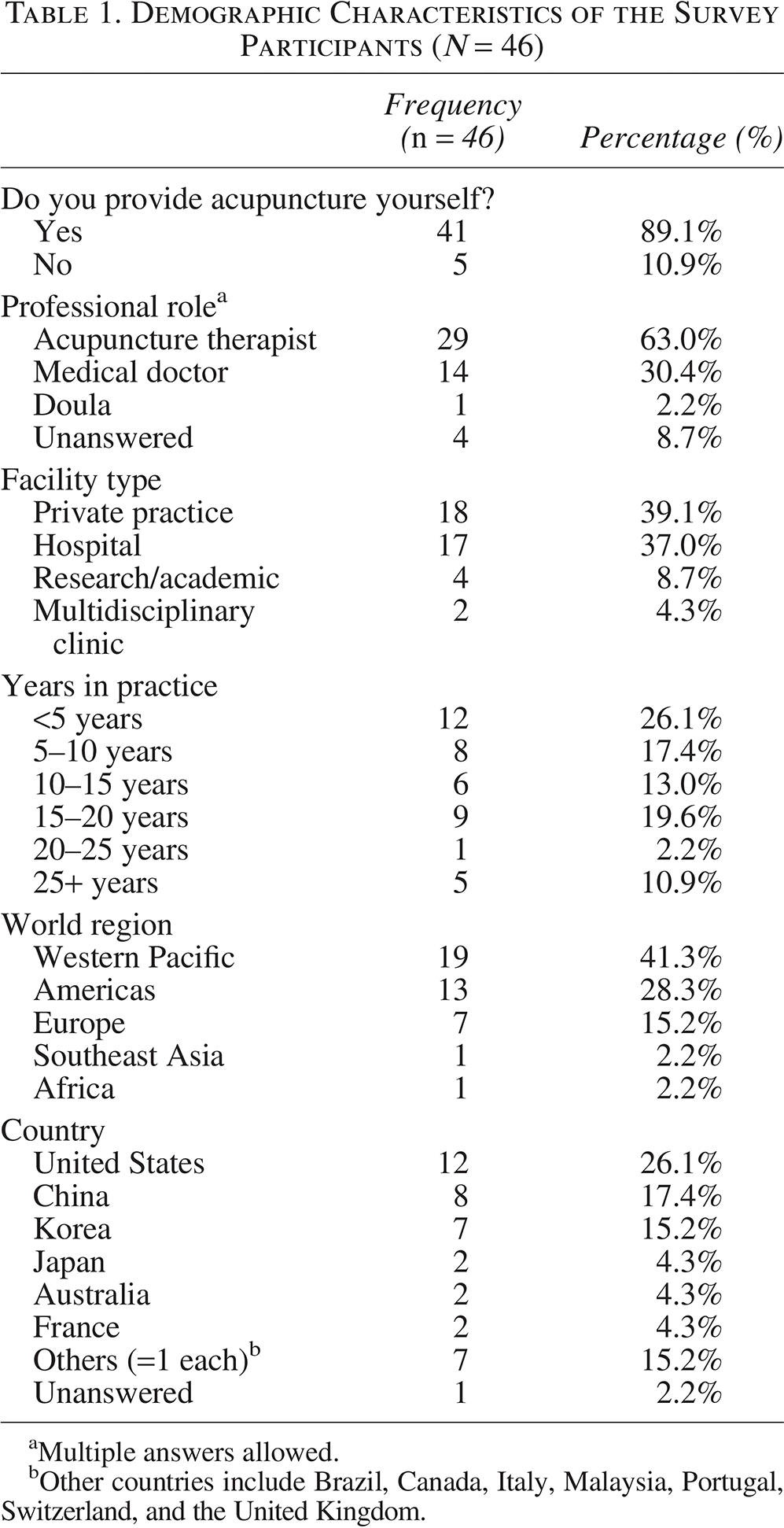
A total of 46 respondents completed the survey, and the majority (89.1%, n = 41) reported personally administering acupuncture. The most common professional roles were acupuncture therapist (63%, n = 29) and medical doctor (30.4%, n = 14), with overall levels of clinical experience ranging from less than 5 years (26.1%, n = 12) to more than 25 years (10.9%, n = 5). Respondents worked across various clinical settings, primarily in private practice (39.1%, n = 18) or hospitals (37.0%, n = 17), followed by academic or research institutions (8.7%, n = 4) and multidisciplinary clinics (4.3%, n = 2). Table 1 describes the demographic characteristics of the respondents.
Demographic Characteristics of the Survey Participants (N = 46)
Multiple answers allowed.
Other countries include Brazil, Canada, Italy, Malaysia, Portugal, Switzerland, and the United Kingdom.
Documentation practices
More than half of respondents (52.2%, n = 24) used electronic health records (EHRs) exclusively, while 21.7% (n = 10) relied solely on paper documentation (Table 2). While the most common EHR systems were Jane 20 and in-house EMRs (each 15.2%, n = 7, 39.1% n = 18) reported using unique or custom solutions. The majority recorded patient symptoms (87.0%, n = 40), along with medical history (80.4%, n = 37) and lifestyle factors (76.1%, n = 35). Current medications were documented by 71.7% (n = 33) and TCM pattern diagnoses by 60.9% (n = 28), while diagnostic and insurance codes were recorded by 52.2% (n = 24) and 28.3% (n = 13), respectively.
Information Routinely Documented by Surveyed Acupuncture Practitioners: Patient Data, Demographics, Assessments, and Session-Specific Details

Other programs include Deepscribe, Naltio, Noorki, Optimantra, and UnitedCare.
Multiple answers allowed.
Other patient information includes TCM diagnosis (e.g., pulse and tongue), NRS, physical examinations, and biological system issues.
Other details include laterality, regions to needle, Chinese characters, reasons for choosing the acupoints, and acupoint codes.
EHR, electronic health record; NDI, Neck Disability Index; NRS, Numeric Rating Scale; ODI, Oswestry Disability Index; TCM, Traditional Chinese Medicine; VAS, Visual Analog Scale.
For pretreatment assessments specific to acupuncture, most respondents documented physical examination findings (76.1%, n = 35), TCM pattern diagnoses (73.9%, n = 34), and patient-reported pain levels (73.9%, n = 34). The majority (82.6%, n = 38) updated symptom changes at every visit (Table 2).
Treatment-specific documentation
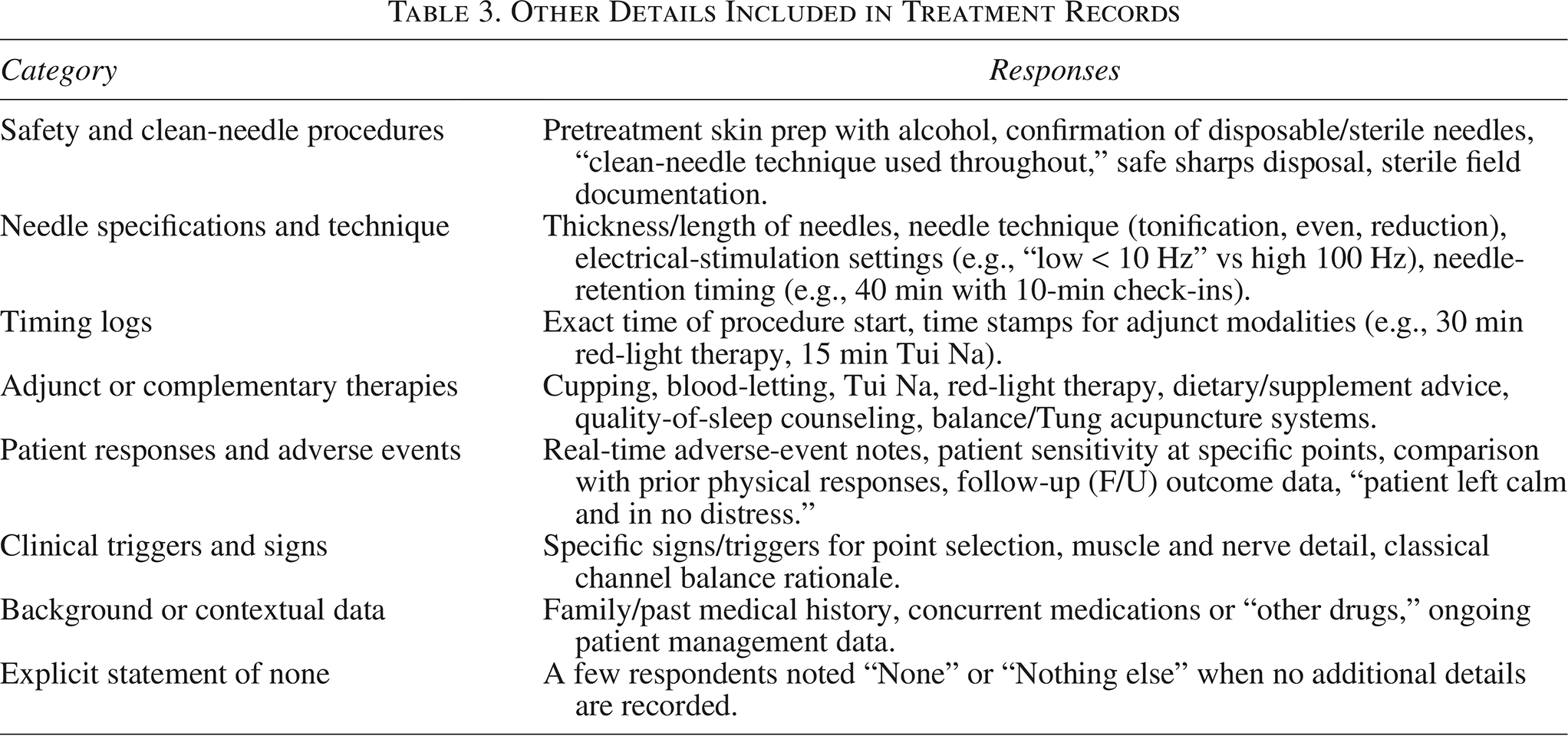
When documenting session-specific acupuncture details, the most frequently recorded elements were acupuncture point names (52.2%, n = 24) and electrical stimulation parameters (45.7%, n = 21). For the following items, only one respondent reported documenting them: rationale for point selection, anatomical regions targeted, laterality, and specific acupoint Chinese characters and codes, with these items documented by different individuals. Respondents also documented safety protocols (e.g., sterile technique, needle disposal), needle specifications (e.g., size, technique), time-stamped logs for treatment components, adjunctive therapies (e.g., cupping, red light therapy), patient responses or adverse events, and contextual clinical information such as concurrent medications or family history (Table 3).
Other Details Included in Treatment Records
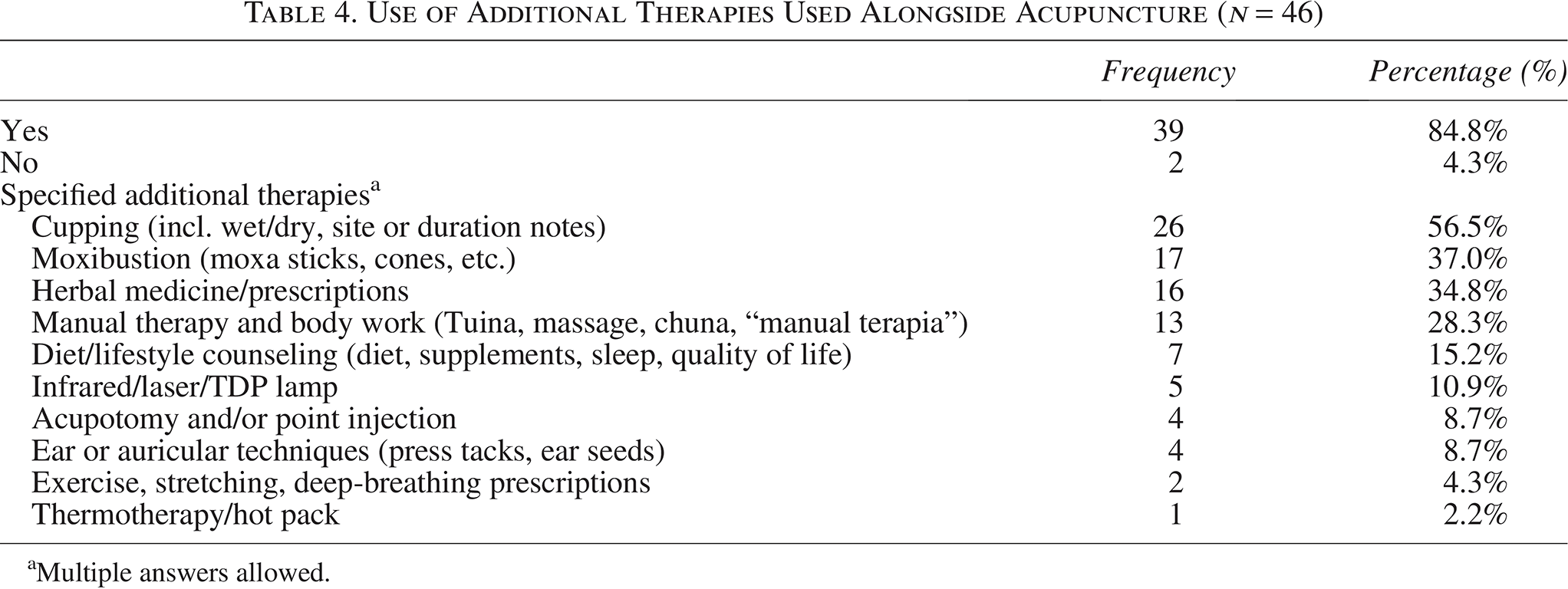
The majority of respondents (84.8%, n = 39) recorded the additional therapies used alongside acupuncture. Cupping was the most commonly recorded (56.5%, n = 26), and the full list of additional therapies is shown in Table 4.
Use of Additional Therapies Used Alongside Acupuncture (n = 46)
Multiple answers allowed.
Perceived importance of acupuncture treatment elements
Respondents’ ratings of the importance of acupuncture treatment elements varied. The documentation of acupuncture point names was most frequently rated as “very important” (37.0%, n = 17), followed by acupoint location (32.6%, n = 15) and electrical stimulation parameters (30.4%, n = 14) (Fig. 1).

Practitioner rated the importance of key documentation elements in acupuncture treatment records (n = 46).
Documentation of treatment goals, responses, and outcomes
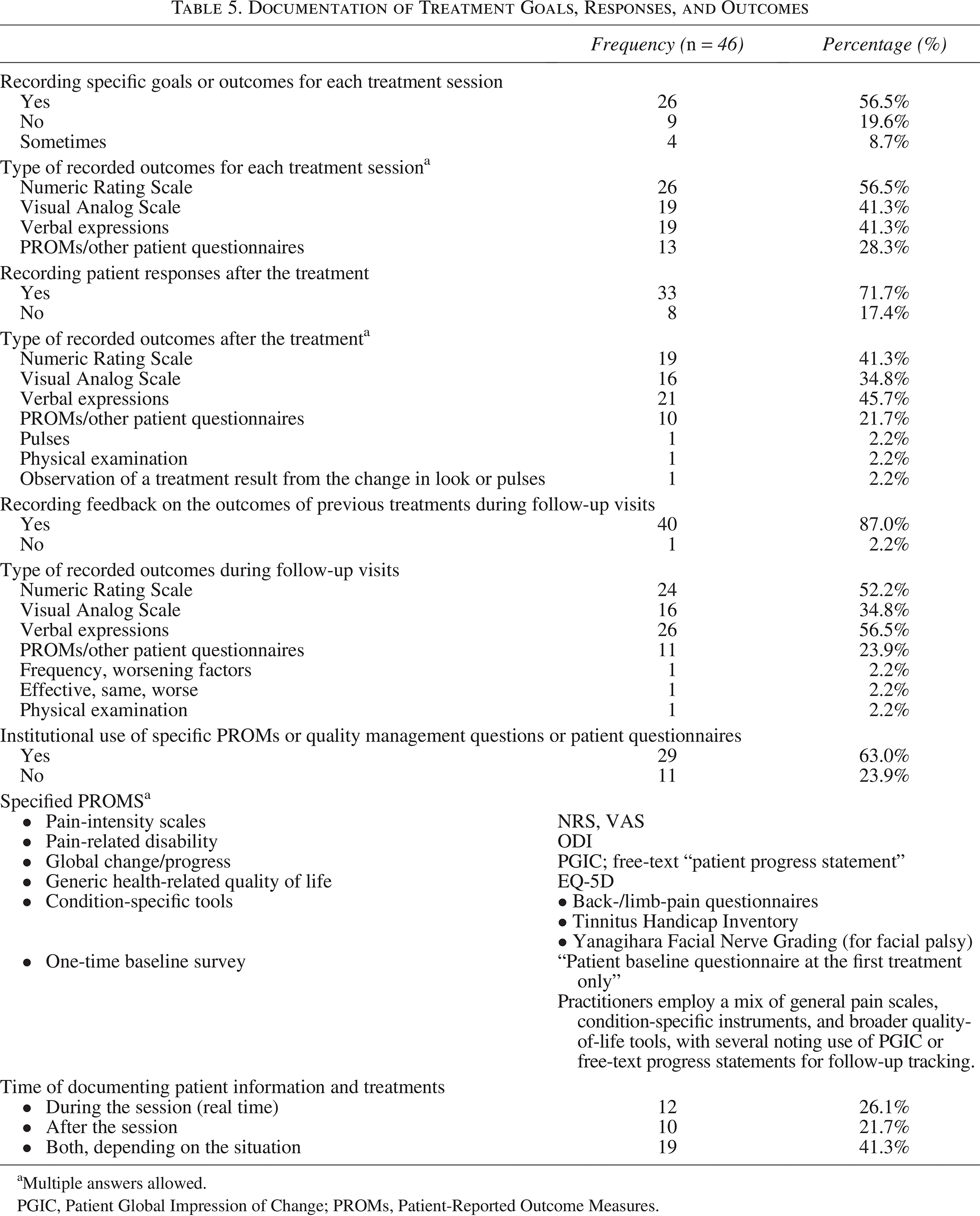
More than half of respondents (56.5%, n = 26) documented specific treatment goals or outcomes for each session, while 19.6% (n = 9) did not. Among those who documented outcomes, the most common methods included numeric rating scales (56.5%, n = 26), visual analog scales (41.3%, n = 19), and verbal expressions (41.3%, n = 19). Patient responses after treatment were recorded by 71.7% (n = 33) of respondents. Full details and formats for documenting these responses can be found in Table 5.
Documentation of Treatment Goals, Responses, and Outcomes
aMultiple answers allowed.
PGIC, Patient Global Impression of Change; PROMs, Patient-Reported Outcome Measures.
A large majority (87.0%, n = 40) also documented patient feedback on the outcomes of previous treatments during follow-up visits. Regarding institutional support for standardized outcome tracking, 63.0% (n = 29) indicated that their institutions used specific PROMs or patient questionnaires for acupuncture patients. In terms of workflow, documentation of patient information and treatment details occurred during the session in real time for 26.1% (n = 12) of respondents, after the session for 21.7% (n = 10), or both, depending on context (41.3%, n = 19).
SWOT Analyses and Recommendations for AI in the Field of Acupuncture
The results of the SWOT analyses for the three stakeholder perspectives, that is, health care providers, patients/public, and researchers, are displayed in Table 6. Six recommendations were developed for the themes data, education, collaboration, ethics & privacy, and research.
Strengths, Weaknesses, Opportunities, and Threats Analysis of Artificial Intelligence and Digital Health in Acupuncture Practice for Different Stakeholder Perspectives
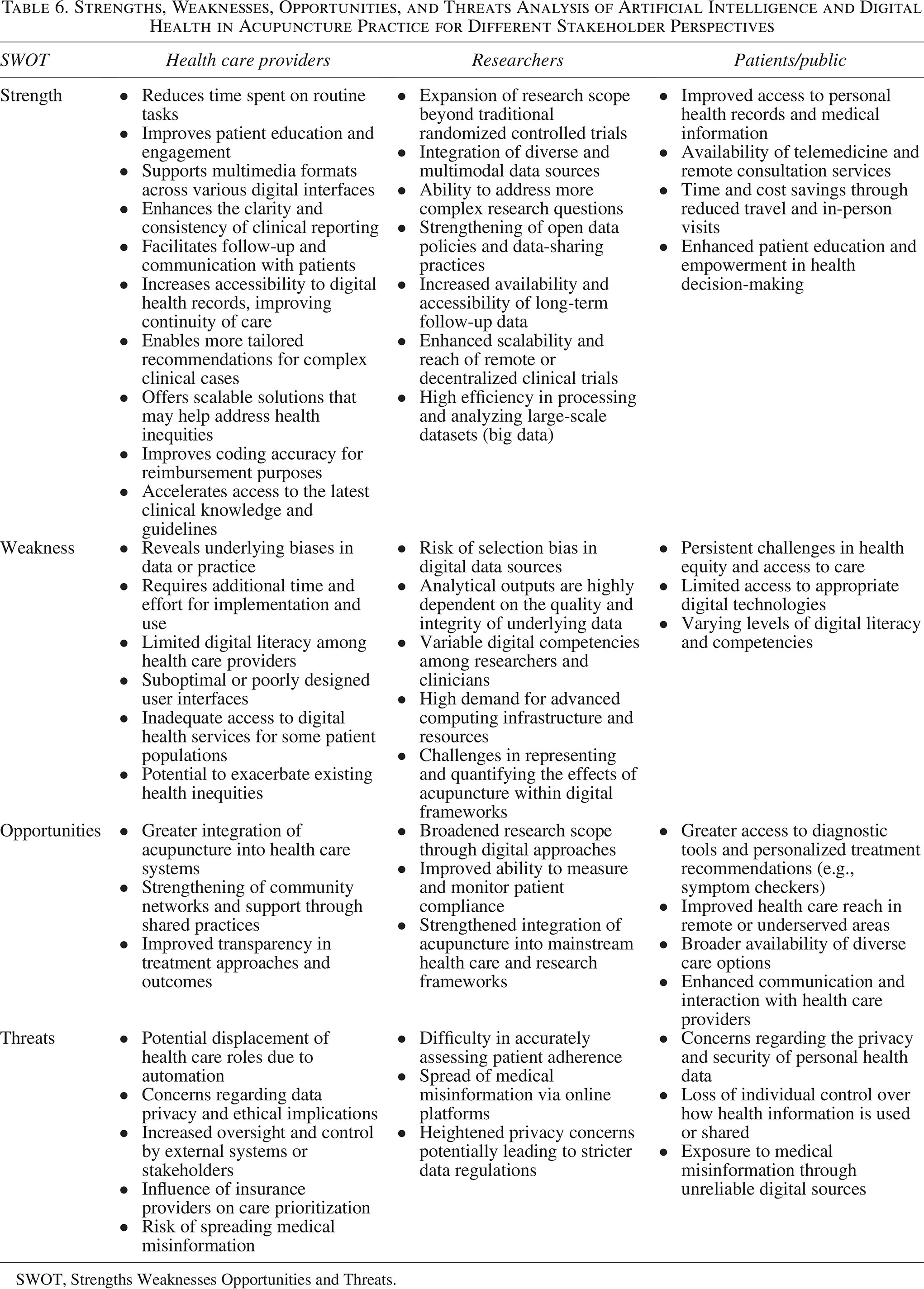
SWOT, Strengths Weaknesses Opportunities and Threats.
Recommendation 1: Interoperable core data standards are needed
Data are the foundational material for AI systems to learn and provide informed recommendations. 1 Data are often stored in different databases and formats, making it difficult to combine. Interoperability means that data adhere to common standards and can be more easily combined and shared. 21 Therefore, interoperable core data standards rely on consistent and standardized data elements to facilitate seamless communication and integration across diverse systems. These standards are also required in order for acupuncture data to be measured and formatted consistently, allowing for AI systems to then provide personalized and effective acupuncture treatments by leveraging comprehensive standardized information.
Recommendation 2: Use data templates
The wide-ranging descriptions in medical records are often entered as open-access text in EHRs, making subsequent data analysis challenging. Open-Access-text data entry can introduce biases and impact the accuracy, reliability, and validity of data analysis and decision-making processes. 22 The establishment of templates or standards for consistent documentation and scientific reporting can lead to the regular collection of high-quality, internationally standardized data. 23 With acupuncture being a complex nonpharmacological treatment option with many variables to consider, 24 standardized templates will ensure consistent recording of, including but not limited to, treatment protocols, point selections, needle techniques, and patient responses. Since data templates facilitate structure, it will become easier to clean, transform, and standardize data before feeding it into machine learning algorithms. 25 The templates should be designed in line with EHRs standards to facilitate seamless integration with health care systems.
Recommendation 3: Increasing digital literacy on AI
Health care professionals must receive proper training in emerging technologies such as AI, understanding both their benefits for cost, quality, and access to health care, as well as their drawbacks, including issues related to transparency and liability. 26 AI holds immense promise for everyone involved in health care. Physicians will benefit from education about AI by gaining insights into how AI can augment documentation, diagnostic accuracy, treatment planning, and patient outcomes, therefore, enhancing their clinical practice and decreasing workload. 27 For students, more AI knowledge and skills prepare them to embrace AI-enabled solutions in their future careers. 28 Lastly, for patients, education about AI promotes transparency and trust in AI-driven health care solutions, increases accessibility, and empowers them to actively engage in their care and make informed decisions about their health. 27
Recommendation 4: Strengthen interdisciplinary collaboration
Science and knowledge are essential for the existence of health care professions, and research serves as a key method to meet these requirements. In today’s landscape, complex issues often require collaborative solutions, as individual efforts may not always suffice. Interdisciplinary collaboration holds promise in addressing these multifaceted issues. 29 Given the complexity of AI technologies, interdisciplinary collaboration holds significant importance in its successful implementation into health care practices. By bringing together experts from various fields, for example, medicine (both biomedicine and Traditional East Asian Medicine), computer science, ethics, and policymaking, interdisciplinary collaboration ensures a holistic approach to AI integration. 30
Recommendation 5: Privacy and ethical aspects are important
As previously mentioned, AI technologies and techniques require a large amount of data. Therefore, ensuring the protection of patient information stands as a fundamental requirement before embarking on AI-related research endeavors. Ethical guidelines can help to prevent the misuse or exploitation of patient information and ensure that AI-driven acupuncture practices prioritize patient well-being and autonomy. Currently, there is lack of a centralized protocol governing data encryption and sharing in AI-driven research initiatives. 31 Absence of such regulation systems may raise concerns among individuals. As AI algorithms advance, their technical intricacies, often resembling a “black box,” pose challenges to societal comprehension. This perception of the unknown could, in turn, affect a patient’s preference during clinical interactions. 32 Implementing clear guidelines and prioritizing the use of explainable AI models can help address these challenges by making AI decision-making processes more transparent and understandable, ultimately strengthening trust between patients and health care providers.
Recommendation 6: Future research
Future research should prioritize developing high-quality, interoperable standardized datasets for documenting core information on acupuncture treatments, including acupoint locations, needling techniques, and outcomes. Studies should explore how AI can enhance individualized acupuncture treatments and how real-time feedback systems can improve outcomes. In addition, future research should also investigate how AI can facilitate the integration of evidence-based acupuncture into data repositories, such as TARA, and modern medical clinics, for which AI will play a larger and larger role in the future.
Discussion and Conclusion
The SWOT analysis indicates that AI has the potential to positively influence acupuncture and Traditional East Asian Medicine from the perspective of all stakeholders. However, limited digital literacy among both patients and health care providers remains a major barrier. The survey revealed that not all acupuncturists are familiar with EHRs, with 22% of respondents documenting exclusively on paper. Moreover, the perceived need for detailed documentation of acupuncture treatments was relatively low, and the documentation methods currently in use showed substantial heterogeneity.
These findings should be interpreted with caution. The survey was not representative, and both the small sample size and potential self-selection bias may limit the generalizability of the results.
To fully harness AI’s potential in acupuncture and Traditional East Asian Medicine, further preparation is essential. This includes the systematic documentation of clinical data to enable integration into AI algorithms, the enhancement of digital competencies among practitioners and patients, privacy and ethical aspects, and a more balanced discourse on both the limitations and benefits of AI in this context.
Authors’ Contributions
C.M.W., C.M., S.G., and Y.-S.L.: Conceptualization, data interpretation, writing of the first draft and review and editing. Y.-S.L.: Analyzed the survey data. All other authors were involved in data interpretation and review and editing.
Footnotes
Author Disclosure Statement
C.M.W. received research grants to the University from the app developer Newsenselab GmbH and received personal fees from Swiss Hospitals for scientific presentations on digital health and artificial intelligence outside this work. S.M.Z. is a co-creator and owner of the open-accessly available acupressure app MeTime. S.G. is a board member of Evidence Based Acupuncture and has received payments for speaking and travel reimbursement from them, a board member of the Society for Acupuncture Research, and Social Media and Outreach Editor for the European Journal of Integrative Medicine. V.N. is a consultant for Cala Health, Inc. All other authors declare that they have no conflict of interest.
Funding Information
No funding was received for this article.