Precision mental health innovations that harness artificial intelligence (AI), data, smartphones, and wearable devices capable of real-time measurement can detect, diagnose, treat, and care for individuals with mental health conditions more effectively than ever before. These technologies have the potential to address a burgeoning global mental health crisis that current human resources cannot solve.
Thomas Insel, MD, is a psychiatrist and neuroscientist, consulting professor at Stanford University, previous head of the National Institute of Mental Health, active founder or partner in multiple mental health technology startups, and author of Healing: Our Path from Mental Illness to Mental Health. Jon Nelson is a survivor of treatment-resistant depression dedicated to bringing his lived experience to both the center of digital mental health product innovation and removing mental health stigma. Together, they describe the ways in which technology is improving people’s lives and changing mental healthcare. They also discuss with contributing editor Matt Williams’ the barriers in product development, societies, healthcare systems, funding, and research that are hampering large-scale uptake of these potentially revolutionary solutions.
Q: Thomas, what inspired you to move into the fields of psychiatry and neuroscience?
Thomas Insel: At medical school I fell in love with the rotations that involved both psychiatry and neurology. I was interested in the area then called behavioral neurology or neuropsychiatry, looking at people who had odd brain lesions with even odder behavioral symptoms. In the early to mid-1970s, I moved from clinical training in psychiatry to clinical research, but I got bored with that because we didn’t have the tools or models and insights to do anything particularly interesting. We couldn’t study the brain. We were trying to find correlations by looking at urine or blood or cerebrospinal fluid. In 1983, I retrained in neuroscience, which by then had become a robust field, and became involved in what we now call social neuroscience, trying to understand the neural basis of complex social behaviors like parental care, attachment, and affiliation. I spent about 20 years as a neuroscientist far away from psychiatry, and it felt much closer to who I was and what I was really interested in.
Thomas Insel, MD
Psychiatrist and Neuroscientist, Consulting Professor
Stanford University
Q: How has the field changed during your training and career?
Insel: The history of psychology and psychiatry tracks with changes in the culture. It’s no closer to ground truth, but with different eras come different zeitgeists, and different ideas of what is schizophrenia, what is depression. We’ve moved from Freudian/Jungian frameworks to a biological revolution, and more recently [to] psychotherapy coming back in to try and understand the history of what people have gone through. Now we’re entering a new era driven by technology, including AI, digital tools, data science, with the ability to diagnose, treat, and care in completely new ways.
“The history of psychology and psychiatry tracks with changes in the culture. It’s no closer to ground truth, but with different eras come different zeitgeists, and different ideas of what is schizophrenia, what is depression.”
Q: What made you decide to focus on digital mental health?
Insel: At the NIMH (National Institute of Mental Health), I was co-leading the BRAIN Initiative project that President Obama had launched, and I was deeply committed to creating our technology for the next few decades. But I recall giving a public lecture with spectacular PowerPoint slides about our brain research, and somebody in the audience got up and said, “You just don’t get it. My son has schizophrenia. He’s been hospitalized four times and incarcerated three times. He’s made two suicide attempts, and he’s currently homeless. Our house is on fire and you’re talking about the chemistry of the paint!” That helped me focus on finding ways to use this research for real-world care. Soon after, I moved to Google, and I was stunned by the scale of progress there. We could achieve in 10 days, with 100 times the number of people, what government and academia achieved in five-year projects that take another three years to analyze and publish. I realized if I really wanted to put out that “fire,” we had to get things moving. And we now had the ability to scale with companies that had access to massive amounts of data in which we could find signals that were not evident before. This made digital mental health projects feasible for the first time. And since everybody had phones, it was obvious that’s where diagnosis lay, with tools that were passive, ecological, continuous, and learning deeply about how the person was sleeping, talking, feeling, and other things, instead of guessing a diagnosis from a manual after a single 90-minute consultation.
I got into this field partly because I was so fascinated by behavior, cognition, and emotion. The digital revolution has brought back the ability to do precision studies on behavior where we previously failed. We are good at this now because we have the technology, whether with voice or speech or face expression, or capturing all kinds of cognitive measures like sentiment and coherence. We can now get back to the original project which interested me as a student: mapping all expressions of the mind with great precision in a way that’s entirely passive, so that people don’t have to do things like fill out lots of forms.
Q: What digital mental health initiatives have you been involved with?
Insel: The first project was similar to our work at Google Life Sciences/Verily: creating digital phenotyping, i.e., using phones and wearables to understand when people are depressed, when they are improving, getting objective, clinically useful data. But when I tried to pitch this to a large healthcare system, someone told me we were building a smoke alarm when we needed a fire extinguisher. From then on, I became much more focused on tech-enabled care. Currently I’m involved with Vana Health, which uses technology to work with people who have had serious mental illness, have often been hospitalized, [are] often homeless, [and] not yet able to function but still outside the care system. We’re trying to solve the lack of engagement in mental health by having community health workers knocking on doors [and] building trust with people. We’re creating a business that saves money for health systems by keeping people out of hospital and emergency rooms, and with better health outcomes.
Another company which I co-founded is Benchmark Health. Our concept is very simple: anybody looking for mental healthcare, individual or family, gets a human advocate, a licensed clinical social worker to help them find the right care, stay with them through the process, coordinate the care, and then measure outcomes. We are also trying to solve the care quality issue by looking at outcomes and setting up a system for payers where they can pay for the highest quality care. We work mostly in digital mental health because we’ve discovered outstanding companies that nobody knows, while the well-known ones spend most of their venture capital budget on marketing. So this is a way to shift how care is paid for and accessed, to ensure people are getting better outcomes and, critically, having an individual involved who has an army of AI-powered agents to ensure people get what they need. Recent literature shows that combining AI and a human in a therapy environment allows patients to spend less time in that environment. In addition, studies in the U.K. show approximately a six-fold improvement in efficiency for delivering CBT (cognitive behavioral therapy) for social anxiety. In the U.S., we’ve got a few companies doing four-fold improvements with equivalent or sometimes better results. Surprisingly, data show AI working in places I didn’t think it would. For example, it appears to be better than a human at engagement. We still use human navigators, however. Limbic, a U.K.-based company, in a study with 128,000 people in the National Health Service had better engagement with a bot than with a human.
Q: Jon, can you describe your lived experience with treatment-resistant depression and how you eventually achieved remission?
Jon Nelson: I graduated in 2000 and moved from Indiana to New York City to work in healthcare advertising. I thoroughly enjoyed the work, but around 2012 I started feeling unwell, initially a low level “funk” that ultimately didn’t leave my body. I was wondering what was going on. That was the start of a 10-year battle with treatment-resistant depression. I was the last person people would think was sick. I was an extrovert managing director of an ad agency being promoted to president and at the same time wanting to die every second of the day. Throughout my journey I tried every intervention, 10 different medications, 36 rounds of transcranial magnetic stimulation with all the effort that requires, but ultimately sitting there in a business suit with tears running down my eyes getting treatment that didn’t work. I also tried psychedelics, two 30-day treatment facilities, three partial hospitalization plans, three intensive outpatient plans, and in 2022 I had 12 rounds of electroconvulsive therapy. By then I began to accept the reality of life-long misery. Nothing worked, and the whole journey was a horrific battle for both me and my family. Finally, I was accepted into a clinical trial for invasive deep brain stimulation. I now have two leads that go into my brain to stimulate the subcallosal cingulate with 23 million electrical pulses per day, and I am in complete remission. But I was wondering why is there such prejudice against people with a serious brain disease of which I am biological proof rather than the empathy and kindness we get with “acceptable” diseases? One thing that kept me going through my long battle was the thought of my children going to school and being made fun of because I died by suicide. So now my life mission is clear: to pulverize the unjust, absurd, and deadly stigma that continues to surround mental health. Benchmark Health’s advocates guiding you through the process and caring about you is exactly what’s needed.
Jon Nelson
Chief Lived Experience Officer
NeuroLivd
Q: What is your experience working in the digital mental health field?
Nelson: Among other roles I am the chief lived experience officer for NeuroLivd. I collaborate with digital mental health companies such as Motif Neurotech, whose product is designed to help rebalance brain activity for people with treatment-resistant depression, using a wearable device that doesn’t go into the brain. I’m helping them develop this technology while keeping the patient at the forefront, from the messaging on their website to the design of the device. I want every company working in this field to consider the end user from the beginning, because this is one of the only industries where the end user is an afterthought. Language is also incredibly important in this process. During my battle I never heard the words anhedonia or avolition, and when I was finally able to name the reason why I couldn’t manage to brush my teeth, I understood this was the disease in action and that reduced the shame I felt. Now we can use technology to educate appropriately and speak directly to people so they don’t feel “looked through.”
Insel: In my experience, engagement has also been a massive issue. When I moved to Google, I didn’t know what user experience (UX) was. In almost all industries today, user experience is what leads product development, while in mental health this is not even on the agenda. Nobody bothers to ask if anybody wants the product. And that’s the problem we’re facing: over half [of] the people who should be in mental healthcare aren’t because they don’t buy what we sell.
“I believe generative AI will do for this field what DNA and genetics did for cancer. It will completely modify how we think about diagnosis, care, and most significantly, moving treatment from humans with limited success to bots, although we still need humans as part of that equation.”
Q: What are some of the other big challenges we need to overcome with technology to improve people’s lives?
Insel: Accessibility is very important and that includes understanding your audience. In a recent product meeting, a psychiatrist told me most of his patients don’t have a phone, and some don’t have internet access. So we still need the bricks and mortar care and to figure out the best way to handle that.
Secondly, much of the attention in mental healthcare goes to people with mild to moderate disorders, who often end up having psychotherapy [and] tying up a large portion of resources. But the real need is about quality of care and the measurement that entails. There’s currently no commitment to outcomes and appropriate treatment. Imagine treating diabetes without looking at blood sugar, or hypertension without measuring blood pressure. Technology can overcome this by “baking in” a way of tracking progress, including symptoms, function, and other factors important to an individual. This can help reform care payment because right now, we have a fee for service model when we should be getting paid for making people well, i.e., payment based on value based on outcomes. In the U.S., healthcare is fundamentally a business and payment is based on what gets delivered, regardless of effectiveness. Vana Health was developed to show healthcare systems the effectiveness of a new payment model that delivers savings from innovation.
Nelson: The technology advances we are making are incredible. But it’s only a piece of the puzzle. Beyond empathy and kindness, there is a need for peer support. Combine all these with technology, a mended insurance system, and measurable outcomes, and we will be in a much better place.
Q: What have been the big achievements in technology for mental health?
Insel: Jon’s experience of deep brain stimulation is one area. It doesn’t scale well, but as a proof of concept it’s remarkable and introduces an area we call closed loop neuromodulation: the idea that you can record and stimulate, as in diabetes where an artificial pancreas releases insulin based on real-time blood sugar measurements. I believe generative AI will do for this field what DNA and genetics did for cancer. It will completely modify how we think about diagnosis, care, and most significantly, moving treatment from humans with limited success to bots, although we still need humans as part of that equation. But AI’s transformation of mental healthcare will center around communication and trust, things that AI is very good at and we’re not great at.
Q: How does AI contribute to trust?
Insel: This is a big question. It’s scary how quickly later versions of ChatGPT figure out what you want and then deliver it. It’s seductive but it’s also a little frightening. But there’s trust built in too, because academic studies show ChatGPT 3.5 or 4.0 are not only better than humans at academic studies and exams, they are also consistently better in measures of empathy.
Nelson: In the clinical trial I participated in, they were able to use voice and facial recognition and tracking of body movements, which they could analyze with my data scores and EEG (electroencephalogram). So I could email them and say, “I don’t feel well. Am I okay? Am I going back into the disease?” And they could reply within a couple of hours and say “No, we’ve analyzed your brain signals, you’re fine.” Hearing this was incredibly reassuring and helped build my trust in the technology.
Q: So where is the digital mental health field right now?
Nelson: The products are very promising and some are already very good. But the market is risk averse and slow to adopt innovation. The cost of mental health is not significant enough for big healthcare systems and therefore, there’s no incentive for them to innovate. The treatment status quo is so poor we don’t have to do much to improve it. For example, the gold standard treatment for treatment-resistant depression is electroconvulsive therapy, which was invented over 90 years ago. New technology is amazing, but it requires acceptance.
Insel: The healthcare industry moves slowly and it’s difficult to bring anything impactful into a field where it takes 18 to 24 months to close a contract and get the work underway. And companies seek to avoid litigation and risk, sticking to familiar methods regardless of effectiveness. Conversely, in a startup, 18 to 24 months is a lifetime and without any kind of revenue the entire venture capital investment is gone, so they must work in timeframes of 18–24 days! Fortunately, they can operate without the current headwinds present in healthcare systems, such as regulations and the FDA. So we’ve learned to speak the language of legacy healthcare systems, to pitch them cost savings rather than innovations. Hence, the conversation is about money, not public health or effectiveness. And while exciting companies, like those in the accelerator Jon works with, have products with potentially high impact, they won’t have much to sell until they can demonstrate savings in time or money.
Q: What are the key goals we should focus on in this field right now?
Insel: We don’t do prevention well. Aside from societal factors for general stress reduction, we need to identify serious mental health issues much earlier, ideally with population-level screening to find who’s at highest risk. Genetics didn’t provide that as promised and family history may be just as effective. Additionally, labels like major depressive disorder or autism or generalized anxiety are soups of many different disorders with their own causes and treatments. Focusing on precision medicine will help us to untangle this and tell us that for at-risk individual A, treatment X is the best approach at this particular dose or in this particular way.
Q: How should technology and psychiatry/psychology/psychotherapy work together most effectively?
Insel: It will become a team approach, perhaps combining multiple bots and humans. Some of the benefit will be direct to consumers, such as bots to help people engage and feel empowered, while some will help clinicians to make the best next decision by enabling them to understand when somebody is improving or not, and direct a necessary change in treatment. We have so many treatments to offer, lots of different neuromodulatory approaches, and some of it is very good, but we still don’t know who should get what. Precision mental health is focused on matching the treatment to the problem and how to empower people to get what they need when they need it.
Nelson: I agree. Responsible technology combined with a human is the best outcome from this. Human empathy and kindness were the most important factors throughout my journey, in combination with the ability to validate my disease with technology, biomarkers, things that prove I’m not just making it up. For some reason, this is the only disease on the planet that we need to justify. So being able to prove the biological aspect is so important. In addition, for many people using technologies like ChatGPT [lets them] avoid the stigma of seeking therapy. We need to work with responsible companies focused on developing the right platforms in a therapeutic environment, as well as the funding and support to make this happen. We also need as much research as we can get. Unfortunately, the holding back of research and grants that we have in the U.S. right now is a challenge. We need to have investment levels as high as possible to motivate people to continue to research, innovate, and build.
Q: Which innovations are you excited about right now?
Nelson: Motif Neurotech’s product will change so many lives. Ampa Health is building an even less invasive tool [to amplify “balance, resilience, and mental well-being” based on neuroscientific findings]. These two examples are neurotechnology at its finest: they will be scalable and therefore offer the precision targeting we need to change brain disorders for the masses. Slingshot AI is creating the AI-powered Ash platform which is essentially a therapeutic app. I use this all the time. It’s a therapist in my pocket, created responsibly and ethically and it’s safe and effective. Jimini Health has a combination therapy and bot that travels with you between therapeutic appointments so you can continue to expand the therapeutic journey outside the therapy room.
Q: Will younger generations seek help from humans or technology?
Nelson: We might make fun of younger generations, but they are excellent at opening up about mental health and talking about it. They are also fantastic with technology, so in their world mental healthcare will be 100% driven by technology. In addition, they will be the ones making these interventions happen and continually improving the technology. So the future couldn’t be brighter because this generation has got over the stigma of mental illness. They do not wait years to seek help for depression, as has often been the case with previous generations. Imagine waiting a decade with cancer because you feel shame in seeking help. Imagine having a toothache and not immediately going to the dentist. That would be absurd.
Q: How can we treat these conditions with the same rigor as other biological diseases?
Insel: That gets back to outcomes and building in measurement in a previously data-free zone. And these new technologies can do this: measuring speech and voice, behavior, cognition, and mood/emotion in really precise ways. We can look at outcomes, track people over time to see if somebody is improving or not. For example, it’s remarkable to think that suicide is the most adverse outcome we’re trying to avoid, but we’re not good at predicting who is suicidal. If we ask people and track them, we find that perhaps half of the people who die by suicide denied being suicidal a week before. So we can’t use subjective reports, we’ve got to be more precise using objective measures. It can be simple communication on a screen, taking voice, speech, and face assessments and maybe pupil size, all measures we can look at, then add in some data from wearables such as sleep, movement, vital signs. … It’s unbelievable that the field doesn’t do this yet but it is possible. Currently, we’re still saying we’ve got to get eye field strength and fMRI (functional magnetic resonance imaging) in everybody, but this is never going to happen. Meanwhile factors much closer to the problem and much more actionable are being neglected. But this is the big change that’s coming very quickly now.
Matt Williams is a London-based freelance writer. He writes predominantly about healthcare technology, with a special interest in technology for mental health.
The Rise of Polygenic Risk Scores in Precision Medicine
Beyond rare variants: PRS unlocks genetic insights for the majority
While monogenic testing has transformed care for individuals carrying rare, high-impact variants, the data consistently shows that most people tested do not carry such variants—leaving them without clear genetic guidance. This is where polygenic risk scores (PRS) offer a powerful complement. Rather than focusing on a single rare variant, PRS captures the combined influence of millions of common genetic variants that each contribute a small effect to overall disease risk. By reflecting the full spectrum of inherited genetic risk, PRS can provide meaningful insights for individuals who fall outside the narrow monogenic category, thus broadening the reach of precision medicine and helping more people understand and proactively manage their health.
A shift from gene volume to clinical value
Where early, curiosity-driven, direct-to-consumer (DTC) PRS tests prioritized breadth over rigor—analyzing variants for hundreds of loosely associated diseases and traits—emerging PRS tests prioritize variants backed by strong evidence with clear clinical relevance. MyOme exemplifies this evolution with their whole genome-based tests: “If a genetic condition cannot be properly communicated to a patient for actionability, we likely will not include it (in our report),” explains Premal Shah, PhD, MyOme’s CEO. This approach applies to MyOme’s PRS tests for diseases with well-established genetic underpinnings, such as coronary artery disease (CAD), hereditary breast cancer, and type 2 diabetes, where results with clear clinical validity can shape personalized care and enable better health outcomes.
Cross-ancestry algorithms broaden access
Realizing the full promise of PRS requires ensuring it works for everyone. Most early and existing PRS models were developed and validated primarily in individuals of European ancestry, limiting their accuracy and applicability across diverse populations. As MyOme CEO Premal Shah notes, “Most PRS scores have been developed and validated in predominantly Northern European, White cohorts and will not provide accurate risk for other ancestries or those of mixed ancestry.” Optimizing PRS models for diverse ancestry groups and expanding validation to include multi-ancestry cohorts—as reflected in the algorithms underlying MyOme’s PRS tests—enhances precision and promotes greater equity within genomic medicine.
Integrated models elevate risk prediction and stratification
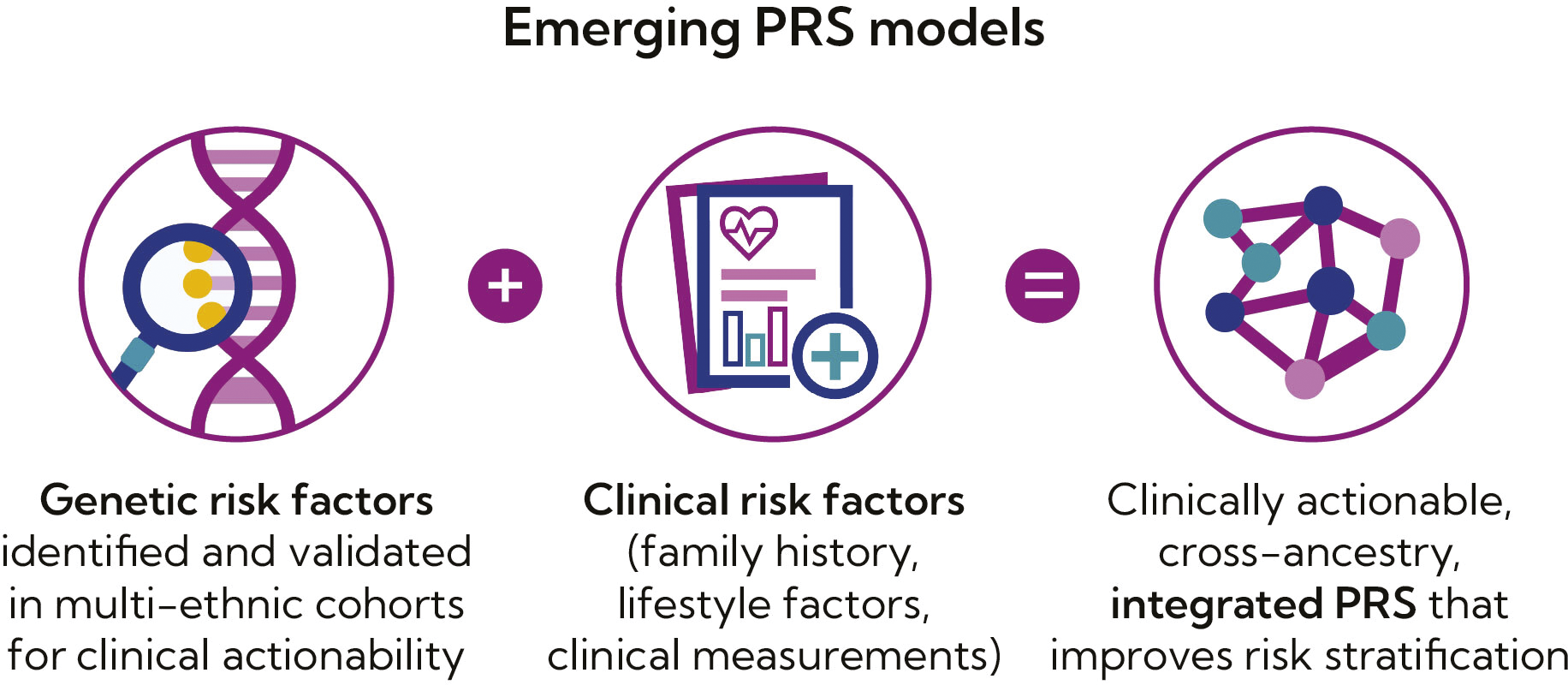
Beyond traditional, genetics-only PRS models, integrated PRS tests combine genetic and clinical factors to strengthen risk prediction and clinical utility. By incorporating familiar clinical measurements and tools alongside genetic insights, these models meet clinicians within their existing frameworks—helping them feel confident adopting genomic tools without stepping outside standard practice. This integration addresses a major limitation of early DTC testing by aligning genetic results with existing healthcare workflows, while also improving predictive accuracy. As an example, MyOme’s iPRS CAD combines genetic and clinical data to identify high-risk individuals who might otherwise go undetected through clinical evaluation alone.
Actionable reports close the gap between results and care
A persistent challenge of recreational genetic testing is the lack of clinical follow-through, resulting in patients receiving complex genetic results without clear next steps. Clinically focused PRS models address this limitation by embedding clinical interpretation and supportive guidance directly into reports to facilitate the translation of genetic findings into actionable clinical decisions.
Looking toward the future
The evolution of PRS tests from recreational curiosity to clinical credibility represents a significant advancement in precision medicine. As MyOme CMO Akash Kumar, MD, PhD, sums up, “PRS models built on robust science and integrated into clinical workflows will enable doctors to anticipate disease and intervene earlier—a central part of our vision at MyOme.” Clinically validated, cross-ancestry, integrated PRS tests like those developed by MyOme are redefining risk assessment and empowering clinicians to deliver more reliable, equitable, and personalized care.
Perioperative Immunotherapy and ctDNA-Based MRD Testing
Introduction
Molecular residual disease (MRD) refers to the subclinical presence of a cancer-associated biomarker indicating a high risk of recurrence, which cannot be detected by standard imaging techniques. Circulating tumor DNA (ctDNA), a fragment of DNA shed by tumors into the bloodstream, serves as a non-invasive biomarker for MRD, offering real-time insights into disease status and treatment response.1
The integration of MRD into clinical practice can be challenging due to the lack of standardized guidelines, limited prospective trial data and interpretive complexity. Without consensus on testing frequency, timing or response to MRD positivity, clinicians face uncertainty in decision-making. Additionally, the clinical relevance of MRD varies by cancer type and treatment context, further complicating its application and generalizability.
Furthermore, the widespread implementation of MRD testing is limited by practical and financial constraints. Many community oncology settings lack the infrastructure, training and resources to support MRD workflows. Evolving reimbursement policies can further delay or deter clinical use.
The challenge: a disease with few options to treat
Diffuse pleural mesothelioma (DPM) remains one of oncology’s most intractable challenges.2 Most often caused by asbestos exposure and often diagnosed late, the disease carries a median survival of just over a year with conventional approaches. Furthermore, accurate and reproducible response identification in DPM remains challenging, necessitating new approaches for reliable and timely disease evaluation during treatment. Surgery, chemotherapy and radiation have offered incremental gains, but durable control has remained elusive.
A new approach: immunotherapy moves upstream
The recent phase II trial, published in Nature Medicine, tested an innovative strategy: bringing immunotherapy into the perioperative setting.3 Patients received neoadjuvant nivolumab alone or in combination with ipilimumab, followed by surgery and adjuvant nivolumab.3
The outcomes were encouraging. More than 80% of patients proceeded to surgery on schedule, with manageable side effects. Median overall survival in the combination arm reached 28.6 months, with a single dose-limiting toxicity in each arm.3 But one of the most transformative insights came from the molecular monitoring embedded in the trial. By tracking ctDNA in the blood, researchers could observe disease activity in real-time, offering a new dimension of precision care.
Key findings from the trial included:
• Molecular clearance predicts survival: Patients whose ctDNA levels fell by ≥95% or became undetectable after neoadjuvant therapy experienced significantly longer progression free survival (PFS)
• Persistent ctDNA signals risk: Detectable ctDNA during and after neoadjuvant therapy predicted earlier progression—even in cases where radiographic scans appeared stable
• Superior correlation with outcomes: ctDNA dynamics could further stratify clinical outcomes for patients with stable disease, highlighting the inherent challenges with radiographic response assessment in DPM
Labcorp® Plasma Detect™: a window into MRD
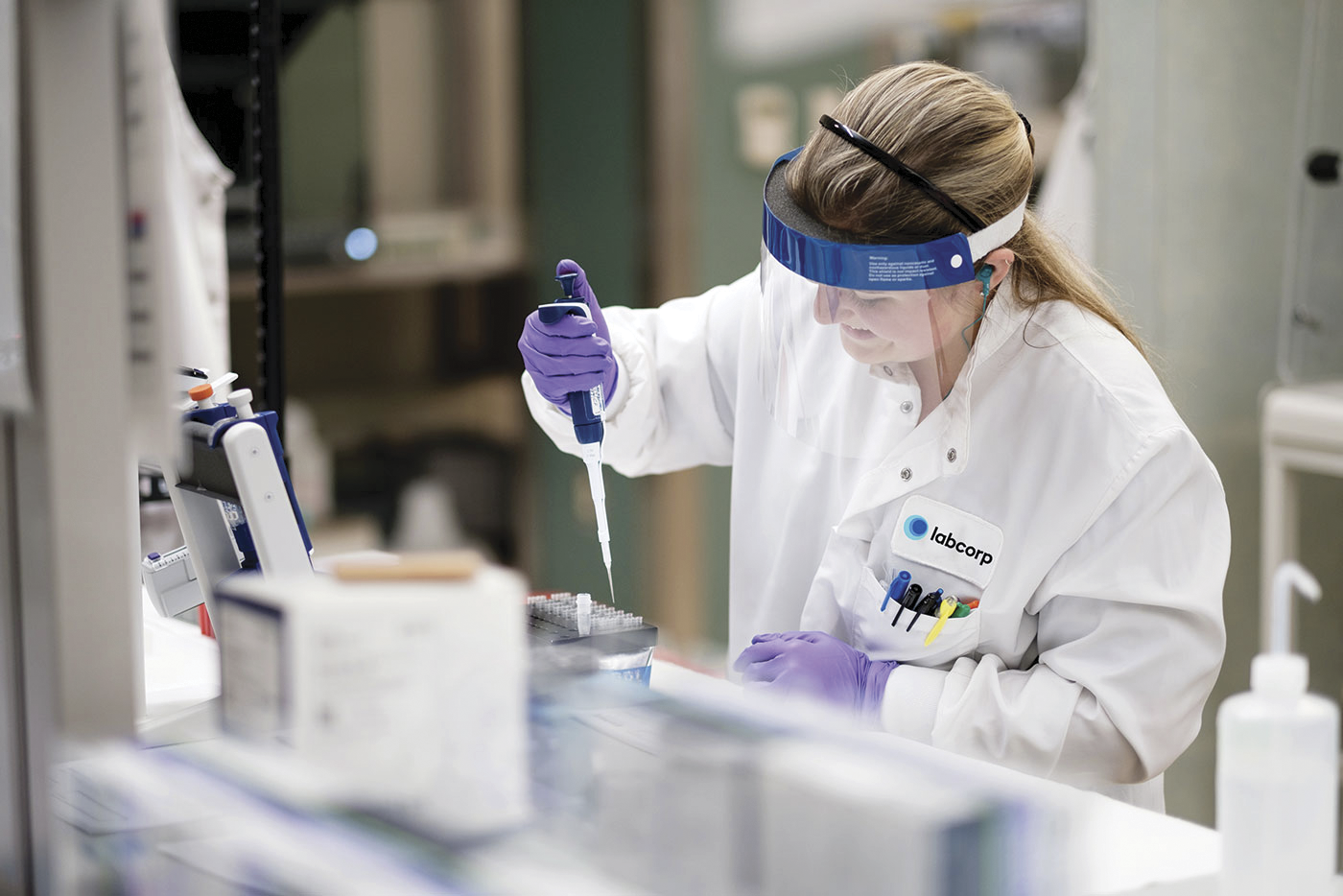
The trial incorporated Labcorp Plasma Detect, a tumor-informed, whole-genome based ctDNA assay optimized for MRD detection. Labcorp Plasma Detect establishes a tumor-specific mutation signature by integrating whole-genome sequencing (WGS) of tumor tissue, white blood cells and plasma DNA collected at the first timepoint, with longitudinal WGS of plasma DNA to track disease dynamics over time. The integrated WGS assay design facilitates turnaround time by eliminating the need for bespoke panel design.
By identifying and following tumor-specific mutation profiles in plasma, Labcorp Plasma Detect delivers a dynamic, real-time view of molecular disease burden—offering insights that can extend far beyond conventional imaging.
When there was a significant reduction of ctDNA or ctDNA cleared, patients did remarkably well. When it didn’t, disease progression was almost inevitable. This is the kind of biomarker that can change how we think about evaluating perioperative treatment strategies in oncology.”
Mark Sausen, PhD
Executive Director, Translational Development
Labcorp
MRD as a general prognostic and predictive tool in oncology
Diagnostic strategies for cancer care management now often include the detection and management of molecular residual disease. The implications of ctDNA-based MRD testing can be significant:
• Earlier intervention: Persistent ctDNA could trigger escalation of adjuvant therapy or enrollment in clinical trials for high-risk patients
• De-escalation opportunities: ctDNA clearance may support reduced treatment burden for patients with a lower risk of disease recurrence
• Optimized surveillance: ctDNA positivity can detect disease recurrence months before imaging, which may help to enable timely clinical intervention
This study shows that molecular monitoring can provide actionable insights that have the potential to improve patient management.” Mark Sausen, PhD, Labcorp
A blueprint for the future
By incorporating Labcorp Plasma Detect into this perioperative immunotherapy trial, researchers demonstrated the feasibility of molecular monitoring in resectable mesothelioma—a disease that has historically lacked precision tools.
“This is not just about mesothelioma,” emphasized Mark Sausen, PhD. “It is about demonstrating the feasibility of integrating immunotherapy into the perioperative setting and recognizing the value of ctDNA as a complementary tool to imaging.”
References
1.
HaddAGSilvestroAMcKelveyBA, et al.Establishing a Common Lexicon for Circulating Tumor DNA Analysis and Molecular Residual Disease: Insights From the BLOODPAC Consortium. Clin Transl Sci. 2025 Mar;18(3):e70185. doi: 10.1111/cts.70185
2.
SurayaRNaganoTTachiharaM. Recent Advances in Mesothelioma Treatment: Immunotherapy, Advanced Cell Therapy, and Other Innovative Therapeutic Modalities. Cancers (Basel). 2025;17(4):694. Published 2025 Feb 18. doi:10.3390/cancers17040694
3.
ReussJELeePKMehranRJ, et al.Perioperative nivolumab or nivolumab plus ipilimumab in resectable diffuse pleural mesothelioma: a phase 2 trial and ctDNA analyses. Nat Med. 2025. doi:10.1038/s41591-025-03958-3




 Precision mental health innovations that harness artificial intelligence (AI), data, smartphones, and wearable devices capable of real-time measurement can detect, diagnose, treat, and care for individuals with mental health conditions more effectively than ever before. These technologies have the potential to address a burgeoning global mental health crisis that current human resources cannot solve.