




Abstract


There is no doubt that autologous chimeric antigen receptor (CAR) T-cell therapy has revolutionized the treatment of serious blood cancers. A significant proportion of advanced-stage blood cancer patients who failed to respond to previous therapies now go into remission with this treatment, with some remaining cancer-free in the long term.
However, despite their success, these immunotherapies have significant disadvantages. Although CAR T-cell therapies have essentially rescued advanced-stage patients who previously would only have been offered palliative care, serious side effects such as cytokine release syndrome and immune effector cell-associated neurotoxicity syndrome (ICANS) are associated with the treatment.
All seven CAR T-cell therapies approved by the U.S. Food and Drug Administration (FDA) since August 2017 are autologous cell therapies, wherein the patient’s own T cells must be extracted and genetically engineered in the lab to produce cancer-targeting CAR T cells that are reinfused into the patient to fight the cancer.
Unless they live near a major cancer center or company with the relevant expertise and lab capacity in-house, many eligible patients miss out on the therapy because the wait time is too long or the whole process is too expensive. Patients must also be admitted to the hospital to undergo lymphodepletion chemotherapy before receiving the final infusion to allow the infused cells to expand, persist, and work better.
“It’s just simply too expensive, too complex to manufacture, and has all kinds of logistical issues that translate to limited patient access,” explained Maurits Geerlings, MD, co-founder, CEO, and president of in vivo CAR T-cell therapy biotech NanoCell Therapeutics, which has offices in Pennsylvania and Utrecht.

Maurits Geerlings, MD
Co-founder, CEO
NanoCell Therapeutics
“Also, importantly, the batch capacity in highly specialized hospitals is so limited that altogether maybe 10% of patients that are eligible effectively get access to CAR T-cell therapy in the Western world.”
Initially, after the first ex vivo, autologous CAR T-cell therapies like Novartis’s Kymriah and Kite’s Yescarta were approved in 2017, the field looked to develop “off-the-shelf” allogeneic therapies made from donor cells that would overcome some of the issues with autologous CAR T-cell therapies.
Despite the best efforts of a number of companies and researchers, no allogeneic CAR T-cell therapies have yet reached the market, although some companies like Allogene have reached Phase II trials. This is likely due to a few factors, such as adverse events linked to the rejection of donor cells, complex engineering problems, and the small margin of benefits of allogeneic over autologous CAR T-cell therapies.
Instead, over the last couple of years, the focus of the field has moved towards developing next-generation in vivo CAR T-cell therapies. Until recently, vectors or nanoparticles that could hit T cells precisely, safely, and predictably enough in humans to justify skipping ex vivo engineering were simply not available, but this is now changing.
In vivo CAR T-cell therapy uses the patient as a bioreactor. Upon injecting an engineered treatment carried by a vector such as a lentivirus or a lipid nanoparticle (LNP), it programs the patient’s T cells to attack either the cancer or autoreactive B cells in the case of autoimmune disease.
The field is still young, but initial clinical results reported last year in multiple myeloma blood cancer by Kelonia Therapeutics and in the B cell-driven autoimmune disease systemic lupus erythematosus by MagicRNA, as well as from EsoBiotec and academic labs, are promising.

Kevin Friedman, PhD
Co-founder, CEO
Kelonia Therapeutics
“It’s early days, so I don’t want to overinterpret the data. It’s also only in four patients, but what we are seeing is substantially better than what ex vivo CAR T cells have shown from an efficacy perspective,” emphasized Kelonia CEO and co-founder Kevin Friedman, PhD.
Indeed, this early success seems to have prompted intense investor and big pharma interest in the field. Since March 2025, when EsoBiotec was acquired by AstraZeneca, at least four other in vivo CAR T cell biotechs have been acquired, including Capstan Therapeutics by AbbVie and Interius BioTherapeutics by Kite/Gilead.
Whether in vivo CAR T-cell therapy will truly be the future of the field remains to be seen, but its convenience, economic viability, and the fact that it is effectively an “off-the-shelf” therapy that does not require lymphodepletion make it an attractive prospect for many.
Lentiviral vectors: Sticking with a known quantity
Five of the seven FDA-approved autologous CAR T-cell therapies, including Kymriah, use lentiviral vectors in the lab to engineer a patient’s T cells and transform them into CAR T cells.
Many of the most advanced companies in the in vivo CAR T- cell therapy space are applying similar technologies and using lentiviral vectors to target and transform T cells, but inside the body rather than in the lab.

Kelonia, which is based in Boston, is a leader in the in vivo CAR T-cell space and has already started clinical trials with its lead candidate KLN-1010 for the treatment of patients with relapsed and refractory multiple myeloma.
“It’s essentially delivering a fully human anti-BCMA (B cell maturation antigen) CAR to T cells, to reeducate them by expressing this anti-BCMA CAR inside the body to fight their tumor cells. Just like Abecma, or Carvykti, but it’s all done inside the body,” explained Friedman.
At the American Society of Hematology Annual Meeting in December last year, the company presented early Phase I results from four patients with relapsed and treatment-resistant myeloma who were treated with KLN-1010.
Although the study was small, the results were promising, with all four patients showing 100% minimal residual disease-negative response rate at follow-up and a lower rate of side effects than approved autologous CAR T-cell therapies.
“With our data and the efficacy and the safety profile that we’re seeing, this has a real shot at getting out of the major medical centers and into the community hospitals where the patients live, so they don’t have to travel to major medical centers,” said Friedman.

Ryan Larson, PhD
Senior Vice President
Umoja Biopharma
“Doctors can potentially treat patients in their own community and get access to the 90% of myeloma patients who, right now, despite the profound clinical benefit that CAR T cells provide, cannot be treated.”
Umoja Biopharma is another biotech using lentiviral vectors to develop in vivo CAR T-cell therapies. “We have three different products in the clinic currently. Two of those products are in B-cell malignancies, and one of the products is in autoimmune disease. And we’re making really great progress in enrolling patients across those studies,” said Ryan Larson, PhD, senior vice president and head of research at Umoja, although the Seattle-based company has not yet released any results from its Phase I studies.
Although Umoja is using lentiviral vectors, it has built in a rapamycin-activated cytokine receptor, which essentially acts as a booster switch for the engineered T cells in cancer patients while slightly dampening the rest of the immune system.
“It allows us to deliver a controlled pro-survival signal selectively to our CAR T cells in vivo,” explained Larson. “We’re able to potentiate persistence in a controlled manner in our in vivo generated CAR T cells with this rapamycin-activated cytokine receptor to drive persistence and ongoing immune surveillance, thus driving the key durable outcomes in oncology specifically.”

Priti Hegde, PhD
Senior Vice President
Kite Pharma, a Gilead Company
The requirements for autoimmune disease patients are different from those of advanced cancer patients, with a greater focus on safety. Long-term depletion of B cells is also not ideal, with the aim being to reset the immune system by getting rid of autoreactive B cells and replacing them with healthy ones.
“You’re eliminating all of the autoreactive repertoire and replacing it with a normal B cell repertoire, thus driving, ideally, a durable response wherein those autoimmune disease patients are no longer reliant on all the various immunosuppressants that are typically used to treat autoimmune disease,” said Larson.
Kite Pharma, now owned by Gilead and headquartered in California, was a pioneer in the autologous CAR T-cell therapy space. It developed Yescarta, one of the first two autologous CAR T-cell therapies approved by the FDA to treat blood cancers in 2017. Kite recently acquired Interius BioTherapeutics, a biotech in the lentiviral in vivo CAR T-cell space, for $350 million.
“The reason why we moved forward with Interius was that the clinical proof of concept for lentiviral-based delivery systems is far more advanced than for LNP-based systems,” said Priti Hegde, PhD, senior vice president and global head of research at Kite. “We were really excited to see that translation of the pharmacokinetics from an ex vivo platform to an in vivo platform.”
While lentiviral vectors are arguably “tried and tested” in the CAR T-cell space, there are some disadvantages associated with using them. For example, they can be hard to produce, implying that it is expensive and challenging to scale up manufacturing.
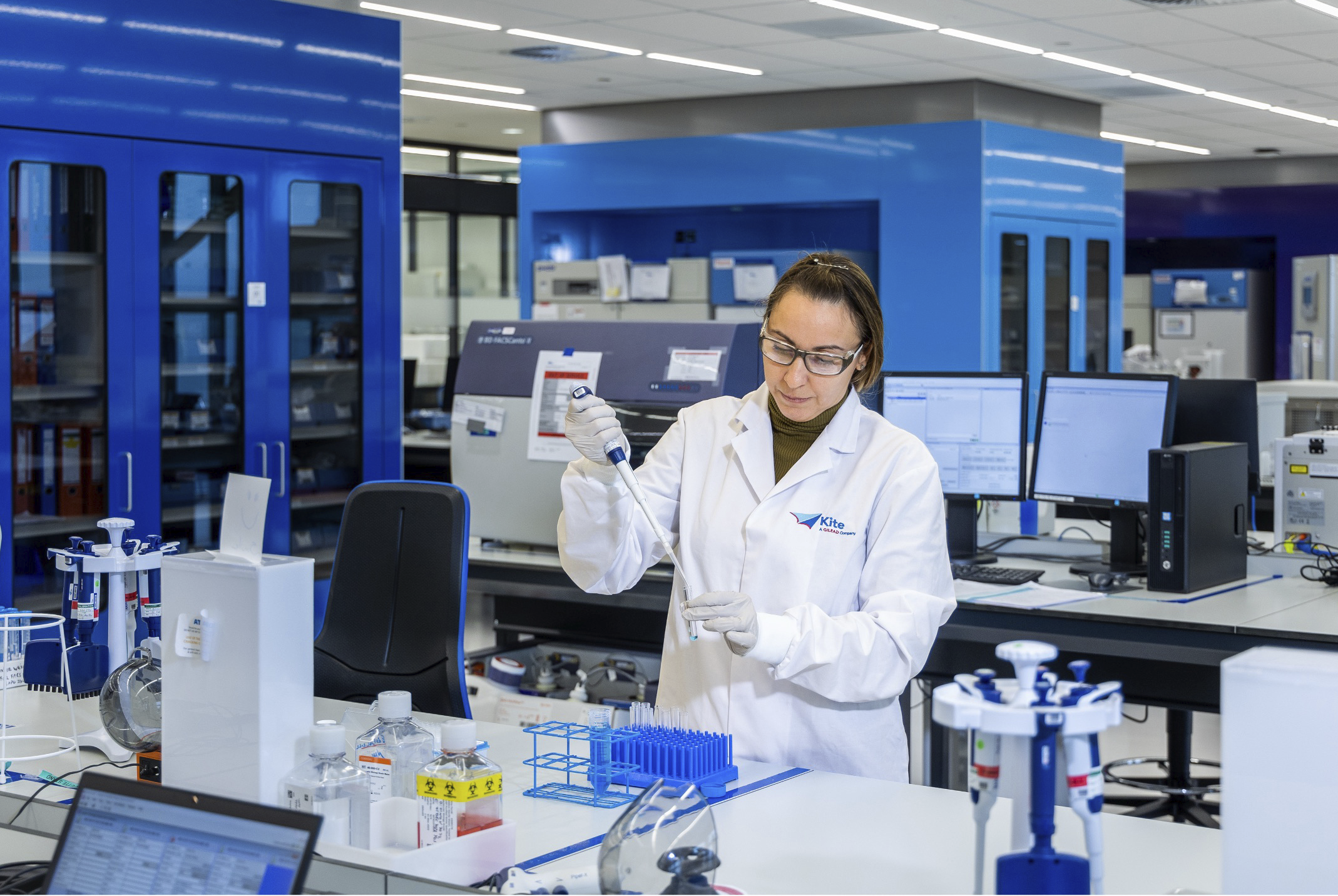
This is something both Umoja and Kelonia seem to have addressed, however. “We actually are quite unique from a biotech perspective in that we have our own, wholly owned manufacturing facility … It’s really allowed us to have a true pipeline from an in vivo cell therapy development perspective,” said Larson. “We’re actively working in our early phase clinical trials in a manufacturing setting that we know is scalable to commercial readiness.”
Kelonia does not do all its manufacturing in-house, but Friedman said that they have worked hard to develop a system that can be scaled. “Manufacturing is complicated. We like to think that we were thoughtful about our manufacturing approach, but it’s challenging generating these particles, these complicated medicines for Phase I use. We did it, though, and we now have a very reliable and scalable manufacturing process.”
Another potential risk linked to lentiviral and other viral vectors is that there is a small but significant risk of the vector inducing unwanted mutations in the DNA of target cells.
“Viral vectors have a propensity to integrate in transcriptionally active gene regions where you don’t want to go, because that enhances the mutagenesis risk,” noted NanoCell’s Geerlings.
Taking the non-viral route
Not everyone working to develop in vivo CAR T-cell therapies is using viral vectors. The second main route that companies and researchers are following to develop these cell and gene therapies is to use mRNA encapsulated in an LNP.
Last September, Shenzhen-based Chinese biotech MagicRNA published data from a Phase I trial of its in vivo mRNA and LNP-based CAR T-cell therapy in five patients with systemic lupus erythematosus. Similar to in Kelonia’s cancer trial, the results were promising. However, larger studies are needed for more conclusive results, as the sample size was small. But rapid, near-complete B cell depletion was seen for up to 10 days with no significant side effects like serious cytokine release syndrome or ICANS.
Since the pandemic, the use of mRNA therapeutics has become much more mainstream. For example, both of the prevalent vaccines against COVID-19 use a combined mRNA–LNP approach. In in vivo CAR T-cell therapy, the LNPs are used to take CAR-encoding mRNA to the right target cells in the body. Once inside a T cell, the LNP breaks apart and releases the mRNA into the cytoplasm. The cell’s protein synthesis machinery reads the mRNA and makes the correct CAR protein, which is then added to the surface of that T cell.
Aera Therapeutics, founded by CRISPR pioneer Feng Zhang, PhD, and based in Cambridge, Massachusetts, takes a combined mRNA–LNP approach to in vivo CAR T-cell therapy development, with a focus on treating B cell-mediated autoimmune disease.
“We were really focused on autoimmune indications, so we said, ‘Let’s try to build a product profile that’s a great fit for that,’” explained Akin Akinc, PhD, who is CEO at Aera.
“You have the risk of insertional mutagenesis with lentiviral vectors. Even if those rates are small, they’re not zero … So that’s why we thought an mRNA–LNP approach, where there’s no chance of insertion, is theoretically a more attractive approach.” Scott Barros, Head of Early Development, Akin Akinc, Chief Executive Officer, Bill Querbes, Chief Scientific Officer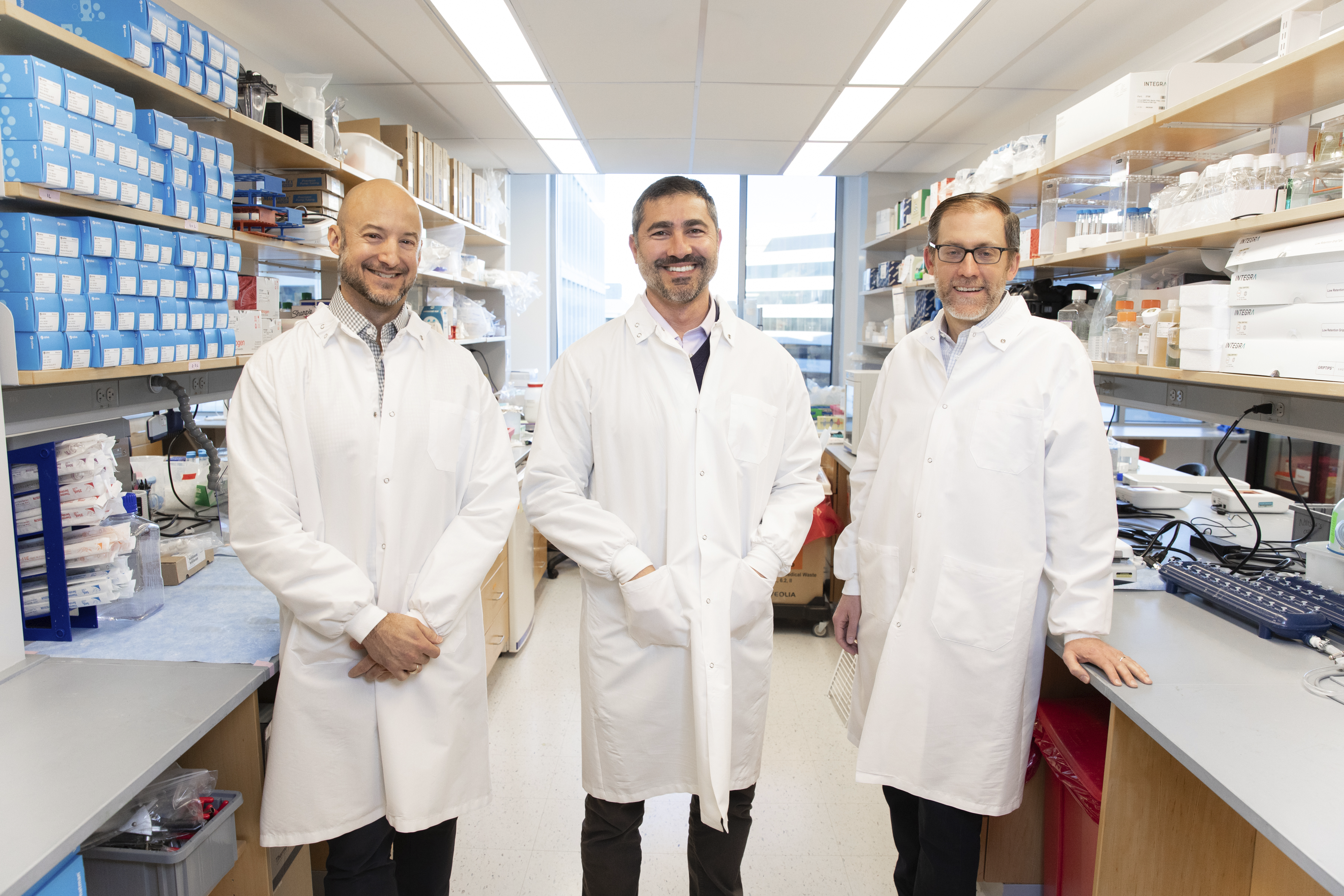
Aera has not yet moved into clinical studies but reported preclinical data for its therapy candidate AERA-109 in non-human primates at the American Society of Hematology Annual Meeting at the end of last year. They showed potent and durable B cell depletion across different tissues in the body.
One potential disadvantage of using a combined mRNA–LNP approach, particularly for treating cancer, is that it is unlikely to last as long as a lentiviral approach. As this could be potentially advantageous in people with autoimmune disease, where B cell depletion does not need to occur over such a long period of time, it seems to be the most common method followed by companies designing in vivo CAR T-cell therapies for autoimmune conditions.
“Our therapeutic goal is to go in and clear out the B cells that exist in the body, both in the periphery and the tissues, and then allow them to repopulate. If we achieve that immune reset, then that’s all that we can do,” said Akinc.

Akin Akinc, PhD
CEO, Aera Therapeutics
“Then the question is, is there going to be a relapse 12–18 months later? But so long as we clear out all the B cells, which happens pretty quickly, I think there’s no benefit to having the CAR T cells hanging around for longer, because at that point you’ve done the job. Then it’s about whether or not that remission is going to persist.”
NanoCell Therapeutics is also taking a non-viral approach to developing in vivo CAR T-cell therapy for treating B-cell malignancies, but is using DNA instead of RNA. The candidate has not yet reached the clinic, but it has achieved good preclinical results and will soon be tested in non-human primates.
Similar to Aera, NanoCell packages its therapy in targeted LNPs. However, these carry a minicircle DNA that encodes the CAR information and an mRNA transposase that allows the DNA to integrate into the target cell genome.
“We still remain, I think, pretty much in the lead as a company delivering non-viral DNA, because it is very difficult … We see an opportunity for us to actually make a breakthrough there,” said Geerlings.
“The nuclear membrane of the cell is such a barrier. You need to find an opportunity to open it up and to be just in time with your DNA in a way that is not triggering an innate immune response. You also need to have a mechanism by which that DNA can integrate, because otherwise, you will end up having an episomal expression of your DNA.”
The approach taken by NanoCell is definitely at an earlier stage than the lentiviral and mRNA–LNP approaches that are already generating clinical data, but there are a couple of other companies working on similar products, like Stylus Medicine and CPTx. If it works, then this approach has the promise of ruling out problems with viral vectors, such as manufacturing difficulties. It would also theoretically generate longer-lasting and more durable treatment effects than could be achieved with mRNA.
What’s next for CAR T-cell therapy?
It seems that we are on the cusp of next-generation in vivo CAR T-cell therapies, although the studies published so far have all been small and it remains to be seen if the current buzz in the space is based on hype or reality.
“I do think that in vivo will go from a platform with initial proof-of-concept to broad applicability faster than perhaps ex vivo platforms did,” said Hegde. “But we have a lot of scientific questions. For example, in the absence of lymphodepletion, can an in vivo platform give you the depth and durability of response that an ex vivo platform does?”
There is a lot of interest in whether safer and more accessible in vivo CAR T-cell therapy can make this treatment approach more appealing to people with B-cell-mediated autoimmune conditions than autologous CAR T-cell approaches. The initial clinical results are good, but questions remain about how long the results will last.
“I think these are going to work, but we’re going to learn things that allow us to make second-generation products that are even better and even more potent,” said Akinc.
On the cancer side of things, most companies developing in vivo CAR T-cell therapies for oncology indications are sticking with blood cancers against which autologous CAR T-cell therapies have already been shown to be efficacious.
“I think we’ll continue to see strong proof of concept in de-risked indications like the hematologic malignancies over the next year,” said Larson. “Over the next two years, I think we’re going to be closely watching the field for durable outcomes in oncology and the ability to drive immune reset in autoimmune disease that then translates to durable remissions in autoimmune disease patients.”
A big question on everyone’s mind is whether this new technology could help overcome some of the hurdles that prevent CAR T-cell therapy from being successful at treating “solid” tumors, such as working out how to overcome diverse tumor microenvironments.
“I think there’s great potential in solid tumors. One reason why we went with Interius was [that] we think that the application of the in vivo platforms could really break open the problems that we perhaps had in solid tumors with ex vivo CAR T cells,” said Hegde.
“The nice thing about the in vivo space is you can put whatever targeting antigen you want on the virus to go to a specific cell type. So it’s really up to your imagination, how you want to design an in vivo CAR T cell.”
Dispatch Bio is also in the CAR T-cell therapy space, but is targeting solid tumors rather than developing in vivo CAR T cells. The company is based in Philadelphia and was co-founded by Carl June, MD, one of the pioneers of CAR T-cell therapy.
The technology they are developing is a two-component system, in which a human-specific adenovirus designed to infect cancer cells, but not healthy tissue, is used to “paint” the tumor cells so that a CAR T cell can more easily home in on the cancer and destroy it.
“The virus gets into the tumor microenvironment and then, because it’s a virus, creates an inflammatory condition. When it does that, it’s immediately more supportive for T cells,” explained Dispatch chief scientific officer Barbra Sasu, PhD.
“We’re doing what T cells can’t do for themselves. We’re expressing a target and directing them to kill what we want them to kill. We’re also adding a cytokine to support them and, actually, the endogenous immune system too.”

Barbra Sasu, PhD
Chief Scientific Officer
Dispatch Bio
The two-part approach is very new, so Sasu and colleagues are testing the system using a known autologous CAR T-cell therapy approach. But she says that the system is potentially very flexible and could allow a wide range of therapies, including in vivo CAR T-cell therapies, to be combined with the viral targeting approach if they prove effective.
“What we wanted to do was to start with something that we felt we understood very well. We also had the benefit in our first program of being able to work with people who’ve already developed CAR T-cell therapies,” said Sasu. “That’s a big advantage because [when] coming in with a two-component system, it’s good if you don’t have to refine both parts at once.”
Another CAR T-based approach being developed by Kite and others in this space is logic gating, which is the development of IF, AND, and NOT switches to allow much more refined control of CAR T-cell therapies by clinicians and potentially increase effectiveness in complex solid tumors.
“We’re really interested in exploring the logic gating space and what it can do to deliver CAR T cells more safely, especially in solid tumors, where the antigens aren’t as broadly homogeneously expressed,” said Hegde.