



Abstract
Background
Let’s Grow Together! Infant & Childhood Partnerships (LGT) is a place-based prevention, promotion and intervention programme based in Cork city that supports early childhood development to mitigate the intergenerational impact of poverty. An innovative component of LGT is ‘Babbling Babies’ which offers parents an opportunity to meet a speech and language therapist (SLT) in coordination with their routine 9–11 month developmental check-up with a public health nurse (PHN). The programme explores how parents can support high-quality interaction opportunities to improve communication and early literacy in daily activities.
Objective
The aim of the study was to establish how feasible it is to measure the efficacy of the ‘Babbling Babies’. This paper focuses on parental and practitioner views and experiences with the programme.
Method
A research protocol was co-designed with the LGT team to evaluate the programme. Interviews and focus groups were conducted with families and practitioners to gather their experiences and analysed using reflexive thematic analysis.
Results
Results indicated that parents found the programme to be acceptable, felt reassured by the information provided and felt empowered to promote their own child’s communication development. The practitioners also valued the programme and the opportunities to collaborate with each other, but indicated a number of structural and systemic barriers that affected successful implementation.
Conclusions
The programme was acceptable and feasible for families and practitioners and the outcomes will contribute to future research on early interventions aimed to address the inequalities of growing up in socially disadvantaged communities in Ireland.
Keywords
Background
The increased risk of early language difficulties for children growing up in poverty is well documented (Roy et al., 2014) as is the language development gap experienced by these children (Botting et al., 2024). Some of the reasons for these language differences can be linked to the environment which impacts on the opportunities for high-quality parent-child interaction (Botting et al, 2024). This includes busy and under-resourced homes, which may lack language-enrichment activities such as book reading and playing, precarious employment and overcrowding as well as long-term stress from insecure housing. Research has shown relatively robust associations between socioeconomic circumstances (SEC) and early language experiences which predict outcomes in literacy, education, mental health, social skills and employment later in life (Botting et al., 2024; Eadie et al., 2022; Reilly & McKean, 2023; Roy et al., 2014; Walker et al., 2020). Given the key role of language in forming relationships, acquiring literacy and accessing education, targeted early prevention and promotion programmes are crucial to reduce the language gap and should be considered a public health promotion necessity (Reilly & McKean, 2023).
Research into early communication interventions with infants living in disadvantaged SECs has shown that improved quality and quantity of parent-child interaction improves child language outcomes (Haring Biel et al., 2020; Hatcher & Page, 2020; McGillion et al., 2017). For example, Botting et al. (2024) evaluated an 8-week preventative programme that enabled parents of 2–4 year olds to create daily opportunities for communication and interaction. Children in the intervention group improved their expressive vocabulary and joint attention significantly more when compared to a wait-list control group. There are also a number of early language-enrichment programmes that are targeted at families living in disadvantaged SECs in Ireland. Happy Talk is a community-based language intervention programme that provides language rich experiences for children. Frizelle et al. (2021) completed a pilot effectiveness study of a 12-week Happy Talk preschool programme which showed significant improvements in children’s receptive language and agreement, from parents and educators on the programme being an acceptable method of enhancing speech and language skills. Other early language-enrichment programmes in the Irish context are delivered through Area Based Childhood (ABC) programmes which are based in mainly urban areas of social disadvantage around the country (Tusla, 2022b). Similar to Happy Talk, the model of intervention employed in these programmes is ‘targeted universal’ but can also be considered a ‘place-based approach’ which is where ‘a community of people bound together because of where they live, work or spend a considerable proportion of their time, come together to make changes to that place which they believe will improve the physical, social or economic environment and in doing so tackle issues of inequality’ (Bynner, 2016 p. 7 as cited by McKean & Reilly, 2023). This means that the ABC programmes are multifaceted and aim to set the foundation for infant and child development, learning and wellbeing and by doing so, mitigate the intergenerational impact of child poverty. Process evaluations of the ABC programmes have been published (Tusla, 2022b), but to date there are no controlled studies of the efficacy of these interventions.
Let’s Grow Together! (LGT) Infant & Childhood Partnerships CLG (incorporating Young Knocknaheeny Area Based Childhood programme) is a community-based prevention and early intervention programme based in the north of Cork city. Like other ABC programmes, the aim is to deliver early intervention and prevention approaches that support early childhood development and relationships. The programme is underpinned by an innovative Infant Mental Health framework which prioritises strengthening and supporting all relationships that are important to the child’s life (Tusla, 2022a). The LGT catchment area is one of multifaceted and multi-generational deprivation in a concentrated area (Buckley et al., 2023). A key component of the early language and literacy development strand of LGT is ‘Babbling Babies’ which is offered to all parents in coordination with their routine 9–11 month developmental check-up with their public health nurse (PHN), thereby making it more accessible. The intervention is a brief, innovative programme, whereby parents meet with a speech and language therapist (SLT) to explore how they can interact with their baby to promote language development. The service can be an important port-of-entry into other inter-disciplinary services available in the wider LGT programme.
Although there have been process evaluation studies and service audits of LGT interventions, including Babbling Babies (Buckley & Curtin, 2018; Buckley et al., 2023; Hayes et al., 2012), there are no controlled studies on the efficacy of the language and literacy programmes to date. Efficacy measures can be challenging to collect and implement, and so it is important to first establish how acceptable interventions are for all involved and to pilot measures for use in later research (Sekhon et al., 2017). Moreover, in 2022 PHN check-ups were moved to a larger central clinical facility and Babbling Babies was being re-established following a 2-year break during the COVID-19 pandemic. Finally, Dolly Parton’s Imagination Library was integrated with the intervention, providing free, high quality, developmentally appropriate books monthly for children from birth to 5-years. It was therefore important to establish the current acceptability of the programme and to establish the feasibility of measuring the efficacy of Babbling Babies using a pilot research protocol as a key consideration for scaling up to a larger study (Sekhon et al., 2017). The current study reports on the qualitative data of the evaluation, which aimed to gather the views of parents and professionals (PHNs and SLTs) about their experiences in order to determine the acceptability of the programme.
Method
We used the consolidated criteria for reporting qualitative studies (COREQ) guidelines to ensure our methods were reported appropriate (see Supplemental Information).
Procedure
Ethical approval was granted by the Social Research Ethics Committee of University College Cork, and following this, the protocol was registered on the Open Science Framework [https://osf.io/bg9fp/].
Babbling Babies Intervention
Babbling Babies is a brief, 30-minute individualised that aims to support parents to enhance and develop parent-child communication and interaction through modelling and discussion. For this study, a protocol was developed by the research team in order to measure treatment fidelity, which involved the SLT first introducing themselves and their role as well as the wider LGT programme (see Supplemental information 1). The SLT then screened the baby’s communication development in a conversational style with parents using the questions on the Ages and Stage Questionnaire (ASQ; Squires & Bricker, 2009) and the Child’s Progress Checker (Speech and Language UK, n.d). The ASQ is a standardised parent-report developmental screening tool that is suitable for ages 1 month to 5½ years and assesses the domains of communication, gross and fine motor, problem solving and personal-social skills. It is widely used by PHNs at developmental check-ups and most parents in the study completed it with their PHN, or if they ran out of time during the Babbling Babies session with the SLT. The scoring manual indicates the ‘pass rate’ for each subdomain according to the cut offs in the original standardisation sample. The Child’s Progress Checkers are also age-related, parent-report screening checklists where parents indicate ‘yes, no or ‘not sure’ in response to 14 questions related to the baby’s early language and communication. They are not standardised, although children are expected to pass most questions for their age level and if not, seek further assessment. We used the relevant checklists for ages 9 and 12 months in our data collection.
Following administration of the checklists, the SLT informally observed parent-child interaction, addressed any concerns, modelled communication promoting strategies and discussed the importance of early literacy and interactions with books. They were also invited to enrol in Dolly Parton’s Imagination Library to receive a book a month at home. For multilingual families, the SLTs discussed the benefits of multilingualism and how to maintain and promote the home language(s). Each parent in the study received a board book from the ‘That’s not my…’ series (Fiona Watt) and a Baby Stages Wheel, a fridge magnet which outlines what to expect from a child’s social and emotional development from 0 to 3 years and how to promote this to take home.
Post Intervention Interview
Three months later, parents were contacted by phone to complete follow-up interviews by a female research assistant with a MA in health psychology who was not known to parents. The researcher had extensive experience in completing interviews and focus groups from her education and research experience. During the call, parents were informed about the purpose of the interview and their rights to withdraw as per the information and consent forms. The calls were audio recorded to aid transcription and the recordings later destroyed. Parents again responded to questions on the appropriate ASQ and Child’s Progress Checker and provided demographic information related to parental education and occupation, nationality and ethnicity as well as language and literacy exposure in the home. They also took part in a brief interview about their experiences using a semi-structured interview guide which was co-created by the research team to gather their views on Babbling Babies (see Supplemental information 2). The calls lasted 20–30 minutes and families who took part were provided with a bag of developmentally appropriate toys.
PHN/SLT Focus Groups
Around the same time as the parental interviews, two in-person focus groups were completed for each professional group at their place of work, involving three PHNs and two SLTs who took part in Babbling Babies. For these focus groups, a semi-structured interview protocol was co-designed by the research team that focused on the opportunities and challenges presented by the intervention and suggestions for improvement (see Supplemental Information 3). The calls were audio recorded to aid transcription, the recordings later destroyed and lasted 40–50 minutes. Both focus groups were conducted by a research assistant with an MA in health psychology who was not known to participants.
Recruitment
In agreement with PHNs in the LGT catchment area, parents of children aged 8–13 months were sent an information leaflet about the Babbling Babies programme and the research study along with their PHN appointment letter. This appointment took place in the main health centre where the PHNs screened the baby’s physical, social and behavioural development (Health Service Executive, 2022) and the SLT arranged to be in a room next door . At the end of their check-up, the PHN asked all parents if they would be interested in attending Babbling Babies, regardless of their child’s developmental status. Families could attend this session whether the agreed to be part of the research or not, although only those who consented were contacted 3-months after the visit for a follow-up phone call on their experiences. Our inclusion criteria were that families had to: • have a baby aged 8–13 months at the beginning of the study • be willing to take part in a 3-month follow-up phone call after their visit to re-administer questionnaires/ checklists, provide background information and talk about their experiences in taking part • have sufficient English to be able to take part in the interviews.
Data Analysis
The interviews and focus groups were analysed using reflexive thematic analysis (Braun & Clarke, 2021) using both semantic and latent coding in NVivo 12. We used the six-phase process which began with the first author transcribing the interviews verbatim and re-reading the transcriptions. An inductive approach was then applied to the data, by openly coding the participant’s statements. At this stage initial codes were generated before generating themes. The themes were based on patterns that were identified from the interview questions relating to a particular concept or meaning as determined by the first author. Following this stage the potential themes and subthemes for the parent interviews were reviewed with a second author (SM) and for the PHN/SLT focus groups were reviewed by the third author (MC) to agree on their core meaning and look for patterns and similarities across participants. In order to strengthen trustworthiness of the analysis, peer review was completed where the second and third author examined the transcripts and coding frame and made some suggestions based on the definitions and exclusiveness of the themes. A number of themes and subthemes at this stage were merged where overlap occurred in order to develop more mutually exclusive themes. The themes were then defined by all researchers, linking back to the interview data and named before producing this report.
Results
Participants
Summary of the Background of Families That Took Part in the Follow-Up Calls (n = 21)
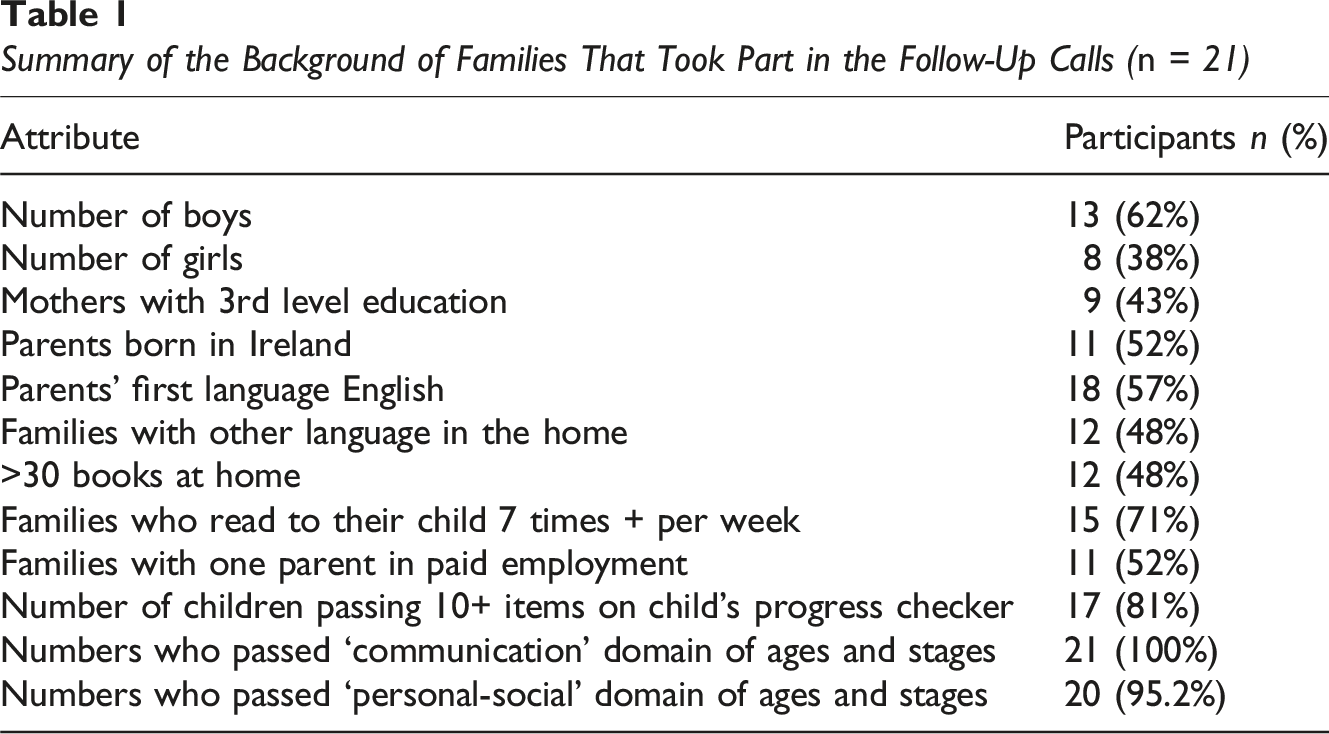
As can be seen, there were slightly more boys than girls, nine parents had third level education with a further four parents with vocational/post second level education. Just over half of parents were born in Ireland and ten had English as their first language. Although most families spoke English as the main language of the home, two spoke Portuguese and one Bangla. Over half of families spoke a second language in the home (including English, Irish, French, Hungarian, Spanish, Telugu, Polish, Croatian and Italian) and one spoke Spanish as a third language at home. It was noteworthy that the majority of families reported having over 20 books at home linked to Dolly Parton’s Imagination Library, which could also have influenced the high level of reading with babies, as most parents reported reading at least once per day to their child. Most families had at least one parent in employment and eight children were cared for outside of the home. At the time of the follow-up call, most children (81%) passed 10 or more communication and language items on the Child’s Progress Checker and all children were at ceiling on the communication subscale of the ASQ. Similarly the majority of children (n = 20; 95%) passed the personal-social items on this scale. For ethnicity, just over half of families identified as White Irish (n = 11, 52%), one was an Irish traveller, five selected White ‘other background’ (n = 5), two Asian/ Asian Irish and two ‘mixed’ ethnicity.
The clinicians were all White Irish females with between 6 and 10 years’ experience in working in their professions (PHN or SLT), and between 1 and 6 years of experience in working in the LGT catchment area.
Experiences of Parents With Babbling Babies
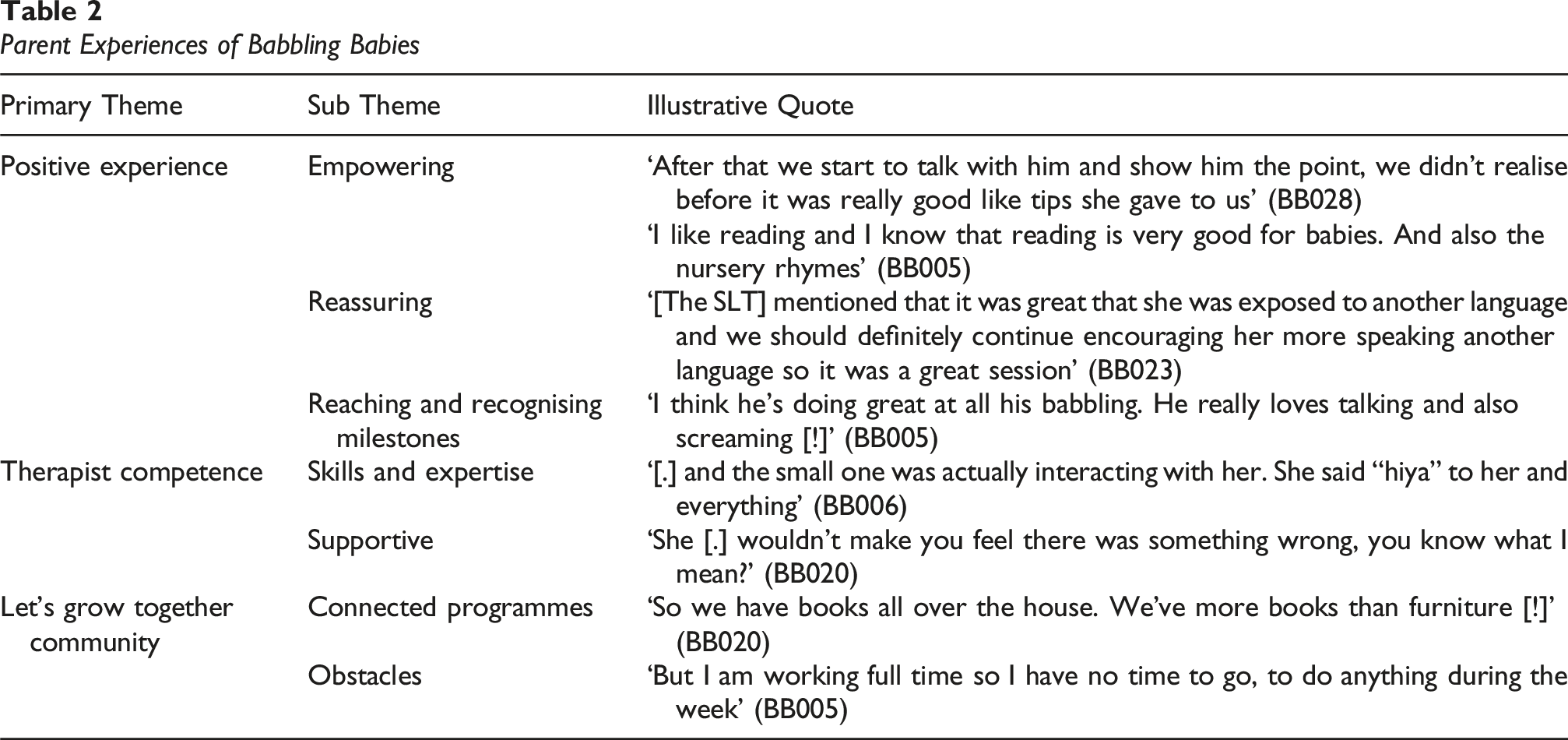
Parent Experiences of Babbling Babies
Positive Experience
All parents found the intervention to be a positive experience and noted how they felt ‘empowered’ after taking part as it affirmed their own strengths and capacity, built on their existing knowledge and acknowledged them as experts on their own child. In addition to the quote on Table 2, one parent noted ‘A lot of the advice she gave was just kinda naturally taking part in our day to day interactions with him’ (BB010). At times, some parents (n = 7) acknowledged that the ‘couldn’t remember’ exactly what the advice was, but that it was a positive experience overall. Many parents (n = 12) mentioned that they felt ‘reassured’ after the session, nine of whom were from bilingual households as they were assured that they were ‘doing the right thing’ by continuing to speak to their children in their home language. As one parent noted ‘I was so doubtful about whether I could talk to her in two languages so I’m trying to keep, to do the same word in the two different languages. She’s fine…she’s picking that up’ (BB008).
Most parents (20/21) were able to report on the positive progress made by their children with their communication development following their visit. In particular, parents were able to recognise communication milestones and when their child was reaching them. Most parents (n = 18, 86%) identified and named communication milestones such as babbling, developing words and sentences and speech sounds. One mother noted ‘He can, he’s kinda starting to say “up up,” like it sounds like he’s saying “up up.” When he says it, we say “up up” and then lift him up. And, like that now, he’d say “ba ba,” it depends on what he’s holding, if he’s holding the ball we go “ba ba - ball” or “ba ba - bottle.” And the same now he’s kinda saying “la la la,” he’s like sticking his tongue out a lot more. So I’d say it could be soon enough that he’ll actually start talking to us [!] or even getting like more words out, like you know’ (BB009). Because they knew what to expect, they were mostly unconcerned about their child’s communication progress and noted that they were ‘thriving’. One parent said ‘He seems to be, everyday … coming out with new words’ (BB010).
Therapist Competence
As illustrated in the quotes on Table 2, many parents (n = 11, 52%) referenced the skill and expertise of the SLTs in interacting with their child, how supportive and non-judgemental their approach was (n = 10) and recognised their extensive knowledge of child development as illustrated in the comment ‘I thought she was very nice to deal with and she …understood an awful lot about babies and their development…’ (BB011). Another mother noted that ‘They [The SLT] were very accommodating and they were always very kind and they always had loads of tips and stuff like that. Yeah it was just a really nice session to attend’ (BB020).
Let’s Grow Together Community
Finally, parents talked about the wider LGT community programmes. All families were enrolled in programmes connected to LGT such as Dolly’s Imagination Library, while others (n = 12) mentioned their involvement in programmes such as baby massage, parent-toddler groups and library sessions. One mother remembered how ‘So I found it [mother and toddler group] very good. He wasn’t moving at all at the time and he started shuffling while I was doing it… I really enjoyed the water play and the messy play especially. And the musical instruments as well was very good, yeah. And I just thought, I thought [SLT] was very nice, I thought she was very nice to deal with and she kinda understood an awful lot about babies and their development and things like that’ (BB011). However, some (n = 8) parents had obstacles in getting involved with the LGT community as they were unable to attend programmes due to working commitments, looking after other children or transport. One mother said ‘I’m not because I don’t have time. I’ll take all ye’re phone calls, that’s no problem but I don’t have a car to be able to get to anybody’ (BB006). One father mentioned that not being able to speak English fluently was a barrier to his wife engaging with the wider programme in the quote ‘She was considering it, but she’s not, but she doesn’t have fluency in English, so that might be kind of a blocker, so…’ (BB023).
Experiences of Professionals With Babbling Babies
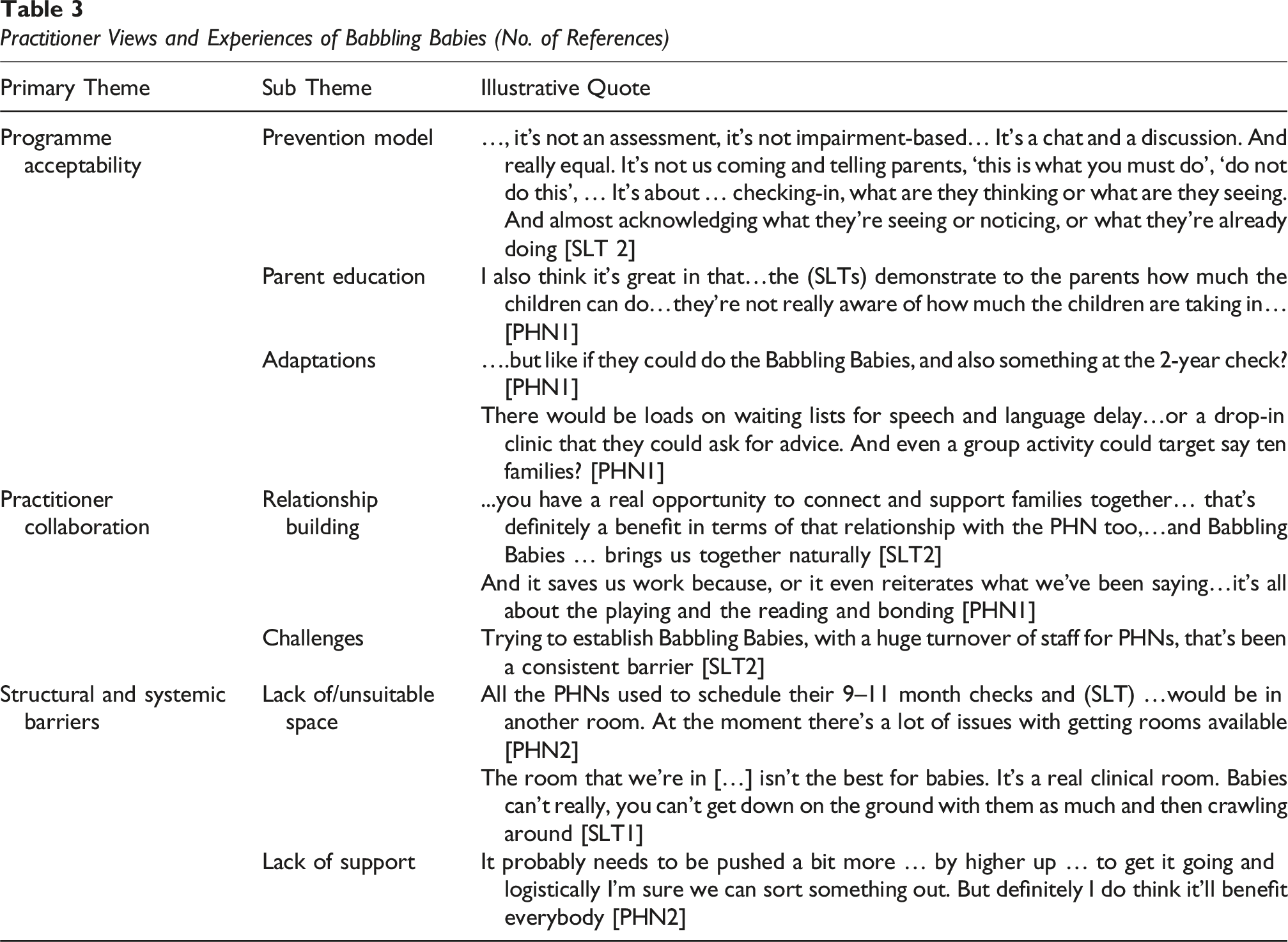
Practitioner Views and Experiences of Babbling Babies (No. of References)
Acceptability
All clinicians spoke about the acceptability of the programme, as it fits with their prevention/ promotion approach to parent-child interaction. The SLTs in particular noted how the session was a conversation which recognised the expertise of parents and their role as an educator and how ‘It’s not like us giving all the information. Or us asking the questions, and then just telling all the answers’ (SLT 1). The PHNs felt that the session gives more time for parents to hear about and discuss activities they can be doing at home to help their kids that they might not have time to go through in their appointment. As one PHN noted ‘But I suppose, with the Babbling Babies it just gives additional time to go through and focus more on the speech and the play time, and different activities that parents could be doing at home to help their kids’ (PHN1). All clinicians noted the education parents receive which helps them to recognise developmental milestones in their children at an early age. At the same time, they said that the brief and simplistic nature of the session means that parents don’t get ‘information overload’ and that it is tailored to their individual family. The PHNs also noted how the modelling that takes place means that ‘the parents can see that it’s about mirroring’ (PHN 1). There were a number of suggestions for how to adapt the programme into the future, particularly in relation to follow-up at 18–24 months when communication delays might become more apparent as outlined in the quotes on Table 3. The PHNs also suggested that the SLTs might run some initiatives for children waiting to access impairment-based services or ‘classes for, like, delay, speech delay I think would be huge. There would be loads waiting on waiting lists for speech and language delay’ (PHN 1).
Practitioner Collaboration
All clinicians talked about the relationship building that was achieved through their work on Babbling Babies and with families in the area. As one PHN noted ‘They’re seeing the PHN and the SLT, …, and both of us are saying the same thing, so it’s …really, really good’ (PHN 2). At the same time, there were a number of challenges raised, particularly the rapid turnover of PHNs in the area which affected collaboration. As one SLT noted ‘you build lots of relationships and you connect in, then the PHN moves, so then you’re back to square one and you try again, and then they move. So it’s just this cyclical, trying to build relationships, connect with the PHNs’ (SLT 2). This was found to affect PHN knowledge of the programme and buy-in as they could perceive it as ‘extra work’ but as one PHN noted ‘when you do it, it’s not really’ (PHN 2). When asked about the suitability of the assessment tools, the PHNs were grateful for the assistance of the SLTs in completing the ASQ as ‘it saved them time’, but the SLTs felt that it wasn’t sufficiently focused on the communication goals of Babbling Babies. As one SLT noted ‘…if any questions do come up around the gross or fine motor side of things, we’re not best placed…. I do think it would be better to do a more condensed version of the ASQ and focus in on the communication section’ [SLT 2].
Structural and Systemic Barriers
A number of structural and systematic barriers were raised by practitioners, mostly in relation to space. The move of the PHN check-ups from local satellite clinics to a larger health centre meant that nearby rooms for the SLT session were not always available as noted by an SLT ‘So definitely spacing and logistics around being able to join the PHN, has become a huge issue’ (SLT 1). Moreover, the SLTs noted that the space in the health centre was not appropriate as they needed to get on the floor to interact with young babies (see Table 3). The change of location was also a barrier for parents without transport. The clinicians noted the lack of support from those in higher managerial positions and how this was needed in order to address barriers in relation to PHN collaboration and space. As one PHN said ‘I don’t think it’s being pushed enough. I think like, it’s like “oh I can’t get a room” and that’s it. But like there’s other rooms in the building you can use. It’s a massive benefit to us as well, you know, in our clinic’ (PHN 2).
Discussion
This study looked at the experiences of parents and practitioners that took part in a brief early language intervention for infants integrated with developmental check-ups in a socially disadvantaged area. Our results found that the intervention was acceptable, that parents felt empowered and reassured after taking part, that it led to greater collaboration between professionals, but that there were structural and systemic barriers affecting the ongoing implementation of the programme.
Stakeholder acceptance of an intervention is an important aspect of feasibility studies as it will ultimately affect the success of a programme and influence how likely participants will adhere to the recommendations provided (Sekhon et al., 2017). The themes raised in the interviews can be considered in relation to Sekhon and colleagues’ model of the acceptability of healthcare interventions. From the parent data, we can see that the positive experience led to them feeling empowered, which Sekhon et al., relate to the importance of self-efficacy as participants feel confidence in their ability to perform the aspects required for the intervention. At the same time, there were some parents who ‘couldn’t remember’ the suggestions provided despite being given the ‘Baby Stages Wheel’ as a fridge reminder. Other similar programmes such as that evaluated by Botting et al. (2024) have used an APP to help remind parents about the intervention strategies. This could be a potential avenue for developing Babbling Babies intervention whereby tailored reminders and strategies related to their child’s development could be sent regularly.
The finding that parents also felt reassured speaks to the ethicality of the intervention fitting with their value system, which in this case referred to the importance of speaking their home language with their baby. It was interesting that almost 60% of our sample were from multilingual households which is reflective of the changing demographics of LGT catchment area due to inward migration. This has implications for all aspects of LGT, as wider linguistic and cultural diversity will have to be considered in all aspects of their programmes. Other themes related to the ‘acceptability’ of the intervention related to intervention coherence when parents recognised that their child was reaching communication milestones, thereby demonstrating their understanding about the goals of the programme. Their views on the competence of the SLTs spoke to their affective attitude or feelings about the programme, and that the recommendations were achievable as they were naturally occurring in their interactions with their babies. Botting et al. (2024) noted that creating a safe environment for parents, with interactive and relatable suggestions were key aspects of early intervention success. In the current study, parents often referred to the kindness of the SLTs which is important for engagement. Buckley et al. (2023) reviewed parental experiences of a parallel service for older children attending a community paediatric clinic linked to LGT which also highlighted that when practitioners were kind, understanding and empathetic towards families meant that they were more likely to continue to engage with LGT services. At the same time, when parents spoke about the wider LGT programme, although they valued the opportunities they provided, there was an associated burden of having travel to appointments and the potential for opportunity cost if they had to take time off work to attend. This means that services will have to adapt to be more flexible and available to families with busy lives.
The interviews with clinicians indicated a general acceptability of the model underpinning Babbling Babies also speaks to the to the ethicality of the intervention (Sekhon et al., 2017). Both the PHNs and SLTs agreed that the prevention model involving parent education and modelling of strategies was important. It is well known that the social determinants of health impact on a children’s wellbeing, development and quality of life (Reilly & McKean, 2023). Therefore, having this shared vision regarding importance of child language and communication development to promote health and wellbeing as well as a collaborative relationships is a key success-enabler of the intervention (McKean & Reilly, 2023). On the other hand, the PHNs did suggest that the LGT SLTs could provide impairment-based interventions as a gap-filling exercise due to lengthy waiting lists in the health services which could suggest that ongoing discussions around the LGT model of universal targeted, prevention and promotion model are required. The affective attitude of the professionals to the programme was reflected in their positive comments around collaboration and relationship building. However, there were also challenges presented such as the structural barriers around space availability and suitability to engage with families, which created an element of burden in relation to the ability to run the programme, as well as the perceived lack of support from management to support the intervention. Furthermore, the measurement tools used for the intervention and research protocol were problematic. Although the PHNs were happy that the SLTs could support data gathering using the ASQ, the SLTs did not feel that the tool captured the full range of the children’s communication abilities and were not equipped to answer questions around other areas of development from parents such as gross or fine motor. Furthermore, our results showed that the children were at ceiling on the communication and personal-social subscales of the ASQ and on Child’s Progress Checker, (Speech and Language UK, n.d), particularly at follow-up. Therefore, an alternative tool such as the short form of the MacArthur Bates Communicative Development Inventory may have been more thorough (Fenson et al., 2007). Another option would be to develop a younger version of the Early Language Identification Measure and Intervention (ELIM-I) that is used for developmental reviews of children aged 2–2.5 in the UK and includes parent report and observational measures of language and communication followed by a tailored intervention programme where required (Public Health England, 2020).
Limitations and Future Directions
This was a small-scale pilot feasibility study. We were only able to reach 70% of those who took part in the programme, and only one father, which has implications for our findings, particularly as we were unable to gather the background of those lost to follow-up. Moreover, our sample involved parents with relatively high levels of education which may not be reflective of hard-to reach families in the wider catchment area. The outcome measures did not capture the goals of the intervention or the range of abilities of the children and we did not formally measure parent-child interaction as the clinicians felt it would be intrusive in their first interaction with families which aimed to build a trusting relationship. Perhaps self-completed/ observational tools such as the Brigance Parent-Child Interaction Scale (see Levickis et al., 2023) to measure parent-child interaction could be considered for future studies.
Conclusions and Recommendations
This study presented the experiences of parents and practitioners on an early language and communication intervention for infants living in an area of social disadvantage. We showed that the intervention is acceptable to families and practitioners and promotes parental education and empowerment and practitioner collaboration. It is possible that promoting caregiver responsiveness from very early on through initiatives like Babbling Babies would not only benefit parent interaction, but could also have a causal effect on infants’ communication in the longer term. Future research on the efficacy and impact of ABC programmes needs to involve controlled and ideally longitudinal studies to measure any potential lasting effects.
Supplemental Material
Supplemental Material - Experiencing an Early Intervention Programme Targeting Communication and Literacy for Infants Living in a Socially Disadvantaged Community in Ireland
Supplemental Material for Experiencing an Early Intervention Programme Targeting Communication and Literacy for Infants Living in a Socially Disadvantaged Community in Ireland by Ciara O’Toole, Eibhlín Looney, Shirley Martin, Margaret Curtin, Jennifer Harte and Grace Walsh in Advances in Communication and Swallowing
Statements and Declarations
Footnotes
Conflicting Interests
The author(s) declared no potential conflicts of interest with respect to the research, authorship, and/or publication of this article.
Funding
The author(s) disclosed receipt of the following financial support for the research, authorship, and/or publication of this article: This work was supported by Irish Research Council.

Supplemental Material
Supplemental material for this article is available online.
References
Supplementary Material
Please find the following supplemental material available below.
For Open Access articles published under a Creative Commons License, all supplemental material carries the same license as the article it is associated with.
For non-Open Access articles published, all supplemental material carries a non-exclusive license, and permission requests for re-use of supplemental material or any part of supplemental material shall be sent directly to the copyright owner as specified in the copyright notice associated with the article.
