




Abstract
Sensory Processing Disorder (SPD) is a complex neurological condition that significantly affects emotional, social, and cognitive development. Its diverse manifestations can disrupt communication and learning, presenting notable challenges for clinical intervention. Despite its relevance, SPD continues to be under-recognized within the domain of speech language pathology. The present study assesses the awareness, knowledge, and attitudes toward sensory processing and its disorders among practicing Speech Language Pathologists (SLPs) in Maharashtra and examines how these vary based on factors such as educational qualification, work setting, area of expertise, and years of experience. A cross-sectional descriptive research design was employed. Data were collected via an online survey using a validated questionnaire, where 100 SLPs with a minimum of six months’ clinical experience completed the survey. Participants demonstrated moderate levels of awareness and knowledge, coupled with a generally positive attitude toward SPD. Neither educational background nor years of experience significantly influenced these domains. However, notable differences in knowledge were observed across workplace settings, with SLPs employed in hospitals and private clinics reporting higher knowledge scores. The area of expertise was also found to influence awareness levels. Enhanced knowledge in hospital and private practice settings suggested that exposure to diverse clinical cases and interdisciplinary collaboration may be critical for developing clinical competence in SPD. Despite strong positive attitudes, limited implementation suggests gaps in training and resources. Higher awareness among adult-focused SLPs challenges common assumptions, highlighting the need for practical, interdisciplinary training to bridge the gap between knowledge and application.
Keywords
Introduction
Sensory processing is the neurological process that enables the brain to receive, organize, and respond to sensory input from both the body and the environment, supporting functional participation in daily activities (Ayres & Robbins, 2005). This process, known as Sensory Integration (SI), was conceptualized by Dr. Jean Ayres in the 1970s as the foundation for learning and behavior (Ayres, 1972a, 1972b). According to research, the SI process consists of four distinct stages (Del Moral Orro et al., 2013). The first stage is registration, where the brain gathers sensory data from the sensory organs. This is followed by modulation, which enables the control of the strength of the stimulus. The third stage, discrimination, involves organizing and interpreting the stimulus to identify its significance, attributes, and distinct features. Finally, in the response stage, the brain combines all the processed stimuli to produce a suitable reaction that results in specific behaviors and movements. These stages work together to create a cohesive system that allows individuals to analyze and react to sensory information in meaningful ways. Disruptions in any of these stages can result in SPD, a condition that impairs the individual’s ability to interpret and react appropriately to sensory input (Friedman & Nealon, 2023).
Sensory processing disorder (SPD) is a neurological condition hindering the body’s ability to receive and appropriately respond to sensory messages (Friedman & Nealon, 2023). It signifies a difficulty in receiving and responding to information through the senses, having a profound impact on an individual’s daily life. Dr. Lucy Miller categorized Sensory Processing Disorder (SPD) into three types: Sensory Modulation Disorder (SMD), Sensory-Based Motor Disorder (SBMD), and Sensory Discrimination Disorder (SDD) (Miller, 2014). Children with SMD may exhibit symptoms such as over-responsiveness, under-responsiveness, or sensory-seeking behaviors, affecting multiple sensory systems, visual, auditory, etc. (Miller et al., 2007). Hypersensitivity can lead to aversive or exaggerated reactions to sensory stimuli, while hyposensitivity may result in delayed or reduced responses. Individuals with sensory-seeking behaviors display atypical interest in or desire for sensory stimulation. Children with SBMD frequently struggle with task completion and learning as a result of compromised motor function and low muscle strength, which can affect the physical aspects of communication like speaking clearly, using gestures, or writing. These children may prefer quiet activities, missing out on interactive play that builds communication skills. Additionally, Sensory discrimination disorder impacts one’s capacity to process information across various sensory channels, including olfactory, visual, vestibular, proprioceptive, tactile, gustatory, and auditory senses. Processing problems make it especially hard to follow directions or understand speech, particularly in noisy environments. Children may need instructions repeated multiple times or extra time to respond. Children with SPD face distinct communication challenges based on their sensory processing patterns; they might withdraw from overwhelming environments like noisy classrooms, limiting social interaction opportunities, or appear disengaged, responding slowly and missing typical social cues. SPD is now acknowledged in early developmental diagnostic frameworks (Egger & Emde, 2011; Greenspan & Wieder, 2008), recognizing its significant impact on participation, learning, and quality of life. It should be noted that while SPD is widely recognized in clinical practice, it is not formally recognized as a standalone disorder in the DSM-5 or ICD-11. Current understanding views sensory processing difficulties as symptoms that may occur within other neurodivergent conditions, such as autism spectrum disorder or ADHD, or may present independently without formal diagnostic criteria. This study uses the term SPD to describe the constellation of sensory processing challenges that affect individuals, regardless of their formal diagnostic status.
Globally, SPD is estimated to affect 5%–16% of children, with higher rates in children with neurodevelopmental disorders such as Autism Spectrum Disorder (ASD), Attention Deficit Hyperactivity Disorder (ADHD), and Intellectual Disability (Ahn et al., 2004; James et al., 2011; Wuang et al., 2008). In India, prevalence appears even higher. A study reported that 55.8% of typically developing children showed sensory processing difficulties, with movement sensitivity, tactile sensitivity, and sensation seeking being the most common (Panchal et al., 2021). Among children with ASD, 98% were reported to have SPD (Shah et al., 2015), and similar sensory challenges were observed in children with learning disabilities and ADHD (Mutsaddi & Sadhale, 2019; Shimizu et al., 2014). These findings reinforce the pervasive nature of sensory difficulties across pediatric populations frequently served by Speech Language Pathologists (SLPs).
Given that SPD significantly influences communication, behavior, and feeding, SLPs are uniquely positioned to contribute to early identification and intervention (Nair & Geetha, 2023). Their scope of practice encompasses the assessment of speech, language, pragmatics, and feeding/swallowing—domains commonly affected by sensory challenges (Klimkeit et al., 2006; Taal et al., 2013). However, studies have shown that children with sensory integration difficulties demonstrate slower progress in therapy when sensory needs are unaddressed (Tung et al., 2013), underlining the necessity of sensory-informed approaches in SLP intervention.
In the Indian context, the Rehabilitation Council of India (RCI) curriculum provides variable coverage of sensory processing, and explicit content on assessment and intervention strategies is often minimal (RCI, 2018). Similarly, while the American Speech-Language-Hearing Association (ASHA) acknowledges the influence of sensory processing on communication development, it does not mandate specific sensory-related competencies for clinical practice (ASHA, 2016).
Despite this critical overlap, many SLPs—particularly students and early-career professionals—report inadequate knowledge of SPD and limited confidence in using sensory-based strategies in clinical practice (Nair & Geetha, 2023). This knowledge gap may limit the effectiveness of interventions, hinder interdisciplinary collaboration, and delay appropriate referrals. In India, where sensory processing content in SLP training programs remains inconsistent (RCI, 2018), and national practice guidelines from professional bodies like the Indian Speech and Hearing Association (ISHA) do not explicitly address SPD (ISHA, 2016), there is an urgent need to strengthen awareness and training.
Internationally, surveys indicate that while a majority of SLPs encounter children with sensory difficulties in their caseloads, only a fraction feel adequately equipped to manage them (Marr et al., 2007). In India, such data are scarce, especially at the regional level. Maharashtra, a state with a growing population of pediatric clients accessing therapy, lacks region-specific research on SLPs’ perceptions and practices regarding SPD.
Therefore, this study aims to fill a critical gap by exploring the current knowledge, attitudes, and clinical practices of SLPs in Maharashtra toward sensory processing and SPD. The findings are expected to inform future curriculum development, continuing education, and professional guidelines that can enhance the quality of care provided to children with sensory and communication challenges.
Method
Ethical Consideration
The study was carried out after receiving acceptance by the research advisory committee, Bharati Vidyapeeth (Deemed to be University) School of Audiology and Speech Language Pathology, and approval from the Institutional Ethics Committee, Bharati Vidyapeeth (Deemed to be University) Medical College (BVDUMC/IEC138). Information on the proposed study was given to SLPs, and informed consent was obtained from the SLPs who were willing to participate, where they were informed that their identity would be kept confidential and they could withdraw from the study at any time before collecting the information.
Study Design
This study employed a cross-sectional survey study, which was conducted between 2024 and 2025. Additionally, the STROBE checklist (von Elm et al., 2007) has been included as a Supplemental file.
Participants
A purposive sampling technique was used to recruit 100 individuals who were practicing SLPs in different regions of Maharashtra, India, with a minimum of 6 months of clinical experience. The minimum qualification required for participation in the study is a Bachelor of Audiology and Speech Language Pathology (BASLP) degree. The sample size was determined based on these criteria: z = 1.96, p = 50%, q = 50%, and e = 0.1, where Z represents the z score, e signifies the margin of error, n denotes the population size, and p indicates the population proportion. The computed sample size was 97. To ensure adequate representation and account for potential incomplete responses, a final sample of 100 participants was included in the study.
Materials Used for Data Collection
To evaluate practicing professionals’ awareness, knowledge, and attitudes regarding SPD, a questionnaire developed by Nair and Geetha (2023) was used with permission. This English-language questionnaire was structured into four distinct components: Section A gathered demographic information (including name, age, gender, professional experience duration, workplace location, qualifications, and specialization area); Section B assessed participants’ awareness of sensory processing and its disorders; Section C evaluated their knowledge in this domain; and Section D examined their attitudes toward sensory processing and related disorders. The comprehensive assessment tool contained a total of 26 questions.
Validity and Reliability
Content validation of the questionnaire was conducted by requesting five occupational therapists and five SLPs, each with over five years of experience working with children who have neurodevelopmental disorders, to evaluate the instrument. Validators rated each question on a 4-point scale (ranging from 1 – not relevant to 4 – highly relevant) based on its alignment with the study objectives, clarity, and potential ambiguity. According to Nair and Geetha (2023), the Content Validity Index calculations yielded strong results, with individual item validity (I-CVI) at 0.925 and overall scale validity (S-CVI) at 0.962, indicating excellent validation metrics. The questionnaire’s reliability and homogeneity were assessed through Cronbach’s alpha measurement, resulting in a coefficient of 0.767, which demonstrated good internal consistency for the developed assessment tool.
Procedure
The final questionnaire was transformed into a Google Form format and distributed to practicing SLPs for data collection via email and WhatsApp. Time taken to complete the questionnaire was 10–15 min. Participants were recruited through multiple channels, including the Indian Speech and Hearing Association- Maharashtra Branch (MISHA) website platform, outreach by the research supervisor, and professional networks via colleagues. A total of 150 SLPs were initially contacted, of whom 100 completed the survey, yielding a response rate of 66.7%.
Data Processing and Statistical Analysis
The collected data were tabulated in Microsoft Excel sheet and analyzed statistically employing SPSS (Statistical Package for Social Sciences) version 25.0 software (IBM Corp. Released 2012). The evaluation was conducted using both descriptive and inferential statistical methods.
Results
Demographic Details of Participants
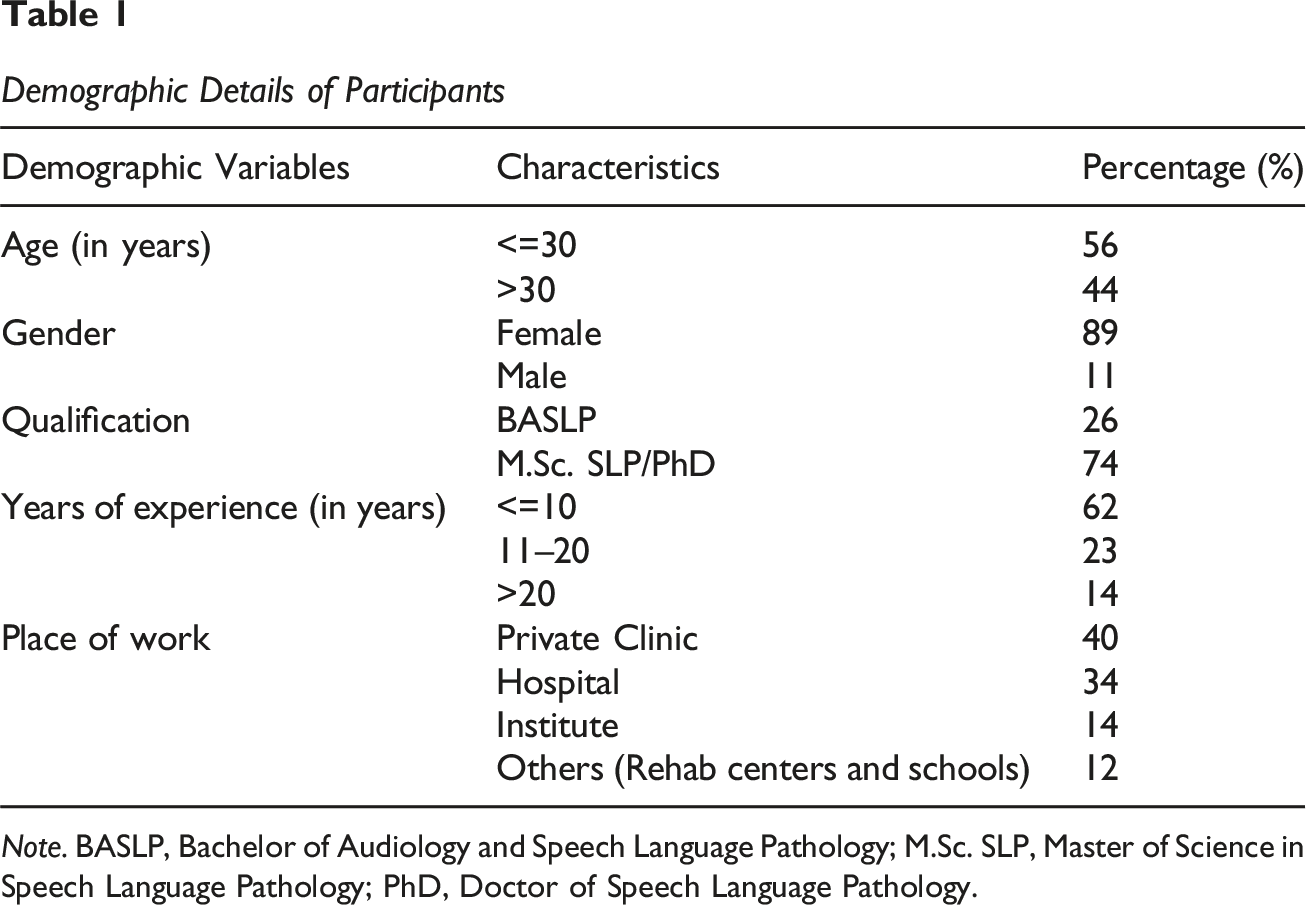
Note. BASLP, Bachelor of Audiology and Speech Language Pathology; M.Sc. SLP, Master of Science in Speech Language Pathology; PhD, Doctor of Speech Language Pathology.
Awareness About Sensory Processing Disorder
Descriptive Statistics to Evaluate Awareness-Related Measures Related to Sensory Processing Disorder

In Question 6, participants were asked to evaluate factors influencing their SPD knowledge, where 48% responded to internet searches, 46% responded to reading by choice, 44% responded to workshops, 48% responded to knowing someone with SPD, and 42% read for class purposes to a great extent as seen in Figure 1. Practicing SLPs demonstrated a moderate level of awareness regarding sensory processing and its disorders. Out of 100 participants, 43% were extremely aware, 35% were moderately aware, 16% were somewhat aware, and 6% were slightly aware of sensory processing and its disorders. The Level of Influence on Awareness About SPD
Knowledge About Sensory Processing Disorder
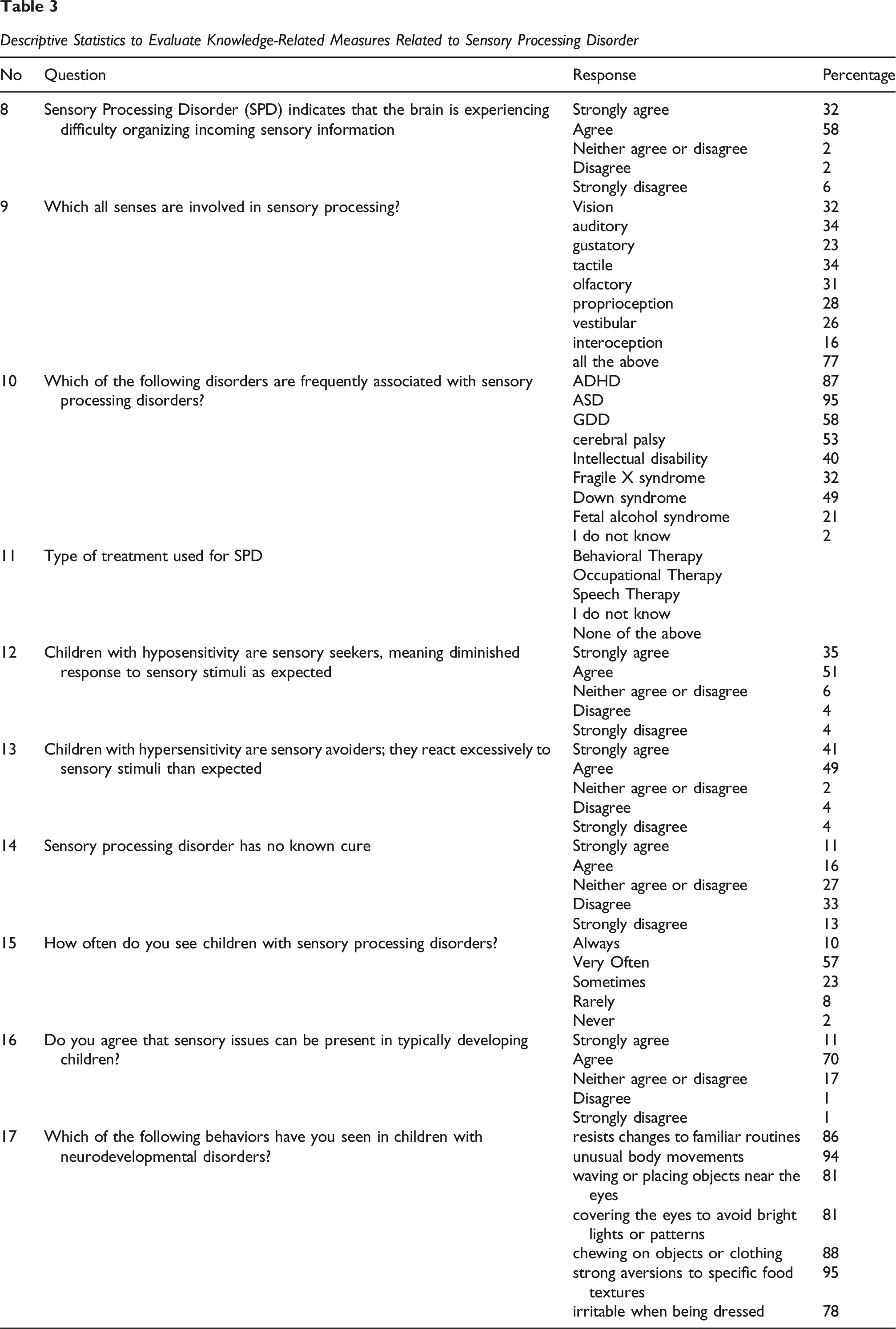
Descriptive Statistics to Evaluate Knowledge-Related Measures Related to Sensory Processing Disorder
Attitude Towards Sensory Processing Disorder
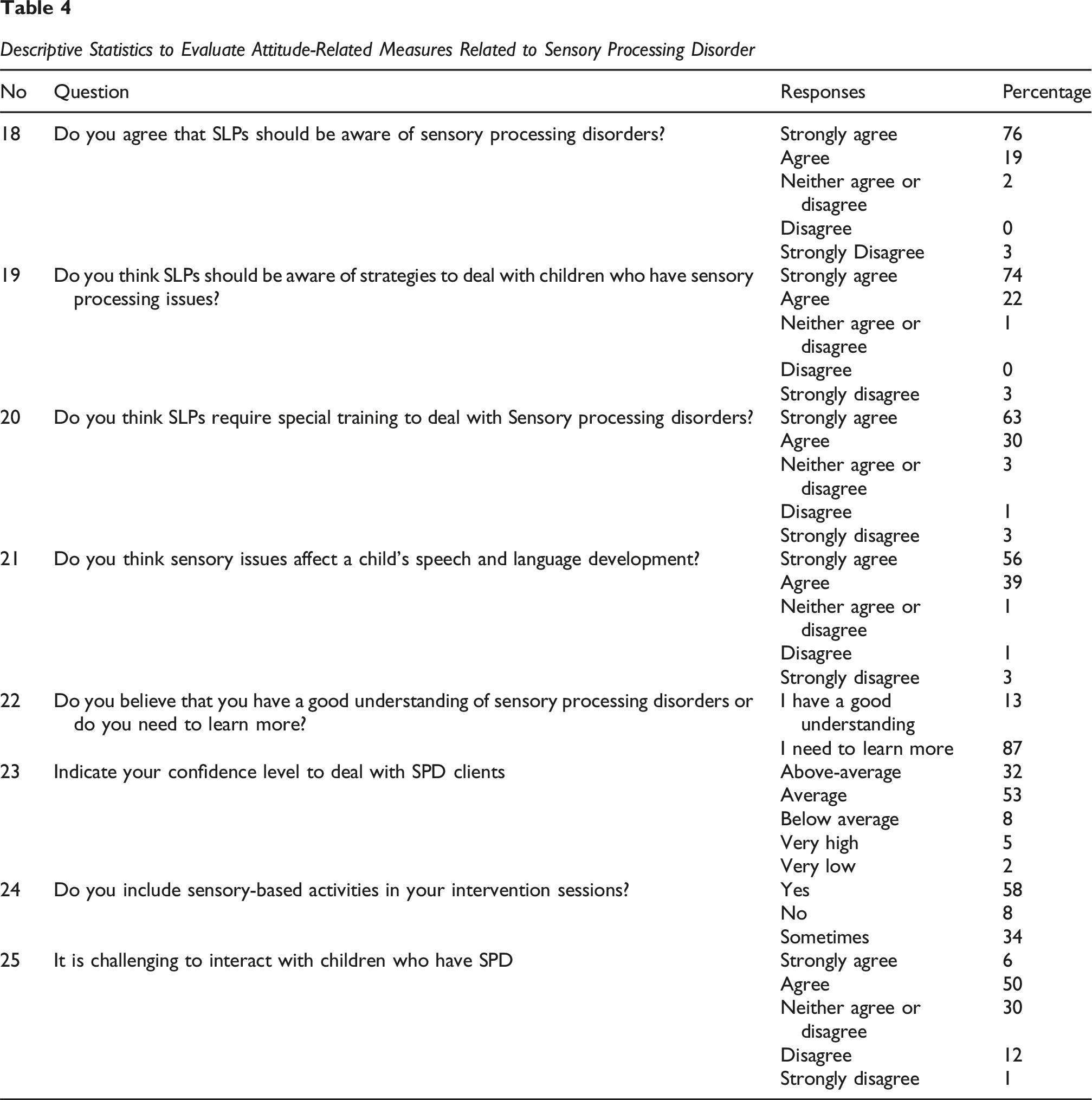
Descriptive Statistics to Evaluate Attitude-Related Measures Related to Sensory Processing Disorder
Factors Influencing Awareness, Knowledge, and Attitude Towards SPD
Mann–Whitney U Test to Compare Speech Language Pathologists’ Awareness, Knowledge, and Attitude Towards Sensory Processing Disorder Across Educational Qualifications
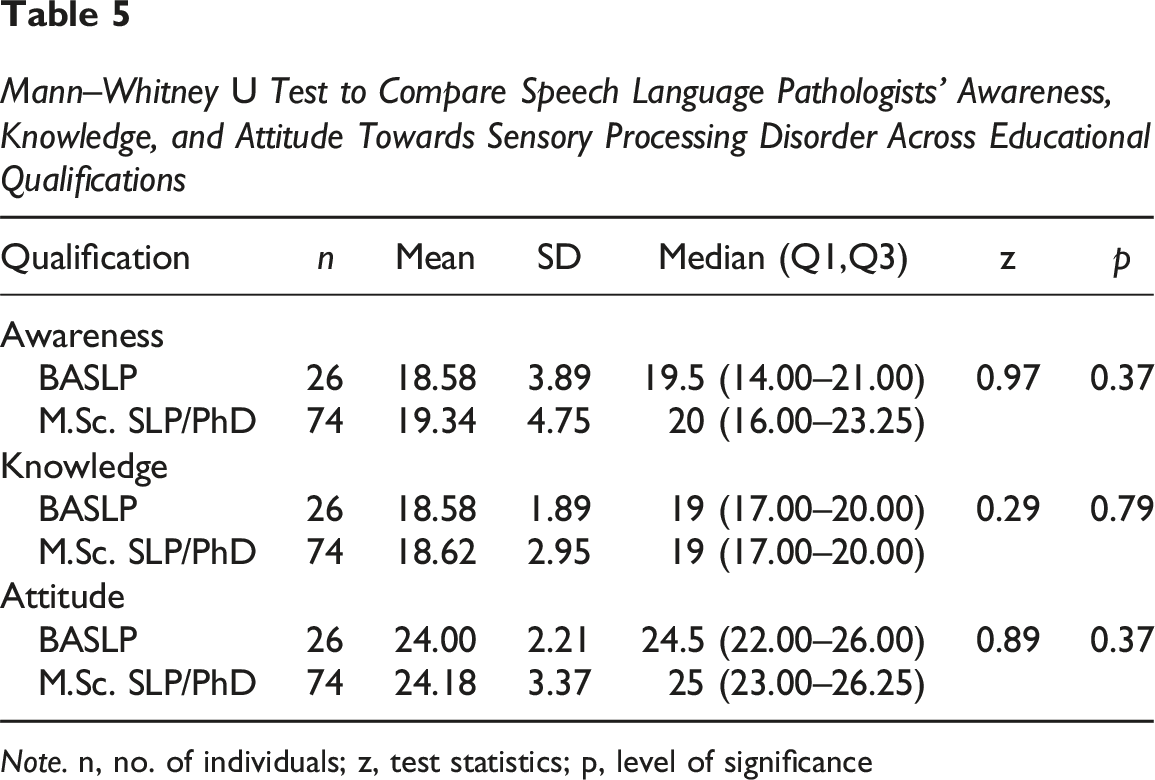
Note. n, no. of individuals; z, test statistics; p, level of significance
A Kruskal–Wallis H test was conducted to examine the impact of workplace setting on SLPs’ knowledge scores regarding SPD. The test revealed a statistically significant difference (p = .01), with higher knowledge scores among SLPs working in private clinics and hospitals. No significant differences were found for awareness or attitude across workplace settings. To explore the significant knowledge differences further, a Dunn-Bonferroni post hoc test was performed. Results confirmed that SLPs in hospital and private clinic settings scored significantly higher than those working in “other” workplace categories, which included rehabilitation centers and schools.
Similarly, a Kruskal–Wallis test conducted to compare area of expertise revealed a significant difference in awareness scores (p = .03). SLPs working exclusively with adult clients showed higher awareness compared to those working with both adult and pediatric populations. Dunn-Bonferroni pairwise comparisons confirmed a statistically significant difference between these two groups.
Spearman’s Rho Correlation Between the Years of Experience and Awareness, Knowledge, and Attitude About Sensory Processing Disorder
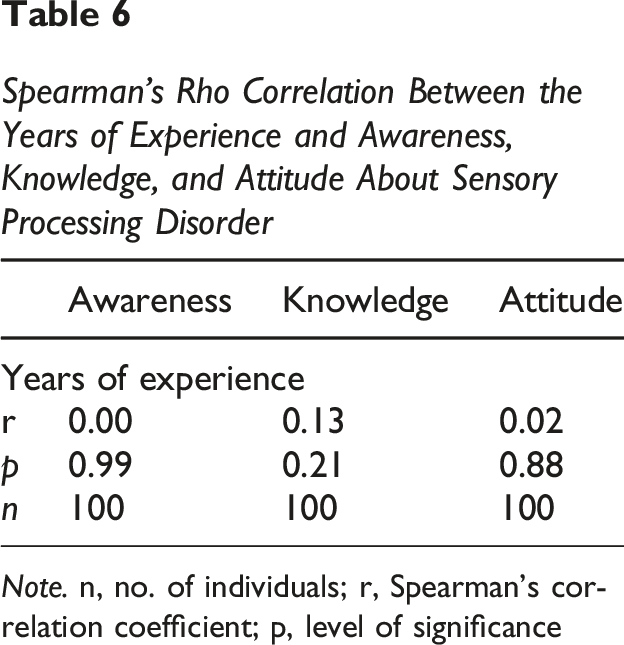
Note. n, no. of individuals; r, Spearman’s correlation coefficient; p, level of significance
Discussion
This study examined the awareness, knowledge, and attitudes of practicing SLPs in Maharashtra toward SPD. The research addresses a critical gap in understanding how SLPs perceive and manage SPD, given its significant impact on behavior, communication, and daily functioning, particularly in children with developmental disorders (Miller et al., 2007). Despite SPD’s clinical importance, many healthcare and education professionals lack adequate awareness of this condition, highlighting the need for systematic evaluation of professional competencies in this area.
Awareness of SPD Among SLPs
The moderate levels of SPD awareness among participating SLPs can be attributed to several interconnected factors. The finding that most participants possessed basic familiarity with SPD terminology aligns with the increasing recognition of sensory processing issues in clinical literature, particularly in relation to ASD (Shah et al., 2015). However, the limited familiarity with standardized assessment tools like the Sensory Profile and Sensory Integration and Praxis Tests (SIPT) reflects a fundamental challenge in translating awareness into clinical competency. These tools are primarily developed and administered by occupational therapists, creating what Schaaf and Mailloux (2015) describe as disciplinary silos that limit cross-professional knowledge transfer, that may inadvertently limit SLP exposure to formal assessment protocols. This phenomenon reflects broader healthcare challenges were professional boundaries, while maintaining expertise standards, can inadvertently restrict collaborative understanding essential for comprehensive client care. While breaking disciplinary silos is important, specialized tools like SIPT require extensive training and certification. Further research is needed to develop sensory processing training specifically tailored to SLP scope of practice to safely integrate these concepts into practice.
The predominance of informal learning sources over formal academic instruction reveals a concerning gap in structured education. When practitioners resort to internet searches and self-directed reading rather than formal coursework, it suggests that educational institutions have not adequately integrated emerging clinical knowledge into their curricula. Nair and Geetha (2023) similarly identified this educational gap, indicating that SPD content remains peripheral rather than central to SLP training programs. This informal learning pattern, while demonstrating professional initiative, creates risks of incomplete or fragmented understanding that may compromise clinical decision-making.
The moderate awareness of interdisciplinary roles in SPD management reflects the evolving nature of collaborative practice in this field. As SPD management typically involves multidisciplinary teams including occupational therapists, psychologists, and SLPs (Grover & Dabholkar, 2023), the variable awareness levels suggest that some practitioners may be working in isolation rather than as part of integrated teams. This isolation can limit professional development opportunities and reduce exposure to comprehensive SPD management approaches. To address this isolation, targeted continuing professional development programs could be developed specifically for SLPs. A joint training initiative, focusing on hands-on learning, between SLP and OT could benefit both professions.
Knowledge of SPD
The foundational knowledge demonstrated by SLPs regarding SPD definitions and sensory patterns indicates that basic concepts are being communicated effectively through available educational channels. The strong understanding of hyposensitivity and hypersensitivity patterns aligns with Miller et al.’s (2014) framework of sensory modulation disorders, suggesting that core theoretical concepts are accessible to practitioners. This treatment understanding variability likely stems from the complex nature of neurodevelopmental interventions, where “cure” versus “management” distinctions are often unclear. Schaaf et al. (2015) emphasize that SPD can be effectively managed through tailored interventions, but the absence of traditional medical “cures” may create conceptual confusion among practitioners trained in medical model approaches. This uncertainty suggests that educational programs need to better address the rehabilitative versus curative nature of developmental interventions.
The substantial clinical exposure rates reported by participants provide a critical context for knowledge development. Regular encounters with children presenting SPD characteristics create natural learning opportunities where theoretical knowledge meets practical application. This experiential learning aligns with adult learning principles, where direct clinical experience reinforces theoretical knowledge (Mulligan et al., 2019). The recognition that sensory challenges occur in typically developing children demonstrates sophisticated clinical understanding that extends beyond diagnostic categories, reflecting current research emphasizing sensory processing as a continuum rather than a binary condition (Ben-Sasson et al., 2009).
The strong association recognition between SPD and conditions like ASD and ADHD reflects well-established research documenting high comorbidity rates (Dunn & Bennett, 2002). However, lower recognition of associations with conditions like Fragile X Syndrome suggests that knowledge may be concentrated around more commonly encountered diagnoses, potentially limiting comprehensive assessment and intervention approaches.
Attitudes Toward SPD
The overwhelmingly positive attitudes toward SPD awareness and intervention reflect broader professional trends toward holistic, client-centered practice in speech-language pathology. This positive stance aligns with contemporary emphasis on addressing underlying factors that impact communication and language development (Schaaf et al., 2015). The recognition that sensory problems directly impact speech and language development demonstrates sophisticated understanding of the interconnected nature of developmental processes.
The substantial disconnect between positive attitudes and consistent implementation of sensory-based interventions represents a critical challenge in professional practice. Raubenheimer et al. (2022) identified similar patterns, attributing limited implementation to insufficient formal education, uncertainty about intervention selection, and limited collaboration with occupational therapists. This gap suggests that positive attitudes alone are insufficient to drive practice change without adequate training, resources, and institutional support.
The widespread identification of sensory-based activities used in practice indicates that many SLPs are intuitively incorporating sensory principles into their interventions, even without formal training. This organic integration suggests that sensory-based approaches align with effective therapy principles and may occur naturally when SLPs observe positive client responses. The diversity of activities described reflects creativity and adaptability in clinical practice, though it also highlights the lack of standardized protocols for sensory integration in speech-language therapy.
Influencing Factors
The significant knowledge differences based on workplace environment reveal important insights about professional development mechanisms. Private practice and hospital-based SLPs likely encounter more diverse caseloads and have greater access to interdisciplinary consultation, creating enhanced learning opportunities. Miller et al. (2014) emphasize that interprofessional collaboration and direct clinical experiences are crucial for developing sensory processing competencies, suggesting that workplace characteristics directly influence learning opportunities. Hospital settings, in particular, may provide exposure to more complex cases where sensory issues are prominent, facilitating natural knowledge development. This supports Raubenheimer et al. (2022), who found that work setting significantly influences sensory-based intervention implementation, indicating that environmental factors crucially shape clinical competency.
No significant differences between undergraduate and postgraduate practitioners challenges assumptions that advanced credentials automatically enhance clinical competency. This likely reflects the theoretical focus of higher education programs, which may inadequately address practical SPD management competencies (Raubenheimer et al., 2022). This contrasts with Nair and Geetha (2023), who found positive correlations in student populations, highlighting the gap between theoretical learning and practical application.
The lack of correlation between years of experience and SPD competency indicates that exposure alone is insufficient for knowledge development without intentional learning opportunities. This pattern aligns with research suggesting that expertise development requires deliberate practice and reflection rather than mere time accumulation (Raubenheimer et al., 2022). Without structured continuing education or mentorship, even experienced practitioners may maintain limited understanding of specialized areas like SPD. Schaaf and Mailloux (2015) similarly emphasized that hands-on training and practical application are essential for developing sensory integration skills, supporting the notion that experiential learning may be more influential than theoretical study alone.
Higher awareness among adult-focused practitioners likely reflects increased prevalence of acquired sensory processing difficulties in neurological populations. Practitioners working across both age groups showed lowest awareness, indicating that diverse caseloads may compromise depth of specialized expertise (Schaaf et al., 2015). These results underscore that SPD competency development depends on focused experiential learning and specialized training rather than solely on academic credentials or years of practice. The findings highlight the need for sensory processing education at multiple levels, integration at the initial SLP training stage, and also ongoing, continued professional development opportunities for all practitioners in the field.
Clinical Implications
This study reveals critical gaps in SPD knowledge that may limit SLPs’ therapeutic efficacy by inadequately addressing sensory components influencing communication and learning. The findings necessitate a holistic approach to client care that comprehensively addresses sensory processing challenges to enhance therapy effectiveness, client engagement, and outcomes. Given the high prevalence of sensory processing difficulties in children with communication disorders, integrating sensory awareness into clinical practice is essential, like modifying the therapy environment, adapting to session timings based on the child’s optimal sensory state, using sensory breaks during sessions, and using materials that match the child’s sensory needs.
The research emphasizes the critical need for enhanced interdisciplinary collaboration, particularly between speech-language pathology and occupational therapy. Improved sensory processing understanding will facilitate better collaboration with professionals, parents, and caregivers, ensuring coordinated approaches to complex sensory processing needs. This study serves as a catalyst for transforming clinical practice toward more sophisticated, patient-centered therapeutic approaches that address the fundamental role of sensory processing in communication disorders.
In terms of professional training, the findings suggest a need to revise SLP education programs to include structured content on sensory processing. Curricula should go beyond theoretical knowledge to provide practical tools and strategies for managing sensory issues in therapy. Furthermore, interprofessional learning opportunities such as co-taught workshops, interdisciplinary clinical placements, and collaborative case studies with occupational therapy students could be highly beneficial. These educational experiences would better prepare future clinicians to work within multidisciplinary teams and address sensory challenges confidently and effectively.
Limitations
Several limitations affect the interpretation of findings. Self-reported questionnaire data introduces potential response bias, as participants may overestimate their SPD familiarity or clinical applications, with reported awareness potentially not reflecting actual clinical competency. Geographic restriction to Maharashtra limits generalizability across Indian states. Cultural and educational differences across regions likely influence both training opportunities and clinical approaches to sensory processing issues. Uneven participant distribution across workplace settings and expertise areas affected statistical power of subgroup comparisons and may have influenced observed workplace-related knowledge differences. The cross-sectional design captures only current knowledge snapshots, limiting ability to establish causal relationships between professional exposure, training experiences, and SPD competency development.
Some survey questions used language that was not neuroaffirmative. For instance, referring to sensory processing differences as needing a “cure” implies these are problems within the child rather than differences that require environmental adaptations and understanding from caregivers and professionals. Future research should use more positive, strength-based language when discussing sensory processing variations.
Future Directions
Future research should conduct multi-state investigations exploring regional variations in SPD awareness, knowledge, and clinical approaches to understand the national landscape among Indian SLPs. Developing and evaluating targeted training programs is critical, particularly for academic institutions showing pronounced knowledge gaps. Research should focus on bridging the attitude-practice gap (97% positive attitudes vs. 58% consistent application) by investigating implementation barriers and developing workplace-specific resources.
Longitudinal studies should track long-term impacts of professional development interventions on clinical practice and client outcomes. Establishing formal interdisciplinary collaboration models between occupational therapists, psychologists, and SLPs requires investigation to break down professional silos and foster holistic client understanding.
Methodological innovations should incorporate objective assessment techniques beyond self-report measures, including standardized case-based assessments, clinical competency observations, and simulated scenarios for more accurate knowledge evaluation. Finally, developing evidence-based clinical guidelines for SPD management within speech-language pathology would provide standardized approaches to assessment and intervention. These guidelines should focus on understanding and facilitating each person’s sensory needs through therapeutic and environmental modification rather than treatment approaches, and such guidelines would require regular review and update to reflect current understanding.
Conclusion
This study evaluated awareness, knowledge, and attitudes toward SPD among 100 SLPs in Maharashtra, India. Results revealed moderate awareness (43% extremely aware) and knowledge levels (74% moderate knowledge), with overwhelmingly positive attitudes (97%). However, a significant theory-practice gap emerged, as only 58% consistently implemented sensory-based interventions despite positive attitudes. Workplace setting significantly influenced knowledge, with SLPs in private clinics and hospitals demonstrating superior scores compared to educational institutions. The findings highlight the need for enhanced practical training to bridge the gap between theoretical knowledge and clinical implementation of SPD management strategies.
Supplemental Material
Supplemental Material - Assessing Awareness, Knowledge, and Attitudes Toward Sensory Processing and Its Disorders Among Speech-Language Pathologists
Supplemental Material for Assessing Awareness, Knowledge, and Attitudes Toward Sensory Processing and Its Disorders Among Speech-Language Pathologists by Vidushi Mahatha, Priya Kapoor in Advances in Communication and Swallowing
Footnotes
Acknowledgments
The Authors would like to acknowledge all the SLPs who participated in this study.

Ethical Considerations
The study was carried out after receiving acceptance by the research advisory committee, Bharati Vidyapeeth (Deemed to be University) School of Audiology and Speech Language Pathology, and approval from the Institutional Ethics Committee, Bharati Vidyapeeth (Deemed to be University) Medical College (BVDUMC/IEC138). Information on the proposed study was given to SLPs, and written informed consent was obtained from the SLPs who were willing to participate, where they were informed that their identity would be kept confidential and they could withdraw from the study at any time before collecting the information.
Funding
The authors received no financial support for the research, authorship, and/or publication of this article.
Declaration of Conflicting Interests
The authors declared no potential conflicts of interest with respect to the research, authorship, and/or publication of this article.
Data Availability Statement
The data that support the findings of this study are available from the corresponding author upon reasonable request.
Supplemental Material
Supplemental material for this article is available online.
References
Supplementary Material
Please find the following supplemental material available below.
For Open Access articles published under a Creative Commons License, all supplemental material carries the same license as the article it is associated with.
For non-Open Access articles published, all supplemental material carries a non-exclusive license, and permission requests for re-use of supplemental material or any part of supplemental material shall be sent directly to the copyright owner as specified in the copyright notice associated with the article.
