




Abstract
This study explores the impact of a gratitude journaling intervention on the internship experiences of pre-service teacher candidates, with the goal of mitigating burnout and enhancing emotional well-being during a critical phase of teacher preparation. Seventeen graduate students enrolled in a spring internship seminar participated in a month-long gratitude practice, during which they recorded at least five things they were grateful for, three times per week. A mixed-method design was used as participants completed a validated burnout survey before and after the intervention and then submitted written journal entries for thematic analysis. Quantitative results did not show statistically significant changes in burnout scores across the group; however, qualitative findings revealed five recurring themes: strengthened connections, improved well-being, professional growth, joyful daily experiences, and increased appreciation for nature. Notably, individuals with higher initial burnout levels appeared to benefit more from the intervention. While limited by a small sample size and lack of a control group, the study provides early evidence that brief, structured gratitude practices may offer meaningful support for pre-service teachers navigating demanding clinical experiences. Findings suggest that gratitude interventions may foster resilience and promote a greater sense of well-being during teacher preparation.
Introduction
High turnover rates have the potential to impact students’ experiences in the school environment as it may be argued that teachers new to the profession may lack the overall and wide-spanned skill base of more seasoned educators (Adnot et al., 2017; Hanushek et al., 2016; Ronfeldt et al., 2013). In fact, a substantial body of research on teacher turnover indicates that between 8% and 50% of early career teachers leave the profession within their first five years (Changying, 2007; Guarino et al., 2006). The research on teacher attrition spans both global contexts and multiple decades. For instance, Changying (2007) reports that in parts of China, such as Liaoning province, over 50% of teachers either retired early or changed careers during the 1970s and 1980s. In regions like Guangzhou and Sichuan, a lack of enthusiasm for the profession was cited as a key reason for leaving. Similarly, in the United States during the 1990s and 2000s, teacher attrition rates rose steadily (Guarino et al., 2006). In the 1990s, 18% of early-career teachers left the profession, followed by 16% leaving within their first year and 26% within their second year in the early 2000s.
A lack of support, student engagement, and professional development—combined with increased workload and student behavior issues—are major factors contributing to teacher burnout and leaving the profession (Buchanan et al., 2013; Denton et al., 2021). Teacher attrition stands as a long running concern for stakeholders including community leaders, parents, policy makers, and administrators. However, more importantly, those who have been directly impacted are our students. When teachers, especially the high-quality ones leave the profession, it can create a learning gap resulting in low academic achievement. In a review of studies conducted by Madigan and Kim (2021), teacher burnout was associated with low achievement scores, low reading and math ability, and decrease in literacy skill over time.
Furthermore, the most historically underserved student populations are the most affected by high rates of educator attrition (Papay et al., 2017). Addressing the root causes of educator attrition, particularly in schools serving historically underserved populations, is critical for creating a more equitable and effective education system. Establishing strong connections between teachers and students is essential for both academic progress and socio-emotional growth. Therefore, high rates of teacher attrition can disrupt the continuity and stability of the education for students and can hinder efforts to close achievement gaps. When seasoned educators and skilled teachers serving historically underserved students leave, it can have negative effects on the learning particularly for those who are already dealing with academic challenges. High turnover can divert energy and resources for recruiting and training new teachers from addressing specific needs of underserved students. Finally, it can lead to community trust being undermined as families and students may feel discouraged by instability, leading to lessened confidence in the education system as a whole to support their needs.
The pandemic only intensified these pressures. Teachers—especially those in the early stages of their careers—had to rapidly adapt instruction, navigate shifting expectations, and address rising student needs. These demands have contributed to teacher burnout rates higher than in nearly any other profession (Camera, 2022; Farber, 2022). Despite various interventions aimed at addressing burnout, many of these efforts remain reactive rather than preventative. To foster resilience and sustain teacher engagement, educators and researchers alike are increasingly turning to practices that build emotional well-being and job satisfaction.
One such promising intervention is the practice of gratitude. Defined by Rash et al. (2011), gratitude can be experienced as both a short-term emotional state and a long-term character trait. State gratitude arises from specific events or interactions that spark thankfulness, while trait gratitude reflects a more enduring disposition to recognize and appreciate the positive in life (McCullough et al., 2002). Research has consistently found that individuals with higher levels of trait gratitude tend to experience greater happiness, optimism, and life satisfaction—all qualities essential to becoming an effective and resilient educator.
In the context of teacher preparation, cultivating gratitude may serve as a protective factor, reinforcing positive emotional experiences during one of the most demanding periods of professional development. This study investigates the impact of a structured gratitude journaling intervention on the internship experiences of pre-service teachers. The researchers focused on the students naming their observed state gratitude and using the practice of the gratitude journal to cultivate trait gratitude. By encouraging participants to reflect on and record moments of gratitude throughout a month-long period, the researchers aim to explore whether such practices can alleviate burnout symptoms and promote a more positive outlook on teaching.
Research Question
The researchers in this study sought to explore the potential impact of a gratitude intervention on job satisfaction and burnout among pre-service teachers during their internship experience. Participants engaged in a formal gratitude journaling practice during the final month of their internship. Data was collected through pre- and post-surveys measuring burnout, as well as reflective journal entries. The study addressed two central research questions: (1) To what extent does participation in a gratitude journal intervention impact burnout levels among pre-service teachers? and (2) How do pre-service teachers describe the personal and professional effects of engaging in a gratitude journal during their internship? The researchers hypothesized that those who participated in the weekly gratitude journaling would report fewer signs of burnout and greater emotional resilience by the end of the intervention.
Literature Review
Scholars have long recognized the concerning prevalence of teacher burnout within K-12 education, prompting investigations into its causes, perceptions, and mitigating factors to curb the attrition of experienced educators (Buchanan et al., 2013; Denton et al., 2021). As the consequential turnover especially with novice teachers has the potential to compromise student learning, individuals who consider entering the profession as educators may need to consider practicing valuable strategies to maintain their vitality in their work for teaching to be a more sustainable profession.
One such intervention to support teachers in the profession is the practice of gratitude. This practice involves regularly recording things for which one is thankful for. Research indicates that even minimal efforts, such as maintaining a gratitude journal with just one entry per week, can yield significant benefits (Emmons & McCullough, 2003). The notion of gratitude has been tested for its dramatic and long-lasting effects for overall life satisfaction. Research has suggested that the practice of gratitude can improve one's overall health, promote happiness and well-being, and enhance generosity and cooperation (Emmons & Stern, 2013). Furthermore, this reorienting and vitalizing practice has offered numerous benefits such as stronger immune systems, reduced depression and anxiety, lowered blood pressure, better emotional self-regulation, and stronger commitment to exercise and self-care (Emmons & McCullough, 2003; O'Connell et al., 2017; Shipon, 2007). As an added benefit, those who practice gratitude enjoy higher levels of positive emotions, increased alertness and vitality, more joy and pleasure, and a greater sense of optimism and happiness (Emmons & Crumpler, 2000).
In a study by Wilson and Harris (2015), 14 preservice elementary teachers were invited to practice gratitude during nine weeks of their full-time fieldwork placements. The participants were students in a liberal arts Christian college similar to this current study. The practice of gratitude was in the form of discussions and journaling embedded in one of their coursework. By the end of the nine weeks, participants reported on personal benefits they experienced. These benefits included enhanced well-being by having a positive attitude and a calm spirit, strengthened relationships with their mentor, supervisor, peers, and instructors, and heightened cognitive skills by being more focused, alert, and energetic. Furthermore, Wilson and Harris observed the ripple effects of gratitude in the participants’ internship classrooms. They reported on a more positive and calmer classroom atmosphere, better behaved students, and students more willing to focus effort towards learning.
Building a positive rapport with the students goes a long way. To validate Wilson and Harris’ observations, Howells (2014) conducted an exploratory case study of 59 high school teachers examining the role gratitude plays with respect to teacher-student relationships. Teachers who practiced gratitude by greeting their students, intentionally working toward building relationships, and examining their attitude, reported having a positive relationship with their students. Furthermore, the 59 teachers reported on improved student attendance and increased student engagement. They further observed students enjoyed coming to class and participated in the classroom discussions. These studies indicate that a teacher's mindset and attitude play a crucial role in fostering a positive classroom environment.
Additional studies emphasize the practice of gratitude as a contributing factor in helping individuals derive purpose from their work, alongside leveraging their strengths, fostering a state of flow, maintaining hope, and identifying a sense of vocation (Dik et al., 2015). Cultivating gratitude can also improve leadership capabilities (Stone & Stone, 1983) which are essential competencies for effective teaching and learning. Ng (2016) proposes that the practice of gratitude fosters a sense of belonging which in turn contributes to reduced turnover and impacts mental well-being, stress levels, and retention rates. When educators cultivate gratitude, they are better able to maintain their mental and emotional stamina. Gratitude cultivates a spirit of helpfulness, generosity, and compassion along with fostering forgiveness, boosting sociability, and alleviating feelings of loneliness and isolation (Emmons, 2010).
Taking just five minutes each day to write down the things one appreciates can boost overall happiness by more than 10% (Emmons & McCullough, 2003; Seligman et al., 2005). This practice highlights the importance of acknowledging moments of gratitude, leading individuals to feel more optimistic about their circumstances. People who focus on the positives in their lives, rather than dwelling on the negatives, tend to develop a more favorable outlook on life. More recent research continues to affirm these findings. A 2025 study involving over 18,000 participants in the Big Joy Project, found that engaging in brief daily “micro-acts of joy”—such as gratitude journaling—produced significant improvements in emotional well-being, happiness, and perceived control over one's mood. These five- to ten-minute activities, practiced over just one week, generated benefits comparable to those of far more time-intensive well-being programs, suggesting that short, intentional moments of gratitude remain a powerful and accessible tool for improving resilience and life satisfaction (Guevarra et al., 2025).
With benefits like these, we were very excited to implement such a simple intervention to support our teacher candidates. Similar to O'Connell et al. (2017), the researchers in this current study implemented a reflective interpersonal journal with the intent to improve job satisfaction and lower burnout rates for the pre-service teachers during their internship year.
Methodology
In this study, seventeen pre-service graduate teachers were enrolled in a required internship seminar course during their spring quarter. They participated in the gratitude intervention project as a required assignment during the month of May. There were seven who identified as male and ten who identified as female in the class. Fourteen of them were in the year-long internship in our Accelerated Master of Arts in Teaching program. The remaining three participants were in the fourteen-week internship in the Master of Arts in Teaching program which is designed for working professionals completed in two years. The pre-service teachers taught in K-12 classrooms in districts located in the Pacific Northwest near Seattle, Washington.
Data Collection
The researchers employed a mixed-method study to explore how expressed gratitude impacts burnout rates of pre-service teachers during their internship experience. Participants were invited to complete a burnout survey by the end of April, which served as a baseline measure. This timing aligned with a particularly demanding period in the academic year: pre-service teachers were at the height of their internship placements, teaching full-time under the supervision of a mentor while also fulfilling graduate program coursework. In addition, many were beginning the high-stakes process of applying and interviewing for teaching positions following graduation or certification. This confluence of responsibilities—full-time teaching, academic workload, and professional job search—marks a known period of elevated stress and vulnerability to burnout for teacher candidates, making it an ideal time to introduce a well-being intervention. The students engaged with their gratitude journals for a minimum of three days a week during the month of May. In each journal entry, they reflected on at least five things they were grateful for on a word document. The purpose of this activity was to shine light on the positive things in their lives and to refocus their attention during a stressful time in their internships. The instructor of the course sent out weekly reminders to the students along with inspiration quotes about the positive impact of gratitude. These quotes originated from a non-profit organization called Grateful Living whose purpose is to “empower people to live meaningful lives through the transformative practice of grateful living” (Gratefulness.org n.d.). Through their website, they offer a poem of the month, a word for the day, and a monthly newsletter, and the quotes chosen for the students came from several of their daily words of gratitude in 2023. After four weeks, by the end of May, each participant submitted at least 12 entries they had completed during the project. The instructor reviewed assignments for completion prior to analyzing them for this study.
Gratitude Journal Project
Emmons, a prominent gratitude researcher, has conducted several studies demonstrating the benefits of gratitude practices (Emmons, 2010; Emmons, 2013; Emmons & Crumpler, 2000 Emmons & McCullough, 2003). Emmons’ research includes the impact of gratitude journaling on well-being, optimism, and life satisfaction. Additionally, his research explored the physical health benefits of gratitude such as showing better overall health for those who incorporated gratitude practices into their routines. Along with his colleagues, Emmons also researched the psychological benefits of gratitude, revealing its association with increased resilience, reduced depression and anxiety symptoms, and increased positive emotions (Emmons & McCullough, 2003). Moreover, their work highlights how gratitude impacts social relationships by fostering stronger connections, empathy, and satisfying interpersonal bonds. In the workplace, cultivating gratitude among employees can boost job satisfaction, productivity, and morale (Emmons & McCullough, 2003). Due to this compelling research, the gratitude intervention employed in this current study aimed to implement a gratitude practice with our pre-service teachers to encourage similar benefits that can enhance mental and physical well-being, interpersonal connections, and morale during their internship experience.
Survey Instrument
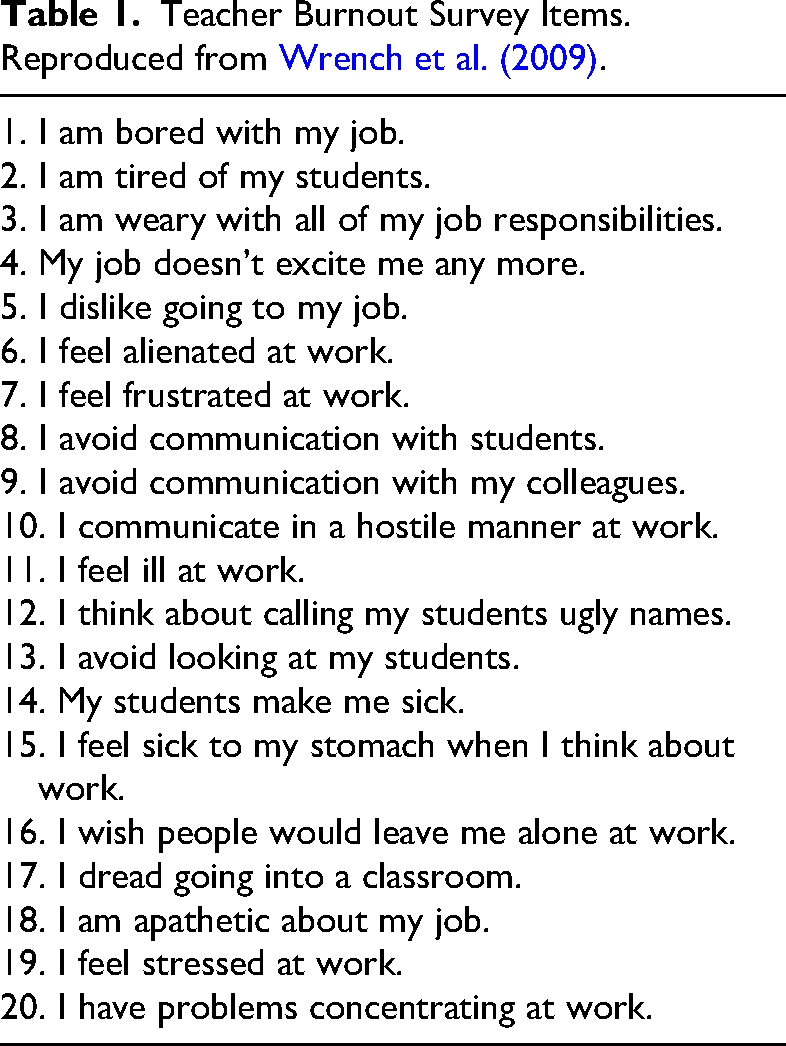
The instrument employed in this study was designed and used by Wrench et al. (2009, p. 211) to measure individuals’ sentiments towards their job and its associated facets (see Table 1). The Teacher Burnout Measure consists of 20 items, with participants expressing their responses on a Likert scale from strongly disagree (1) to strongly agree (5). The formulation of each item implies that a lower score suggests experiencing a lesser degree of burnout. The researchers of this study saw no need to revise any of the items; therefore, it was administered in its exact form, and it took each participant approximately 2 min to complete. The survey was assigned to the participants twice four weeks apart during the spring quarter while they were fully invested in their internship. This survey served as a pre and post assessment that addressed the research question.
Teacher Burnout Survey Items. Reproduced from Wrench et al. (2009).
Data Analysis
Prior to the intervention of the project, a pilot study was conducted during the fall quarter with four students to determine if students perceived this assignment as valuable. All four students were fully engaged with the gratitude journal, and data from the pre and post survey that they took suggests a decrease in their feelings of burnout. This was sufficient to move forward with the study. Qualitative data was taken from the gratitude journal entries and coded for content analysis (Creswell & Poth, 2016). Descriptive was used to analyze and report the quantitative data extracted from the survey items that was administered as a pre and post test. The data were based on a Likert scale, 1(strongly disagree) to 5 (strongly agree). The higher the value, the more burned out the students felt. The instrument had a Cronbach's Alpha of .90 which suggests the items were internally consistent and measuring the same construct. Furthermore, reliability for pre and post data were calculated and each were of acceptable values (a = .90 and a = .90).
Results
The researchers sought to explore the potential mediating effect and impact of job satisfaction and burnout as pre-service teachers by examining the question, does expressed gratitude have a positive impact and decrease in burnout on overall perceptions of preservice teachers’ internship experience? We hypothesized that those preservice teachers who engaged in a weekly gratitude journal would report less signs of burnout.
Quantitative Data Results
After running a t-test, there was no statistically significant difference between pre-test and post-test scores. However, the average sum of the participants’ scores in the pre-test was slightly higher than the average sum of the participants post-test scores (pre-test = 27.15, post-test = 26.35). This suggests that students felt a higher level of burnout at the start of the gratitude project. In reviewing each item (see Table 2), the item that showed the largest decrease (five points Likert scale) from pretest to post-test was item #6, I feel alienated at work. In other words, after the gratitude journal project, their sense of belonging increased. Two items, #2, I am tired of my students and #5, I dislike going to my job every day, showed a slight decrease of three points which suggests an increase in rapport and job satisfaction.
Total Pre-Test and Post-Test Scores for Each Item.
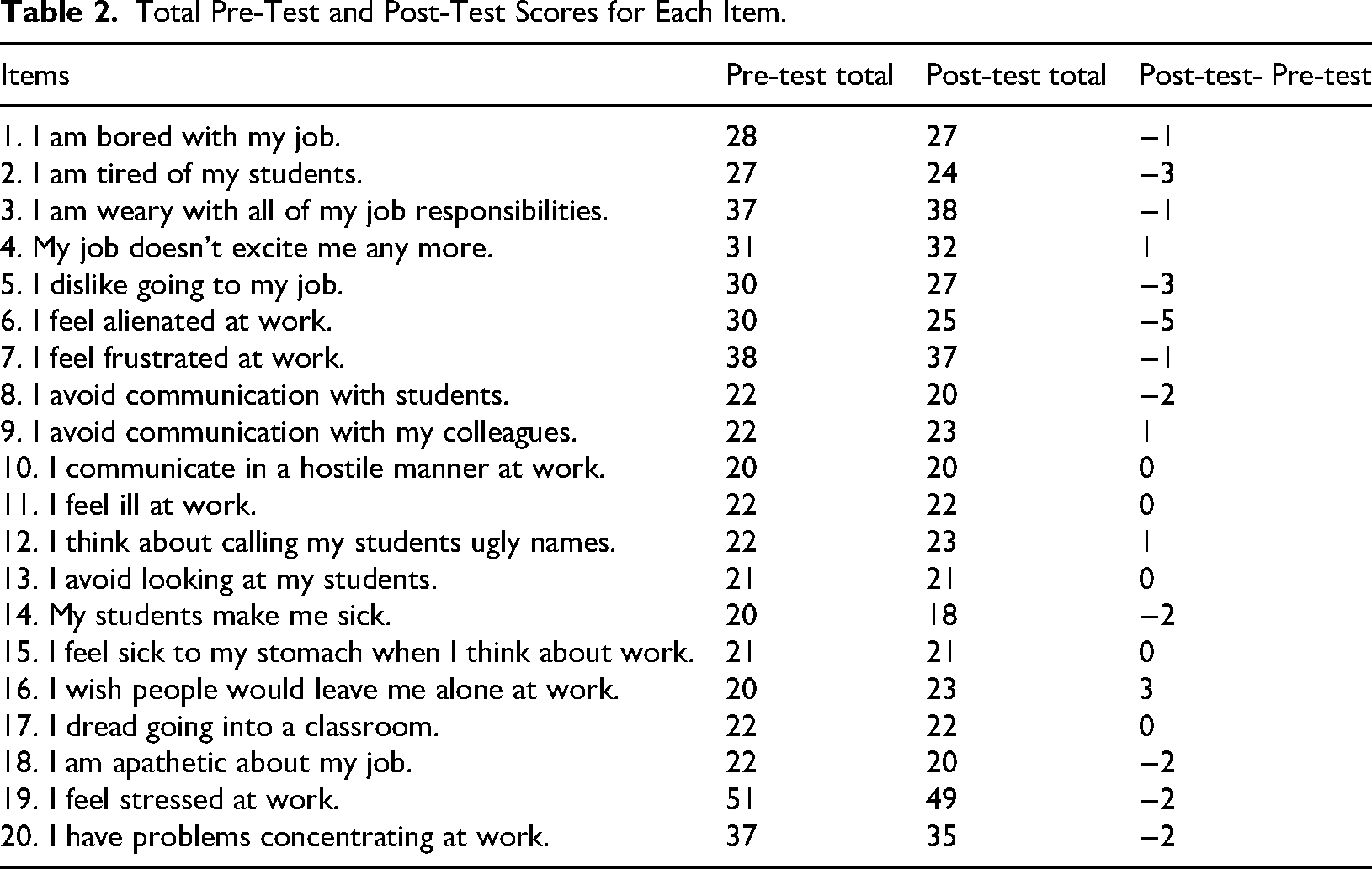
It is worth mentioning that item #16, I wish people would leave me alone at work, showed an increase of three points and the item with the highest score in both the pre-test and post-test was item #19, I feel stressed at work. The scores of both these items could be attributed to the increased pressures involved with addressing the end of year demands from both their internship experience and coursework.
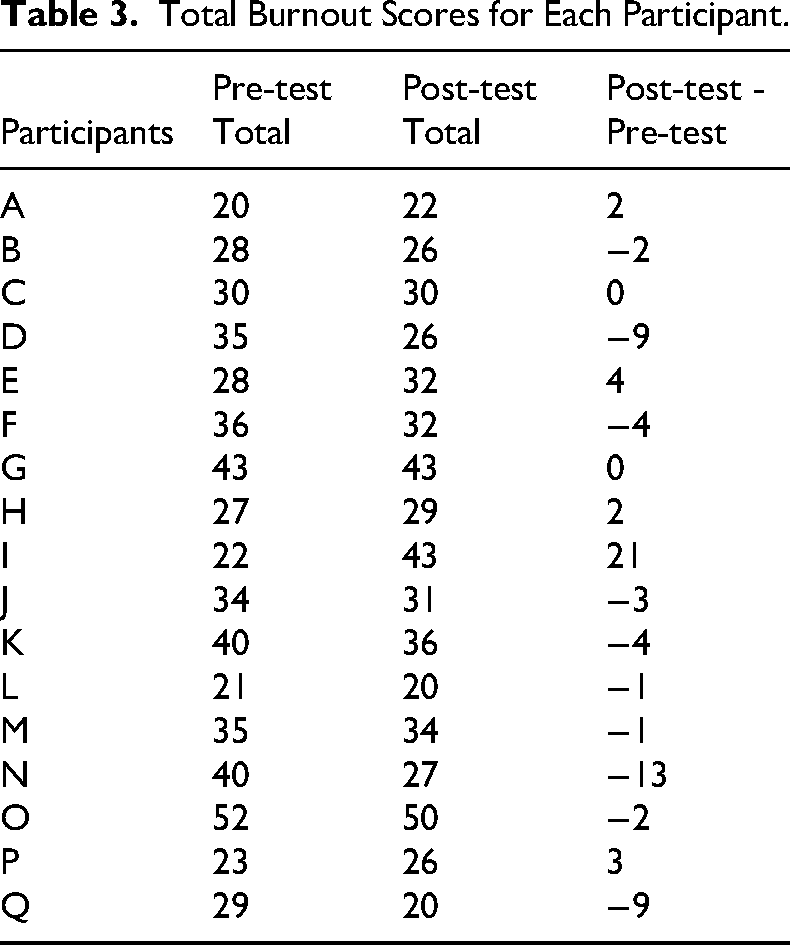
The researchers looked closely at the scores of each participant shown in Table 3 and found that out of the 17 participants, ten showed a decrease in their scores, two remained the same, and five increased. Upon a deeper review, the students with increased scores were either teachers of record in the classroom without a mentor teacher to fully support them, or they were experiencing stressful personal issues during the most intense part of the program. Regardless, as the majority of students showed burnout to decrease over the course of the month after participating in the gratitude journal intervention, integrating a gratitude related intervention is worth exploring for teachers in the profession.
Total Burnout Scores for Each Participant.
Qualitative Data Results
To examine the qualitative dimension of the gratitude intervention, two researchers independently reviewed over 200 journal entries submitted by the 17 pre-service teachers over a four-week period. Using thematic analysis, five major themes emerged:
Connections and Relationships
The most frequently occurring theme involved gratitude for human connection—across both personal and professional contexts. Participants consistently expressed appreciation for the emotional support, companionship, encouragement, and kindness they received from family members, friends, mentors, students, and even strangers. These social bonds were described as vital in helping them navigate the emotional highs and lows of the internship. One participant wrote, “I am grateful for my cousin. He loves BBQ-ing and always opens up his home for good celebrations” (Student I). Others expressed gratitude for their relationships with mentor teachers and peers in their graduate cohort, noting how these professional relationships provided a sense of solidarity. Gratitude for students also emerged powerfully, especially when participants received small tokens of appreciation or witnessed student progress. One participant shared, “I’m grateful for a lovely bouquet of flowers from my students and two handwritten notes. One said, ‘I love how you teach math,’ and it reminded me why I’m doing this work” (Student E). They also valued shared social activities like concerts, gatherings, and casual hangouts as significant sources of gratitude. These expressions point to the importance of affirmation, community, and interpersonal connection as protective factors against burnout.
Well-Being and Self-Care
Participants acknowledged practices that enhanced their overall well-being, from simple joys like music and leisurely walks to times of savoring coffee and outdoor pursuits. They were grateful for moments of relaxation and personal time, recognizing the need to reduce stress and maintain emotional balance. They shared that “I appreciate the simple pleasure of a warm cup of tea, which soothes my soul and provides a moment of tranquility amidst a busy day” (Student G). These responses demonstrate an increased awareness of self-regulation and the value of slowing down during a high-stress period.
Professional Growth
A significant number of journal entries reflected participants’ gratitude for moments that fostered their development as teachers. This theme captured appreciation for constructive feedback, lesson breakthroughs, supportive mentorship, and opportunities to reflect on their own growth. These moments not only provided encouragement but also helped shape their evolving professional identities.
Participants expressed gratitude for constructive feedback and support from colleagues, mentors, and supervisors on their personal and career development. For example, one student stated, “I’m grateful that I have people in my corner that root for my success and are my cheerleaders even when I don’t feel that I was very successful.” (Student M). They were thankful for positive experiences in the classroom that supported their growth. These expressions suggest that gratitude helped reframe challenges as opportunities and gave participants a sense of purpose and proficiency reinforcing their commitment to teaching.
Enjoyable Experiences and Hobbies
Participants found joy in attending concerts, movies, and visits to specific places, as well as engaging in hobbies such as music, gaming, and outdoor adventures, highlighting how these activities contribute to a fulfilling life beyond work. These entries suggest that participants intentionally sought balance and perspective beyond their professional roles. One student said, “I am grateful for my gym membership and what a good way to vent frustrations it is” (Student J). These moments served not just as respite, but as essential parts of maintaining identity and well-being beyond their emerging role as educators.
Nature and Reflection
There was an emphasis on their appreciation for the beauty of natural surroundings. Participants were grateful for moments of personal or spiritual contemplation inspired by nature, recognizing its positive impact on their overall well-being. One student listed the “flat sandy beaches as far as the eye could see at Ruby Beach and Kalaloch Beach at Olympic National Park” (Student O). Participants indicated that nature provided grounding and perspective.
The qualitative analysis of gratitude journal entries revealed the broad scope and personal resonance of gratitude as experienced by pre-service teachers. Gratitude was not limited to extraordinary events but was often found in the ordinary ones—a cup of tea, a kind word, or a moment of silence. The emergent themes demonstrate that gratitude journaling enabled participants to identify sources of meaning, support, and joy within their lives. These expressions point toward the potential of intentional gratitude practices to buffer against burnout, promote resilience, and strengthen wellness during a pivotal stage in teacher development.
Discussion
The findings of this study offer valuable insights into the potential impact of a gratitude intervention on pre-service teacher candidates’ internship experiences. Although the quantitative analysis did not reveal a statistically significant difference in burnout scores between the pre- and post-tests, qualitative data from gratitude journal entries offered a rich understanding of the nuanced ways in which gratitude shows up and influences various aspects of individuals’ lives. These results support the findings of Wilson and Harris (2015) in that the preservice teachers reported on having a positive attitude and a calm spirit. They also reported on having strengthened relationships with their mentor, supervisor, peers, and instructors. Follow up research is warranted to understand the ripple down impact on the K-12 students as noted by Howells (2014).
The lack of statistical significance in the quantitative data may be attributed to several factors. First, the relatively small sample size of seventeen participants could have limited the statistical power to detect significant differences. Additionally, the short duration of the intervention, spanning only one month, might not have provided sufficient time for noticeable changes in burnout levels to occur. Moreover, individual variations in participants’ circumstances and coping mechanisms may have influenced their responses to the gratitude intervention differently.
Despite the absence of statistical significance, the trends observed in the quantitative data are noteworthy. While the overall average burnout scores decreased slightly from the pre-test to the post-test phase, pointing to a potential trend towards reduced burnout, the individual variations in scores suggest a more nuanced picture. Notably, participants who reported higher initial burnout scores tended to show more pronounced decreases after engaging in the gratitude intervention. Conversely, some participants experienced increases in burnout scores, which could be attributed to external stressors or personal circumstances.
The qualitative analysis of gratitude journal entries revealed five prominent themes: connections and relationships; well-being and self-care; professional growth; enjoyable experiences and hobbies; and nature and reflection. These themes underscore the multifaceted nature of gratitude and its far-reaching impact on various aspects of individuals’ lives. Participants expressed gratitude for meaningful connections with others, moments of relaxation and self-care, constructive feedback and support for professional growth, enjoyable experiences outside of work, and the beauty of natural surroundings. These findings align with existing literature on the extensive benefits of gratitude practices, including improved well-being, strengthened social relationships, and increased resilience.
The observed themes suggest that gratitude interventions can serve as valuable tools for promoting holistic well-being and resilience among pre-service teacher candidates. By fostering gratitude, educators may cultivate a positive mindset, enhance interpersonal connections, and develop coping strategies to navigate the challenges inherent in the teaching profession. Furthermore, integrating gratitude practices into teacher preparation programs has the potential to instill a sense of purpose and fulfillment in future educators, thereby contributing to their job satisfaction and retention in the profession.
Limitations
While the findings of this study offer insight into the potential impact of gratitude practices on pre-service teacher burnout, several limitations must be acknowledged. First, the small sample size (n = 17) limits the applicability of the results beyond this specific cohort. Additionally, because participation in the gratitude journal project was a required assignment within a course, participants might say they feel less burned out or more grateful than they really do because they want to appear motivated or positive to the professor, and this could affect the accuracy of the self-reported data. The study also lacked a control group, making it difficult to isolate the effects of the gratitude intervention from other variables affecting stress and well-being during the internship period. Finally, while the burnout measure used has been previously validated, the short duration between pre- and post-assessment (four weeks) may not capture long-term changes in emotional well-being. Future studies with larger, randomized samples and extended follow-up periods are recommended to deepen understanding of gratitude's role in reducing burnout among teacher candidates.
Conclusion
This study offers preliminary evidence of the positive impact of gratitude interventions for pre-service teacher candidates’ internship experiences. The intent of this study was to implement a proactive strategy that will help reduce the feeling of burnout during their early years of teaching. While the quantitative analysis did not yield statistically significant differences in burnout scores, qualitative findings pointed to ways that gratitude enriched individuals’ lives. The observed themes highlight the importance of fostering connections, prioritizing self-care, embracing professional growth, engaging in enjoyable activities, and appreciating the beauty of nature.
In light of the promising findings from this study, we recommend instructors consider integrating gratitude interventions into every internship seminar class each spring, aiming to equip students with positive skills and practices that can serve as small but impactful tweaks in their framing of work and life. By incorporating gratitude journaling as a regular component of teacher preparation programs, educators can provide pre-service teachers with tools to cultivate gratitude and resilience, ultimately contributing to decreased burnout and prolonged retention in the field.
Expanding the duration of gratitude interventions beyond one month could provide a more comprehensive picture of their long-term effects on burnout and well-being among pre-service teachers. Adopting an invitational approach to gratitude journaling, rather than making it a required assignment, could allow for a more authentic exploration of its impact. By comparing the burnout scores of participants who choose to engage in gratitude practices with those who opt out, researchers can better discern the effectiveness of such interventions and tailor them to individual preferences and needs.
As a value-added benefit, one of the researchers emailed the participants of the study one year later to check in on their first year as teachers of record, to remind them of the study the previous year, and to encourage them to pick up the gratitude practice again independently. This practice could be further examined in follow-up longitudinal studies to promote the continued use of gratitude interventions. Future research endeavors could also prioritize targeting diverse populations and disciplines to ensure the generalizability and applicability of findings. By examining the efficacy of gratitude interventions across varied demographic and professional contexts, researchers can show how gratitude practices may intersect with cultural backgrounds, socioeconomic status, and other identity factors. This inclusive approach to research can inform the development of tailored interventions that address the unique needs and challenges faced by different groups of pre-service teachers.
Moving forward, further research with larger sample sizes and longer intervention durations is warranted to explore the efficacy of gratitude interventions in mitigating burnout and enhancing well-being among pre-service teachers. Additionally, qualitative studies that delve deeper into individual experiences and perceptions of gratitude can provide valuable insights into the mechanisms underlying its effects. As we reflect, the integration of gratitude interventions into teacher preparation programs holds promise for fostering positive outcomes among pre-service teachers.
Footnotes
Acknowledgements
We gratefully acknowledge Dr. Cher Edwards for her invaluable contribution during the formative stages of this study. Her early support and insight were instrumental in shaping the vision of connecting gratitude with teaching as a means to mitigate burnout.

Ethical Considerations
This study received ethical approval from the Seattle Pacific University IRB (approval #232406010) on April 16, 2024.
Consent to Participate
The participants were invited to complete surveys and gratitude journals. We analyzed data from the students who gave consent for their work to be used in this study. They were informed that the data would be confidential and anonymous.
Author Contribution(s)
Funding
The authors received no financial support for the research, authorship, and/or publication of this article.
Declaration of Conflicting Interests
The authors declared no potential conflicts of interest with respect to the research, authorship, and/or publication of this article.
Data Availability
The data that support the findings of this study are available from the researchers and can be provided upon request.The data that support the findings of this study are available from the researchers and can be provided upon request.