




Abstract
Recent literature rarely captures the perspectives of individuals with severe motor disabilities, especially in the context of extracurricular and recreational sports. This article aims to address this research gap by amplifying the voices of individuals with physical disabilities regarding their experiences in sport participation. Five adults with severe motor disabilities from an indoor boccia team in Germany were interviewed on how they experience participation in sport. The interviews were qualitatively content analyzed using a deductive-inductive approach. The findings indicate that participation in sport is closely associated with feelings of being valued and recognized as a legitimate member of the boccia training group. The study also identified several barriers to participation in physical activity programs, such as the lack of personal assistance, transportation, and limited accessibility to sport facilities. Overall, this study contributes to the growing body of research that considers the perspectives of individuals with disabilities regarding sport participation. It provides empirical insights into how participants experience social inclusion and encounter barriers in physical activity programs.
Introduction
Although it is well-documented that physical activity has positive impacts on the fitness level and the personal development of children and adults with disabilities, recent research indicates that there is still a discrepancy on equal access to extracurricular sport and physical activity participation between individuals with and without disabilities (Kim et al., 2022). To promote equal participation in extracurricular sport and physical activity for individuals with disabilities, offering a wide range of inclusive sport and physical activity programs is considered important (Kim et al., 2022; Wilhite & Shank, 2009).
In recent years, research has increasingly focused on the lived experiences and perspectives of individuals with disabilities regarding social inclusion and participation in physical education (PE) and sport. Most of this work, however, has been conducted in school-based PE settings (Bredahl, 2013; Goodwin & Watkinson, 2000). Previous research has identified barriers to participation for individuals with (physical) disabilities: The lack of accessible environments, such as sport facilities where no ramp or lift exists to enter the gymnasium (Li & Chen, 2012; Wang, 2019), the missing support or assistance (Tillmann et al., 2018), and transportation (French & Hainsworth, 2001; Mwaka et al., 2024; Shields & Synnot, 2014). Moreover, individuals with disabilities are often confronted with social stigma and negative views of disabled people (Eminovic et al., 2009), leading to feelings of being socially isolated or rejected (Bredahl, 2013; Goodwin & Watkinson, 2000). In Germany, prior studies have demonstrated that individuals with disabilities often face multiple ability assumptions from people without disabilities in their lives, which can lead to exclusion experiences (Giese & Ruin, 2018; Ruin & Meier, 2018). In this context, the theoretical perspective of ableism has frequently been applied to identify barriers to inclusion, particularly from the perspective of individuals with visual impairments (Oldörp et al., 2024).
Beyond school, qualitative studies have started to highlight the broader life-course significance of parasport participation. For example, Allan et al. (2018) used narrative analysis to explore the meanings parasport athletes ascribe to participation over time. Their findings reveal diverse trajectories, such as seeking a sense of purpose, social acceptance, and personal discovery, all of which shape how athletes engage with and sustain involvement in sport.
Similarly, Goodwin et al. (2009) examined the experiences of national-level wheelchair rugby players and identified a strong psychological sense of community rooted in mutual respect, emotional connection, and identity. The athletes described sport as a space where they could express themselves authentically and challenge limiting societal narratives about disability. Wilhite and Shank (2009) extended this understanding by examining how sport contributes to health and well-being for individuals with disabilities using the framework of the International Classification of Functioning, Disability and Health (ICF). Their analysis of in-depth interviews with athletes revealed five core benefits of participation: improved physical functioning, health promotion, enhanced emotional well-being and optimism, strengthened social relationships, and greater inclusion in meaningful life activities and roles. Importantly, their study also emphasized the critical role of health professionals in introducing and encouraging sport engagement, highlighting the need for systemic support to make participation more accessible and sustainable. Expanding the global perspective on disability sport, Kirk et al. (2024) investigated the experiences of wheelchair basketball athletes from low- and middle-income countries affected by conflict. Their findings revealed wide-ranging physical, psychological, and social benefits. Athletes reported improved functional capacity and fewer medical complications, as well as enhanced psychological well-being, such as feelings of freedom, increased self-confidence, and personal empowerment.
Despite these advances in understanding participation in parasport, to the best of our knowledge, no studies in Germany have specifically explored the experiences of inclusion from the perspective of individuals with physical disabilities in a recreational sport context. The present study addresses this research gap by examining how boccia players with physical disabilities experience participation within their boccia training group. To gain insight into their perspectives, semi-structured interviews were conducted with five individuals with severe physical disabilities who train in a boccia group consisting of both, athletes with and without disabilities.
Background: Boccia and the Sport System in Germany
Boccia is widely recognized as an inclusive sport, especially for individuals with severe motor disabilities, including wheelchair users (Mihajlovic, 2023; Schoo, 2024a). It has been further adapted into paralympic boccia, a version specifically designed for athletes with significant physical disabilities, such as cerebral palsy. Since it can be played from a seated position, it offers enhanced accessibility for individuals with limited mobility.
The main objective of the game is that the players must throw or roll coloured balls as close as possible to a white target ball, also called jack ball. Boccia can be played as a team sport, as an individual sport, or in pairs. A team consists of three players and up to three substitutes. In Germany, it should be noted that two forms of boccia are played (Schoo, 2024b):
Paralympic boccia (reserved exclusively for people with severe disabilities) and ‘Boccia national’ or: indoor boccia (for individuals with and without disabilities).
Paralympic boccia is played according to the international rules of the Boccia International Sports Federation (BISFed). These rules and regulations are highly detailed, giving this form of boccia a competitive character. Athletes are classified into four sport classes based on their functional ability:
BC1: Athletes with cerebral palsy, may use hands or feet; may have an assistant. BC2: Athletes with cerebral palsy, more functionally independent; no assistant allowed. BC3: Athletes with very severe motor disabilities; use a ramp and a sport assistant (who must face away and cannot observe the play). BC4: Athletes with other severe motor disabilities (non-cerebral palsy); no assistants allowed.
The rules for indoor boccia are set by the German Disabled Sports Association (DBS) and are less detailed than those of Paralympic boccia. The indoor boccia competition enables a ‘sport for all’ approach, allowing athletes with different abilities to play together and against each other (Schoo, 2024b). Generally, the DBS is responsible for competitive, recreational, preventive, and rehabilitative sports for individuals with disabilities on a national level (Oldörp et al., 2024). As a non-Olympic umbrella organization, the DBS is a member of the German Olympic Sports Confederation; however, it has independent structures. The participants of the present study are members of a training group for indoor boccia. More detailed information about the boccia training group that participated in this research is provided in the ‘Participants’ section.
In the following section, we will give a short overview of the UN convention on the rights of persons with disabilities as the normative framework for inclusion in sport, specifically taking into account the current situation in Germany. We will then describe the conceptual framework and the research methods used within this study. Finally, results will be presented and discussed.
The UN Convention on the Rights of Persons with Disabilities - An Important Step Towards Participation in Recreational, Leisure and Sporting Activities
The Convention on the Rights of Persons with Disabilities (CRPD) serves as a key normative framework for promoting inclusion. As more UN member states ratify the CRPD, discussions among policymakers and scholars have increasingly addressed inclusion across various areas of life, particularly in sport and recreation (Kiuppis, 2018). The equal participation of people with disabilities in recreational, leisure and sporting activities is firmly enshrined in Article 30.5 of the CRPD (UN, 2006) and corresponding measures of the State Parties are described in detail:
To encourage and promote the participation, to the fullest extent possible, of persons with disabilities in mainstream sporting activities at all levels; To ensure that persons with disabilities have an opportunity to organize, develop and participate in disability-specific sporting and recreational activities and, to this end, encourage the provision, on an equal basis with others, of appropriate instruction, training and resources; To ensure that persons with disabilities have access to sporting, recreational and tourism venues; To ensure that children with disabilities have equal access with other children to participation in play, recreation and leisure and sporting activities, including those activities in the school system; To ensure that persons with disabilities have access to services from those involved in the organization of recreational, tourism, leisure and sporting activities.
Although efforts have been made to implement this convention in Germany, including in the area of sports, more than half (55%) of people with disabilities never engage in sports, compared to one-third of people without disabilities, according to the third participation report of the Federal Ministry of Labor and Social Affairs (BMAS, 2021, p. 626). The number of people with disabilities who never engage in sports has increased compared to the figures in the previous report from 2016, with the effects of the COVID-19 pandemic yet to be considered due to data limitations. The current participation report also highlights the need to consider the perspectives of people with disabilities (BMAS, 2021). In particular, the voices of those most likely to be in segregated settings, specifically those with more severe motor impairments, are currently conspicuously absent (Byrne, 2022).
Methodology
Study Design
The primary aim of this qualitative study is to explore how boccia players with physical disabilities subjectively experience participation. The study is grounded in an interpretivist paradigm, drawing on a relativist ontology—which views reality as shaped by individual experiences—and a subjective epistemology, in which knowledge is co-constructed by researchers and participants throughout the analytical process (Kirk & Holland, 2025). In the field of adaptive sports and disability research, the subjective perceptions of people with disabilities are crucial for assessing and optimizing the quality of participation in sport and recreation. Participation is understood here not only in terms of presence or activity, but as a multi-faceted, context-sensitive, and personally meaningful phenomenon closely tied to social inclusion and integration (Vetoniemi & Kärnä, 2019).
This study adopts a phenomenological and participatory approach, allowing boccia athletes with disabilities to reflect on and co-interpret their lived experiences. Their voices are central to understanding how contextual, environmental, and structural conditions shape their sense of participation in sports programs. To frame this inquiry, participation is conceptualized through the ICF, developed by the World Health Organization (WHO, 2001). The ICF views disability and functioning from a bio-psycho-social perspective, integrating medical and social models and emphasizing the interaction between personal and environmental factors. As argued by Maxwell et al. (2018), the ICF provides a methodological research tool for investigating inclusion, particularly when participation is viewed as both an individual and social experience. Participation is defined as “involvement in a life situation” and is considered a critical indicator of inclusion.
Based on the ICF, five environmental dimensions, known as the “Five A's,” have been proposed by Maxwell et al. (2018) and expanded upon by Bertills and Björk (2024) as a research tool for investigating inclusion. The five key environmental dimensions were originally developed by Granlund (2013), who highlighted the importance of conceptualizing participation in terms of both frequency and intensity. The five environmental dimensions are:
Availability: Describes the objective possibility to engage in a activity. Accessibility: Whether the individual can physically or socially access the activity. Affordability: The perceived cost of participation in terms of time, energy, or resources. Adaptability/Accommodability: Whether accommodations or adaptations are available to meet individual needs. Acceptability: The extent to which an individual's presence and identity are accepted by others and themselves in the activity context.
These five dimensions highlight that participation is not merely about being present, but about being actively engaged in a supportive, inclusive, and equitable environment. As emphasized by Maxwell et al. (2018), these environmental conditions act as either facilitators or barriers to meaningful involvement, making them essential targets for inclusive program design. In this study, participation is thus used as an umbrella concept—closely linked to inclusion—and serves as the conceptual anchor for examining the sport experiences of boccia players. The framework supports a shift from a deficit-focused view of disability toward a strengths-based, contextually aware understanding of inclusion, where subjective meaning-making and individual narratives provide critical insight into what it means to participate fully. The research interest centered on the following overarching questions:
What motivation exists to participate in the physical activity program? How do participants perceive the availability and affordability of the physical activity program? How do participants perceive the accessibility of the physical activity program environment in terms of their ability to independently and safely enter, navigate, and use the facilities? To what extent do participants perceive the physical activity program as accommodating and adaptable to their individual needs? How do participants subjectively perceive the quality of their participation in the sport and physical activity program, particularly in terms of feeling valued, respected, and a sense of belonging?
As this qualitative study was primarily exploratory in nature and therefore not theory dependent, the conceptual framework that guided this research was mainly based on the overarching research question and a literature review, adopting the conceptualization of participation based on the ICF framework in order to reveal possible facilitators and barriers to participate in physical activity programs. The following model (Figure 1), developed by Schoo (2024a), provides an overview of the main categories derived from the five environmental dimensions described above. These categories were used to systematically structure the interview questions..
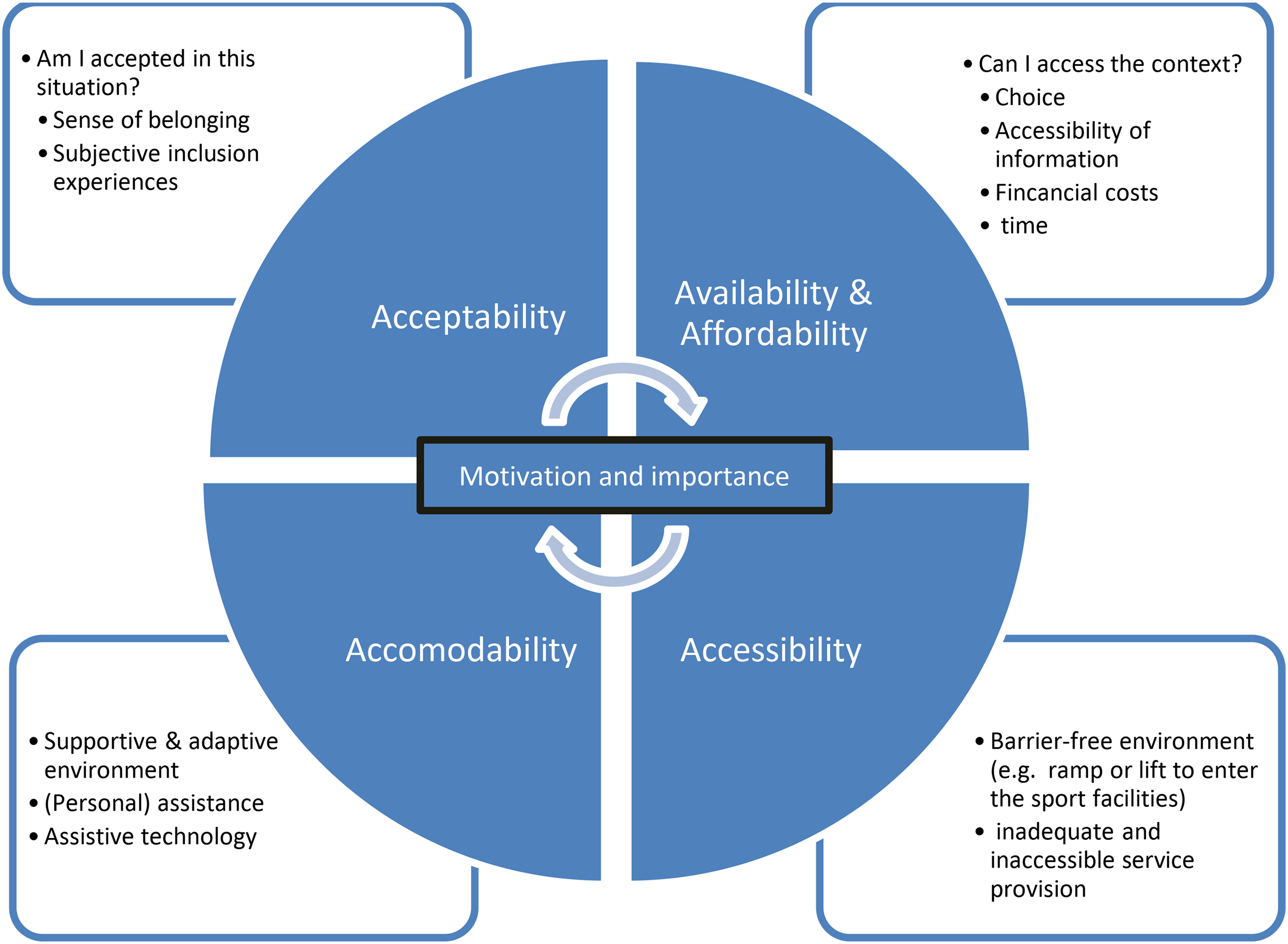
Participation in Sports and Physical Activities from the Perspective of Individuals with Severe Motor Disabilities (Schoo, 2024a).
Author Positionality
The authors acknowledge that their positionality—including personal beliefs, experiences, and motivations—inevitably shaped methodological choices and data interpretation (Zitomer & Goodwin, 2014). Reflexivity was central throughout the research process to ensure transparency and accountability (Braun & Clarke, 2021). The research team consisted of two white individuals. Both have extensive experience in the area of adapted PE working with people with physical and multiple disabilities and are familiar with the sport of boccia. Moreover, the authors have several years of experience in conducting qualitative research and and a shared professional and personal commitment to understanding the lived experiences of disabled individuals in sport settings. Grounded in the social relational model of disability (Reeve, 2014), the team approached disablement as resulting not only from impairments but also from inaccessible environments and ableist interpersonal interactions. This perspective informed all stages of the research and shaped how participants’ experiences were understood—particularly within sport contexts not designed to accommodate diverse physical, cognitive, or social needs (Kirk & Holland, 2025).
Sample
The participants were five individuals (three male, two female) between 22 and 53 years of age with physical disabilities (see Table 1). For the interview study, a boccia training group in the North-Western part of Germany was contacted which is part of a sport club offering a wide range of athletic activities for youth and adults. The boccia training group consisted of 18 players with and without (physical) disabilities. Due to their individual conditions and competencies, the group can be described as very heterogeneous. Some players have several years of experience in playing boccia, while others just started playing this sport. Among the study participants, the boccia experience varied between two and ten years. The boccia group participates with three teams in the league of the Disabled and Rehabilitation Sports Association of North Rhine-Westphalia (BRSNW).
Overview of Participants.
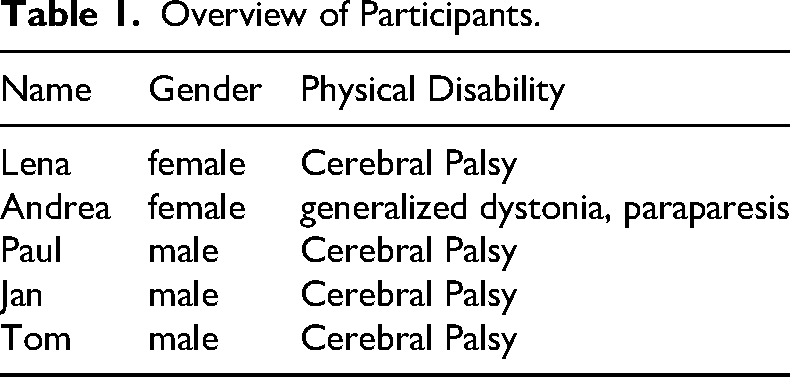
In selecting the five participants for the study, a purposeful sampling strategy (Creswell, 2003) based on specific criteria was applied: (i) the participants had to have an official diagnosis of a physical disability and being wheelchair users, (ii) they had to be at least 18 years old at the beginning of the study living in a residential group, (iii) and they had to be an active player in boccia team. The research procedures adhered to the ethical principles outlined by the German Educational Research Association (GERA) for research in the social and behavioral sciences. These guidelines include procedures for handling misconduct and fraud in science, which is primarily the responsibility of each individual researcher. Ethical approval was not required for this study because the data collected did not meet the criteria for an ethical review. The interview data did not involve any sensitive topics, and there was no risk of physical or mental harm to the participants.
Data Collection
The interviews were conducted with a total of five German boccia players with severe physical disabilities who belonged to the same training group. To avoid de facto exclusion of nonspeaking individuals, participants could select from a variety of interview options, including spoken, written, and alternative (e.g., communication boards, voice output devices) communication (Kirk & Holland, 2025). Verbal semi-structured interviews were chosen by four participants, as it was significantly easier for them to provide their statements orally than in written form. One participant preferred to answer the interview questions in written form and explained important aspects related to each individual question when handing the questionnaire over to the interviewer. These additional pieces of information were noted by the second author and served as the basis for data analysis for this participant.
Participants received concise information about the study and confirmed their willingness to participate. The interview guide was organized into five main sections: four questions focused on the importance and motivation for participating in the boccia training group; three addressed availability and affordability; four explored accessibility; three examined accommodability and adaptability; and three related to the acceptability of the training group. Regardless of the modality selected, all participants were asked the same set of initial questions outlined in the interview guide.
After obtaining demographic data, the participants were first asked to rate the importance of participating in the boccia training on a scale from 1 (lowest value) to 10 (highest value). In a second step, the participants were asked to answer the questions according to the interview guide. However, they were encouraged to talk freely about anything they considered important during the interviews. The interviews were conducted in October 2023 and lasted between 45 and 60 min. They were conducted by the second author, who worked as a sport teacher in school and recreational settings with adolescents and young adults with physical disabilities. All data were transcribed verbatim in German and then anonymized. Pseudonyms were assigned to interviewees in the analysis process. Quotes in this article were translated into English by the first author.
Data Analysis
The data analysis was conducted based on the model of qualitative content analysis with deductive–inductive category formation (Kuckartz, 2016). In the first phase, a coding frame with deductively formed codes was developed based on the main categories in Figure 1 that served to analyze the interview data in a structured manner. The first phase consisted of a rough coding by the second author according to the main categories. In the second phase, the data material was reviewed again by the second author, while the categories were inductively differentiated and revised. For example, the main category ‘Participant motivation’ was differentiated into the subcategories social interactions, engaging in physical activities, and diversion and fun (Figure 2) according to the statements of the interviewees. The final coding frame was created by the second author and applied independently by the first author in the second coding process and reviewed in the form of consensual coding (Kuckartz, 2016; Oldörp et al., 2024).
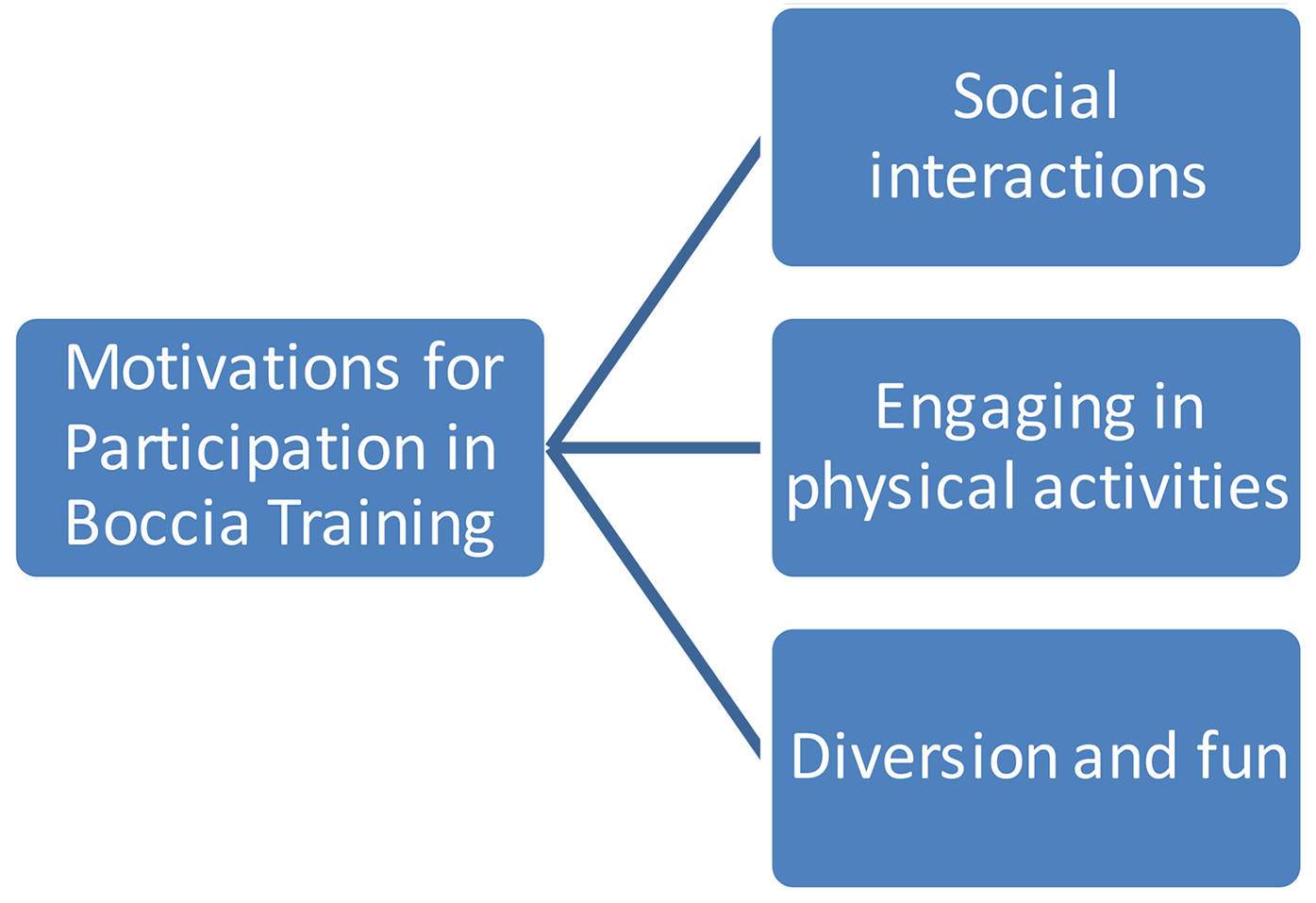
Main Category ‘Motivations for Participation in Boccia Training’ with sub-Categories.
Trustworthiness
To enhance the quality and rigor of the present study, several strategies were used. Credibility and dependability were achieved by providing a description of the participant recruitment and the interview and analysis procedures (Oldörp et al., 2024). An interview guide was used based on the conceptual framework of the study (Figure 1), and the interviews conducted by the second author were also analyzed and coded by the second author. The first author was involved in discussing the themes until the final coding frame was created. In the following presentation of the quotes from the interviews, comments were selected so that that they served as an objective description of the situation from the perspective of the respondents which contributes to the authenticity and confirmability of the study.
Findings
The findings of the present study will be presented based on the following key question: How do boccia players with physical disabilities experience participation in their training group? The main themes were the following: (a) “Getting in touch”: Motivations for Participation in Boccia Training, (b) “I can do this with sport with my limitations”: Availability & affordability, (c) It's always a bit of a lottery”: Accessibility, (d) “I need someone to accompany me to the toilet”: Accommodability & adaptability, and (e) “The Others Listen to Me”: Acceptability.
“Getting in Touch”: Motivations for Participation in Boccia Training
All participants rated the importance (relevance) of participating in the boccia training program as very high. On a scale from 1 (not important) to 10 (very important), only the numbers nine or ten were selected. The participants were then asked about their individual motivations for participating in the training group. They mentioned various aspects, including social interactions, engaging in physical activities, diversion, and having fun. For example, Lena and Jan described the importance of personal interactions with other training partners as follows: “So that I can meet my colleagues, whom I don't usually see, [and] so that I can exchange ideas with the others, e.g., how they are doing.” (Lena) “That you get in touch with people you didn't know well before. That you got to know better through this.” (Jan)
In addition, some participants reported that engaging in the boccia training activities was important for them to improve their boccia skills. Lena stated, “So that I get better at playing boccia.” Similarly, Jan noted, “The movement with the arms – practicing sport with people with similar interests and skills.” Moreover, most participants also described aspects of diversion and having fun. For example, Jan reported, “So that I can cope a bit better mentally. So that I'm not sitting around all the time,” while he also stressed the importance of having fun: “Because it's just a lot of fun to do this sport with like-minded people – with spastic or non-spastic individuals.” (Jan)
Overall, these quotes illustrate that social aspects play a significant role for the participants in the physical activity program. Not only is social interaction during training sessions important, but interactions on other occasions were also mentioned. The following response illustrates this: “I feel fully accepted. Others reach out to me, talk to me.” (Jan)
These reflections show that the program serves not only as a physical outlet but also as a vital social lifeline for its participants. For many, it is one of the few opportunities to regularly engage with others in a shared and supportive environment. Several participants expressed how the program helped them form friendships, experience a sense of belonging, and feel seen and valued within a group. These social dynamics go beyond the training hall. The anticipation of shared events, such as team celebrations or casual meetups, adds to participants’ motivation and emotional well-being. One participant asked with visible excitement, “When is the next team party?” – a comment that reflects not only enjoyment but also a desire for continued connection.
“I can do This with Sport with my Limitations”: Availability & Affordability
Availability refers to whether an activity is physically accessible in the environment, while affordability relates to a person's willingness to invest effort and financial resources to participate. The participants reported various ways they gained information about the availability of the boccia training group, such as through their own network (e.g., a colleague), a supervisor, their previous school (where boccia was already offered), and a newspaper report. Although three of the five participants use social media, it did not play a role in gathering information on the physical activity program. The selection of the boccia training program was primarily based on the participants’ own abilities. Regarding the attractiveness of the physical activity program, Andrea reported, “I can do this sport with my limitations.” Similarly, Jan explained: “That's why I joined the group, because I was looking for a sport for myself so that I have a second hobby. My first hobby is soccer, but I can't do that because of the wheelchair. I was given the opportunity to try boccia, and since then, I participate whenever it fits my schedule.” (Jan)
These statements illustrate how participants assess both their physical compatibility with the sport and the flexibility of the program in terms of scheduling—factors closely related to availability. While boccia emerged as an accessible and suitable option for many, participants also expressed awareness of other physical activity programs that they would be interested in but that are not practically available due to geographic distance, lack of support, or unsuitable infrastructure. For example, Tom described his interest in swimming but highlighted significant barriers to participation: “Swimming – but the floor is too slippery. I would like to go with support. The caregivers don't have time. No one goes there with me. “ (Tom)
Tom's example underscores how availability is not only about whether a program exists, but whether it is accessible in practice—including the availability of appropriate personal assistance. In terms of affordability, while the direct cost of club membership or participation fees did not emerge as a major barrier for most respondents, indirect costs and logistical burdens often posed significant challenges—particularly with regard to transportation. For athletes who are unable to reach the sports venue independently, arranging transport requires not only advance planning but also financial resources and persistence in dealing with bureaucratic issues. As one participant described: “Organizing the taxi. I have to order it a week in advance. Doing it at short notice doesn't work. But sometimes it arrives too early. Then the dispatcher says she doesn’t want so many slips of paper on her desk. Now I send an email to the manager instead. Sometimes I even get reminders or invoices twice, even though I’ve already paid.” (Jan)
This quote highlights that affordability encompasses more than financial cost; it also includes the time, effort, and logistical coordination required to access services such as transportation. Even when direct expenses are subsidized or covered, administrative complexities and unreliable support systems can significantly hinder the practical accessibility of inclusive sport programs.
Collectively, these findings underscore the interplay between availability and affordability and their interaction with individual circumstances in shaping access to inclusive physical activity. High levels of interest and motivation may not translate into participation when broader structural and resource-related barriers persist. These insights reinforce the critical importance of addressing these dimensions in the design and implementation of physical activity programs for individuals with disabilities.
“It's always a bit of a lottery”: Accessibility
Participants reported that the places and spaces they wished to access were frequently inaccessible, citing barriers such as non-adapted buildings and inadequate toilet and changing facilities. These physical and infrastructural constraints are integral to the environmental dimension of accessibility, which encompasses the extent to which individuals can independently and safely enter, navigate, and utilize a given space. The absence of essential features—such as ramps, elevators, grab rails, and appropriately equipped changing areas—can render environments functionally inaccessible, even when they meet minimum regulatory standards for technical compliance. The following quotes by Lena and Jan illustrate the need for accessible toilets and sports facilities: “Better sanitary rooms! Sometimes there are no grab rails and generally no changing bench. We use a mat.” (Lena)
This quote underscores a significant deficiency in accessible sanitary infrastructure. For individuals requiring assistance with personal care, the absence of features such as grab rails or height-adjustable changing benches compromises both autonomy and personal dignity. The use of a floor mat, as described by Lena, illustrates an improvised solution that fails to meet standards of safety and appropriateness, further emphasizing the environmental inaccessibility and inadequacy of such facilities in meeting the needs of all users. “And that you might choose sport halls where you can also use a ceiling hoist, so that care goes better.” (Jan)
Jan's emphasis on the necessity of sport halls equipped with ceiling hoists highlights the critical role of architectural accessibility in enabling equitable participation. The absence of such equipment, along with features like elevators, systematically excludes individuals who use wheelchairs or experience mobility impairments from accessing and fully engaging in multi-level sports facilities, thereby limiting their opportunities for inclusion and participation. In other instances, participants encountered challenges in reaching the location of classes and navigating the environment independently. Such barriers significantly impeded their ability to participate in activities, as illustrated by the following quote from Lena: “I still occasionally go dancing. That's at a dance school. But I don't go there with all caregivers. I'm also interested in horseback riding – I know it from my school, but they haven't paved the area yet.” (Lena)
This example expands the discussion of accessibility beyond buildings to include external access routes and environmental surroundings. Lena's interest in horseback riding is curtailed not by the facility itself, but by the unpaved ground, which presents a mobility barrier. Similarly, her hesitation to attend dance classes without specific caregivers reflects a lack of trust in the environment's accessibility and in its capacity to support her independence. Thus, accessibility is not only about being allowed to enter a space but being able to reach, navigate, and use it autonomously.
The key barriers to accessibility identified by most participants were a lack of consistency in the way transport services to the sports facility were delivered. Participants who could not reach the sports facility independently with public transport had to arrange their transport in advance. Not being able to independently organize transport to the sports facilities also contributed to feelings of helplessness, as demonstrated in the following quote by Jan: Jan: “ The biggest difficulty is always getting in touch with the people from the taxi company. Then they don't drive on weekends and things like that. I always inform the caregivers that I need a taxi, and then it's always a bit of a lottery because they are so understaffed; they sometimes don't drive at all on weekends.” Interviewer: “Has it ever happened that you couldn't get to training because there was no taxi?” Jan: “No, not for training, but… once we had an additional event after training, and the taxi driver just forgot to pick me up at the second address.” Interviewer: “How did that make you feel?” Jan: “Helpless. It really did, because I don't have a mobile phone, and then I always have to ask the coach to call. Because… I don't have a mobile phone.”
Jan's reported sense of helplessness underscores the psychological impact of inadequate and inaccessible service provision. The absence of essential communication tools (e.g., a mobile phone) further compounds this issue, rendering him reliant on others and unable to address emergent situations autonomously. These experiences exemplify the complex interplay between physical and systemic accessibility, where effective access is contingent upon multiple interdependent factors, including architectural design, service delivery, communication infrastructure, and the reliability of human support systems.
Collectively, these accounts indicate persistent shortcomings within both the built environment and transport infrastructure, particularly concerning physical accessibility and the quality of user-oriented services. As evidenced in the data, accessibility should be understood not as a singular dimension, but as a multidimensional construct encompassing the physical configuration of spaces, the navigability of external environments, and the consistency and responsiveness of support systems.
“I Need Someone to Accompany me to the Toilet”: Accommodability & Adaptability
Accommodability and adaptability refers to whether the activity itself is adequately adapted to accommodate individuals with disabilities. This dimension focuses on the extent to which programs, practices, and environments are flexible and responsive to the diverse needs of participants, particularly in relation to personal care, equipment, scheduling, and communication.
Some participants (Andrea and Paul) mentioned that assistance is necessary for personal care and when going to the toilet during the training program. Andrea explained that she needed “someone to accompany me to the toilet.” This underscores the importance of embedding personal care support within the structure of physical activity programs. For individuals requiring assistance with toileting or other hygiene-related needs, the feasibility of participation is directly linked to whether appropriate supports are available during training sessions. If such supports are not integrated or easily accessible, individuals may face significant barriers to continued involvement.
Among the participants, there were also reports of assistance in the boccia training program to promote their participation during the game, such as retrieving balls and setting up the ramp. These examples demonstrate that task-specific accommodations are not only helpful but essential for enabling equitable engagement. Adaptations in gameplay logistics, such as ball retrieval and ramp positioning, reflect how the physical and procedural components of an activity can be adjusted to align with participants’ abilities.
In addition to suggestions regarding instructional or organizational adaptations of the sports activities (like testing different balls and improving communication between team members during the game), two aspects were mentioned by the participants concerning the compatibility of care necessities and sports practice: “I would prefer to schedule it a bit later. It is true that the caregivers are sometimes alone… on weekends they are often alone, and if we did it, for example, from 12 to 2 PM, that would fit better.” (Jan) “I wish for more tournaments to take place locally so that I can play in my power wheelchair. Then I can throw better.” (Andrea)
Andrea's preference for local tournament locations that accommodate her use of a power wheelchair highlights another key facet of accommodability — the necessity of environmental compatibility with assistive technologies. The proximity of events and the physical layout of venues must support the use of adaptive equipment such as power wheelchairs to ensure full participation and optimal performance.
While Jan expressed concerns about the timing and the availability of personal assistance on weekends, Andrea preferred to play in her power wheelchair, which requires that tournaments take place closer to her home. These examples reinforce the importance of both temporal and locational adaptability in inclusive sports programming. Ensuring that sports practices and competitions are adaptable to the daily living needs and physical resources of participants is fundamental to fostering sustained engagement.
In summary, the participants faced a variety of personal barriers when taking part in the boccia training program, which requires the availability of support and assistance during physical activities. The analysis of these experiences through the lens of accommodability/adaptability illustrates that successful participation hinges not only on access to the physical environment, but also on the program's capacity to be flexibly structured around the individualized needs of participants. This includes timely assistance with personal care, appropriate adaptations to the activity format, supportive equipment use, and the scheduling and location of events.
“The Others Listen to Me”: Acceptability
Acceptability, as one of the environmental dimensions of inclusion, refers to the extent to which individuals with disabilities are accepted by others and by themselves within a given social or physical context. This includes perceptions of being valued, recognized, and respected, as well as having legitimate roles and opportunities to contribute meaningfully. The following data exemplify how this dimension is manifested in the participants’ experiences with boccia. The participants emphasized the significance of engaging in team-based or competitive sports. When asked what makes boccia meaningful, Andrea stated, “Playing in a team, winning and losing.” This highlights a key component of acceptability—social integration within a shared group identity. Participation in team-based settings facilitates a sense of belonging and validates individuals as equal contributors to collective outcomes. It reflects not only access but also the recognition of individuals as legitimate members of the sporting context.
Similarly, the emphasis on competition underscores the value placed on formal participation. Tom remarked, “It's important to me that we have tournaments,” while Paul noted, “The tournament in Mettmann, because it was so exciting.” These statements illustrate how participation in structured competitions fosters feelings of excitement, inclusion, and personal relevance. For Paul, success within these settings was also significant: “I also liked the last one in Dinklage because we didn’t lose,” and he expressed appreciation for feedback: “I am happy when others applaud.” Applause and positive reinforcement from others can be interpreted as external markers of social approval and acceptance, affirming the participant's role and effort within the group. The physical and emotional dimensions of competition were also identified as enhancing the sport's attractiveness. Jan articulated this as follows: “Releasing your emotions in the game. You have the opportunity to exert yourself. Even after two games in a tournament, I’m exhausted in the evening.” This comment reveals a sense of self-recognition and legitimacy through physical exertion and emotional expression, which are often associated with traditional athletic identity. Such experiences reinforce internalized acceptability, wherein individuals perceive their participation as authentic and meaningful.
Participants also highlighted personal and health-related benefits of participation. Jan described the positive impact of training on his physical function: “Every time I come back from training, I feel that my upper extremities are a bit looser, and the spasticity is not as strong because I have to place the balls myself.” This improvement contributes not only to physical well-being but also to enhanced bodily awareness and autonomy, thereby supporting self-acceptance and reinforcing the personal relevance of continued participation.
In another reflection, Jan reported that boccia training has provided increased structure in his daily life: “I used to live day by day. Now I know what I have to organize.” The incorporation of regular training routines demonstrates how sport can support personal identity development and self-regulation, both of which contribute to a broader sense of inclusion and personal acceptability. A number of participants articulated an explicit sense of being valued and accepted by others, which is a core element of social acceptability. The following response illustrate this: “I feel fully accepted. Others reach out to me, talk to me.” (Jan). Statements from participants also show a strong sense of social recognition: “When I am the captain, the others listen to me.” (Lena) or “When I suggest improvements, they are accepted.” (Tom)
These remarks indicate participants are seen as legitimate, respected contributors and leaders, reinforcing both social status and mutual respect. A further example of meaningful participation is Tom's role as a referee: “My decision [regarding the scoring] was initially doubted but later confirmed through measurement.”
This illustrates that individuals with disabilities are capable of assuming roles of authority, thereby demonstrating competence and receiving social validation. More broadly, participants reported receiving affirmative feedback from peers, caregivers, and family members—both during competitions and through digital media platforms. Such recognition serves to reinforce their athletic identity and enhance their social visibility. In conclusion, the participants’ accounts underscore the significance of acceptability as a core component of feeling included. Experiences of being acknowledged, entrusted with leadership responsibilities, and receiving positive feedback contribute to both self-acceptance and social legitimacy, which are critical for sustained participation in physical activity contexts.
Discussion
The findings of this study support and extend previous research on sport participation among individuals with physical disabilities, emphasizing how environmental conditions—particularly availability, accessibility, adaptability, and acceptability—shape the quality of inclusion (Bertills & Björk, 2024; Maxwell et al., 2018). Consistent with past studies (e.g., French & Hainsworth, 2001; Shields & Synnot, 2014), the participants reported restricted participation due to a range of environmental and personal barriers, including limited physical access to sport facilities, a lack of personal assistance, and inconsistent transport provision.
The data revealed that environmental obstacles such as uneven ground, the absence of lift access, and non-adapted sanitary facilities continue to hinder independent access and safe engagement in physical activity programs. These findings echo previous work documenting the persistence of physical inaccessibility in sport contexts (Li & Chen, 2012; Wang, 2019). Notably, as reported by participants, inconsistencies in transport services were a significant challenge to regular attendance, especially when dependent on third-party providers. These logistical issues, also identified by other scholars (French & Hainsworth, 2001; Mwaka et al., 2024), created not only functional barriers but emotional strain, particularly when transportation was unreliable or difficult to coordinate.
Personal assistance was another critical factor shaping participation. Echoing the findings of Tillmann et al. (2018), participants emphasized the need for ongoing support—not only for personal care, such as toileting, but also during sports-specific tasks like ball retrieval and equipment setup. The absence of such assistance often led to limited or even non-participation. These findings reinforce the significance of considering adaptability—as conceptualized in the Five A's framework—as a core condition for inclusion (Maxwell et al., 2018). Furthermore, participants highlighted the importance of scheduling flexibility, indicating that program times often failed to accommodate the staffing constraints of caregivers, particularly on weekends.
The role of assistive technologies, especially power wheelchairs, was noted by participants not merely as compensatory tools but as enablers of athletic performance and autonomy. This aligns with recent research that positions sport as a context where adaptive equipment can foster not only access but identity and performance (Aytur et al., 2018; Bates et al., 2019).
Despite these barriers, the boccia program was perceived by participants as a highly valuable context for skill development, physical activity, and social interaction. In line with the perspectives of Goodwin et al. (2009) and Carter et al. (2014), boccia was described as more than a physical outlet—it functioned as a space for emotional expression, community building, and personal growth. For some participants, the program offered a rare opportunity to establish routines and experience structure in their daily lives, reinforcing the broader life-course significance of parasport participation (Allan et al., 2018).
Participation in boccia also fostered experiences of acceptability, a key dimension of inclusion that reflects both internal and external recognition (Haegele & Maher, 2023; Spencer-Cavaliere & Watkinson, 2010). Participants consistently reported feeling valued and respected by peers, assuming leadership roles (e.g., team captain, referee), and receiving positive feedback from teammates, spectators, and family members. These findings resonate with broader literature on disability sport, which emphasizes how meaningful participation is co-constructed through relationships, recognition, and contribution (Goodwin & Watkinson, 2000; Grenier et al., 2023).
Importantly, while boccia was described as meaningful, it was also selected due to a lack of alternatives. Some participants had attempted other programs, but these were often short-term, geographically inaccessible, or lacked the necessary supports. This suggests that the availability of inclusive physical activity programs—particularly those that are continuous and locally accessible—remains limited, despite policy frameworks such as the UN CRPD that advocate for full participation in sport and recreation (Kiuppis, 2018; UN, 2006).
Taken together, the findings demonstrate that boccia holds considerable inclusive potential, particularly when programs are designed and delivered with attention to the full spectrum of the Five A's. The training group studied here exemplified a context where individuals with severe motor disabilities could build competence, assume responsibility, and develop social bonds.
Limitations
This study has several limitations that should be considered when interpreting the findings. First, the sample size was relatively small, and all participants were recruited from a single boccia training group. While this purposive sampling enabled an in-depth exploration of experiences within a specific sport context, it limits the transferability of findings to other sports settings or broader populations of individuals with disabilities. The perspectives captured in this study are specific to athletes with physical disabilities engaged in boccia, and may not reflect the experiences of individuals participating in other adapted or mainstream sport programs.
Second, the study focused exclusively on the perspectives of athletes with disabilities, without including the views of team members without disabilities, coaches, caregivers, or organizational staff. Given that inclusion is co-constructed through social interactions and contextual dynamics, future research should incorporate multiple stakeholder perspectives to provide a more holistic understanding of facilitators and barriers to participation (Oldörp et al., 2024).
Third, while the study applied the ICF-based “Five A's” framework to examine environmental influences on participation, it did not explicitly address how other social categories—such as gender, age, or socioeconomic status—may intersect with disability to shape individual experiences. An intersectional approach could yield deeper insights into the complexity of inclusion and exclusion in sport contexts.
Conclusion
The purpose of this study was to explore the experiences of individuals with physical disabilities participating in an integrative boccia training setting. The five themes—(a) “Getting in touch”: Motivations for Participation in Boccia Training, (b) “I can do this with sport with my limitations”: Availability & affordability, (c) It's always a bit of a lottery”: Accessibility, (d) “I need someone to accompany me to the toilet”: Accommodability & adaptability, and (e) “The Others Listen to Me”: Acceptability —highlighted the multifaceted nature of inclusion and illustrated both facilitators and barriers to successful engagement in recreational physical activity.
Participants described the boccia program as a meaningful and empowering space, offering opportunities not only for physical activity and skill development, but also for social interaction, identity affirmation, and emotional well-being. These experiences reflect a conceptualization of participation and inclusion closely tied to feelings of belonging, recognition, and being valued by others (Haegele & Maher, 2023; Spencer-Cavaliere & Watkinson, 2010). Consistent with previous research on disability sport, the program was seen as a site that challenges normative assumptions about ability (Maher et al., 2023) and promotes self-efficacy (Aytur et al., 2018; Bates et al., 2019; Grenier et al., 2023).
Importantly, the study also identified structural and contextual challenges that limit participation in adult recreational sport, including inconsistent transport services, inaccessible infrastructure, limited availability of alternative programs, and insufficient personal assistance. While inclusion has been increasingly addressed in the context of school-based physical education, relatively little attention has been paid to how adults with disabilities experience participation in recreational sport settings.
This study contributes to filling that gap by emphasizing the role of community-based, inclusive sport as a key context for promoting physical and psychosocial well-being across the adult lifespan. Given the study's limitations, including its focus on a single sport and the perspective of a small group of participants, further research is needed to explore how adults with a range of disabilities experience inclusion and exclusion across different sport contexts (Maher et al., 2023). Future studies should also consider the perspectives of individuals with intellectual or multiple disabilities, and explore how intersectional factors such as gender, age, and living arrangements shape access to and experiences of recreational physical activity. In sum, this study demonstrates that boccia can serve as an inclusive, empowering, and socially meaningful sport for adults with severe motor impairments. However, broader systemic efforts are necessary to ensure that such opportunities are available, accessible, and sustainable within the wider landscape of community sport.
Footnotes
Acknowledgments
The authors are grateful to the study participants involved in this project who shared their experiences and supported the data collection process.

Informed Consent Statement
Written informed consent has been obtained from the participants to conduct and publish this study.
Author Contribution(s)
Funding
The authors received no financial support for the research, authorship, and/or publication of this article.
Declaration of Conflicting Interests
The authors declared no potential conflicts of interest with respect to the research, authorship, and/or publication of this article.
Data Availability Statement
The data presented in this study are available on request from the corresponding author.
Conflicts of Interest: The authors declare no conflicts of interest.